


A discovery set is more than a way to gain an understanding of a fragrance line’s depth and breadth. It’s also a path to learning more about oneself, scouring the recesses of firsthand experience to draw connections where none might have had the chance to form. Nowhere has this been truer in my olfactory journey than in the work of designer and perfumer Filippo Sorcinelli, whose unique blend of reverence and daring has yielded this atmospheric examination of the sacristy.
Sacristies, by definition, are repositories for sacred things. But not all are physical. Some are sensory and invisible, drawing lines between our hearts and memories long forgotten. With his Memento collection, Sorcinelli has distilled the essence of these priestly preparation rooms. Through them, I find myself flashing back to the hours I’ve spent in the monasteries and cathedrals of central Europe. These are wishes of the flesh to be fulfilled in the spirit, captured at the peak of serendipity and surrender.
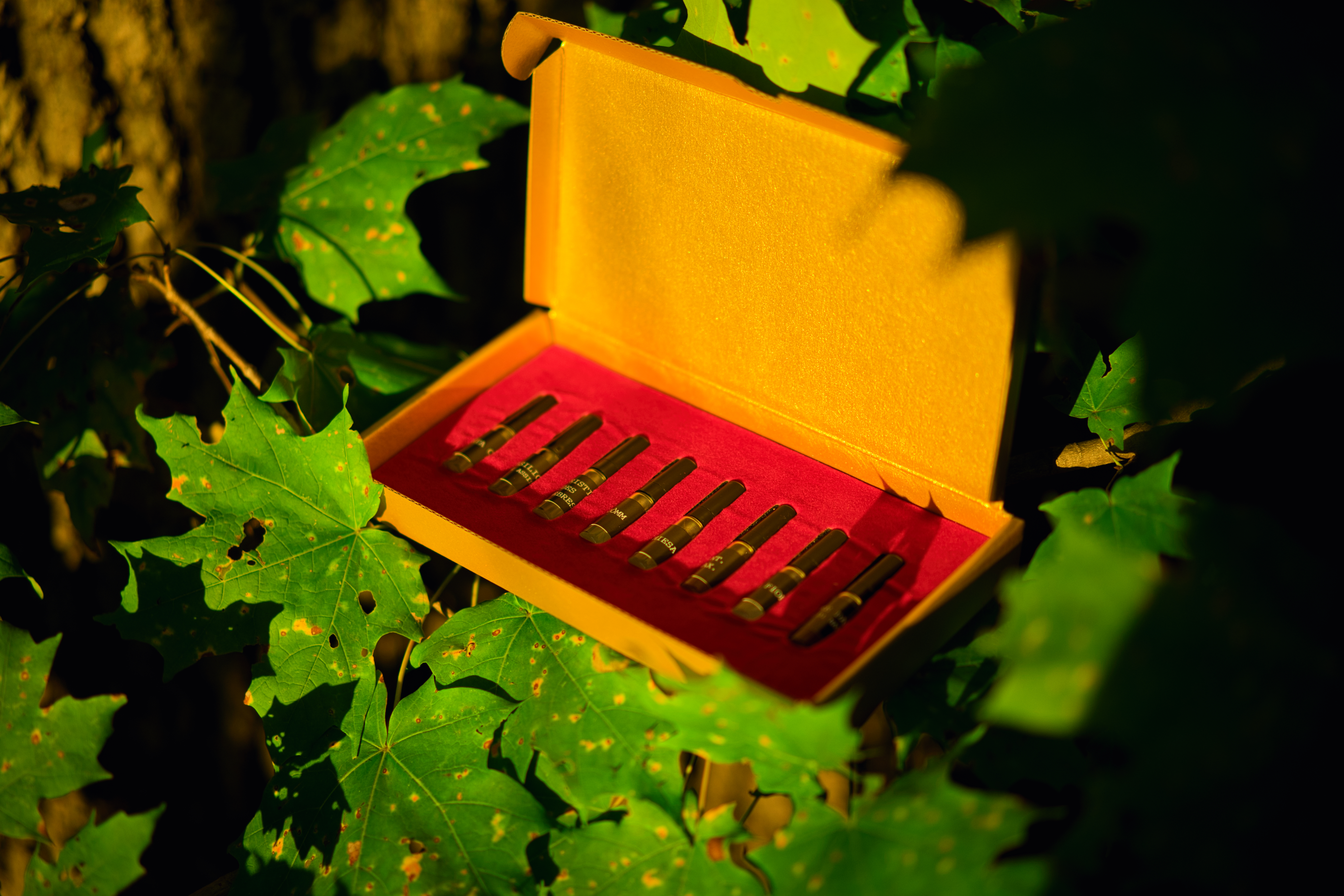
To wear these elixirs is to take stock of one’s soul. Each is a mirror of a different shape, opacity, and tarnish, taking inspiration from the drawers and chambers of specific churches.
BASILICA DI ASSISI
Evoking the Basilica of San Francesco, this first of eight is a symphony of stalks and stones. The scent of grass and freshly cut greenery intermingles with smoke, wood, and frescoed walls. We open our eyes, ears, and noses to tonka bean, benzoin, styrax, and amber. Within this combination lies a more cumulative statement in the details of burnished wood. A step deeper brings us into contact with rose alba, dried fruit, patchouli, and labdanum, which reveal their own signatures in the space, inviting a sense of devotion that we must attune our worldly minds to. Upon further settling, lemon, bergamot, petitgrain, and incense join in the chorus. In them are glints of stained glass, as if the sunlight were being extracted so that we might understand its colors as messages with purpose. This interdimensional fragrance shelters ever-deepening repentance, a connection through space and time between origins and satellites, sweetness and austerity. And here we are in the middle of it all, wondering where to begin.
Reminds me of: L’Air du Desert Marocain by Tauer Perfumes
CHIESA D’ORO
For this stage of the pilgrimage, we head to the Basilica of San Marco in Venice. A note from the brand highlights the city’s history as a hub of the spice trade and its influence not only on cuisine but also on the rites of the church and all the solemnity they signify.
A deep hit of damask rose, jasmine, and carnation reveals itself by way of introduction. As the bouquet settles to reveal a shmear of vanilla, tonka bean, and musks, we begin to notice even more details of our surroundings. Vetiver and amber speak to the extroverted and introverted expressions of their respective natural essences. A kiss of bergamot adds a final touch to this lovely chypre. With so much of the outdoors in play, we are reminded that everything we create and fashion would be impossible without the Creator whose handiwork is in every molecule of the resources we exploit. Let us not forget this in our rituals and prayers, holding fast to what has been given so that we do not profane it with our depravity.
Reminds me of: Gold Man by Amouage
DÒMM
Our new reference point is the Milan cathedral, the core of which began construction in 1386 and which still serves today as a place of dressing before the Lord’s table is set.
Here, the tail is foregrounded. Bergamot, Virginia cedarwood, and black pepper initially court the nostrils before forests, gardens, and even seascapes beyond make themselves apparent, followed by jasmine and chocolate. At the same time, patchouli, styrax, and musks lower their diadem. As the most pungent scent of this octet, it announces itself with authority. To wear it, then, is nothing short of a privilege. Like grace, it is given to those who don’t deserve it, a most precious offering to the lost. To regard it as such allows it to blossom to its fullest extent on the skin, taking us to places only dreamed of.
Reminds me of: Terre d’Hermès by Hermès
NOTRE DAME NOTTE DI NATALE
From Milan to Paris, we find ourselves immersed in a liturgical concerto. This is the brightest of the collection. It opens with a surge of Virginia cedar and orange blossom. A smoother melange of chocolate, Alaska cedarwood, and cinnamon soon follows. Before long, we are lost in tonka bean, resinoid incense, and amber, which only make themselves heard on the back end. That said, there’s nothing hidden in this fragrance. The cumulative effect is one of strong honey with a woody undercurrent—a representation, perhaps, of spiritual pollination, resulting in a nectar of wisdom for all to dab on their pulse points. Like the believer’s relationship with God, it begins strong and overbearing, then settles into quiet discernment and understanding.
Reminds me of: Bee by Zoologist Perfumes
PONT. MAX.
St. Peter’s Basilica is the epicenter here. As the most “institutional” scent of the congregation, its name (Pontifex Maximus) means “builder of bridges” and refers to the highest priestly office of ancient Rome.
As a piece of scripture in scent, it speaks concisely and potently through its central quartet of myrrh, benzoin, resin incense, and amber. The interrelationships of each are magnified in glorious humility, inviting the worshipper to bow the knee at the altar of confession. With the addition of marine notes and jasmine, the experience broadens beyond the walls of the church, allowing us to feel something primal and elemental, as if the shore were a dividing line between a life drowning in sin and one basking in the sunset of salvation. Tendrils of Virginia cedar become synonymous with the pews, polished by the passage of time, of clothing tattered and pressed alike, of wrinkled hands and rosaries given warmth by their own friction, and of the repetitions of moving lips. The result of all this is leathery in texture, like a calfskin-bound Bible lying open on the pulpit. And yet, there is no sermon, no prayer, no uplifting of voices in song. Rather, there is the oppressive force of abandonment as people leave their faith behind in search of more earthly idols, now misplaced in the multitudes. Over time, they are replaced by tourists and other temporary travelers whose coins and candles are but hay and stubble in the grand scheme of things, each a self-reflexive gesture meant for no other purpose than to say, “I have been here.” But this fragrance lingers in the body, for it has also been here, laden with the weight of history on its shoulders, all but crushed beneath.
Reminds me of: Copal Azur by Aedes de Venustas
ROSA FIORITA
Rita of Cascia was an Italian widow and Augustinian nun. Tradition has it that, at the end of her life, she was visited by a cousin who asked if she wanted anything from home. Rita’s request was for a rose, and, despite it being January, her cousin indeed found a single rose blooming from the snow in the garden. As a greeting carved on the central beam of the basilica of Santa Rita da Cascia recounts: Hello Rita, vessel of love, painful bride of Christ, you are born from the thorns of the Savior, beautiful as a rose.
One of the purest florals I’ve ever laid my nose on, Rosa Fiorita opens with damask rose absolute and honey in the foreground, offering a dark sweetness. There is also something sharp and bright at play, with essences of may rose, lily of the valley, and iris giving it an edge. Meanwhile, geranium lends it a heart of shadows. The overall effect is Gothic and thickly spined. In wearing it, one feels connected to a long, unbroken chain of memory in which the tide of truth comes roaring into the present. And with that communion, Heaven is made possible on Earth. This is hagiography in a bottle.
Reminds me of: Sa majeste la rose by Serge Lutens
SANTA CASA
Speaking of sanctity, we now encounter the Loreto basilica, where candles and smoke predominate. The location has divine associations, as this revered sanctuary is believed to be the work of angels who translated the walls of the cave in which the Virgin Mary was born from Nazareth to Loreto.
The fragrance itself may be the closest to expressing the atmosphere of the sacristy. The upfront combination of vanilla, sandalwood, ambrette, benzoin, amber, and musks pours a photorealistic candle. The dank, craggy spaces of the church are deeply felt. Beyond that are the heart of the sea, tobacco, and rosa gallica, all of which embolden that waxiness to the deepest possible level. Orange and bergamot evoke the wick, while incense lingers in the air as a thin veil. All of this gives way to smoky leather. If Pont. Max. is the binding, then here are the pages and ink printed across their terrains. It is the scent of the word, convicting and austere.
Reminds me of Russian Leather by Memo
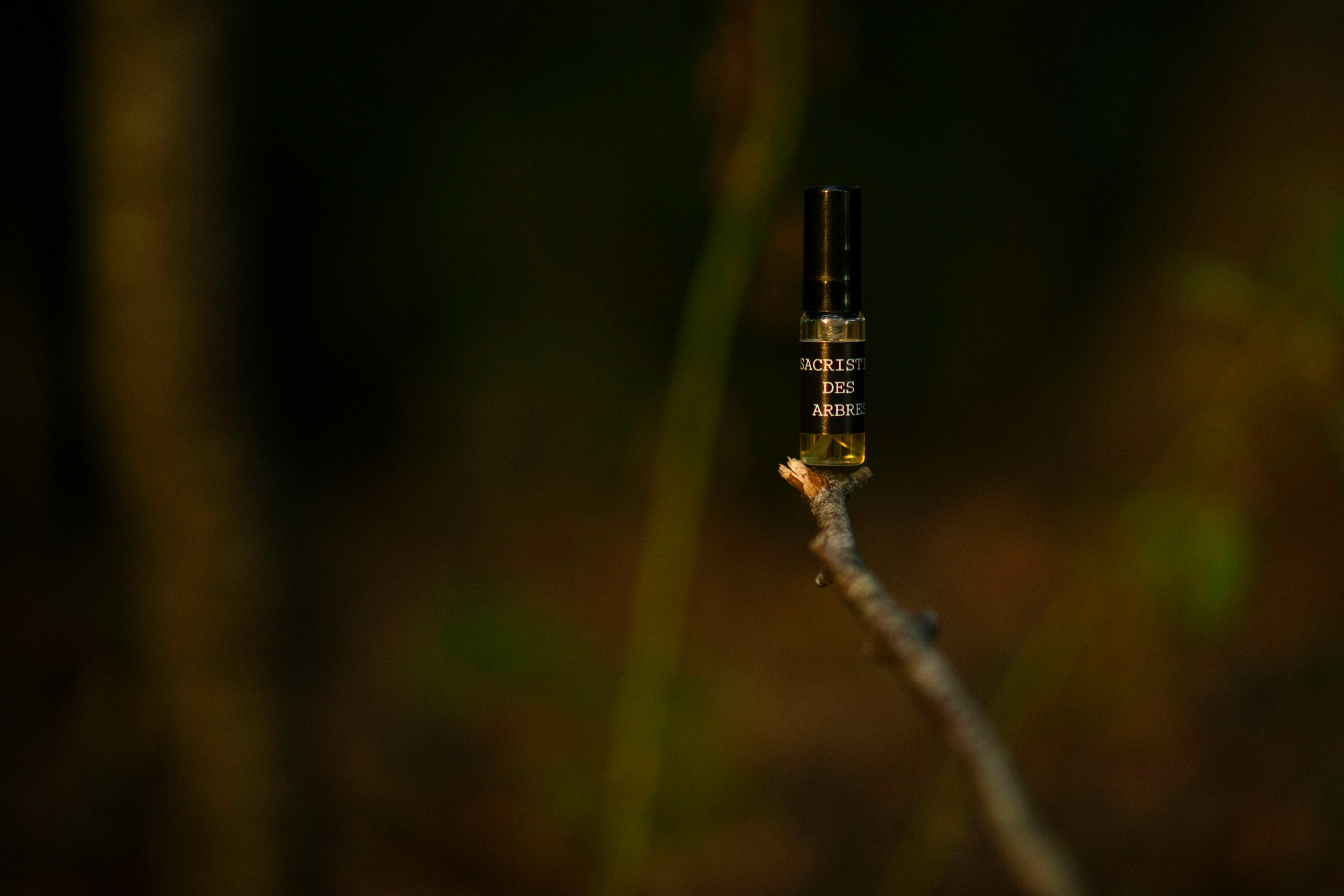
SACRISTIE DES ARBRES
At last, we reach the pinnacle of the Memento line. It is an invitation to meditate and reflect, an organic balance of the natural and the manufactured.
It is also what I was most hoping for all along: a seamless combination of interior and exterior that allows each tier to speak for itself. On the front end, vanilla and vetiver create a sharp, almost citrusy vibe with a softer, sweeter undertone. Along with them are benzoin resinoid incense, ambrette, and amber for an even smoother transition into damask rose and guaiac wood. At the end of this balsamic concoction are notes of pine essence, Virginia cedar, incense, and mint. All of this works beautifully to tell a tale of great sacrifice. It emphasizes the itineracy of faith, illuminating just enough of the path ahead to know that our feet will fall on solid ground. As it dries down, we get more of those woods and less of the incense, so that we are left alone with our own thoughts, surrounded by the trees. These all dissipate, along with our worries and cares, leaving only the spirit behind.
Reminds me of: XJ 1861 Zefiro by Xerjoff
And so, having found a renewed sense of life, I carry on, nothing more than a pilgrim passing through. And maybe you will find me just by following the sillage I’ve left behind, matching every footprint with your own, until we reach the promised land.




 Between Sound and Space: ECM Records and Beyond