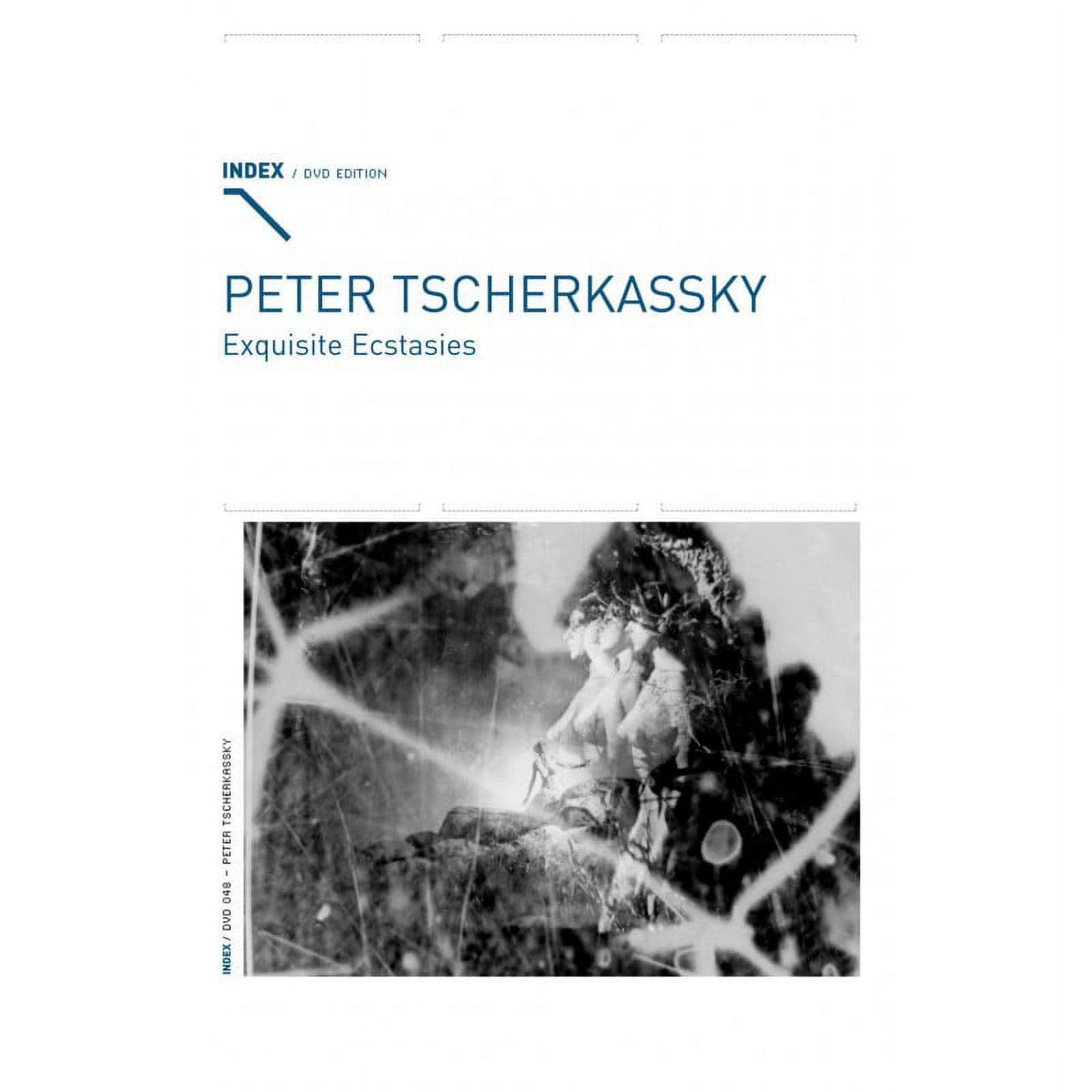
Peter Tscherkassky: Exquisite Ecstasies (INDEX 048)

Images often arrive clothed in certainty. They glide across the eye with a quiet authority, suggesting that what is seen is whole and already understood. The world appears to organize itself within the frame, its contradictions softened, its fractures sealed beneath a luminous surface. Yet this coherence is a delicate fiction. Beneath it, something restless persists, a tremor that resists being made smooth. Peter Tscherkassky’s cinema lives in that tremor. His creations expose the fragility of suspended disbelief, allowing the image to stutter in recognizance.

Emerging from the lineage of the Austrian avant-garde, Tscherkassky has always treated film as both medium and wound. His practice, grounded in the physical manipulation of celluloid, fevers his gaze. He dissects footage with a tactile intensity, pushing it toward states of convulsion and rupture.

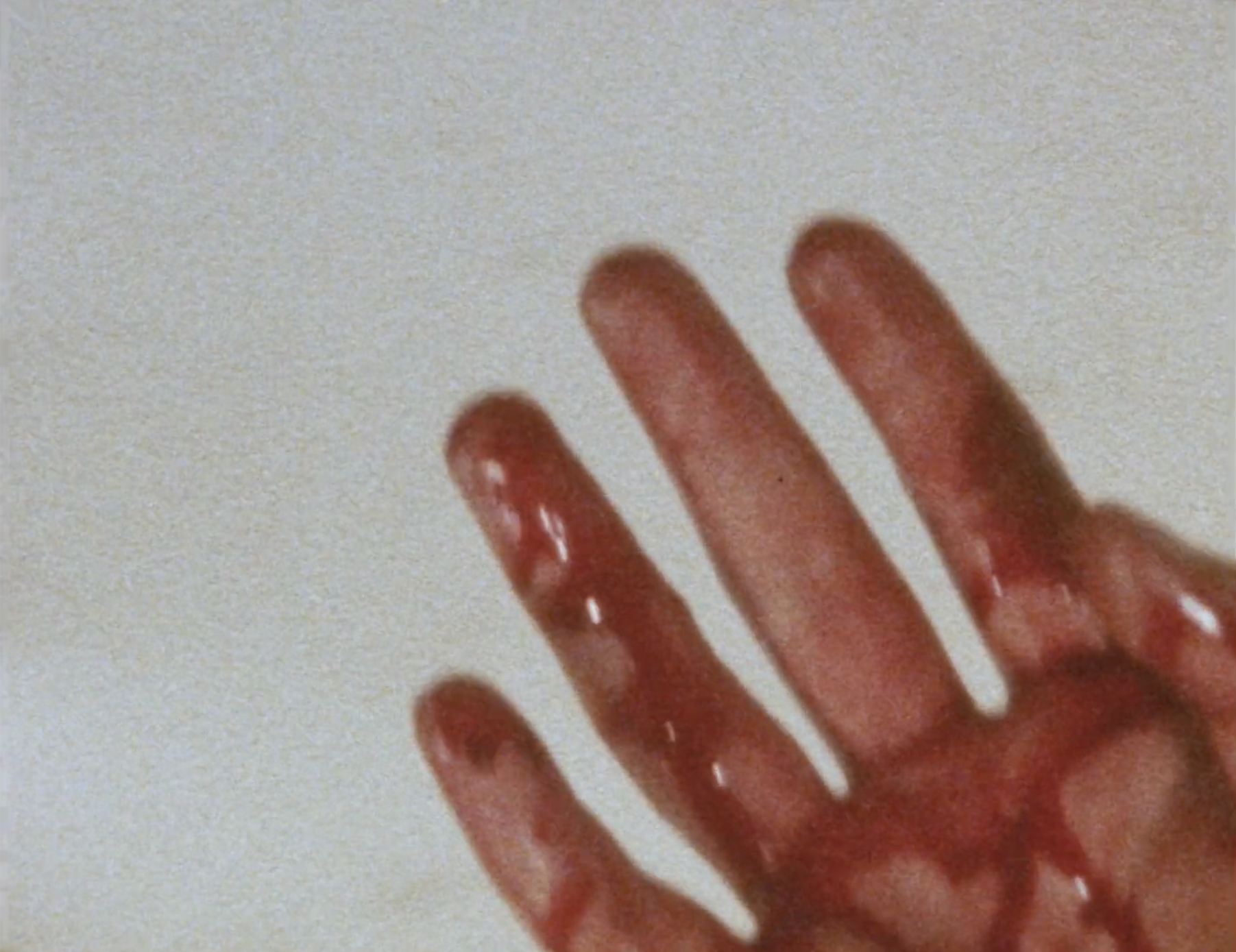
In Aderlaß (Blood-Letting, 1981), the screen opens into a darkness that feels less like absence than anticipation. Sound arrives first, jagged and insistent, as if the apparatus itself were clearing its throat. The question “What language do you speak?” reverberates not as inquiry but as accusation. Communication falters, dissolving into laughter that feels almost violent. Here, the moving image becomes an act of self-interrogation, a ritual of undoing. The invocation of “murder as the only real artwork” lingers not as provocation alone but as a symptom of artistic despair. Blood seeps into the frame, not metaphor but material. One begins to wonder whether movement produces film or whether film produces movement. What remains in this interrogation is a flicker that feels terminal, witness to its own extinction.
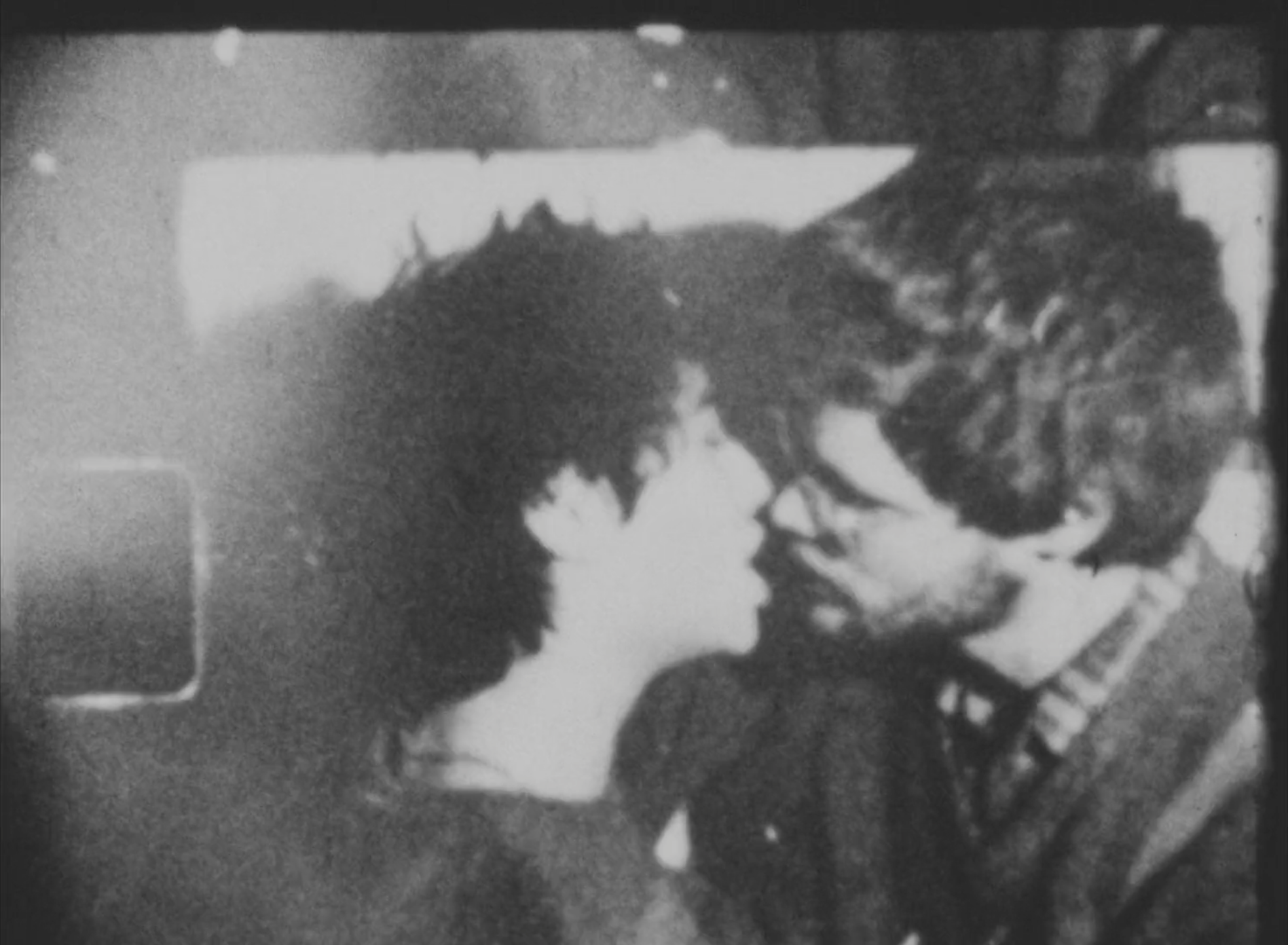
With Liebesfilm (Film of Love, 1982), Tscherkassky turns to intimacy, albeit stripped of fulfillment. A kiss approaches endlessly, rehearsed 522 times without consummation. Desire becomes mechanical, an algorithm of longing caught in a loop. Each repetition erodes meaning yet intensifies sensation. Love reveals itself as a structure of hesitation, a choreography of almosts. The bodies lean toward each other, again and again, yet never arrive. What should be a culmination becomes a suspension. The male gaze lingers in that gap, feeding on deferral. Lips remain unlocked, not out of restraint but because closure would end the system that sustains them.
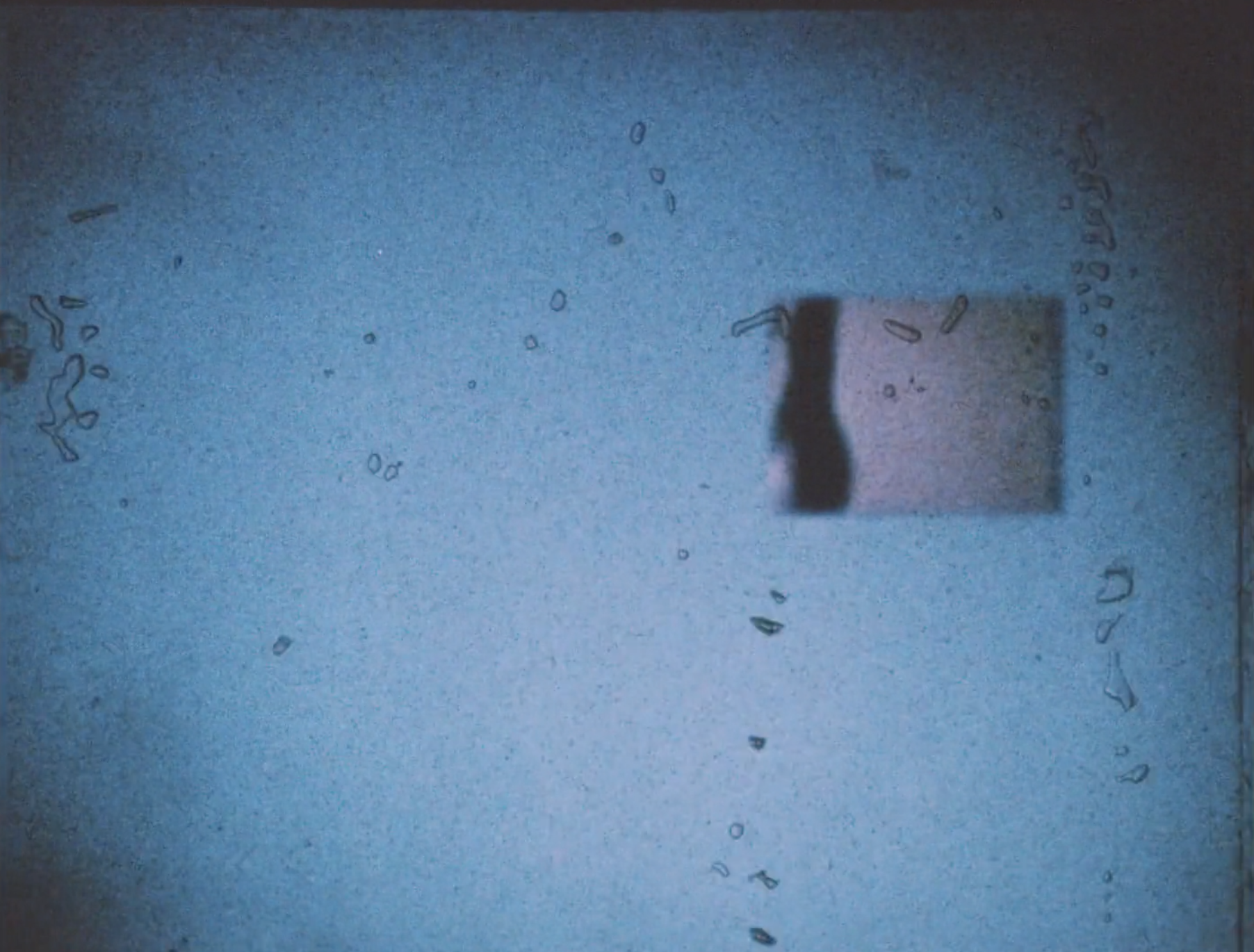
Urlaubsfilm (Holiday Film, 1983) complicates the act of looking more directly. A woman moves through a field, undressing with a gesture that might initially invite voyeuristic comfort. But then, her gaze meets the camera, and with it, the viewer. The illusion fractures. To look is suddenly to be seen looking. The image begins to mutate and open portals within itself. A second frame emerges like an eyelid lifting from the surface. Gradually, visibility recedes. Flesh dissolves into abstraction. What remains is not the body but its residue, held precariously in memory. The gaze loses its object and confronts its own voraciousness.

By the time we reach tabula rasa (1989), the gaze has become predatory. Cowboys lurk in the brush, archetypes of surveillance and control, their attention sharpened to a point. Yet what they see refuses coherence. The image slips and folds into textures that evade recognition. Skin becomes landscape. Cloth becomes terrain. The female body, when it appears, resists fixation. She is neither subject nor object but a shifting locus of desire that cannot be pinned down. The camera reveals itself as complicit, even parasitic, driven by a hunger that consumes its own vision.
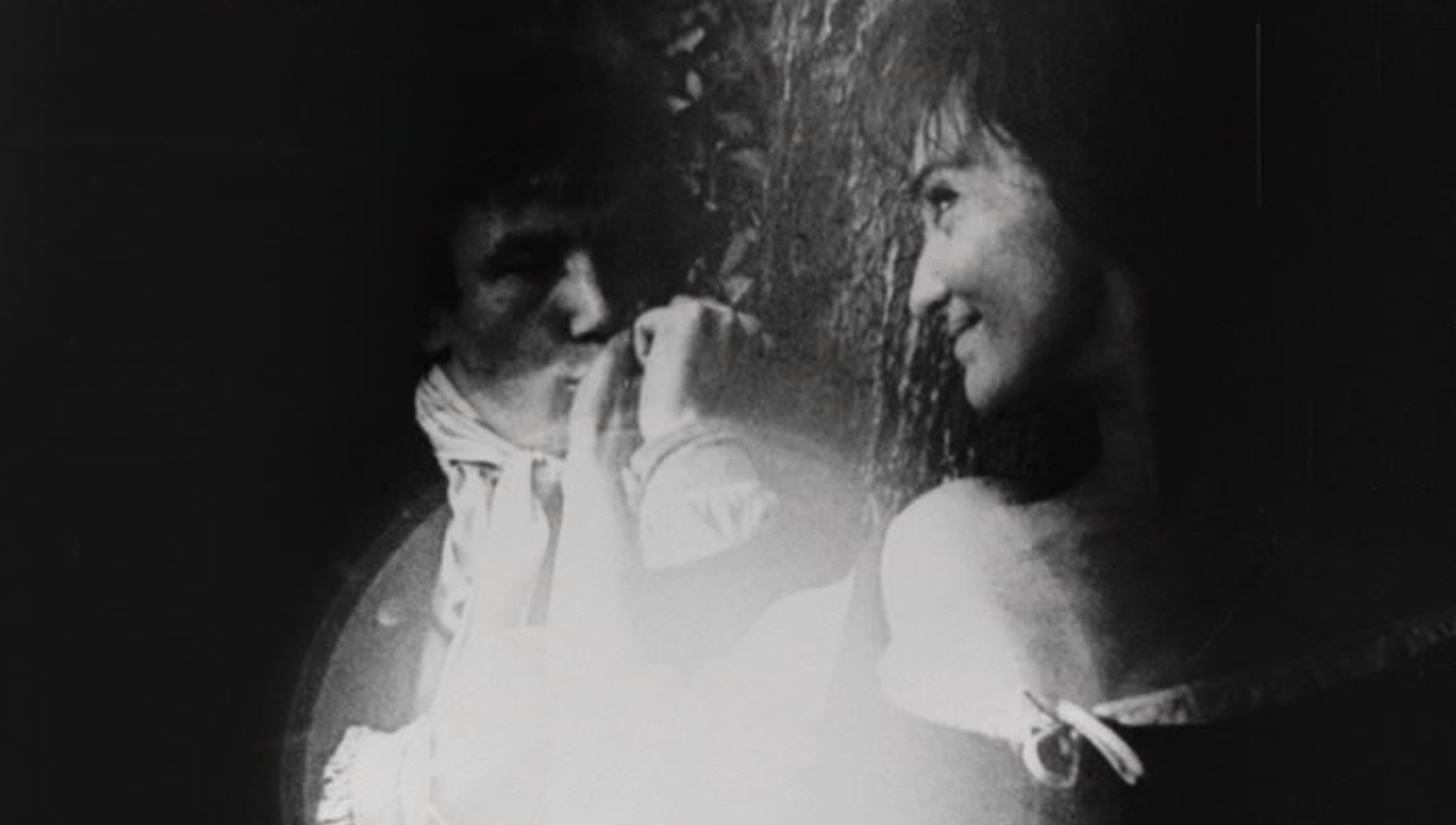
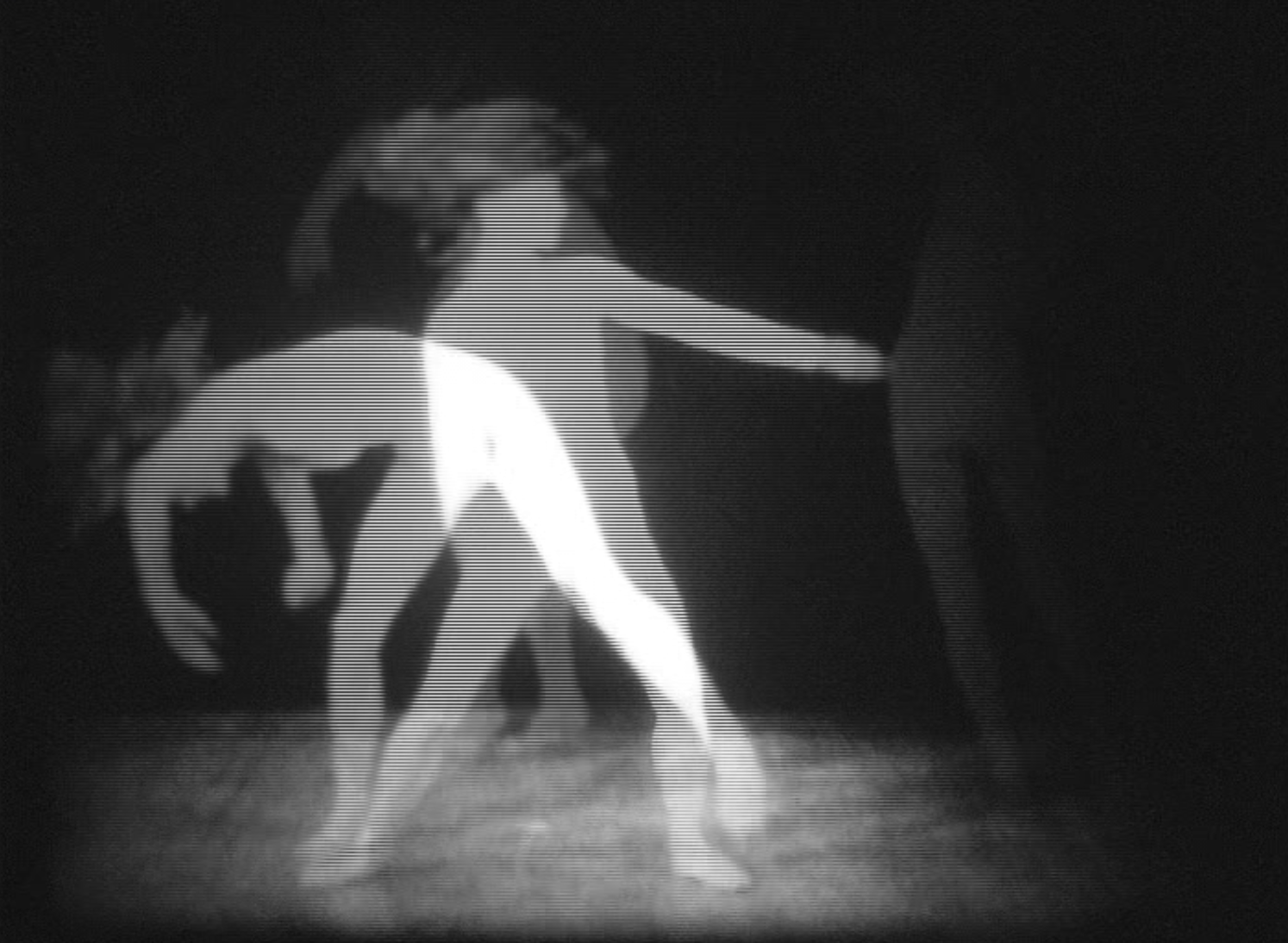
This trajectory finds a kind of culmination in The Exquisite Corpus (2015), a work that gathers decades of experimentation into a dense, almost tidal structure. Drawing from found footage, including a 1960s nudist film, Tscherkassky constructs a landscape where bodies and film stock merge into a single unstable organism. A couple sails toward an island, though their arrival feels illusory. A thunderclap fractures the image before frames multiply, invert, and overlay themselves in a choreography of excess. Flesh becomes pattern. Movement becomes echo. Erotic gestures lose their charge, not through repression but through saturation. The more the body is shown, the less it can be possessed.
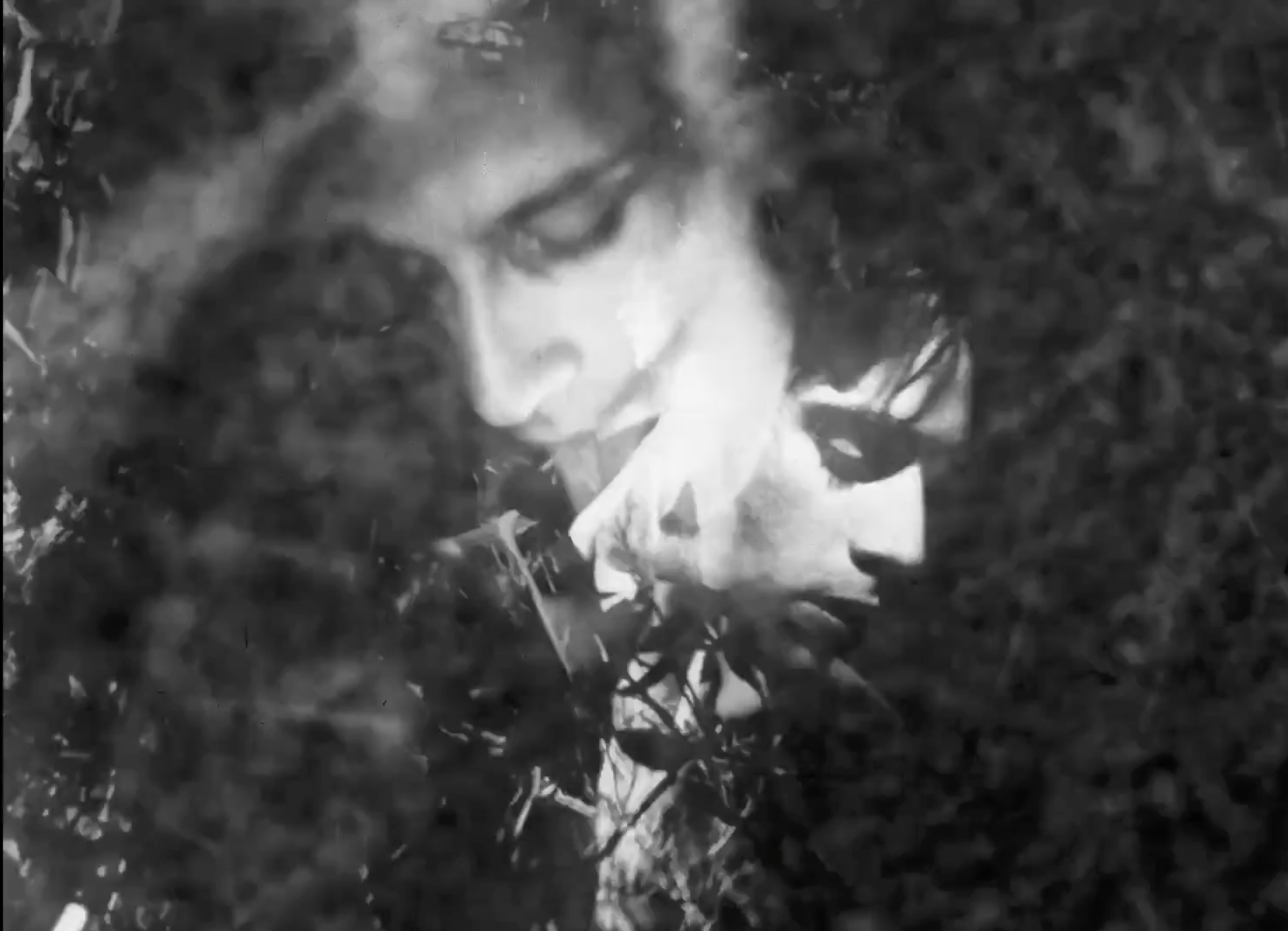
Natural elements intrude. Leaves, flowers, woven textures. These are not mere decorations but reminders that cinema, too, is subject to decay and transformation, even as it pulses like a living thing. Tscherkassky’s frame-by-frame method becomes a form of devotion, an insistence on tactile reality. In an era of digital smoothness, he retains the scars of the past, resisting the flattening of experience into seamless flow.
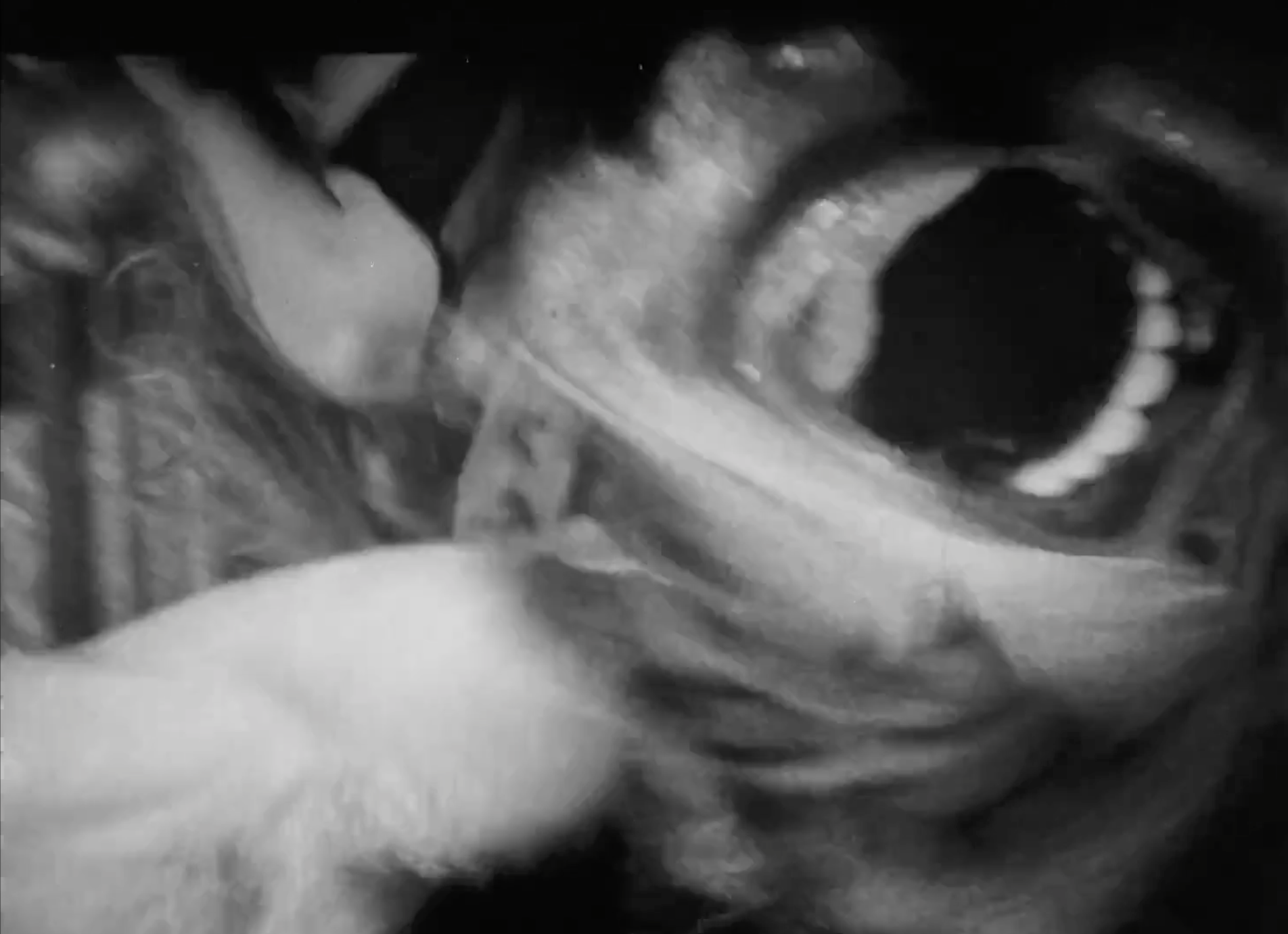
Across these works, the POV is never stable. It shifts from voyeur to participant, from observer to accomplice. It reveals itself as constructed, fractured, and, above all, unreliable. Tscherkassky implicates the viewer in the act of looking, exposing the desires and violences embedded within it. What emerges is not simply a critique of representation but a reconfiguration of perception itself. The films suggest that seeing is always entangled with absence, that every image carries within it the trace of what cannot be shown.

And perhaps this is where Tscherkassky’s work ultimately leads beyond myth and beyond even the body. The gaze, stripped of its certainties, becomes something quieter and more elusive. Not a tool of mastery, nor a site of pleasure, but a fragile relation to the unknown. To look is to risk losing the ground beneath perception. To see is to encounter the limits of seeing. In that encounter, something almost philosophical stirs. Not an answer, not a conclusion, but a question that lingers like an afterimage, asking what it means to inhabit a world that cannot be fully brought into view.
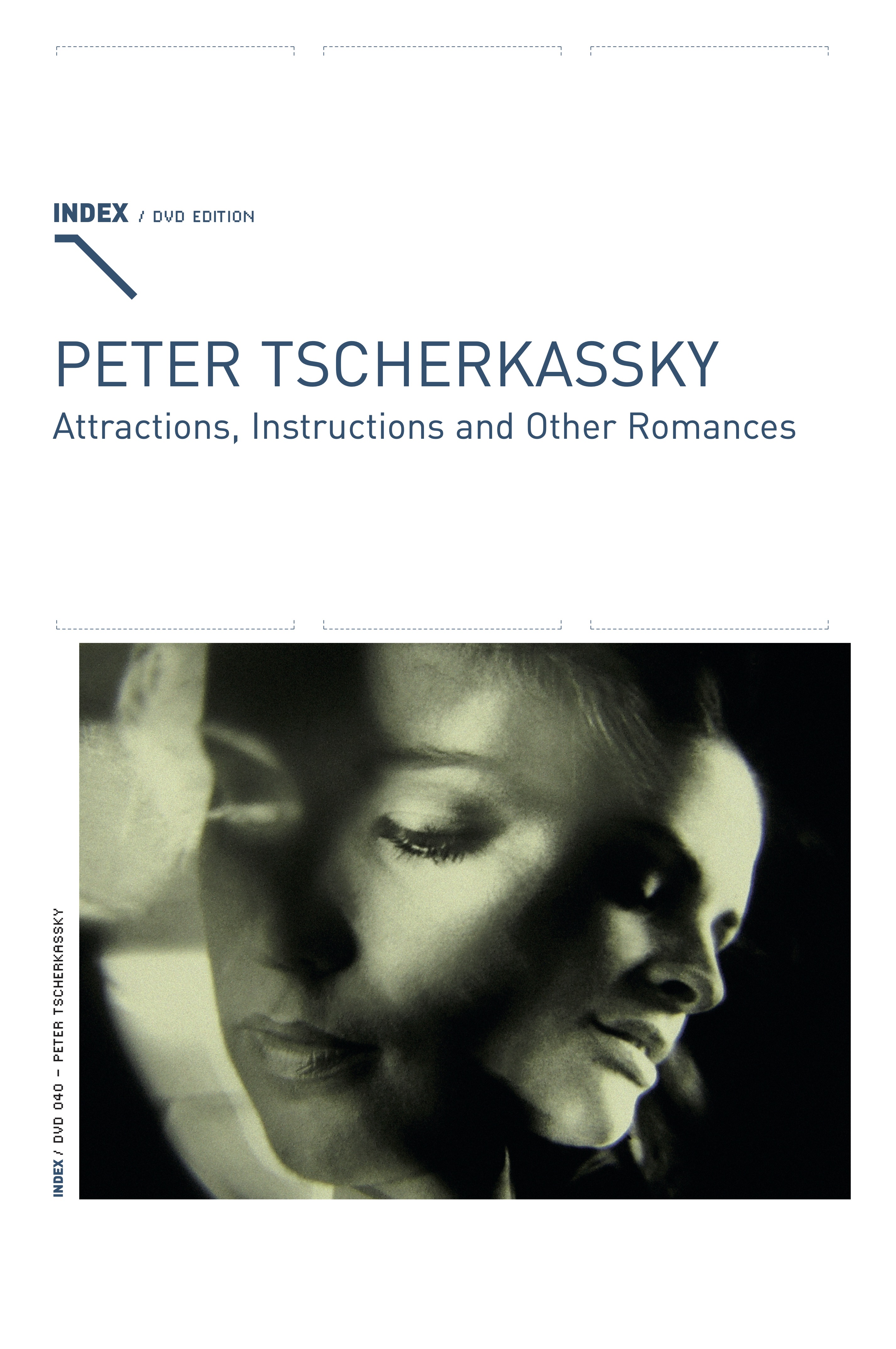
Peter Tscherkassky: Attractions, Instructions and Other Romances (INDEX 040)

To engage with Tscherkassky’s practice is to confront the strange afterlife of representation itself, a realm where film no longer records the world so much as remembers its own ruin. What burns across his strips is neither nostalgia nor innovation but a deeper pulse, the kind that surfaces when a form recognizes finitude and begins to think through decay. Vision becomes autogenic, a mechanism studying itself from within, peeling back its surfaces to reveal the primal violence of exposure. Watching, one senses that matter is dreaming of being seen, as though consciousness had migrated into celluloid at the very moment it began to die. In this suspended state, we are compelled to interrogate conditions of possibility.

Christoph Huber observes that Tscherkassky “fathoms cinema’s potential as an intellectual machinery of associations and as a palpable experiential space.” This remains true, yet something more disquieting appears with sustained attention. He is among the rare artists who show that moving pictures have already crossed into a posthumous phase—or rather, that their death is a necessary precondition. He revives the corpse only long enough to out its allegiance to disappearance. What unfolds behaves as a series of postmortem documents that yields a final burst of sensual and intellectual life. He does not capture reality; he sifts through its remains. Handling emulsion, sprockets, perforations, and mechanical abrasion directly, he shows that the only place this apparatus still lives is in the final breath.

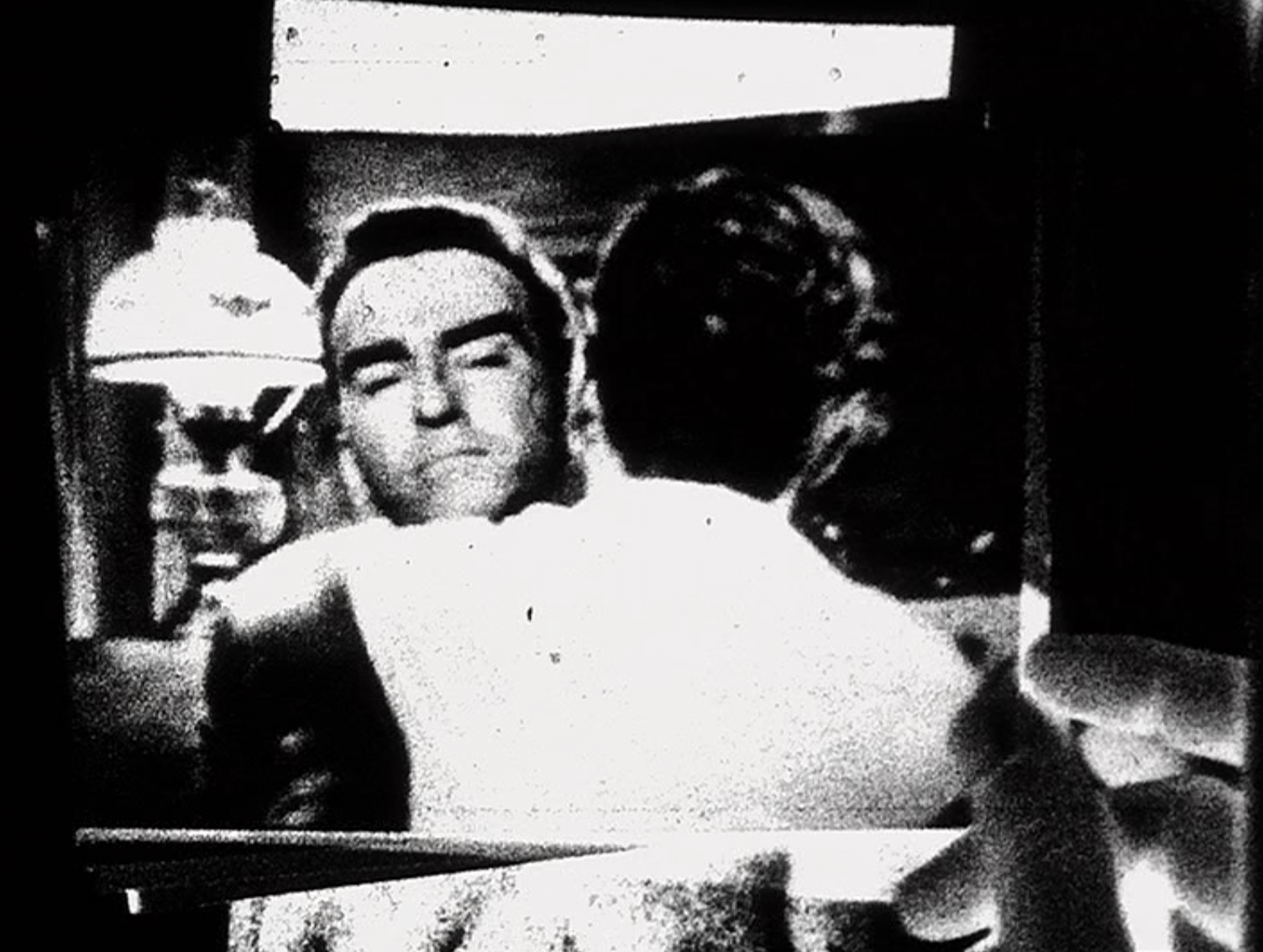
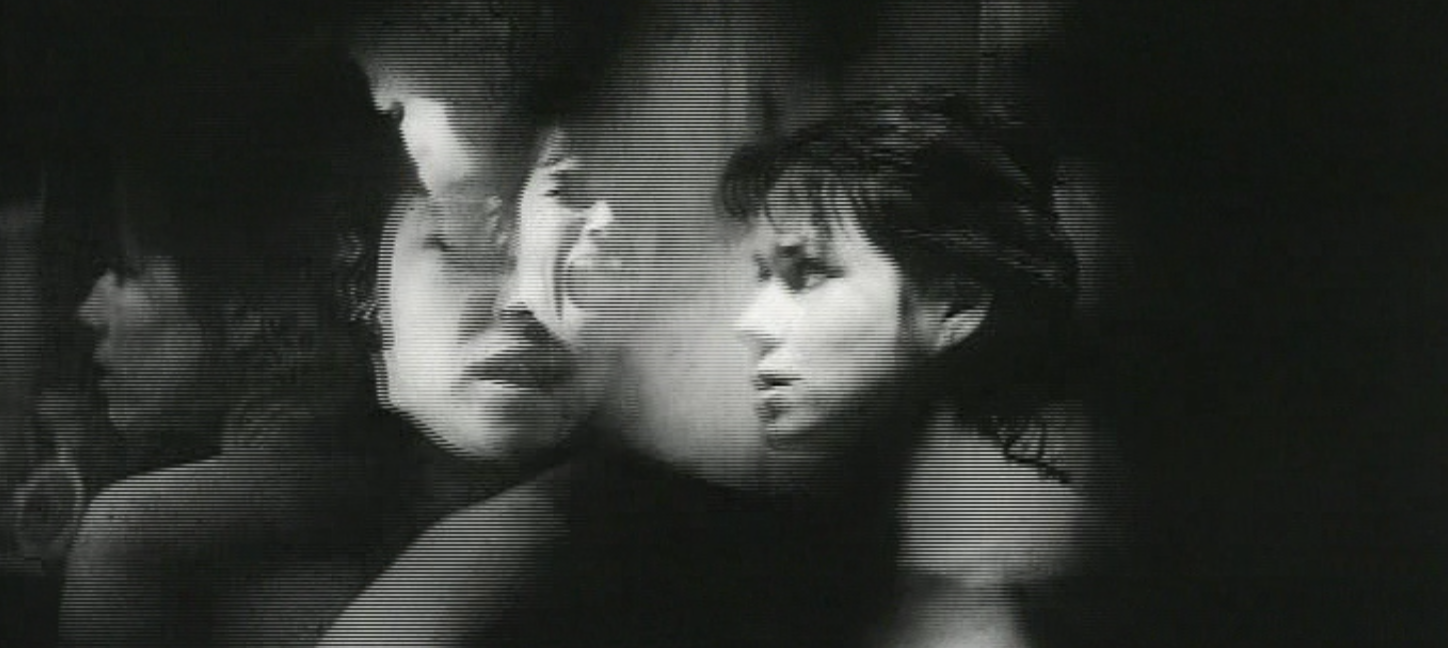
This recognition becomes deeply personal in Parallel Space: Inter-View (1992). A love scene between Montgomery Cliff and Lee Remick from Elia Kazan’s 1960 Wild River is isolated and reprinted on 35mm still stock, so the projection splits the embrace in two. Tscherkassky writes “The Physics of Seeing” and “The Physics of Memory” onto the surface, turning recollection into a mechanical act. The strobing becomes cognition: a self trying to remember itself even as the material erases the attempt. Domestic fragments and reflections intrude. The original eros dissipates, replaced by a strange eroticism of apparatus, the soundtrack mutating lovemaking into a newborn’s first cry. Desire abandons the bodies and migrates into the violent closeness of stock and exposure. Consequences, which lovers and spectators rarely consider, become etched accordingly.

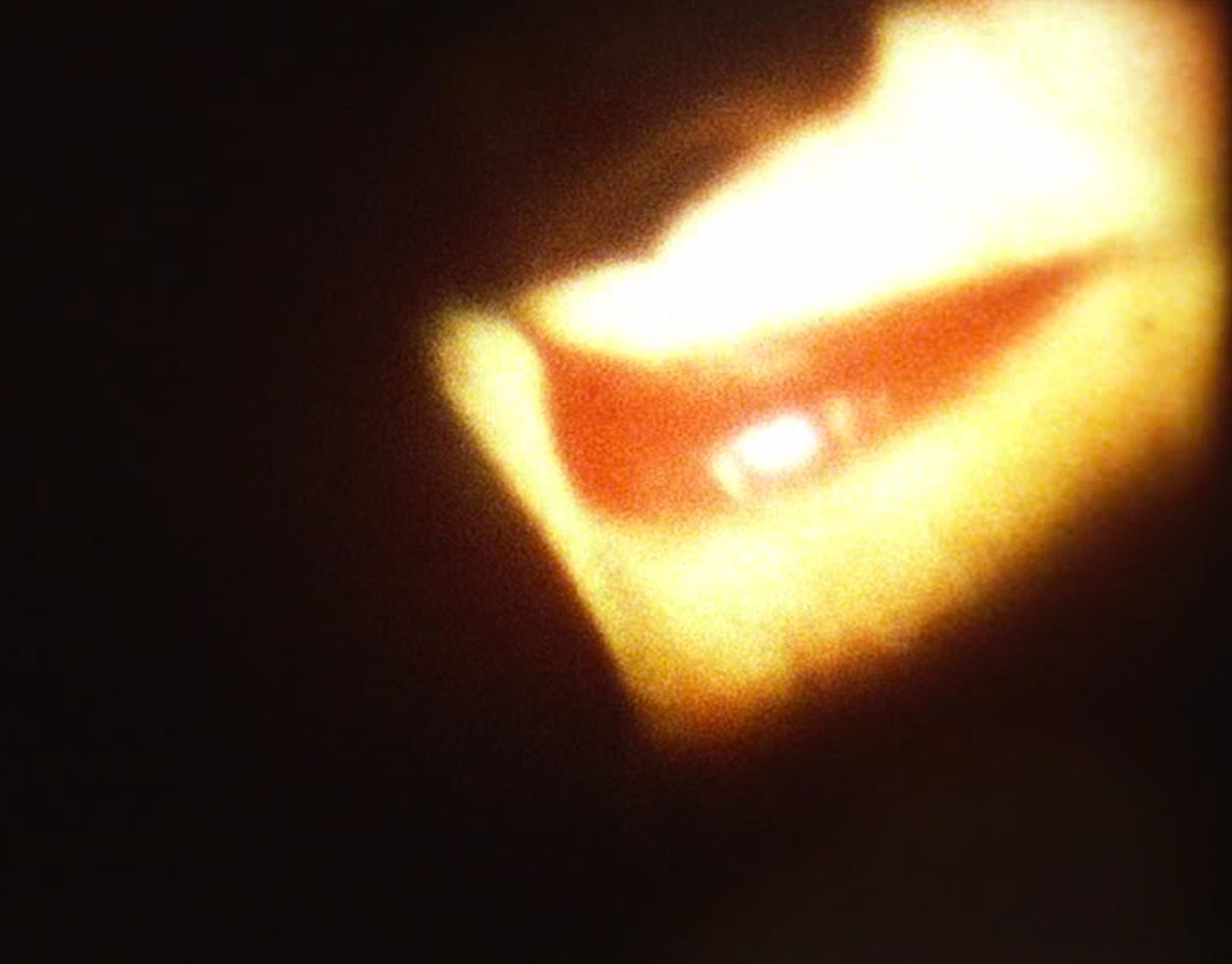
Erotique (1982) presents similar tensions in miniature. Lisl Ponger’s face appears in fragments, a visual homage to the musique concrète of Pierre Schaefer and Pierre Henry, sending its voltage far and wide.

Happy-End (1996) expands the idea of resurrection. Austrian home movies from 1965 to 1980 gain a dignity that history rarely grants private lives. The first half plays gently, nearly untouched, before overlays accumulate, bruising the memories they were meant to preserve. What once appeared stable now vibrates with the uncanny.

Recursion becomes literal in Shot – Countershot (1987), where a man fires a weapon and is struck by his own bullet. Thus, Tscherkassky converts the basic grammar of visual storytelling into a fatal loop. Cause and effect devour each other until nothing remains but the absurdity of a structure turning on itself.

The self-attack resurfaces in Nachtstück (Nocturne, 2006), created for VIENNA MOZART YEAR 2006. A trembling pulse is fashioned from Eine kleine Nachtmusik, romance strained through temporal distortion until bodies dissolve into afterimages. An owl’s wink acknowledges the futility of preserving classical culture under its own conditions. Music becomes something the strip tries and fails ever so beautifully to hold.

Tscherkassky’s ability to mine entire histories from discarded material reaches its peak in Coming Attractions (2010). In its tangle of vintage advertising footage, spokespeople push soap, stockings, soda; household labor becomes erotic display; voices break into stuttering prayer-wheel rhythms. The piece twists promotional language into a fever dream where faith, fetish, and commodity dissolve into one horrific whole. A woman initially framed as nun-like is revealed to be a performer wearing an inflatable hood. Yet even in such degradation, unexpected solace erupts, as if intentions were defrocked in favor of empathic vulnerability.

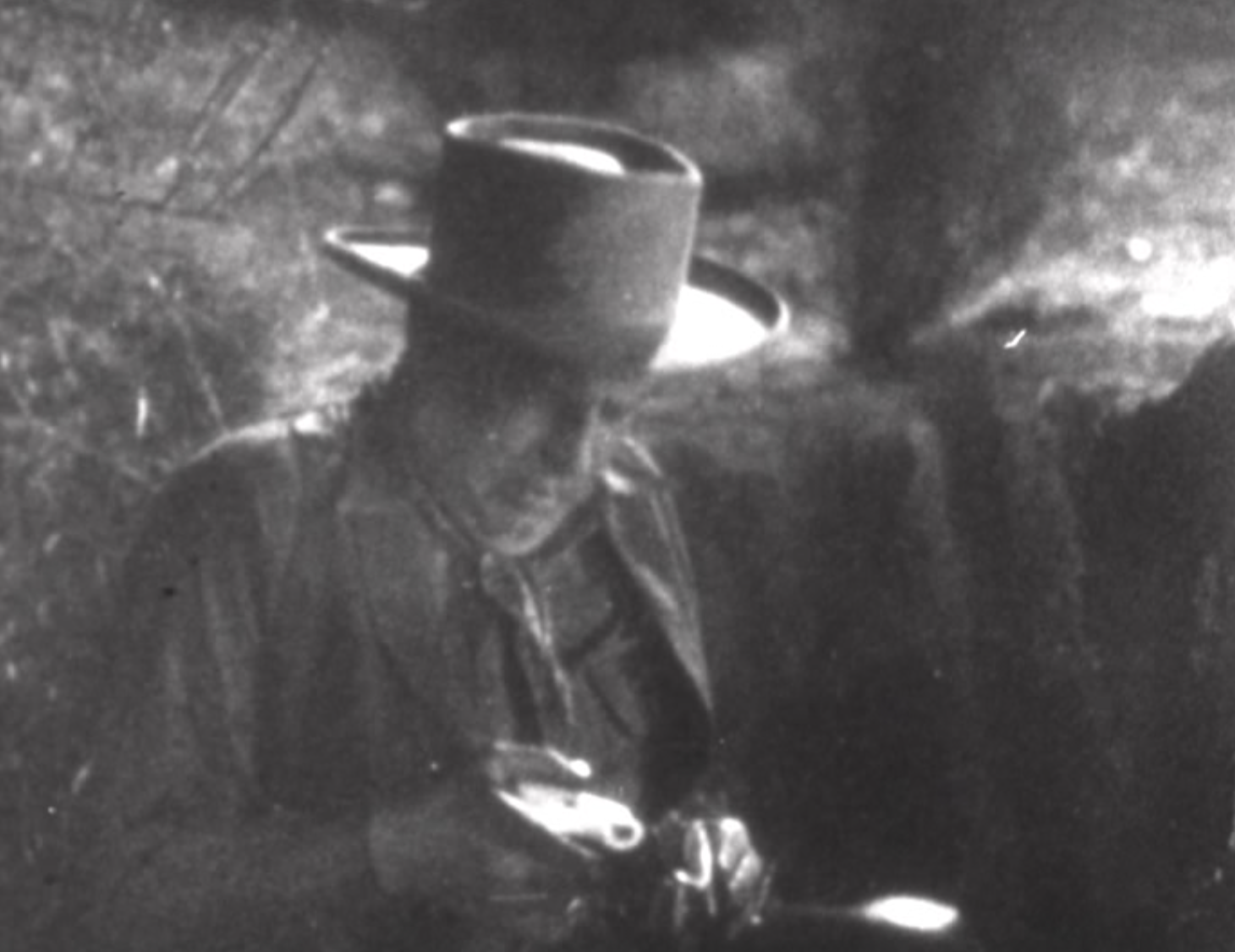
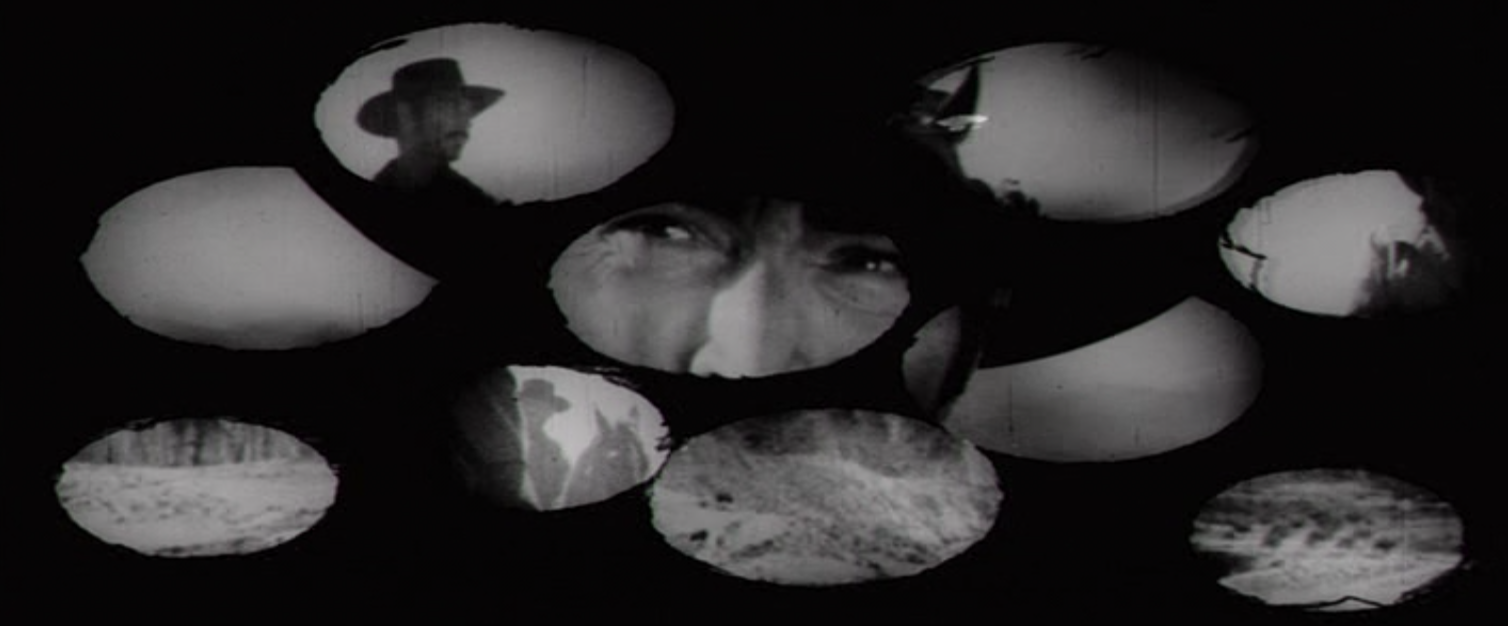
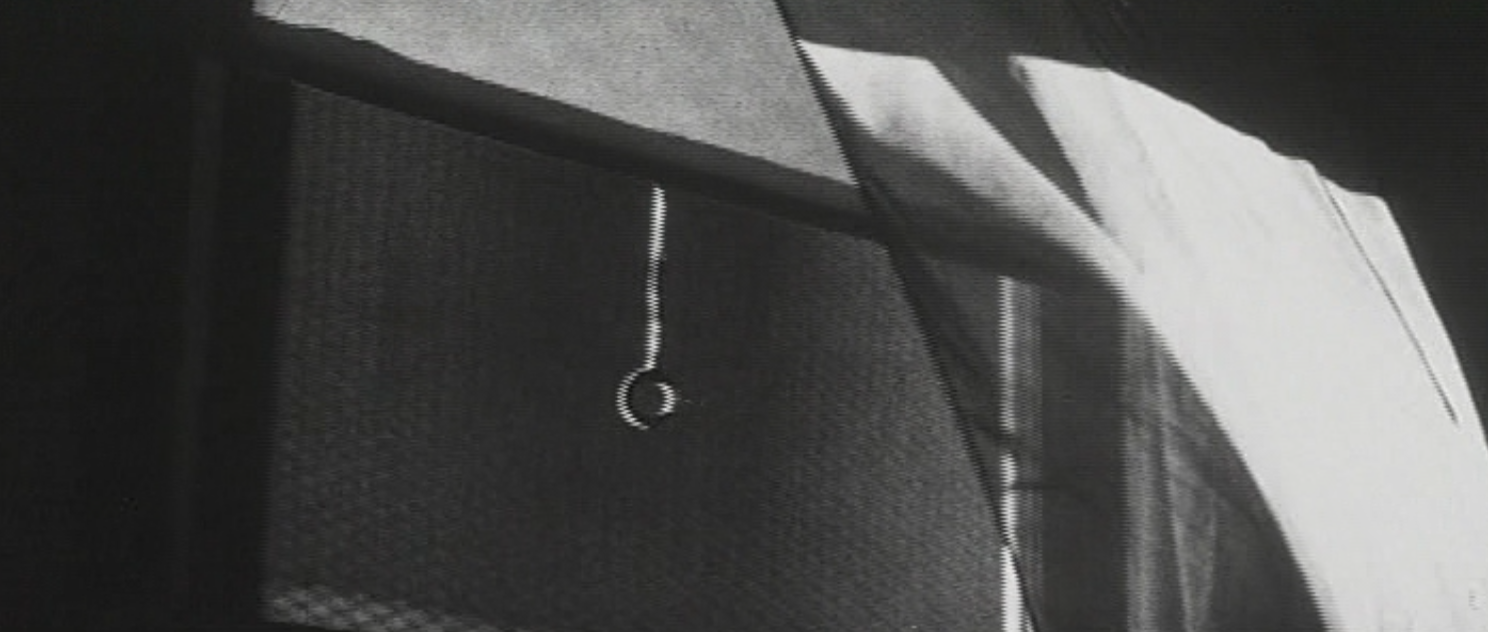
Instructions for a Light and Sound Machine (2005) turns to the canonical corpse of Sergio Leone’s The Good, the Bad and the Ugly, the showdown of which is reworked so that the characters catch themselves in combat with the medium itself. Weapons fire autonomously. The strip becomes an adversary. Hanging, shooting, stuttering, the frames panic and tear. Rescue comes too late. The apparatus turns against its creatures with the same operations that once generated them. Only by collapsing into teeth and static does it reveal its own architecture.

Even the early bonus short Ballett 16 (1984) demonstrates the body as an optical instrument, the frame as both prison and escape route. The seeds of collapse are already present.

Across this constellation, Tscherkassky shows that, unlike photography (which remains a living organism, capable of being cut, wounded, caressed, and jolted back into awareness), moving pictures are spirits still learning of their own passing. He stages this haunting so we may witness it in (un)real time. His appropriations feel more alive than their sources because he performs their autopsies and releases whatever vitality has been lodged therein. What lingers is neither medium nor method but a trembling field where perception hesitates before naming itself. Something passes through—unclaimed, unmeasured—like a pulse brushing against the threshold of form before dissolving again into the dark. It is there, in that brief stasis, that another kind of seeing stirs: a quiet flare that refuses inheritance, belonging only to the moment it ignites. Whatever follows is a mere residue of attention, a faint pressure on the mind reminding us that all acts of looking are born from the same vanishing point, and that creation begins precisely where comprehension falters.

Peter Tscherkassky: Films from a Dark Room (INDEX 008)

“The question of belly or brain is one which Tscherkassky stopped asking long ago—for ultimately sobriety is the route to ecstasy.”
–Gabriele Jutz

Few filmmakers embody the fusion of monastic rigor and hallucinatory sensation more organically than Peter Tscherkassky. Working without a camera, he retreats into the darkroom as if into Plato’s proverbial cave, coaxing each shadow into independence through exposure, burning, scratching, and irradiation. His practice is not only artisanal; it is archaeological. He excavates the unconscious strata of film history and reanimates them, summoning cinema from darkness as though the medium were still being invented frame by trembling frame. “I wanted to unravel and dissolve the medium,” he has said, yet in his hands, dissolution merely gets the distracting skin out of the way. Stripped of illusion, cinema appears as its own flickering skeleton of light.

This revealing impulse emerges vividly in L’Arrivée (1997/98), Tscherkassky’s second homage to the Lumière Brothers. Echoing L’Arrivée d’un train en gare de La Ciotat, he compresses the shock of cinema’s founding moment—the train rushing toward the audience, the birth of spectatorship as astonishment—into a capsule of layered arrivals. Rather than pitting past and present against each other, he folds them together so that the medium seems continually on the verge of onset, as if each exposure were a renewed genesis.

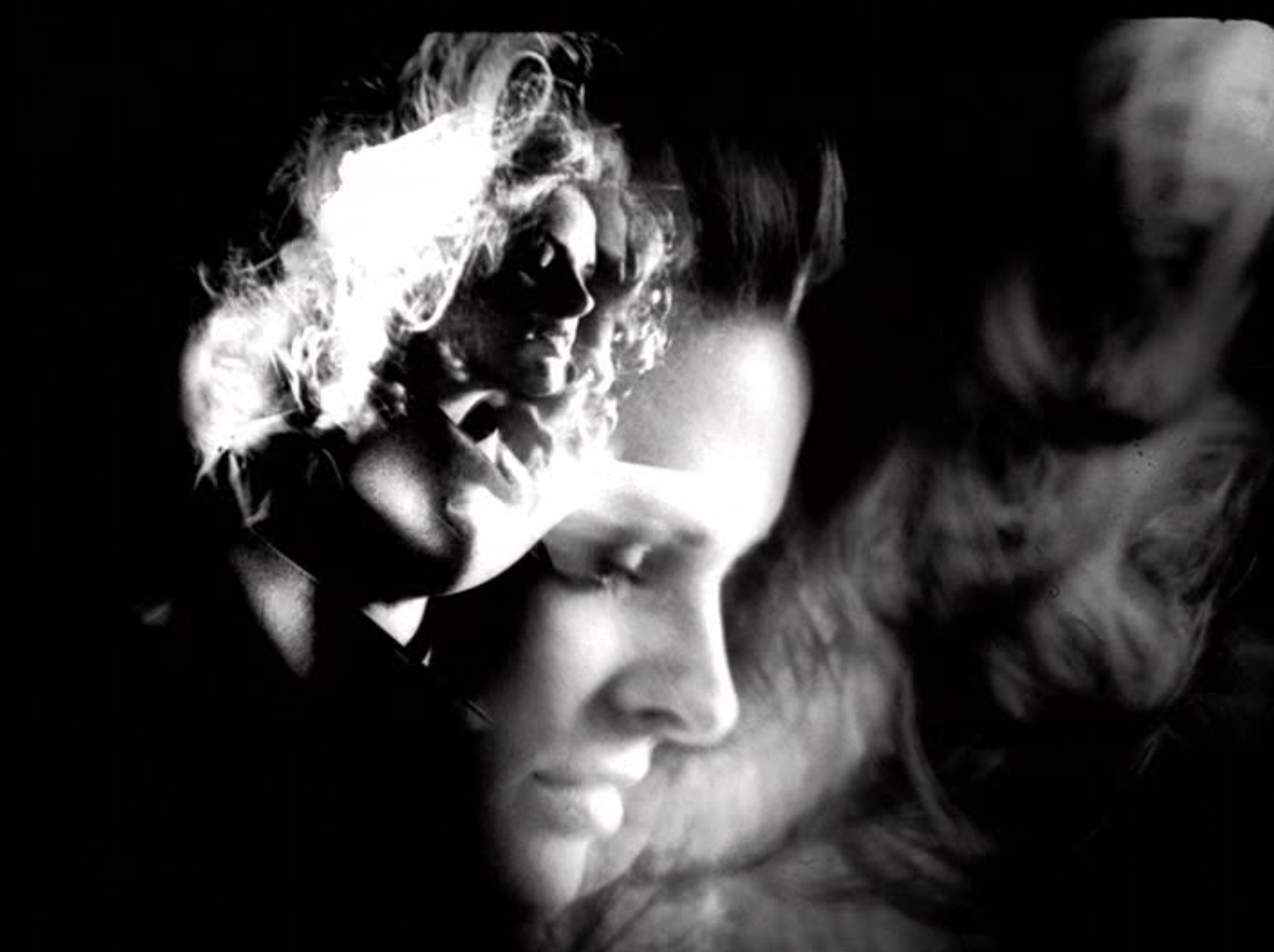
Collisions of narrative and its ruptures intensify in Outer Space (1999). Drawing on fragments from a Barbara Hershey horror film (1981’s The Entity), Tscherkassky constructs one of the avant-garde’s most unnerving works, where “the actress reacts to the material, the material doesn’t react to her.” Blackness engulfs the frame, broken only by flares and spots that reveal slivers of a house, a corridor, a woman wandering as though trapped inside the filmstrip itself. Her identity splits and multiplies; she receives premonitions from her own fractured image. The film becomes her tormentor—scratching, overexposing, ripping at her body—until even the soundtrack slips violently off its optical track. When she lashes out toward the screen, it feels like an assault on the viewer, as though she were trying to shatter the membrane between image and spectator. She fades into shadows of shadows, a ghost of the medium that birthed her.

If such is cinema possessed, Dream Work (2001) is its exorcism. Dedicated to Freud and Man Ray, it imposes the twin principles of dream logic—displacement and condensation—until meaning liquefies into pure psychic flux. It begins with a window, the primordial movie screen, glowing through a filter of thought. A sleeping face becomes the projection surface for its own desires, where erotic provocation circulates through clocks ticking with Bergmanesque solemnity. Pleasure and violence blur, images melt and spasm, fantasies collapse under their own convulsive rhythms. Dreams here are not escapes but traps woven from longing.

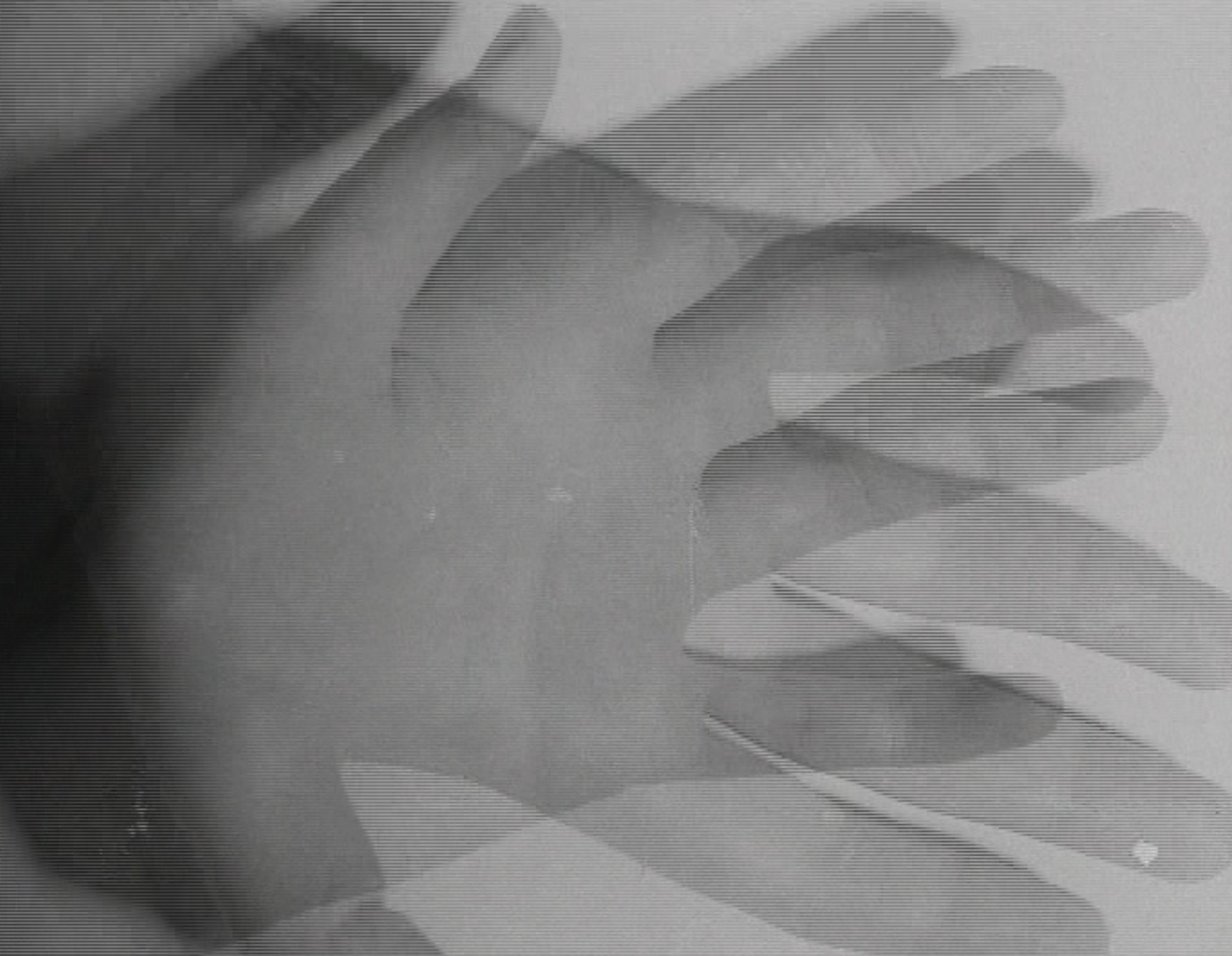
Tscherkassky’s fascination with cinema’s physical limits is already present in Manufraktur (1985), where found footage becomes the raw material for probing what he calls “a grammar of narrative space.” Scenes of cars racing, pedestrians drifting, and hands blurring in motion conjure the promise of speed and pastoral escape, reinforced by a calm voiceover. Grain overtakes imagery as movement surrenders to the obstinate mechanics of acetate, dissolving back into its fundament.

The impulse to return cinema to its origins is also central to Motion Picture (La Sortie des Ouvriers de l’Usine Lumière à Lyon) (1984), Tscherkassky’s first homage to the Lumières. By reprojecting Workers Leaving the Factory onto fifty strips of unexposed film and assembling them anew, he creates an artifact of light patches, as if memory itself were being visualized in its imperfect state, light beating against matter.

Even in miniature, Tscherkassky cultivates the tension between serenity and rupture. Get Ready, the official trailer for the International Film Festival “Viennale” in 1999, begins with a peaceful seaside moment before being hijacked by traffic, car chases, and melodramatic collisions compressed into a single minute. Stefan Grissemann calls it “a life against the mainstream,” a tiny world where tranquility and chaos coexist in impossible proximity.

The earliest piece in this collection, the bonus track Miniaturen – Viele Berliner Künstler in Hoisdorf (1983), offers a semi-documentary glimpse of Berlin artists introducing avant-garde practices to a small Schleswig-Holstein village. Thomas Kapielski’s manipulated soundtrack anticipates the future logic of DVD commentary before the technology existed. Time folds and voices pass through each other, creating a layered meditation on memory, perception, and the instability of documentary truth.

Across these works, Tscherkassky does not merely experiment with celluloid but excavates its ontology. His films insist that cinema is not a transparent window but a permeable membrane trembling between exposure and erasure. To “unravel and dissolve the medium” is not to kill cinema but to return it to its primal conditions: darkness, light, contact, shock. This is cinema as nerve ending.

Such engagements constitute not the absence of ecstasy but its prerequisite. Only by approaching film with absolute clarity can images vibrate with such metaphysical intensity. In Tscherkassky’s darkroom, we confront the unsettling possibility that in tearing itself apart, cinema leaves us torn in kind. We do not simply watch his films. Through their flicker, we encounter that which can only be understood when it is broken and put back together again.