

There’s a secret, a beautiful secret, hidden behind the lips of most of us who write about music: our ears are magnets for fingerprints. We rarely notice them until a sound has already gone, leaving something of itself behind. In the music of PIANIKA, a New Zealand electronic producer, such elusive contact becomes a compositional principle. Acoustic sounds retain traces of their origins within electronic arrangements, where the organic and synthetic enter into an unusually sympathetic relationship. Her rhythms invite movement without demanding it, balancing the restorative qualities of ambient music with the physical pleasures of a gentle house beat. There is something quietly radical about this hospitality of sound, this willingness to let a melody disclose its vulnerabilities without requiring their resolution. Even the spaces between notes seem charged with possibilities for reflection, allowing the smallest gestures to acquire unexpected significance. PIANIKA makes music for those moments when consciousness loosens its grip on the immediate world.
The question of naming is particularly meaningful for PIANIKA, whose moniker is her middle name, inherited from her great-grandmother, the daughter of the chief of Maniapoto, a Māori iwi she describes as known for its music. Its history involves an intriguing act of translation: Bianca, a character in an English book, was given the Māori name Pianika. The association with purity or whiteness is therefore indirect, an etymological suggestion rather than a literal definition. As a child, she went by Pianika, although her official first name gradually assumed precedence. The inheritance continued to resonate more deeply with her, eventually becoming her artistic identity. Her music seems animated by this transformation, taking sounds from their original contexts and allowing them to communicate in unfamiliar ways.
Another inheritance proved equally consequential. “My grandmother passed away before I was born, leaving behind her piano,” PIANIKA recalls. The instrument remained in her childhood home, where she developed an immediate fascination with it, sometimes playing for hours. Music offered an early means of meditation and emotional expression, although her academic interests eventually led her toward biochemistry. That scientific background offers an interesting perspective on compositions whose seemingly simple structures reveal considerable intricacy upon closer listening. Her path changed at 22, when her partner asked why she had never considered pursuing music more seriously. Shortly afterward, she downloaded Ableton and began exploring electronic production, drawing upon more than a decade of informal classical piano experience. Her equipment remains modest: a laptop, headphones, a carefully maintained collection of virtual instruments and her beloved piano. This economy is reflected in the music, whose emotional range arises from a restrained sonic vocabulary.
Her practice draws further nourishment from the natural world, whose sounds she has gathered during years of travelling with a microphone. Field recordings become integral to her arrangements, preserving traces of the environments in which they originated. Daily walks through forests and beside the ocean remain essential to her creative routine, while sailing and surfing offer other forms of immersion. “I feel inspired most of all,” she confirms, “by the interactions of water and light.” Her album artwork features photographs taken during the same adventures that inspired the compositions. Although she received an offer of a photography scholarship in her final year of school, she pursued other interests, allowing her visual practice to develop alongside her music. Her photographs preserve encounters with a landscape; her compositions translate their sensory qualities into another medium.
PIANIKA has described her fusion of ambient music and subdued techno beats as “lullaby house,” an expression that captures her ability to reconcile the circularity of rhythm with the surrender of sleep. Her introduction to electronic production was strongly influenced by Majestic Casual and The Sound You Need, platforms that expanded her sense of what electronica could accomplish and “felt like coming home after a long journey.” Among her inspirations are KAASI, Petit Biscuit, ODESZA and Darius, although the sensuous vocal atmosphere of Galimatias and Alina Baraz’s Urban Flora seems especially relevant to her aesthetic. Despite these affinities, her compositions possess a distinct character, their rhythmic precision softened by affection for acoustic sounds and understated melodic development.
Across Pisces (2024) and Dream Work (2024), followed by the newly released Touch (2026), PIANIKA develops a vocabulary whose meanings remain beautifully unsettled. The first draws upon an astrological imagination, the second explores the unconscious processes through which memory and desire evolve, and the third turns toward physical contact and vulnerability. Together, they suggest a progression from cosmic belonging toward increasingly personal forms of connection. This is particularly compelling in electronic music, an art capable of generating extraordinary sensations of proximity through technological mediation. PIANIKA encourages us to consider how much of what we call presence depends upon memory and imagination.
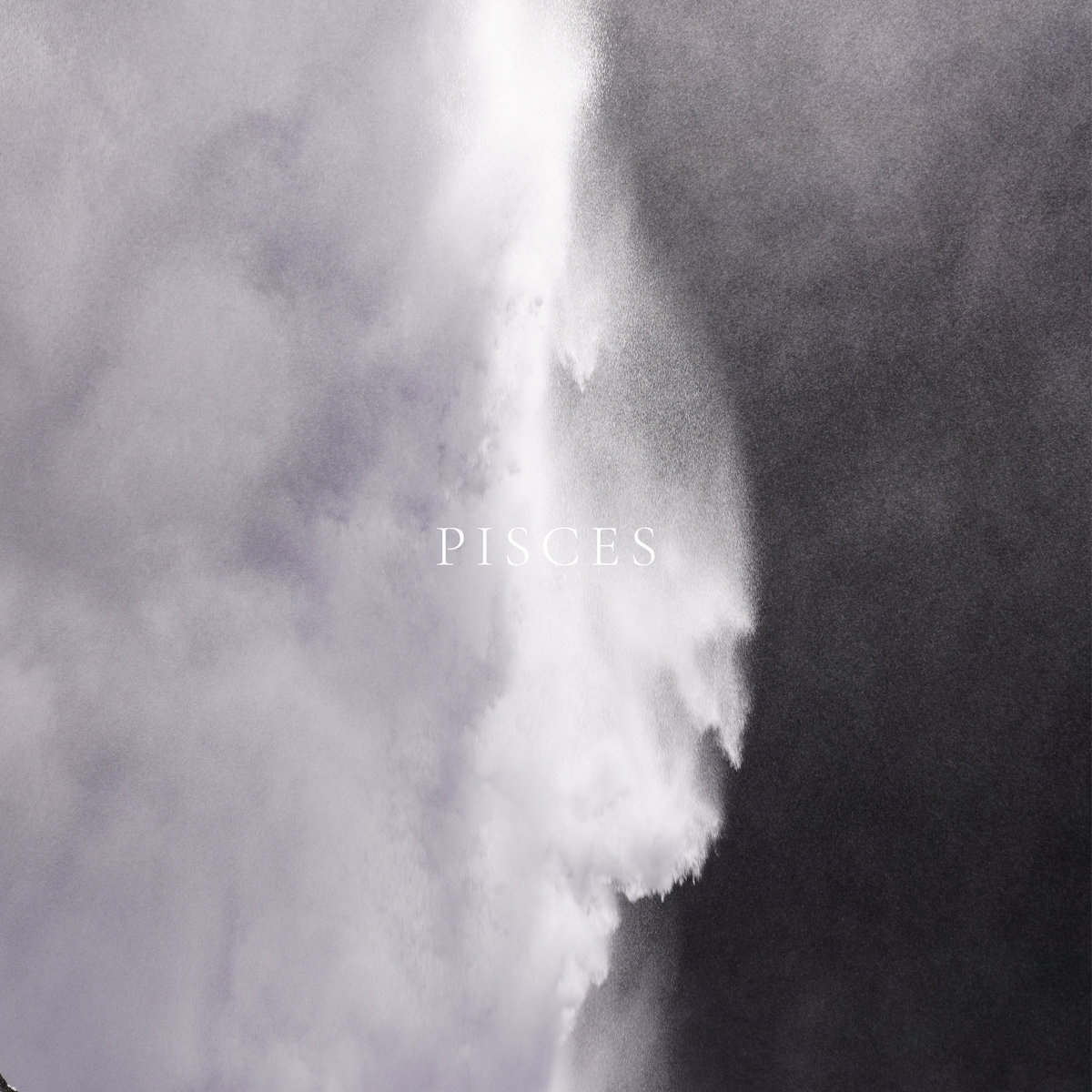
With Pisces, musical structure and emotional expression seem inseparable. The title track opens in a gentle drift before the beat enters, discovering peace in a broken world. Just as its direction becomes predictable, the arrangement expands into weightlessness. In “One,” the human voice becomes increasingly important. Words remain shy and just beyond reach, yet their intentions are intensely present within the delicate backbeat; the listener responds to their tone without being directed toward a particular interpretation.
In a chill mix of “With You,” the lights of love dim as a blissful equilibrium develops through the interaction of rhythm and melody, suggesting two people discovering a way to communicate without eliminating their differences. The internal pulse of “Sun Kiss” feels connected to the body’s instinct for movement, its melodic details offering emotional release without insistence.

Of the three EPs, Dream Work offers the deepest immersion in PIANIKA’s contemplative affinities. Its opening “From Love (ambient edit)” has an immediately restorative quality, developing through subtle changes in texture rather than pronounced rhythmic movement. An ambient rendition of “Pisces” follows, its oceanic sounds suggesting the faint rush of blood in the ears.
“Interlude” brings the piano forward amid softly echoing textures, with birdsong joining the intimate relationship between natural sound and electronic composition. By the time “Hvar” introduces snapping fingers and flowing vocals, the music has acquired an even greater sense of proximity. A restrained digital pulse supports the arrangement, while the animate character of the singing makes this one of PIANIKA’s most affecting creations. She understands that tenderness depends as much upon what remains understated as upon what is openly expressed.
The piano assumes greater prominence in “Unravelled,” accompanied by a voice that moves gracefully around its melodic phrases. A sense of self-discovery emerges without insisting upon any final understanding. “Accolades” introduces delicate click-core sensibilities and lilting arpeggiations, suggesting nostalgia without attaching it to a particular memory. This sequence arrives at “You,” a loving conclusion that offers reassurance while acknowledging the uncertainties of attachment. Addressing another person involves recognizing an existence that can never become entirely available to us. Here, affection becomes a willingness to accept that mystery, allowing closeness to remain meaningful without eliminating distance.
The music is especially attentive to the subjective experience of time, which expands or contracts according to the intensity of inward attention. Hearing familiar material in a different arrangement encourages reflection upon memory and reinterpretation: musical ideas once associated with movement acquire another emotional character when their rhythmic context changes. Dream Work thus considers how experience continues to develop beyond the moment in which it first occurs.

Touch brings these concerns into a more explicitly affectionate register. Its opening “LUH” recalls the tender vocal atmospheres of Late Night Alumni, its delicate beat accompanying the passage of time with reassurance. “As You Grow” follows with midrange vocals that retain a slight distance while remaining clear in their emotional transmission. Beneath the singing, a gently insistent rhythm supports the patient, almost familial affection implied by the title.
An uplifting expression of development appears in “So Proud of You,” PIANIKA’s collaboration with TÂCHES. Higher clusters of sequenced notes lend the arrangement an expansive sense of movement and discovery. The transition toward “Shy” brings a quieter perspective on emotional exposure. Its vocal fragments convey affection through their hesitancy, approaching the threshold of intelligibility without always crossing it. Shyness acquires a dignity rarely afforded to it, becoming an indication of attentiveness rather than a limitation upon connection.
This openness to transformation is particularly evident in her treatment of the human voice. Asked how she decides when to sing and how to process her vocals, PIANIKA spoke of creative flow: “As an artist, I find satisfaction in turning down the volume of the conscious brain, and letting the subconscious make the art.” She frequently slices recordings into fragments, playing them through a drum rack and processing them with Valhalla Supermassive reverb. Such experiments sometimes suggest a song’s direction, as with “Shy.” While developing a remix of TÂCHES’s “Dances for Wolves,” she explored an alternative vocal interpretation that did not appear in the final remix but later supplied material for 9’6”. There is a philosophical implication in this fragmentation. Singing, ordinarily associated with identity and direct communication, becomes more ambiguous when words are separated from their original contexts. Meaning persists through tone and rhythm, beyond intelligible language.
The closing original version of “From Love” gathers these qualities into lo-fi beats and intimate singing that convey acceptance. Heard alongside its ambient treatment on Dream Work, it demonstrates how the same musical material can acquire new significance through changes in arrangement, much as our recollections evolve with subsequent experience. This relationship between continuity and transformation also illuminates the EP’s title. Physical contact is among our most immediate experiences, yet its meaning remains dependent upon interpretation. A touch can communicate reassurance or uncertainty according to circumstances the gesture itself cannot explain. PIANIKA approaches this nuance with sensitivity, recognizing that intimacy involves an ongoing negotiation between the desire for closeness and another person’s irreducible independence.
When I asked whether her music possessed a metaphysical or spiritual dimension, PIANIKA responded: “I think any music that makes you feel something is working with the metaphysical.” Music enters the body through measurable vibrations, yet the feelings awakened by those vibrations cannot be explained entirely through their physical properties. Each listener brings a different history to the encounter. PIANIKA hopes her work will communicate uplift, calm and awe for the beauty of the Earth, while allowing listeners to discover meanings beyond those she consciously intended. Its emotional clarity coexists with an openness that respects the complexity of those receiving it, offering consolation without presuming to know what anyone needs.

