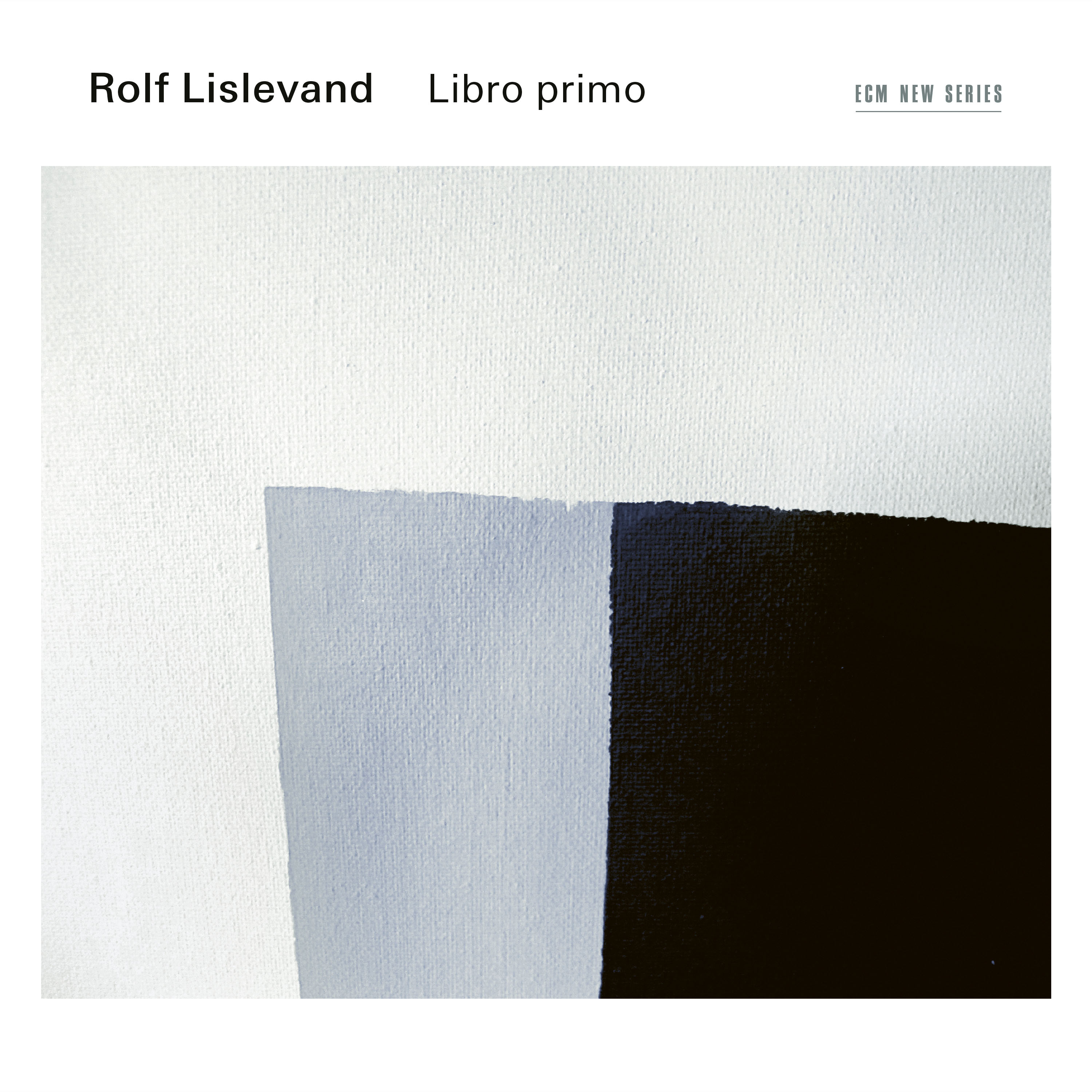
Rolf Lislevand archlute, chitarrone Recorded 2022-23 at Moosestudios, Evje, Norway by Rolf Lislevand Mixed October 2024 by Manfred Eicher, Rolf Lislevand, and Michael Hinreiner (engineer) at Bavaria Musikstudios Cover photo: Fidel Sclavo Produced by Manfred Eicher and Rolf Lislevand Release date: August 29, 2025
Nearly a decade after his last appearance on ECM, early music specialist Rolf Lislevand returns to the New Series with another solo program, shifting focus now from the court of Louis XIV to 17th-century Italy. The album’s title is a nod to Il libro primo, a musician or writer’s first volume of works that, as Lislevand notes in the album’s booklet, “can often hold the most inspired and radical creations of an artist.” Like the more formalized Opus primum, it carries a certain creative charge, affording listeners a glimpse into the artist’s most foundational thoughts in a realm of lively experimentation and recalibration of existing rules.
It’s also an exciting realm to explore for proving that the lutenist’s repertoire is far more vast and varied than the fairweather listener may mistake it to be. Take, for example, the program’s two opening works by Johann Hieronymus Kapsberger (c. 1580-1651) and Giovanni Paolo Foscarini (c. 1600-1647). Whereas the former’s Toccata terza greets the dawn like eyelashes fluttering into wakefulness, the latter’s Tasteggiata is its nocturnal other, revealing a strikingly modern atmosphere that Lislevand likens to the French impressionists and even to Carla Bley. Neither characterization is misplaced, given the improvisational elements incorporated into the present renderings, which allow for something ethereally raw to spring forth.
And what of the fantastical arpeggios that open Kapsberger’s Toccata sesta, added by Lislevand and seemingly drawn from the same well? In them is the promise of life and love, all unraveled with a meticulous sort of freedom. The mid-tempo feel of Kapsberger’s Toccata quinta strikes that same balance of flourishing and nourishing, never letting go of the Baroque’s architectural sensibilities.
A highlight is the Corrente con le sue spezzate of Bernardo Gianoncelli (d. c. 1650). Despite being the latest work on the program in terms of publication, dating to the end of his life, it is a veritable flower of a tune. With a clear bass line as pistil and sparkling ornamentations as petals, it sways to the wind of Lislevand’s organic touch. It also epitomizes the nuove musiche approach of the times, which went against the polyphonic grain of the Renaissance by favoring deeper rhythmic interplays through which staid motifs were recontextualized. One might liken such a movement to Hollywood’s propensity to remake its own cultural products, an impulse that (profit motives aside) points to the seemingly universal need to repackage the past in the aesthetics of the new so that audiences can connect to the same emotional content on more immediately relatable terms.
Thoughtful inclusions are to be found in two Recercadas by Diego Ortiz (c. 1510-1576). Despite their spatial and temporal differences, Lislevand places Ortiz and Kapsberger on the same shelf for their syncopations and expressive colorations. Each spins increasingly complex relationships from deceptively simple beginnings, growing fractally with every reiteration.
Yet the pinnacle for me is Lislevand’s original Passacaglia al modo mio, which is at once a distillation and loving expansion of the passacaglia form. It combines many of the elements found in its surroundings, including a robust “left hand” in the bass and a lithe “right hand” in the overlying melody. It also changes faces multiple times from start to finish, its improvisational layers paying homage to Barbara Strozzi, Bach, Beethoven, and Keith Jarrett. All the while, it maintains a haunting sense of familiarity, especially in the concluding progression, which invites us into its circularity like a child comforted by a mother’s embrace.
Special mention must be made of the recording, captured in a barn in northern Norway by Lislevand himself, engineered by Michael Hinreiner, and mixed by both Lislevand and Hinreiner alongside producer Manfred Eicher in Munich. Although the archlute is primary, some of the pieces originated on the Baroque guitar and chitarrone (or theorbo), which is also played here and distinguished by its darker, more rounded tone. Instead of enveloping these instruments in a wash of artificial sound, the reverb draws out their inner essence with tasteful details of wood and strings.
“You wish to see, listen; hearing is a step towards vision.” –Saint Bernard of Clairvaux (ca. 1090-1153)
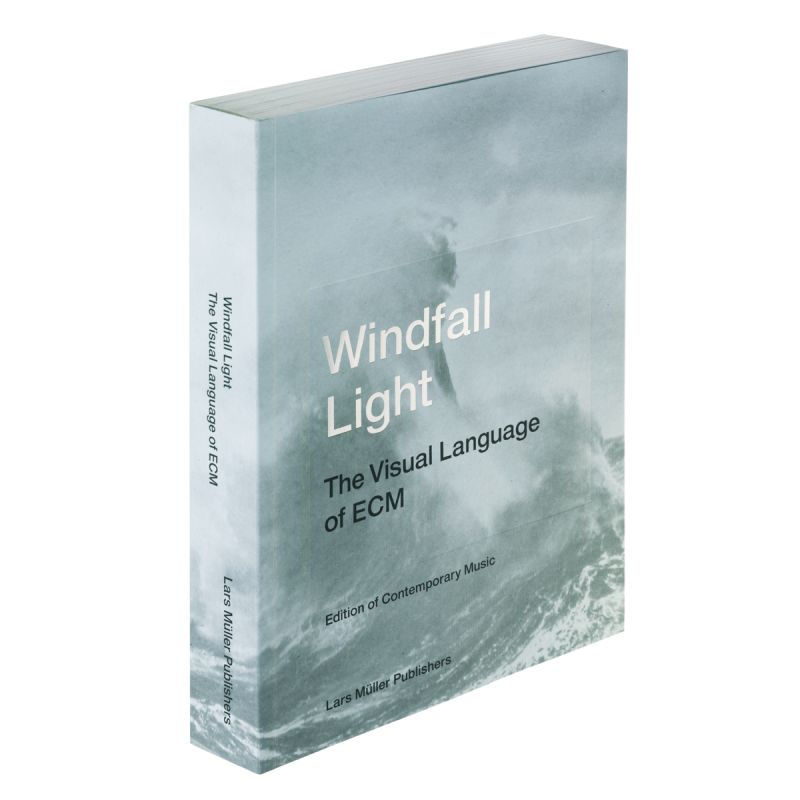
The act of looking has long been likened to that of listening. Visual art, by no mere coincidence, is often spoken of in compositional terms, as great paintings and sculptures may be likened to symphonies in complexity and coordination. In music itself, sight reading is the quintessential form of looking as listening: The studied mind can track attention across a score and hear the music without a single musician present. But what of listening as an act of looking? Such has been the ethos of ECM Records since its inception.
Although the label has come to have a certain “look” to its admirers, it achieves in its aesthetic presentation not a look but a sound. One listens to an ECM album cover—be it a somber black-and-white photograph, an abstract painting, or a typographic assembly—by hearing it through the eyes. Although the images themselves are not necessarily reflective of the music, and only occasionally of those performing it, they do provide a framework for the disc sheathed within. As was already demonstrated in this book’s predecessor, Sleeves of Desire: A Cover Story, an ECM album is a liminal reality in which the self before and the self after find cohesion at the intersection of life and art.
In the case of ECM, it’s not the cover that necessarily provides insight into the music but, if anything, the music that provides insight into the cover. One example that comes immediately to mind is the montage that graces Pat Metheny’s New Chautauqua:
What could Dieter Rehm’s photo of the Autobahn between Zurich and Munich have to do with such a distinctly American sound? Perhaps nothing when viewed from that POV. But flip the telescope around, turning it into a microscope, and the open road now becomes a universal call to nomadism and to the magnitude of the unknown, of which Metheny’s music is a maverick flagbearer. And herein lies the attraction of the ECM-album-as-object: It invites us to step outside our skins as a way of more fully inhabiting them.
“In terms of the gaze,” writes Jean-Luc Nancy, “the subject is referred back to itself as object. In terms of listening, it is to itself that the subject refers or refers back.” It may feel natural to separate these two acts. Still, the full package of an ECM album turns closed circuits into open ones, reconnecting us with something childlike, primal if you will, by allowing us to feel that tingle of excitement every time we press PLAY and, after five seconds of anticipation, are thrown into some of the most beautiful dislocations imaginable in recorded music. As La Monte Young once put it to Tony Conrad: “Isn’t it wonderful if someone listens to something he is ordinarily supposed to look at?” Indeed, we can be sure of reuniting with that same wonder when experiencing the unusual harmony that can only be found between such a counterpoint of sound and image. For how can one behold Jim Bengston’s stark monochromatic landforms on Lachrymae and not want to traverse them with Paul Hindemith’s Trauermusik as guide?
Not only is there a relationship to be found between covers and the albums they grace, but there is also much to discover in new juxtapositions. Because the images in Windfall Light are presented somewhat thematically, whether by photographer or visual motif, we are invited to explore associations we might not otherwise have made. One noteworthy spread, for example, pairs Robert Schumann: In Concert with Angel Song, thereby stimulating our curiosity for the unseen electricity between them.
Furthermore, the book contains five richly varied essays to immerse ourselves in.
In “When Twilight Comes,” German journalist Thomas Steinfeld dutifully expresses the viability of ECM’s visual identity as necessarily open-ended: “None of these pictures is an illustration in the narrow sense of the word. None of them refers to either the music or the musicians as a decoration. None of them pretends to give an interpretation or even to be interpreted on its own.” They are, rather, accompaniments. “Each is a hieroglyph,” he goes on to say, “free from much of its potential meaning, a work of dreamlike qualities, taken from nothing, a sudden objection against the profane and its often inescapable presence.” Steinfeld also notes the prevalence of water in ECM album covers—not as a reflective but a dynamic force—in addition to abstracts, street scenes, and less definable paeans to silence. Regarding the rare portraits of the actual featured musicians (Paul Motian, Meredith Monk, Keith Jarrett, the Art Ensemble of Chicago, Charles Lloyd, etc.), he wonders: “Is this an accident, an honor, a matter of circumstance, or devotion?”
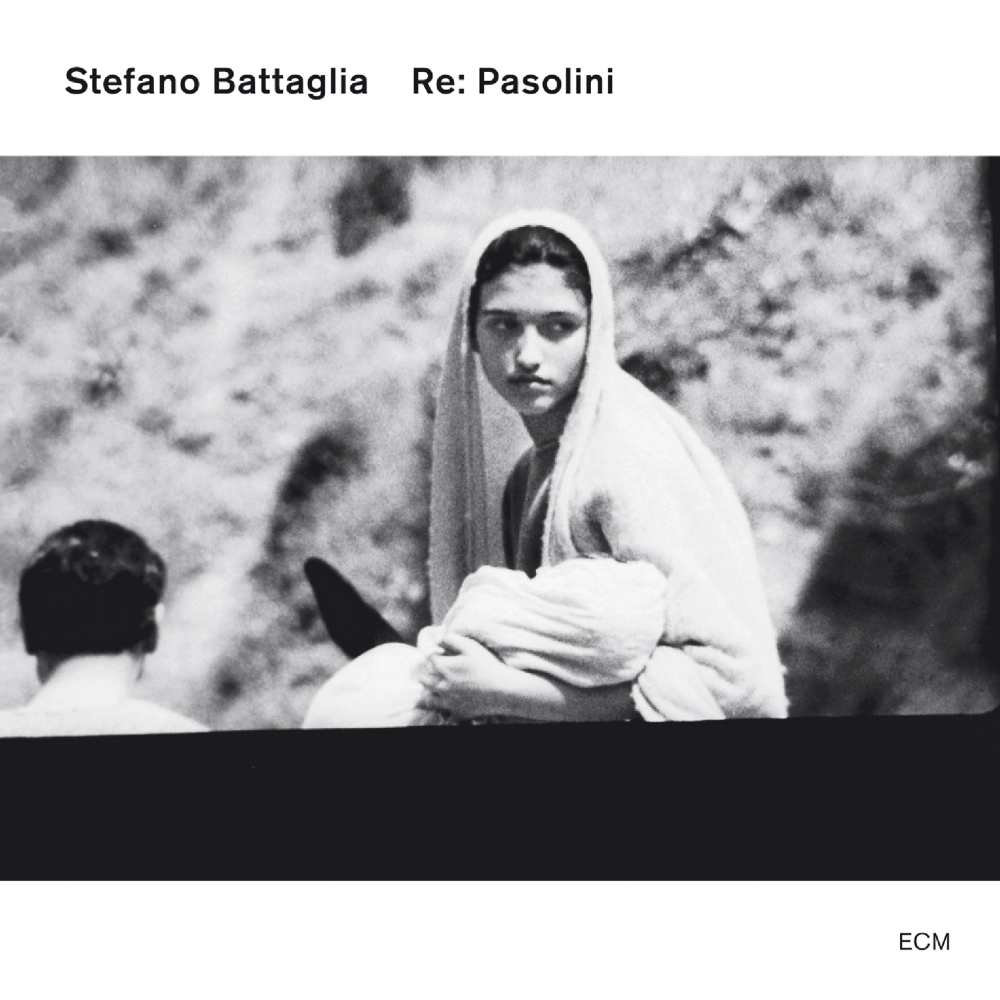
Author and museum curator Katharina Epprecht goes a step further in evoking the term “Transmedia Images.” By the title of her contribution, she means to suggest that ECM’s covers possess an interdisciplinary adjacency. Rather than being tautological loops, they are part of a “vast puzzle,” each a doorway into other senses and materialities. Thus, it is not the image’s ability to illustrate the music but rather “the immensely refined way that it handles unexpected shifts of meaning” that any listener will inevitably encounter. And while the images may be “based on correspondence to the character and quality of the music,” they are not beholden to it. Hence their potential as catalysts for personal transformation. “[T]he carefully packaged silver discs,” she waxes most literally, “are light and portable companions through life, motivating us to engage in contemplation, to pause for a moment.” In that respect, they allow us to understand more about our place in the world by questioning the many borders we draw around, through, over, and under it. Epprecht even provides a quintessential example of her own in Re: Pasolini:
Of this cover, she observes the following: “All of the gracious Virgin Mary’s senses are concentrated on her child, while the ears of the donkey unconsciously and reflexively register every sound. The instinctive perception of animals is unbiased and undeviating. I can think of no other picture that more touchingly elevates maternal attentiveness and unadulterated hearing to a metaphor.” Therefore, it’s as much the choice of image as its content that inspires us to regard the old as new, and vice versa.
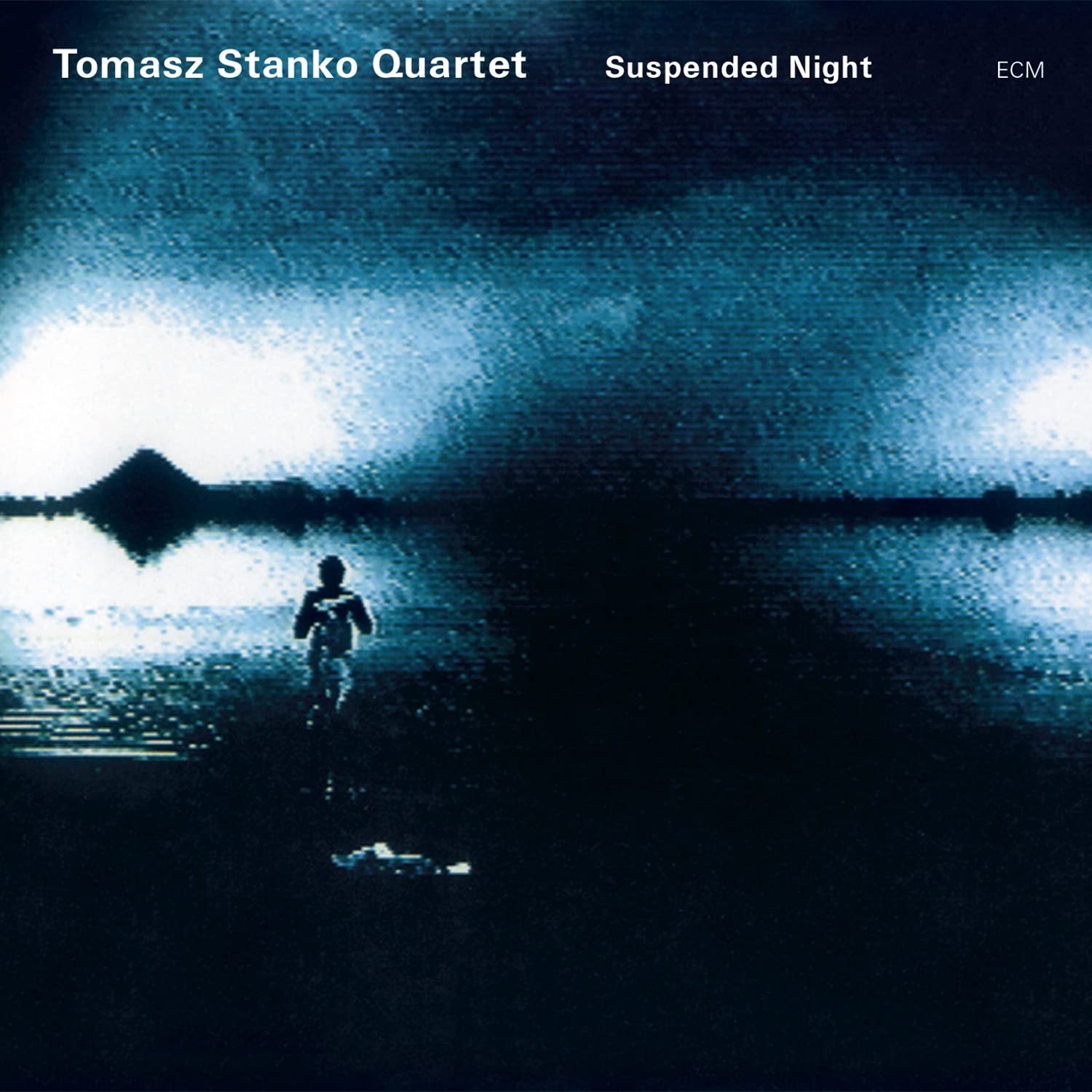
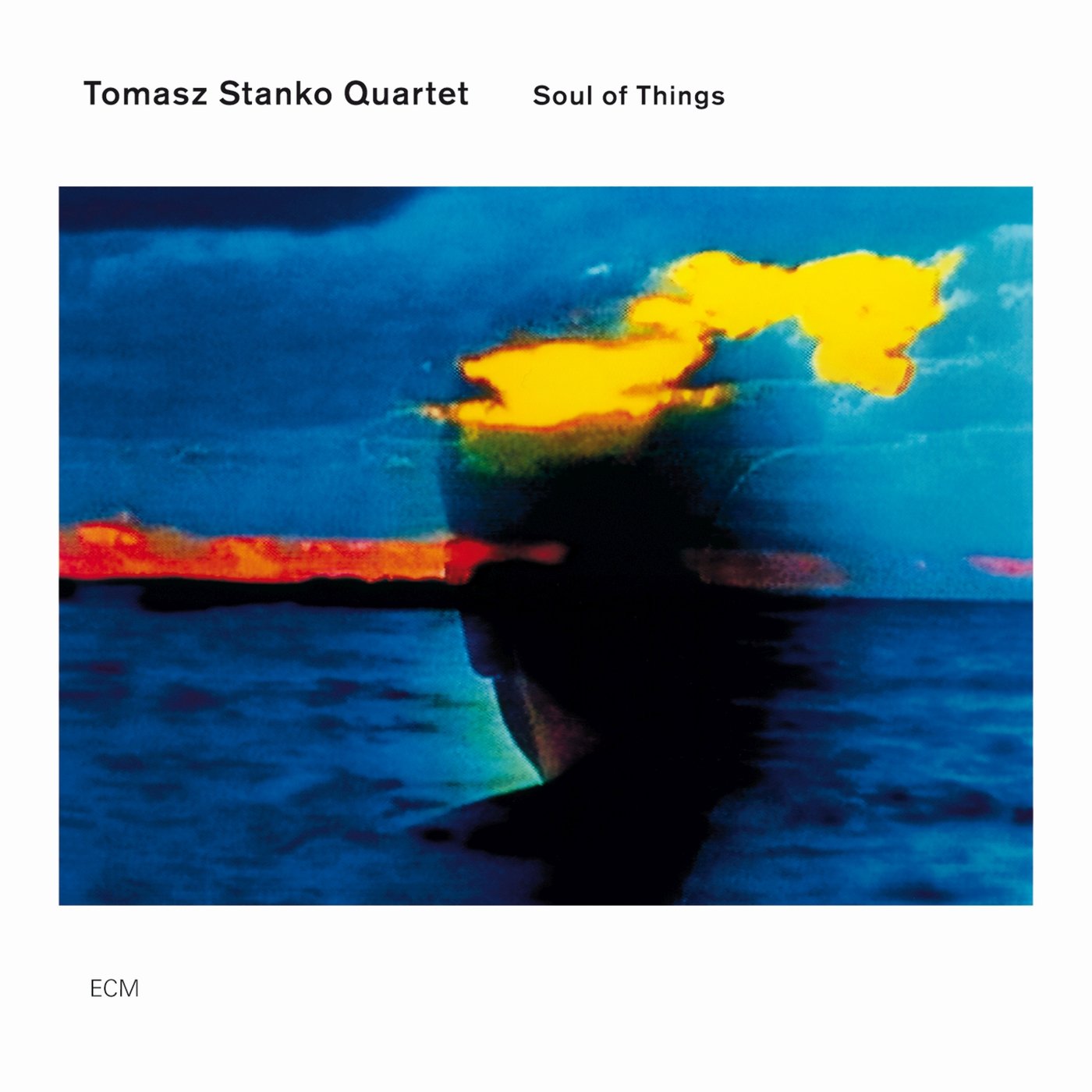
British writer Geoff Andrew takes us yet another step deeper into intersectionality in “Leur musique: Eicher/Godard – Sound/Image.” Here, the concern is with the cinematic awareness that has long been at the heart of producer Manfred Eicher’s approach to mise-en-scène. Because both he and filmmaker Jean-Luc Godard are fond of “juxtaposing, combining and mixing up elements which most people in their respective fields would never dream of bringing together,” it was only natural that Godard’s work would come to be associated with such seminal recordings as Suspended Night, which features a still from his mangum opus, Histoire(s) du Cinema, and Soul of Things, which references Éloge de l’amour:
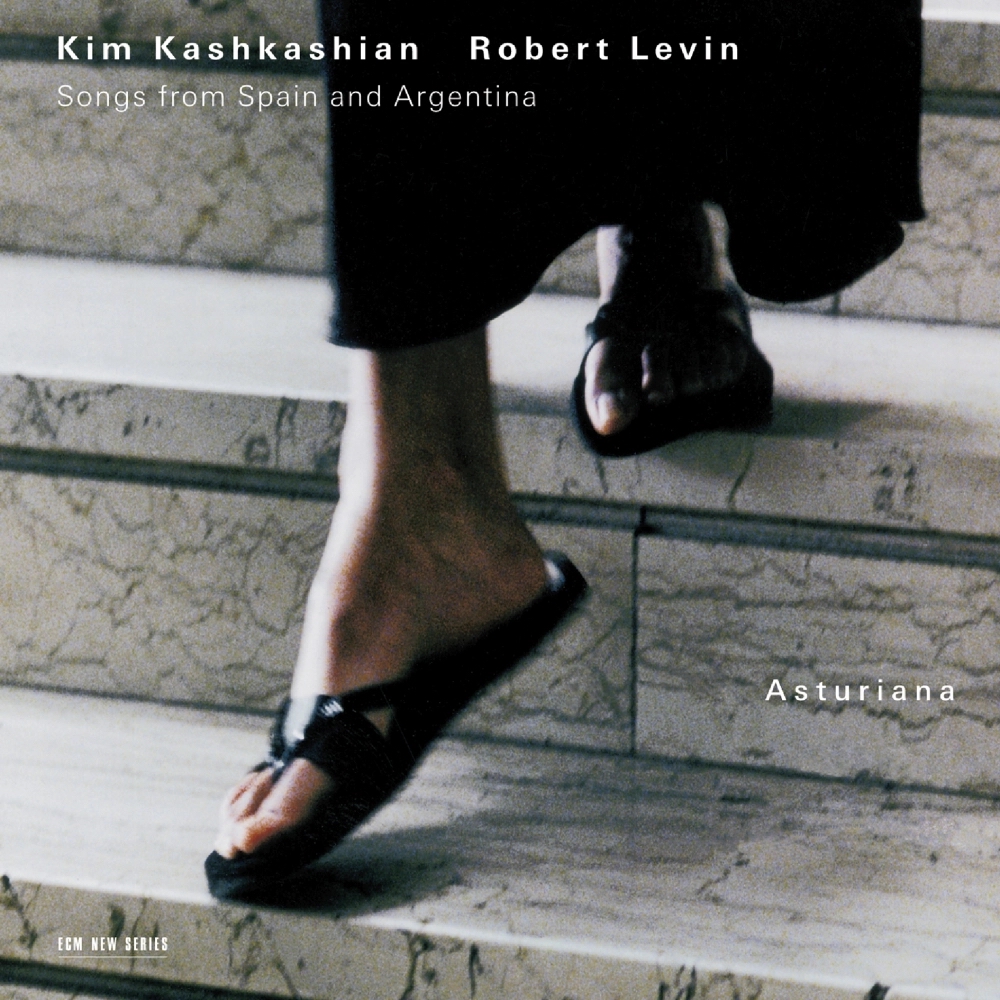
Perhaps not surprisingly, these are already borrowings from other sources—quotations of quotations (and is not classical music the same?). Other Godard touchpoints include Notre musique for Asturiana and Passion for Cello and Trivium.
One could hardly imagine such a book as Windfall Light without including the perspective of at least one ECM musician, and in pianist and composer Ketil Bjørnstad, we are given a most suitable ambassador. In “Landscapes and Soundscapes,” he looks not at the spatial but at the temporal. In speaking of the timeless quality of the covers, he notes a preference for monochrome and Nordic landscapes and atmospheres. “Being produced by Manfred Eicher is a purification process for a musician,” he reveals. In so doing, he leaves an implied question hanging in the air: Does a cover photograph or painting also undergo a sort of purification process? When disassociated from its original context, does not the image open itself to infinite possibilities? Bjørnstad again: “Just as great composers and painters are recognizable down to the smallest phrase or brushstroke, ECM’s music and visual world are recognizable without the slightest danger of anyone calling this stagnation.” Thus, the more this recognition settles in our gray matter, the more we come to equate the landscape with the soundscape.
Last but certainly not least is “Polyphonic Pictures” by Lars Müller, whose publishing imprint has given us this fine volume. His offering is a relatively zoomed-out perspective on the questions at hand. Going so far as to describe the covers and music of ECM as “libertarian”—at least in the sense that they elide the intervention of power structures that all too often infect recorded media—he characterizes them as “afterimages of memorized circumstances far more than they are depictions of things that have been seen.” In that sense, they grow with listeners in connection to lived experience. This take resonates with me at the deepest personal level, as even one glimpse of a beloved album cover invokes a reel of memories, associations, and impressions. Rather than their technical aspects, it is their eventfulness, their movement in stillness, and their visceral foundations that make them come alive. And so, in his ordering and layout of the images, he has created for us a self-avowed “visual score.” Ultimately, they are only as delible as the paper they’re printed on, and so they can only live on in the mind’s eye, which, if it’s not obvious by now, is more accurately depicted as an ear.
Life has a way of reshuffling priorities from time to time. Since my last “synchronicity update,” I have abandoned academia to pursue a career as a full-time editor for a digital marketing firm, welcomed a third and fourth child into my growing family, mourned the death of my father-in-law (and the near-death of my father), and, most recently, moved house. All told, I have found it especially difficult to review—let alone listen to—new music with any degree of consistency during the past few years. However, after getting all of my ducks in a row, I am glad to report that as of today, I am once more caught up with ECM in my writing endeavors. I continue to be humbled not only by the label’s staggering output but also by the attention and kindness you have all shown me. Whether you have been reading this blog from the beginning or are newly exploring the catalogue, I can only hope that my reactions and ruminations can bring you closer to the music and guide you toward enriching discoveries along the way. Keep your eyes peeled for further surprises and changes as I devote more time to updating and refining some of the mechanics of the website for a better user experience. It has been a long and tedious process, but the results will be worth it.
Estonian Philharmonic Chamber Choir Tallinn Chamber Orchestra Tõnu Kaljuste conductor Recorded September 2022 Methodist Church, Tallinn Engineer: Tammo Sumera Design: Sascha Kleis Produced by Manfred Eicher Release date: April 25, 2025
“Fear not that thy life shall come to an end, but rather that it shall never have a beginning.” –John Henry Newman
The title of Tõnu Kaljuste’s lovingly curated program of works by Estonian composer Arvo Pärt comes from its leading composition, Littlemore Tractus. Like much of what is presented here, it is somewhat older (dating from 2000) but newly arranged by the conductor (in 2022). Scored for mixed choir and orchestra, it dramatizes words from the 1843 sermon “Wisdom and Innocence” preached by John Henry Newman in Littlemore, Oxford. In it, the English cardinal seeks refuge in the Lord, set apart from a world turning circles around its self-interest. Like a tornado in reverse, Pärt’s rendering transitions from destruction to the calm before the storm, serving listeners with something intangible. Even in the seven Greater Antiphons I-VII, a 2015 string arrangement of the Seven Magnificat-Antiphons from 1988, we can feel the tension between that which is touched and that which is felt. Each is a stained glass window, allowing us insight into that one place where light can only reach by grace: the heart. The last of these, “O Emmanuel,” is the magnificence of holiness distilled.
Cantique des degrés for mixed choir and orchestra (1999/2002) is a dynamic setting of Psalm 121, in which David looks to the Lord, ever sustaining and filled with life. Its parabolic structure, from internal to external and back again, ascends the steps to the Temple of Solomon, but casts a final look backward for want of other souls to save. The choir is recessive, never dominating the foreground even at its most glorious. This is followed by Sequentia for string orchestra and percussion (2014/2015). Originally written as part of the Robert Wilson production, Adam’s Passion, it offers a subliminal meditation on Christ’s death, burial, and resurrection. These Words… (2008) is scored for the same combination of instruments. No less expressive for its lack of text, it quotes Pärt’s own Psalom (last heard on 1996’s Litany) as an inward-looking catalyst.
L’abbé Agathon for soprano and string orchestra (2004/2008) is reprised from its appearance on Adam’s Lament in 2012, led by soloist Maria Listra in a much more intimate and contemplative interpretation. Based on a legend from the fourth century regarding an encounter between the Abbot Agathon and a leper (who is really an angel in disguise come to test his faith), it tells the story with programmatic flair, replete with a string-heavy transfiguration as the angel ultimately ascends heavenward.
The album ends with two supplications. Where Veni creator for mixed choir and orchestra (2006/2009) is a deep cry for forgiveness, Vater unser for mixed choir, piano, and string orchestra (2005/2019) sets the Lord’s Prayer. Thus, wisdom and innocence are shown to be things that none of us possesses except by the cross.
This is not music that one discovers but that one welcomes as a gift. From depth to depth, it anoints with the oil of understanding that God is indeed with us, wrathful yet forgiving of the harm we have inflicted upon his creation.
Alice Zawadzki Fred Thomas Misha Mullov-Abbado Za Górami
Alice Zawadzki voice, violin Fred Thomas piano, vielle, drums Misha Mullov-Abbado double bass Recorded June 2023 at Auditorio Stelio Molo RSI, Lugano Engineer: Stefano Amerio Cover painting: Emmanuel Barcilon Produced by Manfred Eicher Release date: September 13, 2024
Collected on our travels and taught to us by our friends, these are songs we have learnt and loved together. Gathered from Argentina, France, Venezuela, Poland, and the deep well of Sephardic culture, these folk tales speak to the moon, the mountains, the rain, the madness of humans, and the prophecies of birds.
The above is more than a collective artist statement from Alice Zawadzki (voice, violin), Fred Thomas (piano, vielle, drums), and Misha Mullov-Abbado (double bass). It’s also an example of how traditions, regardless of geographical distance, are organs of a larger body. Said body is literal, not metaphorical, insofar as it connects all of humanity at the internal level (the blood), even when the external (the voice) seems so disparate. The album’s title, Za Górami, says the same. Although it translates to “Behind the Mountains,” it is the Polish idiomatic equivalent of “Once upon a time…,” less a prompting of place than of possibility—not unlike the selections gathered here.
Within the trio’s curation of material, there is a liberal sprinkling of Sephardic songs. And yet, while some of the most well-worn treasures of the repertoire, including “Los Bilbilikos” (The Nightingales) and the lullaby, “Nani Nani,” are to be expected, the tact of each arrangement is remarkable. Even when the latter builds to an almost rapturous conclusion, it never loses sight of slumber’s healing effect. Such restraint is only made possible by a receding musicianship that lets the verses speak for themselves. This is increasingly rare to hear in Ladino programs, which can feel over-arranged as early music ensembles seek to outdo one another, favoring the interpreters over the interpreted. Not so in the hands of Zawadzki, who pours vocal plaster into “Dezile A Mi Amor” (Tell My Love) and “Arvoles Lloran Por Lluvias” (The Trees Weep For Rain) as if they were footprints in a landscape to be disturbed as little as possible. The tone and shape she brings to even wordless improvisations constitute natural delineations of their source material.
In Gustavo Santaolalla’s “Suéltate Las Cintas” (Untie The Ribbons), we find a most suitable modern companion. Steeped in the composer’s characteristically cinematic qualities, it lends itself to broader strokes in an instrumental economy. Thomas’s pianism is a warm evening breeze that equalizes the ambient air of its chamber and the lovers breathing it in. Its denouement alongside Mullov-Abbado’s heartbeat weaves a veil of privacy before Zawadzki renders their ecstasy a poetic afterimage. Another kindred spirit awaits in “Tonada De Luna Llena” (Song Of The Full Moon) by Venezuelan singer Simón Díaz, which yields some of the most evocative descriptions:
I saw a black heron Fighting with the river That’s how your heart Falls in love with mine
The moon, even when not explicitly mentioned, is a constant presence in these songs, shining on the maiden in “Je Suis Trop Jeunette” (I’m Too Young, after Nicolas Gombert) who dreams of being swept away from her family. Her internal conflict is only heightened by the prepared piano in the upper registers, which carries over into the title song by Zawadzki, after the Polish traditional about a girl who defies her mother and ends up dancing her life away. “Gentle Lady,” Thomas’s setting of James Joyce, is a folk song in and of itself, stepping out of time to unravel its literary knot with grace.
ECM listeners familiar with the label projects of Savina Yannatou, Arianna Savall, and Amina Alaoui will feel swathed in comfort here, even as they are caught up in the unique flow that only this trio can bring forth from the hillsides of their wanderings. How fortunate we are that their paths have aligned on this side of the mountains.
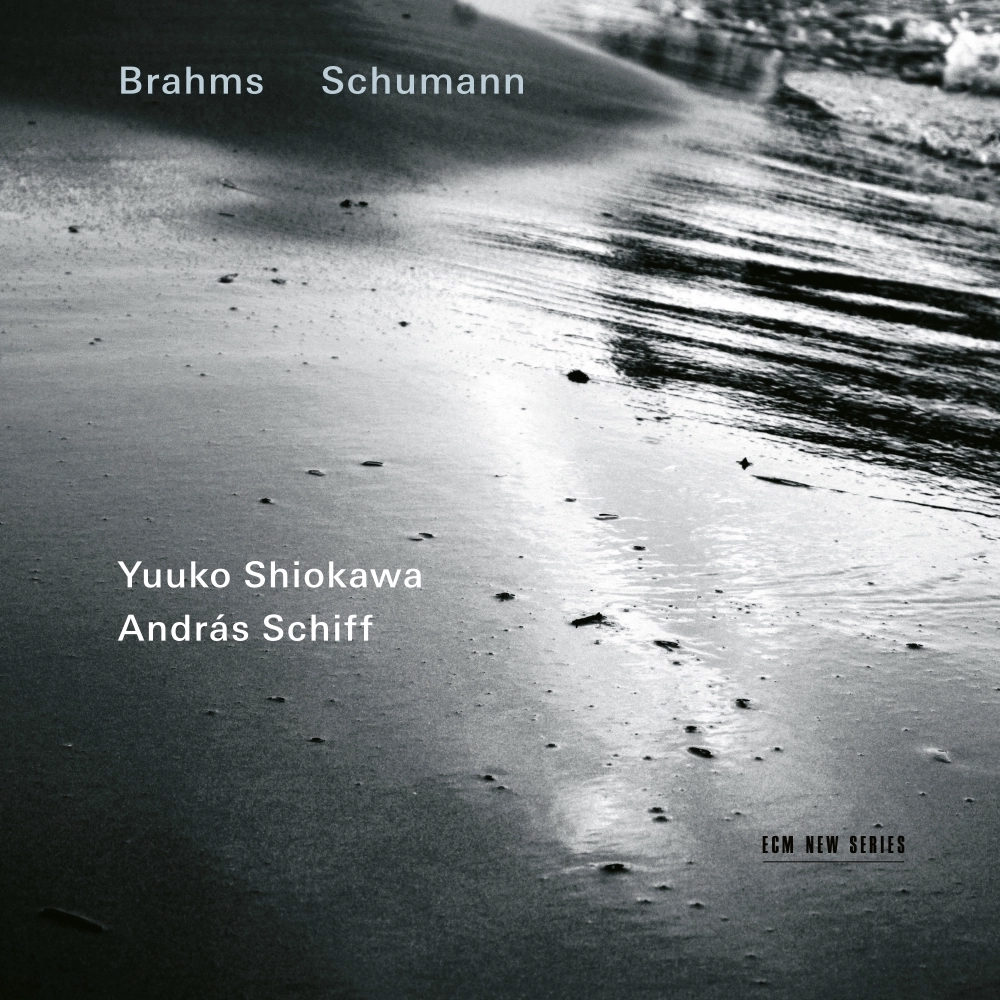
Yuuko Shiokawa violin András Schiff piano Recorded December 2015 (Brahms) and January 2019 (Schumann) Auditorio Stelio Molo RSI, Lugano Engineer: Stephan Schellmann Cover photo: Nadia F. Romanini Produced by Manfred Eicher Release date: October 11, 2024
In their second full disc for ECM New Series, violinist Yuuko Shiokawa and pianist András Schiff present two 19th-century sonatas of the highest caliber by Johannes Brahms (1833-1897) and Robert Schumann (1810-1856). The first half of the program is taken by Brahms’s Violin Sonata No. 1 in G major, op. 78. Composed in 1878, immediately after his violin concerto, it is affectionately known as the “Regenliedsonate” (Rain Sonata) for references to his two songs, “Regenlied” (Rain Song) and “Nachklang” (Lingering Sound), both gifted to Clara Schumann for her 54th birthday. We can easily share in her gratitude for finding those melodies she so cherished incorporated into a sonata of abundant riches, especially when considering that Brahms burned his early attempts at the genre. “Regenlied” opens the first and third movements, growing from the earth not as a sprout but as a fully formed tree. Like time-lapse photography, it allows us to see an entire life cycle in hindsight before we can fully grasp what is being reflected upon. Between the seamless notecraft in the violin and the piano’s dynamic underpinning, there is an orchestral sensibility at play. Despite the lively development, the outer husk is rooted in melancholy and emotional density. It whispers when it dances, shouts when it prays. The central Adagio is more funereal by contrast. As the violin works its lines from inner to outer sanctum, it never lets the wind get in the way of its grief. Meanwhile, the piano is more insistent and rouses its companion from slumber into the sharper edges of reality, leading it through every turn thereof without so much as a nick. The final stretch works through shaded pathways and hard-to-reach areas with sublime attention to detail, ending on a transcendent double stop.
Although Brahms’ great admirer Robert Schumann had never written a violin sonata, at the urging of Ferdinand David (concertmaster from the Leipzig Gewandhaus and the dedicatee of Mendelssohn’s violin concerto), he eventually relented. However, being displeased with his first attempt, he dedicated the Violin Sonata No. 2 in d minor, op. 121, to David instead. Clara and violinist Joseph Joachim gave its premiere in 1853. A massive piece in four parts, it turns the concept of “chamber music” on its head. Unlike this program’s accompanying sonata, it takes its time to mature (at 13 minutes, the opening movement alone is exactly half the length of Brahms’ entire sonata). It is also a profound litmus test of any duo’s attempts at the form, and in that respect, Schiff and Shiokawa defer to the score instead of their egos. The second movement is a soft burst of energy, giving shape to each motivic cell as if it were a brief dance to be savored before its steps are forgotten. From flowing to syncopated, we are carried through the third movement on the back of a groundswell that always keeps its shape, only enlarging and reducing before morphing into a tender staccato. The final movement is a masterclass in controlled drama that feels made for these four hands.
The sensitive playing, which gives its fullest, most heartfelt attention to every detail, is only matched by the recording. Engineer Stephan Schellmann brings a somewhat distant quality to the proceedings so as not to cloud the listener’s judgment with virtuosity. Instead, we are invited to sit in the back of the room, letting the music find us of its own volition, ready and waiting.
Anouar Brahem oud Anja Lechner violoncello Django Bates piano Dave Holland double bass Recorded May 2024 Auditorio Stelio Molo RSI, Lugano Engineer: Stefano Amerio Cover: Emmanuel Barcilon Produced by Manfred Eicher Release date: March 28, 2025
Where should we go after the last frontiers? Where should the birds fly after the last sky? –Mahmoud Darwish
After The Last Sky marks the return of oud virtuoso and composer Anouar Brahem to ECM, eight years after Blue Maqams. That groundbreaking album also featured pianist Django Bates and bassist Dave Holland, both of whom are retained here, along with a new addition in cellist Anja Lechner. The result is a culmination of culminations, blending Brahem’s evolving integrations of jazz, European classical music, and, of course, the modal Arabic maqams at their core. Gaza was firmly on his mind leading up to and during the recording, and the titles reflect this awareness in a contemplative way. Despite the music’s delicacy (if not because of it), it offers prescient meditations on the horrors of violence that, sadly, seem to be the most inescapable leitmotif in the symphony of our species. That said, Brahem is not interested in proselytizing. “What may evoke sadness for one person may arouse nostalgia for another,” he says. “I invite listeners to project their own emotions, memories or imaginations, without trying to ‘direct’ them.” By the same token, notes Adam Shatz in his liner essay, “as with ‘Alabama,’ John Coltrane’s harrowing elegy for the four girls killed in the 1963 bombing of a Black Church by white supremacists, or ‘Quartet for the End of Time,’ composed by Olivier Messiaen in a German prisoner of war camp, your experience of Brahem’s album can only be enhanced by an awareness of the events that brought it into being.” Either way, After The Last Sky invites us into a conversation between ourselves and the political realities we would rather avoid.
And so, when wrapped in the tattered garment of “Remembering Hind” to start, we must remind ourselves that music, like life, is only what we can experience of it. If something never enters our sphere of awareness, it might as well not exist, which is precisely why we so often choose to ignore rather than engage. Here, we are given a space in which to reconcile those two attitudes, in full recognition that the sacred is forged from the ashes of the profane and that beauty is a fragile compromise for destruction. In some ways, this contradiction is inherent to Brahem’s instrument and its vulnerabilities, which he animates from within.
The more we encounter, the less we can deny our complicity in suffering. Whether in the post-colonial shades of “Edward Said’s Reverie” or the painful imagery of “Endless Wandering” and “Never Forget,” the weight of exile weighs on our shoulders. Meanwhile, the instruments take on distinct personas. Bates is the bringer of prayer, Holland is the bringer of faith, and Lechner is the bringer of community. Through it all, Brahem is the one who brings trust. Through his establishments, he reminds us that intangible actions have very physical consequences. By the thick threads he pulls through “In the Shade of Your Eyes,” we draw close for comfort in the afterglow of bombs.
Despite the sadness casting its pall over this journey, there are way stations where gravity has less of a hold on us and where, I daresay, hope becomes possible again. This is nowhere truer than in “The Eternal Olive Tree,” an improvisation between Brahem and Holland. As bittersweet as it is brief, it finds the oudist feeding on the bassist’s groove as if it were a ration to be savored, not knowing where sustenance might come from next. Other sparks of resignation are carefully breathed upon in “Dancing Under the Meteorites,” “The Sweet Oranges of Jaffa,” and “Awake.” In all of these, Lechner’s playing transports us to another level, inspiring Brahem to dramatic improvisational catharsis (yet always restrained enough to maintain his sanity). The album ends with “Vague.” Among his most timeless pieces, it is lovingly interpreted. Bates renders the underlying arpeggios with artful grace, while Holland and Lechner open the scene like a hymnal for all with ears to hear.
I close with another quote from Shatz, who writes: “Brahem’s album is not simply a chronicle of Gaza’s destruction; but its very existence, it offers an indictment of the ‘rules-based order’ that has allowed this barbarism to happen.” Thus, what we are left with is an indictment of indifference, as profound as it is melodic. What Brahem and his band have done here, then, is not to simply make an album of beautiful music (which it is) but rather to offer themselves as a living sacrifice to the altar of reckoning to which we all must bow if we are to make a difference that matters. When we are stripped of all we have, music is what remains.
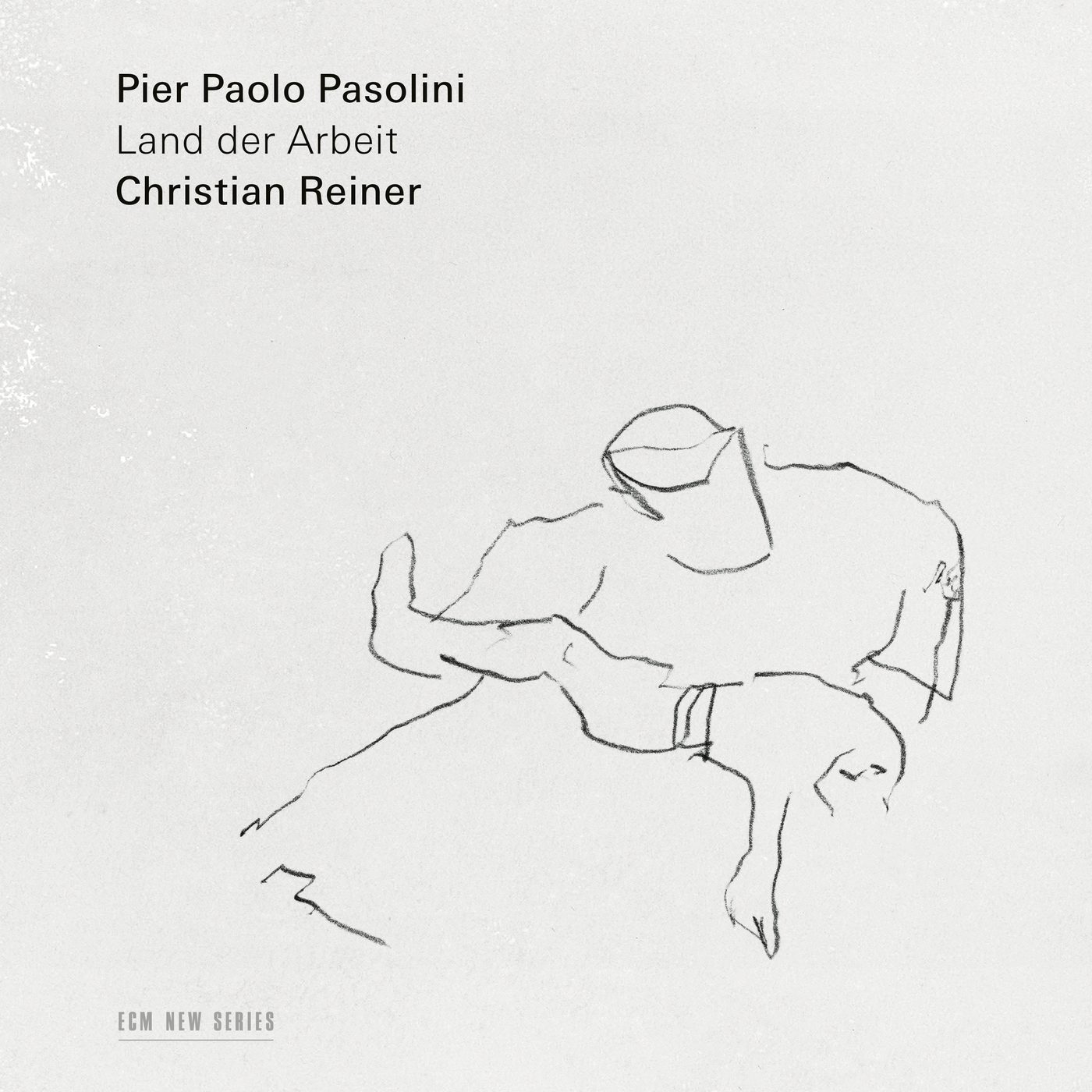
Christian Reiner reciter Recorded 2021/22 Garnison7, Wien (2, 4, 5, 8) Recording engineer: Martin Siewert Innenhofstudios, Wien (1, 3, 6, 7) Recording engineer: René Kornfeld Mastering at MSM Studio, München Engineer: Christoph Stickel Cover drawing: Lilo Rinkens, “Arabische Pietà” Produced by Wolf Wondratschek and Manfred Eicher An ECM and Joint Galactical Company Production Release date: November 18, 2022
He throws the bird in his hand into the fire, takes the camera and films what everyone, whether they like it or not, understands: the animal that with its wings always ignites the fire in which it burns. –from “Pasolini” by Wolf Wondratschek
In 2020, the Neuberger Museum of Art at SUNY Purchase hosted an exhibition titled Pier Paolo Pasolini: Subversive Prophet. Although more widely known stateside as a filmmaker, the 20th-century (anti-)renaissance man who died in 1975 at the age of 53 was also a prolific poet, one who railed against the establishment writ large and all its material fetishes. And so, perhaps it would be more accurate to call him a prophet of subversion who treated written words much like characters in his cinema: namely, as ciphers for human sin.
The present album, a collaboration between poet Wolf Wondratschek, producer Manfred Eicher, and actor Christian Reiner, builds on previous ECM New Series releases featuring the works of Joseph Brodsky and Friedrich Hölderlin with equal acuity. In this instance, the trio zooms in on some of Pasolini’s most scathing sociopolitical insights in celebration of the 100th anniversary of his birth year. But as Wondratschek writes in his accompanying liner notes, Pasolini was someone who reveled in every band of the spectrum: “He wanted to celebrate the festival of life, the flower of passion, the flower of play, and finally, as an extreme action, the flower of death, his death.” He goes on to describe the challenges of deciding not only what to include in the span of a single compact disc but also how to bring it across verbally in a language not originally its own (all of Pasolini’s texts are read here in German translation). Thus, he wonders, “How do you go from admirer to brother of a poet?” A fair question that deserves as robust an answer as those put forth by the pasticheur of the hour.
The album’s title piece is the last stop in his collection, The Ashes of Gramsci, in which the peasants of Southern Italy toil not to live but as a means of sustaining their death. It begins innocently enough, describing the eponymous Land of Work (“Terra di Lavoro” in the original Italian) as a swath of roaming buffalo, the occasional farmhouse, and dotted crops. But as the camera zooms in on the details, a certain melancholy begins to take hold. Once humans enter the picture, we see the depravity of man come into focus:
If you look at their eyes, their hands, a pitiful blush on their cheekbones, where their soul, their enemy, is revealed.
Thus, the self is revealed to be one’s greatest adversary (a leitmotif in all his work, whether on page or screen). As the verses proceed, the peasants are likened to various domesticated animals, becoming increasingly less human the more they labor. The conditions are so poor that even the potential wonders of a newborn life are undermined by the observation that whatever might seem new to the young is at once tired to the old. Reiner reads with a varied cadence, at one moment flowing through the language, taking a pregnant pause the next, letting the after-effects of his speech linger in the air. The recording strips his voice of space so that it hangs from a thread of its own making.
Next is a letter written in 1963 to fellow poet Yevgeny Yevtushenko. In it, the self-styled “Catholic Marxist” attempts to bypass their intellectual aneurysms amid the broader global maelstrom to which they were both staunch intellectual observers. It’s also a tense negotiation between Pasolini’s adoration for Pope John XXIII (to whom he dedicated his film, The Gospel According to Matthew) and the looming threat of all-out nuclear war (indicated by his reference to Nikita Krushchev and the Cuban Missile Crisis).
While the title of “To the Prince” (1958) might imply a kindred slant, it’s more of an inward examination of youth’s fleeting nature, contrasted with the world’s immutability through the lens of an artist wrestling with apathy (“I am no happier, whether enjoying or suffering”). Appropriately, Reiner inflects the poem with relative brightness, holding it higher in the throat, not quite looking the listener in the eye. If it sounds lyrical at all, that may be one reason it was set to music by the band Alice in 2003.
“It’s so hard to say in a son’s words what I’m so little like in my heart.” So begins a brief yet densely packed slice of heartbreak: “Prayer to My Mother.” Written in 1962, it reveals that growing up amid unconditional love and understanding was what made him such a creature of anguish and honed his “love of bodies without souls” as a slave to time. This balance between the devotional and the deviant (his sexual proclivities on subtle yet obvious display here) is palpable.
A mysterious interlude then comes in the form of “Große Vögel, kleine Vögel” (The Hawks and the Sparrows), after Pasolini’s neorealist film of the same name from 1966. Instead of words, it draws a thread of bird song, seemingly replicated by sped-up whistling, à la Marcus Coates’s Dawn Chorus. This is followed by “When the classical world will be exhausted,” as quoted from Nico Naldini’s book, Pier Paolo Pasolini: A Life, which expresses Pasolini’s disillusionment with nature in a world destined to destroy it—a loss from which we will never recover.
All of this feels like small steps toward the giant leap of “Patmos,” a long poem from 1969 that was first published in the October/December issue of the magazine Nuovi Argomenti. The title references the island where John the Apostle was exiled and where God revealed to him what is known today as the Book of Revelation. After opening with this biblical foundation, it transitions into a list of victims of the Piazza Fontana bombing of December 12, 1969, and finally to a political analysis of then-Italian President Giuseppe Saragat. Reiner emotes with the most somber attention to detail, allowing the mood to settle on its own terms.
A poem by Wondratschek himself, “Am Quai von Siracusa” (1980), brings us to a close. With a stark insight that recalls the acuity of Paul Celan (whose works were set to music by Giya Kancheli on my favorite ECM New Series release, EXIL), it offers a bleak yet profound meditation on entropy:
The lion’s teeth are already rotten. The cats give birth in empty palaces. And a crack runs through the Madonna’s smile.
Thus, in these readings, we hear the fatigue of the encounter, of cycling one’s flesh through the ringer of Pasolini’s barbed words, and coming out the other side lacerated but all the more in tune with the fragility of life. Like my attempts to wade through Italian poetry by way of German on this spoken-word recording, we are forced to pick up whatever pieces we can find along the way, in the hopes of having a coherent narrative to show for it when all is said and done.
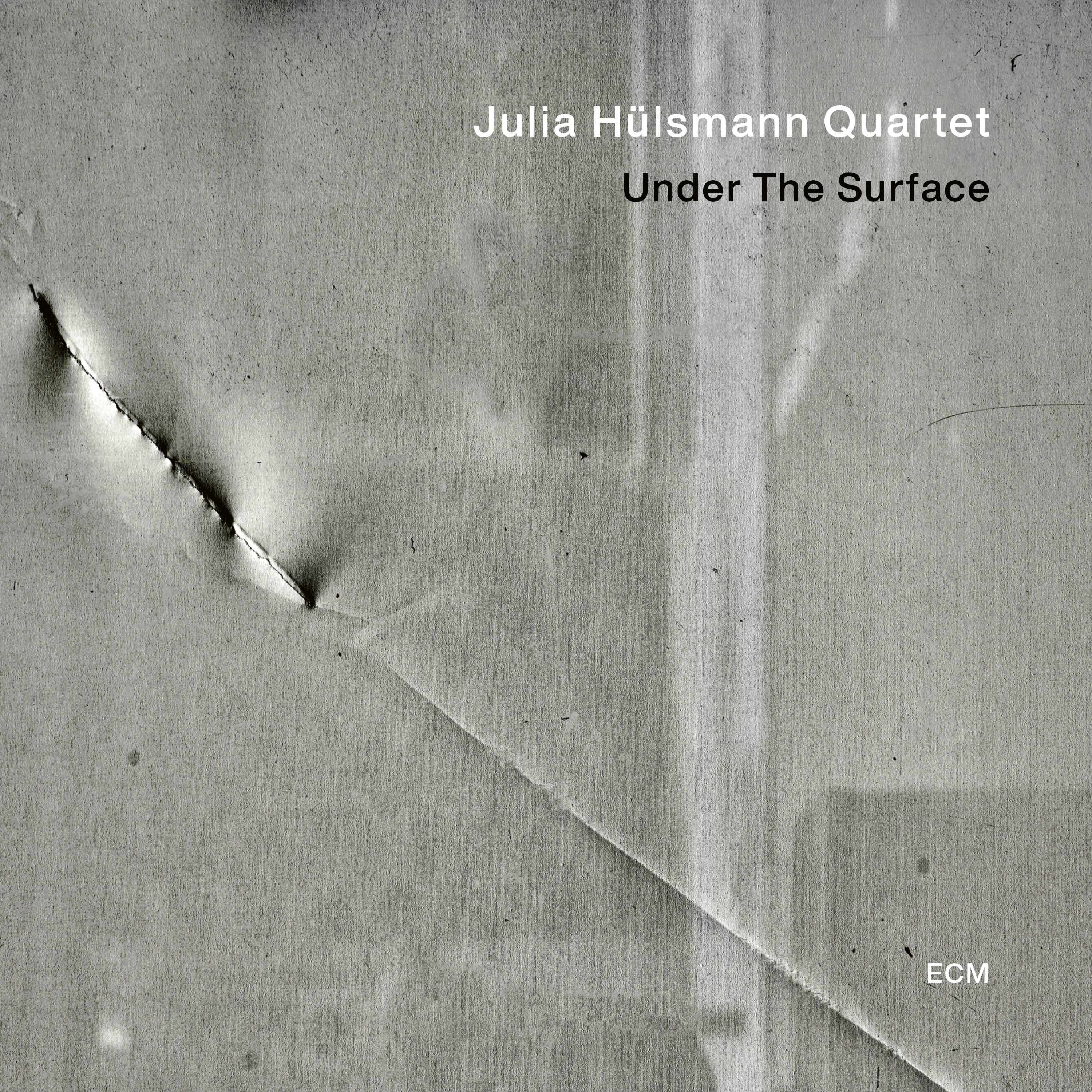
Julia Hülsmann piano Uli Kempendorff tenor saxophone Marc Muellbauer double bass Heinrich Köbberling drums with Hildegunn Øiseth trumpet, goat horn Recorded June 2024 at Rainbow Studio, Oslo Engineer: Martin Abrahamsen Cover photo: Thomas Wunsch Produced by Thomas Herr Release date: January 31, 2025
To the well-oiled machine that is the Julia Hülsmann Quartet is added a seamless recruit in the form of Norwegian trumpeter Hildegunn Øiseth, who joins pianist Hülsmann, saxophonist Uli Kempendorff, bassist Marc Muellbauer, and drummer Heinrich Köbberling for half of a fresh in-house setlist. After the trumpeter played with the quartet live in Berlin in 2023, the idea for an album was sparked, and so, Under The Surface was born.
But it’s the quartet under the banner of Hülsmann’s pen in “They Stumble, They Walk” that the album shows us just how much she and her bandmates can swing with their eyes closed. Her almost nonchalant colorations from the keyboard elicit atmospheric veracity from the start, setting the stage against a light-footed rhythm section for Kempendorff’s equally effortless freestyling. The result is a sound that is as hip as it is informed by the rudiments, paying homage to both melody and groove, and never letting go of either.
Most of the core band material is also composed by the pianist, including “Anti Fragile,” a geometrically inflected romp that recalls the work of Vijay Iyer, and “Trick,” an especially propulsive experience in which the composer turns up the heat without ever losing control. The same applies to Kempendorff, whose more fragile lines are no less fortified. His tenoring traces a robust mood throughout his “Milkweed Monarch,” yielding a solo highlight from Muellbauer before tapering off into an almost subliminal ending. The bassist’s own “Second Thoughts” is a master class in self-examination built on subtle drum work.
Muellbauer also contributes to the program portions with Øiseth, whose soloing in “Nevergreen” brings the wind to the proverbial earth and fire. Whether in “May Song” and “Bubbles” (both by Köbberling), one a tone poem and the other featuring a turn on goat horn for a dollop of farm-to-table lyricism, or in “The Earth Below,” a duet with Hülsmann, she understands how to abide by a melody while still being free and true to herself. Like a candle that must remain lit, she cups her hands around the flame to keep it lit. And in the concluding title track, she soars overhead newly invigorated, ready for the next adventure.
Of all the Hülsmann albums to grace the ECM catalog thus far, I’d say this one has the most variety. There is also a sense of camaraderie that only deepens with each new release, and in this instance, it practically leaps from the speakers and envelops you in a warm embrace.










 Between Sound and Space: ECM Records and Beyond