Sinikka Langeland: Wind And Sun (ECM 2776)

Sinikka Langeland
WInd And Sun

Sinikka Langeland vocals, kantele, Jew’s harp
Mathias Eick trumpet
Trygve Seim tenor and soprano saxophones
Mats Eilertsen double bass
Thomas Strønen drums
Recorded June 2022 at Rainbow Studio, Oslo
Engineer: Martin Abrahamsen
Mixed at Bavaria Musikstudios, Munich
by Sinikka Langeland, Guido Gorna, and Michael Hinreiner
Cover photo: Dag Alveng
Produced by Guido Gorna
Release date: September 15, 2023

It walks and walks
and all the dead are with us
the dead too walk and walk
in us

–Jon Fosse

Sinikka Langeland has given breath to lungs far beyond the inner sanctum of the body, both through her salt-of-the-earth singing and unmatched touch of the kantele. And while she is ever an unfettered soul, unafraid to cross physical and metaphysical borders, there’s something particularly special about the assembly of musicians on Wind And Sun. With trumpeter Mathias Eick, saxophonist Trygve Seim, bassist Mats Eilertsen, and drummer Thomas Strønen, she brings life to the poetry of Jon Fosse as if it were the most natural process in the world—and perhaps, for her, it is. 

“Row My Ocean” sets a mood of sound and spirit. Its image of pushing against the water to move forward is the band’s modus operandi. It takes the rhythm of the waves not as a challenge to overcome but as a guiding heartbeat. This underlying pulse continues in the title track, an understated yet no less powerful instrumental that shines its way into fantasy and, in a later sung version, reveals secrets of the sea with maternal urgency.

The feet of Langeland’s composing fit perfectly in the shoes of Fosse’s verses. Her fluid yet pointillistic approach to “It Walks And Walks” echoes the poem’s dark yet life-affirming slant. As the gravity of land replaces the freedom of the waves, we feel the weight in our legs and feet and stumble into “Boat in Darkness,” where solitude becomes a path to resolution. Meanwhile, “Hands That Held” snakes and wanders as if accustomed to the uncertainty of living in the moment, unfolding in the album’s most haunting melody. Even “A Child Who Exists” (co-written with Geirr Tveitt) suffers no loss of space in being accompanied only by Seim. Neither does “Wind Song,” in which Jew’s harp and kantele dance as their own light source in the night.

Langeland’s kantele playing seems to get more enchanting with every release, and in “When The Heart Is A Moon,” we hear just how masterfully delicate her contact can be. It sparkles without offending the eye and takes our ear by the hand. The band is also locked into a faithful unity with the listener. Even Eick’s rising solo, a bird in low flight, never loses sight of its shadow throughout “I Want To Listen To The Angels,” while Eilertsen’s arco streaks and Strønen’s brushes evoke a subtle blues in “A Window Tells” and “The Love,” respectively. Band unity is on full display in the triptych of “You Hear My Heart Come” / “These Inner Days” / “Let The Rain Breathe,” where a single note needs forcing. Like the journey as a whole, every twist and turn speaks freely from the heart in the fullness of knowing that the destination is already behind us.

Maciej Obara Quartet: Frozen Silence (ECM 2778)

Maciej Obara Quartet
Frozen Silence

Maciej Obara alto saxophone
Dominik Wania piano
Ole Marten Vågan double bass
Gard Nilssen drums
Recorded June 2022 at Rainbow Studio, Oslo
Engineer: Martin Abrahamsen
Mixing: Michael Hinreiner (engineer), Manfred Eicher, Maciej Obara, and Dominik Wania
Cover photo: Thomas Wunsch
Produced by Manfred Eicher
Release date: September 8, 2023

For his third quartet outing for ECM, alto saxophonist Maciej Obara brings an ever-searching sound to bear on the foreground of a continuously shifting diorama. With him again are pianist Dominik Wania, bassist Ole Marten Vågan, and drummer Gard Nilssen. The tunes were inspired by Obara’s solitary travels in the natural scenery of southwest Poland, where he found himself wandering during the pandemic lockdowns. Such details work their way into many of the track names, starting with “Dry Mountain,” which lobs skyward before dipping down to touch the snowy surface of things. The ice is always moving, tectonic and ancient, even as the overall shape remains. (As in the later “High Stone,” the musicians are acutely aware of one another’s presence. With a grand sense of space, they reach far across tundra and time.) In the subsequent “Black Cauldron,” we encounter a brew of memories and impressions, a recipe as old as time yet with ingredients as fresh as the air we breathe.

The title cut has a delicate underlying groove, sewn into place by the precise needlework of Nilssen’s cymbals, while the glint of sunlight on a landscape brought to stillness by a world screeching to a halt speaks of brighter days ahead. The atmosphere is exciting in its possibilities, as if being alone were the only way to appreciate having others around. Vågan is gorgeously fluid here, lending so much humanity to the sound, the unerringly forward motion of nature continuing around him. Wania’s solo brings the touch of longed-for interaction, even as Obara’s flights keep their shadows in check.

Other notable turns of phrase include “Twilight,” a lullaby that unfolds with understated virtuosity and spotlights Obara’s talents as an improviser like few tracks before it, and “Waves of Glyma.” The latter recalls time spent on south Crete, populating the memory with joyful revelry, fearless camaraderie, and a feeling that life might never end. Amid the phenomenally upbeat rhythm section, Wania holds tight to the ethos of the hour.

One surprise inclusion in the set is “Rainbow Leaves,” a leftover from the bandleader’s Concerto for saxophone, piano and chamber orchestra, co-composed with Nikola Kołodziejczyk but now refashioned as an improvisatory seed. Obara is fiercely (yet never aggressively) beholden to wherever the melody wants to go, letting us tag along six feet behind.

Bobo Stenson Trio: Sphere (ECM 2775)

Bobo Stenson Trio
Sphere

Bobo Stenson piano
Anders Jormin double bass
Jon Fält drums
Recorded April 2022 at Auditorio Studio Molo RSI, Lugano
Engineer: Stefano Amerio
Cover photo: Woong Chul An
Produced by Manfred Eicher
Release date: March 17, 2023

For this fourth ECM outing from pianist Bobo Stenson, bassist Anders Jormin, and drummer Jon Fält, one of the most formidable yet humble jazz trios on the planet explores mostly Scandinavian material. And what more logical place than with the simple act of “You shall plant a tree,” courtesy of Per Nørgård. The present rendition unfolds itself into the creased map of its inner self—proof that this trio, nearly 20 years in fellowship, is committed to a spirit that values emotions like oxygen. As the title indicates, each branch contributes equally to the shape of the whole. Two tunes by Sven-Erik Bäck expand upon this hymnody. The crystalline thaw of “Spring” and the deconstructions of “Communion psalm” reveal a grander instrument at play.

Jormin throws two coins of his own into this font. Where “Unquestioned answer – Charles Ives in memoriam” shimmers like a distant sun, weaving a naked language for the illumination of the ears, “Kingdom of coldness” (last heard on Pasado en claro in starkly different form) has its own story to tell. Between Jormin’s arco helix, Fält’s mineral-rich percussion, and Stenson’s streetlit chord changes, we get a slice of time laid out in physical form.

“Ky and beautiful madame Ky” by Alfred Janson takes a more observational turn. The way in which the musicians are never settled yet somehow cohere shows their deference to wherever the sound wants to go. Jean Sibelius’s “Valsette op. 40/1” paints in subtler shades, snaking through the landscape into the depths of a home built by time. This is childhood coming full circle in old age.

An especially notable piece of the puzzle is “The red flower” by Jung-Hee Woo. Shrouded in late-night jazz club vibes, it begs us to close our eyes, hear the rustle of whispered conversation, and inhale the tang of dry martinis.

The set ends with a variation of “You shall plant a tree.” What was once the trunk is now the seed, looking ever inward to the genesis of all things.

If anything is certain about the ethos of this trio, it’s that nothing is.

Wolfgang Muthspiel: Dance of the Elders (ECM 2772)

Wolfgang Muthspiel
Dance of the Elders

Wolfgang Muthspiel guitars
Scott Colley double bass
Brian Blade drums
Recorded February 2022 at 25th Street Recording, Oakland, California
Engineer: Jeff Cressman
Mixing: Gérard de Haro (engineer), Manfred Eicher, and Wolfgang Muthspiel
Studios La Buissonne
Cover photo: Woong Chul An
Album produced by Manfred Eicher
Release date: September 29, 2023

After clearing a giant swath of land throughout 2020’s Angular Blues, guitarist Wolfgang Muthspiel, bassist Scott Colley, and drummer Brian Blade now construct a series of interlocking structures across it. With “Invocation,” we find ourselves immersed in a sound that is both familiar and forward-seeking. As the mist of spider-webbed guitar and glistening chimes resolves to reveal Colley’s blessing, the trio’s meditations offer glimpses of parallel dimensions before Muthspiel dips into a chord-slung melody, allowing us some oxygen in a suffocating world.

While we might expect a groove from this seeking spirit, more slow building awaits in “Prelude to Bach.” This vaporous studio improvisation surrounds us with memories, each unable to be captured for long before the next takes its place. Before we know it, we’ve morphed into the Bach choral “O Sacred Head, Now Wounded,” which holds together like a fresco and touches the soul with equal lucidity. As inevitable as it was unplanned, it cups a candle whose flame has stood the test of time.

Muthspiel has a natural ability to twist the blinds to let in a different configuration of light at every turn. The polyrhythmic title track likewise changes faces as fluidly as one’s reflection in a disturbed pond’s surface. The acoustic guitar speaks with sagacity and love. Before the final act, Muthspiel and Colley recede into hand claps while Blade applies gold foil to the frame.

“Liebeslied” is one of two cover songs (this from Kurt Weill’s The Threepenny Opera). Muthspiel draws a tessellated swing from within the tune’s many-chambered heart. Colley renders his solo in charcoal while the guitarist sketches in quieter pencil in the background before switching to pastel for a final say.

“Folksong” takes inspiration from Keith Jarrett’s vamp-prone improvisations in the pianist’s Belonging period, exploring a chord progression to the point of melodic bursting, with Americana touches and hints of countless side quests. Muthspiel’s acoustic shows its breadth and cohesion, so much so that Colley’s gestures feel like an extension of the same instrument, giving us that sunlit joy of the mid-1970s when Jarrett was at his most exploratory. “Cantus Bradus” pays homage to pianist Brad Mehldau, last heard with Muthspiel on 2018’s Where The River Goes, and whose chromatism shines as a guiding light through spectral improvisations.

Not a single note feels wasted at Muthspiel’s fingertips. Whether caught up in a dance or bearing down directly on a virtuosic motif, he stands at the edge of a proverbial cliff without ever feeling the need to jump. Instead, he takes in the view and shares it with us all. This is nowhere so clear as in his rendition of Joni Mitchell’s “Amelia,” which closes the set with minimal expansion. Even absent of words, it speaks to the heart. The electric guitar is the softer brush in his artistic toolkit, allowing every bristle to sing. Colley and Blade are his tender allies, each a bearer of melodic and atmospheric truths for posterity.

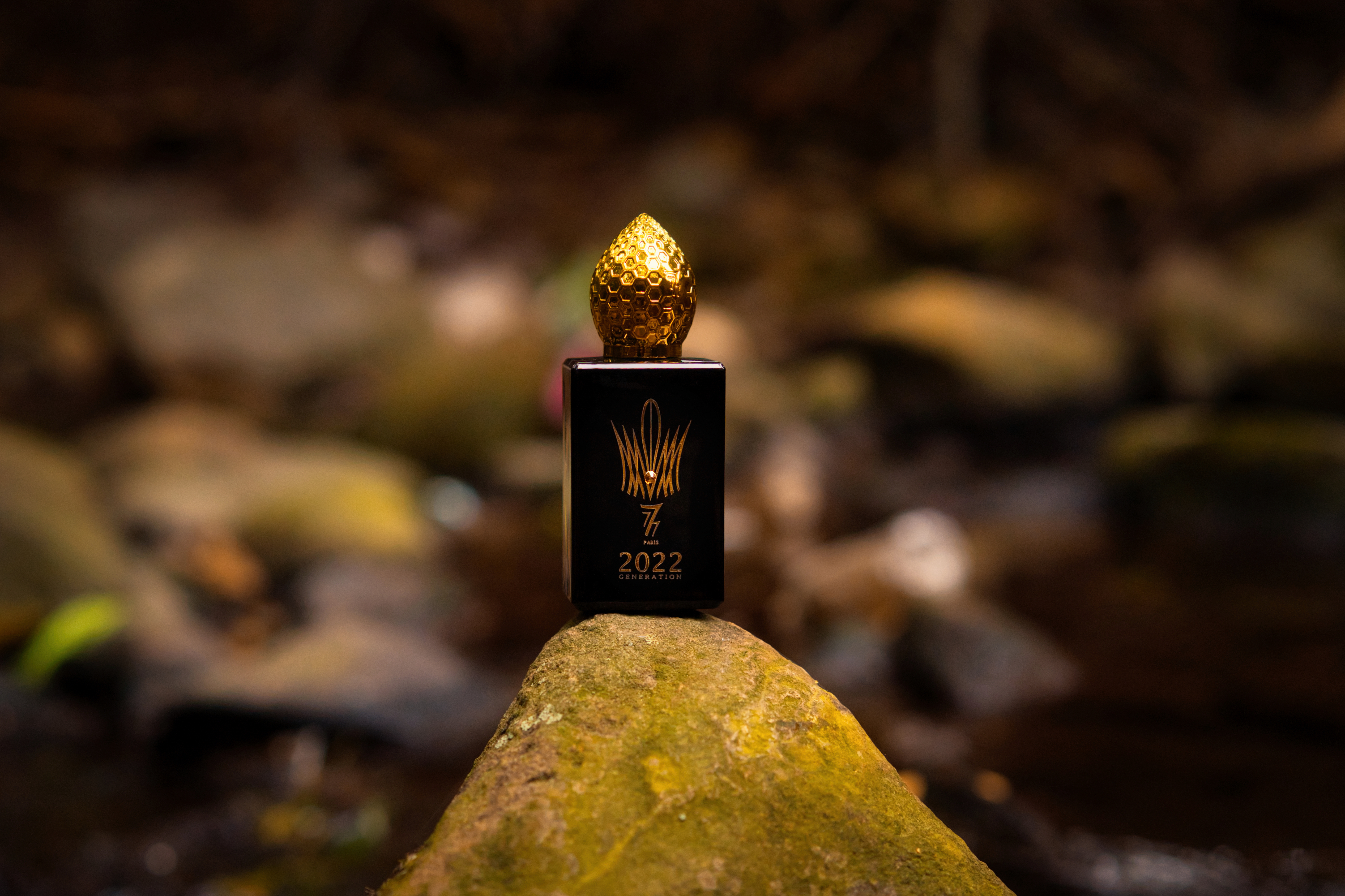
2022 Generation Black: The Future Is Past

Drawing inspiration from a trip to Qatar in 2012, perfumer Stephane Humbert Lucas imagined a symphony of tinctures representing the city’s bridging of ancestral traditions and modern deconstructions one decade later. The result is 2022 Generation Black, a fragrance that lives boldly between these realms of cultural expression: on the one hand, safe and familiar, while on the other, daring and forward-looking. Such is the energy he brings to one of the most stimulating scents I’ve ever put my nose on.

The fragrance is a spiral of self-reflection with distinctly extroverted qualities. At first, this might seem contradictory, but upon further wearing, it settles into the skin’s natural chemistry, taking on the unique signatures of warmth and coolness as it seesaws between the two. Despite never harmonizing completely (assuming they were ever meant to), they speak of the self’s contradictory nature, at once physical and metaphysical.

When describing this fragrance, the initial flash of yuzu zest, black currant, and mint means that brightness lives at the tip of the tongue. The combination is so rich with life that one can hardly articulate the breadth of its embrace. There is an almost metallic sheen to it as if one were digging into the heart of the soil and tasting the very ore within. This is the outward dimension, fresh and inviting in its spectrum of flavors. But beyond that, there is a feeling that this isn’t just fun and games. Rather, there is a serious, even contemplative underpinning to it all waiting to be known.

Thus, it transforms itself to reveal a heart of Cambodian oud, where some inexorable truth makes itself known in an ongoing exhalation of sensual touch. Just knowing it’s there is enough to take comfort in every inhalation we offer in balance. Going one layer deeper reveals a darker nest of precious oud (a blend of agarwood, rose, and other florals), spices, and balsamic notes. It is here where we find rest as this olfactory journey comes to an end. Although not the longest-lasting of its kind, there’s something special about the ephemerality of its intensity that begs repeat wearings—and fresh discoveries.

Nicolas Masson: Renaissance (ECM 2846)

Nicolas Masson
Renaissance

Nicolas Masson soprano and tenor saxophones
Colin Vallon piano
Patrice Moret double bass
Lionel Friedli drums
Recorded November 2023 at Studios La Buissonne
Engineer: Gérard de Haro
Mastering: Nicolas Baillard
Cover photo: Nicolas Masson
An ECM Production
Release date: March 14, 2025

A quiet sparkle, a pebble thrown into the water, and a band that regards every ripple with their art—so begins “Tremolo,” the first of 10 new tunes from saxophonist Nicolas Masson. With partners Colin Vallon on piano, Patrice Moret on double bass, and Lionel Friedli on drums, he crafts melodic prose poetry that opens its borders to the freedom of in-the-moment interpretation. His tenor has the quality of a dream struggling to maintain its form in the face of impending wakefulness. The tension between the two is where so much of this music lives: at once allied with the night while yearning for daybreak. Stretching its neck from the opposite direction is the title track. Speaking as much in the idiomatic language of feet that walk as in that of hands that create, it conveys its autobiography in linked verse. All the more appropriate that his previous album with these fine musicians should be called Travelers, for they all contribute their own stamps to this passport.

What makes the group’s interplay so endearing is the grace of their seeking spirit. In “Anemona,” for instance, they give themselves to the flow of Masson’s organic writing selflessly and not without a significant quotient of charm that lets childlike impulses come to the fore. In “Tumbleweeds,” the free improvisational bonus that follows, we encounter the deepest expression of their atmospheric capabilities. Like the equally brief “Moving On,” which finds Masson and Moret duetting in the half-light, it embraces uncertainty. That said, even in the more artful punctuations of “Subversive Dreamers” (a highlight for its under-the-skin them), we are never coerced into experiencing something outside the realm of lived experience. Such comforts are harder to come by in a world caged by division. And how can one not feel like a messenger bird with a broken wing, mended and set free by the soprano saxophone-driven “Forever Gone”? Tied to our foot is the message ciphered in “Practicing The Unknown,” where hope reigns. At the risk of belaboring the analogy, I wonder whether “Basel” isn’t the terminus of our flight. Its percussive tracery, soaring piano, and unforced sopranism show us the quartet’s heart.

If all the above is the body, then “Spirits” is the blood working its way through the veins. But despite the intimations of kinetic energy that it whispers, it all points to the conclusion in “Langsam,” which challenges the listener to find a better word to describe the mood of what we’ve just experienced.

When listening to Renaissance, it becomes obvious why songs on an album are called “tracks.” It’s because each leaves something physical that we can touch and follow, knowing the journey will be its own reward.

WAZAMBA: A Winter Treasure

Normally, when fire burns, its smoke rises to become one with the sky. The smoke of WAZAMBA settles inward to become one with the self. This deeply resinous masterpiece from Parfum d’Empire opens with a kiss of red apple before fingernails of Moroccan cypress and aldehydes scratch ever so lightly along the nape of our awareness. There’s no escaping its allure; no matter where you turn, its sillage follows with the gentle persistence of a shadow.

Kenyan myrrh, olibanum, labdanum, and plum create an echo chamber that feels prayerful in its intimacy. Thus, the experience of this perfume becomes more individual the more it develops. Like a song, it reveals its chorus after the opening verses—a comfort to return to as we move throughout the day, revealing new shades of meaning.

Base notes of Somali incense (a sagacious presence throughout), fir balsam absolute, Ethiopian opoponax, Indian sandalwood, and fern wrap the skin in the vibrations of time travel, stepping beyond the here and now to take in the scents of places long buried and yet to be built. Uncannily enough, it makes us feel as if we were the portal rather than the ones stepping through it, absorbing the world around us so as not to forget it.

Behind WAZAMBA is the nose of Marc-Antoine Corticchiato, whose approach to the sacred crosses as many borders as the ingredients that come together in its glorious ritual. By harmonizing such seemingly disparate elements and cultures, he creates a warmth that melts snow into rivers. It is lesson that anyone with a political agenda might learn from, exhaling the will to power and inhaling a desire to know oneself again as a child of God.

Kimberly Nguyen: Here I am Burn Me (Book Review)

to name something is
to know it

So writes Kimberly Nguyen in the opening poem of her visceral collection, Here I Am Burn Me. And yet, what becomes increasingly clear, page after blood-rimmed page, is that to name something can also be to unknow it—further to destroy it, colonize it, and erase its origins in favor of a master narrative. Nguyen bends that master narrative until it whitens, cracks, and snaps. Rather than rebuild something from those screaming fragments, she turns her back on their hollow breath to inhale a light fashioned in hands washed clean of their conspiracy. She rids herself not only of grime but also of the expectations placed upon her shoulders, already bruised from decades of trauma compressed into the occasional period. This is what she hears.

what’s the difference between war and its aftermath

A question without a question mark becomes a statement of truth. Such linguistic “errors” are highlighted throughout as markers of identity (or lack thereof), even as the tides of history crash against the shores of a geography one can never understand from a distance. Nguyen resists the water and flavors her soul with the salt that makes it fatal to drink yet life-giving to all else. Her voice echoes in bones and eyelids, earlobes and fingernails, ink and cane pulp. In the same breath, that yearning for water becomes explicitly self-defeating—a womb-like existence tempered by the enforcement of maritime mythologies. No matter how landbound we are, the threat of drowning is omnipresent. Thus, the act of writing is never unsubmerged but always subject to the same curling of contaminants. This is what she sees.

violence is not a language
we were born with

Our faith is demonstrated only by the object to which we stitch the threads of our fallible professions. We might have the fullest confidence in thin ice, yet we will fall through it to our deaths; we might have no assurance in thick ice yet make it to the other side without incident. Violence flips this dynamic. Men in suits and other forms of camouflage have confidence in the weapons they worship, some of which far exceed their expectations for destruction. Meanwhile, those coerced into deploying them tremble so that their bodies force an error when training grounds resolve into battlefields. Fire and flame are equal partners in this elemental give and take, each a reflection of the other from night to day and back again. Likewise, every tongue has a sharp side and a dull side, and in her vacillation between the two, Nguyen plants her feet firmly in the squish of their overlap. Shooting down every word traversing that slick surface before it can escape is laborious. This is what she tastes.

i’ll be the one-line poem you take a black marker to,
black out all the parts of me you don’t want to see

In the same way that some of these poems are footnotes, sprinkling their dead skin into places where primary content should never be relegated, Nguyen also sinks her teeth into science, physics, astronomy, and other subcutaneous layers of knowledge. Others are transmissions from outer space to inner, and vice versa. Still others are bifurcated, a conversation with the self, curling in a three-dimensional analogy of a four-dimensional dilemma. Behind closed eyelids, we encounter flashes of war, of Agent Orange, of fields ablaze, of eyebrows singed, of journeys interrupted, of soldiers remembered, of weaponry impossible to forget. And while communing with ghosts may be a privilege her father will not share, it is something she offers us maternally, sustaining the crossfire to lay it at our feet. This is what she smells.

a soft place for a sharp word to land

Rarely has such an apt description of the itinerant body been articulated. While the privileged among us spin a globe, close our eyes, and travel to wherever our finger lands, hers get tangled in a blur of ideologies, raking through cities, forests, and oceans as if they were nothing more than the topography of some enormous beast. Cuts and lesions allow navigation in darkness when torches fail to give up their ghosts. Snow is now skin, picked and collected as a record of self-harm as if to prove one’s aliveness by testing the body’s limits. This is what she touches.

you can love a plant and it can still wilt away

Grief is only the conscious delaying of one’s own demise, a reminder that every canon depends on death. The only way to heal an emotional wound is to scribble it out and write another one in its place, ad infinitum. In a world that feeds on lies, killing is the truest act, or so the powers that be would have us believe. Such is the script we follow to ensure success, living out dreams as if they were real, only to realize too late that everything we ever experienced happened to someone else. If a sixth sense is to be found amid the bramble through which we have been dragged, it is knowing that love is not a badge of honor but the thickest scab protecting us from further harm. Thank you, Kimberly, for tracing its contours with such care. We need more of this.

Here I Am Burn Me is available from Write Bloody here.

Al Andalus: For the Skin Within

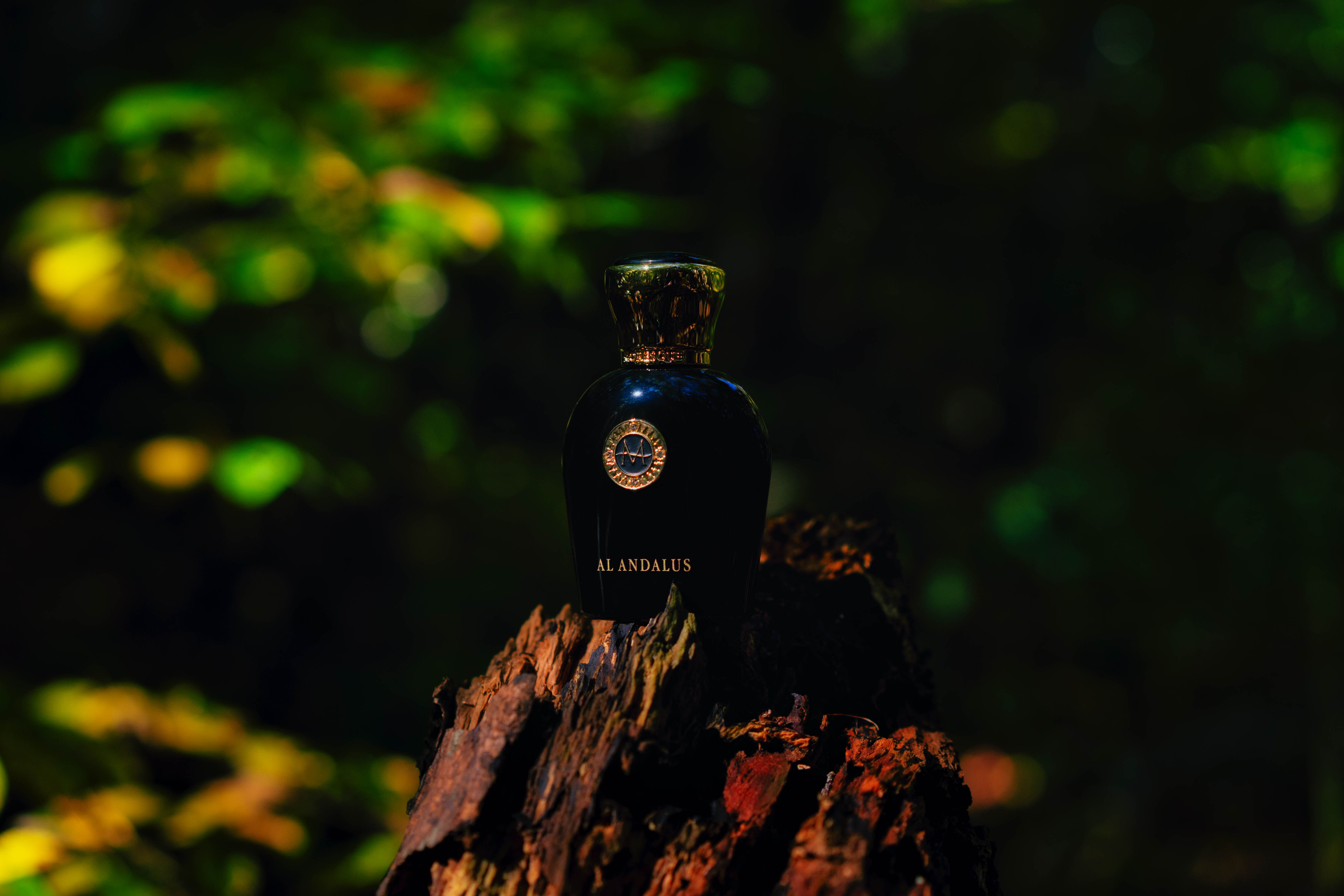
It is often said that fragrances transport us. Indeed, some of my favorites—including Parfum d’Empire’s Wazamba, Jazeel’s Heyam, and the Incense Series by Commes des Garçons—have more than a resinous quality in common. Each is also intimately connected to the spirit of a place, whether in the regional specificity of its note profile (such as Wazamba’s Afrocentric symphony of ingredients from Somalia, Kenya, Ethiopia, and Morocco) or by force of suggestion in the name. Al Andalus checks off those boxes and then some. What puts this masterpiece from the Italian house of Moresque and the nose of Andrea “Thero” Casotti on its own pedestal is the inwardness it affords the moment I apply it. Never have I beheld a scent that pulls such a vivid constellation of time and place into me rather than me into it.

As the opening release of ginger embraces my nostrils like an old friend, it bears saffron and black pepper as gifts from afar. Despite the connotations of distances traveled, “exotic” and other outdated descriptors must go straight into the kitsch bin, making way for the more accurate word pictures of “bitingly warm” and “darkly gold-flecked.” The brocade of light and shadow that plays about its introduction is extraordinary. It changes during every inhalation—so much so that I wish I didn’t have to exhale in between.

As the hands on the clock go obtuse, then acute, a quiet comfort takes over. A heart of oud from Kalimantan Island shines like a candle in a blackout—which is to say, with unadulterated vitality. The slightest breaths of wind remind me of where this reunion began, hinting at slumber. Memories and stories lure my attention from the present while enhancing bodily awareness.

Tendrils of Haitian vetiver, French labdanum, and birch braid themselves until two become one, leaving a bed of wonder that smells of the soul. Only then do I realize I’ve been speaking to myself the whole time, curling inside out.

How appropriate, then, that Al Andalus should last 12 hours. Its diurnal character shifts from golds to greens throughout the day, foreshadowing the night with its sunlit opening. What begins with the excitement of an open-air market gradually turns dusky, becoming a scent for the skin within. Such an experience is rare in perfumery, and yet, here it awaits, a sky without a cloud but for the wisp of smoke in whose name it settles.