

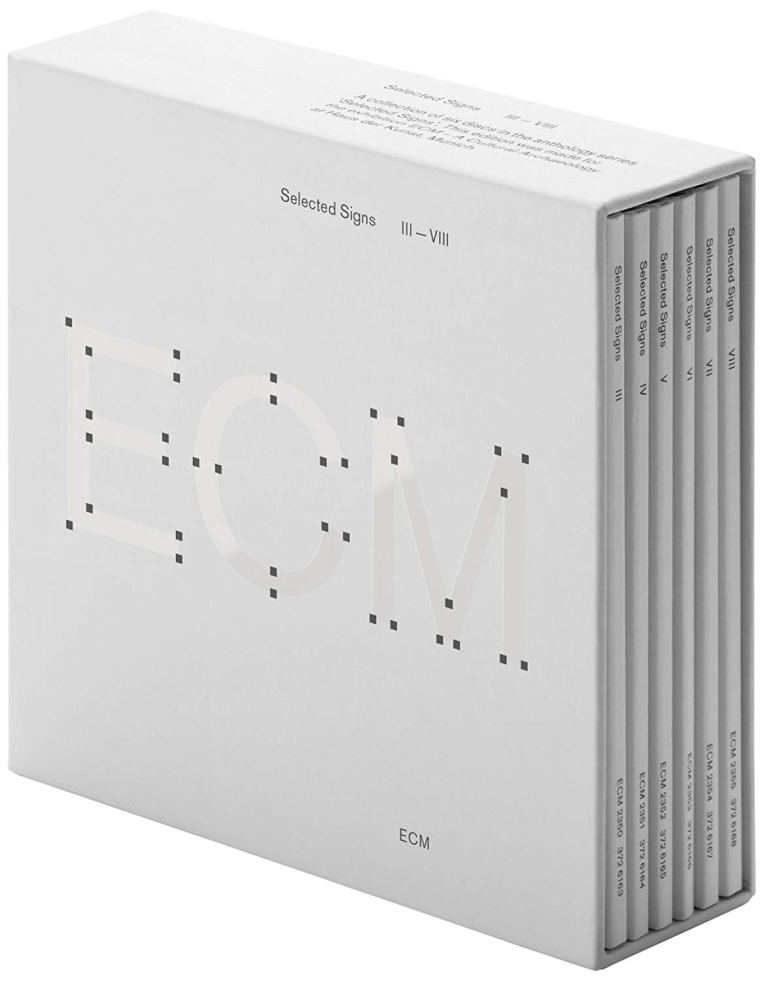
If a story is determined by its beginning and ending, then this Selected Signs boxed set, specially curated for the “ECM: A Cultural Archaeology” exhibition held at Munich’s Haus der Kunst in 2013, is a narrative of frayed edges. Put another way: an open circuit waiting for the listener’s magnetic field. Whereas the first sounds are from Heiner Goebbels’s Der Mann im Fahrstuhl, a multimedia drama born from technological anxieties, the last shape the lips of bard-among-us Robin Williamson, whose unaccompanied song “The World” examines the flesh’s place in endless creation.
Between these two extremes, as distant as they are connected by the six-CD spectrum they delineate, ECM Records founder and producer Manfred Eicher has gathered 85 sonic beacons all lit within his creative purview. Unlike Selected Signs I and II, both plucked from a younger catalog, the present collection feels more like the conspectus those predecessors never could have been. As such, it’s as close as the label has ever come to representing itself under one title.
The first disc maps its genetic profile from ECM’s New Series, exploring a variety of topographies, from the temperate zone of Steve Reich’s Music for 18 Musicians and Joseph Haydn’s The Seven Last Words to the peaks and valleys of Arvo Pärt’s Tabula rasa and C.P.E. Bach’s Fantasie für Klavier fis-Moll, while beyond those contrasts tapping into the connective tissue of Tigran Mansurian’s Testament, Betty Olivero’s Neharót Neharót, and Meredith Monk’s Scared Song. The latter, taken from the 1987 portrait Do You Be, is equally concerned with the storytelling impulse to which all humanity is connected by nature. It’s also a neurological masterpiece that realizes an intersection of freedom and intention such as only ECM could forge.
Disc 2 returns to decidedly German territory with a foray into the Hörstücke of Goebbels. This gnarled talisman of voices, orchestra, and saxophone is a jarring yet somehow logical lead-in to Giya Kancheli’s arresting Vom Winde beweint, the first movement of which floats Kim Kashkashian’s fleshly viola on a bodiless current of strings. This is followed by an excerpt of the Funeral Canticle by John Tavener, a composer who has yet to appear on the label. Despite being an outlier (this performance is taken from a 1999 Harmonia Mundi recording by the Academy of Ancient Music), it feels right at home and transitions seamlessly into the String Quartet No. 15 of Dmitri Shostakovich, as played by the Keller Quartet, which in turn opens a doorway onto the Hilliard Ensemble, whose renderings of Arvo Pärt’s Most Holy Mother of God and the 16th-century Spanish song “Tres morillas m’enamoran” (for which they are joined by saxophonist Jan Garbarek) are sandwiched by the Largo of Shostakovich’s Chamber Symphony op. 110. Echoes of that ashen, somber beauty blossom in slow motion throughout two Postludiums of Valentin Silvestrov.
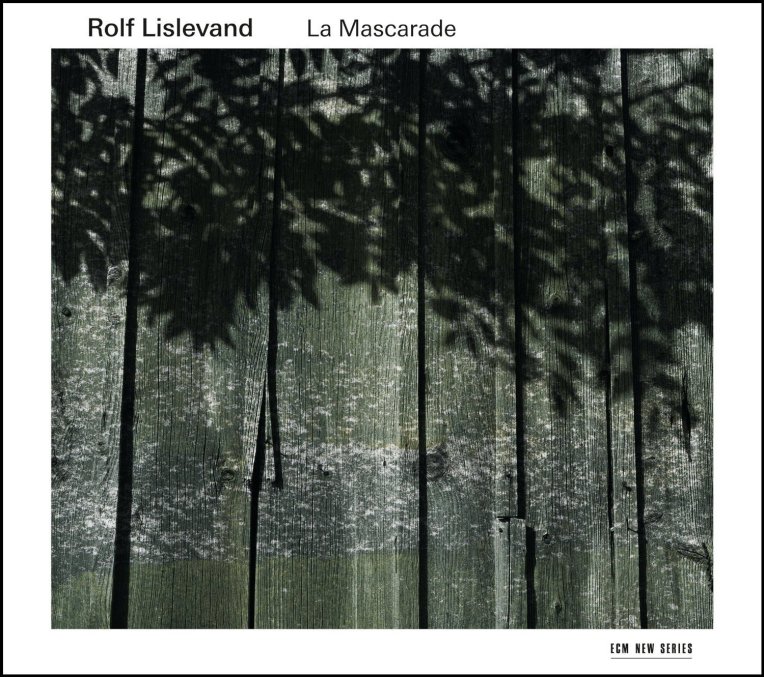
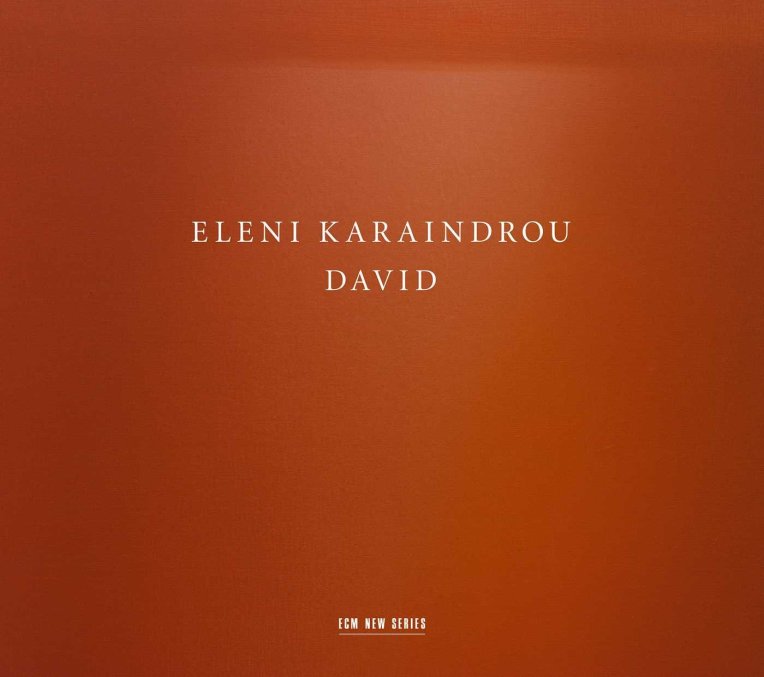
Disc 3 is dedicated almost entirely to composer Eleni Karaindrou. Her music has been a reliable way station along the New Series path for decades. Twelve of the fourteen selections are grafted from Concert in Athens, while the last two are emblematic excerpts from The Weeping Meadow. The sheer depth of feeling in both the writing and the performances prove Eicher’s vision and its ability to embolden others in kind. The most compelling transition comes next via Garbarek’s Dis, the title track of which treats an Aeolian harp as a moving canvas for wooden flute. Closing out this intimate color shift are two songs from Jon Balke and Amina Alaoui’s multicultural Siwan, including the hedonistic “Ashiyin Raïqin,” in which Alaoui sings: “How lucky we are to find this spot for our sojourn.” No sentiment could be truer here. That project’s Iberian roots are echoed in the Passacaglia andaluz II and kindred smattering from Rolf Lislevand’s Nuove musiche.
Things get decidedly cinematic on Disc 4, wherein the ambient touches of Andrey Degatchev’s soundtrack to The Return trace their utterances across physical and metaphysical waters alike. Even the pastiche of Nils Petter Molvær’s seminal Khmer—every track of which, save the last, is preserved—feels like imagery in sound. “Song of Sang II” is transcendent in this and any context, an anthem for all time keening from a past without walls. A new outro is suggested in the spidery “Close (For Comfort)” from Eivind Aarset’s Dream Logic.
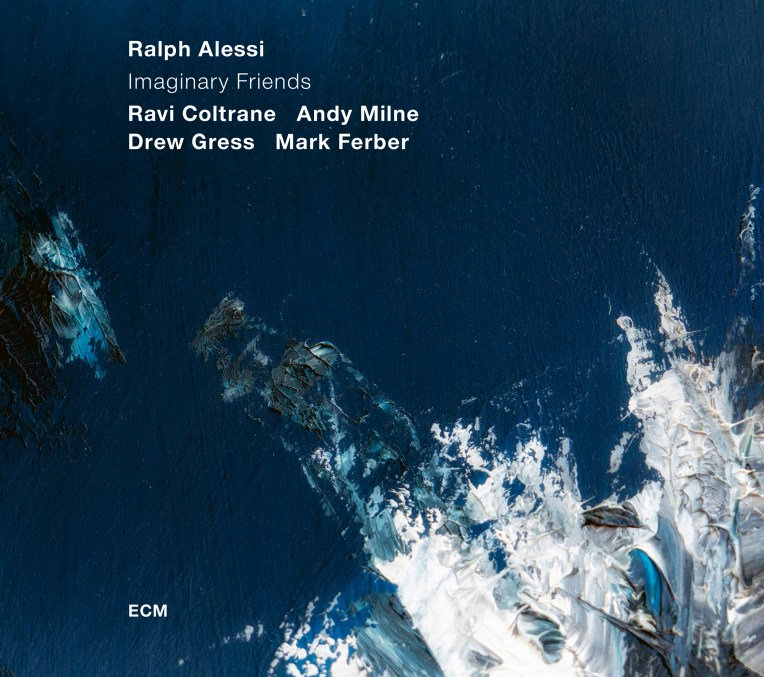
As if all of that didn’t already feel like a full-body dip into the ECM font, Disc 5 adds rays to the widening dawn from a range of jazzier persuasions. The Stefano Battaglia Trio regales us first with its 12-minute “Euphonia Elegy,” providing an oceanic set-up for the electronic groove of Food’s “Celestial Food” and the Tord Gustavsen Quartet’s acoustic “Prelude.” What follows takes us all over the ECM map, tracing a red line from the solo guitar of Egberto Gismonti’s “Memoria e Fado” (as well as his magical collaboration with Garbarek and Charlie Haden, “Carta de Amor”) and the vocal honesty of Norma Winstone’s “Like A Lover” to the freer language of the Christian Wallumrød Ensemble and trumpeters Ralph Alessi and Tomasz Stanko. Along the way we also find sacred geometries in the Byzantine renderings of pianist Vassilis Tsabropoulos and cellist Anja Lechner and the Colin Vallon Trio’s appropriately titled “Telepathy.”
Disc 6 chambers the oldest relics, starting with the Jimmy Giuffre 3’s premiere take on the Carla Bley classic “Jesus Maria.” Other archival gems in this final reckoning include “Time Will Tell” (Paul Bley, Evan Parker, and Barre Phillips), “Lonely Woman” (off the 1979 self-titled debut of Old And New Dreams), “Voice from the Past” (title track to Gary Peacock’s outstanding excursion with Garbarek, Stanko, and Jack DeJohnette), and “Kulture Of Jazz” by Wadada Leo Smith. Giving contrast to these precious diamonds are the worldly ores of “Langt innpå skoga” (Sinikka Langeland) and “Psalm” (Frode Haltli). In their dialogue, new orders are suggested, imagined, and liberated.
Because these selected signs, at the exhibition itself, were heard only through headphones or in walk-in listening stations, a strange balance of privacy and openness hovered in the background of their presentation. But like the field recordings interspersed throughout the sequence suggest, they were but itinerant souls in search of a home. And in this box they have found just that, waiting to become a part of yours.






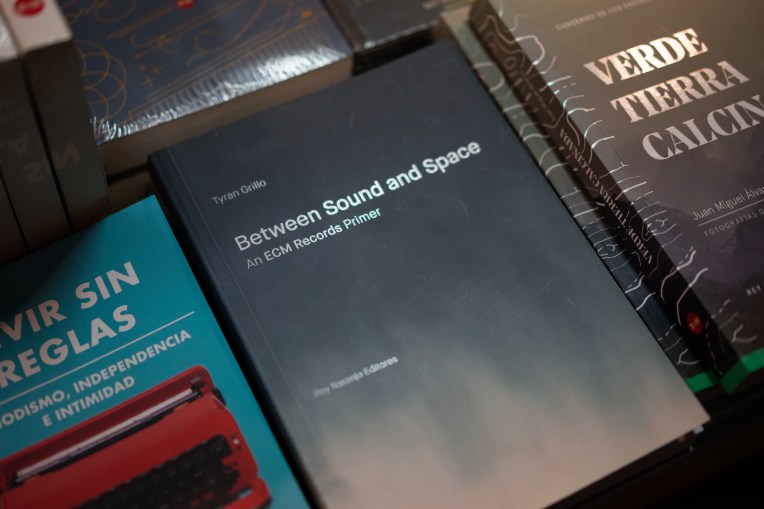



 Between Sound and Space: ECM Records and Beyond