

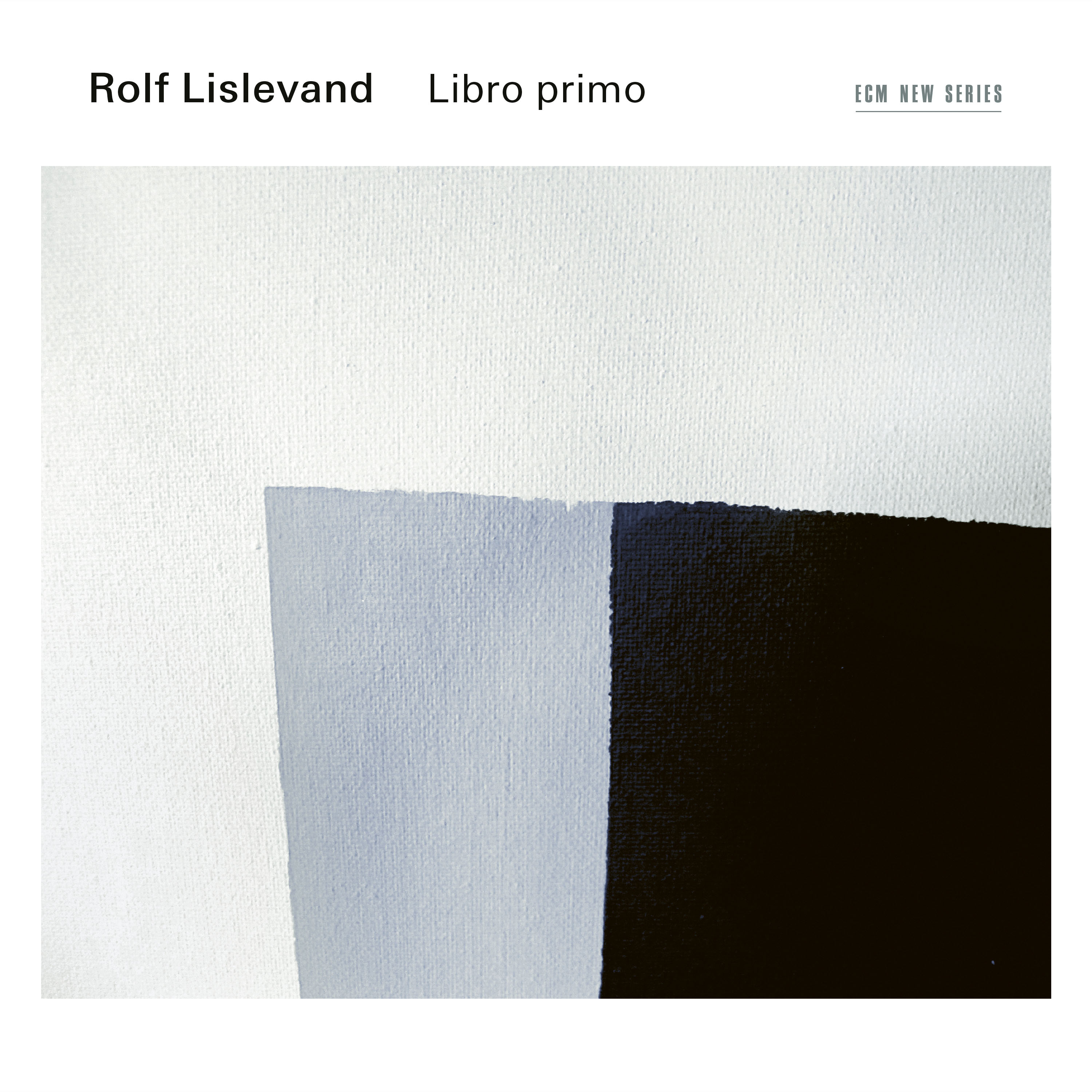
Rolf Lislevand
Libro primo
Rolf Lislevand archlute, chitarrone
Recorded 2022-23
at Moosestudios, Evje, Norway
by Rolf Lislevand
Mixed October 2024
by Manfred Eicher, Rolf Lislevand, and Michael Hinreiner (engineer)
at Bavaria Musikstudios
Cover photo: Fidel Sclavo
Produced by Manfred Eicher and Rolf Lislevand
Release date: August 29, 2025
Nearly a decade after his last appearance on ECM, early music specialist Rolf Lislevand returns to the New Series with another solo program, shifting focus now from the court of Louis XIV to 17th-century Italy. The album’s title is a nod to Il libro primo, a musician or writer’s first volume of works that, as Lislevand notes in the album’s booklet, “can often hold the most inspired and radical creations of an artist.” Like the more formalized Opus primum, it carries a certain creative charge, affording listeners a glimpse into the artist’s most foundational thoughts in a realm of lively experimentation and recalibration of existing rules.
It’s also an exciting realm to explore for proving that the lutenist’s repertoire is far more vast and varied than the fairweather listener may mistake it to be. Take, for example, the program’s two opening works by Johann Hieronymus Kapsberger (c. 1580-1651) and Giovanni Paolo Foscarini (c. 1600-1647). Whereas the former’s Toccata terza greets the dawn like eyelashes fluttering into wakefulness, the latter’s Tasteggiata is its nocturnal other, revealing a strikingly modern atmosphere that Lislevand likens to the French impressionists and even to Carla Bley. Neither characterization is misplaced, given the improvisational elements incorporated into the present renderings, which allow for something ethereally raw to spring forth.
And what of the fantastical arpeggios that open Kapsberger’s Toccata sesta, added by Lislevand and seemingly drawn from the same well? In them is the promise of life and love, all unraveled with a meticulous sort of freedom. The mid-tempo feel of Kapsberger’s Toccata quinta strikes that same balance of flourishing and nourishing, never letting go of the Baroque’s architectural sensibilities.
A highlight is the Corrente con le sue spezzate of Bernardo Gianoncelli (d. c. 1650). Despite being the latest work on the program in terms of publication, dating to the end of his life, it is a veritable flower of a tune. With a clear bass line as pistil and sparkling ornamentations as petals, it sways to the wind of Lislevand’s organic touch. It also epitomizes the nuove musiche approach of the times, which went against the polyphonic grain of the Renaissance by favoring deeper rhythmic interplays through which staid motifs were recontextualized. One might liken such a movement to Hollywood’s propensity to remake its own cultural products, an impulse that (profit motives aside) points to the seemingly universal need to repackage the past in the aesthetics of the new so that audiences can connect to the same emotional content on more immediately relatable terms.
Thoughtful inclusions are to be found in two Recercadas by Diego Ortiz (c. 1510-1576). Despite their spatial and temporal differences, Lislevand places Ortiz and Kapsberger on the same shelf for their syncopations and expressive colorations. Each spins increasingly complex relationships from deceptively simple beginnings, growing fractally with every reiteration.
Yet the pinnacle for me is Lislevand’s original Passacaglia al modo mio, which is at once a distillation and loving expansion of the passacaglia form. It combines many of the elements found in its surroundings, including a robust “left hand” in the bass and a lithe “right hand” in the overlying melody. It also changes faces multiple times from start to finish, its improvisational layers paying homage to Barbara Strozzi, Bach, Beethoven, and Keith Jarrett. All the while, it maintains a haunting sense of familiarity, especially in the concluding progression, which invites us into its circularity like a child comforted by a mother’s embrace.
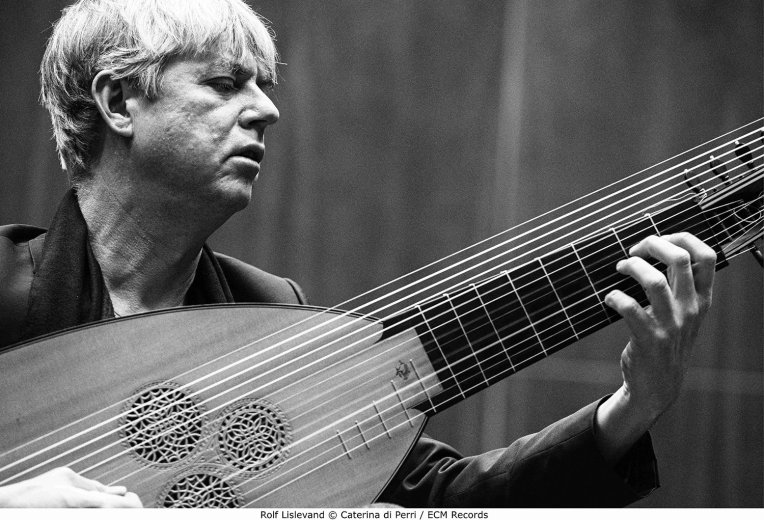
Special mention must be made of the recording, captured in a barn in northern Norway by Lislevand himself, engineered by Michael Hinreiner, and mixed by both Lislevand and Hinreiner alongside producer Manfred Eicher in Munich. Although the archlute is primary, some of the pieces originated on the Baroque guitar and chitarrone (or theorbo), which is also played here and distinguished by its darker, more rounded tone. Instead of enveloping these instruments in a wash of artificial sound, the reverb draws out their inner essence with tasteful details of wood and strings.


 Between Sound and Space: ECM Records and Beyond