
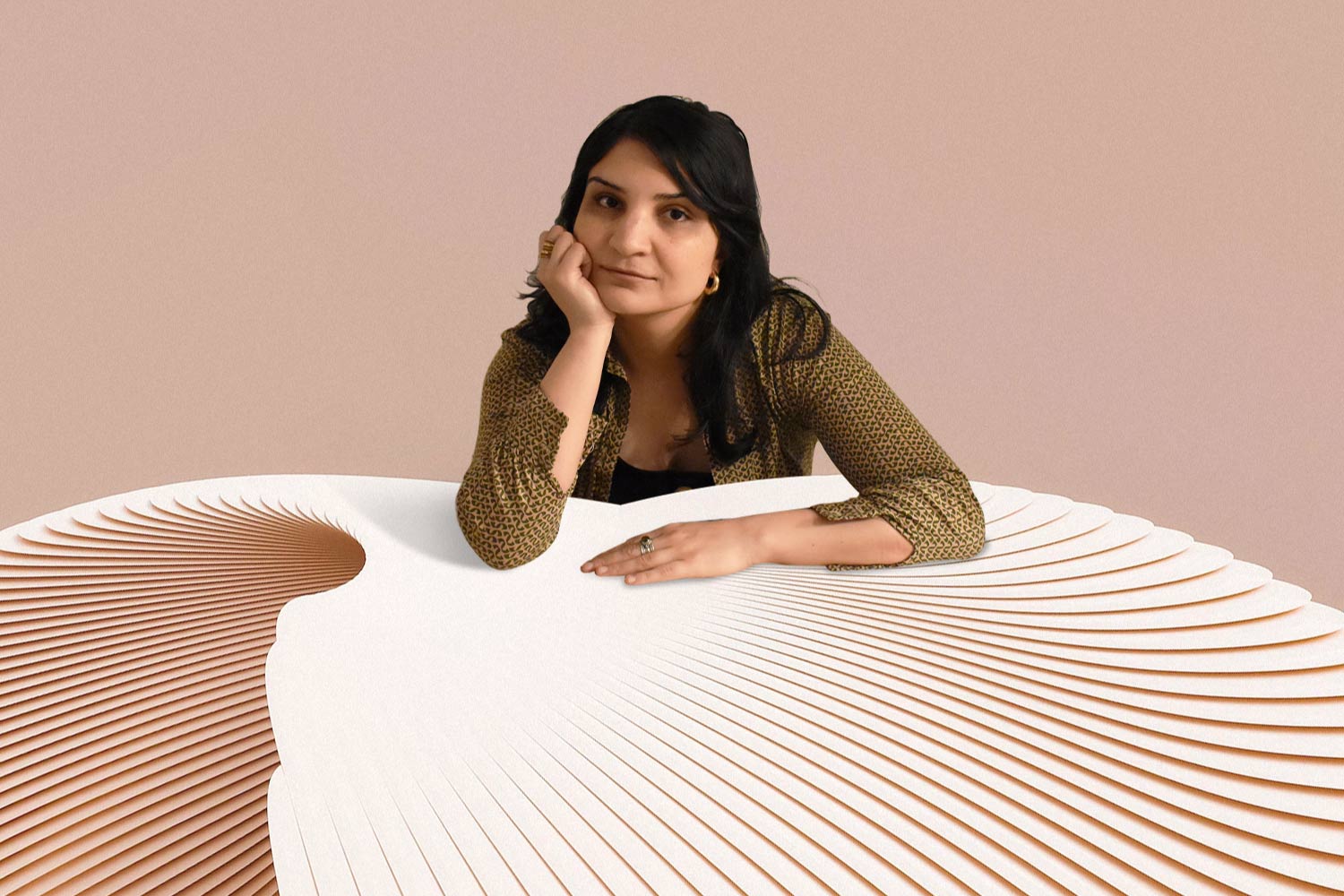
In the music of Sarah Davachi, sound remains suspended beyond the moment of its apparent exhaustion, gathering strange internal populations as its harmonics fracture and quietly reassemble. What initially presents itself as stasis develops a secret grammar of departures, an entire cosmology folded into the infinitesimal distance between two frequencies. The ear, accustomed to locating movement in the passage from one event to another, must relearn the contours of an event whose distances are buried within it. A barely perceptible alteration in pitch opens a wound across the whole duration, exposing the fragile membranes through which consciousness negotiates its relationship with the audible. Each resonance becomes an archaeology of its own disappearance, a spectral excavation of possibilities held captive within the seemingly immovable. One begins to suspect that time possesses no reliable exterior, that every second harbors its own miniature antiquity, and that listening is the delicate violence by which we break into it. Davachi’s compositions inhabit this ontological fissure with extraordinary patience, allowing sound to become estranged from its origins until even the familiar reveals the exquisite foreignness of its existence.
Such music emerges from an imagination profoundly attuned to the afterlives of instruments, particularly their capacity to preserve obsolete understandings of what it means for the world to vibrate. Davachi’s pipe organs carry the accumulated breath of structures designed to give eternity a physical address, while her electronic instruments disclose a more intimate archaeology of voltage and decay. Her engagement with temporarlity subjects the very possibility of consonance to philosophical scrutiny, exposing harmony as a provisional agreement between matter and the cultural imagination. A chord can preserve the memory of an entire system of listening through which earlier ears organized the permissible universe; a single overtone can dismantle that universe without ever raising its voice. Here the Renaissance continues to dream through the nervous system of modernity, and the boundary between the sacred and the mechanical dissolves into a deeper uncertainty about where human intention ends and the secret autobiography of matter begins. Every perception arrives fractionally late to its own happening, already carrying the faint sediment of something irretrievable. Such belatedness gives Davachi’s work its peculiar tenderness, as she asks the ear to become answerable to events that cannot quite be claimed as present.
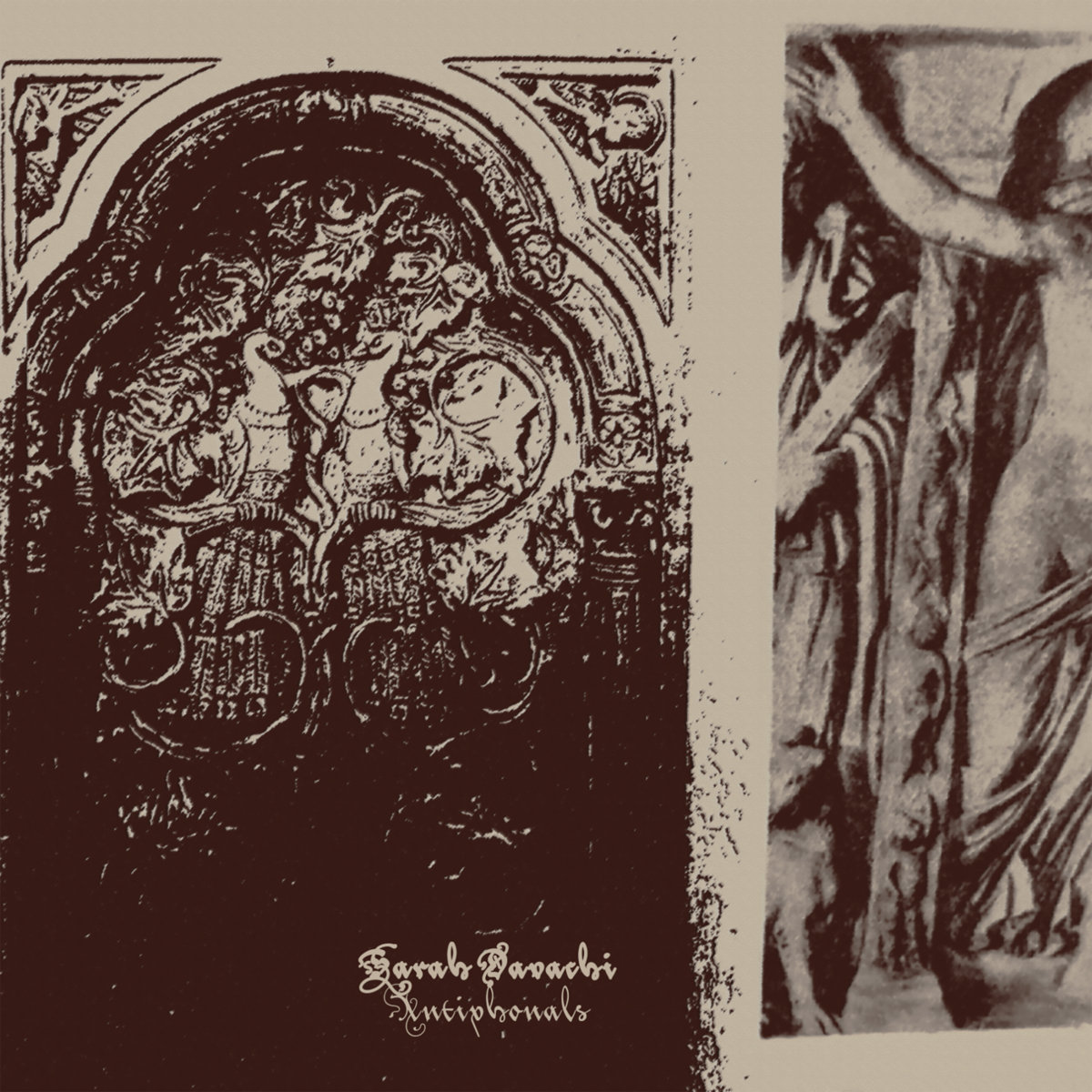
Recorded in Los Angeles throughout 2020 and released the following year on her Late Music imprint, Antiphonals retreats from the monumental expanses of Cantus, Descant into a more intimate architecture of resonance and remembrance. Entirely composed, performed and produced by Davachi, its eight compositions draw upon the spectral vocabulary of the Mellotron, whose simulated instrumental voices mingle with electric and pipe organs, harpsichord, piano and synthesizer. These instruments seem to speak through one another’s mouths, each timbre trailing an afterimage that cannot be returned to its source. The title evokes the ancient liturgical practice of alternating voices, yet these exchanges unfold within a solitary consciousness, each utterance answering another across the immeasurable distance between sound and its recollection. One hears the same mind assuming the roles of supplicant and sanctuary, of an unseen singer whose throat has been replaced by corridors. The album’s silences acquire the thickness of walls that have absorbed centuries of prayers without ever understanding a word.
The opening “Chorus Scene” puts a rusted harpsichord on the edge of mutability in the night, its brittle articulations attended by electronic tones that soften the undercurrent with their song. The instrument seems to be reading a letter from the future in an alphabet made entirely of hinges. From this uncertain threshold, “Magdalena” touches us with the organ-shaped song of a thought that finds our secrets, working itself into an iron filament pulled through the marrow. As synthesized wonders reveal their light amid the darkness, we are taken into an inner sanctum that cannot be located on any map of the body. The melodies never quite consent to being possessed. They pass through attention in the very act of teaching attention how to receive them, leaving the heart momentarily stained by colors for which vision has devised no name. A more secular beauty enters by way of “Gradual of Image,” whose folkish accessibility makes room for the wandering soul that might reach out for a melody and discover an entire history of touch concealed inside it.
Yet this tenderness has a shadow. In the distorted reaches of “Border of Mind,” the music brings us face to face with our wounded selves, while “Rushes Recede” offers the uncanny sensation of a stained-glass heart cradling hymnody in its blood-bearing chambers. These interiors are neither wholly consoling nor wholly threatening; their beauty consists in refusing to conceal what the light discovers. Elsewhere, the drones of “First Cadence” and “Doubled Flutes” pour illumination at dream speed, stretching the interval between recognition and understanding until the two appear to have been born in different centuries. Even the withheld motion implicit in “Abeyant” suggests a harmony engaged in the delicate work of self-awareness. Underlying this hushed communion is the suspicion that the ear can encounter its deepest interior only by listening to something it cannot identify as its own.
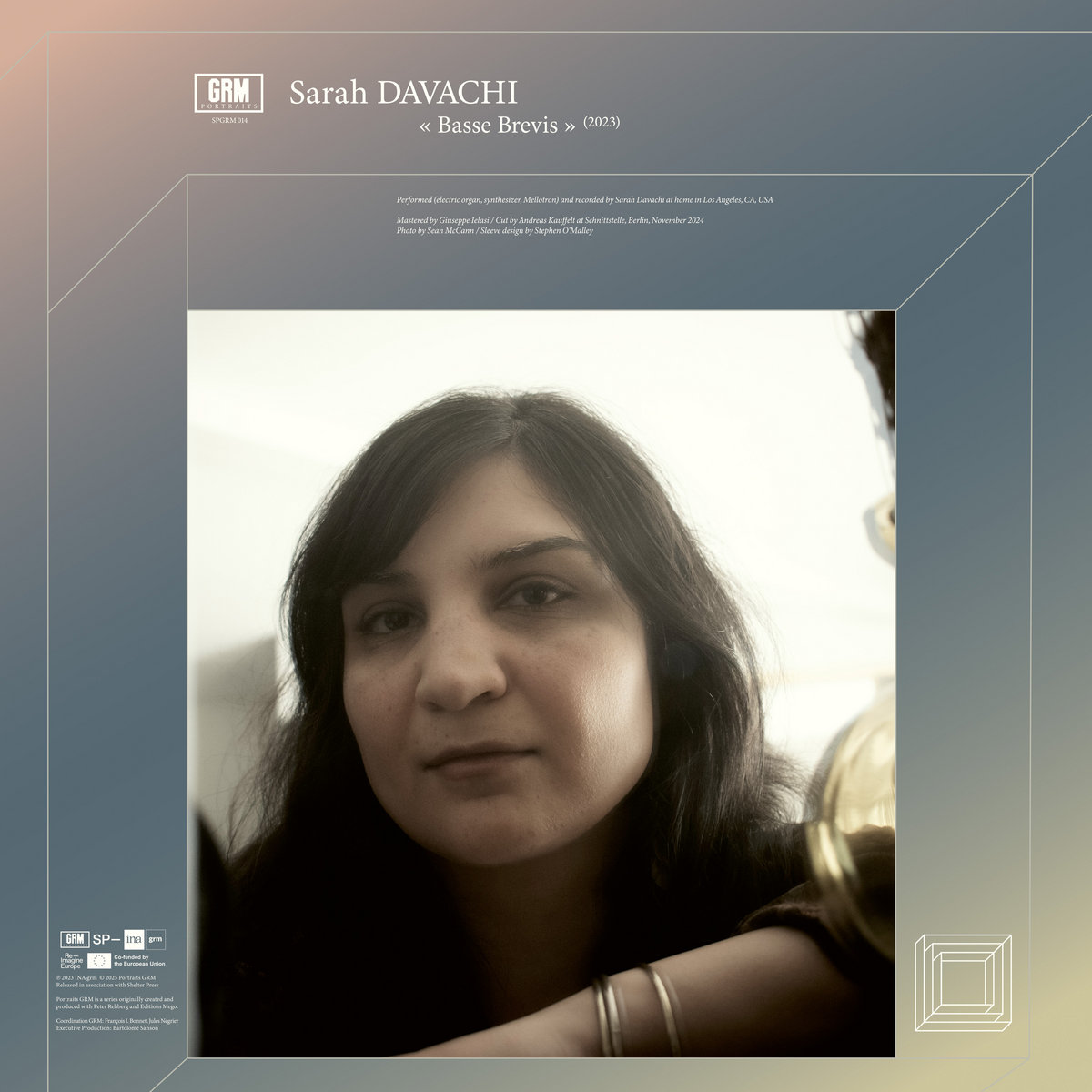
That suspicion undergoes a more concentrated trial in Basse Brevis, co-commissioned by Radio France and INA GRM and premiered at the 2024 Présences festival dedicated to Steve Reich. In this eighteen-minute enmeshment of organ and synthesized voices, Davachi extends her minimalist investigations into the intricate relationships between timbre and duration, letting the gradual evolution of sonic material become an exercise in perceptual displacement. The distinction between instrument and artifact grows porous, gradually erasing the fingerprints of its own manufacture. Between instrumental resonance and musique concrète, abstraction acquires an unexpected tenderness; each tone feels at once exposed and inaccessible, a piece of matter dreaming that it possesses an inward life. The listener is asked to inhabit a structure whose dimensions change only when one stops measuring them, an acoustic building secretly rearranging its egresses around the person standing inside.
Something resembling an uncovering of sin touches the sky with its highest flames. The music conflagrates into the ashen skeletons of our most untoward thoughts, and for a moment we wish to crush them into powder and throw them into the nearest river. Davachi instead refashions these remains into a subtle yet crucial monument to the life we used to live and from which we now deviate in search of something pure and good. The gesture is troubling precisely because the monument refuses to entertain absolution. It preserves our former selves without granting them the privilege of innocence, allowing the listener to experience memory as a material still undergoing its own composition. Formal exploration and emotional immediacy occupy the same perceptual space; one feels the mind approach its deepest disfigurements by way of almost imperceptible changes in resonance. And while the piece seems to end where it started, a global circulation of thought has occurred, slingshotting consciousness backward in order to move on.
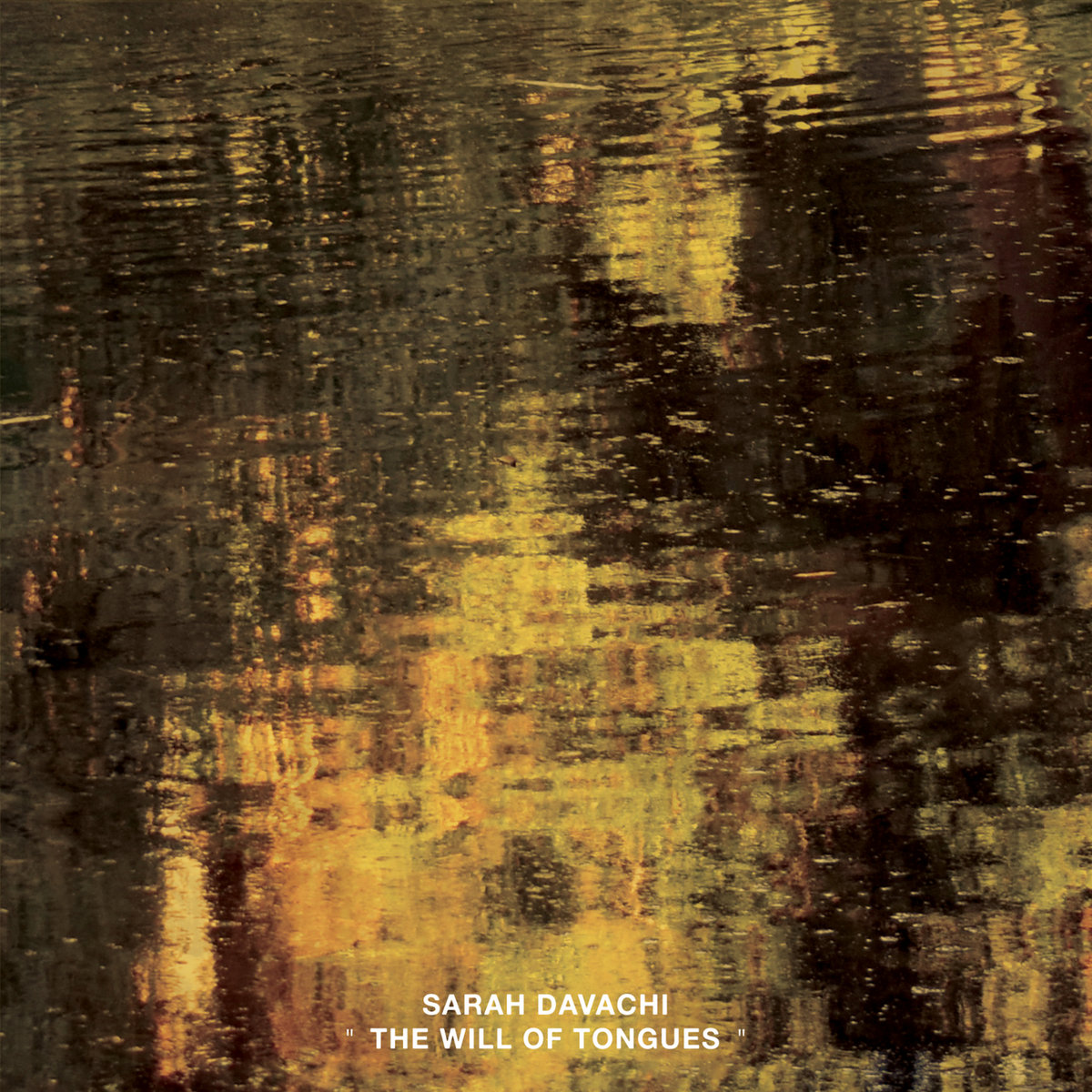
The scale of this investigation expands dramatically in The Will of Tongues, which stretches beyond two hours across three LPs. Thirteen compositions probe the boundaries of harmonic perception, gathering five solo works for historical pipe organs recorded across North America and the Netherlands alongside choral writing and microtonal instrumental encounters. An extended chamber work intertwines a string trio with organ and tape, deepening the inquiry. Musicians including Whitney Johnson and Eyvind Kang enter this field of resonances, with Lucy Railton and ensembles such as Chamber Choir Ireland contributing to its intricate human circuitry. Davachi’s enduring interest in tuning theory assumes an almost biological dimension: musical ideas migrate between instrumental bodies, undergoing tiny mutations until their identities can no longer be secured by the material that first carried them.
The first of its dispersed “Interludes” begins with strings whose metallic dissonances hover over fragile harmonies, opening a texture so encompassing that the very distinction between surface and depth seems briefly suspended. Farther along, an answering woodwind meditation restores a more harmonious balance to this cosmos, though its equilibrium never loses the memory of disturbance. When the brass eventually take their turn, their collective breath suggests one larger organism laboring to pronounce a consensus vowel. The movement among these instrumental families produces an antiphony on a scale more bodily than architectural, carrying forward the private exchanges of Antiphonals into a community of resonant flesh. The choral “Songs of the Smile’s Fig” introduce another series of arches, enchantments born of everyday interactions and the small interruptions that arrest us at the fragile edge of life. Their organ ancestry can be heard passing through the human throat, where resonance becomes newly vulnerable to the possibility of breaking. What holds a mirror to the soul here is also capable of cracking it. A voice does not merely occupy a note; it must risk an entire body to keep that note alive.
At the center stands the massive two-part “The Rose Dialogues,” meshing strings and drone with an eye turned on the imperfections of the flesh. Its title opens a botanical wound: thorn enters blood, and the rose begins to resemble an argument between what can be touched and what can only be imagined through touch. The senses negotiate this profound disconnect between the physical body and the metaphysical world by giving us a taste of what lies just beyond their own grasp. The music maintains a delicate interval between corporeal resistance and spiritual appetite, allowing each to reveal the other’s unfinished dimensions. Around this central wound, the organ works pursue their own forms of divided speech. “Canto Solo” and “Canto Duo” undulate at the pace of a tidal shift, in which even one tone can contain the outline of an interlocutor, and even dialogue can disclose the intolerable loneliness of being heard.
Other correspondences develop across the album’s expanse. Separated by the intervening music, “The First Tuning” and “The Second Tuning” appear as windows turned toward each other from different buildings, each illuminating a bright expanse in which the blood drops of the human condition become impossible to ignore. To tune is to admit that there exists a difference between where we are and where we mean to arrive, however minute or unreachable that distance may be. Buried among these proliferating relationships, “Four Narrow Forms” pulls the organ’s breath until it seems to have nothing left to say. Yet this extremity is also strangely generous. The instrument’s apparent depletion exposes the physical effort sustaining what we too readily call eternity, reminding us that even an apparently disembodied resonance depends upon mechanisms that can fail. From this recognition emerges an acoustical codex of hesitation. Listening must remain vulnerable to phenomena too gradual to possess.
Across these works, Davachi stages an encounter between the mortal body and the impossible duration it has invented instruments to imagine. Perhaps the deepest provocation resides in the suggestion that our ears are themselves historical instruments, tuned by choices made before we ever drew breath. Consonance, in this sense, becomes an inherited belief whose laws can be revised by the slightest disobedient overtone. There is tenderness in that possibility, though it carries an ethical question disguised as an acoustic one: Whose future listening are we helping to make possible?

