VALIE EXPORT: Invisible Adversaries (INDEX 021)

A Story of Paranoia, Patriarchy, and the Unmaking of Reality

VALIE EXPORT’s Invisible Adversaries (Unsichtbare Gegner, 1976), created with Peter Weibel, occupies an unsettled corner of postwar Austrian cinema, a place where fiction, visual essay, performance, and feminist critique converge into one restless organism. Amy Taubin once said of it: “The film feels a little as if Godard were reincarnated as a woman and decided to make a feminist version of The Invasion of the Body Snatchers.” EXPORT indeed reshapes the paranoid science-fiction template into an intimate psychodrama that charts a woman’s body under siege by media, lovers, the state, systems of communication, and the titular unseen forces that sustain social norms at the expense of eliminating deviations from it.

For EXPORT, the body does not sit within space. It is space, a field of ions charged by the friction between self-expression and its potential eradication. She strips away social clothing not to reveal some almighty essence but to embrace a corporeal vocabulary that refuses translation. Her own writing guides the mood at hand: “[W]hen children become enemies, the object is no longer testing a theory of existence but salvaging individuation, bare existence in a reality of senseless destruction (even at the price of exclusion).” Communication writ large, in her view, is a vehicle for hate. The film stretches this thought until language, images, and relationships split open under the strain.

A Year in Anna’s Life

At the center stands Anna, played with elegant dissolution by Susanne Widl, a photographer retreating into morbid subjects and unsettling acts of looking. While EXPORT writes her scenes, Weibel plays her partner, Peter, and composes his lines, an authorial split that sharpens the conflict between male and female subjectivities.

The first images signal that truth has already been damaged: the title appears on a crumpled newspaper as a tide of electronic noise fills the soundtrack. Even before the story has begun, the world is slightly off. A radio next to Anna’s bed cuts into routine news with a bulletin announcing the return of an alien force known as the Hyksos, who assimilate humans through radiation. They resemble everyone else. They are already here. Their apparition is treated not as science fiction but as a metaphor for xenophobia, fascism, and the unaddressed violence within Austria’s own history.

The camera drifts above the city as if pulled by a force Anna cannot name. Her phone rings, but there’s no voice on the other end. She applies makeup while her reflection moves independently, the mirror claiming her gestures. The scraping of the foundation becomes a small wound. Meanwhile, a man kneels to lick the street. EXPORT stitches these images together with abrupt force (a short interlude recalls her earlier Mann & Frau & Animal as Anna develops photographs of female genitalia while a man retches offscreen). Women adopt poses from religious paintings, gestures sculpted by myth rather than intention.

Love as Labor, Labor as Love

Anna and Peter share brief moments of closeness, yet even tenderness carries an undertow of alienation. Photographs freeze their entangled bodies, placing the camera between them. Later, in the bathroom, Anna muses on Lévi-Strauss and the mythic body while the mirror divides her into two. She shoots on the street, then overlays her body onto further sacred imagery through a television monitor, rewiring art history with her own silhouette.
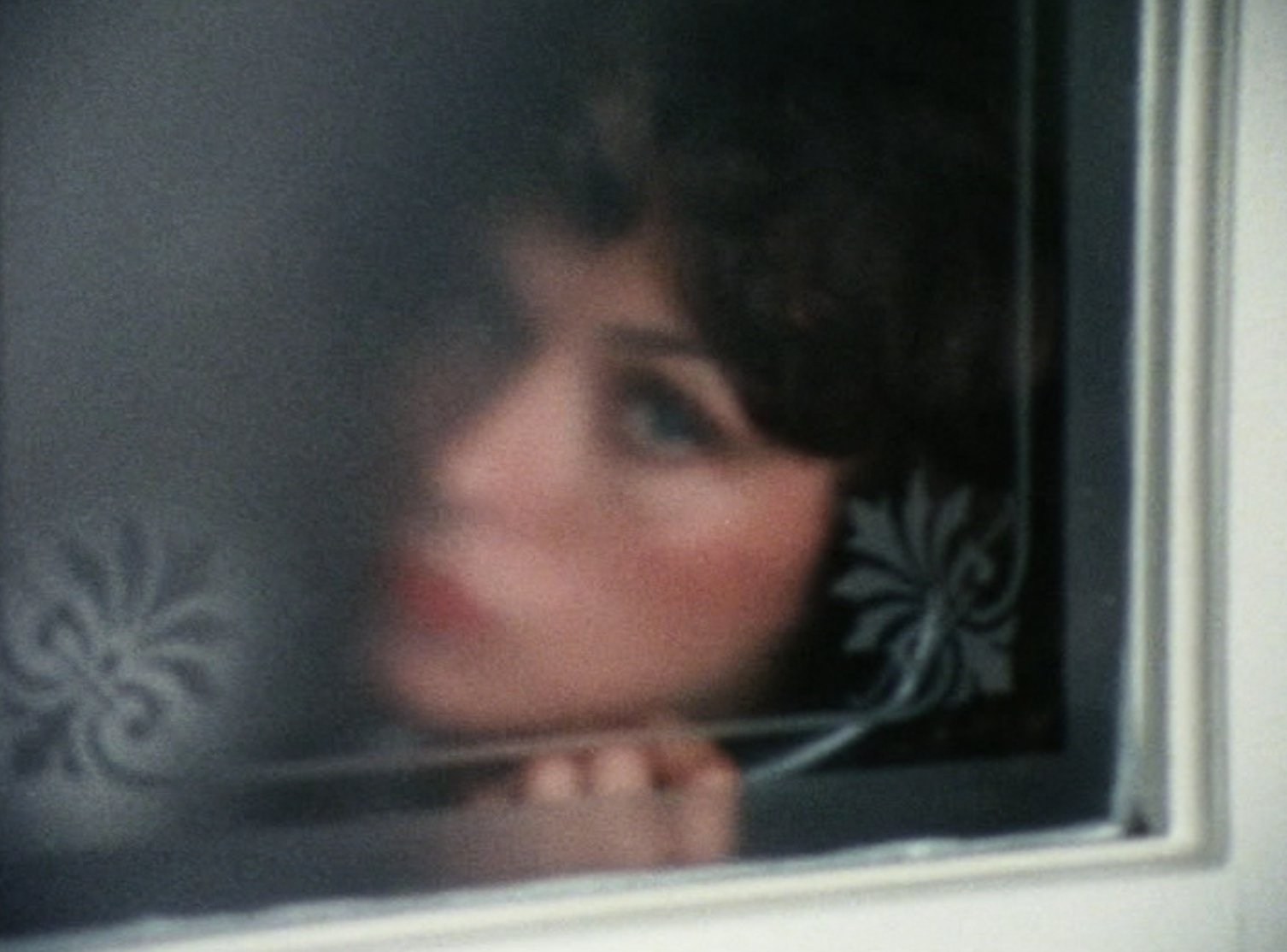
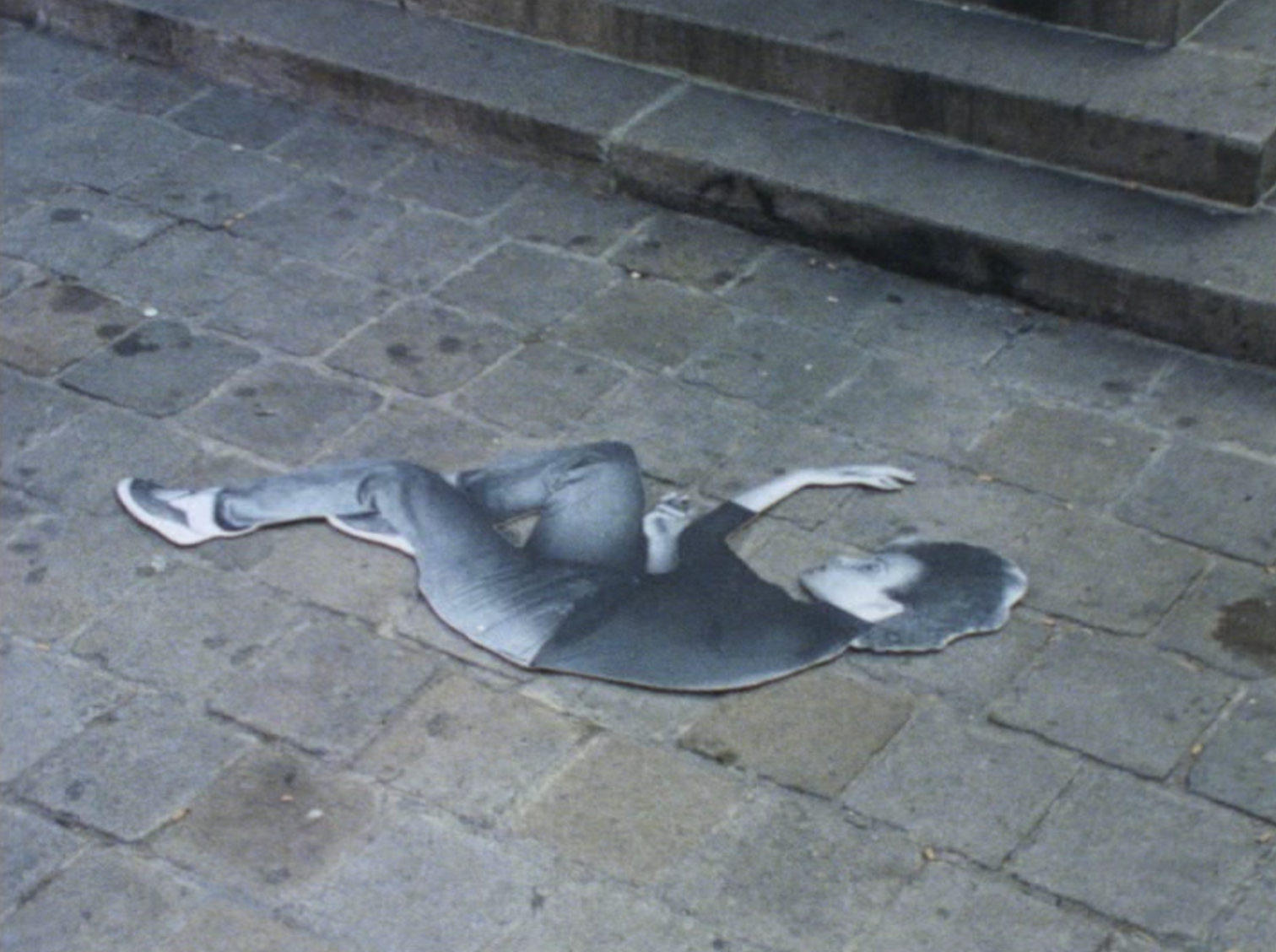
The city tightens around her. “If you are creative in Vienna,” she says, “the police suspects you.” Her remark widens into a critique of Austria’s broader resistance to artistic and social dissent. Men hungry for authority drift into both Anna’s and Peter’s lives. While she cooks, Peter complains about the conditions at home, revealing his expectation that her labor remain invisible. She accuses him of disguising selfishness as political rebellion. Their dispute expands until every phone call she makes reveals a household in disrepair, each one locked in its own argument. EXPORT cuts to battle footage, collapsing domestic turmoil into a wider field of vehemence. Anna then becomes a photograph lying on the ground, her body reduced to an image without agency.

A Descent into Unreality

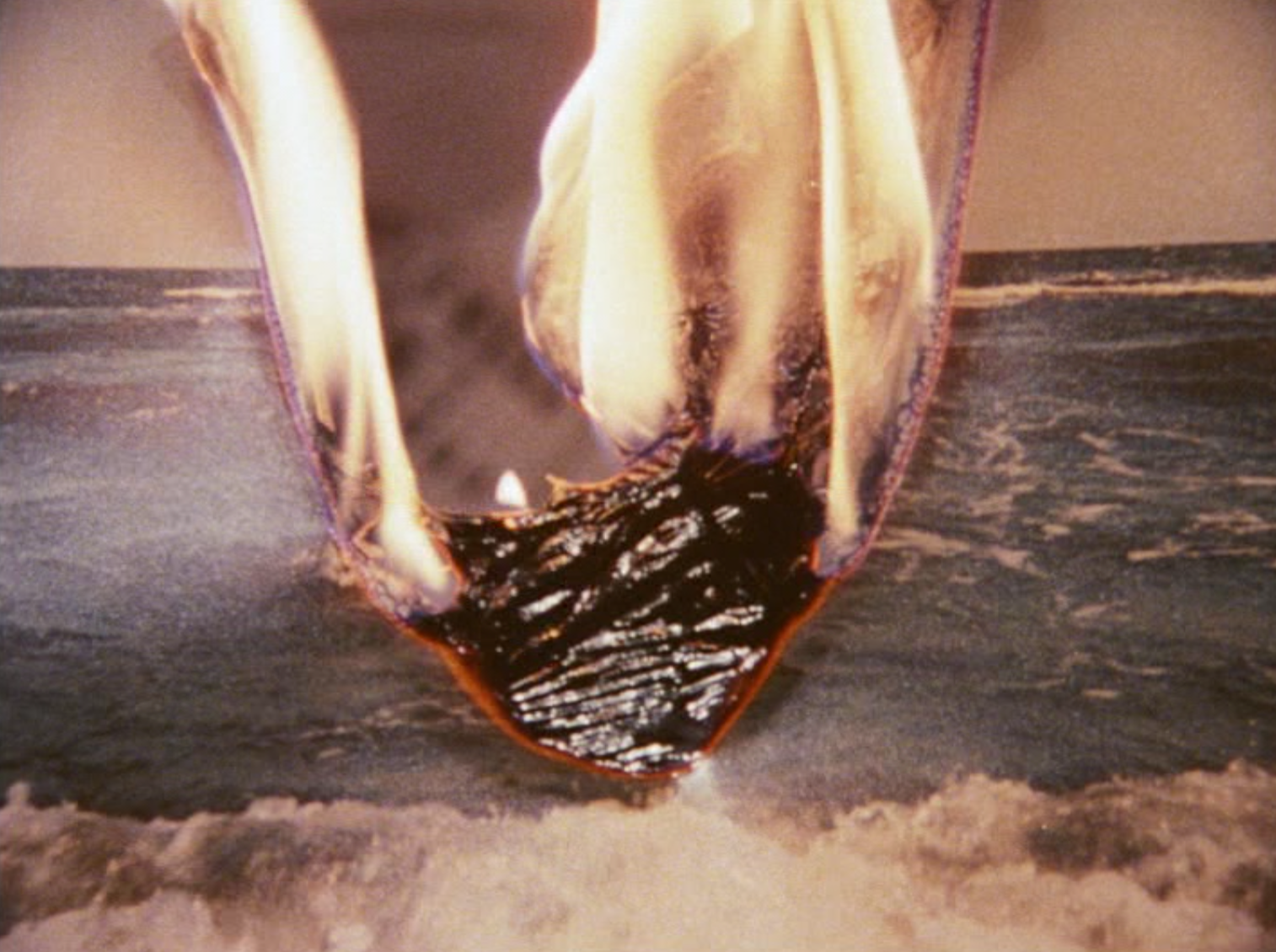
Anna’s unraveling quickens. She slices through the objects on her table, then through living creatures, as though dissection might yield a truth withheld. When she opens the refrigerator, a living baby stares back, and taped to the door is her own face. Every threshold circles back to herself. Her photographs become more severe: excrement, disabled children, demolished buildings, wrecked vehicles. She sets fire to an image of the ocean, erasing even the idea of calm with its opposite.
“Life is just a series of reflections,” she says. At a café, Peter insists he is the one protecting her from her thoughts. She answers with a question: Why must she impose herself against the defiance of reality? He condemns men in power yet cannot recognize his own relation to it. When she tells him the Hyksos have already bought him, he calls her paranoid. After he leaves, she lights a small fire in a foil bowl. A quiet gesture of defiance.
Communication Becomes Catastrophe

Anna’s ears grow sharp to every disturbance. The rustle of newspaper pages becomes unbearable. Words feel like blades. At night, Peter reads from an old manual of sexual positions. Its mechanical tone exposes the banality of hormonal scripts. Anna trims her pubic hair and shapes it into a moustache, a flicker of humor and gender play that mocks every role she has been assigned.
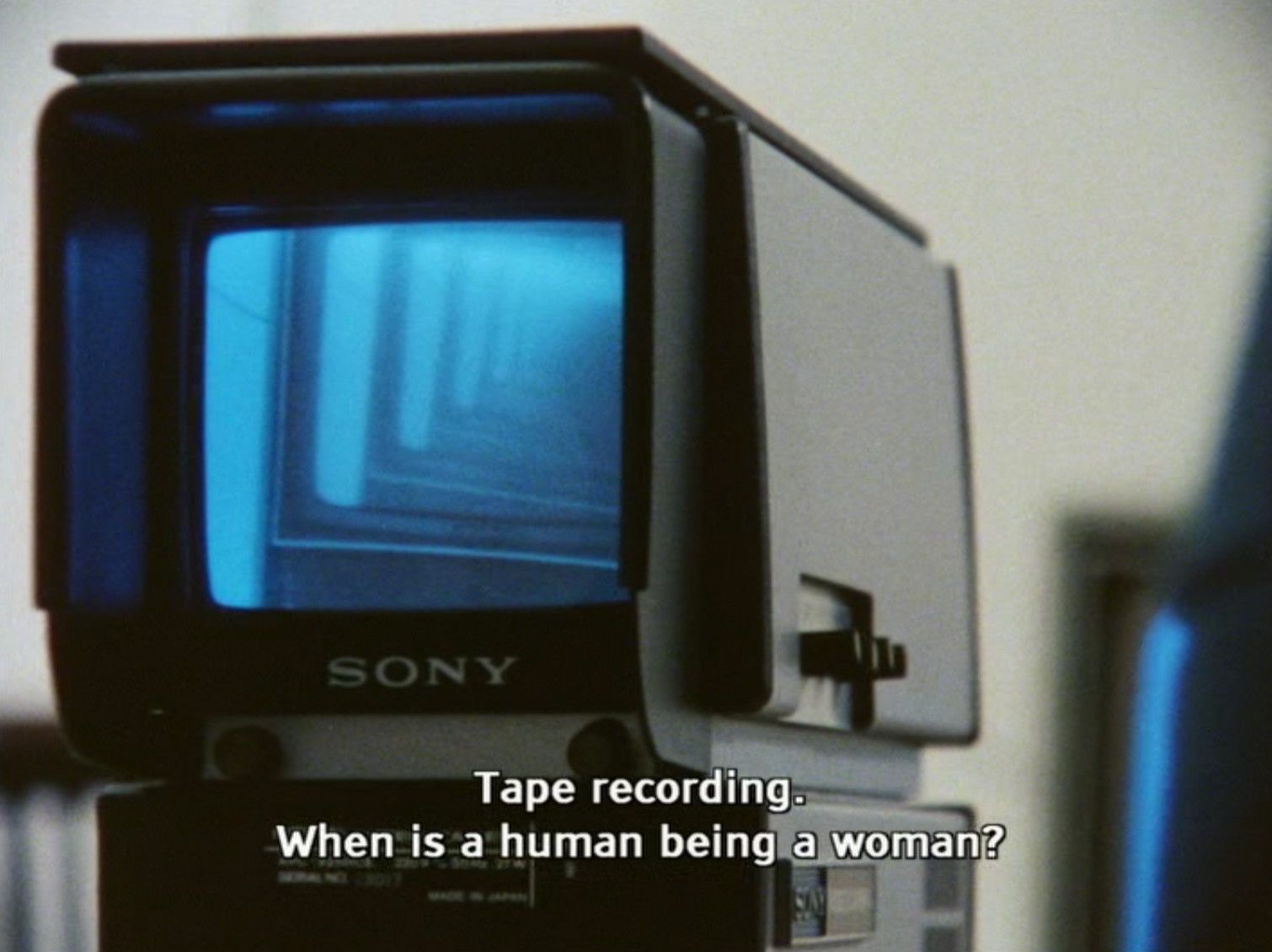
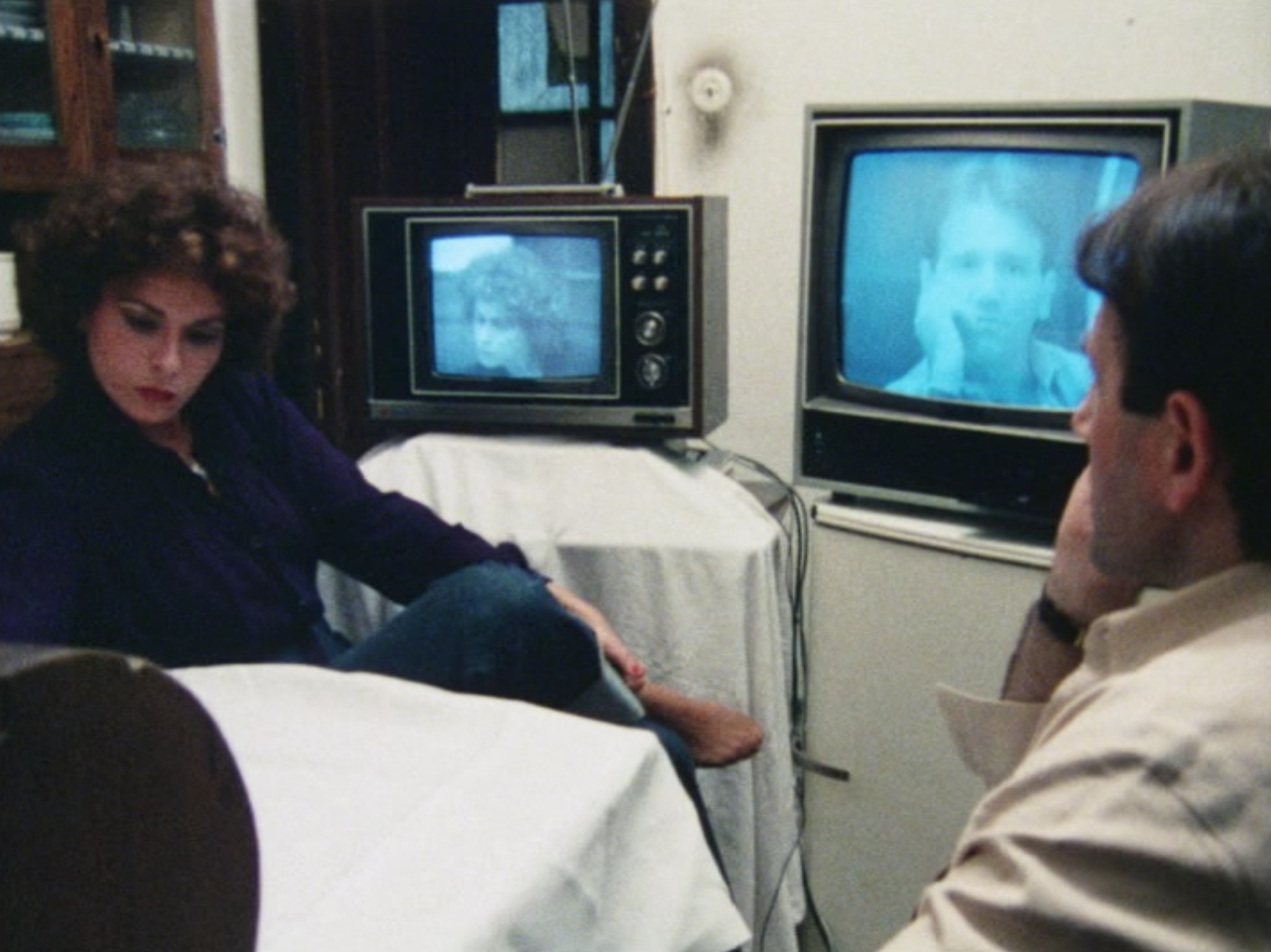
Peter lectures her about domestic habits, insisting he is merely stating facts. EXPORT thus reveals a twisted heart in his claim to neutrality. In their apartment, television monitors return their faces with a slight delay, multiplying their argument into grids of disconnection. Anna feels reality itself slipping into disguise. On a train, she moves with broken rhythm, and later, in a night scene, she cries while men masturbate around her. Society is already coming apart in every sense of the word.

Double Vision

She visits a doctor, hoping for clarity. He recommends psychotherapy. She photographs him instead. When she develops the image, his face appears doubled, confirming the Hyksos’ presence. He rejects her conclusion, trapped in the logic she has already abandoned. At a cinema, she watches footage of war and genocide, her personal crisis merging with the collective trauma.

One night, she dresses carefully, lies in bed, and listens to the radio. The camera withdraws slowly. No one mentions the Hyksos. The world continues as if nothing has occurred, which is the most chilling detail of all. Hands then tear a photograph of the scene, as though the film itself must rip apart its own reality to breathe.

A Story of Becoming Unrecognizable

Invisible Adversaries does not depict paranoia but performs it until paranoia becomes a mode of existence. Repetition is the tenor of oppression.
Anna’s journey is not a plunge into madness but a lucid reckoning with a world arranged to make women feel mad. The Hyksos are not a singular enemy. They represent every force that infiltrates the female subject: ideology, imagery, relationships, institutions, and communication itself. EXPORT asks what it means for a woman to experience her life as an invasion. Anna’s answer, played out across fractured montage and a life ever on the brink of dissolution, is devastating. The only response worth trying is to tear the picture apart and breathe.

VALIE EXPORT: 3 Experimental Short Films (INDEX 004)

“Not two, not four, but three. A triangle: a full, beautiful form. There was something to be said for the square, too, but the triangle was the basis of all form. The dominant. The chord, domiso. This perfect chord had grown too familiar to move her every time she heard it, yet its fullness had a tough resilience, more so than any other sound.”
–Yūko Tsushima, Child of Fortune
(trans. Geraldine Harcourt, Tokyo: Kodansha International, 1983)

VALIE EXPORT emerged from the kinetic crucible of Viennese Actionism, an artistic milieu defined by the rupturing of boundaries, bodily extremity, and an anti-ritualistic desire to shatter the illusions of polite culture. Yet even in those early years, she seemed oriented toward a fire of her own. From the start, she saw both technology and performance as weapons against the stillness of the unmoving picture, as tools capable of detonating the complacency embedded in images that merely represent rather than confront. Born Waltraud Lehner in 1940 in Linz, Austria, she earned a degree in textile design in Vienna in 1964, learning, through threads and weaves, the discipline of material, the meaning of tension, and the politics of surfaces. Her early work as a script girl, cutter, and film extra taught her something equally lasting but far more corrosive: that “at best women were tolerated in art as extras.”

Refusing this fate, she cast off her surname—its lineage, its patriarchal tether—and took on a new one, VALIE EXPORT, borrowed from a cigarette brand and transformed into a “logo and artistic concept,” as she called it, but also a rebirth: a declaration that identity, too, could be self-authored. EXPORT quickly recognized the potency of the filmic medium, a terrain far more permeable and insurgent than painting, which she saw as calcified beneath male dominance. Yet finding her footing in Vienna proved difficult. The Actionists still loomed large, remapping themselves in effluvia and spectacle. EXPORT sought something different: not merely to shock, but to reorganize perception itself.

It was in this environment that, in 1968, she detonated her breakthrough: Tapp und Tastkino—“Touch Cinema.” Strapped to her chest was a small box, a miniature theatre into which passersby were invited to insert their hands. Created with Peter Weibel, her frequent collaborator and fellow Cooperative member, the piece became what she called “the first real woman’s film,” and with good reason. Instead of projecting images of the female body for public consumption, she transformed her own into a site where cinematic illusion was not only confronted but dismantled. As EXPORT explained, tactile reception subverts the fraud of voyeurism; the public, conditioned to watch from the safety of darkness, is suddenly thrust into the vulnerable intimacy of physical contact. Since anyone could be the viewer-participant, taboos become implicated by default, the mythologies of state, family, and property exploding under the pressure of an unmediated encounter. As Robert von Dassanowsky observes in his book Austrian Cinema: A History, EXPORT made clear that a society content with a reproduced copy of sexual freedom would never know a revolution of the body.

The following year, in 1969, she stoked her politics into an even more searing gesture. In her guerrilla performance Action Pants: Genital Panic, she stormed a Munich porn cinema with wild hair, a machine gun, and crotchless trousers. Moving up and down the aisles, she confronted the male spectators directly, daring them to look away from the passive women on the screen and toward a “real” woman—one who stared back, unfiltered, unidealized, unwilling to be framed. Her approach was not merely provocation; it was a socio-critical intervention shaped by the late 1960s, by the student revolts, and by the rising insistence that the state’s machinery of repression needed to be broken from within. Thus, EXPORT sought to expose the structures and conditions of visual and emotional communication, to awaken a dormant sensitivity numbed by convention. Her body became the surface on which these ideas were inscribed, the material through which she delivered her creativity with raw immediacy.

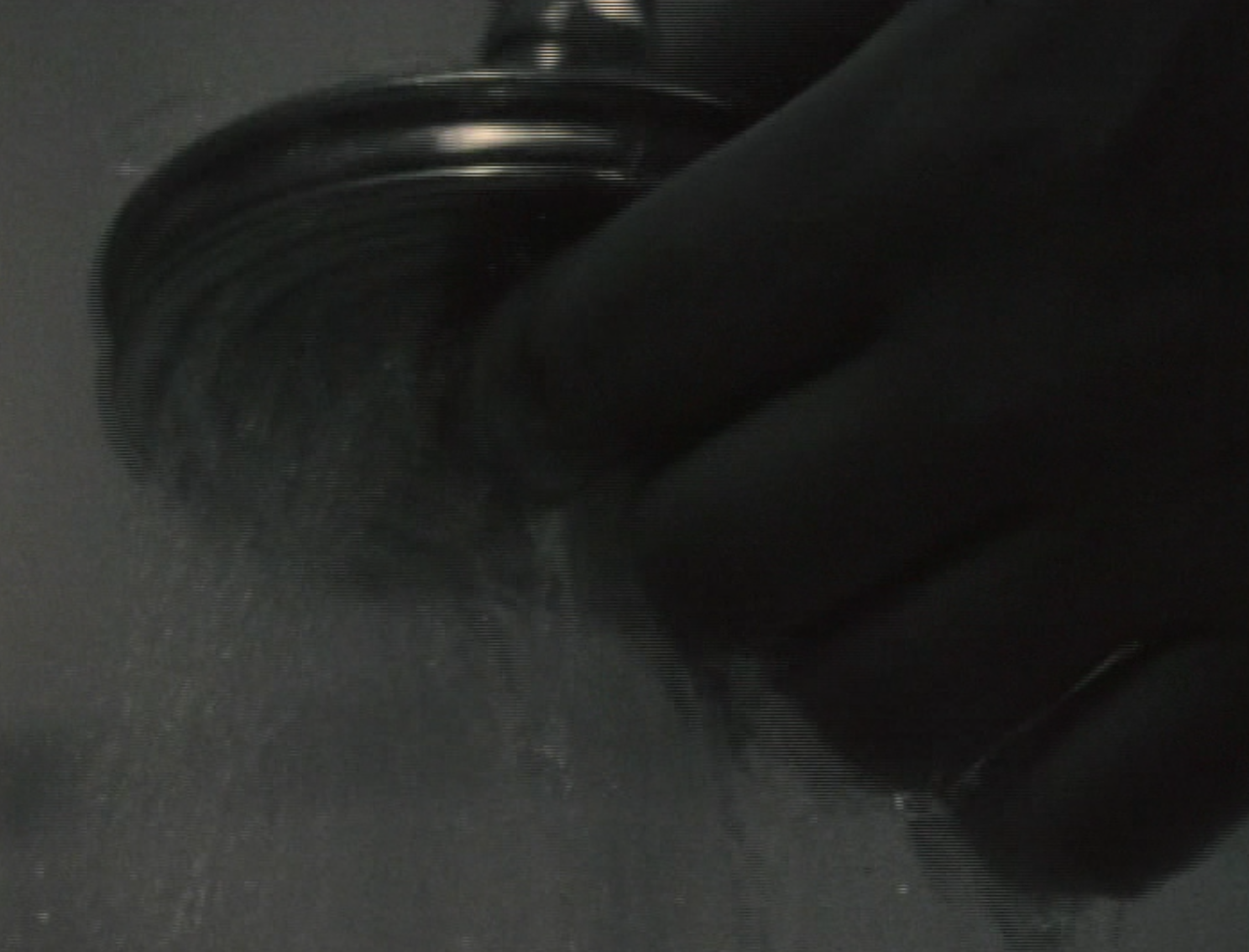
In the early 1970s, EXPORT continued to push boundaries with Mann & Frau & Animal (Man & Woman & Animal), a film whose iconoclastic frankness provoked both scandal and revelation. What unfolds on screen—EXPORT pleasuring herself with a shower nozzle, followed by the sight of her menstruation juxtaposed against a man’s retching—is not meant to shock for its own sake but to articulate a distinctly female sexuality at a time when the male gaze had only just begun to be theorized and critiqued. EXPORT, ever unwilling to retreat from what is culturally forbidden, asserted that the sexual curiosity cultivated in men and suppressed in women needed to be dragged into the light. The film was a slap in the face of pornographic desire, which invests the erotic with power only through unilateral domination. EXPORT instead rooted her images in an authentic refusal to sanitize the female body.

Her work coalesced around the idea of an “Expanded Cinema,” a concept she defined as a stretching of the medium until its foundational assumptions crack. Expanded cinema dissolves the border between product and producer, making the audience a necessary component of the work. Film is liberated from its linguistic character, a site of formal reconfiguration. Celluloid need not remain the substrate. Its projection can be abandoned, manipulated, cut, or reimagined. The film strip itself becomes a location for expansion; the screen, once a receiver devoid of agency, becomes an active surface that can be torn open.

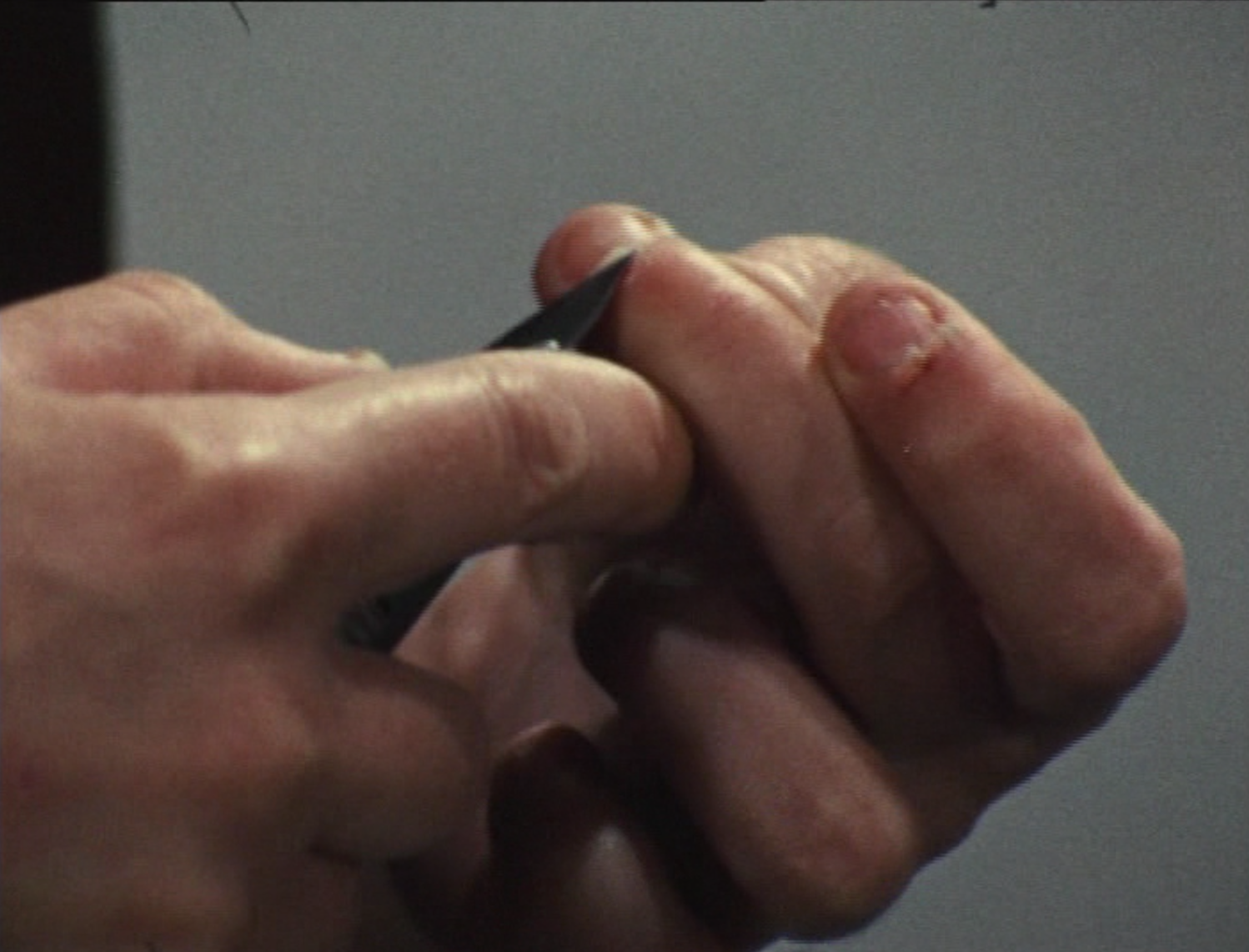
By 1973, EXPORT had entered a more introspective yet no less unsettling phase. Her short piece …Remote…Remote… stands as one of her most emblematic works. It is quietly devastating, almost unbearable to witness. As she sits before the camera, she peels away her cuticles with a boxcutter, allowing the blood to rise before submerging her fingers in a bowl of milk. The juxtaposition of pain and nurture, violence and purification, creates a ritual of self-inspection. Behind her hangs a family photograph, beckoning the viewer to consider wounds inherited across generations. When she finally leaves the frame, hands appear—linked, ghostlike—connecting past and present in an uneasy continuum. Here, norms themselves become the sites of self-harm, a theme she explores with feverish complexity in Invisible Adversaries (1976).

Renate Lippert notes how EXPORT’s unconventional self-grooming provokes defensive reactions, particularly among women who instinctively reject what cuts too deeply into the private realm of bodily experience. Such reactions, she argues, reflect the discomfort provoked when the damage hidden in the recesses of everyday existence is exposed for what it truly is. And as Valerie Manenti writes, EXPORT’s articulation of the body as a finite entity extends beyond standard feminist discourse. Her work demonstrates how “body language” can be pushed to extremes, conveying messages in ways words cannot. In Syntagma (1984), hands spell out the title in sign language before the film’s edges reveal themselves, exposing the strip’s materiality as those hands physically divide the cinematic space. The superimposition of flesh and image, layered with footage of transportation, illuminates the ill-fitting nature of human bodies within systems designed to contain and transport them. Narratives appear in fragments, flaring and dissolving until the act of self-advocacy becomes the only throughline.

EXPORT herself articulates the essential metaphor underlying her work: “From the outside the body is a projection surface, the skin encompasses its interior architecture; on the other hand, the cuts are openings to the inside, they open the picture, they are the tears in the projection surface.” This statement encapsulates her lifelong interrogation of embodiment as both medium and message. For her, the body is not simply represented; it is performed, ruptured, and rewritten. Her manipulations make the viewer acutely aware of the self as a contested space where meaning is constructed and dismantled. The “cuts” she references function not only as literal incisions or disruptions but also as conceptual apertures, revealing the internal structures (psychic, social, and political) that typically remain concealed beneath the veneer of human skin.

To witness her oeuvre with this insight is to understand that it does not merely push boundaries but allows them to bleed into one another. Such radical interventions insist on an expanded field of perception in which the viewer becomes implicated. The dissolution of boundaries in her work is not an abstract ideal but a visceral encounter, demanding that audiences confront the unstable terrain of identity, autonomy, and representation. In this way, her practice is an ongoing act of unmaking and remaking, a cinematic and corporeal poetics of rupture that continues to resonate across contemporary feminist and experimental art.