


Italian photographer Roberto Masotti (1947-2022) was among the most perceptive visual chroniclers of modern music, a figure whose work shaped the sensibility of ECM Records. His photographs graced nearly two hundred covers and booklets for the label, forming a parallel archive to the music itself. From the austere radiance of Officium to the quietly arresting portrait of John Cage that frames Herbert Henck’s recording of the composer’s early piano works, Masotti played a role in defining how this music would be seen, approached, and remembered. He was not merely a documentarian of studio sessions but a devoted listener whose camera functioned as a secondary instrument, tuned to the inner heartbeat of performance. Nowhere is this fusion of attention more evident than in Keith Jarrett: A Portrait, a volume that reads less as a record of appearances than as an extended act of listening rendered visible.
Masotti’s own words illuminate his method with uncommon clarity. “In this series of photographs that I observe with a retrospective gaze,” he writes, “I play with the concept of presence, that one of the body and the one of the instrument, which appear and disappear in the image.” He speaks not of capture but of exchange, of an intimacy grounded in restraint. These photographs arise from what he calls an “objective attention” shaped by long admiration, yet they are equally the result of Jarrett’s conscious acceptance and active participation. The images are thus collaborative in spirit, not imposed from without but allowed to unfold through mutual recognition. What remains is an archive that resonates with sound even in silence.
To move through the sequence so carefully composed in this book is to encounter a photographer who understands that an artist such as Jarrett cannot be approached through biography or chronology alone. Masotti storytells through a mode of looking that resembles ritual, one without a prescribed outcome, sustained only by attention. For him, photography does not consist of isolated instants but of moments, a distinction that carries ethical weight. Within a moment, an entire accumulation of experience can register itself through posture, gesture, or stillness. This understanding leads naturally to a deeper inquiry: what, after all, constitutes a portrait?
In Masotti’s hands, the portrait ceases to be an act of description. It becomes a site of encounter where identity is neither fixed nor fully disclosed. A portrait does not declare who its subject is; it asks how presence manifests, and under what conditions it withdraws. In this sense, the portrait is not a mirror but a threshold. It holds open the possibility that what is most essential about a person may resist total visibility. Masotti seems keenly aware of this tension. He recognizes the value of distance, of knowing when not to press closer, of allowing the subject’s aura to assemble itself without the insistence of the lens. This discipline is inseparable from his deep admiration for Jarrett, an admiration rooted not in fandom but in experiential listening. He does not set out to check off the pianist’s achievements so much as to dwell within their unfolding.
It was through Jarrett, in fact, that Masotti first came into ECM Records’ orbit. At the pianist’s recommendation, he traveled to Munich in 1973 to present a photo shoot to producer Manfred Eicher. The encounter proved decisive. The images were received enthusiastically and would soon be incorporated into the Bremen/Lausanne release of that same year, marking the beginning of a collaboration that would shape the label’s visual identity for decades to come.
Jarrett’s well-known sensitivity to distraction during performance posed a particular challenge. To photograph him in action required not only technical skill but a form of empathy calibrated to the moment. Masotti met this challenge with a chameleonic tact, adapting himself to the environment rather than imposing upon it. The resulting images often unfold in a montage that feels almost cinematic, though they never lapse into spectacle. Their power lies in continuity, in the quiet accumulation of gestures and expressions that suggest movement beyond the frame.
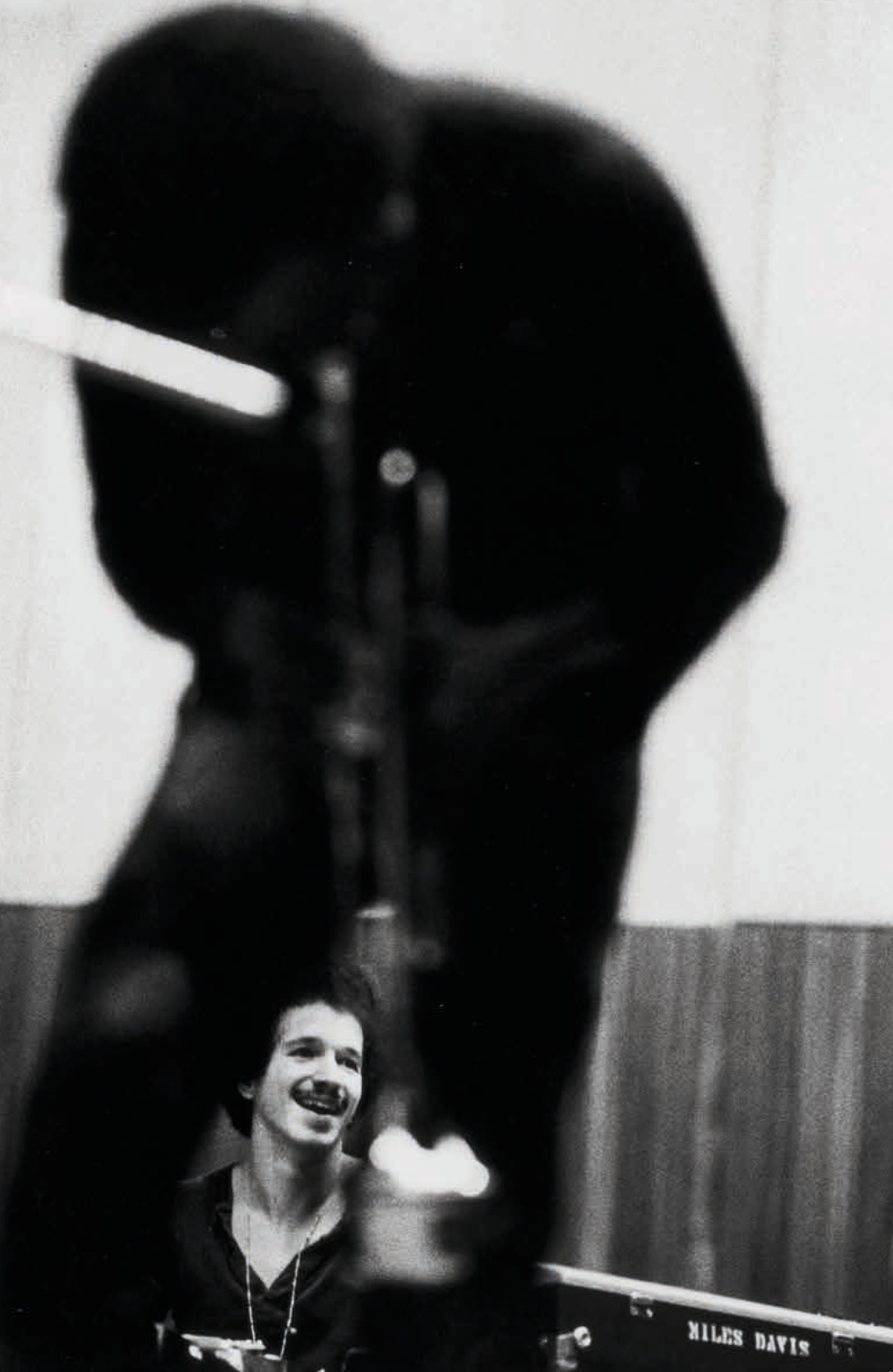
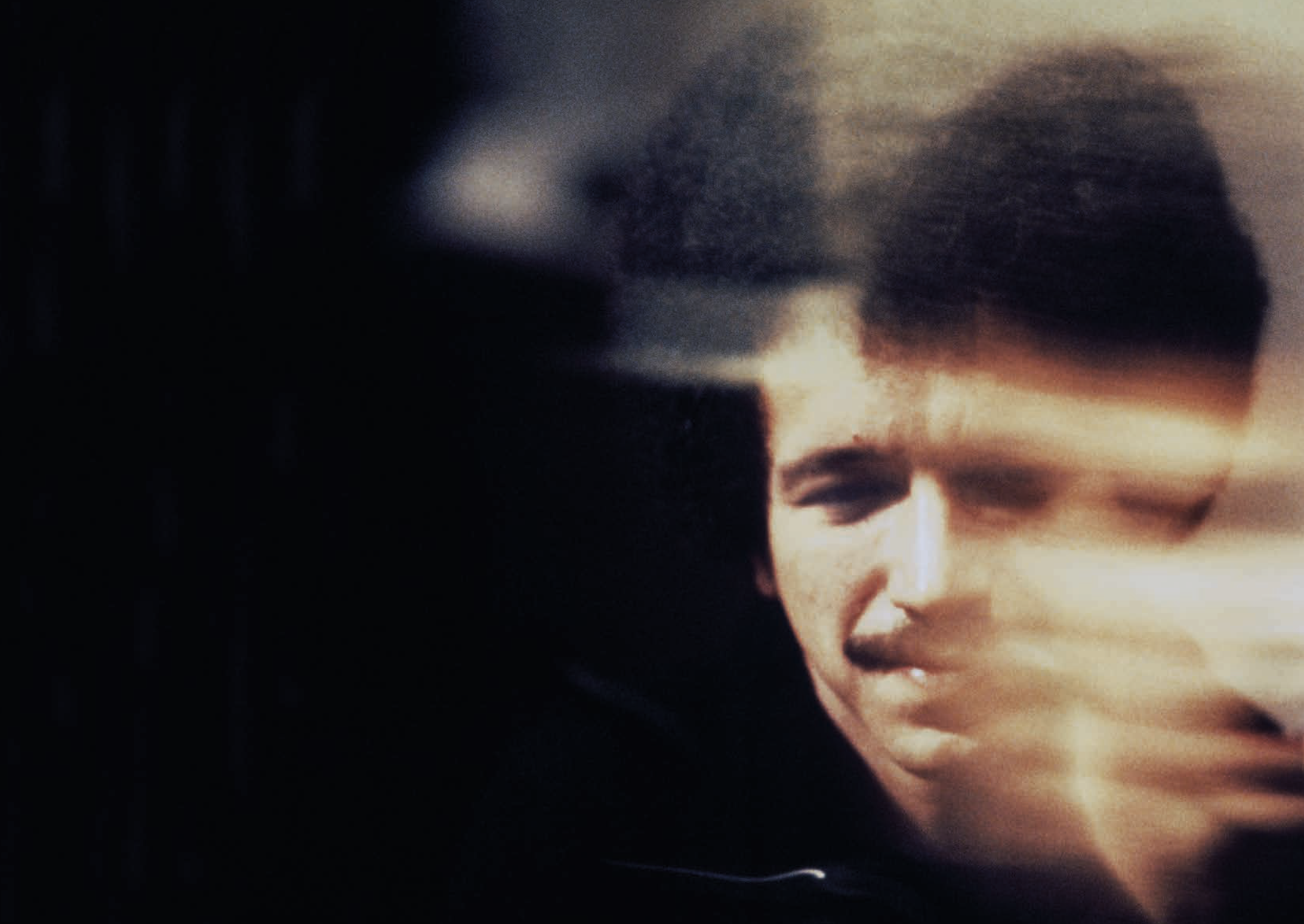

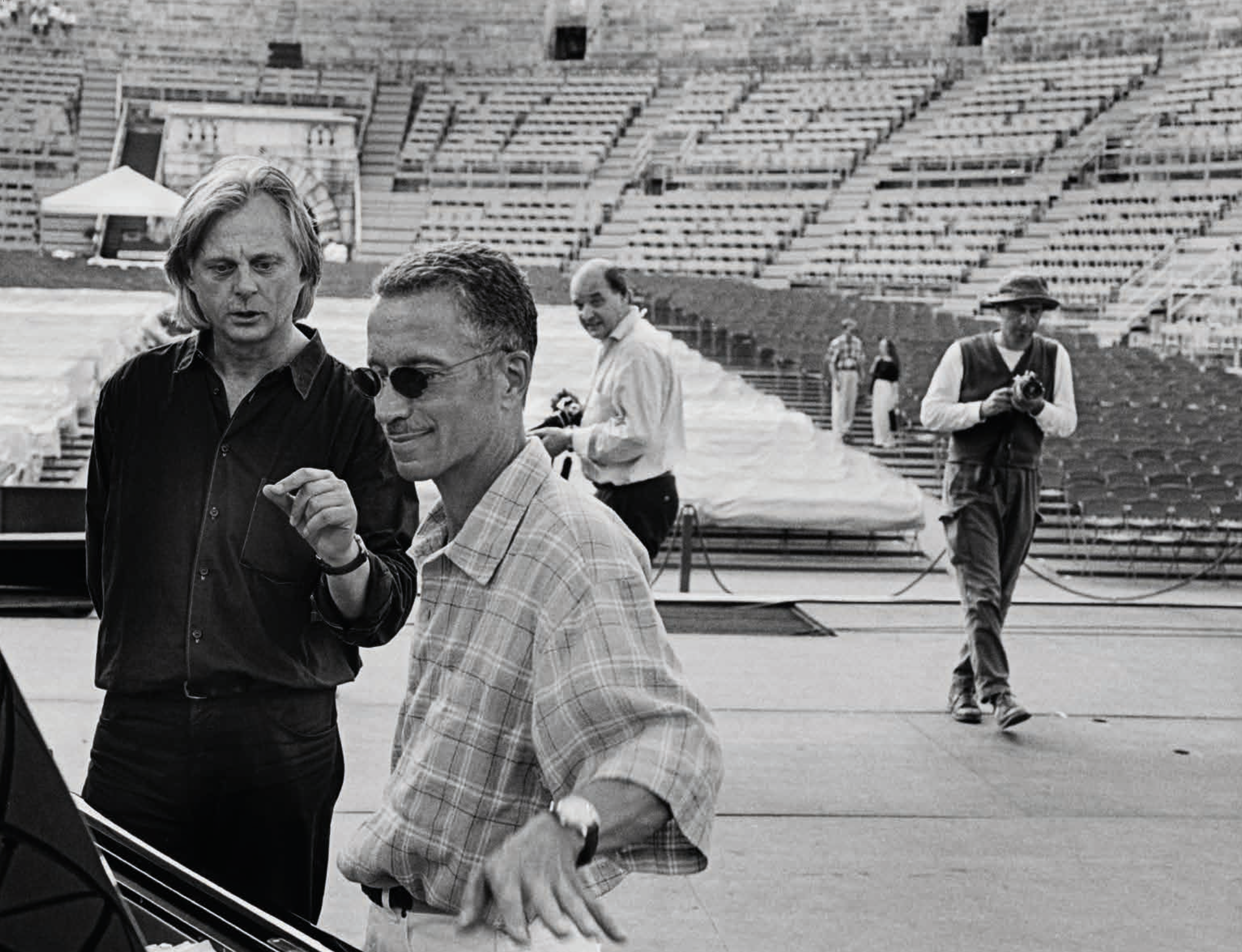

Taken together, the images chart Jarrett’s evolution from a fiercely expressive sideman in the orbit of Miles Davis to an increasingly enigmatic figure, and finally to a singular presence in solo improvisation. Yet the photographs resist narrative closure. They do not resolve into a story so much as a constellation of states. Among them, one image stands apart. It is the second one above, where Jarrett’s face appears refracted in soft color, suspended between clarity and dissolution. Masotti, a photographer of formidable technical command, rarely indulged in overt manipulation. Here, however, he allows the image to drift toward the spectral. The effect is restrained yet profound. It touches something central to Jarrett’s music, its simultaneous rootedness in the physical act of playing and its persistent reaching beyond the self. The photograph carries within it a residue of sound, an afterimage of music that seems to hover just beyond reach.
Keith Jarrett: A Portrait proposes a way of seeing that honors absence as much as presence. Masotti reminds us that the deepest forms of attention do not seek to possess their subject. They remain open, patient, and receptive. The book closes with a quiet suspension between composition and improvisation, as though the music has not ended but simply moved elsewhere. In that lingering space, photographer and musician meet on equal terms, each attentive to the other, and to the fragile, enduring moment they share.
 Between Sound and Space: ECM Records and Beyond