Arvo Pärt: And I heard a voice (ECM New Series 2780)

Arvo Pärt
And I heard a voice

Vox Clamantis
Jaan-Eik Tulve
 conductor
Recorded 2021/22
at Haapsalu Cathedral, Estonia
Engineer: Margo Kõlar
Cover: Fidel Sclavo
Produced by Manfred Eicher
Release date: September 5, 2025

For we [are] strangers before thee, and sojourners, as [were] all our fathers: our days on the earth [are] as a shadow, and [there is] none abiding.
–1 Chronicles 29:15

Building on more than 25 years of working alongside Arvo Pärt (whose relationship with producer Manfred Eicher spans nearly twice that length), Vox Clamantis and conductor Jaan-Eik Tulve present a new recording of choral works drawn from sacred texts. Their last recording, The Deer’s Cry, was a watershed moment in the Estonian composer’s discography, as it simultaneously narrowed the frame and opened up wider possibilities of interpretation.

Although the program is varied in direction, it is wholly centered around a theme of humility, and nowhere more so than in the opening Nunc dimittis (2001). Its setting of Luke 2:29-32 tells the story of Simeon, who holds the baby Jesus in his arms, knowing that God’s promise to see Christ revealed before his death has been fulfilled. What begins as an intimate supplication, however, turns into a vast theological chordscape of meditations on the openness of God’s grace freely given to all. What is so striking about the voices is not only the shapes through which Pärt guides them in the score but also the depth of power in their fragility. When alone, they waver ever so slightly; when aligned with others, they fix their gazes heavenward. 

O Holy Father Nicholas (2021), taken from the Orthodox Prayer Book, was written for the opening of St. Nicholas Greek Orthodox Church and National Shrine at Ground Zero in New York City. Like the Bible itself, its covers grow worn with time; words wear off from handling yet remain unchanged, living and without contradiction. In seeking intercession, the choir allows the light of forgiveness to shine upon human depravity. The singing walks two distinct paths, each passing through like a pilgrim to destinations promised yet unseen. Such tensions reveal the shape of our sin, beautiful from a distance but gnarled and festering at close inspection. This contrast is a sobering one that places life at the center of an infinitely complex structure, of which belief lays the cornerstones.

Each of the Sieben Magnificat-Antiphonen (1988), recently heard arranged for strings on Tractus, speaks to a different manifestation of Christ. From the tender “O Weisheit” (O Wisdom) to the highs of “O Schlüssel Davids” (O Key of David), a full range of vocal and incarnational possibilities is examined through the lens of sound. Buried among them is “O König aller Volker” (O King of All the People), in which rhythmic circles reveal caesurae for glory to slip through like a quiet legion of angels. The stepwise movements that characterized the Nunc dimittis are to be found here in denser but no less translucent configurations.

Für Jan van Eyck (2019) is a rendering of the liturgical Agnus Dei (Lamb of God) based on the same section of the Berliner Messe and written for the restoration of the altarpiece of the van Eyck brothers’ Adoration of the Mystic Lamb, which was reopened in the Ghent Cathedral. Accompanied by Ene Salumäe on organ, it allows us a spell of awe before the magnitude of Christ’s sacrifice. So begins a sequence of shorter yet no less rich works that continues with Kleine Litanei (2015), which pays respect to Irish Benedictine monk, theologian, and philosopher St. Virgil (c. 700-784). Its fragments of traditional prayers shift between harmony and dissonance, evoking the tension of seeking spiritual comfort in a secular world. Last is the album’s title composition, And I heard a voice… (2017). It is, so far, the only Scripture that Pärt has set in his mother tongue. Based on Revelation 14:13, it concludes appropriately on an eschatological note, where the promise of eternal rest—a life without pain and suffering—is offered amid the wrath of the end times, leaving us with a most undefiled sense of hope.

Faith is not determined by the strength of one’s convictions but rather by the truth and integrity of what it worships. We can assert all the faith in the world in thin ice, but it will inevitably crumble beneath our feet. By the same token, we can have little faith in thick ice, and it will hold as we make our way safely across. Much of that truth comes alive in this music. As Christ says in Luke 17:6, “If ye had faith as a grain of mustard seed, ye might say unto this sycamine tree, Be thou plucked up by the root, and be thou planted in the sea; and it should obey you.” Let these choral works each be a mustard seed waiting to be watered by the listener’s tender regard.

Arvo Pärt: Tractus (ECM New Series 2800)

Arvo Pärt
Tractus

Estonian Philharmonic Chamber Choir
Tallinn Chamber Orchestra
Tõnu Kaljuste
 conductor
Recorded September 2022
Methodist Church, Tallinn
Engineer: Tammo Sumera
Design: Sascha Kleis
Produced by Manfred Eicher
Release date: April 25, 2025

“Fear not that thy life shall come to an end,
but rather that it shall never have a beginning.”
–John Henry Newman

The title of Tõnu Kaljuste’s lovingly curated program of works by Estonian composer Arvo Pärt comes from its leading composition, Littlemore Tractus. Like much of what is presented here, it is somewhat older (dating from 2000) but newly arranged by the conductor (in 2022). Scored for mixed choir and orchestra, it dramatizes words from the 1843 sermon “Wisdom and Innocence” preached by John Henry Newman in Littlemore, Oxford. In it, the English cardinal seeks refuge in the Lord, set apart from a world turning circles around its self-interest. Like a tornado in reverse, Pärt’s rendering transitions from destruction to the calm before the storm, serving listeners with something intangible. Even in the seven Greater Antiphons I-VII, a 2015 string arrangement of the Seven Magnificat-Antiphons from 1988, we can feel the tension between that which is touched and that which is felt. Each is a stained glass window, allowing us insight into that one place where light can only reach by grace: the heart. The last of these, “O Emmanuel,” is the magnificence of holiness distilled.

Cantique des degrés for mixed choir and orchestra (1999/2002) is a dynamic setting of Psalm 121, in which David looks to the Lord, ever sustaining and filled with life. Its parabolic structure, from internal to external and back again, ascends the steps to the Temple of Solomon, but casts a final look backward for want of other souls to save. The choir is recessive, never dominating the foreground even at its most glorious. This is followed by Sequentia for string orchestra and percussion (2014/2015). Originally written as part of the Robert Wilson production, Adam’s Passion, it offers a subliminal meditation on Christ’s death, burial, and resurrection. These Words… (2008) is scored for the same combination of instruments. No less expressive for its lack of text, it quotes Pärt’s own Psalom (last heard on 1996’s Litany) as an inward-looking catalyst.

L’abbé Agathon for soprano and string orchestra (2004/2008) is reprised from its appearance on Adam’s Lament in 2012, led by soloist Maria Listra in a much more intimate and contemplative interpretation. Based on a legend from the fourth century regarding an encounter between the Abbot Agathon and a leper (who is really an angel in disguise come to test his faith), it tells the story with programmatic flair, replete with a string-heavy transfiguration as the angel ultimately ascends heavenward.

The album ends with two supplications. Where Veni creator for mixed choir and orchestra (2006/2009) is a deep cry for forgiveness, Vater unser for mixed choir, piano, and string orchestra (2005/2019) sets the Lord’s Prayer. Thus, wisdom and innocence are shown to be things that none of us possesses except by the cross.

This is not music that one discovers but that one welcomes as a gift. From depth to depth, it anoints with the oil of understanding that God is indeed with us, wrathful yet forgiving of the harm we have inflicted upon his creation.

Between Two Sounds: Arvo Pärt’s Journey to His Musical Language (Book Review)

If I were to dump out a puzzle from its box and ask you to put it together, you’d likely start with the edge pieces, as we’ve all been taught to do. Recently, however, while watching my seven-year-old assemble one of his own, I realized this isn’t necessarily the best strategy. The puzzle he was working on was circular, and the circumference was uniformly white, surrounding a clear design in the center. From his perspective, it only made sense to start with what was fully articulated and work outward from there.

Arvo Pärt had the same effect on me.

Before encountering his Te Deum decades ago, I used to approach listening from the periphery, tracing the container from without before diving into the matter within. That blending of voices and strings, anchored by piano and wind harp, did not make its skin immediately obvious. Rather, it offered its heart front and center before veins, bones, and garments emerged through years of regard.

And now, Joonas Sildre’s Between Two Sounds: Arvo Pärt’s Journey to His Musical Languagedoes the same for the Estonian composer who didn’t so much redefine modernism as turn it inside out to remind us of where it originates.

I recently spoke with Sildre, who had the following to say when I asked him about the genesis of this project:

“During the early 2000s, I became a huge fan and admirer of Pärt’s music through a friend who had gifted me a CD ‘mixtape’ of his music. At the time, I was also on a spiritual journey in the early phases of Christianity. This certainly heightened my admiration of this music, which became the soundtrack of that journey. I was never very interested in Pärt as a person because I had learned that if you like someone’s music, their personality (or the availability of that information) does not add much to it. In 2005, it became apparent that this was the opposite in the case of Pärt: There was a 15-part radio show on Estonian Classical radio about his life (made by Immo Mihkelson). Listening to it and him talking about life, art, and spirituality, I recognized these topics to be dear to my heart, but rarely did I hear anyone expressing these things in union. At the time, in the early 2000s, I was looking for a story to tell in graphic novel format—when hearing Pärt’s radio interview, things clicked for me. There was no question of a different format.”

Immersed in the result of that journey, I am reminded of my own spiritual awakening, for which Pärt’s music was always a leitmotif, a call (at times clarion, at others whispered) that inspired sympathetic resonance into my very core. It’s only natural, then, that Sildre’s book should proceed in a musical manner.

As a visual composition, Between Two Sounds proceeds like something Pärt himself might have constructed (and how can I not smile at the similarity with my blog’s title?). We meet the composer in the dark, walking a line from eternity to eternity, his musings floating almost unrealistically in space. It takes effort to admit that the words have meaning and are not tricks of draft and debris across the unswept floor of time.

Golgotha, a place of the skull, the hill where death for one offered life to all, reminds us of the dark well from which God draws light. Directing the gaze and ears thusward seeds a relationship between flesh and spirit that can only be articulated through art.

Beyond these introspections, which stipple the larger narrative with resounding grace, we leap through Pärt’s chronological development. From his birth in Paide and early childhood in Rakvere to his confrontations with Soviet censorship and flourishing under the tutelage of Heino Eller at the Tallinn Conservatory, we are gifted a dynamic biography that seems to leap from the page, if not sometimes also sink into it. While that story is astonishing in and of itself (a particularly tense scene finds Pärt nearly losing his scores and tapes on the verge of his emigration to Europe), key moments speak across the years and geographical borders to my heart.

In doing his research for the biographical angle of the book, I wonder how it changed Sildre’s perception of the man himself as they came to know each other from acquaintances to friends:

“Pärt talks of another level where the music comes from. I’d like to think that connections and friendships also happen on that level, and there, we were friends even before I met him personally. During the years the work took, of course, I learned much more about him as a person, his life, music, and spirituality. I saw Pärt as a regular human, yet he always remained ‘not regular’ to me. He could be very simple and very deep at the same time (or at different times)—I guess this is almost a scientific definition of a genius. What surprised me is that Pärt, whom I had seen and learned from his music and his words, was actually himself, not some projection as it usually happens to be among public personas. Like he says (paraphrasing): In order to put Tintinnabuli music to paper, he actually had to change as a human being.”

That change develops through listening in Pärt’s early years. As a boy who learned on a broken piano, he comes to seek an upright language in a fallen world:

The line between “public” and “private” disappears in these moments of abandon, much to the humor of those around him. And yet, he reveres the notes on their terms, allowing their credo to suffice for what passes as communication in his immediate environment. The more he hears, the more he and everything around him pass into silhouette, not so much under the loudspeaker as a part of it.

The graphic novel is filled with novel graphics. Most remarkable among them is Sildre’s explicit visualization of notes.

Despite the apparent aggressiveness of their passage through the air, theirs is not so much a spirit of confrontation as of enlightenment. With the premiere of each new work, those fortunate enough to have been present are shaken to the core by a thrum to which they had, until then, turned a muffled ear:

“I did not want to use notes as they are a specific language for musicians; regular people cannot read and understand them. If I used them, even in a decorative way, the average readers would always feel that maybe they were missing something. So, I needed to step away from that language, but not too far. I ended up with the ‘dot and line’ method that I developed throughout the book. The look of these symbols would hint at the emotion and content of any given musical piece. With dots, I could use many design language tricks: size, placement, quantity, light and dark value, and context. Lines would symbolize the time but also the emotion: jagged lines versus smooth lines. A circle had an extra feature. It could also be used as a speech bubble or thought. So, overall, this small invention became very handy for telling that story. It became an intuitively understandable visual language.”

Sildre creates a tapestry with blank patches that can only be filled through hearing. Perhaps the longest thread running through this tapestry is one of religion, as Pärt’s conversion to the Greek Orthodox faith unfolds in a chain of snow and spring. His composition Sarah Was Ninety Years Old is a recurring stitch, beginning with his first exposure to his grandmother’s Bible and continuing throughout his life. The drums are the rhythm of salvation, the rapping of Christ’s knuckles on the heart’s splintered door.

And so, we are invited to close our eyes, open our ears, and release ourselves from the bondage of our sins. Although everything we think and do is imperfect, Pärt seems to say, we should never stop reaching for perfection. Because there is One who is perfect, and every song we sing must fill the footprints He left behind.


Sildre echoes this sentiment:

“Upon meeting Pärt, I had a feeling that he had so much old cultural heritage in him; he felt almost like he was from the ancient world. I had never met a person who would have so many ties to the old. At the same time, as time passed, I was pondering that the mentality and love Pärt expresses must be the future of humankind. So, he is from the past and future at the same time! It may sound strange, but this is still my strong feeling about him as a person.”

All of which connects to his aspiration for the book:

“I hope that the people who have not heard Pärt’s music will find it. And I hope that people who know his music will learn that there is a miraculous story behind the miraculous music.”

If there is any miracle to be found here, it is in knowing that human beings are capable of glimpsing the divine, however temporarily, all the while knowing that eternity is the only altar on which our humility can be laid with blessed assurance.

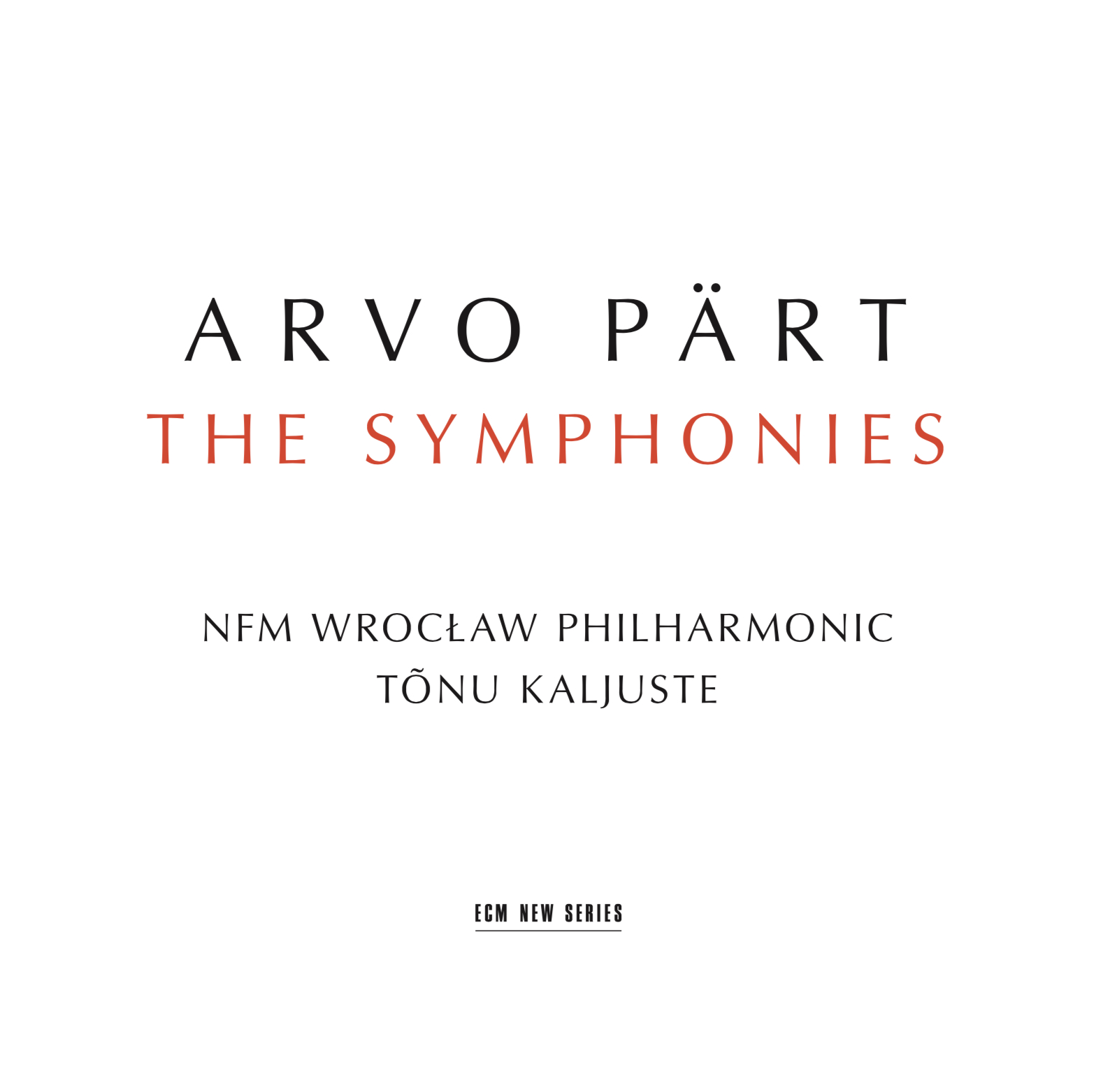
Arvo Pärt: The Symphonies (ECM New Series 2600)

Pärt Symphonies

Arvo Pärt
The Symphonies

NFM Wrocław Philharmonic
Tõnu Kaljuste conductor
Recorded August 2016 and October 2015 (Symphony No. 3)
Main Hall of the National Forum of Music, Wrocław
Engineers: Andrzej Sasin and Aleksandra Nagórko
Mastering: Christoph Stickel, MSM Studios, München
An ECM Production
Release date: April 20, 2018

Following the release of his Symphony No. 4 in 2010, it was perhaps only a matter of time before a compendium of Estonian composer Arvo Pärt’s symphonies would also come to light on ECM. And what a light we can enjoy through the prism of all four, newly recorded by the NFM Wrocław Philharmonicunder the direction of Pärt’s untiring messenger, Tõnu Kaljuste. What these works, separated by decades of time and soul-searching, lack in duration (given that they all fit snugly onto one CD) they make up for in their dynamic and textural scope. In the album’s liner note, music critic Wolfgang Sandner writes: “To study and listen to symphonies is, in essence, to read and comprehend a biography in notes.” In this respect, symphonies are aesthetic snapshots of a composer’s life at those times. Like stencils applied to the past, they filter out anything extraneous to the meaning at hand, funneling our attention into particular shapes and therefore boundaries of possible interpretation.

In listening to the Symphony No. 1, penned almost half a century before his Fourth, we hear what Sandner refers to as the “jagged caesuras” of Pärt’s inner landscape: deeply personal snapshots from a time when composers under the Soviet flag were forced to weigh idiosyncrasy and conformity on a scale of creative expression. Pärt was willing to take the risks that came with upending that scale altogether, and was summarily banned as a composer when, in 1968, he professed Christian faith via his Credofor piano, mixed chorus and orchestra. Five years earlier, the First Symphony was already in genesis. Dubbed the “Polyphonic,” it bears dedication to Heino Eller, his professor at the State Conservatory in Tallinn. Constructed around a twelve-note row (E-F-F#-B-Bb-G-A-Eb-D-Ab-Db-C), it is divided into two movements. “Canons” is a thick slice of serial pie, and like the proverbial desert reveals delectable combinations of starch and sweetness with every bite. The “Prelude and Fugue,” by contrast, begins with lighter strings before jumping into a pastoral interlude and, in conclusion, an insistent cluster of rhythmic and tonal artifacts.

Although the Symphony No. 2 (1966) is also cured around a twelve-note row, it feels less constrained by formula. Its brevity (the symphony barely crests the ten-minute mark) is its strength. At this time, Pärt was working in what he called a “collage” technique, by which resolution was reduced to a petty dream in favor of metamorphosis. Its first movement is a kaleidoscope of motifs, atmospheres, and collisions by which is rendered not a mosaic but a centrifuge of philosophy. The block chords of the second movement are urgent, thrown by their own weight into a black hole of identity reformation. The third and final movement, percussive minutiae and all, glimpses the mind of a composer reaching for something more than what reality has to offer, as indicated in his quotation of “Sweet Dreams” from Tchaikovsky’s Album for the Young. It ends as if unresolved, stepping into the pastures of the future.

By the 1971, when Pärt was writing his Symphony No. 3, he was well into a period of self-reflection that led him to declare a Russian Orthodox conversion. This symphony is the first breach of that spiritual watershed—both musical and personal—that cut the umbilical cord of the avant-garde. Dedicated to conductor Neeme Järvi, this tripartite monument touches upon the prayerful unfolding that now characterizes the mature composer. In the second movement especially, a familiar lyrical nature struggles to break through the soil of political nurture, pulled from its reasoning by a force that would otherwise refute it. The final movement describes the old flesh wrestling with the new, eventually giving over to a medieval polyphony and blast of hope.

If the Symphony No. 4 (2008) sounds more choral, that is because it overflows with voices: of history, of experience, and even of persecution. Bearing dedication to Mikhail Khodorkovsky, an exiled Russian mogul once jailed for his critical outspokenness, it wears decidedly liturgical clothing. The pizzicato textures of its second movement are the stirrings of a soul wanting to be heard, while the coda breathes in hope and exhales caution, never letting go of the rope in its hand. And attached to the other end that rope? A vessel of the past on which has been loaded the cargo of our sins, which one way will be unloaded, weighed, and accounted for.

Arvo Pärt: The Deer’s Cry (ECM New Series 2466)

2466 X

Vox Clamantis
Jaan-Eik Tulve artistic director and conductor
Mari Poll violin
Johanna Vahermägi viola
Heikko Remmel double bass
Taavo Remmel double bass
Robert Staak lute
Toomas Vavilov clarinet
Susanne Doll organ
Recorded September 2013 and 2014 at Tallinn Transfiguration Church
Veni Creator recorded June 2007 at Dome Church of St. Nicholas of Haapsalu
Engineer: Igor Kirkwood, Margo Kõlar (Veni Creator)
Recording supervision: Helena Tulve
Mastering: Manfred Eicher and Christoph Stickel at MSM Studios München
Executive producer: Manfred Eicher
Release date: September 9, 2016

For now we see through a glass, darkly; but then face to face: now I know in part; but then shall I know even as also I am known.
–1 Corinthians 13:12

While in Capernaum, Jesus is invited into the house of Simon the Pharisee. There, a woman, identified in the Scriptures only as “a sinner,” approaches Jesus with an alabaster box of ointment. Much to the astonishment of the house, she washes his feet with her tears, wipes them with her hair, and anoints them. When confronted by Simon about his acceptance of this act, Jesus replies by pointing out the fact that Simon offered no water for his feet or ointment for his head: “Her sins,” he says of the woman, “which are many, are forgiven; for she loved much: but to whom little is forgiven, the same loveth little.” This episode, recorded in the Gospel of Luke 7:36-50 and arranged for choir by Arvo Pärt as And One of the Pharisees (1992), is the spiritual center of a new program dedicated to the Estonian composer. Not only for its illustration of salvation through faith, but also because it serves as a loose metaphor for sacred music today. Like that sinner, Pärt washes our ears against the verbal abrasions of pharisaic intellect, his offerings thus denounced by “wisdom” of the popular yet confirmed by the Holy Spirit. In the present setting, countertenor Mikk Dede provides a vulnerable personification of Simon, while baritone Taniel Kirikal balances the equation as our humbling Savior.

Although Pharisees comes later in the sequence, its seeds are already being watered in the opening title work, The Deer’s Cry (2007). Drawing on the words of St. Patrick, it is a meditation on God’s omnipresence. Here, as in the other a cappella prayers that follow, including the Alleluia-Tropus (2008/10) and Habitare fratres in unum (2012), compact structures embody quiet resolution. Each is a link in a chain of infinite being, a harmonization of flesh and spirit through the Word, touched by graces of which we are unworthy.

Longtime Pärt listeners will notice echoes of the familiar, such as Virgencita(2012), which is eerily reminiscent of Psalom (1985/91), and a version of Summafor four voices, wherein the circle of this seminal 1977 piece is squared. Gebet nach dem Kanon (1997), from the Kanon Pokajanen, is a child wandering in search of purity, only to find himself crying in a world of corruption, his voice ignored by all except the Father whose hand shields him from brimstone. Da pacem Domine (2004/06), too, reads differently from previous ECM appearances. Where the latter felt like a telescope, now it is a microscope.

Rounding out this journey are three works for voices and chamber instruments. In Von Angesicht zu Angesicht (2005), scored for soprano, male choir, clarinet, viola and double bass, said instruments evoke the trembling fear that is the beginning of all wisdom. Pärt takes a lived understanding of that precept by following the rhythms of Biblical recitation. Veni Creator (2006), for mixed choir and organ, hovers on the brink of transfiguration and is one of his most haunting compositions. Sei gelobt, du Baum (2007), for male choir, violin, lute and double bass, is another textual wonder. Its words, by Viivi Luik, praise the tree for its wood, by which violins and organs might be built for His glory, each note released therefrom a spore returning to its creator.

Despite, if not also because, Pärt’s marked shift over the years from inner to outer, there’s an ethic of sharing in these shorter pieces. Now that his music is known worldwide, one tastes in it something grander left for listeners to decide, a piece of a mosaic that can only be completed when all us take the time to see it being made up of us all. That such profundity comes across so directly is testament to Vox Clamantis and director Jaan-Eik Tulve’s willingness to let everything speak for itself.

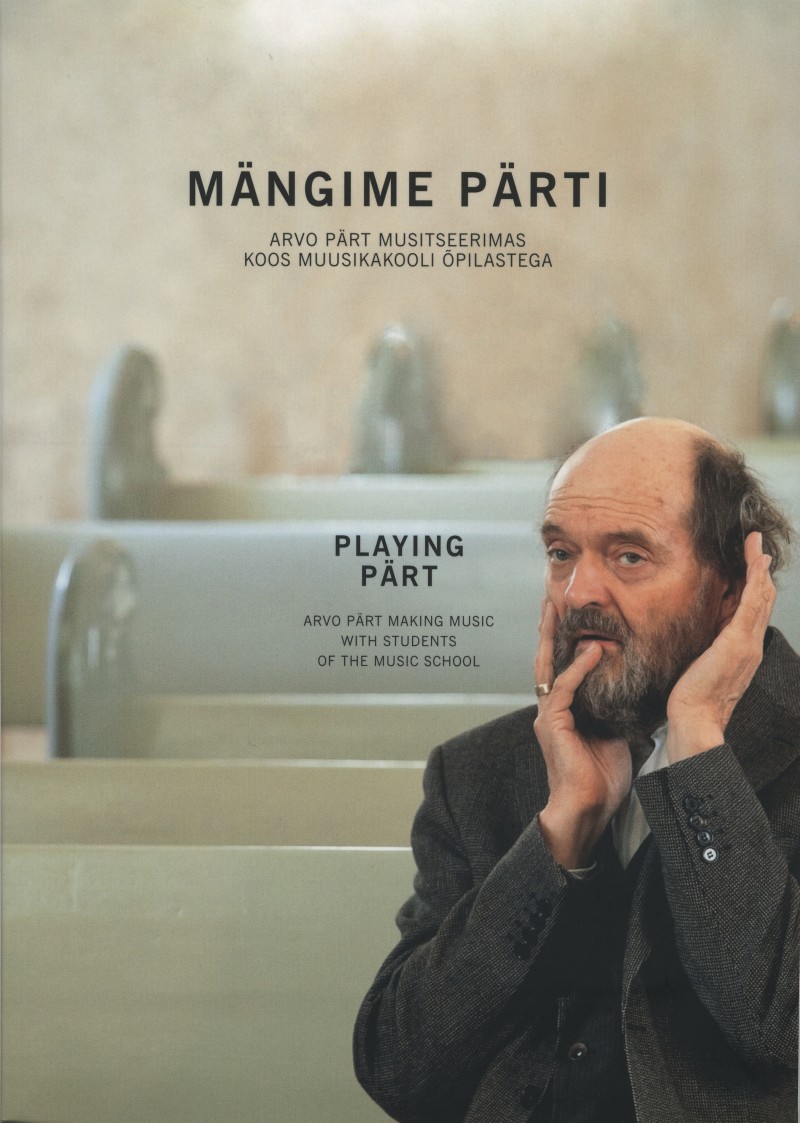
Playing Pärt

Playing Pärt

Playing Pärt

Directed and filmed by Dorian Supin
Release date: October 12, 2012

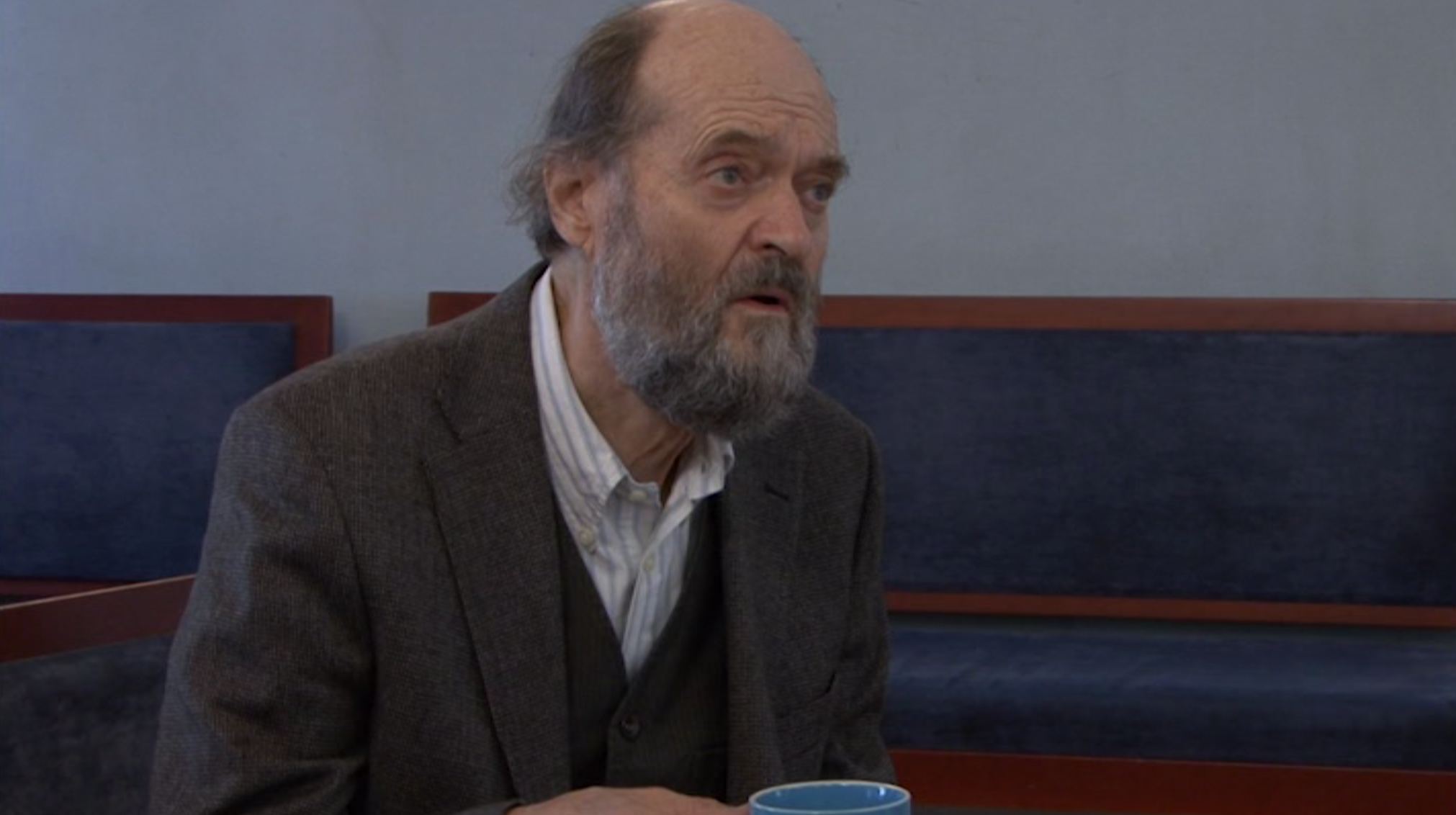
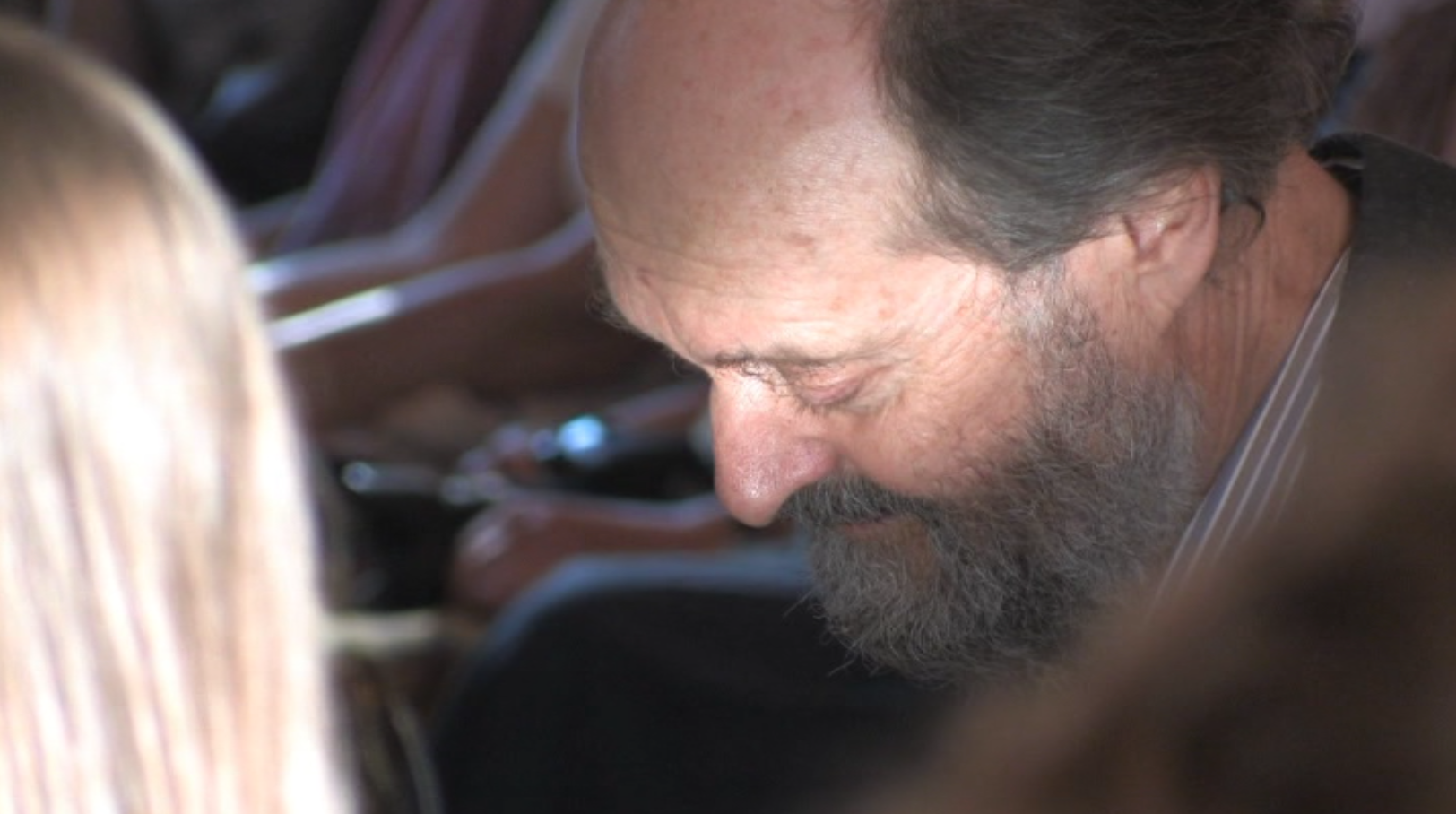
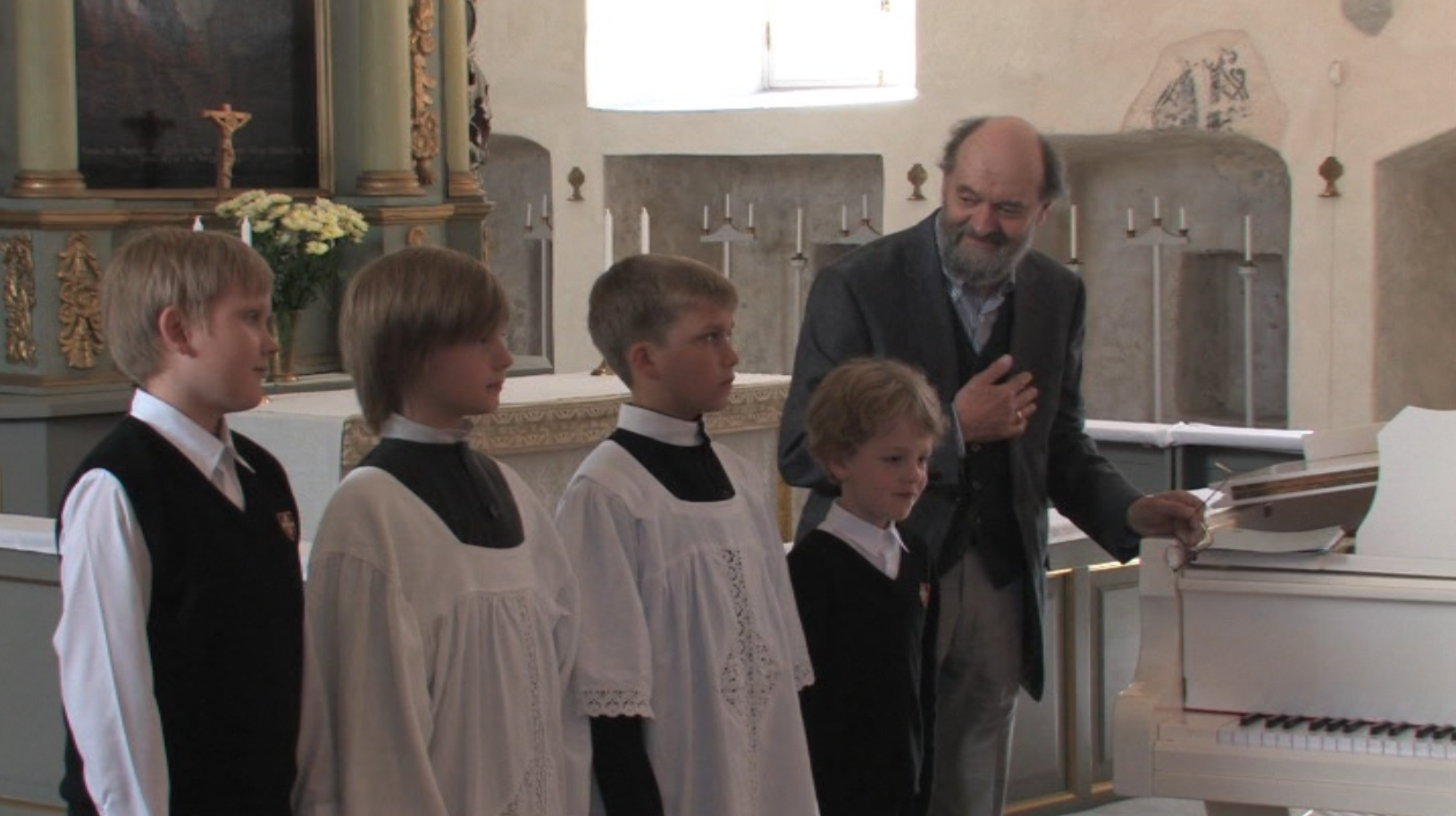
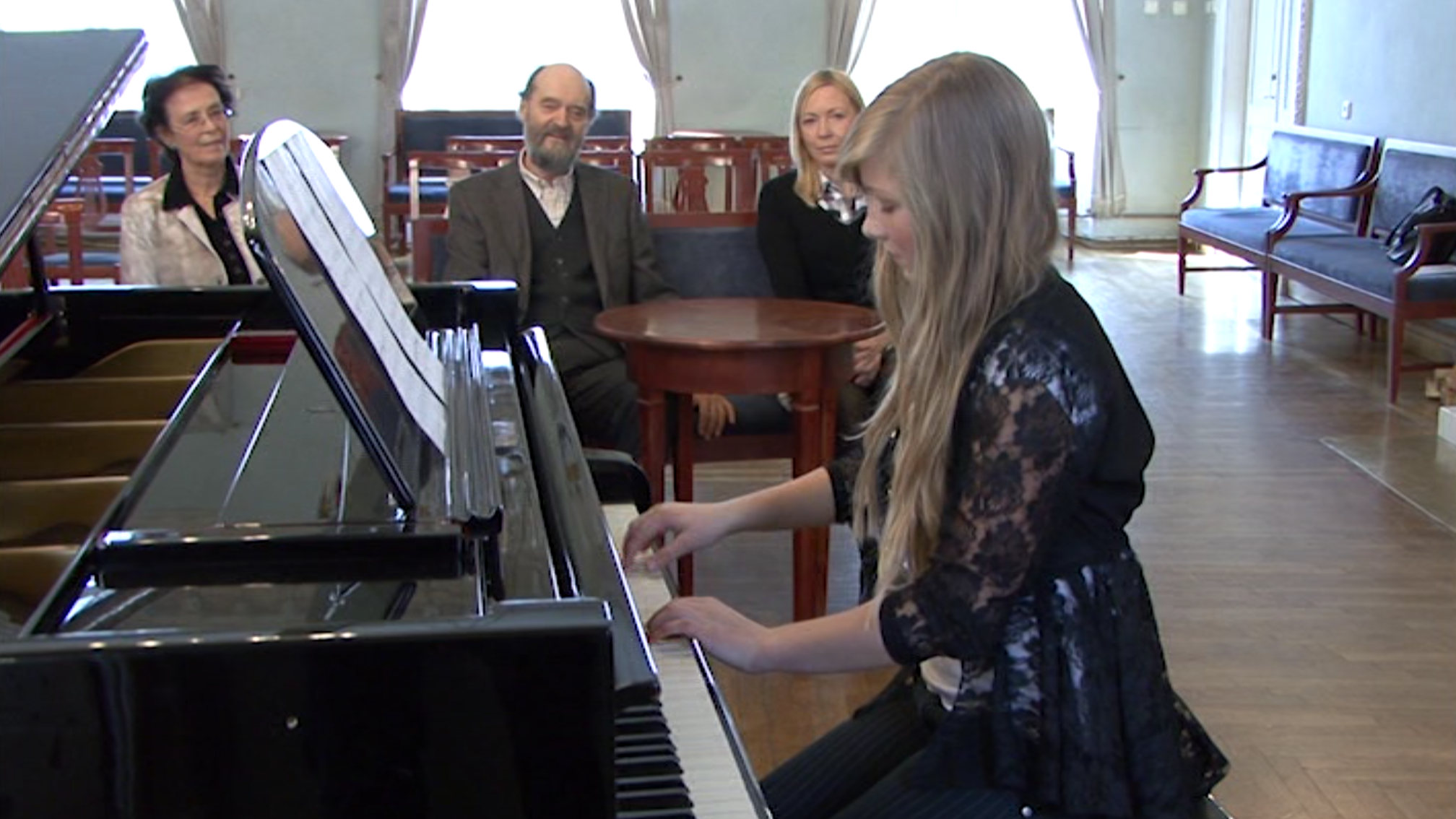
In 2011, the Old Town Music School of Collegium Educationis Revaliae and the International Arvo Pärt Centre put on a student concert of Pärt’s music at St Michael’s Church in Tallinn. Playing Pärt documents both this historic performance and the rehearsals leading up to it, supplemented by interviews with the composer and his wife, Nora.

02

Said concert is a charming, in-depth survey of Pärt’s legacy, and of the beauty that gives it resonance. Many pieces on the program will be familiar to ECM listeners: organ works Trivium and Pari Intervallo (the latter arranged here for four guitars), Da Pacem Domine (arranged for four recorders), and the solemn Für Alina are standouts among them. Spiegel im Spiegel, for its balance of tension and prayer, is another. Throughout, a quiet respect prevails by way of a “local” feeling that cannot be replicated in the international concert hall. These melodies, however familiar, paint even more direct lines to the heart when so endearingly performed. Like fragrances in sound, they waft through the senses, following ancient channels of memory even while forging new ones.

14

Delightful surprises abound. First and foremost are “The Cycle of Four Easy Dances,” from the 1959 collection Music for Children’s Theatre, including the rarely heard “Butterflies” and the evocative “Dance of the Ducklings,” replete with dissonant splashes of webbed feet. Just as alluring is “I’m Already Big,” a children’s song composed when Pärt was a student. The focus on youth feels as poignant as it does inevitable, and makes indelible impressions in such choral settings as Veni Creator (a 2006 commission from the German Bishops’ Conference), Bogoróditse Djévo (a 1990 commission from Cambridge King’s College Choir, based on a Church Slavonic hymn to the Virgin Mary), and Vater Unser (composed in 2005 and based on a German translation of the Lord’s Prayer), for which the composer at the piano accompanies a quartet of singers.

18

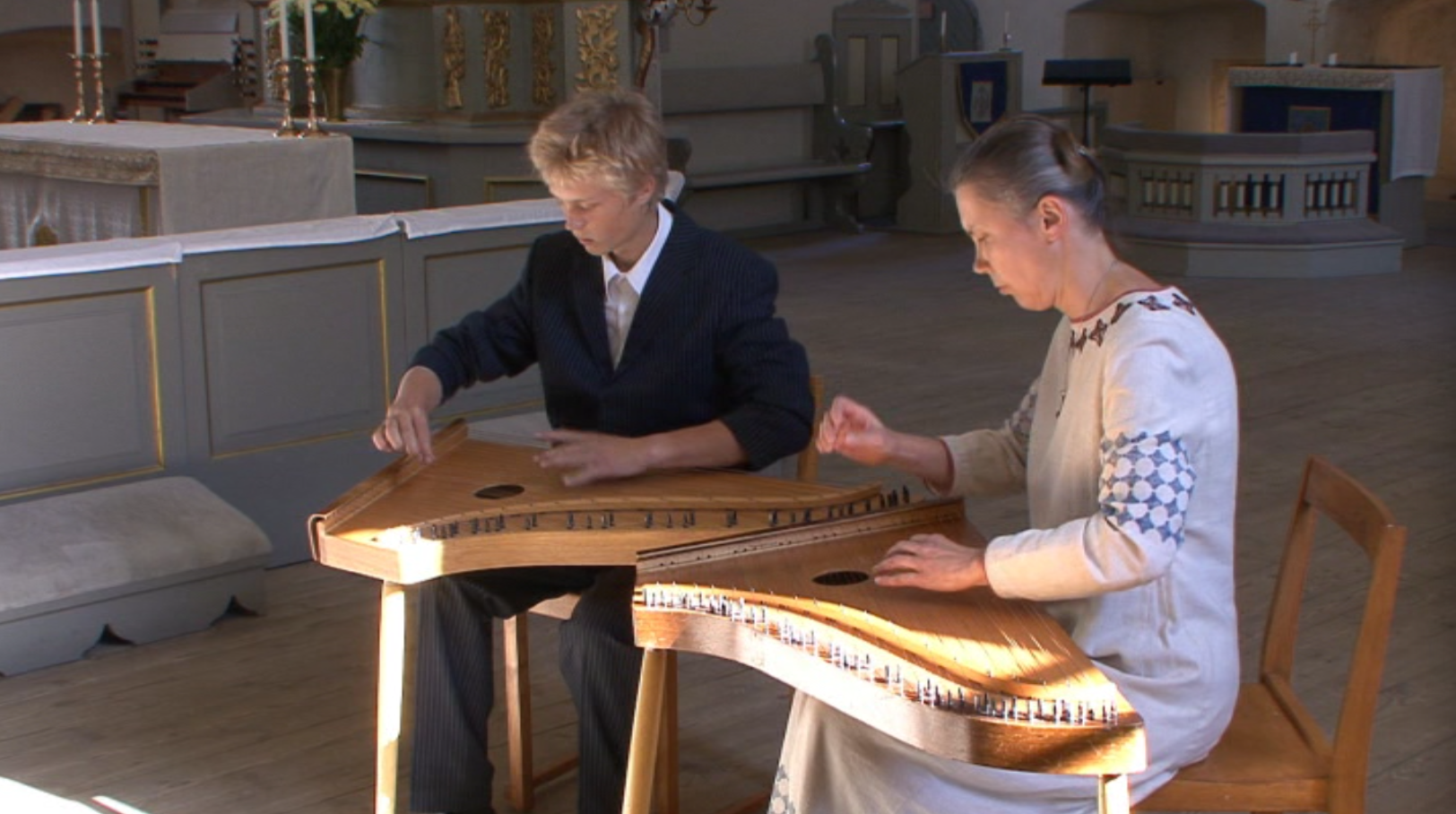
Other highlights are Ukuaru Waltz, originally composed for the film Ukauru (1973, dir. Leid Laius) and performed on two chromatic kannels (plucked zithers), the aleatoric Diagramme (Pärt’s opus 11), and Variations for the Healing of Arinushka, a solo piano piece composed in 1977 while daughter Ariina was recovering from an appendix operation. Trepidations and hope of light breathe through every note.

16

Yet it’s in the rehearsals where Pärt’s humilities come out in full attendance. More than providing insight into the mind of a world-renowned composer, they reveal the soul of a man whose entire concept of art is nothing without faith in eternity. He understands the quality of sound, and the beauty of it being played with heart. If anything, and for that very reason, he’s more demanding of the children’s pieces, which in all their etudinal simplicity allow the interpreter’s soul to resound. During a rehearsal of “Butterflies,” for instance, he says, “It’s essential for the music to have some kind of secret. That’s the case of the butterfly as well. It’s a mysterious creature.” For him, the rudiment is sacred.

04

His music has materiality, and he treats it accordingly. Whether stressing the positions of a pianist’s hands while playing Für Alina or chiding himself for inclusion of inappropriate dynamics in the original score to “Dance of the Ducklings” (upon hearing which, he exclaims, “A beautiful piece. Did I compose it?”), he upholds the value of any given moment to shape something unexpected, personal, and true.

12

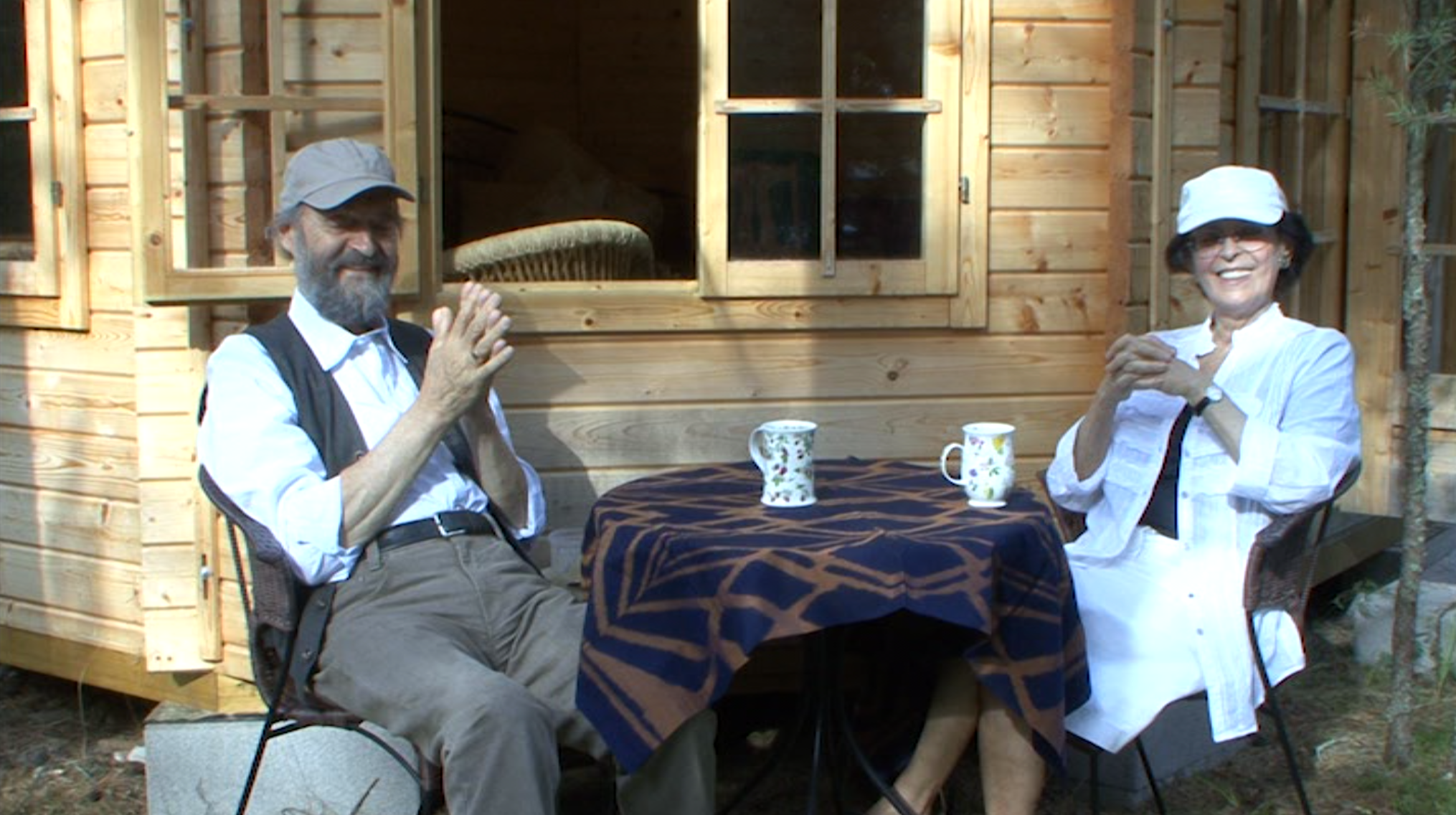
We encounter echoes of this philosophy in his conversations with Nora. In these, the subject of the interpreter is a red thread, pulling at questions of authority versus idiosyncrasy, and concluding that one must be both strong and gentle in order to play music with genuine feeling. “It has to be born in the soul of the interpreter,” he says, for in the body thereof is something concrete and in the metaphysical thereof is something ineffable. “The composer,” he goes on to say, “can learn a lot from the interpreter.” Most musicians, Nora agrees, are unresponsive to this suggestion. It’s like trying to explain how the sun shines. Hardship, Pärt adds, helps people understand this. Children notice it, too. Hence, the concert. They are straightforward, avers Nora, whereas professionals are contending with “a thousand different traditions.” Innocence allows performers to take notes seriously. She further likens music to the optical effect of two binocular images merging into one, a simile I would extend to the listener’s relationship to what’s being heard. Countless motifs out there are waiting to blend into our own. Let this film be a reminder of our openness to the spiritually healthiest ones.

11

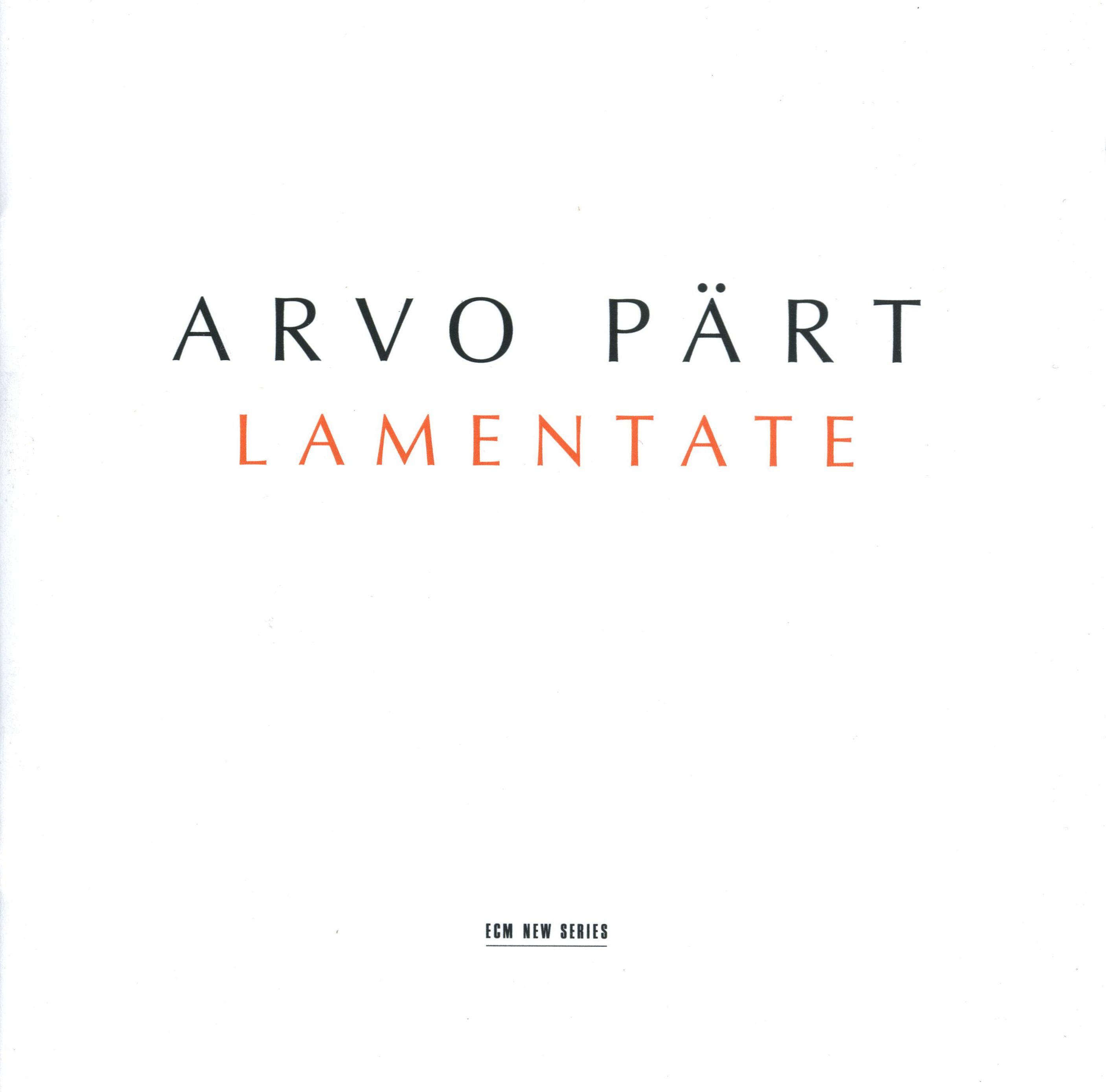
Arvo Pärt: Lamentate (ECM New Series 1930)

Lamentate

Arvo Pärt
Lamentate

The Hilliard Ensemble
Sarah Leonard soprano
David James counter-tenor
Rogers Covey-Crump tenor
Steven Harrold tenor
Gordon Jones baritone
Alexei Lubimov piano
SWR Stuttgart Radio Symphony Orchestra
Andrey Boreyko conductor
Lamentate recorded June 2004 at Stadthalle Sindelfingen
Engineers: Dietmar Wolf and Jürgen Buss
Da Pacem Domine recorded April 2005 at Propstei St. Gerold
Engineer: Peter Laenger
Produced by Manfred Eicher

Tempting as it may be, the typing of Estonian composer Arvo Pärt as a spiritual modernist hardly begins to assess the reach, import, and atmospheric integrity of his music. The more closely one listens to it, the more one hears between every heartbeat an alternating current, whereby shadows take solace in their own orientation of elements. Awareness of this dichotomy throws sanctity over the banal, and lends banality to the sacred, so that by the end of any Pärt listening experience one emerges changed yet profoundly the same—the self made clear under a magnifying glass polished by sound.

And so, while Lamentate may be said to represent a new direction for Pärt, whose music has hardly sounded this visceral since his formative dips into the avant-garde, it also feels like a reflection back to the womb, if only because the composer has so carefully woven into its basketry a conscious structural flaw. Said flaw is the essence of being human. It is what turns the visage of existence firmly away from the realm of fantasy toward the mirror of reality. This “lamento for the living” takes its inspiration from the enormous sculpture “Marsyas” by Anish Kapoor, at the time located in Turbine Hall of London’s Tate Modern, and anchors a piano soloist (here it is Alexei Lubimov at the keyboard) in an orchestral ocean. In the album’s liner notes, Pärt describes his first encounter with the sculpture: “My first impression was that I, as a living being, was standing before my own body and was dead—as in a time-warp perspective, at once in the future and the present.” Lamentate thus concerns itself with time—or, more precisely, with those who deal with time. The work was premiered at the sculptural site in London on February 7 and 8, 2003, and was recorded for ECM in 2004 at Germany’s Stadthalle Sindelfingen, near Stuttgart.

Before throwing us into these prophetic waters, the disc opens with the prayer for peace that is Da pacem Domine. Composed in 2004 on the basis of a ninth-century Gregorian antiphon and recorded here a year later at St. Gerold monastery near the Austrian mountains, it features the Hilliard Ensemble with soprano Sarah Leonard in a moving, timeless performance (the work reappears in updated form on In Principio). Like much of Pärt’s choral writing, its simplicity is its strength, requiring discipline from interpreters to bring out inner complexities. The antiphon is stretched to reveal a stratum unto itself, a melody to be born into and from. Its lines mark the binding of a book of experiences, the pages of which fade in one direction and become crisper in the other. All, however, bear equal wisdom of the divine hand that inscribed them.

With such pulchritude still warming the chest, Lamentate (2002) comes like a hit in the gut. Each of its ten movements is a monument—now fragile, now menacing—to some emotional shell. These surfaces act as palimpsests for the cellular activities that unspool from a brass incantation. A bass drum rumbles as would the hand of a god trapped beneath the earth’s surface pound for escape. In that frustration are flashes of a life confounded by lifelessness, declarations of dependence wrought in beat and bow. Over the piece’s own lifespan, the recording takes on a wavelength that cracks open intersections of space and time and spins from their yolks an entirely new cosmos. In this parallel universe, the winds are seemingly still yet utterly dynamic like nebulae as fetal kicks javelin fresh thought through a needle of questioning. The piano’s solitude provides the only answer it ever needed to breathe, for in the crafting of flesh lurks a question far beyond our articulation, and to which music nevertheless brings us steps closer. As relays of brass, piano, and percussion give way to whispering tides, echoes of earlier compositions (such as Psalom) make themselves known as a lilting oboe swims against the current. And even the nominal resolution treats alignment like a fantasy, leaving us by the end looking above for any sign of what it means to be below.

Marsyas
(Photo credit: Empics)

Of Tears, Of Privilege: Adam’s Lament at Lincoln Center

Adam’s Lament
Latvian Radio Choir
Sinfonietta Rīga
Tõnu Kaljuste conductor
Alice Tully Hall, Starr Theater
Lincoln Center for the Performing Arts
November 17, 2012
7:30pm

Of Tears…
It would be easy to paint the maturation of Arvo Pärt in the shape of a funnel. The Estonian composer was trained in the language of modernism but came to consolidate his musical foci into so-called “holy minimalism”—a catchall term that, while descriptive enough, ultimately defeats itself. In Pärt’s vision, minimalism seems better represented as pinpoints of light, stars that would be nothing without their limpid sky. Such mutual dependency is what makes the music sacred. We do better, then, to twin the funnel into an hourglass, endlessly turned by the hands and mouths of whoever bestows its truths to those fortunate enough to hear them. So we are when the Latvian Radio Choir and Sinfonietta Rīga, under the masterful guidance of Tõnu Kaljuste, present an all-Pärt program as part of Lincoln Center’s annual White Light Festival. Anticipation is high and met when the first strains of the Berliner Messe (1990-91, rev. 2002) touch our cortices. Composed on commission after Pärt’s emigration to Berlin, this setting of the Ordinary possesses a remarkable permeability. Around the standard texts and interjected Allelujas, strings sketch the thunder of conversion. Their pulse is elemental, hidden. Suspension awaits in Pärt’s setting of the Te Deum (1984-85, rev. 1992), the work that introduced me to its composer and which has since lived inside me. It develops motives like a book: knowledge that came before feeds into that which follows. A digitally sampled wind harp unfurls a constant and godly breath, piano dipping into the font of reason and stirring double basses to higher registers. Every crescendo equals stillness. We feel it in the soles of our feet, in the palms of our hands, in the stigmata of our collective memory.

Intermission brings about the surreal din of interpretation, snatches of recreated melody and soloists praised for the sake of proving knowledge.

Trisagion (1992, rev. 1994) begins the second half. Written in celebration of the 500th anniversary of a small Finnish parish, its title comes from the Greek for “Thrice Holy” and makes reference to Orthodox prayer and to the piece’s three core pitches. It is an overturned cup, spilling unspoken words. It is the beat of mortality. It is crystal, tarnished and restored. Also restored are the writings of ascetic Silouan of Athos (1866-1938), something of a touchstone of Pärt’s work and the red thread of Adam’s Lament (2009), the landscape of which resonates with suffering. Tears feed its soil as sunlight feeds the flora that grow from it. The mountains shiver, fauna likewise in their dreamless slumber. All the more appropriate that the musicians encore with Estonian Lullaby (2002, rev. 2006), bringing with it needed repose in an age so restless that only a child’s mind can contain its temper.

Of Privilege…
Nestled in the orchestra section of Alice Tully Hall, and in the most prayerful music I have experienced firsthand in years, I become uncomfortably aware of the allowances that brought us together. In the suffering of Silouan’s Adam lies the root of strife. How can Pärt not have this in mind when he has suffused his reading with the pain of the mortal body, its skeleton at once fractured and bonded by immeasurable sorrow? On this note, I must respectfully disagree with Zachary Woolfe, who in his November 19 New York Times review characterizes Pärt as having “defined a seductive vision of modern spiritual music, one that seeks to escape our world…rather than to embrace it.” I wonder if we are listening to the same music, for it is anything but escapist. Rather, it reminds me that I am experiencing an $80-per-ticket luxury even as innocents continue to die for nothing at the hands of self-interested regimes. Its surplus of beauty only serves to emphasize the rarity thereof. In spite of venue and context, the intimacy of the musicianship heightens my awareness of these realities. That their charge transcends the commercial trappings of the festival speaks to precisely the love that went into its creation, even if it does nothing to obscure the tightrope I walk in balancing appreciation with the hypocrisy of my inaction. I feel this acutely as, in the wake of a standing ovation, concertgoers debate the technical ups and downs of what they have just heard. With such effect still whirring inside us, what difference do a few glitches in the first half make?

In the toy chest of temptation, there is a kaleidoscope of shadow. Through it, one sees that the world has become sick with perlocution. Turning it in the hands only darkens its glory. It blinds us to those in need. Awareness, this music tells us, is not enough. One must also know the vitality of experience. Grace is not something to be won back through good deeds or mere contemplation, but felt when one no longer seeks it. When I seek Mr. Kaljuste instead and inform him that I will be writing this review, he humbly wishes me good luck. Yet I read a deeper truth into the statement. Without luck, I would not have been here. May I never forget that.

Let me know Thy touch,
that I may know of life.
Let me know Thy touchlessness,
that I may know the path.