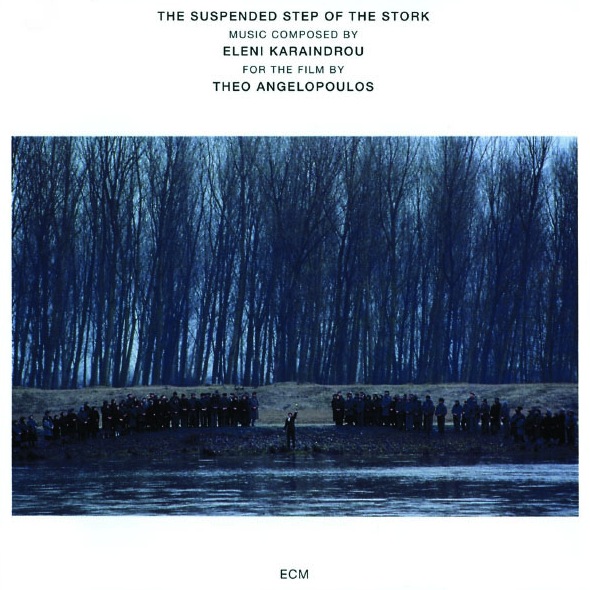
Eleni Karaindrou
The Suspended Step Of The Stork
Vangelis Christopoulos oboe
Nikos Spinoulas French horn
Andreas Tsekouras accordion
Dimitris Vraskos violin
Christos Sfetsas cello
Ada Rouva harp
Lefteris Chalkiadakis director String orchestra
Recorded April and August 1991, Polysound and Sound, Athens
Engineer: Yannis Smyrneos
Produced by Manfred Eicher
“How does one leave?”
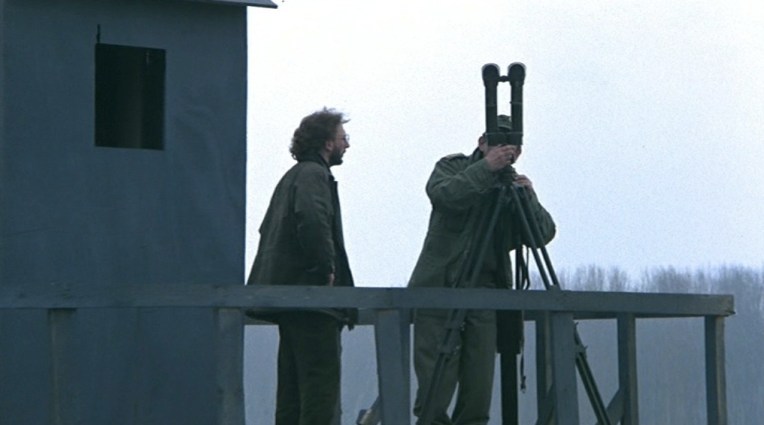
This question haunts The Suspended Step Of The Stork, Part I of Theo Angelopoulos’s “Borders” trilogy. A film of subcutaneous power, it finds beauty where there is suffering, stark yet foggy, as if through tearful recollection. Peeling layers to the emotional center of Stork is composer Eleni Karaindrou, whose soundtracks were never so much inserted into as bled from the late Greek director’s canvases. Hers is the audio equivalent of a tracking shot, scrolling through face, space, and race with barest touch. “Refugee’s Theme” shrouds the credits like an overture to lives whose variations are leaves on a tree of displacement.
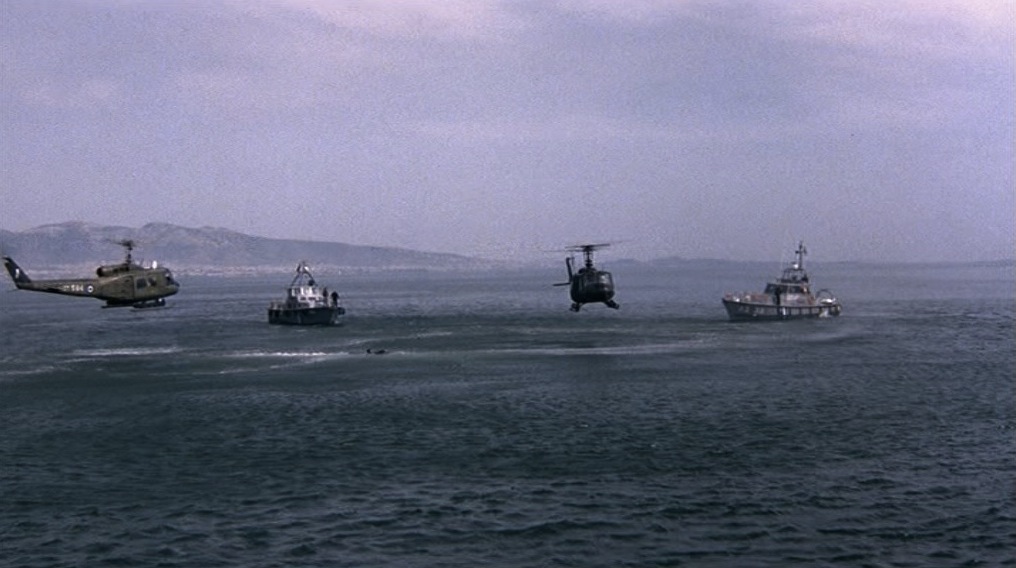
Of those lives we get only leitmotifs, each seeming far too short in the grander symphony of human suffering. Like the bodies floating in the opening shot, they bob at the whim of two rhythms: one natural, the other mechanical.

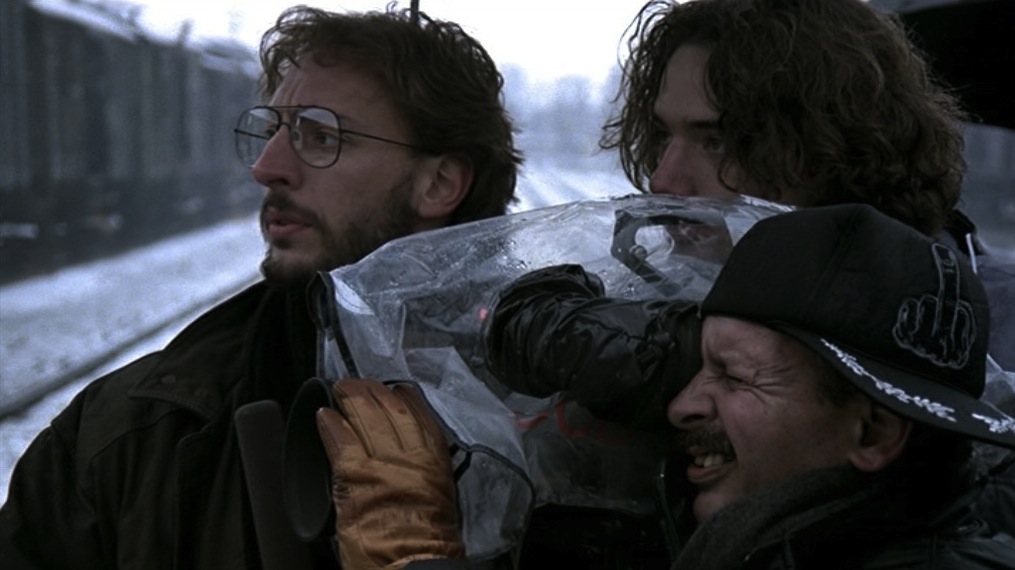
Helicopters and boats circle these transient martyrs, whose bodies huddle together still as they might have when still alive. Our protagonist, Alexandre (Gregory Patrikareas), a television reporter on his way from Athens to the Greek-Albanian border to do story, watches those same corpses—Asian stowaways refused political asylum by Greek authorities—and muses on the silence they represent amid all the commotion. The name of the ship from which those unfortunate souls would rather have leapt to certain death rings true: Oceanic Bird. Each has become exactly that, soaring far from the public eye on wings of salt spray and denial.

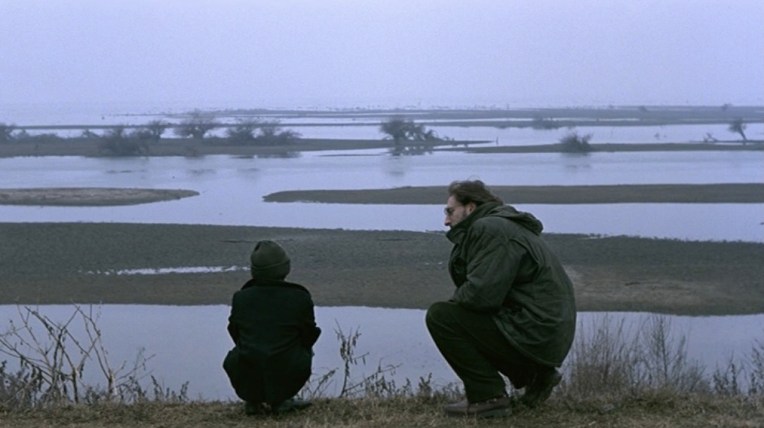
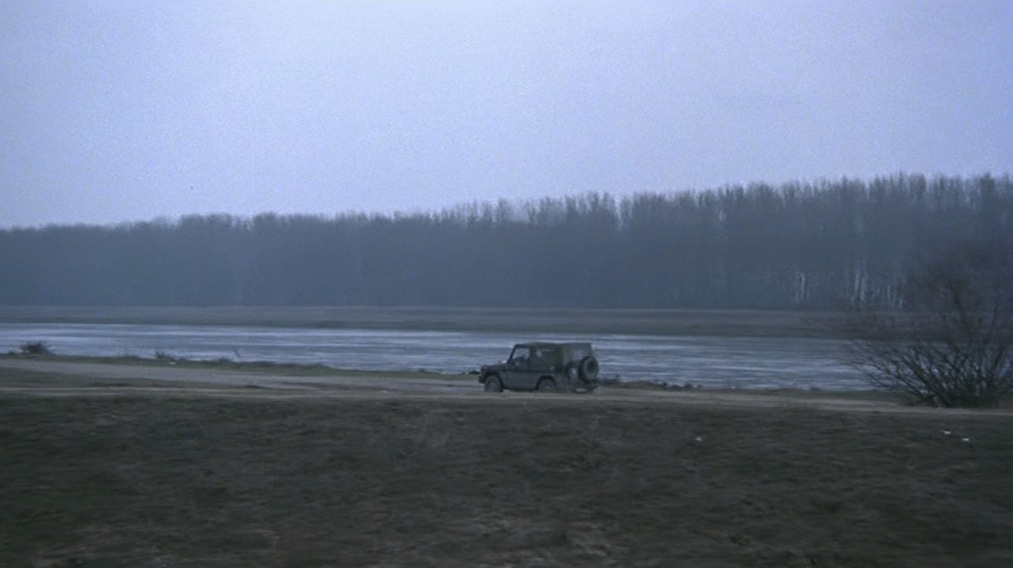
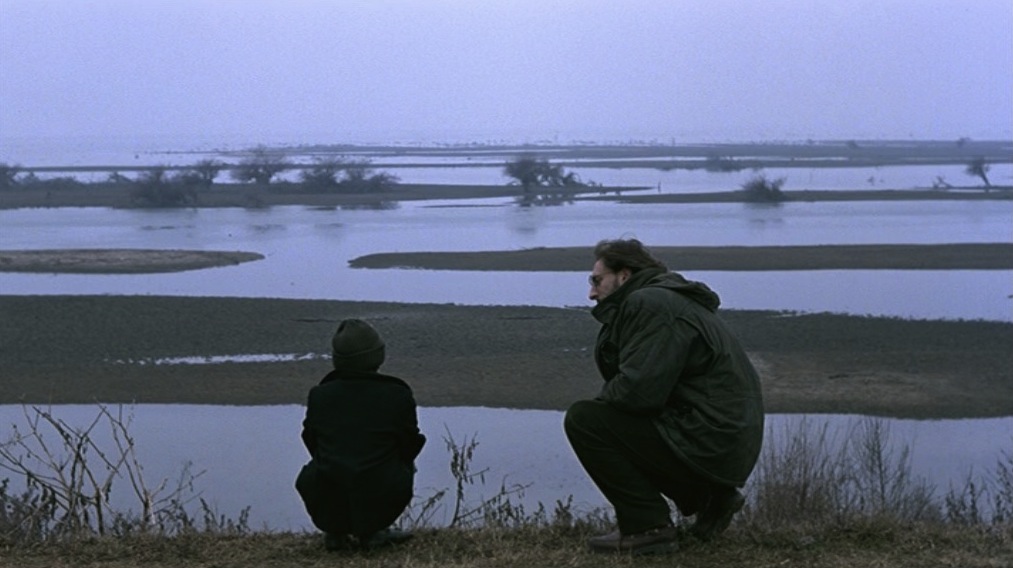
In a border town far from those waters, yet never from their ripples, a patrol Colonel (Ilias Logothetis) aids Alexandre in his search for information. Known by locals as the Waiting Room, said town plays host to refugees from Albania, Turkey, Kurdistan, among others. It is place with its own dimension, or so the Colonel asserts, a place where people lose themselves in the tide, forgetting that any such dimension is not inherent to the place, but forced upon it by politics and circumstance. It is, more to the point, a place of fear, where even the roar of the nearby river turns dreams into nightly prisons.
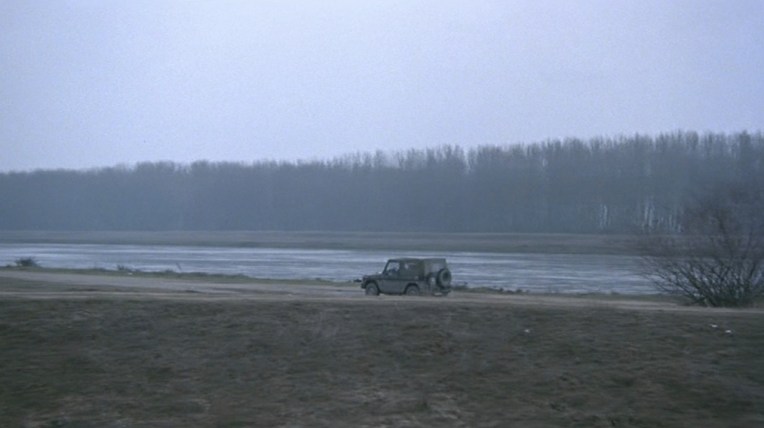
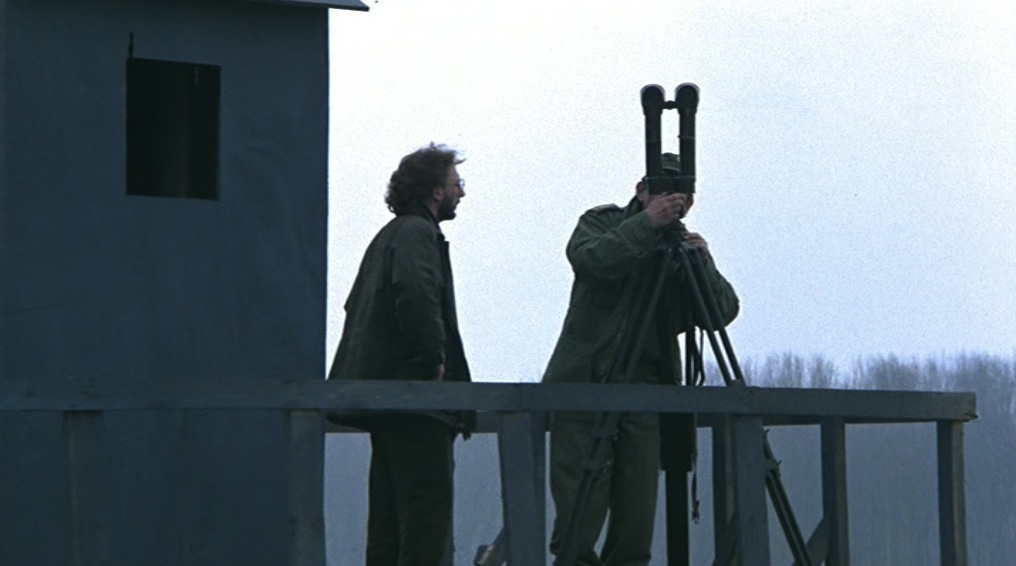
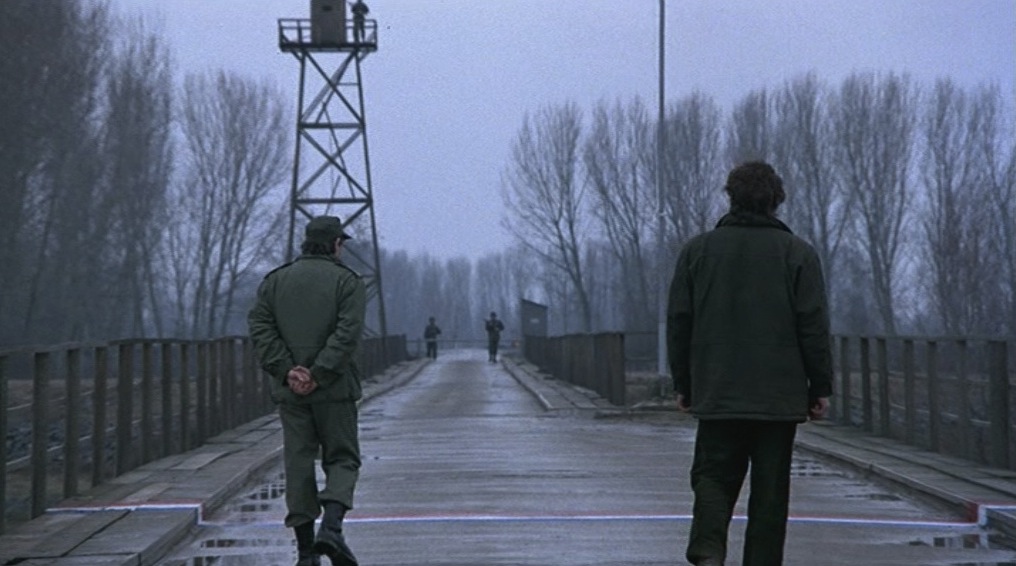
“Do you know what borders are?” the Colonel asks Alexandre in a key scene, as if the concept were in need of philosophical elaboration. This is the set piece he lives behind, the stage Alexandre so desperately, in his quiet way, hopes to transcend.
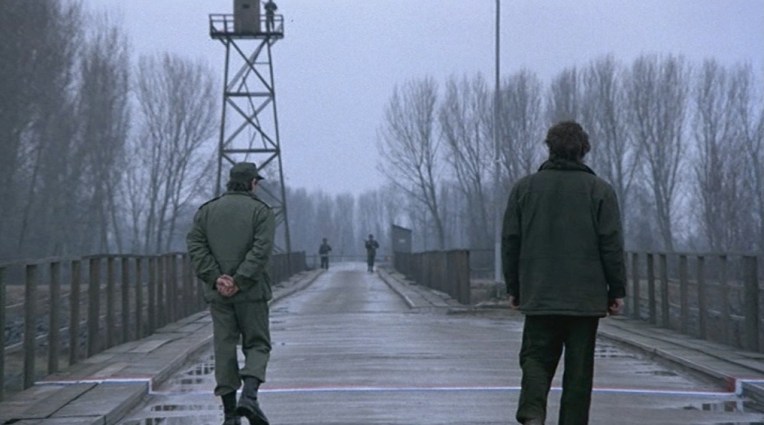
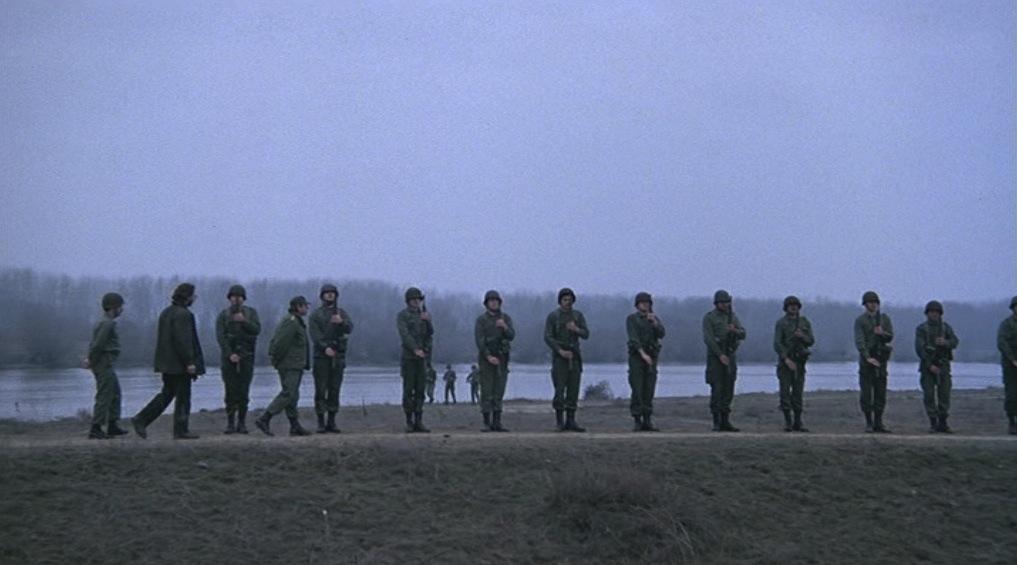
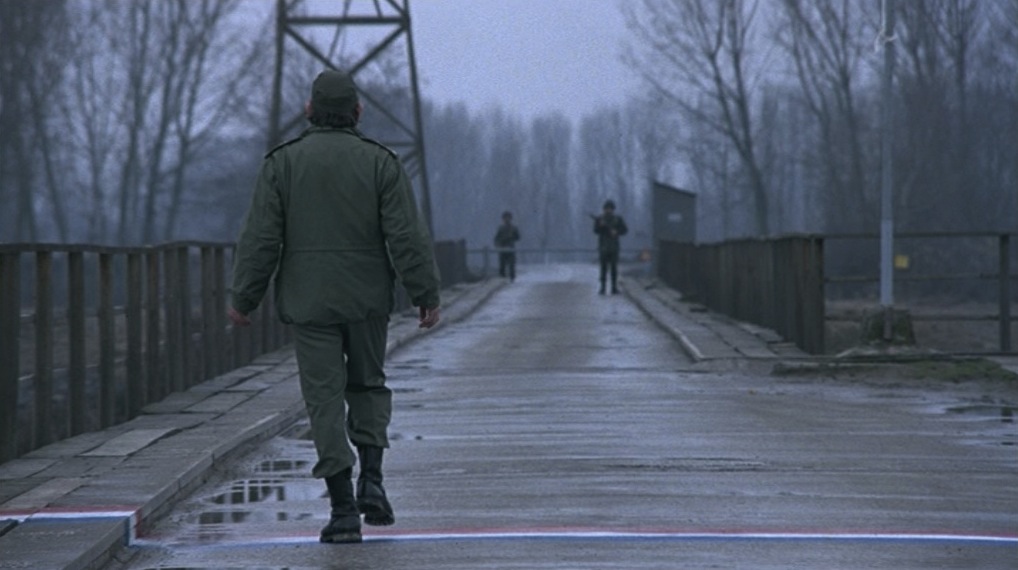
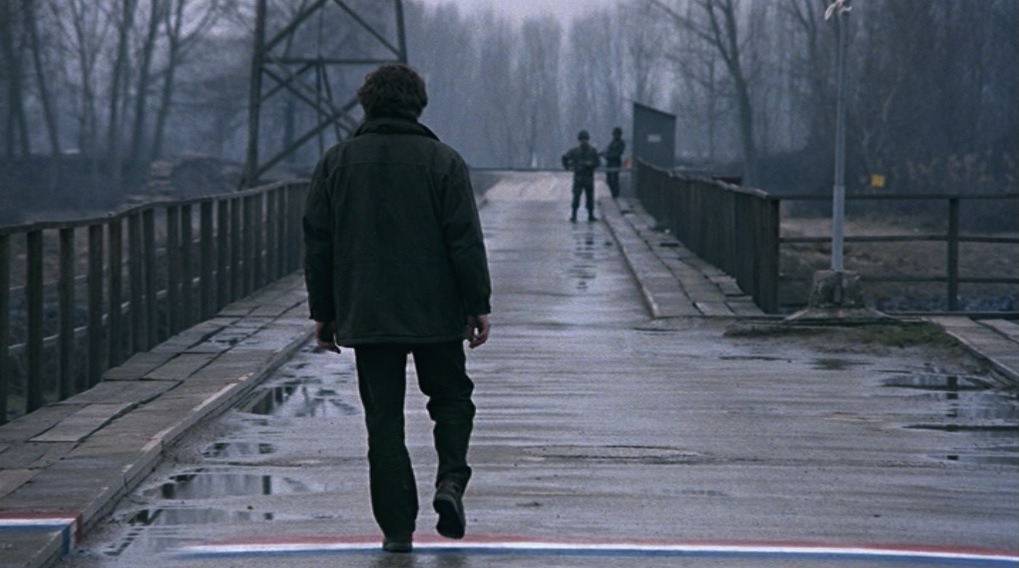
The Colonel lures the hapless reporter to that very line, threatening to cross it.
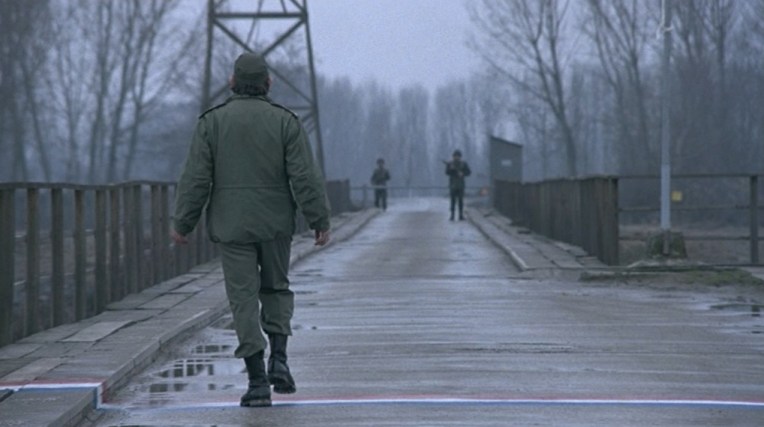
“If I take one more step, I’m ‘elsewhere’…or I die.”
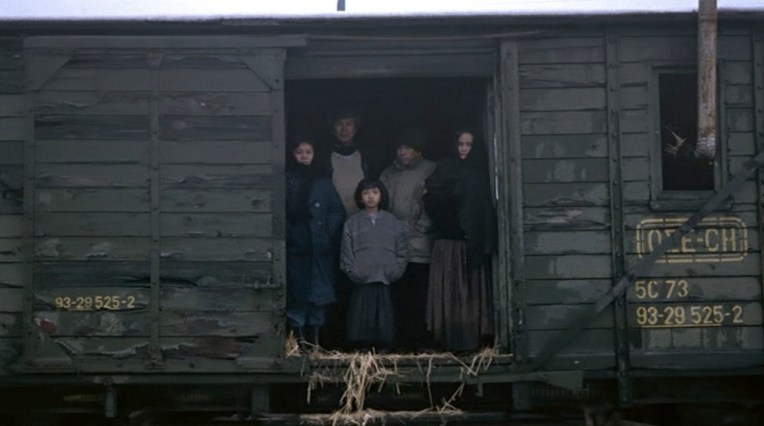
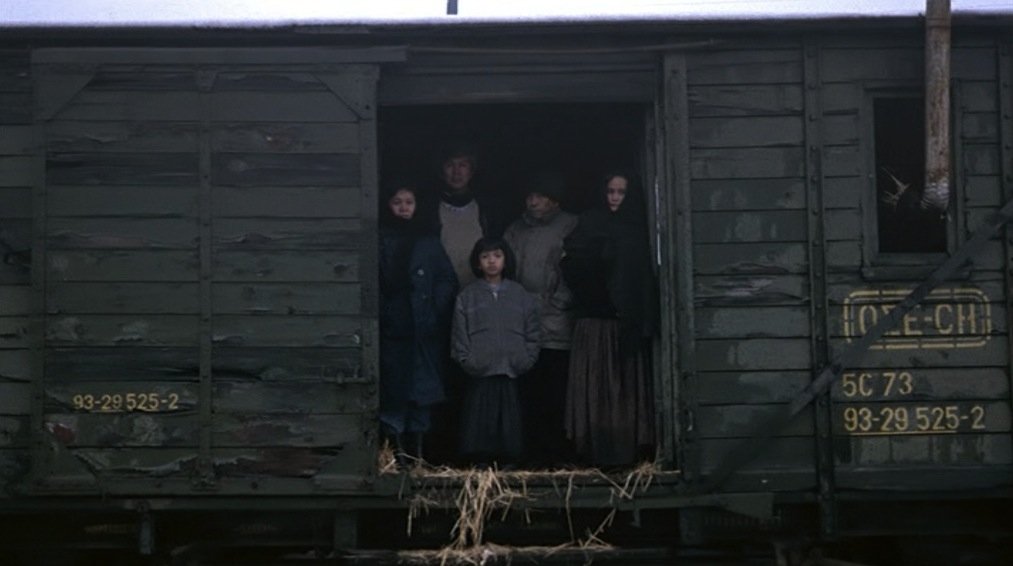
What seems on the surface a fruitful bonding moment, a shedding of rank that leaves two men at the brink of something profound and indelible, proves just as arbitrary as the border of their shared interest. Ever ahead of his audience, Angelopoulos offsets this shadow play with an audio montage of firsthand refugee accounts. Says one, recounting the fear of being seen during his night passage, “I could never imagine that I’d ever want the moon to die.” These words cut the Colonel’s sentiments like Brie, revealing the vulnerable innards of his arrogance. We are duly reminded that the “elsewhere” of which he feigns knowledge has, for them, taken on mythical meaning. It is the asymptote to their path of travel, seen in every expression as the camera pans along a train filled with survivors. Here, Karaindrou’s “Train-Car Neighbourhood” draws a thread through each life like a bead on a necklace of hardship.
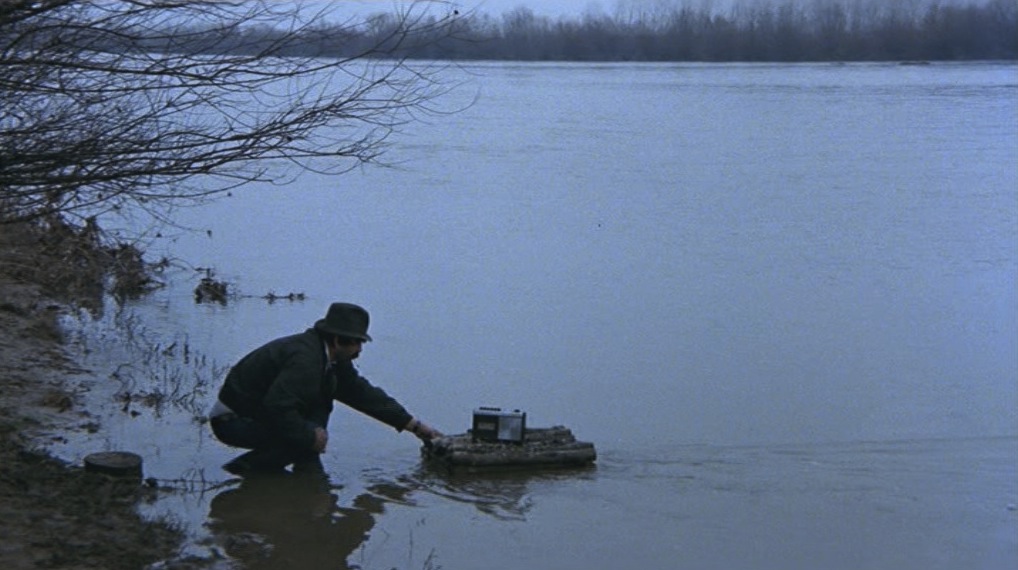
Yet perhaps no moment captures this separation of nomad and state power so heart-wrenchingly as when the Colonel berates a man for trading music across the river.
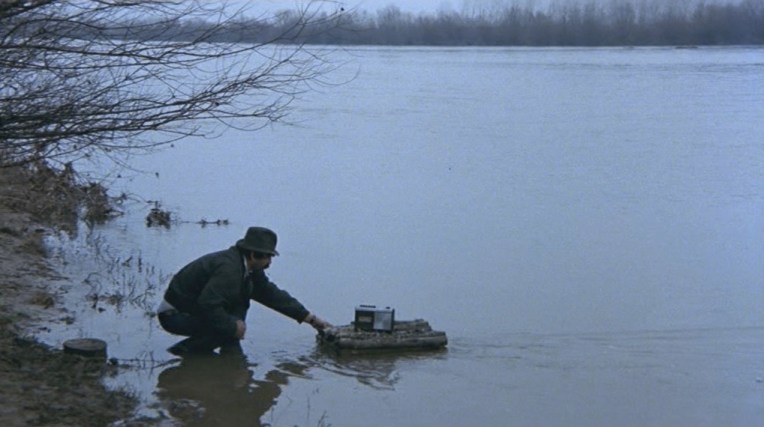
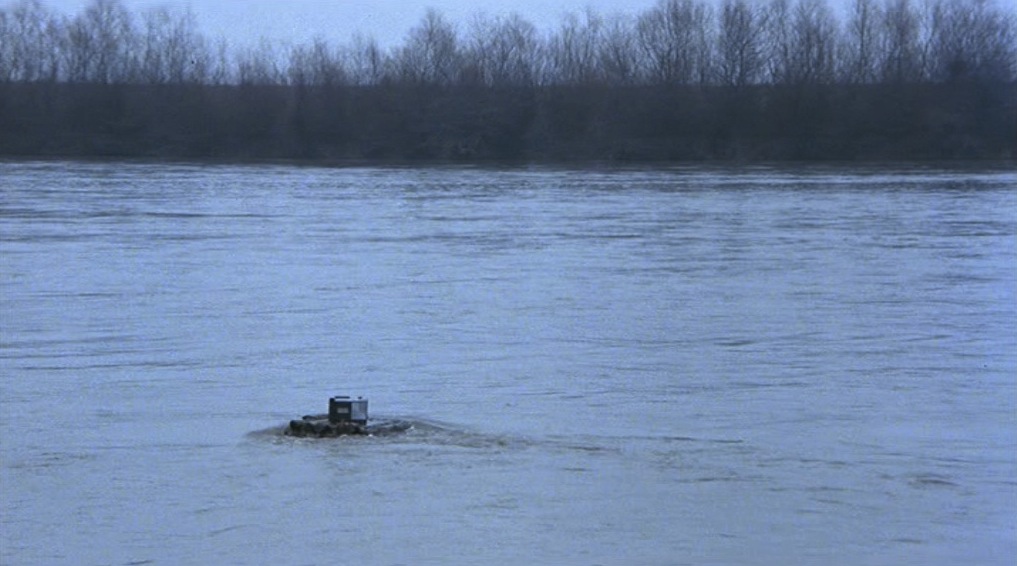
A cassette player spews popular lyrics of a better time on a small makeshift raft, which the man changes out before the player is pulled off screen.
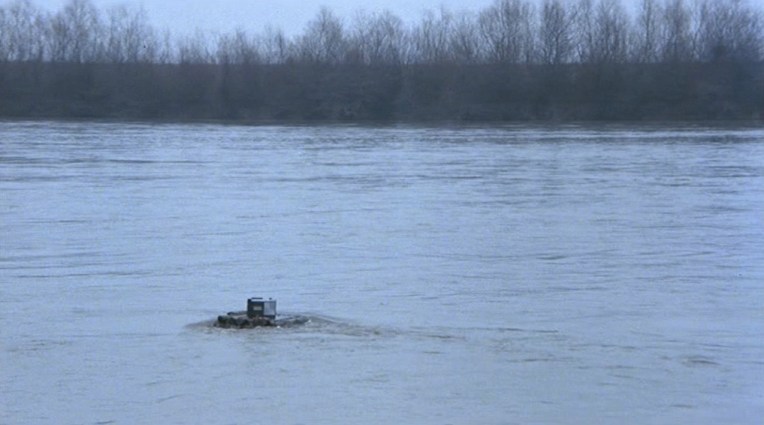
Love is a full moon, croons Haris Alexiou from its weary speakers. It drives my body mad.
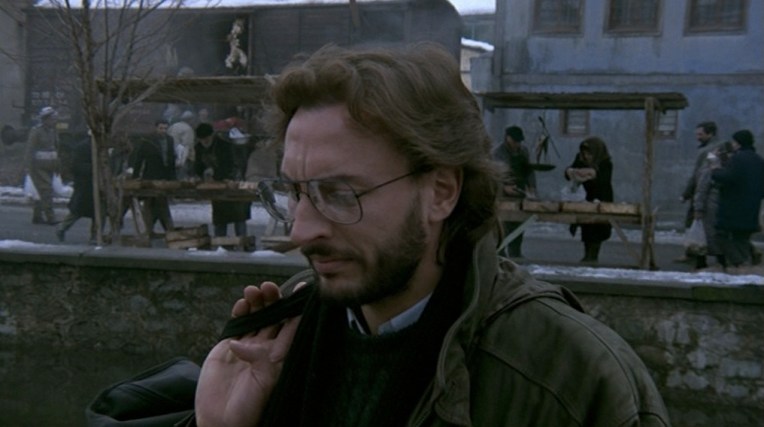
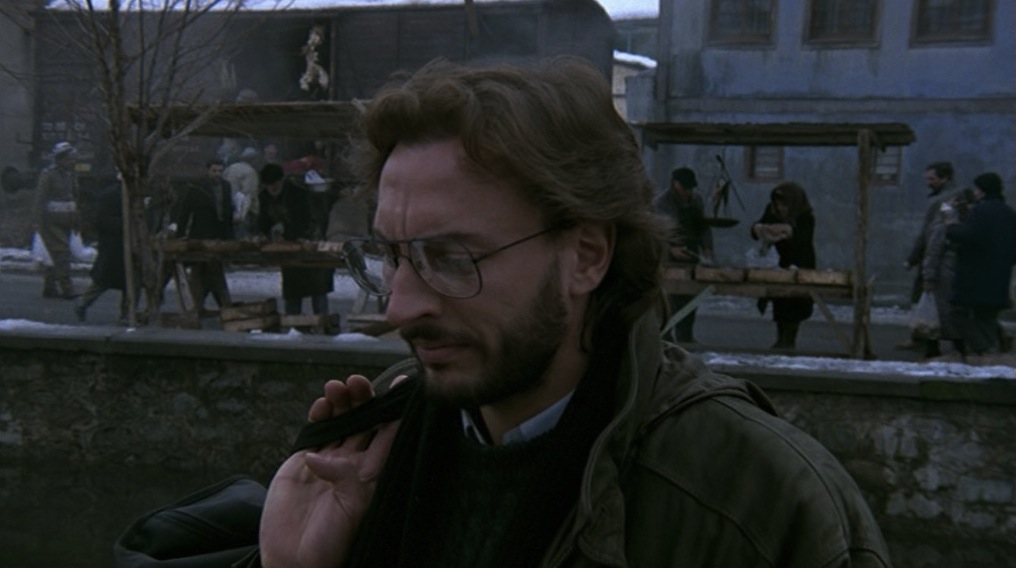
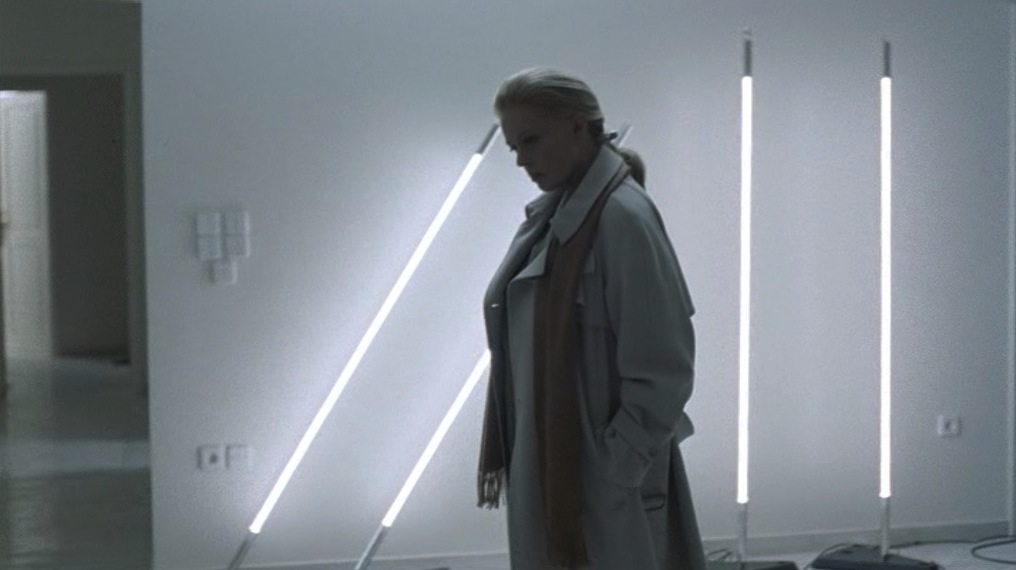
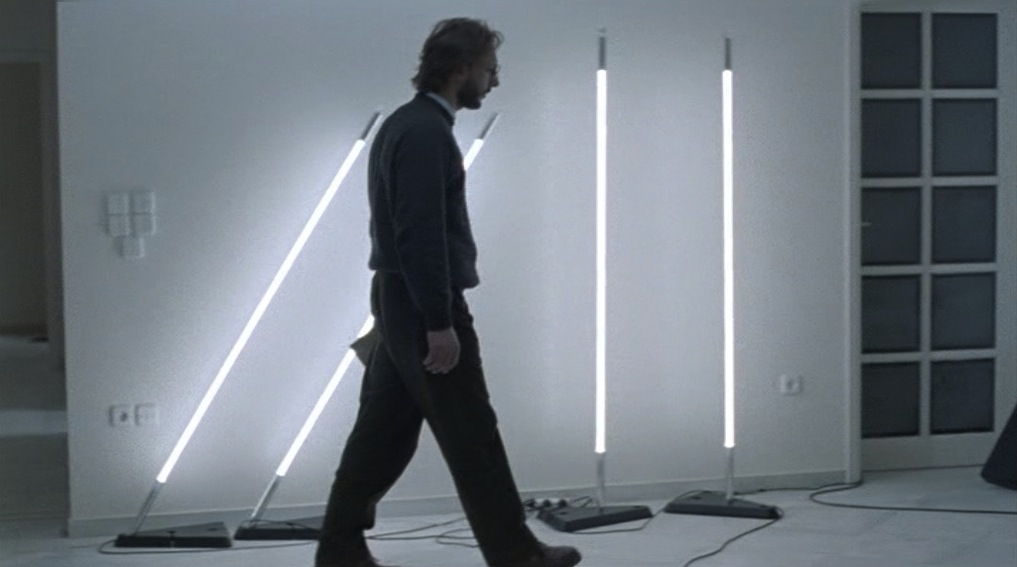
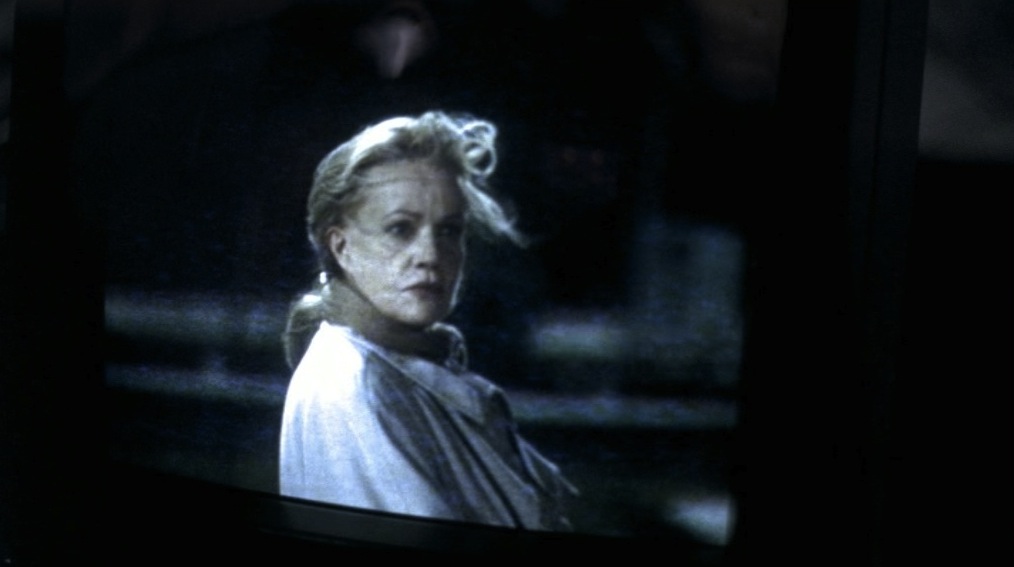
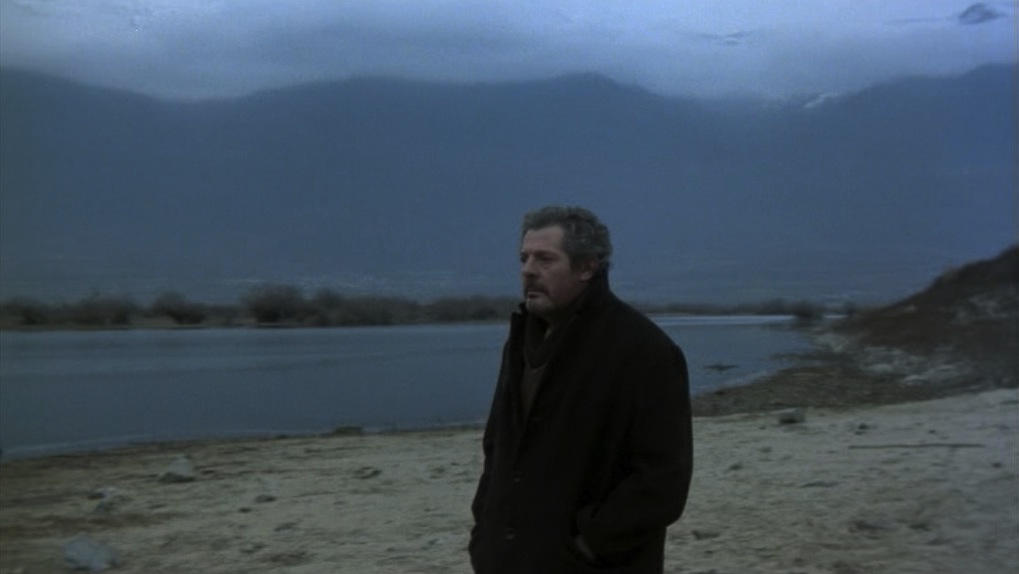
A rare close-up from Angelopoulos allies us with Alexandre, who believes he has spotted among the Waiting Room’s destitute a once-famous politician (Marcello Mastroianni). In Athens, he confronts the man’s ex-wife (Jeanne Moreau), who relates an abbreviated story of his mysterious 40-day disappearance—which indeed left him transformed upon his return—and subsequent vanishing act. She amends her brusqueness by coming to Alexandre’s home with a tape containing the last answering machine message her husband ever left, in which he admits, “I’m only a visitor.”
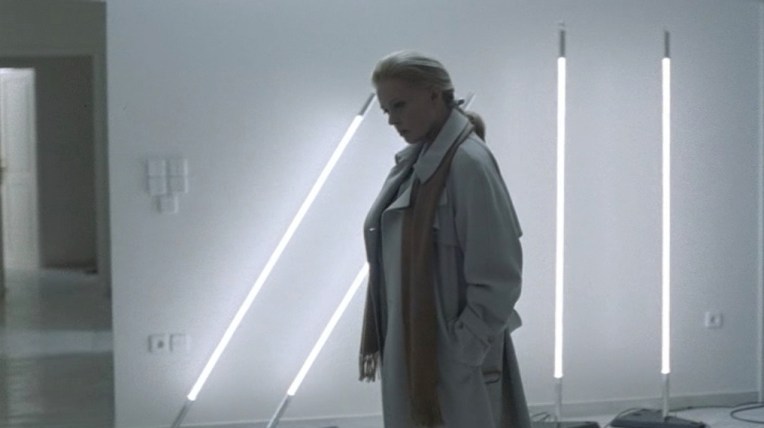
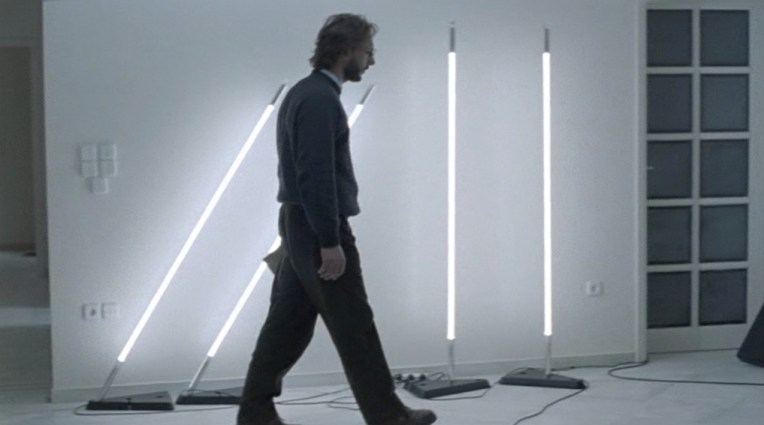
The woman tells Alexandre of a secret wound: “The thought that he wouldn’t share it with me was unbearable.” As the two move into the night, we realize that the cameras of reportage are now rolling, rendering her private confession into open testimony.
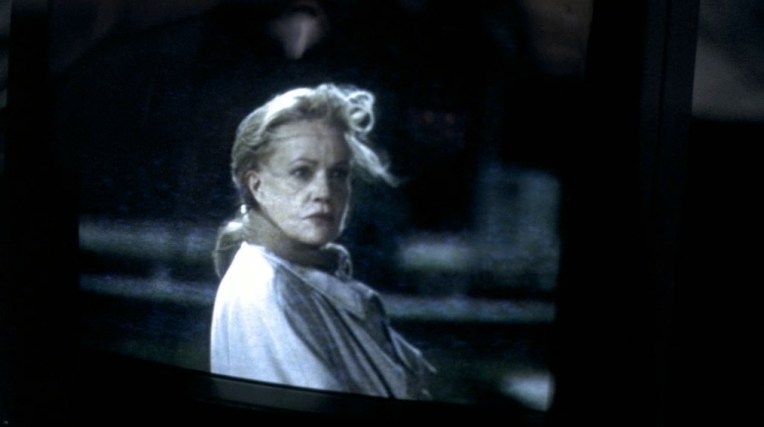
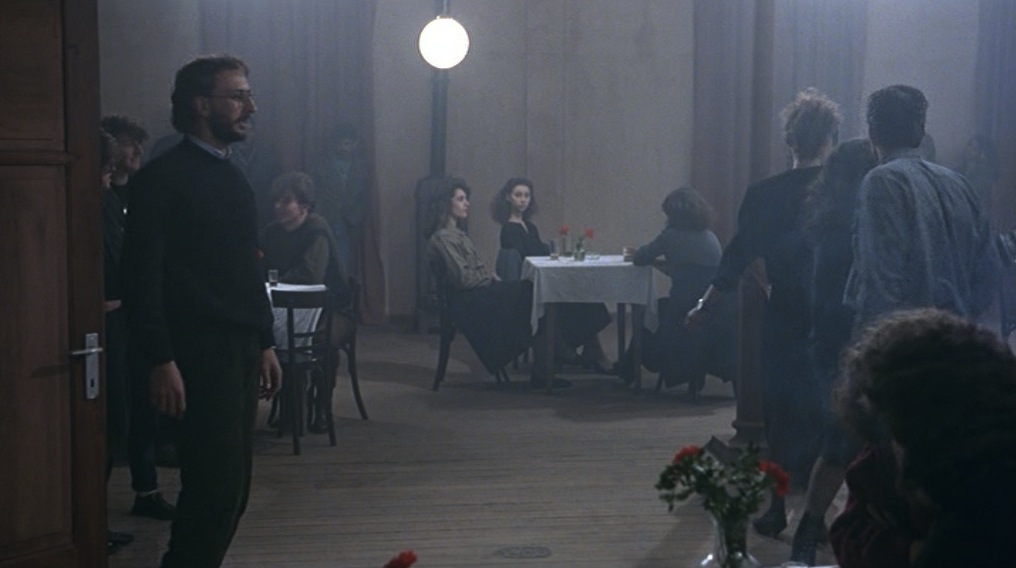
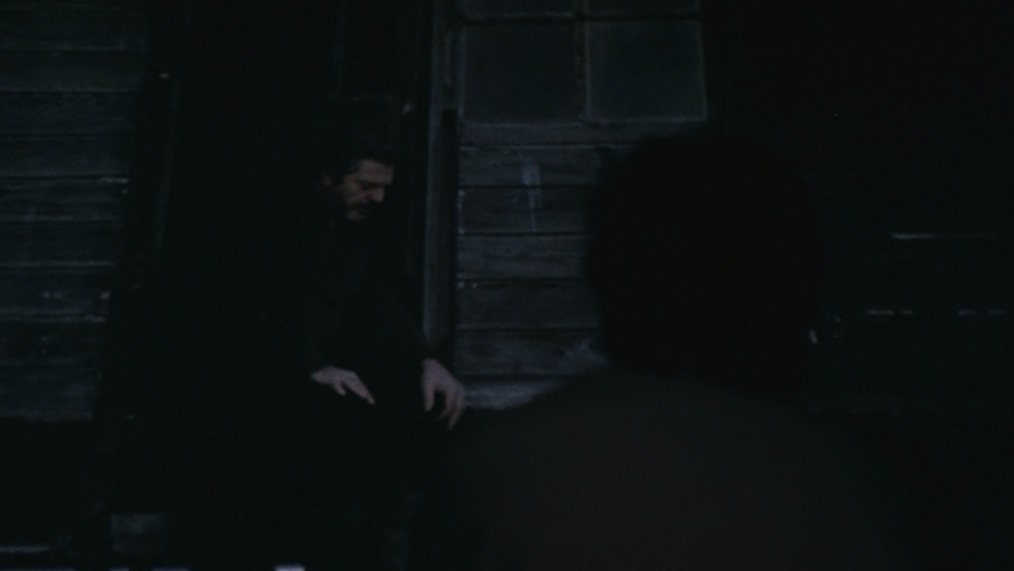
Alexandre searches the archives in the hopes of finding, somewhere in those tomb-like files of society’s forgotten, proof of the politician’s whereabouts. This chase leads him back to the border, and into the town’s only dance hall.
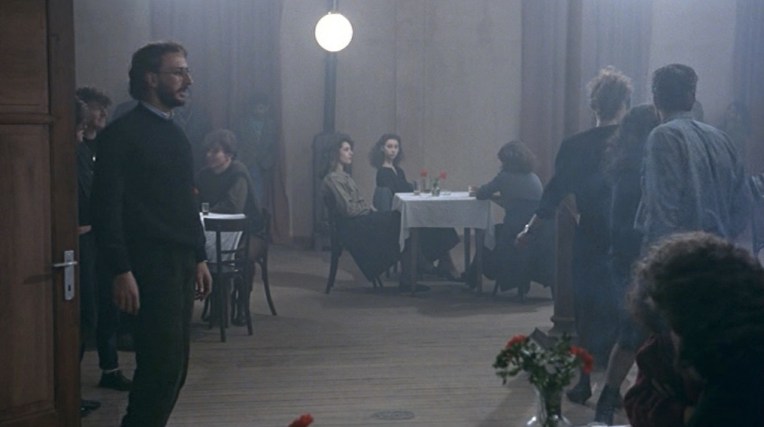
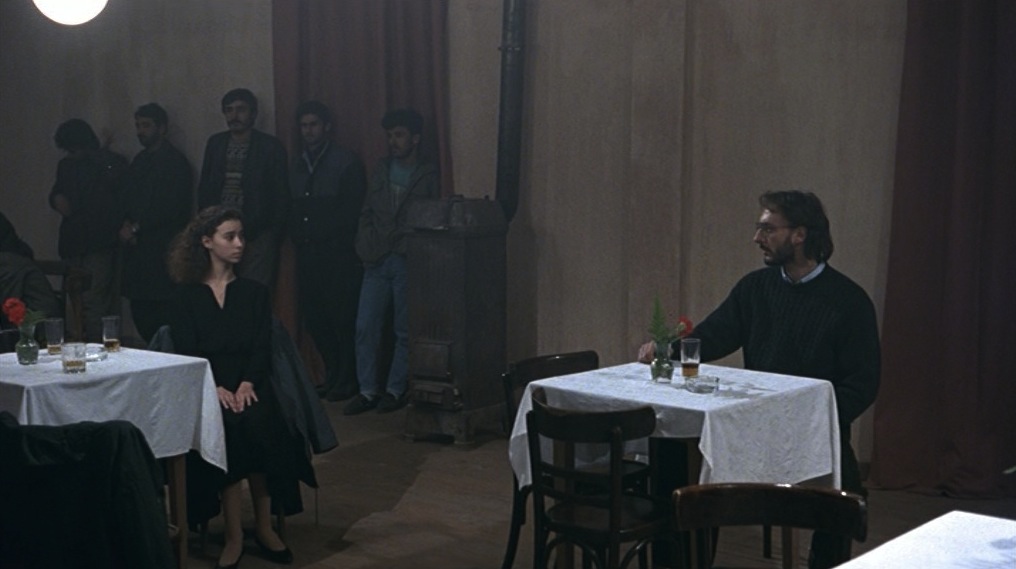
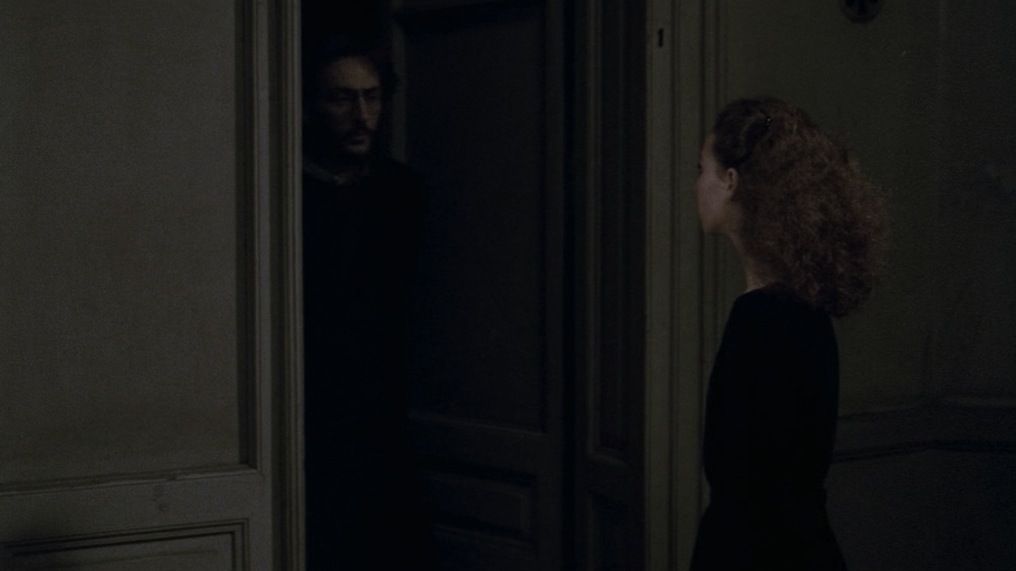
What begins as a chance to steep his thoughts in drink, however, soon funnels into a turned head, a stare from an enchanting girl (Dora Chrysikou), whose eyes now reverse the intense regard with which he has made his career back onto him.
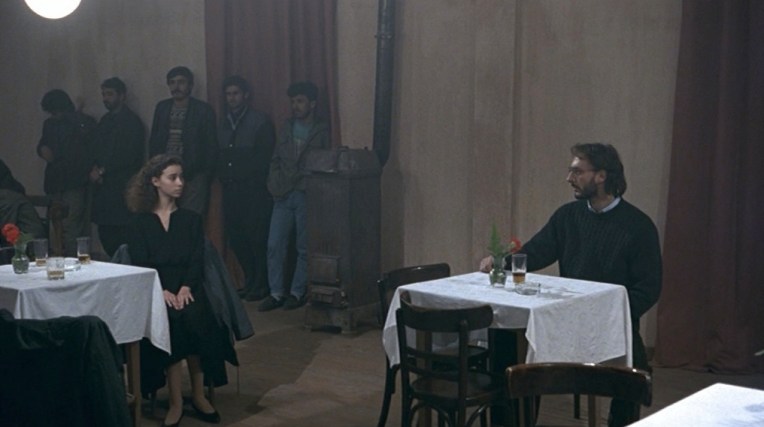
Although he makes to leave, the girl approaches and follows him, silently, to his hotel room.
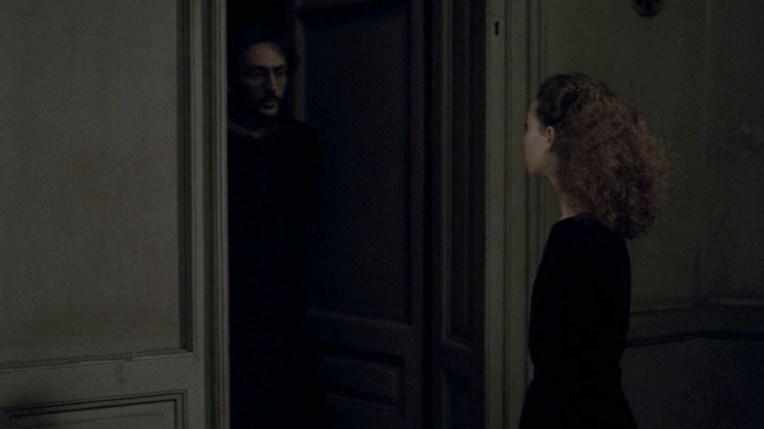
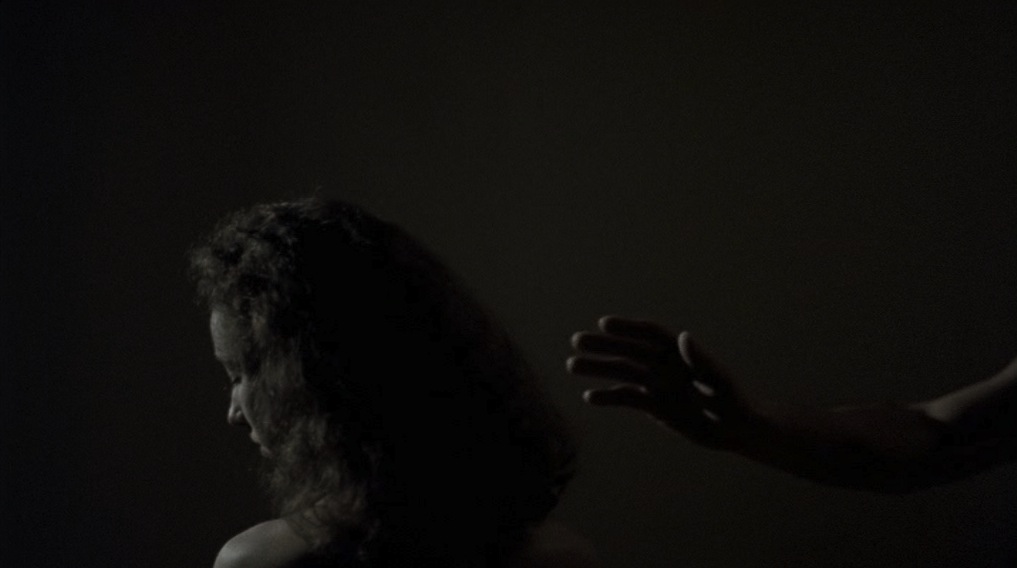
He recedes into shadow, able to touch her only as one might a rainbow.
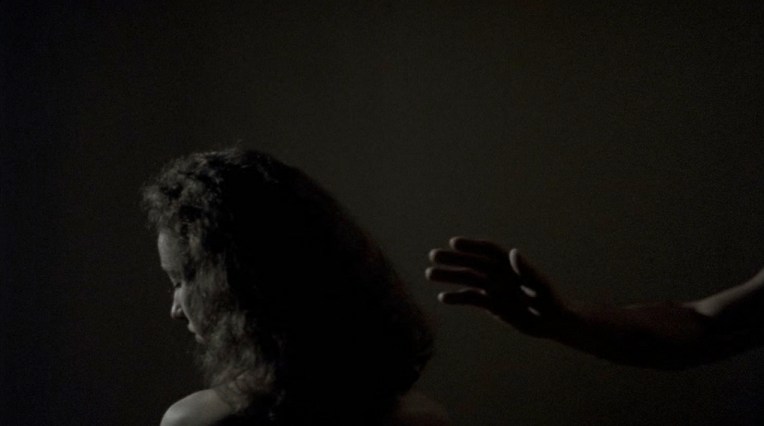
This moment locks his resolve to get to the heart of this place, even as he (and the viewer) knows that such thinking is wishful at best. For although he does track down the politician (who we learn is the girl’s father), what he finds is the shell of a man who no longer is. Gone is the savvy figure of the spotlight. In its place is a storyteller who regales children with end time speculations.
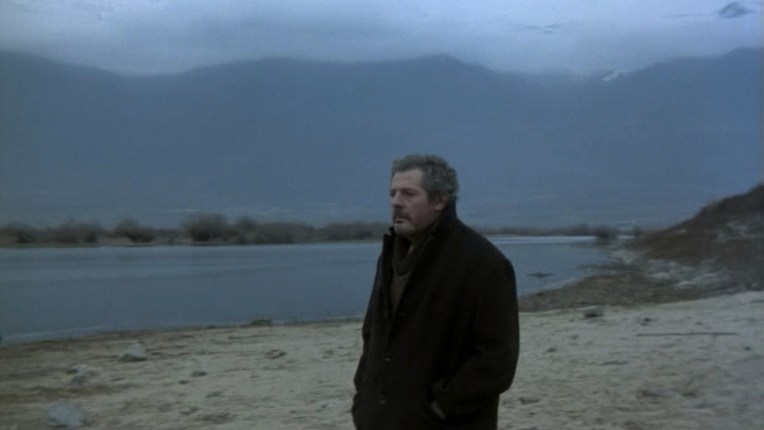
“Forget me in the sea…”
Rather than leave this man to his own devices, Alexandre further reveals his own selfish interests when he arranges, and films, a reunion. The woman claims it is not him, retreating into the fantasy that her husband is long dead. The power of her statement resides in its duality: she is lying, but also not.
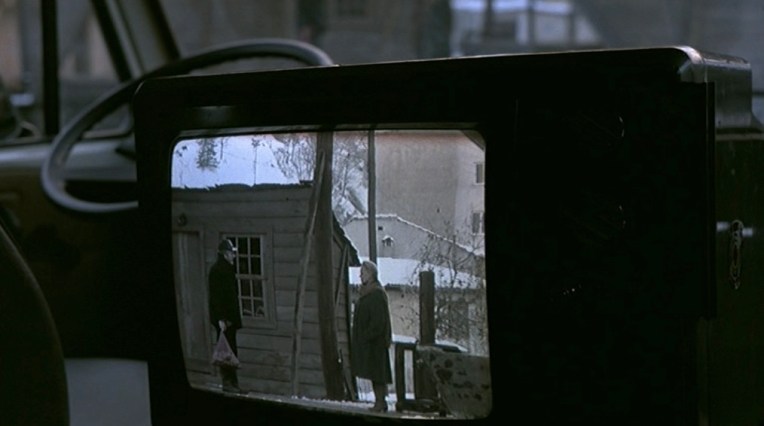
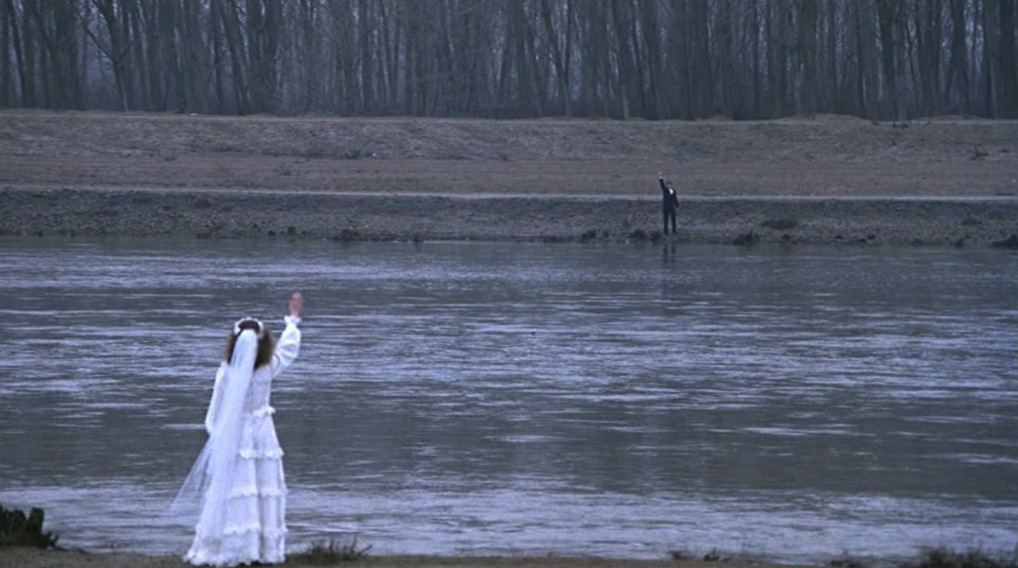
In the wake of this defeat, Alexandre suffers another when he discovers the girl of his refuge is to be married to a boy across the border. Only then does he admit to the Colonel, “The only thing I knew was to film other people without caring about their feelings.”
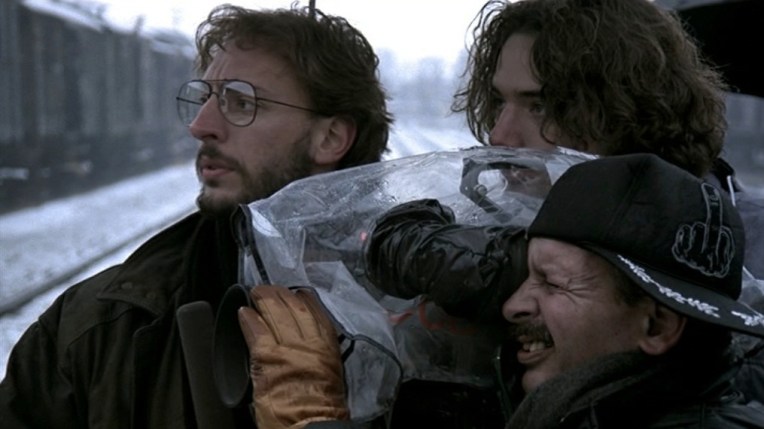
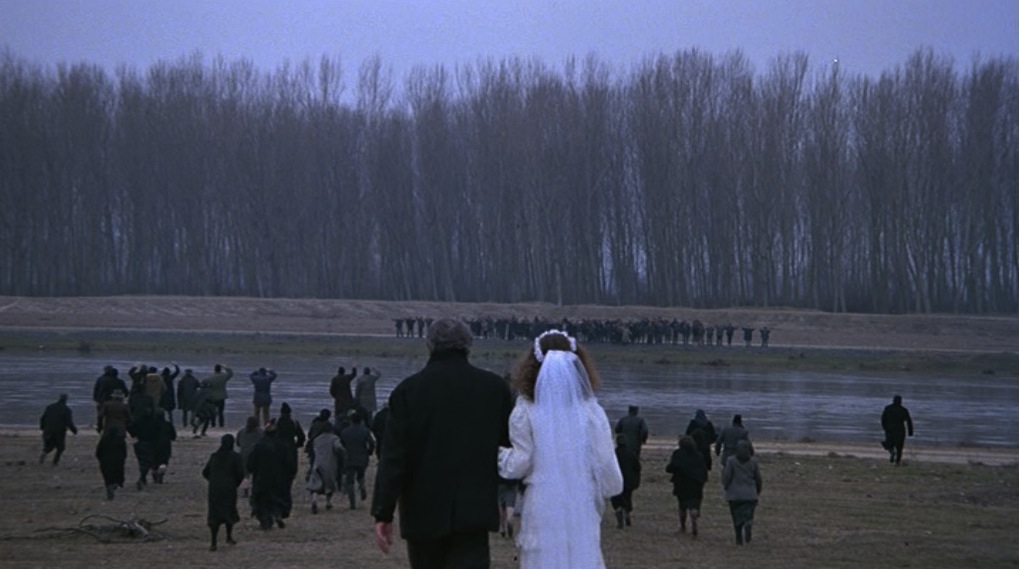
The ceremony must be conducted between patrols, even as that immutable river continues to roar and beckon between them.
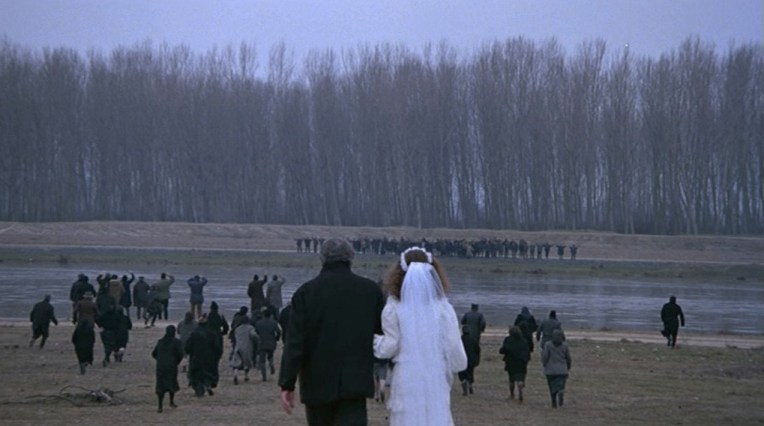
Still, even after Alexandre’s epiphany, it falls under the watchful eye of his camera.
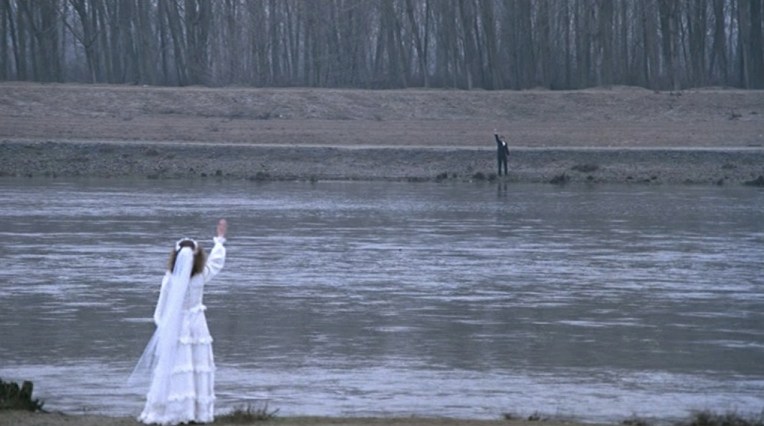
“We’re of the same race. I feel his hands holding me.”
It is obvious to us now, if not before, that he can never be anything more than a tourist, a refugee who can never step out of his skin. Before leaving, he pauses at the border, holding up his foot like the Colonel, a crane in contemplation.
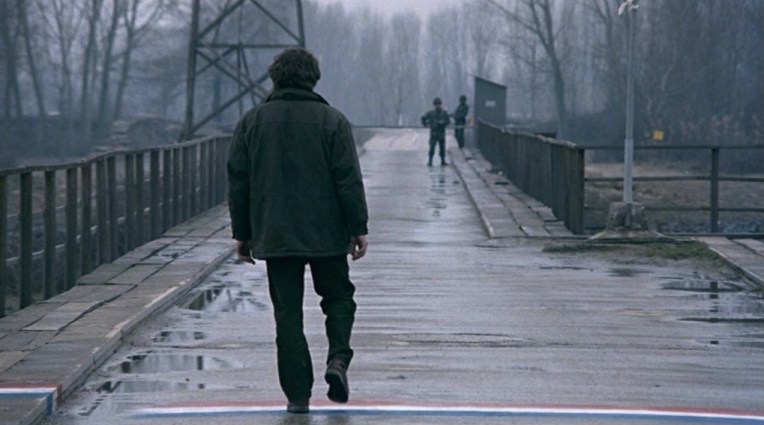
If the ceremony is the peak of the film’s narrative mountain, then these steps at the border are its sloping sides.
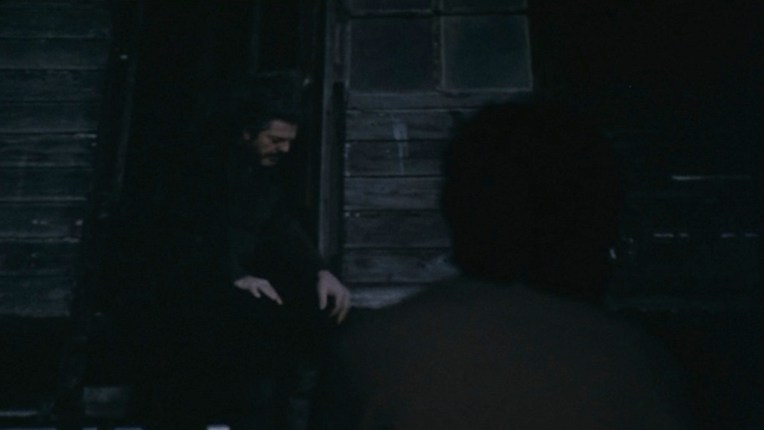
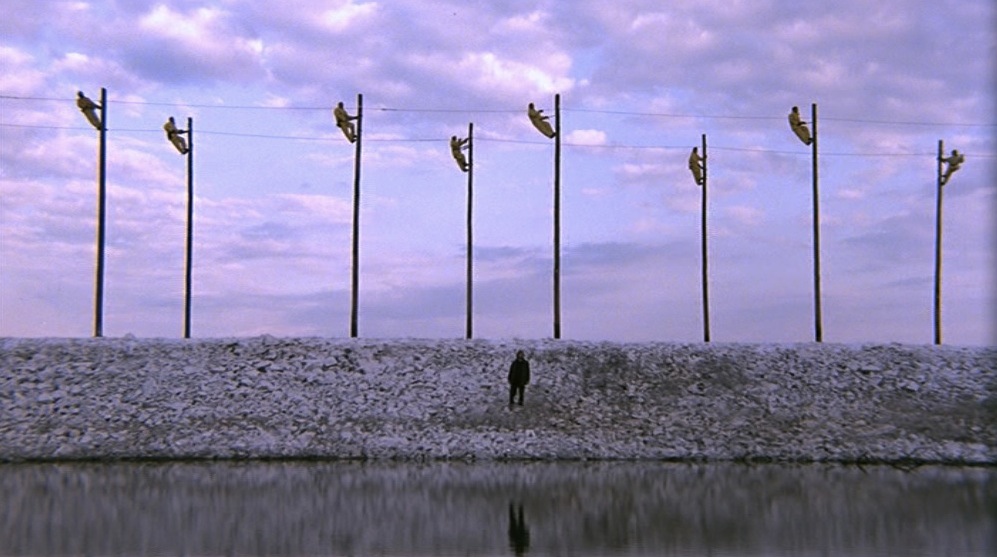
Heavy on Alexandre’s mind, we can be sure, is the news that the politician has again fled across the border, blending into the trees Angelopoulos paints so artfully in our vision throughout. And it is from those trees that the telephone poles that end the film are born, rising into the heavens, their wires able to connect nations in ways that no flesh, or even love, is capable.
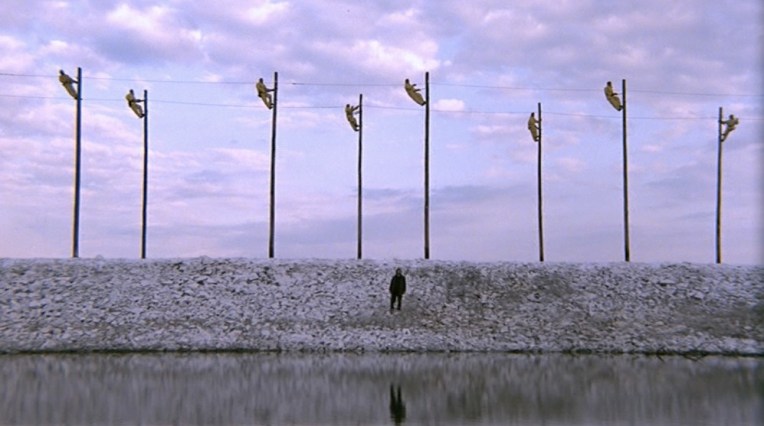
Even with these powerful scenes pulsing through us, the sweeping carriage of Karaindrou’s soundtrack (the 36-minute running time of which betrays a ghostly presence) digs even deeper. An affect-rich creation, it solders the stained glass window that filters the film’s fettered light. From its heaving strings to forlorn winds, the music recedes into, as quickly as it awakens from, a wavering memory. One can almost feel in slow motion the searing cords of strife robbing necks of their breath, and minds of their faith, to the pathos of governmental indifference. And while moments of hope, such as the endearing accordion of “Waltz Of The Bride,” do appear, it is the slow pall of mist and water that Angelopoulos so favors that leave the boldest impressions in our ears.
The words the politician once spoke at a parliamentary session haunt us still: “There are times when one has to be silent in order to be able to hear the music behind the sound of the rain.”
How one leaves, then, has become an empty question. In the end, all that matters is how one sounds.
<< Hal Russell/NRG Ensemble: The Finnish/Swiss Tour (ECM 1455)
>> Anouar Brahem: Conte de L’incroyable Amour (ECM 1457)







 Between Sound and Space: ECM Records and Beyond