Evan Parker Electro-Acoustic Ensemble: Memory/Vision (ECM 1852)

Memory/Vision

Evan Parker soprano saxophone, tapes and samples
Philipp Wachsmann violin, electronics
Agustí Fernández piano, prepared piano
Barry Guy double-bass
Paul Lytton percussion, electronics
Lawrence Casserley signal processing instrument
Joel Ryan computer, sound-processing
Walter Prati electronics, sound-processing
Marco Vecchi sound processing, electronics
Recorded October 2002 at Norges Musikkhøgskole, Oslo
Live sound: Cato Langnes and Pål Klaastad
Recording engineer: Henning Bortne
Mixed December 2002 at Gateway Studio, Kingston-upon-Thames by Evan Parker and Steve Lake
Mixing engineer: Steve Lowe
Produced by Steve Lake

An introverted biological excursion percolating through the crevices of reason? The fundamental opposition of oil and water made whole? A wired caterpillar turning painfully into butterfly? If images exist in answer to these questions, Evan Parker has drawn them throughout the massive intimacies of Memory/Vision. He and his Electro-Acoustic Ensemble have created a monster, and its name is “chronotopology.” The selfsame theory, invention of esoteric philosopher Charles Musès (1919-2000), sees the phenomenon of chronology as an effect of microscopic breaks in the space-time continuum. Relativity strings these breaks into beginning, middle, and end. In its attempt to embody chronotoplogy to the utmost, the EAE hurls ghosts of instruments—through real-time electronic manipulation—into the abyss exploded by violinist Philipp Wachsmann, pianist Agustí Fernández, bassist Barry Guy, percussionist Paul Lytton, and Parker himself on soprano saxophone. Dancing with a wide array of accoutrements, and aided by a first-class team of sound processors, this nonet dives headlong into the piano’s harp skeleton and resurfaces with the voice of a prophet in its teeth. One can draw points of contact between it and, for starters, the work of jgrzinich, George Crumb, and even later Heiner Goebbels. Yet rather than read into it, I propose that you let it read into you.

What you hear is the voice of an un-caged bird looking for the past that flourished beyond its capture. The rush of water would sooth you in this dream were it not for the drought that veins the land with understated death. Suddenly, the piano turns upright and levels its paroxysms on a field of ebony and ivory. Reeds and bows balance on the edge of something free, coughing out the fulcrums of their revolution as stardust. Shades of recital bring their hummingbird thoughts to bear upon insectile realities. This is the corona of a storm that will never blossom and wither. A thistle of sound, prickly and rare.

What you see is yourself falling down the rabbit hole, your fingers scratching glyphs into the dirt and roots that funnel you into oblivion. Each of these yields a navigable direction. The patter and movement of birds indicate a world beyond the beyond.

What you feel is the sky growing cilia, tickling the borders of your skin and the biases it wears. Shifts of color and water link worm-hooks of possibility into recycled chains.

What you taste is the mineral of your anxiety, the acid of expectation folding into spontaneous acceptance. Itself a form of improvisation, it splashes across the ornaments of your social life until they glisten anew. With them comes the flavor of experience, the privilege of assumptions made after the fact.

What you smell is something burning from the inside out, singed bones crackling with transformation: the promise of embers condensed into charcoal and scribbled across the face of an unwound clock. Breathing in the haze of this cerebral (de)construction zone, you do not cough, but rather sleep for all the warmth that has embraced you.

You’ve hit the ground. You’ve experienced all these things, have through them known the measure of your life. If the music treads above you, it’s because you are beneath it. If below, it’s because you aren’t low enough. Parker and company have thus accomplished the impossible: breathing out by breathing in.

Crispell/Peacock/Motian: Nothing ever was, anyway – Music of Annette Peacock (ECM 1626/27)

Nothing ever was, anyway – Music of Annette Peacock

Marilyn Crispell piano
Gary Peacock double-bass
Paul Motian drums
Annette Peacock voice
Recorded September 1996 at Right Track Recording Studios, New York
Engineer: Jan Erik Kongshaug
Produced by Manfred Eicher

It’s astonishing to think that the music of Annette Peacock, given its rare and just dues on this essential 1997 release, has not been buried under more attention. Then again, when listening to it in the hands of pianist Marilyn Crispell (in her ECM debut), bassist Gary Peacock, and drummer Paul Motian, we feel it casting itself into a well of reflection so deep that it burrows out the other side of the earth, far beyond our reach. That it remains true to heart is part of its magic.

Annette’s mode of choice is the ballad, through which she forges sweeping landscapes of understatement. Her music is skeletal in the truest sense, using bones not as anchors for flesh, but rather as chambers for marrow and quiet emotional floods. The title track doubles as bookend, clothing us with and stripping us of a sound-world that thrives on the shadows of its language. These utterances are fleeting, imperative smiles that turn cloud into rain, lifting themselves like sentient decals from the sheet of time and turning slowly toward the splash of adhesion introduced by the rhythm section’s entrance. That the latter borders on superfluous is by no fault of the musicians, but by nature of Annette’s music, which is anything but simple. It is, rather, so full that the stony and rounded sighs our guides manage to elicit breathe with the density of a philosophical act.

Crispell tours a gallery of traveling installations, reflections of experiences served on two CDs for the nourishment of the sonically hungry. “Butterflies that I feel inside me” finds bassist Peacock in motion, redefining space with the humble genius he has brought to so many ECM sessions before and since. Here there is something more than the sum of his strings, as each player brings out the best in the other. Listen to the fissures of pure bliss in “open, to love” or “Albert’s Love Theme” and be moved as the trio opens intuitively, cutting a relenting and cinematic cloth into silhouettes of reason. An unexpected cameo from the composer herself draws a frayed thread through “Dreams (If time weren’t).” Annette’s vocals, raw to the core, embrace words like children of sentiment in a tale of fate and circumstance. This opens a path for Gary to indulge his apportioned commentaries, and for Crispell to voice every whisper of the heart that moves her. Following this is “touching,” which might as well be the ethos of the entire set. Touching is the focus of its attention. Touching is the embodiedness of the mood, which selects points of contact so carefully that it can only be spontaneous.

Let us not gloss over Motian, who is a wonder. His banter is forever sincere and offsets monologues with unerring intimacy. From the Carl Stalling-inspired “cartoon” and on through a string of brilliant vignettes that includes “Miracles” and “Ending,” we arrive at the arrayed sensitivity of “Blood.” It is the taste of an album that, by its end, has become a mirror within a mirror, at once reflector and reflected. Needling its compass toward the stillest horizon, it stands out like a name in a culture of anonymity.

<< Mozart: Piano Concertos / Adagio and Fugue (ECM 1624/25 NS)
>> Christian Wallumrød Trio: No Birch (ECM 1628
)

John Abercrombie Trio: Tactics (ECM 1623)

John Abercrombie Trio
Tactics

John Abercrombie guitar
Dan Wall Hammond B3
Adam Nussbaum drums
Recorded live at Visiones, New York, July 13-15, 1996
Engineers: David Baker and Bob Ward
An ECM Production

Third time’s a charm for the John Abercrombie Trio, which plants its eponymous guitarist along with Hammondist Dan Wall and drummer Adam Nussbaum in live soil at last. The change of setting does wonders for an already deep and exploratory group, the difference immediate in the shadowy fade-in of “Sweet Sixteen,” which introduces the instruments in a stepwise procession of agents. As Wall rolls his gentle grit across the plains of his solo, we are reminded of the organ’s rich history in jazz, and of the lineage (Larry Young, Jan Hammer, etc.) he draws from in, and transcends by virtue of, his playing. On this date, it’s his programmatic touches that cut deepest. His heat-distorted circles of talk in “Last Waltz,” for example, turn an already slow and arid tune to a state of conduction for Abercrombie and Nussbaum’s exchanges. So begins the album with two of three Abercrombie originals, the last being “Dear Rain,” which also stands as an exposition of the organ’s tender side, plush yet understated. Wall hits on two tunes of his own. “Bo Diddy” is a hip excursion into hard bop details. Nussbaum rocks the boat but keeps it afloat, supporting some of Abercrombie’s fieriest playing in a long while. A tight ground line from Wall indicates a bassist’s approach. This energizing run leaves us primed for something smooth and smoky. This we get in “You And The Night and The Music.” In this timeless standard, Abercrombie locks himself into what I like to call a “smoove groove.” Next is Nussbaum’s “Chumbida.” It is a slow-moving train that dreams of its celeritous youth, only to awaken to it in reality. It accomplishes this through no small feat of development before blending into Wall’s #2, “Mr. Magoo,” which winds the album’s tightest knots from all three, finally petering out into “Long Ago (And Far Away),” a laid-back groove that finds Wall and Abercrombie finishing buoyantly and warmly.

What’s special about this trio is that, even at its most enthralling moments, there is always tenderness to spare. Tactics may seem a curious title, especially when we think of it in the militaristic sense, but in the linguistic sense—i.e., patterns which combine to form larger constructions—it holds true. Abercrombie, Wall, and Nussbaum have done precisely that: taken patterns of the art to which they dedicate their lives and spun them into narratives with lives of their own.

<< Cain/Alessi/Epstein: Circa (ECM 1622)
>> Mozart: Piano Concertos / Adagio and Fugue (ECM 1624/25 NS
)

Masabumi Kikuchi Trio: Sunrise (ECM 2096)

Masabumi Kikuchi Trio
Sunrise

Masabumi Kikuchi piano
Thomas Morgan double bass
Paul Motian drums
Recorded September 2009 at Avatar Studios, New York
Engineer: James A. Farber
Assistant: Rick Kwan
Produced by Manfred Eicher

On paper, Tokyo-born pianist Masabumi Kikuchi may look the stranger, but put laser to disc and we’ve known him for decades. His prodigious talents were already clear in his teens, by which time he was sharing stages with Lionel Hampton and Sonny Rollins. He cut his first record—1963’s East & West—for Victor with Toshiko Akiyoshi and Charlie Mariano, the latter of course with formative ECM connections in work with Eberhard Weber. Kikuchi would get even closer to the label when he formed a trio with Gary Peacock and Paul Motian in the early 90s, releasing a string of albums under the moniker Tethered Moon for Winter & Winter. From there, Kikuchi continued his alliance with Motian on this ECM debut, adding 31-year-old bassist Thomas Morgan, for his most intuitive session yet. Having torn a page or two from the book of Paul Bley in the past, Kikuchi cites Motian as a major influence on his more recent endeavors, and indeed we feel in his artistry a pianistic equivalent of the late drummer, forever curious about what might be dancing just around the corner. That this would be Motian’s penultimate recording makes his contributions all the more poignant. His tsking filigree and palatable intimacy treads every rubato path like a millipede, predicting likeminded bursts of spontaneity from the keys.

Three tracks marked “Ballad” twine their way into the album’s skeleton, its veins pulsing with the nourishment of a freely improvised suite in ten parts. The lack of rehearsal is proportional to the music’s power of realization, rendering arbitrary such individual titles as “New Day” and “Short Stuff,” in spite of their economy of description. The listener will note that our idiosyncratic leader has a vocal presence, not so much singing like Jarrett as straining and growling against the tide that threatens to subsume him. As for Morgan, his bass creeps in at times like sounds from dreams upon waking. His gestures are listless and sincere, each a new ligament that leaves us stilled in golden light.

Kikuchi’s surname (菊地), if one wants to be literal about it, translates to “land of chrysanthemums.” It’s an appropriate analogy for quiet splendor of this all-too-ephemeral trio’s sound. It is similarly horizontal, training its microscopic lens wide and far within rather than trying to spike or send it skyward, until by the end it has thinned to comforting invisibility.

(To hear samples of Sunrise, click here.)

Anders Jormin: Ad Lucem (ECM 2232)

Anders Jormin
Ad Lucem

Mariam Wallentin voice
Erika Angell voice
Fredrik Ljungkvist clarinet, bass clarinet, tenor saxophone
Anders Jormin double-bass
Jon Fält drums
Recorded January 2011 at Studio Epidemin, Göteborg
Engineer: Johannes Lundberg
Assistant engineer: Petter Eriksson
Executive producer: Manfred Eicher

As a regular alongside greats Charles Lloyd, Bobo Stenson, Jon Balke, and Tomasz Stanko, Anders Jormin has taken irreplaceable part in some of the strongest records of the last two decades. Yet the Swedish bassist is also a fine composer, and in this vein has honed a sound-world uniquely his own. Ad Lucem is his third such project for producer Manfred Eicher, who has given him all the space his elements require to burgeon.

If water is ECM’s reigning elemental obsession, then light is a close second, and the title of Ad Lucem indeed activates the mind as if it were a prism. The setting places Jormin in unusually arrayed company. At its heart is the trio consisting of multi-reedist Fredrik Ljungkvist, drummer Jon Fälit, and Jormin himself. From this nexus spring the voices of Mariam Wallentin and Erika Angell, singing lyrics by the group’s leader. In Latin, no less. Regarding his preference for this “dead” language, Jormin appeals to its “sense of eternity and mystery”—qualities that lend themselves to the even more ancient language of improvisation. Wallentin and Angell, both experimenters of vibrant import, unravel the compact economy of his words, doing so sometimes without them, as in the diptych of “Clamor” and “Vigor.” Spinning the hearth of this music into a yarn of embers, they pass through the stained glass window of Ljungkvist’s tenor. Their every gesture becomes a color, joined by the solder of Jormin’s bass. The sentiments of “Hic et nunc” express it best: Here and now / Felt deep in my heart / Forever – twin souls touching each other. Over a meditative arco line and drums of distant plains (the patter of giants before a war?), they bring peace and stillness to the air, as also to “Inter semper et numquam.” In this scene of breathless time and bleeding stones from Danish writer Pia Tafdrup, they blend like the strings of a bass whose vibrations now stretch to the constitution of vocal flesh. While the journey is generally arid and ruminative (“Quibus” one of its many desert skies), Fält’s osteopathic interlude, “Lignum,” brings us into the deeper wounds of “Matutinum” and the bright English lyrics—the album’s only—of “Vox animæ.” Other highlights (no pun intended) include the clarinet filigree of “Vesper est,” among the more memorable melodies of the set, and the stunning tenorism of “Lux,” almost Charles Lloyd-like in its delicate brilliance and emblematic of the album’s quiet dazzle. “Cæruleus” is a wrenching sutra with some wild reed work that frees us into a dual kiss of farewell.

The virtue of its linguistic garments gives Ad Lucem the appearance of something eternal, even as it dances in the ephemeral wiggle room of jazz. It is the vagabond saint, the whisky priest on his horse, the elephant in the room who can sing…and do so compellingly.

(To hear samples of Ad Lucem, click here.)

Chick Corea/Stefano Bollani: Orvieto (ECM 2222)

Chick Corea
Stefano Bollani
Orvieto

Chick Corea piano
Stefano Bollani piano
Recorded live at Umbria Jazz, December 2010-January 2011
Recording engineer: Bernie Kirsh
Assistant engineer: Roberto Lioli
Album produced by Manfred Eicher

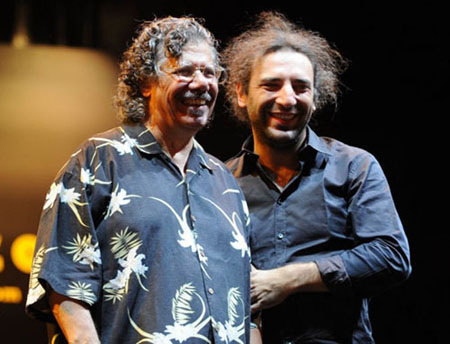
It’s impressive enough that untouchables like Keith Jarrett have taken the art of solo piano improvisation to the depths they have. To maintain comparable wonder and cohesion with the addition of another 88 keys is another feat entirely. For Chick Corea the prospect has flung open the windows of creativity out onto exciting new landscapes. Having already realized this vision with greats old and new (Herbie Hancock an Gonzalo Rubalcaba among them), Corea takes an instrument already so full at his fingers and uses it as an invitation to Italian virtuoso Stefano Bollani. Of their eponymous performances, Corea remarks, “Orvieto was winter-cold. The experience was summer-warm.” The analogy of temperature proves salient, for throughout these spontaneous gigs audiences surely felt tingly all over from the crystalline precision of these two powerful talents: one a legend, the other perhaps someday to be.

Were it not for Corea’s unmistakable pointillism and the softness of Bollani’s release, the two might be nearly impossible to distinguish. Which is not to say these qualities don’t switch places at any given moment, telling us that such parsing is arbitrary. An “Orvieto Improvisation” begins Parts I and II, clearing the air of any pollutants and diving into the thick of things with a synergy of purpose that betrays far more than the two years Corea and Bollani spent playing together before the present recording. The second of these dovetails into the Miles Davis classic, “Nardis,” in which the closeness of contact is wondrous. It is a twisted music box come to life, a look back through forward means. The duo continues to lay the nostalgia on thick along a select handful of standards. Of these, “Doralice” feels most like childhood, sprinkled with life and love and everything in between. Its freshness breathes like wind through autumn leaves and imbues these timeless tunes with clear and present animation. The interweaving of “If I Should Lose You” and bygone ambiance of “Darn That Dream” show humility to the music at hands. And the piano’s percussion instrument status is nowhere more obvious than in “Tirititran,” for which Corea and Bollani take their syncopation to its greatest heights. Similarly astonishing exchanges abound in their rendering of Fats Waller’s “Jitterbug Waltz.”

The soundtrack quality of Jobim’s “Retrato Em Branco E Preto” sparks all of these feelings and more, as does the rounded edge of “Este Seu Olhar,” the latter unwinding with the precision of a player piano yet with the abandon of a frolic. These are of a piece with the pianists’ own compositions. Bollani gives us a breath of the city streets in his “A Valsa Da Paula,” turning philosophies into rattled change in the pocket, a new spring in the step, and the force of opportunity on the horizon. Corea counters with “Armando’s Rhumba,” wherein he clothes the program’s most transcendent moments with “La Fiesta”-like exuberance. It is the pinnacle of what these two can achieve, and a whimsical lead-in to the resolute “Blues In F.”

The music of Orvieto is about nothing if not detail. Had Corea and Bollani become visual artists (and who’s to say they are not), they would be engravers, drawing out from cold metal canvases a fully rendered world of ideas. Their art is their stylus, their touch the acid that turns contact to shading and dimension, our ears the paper on which the final images are printed.

(To hear samples of Orvieto, click here.)

Keith Jarrett: Rio (ECM 2198/99)

Keith Jarrett
Rio

Keith Jarrett piano
Recorded live April 9, 2011 at Theatro Municipal, Rio de Janeiro
Engineer: Martin Pearson
Rio concert produced by OGM (Guillermo Malbrán/Augusto Tapia) and dell’arte (Myriam Dauelsberg/Steffen Dauelsberg)
Executive producer: Manfred Eicher

On 9 April 2011, Keith Jarrett took the stage at the Theatro Municipal in Rio de Janeiro for a concert of improvised music at the piano. Under any other artist’s name, this formula might ring as flat as the disc it’s printed on, bat Jarrett’s fingertips those keys do something unknown even to him. Like a marionette that comes to impossible life in the hands of a master puppeteer, an instrument before Jarrett is a broken circle waiting for its final arc. Rather than hang that circle as one would a mirror on the wall, he rolls it as a child would a hoop down the street. Such is the spirit of abandon that opens his every note like laughter at something intangible, and points to a destination so far away that it returns to its origin.

On Rio, he crosses 15 short bridges to get there, mapping a spectrum of interlocking terrains along the way. Still, the serial infrared beginnings are something of a surprise on his way to ultraviolet. Over a knotted, postindustrial dream, they reveal a spontaneous imagination at play. A wall rises before us. On one side is the melancholy we might come to expect of the musician who brought us wonders at Köln, Paris, and Kyoto. The listener cannot help but feel it in the rapt attention of the audience, which acts as spinner for the many fibrous experiences that had to come together to create such a shimmering veil of beauty. On the other side of that wall is the bluesy pointillism that never seems far away when Jarrett is near. Yet the more we listen, the more we realize that every brick is its own song, and bonds the spaces on either side with sound and sentiment. Part 4, for example, is a smooth ballad reminiscent of “As Time Goes By” that cracks open a bottle of Gershwin along the way, while the staggered overlay of 5 shows us two hands in fluid independence. Guitaristic flamenco dances change places with the sweeping elegy that is Part 7, one of two major turning points in the concert during which Jarrett and the audience must have known something unprecedented was happening. Its sister moment occurs in 9: sure to still your thoughts. If the concert’s second half seems but meteoric offshoots of the first, it’s only because every mirror has its dark side, so that when the blues returns in Parts 11 and 14, it feels twisted in spite of its enervations; and when Parts 12 and 15 revive those earlier rays of heavenliness, they have grown heavier, wiser. Not that this leaves us in any less a state of awe. Rather, these transmogrifications show us the nature of life, which teaches us that nothing is ever the same.

As the story goes, Jarrett called Eicher after this performance, professing it to be his best. Yet I would appeal to the earlier man, who once said that no night is better than any other. It all comes down to the moment, the experience, the pureness of making music that will forever evade definition. What we hear, then, is neither his “best” nor “worst.” Inhaled and exhaled through the digital lungs by which we have come to measure our listening pleasures, it is what it is: a gift to be lived on as it is fed.

(To hear samples of Rio, click here.)

Tout Court: Les Violons du Roy Brings Late Baroque to Bailey

Les Violons du Roy
Bernard Labadie music director
Emmanuel Pahud flute
Cornell University, Bailey Hall
October 19, 2012
8:00 pm

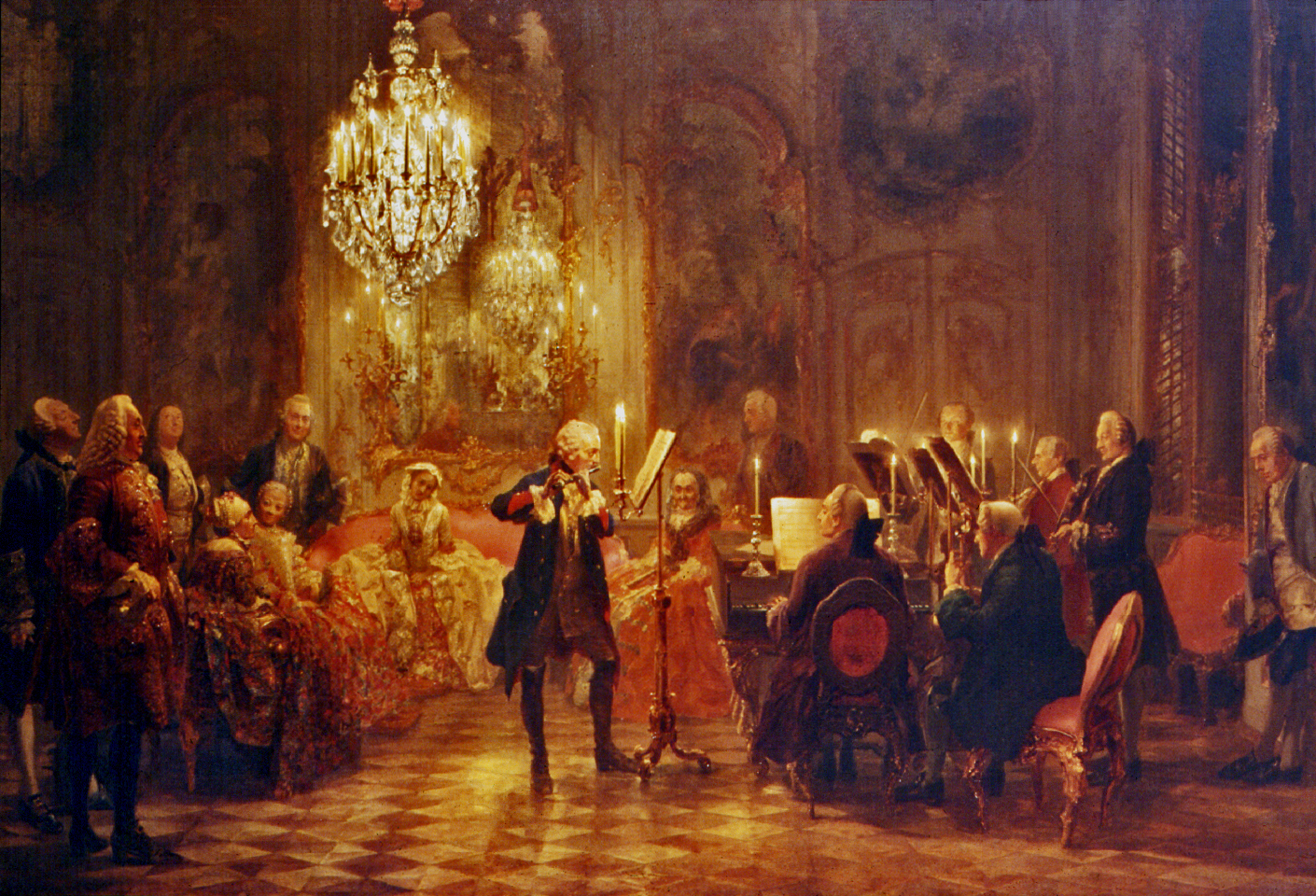
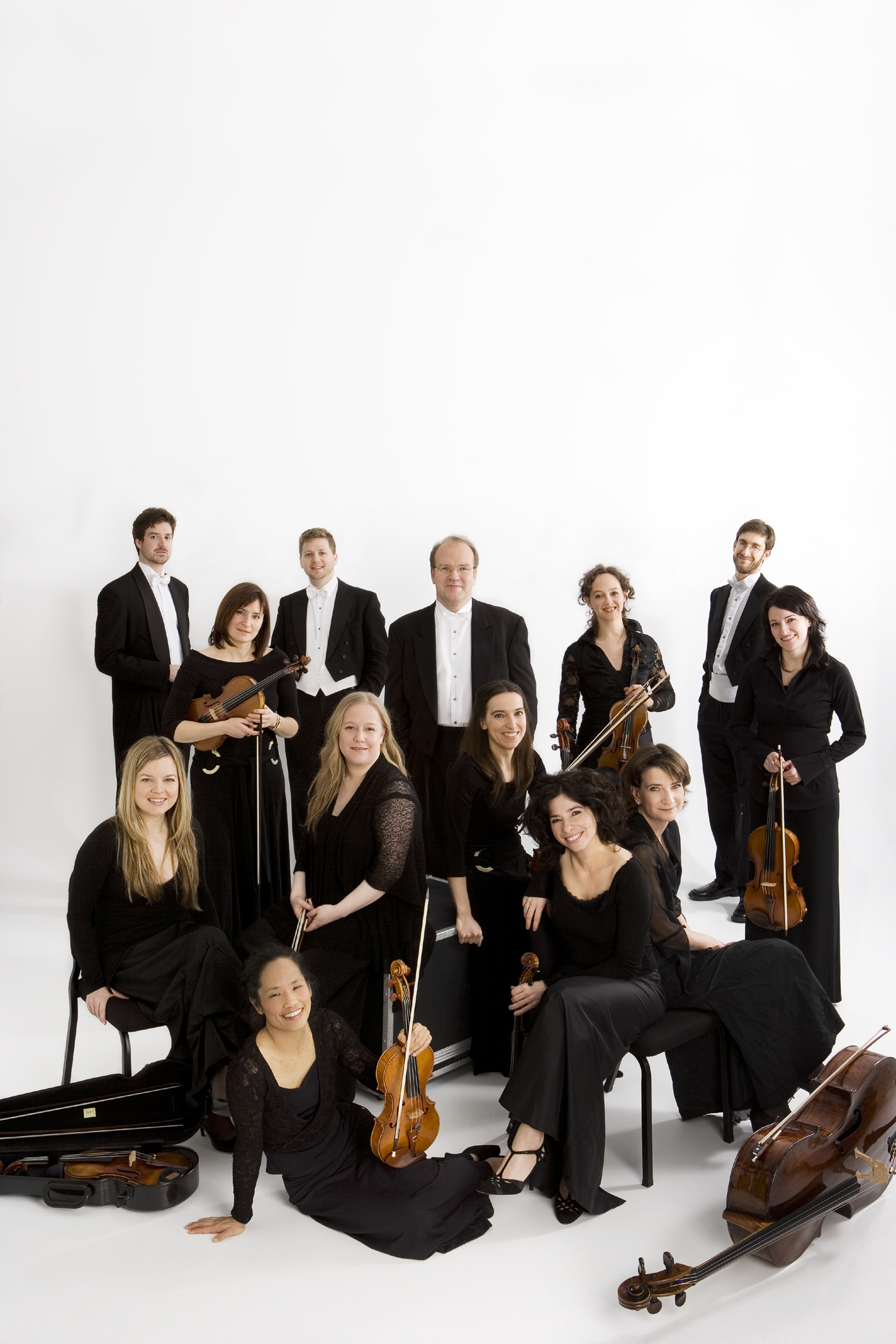
More than anyone, we have Frederick the Great (1712-1786) to thank for last Friday night’s program at Bailey Hall. Though progeny to the post-Enlightenment despotism of the times, the Prussian king was first and foremost a student of the arts. Enchanted as a lad of 16 by the virtuosity of Johann Joachim Quantz, he immediately began studying with the German flutist and, much to his warmongering father’s chagrin, added Czech violinist Franz Benda and Johann Sebastian Bach’s son Carl Philipp Emanuel to his roster at court. In due time his sonic coterie would grow to 50, the burgeoning hub from which our artists for the evening, Les Violins du Roy, drew their effervescent bows. The chamber orchestra hails from Québec City, where musical director Bernard Labadie has since 1984 nurtured its reputation for scintillating musicianship and spirited playing of the 17th- and 18th-century material in which it excels. Flutist Emmanuel Pahud, fresh from his tenure at EMI Classics with harpsichordist/conductor Trevor Pinnock, brought his expertise to bear with memorable panache.

Like many creatively inclined patriarchs before him, Frederick fancied himself a composer and penned the Flute Concerto No. 3 in C Major that proved Pahud’s delicacy with his entrance. Its stately dance evoked vine-drenched courtyards and butterfly wings, each a memory passing slowly like the reflections of clouds across water. An intimate interlude cast the final movement like a ray of light: swift, sure, and heaven-sent. Before this was the concert’s opener by Benda. The lilting cadences of his Sinfonia No. 1 in C Major spawned buoyant and programmatic side paths. Particularly evocative were the cautious footsteps in the Andante, like a lover for whom the forest was both prison and escape. Every sweep of violins painted a branch heavy with the foliage of parting.

While competent enough, these two pieces were thin on the ground in light of Quantz’s masterful G-Major Flute Concerto. From the luscious open chords of the Allegro, one thing was clear: here was the living echo unheard in the preceding architecture. Bach and Vivaldi peeked through that distinct veneer like recessive genes in search of expression. A heart-tugging slow movement, brimming with imagery for the hungry ear, found its dearest traction in the intermittent pizzicato shared by double bass and cellos. Incidentally, my newborn son, for whom this was his first live concert, at last settled into sleep during this passage, and on through the blossom of the final Presto. Transcendent.

J.S. Bach made his requisite appearance through the Ricercare from his Musical Offering. This seminal six-voice fugue is an epic in and of itself, and made for grave and inescapable listening. Cinematic before there ever was such a concept, its genius was all the clearer for Les Violons du Roy’s weighted playing—impressive after the concert’s gallant first half. The music of C.P.E. then brought its expressive foil through two works. His Symphony in B Minor was a treat to hear in close quarters. With sparkling invention and drama, it showed us a unique voice indeed, managing to step away from his father’s legacy while trailing just enough of it like a Peter Pan shadow. So too with the Flute Concerto in A Major. Despite being a younger work, it harbors some of his most mature lyricism in the Largo. From its inward sigh and downright Beethovenian tension in the lower strings, we felt a heart broken and restored. This made the final Allegro all the more cathartic for its implosive double stops. Pahud excelled here most of all, navigating a geography that was jagged but never sharp. The latter was a guiding philosophy for an orchestra that knows how to spike its punch, for even at their most intense, under Labadie’s direction the strings were never grating. Likewise, Pahud’s tone struck rare balance between the shrill and rounded capabilities of his instrument.

It would have been a travesty to have had a world-renowned flutist and Baroque chamber orchestra and not be treated to Father Bach’s famous Badinerie from the B-minor Orchestral Suite No. 2. In this respect they delivered with embellishments galore that had us leaving in the same laughter and lightness of spirit that this delightful encore provided.

Ricardo Villalobos/Max Loderbauer: Re: ECM (ECM 2211/12)

Re: ECM

Ricardo Villalobos electronics
Max Loderbauer electronics
Soundstructures by Ricardo Villalobos and Max Loderbauer
Developed and produced at Laika Studio, Berlin, September-December 2009
Pre-mastering: Rashad Becker
Mastering: Manfred Eicher and Christoph Stickel
Original recordings produced by Manfred Eicher

The term “acousmatic” was first used in reference to the philosopher Pythagoras, who delivered his lectures from behind a screen while his students sat mutely on the other side. Many centuries later saw the introduction of European closed-eye listening practices, blindfolding audiences to ensure a musical experience devoid of visual bias or distraction. Yet it would take musique concrète pioneer Pierre Schaeffer to realize the deeper potential of such a situation when he replaced screen with loudspeakers, from which issued sound collages of indeterminable origin. Now the ears wore the blindfold. According to Schaeffer, imaginary sounds are ontologically distinct from the objects that produce them. They begin with an effect and work back to cause. The acousmatic experience, then, fundamentally separates sound from source.

This equation is never foolproof. Once the sound in question has been activated it takes on a familiarity of its own. Where Schaeffer perhaps shortchanged his own convictions was in never turning the mirror around, for the mise-en-abyme of his sonic philosophy indicates not only an external distinction, but also an internal one—namely, that in their solicitation found sounds morph into experiences in and of themselves. The severance is a divided cell, an audible illusion whereby infinity speaks.

Another possibility: that, even in the intimate knowledge of a source, the acousmatic experience may thrive. Acousmaticity depends on spacing of source, case, and effect; on reversibility between inner and outer. At its heart is an aporia. It can never be more than an interpretive effect of the listener. In such a context, our instinct pushes us toward treating sound as material, especially when we can hold recorded art in our hands and manipulate its realization at will. The moment we press PLAY, two temporal realities—that of the recording and that of the listening—share a space. Time collapses.

With this in mind, I turn to minimal techno wunderkind Ricardo Villalobos and experimentalist Max Loderbauer, who were given permission by Manfred Eicher to dip their hands into his label’s unfathomable catalogue and finger-paint a fresh compositional framework of suggestion and inner-space. As a self-styled “synthesis of two musical worlds,” Re: ECM does, in fact, create a third, acousmatic one. Without access to individual tracks, the Berlin-based DJs looked to separable bits for sampling, and to the gaps therein. In so doing, they went beyond effect to aftereffect, charting the ghosts of these pristinely recorded sounds (which, no matter how you splice them, betray their source). Yet in the hands of this artful duo, even the obsessive ECM listener (points to self) will find there is still an enigma to be had. Much of this feeling derives from the fact that Villalobos and Loderbauer took an improvisational approach to layering these loops and elements in the studio. Their acousmaticity goes from the outside in.

At the risk of oversimplifying, I am tempted to separate this recording’s mesh into its classical and jazz streams. Though the genres are not so distant, their approach manifests differently throughout. Looking to the latter first, we find a marked balance of organic and electronic. More than balance, even, is the unity of these two categories—again, not so distant. Said unity comes mostly from the Christian Wallumrød Ensemble, specifically the Fabula Suite Lugano, making adroit use of Giovanna Pessi’s baroque harp in “Reblop” and its counterpart, “Replob.” Both are sparkling odes. Pianos unravel chains of icicles, swaying hand in hand with satellite interruptions and wave distortions. The inevitable nod to Jon Hassell comes in “Requote,” for which a cunning horn winds its way in a bowed expanse of intimate measure. “Redetach” ends the album on a snare- and cymbal-driven journey into the center of a vast digital biome. Gloopy and viscous, this bubbling drone touches feet to ground, its back to sunset. The remaining Wallumrød refraction comes in “Recat,” this time from The Zoo Is Far, for a groovy, if subdued, drum ‘n’ bass vibe. Gut strings wince in self-reflective heartbeats as the ghosts of drums flip from open to shut. With its scattered rhythms, rusty veneer, and granola crunch, this track takes due cue from Boards of Canada. Out of this shadowy enclave we are dropped like buckshot into water for “Retimeless.” Penning its tale from the ink of Timeless, its windblown beats and vocal blips dance their gavotte in moonlight. Miroslav Vitous’s Emergence affords another fond look back at some of the label’s classics, as does “Rensenada,” drawn from Bennie Maupin’s The Jewel In The Lotus. Whereas “Reemergence” lives on the underside of a snare drum, the other lumbers across its top surface before liftoff. Louis Sclavis makes a knotted cameo in “Reannounce.” The raw material this time is his L’imparfait des langues. Metals and reeds flick their throats away like the cigarettes that have destroyed them, leaving a pile of dreams for ashes. Clay percussion trades places with outer contacts, devolving into a contest of morals for the sample-addicted. The Wolfert Brederode Quartet’s Currents finds new life in “Recurrence.” As much a mantra as a challenge to silence, it finds itself flanged for want of a sharper blade. Enrico Rava’s TATI feathers the wings of “Rebird,” a distorted pathway of grace.

From Russian composer Alexander Knaifel comes the bulk of the album’s classical skeleton. As the dark side of this moon, it puts the emotional back into the rhythm-formula of the club, seeking in its body-to-body connections something akin to the heart-to-heart. Much of this pulse comes from Svete Tikhiy and Amicta Sole, giving us soprano Tatiana Melentieva’s otherworldly rise above all in “Resvete.” In such primordial surroundings, she sounds like Cathy Berberian reborn, radiant still through a tintinnabulation of brushes and cymbals. Distant sirens splash through smoke and cloud, each indistinguishable from the other against the Ligeti-like whispers of “Retikhiy.” Where in this ritual passage rhythm remains paramount, sandy and free, in “Resole” it recedes for a spacy vibe reminiscent of Vesptertine-era Björk. BLAZHENSTVA yields its embryonic “Reblazhenstva,” laying choral strains on a bedding of digital beats while a cello spasms and swoons from its own melancholy residue. Swiss violinist Paul Giger’s Ignis makes a morose appearance in “Reshadub.” Its drums tremble before an oncoming train of opaque intentions, crumbling into radio dial anxieties at the moment of death. This leaves only Arvo Pärt, whose Kanon pokajanen inspires the throat-sung drones and sacred curtain of “Rekondakion.”

All of this shares a border with a glitch aesthetic, by which the crust of representation cracks open to reveal something intrepid and uncompromising. Its skin hosts as many nests of reality as there are humans, each a node of anxiety. Whether or not this anxiety yields pleasure has much to do with personal preference, but also with the fact that all sounds are phenomena. Only our allegiance determines their marketability. And so, if we instead let the organic experiments of Villalobos and Loderbauer breathe as they will, if we avoid weighing down their pockets with texts such as this, then the soundness of their message will grow of its own accord, rampant and unbridled in the photosynthesis of blind appreciation.

(My thanks to Brian Kane, whose discussion of acousmatics gave me context for the present review. To hear samples of Re: ECM, click here.)