Cain/Epstein/Alessi: Circa (ECM 1622)

Circa

Michael Cain piano
Peter Epstein soprano and tenor saxophones
Ralph Alessi trumpet
Recorded August 1996 at Rainbow Studio, Oslo
Engineer: Jan Erik Kongshaug
Produced by Manfred Eicher

Having heard Michael Cain through his associations with Jack DeJohnette, but not his session mates, avant-garde saxophonist Peter Epstein and trumpeter Ralph Alessi, I went into this album blind and emerged fully sighted. The influence of Charlie Haden, under whom the latter two both studied, lingers in “Ped Cruc” and “Egg,” each of which brings a watery current to the album’s classically inflected aesthetic, as well as in “The Suchness Of Dory Philpott” (a John Surman-inspired title if there ever was one). The soprano’s gorgeous sustains carry over into the title track, which, changing shape like a bubble on the wind, walks a fine edge between script and adlib. This same balance percolates through “Siegfried And Roy” and its later companion, “And Their White Tigers.” Both linger like an aftertaste, casting nets toward elusive memories of the night before. More postmodern meditations await us in “Social Drones” and “Top O’ The Dunes,” for which the trio offers tapas portions of alienation and playful distance. In such a context, humor retains a certain depth of hue, as realized in “Miss M.” Here more than elsewhere, the two horns dance, two birds of a feather, from branch to branch while the piano preens their nest in wait. What begins as a simple tune in unison turns into an intense free-for-all: the session’s highlight by far, set against the caresses of “Red Rock Rain” and earthen mixtures of staggered harmonies and pointillist speech acts in “Marché.”

Fans of Oregon and ECM’s earlier chamber jazz experiments (Gallery and the like) should feel right at home here. Newcomers, perhaps even more so.

<< Jean Barraqué: Sonate pour piano (ECM 1621 NS)
>> John Abercrombie Trio: Tactics (ECM 1623
)

Joe Maneri Quartet: In Full Cry (ECM 1617)

Joe Maneri Quartet
In Full Cry

Joe Maneri clarinet, alto and tenor saxophones, piano
Mat Maneri six-string electric violin
John Lockwood double-bass
Randy Peterson drums, percussion
Recorded June 1996 at Hardstudios, Winterthur
Engineer: Martin Pearson
Produced by Steve Lake

It’s safe to say that the work of improviser Joe Maneri and his son Mat, whose combination of acoustic reeds and electric strings baffled and astonished listeners in turn on Three Men Walking, is as legendary as it is underappreciated. For that ECM debut, they swabbed the deck with guitarist Joe Morris, whose likeminded spirit never once compromised the duo’s slippery needlework. Here they meld minds with bassist John Lockwood and drummer Randy Peterson. Vivid idiosyncrasies abound. So much so that, more than microtonal, the music is multilingual. Borrowing from blues, free jazz, 12-tone serialism, chamber music, and another indefinable source, the sounds that issue from this quartet span centuries and continents of influence. While perhaps unsettling in isolation, as part of a musical worldview these languages shine with a boggling fluency of translation. The album’s title, then, is something of a mission statement.

Then again, so are the titles of every song therein. For indeed, these instantaneous introspections are bursting with the urges of songcraft. We hear this from track the first. “Coarser And Finer” is, like sandpaper grit, an adhesive and shaping tool, rounding lyrical beginnings to a smile. An agile clarinet finds purchase in “Tenderly” and “Nobody Knows,” the latter one of two spirituals to open their eyes to this wilting landscape. Its lines find barest intimation in that burnished reed and condense into the arresting falter of Peterson’s bangers and mash. Joe warbles like a bird gnawing at is own branch until he falls, begging with feet extended and wings clipped. “Motherless Child” plummets that bird like a seed for future trees. Such distortions breathe in the shadow of what any by-the-book version might romp through. Performers and subject hold each other so tightly that they pass through one another. Rather than make something new of traditions and standards, these sages peel back the many added layers and chart the veins beneath to find something essential to their persistence.

We’re taken also “Outside The Dance Hall,” a space where frenzy and madness stick like the residue of abandoned presentiment, and on through the primordial soup of “A Kind Of Birth,” in which Mat’s violin swims in search of “The Seed And All.” This blistering whisper, if not a whispering blister, carries forth the dreams of elders made new in puppet form, an intimate marionette for whom the bell sings fitfully. “Pulling The Boat In” is the swan song of a warped unicorn, writhing under the title track’s gravid thumb—only the belly of this beast is quiet and self-reflective. “Shaw Was A Good Man, Peewee” is the tapeworm’s song, ribboned with guilty pleasure; “Lift” a puff of air from puerile lips, cackling as if on slowed-down tape. As if this weren’t enough to whet our appetites, this outing ends like the last with a piano solo. Now protracted and exploratory, it wrenches from Duke Ellington’s “Prelude To A Kiss” a spectrum of shades. In so acknowledging his compositional roots, he leaves us dangling in pursuit of a drop that never speaks.

Four brains, eight hands, infinite secrets.

<< Dino Saluzzi: Cité de la Musique (ECM 1616)
>> Heinz Holliger: Lieder ohne Worte (ECM 1618 NS
)

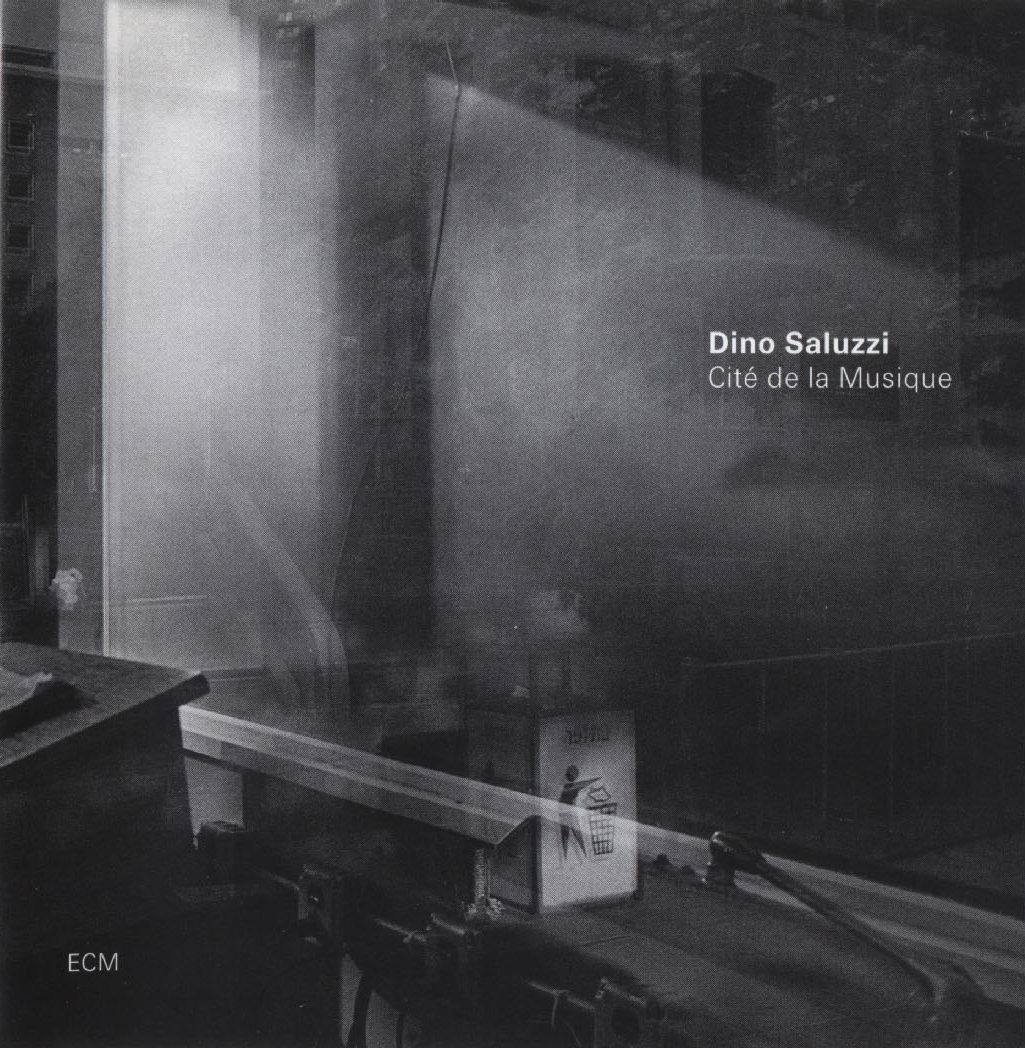
Dino Saluzzi: Cité de la Musique (ECM 1616)

Dino Saluzzi
Cité de la Musique

Dino Saluzzi bandoneón
Marc Johnson double-bass
José Maria Saluzzi acoustic guitar
Recorded June 1996 at Rainbow Studio, Oslo
Engineer: Jan Erik Kongshaug
Produced by Manfred Eicher

While my rummaging through ECM’s back catalogue has produced a substantial body of personal discoveries, it has also deepened my admiration for artists with whom I was already familiar. One of these is Dino Saluzzi, the Argentinian bandoneón player who enhances his instrument with a mastery that is undeniably sincere. For this trio date he joins his son, guitarist José Maria, and bassist Marc Johnson, ever the idiomatic chameleon, for a set of nine pieces. All bear the compositional stamp of Saluzzi, save for a heartfelt rendition of Earl Zindars’s “How My Heart Sings.” The album also contains two dedicatory pieces. First is the lilting “Gorrión,” for Jean-Luc Godard, which melts our hearts like an Anna Karina close-up and transplants us gently into the soil of “Coral para mi Pequeño y Lejano Pueblo.” Written for an unnamed childhood friend, it ends the album in an eddy of fond memories that practically jump from his keys. On the way to these Saluzzi leads us down a path dusted by careful footprints. Johnson takes an early lead in the title track, while José adds flowering touches to “Introduccíon y Milonga del Ausente,” each pluck liberating a petal from its soft hub. Saluzzi’s playing here recalls Milhaud’s Prélude No. 1 and proves the reach of his art. “El Rio y el Abuelo” introduces whispers of rhythm before Johnson’s swirling airflow lifts the bandoneón ever higher. “Romance” is an endearing duet between father and son, and gives voice to their admirable restraint. Even at his most plaintive, Saluzzi is always warm, which makes “Winter” all the rarer for its icy depths. The guitar’s rounded tone grinds every shadow’s blade into soft light, revealing the hopeful core within.

With nary a single note for mere effect, Cité de la Musique sings to us as a wolf might howl to the night, which is to say: instinctively, without judgment, and without fail.

<< The Hilliard Ensemble: A Hilliard Songbook (ECM 1614/15 NS)
>> Joe Maneri Quartet: In Full Cry (ECM 1617
)

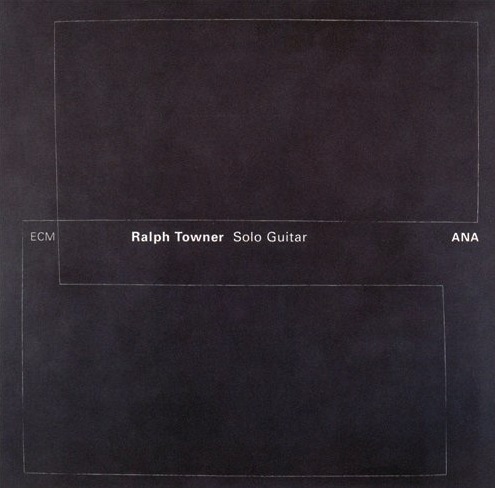
Ralph Towner: ANA (ECM 1611)

Ralph Towner
ANA

Ralph Towner classical and 12-string guitars
Recorded March 1996 at Rainbow Studio, Oslo
Engineer: Jan Erik Kongshaug
Produced by Manfred Eicher

The release of ANA marked the return of Ralph Towner the solo artist. Following the 17-year gap since his Solo Concert, the Washington-born guitarist/pianist/composer had certainly left behind some immense shoes to fill on that earlier masterpiece. Yet once the strains of “The Reluctant Bride” ladle their waters over our ears, we know that comparison is a dirty word. The depth of nocturnal energy bespeaks an artist of even deeper resolve, one who approaches his guitar pluralistically. The tenderness therein introduces us to a colorful mosaic of programming. Lobbing bright yellows over muted blues in “Tale of Saverio,” Towner looks skyward while never forgetting the earth that bore him. As in the music of Dino Saluzzi, we sense children and laughter mixed into a nostalgic cocktail. He then looks beyond the palette into the ethereal schemes of “Joyful Departure,” in which his field of dreams requires not building but a gaze that transcends life and fantasy put together. To this he adds hues “Green And Golden,” casting moods like chaff into the wind. Shades of Marc Johnson’s “Samurai Hee-Haw” haunt the ground line of “I Knew It Was You,” a reflective piece that presages the album’s most painterly strokes in “Les Douzilles” and contrasts the buzzing preparations of “Veldt” in an enchanting way. Towner ends with Seven Pieces for Twelve Strings. Like the album as a whole, it is a set of vignettes you want to linger before, to take in and appreciate. Between distant shimmers and proximate footsteps, he stretches a chain of thoughtful pauses unleashed by bursts of narrative activity.

On the whole a contemplative album that resonates with insight, ANA shows Towner at his most flexible, not so much plucking as bending the strings to the will of an unmistakable lyrical drive, and all with a comfort natural enough to sing without ever needing to part its lips.

<< Lena Willemark/Ale Möller: Agram (ECM 1610)
>> Evan Parker EAE: Toward the Margins (ECM 1612 NS
)

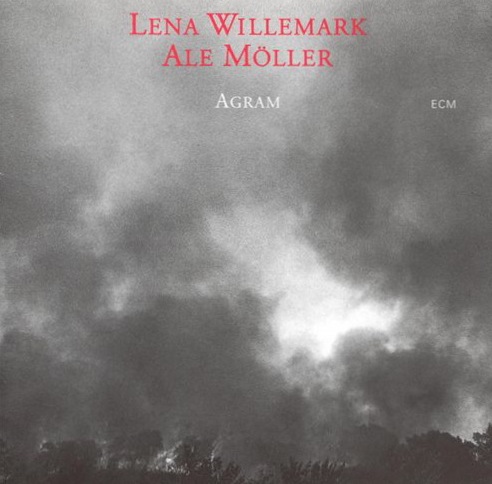
Lena Willemark and Ale Möller: Agram (ECM 1610)

Lena Willemark
Ale Möller
Agram

Ale Möller mandola, lute, natural flutes, folk-harp, shawm, wooden trumpet, hammered dulcimer
Palle Danielsson double bass
Mats Edén drone fiddle
Tina Johansson percussion
Jonas Knutsson soprano and baritone saxophones, percussion
Lena Willemark vocal, fiddle, viola
Recorded March 30–April 3, 1996 at Rainbow Studio, Oslo
Engineer: Jan Erik Kongshaug
Produced by Manfred Eicher

Although Lena Willemark and Ale Möller surely made a lasting first impression with Nordan, Agram was for a long time my only exposure to the Swedish duo. This sequel of sorts finds them carrying the project to new heights (and depths) among a more intimate group. The pared-down roster makes for an open sound and leaves room also for Willemark’s fantastic compositions. In the latter vein is the title piece, which rests her vocal powers on a bed of dulcimer and bowed sentiments. It is the hallmark of an album wrought in soil and breath, and realized in a landscape distant but ever familiar. The soprano saxophone of Jonas Knutsson is a distinct voice throughout, drawing water for the fiddle’s inky swirls in “Syster Glas” and hanging a wreath of tradition on the door of “Sasom Fagelen.” As in the likeminded Dowland Project, the high reed’s presence is welcome one, dovetailing to bagpipe-like effect in “Fastän” and bringing ancestral energy to “Blamairi,” another Willemark original. Arousing percussion from Tina Johansson provides traction for that liberating voice, which, as it rings out across the plains “Samsingen” and “Josef fran Arimatea” (two standouts among ECM’s folkways), tells a story as much with words as through the music that is its shelter. Meanwhile, bassist Palle Danielsson works his own divinations along trails of cast bones. These share the same destination: “Lager och Jon,” an exhilarating chorus of activity that buffs the clouds to invisibility before rushing headlong through a stream of bows and alley-oops. Möller unfolds his shawm’s biting wonders in “Slängpolskor,” leading us into the epic “Elvedansen.” The images here feed on sound, each a chariot of belonging rescued by the hands of “Simonpolskan,” a flowing script of a piece that throws us into comforting waters and closes our eyes, adrift and safe.

In addition to the unfailing music, Agram is yet another benchmark for production and sound quality for the label. It delineates a space where voices and instruments are shadows of one another. Willemark need hardly sing, because even when she stops, her voice lingers.

<< Bley/Parker/Phillips: Sankt Gerold (ECM 1609)
>> Ralph Towner: ANA (ECM 1611
)

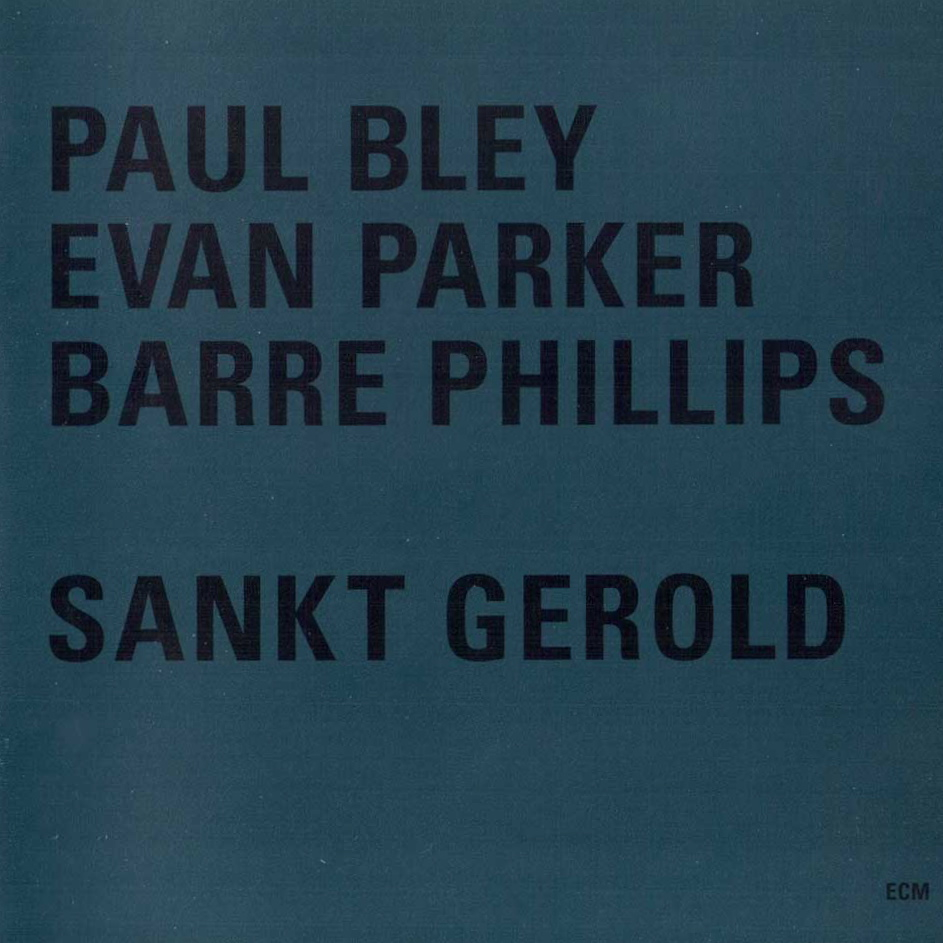
Bley/Parker/Phillips: Sankt Gerold (ECM 1609)

Sankt Gerold

Paul Bley piano
Evan Parker tenor and soprano saxophones
Barre Phillips double-bass
Recorded April 1996, Monastery of Sankt Gerold
Engineer: Jan Erik Kongshaug
Produced by Manfred Eicher and Steve Lake

Time Will Tell was not only the title of ECM’s first document between pianist Paul Bley, saxophonist Evan Parker, and bassist Barre Phillips, but also a premonition realized live in the confines of Sankt Gerold, from which this follow-up borrows its own. The Austrian monastery has hosted many label recordings by groups such as the Hilliard Ensemble, and here the voices are just as distinct. These are musicians who learn how to fly by jumping from the tree, leaving us to gawk on the forest floor. The improvisation that ensues may be free, but from it we are not, buried by the sands of its ephemeral hourglass.

The twelve variations of Sankt Gerold lure us into enchanting freefall with deep, fluttering calls. In these beat the rhythms of worms and larvae, the breaths of a chrysalis, frozen yet somehow alive, hiding its transformations behind a scrim of bark. Steps share the floor with broom strokes and memories created in the moment. This time around the emphasis is as much on solo turns as on groupthink, with the most potent scoops of gravity from Bley, whose sleepwalks play like a kitten who gets only more tangled the more he tries to work through the yarn. Only here, escape would mean silence, a breaking of the line that otherwise holds us fast to the moment. Parker solders our attention with feats of sustained energy. In it we hear ourselves breaking and mending simultaneously, our souls rendered amorphous clots brought to life by embouchure and circular breathing. Philips embarks on the darkest prismatic sojourns, even if they are lit by creativity aflame. His is the meditative center of these infusions, the embryo of some percussive entity that sings as it beats. Together, the trio winds pathos-rich fuses, the ashes of which turn matches into oracles.

To speak of these tracks individually is like trying to extract one letter from the album’s Prussian cover: each needs the others to speak. This music throws open doors of insight to let in the night and day of its containment—beyond it not a room but an infinite body of which we hear one cell dividing. Like affirmation of an unrequited love, one finds its heart by getting lost in it.

<< Terje Rypdal: Skywards (ECM 1608)
>> Lena Willemark/Ale Möller: Agram (ECM 1610
)

Terje Rypdal: Skywards (ECM 1608)

Terje Rypdal
Skywards

Terje Rypdal electric guitar
Palle Mikkelborg trumpet
Terje Tønnesen violin
David Darling cello
Christian Eggen piano, keyboards
Paolo Vinaccia drums, percussion
Jon Christensen drums
Recorded February 1996 at Rainbow Studio, Oslo
Engineer: Jan Erik Kongshaug
Produced by Manfred Eicher

If Terje Rypdal’s instrument is his axe, then he has ground it to an edge like no other, and perhaps few places so finely as on Skywards. The result of a Lillehammer Festival commission, his jeweled exposition is an aural thank you note to the unquantifiable contributions that ECM has made, via producer Manfred Eicher, to the Scandinavian soundscape. One could hardly script a more fitting lineup for such a task. Joining the Norwegian renaissance man are trumpeter Palle Mikkelborg, cellist David Darling, drummers Paolo Vinaccia and Jon Christensen, violinist Terje Tønnesen (heard recently on If Mountains Could Sing, and Christian Eggen on keyboards (familiar to Rypdal followers as conductor for Undisonus and Q.E.D.). Of these, it is Mikkelborg who leads the way most economically, as in the central “Out Of This World,” transplanted from the Lillehammer stage and redressed here in Oslo’s Rainbow Stuio. The sincerity of his gambit bleeds into Rypdal’s own blazing chess moves against a backcloth of shifting voices. The guitarist writhes as if singing, even as Eggen exposes ancient shadows whose dance has remained unchanged since its inception. Before kissing this quasar, however, we are treated to the earth-friendly title piece. Its anthemic strains carry the torch of “The Return Of Per Ulv,” of which it is a shining reflection, and unwraps also the album’s hallmarks: drums like speech, synths like water, and glorious leads. “Into The Wilderness” bears the frostbite of the Norwegian film, Kjærlighetens kjøtere (Zero Kelvin), for which he composed it. Yet it brings warm thoughts, wrapped in savannah dreams, the creaking of bones, and subterranean currents. In this cinematic enclave we encounter a host of idioms, all tied by a quiet splendor that burgeons even as it fades. David Lynch-like atmospheres mix freely with turpentine and darkening reality, where the sunlight now becomes a ghost wished for to be gone. “The Pleasure Is Mine, I’m Sure” is another cinematic bow to the legions of our shared past. In its wake treads the ostinato of “It’s Not Over Until The Fat Lady Sings!” skirted by drums and overlaid by Rypdal’s collected, fierce lyricism. The set ends with “Shining” and “Remember To Remember,” each a reworking of an earlier motive, mineral from the soil, trembling with romantic charge.

A perfect marriage of concept, cover, and content, Skywards guides the way with light while leaving footprints of shadow. A fantastically beautiful record.

<< Wheeler/Konitz/Holland/Frisell: Angel Song (ECM 1607)
>> Bley/Parker/Phillips: Sankt Gerold (ECM 1609
)

Bobo Stenson Trio: War Orphans (ECM 1604)


Bobo Stenson Trio
War Orphans

Bobo Stenson piano
Anders Jormin double-bass
Jon Christensen drums
Recorded May 1997 at Rainbow Studio, Oslo
Engineer: Jan Erik Kongshaug
Produced by Manfred Eicher

Following a memorable return on 1996’s Reflections, the Bobo Stenson Trio strengthened its resolve with the release of War Orphans. Like the Ornette Coleman tune that gives the album its title, the flow borne out on these proceedings is attentive and sincere. The footfall of the same, tender as if not wanting to wake a sleeping child, lends this and its surroundings a natural feel. Yet it is “Oleo de mujer con sombrero” by Cuban folk singer and nueva trova pioneer Silvio Rodriguez that prefaces. A tender intro from Stenson leads us into the album cover’s barren vista, a place where memories and souls intermingle like characters in a Theo Angelopoulos film. Anders Jormin grows from the piano like a melodic appendage into the waters of his own “Natt.” The first of three tunes by the bassist, its current rolls stones into smooth jewels, while “Eleventh Of January” and “Sediment” bring synergy and whimsy in turn. Captivating solos in both cast him as the hub of this emotional wheel. Coleman resurfaces in “All My Life,” to which drummer Jon Christensen adds his skipping crosscurrents, setting off another star turn from Jormin, whose fingers dance their fretless way into the heart of Stenson’s lone original, “Bengali Blue.” This smooth joint crashes against the rhythm section’s shore before a surprisingly buoyant version of Duke Ellington’s “Melancholia” woos us into the piano’s final words, receding like a sun dipping its ladle into steaming ocean.

War Orphans has a feeling of clockwork, intimate gears set by key to turn and melodize. It is a salve to our innermost wounds. Like ripples in a pond from three stones, these minds naturally find ways to commingle.

<< Tomasz Stanko: Leosia (ECM 1603)
>> Charles Ives: Sonatas for Violin and Piano (ECM 1605 NS
)

Tomasz Stanko Quartet: Leosia (ECM 1603)

Tomasz Stanko Quartet
Leosia

Tomasz Stanko trumpet
Bobo Stenson piano
Anders Jormin double-bass
Tony Oxley drums
Recorded January 1996 at Rainbow Studio
Engineer: Jan Erik Kongshaug
Produced by Manfred Eicher

“You shall sleep when you will,
to the strains of celestial music,
and you need not say your prayers.”
–Comte de Lautréamont, Maldoror

After the cinematic embroidery of Matka Joanna, where else was the Tomasz Stanko Quartet to go but farther inward? Building not so much on as under its shadowy predecessor, Leosia plants the Polish trumpeter in even darker soil with cohorts Bobo Stenson, Anders Jormin, and Tony Oxley. While everyone involved had by this point lit his fair share of lanterns, for this session the quartet trimmed those wicks to the barest of flames with no loss of intensity. The grace of “Morning Heavy Song” expresses all that follows in one slow sweep of the compass. Stanko embodies the spirit of its charcoal canvas, which comes to us naked and trembling. Yet we see that spirit by the light of something promising, a resolution that sparkles with the rhythm section’s deeply psychological entrance. It may be a story of harder things, but it grows new legs through the telling. Oxley is superb, here and beyond, marking trails with splashes of breadcrumbs in “Die Weisheit von Le comte Lautréamont” and bringing especial definition to “Trinity.” The latter is also a vivid example of Stanko’s singing qualities, qualities that melt his brass down in such crucibles as “A Farewell To Maria” and “Hungry Howl” to the shape of a creased page. In both we smell remorse on the wind, not least through Jormin’s humming presence. We wake to a new dawn in “Brace,” a freer chain that sets us on a “Forlorn Walk.” This is where the session decides to swing, in its twisted way, Stanko reaping some engaging highs against the delicate attunement of his band mates. Of Stenson’s skeletal wonders we hear plenty in “No Bass Trio” and “Euforila,” one rest to the other’s play. For the title track, all of these shards coalesce into a single mosaic, taking on the colors of whatever light passes through it, be it clear or swirling with ink. That light is undoubtedly Stanko, who shines to the end with a quiet and unpretentious conviction. His lyricism is diurnal, our guide along a horizon of melancholy that leaves us intact and well nourished.

<< Ralph Towner/Gary Peacock: A Closer View (ECM 1602)
>> Bobo Stenson Trio: War Orphans (ECM 1604
)