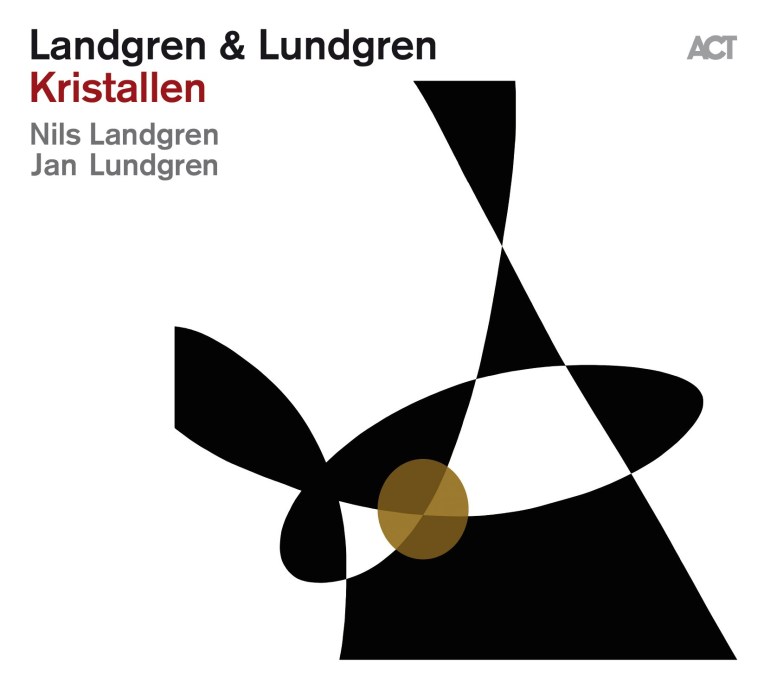
Nils Landgren/Jan Lundgren: Kristallen

Kristallen

Trombonist/vocalist Nils Landgren and pianist Jan Lundgren unite for an intimate and, as its title implies, multi-faceted program. The single-vowel difference in their surnames feels appropriate, as their set list is comprised of two distinct yet compatible decks of cards shuffled into each other. One of those decks is instrumental, the other vocal. Of the former persuasion, Lundgren’s “Blekinge” introduces a windswept pastoralism. A canvas brushed and primed for itinerant melodies, it uses the listener’s attention as a palette from which to draw its colors. Amid a smattering of Swedish folksongs, including “Byssan Lull” and “Värmlandsvisan” (both reworked into delicate grooves), they plant the evergreens of “Norwegian Wood” and Keith Jarrett’s “Country.” Standing tallest among these, however, is Abdullah Ibrahim’s “The Wedding,” whose foliage glows with tender nostalgia before the snow sets in.

On the sung side of things, we’re treated to a bluesy take on another Beatles classic, “I Will,” wherein the duo gives us plenty of atmosphere to chew on. Standards “Didn’t We” and “The Nearness Of You” rub shoulders of equal height with Lundgren’s own “Why Did You Let Me Go” and “Lovers Parade.” The latter unfold with especial clarity, wintry and sincere. Landgren’s singing is every bit as brassy as his trombone is throated and lyrical: each informs the other.

Whichever lens through which we choose to view this album, we can be sure that these carefully chosen selections, cropped until their borders achieve a balance of definition and open-endedness, reveal a deeply personal sensibility at play. The result is an effect as inevitable as its pairing, a choose-your-own-adventure story in sound that asks of us only to take the first step.

(This review originally appeared, in condensed form, in the March 2020 issue of DownBeat magazine.)

Theo Bleckmann/Joseph Branciforte: LP1

LP1

This collaboration between vocalist Theo Bleckmann and electronic musician/producer Joseph Branciforte is their first album as a duo and the inauguration of Branciforte’s new Greyfade label. Bleckmann and Branciforte drew upon their experiences performing together with Ryuichi Sakamoto in 2018 before diving into this unscripted studio encounter. Using Bleckmann’s voice as foundation, Branciforte manipulated and mixed raw vocal elements into something greater than their sum, an entirely new entity that is both and neither, locus and void, present and timeless.

Outside references linger, but give us a portrait only of the music’s surface. One could easily characterize “3.4.26,” for example, as a haunting smoothie of Taylor Deupree, Nico Muhly and Tim Hecker. But to do so risks masking its unfolding into something entirely its own—a journey that would never exist without the input of its primary travelers. “4.19” is even more spatial, treating the voice as an architectural element of the cosmos, however the listener chooses to define it. One senses whispers and lullabies hiding in there somewhere, but only with the intention of half-sleep, lest we be robbed of messages yet to be conveyed.

The diamond rings of this eclipse shine in the opening and closing tracks. “6.15” unravels a breathy hope for melody. When the voice at last unclothes itself, we almost feel slain by its familiarity, as if it were the relic of a world that no longer exists except in shadow. “5.5.9” is molded by a more human touch, flesh and bone articulating cages of possible meaning around open syllables.

At just shy of 35 minutes, LP1 is a lesson in quality over quantity. This is music so intimate that it aches. Bleckmann’s voice never stops evolving and in Branciforte’s artistry it has found a lifelong partner.

(This review originally appeared in the January 2020 issue of The New York City Jazz Record, a full PDF of which is available here.)

Craig Taborn/Vadim Neselovskyi: Da’at

Da'at

The Masada songbook is a gift that keeps on giving. Since Book 1 was introduced to the listening world through a coveted decalogue of CDs released in the 1990s by DIW, John Zorn’s magnum opus has continued to grow. Like the city of Beijing, over the years it has added one ring after another as newer residents flock in search of an indefinable center. In this iteration we find two pianists—Craig Taborn and Vadim Neselovskyi—interpreting tunes in solo and duo configurations.

Taborn’s six unaccompanied tracks tell a range of stories, each more involved than the last. Generally, these fall into two modes, exemplified by the swirling motifs, colorful vistas and deeply personal riffs of “Penimi” and dreamlike patience of “Kayam,” which works into denser and denser weaves, from gossamer to burlap. “Setumah” comes up for air from turgid surroundings with gentle persuasion, proof that this music requires virtuosity of an emotional register as much of a technical one.

Neselovskyi’s triptych of solo offerings explores different chambers of the same heart. His expressive palette, while monochromatic by comparison, is no less dynamic for its range of textures, moods and effects. The fibrillations of “Orot” are especially blood-rich. In duet with Taborn, he unleashes darkness and light in equal measure, guided by a mutual trust to follow wherever the music leads. Theirs is an act not only of communication, but also of deconstruction, whereby the very nature of language cowers at the feet of gestural vocabularies.

The final three tracks feature Neselovskyi’s trio with bassist Dan Loomis and drummer Ronen Itzik. Across reexaminations of “Bohu,” “Kayam” and “Penimi,” they leap from the page with sentient assurance. The rhythm section, in combination with Neselovskyi’s colorful sensibility at the keyboard, makes for one of the most robust flares to come out of the Masada sun in quite some time. Turning these tunes like a facet, we find that each catches the sun just so, a signal for some future interpreter to spin as they feel moved.

(This review originally appeared in the January 2020 issue of The New York City Jazz Record, a full PDF of which is available here.)

ECM Book Now Available Worldwide!

I am thrilled to announce that my book, Between Sound and Space: An ECM Records Primer, is now officially available for purchase!

Colombian publisher Rey Naranjo and I spent years putting this together, and we truly believe it will enrich the experiences of all ECM listeners. Get yours now while you can, as it is destined to become a collector’s item.

Click the picture below to be redirected to the publisher’s website, where you’ll find more information, including a book trailer, and a link to order via PayPal. The price is set at $40, which includes shipping to anywhere in the world.

Looking forward to your thoughts on this labor of love.

Cover copy


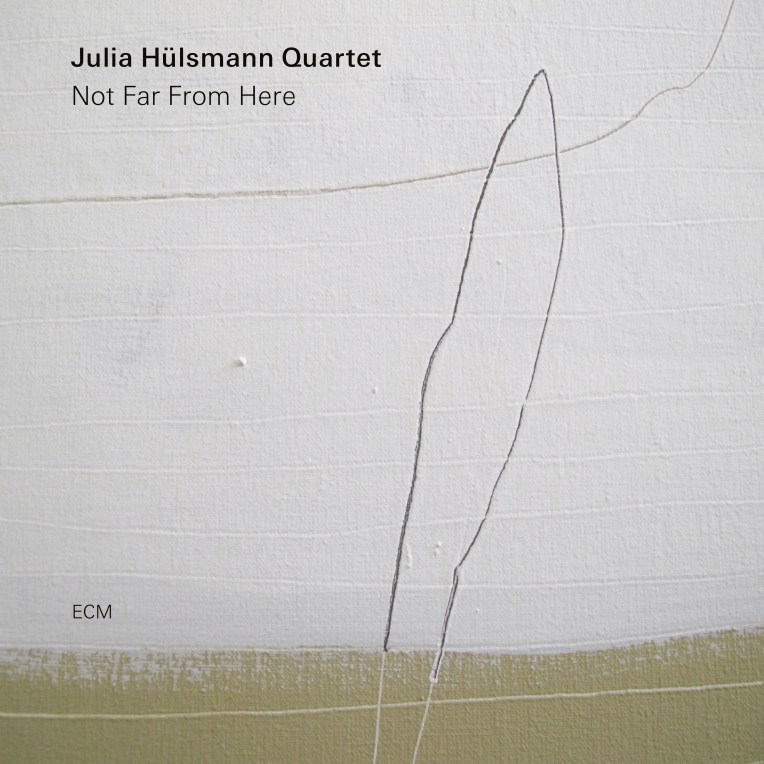
Julia Hülsmann Quartet: Not Far From Here (ECM 2664)

Not Far From Here.jpg

Julia Hülsmann Quartet
Not Far From Here

Uli Kempendorff tenor saxophone
Julia Hülsmann piano
Marc Muellbauer double bass
Heinrich Köbberling drums
Recorded March 2019, Studios La Buissonne, Pernes-les-Fontaines
Engineer: Gérard de Haro
Mastering: Nicolas Baillard
Produced by Thomas Herr
Release date: November 1, 2019

Fans of pianist Julia Hülsmann’s work will find familiar flavors enhanced by the unique spice of tenor saxophonist Uli Kempendorff being added to her long-running ensemble. He’s most vividly showcased on “Le Mistral,” one of two tunes contributed by bassist Marc Muellbauer. What begins with a quiet stirring develops into a freely interlocking sound—one honed by years of experience and held together by the band’s open-ended circuitry.

The poetry of Kempendorff’s playing is forthcoming, and the same holds true of his writing, even as “Einschub” is harmonized enigmatically. Most of the composing credits, though, go to Hülsmann. From the opening caress of “The Art Of Failing” to the masterful “No Game,” she treats every instrument as a vital ligament of the same appendage, pointing and flexing to the rhythms of emotional desire. With the tenderness of morning light gaining slow but steady purchase on the corner of a bedroom window, she follows a natural order of things.

Drummer Heinrich Köbberling throws a couple of his own coins into the proverbial fountain, including “Colibri 65,” which furthers the bandleader’s apparent mission of summoning placid, distinct airs.

The set is upheld by two versions of “This Is Not America,” a song written by David Bowie in collaboration with Pat Metheny and Lyle Mays. With broken nostalgia, it winds a melodic tangle from which escape is an easy but deeply unattractive option.

(This review originally appeared in the February 2020 issue of DownBeat magazine.)