

In May of 1955, Austria emerged from the purgatory of occupation and stepped tentatively back onto the world stage. With the Austrian State Treaty came the promise of political independence and the fragile sheen of sovereignty, a neutrality it hoped would steady it in the receding shadow of the Second World War. The so-called economic miracle that followed gave the young nation a chance to rebuild its identity, yet the 1960s brought with them an ideological tremor. Liberal politics rose like a heatwave from beneath the cultural pavement, ushering in a new radicalism that refused polite distance. And in this environment—half rebuilding, half rebellious—the Actionist movement materialized, confronting not only the remains of fascism but the very notion of aesthetics itself. While France and its neighbors cultivated New Waves gleaming with cinephilic verve, the Viennese Actionists were all but erased from Austria’s collective memory, swallowed by mass television, expanding leisure culture, and a lack of state support that rendered the nation’s cinema nearly comatose. Even what little commercial film did surface received scarcely more than a raised governmental eyebrow.
Yet the 1950s had already planted a seed. In Vienna’s “Art Club,” more than a hundred films were produced in its first decade, flickering beacons in an otherwise dim landscape. Though Europe witnessed various politico-artistic manifestos, including the pivotal Oberhausen Manifesto of West German filmmakers in 1962, Vienna’s underground artists found no single ideology sturdy enough to carry the weight of their visions. With no public venues willing to host their experiments, they forged their own path, cultivating Wiener Aktionismus, or Viennese Actionism, as a radical gesture of self-unmaking. These Actionists confronted audiences with the unvarnished human body—its fluids, its failings, its feral possibilities—not as spectacle, but as a state of being. Their performances were neither narratives nor manifestos. They were eruptions of immediacy, born of trauma and jouissance intertwined.
Censorship’s thumb bore down heavily, and some artists fled to West Germany in search of oxygen. Those who remained—including Kurt Kren, Peter Weibel, Hans Scheugl, and VALIE EXPORT—organized. Their efforts culminated in the founding of the Austrian Filmmakers Cooperative in 1968. From there, they cracked open the country’s cultural shell, finally allowing their films not only to circulate at home but to seep into the international bloodstream. At last, an audience began to coalesce.
Among these artists, none left a deeper mark on Actionist cinema than Kren (1929–1998). If Actionism was a flame, Kren was the accelerant. His death prompted renewed interest in his work, but his influence had been quietly fermenting since the late 1950s, when he first began experimenting with 16mm. A pioneer of what would later be called “structural film,” Kren approached the body—his own and that of his collaborators—as a pliable medium. Working alongside Otto Mühl, Günter Brus, and “Op” artist Helga Philipp, he filmed “happenings” neither as documents nor as artistic trophies but as participatory comings-together. Denying Brus and Mühl the control they so often demanded, he stripped the Actionist gesture of its authorship and returned it to the site where it originated. For Kren, the body was the raw material of cinema, a plane of performativity before the concept had academic caché. His films remain testimonies to the intensity of sensation before symbol.
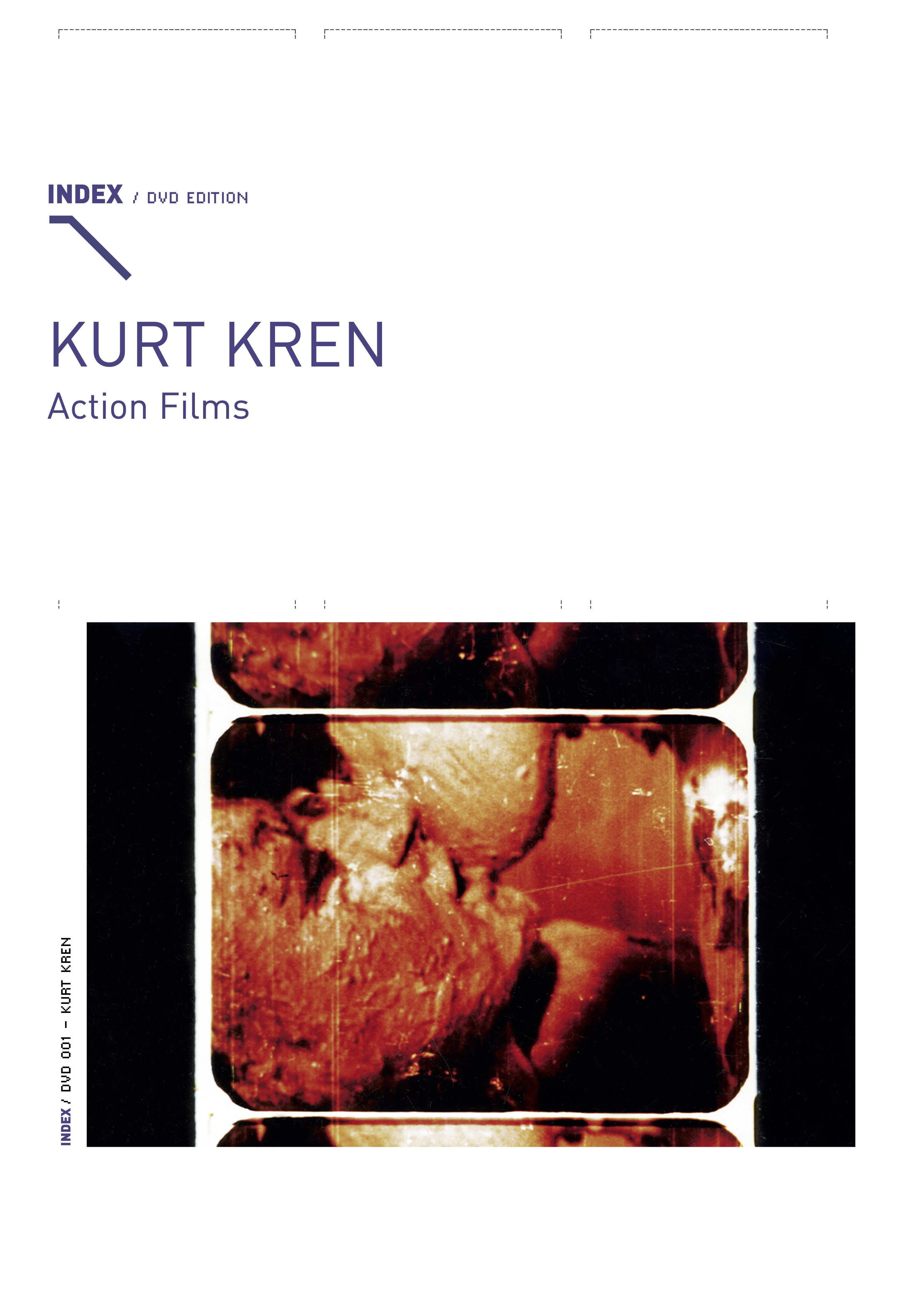
This DVD, the first of a series published by INDEX, collects these early action films and situates them in their rightful historical and visceral context. In the accompanying booklet, Michael Palm observes that Kren’s cinema privileges moment over narrative, rupture over resolution. “In Kurt Kren’s body-cinema,” he writes, “the human is no longer the measure of all things.” One feels this as a kind of internal compass unmoored from its magnetic north.
6/64 Mama und Papa serves as our entry point into Kren’s world: brief, confrontational, and unforgettable. Here, quasi-Freudian studies of masculine and feminine imagery flicker across the screen in 82 rapid, deliberately fragmented shots. Their brevity sears them into memory, as though the mind must tattoo them instantly or risk losing their significance. Its companion piece, 7/64 Leda mit dem Schwan, reimagines myth through the recycled image of Mühl; its parabola of pouring, feathering, and smearing moves with an almost biological rhythm, as if bred rather than composed.

With 8/64 Ana, Kren’s first work with Günter Brus, the scarcity of film forced him into live montage. Bodies become objects, objects become bodies, and pain becomes calligraphy. The lineage this establishes runs straight to the later works of Peter Tscherkassky.
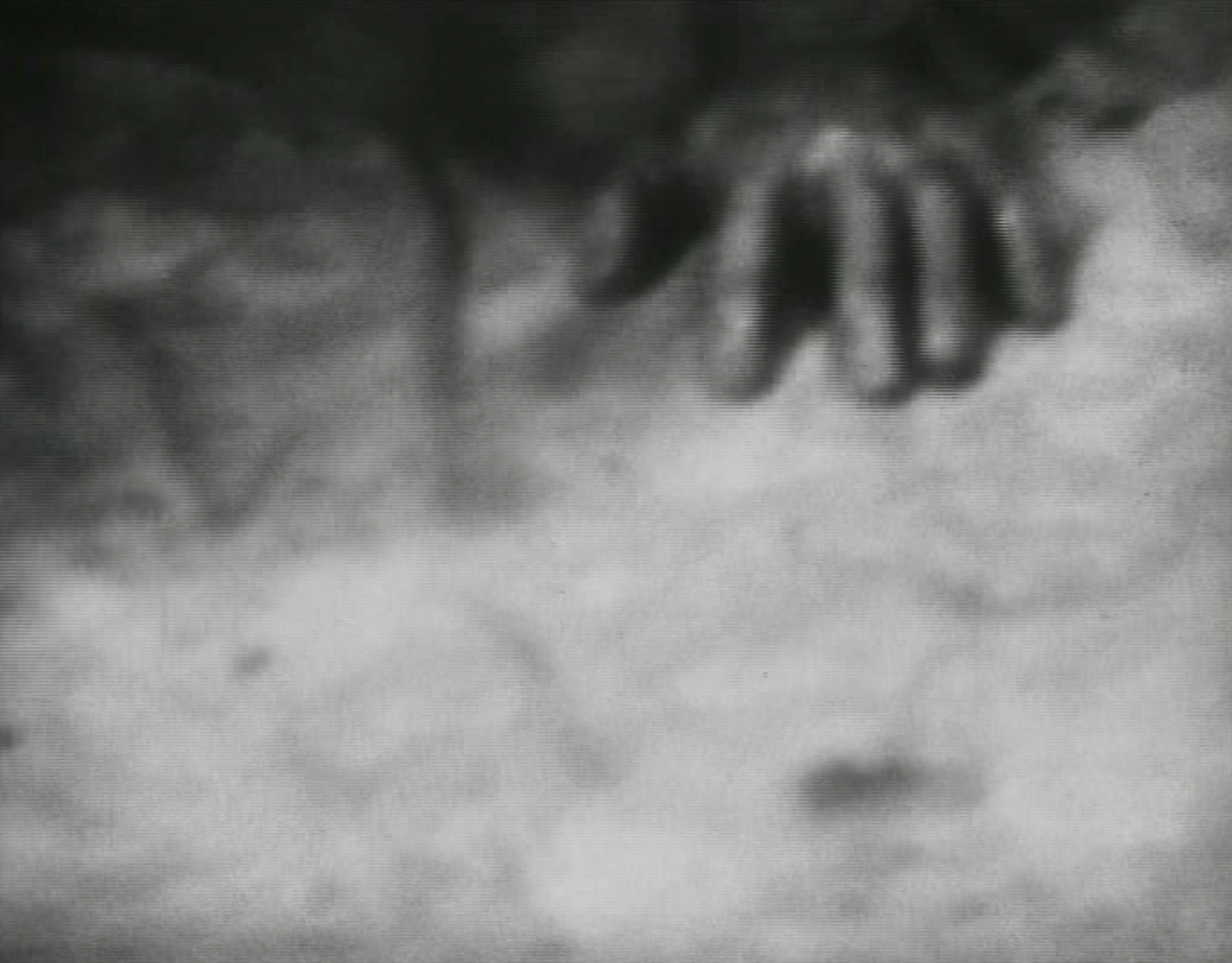
Kren expands this single-frame improvisation in 9/64 O Tannenbaum, where body parts, bursting balloons, and a flaming tree consume the holiday spirit in a frenzy of destruction. After such feverish play, 10/65 Selbstverstümmelung stuns by slowing down. Brus’s simulated self-harm becomes a ritual of preparation, much like Olivier de Sagazan’s Transfiguration, where the performance masquerades as violence but reveals only the harm of a cigarette.

In 10B/65 Silber – Aktion Brus, Brus edits out his own visage in erasure, yielding a collage of gestures where only women’s faces emerge intact. This destabilization continues in 10C/65 Brus wünscht euch Seine Weihnachten, a home-movie-styled rupture of domestic space, filmed again in single frames and culminating in a frenzy of limbs without a trace of festivity beyond escape itself.

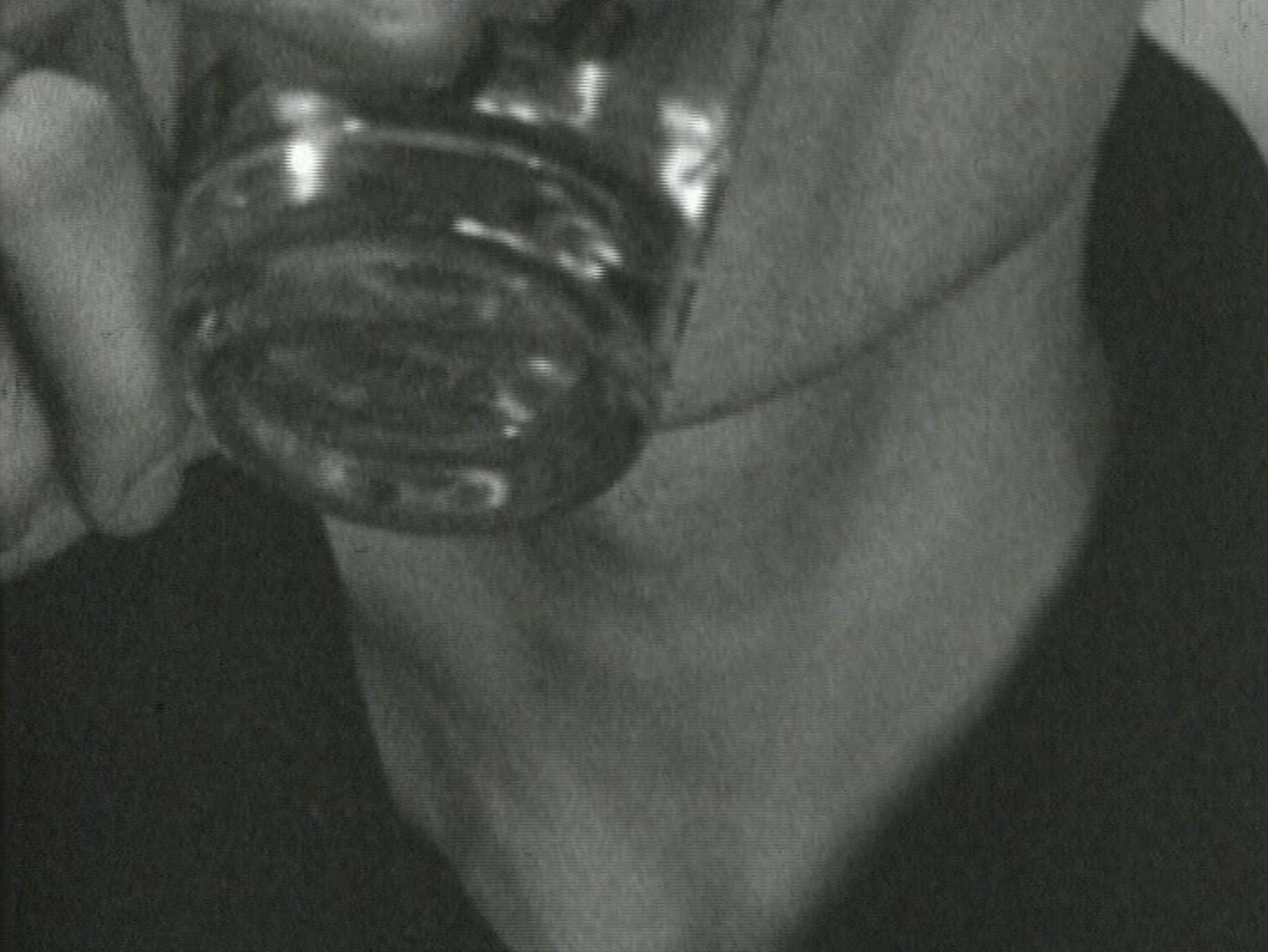
The erratic nature of Kren’s cinema becomes almost orderly once one accepts its internal logic; conversely, its familiar elements turn alien when stripped of context. Sexuality dissolves into abstraction in 12/66 Cosinus Alpha, while the face (the most primal signifier of identity) flickers in and out of recognition in 13/67 Sinus Beta, a film Kren himself struggled to define. Finally, 16/67 20. September redefines narrative altogether. By entwining images of urination, defecation, eating, and drinking, it reveals a stark truth: far less emerges from us than what we take in. The body becomes a ledger of exchanges, an organism of relentless consumption and automatic release.
Ultimately, Kren’s films resist closure. They are less documents than detonations. They remind us that the body—imperfect, ungovernable, infinitely expressive—remains cinema’s most volatile instrument. Through Kren’s eye, it confronts us not with what it means, but simply with the unavoidable fact that it is.

 Between Sound and Space: ECM Records and Beyond