


In this collection of 16mm structural films, we find ourselves ushered into a markedly different chamber of Kurt Kren’s creative house, one that feels dimmer, more ascetic, and more inwardly resonant than the rooms we inhabited in the previous DVD of his action films. If the earlier works thrummed with kinetic urgency, these unfold like meditations carved into celluloid. Filmmaker Peter Tscherkassky, ever attuned to the language of photochemical mysticism, praises these films as among the most important in the history of cinema. A bold claim, to be sure, but boldness feels appropriate here, considering the archival tenderness and curatorial reverence with which these inimitable pieces have been unearthed, handled, and presented, as if some delicate species of moth were being returned to its nocturnal habitat.
Fascinating about the chronology of Kren’s expressivity is the way it relinquishes the primacy of the image even before the image learns to walk. Rather than building from sight outward, he begins in the auditory shadows, as though cinema were a pulse, a vibration, a coded murmur etched below the threshold of visibility. His inaugural film, 1/57 Versuch mit synthetischem Ton (Test) [Experiment with Synthetic Sound (Test)], bears this ethos plainly: its “soundtrack” is scratched directly into the filmstrip, a raw trembling of impulses that barely gestures toward any physical context. It exists as a proto-world, a seed in place of trunk and branches.
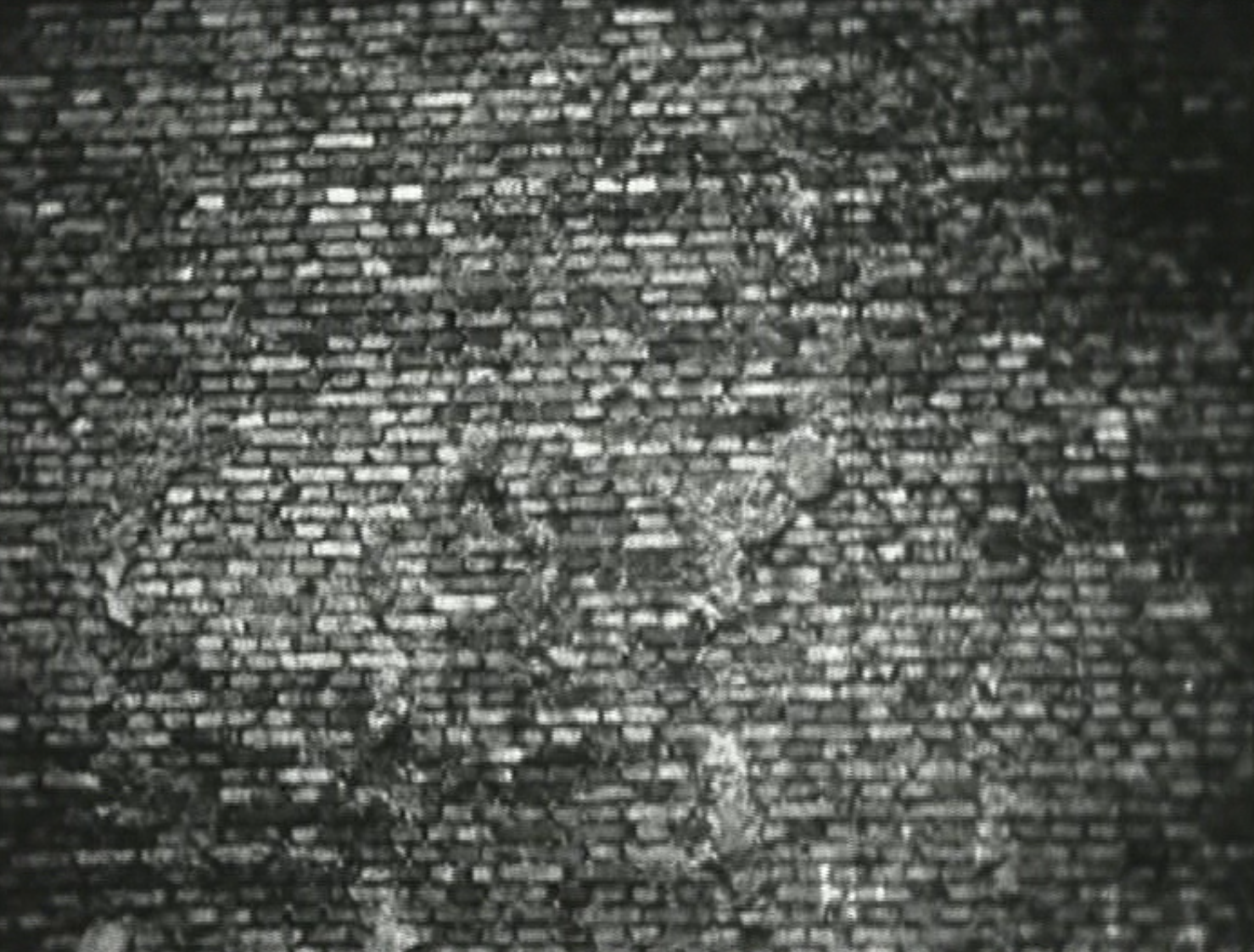
His next four films trace their trajectories in a procession of experiments, each one a footstep into deeper formal terrain. The most unforgettable among them, the groundbreaking 3/60 Bäume im Herbst (Trees in Autumn), moves with the grace and turbulence of a thought in the act of transforming. Here, Kren paints the soundtrack with ink, unspooling a choreography of leaves that distorts the mind’s eye. Everything is montage, but all of it is performed in-camera, as if the editing table were too coarse an instrument to contain such delicacy.

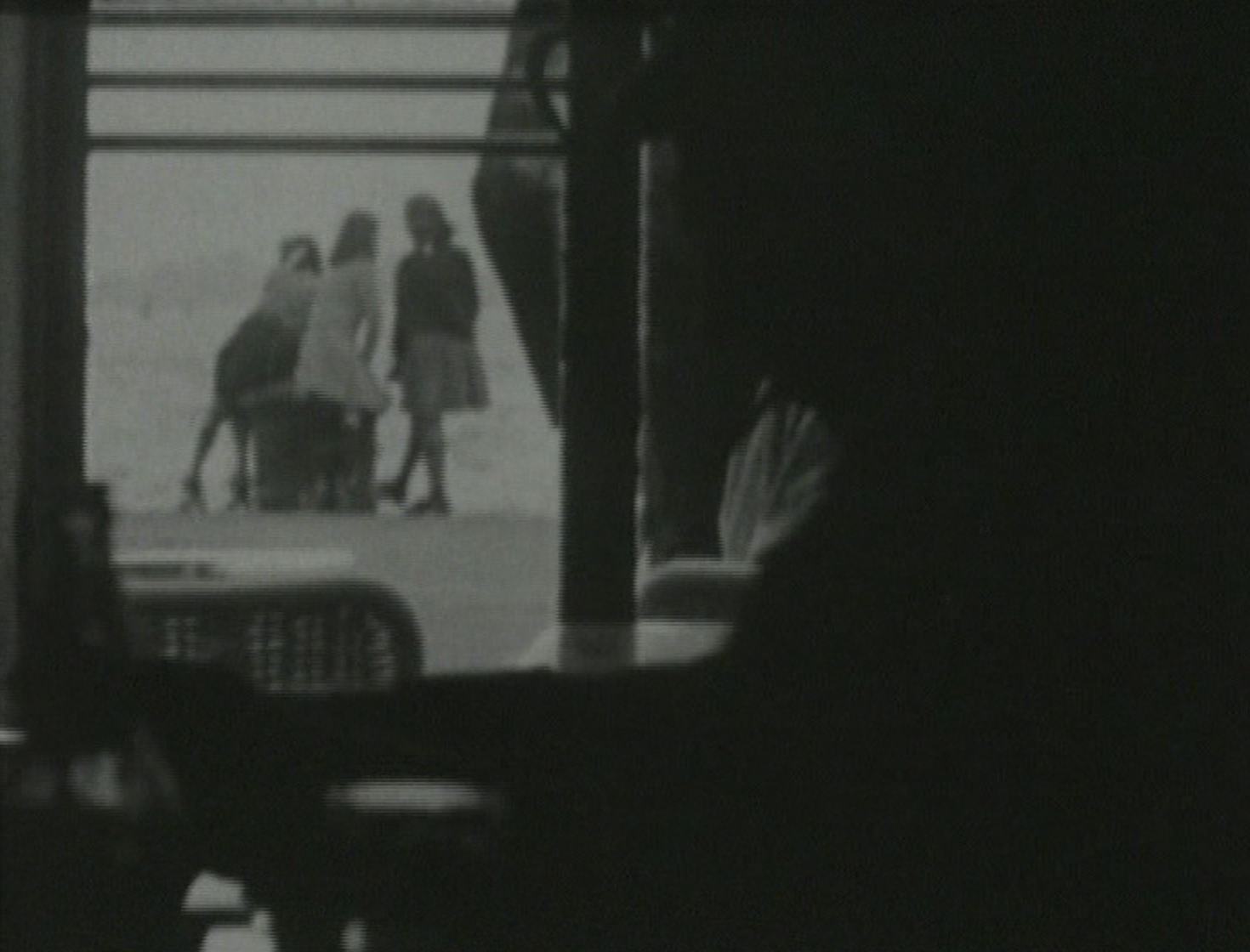
As Kren crosses the threshold into the sixties, his gaze pivots toward the everyday, lowering itself from abstraction into the realm of human gestures and urban happenstance. In 5/62 Fenstergucker, Abfall etc. (People Looking Out of the Window, Trash, etc.), quotidian fragments become luminous by the very fact of being noticed. In 15/67 TV, a Venetian harbor café becomes a stage for repetition and reassembly: five takes copied 21 times, shuffled like a deck of overheard moments. The era also coaxes out his political conscience, most starkly in 20/68 Schatzi, where a photograph of an SS officer at a concentration camp is revealed piece by piece. The image flickers in and out, a memory trying to recall itself, or perhaps a society trying to forget—and failing to do so.
In her booklet essay, Gabriele Jutz describes Kren’s work of the 1970s as “a media-immanent ideology critique,” and indeed the films of this period seem to interrogate their own scaffolding. Kren travels from the take to the frame, peeling back the skin of the medium to expose its smallest nerves. Through this distillation, film becomes a tactile surface on which time leaves fingerprints. Out of this emerges what may be his most quietly beautiful creation: 31/75 Asyl (Asylum). Shot in Saarland near the French border, the film uses a mask with five holes—changed daily, for 21 days—as a kind of ritual viewing apparatus. Through those apertures, we witness the changing of seasons, but also time grieving its own passing. It is a soft and private composition, a chamber sonata of the natural world.

Then comes 36/78 Rischart, Kren’s oblique self-portrait. But if the genre is traditionally an attempt to assert the self, this one dissipates it. He speaks, but we do not hear him. He appears, but we are denied his solidity, painted in fog.

The collection also offers two films shot in the United States, including the hypermodern 37/78 Tree Again. In it, a Vermont tree—stoic, spectral, filmed on expired infrared stock over 50 days—seems to stand against nothing less than a nuclear reckoning. The specimen is both witness and survivor, a lone guardian in a field of unseen catastrophe.

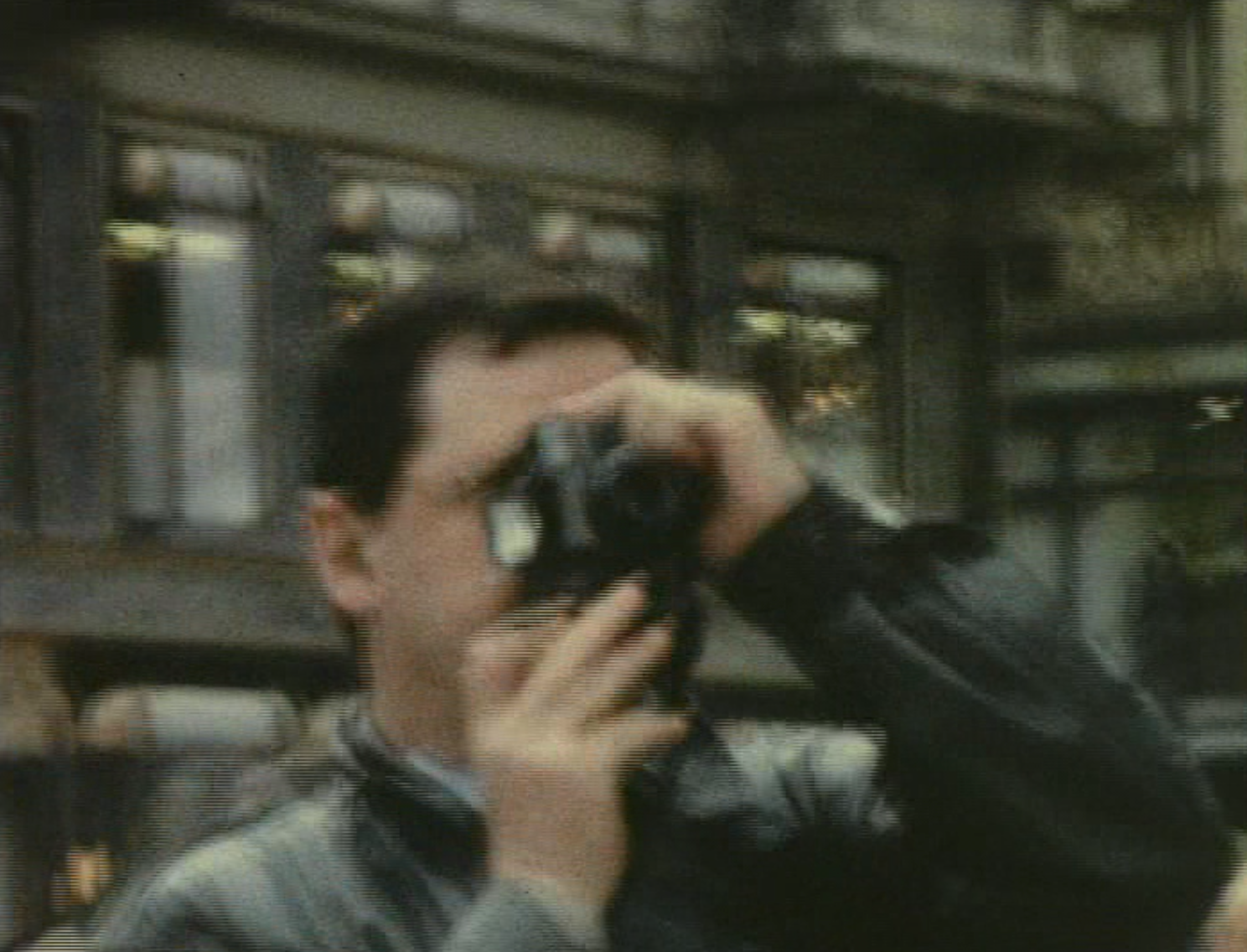
All of this culminates in 49/95 tausendjahrekino (thousandyearsofcinema), which feels like Kren’s Möbius strip farewell to the medium he spent a lifetime interrogating. Filmed over 30 days at Stockim-Eisen square in Vienna, it captures tourists taking photos and videos, no doubt believing themselves to be chroniclers of their own experience. Yet Kren folds their documentation back onto itself, creating a looped meditation on how we look and record ourselves looking. The sound, collaged from Peter Lorre’s film The Lost One, drifts through the piece as a ghost trying to remember the words to its haunting.
Structural Films does not merely preserve a body of work; it preserves a way of seeing, a way of listening, a way of thinking with and through the spliced architecture of film itself. Watching these works, one senses that Kren was always less interested in representing the world than in revealing the mechanisms through which its physiognomy becomes visible. And so the collection closes not like a door but like a breath, leaving us to wonder what images and sounds might yet emerge from the language he left behind.
 Between Sound and Space: ECM Records and Beyond