

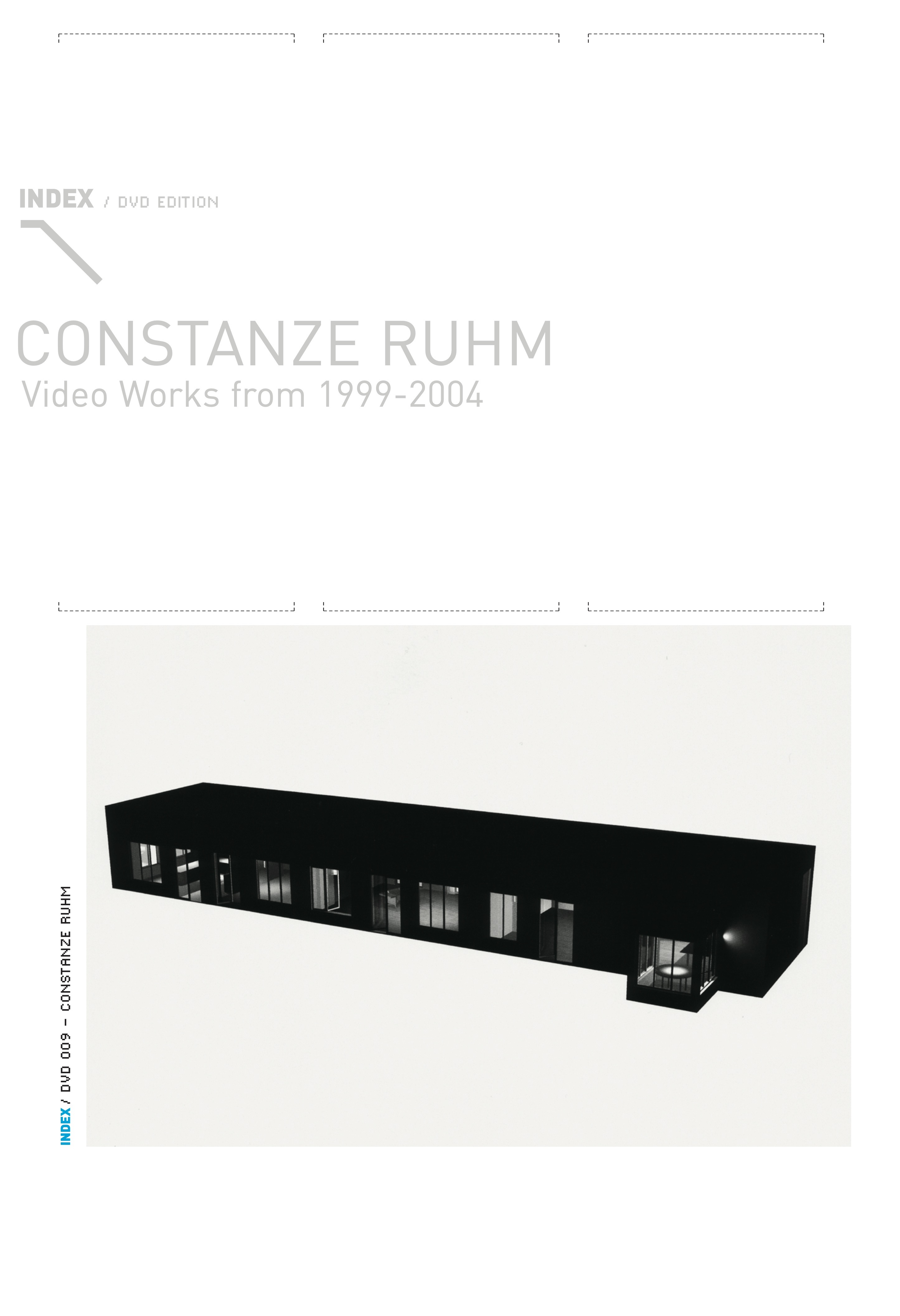
Constanze Ruhm occupies a singular position at the intersection of moving images and digital architecture. Although often described as an installation artist, her video works from 1999 to 2004 reveal an aesthetic shaped less by physical materials and more by the elastic, spectral environments of cinematic memory. She creates new “scripts” for technological gestures, treating pre-existing films not as monuments to be preserved but as material to be metabolized, stripped back, and redirected. These works refuse nostalgia. They distill filmic lucidity into something generative, as if inviting old projections to imagine futures they never had the chance to enter.
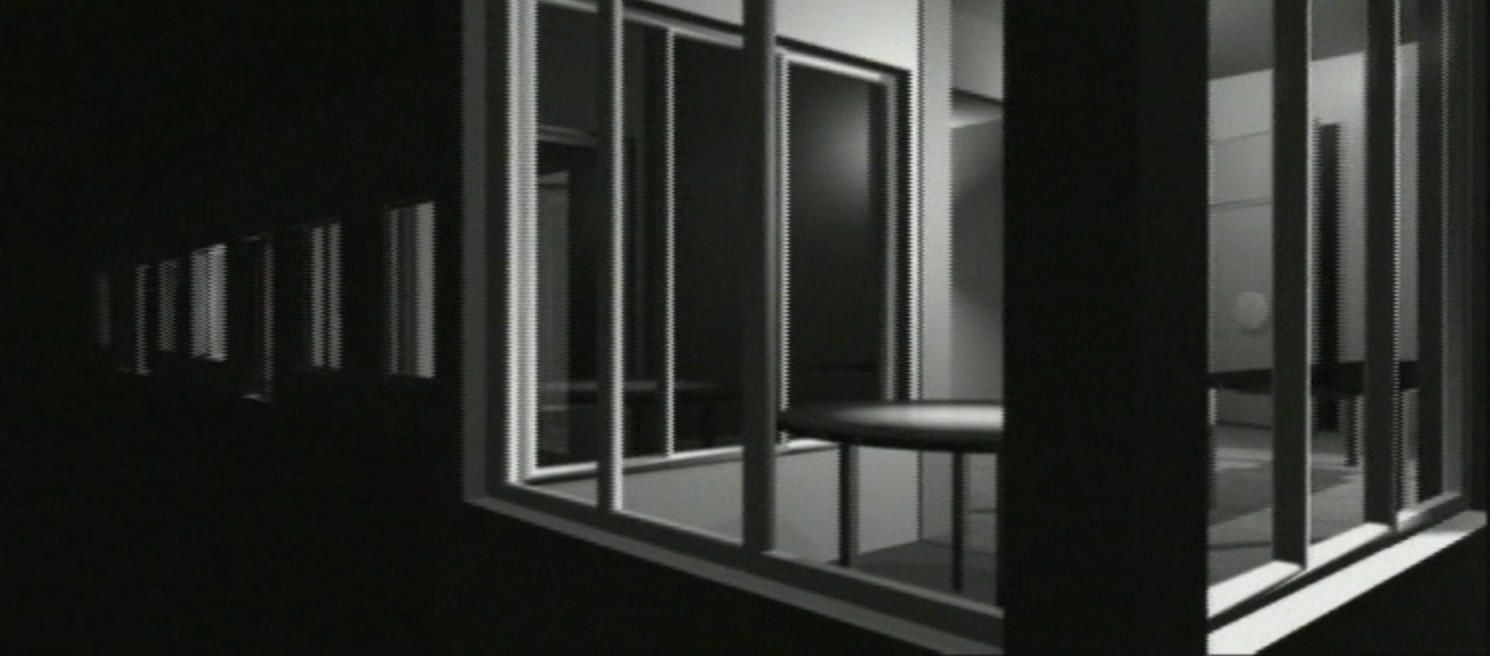
Her inquiry begins with travelling – Plan 234 / extérieur nuit (1999), which excises a tracking shot from Jean-Luc Godard’s Nouvelle Vague. In the original, the camera glides past a villa at night, catching brief glimpses of the characters behind its glowing windows. Ruhm isolates that movement and removes its narrative anchor, leaving an “emptied virtual space” where motion persists despite the lack of bodies: a slow-motion slap in the face of voyeurism. The villa becomes a husk. Windows remain open but behold no one, and furniture waits for occupants who never come. Lights extinguish themselves as though performing the rituals of domesticity in memory of those who once operated them. A fragile monument, indeed.
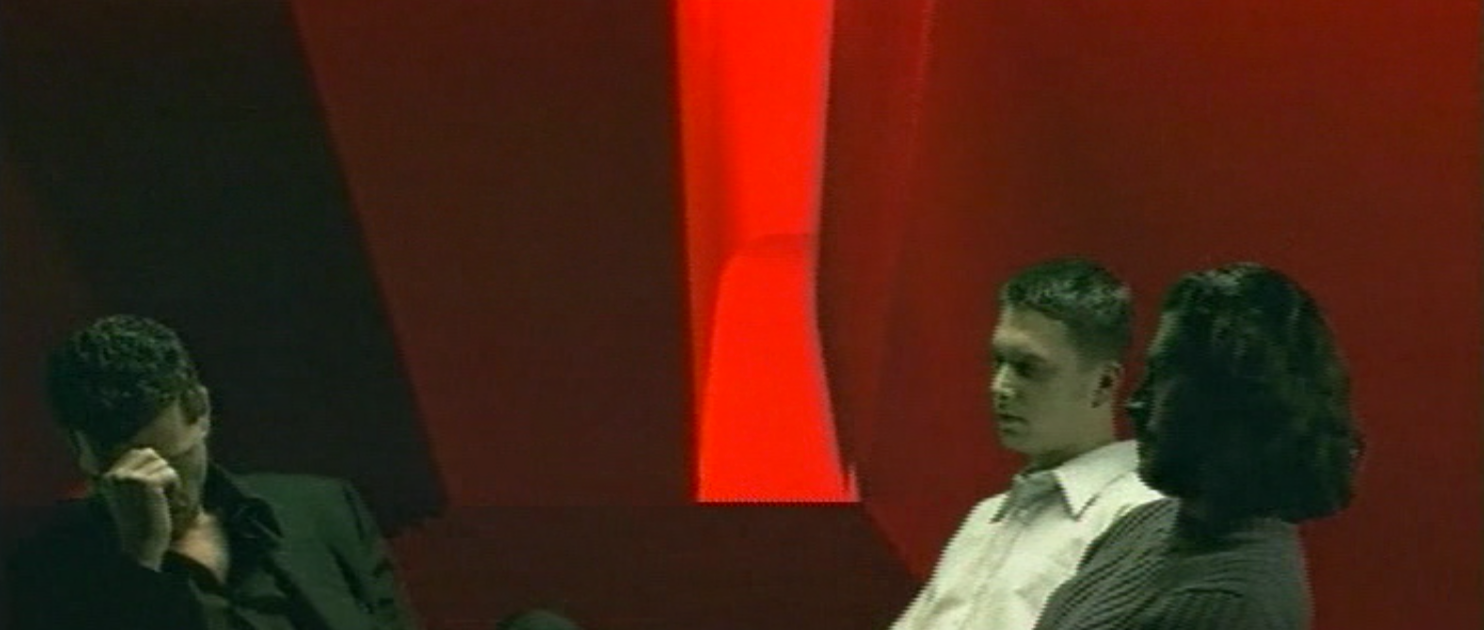
In collaboration with Elisabeth Fiege, Ruhm extends this exploration in ID Remix (1999), which reconstructs virtual spaces inspired by Godard’s La Mépris and Nouvelle Vague and by Brian De Palma’s Dressed to Kill. Three figures are trapped in a sequence without identity or purpose. They stand in postures that imply intent but yield nothing. Ruhm writes that “a still frame is set into motion,” yet the motion does not release them. The camera circles, but the characters remain mute and isolated, while the purified environments around them seem to reject their very presence. They are ghosts in their own mise-en-scène, expelled until only outlines remain.
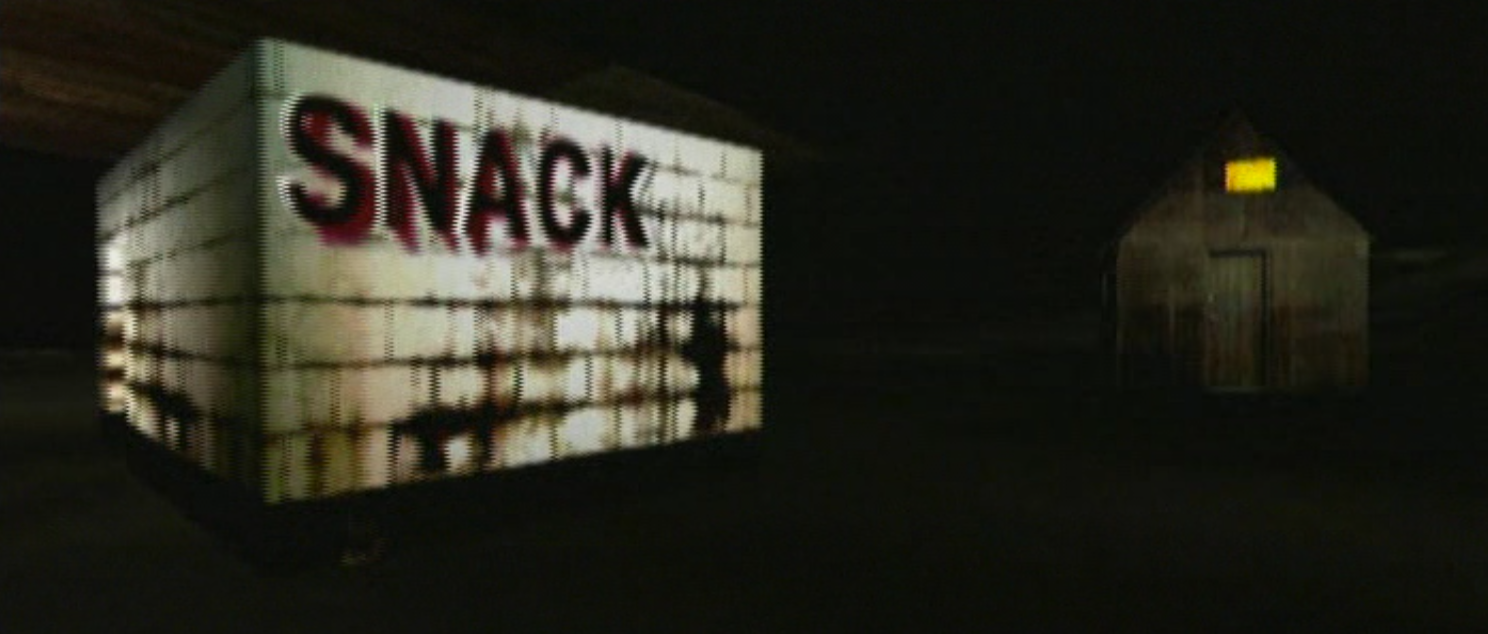
Evidence (2000) abandons citations entirely and constructs what the filmmaker calls a “movie without movie,” a plotless topography in which “location as character” serves as the guiding compass. Architectural forms rise from collective memory, fragmented and reassembled into something estranged yet strangely familiar. A deserted snack shack waits for customers. A digital night collapses the idea of depth. Clues appear without crime. The apocalypse here is a vacancy, a terror rooted not in spectacle but in the absence of anyone left to register it. The camera drifts through structures, across hills, and into a barren expanse before ascending into a starless sky. This world has not been destroyed but has simply been abandoned.

A Memory of the Players in a Mirror at Midnight (2001), named after a Joyce poem and informed by Freud’s idea of the “screen memory,” is a masterpiece. Spatial echoes from Irving Kershner’s The Eyes of Laura Mars shape the atmosphere, yet nothing feels like reconstruction. Instead, Ruhm builds mnemonic architectures composed of dream residue, cinematic recollection, and digital invention. Melinda May’s voiceover supplies an analytical scaffold as dreamlike colors seep into virtual rooms. The spaces seem haunted not by spirits but by stories still struggling to form. A desert appears as a site of unrendered emotions waiting for memory to give them shape. Time loosens, falling into the rhythms of expectation. Jump cuts beat with the power of a heartbeat. Pans drift with dream logic. Objects exchange places. The piece culminates in a whiteout, a suspended field without boundary. These digital houses hold what has been pushed aside, their corridors echoing with what has been dreamt.
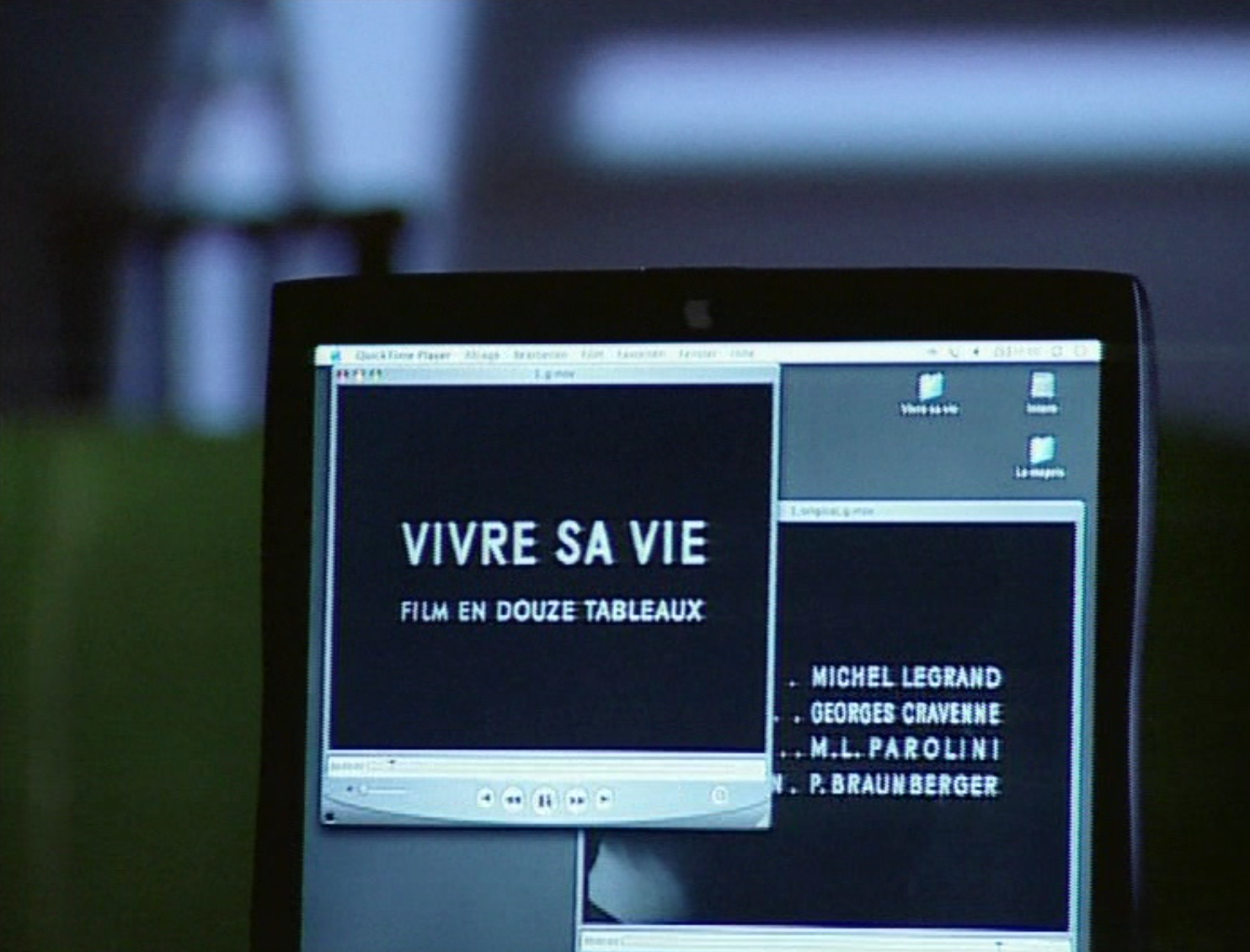
Ruhm’s fascination with afterlives reaches full clarity in X NaNa / Subroutine (2004), in which characters from European and Hollywood films move on after their canonical endings. Nana from Godard’s Vivre sa vie confronts the burden of her filmic past. Offered a job as a hacker, she hesitates, unwilling to reenact the fatal arc she once lived. The video follows several figures: a man watching a film on his computer, a woman beside him eating a sandwich, and another woman working in a record shop wearing a shirt that reads “Mnemosyne” (memory made flesh?). The young man seeks her help in retrieving data tied to Godard’s film. She agrees, reluctantly. Two women meet outdoors, smoke, and exchange something that may be information or simply atmosphere. Nana imagines an alternate ending for Vivre sa vie in which the protagonist survives, but the revision proves unstable. She meets an older man who promises clarity. She encounters the young man again, yet their languages diverge, dissolving any hope of understanding. Communication becomes a shimmering fiction. In the end, she restores her own death to the film, as if accepting the weight of its entropy, and walks away from the computer while a saccharine pop song about “Nana” plays in the background.
Across these works, Ruhm does not dismantle the medium so much as extend its gaze into parallel temporalities. Her videos are not remakes and not critiques. They are liminal spaces where characters, gestures, and plot-like fragments continue to drift long after their source texts have ended. Cinema, in her view, never truly concludes. It decays, recomposes itself, and wanders toward futures it never foresaw. Ruhm asks what becomes of these bodies once their stories fall silent. Do they dissolve into the archive or wander on, displaced and hoping? She suggests that every flicker contains a dormant blueprint for worlds that were never built. She activates these latent structures and places her characters in loops, deserts, empty buildings, voids, and washed-out virtual terrains.
Ruhm’s practice is one of memory as construction rather than recollection, of generation rather than preservation. Once created, cinema never stops creating itself. If we listen carefully, we might hear the faint footsteps of characters exploring the corridors of films that were never shot, searching for a story that can finally accommodate them. Ruhm grants them that possibility, offering spaces where they may linger, falter, return, and attempt once more to live.
 Between Sound and Space: ECM Records and Beyond