

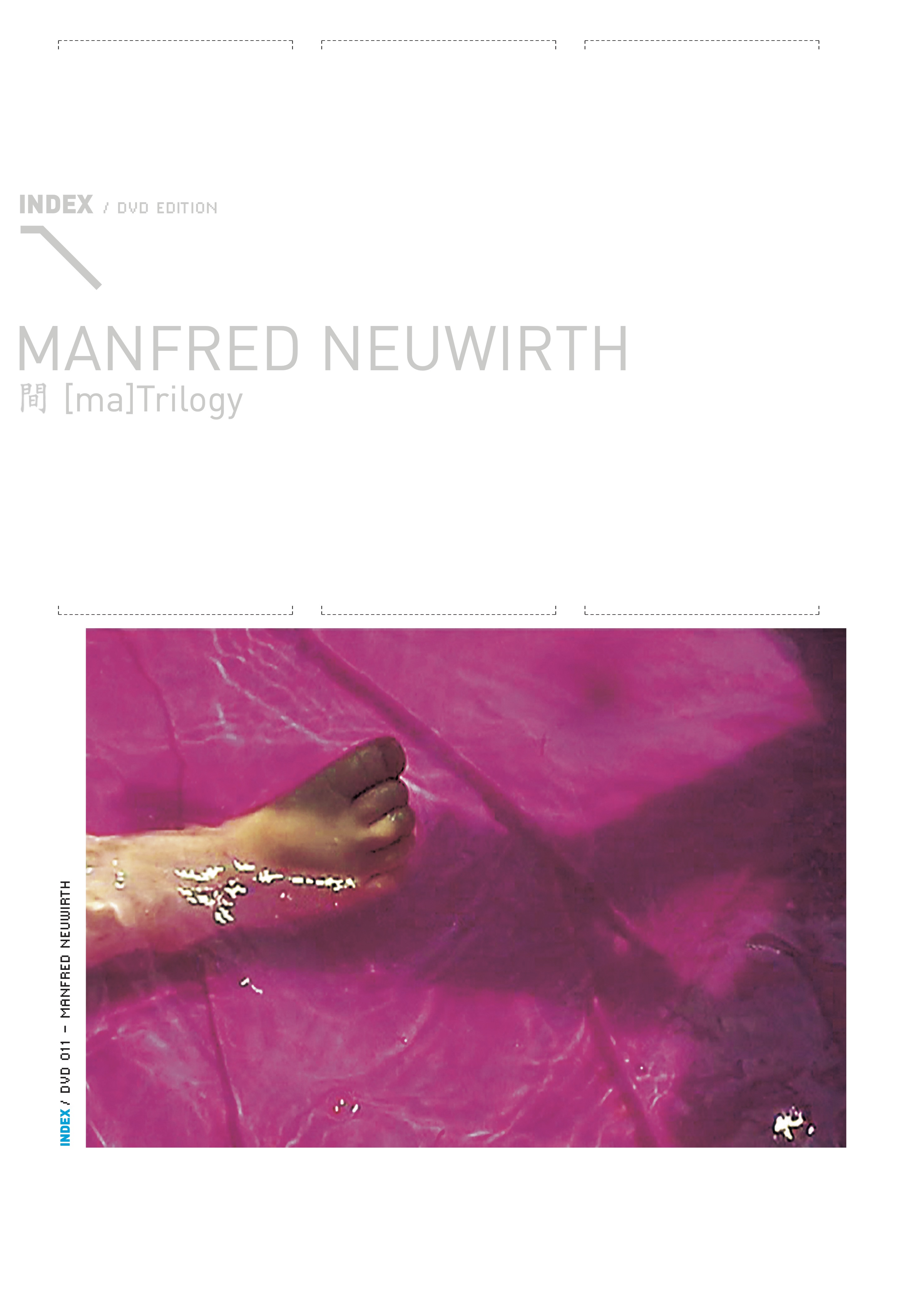
Manfred Neuwirth arrived at filmmaking through the pathways of journalism and history, both of which left traces in his later work. The instinct to observe, to contextualize, to listen for what a moment is trying to say—all of this shaped his approach long before he cofounded Medienwerkstatt Wien and began building distinct(ive) cinematic worlds. His films feel archival without becoming documents, poetic without drifting into abstraction, grounded in reality yet loosened from the demands of storytelling. If many filmmakers construct coherent worlds through narrative, Neuwirth positions himself in spaces of duration, fragments, and the patient choreography of looking.
This sensibility took on a crystalline form in three works he made from the late 1980s to the end of the 1990s. Together, they form a loose trilogy of observational meditations. Each is composed of equal-length shots that sink into darkness before another image emerges. Such pacing slows the world until time feels elastic, asking the viewer to find the thread that binds one image to the next, to become witness, traveler, and editor all at once.
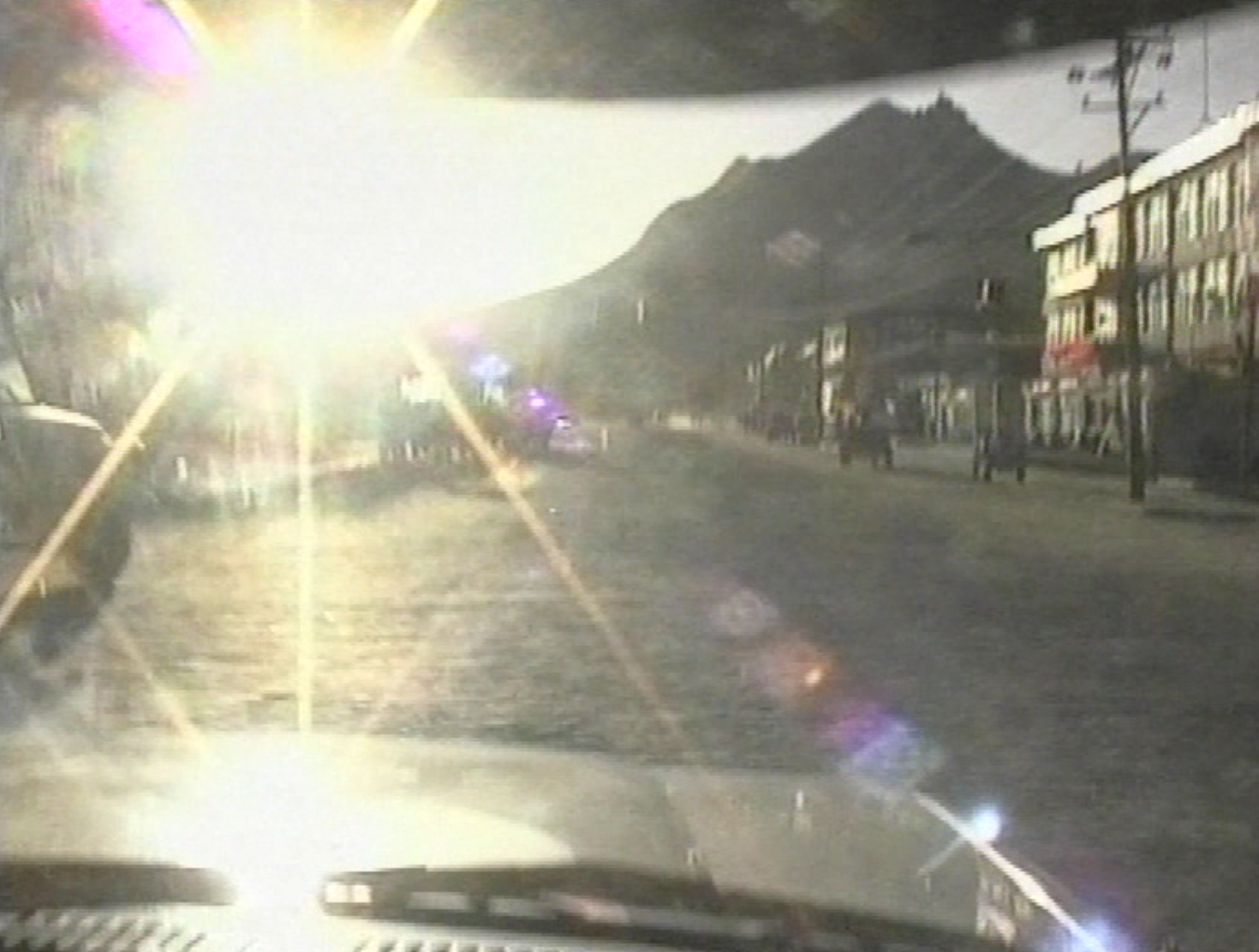
In Tibetische Erinnerungen (Tibetan Recollections), made between 1988 and 1995, thirty-five shots create a rhythm that resembles respiration. One scene exhales into blackness, then inhales into a new image. What holds the work together is not continuity but gravity, a quiet pull generated by the tension between the political and the everyday. A jolting prologue shows Chinese soldiers arresting Tibetan monks. This violence reverberates throughout the rest of the film in subtle yet persistent ways. Later, a singer appears on television wearing clothing reminiscent of the soldiers’ uniforms. Thus, Neuwirth’s aesthetic gathers force by refusing to forget what the prologue makes visible.
Much of the film settles into a sensory archive of Tibetan daily life. A man on a motorcycle. Butter tea boiling in a kettle on the street. A beer bottle left on a restaurant table. A water pump at work. A taxi weaving through a city that never quite reveals its full shape. These visuals lapse into a state of drift while the soundtrack remains in real time, a disjuncture that heightens awareness and holds the viewer in a kind of suspended attention. Moments turn to recollections, recollections to emotional geography.

Regarding Japan through the lens of manga train, completed in 1998, the method remains consistent, even if the atmosphere transforms. Thirty equal-length shots fade into one another, slowed to a similar tempo, yet the world here feels unsettled, shimmering with impressions that never quite anchor themselves. Rain gathers on concrete steps. Gambling halls erupt in cacophony. Street festivals pulse with color. Vending machines glow under the rain. Temples, train stations, sumo bouts, conveyor-belt sushi, late-night television: each vignette arrives as though remembered by someone unsure where the memory belongs.
In this gentle ache of dislocation, the soundscape becomes essential: footsteps, scattered conversations, the hum of machines, and rainfall that seems to stitch the transitions together. Recurring shots from train windows form a metaphor for both travel and estrangement. At night, the viewer shares the sensation of being suspended between places. The experience feels less like tourism and more like listening to a world that keeps its secrets close to its beating heart.

Turning to Lower Austria in magic hour in 1999, Neuwirth brings this method to the terrain of his own past. The equal-length shots and slow fades remain, but the tone softens into one of homecoming. He lingers on windows, doorways, and narrow rooms, creating thresholds between interior and exterior spaces that echo his own movement between belonging and observation. Lightning flickers across the countryside. A child dips a foot into a wading pool. Towns glow with sparse night lights. Soccer games unfold on fields marked by long familiarity. Forest paths, local celebrations, snowfall, music, farming, industry: everything is filtered through an intimacy that feels newly discovered.
Darkness becomes its own character. Some scenes lie on the edge of visibility, as the viewer first hears what will later be revealed to the eye. Rain appears again and again, threading like a million needles with its patient fall. If the earlier films bear the solitude of a traveler confronting the unknown, this one offers the stillness of someone returning to a once-familiar landscape with the eyes of another.
A DVD bonus track, Barkhor Round, recorded in Lhasa in 1994, amplifies a core element that runs through the trilogy: Neuwirth’s deep attunement to sound. Created as an audioplay rather than a film, it crystallizes his belief that listening is a way of entering space without possessing it. The footsteps, chants, wind, and commerce of the Barkhor pilgrimage circuit spiral around the listener with such precision that the path becomes tactile. It is a heartfelt attempt to hold the world without claiming it, to dwell within sound and image long enough to feel their inherent dignity.
Across these works, Neuwirth builds not stories but temporal architectures. The equal-length shots grant each moment the same duration and, by extension, the same value. What unites Tibet, Japan, and Lower Austria is not comparison or exoticism but a shared vulnerability. All three reveal themselves as unfinished compositions. Neuwirth avoids explanation, instead inviting the viewer to witness the difficulty of encountering a culture without consuming it.
At a time when social media compresses the human experience with bite-sized certainty, this trilogy allows us to remain in the tension of what is not fully known, without the fear of missing out. To let unfamiliarity teach attention. To look without grasping. To listen without insisting on philosophy.
One leaves these films with no answers, only a heightened attunement. Every culture, every landscape, every fleeting moment carries a luminosity that appears only when the eye is willing to slow down. Neuwirth’s cinema creates the conditions for that retrograde, revealing thresholds that might otherwise be missed. Fragile, shifting, and often radiant, they live on in the spaces left behind, happy enough to avoid our gaze altogether.
 Between Sound and Space: ECM Records and Beyond