

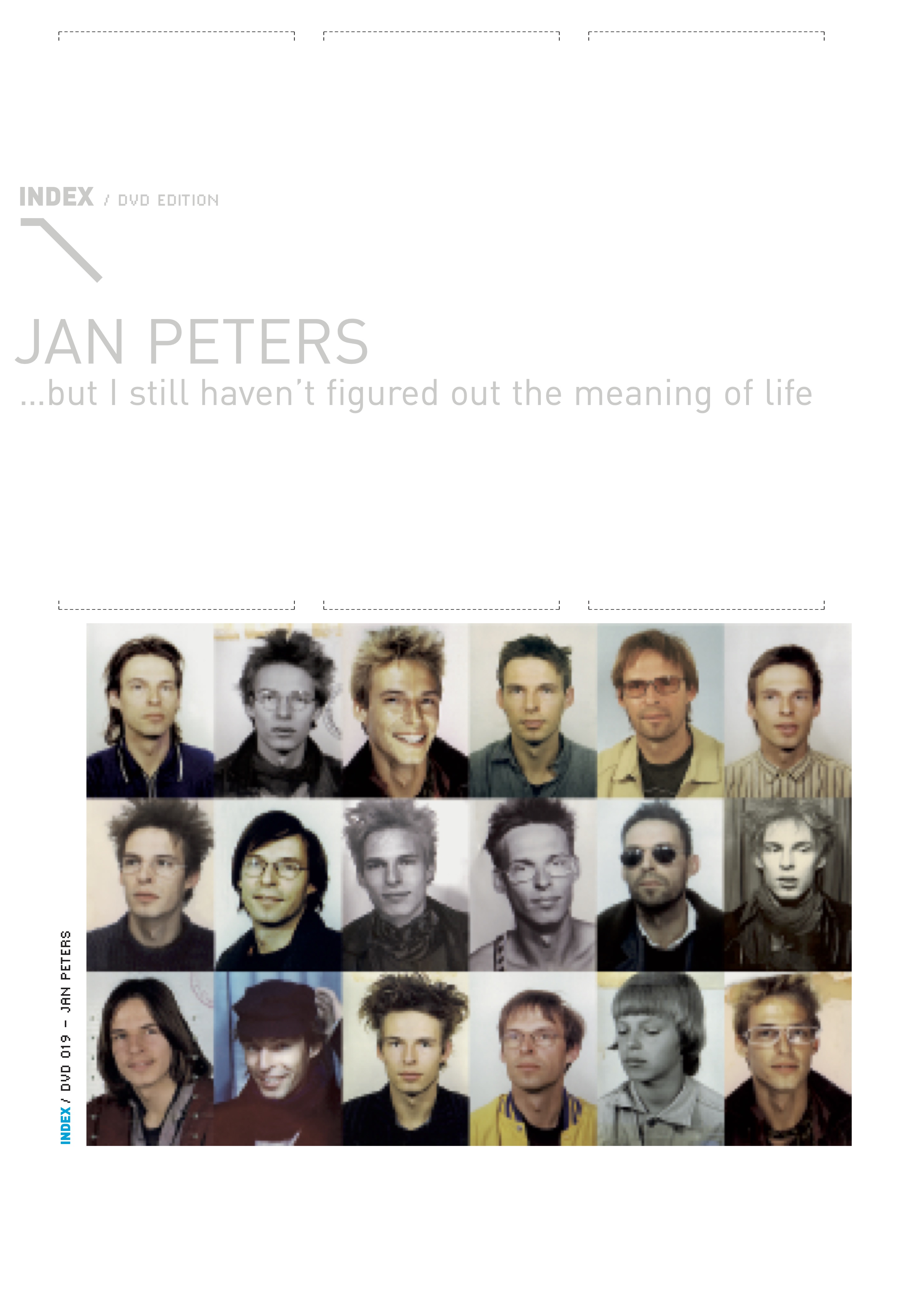
Becoming without End: Jan Peters and the Cinema of Ongoingness
Jan Peters’s long-term diaristic project, Ich bin… (I am…), unfolds as an accidental autobiography, a chronicle of becoming that resists anything so stable as identity. Living and working between Hamburg and Paris, Peters crafts these films not as testimony but as experiments in cinematic presence. What begins as a private exercise in front of a Super-8 camera gradually turns into a ritual: once a year, from age 24 to 40, Peters records himself speaking to the lens about his life, his doubts, his failures, his aspirations, and the embarrassments that lace through every attempt to speak honestly about oneself.
Claus Löser, in his booklet essay, makes clear that these are not windows into a life but catalysts for unexpected insight. They are awkward, provisional nodes of retrospection, moments in which Peters grasps at mortal straws while simultaneously acknowledging that their purpose may be perpetually deferred. The films trace a philosophy of the perpetually revised. Self-perception is not an essence but a moving target, an emergent shape in an archive of gestures, hesitations, slips, and confessions.
Peters never intended these films to become a series. The first installments embarrassed him; they were rough, juvenile, too revealing. Yet when, after screening one at a university seminar, a professor asked him when Ich bin 25 would be made, what he once considered a private try-on suddenly took on the form of an open document. And so he continued, year after year, even as the technology changed, from Super-8 to home video to the immediacy of cellphone lenses. As his tools evolved, so did the textures of self-examination.

Prologue: J’ai 20 ans (1984)
The collection opens with this short directed by partner Hélèna Villovitch in 1984. It is a silent work that sets the tone for everything that follows: a dark room, a mirror scrawled with words, hands used as luminous backdrops; makeup applied not for beauty but metamorphosis; lipstick obliterating the mirror until identity becomes pure gesture. Her cigarette hangs in front of a poster for Breathless. Even here, the diary form already strains against stable meaning.
Ich bin 25–29: Fractures in the Emerging Self
The early films occupy the raw zone of self-representation, where uneven lighting and awkward sound reveal the mechanics of a young man still learning how to speak himself into existence. At 25, Peters jokes that the only honest thing would be to sit naked before the camera, and he does so, a gesture that collapses irony into exposure. A year later, vulnerability shifts inward as an MRI scan of his spinal column becomes a quiet emblem for the entire project.
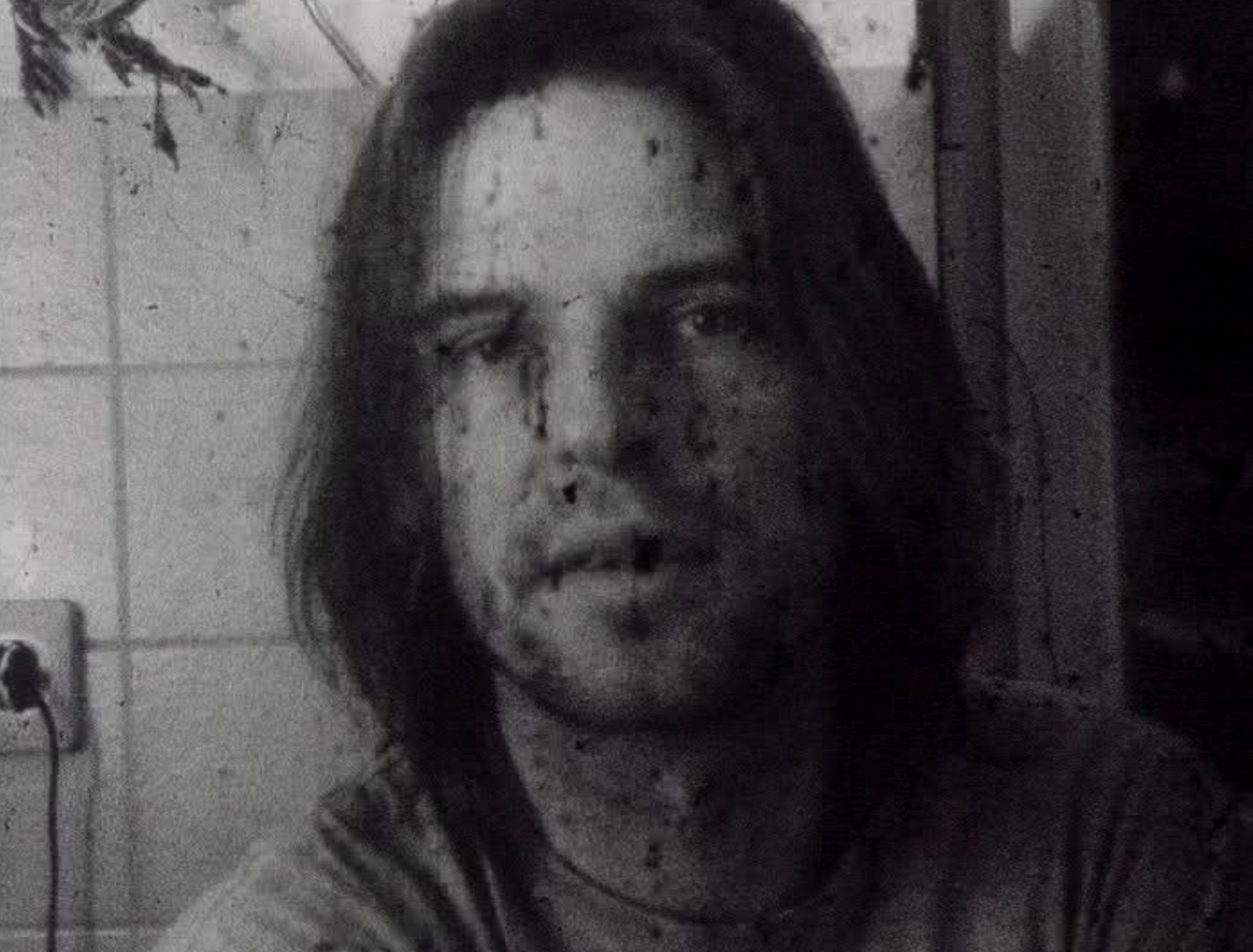
Number 27, filmed in grainy black and white, treats unemployment as both a material condition and an aesthetic limitation. Cheap film stock mirrors a stripped-down life, prompting reflections on childhood and the arithmetic of time, as if counting hours could compensate for an absence of meaning. Then, at 28, emotional gravity enters the frame: an unplanned pregnancy, the woman’s decision to have an abortion without involving him, and his uneasy attempt to contribute financially. He confesses that “men appear to be incapable of grasping anything at all,” a remark that exposes both his helplessness and his wish to understand what he cannot access.
In his 29th year, he looks not backward but ahead, pondering memory’s unreliability and the shifting nature of personal narrative. A parallel entry, made by a Paris filmmaker on April 29 as a birthday gift, refracts him from the outside, drifting through associations that place Peters within someone else’s imaginative field.
Ich bin 30–34: Time, Excess, and Technological Revolt
As Peters enters his thirties, the tone oscillates between levity and introspection. At 30, filming inside a car, he sings a playful song, an almost self-canceling gesture that acknowledges the ordinariness of many days and the impossibility of always mustering insight. The following year, sharing a Paris flat with Hélèna, he muses on the subjectivity of time while the camera sputters into repeated pauses, as if exasperated by his philosophizing. These mechanical refusals become a meta-commentary on the diary itself, which resists being turned into a philosophical vessel.
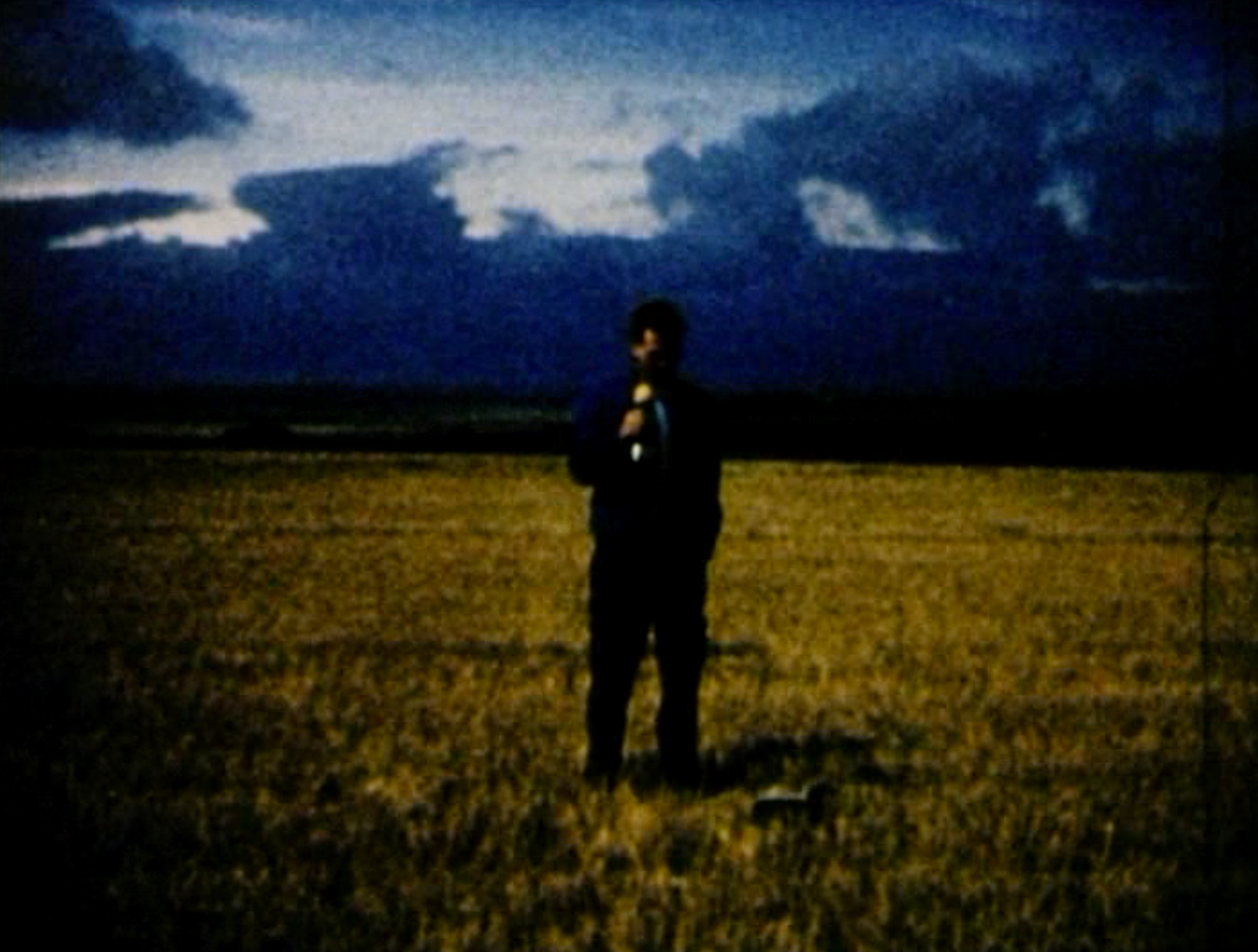
By 32, filming in the bathtub, he admits he cannot bear to look at his own reflection, and once again, the camera quits mid-thought. At 33, a solar eclipse darkens a field around him. When light returns, he speaks of being perpetually broke but relieved that the world did not end. His anxieties are momentarily absorbed into a larger, cosmic cycle. Then, at 34, video technology becomes its own antagonist: the medium’s “unbearable length” feels suffocating, and Peters screens the footage only in fast-forward, a gesture of compression that mirrors the temporal fallout of the entire series.

Breaking the brief cadence of the annual updates, a 20-minute work from 2001 titled Wie ich ein Höhlenmaler wurde (How I became a cave-painter) parodizes reportage, full of errors that become structural signatures. He tries on wigs in a theater prop room, drives aimlessly, and wanders through nightclubs in altered states. He and his girlfriend project homemade pornography onto a window, visible to the outside world yet unnoticed. A tear in the paper the next morning creates a pinhole camera effect, a metaphor for the accidental apertures through which life enters art. It ends with selfies taped to theater seats, populating an imaginary audience with (re)iterations of himself.

Ich bin 36–40: Return, Rupture, Release
With 36, a digital point-and-shoot replaces earlier formats. Grain gives way to sharpness, and immediacy replaces texture. Peters comments on his technological “up-to-dateness,” already obsolete at the moment of articulation. The following year, he returns to his childhood home, attempting to re-inhabit a place that no longer fits him. At 38, the camera collapses into darkness; the diary becomes blind, reduced to pixel ghosts drifting across the frame. At 39, he declares his desire for limitless possibility, only to describe himself in the same breath as a bulldozer driver shoving around debris—an apt metaphor for adulthood’s strange blend of freedom and obligation. At 40, he abandons language altogether, dancing and pantomiming through an art gallery.
Bonus Films
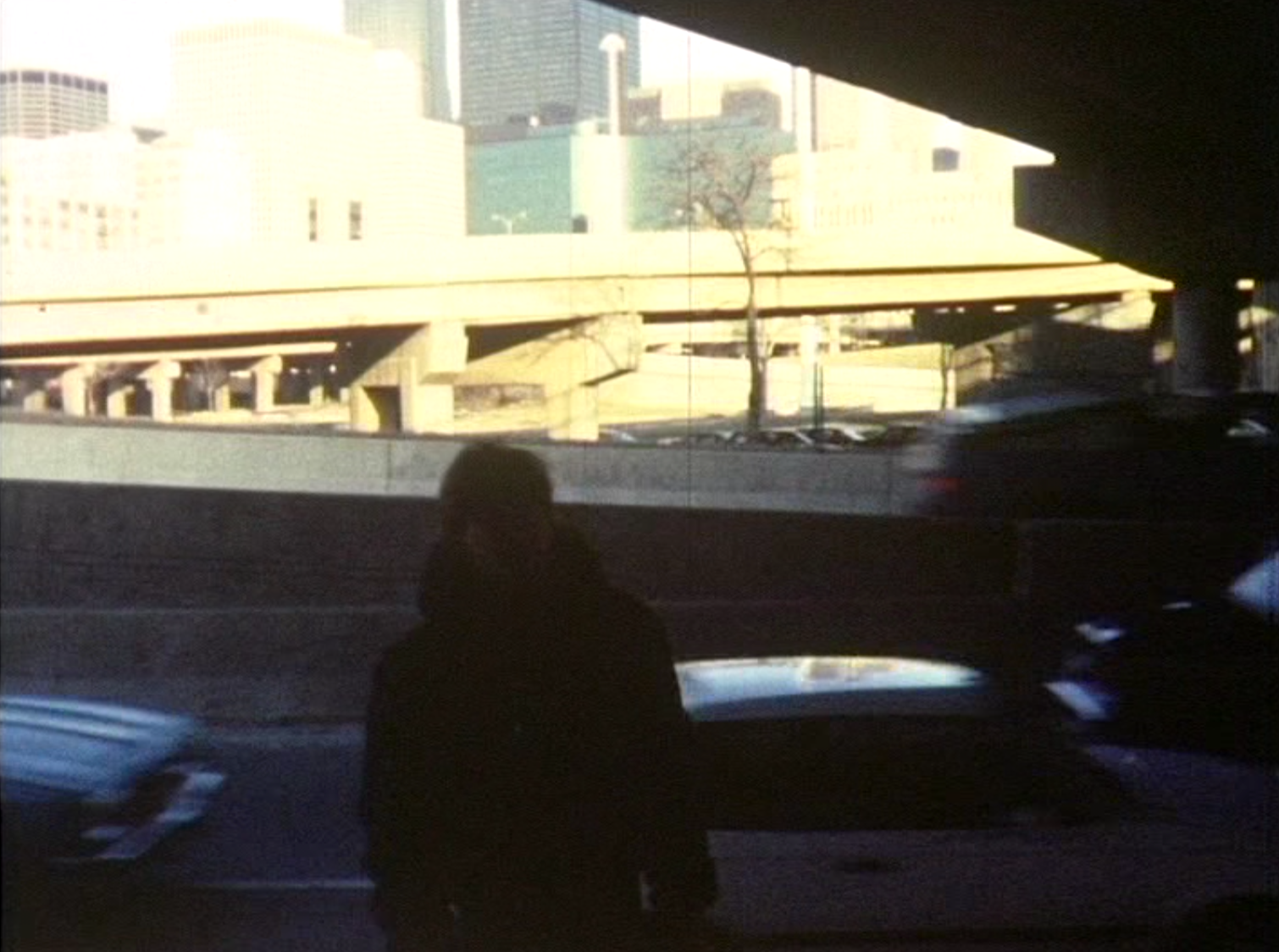
Ich bin in Chicago (1991) captures Peters struggling to speak above the roar of highway traffic, a reminder of how easily communication can be drowned out by circumstance. Ich habe einen Lincoln (1994), filmed at San Francisco’s Twin Peaks, transforms technological disappointment into deadpan humor as he praises his car’s innovations while admitting that it barely works.
In Praise of the Unfinished
Taken as a whole, Ich bin… reveals itself to be anything but. It refuses resolution, coherence, and continuity. Each installment is, at best, a provisional answer to the question of who he is, only to be contradicted by the next. Meaning accumulates through the ritual of returning rather than in singular revelations. And so, the project is not about finding the meaning of life but about honoring the impossibility of doing so.
In the end, he does not find himself, nor does he wish to. Instead, he constructs something more fragile and more revealing: a cinematic record of a self continually in transit, unfinished, unresolved, and therefore unmistakably alive.
 Between Sound and Space: ECM Records and Beyond