

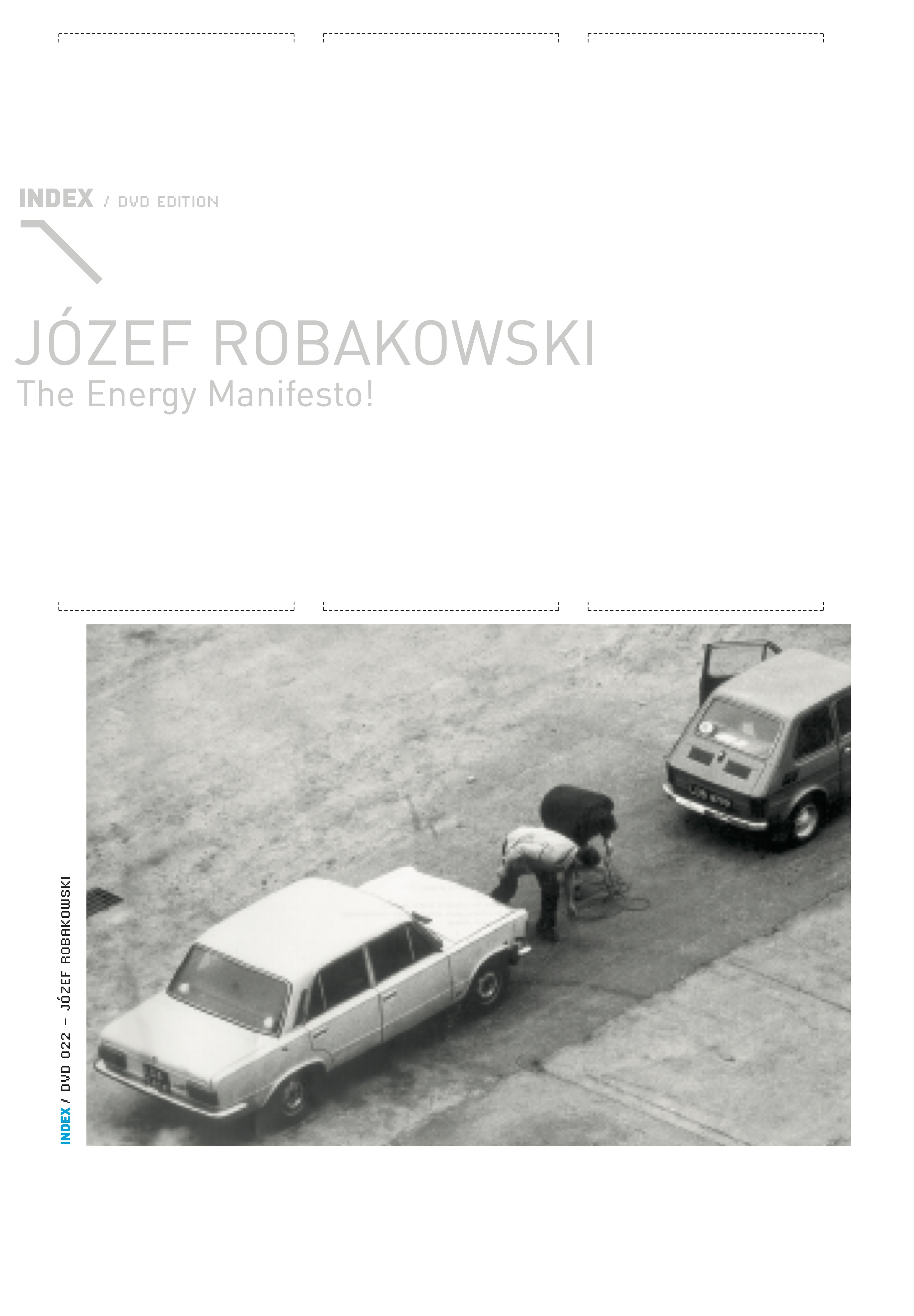
Józef Robakowski’s The Energy Manifesto! emerges from a lifetime of artistic restlessness, a refusal to let images sit inert, a devotion to the kinetic charge that flickers between flesh and machine. One of the central figures of the Polish neo-avant-garde of the 1960s and 70s, Robakowski moves fluidly between art history, photography, film, and video, always seeking what he calls “personal cinema,” which begins not when everything is in order but “when everything goes wrong.” He rejects the idea that the camera must record nature; nature already records itself. What interests him instead is energy—its intensities, breaks, spasms, and rituals—and the human body as its conduit. Patricia Grzonka frames his output as a testament to an anti-rationalist belief that images vibrate with their own wills and that cinema is a laboratory of impulses rather than a window looking out onto an external world.
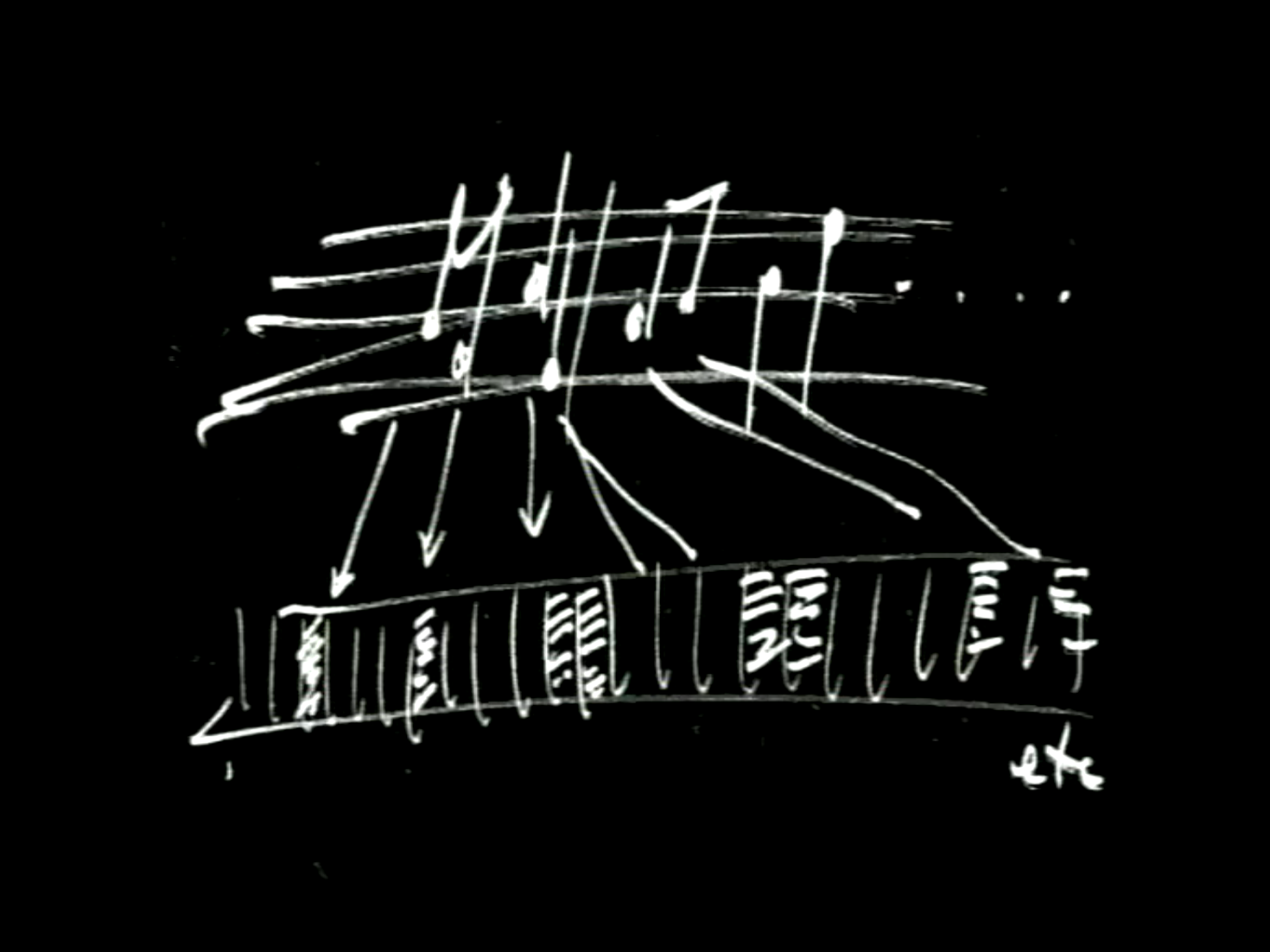
The first chapter, Attention: Light! (for Paul Sharits), acts as a tuning fork struck before performance, a calibration of perception. Test I (1971), a camera-less sequence of cuts and scratches projected against darkness, crackles into something intimate and meditative, the smallest possible gesture generating a surprisingly vast psychic space. An Attempt (Test II) (1971) follows with a red strip flickering in and out of earshot over a Bach organ piece, as if the medium itself were trying—and repeatedly failing—to remember the music. Video Kisses (1992) turns this interface into affection: green peaks struggle to meet and merge, while wet kissing sounds sustain a rhythm of longing and circuitry. Impulsator (1998) disperses that longing into abrupt bursts of light accompanied by Leszek Knaflewski’s aleatory score. No synchronicity, no privilege granted to human intention, just a collision of waves and flickers. A quarter of a century later, Robakowski returns to Sharits with Attention: Light! (2004), a digital re-creation of a film Sharits himself instructed him to make, originally shot in Robakowski’s apartment but since lost. Chopin’s Mazurka in F minor triggers volleys of color across a correspondence lovingly fulfilled 11 years after Sharits’s death.
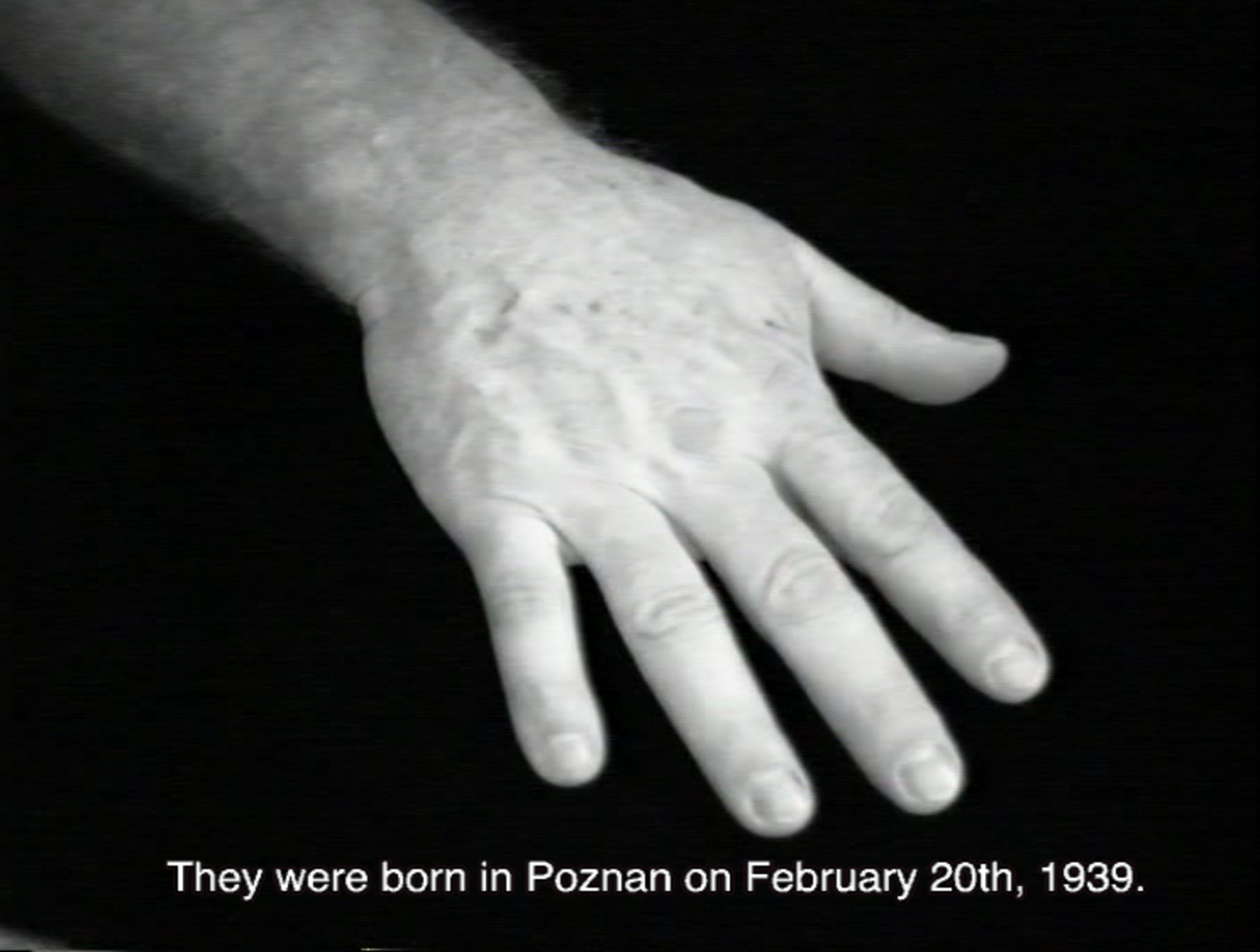
Chapter 2, The Bio-mechanical Recordings, reveals the devotion that underlies Robakowski’s experiments: “To surrender oneself to the magic mechanism of the MACHINES which allow us to transcend human imaginings.” These works explore how a machine’s gaze might be fused with the body’s impulses. I Am Going… (1973), one of the highlights of this set, is deceptively simple. As Robakowski counts each step while climbing a tower on a snowy day, his ascent becomes vulnerable, almost childlike. Each number is a footfall on the boundary between self and world. Nearer – Further (1985) extends this fragility into a play on distance. The artist mutters “nearer” and “farther” while zooming in and out on a small black rectangle on a windowpane, a self-portrait only visible when proximity collapses into grain. La – Lu (1985) is a lullaby with a swing as its metronome. Robakowski sings and narrates its pendulum, a dream gently rocking itself awake. About My Fingers (1982), another highlight, is a miniature epic of embodiment. Each finger receives a biography: the thumb as veteran general, index finger as agile cat, middle finger as disliked pariah, ring finger as sheltered dependent, pinky as ecstatic outsider. The hand ends as a fist for solidarity among differences. Acoustic Apple (1994) transforms the peeling of an apple into a distorted percussive ritual. Every scrape is amplified beyond proportion, as if the microphone were dying, or the fruit were fighting against its own disassembly. My Videomasochisms II (1990), made with Tadeusz Junak and Ryszard Meissner, pushes this tension into self-harm—illusory but emotionally convincing—as strange vocalizations accompany gestures that hover between pain and performance.

Chapter 3 turns toward what Robakowski calls My Very Own Cinema, in which improvisation meets archive and observation. The Market (1970) compresses nine hours of Lodź’s “Red Marketplace” into a flickering time-lapse accompanied by a metronomic ticking. The pulse of commerce becomes mechanical, stripped of sentiment. From My Window (1978–2000), one of the richest works in the set, echoes Rear Window with distinctive wit and affection. For over two decades, he records the small square beneath his apartment, capturing his wife driving off in her car, dogs copulating, neighbors returning from church, schoolchildren, snowstorms, parades, police activity, and more. Eventually, a hotel blocks the view entirely, but the accumulation of fragments becomes its own map of time passing. We watch the square change, but more poignantly, we watch Robakowski change around it. The result is a memory, a joke, a lament, and a proof that looking is always a form of participation. The bonus track, For VALIE EXPORT(2006), is a brief but tender homage: the artist approaches a hallway mirror, his image soft and affectionate, a gift in 60 seconds.
Robakowski lays claim to the “personal” not because he confesses, narrates, or introspects but because he recognizes that perception is itself a performance and that every image carries the trace of a body trying to meet the world on equal terms. These films, in all their innocence, perversity, and stubborn materiality, remind us that cinema can still be an exercise in wonder for its own sake.
 Between Sound and Space: ECM Records and Beyond