


Super-8-Girl Games is less an anthology than a shared mythos written by two bodies in constant negotiation. Ursula Pürrer and Hans Scheirl approach the technology not as a format but as an ethic, a domestic instrument capable of registering the tremors of queer, feminist, and trans becoming before those words had cultural shelter. Their films, recorded in bedrooms and kitchens, on rooftops and subways, function as improvised laboratories where the body splits, recombines, mutates, laughs, makes contact, and sidesteps the very categories that would try to contain it. If Vienna Actionism sought transcendence through destruction, Pürrer and Scheirl reclaimed similar spaces for pleasure, comedy, filth, affection, and the joyous collapse of any fixed subject.

The 1985 title film establishes this spirit immediately. Pürrer and Scheirl draw directly onto the emulsion so that halos erupt from bodies, arrows bounce off bare chests, and eyes surge with hand-drawn lightning. Water pours from an armpit, hairs radiate energy, and snakes unfurl from mouths. Each transformation mixes the grotesque with the jubilant. Their bodies exchange not only fluids but lines, gestures, and invented anatomies. The self-recorded soundtrack mutters, bleeps, and pulses, a playful séance conducted by two artists who grasp desire with a candor adults rarely allow themselves.
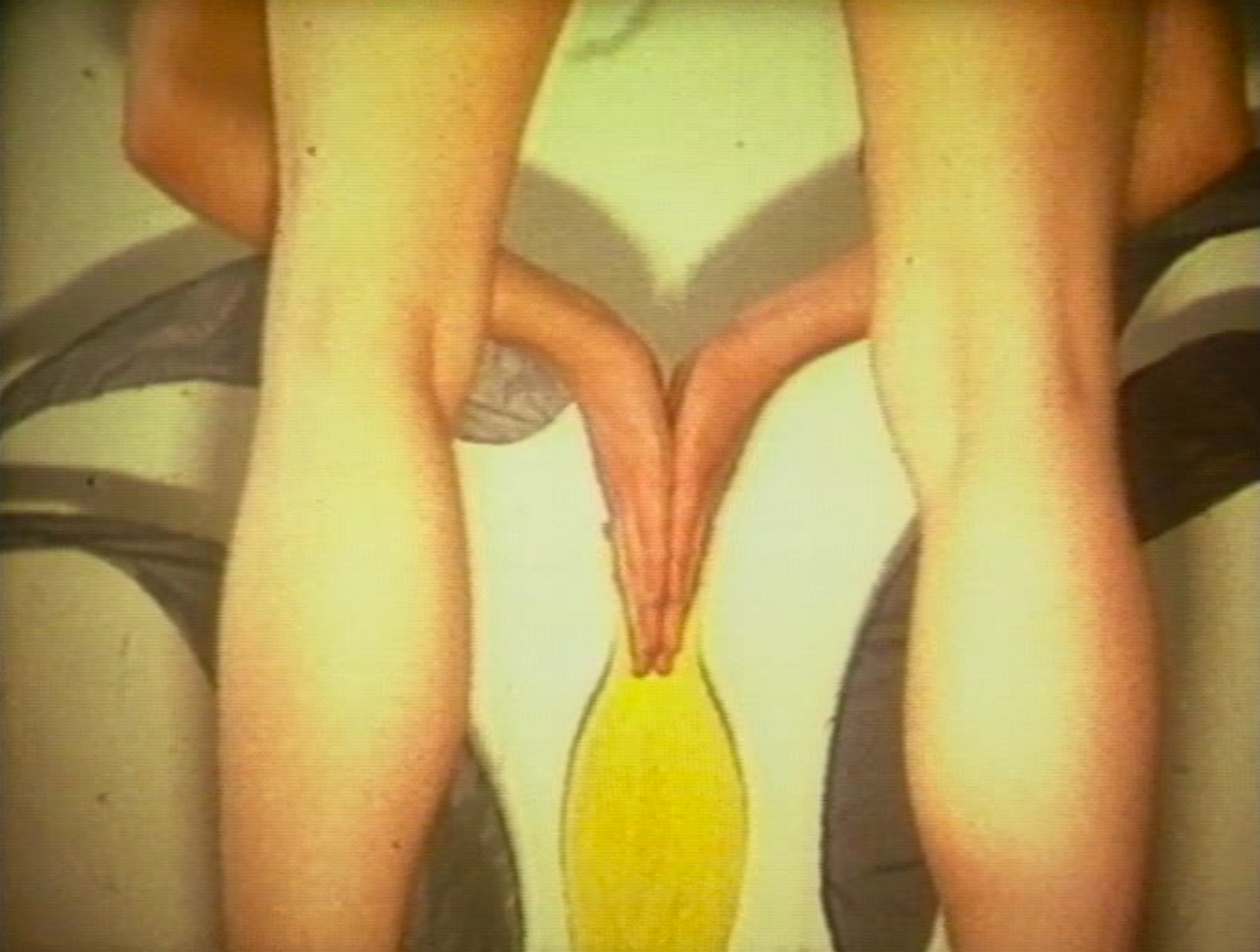
Das schwarze Herz tropft – Bastelanleitung zu -rinnen (The Black Heart is Leaking – Amateur Constructors Manual for Fluid Gendering, 1985) begins with a single tone, a night scene, a figure in bed pressed against a plant. Humans and flora form an erotic ecology. The imagery shifts to dunes or mounds of salt, a terrain where legs press into the floor as if searching for roots. Exoticized music rises as a table lifts and scrapes across a larger double, as if scale itself could swap allegiances. Paper masks appear, a self confronting itself in disguise, searching for dissolution. The scrape of metal interrupts a dream where parts no longer matter.

Bodybuilding (1984) offers a pirated lesbian porno turned into a meditation on performativity. Flesh flexes and stacks. Mountains rise, literal or imagined, translating effort into topographical farce, both borne from the right of reinvention.
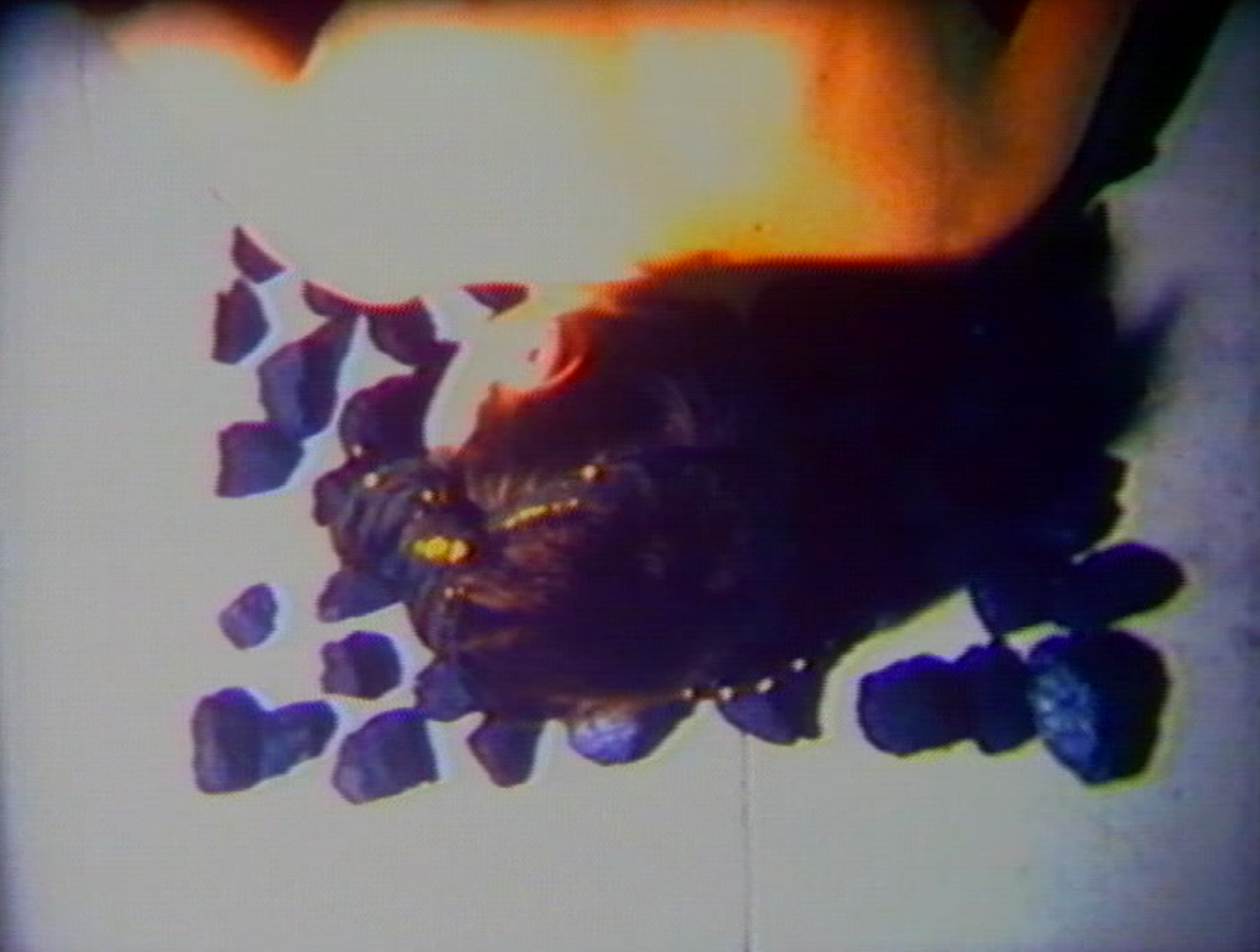
Gezacktes Rinnsal schleicht sich schamlos schenkelnässend an (Zigzagged Rivulet Sneaks up Shamelessly Wetting Thighs, 1985) enters a feral register. Painted figures creep through nocturnal space, adorned with stones, moving like creatures for whom no taxonomy exists. The soundtrack hints at tribalism, a flawed fantasy yet central to their desire for a sexuality unbound by European scripts. The body is no longer an object but a force, stalking and being stalked through shadow.

Tones change again in Ein Schlauchboot und Austern (A Rubber Dinghy & Oysters, 1985). A subway ride, a diner meal, and a family tableau pass by to the tune of an absurdly cheerful pop song. The contrast creates not irony but a reminder that pleasure saturates the everyday.

Im Original farbig (Originally Coloured, 1986) introduces structure through a menu of distinct sections. Computer-game gestures appear beside paper shuffling, dioramas, and projected images. Each selection proposes a logic before abandoning it. The film becomes an instruction manual for a world that keeps rewriting itself, a choreography of order emerging from play and collapsing back into it.

In The Drift of Juicy (1989), objects, text, and materials act as prosthetics for desire. The body channels its sexuality through adjacency rather than performance. Space itself turns conductive, as if every surface were charged with latent touch.

The program’s energy culminates in 1/2 Frösche ficken flink (1/2 frogs f*ck fast, 1994–96), shot in New York and London. Rooftop nudity, boxing matches, bicycle sex acts, private dances, and explicit home-video eroticism collide in a frantic weave. The electronic soundtrack pulses with the cadence of queer nightlife. Nothing is hidden, nothing is apologized for. The camera stands not outside the scene but inside it, an accomplice.

The bonus work Slocking Walkman (1986) condenses the duo’s ethos into a music video where machinery and beat merge into a loop of gleeful illegibility. It serves as a credo rather than an afterthought.
Across these films, Pürrer and Scheirl cultivate a cinema of impurities: gender leakage, corporeal innovation, lo-fi enchantment, and domestic rebellion. Their practice does not aim to escape the home but to remake it as a site of radical production. The apartment walls become a proscenium for makeovers, the camera a tool that conjures new anatomies. What emerges is not documentation but transfiguration.
 Between Sound and Space: ECM Records and Beyond