

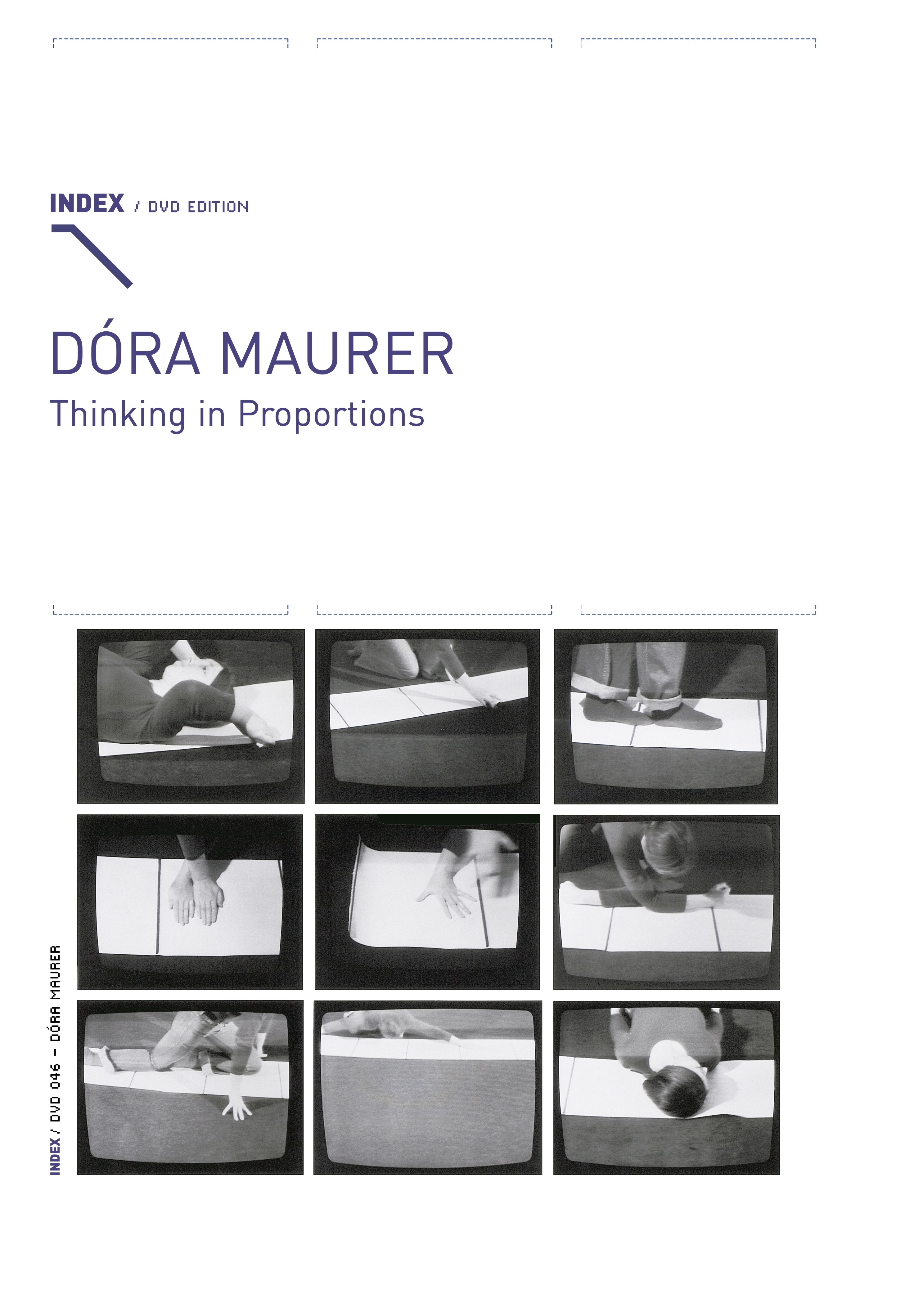
Thinking in Proportions hums with the integrity of a mind that treats perception itself as material. The mind in question is that of Dóra Maurer. Born in Budapest and trained as a printmaker, she did not enter moving pictures through story or representation but through process—the lifeblood of spatial relations. She describes her works as “displacements,” and each indeed alters the coordinates of seeing by measured degrees, thought revealing itself as something with weight and texture. Her structural rigor never hardens into rigidity. Instead, she builds systems in which freedom accumulates quietly, like breath made visible in winter. The viewer begins to sense that Maurer is a grammarian of matter whose proportions anchor themselves to the world with both scientific precision and metaphysical resonance.
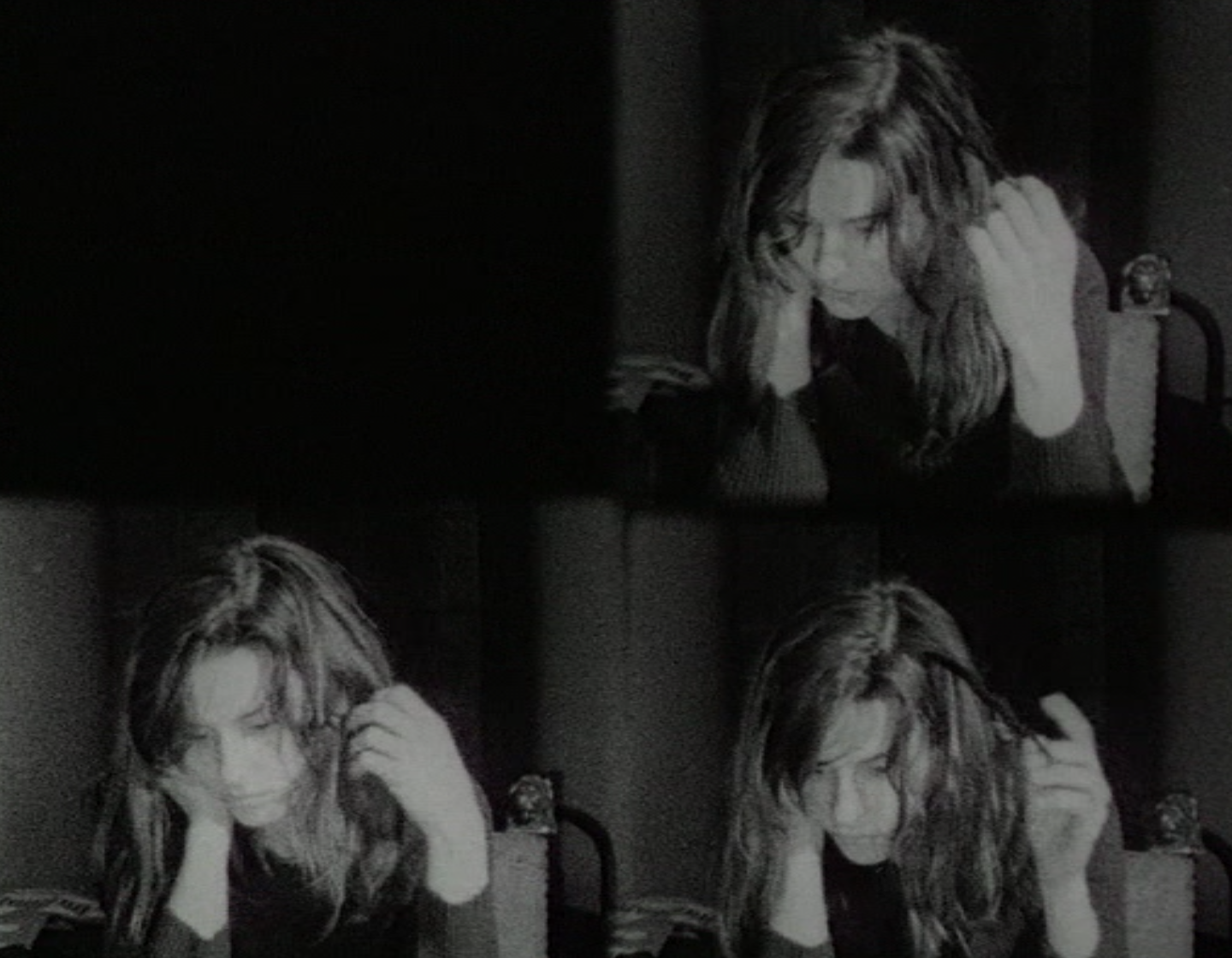
Learned Spontaneous Movements (1973) introduces this tension between rule and release through four takes of small gestures performed as Maurer reads: hair twirled, lips bitten, fingers moved toward the mouth in tiny cycles of self-soothing. Variations accumulate with the logic of an étude. The voiceover in an untranslated language becomes a ghost-signal whose meaning is withheld but whose cadence settles into the room. As takes multiply, comprehension erodes until only rhythm remains in unconscious behavioral patterning.
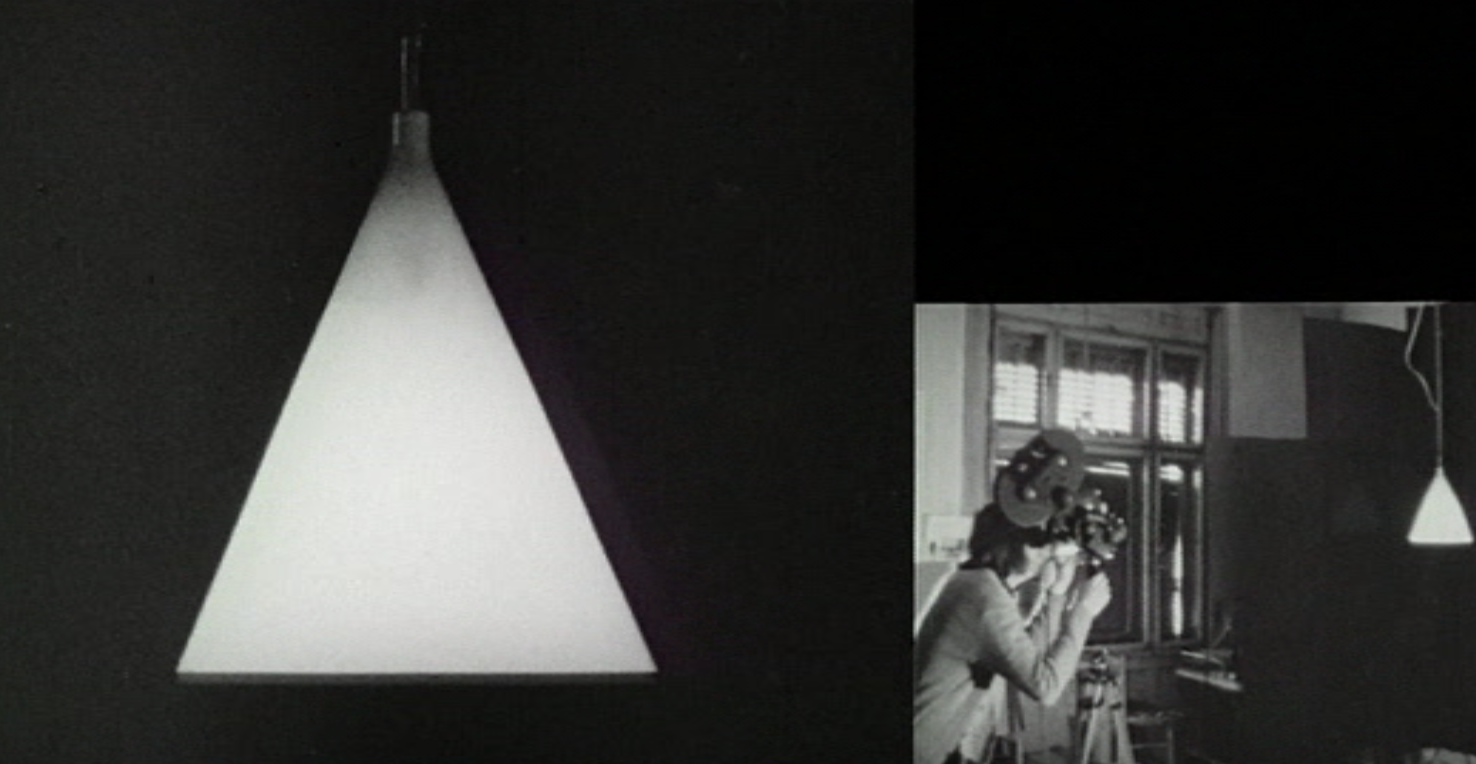
Relative Swingings (1973/75) is a mesmerizing exploration of a conical lamp swinging in space and recorded through a split-screen setup that reveals both the object and the mechanism filming it. Maurer exposes the infrastructure of perception, letting the camera that films the camera act as a kind of auxiliary consciousness. Mechanical grinding aligns with the lamp’s pendular arc. And then, a quiet miracle occurs as the object takes on a cosmic significance. The pleasure of watching it feels as if a thought had been suspended in the air and allowed to make its own skeleton visible.
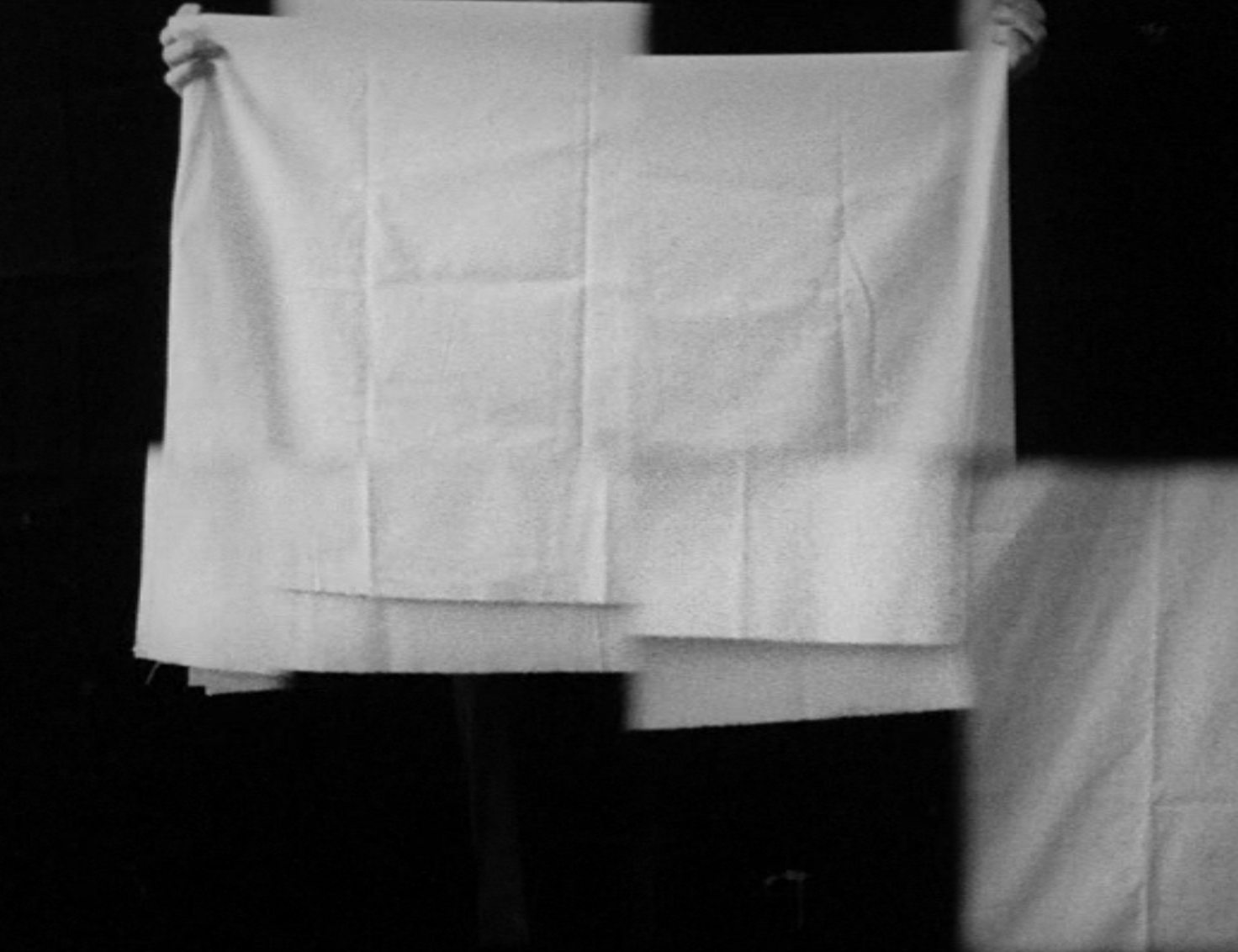
Timing (1973-80) brings us closer to the body. A plain linen sheet becomes a screen, an object, and a problem. It is folded and unfolded while mirrored projections track its shifting geometry. The absence of sound lays bare the concentration at work, turning domestic labor into a contemplative action. The sheet’s creases are diagrams of invisible forces that echo contractions of memory, landscape, and skin.
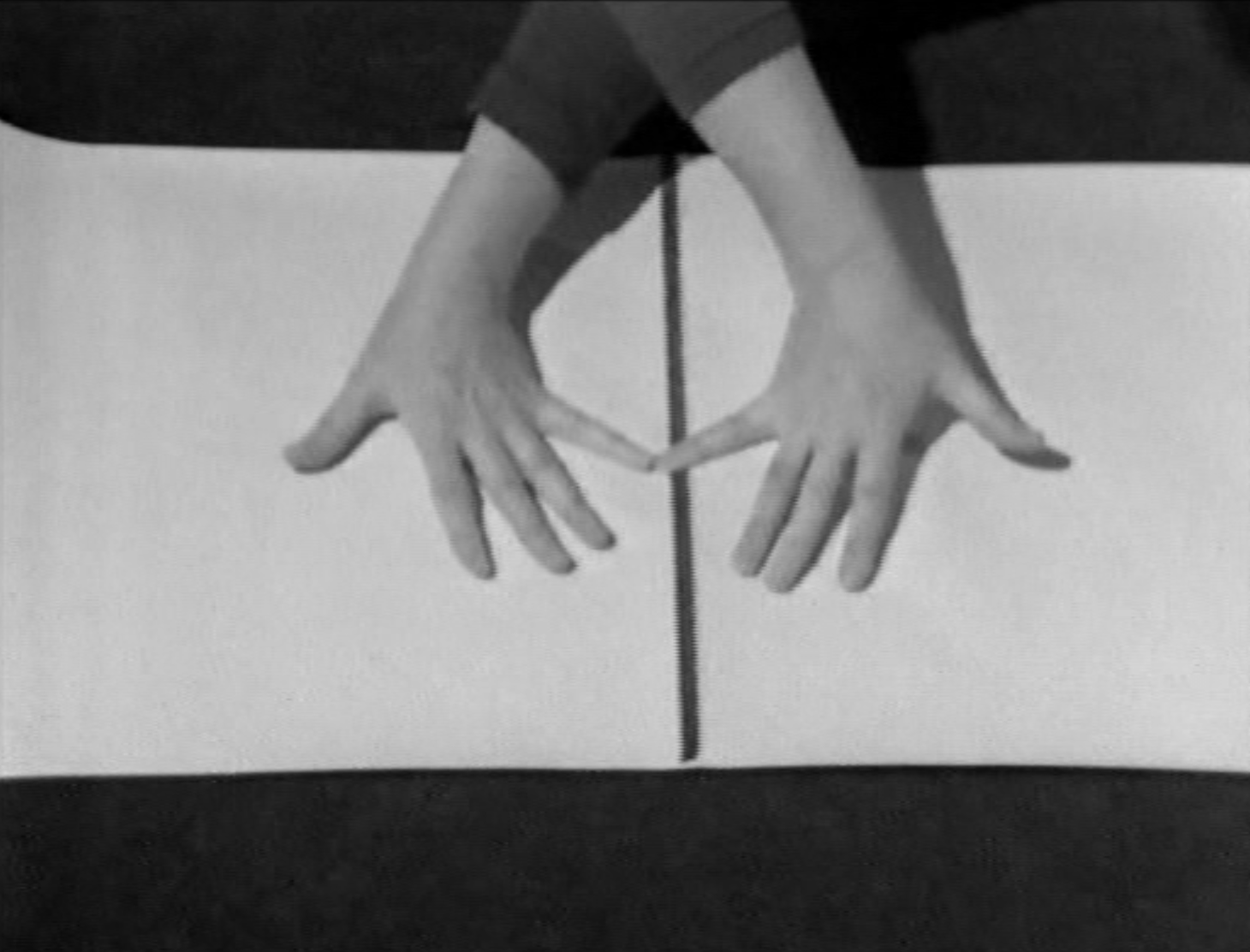
Proportions (1979), Maurer’s first piece made with video, is intimate in its austerity. She uses a long roll of paper to measure her arms, legs, head, and torso, thus charting the room and the world around her. She walks with her hands, rolls her head across the paper, and marks every change of course through profound self-calibration. The message is undeniable: without us to insist on their significance, metrics would fall apart like so many atoms.
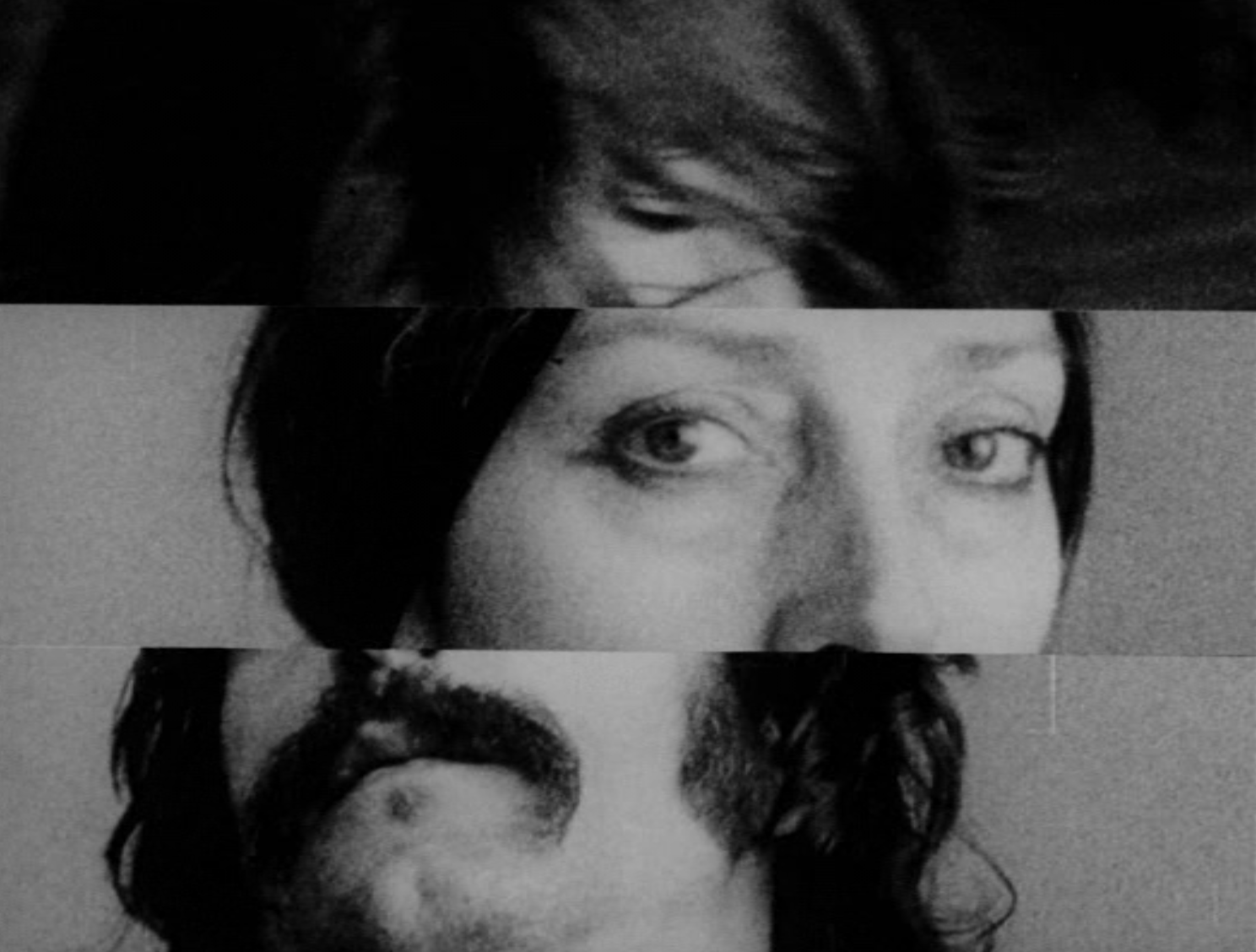
With Triolets (1980), she achieves a crystalline balance between three focal lengths, three subjects, and three sung tones that assume ceremonial force. Bodies and objects split and converge in a ritual of repetition that liberates rather than confines. The voices, sung in quiet invocation, lend the work an air of secular liturgy. It is among the cycle’s most resonant pieces, a sustained articulation of harmony born from constraint.
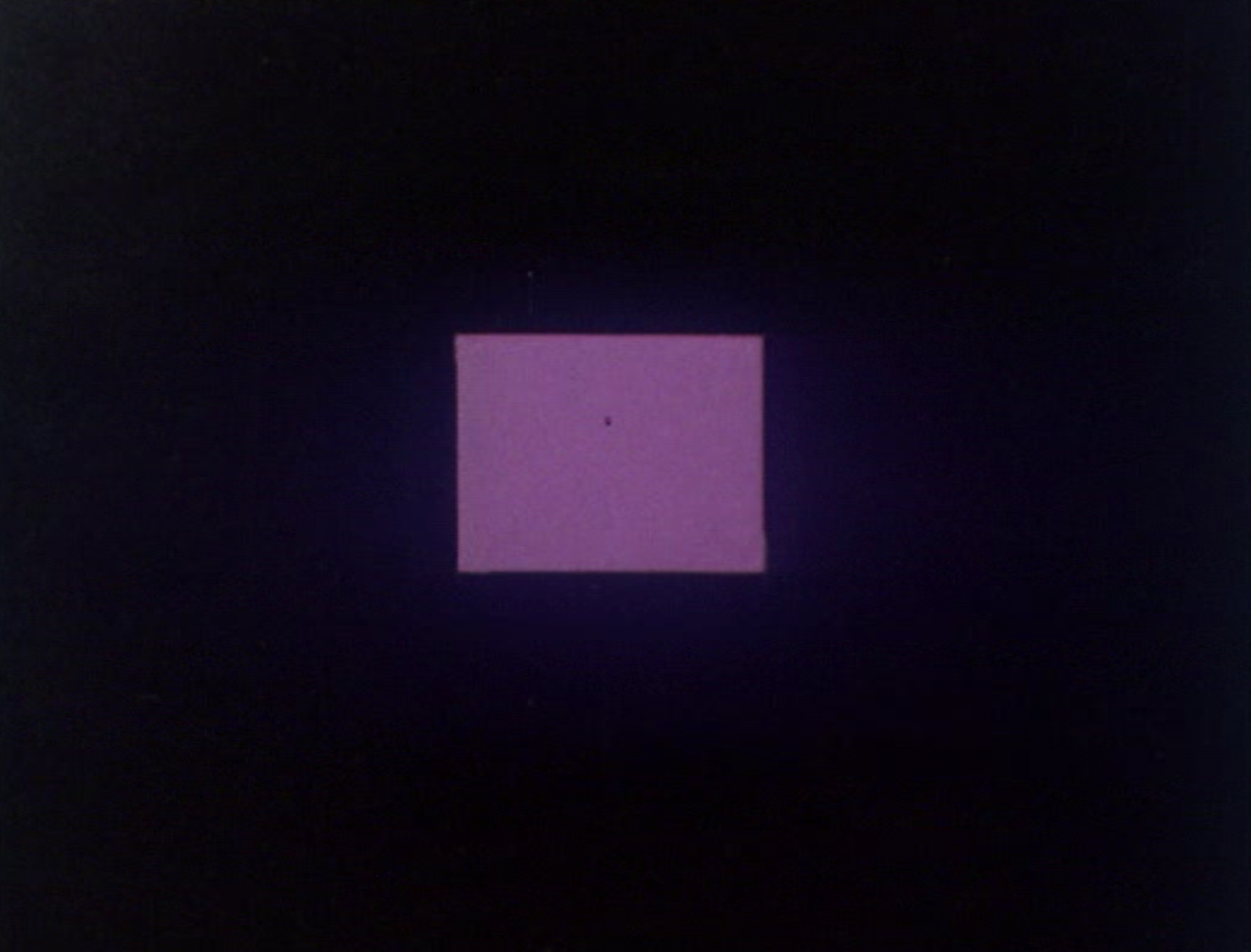
Kalah (1980) transforms an ancient Arabic board game into a synesthetic machine. Colored squares pulse with tones, evoking early video graphics or elemental sound scores. It appears playful on the surface, yet behind the game’s syncopation lies the proportional logic that threads through Maurer’s practice writ large. Strategy is now an acoustic and chromatic event.
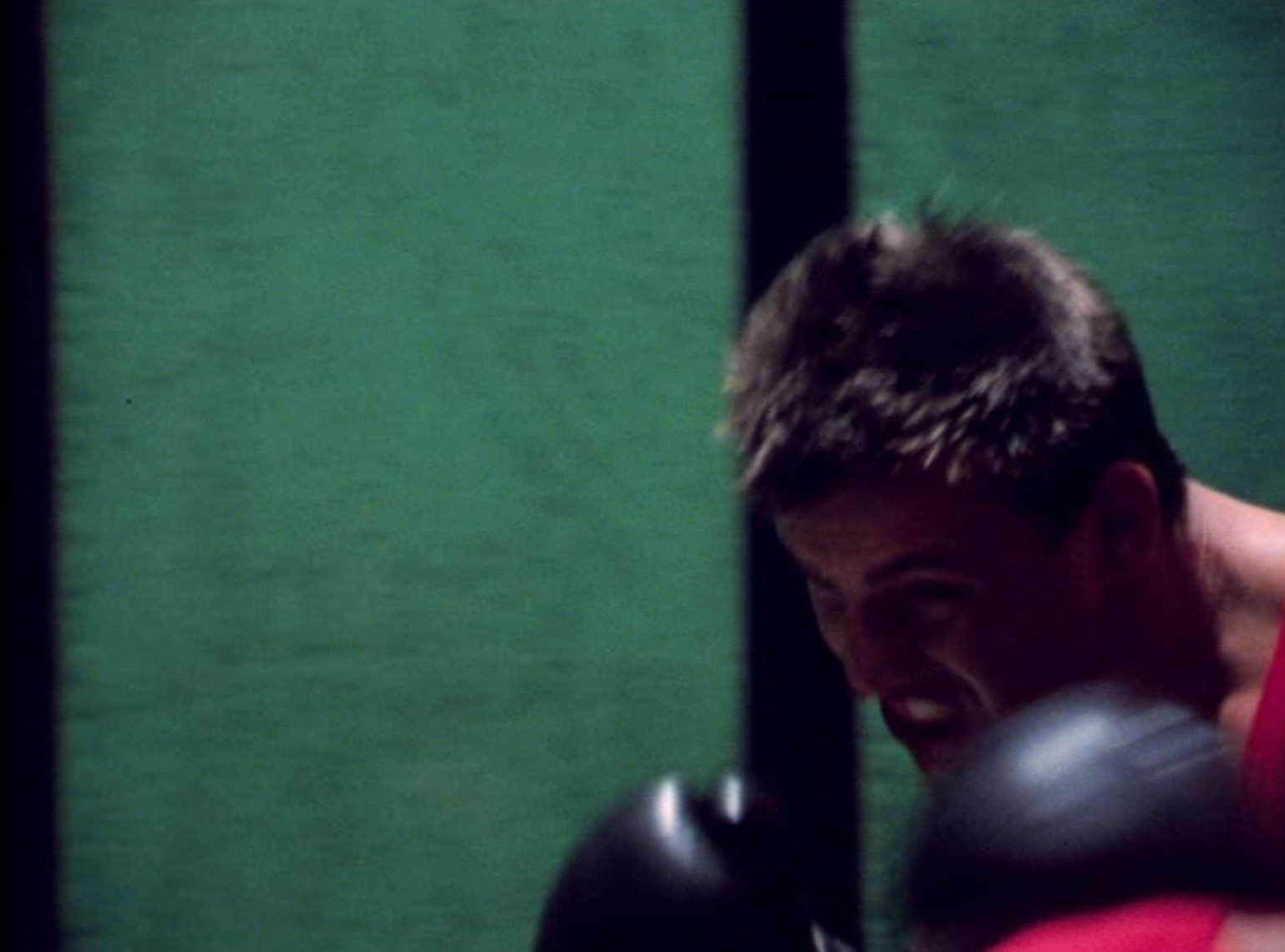
The Inter-Images trilogy (1989/90) stretches into mediation. Part 1, “Retardation,” shows a face glimpsed through rectangles that flicker like shuttered windows, each opening accompanied by electronic tones. Part 2, “Streams of Balance,” follows a nearly nude male dancer in a dark, overhead-lit space, mapping equilibrium with anatomical poise. Part 3, “Anti-Zoetrope,” places two men boxing within a cylindrical enclosure viewed through vertical slits, slowing violent motion into sculptural intervals.
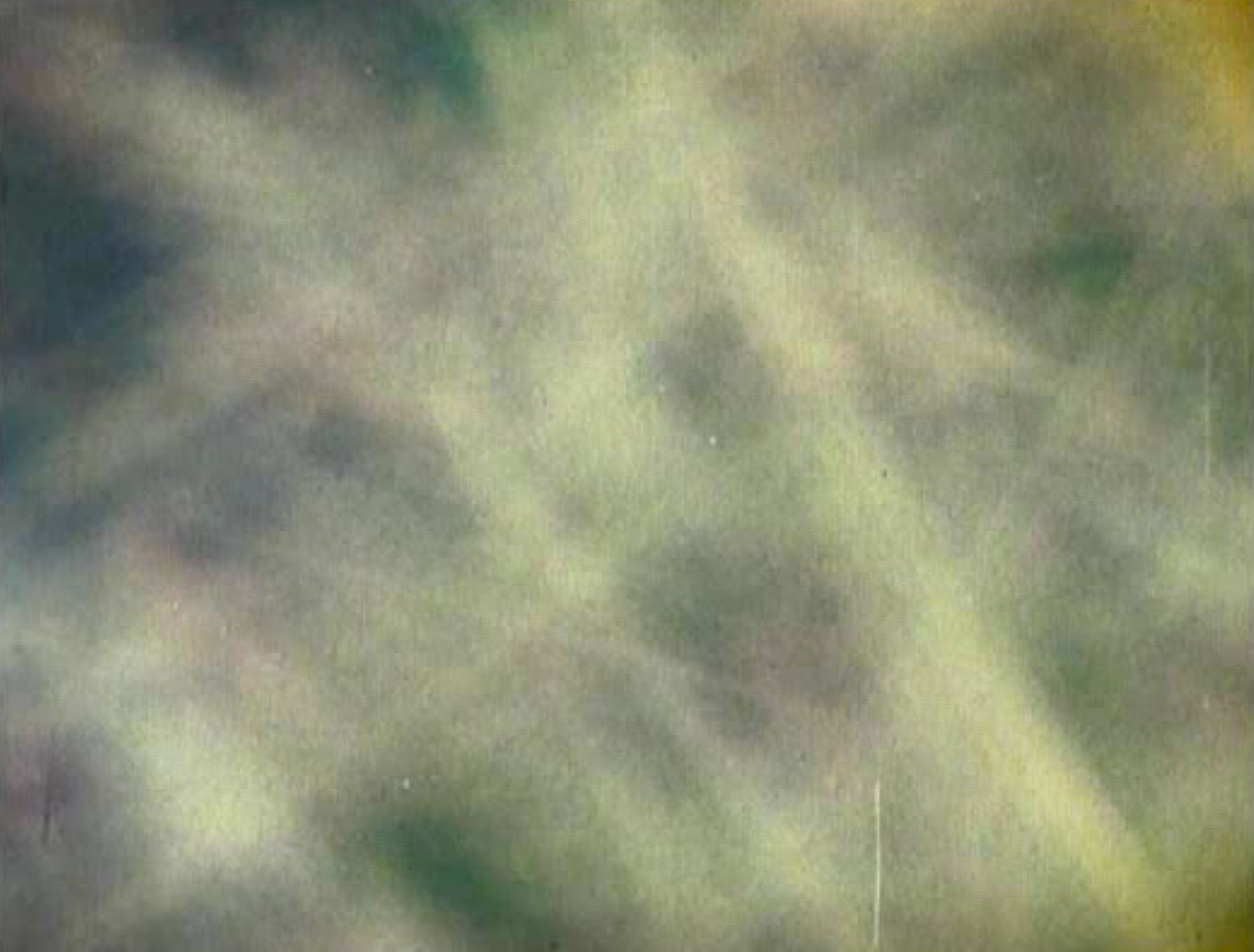
The bonus piece, Space Painting, Project Buchberg (1982/83), anchors her cinematic and painterly intelligence. She moves through an outdoor environment as if drawing from it, painting with air and light while allowing landscape, stone, and shadow to render the action in a whispered manifesto. Art is not imposed upon space but coaxed from it, uncovered through engagement rather than declaration.
Throughout this artfully curated program, Maurer returns again and again to the idea that seeing is a disciplined act, a negotiation between structure and sensation. She seeks not to depict the world but to reorganize it proportion by proportion so that the viewer can relearn how to treat the eyes not as windows but as crucibles for the everyday.
 Between Sound and Space: ECM Records and Beyond
The reviews of the videos have been nice, but I would like to see more
Since ECM is done releasing for this year, I’ve been focusing on some long-neglected review projects, of which reviewing the entire INDEX series of DVDs was one. Starting tomorrow, I will have more ECM-related content on the way as we finish out 2025. Thanks for reading!