John Abercrombie guitar Joe Lovano tenor saxophone Drew Gress double-bass Joey Baron drums
Recorded September 2011 at Avatar Studios, New York
Engineer: James A. Farber
Assistant: Bob Mallory
Produced by Manfred Eicher
Within A Song is more than a pretty title. It’s the credo of a musician whose path has taken him far from home in one of the most uncompromising journeys in modern jazz. And yet, guitarist John Abercrombie has never forgotten his roots. This album represents a return to them—a smooth, slow-motion plunge into a collection of songs that defined his search for a voice in the 1960s.
The product of this retrospection is a session that abandons surface-level concerns of virtuosity and velocity for reverence and reference. In the latter vein the set list is a goldmine of canonical repertoire, beginning with a nod to Sonny Rollins. As well as setting a relaxed tone that never dies, “Where Are You” turns the kaleidoscope of Abercrombie’s self-named quartet. Tenor saxophonist Joe Lovano, bassist Drew Gress, and drummer Joey Baron are no strangers to either the set list or to each other, and their simpatico vibe magnifies the humility of their leader’s expressiveness. With a non-oppressive sultriness honed over decades on the jazz club stage, these veterans play with their eyes closed and ears open. Abercrombie pays further homage to Rollins in the slightly ratcheted-up title track, for which Lovano, slick and confident, cracks open a vintage of chromatic champagne. Two Abercrombie originals, unusually few in proportion to the covers, reveal the cosmic side of his picking. Baron’s cymbalism keeps things delicately grounded in “Easy Reader,” in which Lovano opts for an earthier mapping, while the upbeat “Nick Of Time” illuminates prisms across the band.
But the album’s heart lies in the greats. Miles Davis’s “Flamenco Sketches” gets a unique facelift. More ebb than flow, its canopy shines with dots of tenor light. Indeed, as the music progresses, it’s clear that Lovano is the star here. Whether by his measurement of afterglow in a teetering rendition of Ornette Coleman’s “Blues Connotation” or the meditative springboard he builds for Abercrombie’s uplifting “Wise One” (John Coltrane), to say little of the “Interplay” (Bill Evans) that brings it all together, his ability to make song of space has rarely been so nude. Like the harmonies he shares with guitar in wizened take on Sergio Mihanovich’s “Sometime Ago,” he understands and demonstrates the value of listening before speaking.
All in all, Within A Song is a cogent enough affair. Foregoing the acrobatics of which the young may be so enamored, it’s assured enough in what it has to say to say it without ego. Rather than stand around politely in the waiting rooms of its legendary honorees, it slides tunes under the cracks of their doorways in hopes that somewhere they will be heard. Buy it for Abercrombie, but stay for his friends, and especially for Lovano’s charcoal beauties. And if you want something more nimble, you need only take 39 Steps to find it.
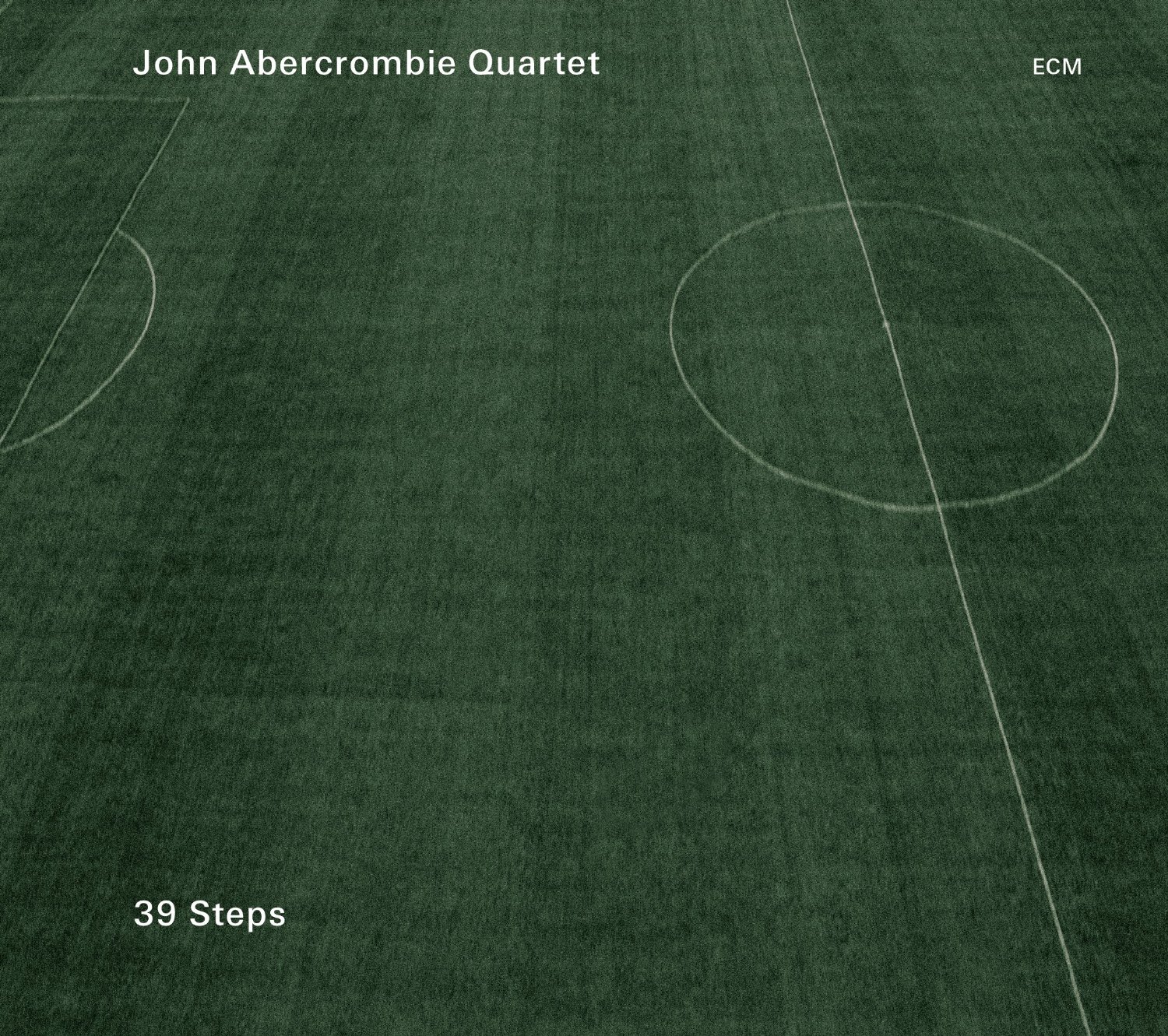
John Abercrombie guitar Marc Copland piano Drew Gress double bass Joey Baron drums
Recorded April 2013 at Avatar Studios, New York
Engineer: James A. Farber
Assistant: Bob Mallory Produced by Manfred Eicher
If ever there was, as this album’s sole free improvisation would phrase it, a “Shadow Of A Doubt” of John Abercrombie’s prowess, then here is fiercely understated confirmation of his staying power. Despite sitting atop a career spanning decades, the guitarist sounds as youthful and buoyant as ever, yet with a reflective edge that comes only with experience. Such is the lyrical dichotomy of 39 Steps, and all of it served by world-class engineering that gives the instruments their respective spaces but joins them through shared breath.
With bassist Drew Gress, drummer Joey Baron, and pianist Marc Copland (making his ECM debut) along for the ride, Abercrombie takes the listener on a road trip as fresh as it is nostalgic. In the latter vein are the eye-squintingly melodic “Bacharach,” the slice of chromatic brilliance called “Another Ralph’s” (a follow-up to Abercrombie’s classic tune “Ralph’s Piano Waltz”), and “As It Stands,” which feels like a cigarette burning down to the filter, the two chordists taking turns exhaling the smoke. The leader’s pen yields three more tunes. “Vertigo” is the first of a handful of Alfred Hitchcock references and opens the session with a laid-back vibe that is, given its title, surprisingly congruous (a four-dimensional take on the standard “Melancholy Baby” at the tail end feels far more off kilter). Copland eases the rest of band into focus here with an elegant intro and further contributes the album’s first noteworthy solo. Two remaining Abercrombie originals showcase the composer at his evocative best. “Greenstreet” feels like ice-skating across a winter wonderland even as it thaws in the sparkle of Baron’s cymbals, while Gress’s bass ladders adroitly, every bit as limber as the rest. The slack-jawed title track, for its part, simplifies things by opening single note before expanding into a fragrant rose. Abercrombie takes great care to strip that rose of its thorns until it can be safely handled.
Copland’s two offerings map the quartet’s brightest courses, stretching highway through the joyous “LST” and setting up the tensile atmosphere of “Spellbound” with assurance. The first tune boasts simpatico timekeeping from the rhythm section, giving Abercrombie more than enough court to lob his soaring improvisations, and in second, though more relaxed, making way for some of his most forthright playing in years.
Then again, Abercrombie has always favored tone over muscle, and here the fine tweaking of his experience pays off in spades. This is his finest album in recent memory and may just earn its place among your old favorites with repeated listens.
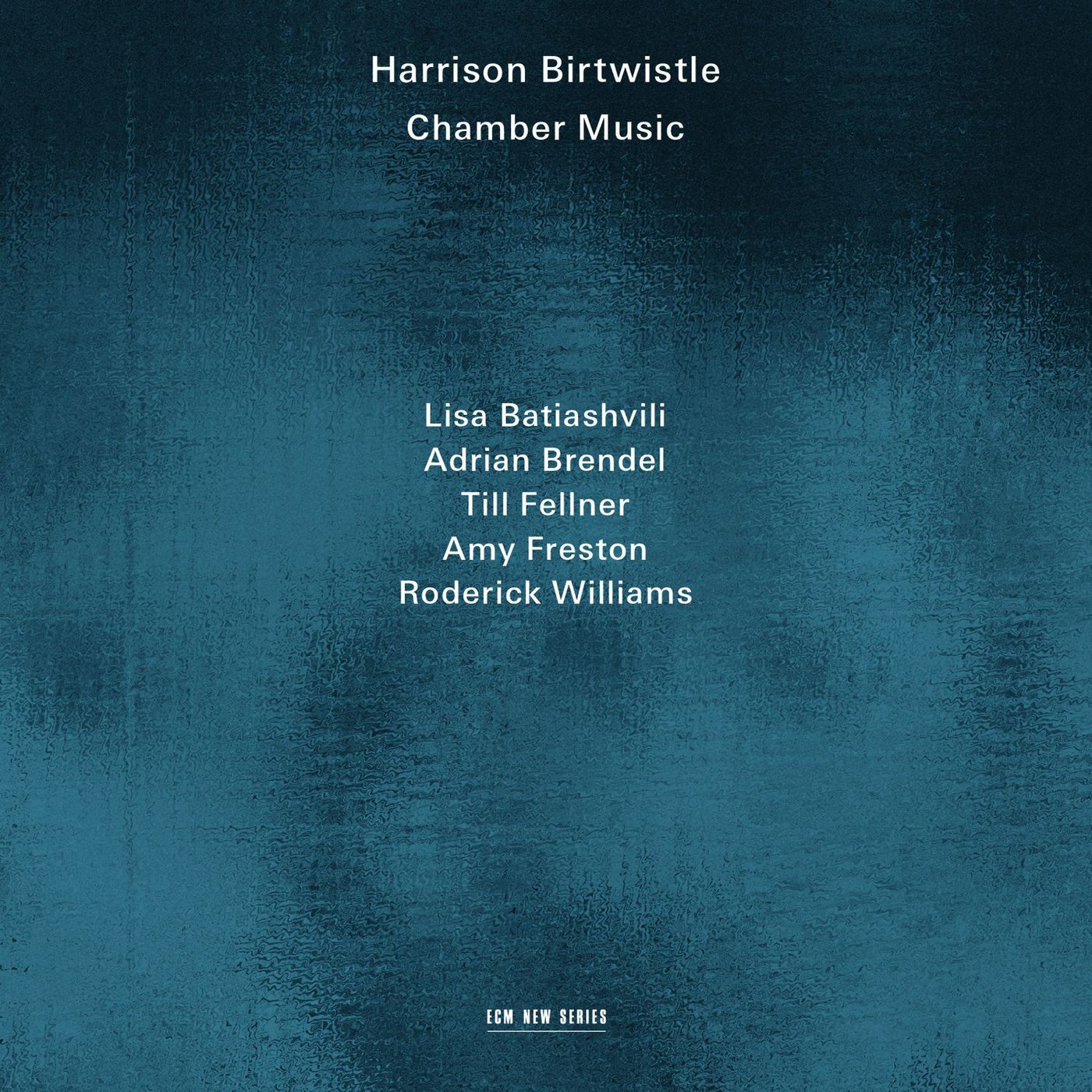
Lisa Batiashvili violin Adrian Brendel cello Till Fellner piano Amy Freston soprano Roderick Williams baritone
Recorded August 2011, Herkulessaal der Münchner Residenz
Engineer: Markus Heiland
Produced by Manfred Eicher
Harrison Birtwistle has garnered continental attention as Britain’s leading living composer, despite (if not also because of) the occasional controversy, including a much-criticized broadcast of Panic, a work for alto saxophone and orchestra written for the Last Night of the Proms in 1995. If that work caused a stir, it wasn’t so much due to the music itself. Even the infamous riot provoked by Stravinsky’s Rite of Spring had less to do with sound than staging. It was a question of context and expectation. In a space typically occupied by Elgar and the like, it was jarring to be thrown into the deep end of modernism without a life preserver. One can approach a recital album, however, on one’s terms, treating it as would a scientist who both knows what to expect and expects the unknown.
In his liner notes for ECM’s first ever reckoning with Birtwistle, English composer and music critic Bayan Northcott stresses the cyclical, as opposed to the goal-directed, vision of the music selected here. Like Elliott Carter, to whom it is sometimes compared, Birtwistle’s music rides the edge of incomprehensibility, all while maintaining the exuberance of one who enjoys his craft. His chamber works in particular are non-confrontational, welcoming the listener by virtue of their genre-defying grammar and rhythmic impetuses. This puts no small demand on would-be performers, who in this instance carve likenesses of the scores as if they’d hewn the originals.
Any knee-jerk instinct to call this disc “fantastic” will be quickly doused by the Objectivist poetry of Lorine Niedecker (1903-1970), whose biological realism and observational intelligence are upheld by Birtwistle’s analogic Three Settings. Scored for soprano and violoncello, these elicit flashes of avian anatomy, of the body as pendulum (and vice versa), of scavenging lives compressed into molecules of continuity. Amy Freston gives an airy yet tactile quality to the texts, tracing their flow in high-resolution detail, while cellist Adrian Brendel hops along a more fragmented path, the plural to Freston’s singular. This same combination closes the program in the Nine Settings of Lorine Niedecker, where again the intertextuality of the verses finds kindred spirit in the writing. Freston meets the unenviable task of constant jumps in register with utmost precision, and in so doing highlights the symbiosis of sound and signal. This is particularly evident in the ecologically minded “My Life,” wherein she (poet or singer) pulls sentiments right out of the ground, clods of earth still clinging to every other branch and waiting to be notated before letting go. “Sleep’s Dream” is another beauty, its cello seesawing while the voice tears a childhood photograph so gradually that by the time its parents have been burned, it is too late to reverse the smoke.
Between these works, one first discovers the Trio for violin, violoncello, and piano. Characterized by an adroit cogency of part to whole, its every space has purpose. Violinist Lisa Batiashvili and pianist Till Fellner make democratic use of volume and pitch, drawing a horizon line through a sky that is lit neither by sunrise nor sunset. Every color has its opposite, every action its reaction. Second, and more peaked than valleyed, is the enigmatically titled Bogenstrich—Meditations on a poem of Rilke for baritone, violoncello, and piano. The instrumentation is somewhat misleading, as Roderick Williams’s role serves to bookend the piece against skeletal pianism and ashen string. In the final “Liebes-Lied” especially, cello and voice become equal partners in their worlding. The connective tissue of cello-piano duets along the way grows into a self-sustaining ecosystem and shows Birtwistle at his colorful best.
This is chamber music in the truest sense: not simply because it is performed in one, but also because it builds another by virtue of an architecture made translucent by the opacity of the soul.
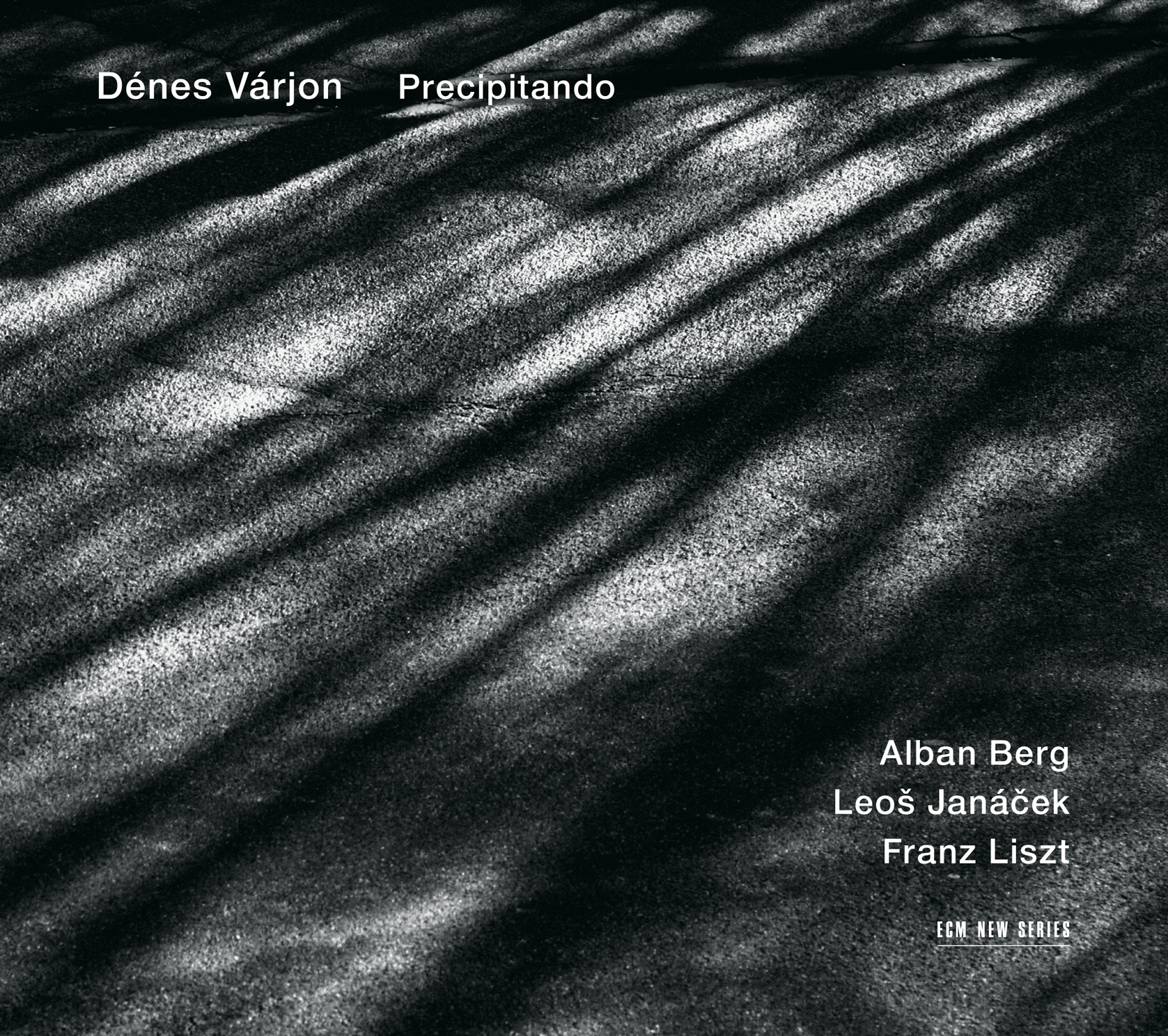
Dénes Várjon piano
Recorded April 2011, Auditorio Radiotelevisione svizzera, Lugano
Engineer: Markus Heiland
Produced by Manfred Eicher
Following his traversals of programs by Robert Schumann (New Series 2047) and Heinz Holliger/Clara Schumann (New Series 2055), Dénes Várjon returns to ECM with his first solo recital. Recorded in the pristine acoustics of the Auditorio Radiotelevisione svizzera in Lugano, Switzerland, Precipitando documents a new level of interpretive power from the Hungarian pianist.
If the album’s title, a music term meaning “rushing” or “headlong,” is realized anywhere, it is in the concluding b-minor Sonata of 1853 by Franz Liszt, with whom Várjon’s intimate familiarity is obvious from the start. Dark beginnings breed a full-blown thesis statement to almost overwhelming effect, yet Várjon handles a technically demanding interweaving of poetry and prosody with especial care. Because passages of quietude are relatively short-lived in this sonata, they tend to feel ominous whenever they do occur, fighting the invitation of descending motifs toward hope of light. Each such eclipse gives way to the diamond rings of Liszt’s dramatic reveals and, ultimately, to a shining, heavenly ladder.
At the beginning of the program we have Alban Berg’s Sonata op. 1 (1907/08, rev. 1920). Theodor Adorno called it his “apprentice piece,” as it was written under Arnold Schoenberg’s tutelage and bears the stamp of that teacher’s attention to detail. Although intended to be an example of traditional sonata form, after completing the single movement of which it is now composed, Berg (read: Schoenberg) found it to be complete. Like the Liszt, it is in b minor, but wanders into chromatic alcoves wherever it can. Also like the Liszt, it makes a torrent of a trickle and finds balance in the occasional reflection, sailing an ocean of tough-skinned lyricism toward delicate shores. A notably intense feeling of tactility cries out from Várjon’s reading.
Leoš Janáček’s V mlhách (In the mists) of 1912 makes its second appearance on ECM, following an interpretation by András Schiff (New Series 1736). Where Schiff’s mists are diffuse and autumnal, Várjon’s curl in the oncoming light of a spring dawn. In less uncertain terms, Schiff teases out the darkness in the light, while Várjon emphasizes the light in the darkness. It’s a bold and effective move, considering that these melancholy pieces tend to be associated with a composer thrown by conflict. Particularly memorable here are the arcing Andantino and final Presto, the resolve of which the pianist tenderizes with open eyes.
As a performer, Várjon is distinguished by his command of dynamics. At his fingertips, pianissimos are dreams and fortes are destructions. He is particularly adept at stalking the piano’s lower register, from which he elicits a rare fullness of clarity and in the soil of which he finds the harmonic roots of all three pieces here tangled in secret.
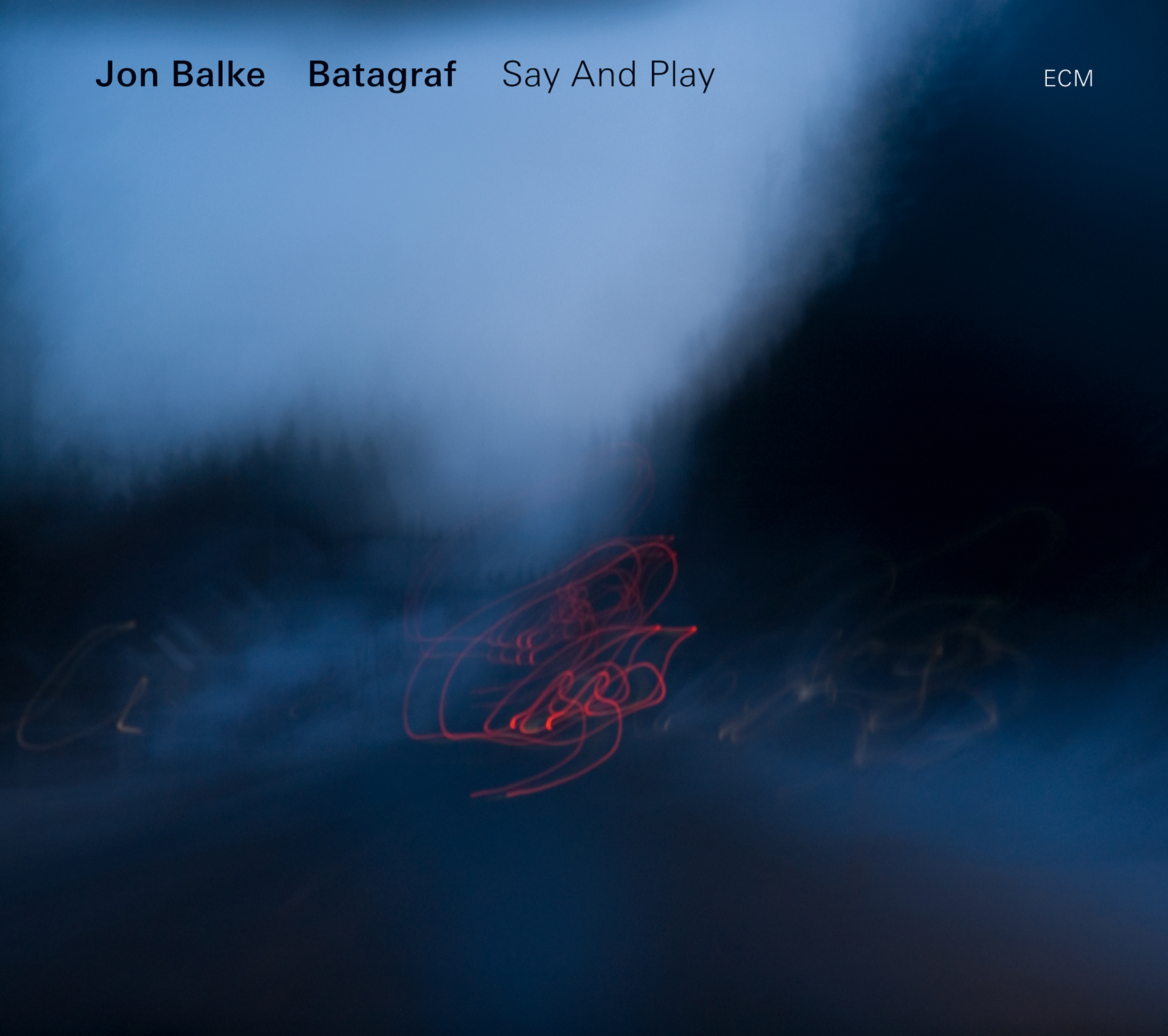
Jon Balke piano, keyboards, electronics, tungoné, darbouka, percussion Helge Andreas Norbakken sabar, gorong, djembe, talking drum, shakers, percussion Emilie Stoesen Christensen vocals Erland Dahlen drums Torgeir Rebolledo Pedersen poetry reading
Recorded in various locations 2009 Mixed by Olav Torget in Olav Torget’s studios Winter 2010/11 Recording producer: Jon Balke Executive producer: Manfred Eicher
An ECM Production
Jon Balke’s Batagraf project may feel for some to be an indecipherable thing. Yet beneath its calligraphic rib cage beats a primal language. It is both the life force of rhythm and the rhythm of life force, a generative cycle wherefrom speech unloads its dreams into the transport of a welcoming ear. At the core of this incarnation are Balke himself, percussionist Helge Andreas Norbakken, and drummer Erland Dahlen. To these the session adds the voice of jazz singer Emilie Stoesen Christensen and the poetry of Torgeir Rebolledo Pedersen, read in its original Norwegian by the author.
The latter augments some of the album’s most tetrahedral drumming, attaching roots and stems to the muted pianism of “Calmly” and shuffling its tongues in the garden of breathy synths that is “The Wind Calmer.” Further engagements include “Hundred-Handed” and analog textures of “Winds.” Balancing these are the vocals of Christensen, who in “Riddle #1” and “Riddle #2” fleshes out Batagraf’s philosophy most succinctly. These twisted songs of unanswered questions are gyroscopes forever wobbling but never falling. Unsettled rhythms and piano work their way into the subconscious, where knowledge is questioned, answers are deflated, and the clothes line from which every spoken word hangs trembles in anticipation of a new wash. As in the song “One Change,” Christensen embraces all of this as easily as she abandons recognizable words.
As for the drummers, we find them in manifold spirits in the tender “Baka #65,” and of an especially intimate mind in “Everyday Music” and “Vjup,” for the last of which Christensen embarks on a whimsical deconstruction of masculine pride. The level of psychological extraction realized here shows just how adept these musicians are with intellectual needles and sonic threads. Whether following the Jon Hassell-like current of “Tonk” or digging the IDM beat of “Azulito,” they all seem fully present in the moment. Norbakken’s concluding yet inconclusive “GMBH,” the only track not written by Balke, finds even more beauty in distortions—layers of an archaeological dig, each with its own color and interlocking history. By unbinding words from their referents, they learn to swim with the minnows.
Mark Turner’s tenor is a singular voice in modern jazz. He is that rare saxophonist who eschews the trend of thinking outside the box by recalibrating its inner space to the tune of freedom. Turner embodies his surname, navigating every twist and corner of whatever melody lies before him as if rafting down a brilliant stream of consciousness. On ECM, Turner has conquered some of the strongest currents of his career so far with a craft so multifaceted that even notes of chromatic scales seem worlds apart.
As a guest artist of Enrico Rava (New York Days) and Billy Hart (All Our Reasons), he has proven his unpacking abilities with uncanny assurance. As a leader, he has shown himself to be more than a musician. He is a consummate storyteller. Yet even as a storyteller he favors at least two major narrative modes, each embodied by the albums I’ve put together below.
FLY
Year Of The Snake
Mark Turner tenor saxophone Larry Grenadier double bass Jeff Ballard drums
Recorded January 2011 at Avatar Studios, New York
Engineer: Aya Merrill
Assistant: Fernando Lodeiro
Produced by Manfred Eicher
When Turner broke out with Sky & Country, the ECM debut of his so-called FLY trio, he set up, along with bassist Larry Grenadier and drummer Jeff Ballard, a towering structure of expectation, the heights of which have more than doubled with Year Of The Snake. Not only have Turner and friends stepped up their game; they’ve redefined it.
Turner carries an even more sizable portion of the composing credits this time around, providing the motif for “The Western Lands” and its four variations. Its stepwise beginnings coax the trio from slumber as the sun draws in the last traces of night with its yawn. Arco bass streaks the overhead with plane trails as Turner’s coated tone pulls roots from below. In other iterations, these pieces—meant to evoke the western United States, from which all the band members originate—become increasingly haunted by their own ghosts. Brushed drums and starry percussion sketch silhouettes of autobiographical history as Turner and Grenadier divine the bones left behind. Yet before Ballard closes the circle with a cymbal meditation, there’s much in the way of visions to be had.
The strengths of each composer play to those of the other bandmates. Turner’s three main tunes, for example, highlight the bond of his rhythmatists, who ride the title track with dressage-like synergy and pull out all the stops for the aptly titled “Festival Tune.” Even Turner’s high-beam walks through “Brothersister” regain their toe line because of Grenadier and Ballard’s watchful ears. Together they scope out a massive construction site, looking for clues into the nature of improvisation—only to discover that its origins are to be found in rubble and memory. Ballard’s tunes front dialogues of reed and bass. From the artfully geometric “Diorite” to the slicker “Benji,” melodies leap from the fingers like cats. Turner, for his part, generally sticks to the higher end of the horn on this set, digging for grit only when required, as on “Salt And Pepper,” a noir-ish track that is a bass-lover’s dream.
The biggest revelation here, however, is Grenadier’s “Kingston.” Something of a sectional track, it links a chain of solos and duos before latching on to a groovy backbeat. Turner runs wild with inspiration here, running up the thematic latter and mulching it into a thousand pieces. Transgressing one unexpected horizon after another, he rejoins Grenadier over a spiraling train track of destiny. Like the album as a whole, it is as much a leap of evolution as intuition for the trio and a significant exposition of what jazz can be when allowed to roam.
(To hear samples of Year Of The Snake, click here.)
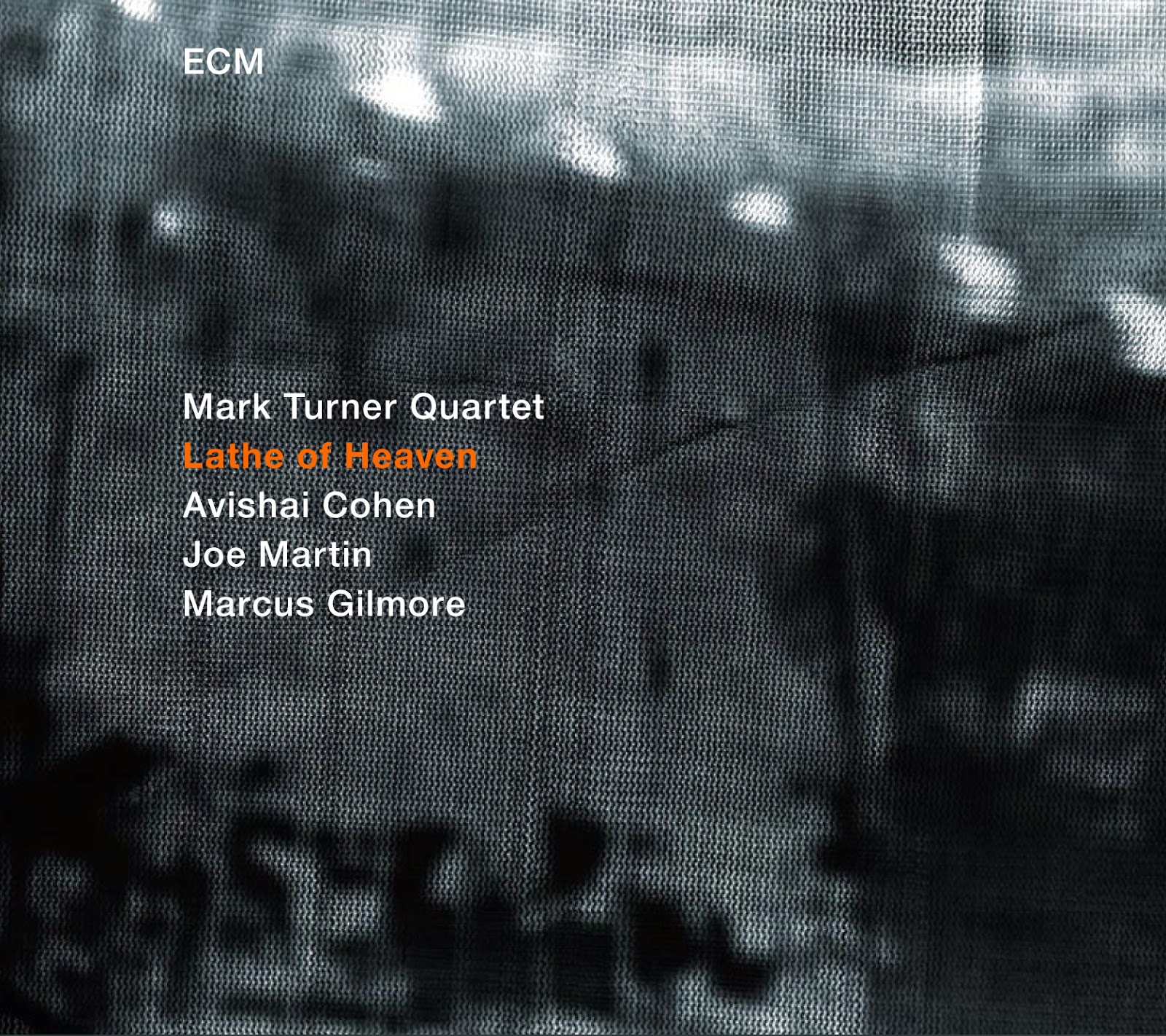
Mark Turner Quartet
Lathe of Heaven
Mark Turner tenor saxophone Avishai Cohen trumpet Joe Martin double bass Marcus Gilmore drums
Recorded June 2013 at Avatar Studios, New York
Engineer: James A. Farber
Assistant engineer: Akihiro Nishimura
Mixed January 2014 by James A. Farber, Manfred Eicher and Mark Turner
Produced by Manfred Eicher
Turner’s first nominal leader date for ECM is an altogether different animal. Named after a novel by Ursula K. Le Guin, it comes across as more interested in the science than the art of storytelling. Le Guin’s tale even gives us the perfect term: HURAD, which stands for Human Utility: Research and Development. Lathe of Heaven is indeed a laboratory of sonic utility, stretching the saxophone like a DNA profile chart and plotting its growth on staves.
As befitting of an album under his name, the entire set was written and conceived by Turner as an article of mystery. The title opener sets up a fresh dynamic between Turner’s tenor and the trumpet of Avishai Cohen. Their patterning reveals compositional acumen in spades, springing to life when bassist Joe Martin and drummer Marcus Gilmore kick in their four cents. But even as the full quartet guides the listener into a brilliantly populated landscape of urban memory, it’s clear that Turner is content to build his tunes in stages. Nowhere more so than in “Year of the Rabbit.” In addition to referencing Year Of The Snake, it throws a spotlight Gilmore, who at once lays out and navigates an intricate maze of snare and cymbal. It’s not surprising that the textural blend and modal harmonies here sound like John Zorn’s Masada, especially when one considers that Cohen has dipped into that songbook’s mystical waters in the context of his Lemon Juice Quartet. Amid his flurry of filament, Turner side-winds into focus to rearticulate the theme before moving vertically. “Brother Sister 2” nods again to Snake, expanding the spinal theme of its predecessor into a more protracted nervous system of (in)tensely rubato character. It unravels the thrumming heartstrings of Martin’s bass, breathing in deeper each time until a precordial catch snaps things back into place.
The remaining pieces of the puzzle pay homage in their own right. The tense, dissonant leads of “Ethan’s Line” evoke those of dedicatee Ethan Iverson. “The Edenist,” with its locked-in rhythm section and distinct soloing, references the possessions of sci-fi author Peter F. Hamilton. Combining Cohen’s low-flying dreams and Turner’s wider talons, it claws through branches to a moral nest within. And then there’s “Sonnet for Stevie,” Turner’s spacious tribute to the blues. There’s no need for “Wonder” in this or any other title, because this album is brimming with it. So ends the tale, in anticipation of another.
If Year Of The Snake is the dawn, then Lathe of Heaven is the dusk. Together they form a most satisfying day.
How brief in time, how infinite in measure.
(To hear samples of Lathe of Heaven, watch the video above or click here.)
My latest review for RootsWorld online magazine is of Jean-Louis Matinier and Marco Ambrosini’s Inventio. For what it’s worth, this is so far (and by far) my favorite ECM release of the 21st century. No exaggeration. Click the cover to read my review and hear samples of this phenomenal album.
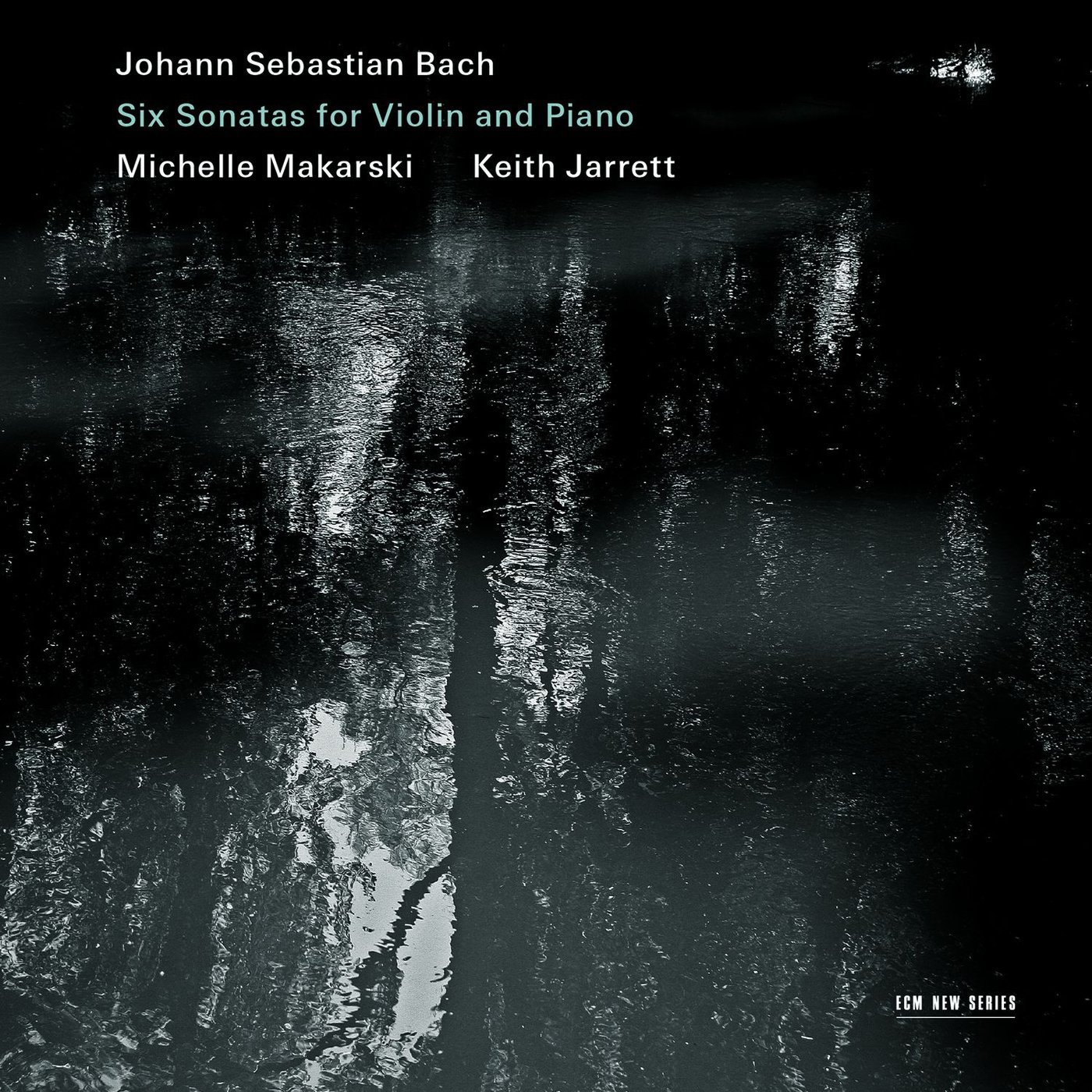
Johann Sebastian Bach
Six Sonatas for Violin and Piano
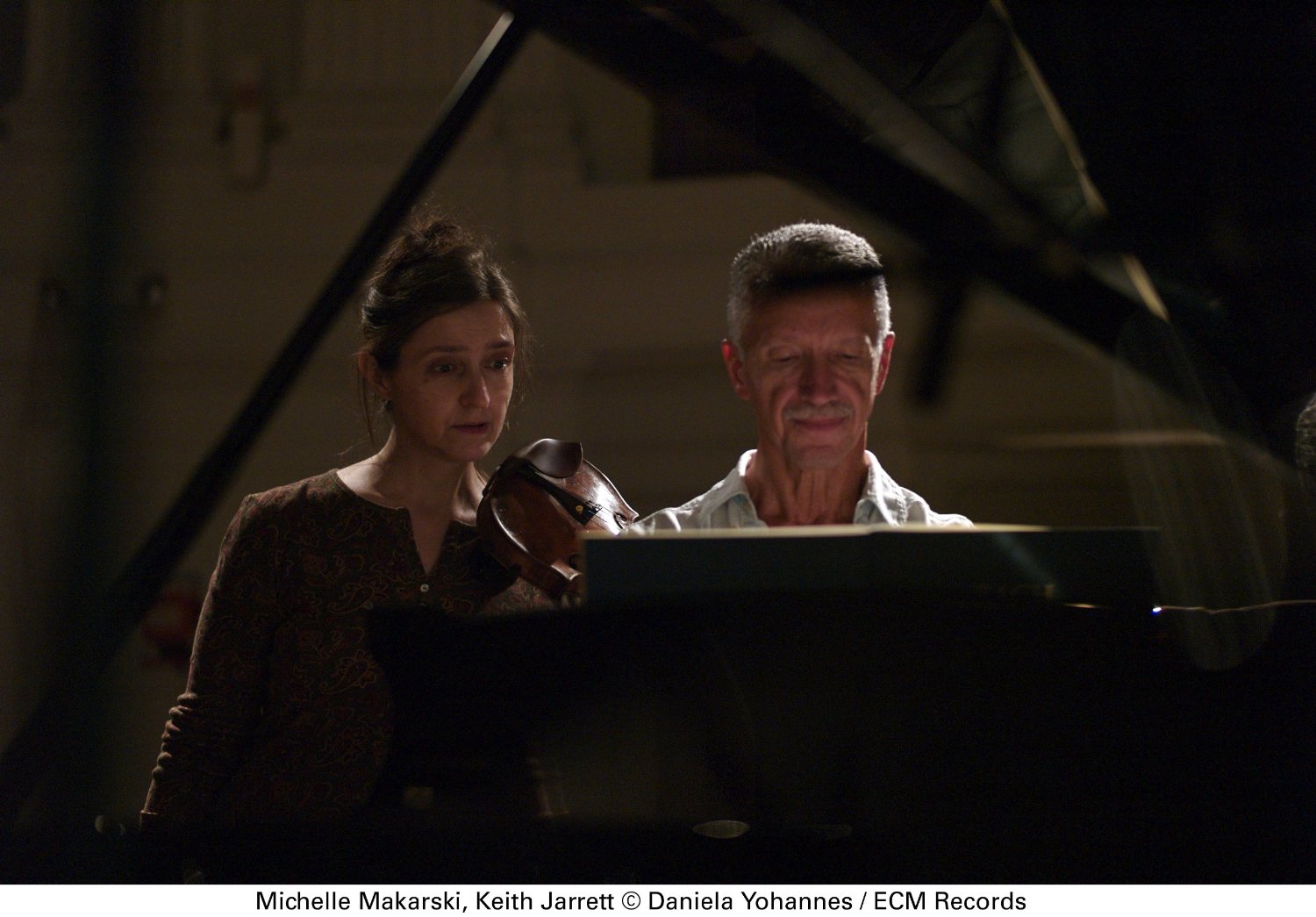
Michelle Makarski violin Keith Jarrett piano
Recorded November 2010 at American Academy of Arts and Letters, New York
Engineer: Peter Laenger
Executive producer: Manfred Eicher
An ECM Production
J. S. Bach’s Six Sonatas for violin and obbligato harpsichord (BWV 1014-1019) are not often recorded on piano, but few masters of the modern keyboard could make the combination work so articulately as Keith Jarrett. Although he might just as well have opted for harpsichord, as he did in duet with violist Kim Kashkashian for a benchmark recording of Bach’s Three Sonatas for viola da gamba and harpsichord (ECM New Series 1501), this time around the piano seems an intuitive choice. And for a partner, Michelle Makarski is ideal. Not only because she and Jarrett had been playing these pieces together on their own time for two years before stepping into the studio, but more importantly because she recognizes the power of an unfettered performance that serves the music over ego.
Written in the early 1720s during Bach’s Cöthen period, which encompassed both the tragedy of his first wife’s death and the triumph of his Brandenburg Concerti, these sonatas have rarely sounded more tessellated. There is a rounded quality to Jarrett’s pianism, which cushions Makarski’s pin-like precision. Thus, to the common characterization of the violin and keyboard as equal partners in these pieces, Makarski and Jarrett seem to say, “Let’s just see where the music leads us.” And indeed, spotlights of favor fall on either instrument at different points throughout the cycle.
Half of the sonatas are in major keys (Nos. 2 in A Major, 3 in E Major, and 6 in G Major), the other half in minor (Nos. 1 in b minor, 4 in c minor, and 5 in f minor). The majors are distinguished by their dulcet introductions and masterful harmonies, but each has its own idiosyncrasies. Where No. 2 balances spiraling architecture with pointillist delicacies, the astonishing No. 3 boasts interlocking color schemes and a heartrending Adagio, in which the violin emotes with all the history of a folksong. Yet the Sonata No. 6 is the most maturely constructed of them all. From its opening courtship of wing and wind, through the uniquely solo keyboard meditation at sonata center, and on to the boisterous finish, it follows a downright linguistic arc of development.
It is sometimes tempting to treat slow movements in Baroque repertoire as filler. Not so here, for in them Bach has cut some of the most precious jewels of his entire oeuvre. In addition to their robustness and lyrical integrity, Makarski’s uniquely nuanced vibrato lends them sanctity over ornament. Whether shining through Jarrett’s laden branches in the Andante of the Sonata No. 1 or chaining double stops through the Adagio of the Sonata No. 5, she treats each draw of the bow as a song in and of itself. Jarrett, by contrast, excels in the faster portions, showing in the final Allegro of No. 1 why his sense of rhythm is so acutely suited to Bach. The two find deepest equilibrium in the Sonata No. 4, which is like one giant helix, unbreakable and spinning.
The album’s booklet contains no notes—rare for an ECM classical release. Then again, the music has all the notes it needs. These roll off the fingers of the present interpreters like fluent speech from the tongue, creating a book on the first listen, the binding of which will only strengthen as its cover is opened time and again.
(To hear samples of Six Sonatas for Violin and Piano, click here.)
Carolin Widmann violin Alexander Lonquich piano
Recorded October 2010, Historischer Reitstadel, Neumarkt
Engineer: Stephan Schellmann
Produced by Manfred Eicher
“We cry, knowing in untold happiness, that this music is as it is in the promise of what one day we ourselves will be. This is music we cannot decipher, but it holds up to our blurred, over-brimming eyes the secret of reconciliation at long last.”
–Theodor W. Adorno, “Schubert” (1928),
trans. Jonathan Dunsby and Beate Perrey
If Adorno’s thoughts on Franz Schubert seem as indecipherable as the music they describe, it’s only because I have taken them out of context, arriving as they do at the tail end of a dense essay. Similarly, the C-Major Fantasie of 1827 that begins this all-Schubert program from violinist Carolin Widmann and pianist Alexander Lonquich comes to us excised from the tail end of a dense life. Just shy of 31, Schubert would die 11 months after committing it to paper in bipolar flurry of activity. The piece is widely considered to be the most significant he ever composed for violin, and is distinguished by the technical and emotional demands it places on worthy performers. Even Adorno was ambivalent about the overall success of the Fantasie, rightly praising its protracted Andantino as a melancholy masterstroke while in the same breath criticizing the final Presto as something of a cop-out. If we are to take the implications of this reaction to their fullest, however, then we must also accept that Schubert was less at ease proclaiming endings than he was contemplating their inevitability.
Over a traversal of seven movements, Widmann’s tone control yields thrilling restraint and expectorations by turns, while Lonquich matches her every move with an inward-looking fluidity. Together they crumple rays of light into balls of shadow, tossing them over cliffs of uncertainty until they learn to fly. To the latter end, the Allegretto has never sounded so uplifting than in their hands. With unforced drive and organic handling of tempi, the duo articulates the aforementioned Andantino as if it were a lullaby they’d heard since the cradle. In true Schubertian fashion, they feel intimately connected at a distance, stretching between them a connective emotional reserve. In so doing, they deviate from ECM’s previous recording of this piece (New Series 1699) by way of a less parallel approach that emphasizes the final movement’s reversal of the first.
Schubert’s Opus 70, the b-minor Rondo brilliant of 1826, fills the program’s sweet center with an intriguing diptych. A declamatory Andante sets up a nearly 12-minute Allegro, of which the running melodies and gorgeous key changes reveal a crystalline intellect at play. There is a seemingly inexhaustible energy about this piece, which cracks open each potential ending like an egg and scrambles it back into the shell.
The A-Major Sonata of 1817 closes with the youngest work of the program. Some Beethoven influence is palpable, especially in the leaping Scherzo, but the methodical, nuanced airiness of the opening Allegro is all Schubert, as are the kaleidoscopic Andantino and sly finale. Hearing Widmann and Lonquich navigate its many corridors, one may agree with their characterization of Schubert as the proverbial wanderer, but to these ears their interpretations depict the opposite. It was not Schubert but the landscape in which Adorno situated him that wandered in concentric circles, leaving the composer to pick and choose his songs until the circles closed their mouths far too early.







 Between Sound and Space: ECM Records and Beyond