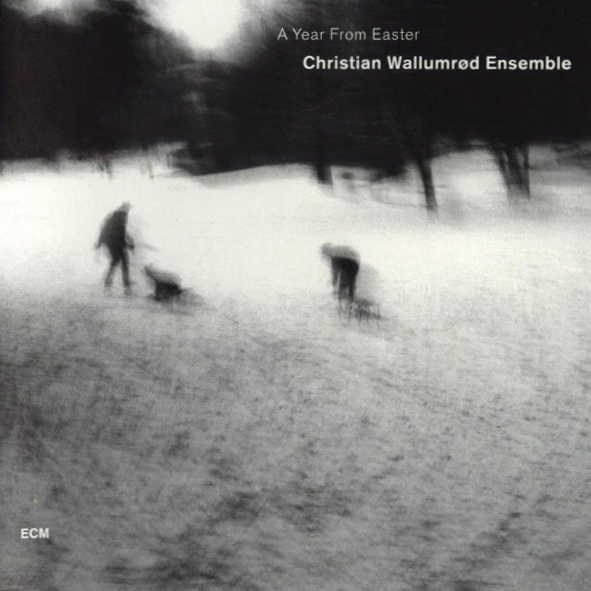
Jon Hassell: Last night the moon came dropping its clothes in the street (ECM 2077)

Last night the moon came

Jon Hassell
Last night the moon came dropping its clothes in the street

Jon Hassell trumpet, keyboard
Peter Freeman bass, laptop
Jan Bang live sampling
Jamie Muhoberac keyboard, laptop
Rick Cox guitar, loops
Kheir Eddine M’Kachiche violin
Eivind Aarset guitar
Helge Andreas Norbakken drums
Pete Lockett drums
Recorded April 2008, Studios La Buissonne, Pernes-les-Fontaines
Engineers: Gérard de Haro and Nicolas Bailla
“Courtrais” recorded live in Courtrais, Belgium
“Abu Gil,” “Northline,” and “Light On Water” recorded live at Kings Place, London, November 2008
Produced by Manfred Eicher and Jon Hassell
Mixed by Peter Freeman in Los Angeles, Nov/Dec 2008

Not only does Last night the moon came dropping its clothes in the street carry the most evocative title in the ECM catalogue, it also closes a 25-year gap between trumpeter-composer Jon Hassell’s first label date, 1986’s Power Spot. About said title, one need only know it comes from the poetry of 13th-century Sufi mystic Rumi to find insight into the music it indicates. Rumi’s embodiment of spiritual evolution is, much like Hassell’s artistry, a parthenogenetic organism: it nurtures itself, grows with and through itself over time.

Last night the moon came… is in many ways the ambient underbelly of Nils Petter Molvær’s Khmer and is sure to enchant fans of the same. The soupiness of his sound is in full effect here, opening to an attunement of the cosmos that uses sun flares as its ink and comet tails as is brushes—a sound honed over eons and realized through the breath of an artist whose own universalism speaks in cosmic, singing electricity. Yet the more we listen to this music, the more we realize it comes from a space within rather than without, a space found not through the telescope but through the microscope.

The presence of violin, for example—courtesy of Kheir Eddine M’Kachiche, whom Hassell encountered on SIWAN—is a deeply biological one. M’Kachiche’s ghostly mitochondria snake their way through an outer-to-inner progression that smoothes within earshot in the introductory “Aurora” and fades from it in the pale of “Light On Water.” At first, the trumpet is tucked safely away in some inter-dimensional pocket, making its first appearance only in the appropriately titled “Time And Place,” a fraternal tone to the violin’s sisterly wisdom. With the music’s x- and y-axes thus established, we have free fall.

Balance of the unplugged and the wired, of matter and ether, continues throughout. The sense of patience is nocturnal indeed, the song of Hassell’s instrument multifaceted and luminous. The overall effect is one of perpetual exhale. Tasteful applications of instruments mark the path with cohesive memories. Sections such as “Clairvoyance” trace their development by the same clock yet spin their tails in more subterranean designs, diurnal and flowering, while the bass of “Courtrais” throbs just overhead, yielding like a suspension bridge during an earthquake. Purely descriptive moments are rare. Rather, the flow proceeds by way of feel. “Blue Period” is perhaps the closest we get to a painterly aesthetic, the height of Hassell’s reach evoking a bird of prey surveying the territory below as if it were its own body, splayed and stretched to the span of a continent. Like the drumming in the album’s concluding steps, it makes fleeting contact with land, shifting from shadow to shadow, half here and half gone.

The word “atmospheric” was invented for music like this.

Andy Sheppard: Movements in Colour (ECM 2062)

Movements in Colour

Andy Sheppard
Movements in Colour

Andy Sheppard soprano and tenor saxophones
John Parricelli acoustic and electric guitars
Eivind Aarset guitar, electronics
Arild Andersen double-bass, electronics
Kuljit Bhamra tabla, percussion
Recorded February 2008, Studios La Buissonne, Pernes-les-Fontaines
Recording engineer: Gérard de Haro
Assistant: Nicolas Baillard
Mixed January 2009 by Gérard de Haro, Manfred Eicher, and Andy Sheppard
Produced by Manfred Eicher

British saxophonist Andy Sheppard’s ECM debut is a phenomenon in sound. A musician of remarkable integrity, Sheppard takes full advantage of the opportunity to broaden his reach farther than ever before. For this project, he indulges in his Indian, African, and Latin affinities, as reflected in the eclectic lineup that shapes this set into something greater than the sum of its parts. Guitarists John Parricelli (last heard on Kenny Wheeler’s A Long Time Ago) and Eivind Aarset weave acoustic and electronic impulses into a yielding web of support throughout; Arild Andersen, a bassist who can do no wrong, brings melodic heft to what might otherwise have been a supporting role; and tabla master Kuljit Bhamra makes his only ECM appearance in a fine showing of percussive breadth.

Sheppard himself likens Movements in Colour to a dream made realizable only through the fit of its talent. In this respect, Bhamra is a revelation. Encounters with tabla in a jazz context are sure to inspire memories of Collin Walcott’s all-too-short career, but here the results are more akin to Charles Lloyd’s powerful Sangam trio with Eric Harland and Zakir Hussain. Bhamra’s entrance in the 15-minute opener “La Tristesse Du Roi” touches off an intimate symphony, more figural than instrumental. Light-footed yet secure, his stitching keeps the sky from blowing away like a cloth in a cosmic sneeze. Gorgeous bassing and keening electric guitar add a dual coat of ash and flame to the eggshell of this freshly hatched bird. Andersen stands out early on, tracing our ears as would a master painter lay down the underdrawing. His contributions continue to shine as fully embodied images, even from beneath the layers of Sheppard’s melodic gifts.

The album’s compositions—fully Sheppard originals—are its lifeblood. “Bing” is a particularly luminescent example. Bhamra and Sheppard play beautifully off each other, while Parricelli adds cosmic sheen. Ghosts of influence haunt this and other tunes. One might trace lines of flight back to Jan Garbarek, whose muscled lyricism echoes in “Nave Nave Moe” and “May Song,” although the music is quintessentially Sheppard’s own. Deeper contacts abound in “Ballarina,” which by virtue of its shaded, waltzing comportment sounds like a Paul Motian sketch.

The final two tracks of the disc, “We Shall Not Go To Market Today” and “International Blue,” give offering to land and sky, respectively. Where one is a patch of sunlight on misty canvas, thus hinting at spring thaw with its celebratory undercurrent, the other floats Sheppard’s insights over Aarset’s wash of electricity. Andersen gives foothold throughout, indicating only barely the wistfulness of things.

Affirmative and healing, Movements in Colour is a collect call from the ether. Sheppard’s virtuosity is such that one hardly feels the focus and effort required to translate the messages thereof. His mastery of the saxophone’s periphery in particular breathes like the rest of us, singing even as it speaks.

By far one of ECM’s best of the new millennium.

Batagraf/Jon Balke: Statements (ECM 1932)

Statements

Batagraf
Jon Balke
Statements

Frode Nymo alto saxophone
Kenneth Ekornes percussion
Harald Skullerud percussion
Helge Andreas Norbakken percussion
Ingar Zach percussion
Jon Balke keyboards, percussion, vocals, sound processing
Arve Henriksen trumpet
Sidsel Endresen text recitals in English
Miki N´Doye text recital in Wolof
Solveig Slettahjell vocals
Jocely Sete Camara Silva voice
Jennifer Myskja Balke voice
Recorded 2003 and 2004 at “Bugge’s Room” by Andy Miteis
Mixed at “7. Etasje” by Reidar Skår
Mastered at “Lydlab” by Ulf Holand
Produced by Jon Balke

Statements represents a leap in intuition for pianist Jon Balke, who by way of his self-styled “private research forum” Batagraf holds a meeting of percussionists Kenneth Ekornes, Harald Skullerud, Helge Andreas Norbakken, and Ingar Zach, along with Frode Nymo on alto saxophone, trumpeter Arve Henriksen, and an array of voices that includes label familiars Sidsel Endresen and Miki N’Doye, the latter making his second ECM appearance (his first: Balke’s Nonsentration) and here not as percussionist but as poet, reciting texts in the language of the Wolof people of West Africa. As one of ECM’s most up close and personal records (there’s hardly any reverb to speak of), Statements unfolds nakedly, transcending the heavy touch of technology in favor of the freer language of acoustic drums. Indeed, language flows through this project like blood, whether through actual or implied speech.

N’Doye is a defining presence early on in the program, which opens with the spliced diction of “Haomanna.” Seemingly engaged in one-sided antiphony, he inhales savanna and exhales urban networks, barely stitching the lines of keyboard and saxophone trading places at the periphery. Nymo’s parasitic reed work locates further hosts throughout, threading needles through the geographical mash-up of “Altiett” and careening freely across the open skies of “Whistleblower.”

Despite its organic charge, Statements occasionally dresses itself in the peculiar fashion of postproduction. The mélange of instruments and distorted speech that is “En vuelo” reveals wires for veins. “Doublespeak” refracts likewise. Less Orwellian nightmare than Aristotelian breakdown, its word choice flirts with impropriety. Another example in this regard is “Pregoneras del bosque,” a bazaar of the mind whose fruit is weighed by the emotion. Electronic beats and croaks share the air with live murmurings of hand on drum. The final triptych, however, forms the pièce de resistance. In “Pajaro” toddling echoes of childhood linger against a din of buzz saws and insects. All of this encrypts the data entry point of “Karagong,” an archival glitch that reveals its skeleton in “Unknown.” Here uncertainty is the norm, a world through which denizens go on teetering for another hit of oxygen. This is the new ecology, a scrape of survival, anointed by fear.

Statements again proves Balke to be one of the most consistently surprising and uncompromising artists in ECM’s stable. Those seeking points of comparison to this particular disc may find them in “Betong,” for which the closest analogue would be the proliferations of the late Bryn Jones (1961-1999), a.k.a. Muslimgauze, bonded as it is by a likeminded politics and disdain for injurious media, spoken through the drum. In both is a misunderstood flag that flaps only when the wind of our attention shifts its way.

Jon Balke/Amina Alaoui: SIWAN (ECM 2042)

Siwan

SIWAN

Amina Alaoui vocal
Jon Hassell trumpet, electronics
Kheir Eddine M’Kachiche violin
Jon Balke keyboards, conductor
Helge Andreas Norbakken percussion
Pedram Khavar Zamini zarb
Barokksolistene
Bjarte Eike leader
Recorded September 2007 and March 2008 at Rainbow Studio, Oslo
Engineers: Jan Erik Kongshaug and Peer Espen Ursfjord
Mixed September 2008 by Manfred Eicher, Jon Balke, Amina Alaoui, and Jan Erik Kongshaug
Produced by Manfred Eicher and Jon Balke

“Siwan” connotes equilibrium. This album of the same name achieves equilibrium through many meetings and intersections: of Norwegian pianist Jon Balke and Moroccan singer Amina Alaoui (in her first ECM appearance), of Baroque and Andalusian musical idioms, of Sufi poetry and Christian mysticism, of dark ages and burning inquisitions. For this studio recording of resolutely live music, Balke doubles as keyboardist and conductor for a veritably intergalactic ensemble that includes Algerian violinist Kheir Eddine M’Kachiche, American trumpeter Jon Hassell, and Norwegian violinist Bjarte Eike’s period group Barokksolistene.

Like Alaoui’s seminal Arco Iris, this project is not a fusion of traditions. It is, rather, a deepening of common ground between them. A work of stunning originality, blending geographies into a single airborne continent, its ecosystem runs on ether. Like the solo violin buoyed by strings in the program’s introductory “Tuchia,” the whole flexes and ornaments itself organically. In that violin is a heartbreaking softness that conforms itself to all manner of densities in what follows. After such a fecund inauguration, it is no wonder that the first proper song, “O Andalusin,” should extol the natural wonders of Al-Andalus. Elegiacally described by poet Ibrahim Ibn Khafaja (1058-1139) as “the Eden of the chosen,” the paradisiacal wonders of its landscape shine forth. Harpsichord claws burrow into ocean floor even as Alaoui unfurls sails, hang-gliders, and other disembodied wings to catch every possible current. From burrowing to dislocation, traveler Abu Abdallah Al-Homai’di (1029-1095) yearns for that “faraway homeland” in his poem “Jadwa.” A filigree of percussion and lute illuminates the night as would gold leaf a sacred manuscript, audible tethers each between body and home. Alaoui’s voice wanders but holds its resolve so tightly to bosom that it slips into the ribcage, where it swings on a perch of belonging. She is positively flute-like in wordless moments, touching off M’Kachiche’s elliptical storytelling against a tense ostinato.

The words of Al-Mu’tamid Ibn Abbad (1040-1095), poet-king of Seville, strangely echo the deposition that would incarcerate him for the last five years of his life. “Ya Safwati” is a romantic verse, a profession of utter surrender to that universal captor known as love. This song fronts Jon Hassell’s signature vocality and falls like a curtain to reveal a bevy of percussion carrying Alaoui like a Sherpa across mountains of history. “Itimad” names the wife of Al-Mu’tamid Ibn Abbad, to whom he slipped this poem through the bars of the neighboring cell. “I am untamable yet you dominate me,” he professes, again echoing the power of emotion to conquer in soul what can never be conquered in flesh. Alaoui moves like a bow and finds herself accompanied by that very object, animated and free, across a burial ground of song. Troubador Martín Codax (13/14th century) is similarly lovestruck in his “Ondas do mar de Vigo,” only here the poet embodies a proto-female who laments the consignment of her loved ones to the Sea of Vigo, whose waves took many in the crusades.

Lope de Vega (1562-1635), a star poet of the Spanish golden age, delights with the phonetic play of “A la dina dana.” Here Alaoui parts the clouds by way of golden, celebratory light, setting up the instrumental contrasts of “Zahori” (featuring lyrical recorder playing in place of text), flowing with all the threat of a poisonous serpent, minus the fangs. The lute’s cross-cultural pedigree comes through most readily and beckons the singing of “Ashiyin Raïqin.” Penned by Abu Abdallah Ibn Ghalib Al-Rusafi (d. 1177), who in her liner notes Alaoui describes as a hedonistic writer, this painterly song indeed strips pleasure of its sin. “How lucky we are to find this spot for our sojourn / with doves cooing for our greater delight”: a sentiment within a sentiment, planted in a garden of mirrors.

Persian-born Sufi mystic Husayn Mansur Al-Hallaj (857-922), who suffered martyrdom on the cross for his profession of godliness and who was a beacon of inspiration for Rumi, outlines the manifold path to what Alaoui calls “a ceaseless transformation through vital alternation.” It is a state of fluctuating being in which the contemplation of silence, if not the silence of contemplation, gives way to discovery. A “stripping bare,” as the poet phrases it, an instinct without a door.

“Thulâthiyat” features Alaoui in narrative mode. She lays her speech on the sands like dry bones of an augury for the here and now. Caring neither for past nor for future, she drinks them for the illusions they are and expels them along with the sweat of the midday heat. Sunlit, too, is the verse-chain “Toda ciencia trascendiendo” (Rising beyond all science) of San Juan de la Cruz (1542-1591). This concluding piece is, in Alaoui’s estimation, one of the finest examples of Christian mysticism. Even without knowledge of text and translation, the present arrangement would have us know its secrets. Here there is a door, forged not of wood-flesh but of heart-mind, an analysis of slumber illuminated from within that records its footsteps for posterity before they are buried by wind and dust.

Alaoui’s melodic settings of these lyrics are so intuitive, it’s as if the notes preceded the words. In combination with the astonishing forces gathered around her, every turning of the tongue unspools a thread into the soul.

One of ECM’s finest releases. Ever.

(To hear samples of Siwan, click here.)

Jon Balke: Book of Velocities (ECM 2010)

Book of Velocities

Jon Balke
Book of Velocities

Jon Balke piano
Recorded September 2006 at Radio Studio DRS, Zürich
Engineer: Markus Heiland
Produced by Manfred Eicher

“We believe that mere movement is life, and that the more velocity it has, the more it expresses vitality.”
–Rabindranath Tagore

Tagore’s statement harbors an implicit question: Does vitality necessarily correlate with velocity? Wittingly or not, Jon Balke would seem to have an answer in this unique album. After a series of memorable appearances on ECM as sideman and group leader (notably, in the latter vein, with his Magnetic North Orchestra), we at last find the Norwegian pianist unaccompanied. The title alone is enough to place the music in a modern tradition of fragmentary collections: Bartók’s Mikrokosmos and Kurtág’s Játékok come most immediately to mind. Yet listening to what Balke has done with both form and instrument, one quickly realizes the profundity of his crafting.

Divided into four Chapters and an Epilogue, Book of Velocities extricates the finer implications of its elements—improvised and composed alike—via thorough examination of the piano itself. By way of introduction, “Giada” flutters between plucked piano strings and dotted punctuations at the keyboard proper. The descriptive cast of “Scintilla” that follows sets the stage for a procession of dreamlike actors, each a cipher for something elemental and transfigured. Other examples in this regard include “Single Line” and “Double Line,” “Gum Bounce,” and the nail-scratched mysteries of “Finger Bass,” the latter droning in Gurdjieff-like meditation.

Many pieces, like the penultimate “Sonance,” exert an organic influence of exhale and inhale, of speech and pause. Indeed, the deepest moments are those least audible, as in the non-invasive contact of “Resilience,” in which one finds the piano’s fantasy life made real. The bodily nature of the music thus shines at carefully selected moments of expression. Whether in the substrate of its own becoming or in the opacity of its outer skin, Balke’s language refashions grammar through every contour. In this respect, the poignant “Drape Hanger” is among the more precious turns of phrase and foreshadows the photorealism of “Scrim Stand,” undulating in real time.

The mirrors of this disc are more than reflective; they are embodied, a dance between beauty and blues. Slowly and surely, Balke turns paths of teardrops into channels of blood flow. This is his art distilled in a crucible of origins until pure feeling remains. It transcends the need for means and returns to the sky whence it came.

Nik Bärtsch’s Ronin: Holon (ECM 2049)

Holon

Nik Bärtsch’s Ronin
Holon

Nik Bärtsch piano
Sha bass clarinets, alto saxophone
Björn Meyer bass
Kaspar Rast drums
Andi Pupato percussion
Recorded July 2007, Studios La Buissonne, Pernes-les-Fontaines
Engineer: Gérard de Haro
Produced by Manfred Eicher

“A band should mature into an integral organism—then it is alive, like an animal, a biotope, an urban space.”
–Nik Bärtsch

With the release of its ECM debut, Stoa, Nik Bärtsch’s Ronin hit the air flying with its meticulous brand of Zen-funk. Two years and eons of experience later, we have Holon, the title of which reveals the band’s underlying ethos: that which is simultaneously part and whole. The beats of this sophomore studio effort are no less regular than those of their predecessor, but now there is something more unitary and, as Bärtsch himself observes above, downright biological going on. Such wording is no mere metaphor, but a lived reality helped along by the decidedly acoustic mix (only Björn Meyer’s bass is plugged), as well as by the fearless integration the group has honed over countless hours of playing as one.

“Modul 42” is where Ronin’s openness comes most explicitly into play. It is an aural body built around contrasting elements. Sparkle and shadow, peace and unrest, freshness and decay—all of these intermingle in recurring dreams, inflected slightly differently with each repetition. Here and elsewhere on the album, Bärtsch’s contact inside the piano reveals a percussive, resonant core less obvious in previous recordings: a staple of his performance style since.

“Modul 41_17” is the first of two transfusions, this one offsetting the same earlier Modul 17 that was dovetailed with 38 on Stoa. Set atop a spinning plate of two notes, Meyer’s contemplative spirals join with others in the fray, cohering into a veritable golem of groove. One can almost feel the platelets conjoining in renewed life as the elements shift and sway to the pulse of some physiological alterity, which marks by its upward chromatic swings the flexion of something divinely ordered. Bärtsch’s dampened finger tapping looses sonic sponges, which soak up all the surrounding water until nothing is left. The second pairing, “Modul 39_8,” is among Bärtsch’s most enchanting. A delicate chemical infusion, it strikes the ether as if it were a matchbook.

“Modul 46” is a blush of autumnal nostalgia that proceeds by delicate propulsions. From the enchanting pianism to the underlay of rhythmatists Kaspar Rast and Andi Pupato, Meyer’s rounded spine and reedist Sha’s tender pocket, this especially jazzy module builds to a luminescent peak.

Rhythmic stacking continues to be a leitmotif of Bärtsch’s vocabulary, and the corridors of “Modul 45” are noteworthy in this regard. Anchored by a rubbery bass and smoothed by interplay between piano and saxophone, it slows into utter transcendence, balancing the piano’s reflective highs with Meyer’s twangs of reconciliation before opening into a stretch of desert music. Sha’s yodeling saxophone cleaves the night with rifts of ebony, while Bärtsch’s solo epilogue reveals nakedness beneath an outer skin.

“Modul 44” tells the story of the former’s slumber, not a dream but a sleepwalk through vestiges of time and space. This is a skeletal creation, a constellation that maps an intergalactic railroad ridden by remnants of ethers whose tickets have yet to be punched.

Call the music of Ronin whatever you will. I call it a jamming of dark matter that abides by its own string theory, and which through self-absorption finds an alternate identity waiting in the wings. One flap, and its echo is felt galaxies away.

Nik Bärtsch’s Ronin: Stoa (ECM 1939)

Stoa

Nik Bärtsch’s Ronin
Stoa

Nik Bärtsch piano
Sha contrabass and bass clarinets
Björn Meyer bass
Kaspar Rast drums
Andi Pupato percussion
Recorded May 2005, Studios La Buissonne, Pernes-les-Fontaines
Engineer: Gérard de Haro
Produced by Manfred Eicher

“The rule of Japanese martial arts is: think with your body.”
–Nik Bärtsch

With Stoa, Nik Bärtsch’s Ronin dropped into the pond of ECM—indeed, of the world—with profoundly concentric ripples. Listeners can be thankful the effects of those ripples have yet to dissipate, and can only hope decades’ worth more from this nonpareil collective awaits. Pianist Bärtsch drafted the architecture of Stoa while in Japan, the enigmatic and fiercely vivid culture of which had long been the philosophical foundation of his work, yet which remained distant to him until fortune brought him there during the rainy season of 2003.

The formula of Ronin is rooted in the “module,” a molecular prism of being through which Bärtsch’s headstrong quintet splashes light. “Modul 36” thus opens the program with the intermittent glow of a harmonic piano hit, tolling the hour with fallacies of salutation. The only things tangible in these inaugural stirrings are those lone hands at the keyboard. Divorced from body, they step even as they hold themselves against the chill. Wrists plant themselves in the first patches of soil they come to, glowing like eyes in the black ice. Their fingers stretch into branches, from which scatter the blossoms of Ronin’s melodic art proper.

More than any Ronin album since, Stoa measures its respiration in clear-cut rhythmic overlay—this courtesy of drummer Kaspar Rast and percussionist Andi Pupato—with phenomenally engaging results. The stealthy bass of Björn Meyer in “Modul 33” sets off the deepest chain reaction in this regard, followed in kind by the piano’s upper register, Rast’s careful flurry, and the popping bass clarinet of reedist Sha. Overlapping circles, squares, and triangles—each the essence of a different spiritual idea—dance in lockstep toward densities in the latter half. A solid bass line muscles through the smog with finesse. Even subtler syncopations abound in “Modul 32.” Phasing heart rates with magical depressions, it braids the air of the studio with timelessness. From planetary to nebular, its hip-rocking moves evoke the gait of a tireless nomad who has found that middle ground by which to renounce any claims to territory.

“Modul 35” is classically urban Ronin, a world of revolving doors and robotic drones, whose mouths open and close to the tune of cash registers and credit swipes. Yet hovering around these bar-coded souls is a guardian angel of repose, one that counts not tender but connections on its fingers and who speaks through Bärtsch’s own fingers in pylons of light. Microtonal lifts from Meyer add spongy evanescence. Similar contrasts abound in the finishing “Modul 38_17,” another mechanistic fantasy that cuts a line through landscape like a bullet train—which is to stay, smoothly and with barest indications of its actual speed. Winds follow, rolling like the hills in denser chord voicings here. A gorgeously minimal flavor laces the proceedings with tension, urgency growing like a beard on the face of change. Before long that sense of speed catches up with us and tousles our hair, keeping sleep at bay with the sheer energy of self-realization and pulsing through to silence, as resolute as it is fragile.

What we have, then, is not a journey, per se. Instead, a flame rejuvenating itself with every flicker. It travels down the match, edging ever closer to bare fingertips until a gasp of pain and shaking hand offer its ashen frame to the water. But its smoke trails upward yet, the final tether between flesh and firmament.

Dobrinka Tabakova: String Paths (ECM New Series 2239)

String Paths

Dobrinka Tabakova
String Paths

Kristina Blaumane violoncello
Maxim Rysanov viola, conductor
Janine Jansen violin
Roman Mints violin
Julia-Maria Kretz violin
Amihai Grosz viola
Torleif Thedéen violoncello
Boris Andrianov violoncello
Raimondas Sviackevičius accordion
Vaiva Eidukaitytė-Storastienė harpsichord
Stacey Watton double bass
Donatas Bagurskas double bass
Lithuanian Chamber Orchestra
Recorded March/April 2011 at National Philharmonic Hall, Vilnius by Laura Jurgelionyté and Valdemaras Kiršys, Studija Aurea in Vilnius
Such different paths recorded June 2011 at Jesus-Christus-Kirche Dahlem, Berlin by Markus Heiland
Mixed and mastered at Rainbow Studio in Oslo by Jan Erik Kongshaug, Manfred Eicher and Dobrinka Tabakova
Produced by Manfred Eicher

When art promises to be revelatory, it may become something to fear. Such is the case of String Paths, the first conspectus of music by Dobrinka Tabakova. Fear, in this sense, is close to awe, for before hearing a single note one knows its details will seep into places to which few others have traveled. Fear, because the trust and intimacy required of such an act is what the composer’s life is all about: she fills staves with glyphs so that anyone with an open heart might encounter their fleeting interpretations and become part of their accretion. Indeed, many factors go into the creation of a single instrumental line, incalculably magnified by its interaction with others. Fear, then, is closer still to love.

Born in 1980, Tabakova moved at age 11 from her Bulgarian hometown of Plovdiv to London, where she went on to study at the Guildhall School of Music and Drama. Her career began in earnest after winning an international competition at 14, since which time she has developed a voice that is refreshingly full and melodious. Such a biographical sketch, despite its prodigious overtones, does little to set Tabakova apart from her contemporaries. Recognition is one thing; experience is another. The coloring of imagination sustained in this timely album’s program, the whole of its corporeal sensibilities, can only come across when its water fills a listener’s cup.

Ukrainian violist-conductor Maxim Rysanov, notable proponent of Kancheli and other composers of our time, has become one of Tabakova’s strongest advocates. It was, in fact, his performance of the Suite in Old Style (written 2006 for solo viola, harpsichord and strings) at the prestigious Lockenhaus Festival that first caught ECM producer Manfred Eicher’s ear and led him to propose the present disc. As the album’s seed, it shelters refugees of the surrounding works. In amending a practice established by such visionaries as Górecki, Schnittke, Eller, and others who have mined elder idioms as a means of looking forward, Tabakova might be placed squarely in an ongoing tradition. She, however, prefers to trace the piece’s genealogy back to Rameau by way of Respighi. Given its descriptive edge, we might link it further to the great Baroque mimeticists—Farina, Biber, Muffat, Schmelzer, and Vivaldi—who were less interested in imitating each other (although some intertextuality was to be expected) than they were in describing nature and circumstance. In this respect, Tabakova’s triptych interfaces a variety of signatures, from which her own stands boldest.

The first movement is a triptych unto itself. Beginning with a Prelude marked “Fanfare from the balconies,” proceeding to “Back from hunting,” and on to “Through mirrored corridors,” already one can note Tabakova’s special affinity for space and place. A rich and delightful piece of prosody, its syncopations feel like ballet, a joyous dance of fit bodies. The viola leaps while the harpsichord adds tactile diacritics to Rysanov’s slippery alphabet. The transcendent centerpiece, entitled “The rose garden by moonlight,” is a shiver down the spine in slow motion, a season at once born and dying. The harpsichord elicits brief exaltations, pushing its wordless song into snowdrift, even as intimations of spring exchange glances with those of autumn. The quasi-Italian filigree of “Riddle of the barrel-organ player” and the Postlude (“Hunting and Finale”) fosters a nostalgic air of antique tracings, bearing yin and yang with plenty of drama to spare.

Insight (2002) for string trio opens the program with exactly that. Played by its dedicatees (Rysanov, Russian violinist Roman Mints, and Latvian-born Kristina Blaumane, principal cellist of the London Philharmonic), it unfolds in dense streams. For Tabakova the trio breathes as one, as might the moving parts of some singing, bellowed engine. The trio thus becomes something else entirely (a phenomenon achieved via the same configuration perhaps only by Górecki in his Genesis I). Moments of shining vibrato add pulse and skin. Glissandi also play an important role in establishing a smooth, coherent fable. The violin’s harmonics are glassine, somehow vulnerable. Indications of dances hold hands with jagged flames. Hints of a free spirit shine through the cracks. A decorated return to the theme looses a bird from an open palm, watching it fly until its song grows too faint to hear.

The 2008 Concerto for Cello and Strings, written for and featuring Blaumane as soloist, moves in three phases, the names of which recall the designations of John Adams. The music, too, may remind one of the American humanist, singing as it does with a likeminded breadth of inflection. The first movement (“Turbulent, tense”) unfolds in pulsing energy. Like a spirit coursing through the sky, it searches the heavens, lantern in hand, for earthly connection. The spirit casts a longing gaze across the oceans, leaping from continent to continent, harming not a single blade of grass by her step. The cello thus takes up the opening theme like a haul from the deep, letting all creatures slip through its fingers to hold the one treasure it seeks by their tips. In that box: a beating heart, one that seeks its own undoing by virtue of its discovery. It is a story revived in countless historical tragedies. The orchestra flowers around the soloist, carrying equilibrium as might a parent cradle a sickly child, laying her down on the altar where the opening motif may reach. The slow movement, marked “Longing,” thus revives that body, spinning from the treasure’s contents a trail she might follow back toward breath. With her resurrection come also the fears that killed her: the conflicts of a warring state, the ideals of a corrupt ruler, the confusion of a hopeless citizenry. The kingdom no longer smiles beneath the sun but weeps by moonlight. Chromatic lilts keep those tears in check, holding them true to form: as vast internal calligraphies whose tails find purchase only on composition paper. Echoes appear and remain. Blaumane’s rich, singing tone conveys all of this and more, never letting go of its full-bodied emotion. The softness of the final stretch turns charcoal into pastel, cloud into dusk, star into supernova. It is therefore tempting to read resolution into the final movement (“Radiant”). From its icy opening harmonics, it seems to beg for the cello’s appearance, which in spite of its jaggedness never bleeds into forceful suggestion. For whenever it verges on puncture, it reconnects to the surrounding orchestral flow, from which it was born and to which it always returns for recharge. Its blasting high sends a message: I am fallen that I might rise again.

Frozen River Flows (2005) is scored for violin, accordion and double bass. Intended to evoke water beneath ice, it expresses two states of the same substance yet so much more. It encompasses the snowy banks, the laden trees, the footprints left beneath them. It imparts glimpses of those who wandered through here not long ago, whose warmth still lingers like a puff of exhaled breath. The violin takes on a vocal lilt, the accordion a windy rasp, the double bass a gestural vocabulary—all of which ends as if beginning.

Such different paths (2008) for string septet ends the program. Dedicated to Dutch violinist Janine Jansen, it ushers in a full, chromatic sound. There is a feeling of constant movement here that is duly organic: in one sense as flow, in another as melodic variety. There is, again, a rocking quality, as if the music always rests on some sort of fulcrum. A quiet passage that deals with the barbs lifted to our eyes. It ends in transcendent wash, a bleed of dye in cloth.

The performances on this finely produced disc are as gorgeous as they come, even more so under the purview of such attentive engineering. This is not music we simply listen to, but music that also listens to us.

It is in precisely this spirit of mutual listening that I participated in an e-mail interview with Ms. Tabakova, who kindly answered the following questions from this enamored soul…

Dobrinka Tabakova

Tyran Grillo: In the String Paths CD booklet, your mention of a powerful first encounter with Keith Jarrett’s Köln Concert makes me recall my own. I felt as if that music had always existed beyond time, but that somehow Jarrett’s performance gave us the means to hear it at mortal speed. Because improvisation is, of course, vital to the compositional act, do you feel this way about your own music (i.e., that you funnel it from the ether), or do you see it emerging entirely from within, by your own design?

Dobrinka Tabakova: Longfellow said that “music is the universal language of mankind,” and I think this is what happens when you “meet” a work of music for the first time and it speaks in a way that you understand and/or it resonates with you. The time-old abstract dilemma of where music comes from, in this case, could be discussed under the larger topic of “how do we communicate.” Of course there is inspiration, and I hope the process of how that sparks the beginning of a new work will remain the wonderful mystery that it is. But that spark gets refracted through the artist’s own prism, made up of the experiences around, exposure to different musics, aesthetic preference… With composition we have the added layer of not working in real time and being able to work at the form and structure of a piece of music far longer than it will take to listen to it. Mendeleev imagined the periodic table in a dream, and the same is sometimes said of compositions, but that dream can only be the beginning, I think. It is a responsibility to capture it in the best possible way, and make it speak.

TG: As a listener who has been moved by your music, I see it as a gift. What has your music given you?

DT: The ability to express something through music has been the main focus of my life, and to have connected with someone is a privilege. That feeling is beyond words.

TG: I’ve always felt that music and literature are much alike: both are “written,” both “tell stories,” one has “movements” instead of “chapters,” etc. How do you envisage the relationship between the two?

DT: I am engrossed by literature, well-told stories, captivating multi-layered characters and, like you say, there are similarities with music in terms of form. But, at least for me, words and music occupy two very different worlds, and I am distracted to think too “literally” when composing. I don’t mean writing music to words—there is a relationship there, and this is when words become music.

TG: There is a seesawing quality to the opening and closing pieces of the program (Insight and Such different paths), as if they rest atop an unvoiced fulcrum and spin a melodic and chromatic equilibrium throughout. How do you visualize the structural nature of those two compositions?

DT: I am glad that you felt it this way and asked about this, because the structure of the album was an important part of the concept of the whole project. Although each of the pieces has its own structure, the feeling of an overarching symmetry to the structure of the album was important. The opening to Insight is almost deliberately aiming to make your ear search. The gradual development of the sounds from there, I feel, leads quite naturally and logically to the effect of the closing of Such different paths: having walked aurally through the album, reaching a kind of settled, calm sonic space.

TG: It’s easy to see your Suite in Old Style as continuing a trend among composers such as Górecki, Schnittke, Eller, and others who have leaned toward the past as a means of looking forward. Yet I wonder if what you have done in this marvelous piece is not more like the great Baroque mimetic composers—Farina, Biber, Muffat, Schmelzer, and Vivaldi—who seemed more interested in describing nature and action than in imitating each other.

DT: I think ultimately, I didn’t wish to try and sound like a composer from a certain time. The Suite is a bow to the music which inspired me and that I grew up hearing. Trying to capture that inspiration and present it through modern eyes/ears was at the heart of the concept of this work.

TG: Speaking of the same piece, your subsection titles have a very dramaturgical sheen to them.

DT: Yes, it helped me imagine being in this other time and also to emphasize the daily distance between then and now, but fundamentally hoping that the music would bridge the time gap.

TG: Insight is an appropriate way to open the program of String Paths. I particularly enjoy its horizontal energies, its balance of density and openness. Compared to the pieces that follow, it feels like a stream of consciousness that has undergone relatively little revision. Can you talk about its inception and unfolding throughout the process of composing it?

DT: I am glad you had that reaction—that it sounds like a stream of consciousness. I think at the start of most pieces, I have a general shape which I would like to achieve with a composition, so I am happy if it is perceived as a flowing unfolding. There are always edits and re-thinks, but I try to stick to the original shape. Also, having challenging parts for each voice makes the work dramatic which propels the motion of the piece.

TG: I am so fond of the little chromatic descending motifs in the second movement of your Concerto for Cello and Strings. They catch my attention every time like the teeth of a zipper locking together. How did this detail come to be in the piece?

DT:  The almost glissando motif came together with the melody—the two have always been inseparable. As I was imagining this to be the “human” section of the concerto (see my next answer), there is a desire to be particularly expressive and almost transform the cello to a singer.

TG: In relation to my earlier question regarding literature, I find the concerto to be especially vivid in its storytelling. What kinds of images does it bring to your mind?

DT: The overall shape of the concerto is an upward one—an ascent. As a student, my main thesis was about Music and Science, and while researching that I discovered the writing of Boethius, a 4th-century Roman philosopher who categorized music in three levels: musica instrumentalis, musica humana, and musica mundana. The first movement can be seen as an expression of musica instrumentalis—the “taming” of the instrument, challenging and stretching the performer and the instrument. Musica humana—believed to be the music of the soul, and everything that affects us as humans—is expressed in the second movement, while musica mundane—also known as music of the spheres—is our impression and hope for what may lie beyond our planet, which finds an expression in the final movement. I didn’t have a particular story in mind, more a shape, perhaps.

TG: Frozen River Flows, more than by virtue of its title, is a remarkably organic piece. The combination of instruments is intriguing. Did your decisions in this regard arise out of wanting to write for particular musicians or was there something about their admixture that spoke to you?

DT: Frozen River Flows was originally written for two conservatoire colleagues of mine, who formed an oboe-and-percussion duo called newnoise. Soon after I completed it, Roman Mints, who I also studied with at Guildhall, asked me if I could contribute a piece to a concert he was programming with violin, accordion, and double bass. This is how the unusual instrumentation came about.

TG: Such different paths is a piece of many layers. Where do you situate yourself among them?

DT: Perhaps, being the composer, I might situate myself at the foundation. But, in all seriousness, it is true, the septet is very layered and polyphonic/contrapuntal. This for me is the great pleasure in writing chamber music: one can have all these lines and give equal weight to each. The inter-relationships between parts can be very complex. Setting myself to this challenge—to have complexity within a clear structure and sound—was one of the first steps in the compositional process.

TG: Such different paths feels like an emblematic piece. What personal importance does it hold for you?

DT: I feel that way about all the pieces on the CD, to be honest. In each there are elements which build from previous ideas or thoughts, and since both the Cello Concerto and Such different paths are the latest compositions on the disk, I guess I’ve had more time to accumulate further thoughts when writing.

TG: Much of your music seems cyclical. Is this conscious?

DT: It really depends on the piece, I wouldn’t say that, for example, Such different paths is cyclical. But sometimes there is a satisfaction in hearing material in two contexts—without having a reference and after a certain development.

TG: Manfred Eicher has been a blessing to so many composers since beginning his New Series in the mid-80s. What does it mean for you to have worked with him and to see your music represented by an influential and prestigious venue?

DT: Manfred Eicher is inspirational, and it has been an unparalleled privilege to work with him and his team! It’s more than a dream to be part of such a catalogue of creativity. As a composer, it is a really great feeling to be able to feel that your music is understood and that those responsible for its delivery on record are concerned, above all, with the integrity and true nature of the music.

TG: On a related note, can you describe your involvement in the recording/mixing process and any insights Mr. Eicher imparted along the way?

DT: Well, my ability to navigate around a mixing desk would perhaps equal my ability to ice-skate, so I couldn’t have a detailed and technical conversation, as much as I may have liked. The process was very natural and dependent on what we were hearing, and at least my main point of reference was the feeling of being in the hall and experiencing the music as if it were played live.

TG: What currently excites you about being a composer? What currently excites you as a listener?

DT: I have a ton of research to get through for some upcoming projects, including one for the Shakespeare anniversary in 2016, and this is providing me with a well of inspiration and excitement. Being a Londoner excites me as a listener—with access to so many fantastic concerts and events as well as sounds.

TG: Generally speaking, how do you compose? Do you have a preferred space, environment, or atmosphere in which to do so?

DT: As long as I can have some quiet, a piano, and my notepad, I’m happy.

(See this article as it originally appeared in Sequenza 21. To hear samples of String Paths, please click here.)

of shrieking and sleeping: powerdove live

powerdove live

powerdove
live at Cornell Cinema
December 5, 2013
7:30pm

Turn on the radio in Small Town, Nowhere, and you might just feel the sounds of powerdove emanating from your speakers, if not from your own skin. The brainchild of composer and multi-instrumentalist Annie Lewandowski, powerdove skirts the edges of distant counties even as it erases them in favor of a landscape populated by songs in place of people. Guitarist John Dieterich and Thomas Bonvalet (who forges a distinct percussive palette with various technological and organic accoutrements, including his own body) complete the cybernetic triangle by which the music navigates, corroded yet still trustworthily affecting.

To hear the group’s latest album, do you burn?, in the ugly comfort of your own home is to open a dusty diary of impressions that remain nevertheless crystalline. To hear those songs in the beautiful discomfort of a live setting is to take those pages, leaf by leaf, and fashion from them a bed of kindling. Such was the warmth felt as Annie and company brought their characteristic brand of washboard balladry to Cornell Cinema’s stage on a crisp December night.

Although short in duration, each song was a story brought to chest-piercing fruition by some enviable synergy. Miniatures, yes, but in the way of a white dwarf star. Annie’s presence—willowed in body yet avalanched in mind—was the eye of the supernova; John’s insightful picking wielded gaseous filaments, like the webs that hold every corner of a house together in semblance of memory; leaving Thomas to connect the evening’s constellatory dots. The latter’s apparatuses—which included contact mics, harmonica innards, mouth organ, and even a light-activated banjo—were only nominally technologic. Whether the distorted desk bell at his foot (not a bid for help but a signal to the helpless) or the two metronomes phasing in “Easter Story” (off 2011’s be mine), his periphery sang apart, for it was clear that powerdove was plugged into more than just amps. These were songs written by means of and through a body steepled by childhood, broken like bread along fault lines of the here and now.

Like Annie herself, who started offstage and coalesced into sight only when the second song (“California”) commenced, the music was docked in immediate reality but tangled itself in seafaring dreams. Her enunciation was as convex as the words were concave, all touched to flame by the spell of her accordion. From a blur of cacti and rustling sleeping bags, she emerged with bits of wisdom, unadorned. These took on the color of something bloody in her bellows—nothing macabre but fleshy, pliant. There was also in the words a naturalist slant. A hollowed-out willow could become the dance floor of an entire fungal congregation. With moss for a canopy and pulp for refreshment, the party mingled until no single appendage was discernible from the next.

The performance ended with three videos (these for “Under Awnings,” “Do You Burn?” and “Wandering Jew”), each of which plunged into a crumbling imaginary with vivid eye-breaks and uneven seams: the American dream sinking into its own cavity until only a single tooth remained. And so, filing back out into the chill, spurred by a click track of the soul, we the concertgoers knew the story would continue on only in the mouth’s void.