Dave Holland Quintet: Not For Nothin’ (ECM 1758)

Not For Nothin

Dave Holland
Not for Nothin’

Chris Potter saxophones
Robin Eubanks trombone, cowbell
Steve Nelson vibraphone, marimba
Billy Kilson drums
Dave Holland double-bass
Recorded September 21-23, 2000 at Avatar Studios, New York
Engineer: James Farber
Assistant engineer: Aya Takemura
Produced by Dave Holland

Dave Holland has done for the modern jazz quintet what Keith Jarrett has for the standards trio. Balancing utter control with democratic reverence in a carefully assembled team, he pushes an open agenda of bold yet affectionate creation. In this third and final ECM record of his most proper quintet, he, along with saxophonist Chris Potter, trombonist Robin Eubanks, vibraphonist Steve Nelson, and drummer Billy Kilson cut some of the group’s most flawless diamonds yet. As much a unit as one could ever hope for, their connection as such is more than telepathic—it’s downright genetic. This is all the more astonishing when you think that by the year 2000, when this album was laid down, the group had only been together for three years (even less, seeing as Potter replaced Steve Wilson in 1998).

Of the album’s nine tunes, five have felt the scratch of Holland’s pen. Vital and varietal, they boast the quintet’s signature joy in spades. Unique among them is the reflective “For All You Are,” which begins in a loose weave and proceeds to lay the love on thick. For this one Potter has an especially soulful turn on tenor, gray as a storm cloud and as rainbowed as its aftermath. “What Goes Around” is this session’s vehicle of choice for the horns and also titles the follow-up big band album. This hot ticket is a master class in listening to one’s band mates. The symmetry has to be heard to be believed. The title track is an equally hip penultimatum and finds Nelson shining over break-beat support from the rhythm section. Potter’s soprano adds further bite on two tracks, running like a shawm’s great-great-granddaughter through “Shifting Sands” in anticipation of new settlements and cracking eggs of phenomenal cast in “Cosmosis.” Almost flippant but ever genuine, he charts a magnetic course indeed.

Into Holland’s five the set list shuffles one tune by each remaining member. Eubanks’s “Global Citizen” bolts straight out of the gate freshly laminated. Nelson takes an early lead by a head and carries the quintet swiftly around every bend. Holland navigates this game of Snakes and Ladders all the while, marking a turning point midway through into breezier denouements, which, iced by Kilson’s semisweet drumming, provide plenty of skating surface for the composer’s gliding valves. Potter’s offering is “Lost And Found,” which finds Holland in especially muscled form. Eubanks cuts the cloth with precision, leaving Kilson to rev up the energy to interlocking heights. The drummer’s own “Billows Of Rhythm” dovetails into Holland’s love of jagged syncopation and throws the bassist into an early solo. This gives plenty of breathing room for Potter’s upbeat tenoring in what amounts to the set’s most youthful track. This leaves only Nelson and his sardonically titled “Go Fly A Kite,” which is actually quite forgiving in execution. It paints an evocative picture of sky and cloud, giving the horns more than enough room to soar.

Whether it’s bass and vibes, bass and drums, or sax and trombone, the combinations turn on a dime in constant organic relay. All of which puts the humble reviewer to task in picking sides. For just when Kilson seems to steal the show, Holland overwhelms with its virtuosic flair. When Nelson seems buried under Potter’s effervescent rides, he resurfaces with glittering treasure in hand. Eubanks preens his fair share of feathers as well. All the more reason to just sit back and shake one’s head in wonder at the plenitude.

Eleni Karaindrou: Trojan Women (ECM New Series 1810)

Trojan Women

Eleni Karaindrou
Trojan Women

Socratis Sinopoulos Constantinople lyra, laouto
Christos Tsiamoulis ney, suling, outi
Panos Dimitrakopoulos kanonaki
Andreas Katsiyiannis santouri
Maria Bildea harp
Andreas Papas bendir, daouli
Veronika Iliopoulou soprano
Eleni Karaindrou
Antonis Kontogeorgiou chorus director
Recorded July 2001 at Studio Polysound, Athens
Engineer: Yiorgos Karyotis
Produced by Manfred Eicher

No human heart is set so hard
that hearing the grave music of your dirge,
your keening, would not bring tears.

The distinct approach of Greek composer Eleni Karaindrou to film sound-tracking, through ECM’s rigorous documentation of her partnership with director Theo Angelopoulos, has imbued her music with a life of its own among international audiences. All the while, Karaindrou had been nurturing an equally prolific association at home with the theatre. Her Angelopoulos in that craft has been director Antonis Antypas, with whom she has collaborated on over 20 productions for the Aplo Theatro. This album documents her incidental music for a new staging of the Euripides tragedy Trojan Women, which received its premiere at the Ancient Theatre of Epidaurus on August 31 and September 1, 2001.

First performed in 415 B.C., the play was a vitriolic critique of the Athenians’ then-recent attack on the island of Melos, where countless violently perished and women were sold into bondage in the name of conquering Sparta (in this the Athenians did not succeed). It is perhaps no coincidence that the word melos also means song, for singing constitutes the very flesh of this album’s limestone skeleton. Karaindrou kneads into these politics the idea that less is more. With the barest use of folk instruments—such as the Constantinople lyra, ney, santouri, and bendir—she implies a battered panorama of immense emotional congruity. Producer Manfred Eicher has lent further sanctity through his arrangement and editing of the material into its present form.

A profoundly comported scenography of touching (which is to say, tangible) melodic beauty finds particular expression through the lyra’s grasshopper song. It is a mournful, unforgettable sound, dry as a reed in summer. The harp also figures notably in the music’s rolling waves, overcoming the barrenness evoked by titles like “Terra Deserta” with oceanic depth. Its vibrations are transformations of landscape itself, silenced by their own resonance.

Trojan Stage

Much of the material on Trojan Women will sound familiar to regular Karaindrou listeners. The themes, although nominally character-specific, are melodically uniform, changing their instrumental clothing from visage to visage, thereby sounding a fluidity of purpose and choice. Unusual, and perhaps a point of contrast to nevertheless persistent indications of barrenness, is the presence of choir and a soprano soloist who only occasionally poises her lips above the waterline to spout names of the deep. Of central importance in this regard are the three stasimons (choral odes), each a vertebra of both story and music, a refraction of the rest. In them voices grow bolder, reaching epiphany in “An Ode Of Tears” and “In Vain The Sacrifices,” the latter a ring to which the former’s gaping clasp holds true. These voices do more than the traditional Greek chorus. They burgeon at stage center, relegated not to the wings but to the head and body of a flightless bird. Without wings, they think themselves into freedom, casting their minds from horizon to horizon, faster than the sun. They do not create the stars but make them brighter.

As a matter of course, the pieces are generally short (only one surpasses four minutes). In their sublime chemical suspensions of tears, blood, and determination swims a pair of eyes—one directed at us, the other elsewhere. Consequently, there is a feeling of stepping out of time in order to better understand its circumscription. Vast harmonic networks slumber in the underlying empty spaces, never stirring except in the most funerary moments. Despite the mythic sheen, the music of Trojan Women finds deeper mystery in the earth’s living subjects, which in isolation reveal the mystery of creation, both divine and mortal, far more acutely: in order to attain permanence one must be open to the fallacies of agreement.

Alternate Trojan
Alternate cover

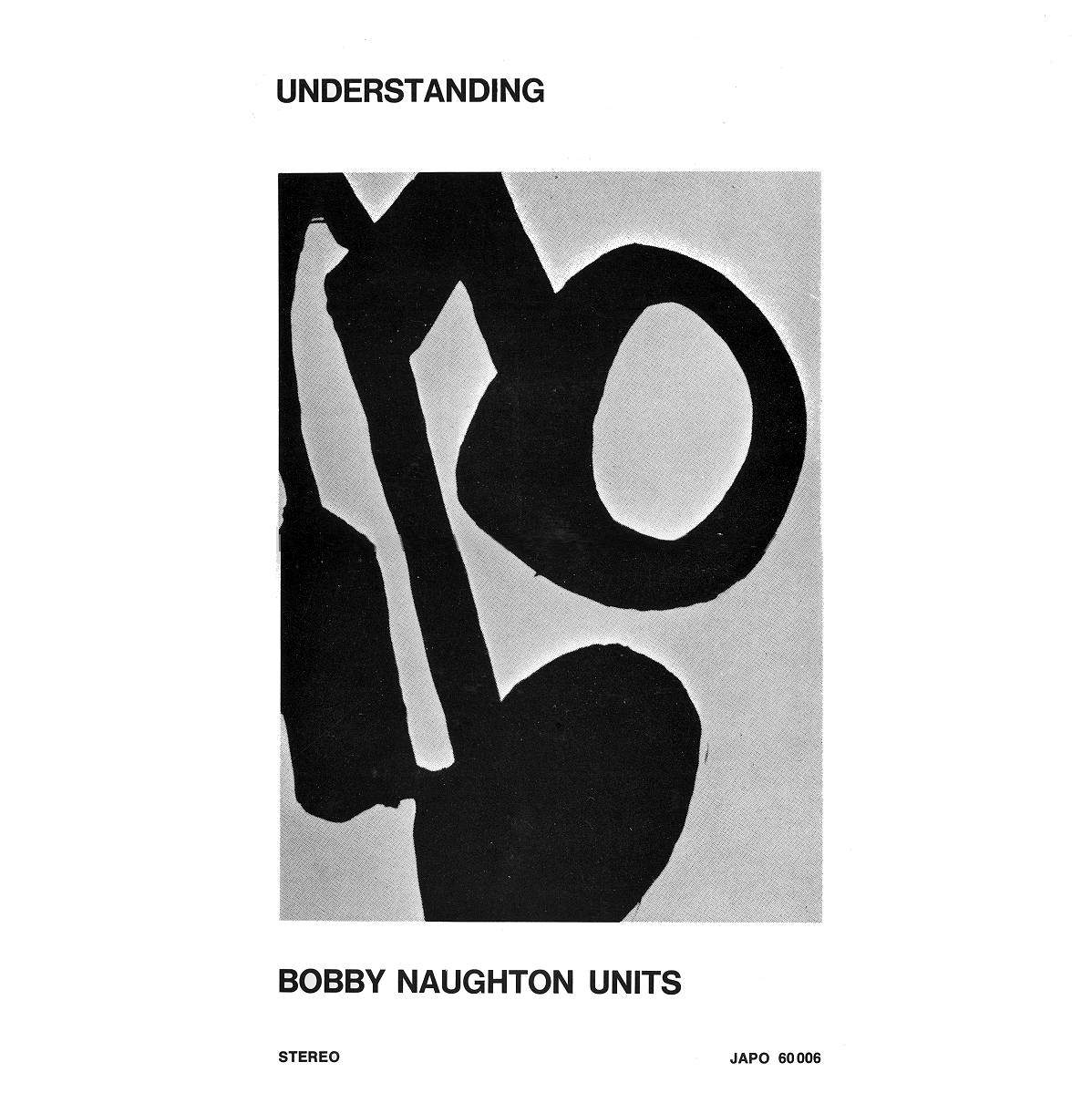
Barre Phillips: For All It Is (JAPO 60003)

For All It Is

Barre Phillips
For All It Is

Barre Phillips bass
Palle Danielsson bass
Barry Guy bass
Jean-François Jenny-Clark bass
Stu Martin percussion
Recorded March 12, 1971 at Alster Film-Tonstudios, Hamburg
Engineer: Klaus Bornemann
Produced by Barre Phillips

This unusual meeting of minds pits bassists Barre Phillips (who also penned the proceedings), Palle Danielsson, Barry Guy, and Jean-François Jenny-Clark with percussionist Stu Martin in a tactile playoff with mixed results. It’s remarkable to think that four behemoths could sound so open, and so one shouldn’t be surprised to encounter a few tangles in “just 8.” For the most part, however, this introductory track maintains the clarity of separation that characterizes the album’s latter remainder. Either way, it’s a jaunty ride into an unprecedented sound-world. Martin anchors “whoop” with his engaging loops amid a menagerie of pizzicato signifiers. Along with “few too” it evokes a jack-in-the-box weeping for want of exposure. From that unrequited lament comes a bright promise, skewed by a hope that the world turns not even for itself. It’s a melancholic hope, to be sure, but hope nonetheless. Martin’s absence here makes the track an early standout: just the rocking of bows pressed into myriad shapes by insistent fingertips. “la palette” and “y en a” form another pair, taking a decidedly architectural approach to this most warped string quartet. Together, they form a cycle of destruction, pain, and healing.

The album only really comes together in the final two tracks. Where “dribble” proves an apt title for its dotted ritual, “y. m.” dances like an anonymous car alarm stripped of its batteries and given new acoustic life. The latter is a particularly complex, anchored piece that spits out some utterly brilliant turns of phrase.

For All It Is, for all it is, is above all an exercise in linguistics. Its cognates are familiar, even if the grammars are not. Although I’d likely recommend this one least out of Phillips’s otherwise astonishing ECM outings, for the completist it will be an intriguing blip on the radar of all four bassists’ careers.

Magog: s/t (JAPO 60011)

Magog

Magog

Hans Kennel trumpet, fluegelhorn, perussion
Andy Scherrer soprano and tenor saxophones, flute, percussion
Paul Haag trombone, percussion
Klaus Koenig piano, e-piano, percussion
Peter Frei bass
Peter Schmidlin drums, percussion
Recorded November 1 and 2, 1974 at Tonstudio Bauer, Ludwigsburg
Engineers: Martin Wieland and Carlos Albrecht
Produced by Solitron Productions, S.A.

Magog was the brainchild of trumpeter Hans Kennel, who made a name for himself in the 1960s as a hard-bop king of the Swiss jazz scene. After earning his chops with the likes of fellow countryman Bruno Spoerri and American bassist Oscar Pettiford, he continued to work with other brilliant outliers, including Mal Waldron, George Gruntz, and Pierre Favre. The band documented here arose in the mid-seventies and was something of a stepping-stone as he grew into his own as a purveyor of “New Alpine Music” (including an alphorn quartet outfit called Mytha), combining now the traditional music of his ancestors with modern jazz idioms.

As it stands, this self-titled album from the short-lived Magog is a worthy JAPO outing. There is plenty to admire in the sounds forged by Kennel and his cohorts. Reedman Andy Scherrer, trombonist Paul Haag, pianist Klaus Koenig, bassist Peter Frei, and drummer Peter Schmidlin round out a sometimes-formidable sextet in this program of as many cuts. Haag pens opener “Lock.” It’s the album’s weakest, building a loose groove from base (read: bass) elements to Kennel’s breezy adlibbing. Despite the pleasant jam aesthetic, it feels like a studio warm-up in comparison to the sprawling entity that is Scherrer’s “Gogam.” This bubbling spring promises stronger themes and realizes them with a tuck and a roll into swinging traction. The big-band-on-a-shoestring sound achieved here is remarkable, as is the steamy action between the composer and the rhythm section.

Koenig counters with two. Haag’s trombone is a prominent voice in “Rhoades,” threading the piano’s claustrophobic maze of needles with ease. This and Kennel’s visceral squeals, not to mention the sleepwalking bass solo, make for some inspiring journeying toward the final pop. “Der Bachstelzer” finds Koenig plugged in, providing somber introductory remarks to the smoothly paced excursion that ensues. More inspired, erratic brushwork from Kennel (whose musicianship stands a head above the others) and lithe sopranism from Scherrer lay a rough yet fluid track. The group really hits its stride, however, in the closing tunes from Kennel. Between the hauntingly atmospheric beginnings of “Summervogel,” replete with ancestral ululations, and the solid groove of “New Samba,” there is much to warrant return fare.

Magog doesn’t seem to have been afraid to test the waters on tape. Their honesty is apparent throughout and makes for a transparent listening experience. The group flicks through dreams like a Rolodex, working fingers to the bone in search of closure. Although said closure never quite materializes, it leaves us free to interpret the sounds however we choose.

Karl Amadeus Hartmann: Funèbre (ECM New Series 1720)

Funèbre

Karl Amadeus Hartmann
Funèbre

Isabelle Faust violin
Paul Meyer clarinet
Petersen String Quartet
Münchener Kammerorchester
Christoph Poppen conductor
Recorded July and September 1999, Angelika-Kauffmann-Saal, Schwarzenburg
Engineer: Andreas Neubronner
Produced by Manfred Eicher

Funèbre stands out in the New Series both for its due attention to German composer Karl Amadeus Hartmann (1905-1963) and for welcoming conductor Christoph Poppen and the Munich Chamber Orchestra into the ECM fold. The latter have since gone on to record a number of pivotal records for the label, including the all-Scelsi program Natura Renovatur and the Bach/Webern crossover project Ricercar. Here they are joined by violinist Isabelle Faust, the Petersen String Quartet, and clarinetist Paul Meyer for a shuffling of dark, darker, and darkest. The two main courses—Concerto funebre and the Symphony No. 4—are among Hartmann’s best known and preface the world premiere recording of his Chamber Concerto for clarinet, string quartet, and orchestra.

Hartmann’s fiery personality and strikingly inter-idiomatic style made him an easy target under the Third Reich, during which time he withdrew his music from the public sphere altogether in solidarity with other persecuted composers who chose “internal exile” over excommunication (or worse). It was nevertheless heard abroad, where it took on a life of its own. After the war, his revitalization of the European soundscape through the famed Music Viva concert series further deflected attention away from his own work at home. This, coupled with his penchant for self-criticism, left the world with a minimal published output, a problem rectified only after his passing when all-but-forgotten scores were restored, printed, and performed.

Concerto funebre for solo violin and string orchestra is Hartmann’s only violin concerto. It is meant to navigate the iniquities he saw brewing in 1939, when he began writing it. Hartmann dedicates it to his son, only four at the time. In this spirit, he wrote in retrospect, “The chorales at the beginning and end are intended to offer a sign of hope against the desperate situation of thinking people.” The piece in four tableaux initially bore a different title: Musik der Trauer (Music of mourning)—which naturally recalls Hindemith’s Trauermusik for viola and string orchestra—before changing it upon revising the piece in 1959. It forges a unique alloy of violinist and orchestra, so that the former’s attitude is more traveler than soloist, strings the life-giving land from which it comes together. The end effect is such that high notes and low notes are not markers of altitude, but rather inversions of one another on a horizontal axis of expression. The violin is a full-throated being, a pendulum housed in wrought iron. Neither do typical rules of concerto form apply. The Allegro does not provide catharsis but rather embodies a deepening of grief. Only in the Adagio do we detect a morsel of affirmation. Nevertheless, the Allegro does provide a physical sensation of uplift, a cyclone of leaves in which Faust is the only one determined among them. It is also a stepping-stone for the achingly beautiful corridor of the final Chorale, which strengthens the elasticity of the body’s emotional skin and draws on its palimpsest a broken circle.

The Symphony No. 4 (1947/48) for string orchestra takes a 1938 concerto for strings and soprano as its palette and builds from it a new diorama. Two slower movements sandwich a compact inner core: a sonic flag bearing ugly repression and shaded resistance. The colors are wan at first, rhythmically tethered to a far-off caravan whose footprints have long since been dusted over. Lachrymose and weighted by unspoken fear, the figures that left them are but a flicker on the horizon. Hints of Mahler and Webern dot an otherwise bold, original score. That Hartmann deploys these references so organically is one thing. That he does so with such arresting melodic development is quite another. The free-floating sensations of the symphony’s bookends are especially instructive in this regard, while its heliocentric Allegro reaches downright thrilling peaks of agitation. The broad sweep of its closing Adagio is overwhelmingly dense, leaving us with a heavy bowl of fruit indeed to share with those who will listen.

Although the unusual Chamber Concerto was completed in 1935, it was first performed only posthumously, in 1969. In light of its gypsy flavors, that it bears dedication to Zoltán Kodály should come as no surprise. Two longer outer movements create yet another frame, this one housing six brief dance variations. Across these Hartmann splashes the piece’s most vivid colors. Gorgeous, rustic, and magnetic, the tunes practically leap of their own volition, turning midnight into dawn at Meyer’s fluid inflections. All of this builds to a haunting stretch of ocean, crisp and bright as the moon.

If this sounds like your cup of tea, you’ll not want to miss out on ECM’s worthy account of Sándor Veress, and vice versa. Both composers draw out likeminded freshness from the earthly cares of which they were both injured subjects.

From the ash comes the phoenix.

Alexander Knaifel: Amicta Sole (ECM New Series 1731)

Amicta Sole

Alexander Knaifel
Amicta Sole

Mstislav Rostropovich cello
Tatiana Melentieva soprano
Soloists of Boy Choir Glinka Choral College
State Hermitage Orchestra
Arkady Steinlukht conductor
Psalm 51 recorded September 2001 at Propstei St. Gerold
Engineer: Stephan Schellmannn
Amicta Sole recorded July 2000 at St. Catherine Lutheran Church, St. Petersburg
Engineer: Semion Shugal
Produced by Manfred Eicher

The text is intoned as if it sounds. These, the simple instructions that composer Alexander Knaifel offers in the score of his Psalm 51 for cello solo. Dedicated to Mstislav Rostropovich, who also performs it in the present recording, the piece is as skeletal as its source: a sounding of spirit made flesh by mortal touch. While listeners may never hear the words, they will feel them in Rostropovich’s bow, poised as it is on a fulcrum of silence. Says Knaifel, “it is the only one and unique experience in my life when not a note was composed—in the fullest and most exact meaning of this word.” By this he admits no fallacy of the creative process, but instead reveals the divinity behind its cause. The internal is renderable only as an idol to itself, so that every dynamic of the cellist’s articulation seems destined to tremble. A climb into higher registers opens a flame’s pathos into vision and leaves one suspended in Heaven’s basement.

Like the burnt offerings of which the psalm concerns itself in its final stanza, the music scatters easily in the wind. That it holds true to form at all is proof of its spiritual integrity. Although the performer is singular, the incantation is sometimes plural. From piercing bridge crawls and vulnerable downward steps to interlocking pizzicati, every motion signals a diacritical reality. Rostropovich achieves all of this through his decades-long path toward mastery. For while the notecraft is almost as bare as the paper it is written on, Knaifel infuses every nodule with a word. Were we to plot each on an axis of pitch and time, they would form a rainbow arc through the firmament from birth to death. Only at the end does light creep in, pulling ever higher into the cello’s very threshold of audibility.

The papery consistency of Psalm 51 provides absorption of the ink in Amicta Sole (Clothed with the Sun) for soloist (female) of soloists. As a follower of the former’s grace, this starkly glassine piece speaks in angel’s tongue and awakens to angel’s ways. It is also performed here by its dedicatee, the inimitable soprano Tatiana Melentieva, who etches with her voice a denser light against a slow waterfall of strings and choral textures. Now that the texts are consciously sung, there is great movement from above to below, from interior to interior’s interior.

Inspired by the “woman clothed with the sun” who appears in Revelations, Amicta Sole sequences the genealogies of Christ as a helix between new prayer and ancient origins. The instruments perform the same role as the cello in Psalm 51, sounding the texts as if singing them, while the voices sing the texts as if sounding them. Melentieva’s art is so rich that she could very well carry these forces without their cushion, for she seems to summon legions of air before her. Despite the above connotations, what we have here is the full spectrum of earthly care, the weight of human conditions pressed upon our ears with the almost there-ness of a molt feather. And although we are invited to bask in the caesural nature of what transpires, stretched into barest triad, we can never be a part of its cathedral, where vibration and darkness dwell. The feeling of renewal is such that no architecture can stand here for so long as a breath (hear this in the flute’s red thread of color). Only in the harp is the promise of good news made manifest, and with it the uniform face of which our own are imperfect copies.

That the pieces here are from the mid-nineties, shaded by a lingering fog of the Soviet era, is only fleetingly significant. In them is a stillness of heart that reflects on troubled pasts. By the same token, their worth lies not in their politics, bleeding as it does through the reddest of paper with its own hues intact. At once reifying and transcending the corporeal waver that is its mirror, they are but two jewels in an eternal crown. 

Have mercy on me, O God, according to Thy great mercy,
and according to the multitude of Thy tender mercies
blot out my iniquity.

Enrico Rava Quintet: The Words And The Days (ECM 1982)

The Words and the Days

Enrico Rava Quintet
The Words And The Days

Enrico Rava trumpet
Gianluca Petrella trombone
Andrea Pozza piano
Rosario Bonaccorso double-bass
Roberto Gatto drums
Recorded December 2005 at Artesuono Recording Studio, Udine, Italy
Engineer: Stefano Amerio
Produced by Manfred Eicher

The Words And The Days follows Easy Living, which marked the studio return of Italian trumpeter Enrico Rava after a 17-year hiatus. More than the continuation of a comeback, it constitutes a self-contained entity with its own dreams. It is only natural, then, that the title tune should flow like a soundtrack to those dreams. Verdant and sincere, it hangs, as might a contended hand over the side of a boat, cutting a path through the water. Rava seems to paint that vessel’s wake while the intuitive drumming of Roberto Gatto renders every glint of sun thereafter with photorealistic detail. Yet despite these sundrenched beginnings, where Easy Living was warm and fuzzy all over, we generally encounter a cooler sound in this mostly Rava-penned program.

Gatto and bassist Rosario Bonaccorso hold fast to their formidable dual role, at once supportive and pace-setting. Rava is happy to follow wherever they may lead, with often-joyful results. In “Secrets,” for instance, some of his formative Brazilian influences jump from the woodwork. Meanwhile, trombonist Gianluca Petrella puts his enigmatic stamp of things. Although his language can be fiercely chromatic, this time around he moves under the table in search of forgotten crumbs. He works a quiet magic in the Russell Freeman standard “The Wind,” engendering a chain of lilting calls, while in “Serpent” he preens his feathers to the tune of a slick, rubato synergy. Most of that synergy he shares with Rava, reigning clearest in “Art Deco,” a three-minute duet that crosses the straight and the curved and pays tribute to its composer, the great Don Cherry. Petrella and Rava trade more brass arrows in Gatto’s “Traps,” evoking a big band on an intimate scale, balancing the pans with its breezy concentration. As a player, Gatto’s adaptive panache figures centrally in “Bob The Cat.”

Pianist Andrea Pozza, replacing Stefano Bollani from the last session, marks a shift in the group’s sound. His reflective approach adds monochromatic atmospherics to “Echoes Of Duke,” taking the session’s feet from its picturesque murk and washing them anew with a more classically rendered style. Rava digs deepest on this expedition, unearthing a plethora of finely preserved artifacts. In this regard, the bandleader excels highest when he is cut loose, as in the cinematic veils of action and soft-focus drama of “Tutù” and the stretch of empty road that is “Todamor,” which unrolls its horizon after a viscous monologue from Bonaccorso entitled “Sogni proibiti” (Forbidden dreams). Although unpopulated, that horizon is filled with stories. Rava is confident behind the wheel in taking us there, navigating an echoing corridor with superb control of every gear. And as he pulls us into the driveway of “Dr. Ra And Mr. Va,” of which the strangely somber exterior only thinly veneers a fiery heartbeat within, it is clear that the journey has only just begun.

Eleni Karaindrou: The Weeping Meadow (ECM New Series 1885)

The Weeping Meadow

Eleni Karaindrou
The Weeping Meadow

Maria Bildea harp
Konstantinos Raptis accordion
Socratis Sinopoulos constantinople lyra
Vangelis Skouras french horn
Renato Ripo violoncello
Sergiu Nastasa violin
Angelos Repapis double-bass
String Orchestra La Camerata Athens
Eleni Karaindrou piano
Antonis Kontogeorgiou choirmaster
Recorded June 2003 at Studio Polysound, Athens
Engineer: Giorgos Karyotis
Produced by Manfred Eicher

“True sailing is dead.”
–Jim Morrison

Eleni Karainrou’s music for film is more than incidental; it is genetically enmeshed in celluloid. Melodies come to her before she sees a single frame, when migrations are still conceptual, dreamed of. This explains the rawness she elicits from Theo Angelopoulos’s swaths of mist, water, and dirt in The Weeping Meadow. “She speaks the same language that I am when making a film,” the late Greek director once said, for indeed her soundtrack is anything but paraphrase. It is as much the film as the film itself, as broad of sweep and as inward of emotion as the characters in whose skin the music resonates.

2013-07-24_1530

The Weeping Meadow is Part I of Angelopoulos’s uncompleted trilogy on modern Greece and spans the years 1919 through 1949. It is the portrait of a pivotal century, a coroner’s report on the body of Greece.

2013-07-24_1336

Behind the camera is a nation ravaged by the Bolshevik Revolution—a force of displacement that cuts the bonds of countless citizens and sets them flying into whatever currents they can catch toward safety. The Red Army’s march on Odessa looses our main characters from the rock and goads them onward.

2013-07-24_1340

Like the hand-colored postcards in the title sequence, their beloved city exists only as it was, frozen at the height of its opulence by the touch of memory.

2013-07-24_1344

Writhing on the other side of Angelopoulos’s lens is interwar America, which was for many refugees a Promised Land. People believed such things out of innocence, notes Angelopoulos in a related interview, looking as they were for a way out of their poverty. The Weeping Meadow thus unfolds as a threnody of discovery, an awakening to the mutually exclusive powers of earth and sky.

2013-07-24_1342

It follows the coming of age of Eleni, an orphaned foundling who falls in love with her adoptive brother Alexis, with whom she elopes after marrying his widowed father, Spyros. In the years leading up to World War II, Alexis goes to America to pursue his dreams of becoming a renowned musician, leaving Eleni to wash her tired, solemn feet in the basin of fascist repression.

2013-07-24_1343

As is de rigueur in Angelopoulos’s cinema, the way he tells his stories is just as significant as the stories themselves. This is nowhere truer than in the soundtrack.

2013-07-24_1350

What Karaindrou has done is to treat the film’s events as births and nurture them into being. Thus animated, they take on new flesh and politics. In this regard, the titular main theme is among the most representative of all she has written. Its seesawing melodies and river-run exposition move like the eternal dance that is her spirit. In the accordion we can hear Alexis’s aspirations, can feel a lure that stretches across the Atlantic and into the heart of his as-yet-unrequited passage.

2013-07-24_1457

“Theme of the uprooting” shines harp with cello through a prism of deeper hue. It is one of many intimate pairings throughout the program, each an expression of Eleni and Alexis splashed across the atlas of time to which they are ever subordinate.

2013-07-24_1445

This sensation of helplessness turns visceral through the voiceover, which marks what we are about to see as choreography on a vast stage. “Scene 1,” the voice begins, establishing a self-aware, non-diegetic world in which we are but fleeting, curious spectators. Along the banks of Thessaloniki—“a wound that will not heal”—a mass of humanity approaches, torn yet regardful. Life as they once knew it is gone, as threadbare and uncertain as they are.

2013-07-24_1504

“Waiting” holds true to this tension, wrapping its wings around Eleni’s unfathomable resolve, which liquefies in her arrest. As water drips from her hands like tears (an image that recurs in the trilogy’s second part, The Dust of Time), she becomes life itself, percolating through crack of stone and pocket of soil into the earth’s molten core.

2013-07-24_1511

Eleni’s twin soul resides in “The tree,” another recurring melody that stands as the only reminder of community. Its lachrymose branches have shed their leaves long ago. In their place are strains of accordion, piano, and lyra…fish swimming in murky waters. The single tree is a living cipher, a leitmotif akin to the sapling in Tarkovsky’s The Sacrifice. Although more often looming in the distance of the refugees’ makeshift settlement…

2013-07-24_1353

…up close it is ornamented with animal carcasses: not an omen of what will be, but of what might have been.

2013-07-24_1510

When the settlement is flooded and puts those nomadic hearts back on the line, it weeps in their absence. For as democracy commits suicide all around them, its roots are the only ones left.

2013-07-24_1512

“Young man’s theme” is another of the soundtrack’s more character-driven pieces. Its interlocking circles of accordion, lyra, and harp weave a thinly veiled portrait of the film’s love triangle, which like an all-seeing eye penetrates the viewer in return. That gaze is as prolific as it is omnipresent. From the long pan over riverbanks worn by wheel of cart and sole of shoe to the silent epidemic that offers Alexis’s mother to the talons of a bird of deathly shade, it watches until things drown. It reminds us that Alexis has already wounded Eleni with a family she can never have (when we encounter her as a teenager her twin boys, born in secret, have already been adopted out). Upon her return, Alexis goes to Eleni in the night and asks her, “Remember when we used to say we’d follow the river to the find the source?” He is too young to realize that Eleni has been that source all along. Although they have shared a moment through the window, separated by songs of men, being together means that some form of shattering is inevitable.

2013-07-24_1401

That each of the above themes has its variations reminds us that constellations are never fixed. They are the changing of the guard from day into dusk, an enigmatic realization of that unflagging gaze. All of which makes the standalone pieces glow with their potency of message.

2013-07-24_1410

Anchored by a violin solo that invokes Karaindrou’s theme for Ulysses’ Gaze, “Memories” caresses the garments of a loved one who has passed. Here we find pause and reflection for the wayfaring mind. The quiet tide of strings barely touches the shore before an emotional sponge dabs it away as if it were but a tear on the face of an immeasurable deity.

2013-07-24_1435

“On the road” spins an even more reflective pathos, its wheels turning in search of traction and finding it only the choir of “Prayer.” Therein lies the film’s most abrasive benediction. It weeps neither for itself nor for us, but for those who do not know, those we can never know, those without name in places without time. It encompasses Eleni’s resilience tenfold: her spying on the twin boys, drawn into a web at conservatory; her flight with Alexis into the shelter of a sympathetic theater troupe, and Spyros’s vengeful shame at knowing his pride is lost; the final dance before Spyros collapses, never to breathe again; his watery pyre, floating somewhere between the fantasy he could never endure and the reality that substitutes his existence with sticks and decay.

2013-07-24_1509

Simply calling Karaindrou’s sound-world “cinematic” is as misguided as calling the sky blue, for it too fades to black when the day is over. Despite its fictional ties, its shapes are as real as the musicians who bring it to life. It is, rather, an amorphous body of tears and gestures, the departing ship that pulls Alexis and Eleni apart.

2013-07-24_1522

A red thread is all that connects, the unraveling of an unfinished garment.

2013-07-24_1523

2013-07-24_1524

After it falls into the ocean, and with it the promise of balance, Eleni returns to the old house, ruined, in the water.

2013-07-24_1528

Its voices have washed away. Eleni has been washed away. Everything has been washed away.

2013-07-24_1530

Alternate covers:
Alternate Weeping 1

Alternate Weeping 2