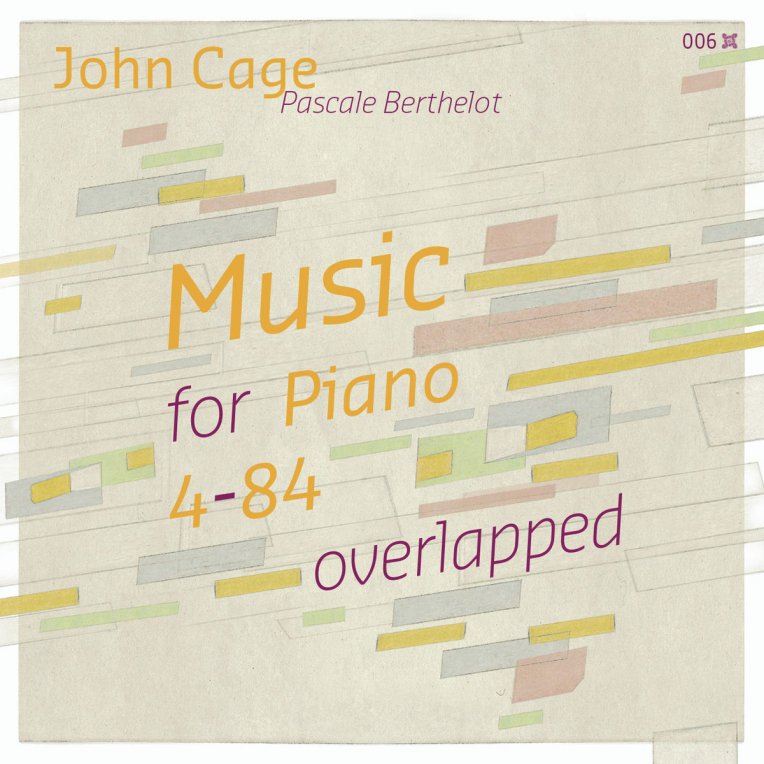
John Cage: Music for Piano 4-84 Overlapped (YAN.006)

06_Cover

John Cage
Music for Piano 4-84 Overlapped

Pascale Berthelot piano
Recorded and mixed 2017 by Gérard de Haro at Studios La Buissonne
Mastered by Anaëlle Marsollier
Piano technician: Alain Massonneau
Produced by Marc Thouvenot & La Buissonne
Release date: May 24, 2018

What if I ask thirty-two questions?
What if I stop asking now and then?
Will that make things clear?
Is communication something made clear?
What is communication?
–John Cage, “Communication”

In her third intersection with the CUICATL sublabel, pianist Pascale Berthelot offers something truly unique in John Cage’s Music for Piano. Composed between 1952 and 1962 through a series of chance operations, Music for Piano grew into a set of 85 pieces. Numbers 4-84 took on a life of their own as incidental soundtrack for dancer Merce Cunningham’s 1953 Solo Suite in Space and Time, and these are presented in an unprecedented way: superimposed and played as one. Because Music for Piano indeed plays with notions of space and time—stretching, deconstructing, unraveling them as quantum material—it makes an ideal sort of sense in this collective reiteration.

Suggestions in the score were yielded by natural imperfections in the paper, where Cage decided to make a mark, thus freeing something that might otherwise have remained locked away in its planar prison. This fundamental action—of treating something noticeable as a rupture into sound production—gave emptiness to substance and substance to emptiness. In so doing, he proved the fallacy of silence altogether.

Despite the overlap (if not also because of it), an intense subtlety prevails. And because the notation is already so bare, the result is far from chaotic. It is, rather, like gazing upon a starry sky and hearing it for the first time. The deeper one goes into Berthelot’s performance, the more the piano sheds its associations as a center-stage instrument. Rather, in being plucked, strummed, depressed, and knocked from the inside out, it opens itself like a dictionary. Flipping through it as one would spin a globe and land a finger for want of random travel, Berthelot links one word after another until vocabularies, sentences, and paragraphs emerge. In reading them back to us, he fixes a narrative as such and allows us to wield it as a text. The beauty of it all is that we may cut a piece from anywhere along its trajectory and roll it out into another story altogether.

This recording is a gift that keeps on giving. A must for admirers of Cage, and for anyone who believes that music is something that should feel you, not the other way around.

Thomas Adès: Illuminating from Within (YAN.005)

05_Cover

Thomas Adès
Illuminating from Within

Winston Choi piano
Recorded 2015 by Nicolas Baillard at Studios La Buissonne
Produced by Marc Thouvenot & La Buissonne
Release date: October 30, 2015

If ever there was a composer who worked in light, it would be Thomas Adès. As the subject of this recital by Canadian pianist Winston Choi, he comes across as someone interested not so much in the metaphysical as the metaphorical. Traced Overhead (1995/96), for one, takes its inspiration from the iconography of angels, and in drawing that connection molds transcendence and ascension as motifs worthy of articulation at the keyboard. Such heavenly associations, however, remind us of flesh’s sinful tendencies and of the material world that keeps its desires running smoothly. As two relatively shorter movements shift into a protracted third, in which the scratch of thorns blood-lets a sacred disembodiment, the dichotomy of inner/outer ceases to be real. The Three Mazurkas (2009) that follow are brimming with detail. Originally written for Emanuel Ax and tipping their shared hat to Chopin, they showcase a full integration of sound, color, and environment even as dance steps are obscured through the filter of personal expression.

Thrift (A Cliff Tower) (2012) begins a chain of standalone works. Its roiling textures, viewed (and heard) as if from a precipice, are an appropriate prelude to Darknesse Visible (1992). This nervous translation of John Dowland’s “In darkness let me dwell” is strangely bright. The end result is no longer a song but something else entirely. Still Sorrowing (1992), also rooted in Dowland, lights a decidedly nocturnal stove. Muted strings and plant-like forms grow in honest profusion. All of which makes the Concert Paraphrase (2009) feel like a masochistic slap. This free transcription of Adès’s first opera, Powder Her Face, is dramatic, halting, and intensely physical. Between fiercely lyrical asides and gently tumultuous arias it strings tightropes of Weimar-era cabaret, romanticism, and fantasy. More real than anything, for nothing is real without a little makeup to offset the truth.

Samuel Sighicelli: Etudes pour piano & sampler (YAN.004)

04_Cover

Samuel Sighicelli
Etudes pour piano & sampler

Samuel Sighicelli piano, electronics
Recorded October 6-8, 2014 by Gérard de Haro at Studios La Buissonne
Mastered by Nicolas Baillard
Produced by Marc Thouvenot & La Buissonne
Release date: February 28, 2017

Pianist Samuel Sighicelli, known to La Buissonne Label listeners as a key member of Caravaggio, presents what this album’s press release calls a “bionic piano.” More than an amalgamation of flesh, metal, and wood, it is a meta-compositional tool. Sighicelli started this project by recording improvisations at home on the piano, treating curated selections therefrom as seeds for heavily constructed pieces. From this a series of 12. Though originally intended for two loudspeakers, he reworked them for live performance using digital sampling, thus allowing him to invoke the prerecorded material via electronic keyboard.

“Signes/Course” combines elliptical motifs with splashes of cold water, string treatments, and backward glances. If such descriptions feel vague, it is only because the music is so precise, and to capture it in like manner risks limiting its interpretive possibilities. So begins a psychological character study of psychology itself. The mix of submarine signals and deserted expanse that is “Carcasse dans la neige” haunts the brain. Upon hearing it, we immediately realize we lack the necessary equipment to interpret the pattern as a message. Instead, we flounder in our need for communication: isolated, undiscerned, voiceless. Those pulses continue to echo across the waters of our conscious mind in “L’horizon comme vouloir,” even as they find purchase in the piano’s physical body.

The more these pieces evolve, the more the sampler becomes integrated into the piano itself, as if it were hybridizing with the very instrument from which it emerge. Along the way, we are exposed to sound bites of human voice (“Édifices”), sinister ruptures (“Brèches”), sacred spaces (“Monolithe”), futuristic body scans (“Départ dans le bruit neuf”), and even the lull of cricket song (“L’âge du faire”). And when the keys sing to us from within minimal clothing, as in “Dernier regard” and “Presque l’aube,” the effect is startling. It is akin to being sonically operated on to disentangle us from an incursion of microscopic entities, each wielding a knife so small that every slash is felt only in dreams.

Daniel D’Adamo/Thierry Blondeau: Plier-Déplier (YAN.003)

03_Cover

Daniel D’Adamo
Thierry Blondeau
Plier-Déplier

Béla Quartet
Julien Dieudegard
violin
Frédéric Aurier violin
Julian Boutin viola
Luc Dedreuil violoncello
Recorded, edited, and mixed in 2012 by Gérard de Haro at Studios La Buissonne
Mastered by Nicolas Baillard
Steinway prepared by Alain Massonneau
Produced by Marc Thouvenot & La Buissonne
Release date: November 19, 2013

Plier-Déplier (Folding and Unfolding) is the title piece, jointly composed by Daniel D’Adamo and Thierry Blondeau, of this fascinating program of string quartet music. Played with astonishing (meta)physical accuracy by the Béla Quartet, it comes across as three-dimensional and tangible. Prerecorded snippets allow insight into the preparatory elements of these constructions. Some are distant, others intimately close. Such extremes give credence to the between-ness of things, just as the rising and setting of the sun confirms our allegiance to the day. Though nearly all of these 19 pieces average two minutes in length, there’s a sense of expansion at play from one to the next. Silence is as much employed for its notecraft as scored action. Calling these vignettes therefore feels grossly inaccurate, as they are no less narrow in scope than a haiku. So-called extended techniques become the norm, while traditional bowing serves to insist on the contrivances of measured speech, directed emotion, and impositions of time. In the present context, urgency of clarity becomes a disruption to the comforts of a given instrument’s tessitura, stretching the limits of possibility as naturally as blinking. Implications abound in the creak of a tuning peg, the scrape of an un-vocalized string. Contrasts of breezes and gales coexist in a fluttering storm, while harmonics resound like sirens of the heart, coaxing themselves to shore.

Blondeau and D’Adamo each offer a solitary composition as postlude. Where the former’s Last Week-End on Mars evokes air raids and space travel, using electronics to enhance the vagaries of time, the latter’s Découper – petite passacaille touches the edges of its own vocabulary—not with the tongue but with the fingertips. The quartet’s delicacy, interspersed with forthright expulsions of air, gives a taste of the meal that never reaches this proverbial table. Instead, it leaves us to ponder the empty plate before us as if it were our own life, scarred by years of silverware and unthinking consumption.

Ivan Fedele: Musica della luce (YAN.002)

02_Cover

Ivan Fedele
Musica della luce

Pascale Berthelot piano
Recorded in 2012 by Gérard de Haro at Studios La Buissonne
Edited, mixed, and mastered by Nicolas Baillard
Steinway prepared by Alain Massonneau
Produced by Marc Thouvenot & La Buissonne
Release date: November 19, 2013

The pianistic literature of Ivan Fedele is the subject of this recital by Pascale Berthelot, which follows her CUICATL debut. The program opens with the Italian composer’s Études boréales (1990). Meant to evoke the icy climate of Finland, it requires the performer to dig into the keyboard like a mountain climber might ascend by means of a pick. Such sharp attacks are resolutely luminescent, while the slower sections are murmurings of shadow. Internal resonances are beautifully enhanced in the third and fifth etudes, as if in a frozen cave exhaling its own voices across the valleys. The harmonics of the fourth are the tones of icicles falling from their state of overhang.

Études australes (2002/03) shifts to warmer, more forgiving spaces. Subtitles of individual etudes (Tierra del fuego, Cape Horn, etc.) suggest polar geographies but also the genera (e.g., Aptenodytes) and species of birds who inhabit them. With no pedal indications to lead the way, Berthelot is left to interpret the duration of every note cluster as if it were its own hybrid, jumping from sparkling cliffs into oceanic depths.

The Toccata (1983, 1988) is an ode to the composer’s own youth and the revelry of practicing at the piano. That feeling of repetition, of evolution and involvement, is omnipresent. Insistence and flowery ornamentation go “all in” throughout this fascinating and unabashedly honest music.

Cadenze is a set of nine aphorisms composed over a 25-year period (1983-2008). Though short, they practically insist on lingering long after being uttered. Thus, the markings of each are as much linguistic as environmental. Some particularly striking examples are numbers III (a psychic rush), VI (a dance that never gets off the ground), and VIII (a lullaby for DNA).

Nachtmusik (2008) concludes with a piano-only section from the longer Deu notturni con figura, itself for piano and electric piano. As the most brooding narrative at hand, it pulls itself through a thick emotional transference, ever aware of its age.

Fedele’s oeuvre is a collective study of contrasts in the same planetary body. Just as the Earth’s axis suggests two tilts—one toward the sun and the other away from it—it balances light and dark, warmth and cold, art and science. This is neither a treatise or a manifesto, but a short story collection rolled into a ball and kneaded until its words are no longer distinguishable.

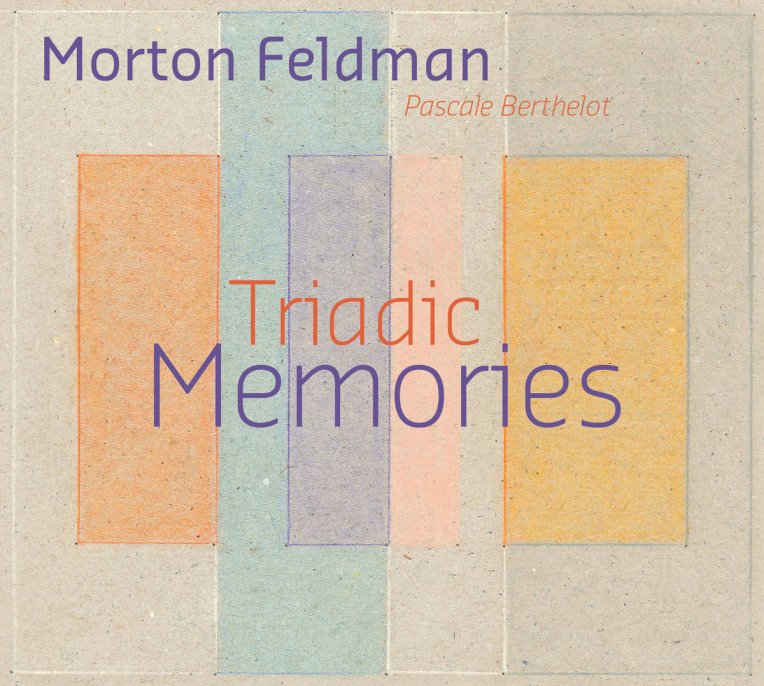
Morton Feldman: Triadic Memories (YAN.001)

01_Cover

Morton Feldman
Triadic Memories

Pascale Berthelot piano
Recorded and mixed in 2009 by Gérard de Haro at Studios La Buissonne
Mastered by Nicolas Baillard
Steinway prepared by Alain Massonneau
Produced by Marc Thouvenot & La Buissonne
Release date: November 19, 2013

Around fifty solo piano pieces are attributed to composer Morton Feldman (1926-1987), whose relationship with the instrument was like that of light to prism. This studio recital by Pascale Berthelot, recorded in 2009 by Gérard de Haro at La Buissonne, marks the inaugural release in the studio’s CUICATL imprint, dedicated to documenting world-class performances of contemporary classical material.

Triadic Memories, written for Japanese pianist Aki Takahashi in 1981, is a cartography not only of triads and memories as self-contained entities but also of the ways in which each informs the other. Arpeggiated chords mark ephemeral borders; motifs are recycled and transformed. Every shade comprises a vocabulary of solitary travel. In the words of Feldman himself: “In this regularity (though there are slight gradations of tempo) there is a suggestion that what we hear is functional and directional, but we soon realize that this is an illusion; a bit like walking the streets of Berlin—where all the buildings look alike, even if they’re not.” Thus, Feldman’s interest in duration over rhythm (or, as Louis Goldstein puts it, “[h]is concern with how a musical composition sounds, rather than how it is made”) takes precedence, just as one’s footsteps might give the illusion of regularity yet, upon closer scrutiny, reveal endless possibilities. Like a child learning how to walk yet whose comportment speaks of an innate knowledge passed down genetically, cosmically, from body to body (if not soul to soul), Triadic Memories recalibrates the parameters of our attention span until we no longer feel present in ourselves. And just as we are about to get stuck, we find our equilibrium restored, over and over, until only beauty remains to show for our passage.

One of the missions of CUICATL is to include pieces appropriate for conservatory students to learn and play. In this case, it is Feldman’s Piano Piece of 1952. Despite its more rigid structure and shorter duration, it feels less welcoming than Triadic Memories. Premiered by David Tudor in 1959, it has been rarely recorded since. Its score suggests not melodies but organisms. These we can hold as one might hold a newborn and watch them grow in a space where the air shapes itself as a sentient, physical substance. This is character of Feldman’s music: its willingness to let contradictions speak as the fully formed individuals they are rather than stand before the court of our scrutiny as selves divided between prosecution and defense.

La Buissonne Label – Hors-Série (RJAL HS002)

LBL

Though La Buissonne may be familiar to ECM listeners as a relatively recent hub of recording excellence, the French studio has also been putting out releases under its own name since 1994. Originally distributed by Harmonia Mundi, since 2019 they have been handled by ECM itself. This double compilation album, a promotional freebie earned by buying more than two CDs from La Buissonne’s official Bandcamp store, gives us a broad cross-section of their commitment to variety, atmospheric integrity, and personal expression.

At the heart of it all is the piano. That most perennial of modern instruments is represented in a slew of distinct yet integrated solo recordings by Andy Emler, Stéphan Oliva, Jean-Sébastien Simonoviez, and Bruno Ruder. Each is an evocative postcard mailed from soul to soul. The most indelible are those by Oliva, whose “La traverse” reflects the passage of time without compromise, and Emler, whose “There is only one piano left in this world” opens the collection in multitracked brilliance, banging and plucking its way through an array of modes. Emler is, in fact, a defining voice of the label and finds himself well-represented here. Highlights of his oeuvre include two selections from the so-called MegaOctet project (including the tuba- and tabla-rich “Doctor Solo”) and his magical ETE Trio with bassist Claude Tchamitchian and drummer Eric Echampard. An excerpt from the latter’s “Elegances” follows every emotion to its logical end. A trio of a slightly different feather, led by Oliva with the same bassist and Jean-Pierre Jullian on drums, yields one of my favorite tracks from La Buissonne’s entire output: the title cut off 2009’s Stéréoscope. Another I would encourage you not to gloss over is that of Jean-Marc Foltz (clarinet, bass clarinet, percussion), Oliva (piano, percussion) and Bruno Chevillon (bass, percussion). Their 2007 album Soffio di Scelsi is an understated tour through rain-kissed foliage and haunting dreams. Neither can we ignore the Trio Zéphyr: three string players whose voices walk like compasses across maps of their own making. Of the two pieces represented, “Sauve tes ailes” evokes distant travel with minimal brushstrokes and titles one of La Buissonne’s finest hours.

Solo artists beyond the keyboard bring equally delectable flavor profiles to the proverbial table. Among them are those of guitarist Carlos Maza (his “Altas y bajas” is a mechanical wonder), late bassist Jean-François Jenny-Clark, and cellist Vincent Courtois, whose “Skins” and “So much water so close to home” are poems written on the backs of slow-moving mountains. Courtois, like Emler, is a touchstone presence in this ever-expanding catalog and has made deepest impressions in his trio with tenor saxophonists Robin Fincker and Daniel Erdmann. Their “Rita and the Mediums” is a segue into wider territories.

Upgrading to quartets brings us to the nocturnal cinematography of Jeremy Lirola’s “Art the last belief” (featuring the remarkable subtlety of drummer Nicolas Larmignat), the “Junction point” of Jean-Christophe Cholet (a sonic train that turns 90-degree corners with ease), the skronk-leaning vibe of Gilles Coronado’s “Wasted & Whirling,” Bruno Angelini’s rendition of the Paul Motian classic “Folk song for Rosie,” and the phenomenal techno-sphere of Caravaggio’s “Dennis Hopper Platz” (its tangle of streets crumbling beneath the weight of progress). Other moments to watch out for are “Breath,” which represents the collaboration between pianist Jean-Marie Machado and saxophonist Dave Liebman (a failproof combination, to be sure); “Leonor Theme,” which places Simonoviez alongside bassist Riccardo Del Fra; and “Three coins in the fountain,” a Kurt Weil-ish song performed by Bill Carrothers at the piano. An unreleased outtake of “Que sera sera” from that same session further illuminates his gift for harmony.

In addition to the broad variety of music, this collection is a tribute to La Buissonne’s unique sonic fingerprints, which forensically matches those of engineer Gérard de Haro. His vision is their vision, and our fortune by extension to be privy to its growth over the past quarter of a century.

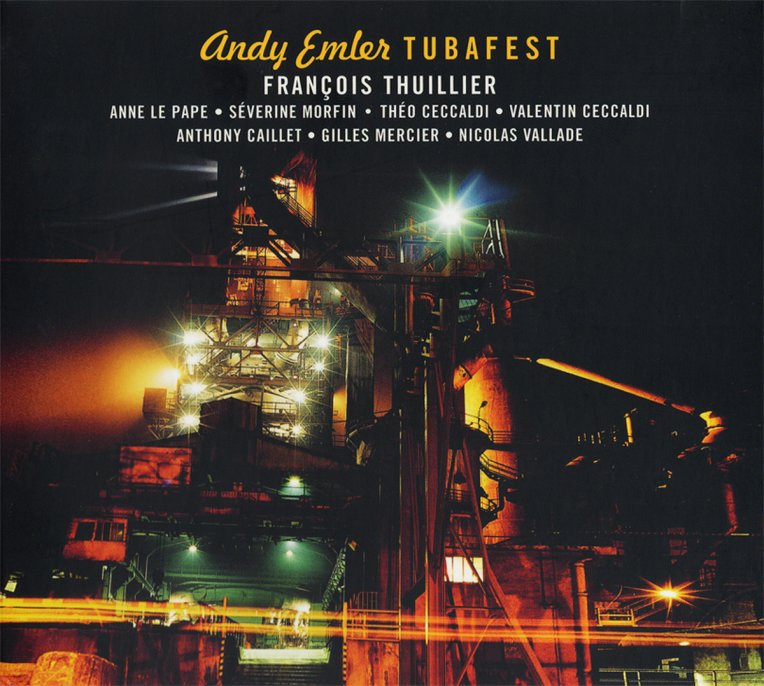
Andy Emler/François Thuillier: Tubafest (RJAL HS001)

Cover

Andy Emler
François Thuillier
Tubafest

Andy Emler compositions
The “Cactus” Quartet
Théo Ceccaldi
 violin
Anne le Pape violin
Séverine Morfin viola
Valentin Ceccaldi violoncello
Duo Fact
Anthony Caillet
 euphonium
François Thuillier tuba
Evolutiv Brass
Anthony Caillet
 euphonium
Gilles Mercier trumpet
Nicolas Vallade trombone
François Thuillier tuba
Recorded live at Le Triton, Les Lilas on October 24/25, 2014 by Gérard de Haro et Jacques Vivante
Mixed and mastered at Studios La Buissonne by Gérard de Haro at Studios La Buissonne, Pernes-les-Fontaines
Mastering: Nicolas Baillard at Studios La Buissonne
Produced by Andy Emler and François Thuillier
Release date: March 1, 2015

Unlike strings, which tend to feel darker and more brooding the deeper they become, there’s something lively and invigorating about brass at its lowest registers. This is certainly true of tuba virtuoso François Thuillier, whose prodigious talents have graced some of La Buissonne’s finest recordings under its own label. After playing the role of bassist in Amly Emler’s outfits for years, Emler decided to put together some new pieces and performances in late October of 2014 as a way of throwing the spotlight on Thuillier and his métier. Thus, “Tubafest” was born, of which three of the five compositions on the program are presented for our enjoyment.

“Tubastone 12023” is the result of an offhanded remark by Thuillier, who once expressed a desire to play with a string quartet. Emler happily obliged by producing this piece for that very combination of instruments. After the strings prime a verdant canvas, the tuba plants its feet firmly to unravel a patient song. With whistles of appreciation (and even a “Yeah, baby” for encouragement), the quintet handles exuberant changes of scenery without skipping a beat. Over the course nearly 22 minutes, they tell the story of something at once urban and rural, an emotional transference of proportions that speak not only to the heart but also the mind.

Emler’s frameworks always leave plenty of room for improvisation, but especially in “Art et Fact 1.” This duet between Thuillier on tuba and Anthony Caillet on euphonium grooves with the energy of a band four times their number, and finds both playing their hearts out throughout this joyful segue into “Un Printemps dans l’assiette.” Here Thuillier and Caillet are joined by trumpeter Gilles Mercier and trombonist Nicolas Vallade. The mood is altogether whimsical yet rigorous, showcasing the musicians’ freedom of expression and the rock-solid foundations of their craft, as well as the fullness of Thuillier’s narrative power. It ends with kisses, as if bidding us farewell.

Each world Emler creates can be counted on for being vivaciously resolute, but in this case he has written for a soloist who understands that inner drive in a most focused way. A dose of joy when we need it most.

Vincent Courtois: Love of Life (RJAL 397034)

Cover

Vincent Courtois
Love of Life

Vincent Courtois cello
Robin Fincker clarinet, tenor saxophone
Daniel Erdmann tenor saxophone
Recorded June 26/27, 2019 in Oakland, 25th Street Recording Studio by Gérard de Haro, assisted by Gabriel Shepard
Mixed by Gérard de Haro at Studios La Buissonne, Pernes-les-Fontaines
Mastered by Nicolas Baillard at La Buissonne Mastering Studios
Produced by La Compagnie de l’imprévu and Gérard de Haro & RJAL for La Buissonne
Release date: January 31, 2020

The appropriately titled Love of Life is cellist-composer Vincent Courtois’s wordless tribute to writer Jack London. London is a fairly recent discovery for Courtois, who cites the semiautobiographical Martin Eden as a constant companion while on tour with reed players Robin Fincker and Daniel Erdmann. The trio began their travels on the East Coast and ended them in California, where they met with London’s great-granddaughter, improvised under the towering trees near his gravesite (as pictured on the album’s cover), and recorded this session on the author’s Oakland, California homestead. The result is music that brims with agency and verve and explores London’s empathy for the underrepresented, the spat upon, and the voiceless.

Each track title pays respect to a short story or novel from London’s oeuvre. His empathy for divided selves is reflected in two diptychs: one for Martin Eden and the other for “To Build a Fire.” Ranging from the former’s jaunty charisma (indicative of a fumbling naivety) to the latter’s crackling flames, Courtois leverages an emotionally naked tone in the contexts at hand. Before these deeply psychological forays, the title track sets the pace with its gentle procession of horns, as if to remind us that everything will be okay in spite of the struggles faced by all. This in contrast the fact that hope seems so far away in the period song “Am I Blue” (Grant Clarke/Harry Akst), which captures the angst of being a working-class subject in a bourgeois world. That same disgruntlement carries over into “The Dream of Debs” and “South of the Slot,” wherein wars are waged internally.

“The Road” is a marvelous highlight. Here the tenors provide a harmonious framework, almost like another cello playing double stops, while Courtois cries out with guttural fortitude by means of his own. Fincker and Erdmann throw their own shining coins into the compositional fountain with “The Sea-Wolf” and “Goliah,” respectively. Where one is stormy and dire, the other is delightfully sardonic. Courtois caps off with a solo “Epilogue” to restore credence to remembrance as the only viable coping mechanism in a world hijacked by self-interested materialists.