Torn/Berne/Smith: Sun Of Goldfinger (ECM 2613)

Sun Of Goldfinger

Sun Of Goldfinger

David Torn electric guitar, live-looping, electronics
Tim Berne alto saxophone
Ches Smith drums, electronics, tanbou
Craig Taborn electronics, piano
Scorchio Quartet
Amy Kimball violin
Rachel Golub violin
Martha Mooke viola
Leah Coloff cello
Mike Baggetta guitar
Ryan Ferreira guitar
Recorded September 2015 and August 2018 at The Bunker, Brooklyn Recording, EMPAC & Isokon Studios
Engineer: Daniel James Goodwin
Assistants: Adam Tilzer and Nolas Thies
Mixing: David Torn
Produced by David Torn
Release date: March 1, 2019

The trio featured on Sun Of Goldfinger coalesced in 2010, by which time guitarist David Torn and saxophonist Tim Berne had shared many years of collaborative experience between them, but to whom percussionist Ches Smith was a name as fresh as his talent. Over the next seven years, they opened themselves to the evolutionary potential of their collective body, to the point where they began laying down the tracks that would one day yield this self-titled debut.

The album opens and closes with two free improvisations, although not in the traditional sense of spontaneous creation. Rather, they are a product of mixing longer freak-outs into coherent mosaics. The result of what Torn calls this “gigantic reveal” is a sound-world bent on tattooing itself with permanence even as it dissolves in its own acid.

A hyperaware guitar licks the sky with flame in “Eye Meddle,” its electronic chemtrails a blissful grid of emotional circumstance. Smith’s own digital ephemera likewise render spaces larger than one might expect from a mere trio, as Berne cuts horizontally across their rising thermals of parthenogenesis. While Torn and Smith weave a sonic tapestry that is as much stratospheric as it is subterranean, Berne grafts on to dark matter of a highly different order, linking chains of notes in warped circularity. So committed is Berne to fighting a kneejerk fall into traction that he drops out of the matrix almost in protest when Smith drops his drum-and-bass groove. Berne struggles against its draw, adding fuel to the fire as Torn’s sun burns itself into a lightless dwarf of its former glory.

“Soften The Blow” opens more bloodshot eyes, itching along the edges of consciousness. This a deeper and darker pit of despair that nevertheless touches its reflection with childlike curiosity and opens the window to possibilities never before entertained. That said, one might draw filament influences to early Painkiller (saxophonist John Zorn’s power trio with bassist Bill Laswell and drummer Mick Harris), the only outfit I would dare to draw comparison. For while their sound and imagery occupy spaces of their own, there’s a kindred spirit of creation going on here that speaks its own will to power.

SOG
(Photo credit: Robert Lewis)

The album’s molten core is “Spartan, Before It Hit,” a piece conceived and constructed by Torn, who adds a string quartet, two guitarists (Mike Baggetta and Ryan Ferreira), and pianist Craig Taborn to the mix. What begins in arco bliss spills out across an arid plane of ancient caravan beats. Torn’s guitar has its day, shining brighter than our nearest star as if to bleach out the universe. The axis tilts, one dramatic degree at a time, until polarities are reversed on their way toward returning to neutral. It’s a process that’s both mournful and ecstatic: a sense of corporeal lust transforming into light.

Dominic Miller: Absinthe (ECM 2614)


Absinthe

Dominic Miller
Absinthe

Dominic Miller guitar
Santiago Arias bandoneon
Mike Lindup keyboard
Nicolas Fiszman bass
Manu Katché drums
Recorded February 2018, Studios La Buissonne, Pernes-les-Fontaines
Engineers: Gérard de Haro and Nicolas Baillard
Produced by Manfred Eicher
Release date: March 1, 2019

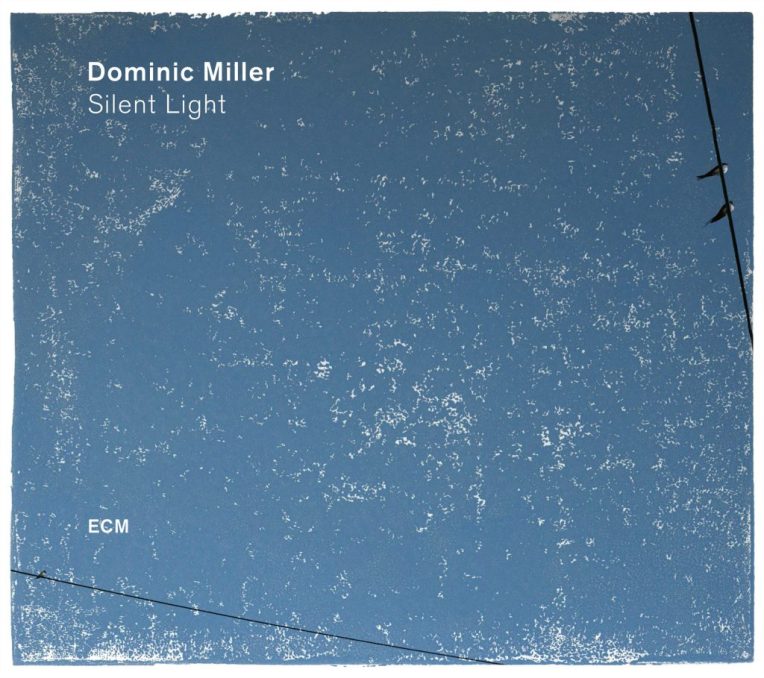
The title of Absinthe, Dominic Miller’s follow-up to his 2017 ECM debut, Silent Light, harks to the early French Impressionists, whose all-in dedication to art is a philosophical touchpoint for the guitarist. To carry on that spirit, he could hardly have asked for a more eclectic yet integrated band. Bandoneon player Santiago Arias brings a sense of cross-continental shift that makes the world just a little smaller; keyboardist Mike Lindup adds a sometimes-surreal vibe that’s equal parts cry from the past and message from the future; bassist Nicolas Fiszman is the soil to Miller’s sunlight; and drummer Manu Katché, a remarkable impressionist in his own right, is time incarnate.

With such a massive scale to be reckoned with in theory, one might expect the results to be overpowering, when in practice the melodic, harmonic, and rhythmic content is so evenly distributed between pans that by the end of each tune we’re left on an even keel from where we began. This is nowhere so true as on the opening title track, which spins a steady downtempo groove from the filaments of Miller’s solo introduction. The way his bandmates shuttle through the greater loom of the album’s concept is as intuitive as the compositions yearning for consummation. A certain feeling of inward travel continues in all that follows.

The quiet locomotion of “Mixed Blessing” and is as progressive as the tender “Christiana” is regressive, the geometrically inflected “Étude” as inviting as the open-ended charm of “Ombu,” the melancholy “Ténèbres” as dark as the transparent “Saint Vincent” is bright. The latter bears dedication to the late Cameroonian guitarist Vincent Nguini, a longtime collaborator with Paul Simon and something of a mentor for Miller.Even without such biographical details, these stories write themselves, unhidden, in real time. Binding their pages are shorter pieces, including the piano-rich “Verveine” and the haunting “La Petite Reine.” Into these we are afforded only fleeting glimpses, personal tesseracts whose potential for transfiguration can only be expressed in song.

Absinthe Portrait
(Photo credit: Gildas Boclé)

All of which makes “Bicyle” quintessential in the present milieu. Its pedaling motion is more than a metaphor; it’s an actualization of life’s unstoppable flow. For there, woven between each spoke like a playing card, memories fade into new experiences, squinting into the glare of a setting sun as the world curls into slumber.

Dominic Miller: Silent Light (ECM 2518)

Silent Light

Dominic Miller
Silent Light

Dominic Miller guitar, electric bass
Miles Bould percussion, drums
Recorded March 2016 at Rainbow Studio, Oslo
Engineer: Jan Erik Kongshaug
Produced by Manfred Eicher
Release date: April 7, 2017

As guitarist Dominic Miller recalls in this CD’s liner notes, when approached by producer Manfred Eicher to make an album for ECM, he discussed various musicians and configurations before deciding to go solo. Having grown up in Argentina, Miller was indelibly influenced by Latin American sounds, and counts Egberto Gismonti’s Solo and Pat Metheny’s Offramp as watershed listening experiences. Since living in the UK and now in France, he has worked with Phil Collins, Paul Simon, and Sting, among others, all the while developing his own voice. As Sting himself writes in a supplementary note: “[W]henever Dominic plays the guitar he creates colour, a complete spectrum of emotions, sonic architecture built of resonance as well as silence, he lifts the spirit into higher realms, perhaps those realms where silence reigns.” And perhaps no other combination of location, timing, and circumstance could have produced something that so beautifully lives up to that assessment.

In thinking about the genesis of Silent Light, Miller turned to percussionist and longtime collaborator, Miles Bould, whose applications seem born of the guitar’s deepest imaginings. As it happened, the night before the recording, Bould learned that the great Brazilian percussionist and ECM veteran Nana Vasconcelos had just passed away, lending the session heartfelt poignancy. That said, there’s so much joy to be found that one would need to listen most attentively to find a single tear.

The strains of “What You Didn’t Say” delineate an opening portal, beyond which personal interactions float along waves of gentlest memory, barely detailed by percussion amid Miller’s speechless legibility. So begins a journey of concentric circles, each a band of influence along the surface of the composer’s life. From the Venezuelan flavor of “Urban Waltz” and laid-back precision of “Baden” (dedicated to Brazilian guitarist Baden Powell) to the Celtic folk-inspired “Angel” and early 20th-century French stylings of “Le Pont,” a red thread of respect runs unbroken and with clarity of purpose to a tender, solo rendition of Sting’s “Fields Of Gold.”

If anything further unites these pieces, it’s that they all seem to follow—rather than issue from—the guitar as if it were a compass attuned to melodic north. One feels this especially in “Water,” “En Passant,” and “Chaos Theory,” the latter of which navigates shimmering harmonies by the addition of bass and drums for a feeling that is decidedly crystalline, transparent, and honest. Like the recording as a whole, it is intimate without being invasive, allows no room for misinterpretation, and is as comforting as waking up knowing the only thing required of you is to listen…and to love.

Bill Frisell/Thomas Morgan: Small Town (ECM 2525)

Small Town

Small Town

Bill Frisell guitar
Thomas Morgan double bass
Recorded March 2016 at Village Vanguard, New York
Engineers: James A. Farber and Paul Zinman
Mixing at Avatar Studios December 2016: James A. Farber, Manfred Eicher, Bill Frisell, and Thomas Morgan
Produced by Manfred Eicher
Release date: May 26, 2017

In this intimately performed and recorded album, one of two documenting a historic performance at New York City’s Village Vanguard, guitarist Bill Frisell and bassist Thomas Morgan show us what it means to treat jazz as a dialogue. While floating on the waves of their complementary artistry, we encounter one vessel after another of quiet majesty, each more attuned to the stars of navigation than the last.

Because Frisell and Morgan both played at the last session of Paul Motian, it’s only fitting they open with the drummer’s “It Should Have Happened A Long Time Ago,” their meditation on which unravels in an 11-minute exhale. This experience alone was more than worth the price of admission for those fortunate enough to have been at the Vanguard that night, and is a perfect summation, if not also aconsummation, of the duo’s boundless imagination.

“Subconscious Lee” follows by paying homage to its composer, Lee Konitz, with an uplifting yet fiercely inward-focused reading. Frisell’s buoyancy here speaks of a musician well aware of the ethereal hand in which the tether of his creativity is gripped. “Song For Andrew No. 1” bears dedication to Andrew Cyrille. An earlier version appeared on The Declaration of Musical Independence, and now finds itself reborn in amorphous coherence. The guitar is nothing short of haunting, as it is in “Small Town,” wherein it sings with tumbleweed-kissed charm. Morgan is a wonderous complement, not so much supporting from the periphery as bringing out punctuation from within. Between those two Frisell originals, the folk tune “Wildwood Flower” wraps Morgan in joyful comfort. The bassist’s own “Pearl,” one of his earliest compositions, speaks with a certain innocence and basks in its own evolution. His heartfelt soloing thinks back, looks forward.

Fats Domino’s flirtatious “What A Party” and a 1960s-inspired nod to “Goldfinger” strings a daisy chain of allusions like a smile across azure sky, sending us on a mission not to destroy but to share the good news of music that awakens us to deepest sense of self.

Although the conversation begun here might seem to end with its companion album, Epistrophy, it will continue to yield new insights the more it’s heard in the world. For to the world it belongs, a sincere echo of its own creation, resonant and deserving of our undivided regard.

Adventures in Editing

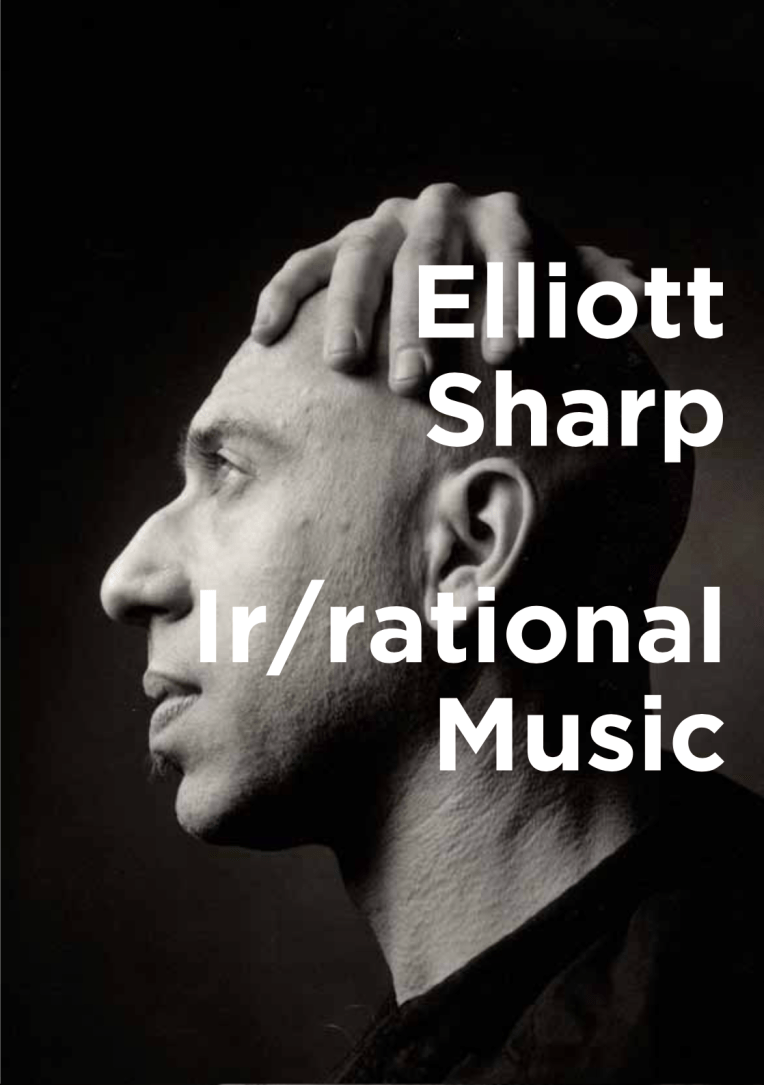
In addition to my love of writing, I am a longtime editor and wanted to share a project in which I was honored to be involved as copyeditor of Elliott Sharp’s autobiographical and philosophically rich Ir/rational Music, published by ECM recording artist David Rothenberg under his Terra Nova imprint. Click the cover to be directed to Amazon and find out more about this fascinating book.

IrRational Music

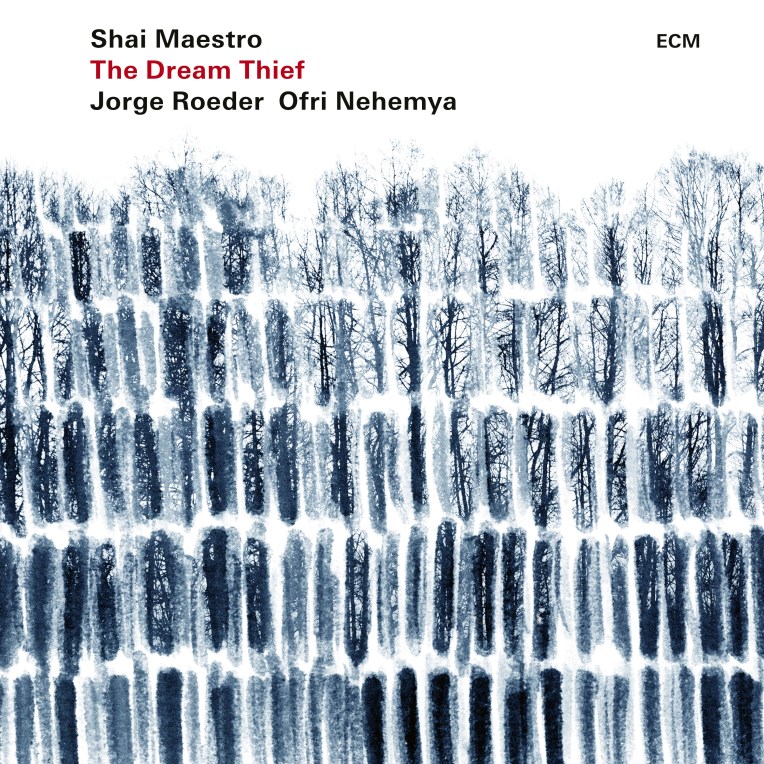
Shai Maestro: The Dream Thief (ECM 2616)

2616 X

Shai Maestro
The Dream Thief

Shai Maestro piano
Jorge Roeder double bass
Ofri Nehemya drums
Recorded April 2018, Auditorio Stelio Molo RSI, Lugano
Engineer: Stefano Amerio
Produced by Manfred Eicher
Release date: September 28, 2018

The Dream Thief is Shai Maestro’s welcome leader debut for ECM. First heard on the label as sideman for Theo Bleckmann’s Elegy, the pianist now gets the full thermals of Lugano’s Auditorio Stelio Molo RSI studio to lift his wings skyward.

Although the lion’s share of composing credit goes to Maestro, two outliers peel back personal layers of his craft. “My Second Childhood,” by Israeli singer-songwriter Matti Caspi, opens the set with palpable nostalgia, a feeling of not only reviving but reliving the past with fresh eyes. Like the standard “These Foolish Things (Remind Me of You),” he plays it solo, as if to hold only himself accountable for every vulnerable detail. As Maestro himself notes: “The tremendous history of jazz is a great inspiration but also a great challenge. We each have our own individual gift, which is the choices we make—whether we turn to major or minor, whether we play pianissimo or fortissimo at a key moment. I always try to remember to embrace history while not trying to be anything or anyone else—to let the music come out of me.”

With regard to his own writing, he lives up to his surname in concept and execution. The holistic narratives of “The Forgotten Village” and the title track are allowed to expand their lungs before communicating a single concept. Nehemya, a recent addition to the group at the time of this recording, is a revelation of subtlety throughout, and Roeder’s soloing is the perfect complement: buoyant yet open, comforting yet daring, extroverted yet welcoming. As a rhythm section, they treat shadows and brighter persuasions with equal care, giving every note a surface on which to run.

As for Maestro’s playing, one need only witness what he does with a simple ostinato in “Lifeline” and a balance of synchronicity with Roeder in “New River, New Water” to feel guided along a true path of discovery. Between these are the parabolic connective tissues of “A Moon’s Tale” and “Choral,” both of which elicit a oneness of medium and message while gifting something sacred.

All of this makes “What Else Needs to Happen” an especially hard-hitting conclusion. Written for saxophonist Jimmy Greene’s daughter Ana, a victim of the Sandy Hook shooting, it stencils excerpts from President Obama’s speeches on gun control from 2015 and 2016 over a prayerful theme. More relevant than ever, it magnifies the need for conversation in a world with tape over its mouth. Let this music, at least, be the first step toward ripping it off.

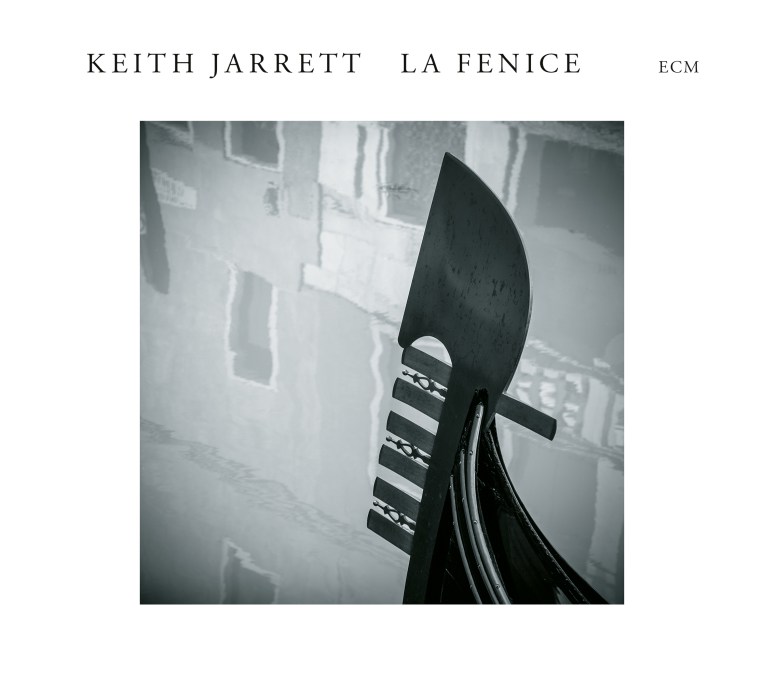
Keith Jarrett: La Fenice (ECM 2601)

2601|02 X

Keith Jarrett
La Fenice

Keith Jarrett piano
Recorded live in concert July 19, 2006 at Gran Teatro La Fenice, Venice
Producer: Keith Jarrett
Engineer: Martin Pearson
Mastering: Christoph Stickel and Manfred Eicher at MSM Studio, München
Executive producer: Manfred Eicher
Release date: October 19, 2018

In his 2014 book, Listen to Keith Jarrett! (available only in Japanese as: キース・ジャレットを聴け!), author Yasuki Nakayama doesn’t see the pianist as a “jazz” musician per se, but as one more closely aligned with the tradition of Bob Dylan. Not merely because he played Dylan on his early albums (“My Back Pages” and “Lay Lady Lay”), but because there’s a folk-rock groove common to both. This double-disc gem from the Jarrett solo archives, documenting a concert given on 19 July 2006 at Venice’s Gran Teatro, speaks truth to that spirit, casting a backward glance to some formative ECM ventures and beyond.

Parts I and II drop us into the flow of Jarrett’s unstoppable creativity, and it’s all we can do to achieve flotation in the wake of his improvisational vessel. That said, he isn’t out to drown us with his prowess or leave us dogpaddling for meaning. Rather, the purpose of his art is as naked as it is spontaneous. Every note conveys its inevitability: an answer to a question we never needed to ask in the first place. His frames have porous edges, each a sentient microbiome hungering for communication.

Where Part III brings us into an urgent yet bluesy solar system, slowing from a run to a crawl until a life has been fulfilled by its own telling, Part IV yields ecliptic lyricism. Jarrett cuts away each motif one umbilical cord at a time so that its own personality traits can emerge. Thus, he takes lessons of love and turns them into opportunities for self-assessment, growth, and milestones. Part V is a boppish affair with plenty of twists and turns to satisfy the eager listener. Its wondrous energy is superseded only by Part VIII. With feet stomping and voice churning, Jarrett transforms the piano into metaphysical substance, whereby the path to harmony must be paved with commitment.

The performance is consummated by a few inspired pieces. “The Sun Whose Rays,” from Gilbert and Sullivan’s The Mikado, acts as a fulcrum between the cinematic drama of Part VI and the family photograph developing in the solution of VII. It fits seamlessly into its surroundings, a drop of the terrestrial in a realm otherwise all its own. “My Wild Irish Rose” receives a heartfelt treatment. Poised yet dramatic, Jarrett is unafraid to unravel it with all its might. “Stella by Starlight” is a standard of a different stripe. Just in the way Jarrett plays it, one can feel the decades spent with his trio bubbling up from a thick broth of ideas. Lastly, we have “Blossom,” a deep nod to his 1974 classic Belonging. The title is more than appropriate, for his music likewise releases pollen to populate the world with its songs.

Eleni Karaindrou: Tous des oiseaux (ECM New Series 2634)

2634 X

Eleni Karaindrou
Tous des oiseaux

Savina Yannatou voice
Alexandros Botinis violoncello
Stella Gadedi flute
Vangelis Christopoulos oboe
Yannis Evangelatos bassoon
Dinos Hadjiiordanou accordion
Aris Dimitriadis mandolin
Maria Bildea harp
Eleni Karaindrou piano
Sokratis Sinopoulos Constantinople lyra, lute
Nikos Paraoulakis ney
Stefanos Dorbarakis kanonaki
Giorgos Kontoyannis percussion, Cretan lyra
String Orchestra
Argyro Seira concertmaster
Recorded October 2017 and January 2018 at Studio Sierra, Athens
Recording engineer: Giorgos Karyotis
Edited and mixed September 2018 by Manfred Eicher and Giorgos Karyotis
Produced by Manfred Eicher
Release date: January 25, 2019

“Why little birdy don’t you sing
As you used to sing before?
Oh, how could I,
They had my wings severed.”

In her eleventh album for ECM, Greek composer Eleni Karaindrou gifts us with some of her most poignant music yet. Poignant because, on a political level, it intersects with issues deeply relevant to today’s social climate and, while on a personal level shifting from the Theo Angelopoulos era that quietly ushered her artistry into global imagination.

Music for the play Tous des oiseaux by Lebanese-Canadian writer Wajdi Mouawad is subject of the album’s first half. As is characteristic of Karaindrou, it’s more than incidental but a living part of the dramaturgical landscape. And despite a wide array of instruments, including string orchestra, lyra, kanonaki, oboe, harp, flute, accordion, and cello, the mood is as intimate as it should be for a play centering on the love shared between an Arab American and a German-born Jew. The latter’s Zionist father, David, despite his anger over the relationship, must deal with the revelation of his own Palestinian birth, thereby sending him into a vicious spiral of identity politics.

The drone in which opener “The Wind of War” rests is an accurate representation of that spiritual unrest, the symbolic backdrop against which this story unfolds. As with any history, if you zoom back, it seems to unify in texture. But get close enough to regard individual lives within it, and suddenly conflicts of human error become obvious. Vocalist Savina Yannatou, familiar to ECM listeners as a bandleader in her own right, sings wordlessly, here as also in “Encounter” and “The Impossible Journey”—a voice still voiceless, because it is heard from afar. Even in Yannatou’s unaccompanied “Lament,” a 13th-century Greek song, she cannot pull words from their graves. As one of three solos, along with “Towards the Unknown” for flute and “Je ne me consolerai jamais” for cello, it consigns the fate of an entire people, grazed by breath and weaponry of chance.

In “The Dark Secret” and “David’s Dream,” both for string orchestra, individuals vie subtly for attention, but are drowned by collective trauma. Time becomes timeless, a variation on a theme, just familiar enough to feel real yet off-kilter enough to illuminate mysteries of waking life. “The Confession” adds to that milieu the beat of a drum: reality calling. Like the intersection of oboe and harp in “Why?” or the lyra, ney, and kanonaki of “Between Two Worlds,” it’s a dance without ground. A love divided by self.

Music for Iranian auteur Payman Maadi’s film Bomb, A Love Story constitutes the second half. As the first film Karaindrou has scored since Angelopoulos’s death, it’s a bittersweet milestone. Using the Israeli-Palestinian conflict to set in motion its narrative of self-searching, the film shows us not only that the personal is political, but also that the political is personal. Karaindrou’s soundtrack mirrors that philosophy by foregrounding the bassoon of Yannis Evangelatos, whose instrument—a marginal one in the woodwind family—echoes the marginality of the film’s characters. In this instance, the orchestra serves as omniscient narrator, sending shimmers of hope through “Love Theme,” in which the oboe of Vangelis Christopoulos and the piano of Karaindrou herself fall into shadow: dreams never realized. If not for that, “The Waltz of Hope” might not come across so much as a fantasy and “Lonely Lives” as truth. Further sentiments of travel (“Mitra’s Theme – Walking in Tehran”) and innocence (“Love’s First Call”) touch and part across maps of indifference. Which is why in the “Reconciliation Theme” we find the most instruments deployed at once, recalling the richness of Angelopoulos’s character studies. Only now that mist has been lifted, exposing figures whose every feature cries with vivid detail.

Dominique Pifarély: Time Before And Time After (ECM 2411)

2411 X

Dominique Pifarély
Time Before And Time After

Dominique Pifarély violin
Recorded in concerts in September 2012
at Auditorium Saint-Germain, Poitiers (France)
and in February 2013
at Cave Dimière, Argenteuil (France)
Engineer: Gérard de Haro
Produced by Manfred Eicher
Release date: August 28, 2015

Here is a place of disaffection
Time before and time after
In a dim light: neither daylight
Investing form with lucid stillness
Turning shadow into transient beauty…
–T. S. Eliot, “Burnt Norton”

After leading a string of caravans across the sands of ECM, Dominique Pifarély enchants on this set of solo recordings taken from French concerts in 2012 and 2013 at Auditorium Saint-Germain (Poitiers) and Cave Dimière (Argenteuil). Although nearly everything is improvised, the violinist dedicated each piece in retrospect to a certain poet, from whose verses he also chose a title. More than highlighting personal connections between literature and music, this artistic decision reveals an agency of spontaneous creation.

The Near Eastern quality of “Sur terre” (for Mahmoud Darwich) makes for a poignant introduction to this border zone where motifs converse for want of being equally heard. Every color and texture is like the seed of a new community, touched by horizons yet to be unfolded, and in this respect shares kindship with “L’air soudain” (for André du Bouchet). The latter’s robust yet plaintive cry yearns to be acknowledged in a place uninhabited except by its own singing. Arid climates are evoked in the rasp of a bow: a gargantuan tongue scraping along the earth in search of nourishment but finding only dust and ruins.

“Meu ser elástico” (for Fernando Pessoa) and “D’une main distraite” (for Henri Michaux) are both jagged wonders, wherein leaping suggestions of dance are constantly pulled back to origins, while the masterful“Gegenlicht” (for Paul Celan) shows us thefull scope of Pifarély’s technical and artistic capabilities. Like a prisoner who succeeds in digging his way through a wall with bare hands, he peels away the barrier to freedom one granule at a time. But before he inhales fresh air again, he must pass through “Violin y otras cuestiones” (for Juan Gelman). A struggle that is as political as it is personal, it finds temperance only in the sul ponticellosalvations of “Avant le regard” (for Jacques Dupin) and “L’oubli” (for Bernard Noël).

If shades of the Baroque are present, they’re no illusion, as even Pifarély admits: “[O]f course Bach is in the air because Bach is polyphonic, and the violin is polyphonic.” Bach also informs his decision to close his solo performances with a standard—in this instance Victor Young’s “My Foolish Heart”—to assert the violin’s autonomy. His interpretation thereof looks in the proverbial mirror, hoping to recognize itself but instead finding awe in what it has become.