EUROPE IN FLAMES: ONE

ONE is the debut of EUROPE IN FLAMES, the apocalyptic ambient project of Jason Wach and Hamish Low. In this intentional sonic sanctuary, the duo has crafted a refuge from the din of the current zeitgeist. In this space, the thunder of sociopolitical conflict becomes a distant shudder, melodic signals from afar. This is not an apocalypse of fire and smoke but the quieter aftermath that follows. It is the long exhalation after the collapse, the stillness that asks what it means to create once everything familiar has burned away.

The album opens with “for those who know the dawn,” a piece that serves as an invocation. Piano tones scatter their seeds on barren soil, mingling with the soft hiss of static and what might be the faint hum of machinery left running in an abandoned building. Each note gestures toward rebirth but is shadowed by the awareness that loss is first required. The track inhabits that moment when the first bird calls, not to announce light but to mourn the dark. This forlorn sentiment is only magnified in “forgetting how to breathe.” As low frequencies bloom in bruises, the listener feels themselves dissolving into vapor, suspended between panic and surrender. Dreams twist into strange geometries; trauma scratches the surface of consciousness like windblown branches on a windowpane. This is where the moral infrastructure of the self begins to crumble, leaving behind the rawness of skinned emotions.
The title of “seal the images in an envelope and say nothing” serves as a commandment as repression takes the place of grace. The atmosphere thickens until movement slows to molasses. Within this stagnation, a distant, rasping tone threads through the mix, binding us to our own restraint. The song becomes an act of preservation, suggesting that silence, too, can be a form of resistance. We then find ourselves “stumbling home through the rain.” After so much enclosure, it is a benediction. Its percussion on metal and stone creates a rhythm more human than a heartbeat. Digital glitches flicker through the soundscape, prayers half-remembered. The world, fractured as it is, feels newly sacred. A woman’s distorted voice emerges, a ghost in the circuitry. She becomes our lone witness, her syllables igniting the sky with fluorescent melancholy before “nocturne” lubricates the central axis with its ode to fragmentation. The piano and electronics drift apart, unable to find resolution, yet their disunity feels deliberate and compassionate. The music forgives itself for breaking, inviting us to do the same.

The closing track, “upon waking,” is a new beginning. Dawn finally breaks, revealing not salvation but continuity. The world is still in ruins, yet the rubble hums with faint electrical life. Smoke lingers, dust swirls, and through it all runs a current of hope: the fragile belief that creation can begin again, quietly, invisibly, from within. Every contact of the flesh, every fleeting gesture, sends out an unreturnable signal into the void that says, We are still here.

The album’s surreal brilliance lies in how it blurs the distinction between sound and memory, between the present and its ghosts. When archival voices or cinematic fragments surface, as in a clip from 12 Angry Men, they don’t feel sampled so much as resurrected. They reach us as if from another planet, their gravity warped, their meaning refracted. And yet, because of this distance, they cut deeper. Like nightowls who swear by the strange clarity that arrives when the sun has vanished and the world sleeps, they are most alive in that hour when thought loosens its grip. But ONE is not of the night. It lives in that trembling, liminal moment just before dawn, when the first blue light begins to touch the earth. This is music for that boundary state between remembering and forgetting.

ONE is currently available from bandcamp here.

Dominic Pettman: Ghosting (Book Review)

Ghosting: On Disappearance is a treatise of nonbeing—or, perhaps more precisely, of unbeing. It is not merely about disappearance but about the existential tremors that ripple outward when presence collapses into absence. Placing his authorial thumb and forefinger on the touchscreen of this modern inevitability, Dominic Pettman enlarges its finer gradations across emotional, social, and technological contexts. He pinches and stretches the phenomenon until its translucent membrane reveals something more fundamental: that to vanish is to be human and that to experience the vanishing of another is to feel the sting of impermanence.

While the titular concept has haunted language for centuries through folklore, spirit mediums, and psychological estrangement, it has, in our present age, acquired a peculiarly digital valence. Now, “ghosting” refers most commonly to the quiet, sudden severance of connection between friends, lovers, or kin. The gesture is at once devastatingly simple and infinitely complex: a single tap on a block button, a name fading from a chat log, a conversation frozen by the unrequited ellipses on the book’s cover. Technology makes the act almost frictionless. We already interact daily with people who are physically absent, replaced instead by avatars, text bubbles, and disembodied voices. To ghost someone is merely to withdraw the illusion that they were ever really there to begin with.

Pettman calls ghosting “a form of symbolic suicide,” if not also of violence, a dual wound inflicted upon self and other. It kills the relationship from both sides, leaving the ghosted “gasping at the silent vehemence of the act.” In centuries past, a ghost was thought to be an uncomfortable presence: the whisper in the night, the chill in a boudoir. Today’s specters, however, are defined by the unread message, the unanswered call, the untraceable unfriend. The modern ghost mocks us not with its return but with its refusal to reappear. What once demanded ritual now requires only signal and silence.

Ghosting has become, Pettman suggests, a modern luxury of the unencumbered self, one that allows us to discard what feels burdensome with the efficiency of deleting a file. Yet, what artifacts remain in the wake of such apparently clean erasures? The book’s modest yet densely packed 110 pages attempt to reckon with these residues, drawing out the historical and technical filaments that bind our vanishing acts to canonical anxieties.

Pettman walks us associatively through a gallery of geist-types, beginning with romantic ghosting. Once upon a time, the rules of engagement in love were dictated by proximity and propriety; now, they are replaced by rules of disengagement. The refusal to reply, the closing of a digital door, has become the reigning leitmotif of romantic punctuation. Where a lover might once have ignored a letter and let absence ferment over time into torment, today’s nonresponse hits instantaneous and permanent. Yet, as Pettman notes, the old dynamic persists despite our devices.

Romance has always been a theatre of projection, a negotiation between the seen and the unseen, the flesh and its fantasy. For all our bodies’ sweat and trembling, it is the embellishment that endures. Even in love’s most carnal moment, that fleeting dissolution of self into the other, there is already the seed of absence: the tiny death, the out-of-body vanishing we call climax. How curious, then, that the purest expression of intimacy is also an act of ghosting, the self evaporating in the ecstasy of its own undoing.

Ghosting also bears the battle scars of gendered terrain. Though often cast as an act of cruelty, Pettman reminds us that ghosting can just as easily be a form of survival, a necessary defense against the predations of aggression, stalking, or abuse. It can be liberation or surrender, sanctuary or exile. Either possibility, he writes, makes us acutely aware of our dependence on the other, the fragile scaffolding of recognition upon which our identities are built. In an age when partners must fulfill multiple roles once distributed across an entire community, the dissolution of a relationship casts us into a kind of social purgatory, suspended between connection and isolation.

Pettman insists, too, that ghosting is not an anomaly but a revelation of what we have always been: phantoms speaking to one another through the veil of mortality. Every “forever” whispered in the heat of the proverbial moment carries the irony of death; every “I love you” is also an elegy. Love itself unfolds under the shadow of the crypt. Perhaps this is why its rituals resemble religion, as both court devotion and doubt in equal measure, laying faith on the altar of inevitable loss.

I would add, by way of illustration, Robert Zemeckis’s Cast Away, a love story indelibly marked by absence. Chuck Noland (Tom Hanks), presumed dead after a plane crash, clings to a pocket watch containing his lover’s photograph, a relic of connection that fuels his will to live. When he returns after surviving for four years alone on a deserted island, he finds life has moved on without him; his beloved has remarried, rendering him the rarest kind of ghost, one who walks among the living, uninvited. His resurrection is itself a disappearance, a return that negates the meaning of home.

When lovers become projection screens for our own incomplete scripts, separation becomes not only likely but inevitable. The one left behind suffers not merely the withdrawal of a person but of the narrative that sustained them. In our culture of curated selves, ghosting has even acquired a perverse glamour as a badge of autonomy. One might recall Elaine Benes’s “spongeworthy” calculus from Seinfeld: who is worth the risk, the effort, the finite resource of bodily attention? Ghosting may be seen as a reversal of this privilege, a self-anointed freedom to choose extracourse over intercourse.

How, then, does one navigate the 50 shades of this phenomenon in an ecosystem already saturated with specters? As Pettman observes, “The paradox of the streaming age applies also to love: there are a million shows waiting to be watched, and yet none of them seem worth committing to.” In such a world, ghosting is less an exception than a rite of passage, a sacrament of connection where fulfillment is as fleeting as a notification bubble.

From romance, Pettman moves to the familial and the platonic. Here, the stakes deepen. To be ghosted by a coworker is unfortunate; to be ghosted by a child is practically biblical. In the age of ideological polarization, even the Thanksgiving table becomes a séance for the missing. The empty chair may symbolize courage to one and betrayal to another. Ghosting thus becomes political, echoing across generations and belief systems.

Professional and social ghosting occupy the book’s latter thrust, and here Pettman’s insights cut to the bone. Having once taught as a professor, I recognize the spectral economy of intellectual labor, the endless treadmill of unacknowledged effort and unreciprocated outreach. In graduate school, “imposter syndrome” was our ironic communion, a collective haunting where each scholar feared being the least real presence in the room. Every unanswered email, every “no reply” rejection, each job committee that never called back—all were tiny funerals for the self. Eventually, I chose to ghost the profession before it could continue to ghost me, if only to preserve a flicker of something to call my own.

Of course, ghosting is by no means confined to ivory towers. It infiltrates every professional exchange: clients disappearing mid-project, employers denying promotion for no apparent reason, friendships fading in inbox drafts. Even places ghost us: favorite restaurants that shutter without warning, neighborhoods transformed overnight, ecosystems collapsing out of sight. The world itself feels like it is ghosting us, withdrawing one news cycle at a time into abstraction. The more we exist, the more unreal reality seems.

I would add two more iterations to Pettman’s catalogue. First is the phenomenological ghosting of presence without feeling. We find this in M. Night Shyamalan’s After Earth, in which ghosting refers to the process of shutting down one’s emotions. This quality is a precious commodity in the film’s military-industrial complex, weaponized to render one invisible to alien predators who target their prey by detecting fear pheromones. To ghost, here, is to master disappearance from within. Second is Deanimated, an experimental film by avant-gardist Martin Arnold, who digitally erases actors one by one from the 1941 Bela Lugosi picture Invisible Ghost, until all that remains are empty rooms, doors that open by themselves, and dramatic music without diegesis. The world goes on performing, emptied of its inhabitants. The viewer, too, becomes ghosted, watching absence itself take center stage.

The loss of the one who ghosts us, Pettman ultimately suggests, is not merely a social wound but an ontological one. We lose not only another person but the mirror in which our own being once took shape. The terror of ghosting lies not in being forgotten but in discovering how easily we can forget ourselves when deprived of the other’s gaze. Technology did not create this fragility but has only revealed that relationships have always been provisional, sustained by faith, fantasy, and the flickering persistence of attention.

To be ghosted, then, is to confront the truth that love, friendship, and community are nothing more than brief illuminations against the endless dark of unbeing.

Mal Waldron: Free At Last (Vinyl Reissue)

“I feel if you look back too much,
you trip when you take a step forward.”
–Mal Waldron

Although Mal Waldron began his career in jazz as an alto saxophonist, playing in the long, tapering shadow of Charlie Parker, fate would soon guide him back to the keyboard. The piano was, for him, not just an instrument but a resonant vessel sailing in the tempests and calms of his cross-hatched personality. His classical training gave him a compass; his improvisational instincts supplied the wind. A prolific writer of tunes—angular yet melodic, pensive yet full of forward motion—he became an indispensable sideman to the luminaries of his era, including John Coltrane, Art Farmer, Jackie McLean, and, above all, Billie Holiday, with whom he shared a natural rapport. Their collaborations seemed to hover between worlds—her voice the smoke, his chords the fire.

But every light casts its own darkness. Waldron’s journey was interrupted by a nervous breakdown that landed him in the hospital. And then, at his seeming lowest point, when he was invited to Paris to score a film. It was more than a job; it was a turning point, a new way of listening. Each city he touched thereafter—from Bologna to Cologne and, ultimately, Munich—became another note in the unfolding score of his reinvention. By 1967, he had settled in Munich. Along the way, he crossed paths with Swiss bassist Isla Eckinger and drummer Clarence Becton, another American expatriate whose trajectory brought him across the pond into a music scene unlike any other.

Free At Last, a title that feels both biographical and prophetic, ended up being one of three studio recordings Waldron made with ECM’s founder, Manfred Eicher, the others being The Call (JAPO) and the elusive Spanish Bitch (Victor Japan). In Waldron’s rhythmic restraint, in his careful placement of silence and tone, surely Eicher glimpsed a growing philosophy of sound, one defined not by density but by depth, not by volume but by presence. Waldron’s subsequent decades would see him traversing genres, yet always with the same chiseling intent: to refine expression until it gleamed with truth.

Now, in this two-LP reissue, gloriously packaged in a gatefold sleeve with all the original artwork, plus new liner notes by Steve Lake (from which I’ve distilled much of the information above), we are granted with both the familiar and the newly unearthed. The 1969 session unfolds again like a memory recalled in sharper resolution, joined by alternate studio takes on sides III and IV. The all-Waldron set list remains startlingly modern. From the very first shimmer of Becton’s cymbals on “Rats Now” to the closing sparkle of “Boo,” Eicher’s curation of space and clarity is already very much alive. Listening to it in 2025 feels less like revisiting an old field and more like standing again in its soil, still fragrant, still fertile, still yielding. To reap this harvest after more than half a century is to marvel at how sound, once released, can resist decay.

As noted in my first-impressions review, the trio’s momentum is undeniable in “1-3-234” and “Rock My Soul.” Both skip across a sunlit surface like stones whipped by practiced hands. Yet it is in the quieter pieces that Waldron reveals his most robust intentions. Whether mixing shadow and sparkle in “Balladina” or masterfully blending poetry and prose in “Willow Weep For Me,” he makes us acutely aware that emotions are points of departure, not destinations. Eckinger’s bass hums with empathy, Becton’s drumming reacts in real time like reflected light, and together they guide the listener on a journey worth savoring.

Among the newly released takes, the extended “Willow” is especially revealing. Each gesture seems to weigh more, to linger longer. One senses them circling not around a song but around a feeling, its perimeter undefined, its center perpetually receding. As in the photograph of the LP I took above, their coming together stands as a testament to the power of a vision that, even as the tide of history swirls and churns around it, remains true to itself to this day.

David Rothenberg: Secret Sounds of Ponds (Book Review)

“The pond is the teacher, underwater lies the source.”
–David Rothenberg

Near the apartment complex I once called home, before I migrated to my present dwelling, a pond would awaken each night in amphibious utterances. Frogs, crickets, and invisible choir members released a polyphony of chirrups and croaks that spilled into the humid dark. It was alluring enough that I found myself inventing post-meridian errands just to step outside and listen. I remember how the air trembled with that sound, neither wild nor domestic, a liminal language that both invited and eluded comprehension. I never tried to categorize it then; it was enough to be absorbed. What struck me most was its irregularity, a music without time signatures, and yet, the longer I listened, the more I could discern the soloists from within, the deliberate from the accidental. What I did not realize, however, was that this was only the surface of a deeper, secret orchestra playing just beneath my feet.

It was during the stillness of the pandemic that musician, philosopher, educator, and animal collaborator David Rothenberg turned his own attention downward. He found that ponds, those apparently placid mirrors of sky and branch, are paradoxical entities: tranquil to the eye, yet pulsing with invisible sound. Above the water, a hush. Below, a thicket of sonic life. But how does one hear through liquid? Rothenberg, already attuned to the songs of whales, found his usual instruments inadequate. He commissioned a hydrophone capable not merely of recording but of touching sound, translating the tactile shimmer of aquatic vibration into something audible. In doing so, he discovered not merely a pond but a pulse, a murmuring node within the living organism of the planet. In this submerged language, he recognized that the world itself is always breathing, whispering, and improvising at the edge of consciousness. The recordings discussed and contextualized in Secret Sounds of Ponds feel like a revelation, a form of listening that brushes the hair of the mind, a continuous and organic ASMR channel that one can tune into and out of at will.

Yet the music is not only animal. The flora, too, contribute their delicate speech: plants releasing oxygen bubbles as miniature offerings, each a syllable in an ancient conversation. “The plants keep time,” Rothenberg notes, “and the beasts carry a tune.” One hears this and realizes how naïve our auditory hierarchies have been. We’ve long believed that sound belongs to the realm of motion, of bodies and breath. Yet here are rooted beings, singing through photosynthesis, metronomes of life itself.

Rothenberg reminds us that “even in this century where everything seems possible, morphable, changeable, hearable, findable at a moment’s thought, there are still sounds around us… immediate sounds that we still don’t know.” If we are ignorant of our surroundings, perhaps we are equally ignorant of our origins. We imagine that knowing where we are going requires understanding where we’ve come from, yet Rothenberg suggests the opposite: that both the departure and destination are wrapped in the same sonic fog. Thus, we meet the limits of our perception and the possibility that such limits are spiritual. The indistinguishable becomes indistinguishably beautiful. Insect, fish, turtle, plant: all’s fair in love and pond life.

This mode of listening is not a science but a humility. It compels us to ask impossible questions. If technology must translate these frequencies for us, were we ever meant to hear them? When we call this music, do we consecrate or colonize it? Is it communion or interference? Somewhere, I imagine, John Cage laughs from the beyond, his silence perforated by the croak of a frog.

“For all the millions of hours we have spent together with animals,” Rothenberg observes, “we still cannot speak with them.” The task, then, is not to translate but to collaborate, to become co-musicians in a score that predates our language. Sound may have no intention, no recipient, and yet we crave both. We are instruments yearning for meaning, resonating for a moment before fading into the dissonance of time. Listening, as Rothenberg reminds us, “reveals things alive before we can claim them.” This is the ethical heart of the project: listening not to possess but to participate. Without that transformation, we remain voyeurs; with it, we become apprentices in the grammar of existence, learning not to compose but to decompose, to take apart what our words have wrongly fused.

I think here of Bashō’s immortal haiku, in D.T. Suzuki’s translation:

Into the ancient pond
A frog jumps
Water’s sound!

It is easy to romanticize this image, to see it as a vignette of simplicity. Yet the poem’s true profundity lies in its inversion: the pond, not the frog, is the voice; the frog merely the activator, the finger on the cosmic key. That the frog is jumping into a pond is never in doubt, yet translators have long struggled to articulate that final sound—“splash,” “plop,” “water-note,” “kerplunk”—but perhaps that indeterminacy is the point. The sound eludes capture because it was never meant to be caught. Like Rothenberg’s recordings, made accessible via QR codes throughout the book or online in album form as Secret Songs of Ponds, it dwells in the space between articulation and silence, between perception and being.

Hence the human impulse to name: to label every ripple and rustle—scratching, blipping, bubbling, warbling—as if taxonomy were intimacy. Rothenberg resists that impulse by layering his own clarinet into the watery mix, joining a chorus rather than leading it. His collaborations with Ilgın Deniz Akseloğlu, whose deconstructive poetry conjures an invented language of resonance rather than reference, push this further. Her contributions hover like dreams, vocal fragments rising from the mire of the unconscious. Listening to “I Still Don’t Get How Distance Works,” one feels time dissolving; her voice becomes an echo of the pond itself, diffused and omnipresent.

In other tracks, Rothenberg’s clarinet drifts like an inquisitive creature among the bubbles and squeaks—curious, reverent, never dominant. I am reminded of Ornette Coleman’s philosophy of sound as motion through possibility: music as exploration, not arrival. Elsewhere, the pond alone is permitted to speak, recalling early electronic composers like Ilhan Mimaroglu, who inverted futurism into introspection, aiming their microphones inward to locate the primordial hum within us all.

Most of all, I think of Akifumi Nakajima, a.k.a. Aube, whose sonic investigations of fire, air, blood, and brain waves sought the inner pulse of matter itself. To engage with Secret Sounds of Ponds is to place a stethoscope against the earth’s waterlogged chest and hear it crackle. Rothenberg confesses, “I don’t play with the pond, but the pond plays with me.” That inversion, again, is key. The artist becomes the instrument, the listener the medium. This is not music about nature; it is nature using us to make itself known.

There is a sacred vertigo in such encounters. What begins as fascination turns toward reverence, even dread, as one senses the immensity of what vibrates beneath the apparent stillness of the world. Ponds, like temples, are mirrors of our incomprehension. They draw us inward until we see that to listen is to surrender.

And so, whenever I pass a pond now, I find myself wondering not merely what lives there, but where it came from. Science offers its explanations of erosion, accumulation, and equilibrium, but the heart refuses to hear them. The mind insists on something older, more mysterious: that the earth itself opened a small mouth to breathe, and we, by accident or grace, happened to hear it.

Rebuilding the Fourth Wall: Toward an Ontology of Vision in Trevor Paglen’s Adversarially Evolved Hallucinations

To think of vision as truth is to confuse perception with revelation. Every image born of pigment, photon, and pixel is already a technological interpretation (the #unfiltered hashtag is a lie). Artificial intelligence magnifies the primordial compulsion to externalize thought into form, mirroring our metaphysical anxieties in the intricacies of ocular logic. Yet when AI begins to dream, no longer are we the authors of representation but the represented. Instead of marveling at the shadows in Plato’s proverbial cave, we become the shadows themselves. Artist Trevor Paglen has turned this reversal into both method and critique, exposing a precarious ontology of vision.

In practical terms, AI is fundamentally trained to recognize faces, objects, and places with mundane equivalents. Paglen, however, decided to do something different by feeding AI “irrational” subjects like philosophy, history, and literature. Using a generative adversarial network (GAN), an AI model that creates images based on what it has analyzed and absorbed from existing datasets or “corpuses,” he wondered what might happen when AI hallucinates an image. As Paglen explains, the process involves two networks engaged in a kind of aesthetic duel: a “Generator,” which draws pictures, and a “Discriminator,” which evaluates them. The two AIs play a game of deception and refinement, cycling through thousands or even millions of iterations until the Generator produces images capable of fooling the Discriminator. The results of this strange symbiosis are entirely synthetic images with no real-world referent, yet both AIs believe them to be genuine.

Here, Paglen discusses the project in more detail:

The fruit of these efforts is Adversarially Evolved Hallucinations, an ongoing series begun in 2017 and documented in this book of the same name. Published by Sternberg Press as Volume 4 of the Research/Practice series, it features a conversation between Paglen and editor Anthony Downey, preceded by Downey’s essay, “The Return of the Uncanny: Artificial Intelligence and Estranged Futures.” Downey reminds us that because AI lacks embodied experience, it produces only “disquieting allegories of our world” at best. Its outputs expose the opaque workings of machine cognition, parallel to the brain’s own trial-and-error rehearsals toward getting something “right.” Here, the fourth wall is not merely broken but rebuilt in its own image. Downey asks whether AI is training us to see the world machinically, and whether we already do. Thus, Paglen’s series explores how machine learning “functions as a computational means to produce knowledge” and, in doing so, outs AI as a heuristic device, “capable, that is, of making sense of, if not predefining, how we perceive the world.”

Paglen draws on taxonomies of knowing akin to metaphorical or substitutive instruments of perception. His parameters constitute a cyclical echo chamber that nonetheless manages to step outside the bounds of acceptability while keeping one foot within them. He calls this “machine realism” because the images are recursive of the engine’s own hallucinations. As Downey observes, “the process is never totally predictable, nor is it reliable.” Then again, is reality itself reliable? Do we not also seek to document, catalog, and amplify that which defies predictability?

Because a GAN’s goal is to generate images that appear categorically relevant while simultaneously deceiving the system, its hallucinations blur distinctions between data and invention. Downey warns that such images, if treated as predictive, can easily become more real than real. For even though they do not exist, these errors and phantasms are not anomalies of image-processing models; they are their very foundation.

So, what does an AI hallucination look like? Take A Man (Corpus: The Humans):

At first, we recognize a human figure, yet the longer we gaze, the more the image unravels, raising a disquieting question: Is distorting coherence into chaos any different from coaxing coherence out of chaos? Is there a point at which the two converge?

This tension recalls the left panel of Francis Bacon’s Three Studies for Figures at the Base of a Crucifixion, where “inaccurate” men accompany flayed carcases:

Despite our aversion to inner flesh, it is the men, those still tenuously tethered to outward form, who disturb us most. When reduced to raw meat, we are more easily abstracted and dismissed; when nearing coherence, we ache for completion.

It is perhaps inevitable, then, that Paglen would venture into the supernatural. Angel (Corpus: Spheres of Heaven) borrows from Renaissance art but reassembles its tropes in a landscape unmoored from conventional metrics:

The context is blatantly parasitic, tugging at the figure with distillational aggression. Here, the “angel” is no divine messenger but an ambassador of categorial confusion.

The closer we get to the intimate, the darker the images become. In Vampire (Corpus: Monsters of Capitalism), the most legible face in the book is also the most “demonic”:

The vampire, parasite of parasites, stands as an agent of eternal torment. A Pale and Puffy Face (Corpus: The Interpretation of Dreams) elicits a similar flicker between attraction and horror that is just human enough to seem alive yet warped enough to feel forged:

Why, one wonders, do these visions feel not only unsettling but somehow sinister?

In anticipation of one possible answer, allow me to return momentarily to Bacon, whose Three Studies of George Dyer are a hallucinatory corpus in their own right:

These falsifications unsettle precisely because they start with a uniquely verifiable identity before marring it beyond recognition. Like a coroner’s report, they document the mutilation of everything we hold stable about the self.

Paglen’s systemic hallucinations similarly engage with another psychological touchpoint in the trauma of seeing and of being seen. Through trauma’s hallucinatory unfolding, bodies and landscapes become intertwined in a web of atrocity, where loss and recovery mirror one another. His images dwell in the rupture between memory and forgetting. 

A red thread through all this is the illusion of human control. Something nefarious always seems to pull the strings, an invisible force with its own agenda. Escape is made possible only through an existence maintained at great sacrifice. In this metaphysical tug-of-war, the line between the animating and the animated blurs; embodiment and disembodiment become indistinguishable.

Trauma, in this sense, fantasizes an impossible realization of recall, a form of omniscience forever out of reach. It is “locked away,” awaiting the right (read: wrong) invocation to bring it out in the open. But locked away where? In our will toward self-destruction? And what manifests that will more pervasively (if not perversely) than technology? David Lynch’s Twin Peaks: The Return, particularly Part 8, is a cinematic case in point. It reimagines the nuclear detonation of the Trinity Test as the birth of evil, a revisionist study in how atomic tampering channels the uncanny.

Lynch’s Inland Empire breeds like-minded logic when, in a moment of horrifying self-contamination, Laura Dern’s face is assaulted by the overlay of her nemesis, the so-called Phantom:

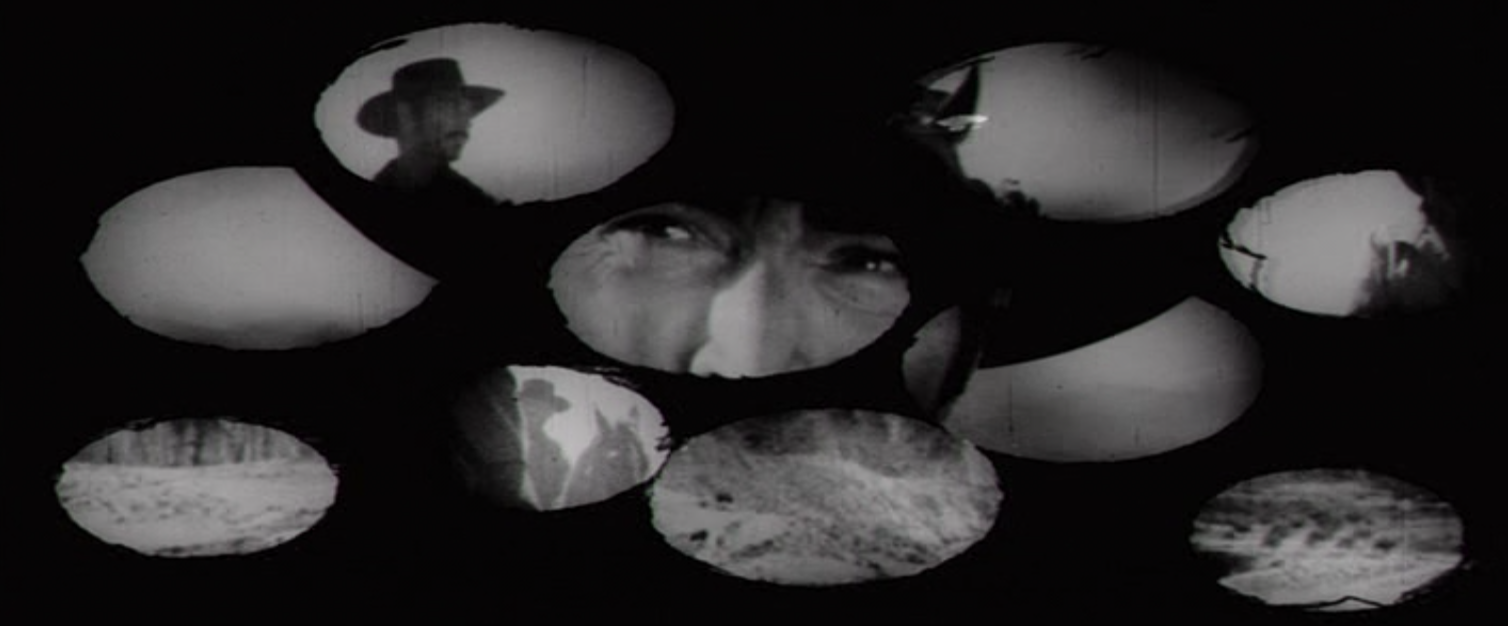
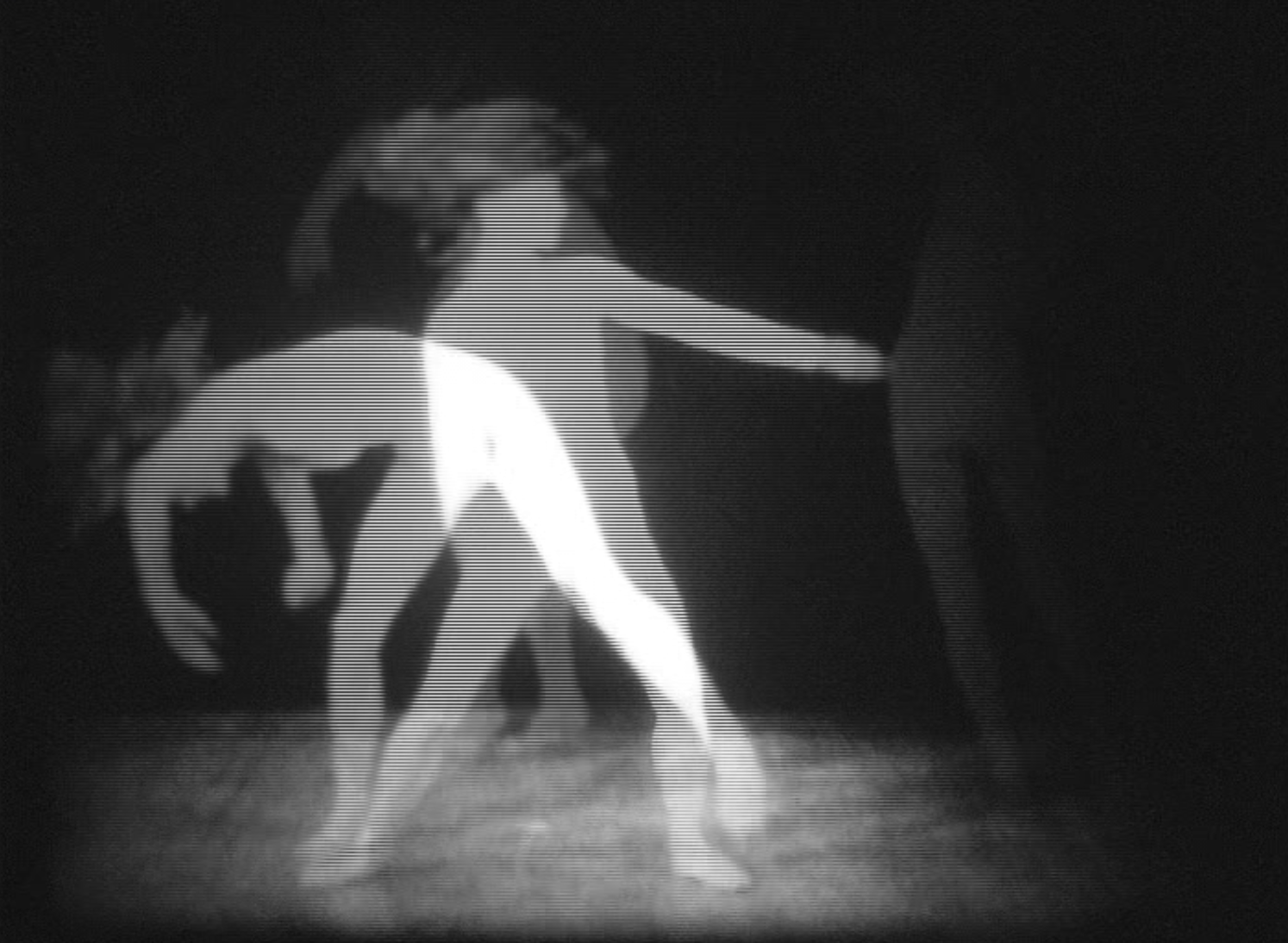
The film’s tagline, “A Woman in Trouble,” underscores her dissolution: corporeal integrity undone in a space of profound unrest. Similarly, Philippe Grandrieux’s La Vie nouvelle drags its characters through a ravaged Sarajevo, where language disintegrates and bodies seek reconciliation in ruin. The result is rebirth and a scream in which one finds only more broken sutures, anticipated by a terrifying night-vision interlude in which the human visage is excoriated of its sanctity.

Walter Benjamin’s dictum that “film is the first art form capable of demonstrating how matter plays tricks on man” has never been more apt. AI-generated imagery likewise gnaws at the barrier between the natural and the supernatural. Its manifestations of trauma without selfhood render the body a vessel of moral and perceptual violation. Displaced from domesticity, it reflects irresolvable turmoil, and the more autonomy it achieves, the more humanity we scramble to recover. This explains why AI’s creations feel so spectral: we have seen their kind before. The only difference is that, whereas once we regarded them only in the mind’s eye, now they are actualized with excruciating pervasiveness.

The premise that benign technologies might beget horror reveals our lack of control more than it restores harmony. These hybridizations of natural and unnatural law force us to question identity itself, ejecting us from human-centered hierarchies into a dialectic with entropic nature. Even something as simple as Paglen’s Comet (Corpus: Omens and Portents) conjures narratives of missiles and imminent annihilation.

We fear not that “evil was born,” as Grace Zabriskie so artfully intones in Inland Empire, but that it never needed to be born. It simply is. It predates us and will outlive us, feeding on forces that nevertheless make us who we are. And so, AI embodies its own eerie vitality, a dead signifier born from the narcissistic desire to reproduce life and deny death’s power. Its synthetic offspring thrive on replication, nursing at the breast of finitude.

Diving once again into Twin Peaks: The Return, we find faces opening into voids inhabited by unclean spirits, golden orbs, and infinite darkness, each a portal instead of a mirror:

In his dialogue with Downey, Paglen explains that the Adverserially Evolved Hallucinations project lets us see inside the “black box” of image-processing models and think from within them rather than be guided by them. This, he suggests, might help us move beyond the temptations of perception. “AI models,” he notes, “actively perform processes of manipulation; they want you to see something.” That desire is itself hallucinatory, as well as dangerous. Just as ChatGPT can invent a nonexistent citation, generative image models can fabricate surveillance realities indistinguishable from fact. The imposition of the fake upon the real becomes so seamless that we cease to question it.

Once something takes the form of an image, it acquires an aura of inevitability. Like a lyric we can’t imagine written differently, the hallucination becomes fixed. These interdimensional images seduce with the promise of infinite variation yet horrify with their fixation on wrongness. In leaning toward the actual through rudimentary shapes and gestures (what Paglen calls “primitives”), we find that the only truth worth protecting is that which resists us. Such is the paradox at the heart of all AI-generated imagery: the more real it appears, the more counterfeit it becomes.

Steve Tibbetts: Close (ECM 2858)

Steve Tibbetts
Close

Steve Tibbetts guitar, percussion, piano
Marc Anderson percussion, gongs, handpan, loops
JT Bates drums
Recorded 2021-2024 in St. Paul by Steve Tibbetts
Drums recorded at 8vb Studio, Minneapolis by JT Bates
Mastered by Greg Reierson at Rare Form Mastering
Cover photo: Joel and Norris Tibbetts
An ECM Production
Release date: October 24, 2025

“Music is a twilight language.
The job is to translate some shadow into sound.”
–Steve Tibbetts

On his 11th album for ECM, guitarist Steve Tibbetts returns with his ever-present ally, percussionist Marc Anderson, joined by drummer JT Bates for a session of immense intimacy. If long-standing classics like Exploded View and Big Map Idea have attuned your ears in a certain direction, you can safely put those expectations aside. This time around, Tibbetts offers us imploded views and small map ideas. And while these are meticulously yet organically crafted as per usual, to appreciate their full potential requires meditation, repeat listenings, and an openness to disconnecting oneself from the FOMO of our digital lives in service of something far more subliminal and enduring.

All the more appropriate, then, that the album should take its first steps with “We Begin,” wherein a deep and sinuous sound stretches from horizon to horizon. Like many of the pieces here, it unfolds in multiple numbered parts, each embodying an interlocking experience that builds on the last. In Part 2, for example, the introduction of hand drumming gives traction and earthiness to the proceedings, even as Tibbetts morphs from one register to the next, swapping terrains with the ease of a fox changing the color of its fur without even thinking. The seasons are his compass, trudging through the underbrush as winter approaches. The delicate patter of canine footsteps is audible now and then, marking the forest floor with rhythms older than all of us put together.

In “Away,” another tripartite wonder, hints of distant thunder begin to encroach on our audible view. Without an umbrella, Tibbetts constructs one out of the materials at hand: his strings provide the metal spines, the percussion the webbing between them, and the melodies themselves the rod and handle where they meet. And even though the rain never comes, that’s okay. The beauty was in the anticipation of the downpour.

Not all is ferns and fronds, as “Remember” offers some grittier textures, recalling the solo work of Andy Hawkins. What’s fascinating here is how the title can be read as a metaphor for listening: both require a certain sensitivity to sounds and movements beyond one’s control. There is a sense of flow that exists just outside of time, especially in the piano Tibbetts adds to Part 2, lending an even more nostalgic tinge to the whole.

“Somewhere,” “Anywhere,” and “Everywhere” are something of a triptych in their own right. Consisting mostly of short intakes of breath, they cradle within them the slowest of burns in Part 3 of “Somewhere.” (It’s also a literal burn, as the tubes in Tibbetts’s amp catch fire at the 4’06” mark—listen for their satisfying decay!) Beyond that, one encounters hints of whale song, death knells, and other dark turns, all finding their final rest in “We End.” It’s a flower without a vase, gifted instead to the water’s surface.

Throughout this mellifluous journey, we are guided by two distinct voices. One is the 12-string, which Tibbetts strings in double courses rather than the standard octaves; the other, his acoustic and electric six-strings, on which he drops the low A and E down to G and C, respectively. “There’s always a bass drone available,” he notes of the effect. “That tends to keep all the tunes in the same key. I’m comfortable with that, having spent some time around gamelan ensembles, Tibetan longhorns, court music from Java, Hardangar fiddle from Norway. Most of the world’s music stays in one key or another.” True, and all the more reason to appreciate the yearning, keening quality of his touch. Like the sitar, so much happens after contact has been made.

This is by far the most delicate of Tibbetts’s albums, but for that reason, it speaks more directly to the heart. There is something uniquely tensile here such as only he can articulate. He is a master of suspensions: even in silence, one feels the slack in his gut. The cumulative effect borders on an autonomous sensory meridian response, where the creaking of strings and frets makes the very spine of the universe tingle. A shooting star in slow motion, it possesses time-lapse qualities. And just when you think Tibbetts will lift off and leave you behind, he touches down back on the soil and ensures your safe travels.

Sokratis Sinopoulos/Yann Keerim: Topos (ECM 2847)

Sokratis Sinopoulos
Yann Keerim
Topos

Sokratis Sinopoulos lyra
Yann Keerim piano
Recorded February 2024
Sierra Studios, Athens
Engineer: Giorgos Kariotis
Cover photo: Jean-Marc Dellac
Produced by Manfred Eicher
Release date: October 17, 2025

There is nothing quite like the sound of the lyra when Sokratis Sinopoulos takes it in hand. The instrument exhales an ancient soul into the modern air, and few musicians draw from its strings such a fusion of myth and immediacy. From his quartet recordings, Eight Winds and Metamodal, this more intimate duo with pianist Yann Keerim distills their chemistry into an even deeper alchemy of tone and silence. Their collaboration of nearly twenty years has ripened into an art of pure intuition, where melody and freedom speak the same language.

At the album’s heart lies Béla Bartók, whose Romanian Folk Dances serve as both axis and atmosphere. Yet it is in “Vlachia,” one of four original pieces inspired by the Hungarian composer, where their vision truly unfolds, as melancholy and art relate like light through water. The piano’s chords rock gently, a cradle of memory, while the lyra hovers between waking and dreaming, resisting the lull of its own tenderness. “Valley,” by contrast, opens like a watercolor, the soul of the landscape awakening at dawn, when even the smallest stones remember their own luminosity. Between the modally inflected interlude “Mountain Path,” with its blues-tinted horizons, and the quietly breathing “Forest Glade,” the musicians walk among elderly oak, beech, and elm, each exhaling the voices of forgotten peoples, their songs hanging in the air.

The Romanian Folk Dances themselves are reimagined here as meditations on time’s elasticity. “In One Spot,” normally brief and fleeting, becomes a slow unfurling, each phrase examined as though through a magnifying glass instead of a telescope. What was once a dance is now an act of remembrance, a transmission through hands, hearts, and breath. Keerim’s improvisations shimmer with restraint, unveiling the dance as a living organism rather than a set of steps. “Sash Dance” begins like a gift being unwrapped, its introduction a flowering reverie, before the familiar theme emerges, tender as an heirloom passed from parent to child. Sinopoulos’s harmonic touch is radiant, his bow tracing lines that dissolve as soon as they are drawn, while Keerim decorates with the grace of rain gathering on the edge of a leaf.

A solo lyra ushers us into “Dance from Bucsum,” its lament carrying the weight of centuries. Gradually, it finds vitality again, as if memory itself were relearning its steps. The piano’s entrance is light breaking through foliage. “Romanian Polka” delights in this interplay, its bowings and pluckings coaxing the piano into a rhythmic embrace. The music feels rooted in the soil, yet perpetually on the verge of flight. “Fast Dance” is not so much quickened as transfigured. What was once earthy now becomes spectral, its pulse sifted through the mesh between moments.

“Stick Dance” closes the circle, beginning in abstraction before broadening into a spacious terrain of inspiration. There is such reverence here that one hesitates to call it an ending at all. In returning to the first of Bartók’s dances, the album folds time in upon itself, reviving what it has just allowed to rest. It becomes not a conclusion, but a threshold, suggesting that each listening might return us to the beginning with altered ears.

As Sinopoulos and Keerim write in the album’s booklet:

“Our Topos is where tradition meets the present, the Balkan Mountains meet urban space, the music of the countryside meets contemporary creation. Our Topos is where we meet and interact, shaping our individual and common identities.”

Indeed, Topos is less a location than a living field, a place where listening itself becomes part of the composition. Between the lines of melody and silence, we, too, are invited to breathe, to dwell, to remember. And as the final tone recedes, one wonders whether the music has ended at all or merely crossed into another realm, where echoes continue to shape the clouds, unseen but never lost.

Meredith Monk: Cellular Songs (ECM New Series 2751)

Meredith Monk
Cellular Songs

Meredith Monk & Vocal Ensemble
Ellen Fisher
Katie Geissinger
Joanna Lynn-Jacobs
Meredith Monk
Allison Sniffin
John Hollenbeck
Recorded January-March 2022 / March 2024
Power Station Studios, New York
Engineers: Kevin Killen (2022), Eli Walker (2024)
Assistant: Matthew Soares
Mixing: Eli Walker, Alexann Markus (assistant)
Cover photo: Julieta Cervantes
Recording producers: Meredith Monk and Allison Sniffin with John Hollenbeck
Executive producer: Manfred Eicher
Release date: October 17, 2025

All too often, women have been mythologically depicted as vindictive creatures who exist only to distract and destroy. Whether in the Sirens of the ancient Greeks or Tennyson’s Lady of Shalott, they sing, weave, and create in isolation, forbidden the pleasures of love, peace, and community. And while the work of singer and composer Meredith Monk has always been concerned with questions of agency, it was never made so clear to me as when the boxed set of her collected ECM recordings materialized in 2022. As the first album to appear since that watershed release, Cellular Songs doesn’t so much continue the journey as fold in upon itself, so that by the end, the listener is left with a compact flower of such potent expressivity that it seems capable of leading one’s ears in directions never thought possible yet which sound intimately familiar, as if remembered from a dream that preceded language.

Cellular Songs is the second part of a trilogy that began with On Behalf Of Nature, a work exploring our global ecosystem from a molecular vantage point. For Monk, the title names what is fundamental not only to life but to all of creation. “What is going on in the cell is so complex,” she writes, “and it’s a prototype of the possibility of what a society could be if you take those same principles and expand them.” As Bonnie Marranca suggests in her liner notes, composing and contemplation are synonymous, which makes Monk a meditator of worlds, one who reduces the act of communication to a microcosmic array of consonants, vowels, and blends. In this regard, it is difficult to imagine anything so biologically poetic as the opening “Click Song #3 Prologue,” in which Monk and her vocal ensemble (Ellen Fisher, Katie Geissinger, Joanna Lynn-Jacobs, Allison Sniffin, and Monk herself), with percussionist John Hollenbeck, get to the heart of things. Their tongue clicks are droplets in a distant cave, each carrying minerals and unfelt emotions until, over millennia, stalagmites rise as records of their passage. Like the three “Cell Trios” that follow, they constitute an internal code that locks into place. Flowing harmonies and dissonances encompass the breadth of life itself, a reality in which the voice is central, porous in its itinerant grace. 

Hollenbeck’s vibraphone appears organically in a handful of pieces, a trace element in the soil of this music. Whether documenting a universal grammar in the syllabically potent “Dyads,” playing alongside the piano in “Dive,” or bowing a glassy surface in “Melt,” it allies itself with the building blocks of existence, defying the horrific structures so often fashioned from them. It is the vein in every vocal leaf, seeking photosynthesis without flesh and treating entropy as the dissolution of time. Sniffin’s pianism is equally cathartic in “Lullaby for Lise,” where she joins Geissinger. Rather than leaning on lyricism to seek fantasy, it straddles the threshold between waking and dreaming, recognizing that lived experience is always a blend of both. I hear it as a song to a child not yet born, gestating and growing with all the possibilities of time in her blood and brain, opening her eyes at last in “Generation Dance.” Thus, she comes to know the vision of her mother and her mother’s mother, and as she exhales in “Breathstream,” Monk’s solo voice gives shape to inherited traumas, now able to be wielded in the name of healing.

In the unfolding of “Branching,” each voice becomes the first in an ever-multiplying lineage of wisdom. Speaking of rituals and sacrifices, their repetition serves not as comfort but as a catalyst born of a primeval, generative power. “Passing” finds those same figures trading off vocalizations with a precision that is open to nature’s chaos, while “Nyems” reveals the playfulness of communication for the ephemeral metaphor it truly is.

Given that nearly all of the work presented here is stripped of linguistic meaning, what a radical blessing to encounter the coherence of “Happy Woman.” Here, the feeling is one of transparency, yet also of quiet critique, an awareness of the many roles women inhabit, whether by choice or by force. The opening refrain and its variations (“I’m a happy woman,” “I’m a hungry woman,” “I’m a thinking woman,” etc.) are the stitches of a mother among mothers, quilting herself into the patchwork of history.

By the album’s end, the sacredness of vibration becomes paramount. From these humming atoms emerge animals, rivers, and clouds, leaving us to wonder where the so-called intellect fits into the larger picture. Because if a heartbeat is nothing without silence, then its divisions are where forgiveness begins.