Another live review for All About Jazz, this time of a recent concert by bassist Bill Laswell, drummer Milford Graves, and saxophonist John Zorn. Click my concert photo below to read on.
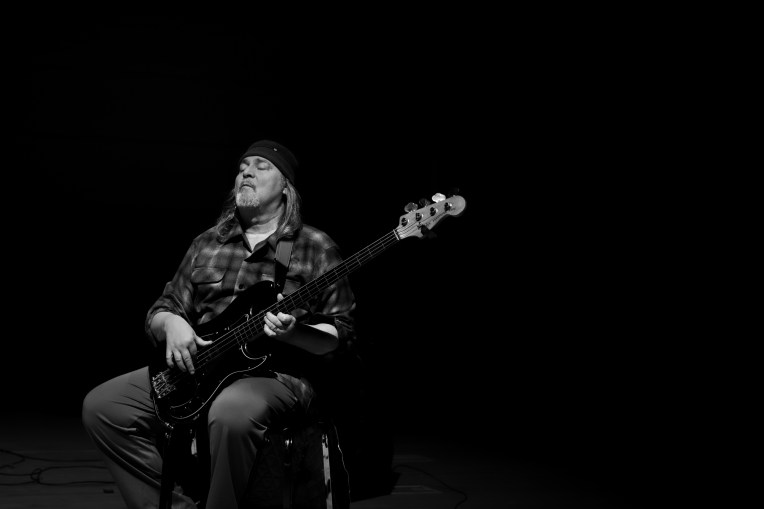


Another live review for All About Jazz, this time of a recent concert by bassist Bill Laswell, drummer Milford Graves, and saxophonist John Zorn. Click my concert photo below to read on.
My latest album review for All About Jazz is of Finnish composer/producer Tomi Malm’s uplifting, nostalgia-infused Walkin’ On Air. Click the cover below to read on.

On December 18, 2017, I had the pleasure of seeing jazz vocalist Gabrielle Stravelli perform at The 75 Club in New York City. Click my photo from the concert below to read the full review for All About Jazz.

Bill Laswell and Laraaji, with Ka Baird
Ambient Church
Bushwick United Methodist
Brooklyn, NY
December 16, 2017
The space is an introduction: the moment you walk into it, you’ve turned the first page. Walls and ceiling comprise the shell of a body memorialized by the reverberations of its weekly visitations: a “church,” you might call it, but whose actual name lies buried in the speech of those who’ve forgotten it. Headlights peer through stained glass and into the hearts of everyone who has come to listen. This place, you realize, has chosen you as its resurrection vessel, a memory stepping out of the haze as an itinerant preacher whose only scripture disintegrated long ago as padding for worn-out shoes.

Looking above and behind, you notice a beam of light: a “projector,” you might call it, but whose actual name floats preserved in minds of the technically inclined. The light stretches forth its arm, seeking a surface as a mudra would its vibrational link, until the skin of musician Ka Baird opens millions of tiny wings.

Her activations, privately ordained yet congregationally shared, uncover your ears with all the wakefulness of a sunrise recounted after sunset. By means of an instrumentarium that in any other context would pay secular homage at best to its origins, Baird unpacks her motifs at the molecular level. Threading prismatic arias through a chittering forest, looping her flute in recurring dreams of possession all the while, she refracts the self until it exhales a world apart. With each sustain, a thought reaches its climax, while echoes of a new beginning carve hieroglyphics of courage across your forehead. She fills her mouth with galactic marbles, shooting each into an unwritten future.

Between dimensions, chains of conversation re-link themselves. Still, you stand alone, drinking in all those breaths as if they were a sutra exploded. The ceiling opens its eyes as a wall socket cannot close them and holds those depths close, a blanket against the cold.

The effect is such that by the time Bill Laswell and Laraaji draw their own curtain through the room, you’ve already turned inside out. What were once your ears are now your optical nerves, and vice versa. Amid a landscape of water and choral winds, Laraaji’s amplified zither is his field. Be it struck, bowed, plucked, hammered, brushed, or strummed, its language compounds the allure of burning magnesium, minus the threat of blindness. Each of its strings feels attached to something unseen. His mbira likewise treads with care, a clock’s dream made real.
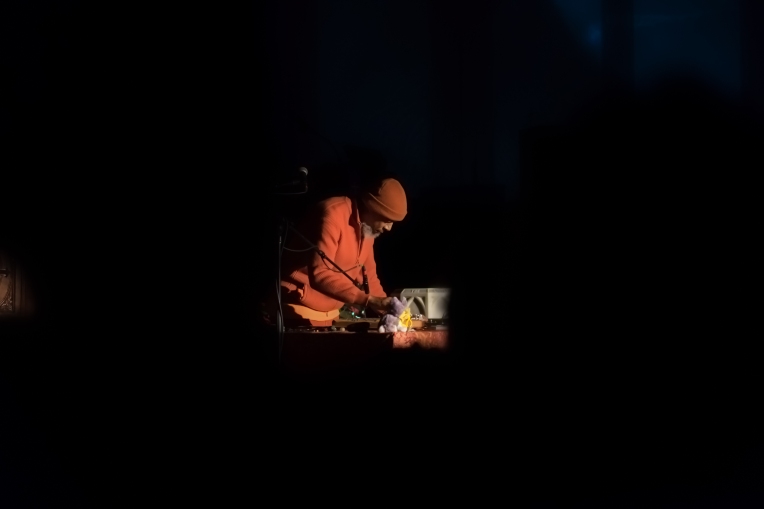
Laswell’s bass is his talisman, a slab of wood and wire plucked from its heavy metal roots and transfused with a tambura’s drone-blood. His lines emerge, organic as they are brief, from the gift of spontaneous generation. Their patterns begin to match your own, following rhythms that tremble far below the floorboards. Without a map to follow, that which is written migrates into territories of the spoken, so that only poetry seems able to convey the prosaic spectrum of experience.

Whether singing or laughing, their voices are shimmering shadows. Like the incense wafting about the pews, their dimensions stretch the nostrils of your soul into canvases, across which to plot every fragrant constellation in a blush of indigo promise. All of which points to one truth: the groove is Earth, the rest is only sky.


Mette Henriette saxophone
Johan Lindvall piano
Katrine Schiøtt violoncello
Henrik Nørstebø trombone
Eivind Lønning trumpet
Sara Övinge violin
Karin Hellqvist violin
Odd Hannisdal violin
Bendik Bjørnstad Foss viola
Ingvild Nesdal Sandnes violoncello
Andreas Rokseth bandoneón
Per Zanussi double bass
Per Oddvar Johansen drums, saw
Recorded 2013-2014 at Rainbow Studio, Oslo
Engineer: Jan Erik Kongshaug
Mixed November 2014 in Oslo by Manfred Eicher, Mette Henriette and Jan Erik Kongshaug
Produced by Manfred Eicher
U.S. release date: November 20, 2015
Norwegian saxophonist and composer Mette Henriette Martedatter Rølvåg enters the ECM universe with a self-titled album of doublings. First, as a two-disc affair, it is among the most formidable debuts for the label in recent years. Second, it is a union of contrasts, balancing composition and improvisation, declaration and whisper, with a straightforwardness that is Mette’s métier. Moreover, the album is a chain of coupled voices, as instruments converge and diverge in an alternating chain of what she calls “elongations” and “miniaturizations.”
Although the trumpet was Mette’s first instrument, in an interview for this album’s press release, she waxes fatefully about her switch to saxophone: “I knew that this was what I’m meant to do. […] I have to tell my stories, and early on I had a feeling of how I was going to do that. […] Soon I would also enjoy disappearing into the theoretical aspects of music but at the beginning it was something more primitive, a response to an inner urge.” For demonstration of this autobiographical concept, we need listen no further than the first disc, simply titled o. Featuring a trio comprised of Mette on saxophone, Johan Lindvall on piano (and who also contributes original compositions), and Katrine Schiøtt on cello, it is a veritable chess board of thematic impulses.

Immediately noticeable is the crackle of Mette’s saliva across the reed, which gives the saxophone textural authenticity as an apparatus of musical translations. In that technique is proven not only Mette’s patience in letting notes awaken, but also the personal associations imbuing those notes with meaning. The nocturnal calls of “.oOo.,” for instance, are meant to evoke the call of an owl (one of the first sounds she remembers hearing), while the breathiness of “3 – 4 – 5” conveys a menagerie of emotions so tender they cannot be broken. By the time we encounter the first full-throated notes of “all ears,” the listener has been primed with a fullness of register and physicality comparable to Mette’s own.
The logic of her sound is that such shorter pieces feel the most expansive while the longer ones feel compressed and circular. In either case, one feels this music growing in real time, as if every cell of its body were genetically acquired.
Despite knee-jerk comparisons to other free jazz greats such as Evan Parker, Mette had no such musicians in mind when developing her musical language. Her primary inspirations are more nature than nurture, as made clear in the second disc, given the enigmatic title Ø. Here we have a “sinfonietta” for which the trio is absorbed into a 13-piece band that includes drummer Per Oddvar Johansen (of the Christian Wallumrød Ensemble) and the Cikada String Quartet. Individual track titles are even more suggestive of their composer’s inner life, a storybook dusted off from attic storage and rebound through interpretation.
The addition of musicians enhances intimacy tenfold. The wind-through-leaves snare of “passé” makes for a fitting introduction, and bassist Per Zanussi adds a deeper element to this chemical mixture as strings produce a crispier layer of shine. All of this elicits a grittier side in Mette’s playing. The Cikadas lend a cinematic touch to occasional interludes, as painterly as their titles (“veils ever after” being a quintessential example). The build of “wildheart” from whisper to shout is a highlight of this disc, as are the relatively aggressive turns of “late à la carte.” As with the first, however, some of the most compelling tracks are the shortest, like the one-minute blush of piano and strings that is “this will pass too.” And if “off the beat” is the most urban tune, then “wind on rocks” is an atmospheric free dive into the wilderness.
Mette Henriette is a story written in lowercase, whose genesis is one for the pages of ECM lore: “One Saturday night in Oslo I saw a poster for Dino Saluzzi at the Cosmopolite. I thought: I should hear this, especially because I’m also writing for bandoneon in my ensemble. When is the gig? Oh, it’s today. When does it start? In twenty minutes! OK! So it was a very quick walk to Cosmopolite. It was packed, but I found a place on the stairs, and by chance I was next to where Manfred Eicher was sitting. We spoke in the interval and I told him about my project. He had been recording at Rainbow, and listened to some of my music.”
And now, we too can join hands with fate in listening to this constellation appear from first star to last.

Ziljabu Nights is an emotional black box recovered from the wreckage of a bygone era and brought intact into ours. Recorded live in June of 2016 at Germany’s Theater Gütersloh, it features saxophonists Gary Campbell and Robert Bonisolo, keyboardist Aydin Esen and drummer Roberto Gatto. Leading them all in a program of mostly original compositions is legendary bassist Miroslav Vitous, whose experiential integrities shine among those of like-minded maestros.
The performance documented here is at once nostalgic and spontaneous. Vitous, who turns 70 this month, and his musicians inhabit their respective continents, yet on stage forge a veritable Pangea of sound. “Ziljabu” eases us into the album’s tender awakenings with a mélange of keyboards and flanged bassing. Its fusion-leaning tendencies recall certain landmark ECM albums from the 1980s, not least of all the bassist’s own for the label. A one-letter difference in the title of “Ziljabe” yields an equally subtle shift in tone. A subtle maturity percolates throughout the 17-minute “Morning Lake.” It unfolds with patient respect, under cover of which Bonisolo’s sopranism provides the aerial view to Campbell’s terrestrial excavations, while in “Miro Bop” the reeds play out a dancing exchange of tenors, both feet on the ground.
Vitous pays homage to late fellow bassist Scott LaFaro in an unaccompanied rendition of “Gloria’s Step Variations.” What seems relatively straightforward on the surface, however, reveals a depth-charge of interpretation, with equal parts muscularity and flexibility woven into its fuse. The same holds true of “Stella By Starlight Variations,” wherein the band sends love to the periphery as Esen takes solo flight at the center of it all.
The album finishes off with an interview, in which Vitous speaks a little to his history as an artist, his growth out of the initial iteration of fusion giants Weather Report and the blessedness of his musical life. “It’s not so much searching,” he says of his rapport with this band. “Basically, we hear it.” And it’s all we can do in return to appreciate that which has been heard.
(This article originally appeared in the December 2017 issue of The New York City Jazz Record, a full PDF of which is available here.)
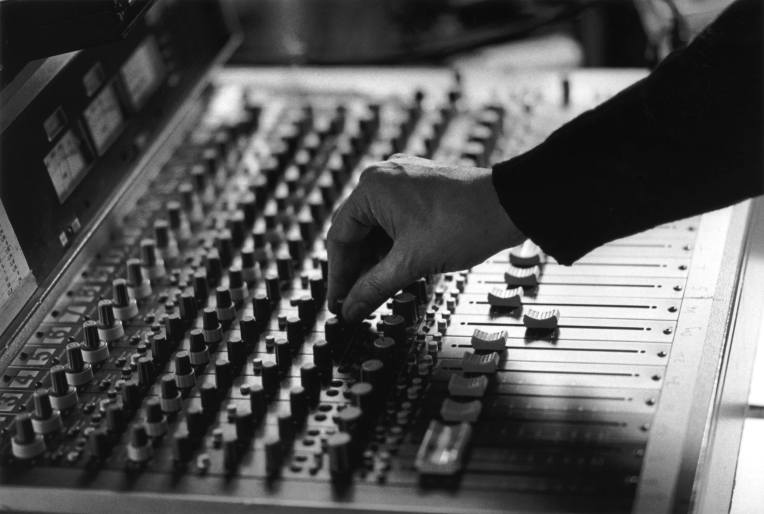
Official press release from ECM Records:
Over the past week we have begun the process of entering streaming, and from November 17th, the full ECM catalogue will be available to subscribers to services including Apple Music, Amazon, Spotify, Deezer, Tidal and Qobuz. This simultaneous launch across the platforms – facilitated by a new digital distribution agreement with Universal Music – invites listeners to explore the wide range of music recorded by our artists in the course of nearly five decades of independent production.
Although ECM’s preferred mediums remain the CD and LP, the first priority is that the music should be heard. The physical catalogue and the original authorship are the crucial references for us: the complete ECM album with its artistic signature, best possible sound quality, sequence and dramaturgy intact, telling its story from beginning to end.
In recent years, ECM and the musicians have had to face unauthorized streaming of recordings via video sharing websites, plus piracy, bootlegs, and a proliferation of illegal download sites. It was important to make the catalogue accessible within a framework where copyrights are respected.
ECM Press Office
Munich, November 14, 2017
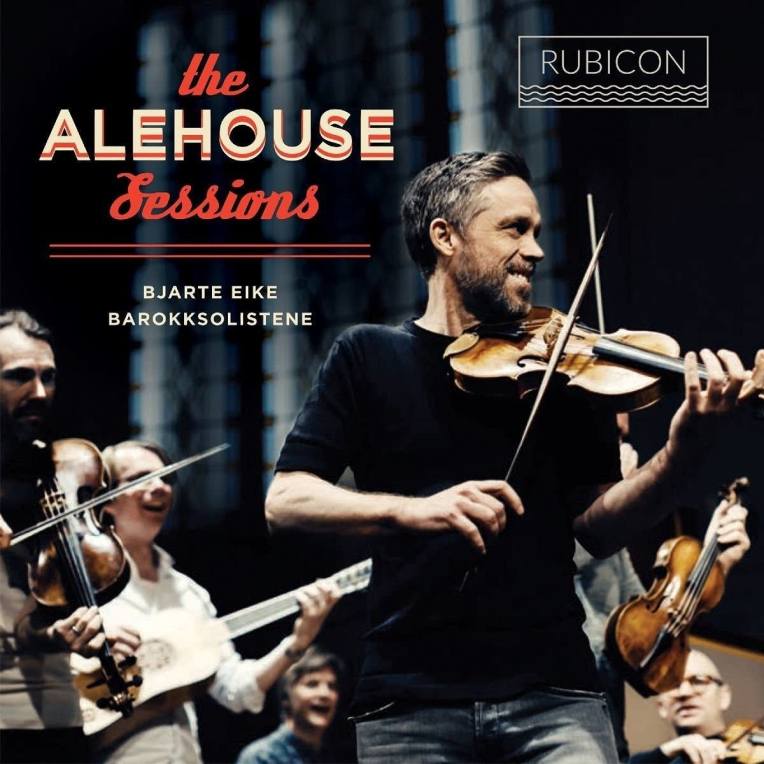
My latest review for RootsWorld online magazine is of a fascinating side project by violinist Bjarte Eike (known to ECM listeners for his appearances on the Siwan recordings) called the Alehouse Sessions. Click the cover below to read my thoughts on the album and the group’s debut stateside performance in New York City.
As a teenager, the October Project got me through some dark times. More than twenty years later, I at last got to see the band’s lead singer, Mary Fahl, in a live performance. Click my picture from the concert below to read my review at All About Jazz.

 Between Sound and Space: ECM Records and Beyond