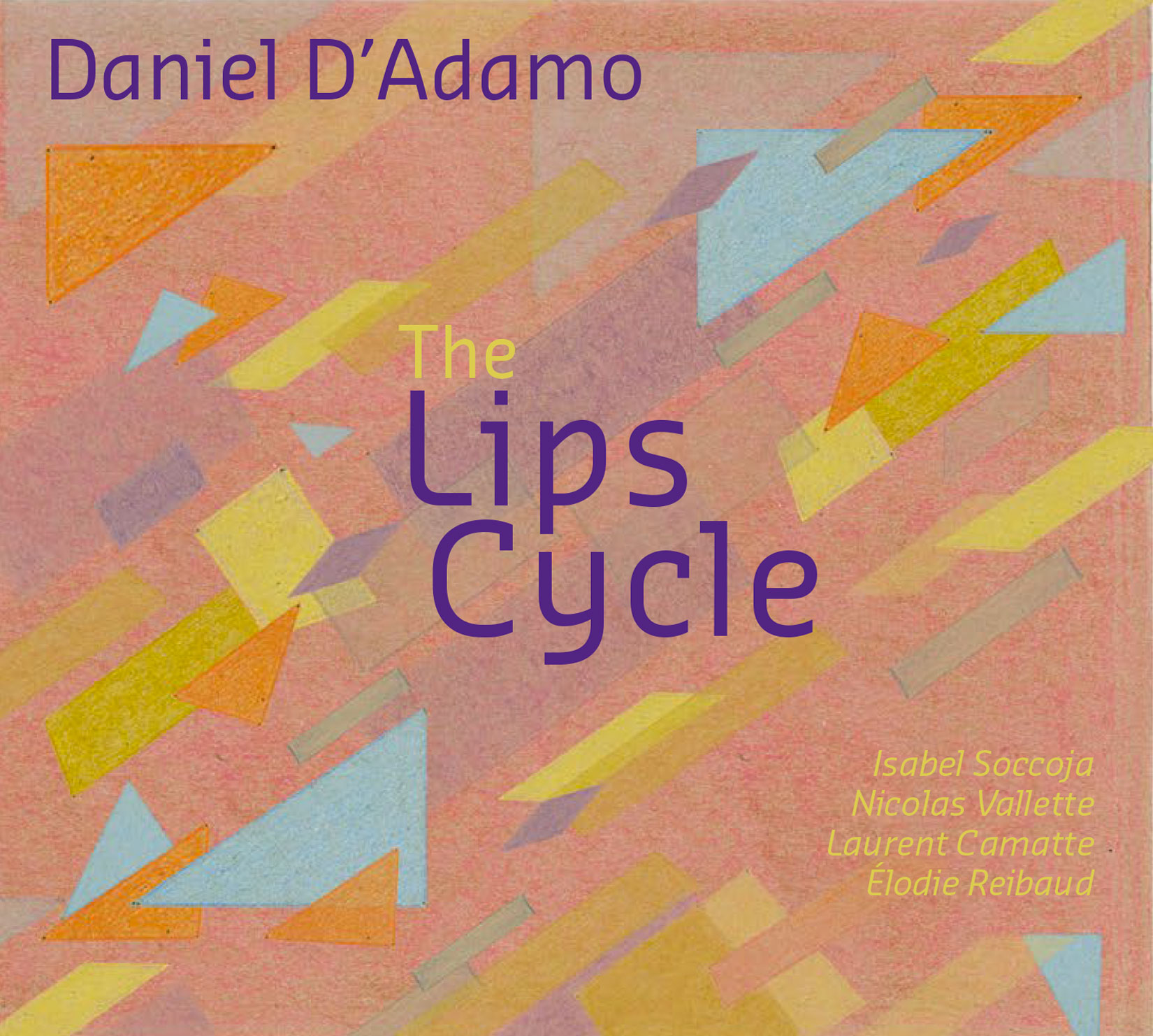
Daniel D’Adamo: The Lips Cycle (YAN.008)

Isabel Soccoja voice
Nicolas Vallette flutes
Laurent Camatte viola
Élodie Reibaud harp
Recording: Daniel D’Adamo, Alexis Derouet and Maxime Lance (Césaré), Gérard de Haro, Jérôme Decque (Gmem), Vincent Carinola (ESM), Philippe Dao (GRM)
Mixing and mastering: Gérard de Haro, Nicolas Baillard (La Buissonne – 2019)
Production: Marc Thouvenot & La Buissonne
Artistic Direction: Pascale Berthelot
Release date: November 17, 2020

This album stands as a threshold document, both an ending and an aperture. As the final release on the CUICATL label, it traces the emergence of a language that never stabilizes. The Lips Cycle is born from an inquiry that seems modest on its surface: What happens when speech is imagined but withheld, when the voice rehearses itself without crossing into audibility? During a period of isolation in São Paulo in 2010, Daniel D’Adamo turned inward, not toward silence but toward its hidden mechanics. Tongue grazing teeth, lips shaping absent vowels, breath circulating without destination. What emerged was not a void but a densely populated interior world, one smaller than phonemes and closer than words.

Listening becomes an ethical posture here, a sustained attention that must abandon expectation. These works unfold at a scale where meaning erodes faster than it can be grasped. The ear is asked to linger inside residues, murmurs, and half-gestures, where sound hovers between intention and disappearance. Sensuality arises not from excess but from proximity. The music leans close, breathes close, and insists on contact.

The cycle unfolds across works composed between 2010 and 2017 for voice, flute, harp, and electronics. Said electronics are not supplemental but anatomical, spun from the same material as the instrumental and vocal writing. They stretch physical effort into space, allowing sound to circulate, refract, and return altered. Spatialization becomes a way of thinking, a means of extending the performers beyond their own outlines. The listener is drawn into an immersive field where sound behaves like a tactile substance rather than a linear message.

Lips, your lips for mezzo-soprano and electronics opens the cycle by dwelling on the fragile perimeter of the voice. It studies what surrounds speech rather than speech itself. Inhalations splinter into texture, whispers fracture into particulate noise, and words cling desperately to coherence before slipping free. There is an almost ASMR-like intimacy to the listening experience, yet it is charged with volatility. Quiet never fully arrives. It is continually interrupted by a hovering, half-formed song that presses against audibility. The piece advances like a dream that cannot remain intact, gathering toward eruptions where fantasies flare and collapse, leaving behind delicate ruins of promise and ash.

With Keep your furies for mezzo-soprano, alto flute, and electronics, tactility builds. The alto flute enters not as accompaniment but as a second voice, equally bodily, equally vulnerable. Breath and metal converge until distinctions blur. The overlap between singer and instrument is so complete that only a sliver of separation remains. Sound seems to move through the body rather than around it, activating involuntary responses along the spine and scalp. Time behaves erratically here, like pages of a flip book animated in uneven bursts. Leaves become sounds, sounds become gestures, and gestures dissolve before they can settle.

Although Air lié for flute and electronics nominally removes the human voice, its presence lingers. Extended techniques, metallic inflections, and sustained resonances unfold according to their own internal logic. Breath persists, transposed into silver and duration. The piece’s ambient quality allows for a deeper enmeshment between ear and sound, a slow suspension in which spirals accumulate and tighten. One does not exit this space so much as become absorbed into its influence, gently erased as an observer.

Traum-Entelechiæ for mezzo-soprano, alto flute, viola, harp, and electronics reintroduces the voice into a thickened, almost alchemical texture. Convergences of tone function like temporary laboratories where language is subjected to stress and mutation. Texts drawn from Leibniz bring numerical rigor and philosophical speculation into collision with fragile vocal utterance. Questions of individuality, continuity, and becoming hover within the sound, never resolved. Even as the title gestures toward full realization, the music unfolds through asymptotic fragments. Moments of melodic clarity surface briefly, only to implode into breath and noise, as if coherence itself were an unstable state.

The emotional core of the cycle arrives with Fall, love letters fragments for mezzo-soprano, harp, and electronics, based on the correspondence between Virginia Woolf and Vita Sackville-West. Here, intimacy is not narrated but exhaled. Desire, ecstasy, and emotional turbulence emerge through wordless gestures that bypass articulation altogether. The harp and electronics cradle these eruptions with remarkable precision, allowing feeling to register without being named. It is love stripped of declaration, passion rendered as vibration and pulse.

Threaded between these works are three “Transitions,” brief passages that function as subliminal corridors of breath, clicking keys, and flickering tongues. They stitch the cycle together while dissolving any sense of stable orientation. One crosses from one state to another almost without noticing, already altered by the passage.

Placing this cycle in the lineage of works such as Berio’s Visage feels inevitable, yet these compositions speak in a quieter register. They do not confront language so much as destabilize it from within. What ultimately binds them is a sustained meditation on the fragility of the utterance. Language here is never secure. It trembles, erodes, and transforms under pressure. Words aspire to fix experience, but sound exposes their impermanence. In these pieces, speech is always in the process of becoming something else. Like those of us wielding it, it survives only by continually undoing itself.

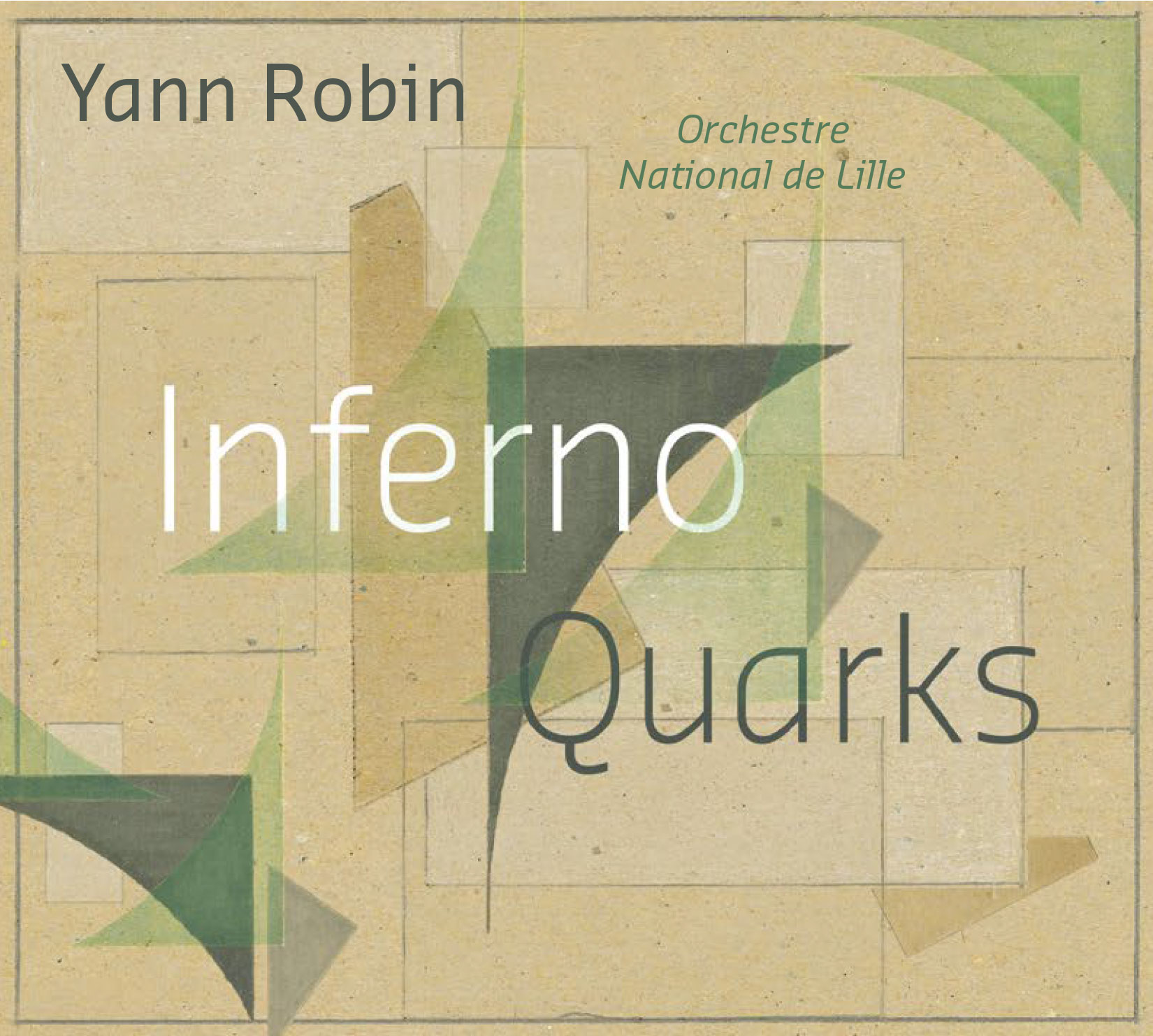
Yann Robin: Inferno / Quarks (YAN.007)

Orchestre National de Lille
Alexandre Bloch
 conductor (Inferno)
Peter Rundel conductor (Quarks)
Éric-Maria Couturier cello (Quarks)
Recordings made by France Musique on October 13, 2016 and by the technical team of the Orchestre National de Lille on July 1, 2017 at the Auditorium du Nouveau Siècle in Lille
Mixing of Inferno and mastering: Anaëlle Marsollier (Studios La Buissonne – 2018)
Production: Marc Thouvenot & La Buissonne
Artistic Direction: Pascale Berthelot
Release date: November 17, 2020

The seventh release from the CUICATL label, distributed by ECM Records and realized under the careful ear of Studios La Buissonne, unfolds like a descent staged in slow motion. It gathers two major works by French composer Yann Robin, not as paired opposites but as adjoining chambers within the same cavern, each carved by pressure, time, and an almost obsessive attention to sound as material that resists obedience.

Inferno for large orchestra and lectronics (2012/15), extends the molten logic of Robin’s earlier Vulcano into a broader and more perilous terrain. Where its predecessor seethed and erupted, Inferno opens the earth itself, widening the aperture to accommodate a full symphonic body and an electronic presence that behaves less like an accompaniment than a witness condemned to remain. The piece draws energy from volcanic force, from the grinding insistence of tectonic movement, but it also looks backward toward older cosmologies, toward the crater imagined as a mouth leading downward into realms where weight and consequence become absolute. Dante’s descent through the nine circles of Hell hovers here not as a story retold but as an organizing gravity, a philosophical excuse for sound to fall, to sink, to stretch itself into registers that feel less heard than endured.

From the outset, an oscillating electronic rhythm seeps upward from darkness, insisting on existence. It is tethered to the depths like a ferryman who has forgotten the surface, guiding others while remaining trapped in transit. Around it, the orchestra gathers in fragments. Flutes flicker briefly, offering half-phrases that seem to remember speech without fully recovering it. Other winds echo these gestures, voices reaching upward only to be pulled back by the mass below. The strings surge and recoil, animated by digital reactions, their undulations fueled by something restless and unnameable. They rise, they strain, and they fall back into place, condemned to repeat the same arc with minute variations, a ritual of motion without escape.

As the descent deepens, distorted impulses dart through the texture like fleeting hallucinations. They pass too quickly to be grasped, yet not so quickly that they leave no residue. The mind latches onto their outlines, assembling meaning where none is offered. Horns enter alongside radio signals, sharing air and intention without ever truly merging. They pass through narrow spaces, stiff and unyielding, only to warp once released, bending themselves into unfamiliar shapes as though testing the idea of survival beyond the threshold. A distant pulsing emerges, eerily reminiscent of a helicopter circling far above, a cruel reminder that time continues elsewhere, measured and indifferent. The balance of the piece begins to tilt. Timpani recede into silence while stillness itself becomes percussive. Out of this exchange rises a shrill, piercing song, demonic not in caricature but in its inevitability, spreading a thin carpet of resignation across the sound field. When the music finally withdraws, it does so gently, offering a softening that feels less like relief than a carefully staged illusion.

Quarks for cello and orchestra, composed in 2016, shifts the axis of inquiry without abandoning the underlying tension. Its inspiration lies not in physics as a system of laws but in the instability of language itself. Murray Gell-Mann’s decision to name the quark with a phoneme stripped of inherited meaning becomes the conceptual spark. Robin follows that gesture into sound, tracing how an idea becomes vibration, how vibration becomes articulation, and how articulation acquires the dangerous authority of a name.

The piece begins almost below perception. The cello stirs with grating gestures that refuse pitch, as if testing the edges of its own body. These sounds feel private, internal, the murmur of a language not yet agreed upon. Gradually, a chittering vocabulary forms, its units stitched into larger phrases by the orchestra. But coherence is never allowed to settle. Each structure is dismantled, recycled, pasted back together like fragments in a scrapbook whose chronology has been deliberately erased. Snippets of history drift through, human and otherwise, and with them comes a persistent unease. For all its orchestral breadth, the work remains fiercely intimate. The cello’s relentless friction keeps the listener tethered to its interior life, to the sensation of an instrument pushing against the limits of its own coherence.

Listening becomes a form of inhabitation. The ear does not observe the cello from a distance but moves inside it, sharing its insistence. It ceases to function as a soloist in the traditional sense. In its highest squeals, animal and raw, something elemental surfaces: an echo of creation itself, a human attempt to mirror the authority of the divine by assigning boundaries where none naturally exist.

Taken together, these works do not offer answers so much as conditions. They place the listener in situations where descent and emergence are concurrent states. What lingers after the final vibrations fade is not the memory of specific gestures but a quieter unease. If meaning arises only when we impose it, and if naming is always an act of power, then listening becomes an ethical move. To hear without conquering, to remain attentive without demanding resolution, may be the closest we come to understanding a world that does not require our comprehension in order to continue.

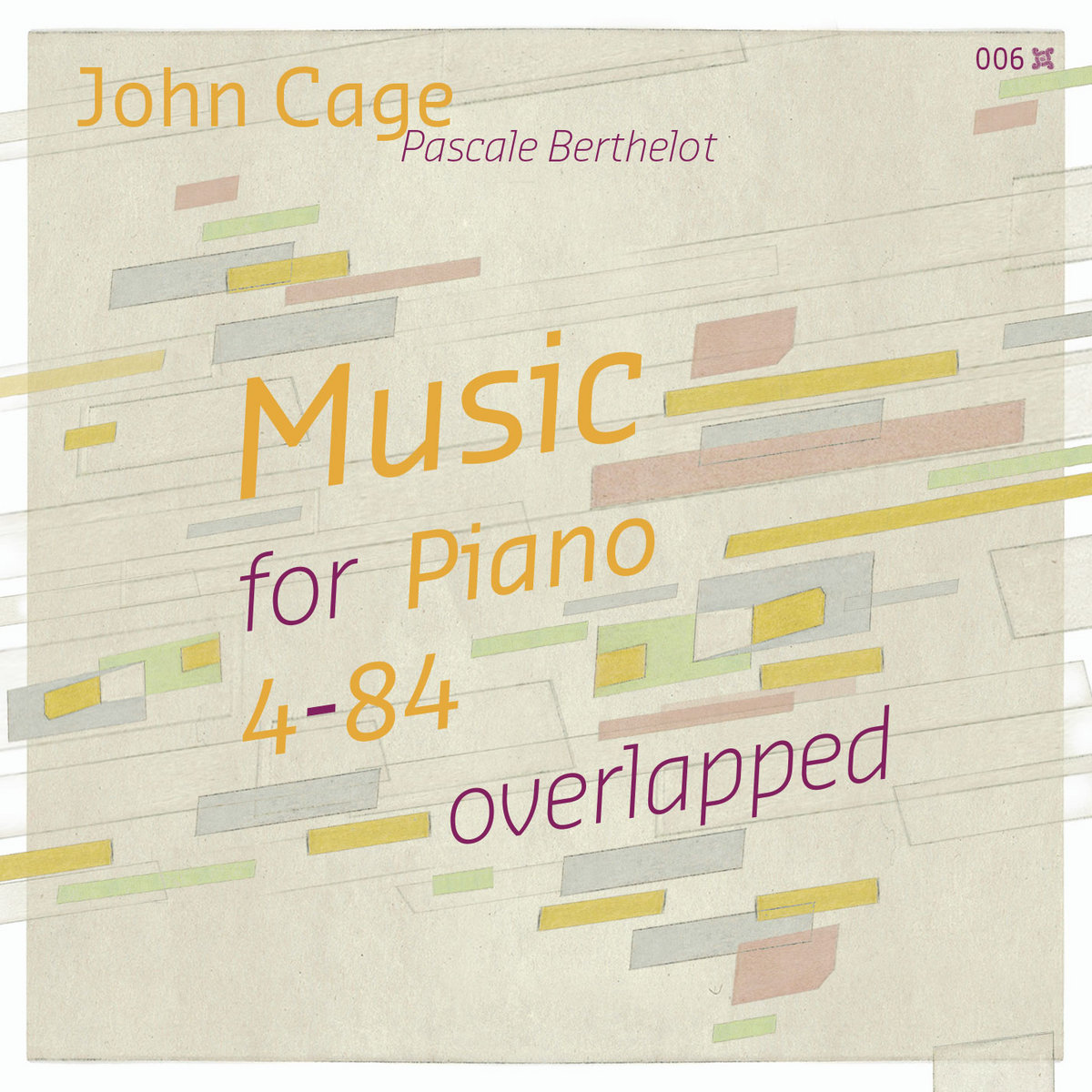
John Cage: Music for Piano 4-84 Overlapped (YAN.006)

06_Cover

John Cage
Music for Piano 4-84 Overlapped

Pascale Berthelot piano
Recorded and mixed 2017 by Gérard de Haro at Studios La Buissonne
Mastered by Anaëlle Marsollier
Piano technician: Alain Massonneau
Produced by Marc Thouvenot & La Buissonne
Release date: May 24, 2018

What if I ask thirty-two questions?
What if I stop asking now and then?
Will that make things clear?
Is communication something made clear?
What is communication?
–John Cage, “Communication”

In her third intersection with the CUICATL sublabel, pianist Pascale Berthelot offers something truly unique in John Cage’s Music for Piano. Composed between 1952 and 1962 through a series of chance operations, Music for Piano grew into a set of 85 pieces. Numbers 4-84 took on a life of their own as incidental soundtrack for dancer Merce Cunningham’s 1953 Solo Suite in Space and Time, and these are presented in an unprecedented way: superimposed and played as one. Because Music for Piano indeed plays with notions of space and time—stretching, deconstructing, unraveling them as quantum material—it makes an ideal sort of sense in this collective reiteration.

Suggestions in the score were yielded by natural imperfections in the paper, where Cage decided to make a mark, thus freeing something that might otherwise have remained locked away in its planar prison. This fundamental action—of treating something noticeable as a rupture into sound production—gave emptiness to substance and substance to emptiness. In so doing, he proved the fallacy of silence altogether.

Despite the overlap (if not also because of it), an intense subtlety prevails. And because the notation is already so bare, the result is far from chaotic. It is, rather, like gazing upon a starry sky and hearing it for the first time. The deeper one goes into Berthelot’s performance, the more the piano sheds its associations as a center-stage instrument. Rather, in being plucked, strummed, depressed, and knocked from the inside out, it opens itself like a dictionary. Flipping through it as one would spin a globe and land a finger for want of random travel, Berthelot links one word after another until vocabularies, sentences, and paragraphs emerge. In reading them back to us, he fixes a narrative as such and allows us to wield it as a text. The beauty of it all is that we may cut a piece from anywhere along its trajectory and roll it out into another story altogether.

This recording is a gift that keeps on giving. A must for admirers of Cage, and for anyone who believes that music is something that should feel you, not the other way around.

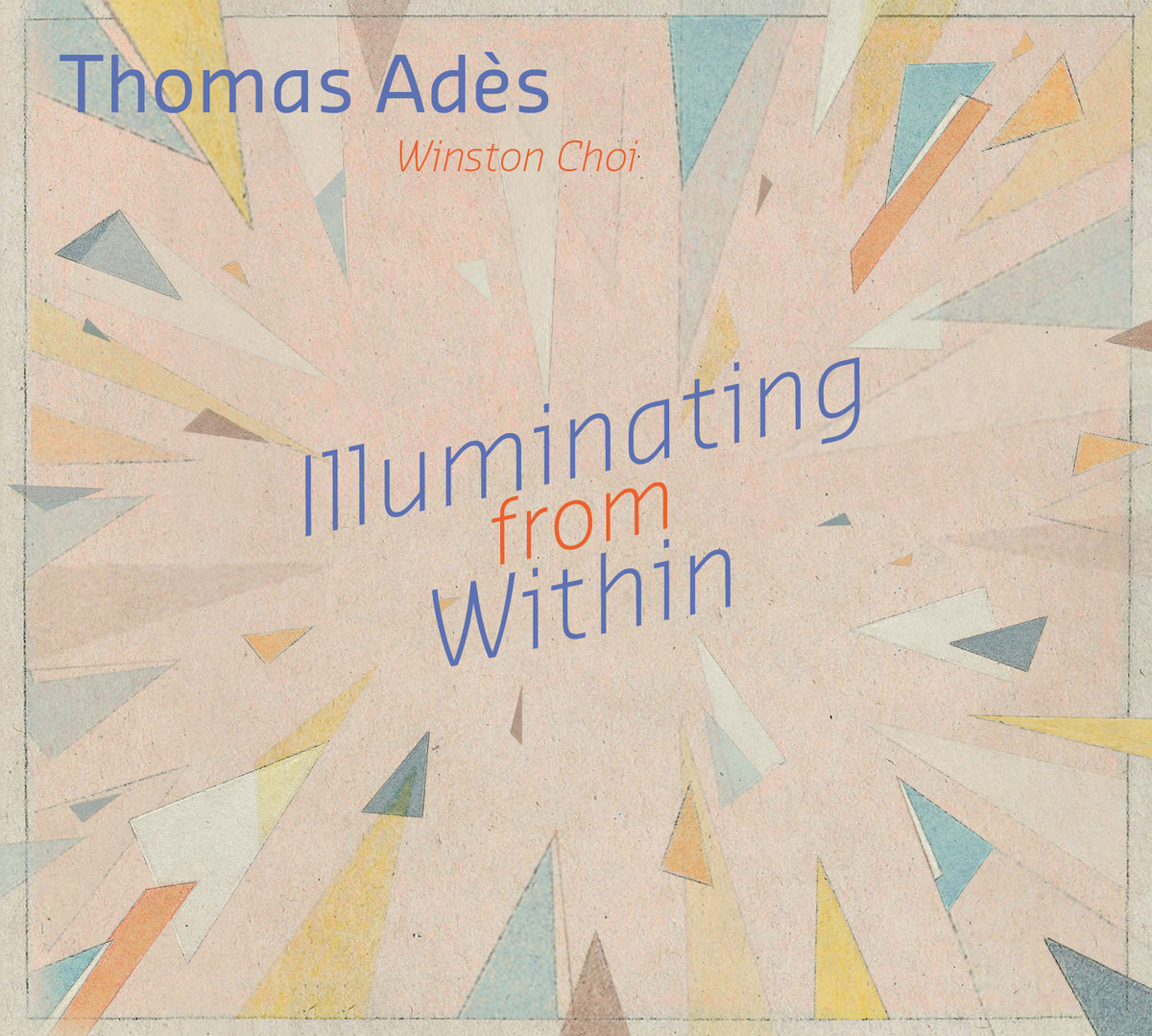
Thomas Adès: Illuminating from Within (YAN.005)

05_Cover

Thomas Adès
Illuminating from Within

Winston Choi piano
Recorded 2015 by Nicolas Baillard at Studios La Buissonne
Produced by Marc Thouvenot & La Buissonne
Release date: October 30, 2015

If ever there was a composer who worked in light, it would be Thomas Adès. As the subject of this recital by Canadian pianist Winston Choi, he comes across as someone interested not so much in the metaphysical as the metaphorical. Traced Overhead (1995/96), for one, takes its inspiration from the iconography of angels, and in drawing that connection molds transcendence and ascension as motifs worthy of articulation at the keyboard. Such heavenly associations, however, remind us of flesh’s sinful tendencies and of the material world that keeps its desires running smoothly. As two relatively shorter movements shift into a protracted third, in which the scratch of thorns blood-lets a sacred disembodiment, the dichotomy of inner/outer ceases to be real. The Three Mazurkas (2009) that follow are brimming with detail. Originally written for Emanuel Ax and tipping their shared hat to Chopin, they showcase a full integration of sound, color, and environment even as dance steps are obscured through the filter of personal expression.

Thrift (A Cliff Tower) (2012) begins a chain of standalone works. Its roiling textures, viewed (and heard) as if from a precipice, are an appropriate prelude to Darknesse Visible (1992). This nervous translation of John Dowland’s “In darkness let me dwell” is strangely bright. The end result is no longer a song but something else entirely. Still Sorrowing (1992), also rooted in Dowland, lights a decidedly nocturnal stove. Muted strings and plant-like forms grow in honest profusion. All of which makes the Concert Paraphrase (2009) feel like a masochistic slap. This free transcription of Adès’s first opera, Powder Her Face, is dramatic, halting, and intensely physical. Between fiercely lyrical asides and gently tumultuous arias it strings tightropes of Weimar-era cabaret, romanticism, and fantasy. More real than anything, for nothing is real without a little makeup to offset the truth.

Samuel Sighicelli: Etudes pour piano & sampler (YAN.004)

04_Cover

Samuel Sighicelli
Etudes pour piano & sampler

Samuel Sighicelli piano, electronics
Recorded October 6-8, 2014 by Gérard de Haro at Studios La Buissonne
Mastered by Nicolas Baillard
Produced by Marc Thouvenot & La Buissonne
Release date: February 28, 2017

Pianist Samuel Sighicelli, known to La Buissonne Label listeners as a key member of Caravaggio, presents what this album’s press release calls a “bionic piano.” More than an amalgamation of flesh, metal, and wood, it is a meta-compositional tool. Sighicelli started this project by recording improvisations at home on the piano, treating curated selections therefrom as seeds for heavily constructed pieces. From this a series of 12. Though originally intended for two loudspeakers, he reworked them for live performance using digital sampling, thus allowing him to invoke the prerecorded material via electronic keyboard.

“Signes/Course” combines elliptical motifs with splashes of cold water, string treatments, and backward glances. If such descriptions feel vague, it is only because the music is so precise, and to capture it in like manner risks limiting its interpretive possibilities. So begins a psychological character study of psychology itself. The mix of submarine signals and deserted expanse that is “Carcasse dans la neige” haunts the brain. Upon hearing it, we immediately realize we lack the necessary equipment to interpret the pattern as a message. Instead, we flounder in our need for communication: isolated, undiscerned, voiceless. Those pulses continue to echo across the waters of our conscious mind in “L’horizon comme vouloir,” even as they find purchase in the piano’s physical body.

The more these pieces evolve, the more the sampler becomes integrated into the piano itself, as if it were hybridizing with the very instrument from which it emerge. Along the way, we are exposed to sound bites of human voice (“Édifices”), sinister ruptures (“Brèches”), sacred spaces (“Monolithe”), futuristic body scans (“Départ dans le bruit neuf”), and even the lull of cricket song (“L’âge du faire”). And when the keys sing to us from within minimal clothing, as in “Dernier regard” and “Presque l’aube,” the effect is startling. It is akin to being sonically operated on to disentangle us from an incursion of microscopic entities, each wielding a knife so small that every slash is felt only in dreams.

Daniel D’Adamo/Thierry Blondeau: Plier-Déplier (YAN.003)

03_Cover

Daniel D’Adamo
Thierry Blondeau
Plier-Déplier

Béla Quartet
Julien Dieudegard
violin
Frédéric Aurier violin
Julian Boutin viola
Luc Dedreuil violoncello
Recorded, edited, and mixed in 2012 by Gérard de Haro at Studios La Buissonne
Mastered by Nicolas Baillard
Steinway prepared by Alain Massonneau
Produced by Marc Thouvenot & La Buissonne
Release date: November 19, 2013

Plier-Déplier (Folding and Unfolding) is the title piece, jointly composed by Daniel D’Adamo and Thierry Blondeau, of this fascinating program of string quartet music. Played with astonishing (meta)physical accuracy by the Béla Quartet, it comes across as three-dimensional and tangible. Prerecorded snippets allow insight into the preparatory elements of these constructions. Some are distant, others intimately close. Such extremes give credence to the between-ness of things, just as the rising and setting of the sun confirms our allegiance to the day. Though nearly all of these 19 pieces average two minutes in length, there’s a sense of expansion at play from one to the next. Silence is as much employed for its notecraft as scored action. Calling these vignettes therefore feels grossly inaccurate, as they are no less narrow in scope than a haiku. So-called extended techniques become the norm, while traditional bowing serves to insist on the contrivances of measured speech, directed emotion, and impositions of time. In the present context, urgency of clarity becomes a disruption to the comforts of a given instrument’s tessitura, stretching the limits of possibility as naturally as blinking. Implications abound in the creak of a tuning peg, the scrape of an un-vocalized string. Contrasts of breezes and gales coexist in a fluttering storm, while harmonics resound like sirens of the heart, coaxing themselves to shore.

Blondeau and D’Adamo each offer a solitary composition as postlude. Where the former’s Last Week-End on Mars evokes air raids and space travel, using electronics to enhance the vagaries of time, the latter’s Découper – petite passacaille touches the edges of its own vocabulary—not with the tongue but with the fingertips. The quartet’s delicacy, interspersed with forthright expulsions of air, gives a taste of the meal that never reaches this proverbial table. Instead, it leaves us to ponder the empty plate before us as if it were our own life, scarred by years of silverware and unthinking consumption.

Ivan Fedele: Musica della luce (YAN.002)

02_Cover

Ivan Fedele
Musica della luce

Pascale Berthelot piano
Recorded in 2012 by Gérard de Haro at Studios La Buissonne
Edited, mixed, and mastered by Nicolas Baillard
Steinway prepared by Alain Massonneau
Produced by Marc Thouvenot & La Buissonne
Release date: November 19, 2013

The pianistic literature of Ivan Fedele is the subject of this recital by Pascale Berthelot, which follows her CUICATL debut. The program opens with the Italian composer’s Études boréales (1990). Meant to evoke the icy climate of Finland, it requires the performer to dig into the keyboard like a mountain climber might ascend by means of a pick. Such sharp attacks are resolutely luminescent, while the slower sections are murmurings of shadow. Internal resonances are beautifully enhanced in the third and fifth etudes, as if in a frozen cave exhaling its own voices across the valleys. The harmonics of the fourth are the tones of icicles falling from their state of overhang.

Études australes (2002/03) shifts to warmer, more forgiving spaces. Subtitles of individual etudes (Tierra del fuego, Cape Horn, etc.) suggest polar geographies but also the genera (e.g., Aptenodytes) and species of birds who inhabit them. With no pedal indications to lead the way, Berthelot is left to interpret the duration of every note cluster as if it were its own hybrid, jumping from sparkling cliffs into oceanic depths.

The Toccata (1983, 1988) is an ode to the composer’s own youth and the revelry of practicing at the piano. That feeling of repetition, of evolution and involvement, is omnipresent. Insistence and flowery ornamentation go “all in” throughout this fascinating and unabashedly honest music.

Cadenze is a set of nine aphorisms composed over a 25-year period (1983-2008). Though short, they practically insist on lingering long after being uttered. Thus, the markings of each are as much linguistic as environmental. Some particularly striking examples are numbers III (a psychic rush), VI (a dance that never gets off the ground), and VIII (a lullaby for DNA).

Nachtmusik (2008) concludes with a piano-only section from the longer Deu notturni con figura, itself for piano and electric piano. As the most brooding narrative at hand, it pulls itself through a thick emotional transference, ever aware of its age.

Fedele’s oeuvre is a collective study of contrasts in the same planetary body. Just as the Earth’s axis suggests two tilts—one toward the sun and the other away from it—it balances light and dark, warmth and cold, art and science. This is neither a treatise or a manifesto, but a short story collection rolled into a ball and kneaded until its words are no longer distinguishable.

Morton Feldman: Triadic Memories (YAN.001)

01_Cover

Morton Feldman
Triadic Memories

Pascale Berthelot piano
Recorded and mixed in 2009 by Gérard de Haro at Studios La Buissonne
Mastered by Nicolas Baillard
Steinway prepared by Alain Massonneau
Produced by Marc Thouvenot & La Buissonne
Release date: November 19, 2013

Around fifty solo piano pieces are attributed to composer Morton Feldman (1926-1987), whose relationship with the instrument was like that of light to prism. This studio recital by Pascale Berthelot, recorded in 2009 by Gérard de Haro at La Buissonne, marks the inaugural release in the studio’s CUICATL imprint, dedicated to documenting world-class performances of contemporary classical material.

Triadic Memories, written for Japanese pianist Aki Takahashi in 1981, is a cartography not only of triads and memories as self-contained entities but also of the ways in which each informs the other. Arpeggiated chords mark ephemeral borders; motifs are recycled and transformed. Every shade comprises a vocabulary of solitary travel. In the words of Feldman himself: “In this regularity (though there are slight gradations of tempo) there is a suggestion that what we hear is functional and directional, but we soon realize that this is an illusion; a bit like walking the streets of Berlin—where all the buildings look alike, even if they’re not.” Thus, Feldman’s interest in duration over rhythm (or, as Louis Goldstein puts it, “[h]is concern with how a musical composition sounds, rather than how it is made”) takes precedence, just as one’s footsteps might give the illusion of regularity yet, upon closer scrutiny, reveal endless possibilities. Like a child learning how to walk yet whose comportment speaks of an innate knowledge passed down genetically, cosmically, from body to body (if not soul to soul), Triadic Memories recalibrates the parameters of our attention span until we no longer feel present in ourselves. And just as we are about to get stuck, we find our equilibrium restored, over and over, until only beauty remains to show for our passage.

One of the missions of CUICATL is to include pieces appropriate for conservatory students to learn and play. In this case, it is Feldman’s Piano Piece of 1952. Despite its more rigid structure and shorter duration, it feels less welcoming than Triadic Memories. Premiered by David Tudor in 1959, it has been rarely recorded since. Its score suggests not melodies but organisms. These we can hold as one might hold a newborn and watch them grow in a space where the air shapes itself as a sentient, physical substance. This is character of Feldman’s music: its willingness to let contradictions speak as the fully formed individuals they are rather than stand before the court of our scrutiny as selves divided between prosecution and defense.