My review of Yeahwon Shin’s ECM debut, Lua ya, with interview, is now available to view at RootsWorld. Click the cover to discover!


My review of Yeahwon Shin’s ECM debut, Lua ya, with interview, is now available to view at RootsWorld. Click the cover to discover!

Tafelmusik
The Galileo Project: Music of the Spheres
Bailey Hall, Cornell University
November 15, 2014
8:00pm
English physicist Norman Robert Campbell once wrote, “Science would not be what it is if there had not been a Galileo, a Newton or a Lavoisier, any more than music would be what it is if Bach, Beethoven and Wagner had never lived.” This statement has rarely been so obvious as it was on Saturday night, when Toronto-based Tafelmusik proved distinction as one of the world’s finest Baroque ensembles with its presentation of The Galileo Project. The orchestra’s double-bass player, Alison Mackay, conceived the program when she was invited to commemorate the 400th anniversary of Galileo Galilei’s astronomical telescope. The result could hardly have been more apt, for the Italian astronomer’s love of physics was known to extend almost as deeply into the heart of music as to the heavens that set it beating. Father Vincenzo, in fact, passed on to his son a love for the lute, an instrument Galileo continued to play throughout his final years, blind though he was and under house arrest for heresy by order of the Inquisition.
Tafelmusik’s performance—last of the fall Cornell Concert Series—was a master class in pastiche, shuffling evocative readings (courtesy of actor Shaun Smyth) of Shakespeare, Ovid, Kepler and Galileo himself, among others, into a contemporaneous playlist, all while images from the Hubble and tasteful computer-generated sequences were being projected onto a circle suspended at stage rear. Even more delightful was the fact that Tafelmusik played without scores. Originally a logistical necessity brought on by the low lighting required for the visuals, this dynamic liberated the 17-member orchestra—save for its bench-bound harpsichordist—in remarkably creative ways. Choreographic variations grew organically out of sonic ones and found the musicians sometimes among the audience, playing in the wings of the hall, or ambulating about the stage in veritable planetary orbits. These movements further translated into conversational banter, which on occasion threw the two cellists into intense dialogues or, as in the case of the Vivaldi concerto that opened the program, goaded the violin soloists with syllogistic zeal. The musical infrastructure was thus pillared by its most popular culls, by which was served a delectable assortment of incidental music by Lully, Monteverdi, Purcell and Rameau, all leading to the glorious sinfonia from J. S. Bach’s 29th cantata.
Central to the program’s conceptual integrity, however, was something quantifiable by no mere intersection of sound and science. It was, for lack of a more effective connotation, the timeless “spirit” of invention, observation and revolution that made every note sing. In this respect, some of the darkest moments of the concert were also its most compelling, as when a narrative description about the death of Galileo’s beloved daughter gave way to a toccata for solo lute composed by his younger brother Michelangelo. The intimacy of this downtime said more about celestial mysteries than the numbers employed to explain them.
Tafelmusik’s slogan may be “World-renowned, Future-bound,” but The Galileo Project showcased an unbreakable bondage to the past in kind. The end effect continues to reverberate in this reviewer’s mind, which nevertheless labors to return the favor in these constellations of words and hopes that, somewhere in the universe, Mr. Galilei was listening.
(See this article as it originally appeared in The Cornell Daily Sun here.)

Steve Kuhn Trio
Wisteria
Steve Kuhn piano
Steve Swallow bass
Joey Baron drums
Recorded Sptember 2011 at Avatar Studios, New York
Engineer: James A. Farber
Assistant: Tim Marchiafava
Produced by Manfred Eicher
Pianist Steve Kuhn, bassist Steve Swallow, and drummer Joey Baron make sweet music together, for sure, but an unquantifiable feel for that music is what sets this dream trio apart, and nowhere so clearly as in the lion’s share of Kuhn’s tunes presented on Wisteria. The complexities thereof become more readily apparent in these core settings. Above all, “Adagio” reveals a triangle within a triangle within a triangle. First is Baron’s sparkling pool, next bordered by Swallow’s equilateral bassing, all molded by Kuhn’s resounding redraws, and with a multi-dimensional sound enhanced to crystalline effect by engineer James Farber, fewer geometries could be more sublime. Further gems last heard on Promises Kept include the study in contrasts that is “Morning Dew,” the lyrical “Pastorale” (then again, when is Kuhn not lyrical?), and that album’s title cut, which achieves here even greater densities than in the former’s orchestral couch.
Wisteria is not without its groovier moments (cf. “A Likely Story”), but tends toward the softer end of the spectrum whenever possible. This only serves to gel the intensity of emotion throughout. Exemplary in this regard is the album’s opener, “Chalet,” in which the trio’s mesh sets a unified tone. It also reveals the inimitable presence of Swallow, whose early solo unlocks much of the joy about to ensue, and whose two contributions—“Dark Glasses” and “Good Lookin’ Rookie”—span the horizon from solemn to ecstatic, sunset ochre to raindrop blue, with class.
Three standalone tracks complete the set. Carla Bley’s “Permanent Wave” lays on the nostalgia so thick that you’ll swear you heard it a long time ago, with a drink in hand and only a memory to keep you company. “Romance” (by Brazilian singer-songwriter Dory Caymmi) brims with blind affection and proves yet again just how masterfully Kuhn approaches the art of the finish. And then there is the title track by Art Farmer, in whose band Kuhn and Swallow played half a century ago. This shadow-swept reverie says it all with so little.
Wisteria is about as positive as jazz gets. So much so that one can feel the smiles rippling all around as one pebble after another is dropped into the sacred font of improvisation from which each of these musicians so artfully drinks, and with enough tenderness to go around for even the most resilient soul.
(To hear samples of Wisteria, click here.)

Stefano Battaglia Trio
The River of Anyder
Stefano Battaglia piano
Salvatore Maiore double-bass
Roberto Dani drums
Recorded November 2009, Auditorio Radiotelevisione svizzera, Lugano
Engineer: Stefano Amerio
Produced by Manfred Eicher
Stefano Battaglia always seems to have a root planted in mythical worlds. Where often he embraces those worlds as hidden inspirations, here the Italian pianist turns them inside out, yielding the journey that is The River of Anyder. Named for the river of Thomas More’s Utopia, the word “Anyder” is a pun meaning “waterless.” Like the music spun from its current, it embodies a contradiction between word and action. With this in mind, we might very well dismiss this album’s track titles altogether, for they mark not a mapping but a deconstruction of space by way of melody and affect.

We may indeed recognize “Minas Tirith” as the capital of Gondor in Tolkien’s The Lord of the Rings and imagine its fortress hewn in white rock. But then we might miss out on the music’s decidedly ashen palette, the wide-mouthed net of shadows cast by Battaglia’s ascending arpeggios in unity with bassist Salvatore Maiore, or the cymbals of drummer Roberto Dani rattling like coins in a giant’s pocket. We may hear the poetry of Rumi suffused in “Ararat Dance” and “Ararat Prayer,” risking too deep a reading by ignoring their already ornate surfaces, the standalone evocations of Maiore’s bassing, or the gilding of inaction that holds it all together.
We may get swept away by two tracks referencing the mythical island of Bensalem in Sir Francis Bacon’s New Atlantis, but fail to see that the trio’s interactions at moments leave the earth altogether. From the soft padding of his left hand to the tireless runs of his right, Battaglia navigates a profoundly varied topography with the freedom of one who walks without compass, who stops the wind and redirects it with every step taken. Whether contemplating the prayerful disposition of Hildegard von Bingen in the droning “Sham-bha-lah” or rowing the currents of the title track, Battaglia and his bandmates somehow slingshot around the dark side of the moon every time, placing them far from where they started.
Perhaps the only unity between spirit and production is “Anywhere Song.” This defining track concludes the set with a vision from Oglala Sioux Black Elk, who from atop the highest mountain sees all children of earth under one tree. It is, perhaps, the album’s deepest message: that in this tangle of keys, strings, and sticks, something so humble as a so-called jazz trio can look beyond its means and into the face of origins that compels those means to begin with. These are musicians who tell story and scripture alike.
The River of Anyder, then, is more than a catalogue of allusions. It is a pacifist’s statement, a bid for peace for a world in pieces.
(To hear samples of The River of Anyder, click here.)
My latest review for All About Jazz is of Bay Area guitarist Mason Razavi’s Quartet Plus. Click the cover to discover!

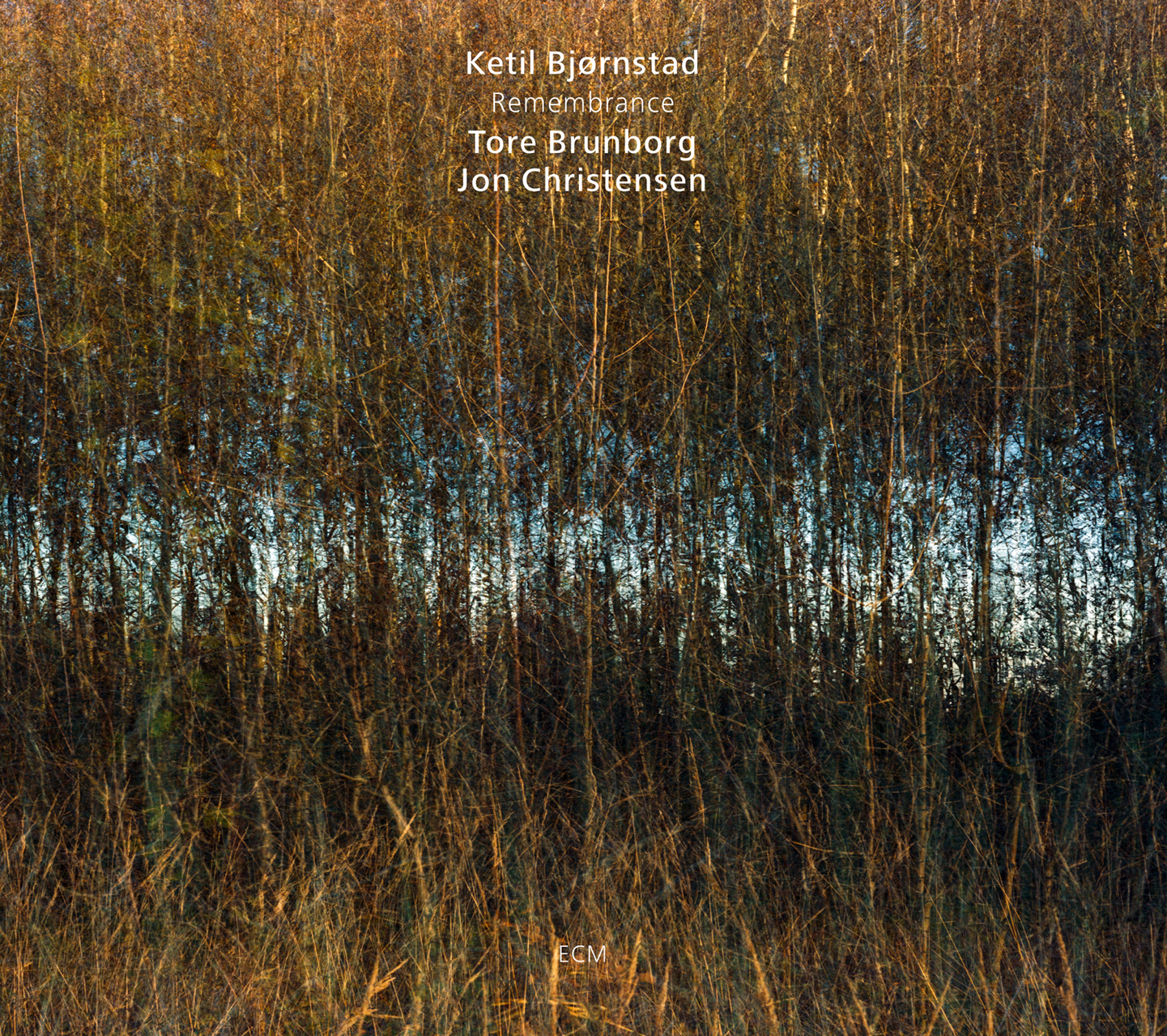
Ketil Bjørnstad
Remembrance
Ketil Bjørnstad piano
Tore Brunborg tenor saxophone
Jon Christensen drums
Recorded September 2009 at Rainbow Studio, Oslo
Engineer: Jan Erik Kongshaug
Produced by Manfred Eicher
Ketil Bjørnstad’s Remembrance came together at the suggestion of producer Manfred Eicher, who convened the Norwegian pianist-composer in the studio with legendary drummer Jon Christensen and master saxophonist Tore Brunborg for a set of 11 naturally unfolding ballads. Although Bjørnstad and Christensen had famously worked together on The Sea, and despite the music’s arpeggiated undercurrents, the feeling is not so much of water as of sky, with a touch of horizon for reference. Certain portions (Part V, for example) may approach the coast, but their vessels ultimately skim cloud and vapor, not ocean.
Interactions between the three musicians are globular and free-forming, but root themselves in Bjørnstad and Christensen (it was a recording of them, in fact, that inspired Eicher’s vision of this project to begin with). And so, by the time we encounter their gorgeous duetting in Part VI, we know that we have reached the true heart of the album—not only for being the numerical middle but also for distilling a vision of textural clarity. Here, as throughout, Bjørnstad’s soft backpedaling gives full attention to the drummer’s sunglow. Christensen drums with characteristic impressionism, but also with a sense of voice that few others bring to the kit. Parts VII and IX explore further possibilities in the duo, each attuned to the adaptive forces of the other’s creative play.
Despite the musicians’ ability to paint with luminescent urgencies, the trio settings are most unified at a whisper. Brunborg’s reed stretches a tether between emotional territories in the remaining tracks, each more lyrical, more soulful, than the last, until their nostalgic petals break bud in the aerials of Part XI. The songs with Brunborg are also the album’s tenderest. It’s as if the addition of a distinctly air-born voice elicits a ripple effect of empathy from the two percussion instruments, a regression into childhood sensibilities. And yet, beautiful as the melodies are, Remembrance is a must-have for fans of Christensen. If you’ve ever laid stick to cymbal, you’ll know why.
(To hear samples of Remembrance, click here.)

Paul Motian
Lost In A Dream
Chris Potter tenor saxophone
Jason Moran piano
Paul Motian drums
Recorded live February 2009 at the Village Vanguard, New York
Engineer: James A. Farber
Produced by Manfred Eicher
Drummer Paul Motian, saxophonist Chris Potter, and pianist Jason Moran: the kind of dream you want to get lost in. This equilateral triangle of melody, form, and affect came together at Motian’s behest for a week of performances at New York’s Village Vanguard, from which he and producer Manfred Eicher culled the present disc. These live morsels reflect a cross-section of Motian’s career as both performer (by this point having shared about a decade of history with Potter and a single performance with Moran) and composer (all the tunes, some new and some old, are by Motian, except for a sweet take on Irving Berlin’s “Be Careful It’s My Heart”).
Among the album’s many benefits, it’s particularly wonderful to hear Potter, a player known for his robust command and dynamism, emote with such artful delicacy. In both “Birdsong” (last heard on TATI, in the company of Enrico Rava and Stefano Bollani) and “Mode VI,” Potter elicits tons of emotional power by his restraint. In the latter tune especially, which opens the album with a whisper, he fans the trio’s creative pilot light in pastels and charcoals. He also knows when to set the horn aside, letting Moran and Motian play on as a duo, drums brushing away the piano’s footprints in a dance as melodic as anything elicited at the keyboard. Motian is indeed the core of this music’s being, turning on a ballerina’s toe in a light made audible by breath, reed, and chamber.
If not obvious already, Motian and his bandmates are as much painters as they are musicians. Their evocative skills turn simple titles like “Casino” and “Blue Midnight” into moving pictures. A lone figure sits at the betting table, a losing hand before him. The only real comfort comes from the piano bar, the music of which slices through his inebriation like a paper cut, an Ace of Spades flicked toward the heart, where it remains lodged in hopes that something other than its pip might bleed. The looseness of such moments best exemplifies the photo montage on the album’s cover, which teases out regularity from city streets. (At one point, Potter and Moran lapse into simple scales, as if to remind themselves that even abstraction begins with practice.) Here is where the musculature of the trio becomes paramount, as tactile as its subject matter is ethereal.
The title track is the most grounded tune. Moran’s playing is sumptuous here. The gently insistent rhythm hints at swing, but shelves catharsis for another day. “Ten,” by comparison, ups the heat with a bubbling, rubato energy that draws the crowd. It is the exhale to the inhale of “Drum Music” and “Abacus,” established tunes that reference Motian’s classic Le Voyage. Where one unleashes a torrent of startlingly fractal music, the other cradles the most masterful turn of the set in the form of Motian’s solo. Bookended by thematic confirmations, it is the genius of an artist speaking as one with his instrument rather than through it. It lingers on the palate long after the finish, drawn through the concluding “Cathedral Song” beneath the skim of Moran’s night sailing and Potter’s hymnal moon.
This trio, in this context, emotes so tenderly that it might collapse in on itself were it not for the strength of its bones. It speaks to us as it speaks to the cosmos: without the need for translation. Your body comes pre-equipped to decode its poetry, and when you buy this album, you are giving yourself a sacred gift. If you love jazz, then do your heart some good and bring these sounds home. A masterpiece, pure and simple.
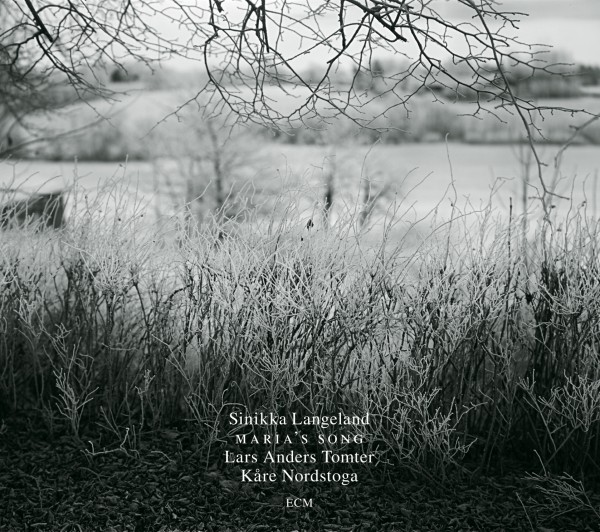
Sinikka Langeland
Maria’s Song
Sinikka Langeland voice, kantele
Lars Anders Tomter viola
Kåre Nordstoga organ
Recorded February 2008, Nidaros Cathedral, Trondheim
Engineer: Ove Berg
Editing: Ove Berg, Jean Lewis (Suite, Chaconne)
An ECM Production
ECM may be nominally dedicated to contemporary music, but Johann Sebastian Bach has been a vital touchstone in its classical recordings. Whether acting as a foil to modern works in Thomas Demenga’s multi-album traversal of the Cello Suites or as the exclusive subject of fresh interpretations by Keith Jarrett and András Schiff at the keyboard, Bach has either existed as a point of reference or as a master being reckoned with anew toward the asymptote of definitive interpretation. Only Christoph Poppen has gone a step further, weaving Bach into the work of Anton Webern (as Webern himself had done) and exploring hidden chorales of the solo violin literature. That was, until Maria’s Song, which is by far, and may always be, ECM’s profoundest reckoning with Bach.
Previously for the label, Norwegian folk singer and kantele (15-string Finnish table harp) virtuoso Sinikka Langeland had recorded Starflowers and The Land That Is Not, both of which sought to explore the shared heart of folk and jazz around the heliocenter of Langeland’s full-throated voice. This time she is joined by Lars Anders Tomter, previously of Ketil Bjørnstad’s The Light, who plays a Gasparo da Salò viola made in 1590, apparently one of the world’s finest examples of the instrument. With them is Kåre Nordstoga, playing the 30-register Baroque organ of Trondheim’s Nidaros Cathedral. Nordstoga is the principal organist at Oslo Cathedral and a Bach specialist, having performed two complete traversals of the composer’s organ music over 30 Saturday recitals in 1992 and 2000.
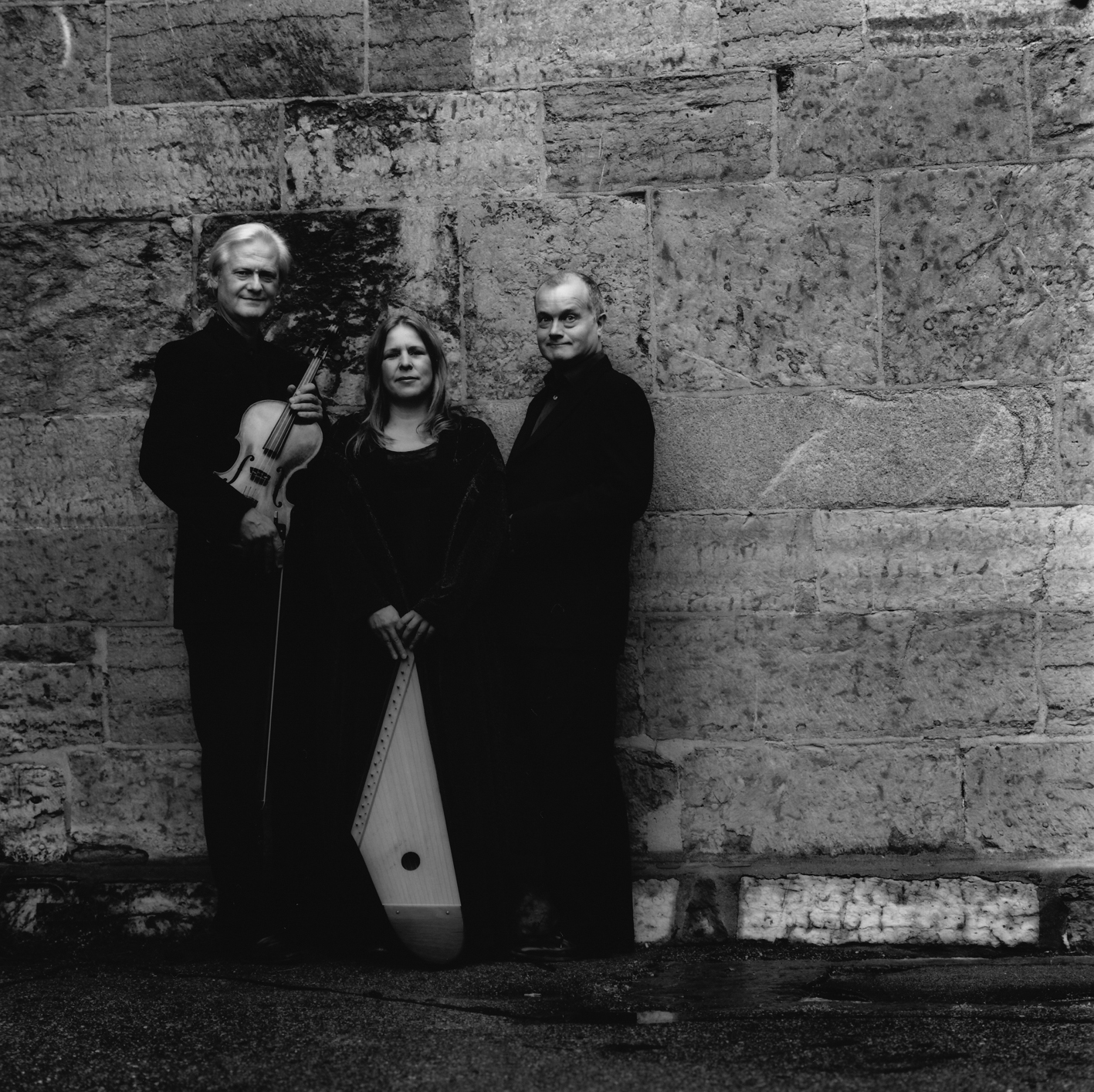
(Photo credit: Morten Krovgold)
The program is a mixture of Marian texts from Luke set to folk melodies and medieval ballads, then threaded through the loom of Bach’s hymns (and the Concerto in d minor, BWV 596) at the organ. In addition, Tomter plays viola arrangements of the Solo Cello Suite No. 1 in G major, BWV 1007 (played an octave higher) and the Chaconne from the Solo Violin Partita No. 2 in d minor, BWV 1004 (transposed to g minor). A few things make this a remarkable project. First is Langeland’s immensity of knowledge, on which she draws to assemble a program of such originality that it feels as seamless as its pairings of word and melody. Second is her voice. Possessed of a luminescent, youthful energy, her intonation makes scripture feel like a sheaf of grain distilled into something digestible by the soul. Last is the utter respect with which the musicians perform, respect that emits a sacred light of its own. And no wonder, considering that the spirit of these texts was at one time forbidden in Norway, where the Reformation of 1537 disbanded monasteries and consigned church relics and artifacts, including depictions of Mary, to state storehouses. Worship of the Virgin thus became the stuff of hidden messages and codes, and in these songs Langeland has enacted their recovery.
“Lova lova Lina” is the first encoding of Mary and, like many of Langeland’s segues throughout the disc, is sung with only the cathedral’s resonant air as accompaniment. Along with the “Ave Maria,” it reappears transformed. At times, Langeland’s fingers find their way to the kantele, both as support for the voice and as a voice unto itself. A reprise of “Lova lova Lina” is especially potent for marrying the two. Narratively inflected singing throughout makes of the shuffled program something of a passion play, in which dialogues between Heaven and Earth come to define the natural order of things. One might expect the viola to brighten Bach’s solo cello writing, when in fact it casts a deeper, more spectral shadow. The feeling is distinctly cyclical, as emphasized by the vocal surroundings, and reaches open-gated confluence in the mighty Chaconne, over which the “Ave Maria” is dutifully papered. The organ, too, sings as it speaks, lifting Langeland in “Vom Himmel kam der Engel Schar,” BWV 607 and, on its own, ascending the spiral staircase of the “Fuga sopra il Magnificat,” BWV 733 at hub of it all. Even the Concerto transcription unleashes the Holy Spirit at an intersection of past and future. As Langeland recalls in her liner notes, “While we played our way through time, the Nidaros Cathedral reflected the spiritual currents of a thousand years. The large Russian icon stared at us as we began to record. The dawn light poured through the huge rose window as we finished the night’s recording.” To be sure, we can feel all of these things…and more.
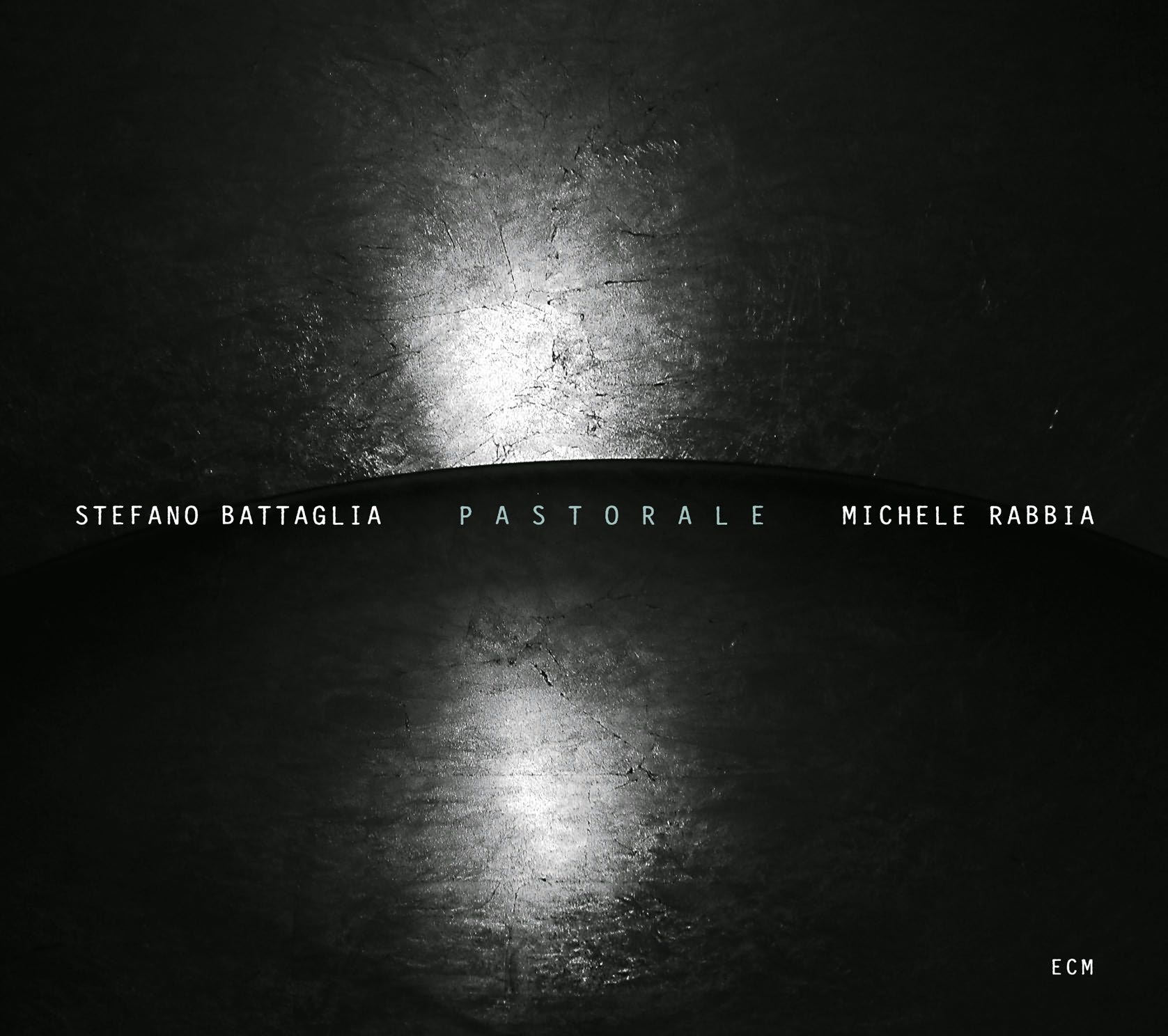
Stefano Battaglia piano, prepared piano
Michele Rabbia percussion, electronics
Recorded September 2008 at Artesuono Studio, Udine
Engineer: Stefano Amerio
Produced by Manfred Eicher
An album of piano and percussion duets may seem unusual, but, by the time of this recording, pianist Stefano Battaglia had been playing with the form for well over a decade. With Michele Rabbia he has spun a core thread, but always in the tapestries of his ensemble projects. With the release of Pastorale, that thread blossoms into a quilt of its own making. Most fascinating about the duo, in this context, is a mutual willingness to expand their sound into digitally enhanced territories.
Coincidentally or not, Rabbia’s organic electronics haunt only the religiously titled tracks. “Monasterium” walks a tightrope between light and dark toward a perfect balance of the two in a way demonstrated also by the album as a whole. The mesh of foregrounded piano and metallic overlay in “Oracle” hints at a wealth of introspection in the distance, visible but unreachable. “Spirits of Myths” furthers this marriage of the living dark, burning low, muted preparations of the piano in the sun and sparkle of Rabbia’s circuitry, conferring a shared inner core as Battaglia and Rabbia become distortions of themselves. Over time, they seek reflection in dialogues between light and metallic surfaces: the clasp of an old Bible; a doorknob polished by decades of turning; a ring that, once worn, is never taken off. By contrast, the atmosphere of “Kursk Requiem” is thick and submarine. The piano marks the procession of technological voices in high-pitched feedback whispers, looping even as they fragment. Even the album’s opening “Antifona libera” (dedicated to Enzo Bianchi, Prior of the Monastic Community of Bose in northern Italy) with its resonance hints at a mercy as resolute as it is mysterious.
On that note, the track “Metaphysical Consolations” might just as well have yielded the album’s title, for it best describes the processes of communication it entails. As it stands, the actual title track practices more than it preaches. Its prepared piano nets drums and gongs, rumbling and singing by turns, seeking flesh through abstraction and in that flesh a feeling of divine order. In this instance alone, it seems, Battaglia’s dissonance is more an expression of tactility than of distortion, giving the ears purchase in a crumbling scene, his right hand the insistent traveler whose map grows with each fearless step. In similar exploratory spirit, the duo mines folk veins in the smoother, jazzier “Candtar del alma” and the modally inflected “Sundance in Balkh.” Even the fully improvised “Tanztheater,” named for the style created by its dedicatee, choreographer Pina Bausch (also the subject of a 2011 documentary by Wim Wenders), carves tunnels beneath the driven architectures above, and with them the possibility of caving in at any moment. Such proximity to destruction confers on the music an emblem of honesty that reduces the act of creation to a skeleton and composes its blood anew.
 Between Sound and Space: ECM Records and Beyond