Collin Walcott: Grazing Dreams (ECM 1096)

ECM 1096

Collin Walcott
Grazing Dreams

Collin Walcott sitar, tabla
John Abercrombie electric and acoustic guitars, electric mandolin
Don Cherry trumpet, flute, doussn’gouni
Palle Danielsson bass
Dom Um Romão berimbau, chica, tambourine, percussion
Recorded February 1977 at Talent Studio, Oslo
Engineer: Jan Erik Kongshaug
Produced by Manfred Eicher

A plaintive, leisurely journey from Collin Walcott, North American pioneer in the art of the jazz sitar and ECM visionary whose life ended all too soon at the age 39. To anyone put off by this summary, I cannot stress enough the soulfulness of his playing. Walcott, who studied with the inimitable Ravi Shankar, does not treat his instrument as a mere substitute. Rather, he awakens the sitar to a whole new method of understanding, constructing a viable world around it rather than simply tossing it into the mix as a gimmick or afterthought.

Like the previously reviewed Survivors’ Suite from Keith Jarrett, Grazing Dreams is structured as long-form whole in which individual tracks blend into the overarching power that binds them. “Song Of The Morrow” starts things off right with flirtatious sitar riffs appearing and disappearing against a reverberant wash of guitar and trumpet while subtle and varied percussion sections sneak past in the background. “Jewel Ornament” is a personal favorite here, unfolding like a child’s raga. The hold and release of Cherry’s flute and Abercrombie’s insect-like guitar mesh beautifully with Walcott’s tabla stylings. By the time we get to the title track, which plays out like the folk tune of some undefined diaspora, we begin feel the weight of travel on our shoulders. And so, the final “Moon Lake” stretches out like a diffuse reflection across its titular surface, providing rest and replenishment beneath the sheltering sky of our nocturnal wanderings.

The engineering of this album is ahead of its time. Considering the way each track evolves, an attuned sensibility was clearly required to bring out the music’s full breadth. Case in point: the way the buzzing solitude that opens “Gold Sun” gradually develops into a honeyed elaboration of sitar and bass is nothing short of astonishing. Each tune is spun from the same cloth, dyed in real time with the languid syncopation of improvisers who feel what they hear. Gentility through strength is the backbone of Grazing Dreams, a poignant and timeless statement spun from the ether of dreams.

<< Ralph Towner’s Solstice: Sound And Shadows (ECM 1095)
>> Pat Metheny: Watercolors (ECM 1097)

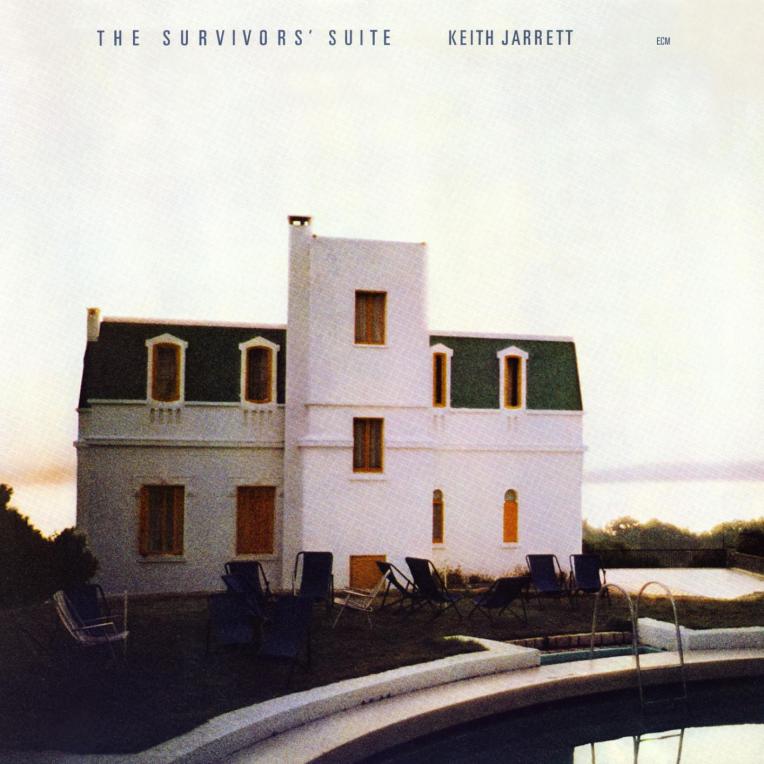
Keith Jarrett: The Survivors’ Suite (ECM 1085)

ECM 1085

Keith Jarrett
The Survivors’ Suite

Keith Jarrett piano, soprano saxophone, bass recorder, celeste, osi drums
Dewey Redman tenor saxophone, percussion
Charlie Haden bass
Paul Motian drums, percussion
Recorded April 1976 at Talent Studio, Oslo
Engineer: Martin Wieland
Produced by Manfred Eicher

A quick perusal of the personnel and mechanics of this album is practically all one needs to get an idea of the tonal colors and moods with which its imagery is composed. The Survivors’ Suite finds Jarrett in a multi-instrumental role along with the all-star cast that makes up his American Quartet. The sheer synergy of the playing truly makes this music shimmer. For this reason, I hesitate to single out particular solos and motifs. Suffice it to say each member has his moment of glory in the concisely knit fabric of the album’s 49-minute duration.

The music shifts dramatically from soulful dirges to upbeat thematic variations in a vibrant flow of ideas. A sense of control reigns. One never feels lost while listening (or is, in fact, lost but doesn’t care), for the surroundings are so resplendent with life. This is a supremely evocative experience and the similarity of associations it has inspired in so many listeners is striking to say the least (peruse a few other reviews, and you’ll see what I mean). The Survivors’ Suite reaches beyond jazz, even if firmly rooted in jazz’s soil. Its sound is vast yet intimate, breathing with the sheer life force of its music-makers. There is a marked difference between its two sections, simply titled “Beginning” and “Conclusion.” They are not polar opposites and are more than complementary. They walk the same trails, perhaps pointing out different sights along the way, all the while knowing they will soon meet again. Where the former is timid yet progressive, the latter is democratic and viscous.

This is, without a doubt, a high point among Jarrett’s many ECM outings. It is expertly recorded (as evidenced by its superb balance of warmth and coolness), fluidly played, and widely cherished, as I am sure it will continue to be for decades to come.

<< Eberhard Weber: The Following Morning (ECM 1084)
>> Keith Jarrett: Hymns/Spheres (ECM 1086/87)

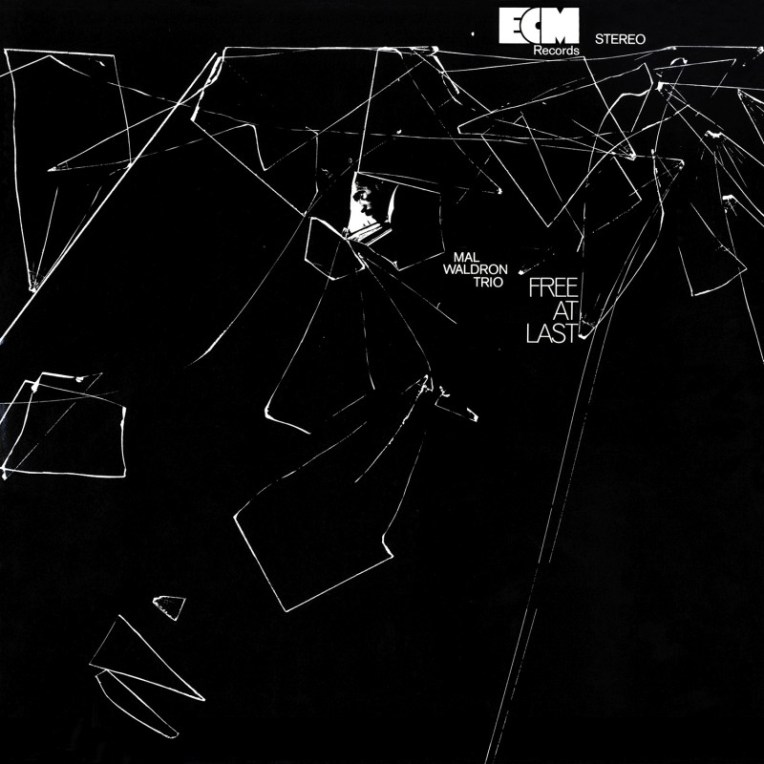
Mal Waldron Trio: Free at Last (ECM 1001)

1001

Mal Waldron Trio
Free at Last

Mal Waldron piano
Isla Eckinger bass
Clarence Becton drums
Recorded November 24, 1969 at Tonstudio Bauer, Ludwigsburg
Engineer: Kurt Rapp
Supervision: Manfred Eicher
Produced by Manfred Scheffner* + Jazz by Post
Release date: January 1, 1970

A cymbal riff from Clarence Becton introduces this respectable outing from Mal Waldron and company as bassist Isla Eckinger and the bandleader jump in for some enjoyable interplay. Yet what begins as an energetic ride turns somber through Eckinger’s rumination. Such solos lend deeper insight into the goings on, underscored by Waldron’s staccato mastication. Ballads are the album’s ventricles. A sweltering slog through love and darkened streets, “Balladina” shines with a hardened beauty all its own, while “Willow Weep for Me” is therapeutic like a good long cry. Both tracks have been strategically placed as penultimate bookends and serve as two-way doors into the struggles on either side. Others, like “1-3-234,” center the listener with needed uplift from these brooding asides, culminating in the concise and playful “Boo.”

This recording, ECM’s first, represents what was to become the label’s defining edge: namely, the allowance for (and foregrounding of) space in the recording of jazz. Seeing as this was already part of Waldron’s base approach, selectively pulling at roots while grafting on new ones, this disc was a suitable vehicle for his raw aesthetic. Its melodies may not stick in your head, but are stepping-stones toward a careful melancholy. And while ECM would vastly improve and enlarge its recording repertoire in the decades to come, there remains something comforting—just shy of innocent—about this album. If anything, this is a jazz of introversion, an intimate and myopic exposition of fleeting interactions that neither invites nor pushes away.

As Peter Rüedi has it, “free” meant something quite different to Waldron than it did to the more overtly anarchic figureheads of the waning sixties. It was, rather, “a quality that starts with structure and comes back to structure.” In light of this, Free at Last is the point of departure for a label that has since never looked back, even as it carries these sounds in its heart.

*Scheffner’s name is incorrectly spelled as “Scheffnfr” on the original LP.

For my thoughts on the 2019 vinyl reissue, click here.

>> Just Music: s/t (ECM 1002)