Eberhard Weber: Stages Of A Long Journey (ECM 1920)

Stages Of A Long Journey

Eberhard Weber
Stages Of A Long Journey

Gary Burton vibraphone
Jan Garbarek soprano and tenor saxophones
Rainer Brüninghaus piano
Eberhard Weber bass
Marilyn Mazur percussion
SWR Stuttgart Radio Symphony Orchestra
Roland Kluttig conductor
Recorded in concert, March 23/24, 2005, Theaterhaus Stuttgart
Engineer: Michael Sandner
Concert produced by Martin Mühleis

Stages Of A Long Journey documents the best moments of two March 2005 concerts in Stuttgart celebrating the 65th birthday of Eberhard Weber. The bassist has, of course, been a mainstay at ECM, where his comparable talents as composer and arranger have found room to flourish since his breakthrough “Colours” discs of the seventies. This is his first live record for the label he calls home.

The album’s roster represents decades of inter- and intra-musical friendship, and dots a compass of profound collaboration. Saxophonist Jan Garbarek, in whose self-named group Weber has performed alongside many of the other featured musicians, returns the favor by casting his nets back to tunes in which he was never originally involved. The elliptical nature of it all brews fresh ideas and colorations, especially in the duo track “Seven Movements,” in which Garbarek’s soprano rides the ember-glow of Weber’s arpeggios like a bird on the wing.

Another evocative duo comes in the form of “Yesterdays.” The 1930s show tune pairs Weber with surprise guest (and oldest ally of them all) Wolfgang Dauner, he of the elusive Output, at the keys. In this conversation, one encounters the joy with which the bassist emotes. This makes it the most nostalgic portion of the program, which is perhaps why Weber foregoes his trusty electrobass and, in a rare turn, goes unplugged for a spell on the standard upright.

Another wizard of the keyboard, Rainer Brüninghaus, is a necessary presence for such a performance. Having contributed atmospheric details to so many of Weber’s tapestries, he lifts the classic “The Colours of Chloë”—which opens the five-part Birthday Suite—to new heights. The combination of bass and piano here reaches across and beyond the ensemble’s stretched canvas. Brüninghaus furthers the suite with his original “Piano transition,” as does percussionist Marilyn Mazur in her “Percussion transition,” both satellites orbiting Weber’s dreamlike “Maurizius” in telepathic gravitation. Moreover, Vibraphonist Gary Burton makes his mark on “Yellow Fields,” the suite’s final offering. Here, too, is where the final pieces of the puzzle work most intuitively, as the 90-piece Stuttgart Radio Symphony Orchestra, under the baton of Roland Kluttig, transitions across newly fertilized surroundings with its unassuming blend.

Because there has always been something of an orchestral heart beating in Weber’s music, one should not put too much stock into its actualization herein. This is duly apparent in “Silent Feet.” As the album’s opener, it is as likely an introduction as any for those hearing these pieces for the first time, but on its waves bobs the unblemished torch of interpretation that Weber has carried all these years, reaching full conflagration in a new take on Carla Bley’s “Syndrome.” This pet tune takes listeners into exciting directions as Weber navigates a shifting mosaic—sometimes in triplicate, sometimes duplicate—with controlled heat.Percussionist Reto Weber and beatboxing phenomenon Nino G join in the fun for “Hang Around” (a wordplay on Reto’s hang drum), much to the audience’s obvious delight. It is a playful interlude, but an equally conducive facet of the bassist’s prism, as is “The Last Stage Of A Long Journey,” a veritable origami figure of wind, land, and, above all, light.

Eberhard Weber’s music is a process of translation. Through it all, his bass is a visceral, thrumming magnet that seems to emerge from the very earth even while burrowing into it. His musical language is interlocking yet contrapuntal. Like an open book, its pages contain infinite wisdom but come together at the spine. All the more appropriate that Weber should end solo with “Air.” A summation but also a beginning, it is a badge of honor as only he can wear it.
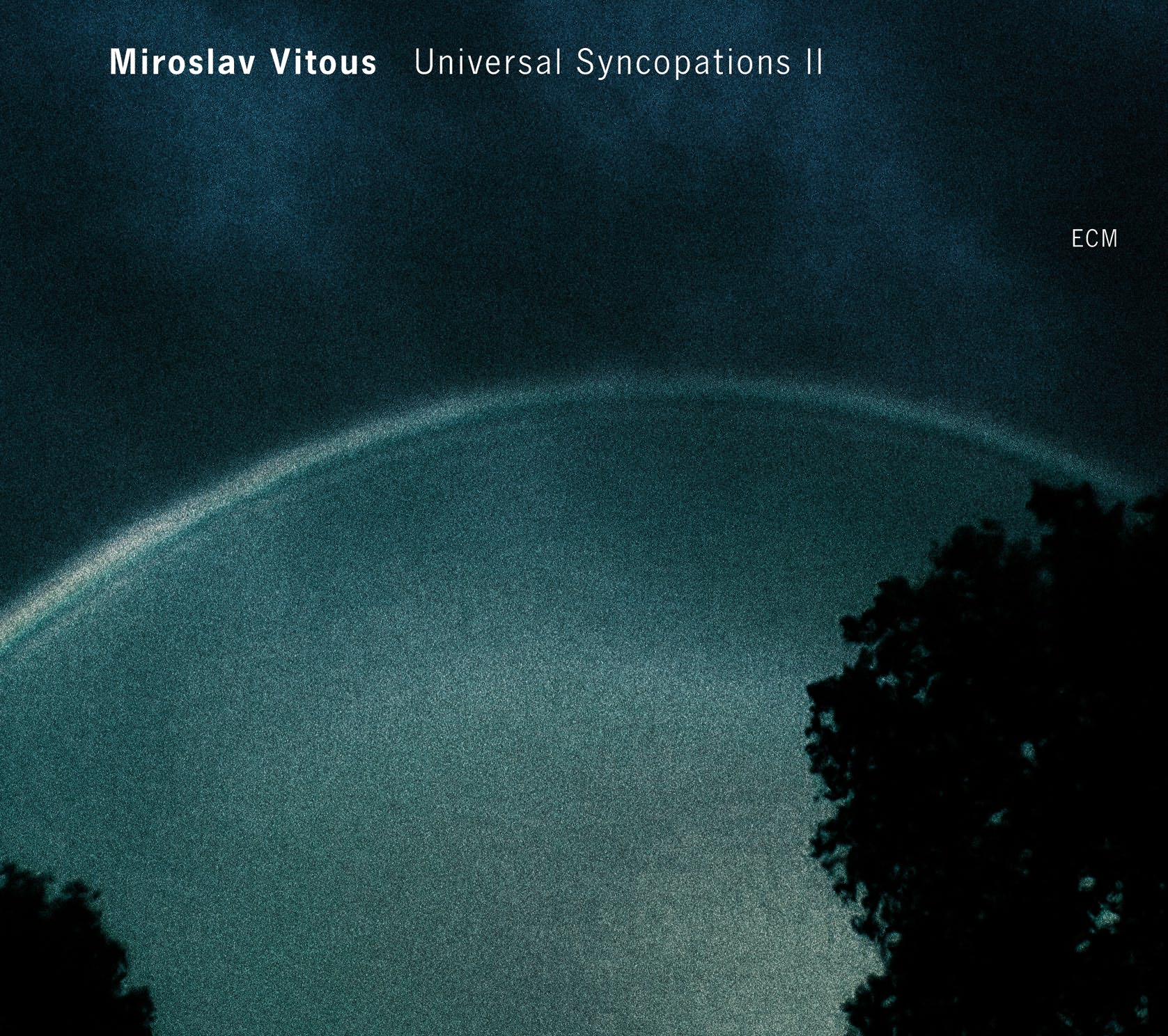
Miroslav Vitous: Universal Syncopations II (ECM 2013)

Universal Syncopations II

Miroslav Vitous
Universal Syncopations II

Bob Mintzer tenor saxophone, bass clarinet
Gary Campbell soprano and tenor saxophones
Bob Malach tenor saxophone
Randy Brecker trumpet
Daniele di Bonaventura bandoneón
Vesna Vasko-Caceres voice
Gerald Cleaver drums
Adam Nussbaum drums
Miroslav Vitous double-bass
Recorded November 2004-April 2005 at Universal Syncopation Studios (Italy) by Miroslav Vitous
Assistant mixing engineer: Andrea Luciano
Produced by Miroslav Vitous

Bassist-composer Miroslav Vitous dove headlong into Universal Syncopations II after the success of its predecessor, but required a handful of years to see the light of day on disc. Fronting (or is he centering?) a newly fashioned ensemble, Vitous exercises full creative control over the project, interlacing ribbons from his unique library of orchestral and choral samples into an already thick weave of live players.

The end effect takes some getting used to in the beginning, if only because it is so innovative and unusual. “Opera” opens with the din of a concert hall crowd that gathers like magnified sunlight into an awakening chant. From this emerges Vitous’s pliant and jovial bassing, which darts through its motivic surroundings like a squirrel from branch to branch. Drummer Adam Nussbaum keeps the core alive alongside hip tenor action from Bob Mintzer, while the muted trumpet of Randy Brecker crowns the mountain like a setting sun. There is chatter and laughter, a true feeling of context in an almost ritualistic tapestry of sounds.This is but the preamble for what the album has in store, and with “Breakthrough” shuffles the musicians a bit for some trend-setting flavor. Echoes of the Doctor Who theme arise in the soprano saxophone of Gary Campbell, who takes the melodic lead but leaves plenty of room for drummer Gerald Cleaver to squeegee the windows with his grist. Vitous, too, is busy, if humbly backgrounded in the denser portions.

Because of the many acoustic interests at play, certain portions of the album are more successful than others. It’s not that the mélange is unviable, but simply that the musicianship is so raw and immediate that the relatively processed interjections of strings, brass, and choir are by and large unnecessary, intriguing though they are. Thus, where such snippets feel extraneous to the crosstalk between Vitous and Campbell’s tenor in “The Prayer,” in “Gmoong” and “Universal Evolution” the combination clicks into place.

What this album may lack in consistency of arrangement it makes up for in spades with the musicianship, especially that of Cleaver. The drummer might as well be the “Solar Giant” to which the same track refers. Whether keeping the pulse through firewalls of horns or walking in the splash-steps of “Mediterranean Love,” he adapts with an intuitive, chameleonic energy, ever the epitome of balance between fore- and background, a direct link to what the album is trying to spiritually express.

“Moment” ends on a quiet storm, Vitous rolling the bass like a coin across a gunslinger’s fingers. Voices speak as if walking and dissolve at the touch of a single timpani hit. In its wake, one may be at odds trying to draw a connection between the two Syncopations. Which is precisely, it seems, the point: change is evolution. Surely, the art of this sequel deepens with each listening experience into something beyond itself, for experience is what it’s all about.

Wolfert Brederode Quartet: Currents (ECM 2004)

Currents

Wolfert Brederode Quartet
Currents

Wolfert Brederode piano
Claudio Puntin clarinets
Mats Eilertsen double-bass
Samuel Rohrer drums
Recorded June 2006 at Rainbow Studio, Oslo
Engineer: Jan Erik Kongshaug
Produced by Manfred Eicher

Dutch pianist Wolfert Brederode, previously heard buoying the voice of Susanne Abbuehl on April and Compass, makes his ECM leader debut, fronting a quartet of lyric integrity. Brederode takes the standard piano trio, fleshed here by bassist Mats Eilertsen and drummer Samuel Rohrer, and adds to it the clarinet of Claudio Puntin for a sound that is distinctly “chamber jazz” yet something more. That something more comes out through the plurivocity of Brederode’s compositions, which in the hands of these capable sound-smiths take to their own measures of flight from note one.

Indeed, it’s hard not to be won over after the first few moments of “Common Fields.” As the album’s introduction, its work is twofold. First, it establishes a taste of things to come. Second, and equally important, it testifies to producer Manfred Eicher’s ear for sequencing. With its piano arpeggios, curling like the lips of a foamy tide, it paints a geography as vivid as sunset. The clarinet wanders onto land like an abandoned ship whose ghosts drag the heavy chains of memory as their bounty. Eilertsen marks their footprints in the sand, claiming the island as their own. As the rhythm section becomes more apparent, the diction becomes starker, more animated, turning pathos into chaos and back again. Along with the dazzling poetics of “Scarabee” and “Ebb,” this track evokes atmospheres not unlike ECM’s unforgettable The Sea. Fans of the same are sure to feel right at home, while also expanding their purview toward this quartet’s landscaping.

Other points of confluence crop up along the way. “Empty Room,” for example, recalls the opening tune (“Nicolette”) of Kenny Wheeler’s Angel Song, while Abbuehl’s “As You July Me” (the album’s only tune not by Brederode and an ode to E. E. Cummings) draws from the pianist’s longstanding alliance with the Swiss jazz vocalist and proceeds accordingly with lush pacing. Much of the album’s remainder traces bridges of harmony over nocturnal divides. Some tracks (“High & Low”) glisten like rain-slicked streets; others (“Desiderata”) adopt inward-looking posture, taking in the clarinet’s sunrays for denser foliage and deeper roots. The feeling moves from water to land, emerging in “Soil” like an animal from hibernation amid splashes of light and shadow, and spouting elliptical wisdom in “Frost Flower.” The latter is an album highlight, a snowflake turned miracle in the cold, cold wind.

The tenderest moments come in the form of “With Them,” an interlude for piano and clarinet, and the concluding “Barcelona,” a strangely twisted path through rarely trodden alleyways. The pianism seeks what it finds: a storehouse of experience waiting to be written, played, and heard.

Although Brederode and his companions never stray too far afield, there is genuine freedom working beneath all the precision. It’s the best of both worlds, and makes worlds of both.

Stefano Bollani: Piano Solo (ECM 1964)

Piano Solo

Piano Solo

Stefano Bollani piano
Recorded August 2005, Auditorio Radio Svizzera, Lugano
Engineer: Stefano Amerio
Assistant: Lara Persia
Mixed at Artesuono Studio, Udine
Produced by Manfred Eicher

After a fruitful apprenticeship under the wing of Enrico Rava (cf. Easy Living), pianist Stefano Bollani goes solo for ECM in a set of 16 vignettes as virtuosic as they are varied. From this alliterative description alone, one might think the simply titled Piano Solo to be nothing more than a potpourri of stylistic experiments. It is, rather, the wonderful, and sometimes wondrous, curriculum vitae of an artist who comes into his own on this record, even as he surpasses his own expectations.

Much of the marrow in the bones of Piano Solo draws nourishment from Bollani’s unprepared improvisations. Of these we are treated to four examples, the first of which breaks open the geode of his craft and renders every architectural facet therein. The remaining three, each more focused than the last, proceed from convolution to clarity, venturing along the way into the piano cavity before migrating with childlike energy to the keyboard proper. Notes sing their songs like storybook characters, flipping by like so many turned pages.

From Bollani’s own pen come three loosely drawn pieces: “Promenade,” “Buzzillare,” and “Sarcasmi.” Each lays another edge piece of the pianist’s puzzle, showing depth of range in its equal fascination with wistful autumns and humid summers. They are further notable for the humility of their virtuosity, and for the genuine attraction of their whimsy. Even his “On a Theme by Sergey Prokofiev,” tangential at best to the Andante of the Russian composer’s First Piano Concerto, takes on a special persuasion.

As alluring as these windows are, none are so Palladian as Bollani’s interpretations of standards and popular tunes. The reigning highlights thereof—namely, “Do You Know What It Means To Miss New Orleans” and Scott Joplin’s “Maple Leaf Rag”—come straight out of Dixieland. Of them Bollani makes a cocktail that tastes at once fresh and nostalgic, with just the right twist for balance. “On The Street Where You Live” is another contender for album zenith, its descriptive beauties outmatched only by the adaptive flair of the one making them audible. Indeed, Bollani is just as comfortable waxing the prosody of “Antonia” (by the Milanese pianist and composer Antonio Zambrini) or the timeworn balladry of “For All We Know” as he is deconstructing the tango of “A Media Luz” or spouting golden heat across the dreamscape of “Como Fue.” In all of these, a marked separation between the left (sea) and right (sky) hands prevails, separating even the densest chords into their constituent elements. All of which funnels into the benediction of Brian Wilson’s “Don’t Talk,” by which the program impresses its seal with a gentle good night.

Not many pianists can be said, with any faith, to approach the improvisatory prowess of Keith Jarrett, but one need listen no further than Bollani, who in his arcing way creates a keystone for every flourish, so that everything holds true. For my money, he most closely fits the bill for his weighing of space and time, for a downright religious respect for the almighty melody, and for the breadth of his sounding. His distinction can be found in the robustness of his textures, which no matter how tightly woven always let the wind through.

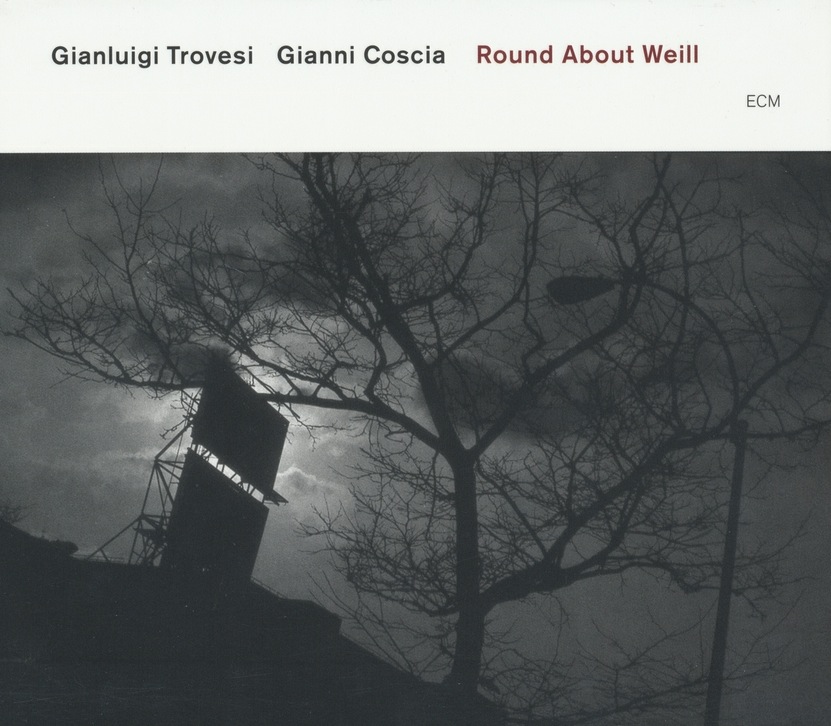
Gianluigi Trovesi/Gianni Coscia: Round About Weill (ECM 1907)

Round About Weill

Round About Weill

Gianluigi Trovesi piccolo and alto clarinets
Gianni Coscia accordion
Recorded July 2004, Radio Studio DRS, Zurich
Engineer: Markus Heiland
Produced by Manfred Eicher

Master clarinetist Gianluigi Trovesi and kindred accordionist Gianni Coscia pick up where they left off on Round about Offenbach, this time giving Kurt Weill (1900-1950) a treatment such as only they can realize. The two friends make Weill their own. Or, more precisely, they make their own Weill, stirring the pot until flavors become one delicious amalgamation. Their doing so is not without precedent. Weill himself found, and forged, art wherever he went, caring not for petty distinctions between the raw and the cooked. From Berlin to Broadway, to borrow from the title of Foster Hirsch’s biography, Weill left a vivid trail of reinvigoration. Yet Trovesi and Coscia do more than pick up the pieces left in his wake, adding as they do a slurry of original counterparts along the way. The latter, in fact, strut with as much panache as the one in whose name they were fashioned.

Turning to the duo’s contributions first, we find the playful romp—replete with harrumphing bellows and Trovesi’s nimble steps—of “Dov’è la città?” setting a tone of variation and complexity. Like so much of what follows, it is a constantly evolving organism, wearing and casting off styles like quick-change artists. Moods range from the profundity of a Górecki string quartet (“Improvvisamente”) and exploratory fugue of “Ein Taifun! … Tifone? No, pioggerella!” to the provocative slants of “Boxen” and the bifurcated title homage. Trovesi manages to navigate every maze-like turn Coscia mortars into being. As with seasoned actors, not a single gesture is out of place in their comportment, as each trades lines with the other in a match of wits so even that it would go on forever without the limits of human attention cutting away the edges.

That said, this is really Coscia’s album through and through. He activates the air as a film projector lights a screen, pulling the dead into life and the living into dreams. Whether riding the effortless wave of “Tango Ballade” (from The Beggar’s Opera) or flipping the coin of excitement and reverie that is “Alabama Song,” his elaborations sing like new. Yet the alpha and omega of the program, and of the duo’s performance thereof, is Weill’s The Rise and Fall of the City of Mahagonny. Like the fugitives with which the satirical opera concerns itself, the music herein is resourceful, self-confident, and always heading toward pandemonium. In these scenes, Trovesi and Coscia swap places with telepathic ease, mapping gypsy jazz motifs as comfortably as balladic impulses. Like the album’s penultimate interlude, which bonds “Cumparsita Maggiorata” (by tango pioneer Gerardo Matos Rodríguez) with the traditional “Tristezze di Fra’ Martino,” these instrumental thespians dip into nostalgia only sparingly, so that the dramaturgy at hand can spring forth as if for the first time.

Iro Haarla: Northbound (ECM 1918)

Northbound

Iro Haarla
Northbound

Iro Haarla piano, harp
Trygve Seim saxophones
Mathias Eick trumpet
Uffe Krokfors double-bass
Jon Christensen drums
Recorded September 2004 at Rainbow Studio, Oslo
Engineer: Jan Erik Kongshaug
Produced by Manfred Eicher

It’s surely tempting to label Iro Haarla as a “jazz harpist,” which in one sense she is. Northbound proves she is far more. Above all, Haarla is a composer of contrast and depth, one who is eminently comfortable mixing diverse ingredients into a picture that remains fully within her grasp at any given moment, even as she allows it to develop at its own pace. For her ECM leader debut, she draws saxophonist Trygve Seim, trumpeter Mathias Eick, bassist Uffe Krokfors, and drummer Christensen into her net. While familiar names all, it’s especially inspiring to see Krokfors among them, carrying as he does the credit and experience of playing on drummer Edward Vesala’s Ode To The Death Of Jazz.

If “Avian Kingdom” seems to cast a nostalgic glance toward Vesala’s mood, it’s because Haarla shared tenure not only in his influential Sound & Fury project, but also in his adoration. Since 1978, she became a guiding light in her late husband’s sonic activities, learning the harp and other instruments (she is a pianist by training) to cast just the shadows he was looking for. Shadows are indeed an important coloring tool throughout this, the album’s opener, and its subsequent autumnal spread. Christensen, too, resurrects some of Vesala’s ancient spirit, bringing free-flowing comfort throughout.

Accordingly, the set is anchored by Haarla’s melodies, which manage to be at once contemplative and near bursting with expressive power. Each highlights one among this tender quintet. In “Time For Recollection” it’s Krokfors who breaks the hermetic seal with his bow, woven into a braid of two by whispering harp strings. Likewise in the title track, which ends the album on a cartographic note. Even the breezy “Barcarole” shelters a thoughtful heart, wistful yet secure in its free being (if not also its being free). It’s an open-topped vehicle for Eick and Seim in turn, a verse that takes equal pleasure in rhyme and dissonance. Haarla, too, comes forward, especially in the more hopeful passages. Whether uplifting the band’s full strengths in “Light In The Sadness” or greasing the wheel in “With Thanksgiving,” she gives the horns plenty of palimpsests across which to chalk their messages.

In both concept and execution, scattered tracks play variations on an aquatic theme. Some are more obvious. “On A Crest Of A Wave,” for one, features rolling pianism, splashing cymbals, and a bass undertow. And there are the folksong qualities of “Yarra, Yarra…” (presumably a reference to Australia’s perennial river of the same name), in which harp and bass opening a deep conversational rift in the sheetrock as the horns span their bridges in response. Others, like “Veil Of Mist,” work a more abstract form of magic. Still others marry both states of mind. To wit: the album’s two duo settings. “Waterworn Rocks,” an album highlight, pairs Haarla at the keys with Christensen, while “A Singing Water Nymph” is a lacy interlude for harp and saxophone that proceeds in rippling steps and crosshatches them with reflections from above.

In light of these geographic paintings, Northbound belongs on the shelf next to The Sea and is sure to please fans of that classic predecessor. Although Haarla’s slow pacing may be off-putting to those looking to tap their feet, just know that such a methodology gives every nuance a chance to be heard and felt. Such attention to detail sets Haarla apart and asks only that listeners slow their heartbeats for a while in return.

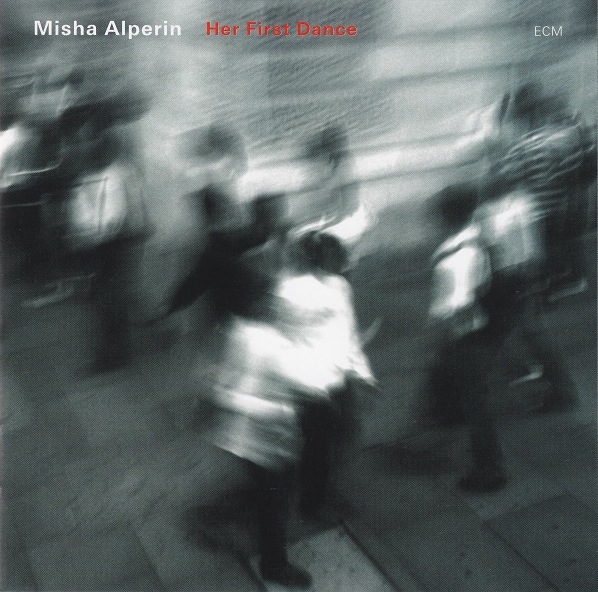
Misha Alperin: Her First Dance (ECM 1995)

Her First Dance

Misha Alperin
Her First Dance

Misha Alperin piano
Arkady Shilkloper French horn, flugelhorn
Anja Lechner violoncello
Recorded July 2006, Auditorio Radio Svizzera, Lugano
Engineer: Stefano Amerio
Produced by Manfred Eicher

After a decade-long absence, Russian pianist-composer Misha Alperin returns to ECM with his most fragrant release to date. He retains cellist Anja Lechner from the last session, Night, and rejoins his longtime ally, horn player Arkady Shilkloper. The deeper (if only for being the oldest) relationship of the two is with Shilkloper, who since 1990’s Wave Of Sorrow has been a constant companion throughout Alperin’s ECM tenure. In fact, the only piece not by Alperin on this album, “The Russian Song,” flows from Shilkloper’s pen in a lovingly arpeggiated duet for French horn and cello, with no piano between them. The remaining pieces comprise a mixed palette of solos, duos, and one trio. The latter, “Tiflis,” again features French horn, only now working a mournful charge between cells of piano and cello. It’s a stunning, lyrical voyage that works its subtle ways into the mind.

Of Alperin’s piano solos the listener is treated to a wide variety. From the tintinnabulations of “Vayan” (which veers down unexpected avenues of twilight) to the sprightly virtuosity of “Jump,” each is a transfiguration, a whirling dervish of melody. Eyes closed and heart open, Alperin passes, ghost-like, through the tenderness of “April In February” and the Bach-like grandiosity of “Via Dolorosa” with equal attention, such that each becomes a waterfall droplet made audible through slow motion.

Piano and flugelhorn make for a profound combination in the title track. Here the keyboard is distant, and the music all the more intimate because of it, as if it were being played in a chamber of the mind, personal and untouched by the outside. There is a spin and a sway to this tune, fleshed by the childhood implied by its title, by the magic of kindness that pulls flowers from the soil before the world at large can paint them with words.

Piano and cello make two somber appearances. “A New Day” turns like a ballerina in a music box, Alperin dotting the edges of Lechner’s spinal lines with light impulses of grace, while “Frozen Tears” breathes cinematic reality through a steady pulse and wavering foreground.

Together, these vignettes boil down to a beauteous representation of Alperin’s diction. Secure and sparkling, it speaks as it lives: which is to say, from the heart.

Paul Motian Band: Garden of Eden (ECM 1917)

Garden of Eden

Paul Motian Band
Garden of Eden

Chris Cheek tenor and alto saxophone
Tony Malaby tenor saxophone
Jakob Bro guitar
Ben Monder guitar
Steve Cardenas guitar
Jerome Harris bass
Paul Motian drums
Recorded November 2004, Avatar Studios, New York
Engineer: James A. Farber
Produced by Manfred Eicher

Paul Motian was nothing if not unpredictable, and on Garden of Eden he degausses the jazz landscape not for the first time. The album represents a headlong dive into bebop roots, but also a tangling of their pathways. More than his refashioning, however, it is the instrumentation that holds the most surprises. In addition to bassist Jerome Harris (previously heard alongside the legendary drummer on Bill Frisell’s Rambler), Motian welcomes not one or even two but three guitarists (Jakob Bro, Ben Monder, and Steve Cardenas) and tenorists Tony Malaby and Chris Cheek (also on alto duty) for a session that is equal parts comfort food and new wave. Interestingly enough, the former comes from Motian’s newer tunes, while qualities of the latter infuse the tried and true.

Two Charles Mingus tunes open the set with a stage-setting contrast of temperatures and climates. “Pithecanthropus Erectus” finds Motian in a state of subtle swing, spearheading cool, spacious pockets of force. Beneath tasteful soloing from Cheek and chromatic flourishes from Malaby, Harris works his groove-mind, even as the guitarists kindle the music’s inner glow. Despite, if not because of, the assembly, such progressive tunes seem to float, while the leisurely crawl of “Goodbye Pork Pie Hat” is far denser due to its high emotional thread count. Through its crosstalk of guitars and reeds echoes a graceful photosynthesis.

Motian’s snare is profound in its variety. A sound at once hollow and resonant, it begs attention, a light visible in the thickest fog. It is central to his craft not only as a player, but also as a composer. In this role Motian excels beauteously with seven viscous originals, in particular the title track, which moves like globules in a lava lamp and, along with Jerome Kern’s “Bill” (from the musical Show Boat), paves the album’s dreamiest thoroughfares. Other wonders: the slipstream “Mesmer,” in which Motian spackles highlights with his cymbals, characteristically insistent yet accommodating; the spider-webbed guitars of “Prelude 2 Narcissus” and “Manhattan Melodrama,” each a radiation of moonlight; and “Etude,” which has put on some shadows since its appearance on 1982’s Psalm.

Cheek and Cardenas each contribute a tune. “Desert Dream” is the saxophonist’s modal vision, a haunting piece of cartography that side-winds into the guitarist’s “Balata.” In both, themes act as concave bookends to even more concave departures. The wave takes us back to finish, looking to Thelonious Monk’s “Evidence” and Charlie Parker’s
“Cheryl” for closure. Both manifest the full tactility of bebop, thus cinching one of Motian’s finest records on any label.

Is this where jazz is going? Hardly. This is where jazz already was. It only took a genius like Motian to hear it that way. A crime not to savor.

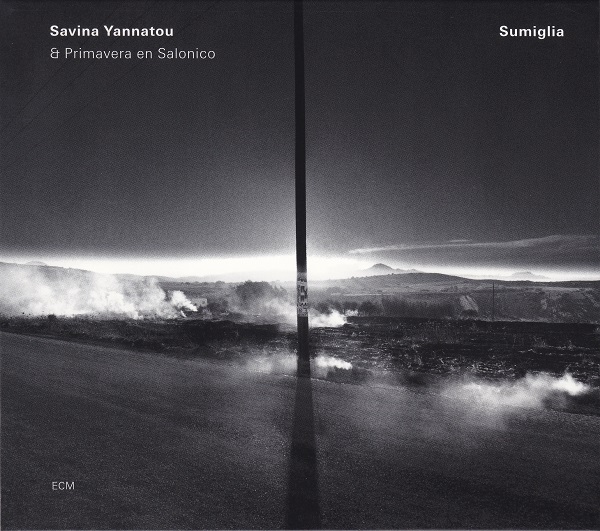
Savina Yannatou & Primavera en Salonico: Sumiglia (ECM 1903)

Sumiglia

Savina Yannatou
Primavera en Salonico
Sumiglia

Savina Yannatou voice
Primavera en Salonico
Kostas Vomvolos accordion, qanun, kalimba
Yannis Alexandris tamboura, oud, guitar
Michalis Siganidis double-bass
Kyriakos Gouventas violin, viola
Harris Lambrakis ney
Kostas Theodorou percussion
Recorded May 2004 at Rainbow Studio, Oslo
Engineer: Jan Erik Kongshaug
Produced by Manfred Eicher

Two years after the release of her ECM leader debut (although really a preexisting live recording repackaged as such), Savina Yannatou returns with her first album recorded under the label’s auspices at Rainbow Studio in Oslo. Sumiglia is at once a departure from and a deepening of the Greek singer’s extraordinary gifts, bound by nothing save her own imagination. Flanked as always by Primavera en Salonico, a band of dynamic expressive power, Yannatou graces another characteristically eclectic program of folk songs. Her voice is like a head of hair: thicker in some places, thinner in others, containing a wealth of reflections and colors, but always rooted and growing. Her wisdom is thus animated, blowing in winds from a thousand isles.

In spite of the studio comforts, one experiences Sumiglia as if a live recording, pulsing as it does with only thinly mitigated vibrancy. Like its predecessor, this album begins with a violin solo—a modest introduction that betrays nothing of the ensuing profusions. “Evga mana mou” thus opens with a nod to Yannatou’s homeland, a bridal song of farewell to family and friends. Adopting a tone that is delicate as a butterfly yet sharp as the bird that hunts it, the singing navigates a droning landscape with free surety. Other Greek songs include the tender, spring-like “Yanno Yannovitse” and the beautifully arranged “Ela ipne ke pare to,” which walks with a light kalimba step and a slight Arabic curl, further proving that sometimes the most bone-humming singing is that which is on the verge of fadeout. Within this frame, listeners are whisked away on a carefully sequenced journey. From the droning of Spain (“Muineira”) through the forests of Ukraine (“Ta chervona ta kalinonka”) to the twists of Albania (“Smarte moj”), there’s something for nearly everyone to grasp along the way.

Regardless of the roles she adopts, Yannatou remains painterly and self-aware. In the Moldavian song “Porondos viz partjan,” for one, she takes on the voice of an orphaned child, her evening wanderings matched step for step in arco starlight. In the Sicilian “Terra ca nun senti,” for another, she darts through mazes of war-weary angst. Other flybys of the Mediterranean yield the gravelly, fairytale affectations of “Orrio tto fengo” and the whimsical romanticism of “Sta kala lu serenu,” both from Italy. A stopover in Corsica in the album’s title track draws Yannatou’s voice like a thick rope through darkness, heaving histories and mysteries in equal measure. We feel that depth of mourning for times past.

The album’s delights take us inland and beyond. “Sedi Yanna,” a well-known Bulgarian folk song, receives an invigorating treatment, with just the exact amount of lilt and forward motion. It is also a perfect representation of the band’s clarity, which despite the density of its execution remains crystal clear. The lyrical fire of “Ganchum em yar ari,” from Armenia, warms us to “Tulbah.” This last is a Palestinian song that shows the Primavera at its chameleonic best. Whether riding the wave or swaying to the rhythm of calmer currents, the band adapts.

In addition to its many other virtues, Sumiglia is yet another feather in the cap of engineer Jan Erik Kongshaug. Known, of course, for his spacious treatments of various jazz configurations, here he brings an immediacy that serves the music as much as it serves us. A bravura showing from every angle.