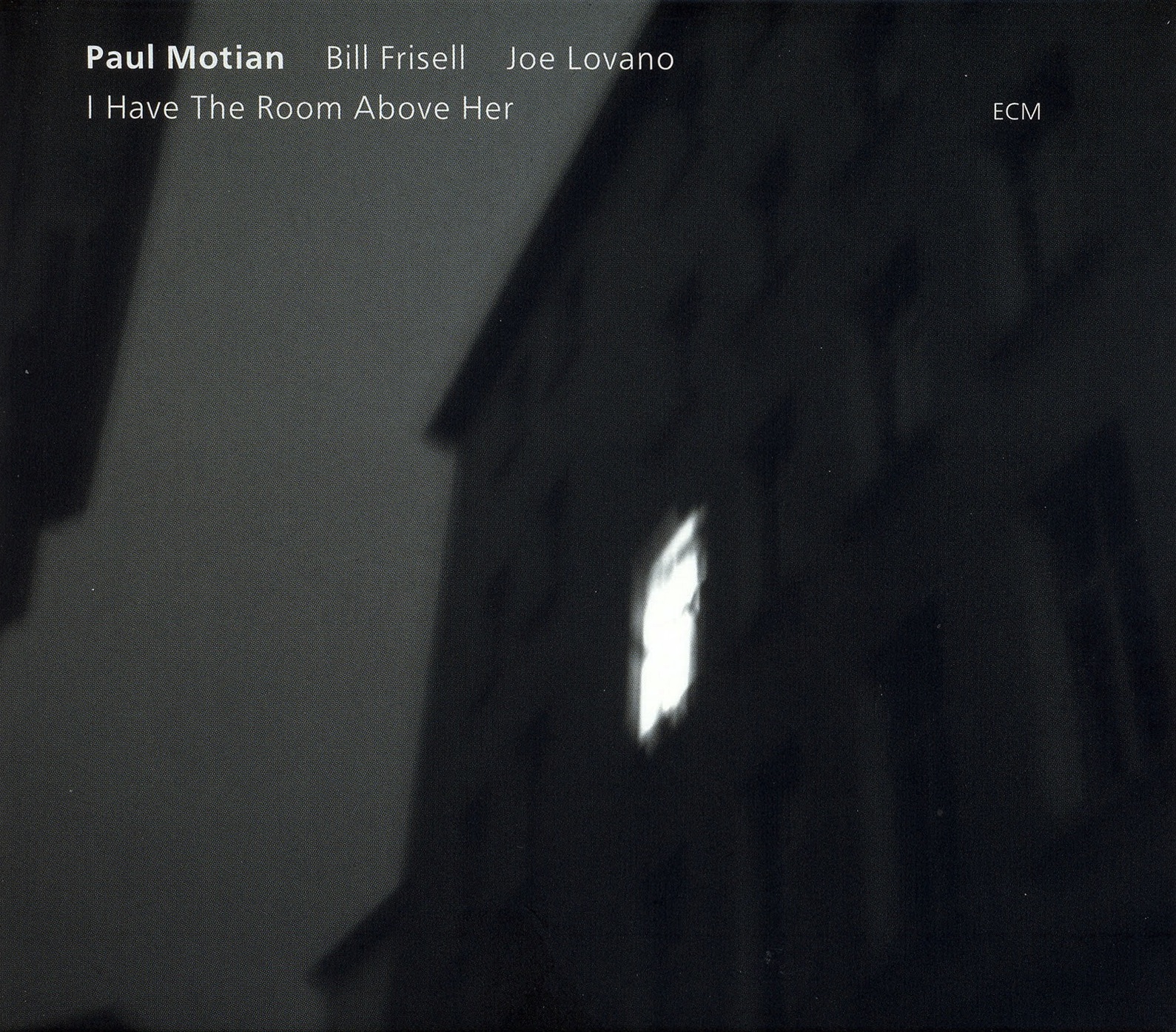
Paul Motian Trio: I Have The Room Above Her (ECM 1902)

I Have The Room Above Her

Paul Motian Trio
I Have The Room Above Her

Bill Frisell guitar
Joe Lovano tenor saxophone
Paul Motian drums
Recorded April 2004, Avatar Studio, New York
Engineer: James A. Farber
Produced by Manfred Eicher

I Have The Room Above Her continues drummer-composer Paul Motian’s depth-journeying with guitarist Bill Frisell and saxophonist Joe Lovano, who, in line with Motian’s free, integral thinking, compress coals into diamonds with every meeting captured on record. Here especially, they prove that, “power trio” though they may be, their power thrums beneath the flowers rather than shining down on them.

The lion’s share of this, the trio’s third outing for ECM, is comprised of new Motian material, although backward glances do lurk here and there. Among the latter, “Dance” is the quintessential blast from the past. Not only because it comes from Motian’s 1978 album of the same name, but also quite simply because of his youthful, euphoric playing. Thelonious Monk’s “Dreamland,” which caps the set, balances darkness and light with equal profundity—an affirmation of all things that resound. And then there is, of course, the title track, which in these six simpatico hands yawns into something far beyond its roots (in the musical Show Boat) and establishes a dark street scene in its place. As after-midnight stragglers enjoy the drunken air, a lone figure ambles his way through, slips into cold sheets, and dreams of a time when ill-fated hearts might beat as one. It is Lovano who evokes this lonely routine, swaying through the night with inebriated pall but also a hard-won beauty that burns in the chest like a star.

The greatest secrets of Room, however, can be found glistening in Motian’s “Osmosis Part III,” which begins the album as if midsentence yet brims with consummate sentiment. Frisell provides enchanting starlight by way of his tasteful electronic looping. Lovano, meanwhile, brings the pulse of the moon, and Motian the dance of its light upon water. There is savory thinking in this first encounter, and much more to be found in repeat listening, where the business of “Odd Man Out” (notable for Lovano’s channeling of Charles Lloyd) sits comfortably alongside the softer alloys of “Shadows,” and the percolating snare of “The Riot Act” (enhanced by computerized reflections from Frisell) funnels organically into the bluesy whimsy of “The Bag Man.”

Above all, it is the aching melodies that bloom widest. Be they the modal strains of “Harmony” or the shifting tectonics of “Sketches,” chains of notes seem to rain from Motian’s cymbals, even as his bandmates evaporate them back into cloud forms. As spoken through the anthemic qualities of “One In Three,” each theme leads listeners like torchlight through a cave. It traces archways of stone and glyph, only to find naked and inviting cause.

For as long as Motian walked this earth and spoke his rhythms true, he left few fuses as surge-proof as this. Part of an unfathomable circuit, it will forever be, running on an electricity all its own.

Marc Johnson: Shades of Jade (ECM 1894)

Shades of Jade

Marc Johnson
Shades of Jade

Joe Lovano tenor saxophone
John Scofield guitar
Eliane Elias piano
Marc Johnson double-bass
Joey Baron drums
Alain Mallet organ
Recorded January and February 2004 at Avatar Studios, New York
Engineer: Joe Ferla
Produced by Manfred Eicher and Elaine Elias

If you had heard only Marc Johnson’s ECM debut with his Bass Desires quartet, you might be forgiven in thinking that the bassist was an extroverted player by default. Yet, listening to his rounded commentaries on such albums as Rosslyn and Class Trip, it’s easy to see how this, his third leader date for the label, reveals in him a tender heart that holds beauty and integrity in highest esteem. Shades of Jade complements his full sound with an even richer tapestry of carefully chosen bandmates, including the painterly and good-humored Joey Baron at the drums, tenorist Joe Lovano, guitarist John Scofield, and, in her debut for the label, Brazilian pianist Eliane Elias (who also produces alongside Manfred Eicher). The result is something as timeless as the set’s opener, “Ton Sur Ton.” It is, along with the title track, co-composed by Johnson and Elias. Both rock a delicate balance of guitar and sax that is smooth, hip, and subtle. The composers, here and throughout, lay the ground in shaded Morse code. Baron splashes delicately around as Scofield and Lovano complete things, clinging leisurely like sunbeams on water’s surface.

With exception of the epilogue, Johnson and Elias individually compose the album’s remaining tunes. To his own, the bassist reaches back to his defining years will Bill Evans through an artful shuffling of touch and go. He is, for the most part, by his pen deferential, as both “Blue Nefertiti” and “Raise” put Scofield in the spotlight, dancing nimbly through the changes. The latter tune adds the organ of Alain Mallet for some flavor. Yet the highlight, of both subset and album, is his bass solo “Since You Asked.” Accompanied by a whisper of cymbals, it is an utterly personal dialogue between deep and deeper.

It is in the context of Elias’s writing that Johnson comes more overtly into his own. Whether through the deep circulation he provides in the trio setting of “Snow” or in the album’s ballad du jour, “All Yours,” he carves out prime singing space amid Elias’s flowing keys. For her part, the composer gets plenty of shine time in her denser moments, as in “Apareceu,” which calculates an even smoother ratio of bread to butter alongside Lovano’s champagne sparkle, and in the curtains of “In 30 Hours” that billow from the wind of a passing memory.

Shades ends with exactly that in the form of a haunting take on the Armenian folk song “Don’t Ask of Me” (a.k.a. Intz Mi Khntrir). Its echoes burn forlorn afterimages into the night. Droning, keening, dreaming. As if the music alone weren’t enough, the album is an engineering gem, managing to bring out inner warmth while retaining all the immediacy of a live set. And in the end, is not immediacy what jazz is all about?

Tord Gustavsen Trio: The Ground (ECM 1892)

The Ground

Tord Gustavsen Trio
The Ground

Tord Gustavsen piano
Harald Johnsen double-bass
Jarle Vespestad drums
Recorded January 2004 at Rainbow Studio, Oslo
Engineer: Jan Erik Kongshaug
Produced by Manfred Eicher

Norwegian pianist Tord Gustavsen has forged one of the true concept outfits of modern jazz. In the two years since his ECM debut, he, along with bassist Harald Johnsen and drummer Jarle Vespestad, has looked behind the Scandinavian mirror into the roots that feed his spectrum. Navigating a growing network of original tunes, the trio comes into its own on The Ground, a timeless sophomore effort that implies many peripheral constellations even as it brightens the stars of its own.

In a press release interview, Gustavsen has noted the “hymnal” qualities of his music, which over many months of touring have taken on a collective purpose of their own. The end effect seamlessly combines the shape-shifting of opener “Tears Transforming,” which drifts freely between major and minor keys in a balancing act of inner peace, and the title track, which is the longest of the album yet is somehow also the most concise, for it indulges in the pathos of reflection with all the starry-eyed wonder of childhood. Both braid chains of circles and spirals, taking on fresh dustings of pollen, as if the scents of a thousand fields were mingling as one. This is the eponymous ground, where all fertile songs are born.

Johnsen and Vespestad are sidemen only insofar as they complete a triangle to which every side gains integral purchase. Melodically speaking, bassist and drummer contribute just as much color as Gustavsen in “Being There.” As also in its companion track, “Twins,” the musicians take obvious comfort in those nearly imperceptible moments that redefine us with every breath. Although Gustavsen’s status as leader is more than nominal (all the melodies are his) he tugs ever so gently at the reins to shape the flow at given moments. If anyone, it is Johnsen whose tread presses freshest into the soil, leaving Vespestad to brush away the traces, lest their path be followed.

Among its many virtues, The Ground includes such quintessential turns as “Colours of Mercy” and “Token of Tango.” Both play to the band’s blending strengths, while also giving just dues to the blues. Their encroaching sense of nostalgia only deepens as the album’s context grows. In this regard, the two-minute solo piano “Interlude” adds a touch of cabaret, while the dance-like “Curtains Aside”—with its rolling snare, lumbering bass, and bright pianism—breaks the fourth wall between artist and audience.

Above all, The Ground proves once again that Gustavsen’s trio is most assured at its tenderest moments. “Sentiment” and “Edges of Happiness” are but two examples. Each evolves from simple stirrings to windswept reverie, holding its peak only briefly. The lull is grand ruler. And just when you think the trio couldn’t get any gentler, they emit a signal like “Reach Out and Touch It,” and with it the realization that sometimes the most profound epiphanies are those left alone.

Accordingly, this album doesn’t have highlights so much as noteworthy shadows. Like the tune “Kneeling Down,” it offers respect to the art that moves its mind, body, and soul to such sonorous action without needing to proselytize. In the same way that turning a Rubik’s cube offers up endless possibilities yet maintains its shape no matter what schemes its colors take on the surface, The Ground holds true to its geometry even as rainbows ring their way down its skin.

A standout achievement for both the musicians involved and the label that has so graciously involved them.

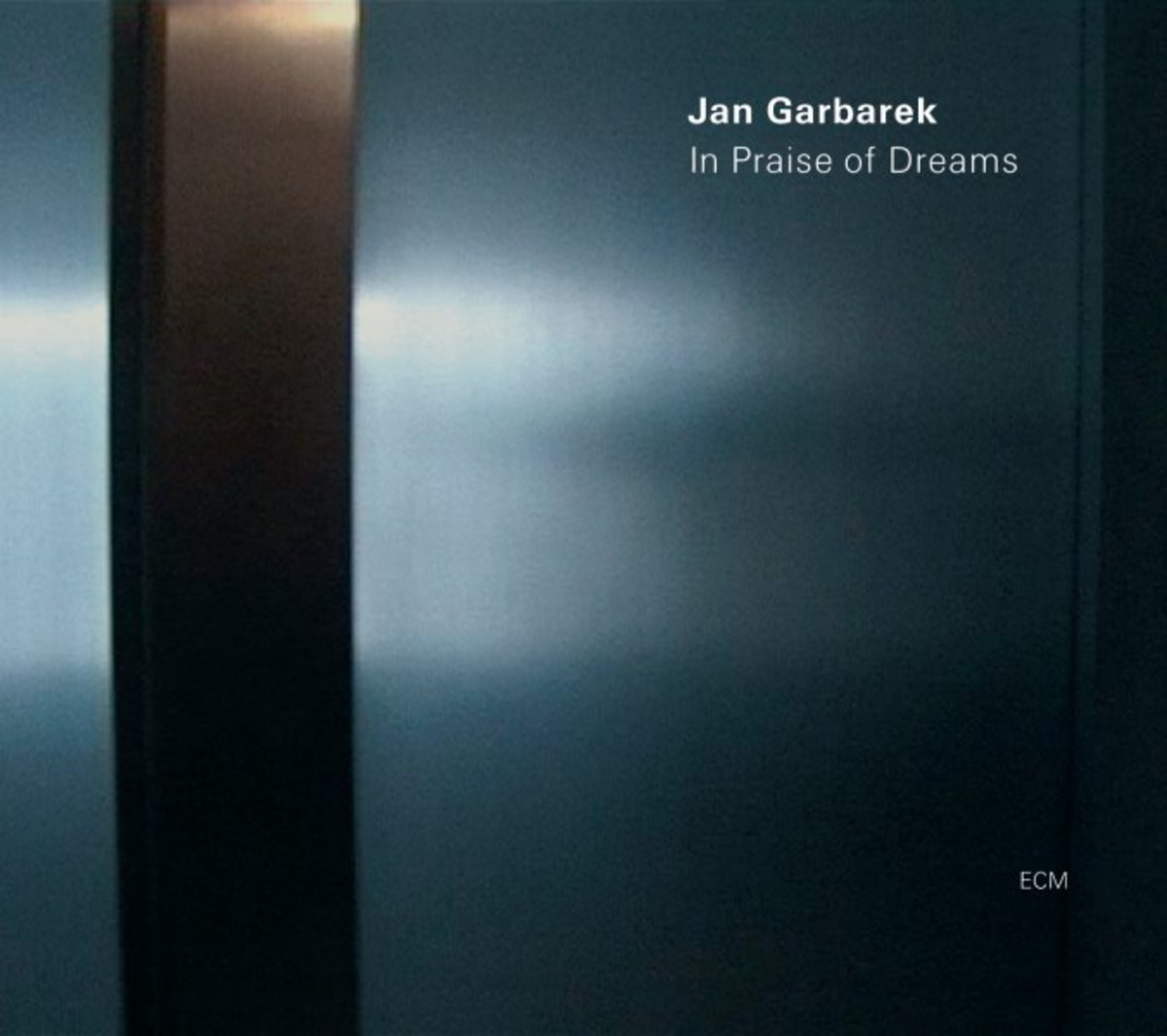
Jan Garbarek: In Praise of Dreams (ECM 1880)

In Praise of Dreams

Jan Garbarek
In Praise of Dreams

Jan Garbarek tenor and soprano saxophones and/or synthesizers, samplers, percussion
Kim Kashkashian viola
Manu Katché drums
Recorded March and June 2003 at Blue Jay Recording Studio, Carlisle, MA (Engineer: James Farber), A.P.C. Studio, Paris (Engineer: Didier Léglise), and in Oslo
Edited, mixed, and completed at Rainbow Studio, Oslo, by Jan Garbarek, Manfred Eicher, and Jan Erik Kongshaug (Engineer)
Produced by Manfred Eicher and Jan Garbarek

By the release of In Praise of Dreams, six years had elapsed since Jan Garbarek’s RITES. Where that earlier album was something of a meta-statement for the Norwegian saxophonist-composer, here we get a comforting regression into terrains that are familiar, if drawn with new pigments. Of those pigments, violist Kim Kashkashian is perhaps most striking. More than her tangential associations with composers Eleni Karaindrou and Tigran Mansurian, it is her richness and depth of feeling that make Kashkashian such an intuitive musical partner for Garbarek. Drummer Manu Katché, aside from notable appearances on earlier Garbarek albums (including his definitive Visible World), pours a sensitivity all his own into the mix. Indeed, sensitivity is name of the game throughout this meticulous album, which bows to improvisatory freedoms at select moments of abandon.

Usual Garbarek elements abound: the graceful tone of his horn, a tasteful array of electronics and keyboards, and a feeling of dance turned into song. Yet what makes Praise so worthy of just that is its melodic integrity. Every tune finds its own burrow, where it dreams comfortably of life on a different plain. Between opener“As seen from above,” which overlays tender reed lines over a groundswell of piano and sampled drum riffs, and the concluding “A tale begun,” the latter a congregation of breath and bow that extends one of the most beautiful roots into ECM’s soil, a sense of oneness with nature prevails. The ensuing dramaturgy keeps us ever in sight of Garbarek’s shadow, racing across the ground in birdlike shape toward some illusion of stillness.

Along the way, the listener is treated to a veritable storybook of textures. Kashkashian’s ebony qualities work most cinematically in “One goes there alone” and in the title track. Pulsing beats connect feet to earth as lines of deference are exchanged above. Garbarek melodizes freely with eyes closed, prepared for whatever light or dark may come, while Kashkashian shuffles tension and release with likeminded ease. In this regard, “Knot of place and time” is an emblematic title, marking as it does the spatiotemporal crossroads at which stands so much of Garbarek’s writing, a spirit that needs the translation of recording to make its landscapes seem real.

Sometimes, those landscapes are arid. Long untouched by sole or palm, they nevertheless shine with immediacy. Across them Kashkashian provides the regular curlicues of wind through which Garbarek threads his cries. “Cloud of unknowing,” for one, rests on a harp-like arpeggio and splits unison lines into separate journeys, each spurred by a delicate percussive undercurrent through the dunes into unexpected waters. Other times, as in “Iceburn,” the conditions are wintry, beginning fragmented but arriving at the same crystalline ever after. In these caverns the piano becomes a relic, memory of a time that is no longer with us. Like the carousel of “Scene from afar” and the lyrical train ride into which it morphs, it’s all in the mind.

These are but some of the highlights of a trajectory, flowing from horizon to horizon in a jet stream fully shrouded with intention, that is nothing without the listener’s own secrets. As yet unwritten, they stand in the exact center of a suspension bridge that could bend either way. Take the first step, and see where the next will take you.

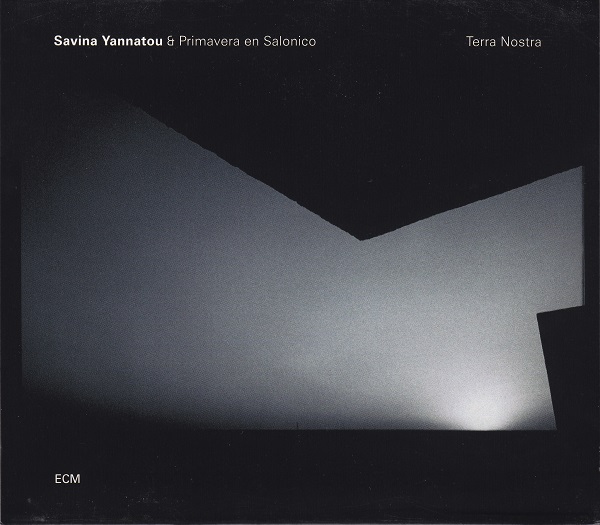
Savina Yannatou & Primavera en Salonico: Terra Nostra (ECM 1856)

Terra Nostra

Savina Yannatou
Primavera en Salonico
Terra Nostra

Savina Yannatou voice
Lamia Bedioui voice
Primavera en Salonico
Lefteris Ahgouridakis percussion
Yannis Alexandris oud, guitar, tamboura
Kostas Vomvolos kanoun, accordion, caliba, tamboura
Kyriakos Gouventas violin
Harris Lambrakis nay
Michalis Siganidis double-bass
Antonis Maratos percussion
Tassos Misyrlis cello
Recorded live in Athens, November 2001
Sound engineer: Vangelis Kalaras
Remixing and sound processing: Yannis Paxevanis, Studio “N,” Athens
Editing: Yannis Christodoulatos
Mastering: Chris Hatzistamou and Yannis Christodoulatos, Athens Mastering

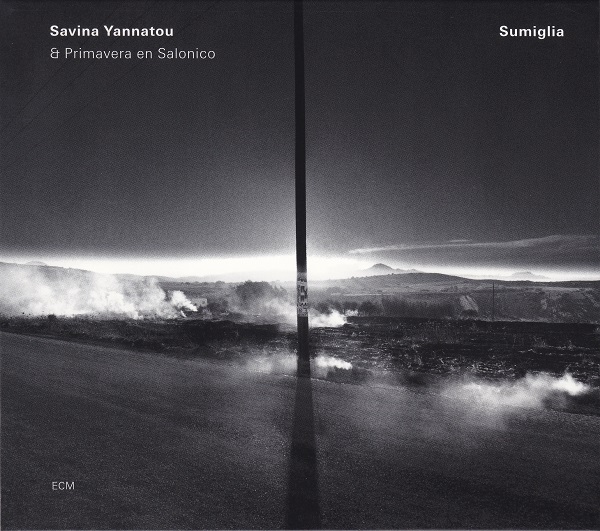
Savina Yannatou is a wonder. As well versed in classical and jazz as in traditional and folk repertoires, the Greek singer turns every melody she handles into an alloy entirely her own. By the time this album was committed to digital in 2001, she had twenty years of acclaimed recordings, performances, and collaborations behind her—five with Primavera en Salonico. From the brilliance of what’s captured on this, her ECM debut (repackaged from its original appearance on Lyra), here’s hoping there will be twenty more.

Savina

To describe Yannatou’s relationship with Primavera is to describe the spark of flint and fire. The result is a conflagration that dances with innumerable colors. Some of those colors are easily identifiable as cultural, spanning as they do a variety of locative sources. Others are not so amenable to labeling, for they arise out of Yannatou’s effortless code switching and extended vocal techniques. Among those techniques, we are treated to everything from unadorned lullabies (as in “Adieu Paure Carnavas,” which comes from Provence) and swirling enchantments (“I’ve told you and I say again,” a Greek traditional from Asia Minor) to trance states of speech-song (the Caribbean traditional “Ah Mon Dié”) and cathartic ululations (“El Barquero,” by way of the seaside Spanish village of Asturia). In this vein we have also “Ballo sardo,” a Central Sardinian tune with whimsical touches glinting off an already compelling surface. In it, Yannatou sings, “Be careful, barons, to moderate your tyranny / otherwise I swear to you that you will lose your power,” effectively flagging the shattering power that one sweep of the lips can possess. The pen may be mightier than the sword, she seems to say, but the mouth outdoes them both.

The topography of Terra Nostra is thus varied as the cultures that populate it. The mournful violin that introduces “With the Moon I’m Walking,” a Greek traditional from Kalymnos Island and the concert’s prologue, shifts tectonically beneath Yannatou’s crosscurrents. It’s an appropriate starting point, a place of questioning and cosmos that sets up much of what will soon be answered. Highlights to follow include “Ivan Nadõnka Dúmashe” (Ivan Said to Donka), a song from the Bulgarian province of Eastern Rumelia. The region’s Turkish and Greek minorities can be heard in the kanoun, a Middle Eastern zither that shines starlight across a bed of lyrical regret. Nay virtuoso Harris Lambrakis—of an ensemble rich with instrumental talent—is a noteworthy facet of Primavera’s vibrant sound. His contributions to “A Fairy’s Love Song” (traditional from the Hebrides) and others draw threads of longing throughout.

Since the beginning of the Yannatou/Primavera collaboration, Sephardic music has been a vital part of the group’s programming, and in this performance we are treated to four examples. The upbeat and full sound of such refreshing, if also surreally realized, songs as “Jaco” and “Los Bilbilicos” lends uplift, while the strong percussive drive of “Tres Hermanicas Eran” looses a dream from slumber, made reality by the tactile force of the performance. In these songs we feel Yannatou at the center of crowded streets, where her immediate surroundings curl into a ball at her feet and purr to the tune of her descriptive powers.

Five songs feature co-vocalist Lamia Bedioui, who was born in Tunisia but has been based in Greece for nearly two decades. She brings a likeminded cross-culturalism to the group, beguiling in a handful of Arabic songs, such as the Meredith Monk-esque “Yiallah Tnem Rima” (Let Rim Sleep), a lullaby from Lebanon that carves brief passage through caves and sand with its largely vocal palette, and a rubato version of the undying “Wa Habibi.” She also heads the jangling fragmentations of the Italian Renaissance tune “Madonna de la Grazia” (Italian Renaissance) with equal parts tact and abandon.

What makes this record blossom is the interactive prowess of its musicians. Primavera stays true to its name, gathering all the power of the eponymous season to resurrect these songs from the depths of a long winter. Through clever instrumental pairings (of, for example, oud darting through jazzy bass lines) and juxtapositions of sacred and secular, Yannatou and her band prove that, once everything sprouts, it all becomes one homogeneous field, across which we are bid to run for love of living.

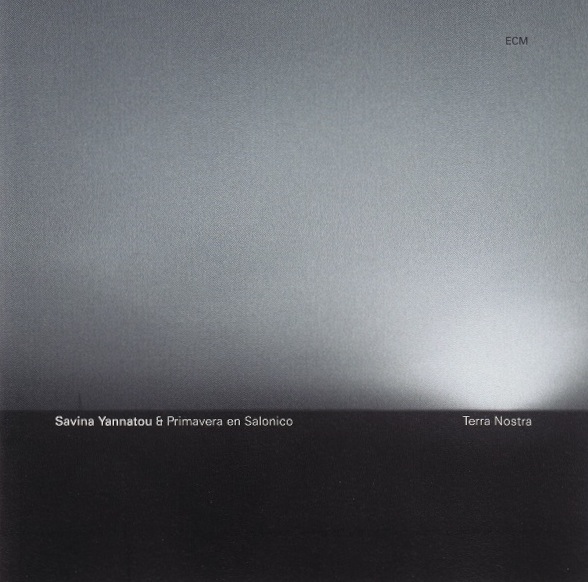
Alternate Terra
Alternate cover

Thomas Strønen: Parish (ECM 1870)

Parish

Thomas Strønen
Parish

Fredrik Ljungkvist clarinet, tenor saxophone
Bobo Stenson piano
Mats Eilertsen double-bass
Thomas Strønen drums
Recorded April 2004 at Rainbow Studio, Oslo
Engineer: Jan Erik Kongshaug
Produced by Manfred Eicher

Parish, in title and in name, presents one of a handful of side projects by the prolific jazz drummer and composer Thomas Strønen, who along with reedman Fredrik Ljungkvist, pianist Bobo Stenson, and bassist Mats Eilertsen elicits a holistic brand of chamber jazz. This is Strønen’s first appearance on ECM. His collaborations with saxophonist Iain Ballamy as Food have since yielded two further albums for the label—Quiet Inlet and Mercurial Balm—both of which forge a more ambient, electronically savvy sound-world. Here the emphasis is on acoustic textures, soft yet sure in their possibilities.

Parish Portrait

Admirers of Paul Bley will feel right at home in the delicate suspension bridges walked from beginning to end. Accordingly, the album builds on crystalline foundations, each impulse a new spine jutting from the core. Most of those impulses take form spontaneously, as in the three “Improvisations” peppered throughout. In them are wrought the band’s artistic strengths: Ljungkvist’s charcoal, Eilertsen’s primary colors, Strønen’s filigree, and Stenson’s pointillism. Ljungkvist swaps clarinet for tenor saxophone for a few of these canvases, including the rubato “Daddycation” and the shot-of-espresso happiness of “In motion,” which swings as if simply to prove that the group can, although he seems to prefer the darker reed.

Combinations range from solo (“Travel I” and “Travel II” feature Strønen shifting across colorfully percussive terrains) to trio and full quartet combinations. Of the latter, “Quartz” is an especially enchanting example. Not only does it deepen the crystal metaphor; it also, more than any other portion of the album, grows beyond the sum of its parts. The four-part “Suite For Trio” elides the bass for a significant spell, tripping but always regaining equilibrium on its way toward the veiled final movement. This is complemented by “Easta,” which evokes the mythology of the standard piano trio, thus laying fertile ground for incantation. Like the track “Nu” that concludes things, it signs it name with a splash of melody—just enough to whet the appetite.

Sparse but never deflated, Parish balance in negative spaces and hugs the ether as a parent would a child, waiting for the quiet reciprocation of having been heard.

Miki N’Doye: Tuki (ECM 1971)

Tuki

Miki N´Doye
Tuki

Miki N’Doye kalimba, tamma, m’balax, bongo, vocals
Jon Balke keyboards, prepared piano
Per Jørgensen trumpet, vocals
Helge Andreas Norbakken percussion
Aulay Sosseh vocals
Lie Jallow vocals
Recorded 2003-2005 at Rainbow Studio, Oslo
Engineer: Kjartan Meinseth
Mixing: Jan Erik Kongshaug, Kjartan Meinseth, and Miki N’Doye
Produced by Miki N’Doye and Jon Balke

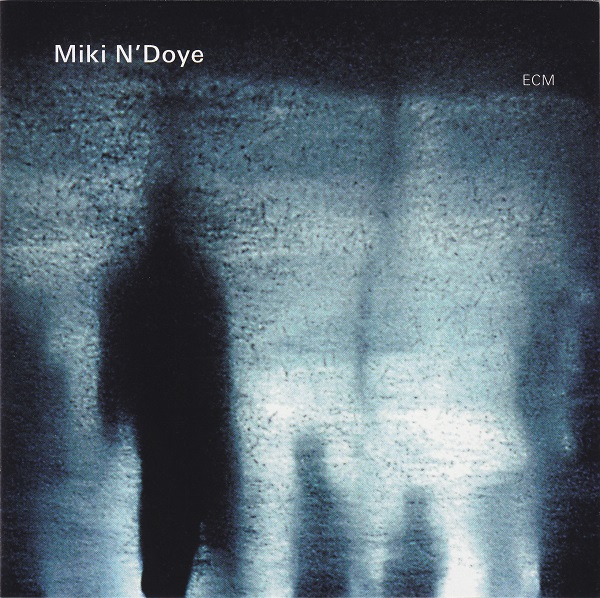
Tuki is the song of one given to many. As the ECM leader debut of master drummer Momodou “Miki” N’Doye, it houses multiple fates under one roof and collates them into discernible rhythms and voices. N’Doye hails from Gambia, where in the mid-70s he met Norwegian musician Helge Linaae. This encounter brought him to Oslo, where, after coming into contact with such influential movers as Jon Balke, his future as shaker in the far north was secured. Later projects led him to the company of Per Jørgensen, as part of the band Tamma. He was also fortunate enough to collaborate with Ed Blackwell and Don Cherry in the twilight of their careers. N’Doye has since lent his signature to a number of sonic happenings, many with Balke at the helm. In the latter vein, one feels his presence most vividly on Batagraf’s Statements. Tuki joins him once again with Balke and associates, adding to those ranks Gambian vocalists Aulay Sosseh and Lie Jallow, also fixtures in the Scandinavian scene.

In spite of the associations one might attach to N’Doye’s traditions, it is important to avoid mythologizing this music. The elements of which it is composed come straight from the ground, as is apparent in the introductory incantation, which enlivens the air with its percussive kalimba framework, a running theme (and sound) throughout the album’s winding path. At this point the music is still a hut without thatch, a stick frame that allows wind to flow through and speaks of habitation before its walls and roof are fleshed. Thus is the album’s space set up and rendered, given shape by hand and mouth.

Indeed, the improvisational song-speech of “Jahlena,” “Osa Yambe,” and the title track follows the sun’s path without deviation, effectively compressing an entire day into few minutes’ time. Yet N’Doye verbalizes most through his kalimba, the buzz and twang of which form a rougher though no less perfect circle throughout. Pay close attention, for example, to “Kokonum,” and you will hear that he plays the thumb piano as if speaking. Communicative impulses come about through every contact of body and instrument. With stamping of feet and drinking of rain, Jørgensen’s trumpet is now a vulture, now a snake, blind yet attuned to every blade of grass. Jørgensen casts similar atmospheric nets wherever he appears, traveling between the musicians with a rounded blade that bonds even as it severs. Balke’s ambience, for the most part, flickers at camp center. His presence meshes best at the piano, pairing intuitively with kalimba—for what is the former if not the latter’s simulacrum?

Intermingling of the acoustic and the electric, which admittedly takes some getting used to, reaches noticeable synergy in “Loharbye.” In its cage one may hear Scott Solter, a little Jon Hassell, and of course Batagraf rattling around to organic effect. Such transmogrifications speak to the power of context to join continents. In light of this, you may want to check out Statements for a broader sense of the possibilities. N’Doye is more of a storyteller than a singer, and his kalimba loops are minimalist at best. That said, in that repetition is a mending impulse, one that takes a broken mirror and makes it whole. All of this to reiterate that Tuki should not be misconstrued as a ceremony for our anthropological scrutiny, but taken rather an invitation to sing, to speak, to dance as we are.

Wasilewski/Kurkiewicz/Miskiewicz: TRIO (ECM 1891)

TRIO

TRIO

Marcin Wasilewski piano
Slawomir Kurkiewicz double-bass
Michal Miskiewicz drums
Recorded March 2004 at Rainbow Studio, Oslo
Engineer: Jan Erik Kongshaug
Produced by Manfred Eicher

there’s a beautiful view
from the top of the mountain
every morning i walk towards the edge
and throw little things off…

it’s become a habit
a way
to start the day
–Björk, “Hyperballad”

The hapless reviewer grows weary hailing each young jazz trio that comes along with something fresh as a re-invigoration of the field. But in the case of pianist Marcin Wasilewski, one would be fool not to. Along with bassist Slawomir Kurkiewicz and drummer Michal Miskiewicz, the young Pole first wowed ECM listeners backing Tomasz Stanko in such watershed recordings as Suspended Night and Lontano. For its first international disc, his self-assured trio presents a modestly titled set of original material and improvisations, plus a couple of surprises for good measure.

Let’s cut right to the surprises. Wasilewski and his cohorts offer such a beautiful take on Björk’s already beautiful “Hyperballad” that one who didn’t know any better might think it a spontaneous creation. This version captures the original’s aerial perspective by means of a slightly starker color palette, cautiously approaching the slope of catharsis. The chorus materializes only toward the end, as if it were dormant, waiting for the touch of a dream. Ranking alongside The Bad Plus’ take on Aphex Twin’s “Flim” as one of the great jazz crossovers of our time, this is one to remember. More obscure is “Roxane’s Song,” which comes from the opera King Roger by Karol Szymanowski. Devoid of words and context, it remains a seductive, nocturnal aria with frayed emotional edges.

Less surprising but equally effortless in the trio’s hands is Stanko’s “Green Sky.” Not heard since Matka Joanna, this one cradles some especially sensitive drumming and achieves a robust thematic unity. Likewise, Wayne Shorter’s “Plaza Real” turns the lights down low and warms the air with its summertime reverie. The three musicians interact ever so subtly here, filling in each other’s negative spaces with choice punctuations.

That’s just the icing. Now for the cake, which bakes up sweetly in the oven of Wasilewski’s creative mind. His tunes move like trains through black-and-white landscapes, drawing the rhythm section out from its shell and into the spotlights of “K.T.C.” and “Sister’s Song.” Both are first class examples of in-flight jazz, each with a distinct melodic sweep. Wasilewski’s wingspan is greatest here, as is the loose hi-hat of Miskiewicz, who excels in this album standout. “Shine” is another prime vehicle for the drummer and further boasts Kurkiewicz’s positive vibes. “Free-bop” is an emblematic tune for the trio’s sidewinding politics, throwing spotlight once again on the bassist, who dances his way through an invigorating solo and sets off some gorgeous popping of kernels all around.

Of the set’s freely improvised portions, “Entropy” is remarkable for its tenderness. It seems to balance its emotions on an ancient scale, itself eroding but holding true. The album’s bookends, two so-called “Trio Conversations,” are the weights in its pans. Each is a fleeting thought of brush and sparkle, lost to the river from which it was fished. May the current carry on for a long while yet.

Marilyn Crispell Trio: Storyteller (ECM 1847)

Storyteller

Marilyn Crispell Trio
Storyteller

Marilyn Crispell piano
Mark Helias double-bass
Paul Motian drums
Recorded February 2003 at Avatar Studios, New York
Engineer: James Farber
Produced by Manfred Eicher

Although the distinction of Marilyn Crispell’s free-flowing approach to the keyboard has been evident at least since her 1983 solo album Rhythms Hung in Undrawn Sky, her sporadic ECM tenure has shown an artist coming into her own. For Storyteller, she is joined by bassist Mark Helias (filling the formidable shoes of Gary Peacock) and drummer Paul Motian. One hesitates to call them “bandmates,” for the symbiosis between the three is such that parsing them into any hierarchy of leader and followers would upset the balance of their artistry. Motian and Helias are indeed more than a rhythm section: rather, they section rhythm into its base components, fragmenting and rebuilding in real time, like Crispell herself, to suit the needs of the tune at hand.

On the subject of tunes, the set list affords fair consideration to each musician’s pen, beginning and ending with Crispell’s contributions, and through them loosely framing the trio’s open approach. In the first moments of “Wild Rose,” as Motian’s rasp breezes through Crispell’s transcendence, and they in tandem through Helias’s pockets of air, there is a sense that what we are hearing is available only to the ears. This is, in certain terms, invisible music. Dynamics are constantly flipping and shifting, so that in “Alone” Crispell billows like a curtain in the foreground, while in “So Far, So Near” she becomes now the page across which the texts of bass and drums take form. Despite being over nine minutes long, the album’s closer passes like a windblown leaf among countless others, even so yielding unforgettable color.

Motian offers five tracks, including his classic “Flight of the Bluejay,” which in this rendition flits about with descriptive perfection. Like its namesake, it cycles between lyrical glides and punctuations of caution. “The Storyteller” is notable for its sustained arpeggios and for the archaeological precision of its composer. So, too, “The Sunflower,” a brief yet sparkling ode to photosynthesis. But the two tracks marked “Cosmology” show the trio at its interlocking best, as does “Limbo,” one of two tunes by Helias; the other being “Harmonic Line,” which is the album’s most melodic and contains the first proper solo of the set, accompanied only by drums, painting the ripples of Crispell’s pebble dropping.

In the purview of these masters, each the side to a pliant yet unbreakable triangle, the title of Motian’s “Play” is as much a noun as a verb. There is, accordingly, a stark awareness of the stage, of the performance, of the importance of every set piece and backdrop. Every gesture gives off a constellation, each star a seed for countless more. Crispell is that rare pianist who can erase a picture in the same gesture that paints it. With a single wave of her hand across the water’s surface, she resets every reflection before it can pull us in like Narcissus. She is the storyteller, recording her fleeting narratives so that listeners might forever experience of the poetry of their immediacy, if not vice versa.