Gianluigi Trovesi All’opera: Profumo di Violetta (ECM 2068)

Profumo

Gianluigi Trovesi All’opera
Profumo di Violetta

Gianluigi Trovesi piccolo and alto clarinets, alto saxophone
Marco Remondini violoncello, electronics
Stefano Bertoli drums, percussion
Filarmonica Mousiké Orchestra winds and percussion
Savino Acquaviva conductor
Recorded September 2006, Teatro Serassi, Villa d’Almè, Bergamo
Engineer: Stefano Amerio
Assistant: Giulio Gallo
Edited and mixed by Gianluigi Trovesi, Manfred Eicher, Savino Acquaviva, Stefano Amerio
Produced by Manfred Eicher

The mind of multi-reedist Gianluigi Trovesi is a storehouse of refraction, the lens of a human kaleidoscope in whose turning we can see many zeitgeists, each gushing with its own color. For Profumo di Violetta, Trovesi dives headlong into a sea of operatic favorites, treading waters at once romantic and troubled. With sources ranging from Monteverdi’s L’Orfeo to Puccini’s Tosca, his meta-commentary manages to draw fresh catch from an overfished pond. Buoyed by a wind and percussion orchestra in the grand “banda” tradition of his native Italy, Trovesi taps his memories as a boy growing up around these ad hoc configurations and from them coaxes shoots of ingenious contrast.

It’s easy to appreciate the boldness of this project, which spreads the melodramatic jam of tragedy across hunks of improvisatory bread. In the latter vein, Trovesi is very much the Mad Hatter, altering familiar motifs as might a furniture restorer strip a bench to expose long-neglected grain. In the process, however, one comes to realize that his penchant for humor is not without its serious edge. Take, for instance, his rendition of the famous “Largo al factotum,” which turns a tongue-tying chain of Figaros into a field of dots connected by the fuzz of a heavily distorted electric guitar. A far cry from the tuxedo-and-evening-gown aria, it nevertheless boils over with intuition. Such brilliant grandiosity is part and parcel of the album’s sweep.

Bookended by a Prologue and Epilogue, Profumo unfolds across wild stretches of the imagination. The program proper is broken into six sub-suites, of which “Il Mito” (The myth) drops us into the path of Orpheus. Here Trovesi binds a Toccata and Ritornello of Monteverdi with his own compositional veining, so that the sonority of the old touchstones and the whimsy of the new may interlock in flight. In this regard, the butterfly kisses of “Musa” massage away the fatigue of interpretation, allowing Trovesi’s taunting clarinet in “Euridice” to work its way like sugar through the nervous system. His height of range on the instrument is piercing, tickling the clouds until they loose jazzier droplets.

From the underworld to the overdressed, Trovesi and his cohorts escort us to “Il Ballo,” for a dance that is as grand as it is brief. This leads further into “Il Gioco Delle Seduzioni” (The game of seduction), a triptych of early Baroque and contemporary transparencies. From the convivial to the parodic, Trovesi navigates its burrows with eyes closed and whiskers extended, playing with feet aflame while maintaining control of his dance at every bend.

“L’innamoramento” houses the two-part title piece. Trovesi’s homage to Verdi’s doomed La Traviata heroine belies its love through melodic time travel. Here the emotional overload of opera is compressed to diamond clarity. “Il Saltellar Gioioso” features album highlight “Salterellando.” Anchored by snare and cymbal, and threaded by Trovesi’s grungy altoism, it sets off a ripple effect that lingers long into the spiraling “La Gelosia” (Jealousy).

The performance ends with “Così, Tosca,” which for all its eclecticism breathes with consistency. Trovesi’s soulful pitch-bending traces every contour of an underlying drone with care. A subtle harrumph in the brass only serves to brighten the felicitous interweaving of breath and sonority that is his reverie, diving headlong into an incendiary finish that grovels with profound favor. Indeed, the album might just as well be called “Profondità di Violetta,” for all its depth of thought, arrangement, and execution.

Bravissimo.

(To hear samples of Profumo di Violetta, click here.)
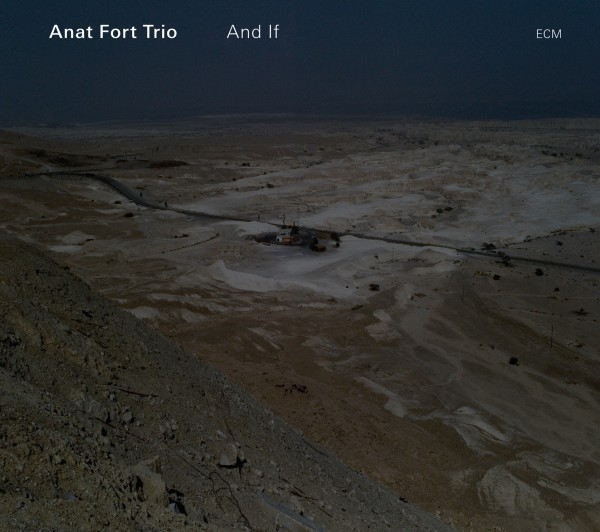
Anat Fort Trio: And If (ECM 2109)

And if

Anat Fort Trio
And If

Anat Fort piano
Gary Wang double-bass
Roland Schneider drums
Recorded February 2009 at Rainbow Studio, Oslo
Engineer: Jan Erik Kongshaug
Produced by Manfred Eicher

Anat Fort returns to ECM, now with the members of her working trio: bassist Gary Wang and drummer Roland Schneider. Together they put a decade of working experience into And If, which burrows deeper into the compositional soil tilled on A Long Story. With that album in mind the trio pays homage to Paul Motian—whose encouragement led to the first ECM collaboration—in two tracks dedicated to the master drummer. The first begins the disc with poetry metered by the heart, beating in response to life’s changing climates. Like the passing of one thought to another, it shuffles melodic impulses farther down the line. “Paul Motian (2)” closes the circle, taking inspiration from its namesake by never once succumbing to the pitfalls of predictability. Such tenderness justifies imagery like that of “Clouds Moving,” which proceeds with Vince Guaraldi-like ebullience in the ground line while luminous harmonies in the right hand draw rivers catching sun during flyby. Schneider’s feel for cymbals admirably fills Motian’s absence, as do his brushes beneath Fort’s arcs of flight in “Minnesota.”

Although the album is not without a clipped feather or two (the fleeting “If” and “Nu” balance tenderness and swing, respectively), for the most part it spreads its wings broadly. One cannot help but detect a classical tinge to the wind beneath. “En If” is but one example. Its mastery builds off primary colors, awaiting the light of day to mix variations between prose and poetry. The former we get from Fort’s storytelling fingers, while the latter flows effortlessly from the rhythm section.

“Something ’Bout Camels” revisits material from Fort’s label debut, given here a flowering treatment. The daybreak of Wang’s arco introduction canopies a desert sleeping soundly. A settlement stirs: eyebrows twitch, bodies stand upright, legs move, hands work, and the beats of earthen carriage guide wheels to turn. Schneider’s bassing droops, swishing away the flies with its tail and folding the wind into parchment, that it might calligraph Fort’s footfalls.

Yet nowhere does the trio come together so effortlessly as it does in “Lanesboro.” This ballad in a classic mode is the epitome of gorgeous. Like water over rocks, it conforms to the shapes of its progression with unforced, organic flow. The lyrical support completes Fort’s picture with understated bliss.

An anthem for the soul.

(To hear samples of And If, click here.)

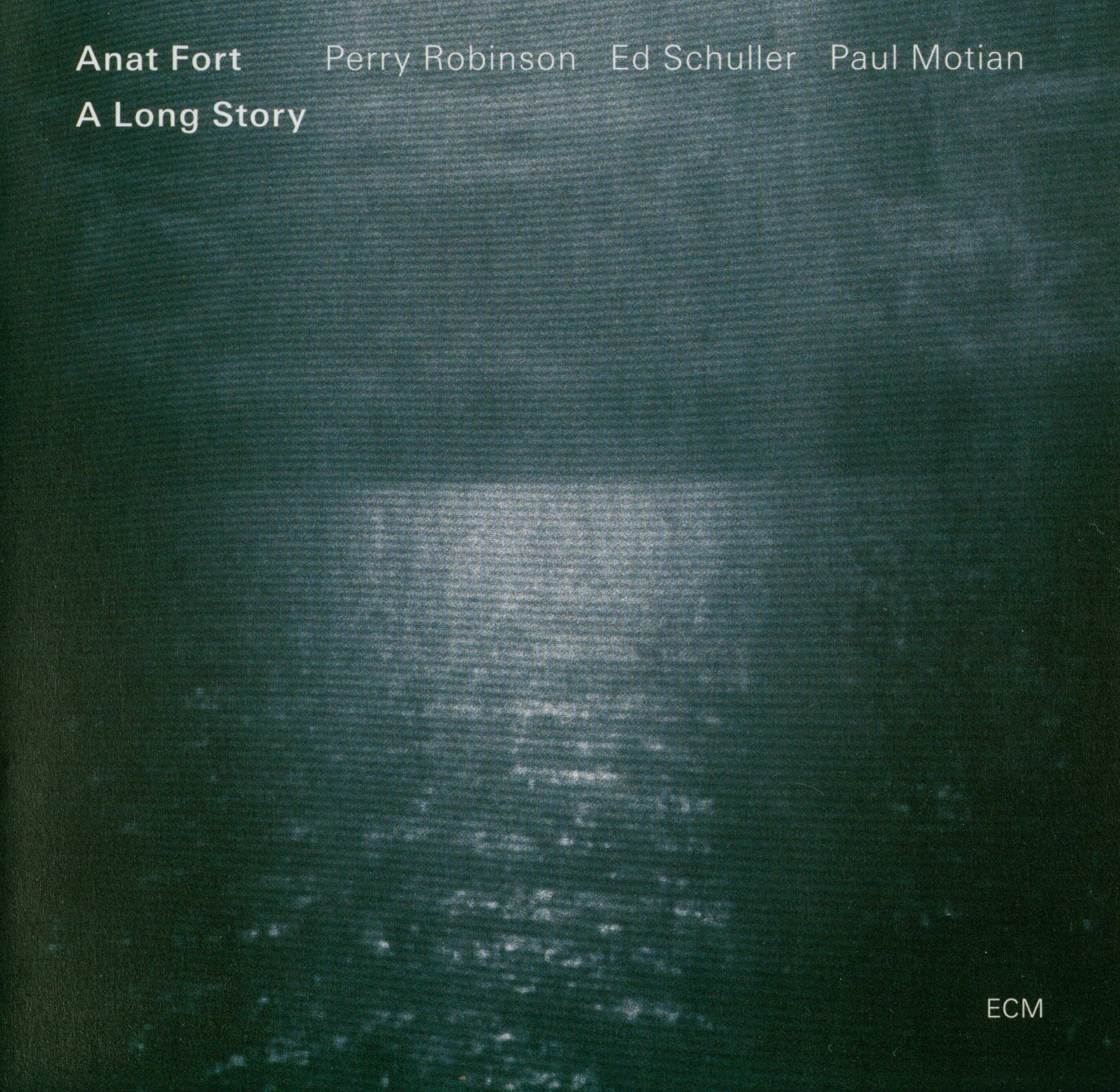
Anat Fort: A Long Story (ECM 1994)

A Long Story

Anat Fort
A Long Story

Anat Fort piano
Perry Robinson clarinet, ocarina
Ed Schuller double-bass
Paul Motian drums
Recorded March 2004, Systems Two Studios, Brooklyn, by John Rosenberg and Max Ross
Edited and mixed May 2006 at Avatar Studios, New York, by Manfred Eicher, Anat Fort and James A. Farber
Produced by Anat Fort and Manfred Eicher

Israeli-born pianist Anat Fort in her ECM debut. An event to cherish for time to come. The album’s title, A Long Story, an understatement: an expression of the infinite joy that music brings to player and listener alike, a holy exchange of which the improviser is but a fleeting intermediary, yet whose name persists as the bringer of possibility. And so, alongside her name we must include those of bassist Ed Schuller, drummer Paul Motian, and clarinetist Perry Robinson. Schuller has a long story of his own playing with Motian and Robinson, and it was he who captured the interest of the veteran drummer, who in turn put it into producer Manfred Eicher’s hands. The ECM fit came naturally, and here we have the fruits.

One needn’t look at the album credits to know that the music comes from Fort’s pen. Original and committed should be at the top of her résumé. “Just Now” anchors the set in three variations, the first and last of which begin and end the album with their hymnody, the central of which inhales drought and exhales oasis fragrance. In them, Motian breezes through leaves. He is, in fact, a revelation throughout, especially in “Not A Dream?” (from which one can’t help but draw a line of flight to his tune “Lost In A Dream”). This one brings the quartet together in clearest focus, the interplay subtle, sculpted, and secure. His affinity for Fort’s music is obvious, responding dancingly as he does to everything going on around him. Fort approaches the keyboard in kind, kneading her melodies into cells of doughy surprise. In “Rehaired,” she engages Motian in more buoyant conversation. The two are simpatico in this trio setting. Motian carries the full weight of “Not The Perfect Storm,” bringing thunder and lightning to its opening moments before Fort joins the unerring chaos. Here the theme is farthest-reaching, coalescing and spreading—a flock of birds above a field in slow motion—until the last raindrops fall, hitting every leaf like a cymbal.

Robinson, too, is comfortable in his skin. He brings a classic sound to the table, but also a few surprises in his lettings go. “As Two” and “Something ’Bout Camels” make for a fine dual vehicle. He navigates the drunken corridors of the first, a low-slung slice of night, with finesse and switches to ocarina for the second, flitting bird-like through the open skies. And the free improv he shares with Fort in “Chapter-Two” develops a fluent contrast of grit and sparkle. Schuller is another integral force, setting the stage of “Lullaby” behind eyelid curtains and touching the air of “Morning: Good” as would a magician wand a hat. Fort’s pianism shines in his company, but also keeps one arm around the shoulders of a shadow, if only to remind us that every moon has a dark side.

In her composing, Fort never succumbs to sugar. Her leading lines are savory all the way. Neither does she ornament for mere effect, but rather speaks in tongues wholly wrapped around the music. Case in point: “Chapter-One.” A distillery in sound, it swirls and ferments, building body and flavor toward peak balance. A romping beat reveals itself intermittently from the soft tangle, until all that’s left is a feeling of having been here before. We know this music because it lives within, passed from Fort’s heart to ours.

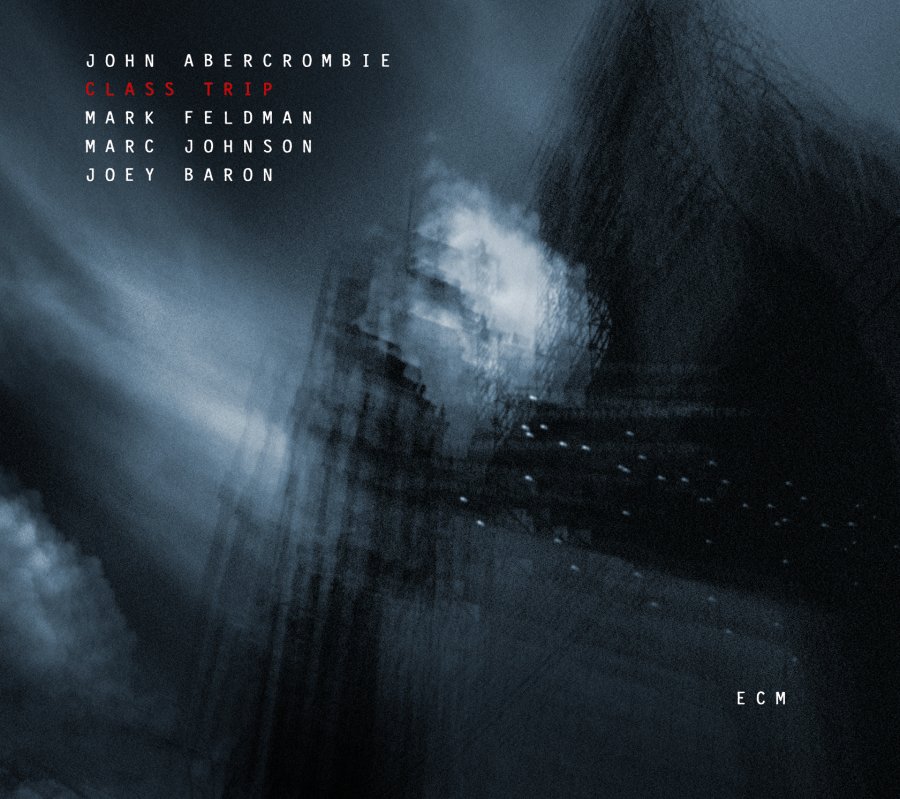
John Abercrombie: Class Trip (ECM 1846)

Class Trip

John Abercrombie
Class Trip

John Abercrombie guitar
Mark Feldman violin
Marc Johnson double-bass
Joey Baron drums
Recorded February 2003 at Avatar Studio, New York
Engineer: James A. Farber
Assistant: Aya Takemura
Produced by Manfred Eicher

Guitarist John Abercrombie’s journey through ECM space has brought him into orbit with a range of phenomenal satellites. Yet no solar system has been so enduring in effect as the quartet documented here. Since Cat ‘n’ Mouse, it has grown, as the title of that label debut would imply, in leaps and bounds. Nearly all of the music is by Abercrombie, the only exceptions being “Solider’s Song” by Béla Bartók (performed here in a lovely trio arrangement, sans bass, and taken from the composer’s 44 Duos) and the freely improvised “Illinoise” and “Epilogue.”

As ever, Feldman’s peerless art is a pleasure to hear among present company. His harmonic skills thread “Dansir” with a grammar all their own, matching Abercrombie’s snaking themes arc for arc. Moments of collusion with Baron also abound in the silken drama of this album opener. Abercrombie and Johnson are like creatures from the deep, bringing songs of the seafloor with them. As in all that follows, there is something almost secretive about the goings on, as if somewhere behind the ebony veneer an even deeper shade of heart is at work. Johnson’s early solo in “Risky Business” is the epitome of commentary in this regard.

From reverie to reverie the program travels, sporting in the brisker “Descending Grace” and becoming even livelier in “Swirls.” But the lion’s share sits at the paws of a slumbering beast, each tune airier than the last. At the navigator’s helm, Abercrombie brings requisite cartography—and all the sense of measurement and precision the metaphor implies—to his playing. He is the icing to the cake beneath, the median temperature between Feldman’s cool and Johnson’s warmth (cf. “Excuse My Shoes” or “Jack and Betty”). In the title track, anchored by a delightful pizzicato combo, he jumps deck into full dive and resurfaces with a handful of gold stamped FELDMAN. Like a skilled, unpretentious filmmaker, the violinist captures movement at the moment of its creation and tests its fate in the light. Another easy notable is “Cat Walk.” One of a handful of feline-themed tunes in the ECM catalogue, it is yet another showcase for Feldman, who stalks the galleys with eyes aglow. Abercrombie, too, is sprightly and agile with his soft pads. But it’s Johnson who comes up with the most evocative solo of them all.

Careful but never cautious, Class Trip is a dream come true for a group that is, thankfully, very much a reality.

John Surman: Brewster’s Rooster (ECM 2046)

Brewster's Rooster

John Surman
Brewster’s Rooster

John Surman baritone and soprano saxophones
John Abercrombie guitar
Drew Gress double-bass
Jack DeJohnette drums
Recorded September 2007 at Avatar Studios, New York
Engineer: Joe Furla
Assistant: Rick Kwan
Mixed June 2008 at Legacy Studio, New York by John Surman, Jack DeJohnette, and Joe Furla
Mastered by Christoph Stickel, Munich
Executive producer: Manfred Eicher

This jazzy outing with guitarist John Abercrombie, bassist Drew Gress (making here his ECM debut), and drummer Jack DeJohnette, sits multi-reedist and composer John Surman back in his most worn saddle. Only relatively straightforward (it’s not without its wild side), the album throbs like the beating heart that has given life to every stirring of this most peripatetic artist. His ECM discography is a compendium of riches, taking listeners through a sizable archive of solo dates, free jazz settings, classical commissions, music for stage and screen, and robust collaborations. Of the latter, his brass menageries with John Warren are especially memorable. And so, it is perhaps no surprise that Surman should pay respect by starting off the set with Warren’s “Slanted Sky.” The choice is duly appropriate: not only does it count every dollar of this fantastic quartet; it also establishes an eerily comfortable (and comforting) mood. As one of only two non-originals (the other being a lyrical take on Billy Strayhorn’s “Chelsea Bridge”) on the disc, “Slanted Sky” stands out for its structural difference. One sweep through its turnstile, and there’s no doubt you’ll be in good company for the next hour.

What a pleasure to hear Gress and DeJohnette playing side by side in “Hilltop Dancer,” their interactions as lithe as the title would have you believe. It’s a partnership not yet repeated for ECM, but one that bears ample fruit for the group’s melodic frontline to savor, as it does further in the title track and “Going For A Burton.” Both of these balance a gritty baritone atop an equilateral triangle of support, by turns slick and darkly whimsical.

Surman’s skywriting on soprano leaves its signature to dissipate into the oceanic blue of only two tunes, including the 11-minute “Counter Measures.” This one showcases the tonal mastery of each musician in kind, from Abercrombie’s undulating solo and Gress’s subtle pop to DeJohnette’s gluey tracings and Surman’s well-oiled joints, there’s plenty to admire on repeated listening. Yet this is really a baritone lover’s record. One spin of “Haywain,” and it all becomes clear, for what sounds like an entirely improvised tangle proceeds into unexpected unity.

Brewster’s Rooster is also an album with its own sense of humor, as expressed by the title “No Finesse.” It’s about as tongue-in-cheek as you might expect, for these musicians have finesse aplenty. Breathless yet secure, unhinged yet always close by, theirs is music that moves.

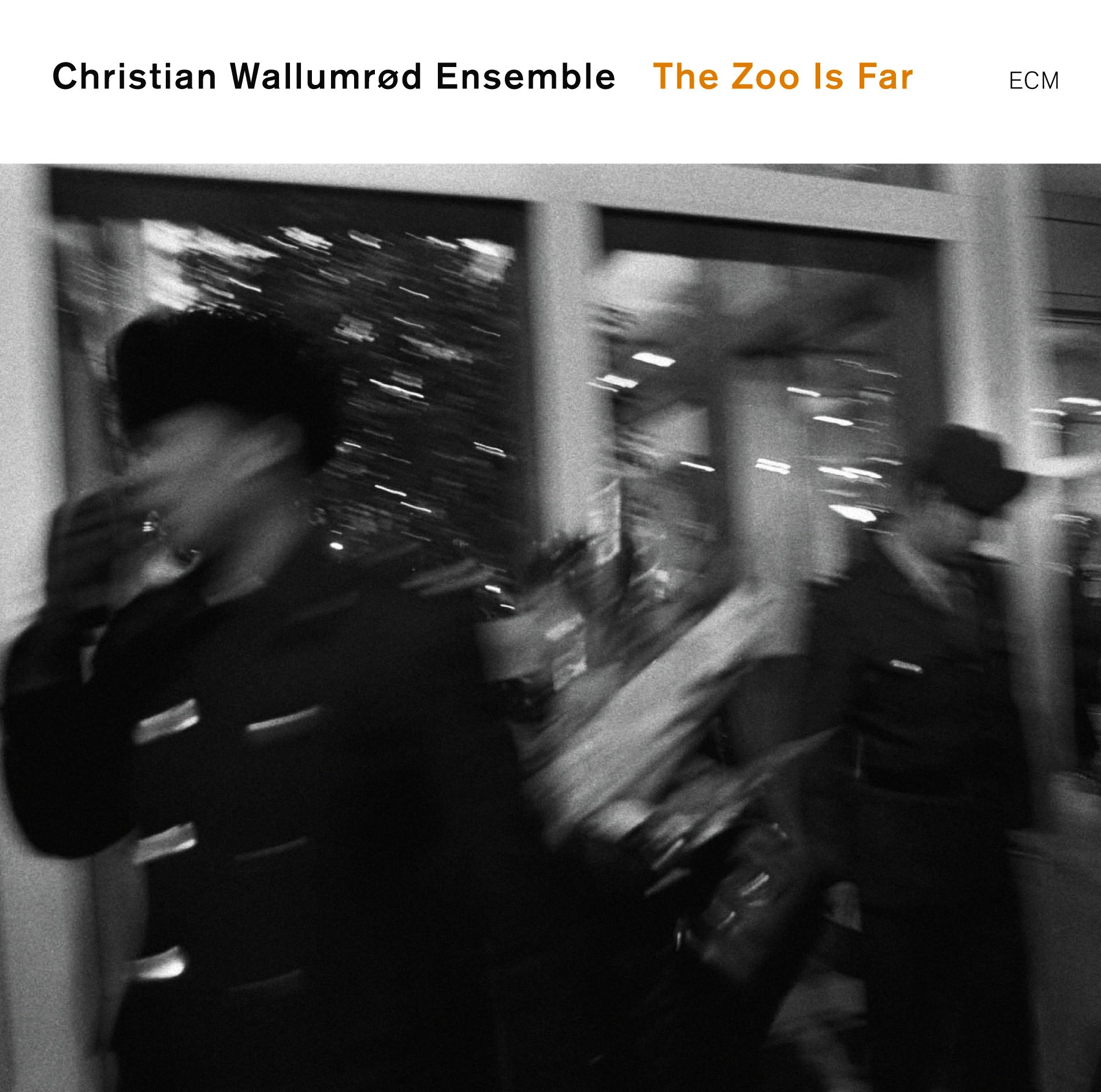
Christian Wallumrød Ensemble: The Zoo Is Far (ECM 2005)

The Zoo Is Far

Christian Wallumrød Ensemble
The Zoo Is Far

Christian Wallumrød piano, harmonium, toy piano
Arve Henriksen trumpet
Gjermund Larsen violin, Hardanger fiddle, viola
Tanja Orning cello
Giovanna Pessi baroque harp
Per Oddvar Johansen drums, percussion, glockenspiel
Recorded October 2006, Radio Studio DRS, Zürich
Engineer: Markus Heiland
Produced by Manfred Eicher

Christian Wallumrød’s evolving ensemble makes its return to ECM as a sextet with The Zoo Is Far. On this, his fourth album for the label, the Norwegian pianist-composer draws from sourced and spontaneous material. It is perhaps his most “classical” album, if only for the added inspirations of cellist Tanja Orning, Norwegian fiddler Gjermund Larsen, and baroque harpist Giovanna Pessi—along with mainstays Arve Henriksen on trumpet and Per Oddvar Johnansen on percussion. Although Wallumrød is the heart and soul of the ensemble, his presence is more often ghostly than physical. For while his pianism erects brooding infrastructures for “Nash Lontano” and the Platonic cave of the title track, in “Parkins Cembalo” he lurks behind a harmonium, evoking trembling fear. On a deeper level, the embers of his gifts brighten with compositional prowess. The five descriptive “Fragments” scattered throughout the program alone show formidable thematic breadth. What begins as a Ravel-like blush might suddenly bleed across the page in the semantics of George Crumb or rustle like cattails in a breeze. Such changes are part and parcel of Wallumrød’s flora, which draw nourishment from eclectic resources indeed. “Music For One Cat,” for example, takes its inspiration from Mehdi Hassan (then still with us), a Pakistani ghazal singer known for his divine throat and passion for the cinema. The slink-tailed gait leaves no question about the title, disappearing one strand of fur at a time until only the eyes are left glowing in the dark.

“Arch Dance” and “Detach” are further confirmation of Wallumrød’s pen, both split into themes and variations. Prismatic and moonlit, they are touched by despair and folk sensibilities, walking the thin edge of being and nonbeing that separates them. “Need Elp” foils all of these with its angelic sheen. It pushes through glass as if it were water and touches feet to pond’s surface as if it were glass.

The Fantasias of late seventeenth-century composer Henry Purcell are the basis for three so-called “Backwards Henry” pieces. These at once mark the album’s grasp on the past and its interest in the future. As one known for his harmonic invention and ear for color, Purcell makes for compelling company to Wallumrød’s own “Psalm Kvæn,” which takes form in solo, trio, quartet, and tutti iterations, each an expression of the in-between. As in the concluding “Allemande Es,” the respect for history becomes a figure unto itself, standing at the edge of its own grave, into which it stares longingly for the release of silence’s puppet strings.

Michael Formanek: The Rub And Spare Change (ECM 2167)

The Rub And Spare Change

Michael Formanek
The Rub And Spare Change

Tim Berne alto saxophone
Craig Taborn piano
Michael Formanek double-bass
Gerald Cleaver drums
Recorded June 2009 at Charlestown Road Studio, Hampton, New Jersey
Engineer: Paul Wickliffe
Mixed at Avatar Studios, New York by Manfred Eicher and James A. Farber (engineer)
Assistant: Justin Gerrish
Produced by Manfred Eicher and Michael Formanek

The ECM debut of Michael Formanek finds the bassist-composer spearheading a cast of musicians as formidable as the tunes they’re bid to play. Altoist Tim Berne, pianist Craig Taborn, and drummer Gerald Cleaver bond over a full-bodied flight of six Formanek originals, each a puzzle whose solution must be heard to be believed. As seasoned progressives, members of this lineup had shared a stage or two before—but never as a quartet until 2008, when they joined forces for a performance at New York’s The Stone. Not one year later, they convened under the watchful ears of engineers Paul Wickliffe and James A. Farber for an incendiary studio session, tucked stealthily away in a New Jersey borough.

Formanek Quartet

Formanek’s writing is much in the spirit of Berne, with whom he shares an uncanny ear for depth-soundings and tight changes. And with a rhythmic nexus as experienced and open-minded as Taborn and Cleaver, bassist and reedman are in trustworthy company indeed. The tripping syncopation and thematic evolution of “Twenty Three Neo” set the tone. From sandy whispers to silver-toned flights, the dynamic spectrum takes root in immediately distinct personalities: it’s Formanek who first throws the pieces to the floor, Taborn who lays the four corners, Cleaver who finishes the edges, and Berne who susses the figures that emerge. Cleaver further cuts a stern diagonal, hurtling toward the listener along a z-axis of fortitude, arco breaths filling in the gaps all the while.

Formanek wears his bandleader’s hat with humility (as attested by the mixing, which at once subverts and bolds his cause), letting the tunes expound on their own as if in some imaginary language. His moods shape-shift in accordance with the material at hand. “Jack’s Last Call” bears dedication to a friend whose unanswered voicemail was the only remainder of the life that once was. Appropriate, then, that the saxophone should be absent, its bell turned away in mourning. This puts it on Taborn to shuttle a melodic weave that, while thick, allows light of drums and prayer of bass to soak through. At the other end of the spectrum is “Too Big To Fail,” a geometrical tongue twister that builds to masterful jouissance.

The title track is two compositions in one. “The Rub” is a backward glance; “Spare Change” opens its palms toward the future. Here Formanek unspools a taut spine from which Berne’s nerve signals pulse. Here is also where the band reveals its sensitive side as it churns through reflections on its way toward epic rest. The music feels even more physical in these tender reprieves, losing neither its flair nor its suppleness. Formanek’s “Tonal Suite” is the album’s epic peak, a three-part opus of signs and signals. Berne’s occasional lockdowns, combined with punctuations from Taborn, make for a robust ride.

“Inside The Box” describes exactly the kind of thinking Formanek and his associates espouse. This is not to imply conformity. Rather, it is to say that the band defines the very box in which it moves so freely. The lines may be jagged, but maintain a consistency of vision and respect within those parameters. Formanek and Berne epitomize such intuition throughout this track (consequently the album’s strongest), emblematic for its uncompromising palette and the texture of which Taborn’s pianism expresses an especially pointed feature.

The naked quality of this document is enough to take it seriously. In the growing abyss of Real Book drones, it’s divine to encounter from that abyss groups so victorious in the glow of their own creativity. Constantly surprising and open to whatever may come: this is what the “change” of the album’s title is all about.

(To hear samples of The Rub And Spare Change, click here or watch the promotional video below.)

Louis Sclavis: Lost on the Way (ECM 2098)

Lost on the Way

Louis Sclavis
Lost on the Way

Louis Sclavis clarinets, soprano saxophone
Matthias Metzger soprano and alto saxophones
Maxime Delpierre guitar
Olivier Lété bass
François Merville drums
Recorded September 2008 , Théâtre de Saint Quentin-en-Yvelines
Engineer: Gérard de Haro
Assistant: Mireille Faure
Mixed at Studio La Buissonne, Pernes-les-Fontaines by Gérard de Haro and Louis Sclavis
Assistant: Nicolas Baillard
Recording producer: Louis Sclavis
Executive producer: Manfred Eicher

“Beauty of music you must hear twice.”
–James Joyce, Ulysses

Lost on the Way brings together another fine ensemble from French reedman and improviser extraordinaire Louis Sclavis. Always game for a reshuffling, he surrounds himself this time with saxophonist Matthias Metzger, guitarist Maxime Delpierre, bassist Olivier Lété, and drummer François Merville. Sclavis fans will recognize Delpierre and Merville from L’imparfait des langues, and shouldn’t be surprised that the iconoclastic bandleader now turns his attention to Homer as a conceptual baseline. Each of Sclavis’s cohorts is well versed in both classical and jazz idioms, and all share a fervent interest in the possibilities of free improvisation.

It is Merville who sets the bar of the album in “De Charybde en Scylla” with his forthright drumming, by means of which he lights a fuse. Sclavis on bass clarinet is a revelation: gorgeous, engaging, and perfectly chaotic he is amid webs of electric guitar. Sclavis wanders intact into a duet with bass in “La première île” before getting caught up in the title track, which like the first balances intensities with a magician’s eye for detail. The furious altoism from Metzger spits further fury, nonetheless inviting.

Lost on the Way is one of Sclavis’s most meticulous outings, spanning the gamut from straight-laced soundings (“Bain d’or”) to joyful noise (“Le sommeil des sirens” and “Des bruits à tisser”). Because of this constant push and pull, moments of regularity from Merville stand out for their sweetness. Overall, rhythmic structures are pliant, ebbing and flowing through gut-wrenching solos (take, for instance, Sclavis’s in “L’Heure des songes”) and cinematic turns (“Aboard Ulysses’s Boat,” with its whimsical surf guitar touches). Like bodies softening from hard slumber, each track stands at the edge of sleeping and waking and tries to hold on to both realities. Such tensions abound in the rhythm section, which combines ritual beats with fluid bassing in “Les Doutes du cyclope” for a focused vision indeed. After many comings and goings, we lose ourselves at sea on a vessel named “L’Absence.” This droning piece shakes off the need for skin and drifts instead toward the next horizon.

Exciting about this album is the obvious evolution in Sclavis’s compositional language, which grows more intuitive with time. Like a dance, it takes over the body before the mind is aware and leaves us as spellbound as a brush with the Sirens.

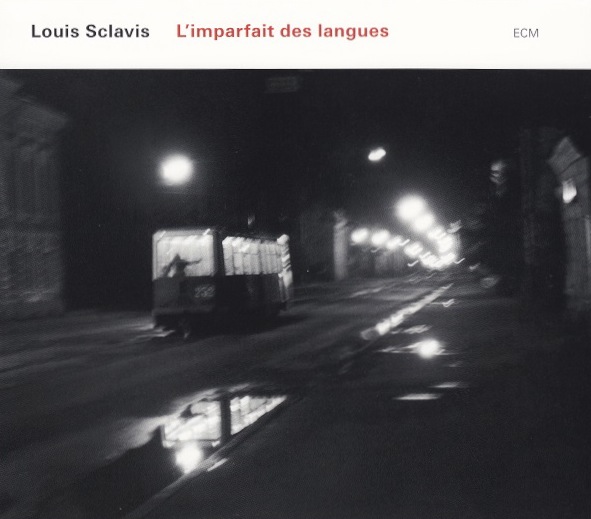
Louis Sclavis: L’imparfait des langues (ECM 1954)

L'imparfait des langues

Louis Sclavis
L’imparfait des langues

Louis Sclavis clarinet, bass clarinet, soprano saxophone
Marc Baron alto saxophone
Paul Brousseau keyboards, sampling, electronics, guitar
Maxime Delpierre guitars
François Merville drums
Recorded April 2005, Studios La Buissonne, Pernes-les-Fontaines
Engineer: Gérard de Haro
Executive Producer: Manfred Eicher

Ever the master of reinvention, Louis Sclavis is no stranger to challenge, and for this record he places himself in mostly unfamiliar territory. Long relationship with drummer François Merville aside, he allies himself with fresh talent: altoist Marc Baron, keyboardist Paul Brousseau, and electric guitarist Maxime Delpierre are all new to Sclavis and his sound-world. Listening to the music, however, one would hardly know it.

On the day this quintet was scheduled to make its concert debut, the death of Prince Rainier of Monaco forced the show’s cancellation. Undeterred, the ensemble traveled to Studios La Buissonne where, under the direction of engineer Gérard de Haro, magic was documented.

You’ve never really heard jazz bass clarinet until you’ve heard Sclavis play it, and one can always count on a range of expressions from the instrument whenever it’s featured in his playing. From the nightshade hues of “Premier imparfait” (reiterated later in the program with Brousseau’s electronic accompaniment) to the unbridled enthusiasm of “L’idée du dialecte,” he thrills in compositions nourished by equal parts control and abandon. On soprano saxophone, he stands out like a well-powdered acrobat, engaging Baron in sparkling contrasts above an irregular bottom end—likewise in “Le verbe” and “Story of a phrase,” which feel like James Joyce interpreted by John Zorn. The latter tune’s gritty electric guitar denouements draw attention to Delpierre’s contributions. His solo “Convocation” and wall-of-sound approach in “Archéologie” (notable also for Melville’s jaunty tread) reveal the Glenn Branca influences lurking within.

There is, of course, plenty of inspiration to go around, which finds purchase in stellar turns from all involved. The end effect proceeds diurnally between songs of shadow and season, seeming, like one track title has it, a “Dialogue with a dream.” Facet for facet, a cerebral gem.