Carla Bley: Trios (ECM 2287)

Trios

Carla Bley
Trios

Carla Bley piano
Andy Sheppard tenor and soprano saxophones
Steve Swallow bass
Recorded April 2013, Auditorio Radiotelevisione svizzera, Lugano
Engineer: Stefano Amerio
Produced by Manfred Eicher

As the first leader date by Carla Bley to appear on ECM, Trios is a benchmark event. Having populated the label’s satellite ventures—notably WATT and JCOA—for four decades, there was never any need to shelter the legendary pianist-composer from the rain under the parent umbrella, for her climate is her own and here brings a quiet storm. With bandmates Steve Swallow (electric bass) and Andy Sheppard (saxophones) she hands to the eager listener a thoughtful program of original material that crystallizes decades more of intuitive collaboration.

Bley notes the oddity, if not also the liberation, of recording in the presence of producer Manfred Eicher: “This was the first time in my life that I’d worked under the direction of a producer and I wanted to know what it was like, and what I could gain from it. He had some wild ideas—like starting with ‘Utviklingssang,’ which we’d normally play after a few fast numbers, or as an encore.” Indeed, caught in the spell of the album’s opener, one can’t help but feel welcomed by Swallow’s introductory embrace. Its shape is horizontal but its feel is aquatic, adrift in a vessel fashioned from hammers and reed. Bley’s unity with Swallow is the perfect seascape for Sheppard’s quiet Schooner. The latter’s tenoring is, by turns, unbreakable and thin as winter ice, at times hiding behind a veil of bare audibility, while Swallow’s tone is more rounded and resonant to the core. The Norwegian title of this lilting theme translates as “Development Song,” and is as apt a description as any of Bley’s compositional craft, for this and every piece that follows shows evolution internally and in combination with others.

Although it would be futile to single out any one musician above the others in such an intimate congregation, each player does have moments of peak clarity. Sheppard’s silken soprano, for one, enchants in “Vashkar” with fluid moon-bursts and leaping, yet never overextended, arpeggios. Lightly stitched by Swallow’s skeletal bass line, the unit builds methodical ascent into an attic of potent melodic storage. This is also the album’s oldest partition, well worn by ECM listeners from its appearance on 1975’s Hotel Hello, the classic duo session between Swallow and Gary Burton. As writer Paul Haines, of whom the titular Vashkar was a dear friend, once noted, “Swallow seems always to be playing from within the music,” and one need listen no further than “Les Trois Lagons” for evidence. This triptych of “Plates” draws its inspiration from a 1947 book of paper cutouts by Henri Matisse entitled, appropriately enough, Jazz. That these pieces achieve the album’s deepest traction is due in large part to Swallow’s effortless continuity, which keeps Sheppard’s effervescence from touching sky by holding it to roots. Even when Bley embraces the foreground for a little while, she cannot help but coax the ever-vibrant Swallow from hiding into an interactive fairytale. The central tableau emotes a club feel. One can almost feel the warmth of a glass-enclosed candle flame flickering at the center of a corner table while the din of conversation makes way for the rustle of clothing and nostalgic gazes. Melodically unfolded and deepened by Swallow’s pliant sensibilities into a cocktail of regret and resolution, it stretches the night as if it were made of muscle. The final section boasts a wondrous economy of expression from Bley. Her spiral staircase of block chords ushers in echoes from Swallow and Sheppard and brings dark inflections into light.

The album’s second threefold suite comes in the form of “Wildlife,” which finds the pianist enamored by her artful surroundings and shaded yet fertile atmosphere. Like a child lifting a fallen tree, it revels in the wealth of life squirming beneath. Some moments are bound to remind listeners of early Lyle Mays, simultaneously grounding and singing with unwavering insight. It is the pinnacle of the album’s many achievements.

Last but far from least is one final trilogy, “The Girl Who Cried Champagne.” What begins as a tender groove of introspective proportion turns into an excursion of great distance. With the regularity of ocean surf, Bley paints waves with her eyes closed and by this rhythm Swallow is inspired to adorn the ether with his curvaceous filigree. Along with Sheppard’s language, it forges a nonabrasive ebullience that flows without impediment until the reedman leads the trio with responsive brushwork to a halt, pitch-perfect and smiling.

Trios is the virtuosity of restraint personified and is played with a breeziness that speaks of immense experience and shared knowledge. The music enacts a logical, astute progression—from gas to liquid to solid—that is so open one can lie down and float comfortably into its spell. It’s a level of comfort and freedom that only the most heartfelt journeying can bring, and its first step touches earth the moment you press PLAY.

(To hear samples of Trios, click here.)

Trygve Seim: Sangam (ECM 1797)

Seim Sangam

Trygve Seim
Sangam

Trygve Seim tenor and soprano saxophones
Håvard Lund clarinet, bass clarinet
Nils Jansen bass saxophone, contrabass clarinet
Arve Henriksen trumpet
Tone Reichelt french horn
Lars Andreas Haug tuba
Frode Haltli accordion
Morten Hannisdal cello
Per Oddvar Johansen drums
Øyvind Brække trombone
Helge Sunde trombone
String Ensemble
Christian Eggen conductor
Recorded October 2002 and March 2004 at Rainbow Studio, Oslo
Engineer: Jan Erik Kongshaug
Produced by Manfred Eicher

Jazz is typically honed through interaction and a sense of shared community. One can also find in its heart a chambered, hermetic science. Trygve Seim’s Sangam validates both conceptions in a seamless infusion of liberatory and deferential impulses. As much a nod to Gil Evans as it is folk music of an undiscovered country, it is in some ways a “jazzier” album compared to its predecessor, Different Rivers, while in others it stretches the mold of that internationally acclaimed ECM debut to a larger yet no-less-defined shape. Accordion virtuoso Frode Haltli is a new voice in Seim’s milieu, as are clarinetist Håvard Lund and Cikada Quartet cellist Morten Hannisdal—all of whom contribute organically and without pretense to this program’s meditative and often astonishing sound.

More than ever, Seim’s atmospheres carry a cinematic charge in their subcutaneous circuitry. The fade-in comes with Lund’s bird-like solo. He introduces the title track with a call to unify, thus opening the brass choir as might the sun tickle the pollen from morning glories. A close-up on the film’s protagonist comes with the sweet, flavorful swing of “Dansante,” in which Haltli’s accentuations set up a handful of dramatic reveals. The camera seems to follow every footstep from childhood to adulthood in “Beginning an Ending.” Trumpeter Arve Henriksen provides the melodic lead, etching a runway for the soul. With these flight preparations underway, we feel ourselves swept up in the potential for winged existence. Hannisdal’s bow articulates a line of sight, a smoke trail fading in the sky like a healing scar, leaving bluest skin behind.

Conductor Christian Eggen (cf. a string of Terje Rypdal crossovers, including Undisonus and Q.E.D.) leads a string ensemble in the four-part suite “Himmelrand i Tidevand.” A film within a film, it acts as a talisman for the surrounding material. The subterranean whispers of Part I trace a sister song to Górecki’s Third Symphony in its upward expansions. Whether or not the similarity is conscious, its effect is strong. Seim’s eastward predilections come fully throated in Part II, emoting flexibly against the drone. Henriksen glows again in Part III through terrain of creek and glen. He guides a poised art from Point A to Point Z. At this point, if not already, we realize something cosmic is going on here as Haltli and Nils Jansen (on bass saxophone) point their telescopes toward a supernova’s quiet domain. Part IV gives us the end-title sequence, tranquil and smooth.

Returning to the narrative proper, a breathy “Trio” spawns quiet reflections from drummer Per Oddvar Johansen. Deeper brass tightens its emotional resolve in the face of impending doom, a gaseous planet in mourning. Hands come together in the concluding (but not conclusive) “Prayer,” a jewel of strings that lifts us beyond the pale of our emotional boundaries. Haltli’s bellows remind us of our earthly lives while brushed drums rustle like the leaves of Heaven: a foundation broken, dissolved, and washed down a throat of silence.

<< John Surman/Jack DeJohnette: Invisible Nature (ECM 1796)
>> Morton Feldman: The Viola in My Life (
ECM 1798 NS)

Yves Robert: In Touch (ECM 1787)

In Touch

Yves Robert
In Touch

Yves Robert trombone
Vincent Courtois cello
Cyril Atef drums
Recorded March 2001 at Piccolo Studio, Paris
Engineer: Vincent Bruly
Mixed at Studio Ferber, Paris by Jeff Ginouves, Manfred Eicher, and Yves Robert
Produced by Manfred Eicher

Before In Touch, Yves Robert had inhabited ECM’s wings on only two occasions: as a commentative presence on Heiner Goebbels’s Ou bien le débarquement désastreux and as a pliant sideman on Louis Sclavis’s Les Violences de Rameau. Here the French jazz trombonist dips into the leader pool, emerging with two fascinating sidemen of his own: cellist Vincent Courtois and drummer Cyril Atef—an interdisciplinary combination of instruments, to be sure, but one that lends itself well to the label’s fluid ethos.

Robert gives rise to this self-styled “imaginary baroque” by means of dark seeds and careful germinations. The title piece and its two variations thus triangulate the program, keeping its structure in place, pins of a lepidopteran sound. From first stirrings, the album’s subtitle (“48 Minutes of Tenderness”) makes intuitive sense. Robert’s low animations flow beneath the surface, transporting secrets along breathy avenues toward a non-abrasive core. Passing the extroverted architecture of “Let’s lay down” and on to the introversions of “La tendresse” (incidentally, also the moniker under which the trio performs), this chain of touchstones and drop-off points opens snaking lines from trombone and cello over a rasp of brushed drums. The harmonies are familiar, prelude to the cracks that soon appear, each a bar of light from a venetian blind. Robert’s mastery is full, if subtle, engaging the cello’s central line in a push and pull of harmony. Lungs and fingertips share a dance floor, working their respective crafts with microscopically attuned confidence to Courtois’s bass-like metronome. This inspires scat-like denouement from Robert, at last ending with beautiful duo action between Courtois and Atef that is equal parts Ligeti and Varèse. Colorful drumming further lays down an inspiring primer for Courtois in “L’air d’y toucher,” in which a strong groove emerges with vivid melodic detailing. All of this funnels into the fascinations of “Basculement du désir” and “L’attente reste,” both veils of marginalia floating in the wind.

Bear in mind that In Touch may not be for you. But if you’ve ever found yourself wandering down opaque alleys in search of a haunting, alluring sound, then it may be just what you need.

<< Paul Bley: Solo in Mondsee (ECM 1786)
>> Tomasz Stanko Quartet: Soul of Things (
ECM 1788)

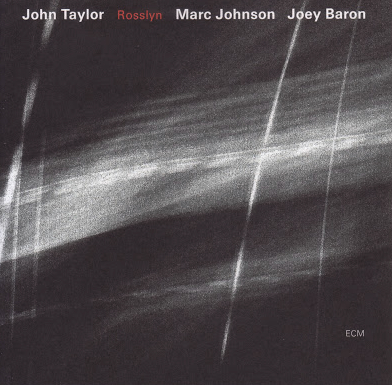
John Taylor Trio: Rosslyn (ECM 1751)

Rosslyn

John Taylor Trio
Rosslyn

John Taylor piano
Marc Johnson double-bass
Joey Baron drums
Recorded April 2002 at Rainbow Studio, Oslo
Engineer: Jan Erik Kongshaug
Produced by Manfred Eicher

Plenty of pianists are capable of technical brilliance, but so few bring selfless mastery to melody and negative space. Bill Evans progenitor John Taylor does just that, and this first leader date is a stained-glass window in sound. Bassist Marc Johnson (a latter-day discovery of Evans) and drummer Joey Baron (formidable veteran of John Zorn’s Masada quartet) join the British pianist for a set of mostly Taylor-penned tunes. From note one, one may note this as a defining ECM appearance by the ever-smiling Baron, whose adaptive style adds just enough color to Taylor’s monochromatic balancing acts.

“The Bowl Song” introduces us to the trio’s pliant sound. Johnson channels Steve Swallow in the album’s first solo, leaving us enchanted and primed for a webbed version of Irving Berlin’s “How Deep is the Ocean,” of which rubbings on piano strings guild the night with deeper secrets of this immortal standard. Taylor proceeds with archaeological care, his voicing stretching one tendril at a time from the brine. Here and throughout, Baron enacts a breezy restraint, his snare poised and patient, letting the groove establish itself without push. Despite, if not because of, the rhythm section’s resoluteness, Taylor spreads a deck of quick changes to keep things interesting. His lovely teetering of chromatism and octave bliss turns the tune into a hardly recognizable form of itself, an entity of spongy texture and purpose.

From amorphous beginnings, “Between Moons” gels another worthy braid. Taylor shows command of effect and affect in equal measure, while Baron’s smooth tom rolls and Johnson’s lantern flame predict a primrose finish. The title track is the session’s galactic sun. Its chambered clockwork reveals a lullaby, a swath of perpetual motion rounded and secured as if by light through a prism of dark and darker.

Nothing in the album’s first half, however, compares to the pulchritude of its second. This is where unity manifests, where the impressionism of Kenny Wheeler’s “Ma Bel” and the balladry of Ralph Towner’s “Tramonto” can walk hand in hand toward the masterful syncopations of “Field Day.” Each is a fully formed pearl, shucked and illuminated with endearing pathos. Like the skipping record of the album’s final chords, it fills a child’s room with safety, so that visions of a broken world cannot help but shed their barbs upon entering.

<< Suite For Sampler – Selected Signs II (ECM 1750)
>> Andersen w/Tsabropoulos and Marshall: The Triangle (
ECM 1752)

Eberhard Weber: Endless Days (ECM 1748)

Endless Days

Eberhard Weber
Endless Days

Eberhard Weber bass
Paul McCandless oboe, english horn, bass clarinet, soprano saxophone
Rainer Brüninghaus piano, keyboards
Michael DiPasqua drums, percussion
Recorded April 2000 at Rainbow Studio, Oslo
Engineer: Jan Erik Kongshaug
Produced by Manfred Eicher

Electric bassist Eberhard Weber, one of the most recognizable depth-sounders of European improvisation, with Endless Days continues the journey charted so boldly across ECM’s fertile map. True to form, he breaks the jazz mold that searches him, instead making use of orchestral sweeps and precisely notated forms. Solos, per se, are few and far between. The only exceptions are “A Walk In The Garrigue” and “Solo For Bass,” the latter of which presages Weber’s sure-to-be-seminal Résumé. With liquid touch, he dances, turns on a molecule, and settles into warmth.

The instrumentation of Endless Days is as intimate as its sound is expansive. Multi-reedist Paul McCandless, keyboardist Rainer Brüninghaus, and percussionist Michael DiPasqua—all longtime allies—comprise a quartet of unveiled lyricism. The seesawing keys of “Concerto For Bass” fade in on a lush vista as only Weber can articulate. Skittering percussion hurtles us across a tessellation of water and land as an oboe cranes its neck, birdlike, in anticipation of a storm. A soft keyboard drone provides ample soil for Weber’s pliant germinations, which in characteristic fashion build majestic tidal waves from mere ripples in “French Diary.” Here DiPasqua and McCandless flank an itinerant piano to the rhythm of an internal clock before ending in a pinprick of light, adding a new star to the shadows of “Nuit Blanche.” This cinematic piece emotes through a sepia veneer of whisky and unrequited love, dripping like a tree after rain. “Concerto For Piano” brings the band up to full speed. Playful touching of the keys adds unexpected angles. The title track has the makings of a folk song unfolding in real time, fashioning from its cellular vocabulary set a full-bodied text. This program of otherwise new material ends with a throwback to Weber’s Little Movements, reworking from that 1980 album its opening composition, “The Last Stage Of A Long Journey.” Flowing arpeggios float the leaves of Brüninghaus’s pianism along an unbroken river and find their angelic alter ego in McCandless, whose soprano saxophone draws a thread from heart to ritual.

Eternally refreshing in Weber’s work is the comfort that titles are immaterial—so evocative is his sound-world that it tells us a different story every time, a story so familiar it seems to emanate from the listener. All that’s left to ask: What stories will it convey to you?

<< Thomas Larcher: Naunz (ECM 1747 NS)
>> Claudio Puntin/Gerður Gunnarsdóttir: Ýlir (
ECM 1749)

Charlie Haden/Egberto Gismonti: In Montreal (ECM 1746)

In Montreal

Charlie Haden
Egberto Gismonti
In Montreal

Charlie Haden double-bass
Egberto Gismonti guitar, piano
Recorded July 6, 1989, Festival International de Jazz de Montréal, Salle Marie-Gérin-Lajoie, Université du Québec
Recorded by La Chaîne culturelle de Radio-Canada
Recording and mixing engineers: Alain Chénier and Michel Larivière
Editing and mastering: Denis Leclerc
Recording and mixing producer: Daniel Vachon
Executive producer: Manfred Eicher

Twelve years after it was recorded at the Festival International de Jazz de Montréal, this landmark performance by legendary American bassist Charlie Haden and Brazilian guitarist-pianist Egberto Gismonti at last saw the light of day in 2001. The concert marks the sixth of eight organized by the festival in celebration of Haden’s ongoing legacy. Haden had plenty of experience playing with Gismonti as part of their Magico trio with Norwegian saxophonist Jan Garbarek, yet the distillations offered here are entirely of another plane.

From the Magico songbook the duo plays “Palhaço” (a trio staple by Gismonti), as well as the Haden-penned “Silence.” Both feature Gismonti’s astonishing pianism, balancing florid biospheres with ponderous asides, Haden all the while drafting the terms of endearment by which every page turns. Haden the composer also reveals the set’s deepest piece: “First Song.” Featuring Gismonti on acoustic guitar, its intuition soars for all its quietude. A pleasant street scene, a childhood memory, a favorite scent in the air…exchanging glances in a melodic triangle. Such trade-offs mark the session for its selfless ingenuity. So, too, the jangly undercurrents of opener “Salvador” and “Em Familia,” both of which reference Gismonti’s work with Academia de Danças and, as such, reflect a bold unity of purpose. The latter’s invigoration grabs scruffs and throws us skyward, even as it gives us wings to fly. And fly we do into quiet pockets of cloud, each the eye of a storm where the leaves barely tremble to the tune of Gismonti’s masterful harmonics. Also notably from the Academia repertoire are “Maracatú,” a study in contrasts, and “Frevo,” in which pointillism at the piano inspires dramatic, resonant depths from Gismonti’s partner. “Don Quixote” (previously featured on Duas Vozes with percussionist Nana Vasconcelos) closes with an elegy-turned-anthem, a shifting ocean of temperate love.

Although there is much to admire in Gismonti’s prodigious guitar playing, it’s at the piano where his musicality truly shines. How wonderful to get so much of it here. And no bassist crafts melodies quite like Haden. He keeps the earth in mind, even when there is nothing but sky ahead of us, scaling the ladder from light to dark and back to light while Gismonti filigrees his playing like a frame around a picture. In Montreal is a must-have for fans of these unique talents, who together forge a distinctly “global” sound: not world music, but music for the world.

<< Heino Eller: Neenia (ECM 1745 NS)
>> Thomas Larcher: Naunz (
ECM 1747 NS)

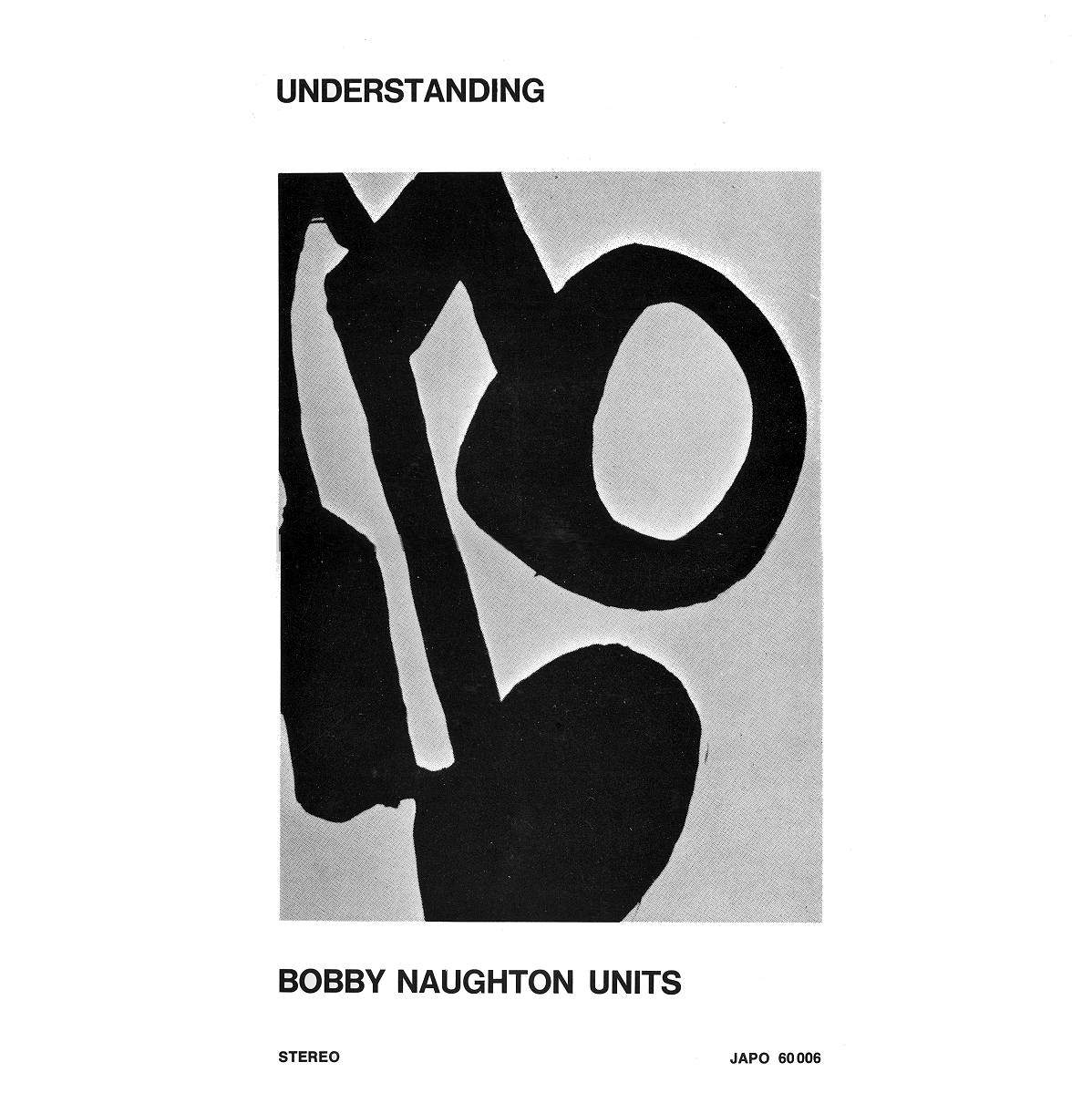
Bobby Naughton Units: Understanding (JAPO 60006)

Understanding

Bobby Naughton Units
Understanding

Perry Robinson clarinet
Mark Whitecage flute, basset born
Richard Yongstein or Mario Pavone bass
Randy Kaye or Laurence Cook percussion
Bobby Naughton vibraphone, piano, clavinet
Recorded October 30, 1971 in concert at Yale University and at Blue Rock Studio, New York
Engineer Eddie Korvin
Originally produced in USA by Otic Records, a musicians’ cooperative

Self-taught composer-performer Bobby Naughton has been playing the vibraphone professionally since 1966. From silent film scoring to a stint with the Jazz Composer’s Orchestra, not to mention a regular spot alongside Leo Smith (see 1979’s Divine Love), Naughton has since developed his craft by way of a unique, eclectic career. In 1971, Naughton and a handful of trusted musicians took a dip into the JAPO pool with Understanding. Recorded both in studio and in concert (with a slight change in roster between each), it documents a singular shuffle of original tunes and those of Carla Bley.

Bley and Naughton’s styles could hardly be more different, making their combination on this album all the more appropriate. Comparing the former’s title track with the latter’s follow-up, “Austin Who,” one finds a shift from the charcoal strokes of drummer Randy Kaye and Naughton’s own balance of melody and affect to a haunting look inward to places of delicate unrest. It is a fascinating diptych. Of the remaining Bley selections, the popular “Ictus” gets a gargling treatment, finding chaos and color in the tactile playing of clarinetist Perry Robinson. In it one can taste sunset and the excitement of evening’s promise. “Gloria” is the glistening heart of the set, a tender and questioning act of impression which, much like the opener, brushes its way into the ear, catching hair cells unawares with its jaggedness, pausing as if inhaling.

Naughton’s compositions unfurl a uniquely uplifting spread of descriptive moods. Sleigh bells, for instance, let us know that “Snow” is on the way. What ensues is not a song of winter’s dread, however, but of its thaw, each touch of percussion another clump rattling from the branches. Laurence Cook’s beautiful cymbal work in “V.A.” sparks an unusual conversation of wind and water, while for “Nital Rock” Naughton breaks out the clavinet for some electric throwback. Mark Whitecage does phenomenal things with the basset horn here, running a hundred errands at once.

This is a pot of water ever on the verge of boiling.

… . …

In an effort to better understand the context in which this album took shape, I interviewed Mr. Naughton, who kindly offered his succinct wisdom. Below is what transpired.

Tyran Grillo: Can you tell me a little about how you came to the vibraphone? Or did it come to you?
Bobby Naughton: I had been playing a lot of funky and out-of-tune pianos. The clarity of the vibraphone was appealing. And the keyboard was familiar. I went for it.

TG: As a self-taught musician, do you find that you approach performance in any way different from those with strictly formal training?
BN: I have no idea. As a child I had years of piano lessons, but am self-taught on the vibraphone. My formal education is in the liberal arts. My approach to performance? Prepare to lay it all on the line. Every time.

TG: How did Understanding come to fruition?
BN: I don’t know. Not by plan. It evolved.

TG: What was behind your decision to focus on the music of Carla Bley? Was she involved in the project in any way?
BN: No decision. Investigations led me to Carla’s compositions. Incredibly meaty and detailed stuff. No, Carla had no involvement.

TG: Looking back at your recorded output, how does Understanding fit into the sounds you have forged in, say, The Haunt or Zoar? What does the album mean for you?
BN: Each album covers quite a different area. Understanding is broader in scope and personnel. For example, the title composition is a tone row, a twelve tone piece, and “V.A.” is a graphic score.

TG: What were the circumstances that led you to work with Leo Smith?
BN: In the early 70s a JAPO employee wrote to me that Leo lived a few towns away in Connecticut. I called him and we met.

TG: Can you sketch me a picture of how the Divine Love recording session went down?
BN: A happening at the highest level.

TG: How would you describe your own compositions to those who haven’t heard them?
BN: Melodic and suggestive. Structures for improvisation.

TG: What would you say has been the most fulfilling aspect of your career thus far?
BN: Survival. It’s been musically rewarding but tempered by resources. You have to love it to do it.

Trygve Seim: Different Rivers (ECM 1744)

Different Rivers

Trygve Seim
Different Rivers

Trygve Seim tenor and soprano saxophones
Arve Henriksen trumpet, trumpophone, vocals
Håvard Lund clarinet, bass clarinet
Nils Jansen bass and sopranino saxophones, contrabass clarinet
Hild Sofie Tafjord french horn
David Gald tuba
Stian Carstensen accordion
Bernt Simen Lund cello
Morten Hannisdal cello
Per Oddvar Johansen drums
Paal Nilssen-Love drums
Øyvind Brække trombone
Sidsel Endresen recitation
Recorded December 1998, January and December 1999 at Rainbow Studio, Oslo
Engineer: Jan Erik Kongshaug
Produced by Trygve Seim, Christian Wallumrød, and Øyvind Brække
Executive producer: Manfred Eicher

Breathe, and you know that you are the world.

Different Rivers marks Norwegian saxophonist Trygve Seim’s emergence from the ECM wings as a leader in his own right. Well versed in the label’s vital documentation of European improvising (not least of all through his life-changing tenure with Finnish drummer Edward Vesala), Seim draws upon those influences to pool his talents for the present disc, which deepens the free spirit of his so-called Trondheim Kunstorkester. Trumpeter Arve Henriksen—notably, a close associate of Christian Wallumrød—and a host of Scandinavian talents round out an ensemble of remarkable depth and poise.

Seim’s three duets with Henriksen are the album’s acupuncture points, each a vitalization of the whole. The breathy meditations of “Bhavana” and the flutter-tongued percussiveness of “Between” both spin on fluid axes, but it is “For Edward” that breaks its gravitational ties and flows outward into the universe. Seim’s shakuhachi tone reveals superb control of his reed, a sound honed by oneness with its source. Like two cranes calling to one another in the night, never able to find a way across the Milky Way between them, he and Henriksen paint bridges of artful listening in lieu of earthly travel. Even when they are surrounded, as in the title track, they are ever swimming toward something galactic.

The trumpeter reveals his vocal skills in opener “Sorrows.” In wispy arpeggios he lurks, stranger among a crowd of consenting instruments. The effect is ghostly, sirened by keening higher reeds. With the exception of “Search Silence” (a curious little flicker of geometry), the album’s remainder samples a likeminded palette. The subconscious beats of “Ulrikas Dans” brush on a light gesso for bolder horn strokes. Seim’s piercing harmonics lend an angelic touch, and his tenoring on “The Aftermath” spins a charm bracelet of wispy melodic cells. This life further into the sun-swept plains of “African Sunrise,” giving name to the aching land. Drummer Per Oddvar Johansen’s flint-strikes incite a conflagration in Seim’s playing, ending on scream. I daresay this and “Breathe” are two of the finest tracks in the ECM catalogue. The latter is a mission statement, a parable on the profundity of simplicity. Amid the band’s resonant atmospheres, vocalist Sidsel Endresen recites a powerful wakeup call. She finds a process in every wing-flap, every sprout and blossom, as blurry horn textures translate word into life.

The strengths of Seim’s compositions, and of those interpreting them, lie in their control and dynamic range. Their roots are as deep as their branches are tall, softly aflame with autumnal themes. Case in point: “Intangible Waltz,” which follows Henriksen’s patterns through thick forest and barren field alike. Its central whisperings between drums, accordion, and trumpet work wonders under the microscope. No matter how calm and thin its layers become, it allows visions of a dancing light to seep through.

Seim’s is a viscous music; don’t expect to swing. Meditative and ashen, every track of Different Rivers feels as if it was recovered from the archives of a lost culture, of which only this music remains to represent it. Let the rebuilding begin.

<< Ralph Towner: Anthem (ECM 1743)
>> Heino Eller: Neenia (
ECM 1745 NS)

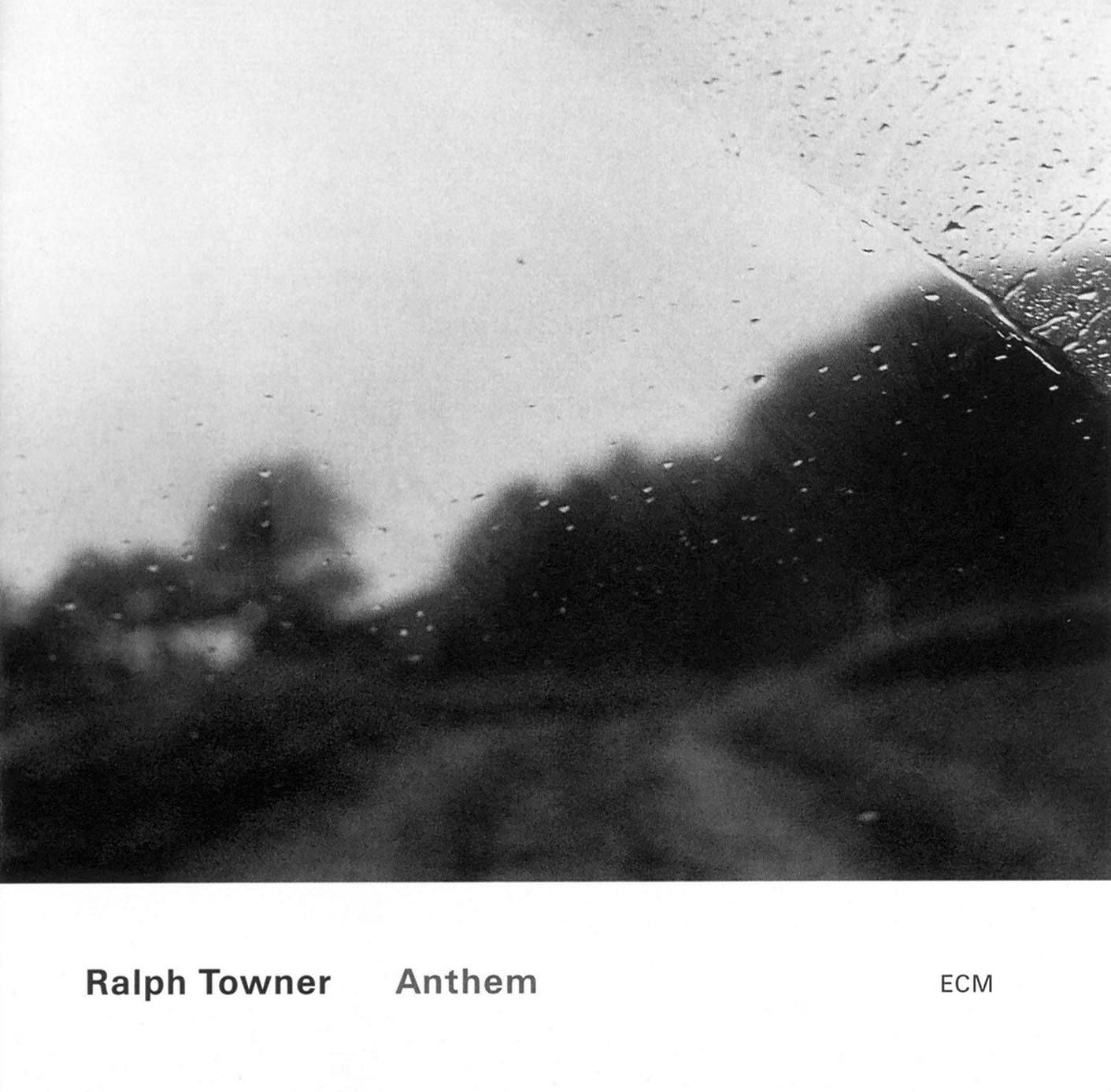
Ralph Towner: Anthem (ECM 1743)

Anthem

Ralph Towner
Anthem

Ralph Towner classical and 12-string guitars
Recorded February 2000 at Rainbow Studio, Oslo
Engineer: Jan Erik Kongshaug
Produced by Manfred Eicher

Once the luminescent 12-string of Ralph Towner opens the ears to the thoughts of “Solitary Woman” (aka “Alia’s Theme,” composed for the 1992 film Un’altra vita), there’s no turning away from the guitarist’s captivation. Towner’s ability to tell a story is uncanny: we know his characters as if they were ourselves but are at pains to describe them in retrospect. His is a music that must be lived, and relived, to be known. The modal approach of the album’s opening gambit proves revelatory in its percussive and emotive variety and compresses so much of what marks Towner’s mastery into one piece. Like nearly the rest of the album, it looks back also to an adroit compositional mind, one that recognizes the equal value of improvisation as a tool of expression.

Most the album features classical guitar. The title track gives solemn praise to the musical act itself. The sweep of Towner’s evocative sensibility is compass-like. Down the helical twirl of love and loss that is “Haunted,” he slides into “The Lutemaker.” Something of a sonic equivalent to James Cowan’s novel A Mapmaker’s Dream, it is a concise yet somehow beautifully varicose embodiment of its subject matter. It feels so real one can almost smell the workspace, hear the luthier’s plane singing. “Simone” is another of the album’s mysterious figures, her face familial yet also obscured by the ripple of shadow that she wears like the night. “Gloria’s Step,” by the tragically short-lived Scott LaFaro, is yet another and links Towner back to the Bill Evans circle in which he trained. It receives a studious and impassioned rendering at Towner’s fingertips and leads into the gallery of “Four Comets,” which along with “Three Comments” comprises one of two handfuls of sparkling miniatures. The former’s six-stringed sky becomes the latter’s 12-stringed loom, both spaces through which creative shuttles weave their constellations for others to decipher.

“Raffish” is a perfect example of Towner’s crystalline brand of jazz, at once deferential to past masters (hence the album’s title) and overtly countercultural in its sometimes-overwhelming optimism. The angularity here is refreshing. “Very Late” is another architecturally sound track. Its title bleeds from the music and reaches a steadying hand toward “The Prowler,” a programmatic gem. “Goodbye, Pork-Pie Hat” reprises the 12-string one last time, bringing the album back to its resonant beginnings in an especially intimate rendering of this classic Charles Mingus tune.

There is a depth of refrain in Towner’s music, and on Anthem it is alive with a direct philosophy that feeds also into the engineering. It is, quite simply, one of the finest solo guitar recordings to come out of ECM’s studios. Its balance of distance, finger action, and breath control is as erudite as that of the artist it documents. When medium and message are so well unified, who could ask for more?

<< Crispell/Peacock/Motian: Amaryllis (ECM 1742)
>> Trygve Seim: Different Rivers (
ECM 1744)