My latest review for RootsWorld online magazine is of an enchanting collaboration between the ETHEL string quartet and Native American flute player Robert Mirabal. Click the cover to discover!
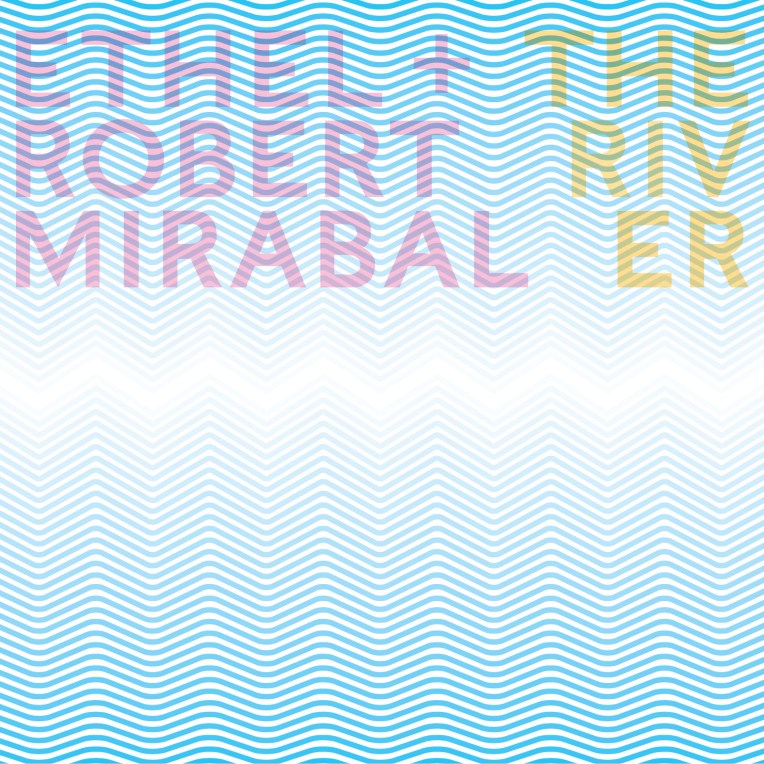


My latest review for RootsWorld online magazine is of an enchanting collaboration between the ETHEL string quartet and Native American flute player Robert Mirabal. Click the cover to discover!
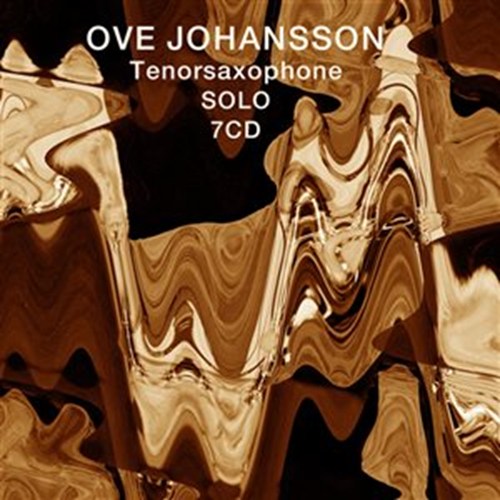
On Christmas Eve, 2015, Swedish jazz lost an undisputed maverick in Ove Johansson. All the more fitting then that the tenor saxophonist’s swan song should span seven discs in as many hours. Although just as comfortable tying his laces on straight as he was yanking them off his shoes and throwing them in the listener’s face, over the years Johansson settled into a trademark solo style, marrying long-form improvisations with electronics. While on paper this may recall John Surman’s classic reed-and-synthesizer experiments of the 80s, in practice Johansson’s is a less cohesive art. Which is not to say it doesn’t bond in accordance with its own clandestine rules. For while the electronics—which range from drum machine beats to impressionistic waves—at first seem like a cheap application of retrospective blush, over time their dated quality reflects these danses macabre with clarity. Still, seven hours of such clarity will test your resolve, if only because Johansson’s playing is so engaging on its own that anything added to it feels secondary at best and, at worst, intrusive.
The first four discs, along with the last, consist of hour-long improvisational treks over amorphous landscapes. Each is named after a month, November and December being the synth-heaviest and most meandering of the bunch. Discs five and six, which together boast 45 tracks, are the most exciting, spotlighting Johansson as they do in live settings. The compactness of these pieces makes them visceral, so that one can almost smell the sweat of their kinesis. All of this feeds into the seventh disc, which reveals the album’s sharpest edges and rewards the journey with rawness.
Just as Johansson was a self-taught musician, so too does his music require self-taught listening. There’s no roadmap or manual: just a splattered terrain that begs the tread of an adventurous ear. Listening to this set is like breaking a hermetic seal, out of which come spilling years of pent-up energy, which in light of his death reads like messages from the other side.
(This article originally appeared in the December 2016 issue of The New York City Jazz Record, of which a full PDF is available here.)
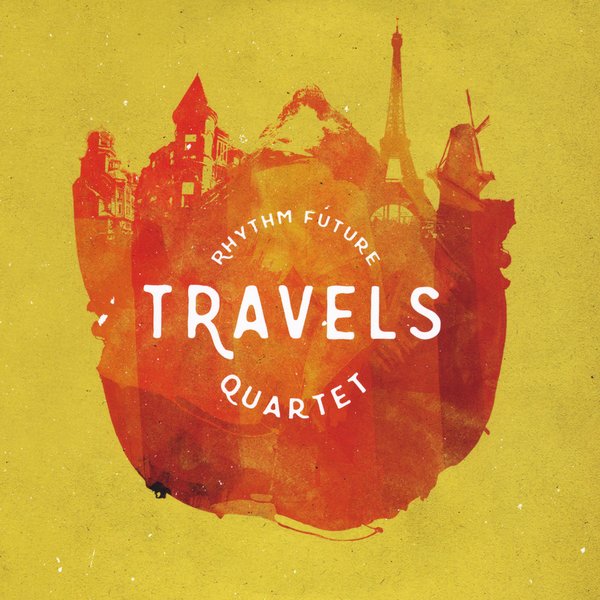
The Rhythm Future Quartet—composed of virtuosos Jason Anick on violin, Olli Soikkeli and Max O’Rourke on guitars, and Greg Loughman on bass—extends beyond its Django Reinhardt roots for a sophomore, but in no way sophomoric, set of mostly original compositions.
With five tunes to his name, Anick boasts the lion’s share of thematic credit. His writing has a distinctive tenderness about it and, like his playing, shines with confidence. Whether evoking fond memories in “Still Winter” and “Amsterdam” or exploring more upbeat romanticism in “Vessela” and “The Keeper,” he moves through every luscious key change like the sun through shifting clouds. In the title track especially, co-written with O’Rourke, he rewards patience with prettiness, but always with an integrity that recalls the hybrid textures of Nigel Kennedy’s collaboration with the Kroke Band. O’Rourke’s fretwork dazzles further in his own “Round Hill,” which to my ears sings of the sea.
Soikkeli pens two tracks of complementary temperament. “For Paulus” develops unforcedly, epitomizing the band’s penchant for letting the music breathe. “Bushwick Stomp,” on the other hand, swings right out of the box, stowing us away aboard a night train to Munich. In both, the composer’s exchanges with Anick are more than worth the risk of being caught. Loughman counters with his own “Iberian Sunrise,” opening the album in utter loveliness. Cool currents of air waft through the guitars, caressing a dancing violin. The precision is immediate and strong, hitting the ear like a nostalgic fragrance would the nose.
Rounding out the set are a trio of French tunes, including the muscular “Je Suis Seul Ce Soir” by Paul Durand, and a fresh take on John Lennon’s “Come Together” for good measure. All of which makes for a colorful palette to which you’ll want to return your listening brush in enjoyment of new hues. The band coheres so organically that one cannot imagine this group or its music being performed any other way. It’s an approach that feels just as ironclad as your enjoyment of it.
My latest review for All About Jazz is of pianist Tuomo Uusitalo’s second leader date, Love Song. Click the cover to discover!

My latest review for RootsWorld online magazine is of multi-instrumentalist and composer Daniel Diaz’s Swan Song. As a side note, the album’s cover photograph was taken by Juan Hitters, who is a frequent ECM cover art contributor. Click the album to read on and hear samples.

Since the release of Within The Depths Of A Darkened Forest in 2002, vocalist Erin Welton and multi-instrumentalist Scott Ferrell have been conjuring some of the most ethereal spells in the history of the craft. As Autumn’s Grey Solace, they hang notes from immense rafters, each a stage light that knows exactly where, and at what level of intensity, to illuminate the listener’s soul. Over the years, the duo has charted a trajectory of pivot-points, emerging from that ancestral forest into the brighter futures of 2006’s Shades Of Grey and 2008’s Ablaze. In 2011, at the height of their association with Projekt Records, Welton and Ferrell transitioned into Eifelian, which Ferrell tells me marked the beginning of a change in the band that crystallized in Divinian the following year and in Monajjfyllen thereafter. While the earlier albums constituted self-contained worlds, the latter two feel like a new skeleton fleshed by their self-released latest, Windumæra.
Exploring the music of AGS is like awakening yourself to beauties you never knew slumbered inside you. At the center of this galaxy is a gathering of light by which is obliterated your darkest fears. It’s a visceral, celestial body that thrives on language, melody, and the generative force of which we all partake in being born. Such metaphors are more than the hyperbole of this longtime listener, reflected as they are in the band’s approach to songwriting. It’s easy, for example, to detect a Cocteau Twins influence in their sound, and see the ways in which the duo has nurtured it to bear hybrid fruits. But less obvious inspirations lurk beyond it. “We are also influenced by some of the popular music of a period of time from the late sixties to the late eighties,” says Ferrell. “There was a time when pleasant sounding music was actually popular, unlike the last couple of decades.” We might take this to mean either that AGS is returning to some nostalgic origin story or enhancing a neglected musical turn in humble service of a new one. Whichever way we choose to interpret their sound, its purpose is clearly to connect, not alienate.
And so, while it would be easy to see Windumæra as a highly original clarification of the Cocteau Twins ethos, it draws just as much from music that has yet to be written, of which we are granted prophetic glimpses. The album’s name connotes “echoing” in Anglo-Saxon, a language featuring heavily in the song titles. “It’s a dead language,” says Ferrell of the Anglo-Saxon choice, “poetic and intriguing.” Dead though it may be, it lives vividly throughout Windumæra.
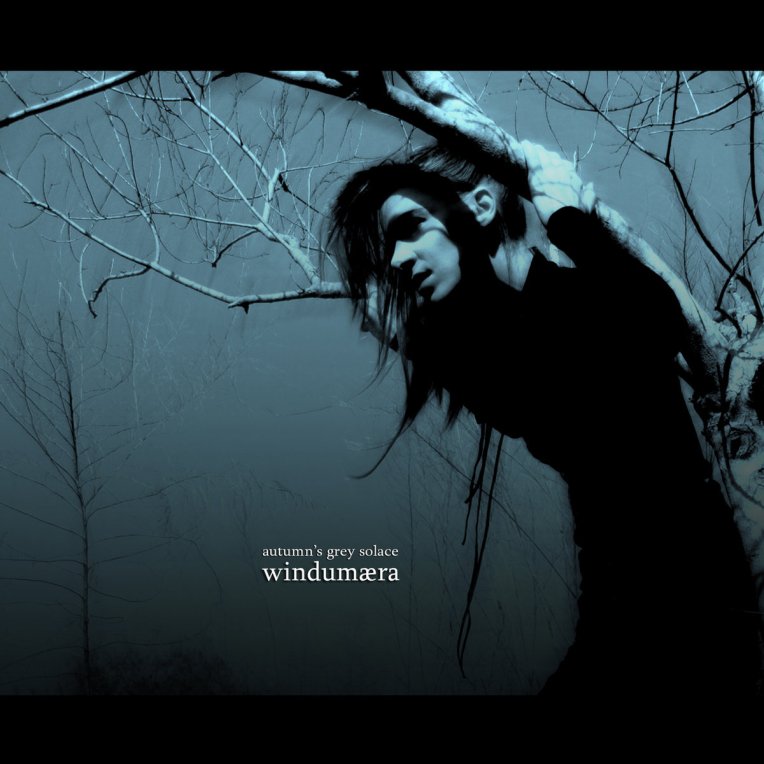
As Welton’s voice shines through the title song’s channels like sun through mist-kissed foliage, it navigates by an internal moonlight for which it requires only the star of Ferrell’s sensitive arrangement to glow. Ardent fans and newcomers alike will appreciate the height of Welton’s voice in relation to the patchwork of guitars below. She is an overseer, an eagle from whose mouth falls water and flora for an arid world. As in the album’s final benediction, the hymenopteran “Ymbe,” she evokes wings and honeyed consciousness.
Lyrically speaking, AGS has always balanced the prosaic and the poetic, but here strengthens that contrast, and thereby its invitation to indulge in the nuances of circumstance. In this respect, and beyond those connections listed above, I would venture to say the duo shares far more in common with the troubadours of the European Renaissance, plying their sonic trade across a continent that, while familiar, nevertheless pulls us into unimaginable new oceans.
Hence my confusion over AGS being so often misperceived as a “goth” outfit (in the most stereotypical sense, I mean), when in fact they seem as far a cry as one can get from the connotations of morbidity such a term may imply. For me, their music has always been a positively life-affirming search for beauty. Ferrell agrees: “We don’t associate our music with evil at all. Our mission is to create something beautiful and to console ourselves and others with music.” And if anything, consolation is at the very heart of Windumæra. We hear it in the pulsing bass line of “Sláhhyll,” which finds Welton delivering personal wisdoms as if they were materia in need of an alchemist. The synth-guitar arpeggios of “Belle” take shape just as clearly, if only more architecturally, as if inside a clock tower whose every strike purges us of a traumatic memory. Even the more subterranean tunes like “Asundran” open themselves as books in hopes of being read. As ever, Welton displays an uncanny ability to rise above her surroundings with acuity, turning hardship into ecstasy and filament.
This feeling of willful metamorphosis is perhaps the album’s central message. When I ask Ferrell about it, he says, “I like for each listener to interpret it in their own way but I would say this album has themes of freedom, expression, energy, and beauty.” With sometimes so little to hold on to in this expanse, I also wonder whether they compose their songs based on direct experiences, as part of a fantasy world, or both. Ferrell’s answer: “When I compose music, it’s way out there in a fantasy world. Erin’s vocals tend to be a combination of experiences and imagination.” Within this triangulation, it’s all the listener can do to draw a reliable map, because one wants to take into account every blade of grass and pebble. The healing energies of “Swíþfram” extend that triangle into a prism.
Because this album so deeply rewards the subjective mind, I uphold “Axa” as its pinnacle. It is a touch of vapor, a walk over rainbow bridges from solitude into communion with nature. Named after a river and meant to evoke its flowing currents, the song came together in the studio as it was being written. In contrast to “Hærfestwæta,” the autumnal associations of which recall the band’s name, it turns the ice of a painful experience into the liquid of transcending it.
Every moment of this music stems a place of genuine love, gratitude, and respect, a reflection of the souls that have found each other in this populous world to sing. The personal cocoon spun around the music is what makes it such a privilege to know. We might gaze at photos or watch videos, but until we close our eyes to the practical human concerns of their creation, these songs will not truly speak to us. They are to be embraced on their own terms, as if each were a finite entity in an infinite continuum. All of this shows in the gratitude from which they arise.
Windumæra finds AGS at the cusp of something deeper and more significant than anything the band has ever forged. It has superseded skin, flesh, and bone and placed a fingertip on the rhythms of a less tangible heart. Still, Ferrell sees yet another change on the horizon: “I think it’s the final album of the style we’ve been exploring on the last few albums and we’ll be drifting into new territory in the future.” Wherever that territory may be waiting, it has been a sublime comfort to listen to AGS’s evolution, and to know that there is still an era’s worth of moon nocturnal to be drunk in potions of expectation.
(For more information on this and other Autumn’s Grey Solace albums, please visit the band’s website here.)

Coming up on four decades as composer and performer, New York’s Downtown deacon Elliott Sharp is at a creative peak. Tranzience documents four semi-recent chamber pieces, the earliest being Approaching the Arches of Corti (1997). Scored for four soprano saxophones (the New Thread Quartet of Geoffrey Landman, Kristen McKeon, Erin Rogers and Zach Herchen) and making use of Steve Lacy’s “leg-mute” technique, it sounds at times like a congregation of geese, at others a pipe organ running out of air, and leans nicely into 2008’s Homage Leroy Jenkins. Alongside clarinetist Joshua Rubin and pianist Jenny Lin, violinist Rachel Golub evokes the scrapes and squeals of the legendary dedicatee, whom Sharp counts, along with the larger AACM family, among his early influences. Venus & Jupiter (2012) features the ensemble Either/Or conducted by Richard Carrick and Sharp himself on electroacoustic guitar. Around a pulsing piano, this largely improvised masterwork spins a drone of strings, brass, winds and percussion drawing even more explicitly from the AACM well. The 2013 title composition features the JACK Quartet (Chris Otto, violin; Austin Wulliman, violin; John Pickford Richards, viola; Jay Campbell, cello), who recently brought their talents to bear on The Boreal (Starkland, 2015). Where that recording employed bows strung with ball-bearing chains, here the musicians use so-called “tube bows” fashioned from aluminum in addition to the standard hair. The music is consistently inventive across its 28-minute duration and inhabits a sound world that can only be described as nanotechnological.
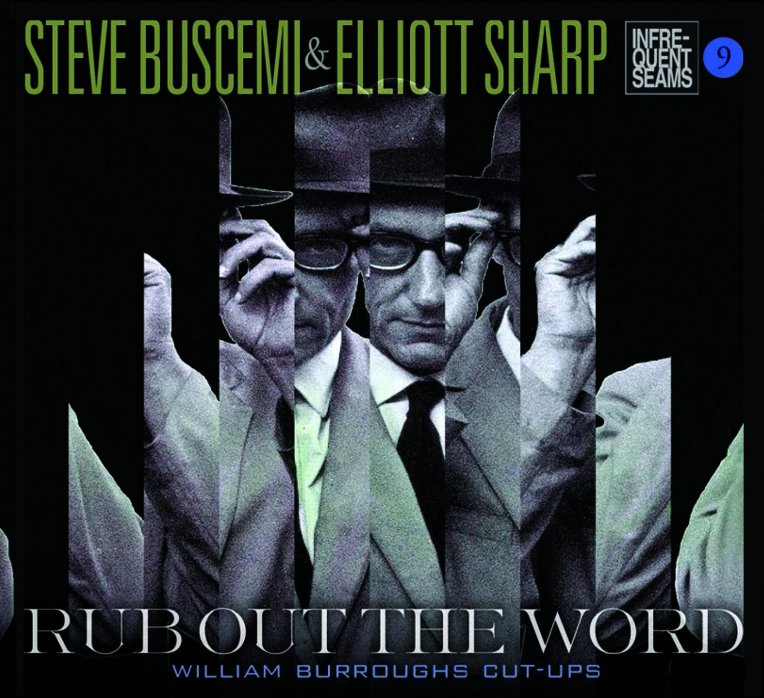
To this solar system, Rub Out The Word may seem like a distant satellite, but its heart shares the same blood. Here Sharp (on guitar and electronics) joins actor Steve Buscemi (of Reservoir Dogs and Fargo fame) to celebrate the writings of Beat Generation guru William S. Burroughs in one of the most delicious spoken word recordings to come out in recent memory. Not only for Burroughs, who managed to make even the most abstract streams of consciousness feel coherent, but also for Buscemi’s adenoidal charm and Sharp’s accompaniment, which, like the words, evokes a viral network that responds to, even as it anticipates, hidden messages in the texts. Said texts are quintessential Burroughs, threading needles of incontrovertible (if sometimes perverse) cynicism through a social cloth he understood in ways few others of his generation did. “The use of cut-up is a key,” narrates Buscemi and one can’t help but feel that he and Sharp embody this very aesthetic in their collaboration. What follows is a string of meditations on writing, obsession, evil, bureaucracy, war, morality, human interactions and the occasional nod to silence thrown in for good measure. This is no naked lunch, but a fully clothed dinner after which dessert is served raw and dripping. And while it may not appeal to straightahead jazz heads, anyone who has enjoyed Sharp’s fantastic voyage (no small task with a discography of over 300 albums) for any length of time is sure to be enthralled.
(This article originally appeared in the September 2016 issue of The New York City Jazz Record, of which a full PDF is available here.)
My latest review for All About Jazz is of the third self-titled album by Les Rhinocéros for the Tzadik label. A band so unusual and intriguing, John Zorn was inspired to create a new “Spotlight Series” in honor of their precedent. Click the cover to discover!

My latest review for RootsWorld online magazine is of an atmospheric collaboration centered around kamancheh virtuoso Kayhan Kalhor, who ECM listeners may recognize as half of Ghazala. This album is sure to be of particular interest to ECM fans. Click the cover to read more and hear samples.

 Between Sound and Space: ECM Records and Beyond