Akira Sakata: Fisherman’s.com

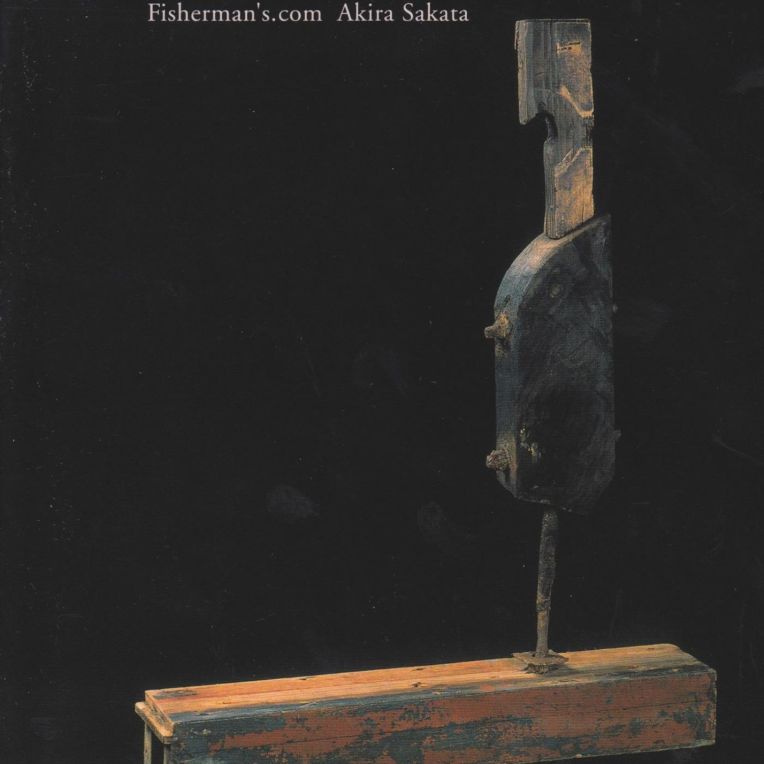
Fisherman's.com

Originally released in 2001, Fisherman’s.com is Japanese free-jazz stalwart Akira Sakata’s ode to folksongs of the sea, reimagined and repurposed as seeds for avant distortions. Featuring Sakata on alto saxophone and vocals, Bill Laswell on bass, Pete Cosey on guitar, and Hamid Drake on drums, it’s an intensely personal statement on the fluidity of tradition.

“Kaigarabushi” opens with a fisherman’s song from the region of Tottori in western Japan. Sakata’s singing of it has a mineral quality that will taste familiar to admirers of Mikami Kan. Like a blind minstrel who feeds only the ears of ghosts longing to relive their exploits, he touches listeners from temporal distances. The band at his side sets up a row of large beakers, each filled to brimming with funk. Yet while Laswell and Drake are precisely measured, Cosey stirs up an amorphous mixture of colors through the flange of his talking guitar. His sound bleeds out the smallest facets of Sakata’s singing, and finds in their reimbursement an alluring style of damage. So, too, does the bandleader’s reed work pour on strange beauty.

“Ondo no funauta” sets out on more troubled waters before bass and drums drop an anchor of groove, while Cosey’s fins move in more mysterious ways below depths. By no coincidence, the song tells of boatmen handling a particularly treacherous strait in Hiroshima Prefecture, though one might never know those challenges for the skill with which the band navigates them. Neither does Sakata’s saxophone betray one wave of that treachery, as it emotes without fear, and blasts the surety of their experience beyond the ultimate fallibility of their technology.

“Saitarabushi” (incorrectly Romanized as “Saitarobushi”), another fishing song, also made an appearance on Sakata’s 1997 trio album, Dō deshō?! (How’s That?!). Here is the fruit of dangerous labors, the celebration a big catch with due ceremony. Sakata is soulful as ever over the band’s shoreline backdrop, even as Cosey portals in some modal ghost signatures of those who drowned long so. Laswell is thick and thin by turns, imprinting the sand but flying off with a harmonic in the same breath.

“Wakare no ippon sugi,” a ballad from the 1950s that clinched singer Hachirō Kasuga’s status as a pioneer of the Japanese enka form, is barely recognizable through Sakata’s filter—no small feat for such a famous tune. The forlorn lyrics tell of love lost under a cedar tree, a parting so sad that even the birds cry in the mountains. Not that a non-Japanese speaker would know this, given the upbeat presentation. All of which makes Sakata’s cries through the reed, and the guttural exhale with which he ends the album, that much more cathartic and emotionally relevant.

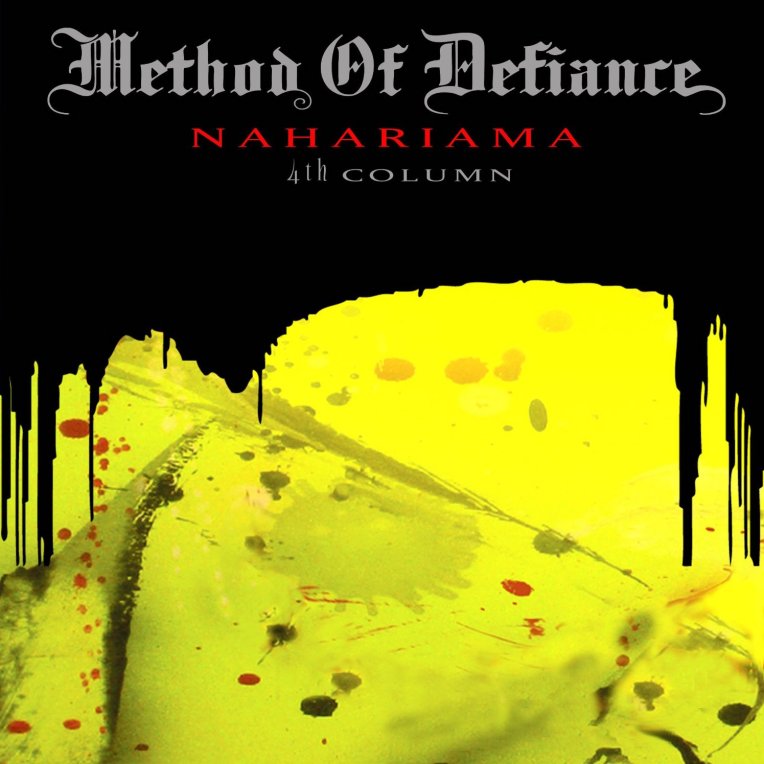
Kaigarabushi

From this archival trove comes Bill Laswell’s remix of “Kaigarabushi,” which holds fast to its original drone but pencils in hues of Mongolian throat singing and faraway percussion. Cosey’s guitar is reborn as a long stare into the sun, while Sakata’s voice reaches for even farther stars, his saxophone strangling them until they gasp for darkness. The funk returns intermittently, only to fall into the earthly ooze from which it sprang.

Jon Batiste/Chad Smith/Bill Laswell: The Process

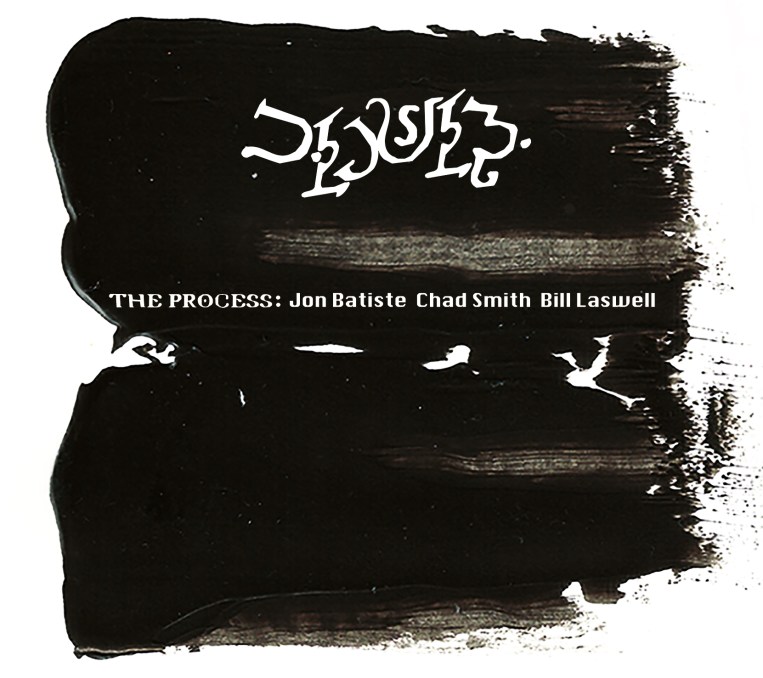
The Process

Keyboardist Jon Batiste (Stay Human), drummer Chad Smith (Red Hot Chili Peppers), and bassist Bill Laswell (the whole damn musical universe): three master musicians meeting for the first time in a studio to score a film that would never be made. Or so the EPK would have you believe. This is, however, something of a misrepresentation, one which assumes sounds exist strung like beads along continua of time. But a deeper listen reveals these men were already linked through the kinship of their sonic pursuits: different religions, if you will, offering sacrifice to the same gods. As for the unmade film, it too is a product of imagination that requires the screen of a listener’s mind on which to project itself before any semblance of narrative can occur.

At the molten core of this project is Batiste himself, who spins three original pillars of support at key intervals. Their titles—“B1,” “B2,” and “B3,”—read like the display of an elevator descending into some psychological archive, where the aisles between stacks are meant for kneeling in deference to those things unknown even to the self. Awash with suspension and slippage in equal measure, each digs deeper into the mind’s eye to pull out a retinal shift from axis to praxis.

Moving to the surface of this cross-section pulls us by the ears onto the igneous glyphs of trifecta minerals. “Timeline” feels like an extension of its surroundings, holding feet to flame until they crackle with the blisters of a million journeys. Batiste rocks the Hammond organ like a machete through vine, while in “Spiral” (best described as a dance party inside a giant didgeridoo) he adds harpsichord and strings in service of some parallel, cinematic reality. “Black Arc” is more radiant and composes its speech through Laswell’s harmonious eclipse.

From the album’s guest contributions, messages emerge weighted and secure. “Drop Away” features TV on the Radio’s Tunde Adebimpe on vocals, for a vibe that puts one in mind of Peter Gabriel at his worldliest. A solid groove beneath it all, courtesy of an especially lucid rhythm section, urges Adebimpe’s voice through a netting of enhancements and inside-outing: a method of disappearance, whereby the self becomes something of an idol to its own destruction.

Killah Priest and Garrison Hawk pen a letter to interplanetary communication in “Turn on the Light/Ascent,” for which the Wu-Tang Clan rapper and Jamaican singer respectively harness the beat as a means of flooding channels beyond this marbled terrarium we call home. From heavy beat-drops arises a phoenix of celestial pianism, tenor sax (courtesy of Peter Apfelbaum), and liquid bass. Trumpeter Toshinori Kondo is no less vocal on “Haunted,” wherein structures contract and expand much like the air in his lungs. This one runs a knife blade along its own gums until they bleed. Guitarist Dominic James adds crunch to “Time Falls,” bringing about an urgent metamorphosis from bling to bang, as if in denial of the jazzy nocturnus that is “The Drift.”

Whereas the filaments of life burn slowly until the body swells with endings, the landscape of death is sustainable and verdant. And this is, perhaps, what the titular process is all about: understanding that everything is a transition into the next, without end.

Bernie Worrell: Phantom Soundclash Cut-up Method – Two

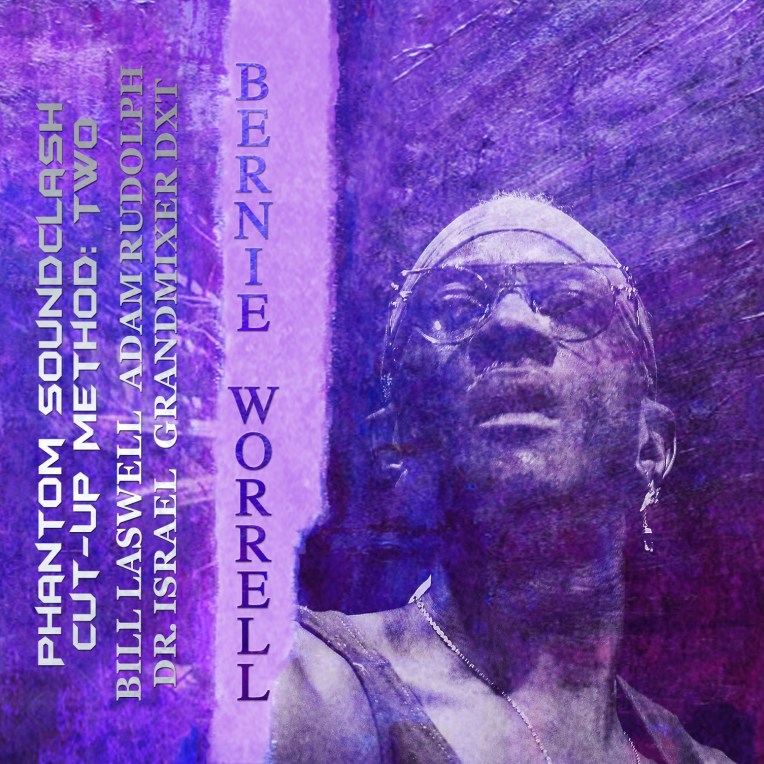
Phantom Soundclash 2

The single track of master keyboardist Bernie Worrell’s entry into the Phantom Soundclash multiverse carries the title “Purple World.” Bassist-producer Bill Laswell, percussionist Adam Rudolph, beat scientist Dr. Israel, and pioneering DJ Grandmixer DXT are Worrell’s transient crew—all of them suited to withstand a wide range of emotional impacts. Only here, they are interested less in the effects than causes of said impacts.

Worrell’s art is a wonder to behold, not least of all because on record he plays for us alone. Every detail rendered audible through his art is a treasure, from which unfolds the lotus of a gracious spirit. Touched by the light of more distant suns than ours, he lobs funk over galaxies in that brotherly way of his, seeking a universal blues. Yet there is something reverential and earthly, as internal as it is eternal, to his musical body, of which each gesture is more decipherable than the last. Worrell preserves these behaviors for future generations who might scour their contours with instruments no longer resembling the ones that produced them.

Laswell’s fluid bassing arises in womb-song, its umbilical cord shooting nebulae at the blade of conceptual silence. As these heavenly bodies comingle, they draw one another into a tantric lore spoken by the prophecy of technology. (The organ is inorganic because it can only exhale, but nevertheless speaks truths as only a machine can.) Through the vale of this nexus runs a river of beats, whose current glides across the bedrock of a thousand ages until it becomes a simulacrum, a world of worlds.

The underlying groove is likewise something more than itself—not merely an invitation to nod along but fully environmental attunement. Metals in the rhythm-sphere indicate an elemental core, which as the transmissions distort bleeds dark matter. Notes grow less pronounced, flashes of memory like so many solar flares as the bass fragments into override.

A rare color in nature, purple visualizes a living resonance as intimate as the copulation of time and space. It is the inherency of the groove incarnate, a cosmic wound healed through listening. And as this journey winds down into subterranean dream fronds, Worrell once again proves that music is something from which we were born…not the other way around.

Yelena Eckemoff Quartet: Everblue

Everblue

Everblue introduces the Yelena Eckemoff Quartet, for which the Russian-born pianist is joined by a trio of ECM’s Norwegian regulars—saxophonist Tore Brunborg, bassist Arild Andersen, and drummer Jon Christensen—in what amounts to her most sublime effort to date. All the more so for being recorded at Oslo’s hallowed Rainbow Studio, with none other than Jan Erik Kongshaug at the helm. That it is self-produced like Eckemoff’s previous albums shows the commitment with which she has paved her road.

Since dedicating herself as a jazz recording artist, Eckemoff has intrigued at every stage of development, as with each new release she draws bigger and bigger names into her circle. More than any other, this album shows just how far she has grown from her purely classical roots. That’s not to say she’s let go of them entirely. On the title track, as well as “Sea-Breeze,” she solos tentatively at best. One can hear her struggling against the rigidity of her training to branch toward improvisatory skies, and the learning process, as for any musician, will for her be lifelong. But here she is among masters of the field whose very presence audibly rubs off as synergy begins to take hold. Between Brunborg’s golden veils, Andersen’s sagacious wisdom, and Christensen’s peerless feel for coloration, her allies are like the tide: they ebb and flow with surety.

Yelena Eckemoff Quartet promo photo
(Photo credit: Odd Geir Sæther)

Two aquatically themed tracks are, in fact, among Eckemoff’s best, “Waves & Shells” boasting evocative dialogue between her and Brunborg and showing the pianist in her element. “Skyline” is just as painterly, Eckemoff and Brunborg again sounding beautifully off each other over the rhythm section’s tectonic support. This time the leader’s soloing is more thoughtful and confident, blending organically into Andersen’s own. Eckemoff shines when the lights are low, as in the tenderer glow of “Blue Lamp” and “Abyss,” in both of which she draws clear and present inspiration from the saxophonist.

Brunborg is an especially vital component of these interlocking puzzles, but Andersen and Christensen bring especial wonders to bear on “All Things, Seen and Unseen,” over which Eckemoff’s pianism skirts genre lines, brushing sparkle into the robust currents of her bandmates. A spry solo from Andersen toward the end speaks of younger memories. “Ghost of the Dunes” highlights Christensen, who contrasts light splashes of cymbal with deeper drums. But it’s Andersen, with his two originals, “Prism” and “Man,” who brings out the best in Eckemoff. Thus freed from the tunnel vision of her own writing, she attains freshness of sound. One can only hope, in light of her obvious excitement, that she will tackle more jazz works by others in the future, if only to see how much she might flower still.