My latest review for RootsWorld online magazine is of St Germain’s self-titled electronic-world-mash-up, and his first album in 15 years. Click the cover to discover!



My latest review for RootsWorld online magazine is of St Germain’s self-titled electronic-world-mash-up, and his first album in 15 years. Click the cover to discover!

With pictures from a train window, Bulgarian-born vibraphonist and composer Errol Rackipov debuts his eponymous group with guitarist Hristo Vitchev, reedman Lubomir Gospodinov, pianist Martin Bejerano, bassist Josh Allen, and drummer Rodolfo Zuniga. Listening to the groove laid down by the bandleader on “Mad Djore,” it won’t come as any surprise that the mallet man studied under greats Gary Burton and Ed Saindon. But there’s also an underlying sensibility that is uniquely his own, and which he expresses in his ability to keep his musicians in focus.
The ever-prolific Vitchev trades his normally outgoing smoothness for the back road, architecting his virtuosity distinctly in “Folk Dance” but for the most part content in providing tender underpinnings. Gospodinov carries the band into nostalgic territory on “Far Away From Here, A Long Time Ago,” where his sopranism reveals the art of a genuinely melodic improviser. Then there’s Allen, whose bassing draws triple-metered spirals in “Dill Man,” also a fine vehicle for Bejerano’s pianism. As for Zuniga, he is the heartbeat of heartbeats, anchoring the set from start to finish with chameleonic ability.
Yet despite, if not also because of, these contributions, pictures is Rackipov’s baby through and through. He is a consummate player who shows not only the skin but the internal organs, and whose geometric styling leaves few facets un-rendered. Be it the Eastern European folksiness of “Jumble” and “The Other (Wrong) Way,” the sparkling dialoguing with Vitchev in “Wild River,” or laid-back beauties of the title track, he spins the wheel with assurance and tenderness. As on the final “Once A Mother Had A Child” by Dimitar Ianev, the only non-original of the album, his attention to structure leaves an aftertaste that is clean, sonorous, and itinerant, making for a lovely addition to any vibraphone enthusiast’s shelf.
I’ve just posted a review of Elliott Sharp’s fantastic The Boreal for Sequenza 21. Sharp is a towering figure in the New York underground and a formidable composer. This is one of his finest releases to date, and includes liner notes by cellist Frances-Marie Uitti. Click the cover to discover!

My latest review for RootsWorld online magazine is of Iranian singer Mamak Khadem’s epic album, The Road, which should appeal to fans of Savina Yannatou. Click the cover to discover!

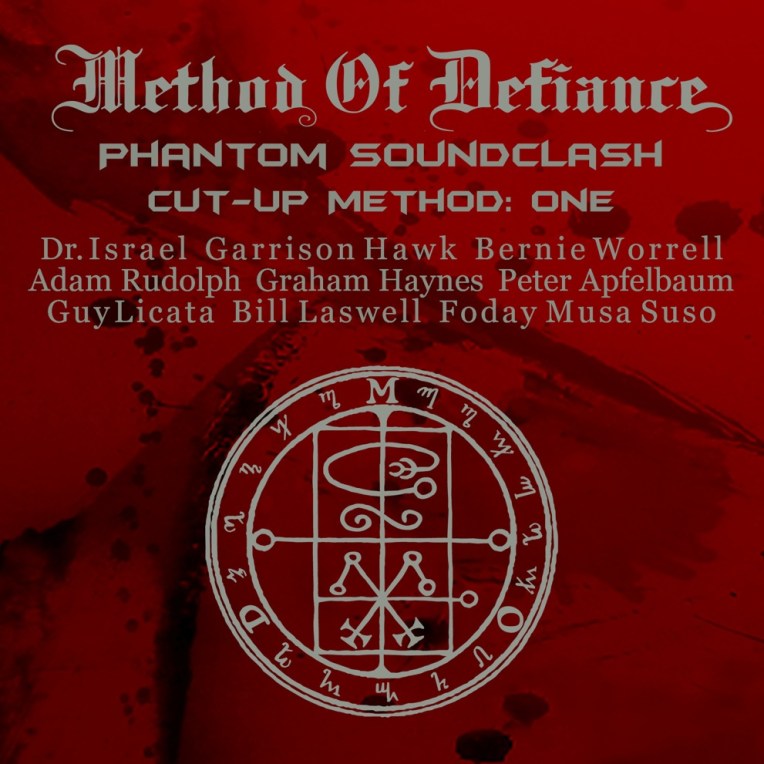
Harmony of the spheres is dead. Say hello to harmony of the tesseracts. A group of embodied souls, each the temporary manifestation of an endless truth, has given rise to this multidimensional mandala. Systemic remixologist Dr. Israel, dancehall ambassador Garrison Hawk, P-Funk pioneer Bernie Worrell, Gambian myth-keeper Foday Musa Suso, percussionist Adam Rudolph, trumpeter Graham Haynes, saxophonist Peter Apfelbaum, and drummer Guy Licata occupy its outer spectrum—a veritable band of bodhisattvas—while Bill Laswell mans the controls, his bass an anchor slung from an ancient Vimāna into the present.
The album consists of one 38-minute track called “Nebuchadnezzar,” a name conjuring buried secrets, unburied symbols, and, beneath all, a fluid skin shared by humanity and animality. Such is the vibe with which Worrell’s keyboarding paints a dream so tender and immediate that every tear it sheds produces another weeping eye. We are scraped into reality by a distant mechanical whir, one in which is sung all futures as if they were insects poised on the horizon’s mountainous tongue. Purification is the illusion by which they lash at anyone who would turn away. A charging rhinoceros of sound awaits those who remain, its horn tearing through the underbrush like a shark ready to breach its karmic enclosure and masticate enlightenment at the vector of its own cerebral cortex.
The ensuing beat is its signature. Like a chemical reaction without visible effect, it veils chaos with order. Suso’s kora comes as a voice of earth amid the stormy heavens, a bird of flesh and feather bound to metal, the frequency of which has a way of matching whoever chooses to listen. Haynes’s trumpet, meanwhile, is the trickster overhead, jumping from cloud to cloud in a matrix of its own design. But no matter the singularity grasped during the listening process, each instrument is but one star in a crop dusted with galaxies. For what should emerge from the smoke and thickness of being but a memory of organ and choir folded like an origami version of itself and glued into the pop-up book that birthed it.
Phantom Soundclash foregoes the lofty ideal of the mash-up as a blender switched to puree, favoring instead the chunky textures of a broken machine, the inputs of which yield discernible hybrids. This is music that treats its own skin as a tattooable surface, even as it grinds itself along an inkstone of modulation toward sacrifice.
The 2004 Summer Olympiad was an unprecedented event for its host city of Athens. Under the motto “Welcome Home,” 10,625 athletes representing 201 nations competed in 28 distinct sports: a veritable sea of bodies representing the human form at its finest. All the more appropriate that, following the Parade of Nations, Björk should fill the stadium with her anthem, “Oceania”—a homecoming of a different sort, concerning currents more powerful than all those bodies combined. “You have done good for yourselves since you left my wet embrace and crawled ashore,” she sang, Mother Nature presiding over her children before they ran, leapt, and tumbled their way through hundreds of demanding events. Here, conspicuous yet perhaps unnoticed, was the deeper origin story of the games: somewhere within, at the mitochondrial level, proliferated feats of prowess that we could only dream of replicating without. As Björk stood rooted, her dress unfurled to cover the entire field, a screen for the world map projected across it. So immense was the message that those in attendance or watching via satellite might very well have missed out on the real opening ceremony taking place, a call for humanity to recognize itself as not a closed but open circuit. It was a filial message to the very cells that made possible the pageantry about to ensue. It was downright cosmic.
The Olympic performance was a grain of sand compared to what was still to come. Nucleated in Björk’s 2004 album Medúlla, off which “Oceania” was the first single, and growing further in the 2007 sidewinder that was Volta, said grain revealed itself as the pearl of 2011’s Biophilia, her eighth full-length studio effort, carrying all the primal energy that had gone into her career since her formative days as lead pixie for alternative rock outfit, The Sugarcubes. Only now, she was no longer interested in the pixie (itself an identity formed of popular misconception) but in the chemical composition of dust that marked its lines of flight, in the veining of its translucent wings, in the audible dimensions of its fantasy. Understandably, yet glued by little more than platitudinous honey, the media hive mind went abuzz with choice adjectives—“revolutionary,” “groundbreaking,” “ambitious”—in reference to Biophilia. Other words seemed to fall short in describing an album that practiced what it preached through an array of invented instruments, intuitive compositional techniques, and, most notably, an accompanying app by means of which listeners could immerse themselves in each song. Yet was all this talk of revolution obscuring the album’s fundamental message? I think yes.

Biophilia represents not so much revolution as involution. In other words, it concerns itself with the entanglement of things. Neither the pinnacle of an evolutionary process nor the beginning of one, it is a looking glass tilted to catch more light than our eyes can tolerate, so that only our ears can house the excess. Biophilia is not a call to nature, per se. It is, after all, a thoroughly technological object. Rather, it engages with, and admits complicity in, the exploitation of nature. The result is not escapism but a scape-ism: a bare chunk of reality housed like a geode in want of a good smash. Its many references spread as fingers from a single hand, each with independent function united by utility. Consequently, the only way to approach Biophilia with any sense of faith is through what we might call a “posthuman” aesthetic, which takes a return to origins as a means of imploding distinctions and hierarchies between living things, technologies, environments, and states of being in one gigantic, beautiful mess. Peculiar to Björk’s sound is its insistence on echoes beyond expression and identity. To be sure, when listening to her music there is an undeniable “Björk-ness” that reverberates, pervades, and glows. Yet with it comes a desire to look past the equation of product with artist: she wants to interrogate herself until there is no longer a self to interrogate. Her music compresses the cybernetic triangle of Human-Animal-Machine into a single compact disc that turns galactic at laser’s touch.
Björk wants us to know that sound and voice, while nominally different, can be one and the same. Anthropocentric thinking tends to align the voice with subjectivity, suffused as it is with the personality and quirks of its possessor, while sound is said to bear the marks of objects, which act as receptors, vessels, or mediators between vibrations and their translated messages. Björk validates no such boundaries. The sexes blend into a self-replicating whole, and the uncanny valley gutted between nature and technology overflows with generative force. Biophilia abides by laws that cannot be captured by the recording process alone, but may be fully experienced only by the sensory body. As the album’s title implies, its music espouses inherent appreciations of nature. Throughout, Björk’s voice flits in and out of organic and synthetic noises with such consistency that it becomes a noise in and of itself. The outside dwells inside, and vice versa.
As artist and performer, Björk embraces not one but many natures. Primary among them is the biosphere of her music, developed over decades through an admixture of self-producing and meticulously constructed sign(al)s, and of which 1997’s Homogenic was an attempt to represent her native Iceland. In a sense, her birthplace has taken on mythic qualities as an ecosystem of geological signatures. In the face of all this, Biophilia has proven that Björk is less interested in making concept albums and more in making albums about concept—specifically, how we might undo the concept of nature as a world apart.
Björk’s visual persona has, of course, been rife with posthuman impulses—quintessential examples being her videos for “Hunter” (1998, dir. Paul White), in which she struggles to hold her shape against cellular transformation into a polar bear, and “All is Full of Love” (1998/99, dir. Chris Cunningham), in which her face and voice are modeled onto sexually suggestive robots. With Biophilia her music has come to embody those impulses to the fullest. The hints were always there. Only now the sounds and topographies have aligned. Biophilia treats nature itself as instrument, its songs subject to the same hidden logic as those who consume them. As one who always wrestled with creative autonomy, Björk has at last conceded autonomy to a grander design. There is nothing to see and hear but the introspection of the album’s purpose, which infects the night like a virus, orienting its spread by the stars above and the biorhythms below.

Biophilia took five years to complete. This was due in part to extensive research and development, and because in 2008 a throat infection nearly robbed Björk of her voice forever, requiring rigorous dietary changes and surgery on her path toward reclamation. This physiological infraction leaves its traces throughout the album: never before has Björk’s body been so integral to the music she makes. It has become what cyborgian feminist Donna Haraway would call a “coordinated symphony,” a term that signifies the singular being as but one of countless others in a multispecies reality of flourishing, thrumming, and decaying matter. In no uncertain terms, Björk unties the knot of exceptionalism, which posits humans as free subjects in a realm of artificial objects, in favor of a frayed model in which pieces of everything are embedded in all else. Doing so, she reminds us that music is a set of haptic coordinates in a living universe. It is the symbiosis of life, the alliance between what is immediately perceptible and that which remains invisible, molecular. Biophilia is thus a celestial body. At the center of its concentric orbits spins a sun of such holistic potential that we cannot help but read scientific exactitude into every poetic slip with which Björk regales us. As Thoreau once wrote, “The effect of the slightest tinkling in the horizon measures my own soundness.” Björk likewise broadens the notion of horizon to include outer and inner space. Following in Thoreau’s footsteps, she uses sound to imagine, to reject genealogies in favor of rupture, to make audible the intermezzo between life and afterlife.
If anything, Björk is a traveler—not only around worlds but also between them. Hence the core message of her art: we are always crossing over, if we just listen for it. With this in mind, we do well to move beyond animist reductions of Björk’s creative process and into the blood that animates that process. She is neither a prophet for nor a product of the otherworld. She is an ambassador for us, of us, among us.
Biophilia is proof that deep space is not a void but a mirror. The songs are barren in presentation, bringing out only those elements necessary to express them. There is an air of intrusion and discomfort in the arrangements, which lends them to the inherency of each bodily organ on display. Songs occupy unique cells in the album’s corpus, as seen through the phases of “moon,” in which shards of development initiate a cycle of narrative development and emotional transference. Caught in the act of its own biorhythms, her midsection is, as depicted on the album’s cover, torn yet held together by strings. The temperature is lukewarm, a median of day and night, of the sun and its many masters. In her lyrical sway, Björk emphasizes the contact of word and flesh in the harp’s finger-plucked sequences: skin against gut, flexion against tautness, the ellipsis of saliva emerging from and flowing into the body. She is a clock being wound by interstellar hands, numbered by stardust, and planed by nebulae. She enables the failure of human activity to be its greatest error: a necessary learning brought about through imperfections of survival.
It is also how we might read the unpredictability of “thunderbolt,” which by its accomplice thunder turns the air into a sounding board. Arpeggios move with the solidity of stone, while Björk admits to craving miracles in the throes of electric shock. She wants to pull the roof off this model home we call society and repaint the walls with our stormy insides. The keyboard and her voice are ocean and shore, each the dominant lover in never-ending copulation. Electricity moans with the tautness of a Tesla coil winding its internal belt. The sequence whirls, for all a biological dervish, as Björk sings of romance, her recessive gene. Her surface becomes encrusted—bejeweled, if you will—with barnacles, to be strung as a locket around the neck of a goddess who has better things to do than stir her own pot.
The spatial focus of “crystalline” gives precedence to the unoccupied and reads into its vacuity a pregnancy of time. And while the song takes its structural cue from mathematical formations, it uses them to explore the lengths to which the mind is able to travel when its nervous domicile is compromised.
The tenderness of “cosmogony,” a meta-lullaby, touches music of the spheres with the barest of grazes, opting for, in place of ideal harmony, an equilibrium of unequal utterances. It is the album’s soft center, an origin story of foxes and gestures that are a rehearsal for transubstantiation. A choir of voices floods the plains from the inside out, as if to mock the lack of rain as environmental suicide.
Thus do we scrape our knees on the eminence of “dark matter.” Herein thrive the scales of her unfolding, triggers of belief set not for salvation but for the encumbrance of supernal minds, each relegated to the backs of shelves like forgotten curios. Björk is making us aware of the loneliness of cosmos through this balancing act of a song that bores deep into the skull and wears the brain like a shawl.
By the time we reach the “hollow” of her ancestral musings, our shared DNA becomes refracted through the properties of speed. Through this ecosystem of swimming fish, the beat treats opening as closure, a tear of memory tripped along the stump to become fungal reality. Love has found its own vision; it manifests itself as “virus,” in which Björk proselytizes generative relationships between matter and energy. It is the long-lost daughter of Vespertine, a surrender to the rhizome.
But where that 2001 predecessor was designed for portability, Biophilia is for digestion. The former’s patterns now yield genuine interest in telescopy, the microbiome of which finds expression in layers of anti-sentiment. Such attention to detail makes the interactions of pleasure-seeking bodies in “sacrifice” all the more poignant for their allegiance to musical notation. Their acute givings-in, rendered on the novel sharpsichord, set biological snares of femme power. They constitute a breach of cosmological contract, the pains of childbirth transformed into supernovas. Collectively, they are the “mutual core” by which all movements beneath our feet find unity with aboveground pursuits. The strife of distant politics hangs itself from the constellations, replaced by lines of flight from another future. In such instances, Björk is stronger than the music.
In ending with “solstice,” she has given us all the seasons in one diurnal map. Through the pendulum harp, a vessel for Earth’s gravity-rich blood, she refracts into multiple selves. A halo of sun links through another of moon, pushed and pulled until each tastes like the other. Leaving us with nothing more than an unpolished Earth in the palm of her hand, she pops the only morsel of creation that matters to us like candy into her mouth.
It is by mouth—specifically, that of paternal naturalist David Attenborough—that the album’s iOS app is introduced. His discussion of hidden phenomena such as sound and music leads to a semi-glorious paean on technology, which for him is the mechanism by which the invisible is made visible. And so, this app, of which one can become sensually knowing, is where nature, music, and invention come together. The listener’s body, like Björk’s own, becomes a gateway between the universal and microscopic.
In these audio-visual exercises, we are reminded that the very notion of existence turns the pages of our flesh, subject to the same interventions and marginalia that shape and define any given life. In such a model, we and the world are ineluctable, at once subjects and objects. In light of this, the notion that non-human cells dwell in those very sites of musical production—mouth, skin, and gut—means that Björk’s music offers, as experienced through the filter of programming, crosses boundaries of consciousness from heart to technology and back again. Through her manipulations, we trust the music to perform at our touch. In searching out needs in these acts of play, the human figure becomes obsolete: negation of the handler in question foregrounds the severance of self-expression.
Music critiques form. This is what we mean when we say it has characteristics. The musician’s challenge is to get the form to walk on its own. The aware musician craves the music’s innate subversiveness, lives it, and brings about its radicality through a redefinition of vocal acts. By condensing language, getting to its core, Björk cuts language through her art. This doesn’t mean that narrative is her ultimate goal. To communicate is not to connect but to transgress, loudly and clearly. Music must be manipulated because it can manipulate us.
While many a revolution, with varying degrees of success and compromise, has succeeded in opening perceptions of equality or value of the demeaned, the object without sentience remains the model by which human activity comes to be measured. The fight to live, the struggle to accomplish the most quotidian actions, is the blood of any musical performance. Wielding a microphone, walking through a door, smiling for a camera: these actions the musician must break down into base components before being able to thread them into smooth and believable action. But Björk wants to eat the film of her process, soundtrack and all, until she and it are inseparable. Like a film, each action consists of frames, and these she rolls in real time by recreating their death. This is why her music lends itself so well to the touch screen. It collects all senses into one fingertip.
Biophilia is Björk’s most spiritual statement to date, precisely because it makes no mention of spirit. But, like the famous swan dress she wore to the 2001 Oscars, it is prone to misinterpretation. Both are odd couplings that don’t sit well with a society uncomfortable over the idea of hybrids. If anything, she was demonstrating the continuity of bodies and the absurdity of wearing one for show. But, above all, she reminded us that nothing can survive without a fierce intimacy across all species, skins, and systems. Here is a wound that wants to kiss your own.
My latest review for RootsWorld online magazine is of the acoustic trio Three Cane Whale’s third album, Palimpsest. Highly recommended for those who like their music sparse, beautiful, and direct. Click the cover to discover!

My latest review for All About Jazz is of the Alex Merritt Quartet’s superb CD debut, Anatta. Click the cover below to read and listen.
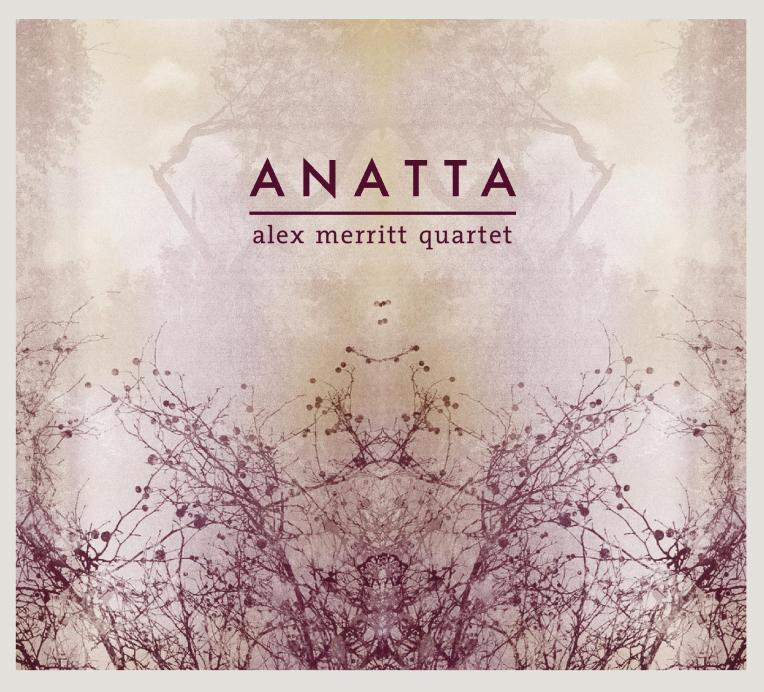
On Clockhead Goes to Camp, multi-instrumentalist and composer Daniel Bennett took listeners on a storybook journey. But if that 2013 album was a Spirograph drawing, this 2015 follow-up is a Spin Art extravaganza. The Mystery at Clown Castle brings to fruition a reimagined lineup, situating the bandleader (who capably switches between alto saxophone, flute, piccolo, oboe, clarinet, and piano) among the fresh aliliance of guitarist Nat Janoff, bassist Eddy Khaimovich, and drummer Matthew Feick.
The present cast of characters is no less eclectic than the former, and guides the project along fruitful avenues of ingenuity. The roster change, as made clear in an e-mail interview, is in no way the result of creative differences, but instead born of the need for a touring band. “I never burn bridges,” Bennett assures. “My musicians are like family to me.” Bennett in fact continues to work with his Clockhead musicians on a regular basis, but has taken to test-driving newer associates through his monthly residency at Tomi Jazz in midtown Manhattan. The vibes honed on Tomi’s stage pay their dividends in the studio, where the band’s unities, but also its lively fragmentations, acquire full expressive reign.
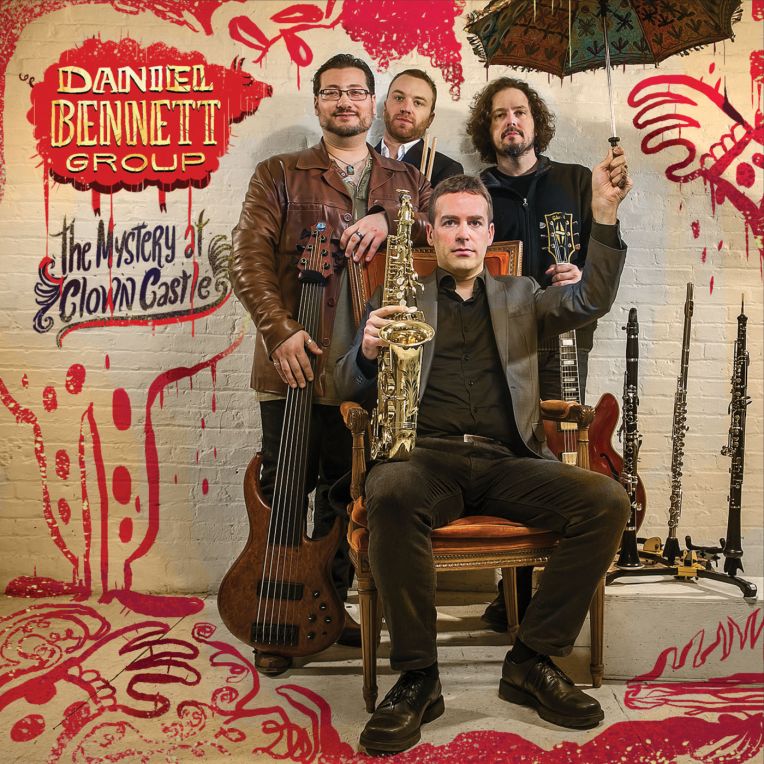
Although Mystery feels like a continuation or companion of Clockhead, it’s also very much its own animal—or should I say animals, because the set list is populated with them. “Paul Platypus” is the first of an evocative menagerie and finds the band firing on all cylinders. It’s also a mighty fine vehicle for Khaimovich, who Bennett calls “one of the busiest bass players in New York City” and who encouraged the bandleader to make use of electric bass for the first time. The instrument adds tactile shading here (and subtlety to the nocturnal carnivalesque that is “The Spinning Top Stood Still”), while fleshing out the lower spectrum beyond Janoff’s six singing strings.
The flute-led “Nine Piglets” is reprised from its last appearance on Clockhead in a fully reinvigorated arrangement. This radio-friendly tune, one of the band’s most requested, discloses Bennett’s overtly pop influences, which peek their heads above water on “Strange Jim And The Zebra” and “Uncle Muskrat.” The latter boasts the talents of pianist Jason Yeager, a prolific sideman whose backyard jam session chops lend further delights to two freely improvised tracks.
The album’s nonhuman considerations come at us like a stampede in the spoken poetry of Britt Melewski, who in “Morning” shouts, “What animal are you?” It’s a profound, if tongue-in-cheek, question to consider in such a whimsical musical universe, the answer to which can only be articulated in melodies without words. Such contrasts take to higher altitudes in his creepily auto-tuned “Minor Leaguer,” beneath which oboe and guitar lay down a beautiful stage.
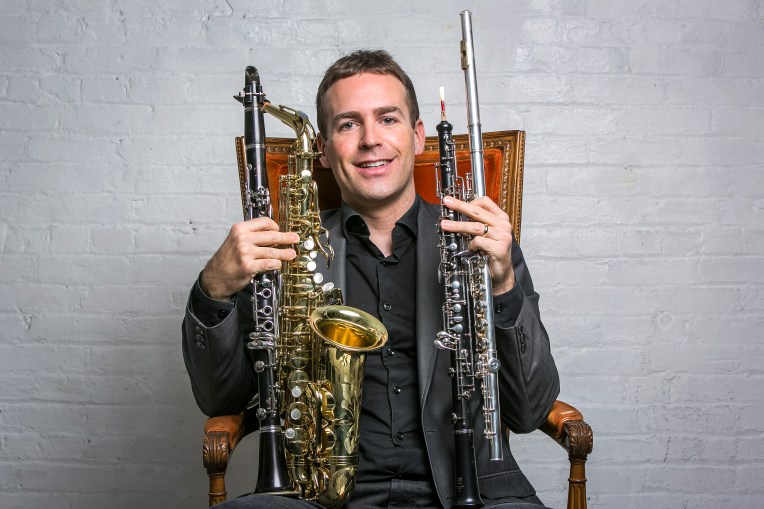
(Photo credit: Jesse Winter)
Opener “The Clown Chemist” is duly representative of Bennett’s style. Technically proficient yet full of sparkle and personality, its circularity opens the way for creative ornamentation. As throughout the album, the melody is primary, as attested by the fact that Bennett composes first at the guitar, as one would a song, before transferring to his lead of choice. Mystery is likewise recorded like an indie band. Producer MP Kuo does little to mask the band’s live sound, which breathes through tracks like “Flow” with cinematic clarity. When I asked Bennett about his nonmusical influences, his response was as multifarious as his music:
“You’re going to laugh, but I really love formulaic television shows from the 1980s. I love the ‘good guy vs. bad guy’ plots. And the good guy always wins. That’s the way it should be! There’s too much cynicism in this world. So I do it my way. I don’t follow jazz trends and I don’t push any political agenda with my music. I just want to make people feel good. I am on this earth to be a servant to others. A wise man once told me, ‘Worship God and serve the people.’”
It’s a fine philosophy to follow for a group just voted “Best New Jazz Group” in 2015 by Hot House Jazz Guide and, with another album already recorded, these cats are on their way to making the future of jazz that much brighter.
For more information, check out their official site here.
 Between Sound and Space: ECM Records and Beyond