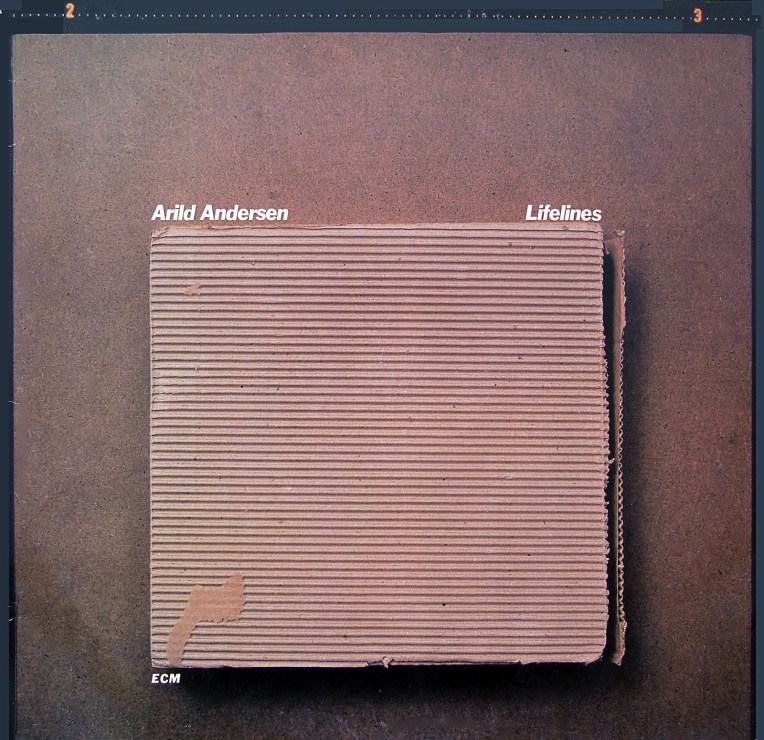
Arild Andersen: Lifelines (ECM 1188)

ECM 1188

Arild Andersen
Lifelines

Arild Andersen double bass
Kenny Wheeler fluegelhorn, cornet
Steve Dobrogosz piano
Paul Motian drums
Recorded July 1980 at Talent Studio, Oslo
Engineer: Jan Erik Kongshaug
Produced by Manfred Eicher

After an explosive introduction, Arild Andersen’s Lifelines kicks us like a soccer ball down the field of “Cameron,” where we are intercepted by Steve Dobrogosz’s swirling keys. Into this hammered storm, Andersen drops his bass, keeping us centered in this staggering opener. And staggering this album most certainly is, resting on a fine edge of airtight cohesion and loosened seams. We find more of the same in the loveliness of “Dear Kenny” and in “A Song I Used To Play,” both teetering on a line drawn to Andersen’s careful scale. Even the ballads seem to flirt with a great precipice. Falling from the haloed clouds of “Prelude” and into the depths of the two-part title piece, we find ourselves smack dab in Enrico Rava territory. The album’s highlight comes in the form of “Landloper,” a 50-second bass solo that sparks the inner fire of “Predawn.” In keeping with his penchant for optimistic endings, Andersen gives us “Anew.” Paul Motian is delightfully frenetic here and matched by Dobrogosz’s erratic song, veiled only by the sustain pedal’s illusory veneer.

What moves me most about Andersen’s approach to the bass is his ability to hold onto a quiet heart even at his most ecstatic moments. Like ECM’s other great veteran, Charlie Haden, he always keeps himself firmly rooted in the melody. Wheeler and Motian prove loyal allies, regaling us like wizened elders with tales of old. The real star of this date, however, is Dobrogosz. In his only ECM appearance, the American-born pianist (now a longtime resident of Stockholm) seems as if he could expound for hours upon every motif and never repeat himself. He is the kindling that keeps this music burning, slow-roasting it to irresistible succulence.

<< Rainer Brüninghaus: Freigeweht (ECM 1187)
>> Jack DeJohnette’s Special Edition: Tin Can Alley (ECM 1189)

Miroslav Vitous Group: s/t (ECM 1185)

1185 X

Miroslav Vitous Group

Miroslav Vitous bass
John Surman soprano and baritone saxophones, bass clarinet
Kenny Kirkland piano
Jon Christensen drums
Recorded July 1980 at Talent Studio, Oslo
Engineer: Jan Erik Kongshaug
Produced by Manfred Eicher

This grouping finds Miroslav Vitous in the company of fine musicians, whose idiosyncratic strengths manage to avoid conflict for an unusually engaging, if inconsistent, set. The Czech bassist’s opening tune, “When Face Gets Pale” grasps the tail of a strong melodic serpent, riding through tall grasses and intermittent sunlight. Along with the lively, Arild Andersen-like lead, we are treated to the animations of Kenny Kirkland at the keys—a sound so burnished that the squeal into being of John Surman’s baritone becomes a rupture to be cherished. A fine place to start. Yet unlike many ECM albums, which begin enigmatically before launching into more patently composed material, this is the other half of that swinging door, starting with a full-on group-oriented sound and unraveling itself inside the freer improvisational architecture of “Second Meeting” (and, later, of “Interplay”). Here, bass clarinet is front and center and plays patty-cake with the rhythm section amid some bubbling pianism. Of the latter, we get more in the Kirkland original, “Inner Peace.” Between bass volleys and fluid gestures, Surman’s throaty baritone again paints its corroded beauty across the sky. Everything Surman touches is beautified, and in his one compositional contribution, “Number Six,” we find the album’s most enchanting cartographies. His soprano grabs hold and never lets go for the duration of its wailing journey, while also giving Kirkland plenty of bounce for a swan dive. Vitous, meanwhile, shows just how nimble he can be in “Gears,” while in “Eagle” his classical training comes forth in fluid arco lines.

Though seemingly at odds with critics, and understandably so for its few false steps, this out-of-printer is still solid. By no means essential, but neither one to pass up should the opportunity present itself.

<< Gary Burton Quartet: Easy As Pie (ECM 1184)
>> Eberhard Weber Colours: Little Movements (ECM 1186)

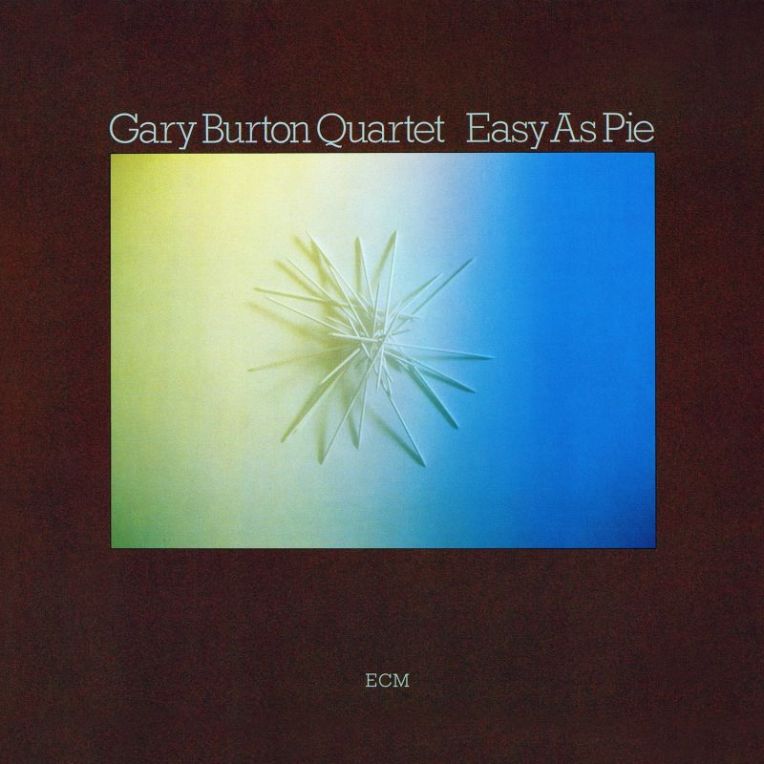
Gary Burton Quartet: Easy As Pie (ECM 1184)

ECM 1184

The Gary Burton Quartet
Easy As Pie

Gary Burton vibraharp
Jim Odgren alto saxophone
Steve Swallow bass
Mike Hyman drums
Recorded June 1980 at Tonstudio Bauer, Ludwigsburg
Engineer: Martin Wieland
Produced by Manfred Eicher

Gary Burton’s involvement in any project guarantees smoothness and melodic robustness, and Easy As Pie is no less promising than one would expect from the mallet master. As the title may imply, the results are generally laid back, but ever virtuosic. From the first licks of “Reactionary Tango” (Carla Bley) we get a taste of the banquet about to be laid before us. Jim Odgren shines on reeds the pages of this developing story, snipping from them a string of paper dolls. As one is swept away by the strains of “Summer Band Camp” (Mick Goodrick)—a fantastic piece that first appeared on the composer’s In Pas(s)ing—one notices just how integral Odgren is to the overall sound. “Blame It On My Youth” (Oscar Levant) is emblematic of what Burton does so well, capturing moments and memories as if in snapshots of living sound. In this solo piece, he sews that feeling of nostalgia into every motivic cell of activity. And further in “Isfahan” (Strayhorn/Ellington), a smoky ballad with plenty of shadow in which to luxuriate unseen, Burton turns that shadow into liquid gold in the throes of his soloing. Just so this joint doesn’t weigh us down with too much dark energy, two Chick Corea tunes, “Tweek” and “Stardancer,” give us plenty of beat to chew on and highlight Steve Swallow’s unstoppable groove. Between the kaleidoscopic drum solo from Mike Hyman and Odgren’s storybook endings, there is more than enough color to go around.

The members of Burton’s quartet work like kilned clay, which must be scored before being fit together to survive the heat with which it is imbibed. If this is dinner jazz, then prepare to be stuffed.

<< Corea/Burton: In Concert, Zürich, October 28, 1979 (ECM 1182/83)
>> Miroslav Vitous Group: s/t (ECM 1185)

Bengt Berger: Bitter Funeral Beer (ECM 1179)

ECM 1179

Bengt Berger
Bitter Funeral Beer

Bengt Berger ko-gyil (Lo Birifor funeral xylophone)
Don Cherry pocket trumpet
Jörgen Adolfsson violin, sopranino, soprano and alto saxophones
Tord Bengtsson violin, electric guitar
Anita Livstrand voice, bells, axatse (rattle)
Recorded January 1981 at Decibel Studios, Stockholm
Engineer: Thomas Gabrielsson
Produced by Manfred Eicher and Bengt Berger

Swedish percussionist Bengt Berger’s deep interest in Ghanaian folk music and Don Cherry’s wayfaring trumpet inform every moment of this stunning record, one of a handful in ECM’s back catalogue to be digitally unearthed, not unlike the site on the cover. In contrast to many likeminded projects since, which seek to augment the “indigenous” with the “ingenious,” in the dregs of Berger’s we encounter something all too rare in the world music market: unforced sincerity. Take, for instance, the song that forms the Kundalini spine of the title track. The eclectic listener will recognize it as the sampled hook in “Hypnoculture” by Tears for Fears frontman Roland Orzabal. While in the latter it adds a touch of the “exotic” where really it isn’t needed (to Orzabal’s credit, the song is, like all on the solo album on which it appears, a sketch of ideas and not meant to be taken as a definitive statement on anything), here it thrives in an utterly organic assemblage. The addition of thumb piano and rooted drumming heighten the sense of immediacy that pervades the album, and not even the reeds of Jörgen Adolfsson feel out of place. The ululations of vocalist Anita Livstrand hit the psyche like the paroxysms of Mary Margaret O’Hara in Morrissey’s “November Spawned a Monster.” The acutely percussive “Blekete” is a walkabout into a land that is as corporeal as it is immaterial. Cherry is the brightest ember in the hearth that is “Chetu,” which continues the trance. The Fela Kuti-like drive of “Tongsi” beckons us with open arms before leaving us in the care of “Darafo.” This funereal dance begins with more pronounced instrumentalism, presenting us not with a mystery to be untangled, but rather a clear set of variables to be re-tangled into the mystery from which they came. The infectious soloing tightens into a record scratch of ecstasy, leaving only the ever-present beat to navigate the inevitable fade.

As with the work of CODONA, Bitter Funeral Beer epitomizes ECM’s pioneering approach to the world music idiom. Integration is the keyword here, collectivity its modus operandi. Each voice is well-fermented, so that one always gets the feeling of listening to a field recording and not a piece of studio trickery. This is music that accepts us as we are and allows us the opposite of escapism: a pure awareness of the cavernous self that defines the open channels of our communities.

One of ECM’s absolute finest and a window into the label’s evolution toward a sound-world without borders. As bitter as this beer is, one sip is all you’ll need to convince yourself that the cup must be drained.

<< Barre Phillips: Music By… (ECM 1178)
>> Pat Metheny: 80/81 (ECM 1180/81)

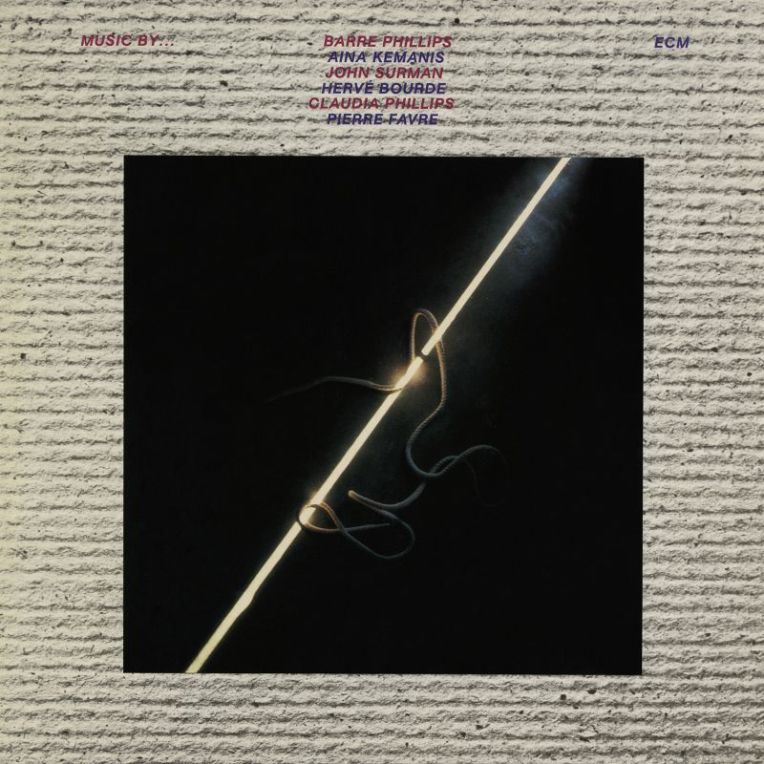
Barre Phillips: Music By… (ECM 1178)

ECM 1178

Barre Phillips
Music By…

Barre Phillips bass
Aina Kemanis voice
John Surman soprano and baritone saxophones, bass clarinet
Herve Bourde alto and tenor saxophones, flutes
Claudia Phillips voice
Pierre Favre drums, percussion
Recorded May 1980 at Tonstudio Bauer, Ludwigsburg
Engineer: Martin Wieland
Produced by Manfred Eicher

Long before Twitter was a microblogging phenomenon, it was the name of the first cut on this out-of-print gem from Barre Phillips. Thankfully, there is nothing micro about it. Driven by train-like syncopation from drums and bass clarinet, this attention-grabbing burst of virtuosity introduces us to the bubbling acrobatics of daughter Claudia Phillips, a vocalist whose career as chanteuse found a niche in France in the 80s. Her sometimes-manic instincts are swept down the stream of Aina Kemanis, the voice of Journal Violone II. Together they form a magic triangle with John Surman’s own sinewy lines. With such exuberance and glottal depth as Claudia displays here, one can hardly keep one’s ears focused on anything but her brilliance. Her siren-like spindles prove to be a guiding force in the more freely improvised “Angleswaite” and, with Kemanis, trace fluid arcs in “Elvid Kursong” and drop like spores in “Pirthrite.” The latter is a bizarrely martial excursion that is at once march and requiem, made all the more so through the liquid alto of Herve Bourde. These facets contract into a single plane in “Longview.” Here, Claudia comes to life in a bubbling stutter, soon overtaken by Bourde’s tenor, left of center. “Entai” and “Double Treble” sound like an ice-skating bass and clarinet struggling for balance over a warping record, compressing the album into more rudimentary ciphers.

This is yet another fascinating cell in the stained glass window that is Barre Phillips, capturing both the thrill and pain of modernism and those quiet moments, few and far between, where the soul kisses the brow of alienation. The content is brought to fervent life by an impassioned participation that frolics at the intersection of speech and song. As a longtime fan of the Cocteau Twins and Elizabeth Fraser’s voice that drives it, I have sometimes wondered what she might have sounded like had she made an ECM album. With Music By… we begin to approach one possible answer.

<< Walcott/Cherry/Vasconcelos: CODONA 2 (ECM 1177)
>> Bengt Berger: Bitter Funeral Beer (ECM 1179)

John Clark: Faces (ECM 1176)

John Clark
Faces

John Clark french horn
David Friedman vibraharp, marimba
David Darling cello
Jon Christensen drums
Recorded April 1980 at Talent Studio, Oslo
Engineer: Jan Erik Kongshaug
Produced by Manfred Eicher

Faces documents the only appearance of versatile French hornist John Clark on ECM proper (he does, however, appear on a trio of WATT releases) and is one from a modest overall output as leader. Having performed with musicians as diverse as Paul Winter, LL Cool J, and Gil Evans, his tender considerations fit snugly with the Eicherian touch in this out-of-print session. Joined by David Friedman’s mallets, the particularly welcome presence of David Darling’s electric cello, and Jon Christensen on drums, Clark paints for us a rain-slicked character study of a life lived in slow motion.

Side A charts the album’s deepest waters in “The Abhà Kingdom.” Its understated flow of vibes, overdubbed horns, and cello courses in and out of sonar range, diving ever deeper with every muted clench, so that even Christensen’s accentuations seem to move at the speed of honey behind Friedman’s subdued yet strangely exuberant cartwheels. The afterimages of “Lament” would make the perfect backdrop for a Terje Rypdal excursion. Instead of that grinding song, we get the rounded icicles of Darling’s bow and the sustained arpeggio from vibes that leaves us hanging before dropping us onto Side B. Our guide on this descent is “Silver Rain.” The marimba vamp evokes an African thumb piano and affectionately embraces Clark’s processed horn. Friedman also shares a notable dialogue with Christensen here. Darling’s fluid threads are the binding force of “Faces In The Fire.” A comforting feeling of perpetuity abounds in that cello’s voice and brings out otherwise inaudible whispers. “Faces In The Sky” would feel right at home as the soundtrack for a road picture. Christensen beguiles with his delicacy, in which he cradles a delicate implication that never breaks, even under Darling’s far-reaching pizzicato. After all of this soul-searching, the carnivalesque “You Did It, You Did It!” ends the album in resolute jubilance.

Faces has a semi-porous quality and shimmers like the surface of an out-of-focus pool. It sits comfortably just below the rim of our consciousness, like a half-dream that one holds dear in the face of inevitable wakefulness.

<< Keith Jarrett: The Celestial Hawk (ECM 1175)
>> Walcott/Cherry/Vasconcelos: CODONA 2 (ECM 1177)

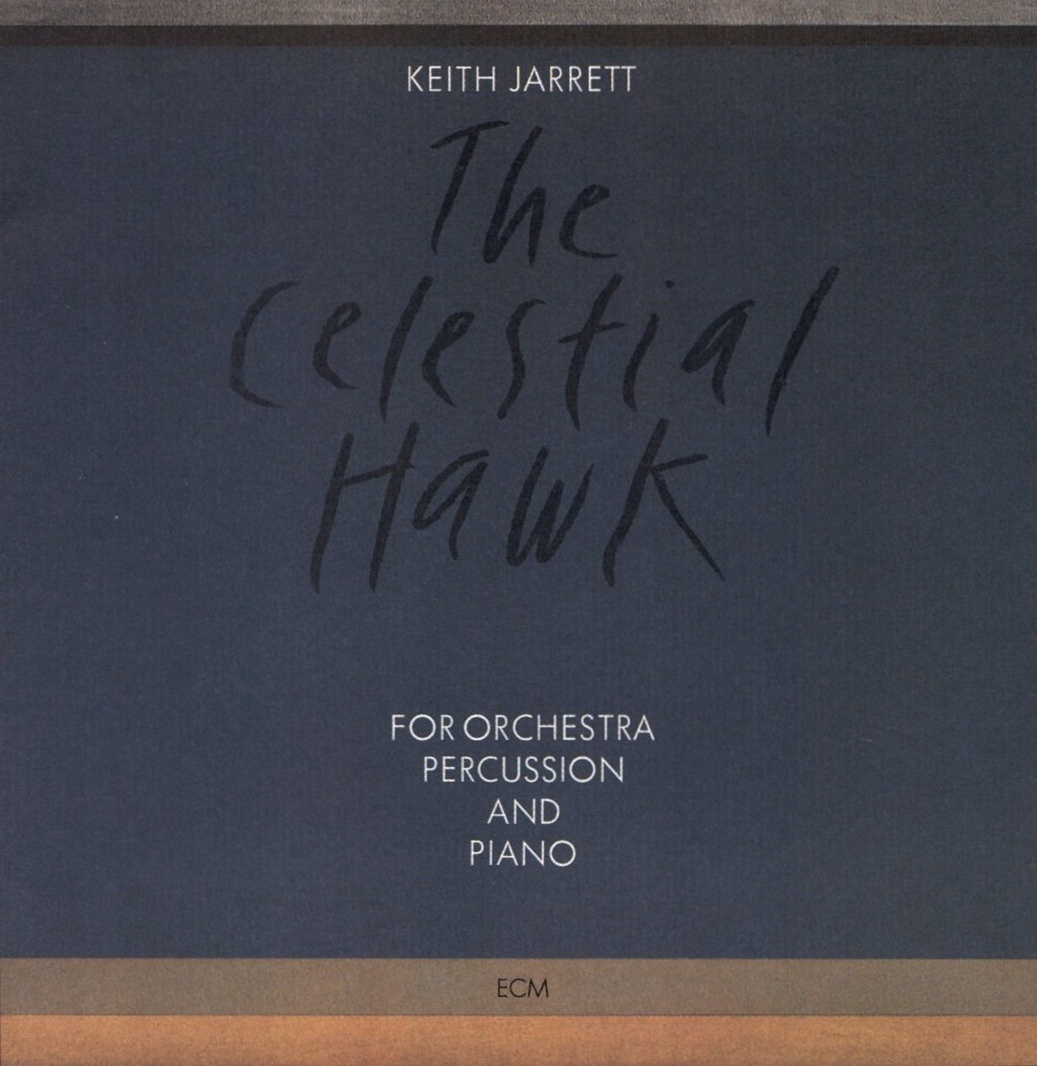
Keith Jarrett: The Celestial Hawk (ECM 1175)

Keith Jarrett
The Celestial Hawk

Keith Jarrett piano
Syracuse Symphony
Christopher Keene conductor
Recorded March 1980, Carnegie Hall, New York
Engineer: Stan Tonkel
Produced by Manfred Eicher and Keith Jarrett

Keith Jarrett’s classical modality often comes across to me as a dark pastoral, a variegated tapestry of intensity and withdrawal. And while The Celestial Hawk may be no different in this regard, it promises some brighter discoveries upon deeper listening. Against a gentle backdrop of percussion that includes timpani, snare, and triangle, Jarrett deploys his tiny fleets of high notes in the First Movement, out of which arises a delicate harp ostinato, doubled by piano and accentuated by woodwinds and strings, as a crystalline glockenspiel slowly clouds into less translucent ores. After a deep surge, Jarrett rows us into calmer waters alone at the piano, where dolphins in the forms of harp and mallet percussion soon join him. The Second Movement offers up the most cinematic passage of this piece. One can feel its images running, skipping, and emoting through lives unseen. We never stay in one thread for too long, for each is picked up by another into which the previous one has looped itself. The martial snare and cavalrous brass of the Third Movement glisten with the patriotism of an undiscovered country, bound to a manifest destiny in which walking is like flight. From behind the uplifted curtain, horns dance for us a message to prosperity. And yet even as the twilight descends, the oboe threads a ray of moonlight through the waters, bringing with it all sense of time for which beauty is but an afterthought to the truer beauties of slumber, where life ends in a crashing gong.

Despite being very programmatic, this music is far more than incidental to the narrative it describes. At times tumbling in billowy romance, at others even jarringly uncomfortable, Jarrett’s piano embraces itself, following the orchestral advice that surrounds it to the letter. It is an honest music, a painful truth, a call for peace in a violent world.

<< Keith Jarrett: Sacred Hymns of G. I. Gurdjieff (ECM 1174)
>> John Clark: Faces (ECM 1176)

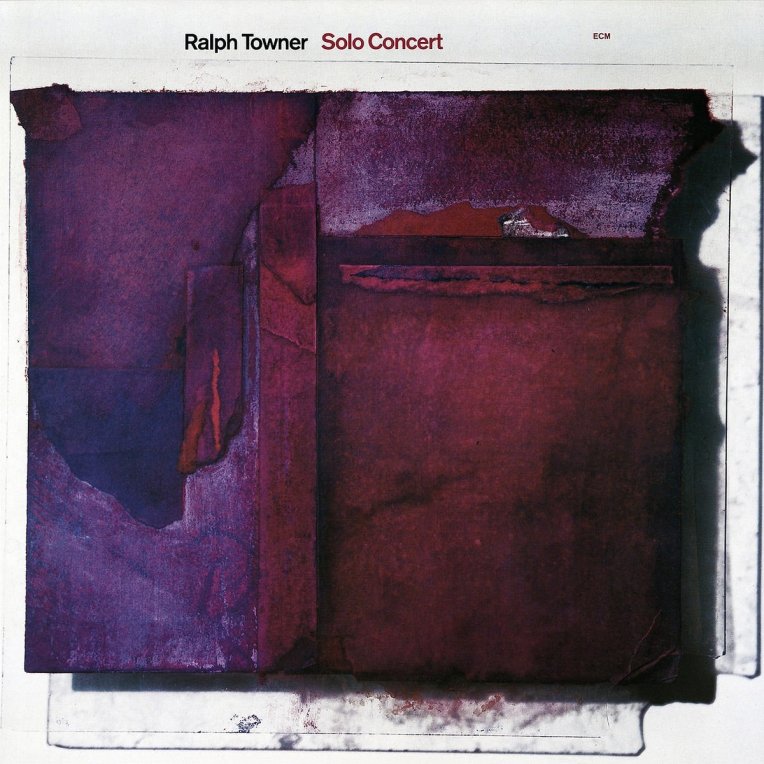
Ralph Towner: Solo Concert (ECM 1173)

ECM 1173

Ralph Towner
Solo Concert

Ralph Towner 12-string and classical guitars
Recorded October 1979, Amerika Haus, München and Limmathaus, Zürich
Engineer: Martin Wieland
Produced by Manfred Eicher

Ralph Towner’s Solo Concert holds a special place in my ECM-adoring heart, for it was my introduction to a guitarist whose skills have since become staples of my listening life. Lovingly recorded in the open concert spaces of Munich and Zürich, Solo Concert is to the guitar what Keith Jarrett’s The Köln Concert is to the piano. It’s that good.

Towner’s own compositions make up the bulk of the album. The opening “Spirit Lake” is the most transcendent of these and exemplifies Towner’s craft as both technician and melodic wellspring. Notes drip from his 12-string with shimmering lucidity, dipping below every motif it can swing from as it blossoms into a brilliant flourish of an ending. What at first seems an abstract improvisational exercise in “Train Of Thought” reveals the instrument’s hidden voices, in which a pulsing bass lingers and harmonic clusters soar. The staggered melodies and banjo-like articulations of “Zoetrope” contrast superbly with “Chelsea Courtyard,” in which dissonant arpeggios lie in the grass, above which the clouds are so thin they’re barely visible, and motivations even more so. Still, the music offers more than enough provocation as nostalgias flit by the windows of our attention, the curtains of which Towner opens to let in the light of a half-remembered day.

Towner also lays his hands on a pocketful of sparkling covers. Of these, the two by John Abercrombie—“Ralph’s Piano Waltz” and “Timeless”—are notable for their use of thumbed anchors, which provide a ghostly counterpoint to wider runs in the upper registers. Lilting syncopations trade places with jazzier throwbacks, packing melodic energy into increasingly compact cells. Yet it is with “Nardis” (Davis/Evans) that Towner truly enthralls. Played on classical guitar, it is a vivid standout that jumps headfirst into its themes before unraveling them in a blissful wave. Towner’s deft harmonies and prowess at the fingerboard leap with the precision of synchronized swimmers about to clinch a gold.

This is an intelligently assembled program of complementary music that shows the depth and breadth of Towner’s abilities more than any single disc. My only complaint is the applause that breaks the spell of every piece when it ends. Then again, I’d have done the same had I been there.

If you’ve ever wondered just how high a guitar can fly, then here’s your plane ticket.

<< Keith Jarrett: Nude Ants (ECM 1171/72)
>> Keith Jarrett: Sacred Hymns of G. I. Gurdjieff (ECM 1174)

Enrico Rava and Thomas Stöwsand (ECM 1166 & 1224)

On October 5, 2006, the audible world lost a tireless champion. Thomas Stöwsand was a musician and journalist by trade when he joined forces with Manfred Eicher in 1970. Over the next decade he helped lay earth for the secluded pantheon that the label would soon become. From early on he believed that the best way to promote ECM’s quickly growing scene was to bring it directly to the consumer. The crowning achievement of his efforts was the booking agency Saudades Tourneen, which he founded in 1983. Consequently, Keith Jarrett, Chick Corea, and Pat Metheny found themselves touring for the first time before European audiences. A healthy chunk of Stöwsand’s complete roster reads like an ECM hall of fame: John Abercrombie, Bill Frisell, Egberto Gismonti, Ralph Towner, Paul Motian, Dave Holland and many others all had the great fortune of being sucked into his whirlwind of passion. “I know he loved their music,” observes Nonesuch’s Bob Hurwitz, “but I think Thomas loved them as people even more.” This was, as Hurwitz goes on to say, a part of his legacy. I imagine it is also part of the legacies of every musician he represented. These were the people he surrounded himself with, the ones who fanned a flame much too extroverted to contain. Stöwsand lived fast, drove fast, and seems to have made connections as easily as one might breathe. His personal touch was felt, and still is felt, worldwide, as Saudades carries on his mission through the pioneering forces of John Zorn, the Kronos Quartet, Fred Frith, and the many others who funnel decades of close working relationships with the man into their unquenchable creative thirsts.

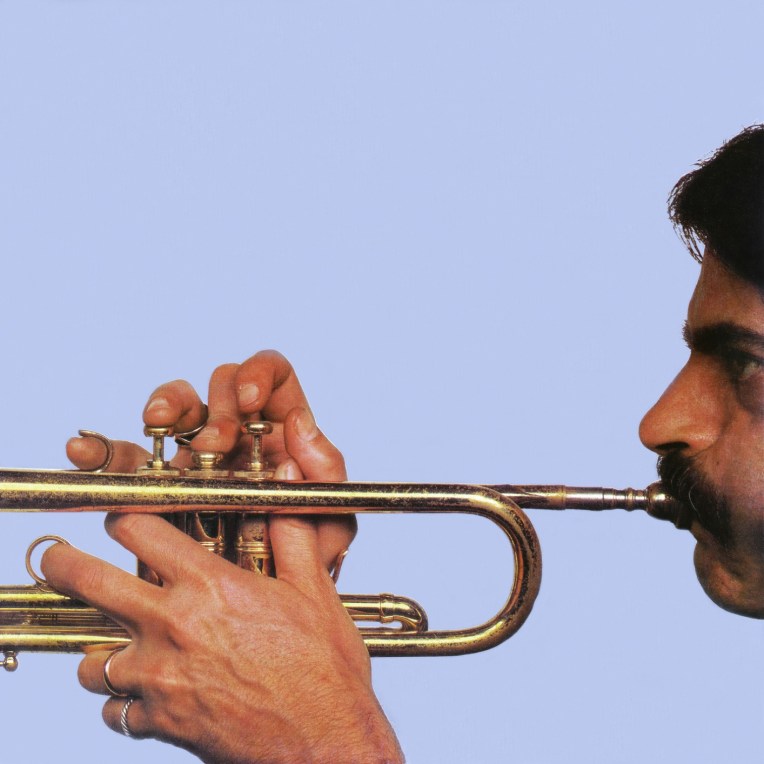
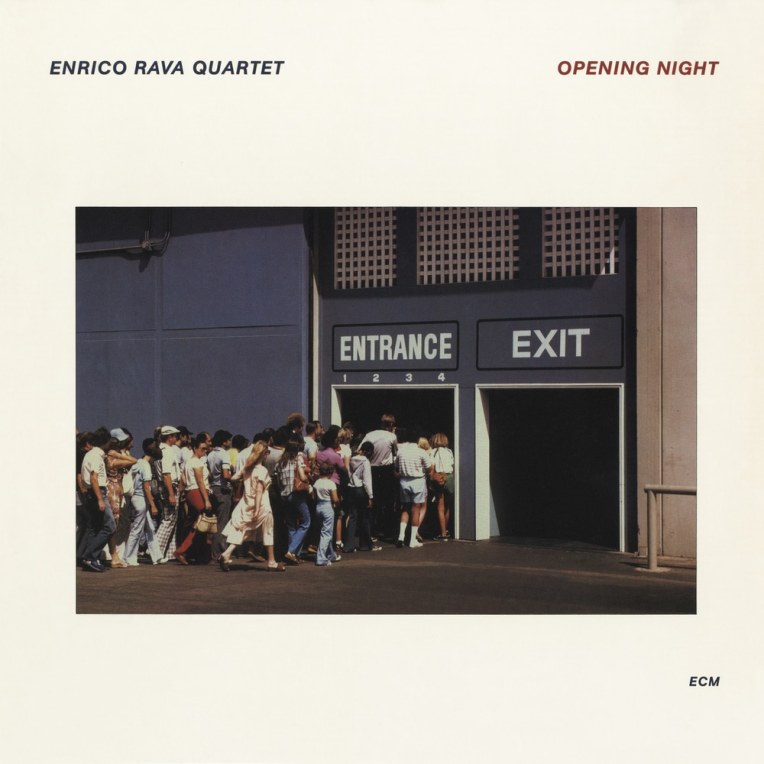
Yet behind his acute business acumen, infectious personality, and resounding laugh, Stöwsand was also quietly producing a fascinating catalogue of albums. Nearly all of these were available only on JAPO, though thankfully a gleaming handful of Manfred Schoof material has since been reissued on CD. There were two albums, however, that dropped needles directly to flagship vinyl. Both were recorded with Italian trumpeter Enrico Rava’s fledgling quartet at the famed Tonstudio Bauer and were the only two Rava albums not produced by Eicher. The first of these, the curiously titled >>Ah<< (released 1980), featured bassist Giovanni Tommaso and drummer Bruce Ditmas, while 1982’s Opening Night placed Rava alongside bassist Furio Di Castri and the great Aldo Romano on drums. Both feature Franco D’Adrea, whose pianism lights up even the darkest corners. Bafflingly, neither album has felt the touch of a laser, and so, for what it’s worth, here’s a play-by-play.
ECM 1166

Enrico Rava Quartet
>>Ah<< (ECM 1166)

Enrico Rava trumpet
Franco D’Andrea piano
Giovanni Tommaso bass
Bruce Ditmas drums
Recorded December 1979 at Tonstudio Bauer, Ludwigsburg
Engineer: Martin Wieland
Produced by Thomas Stöwsand

Feeling a little under the weather? Then open up and say Ah, because Doctor Rava is in! This warm rainy day session is the perfect sonic elixir for what ails you. The sumptuous diagnostics of “Lulu” lay their pianistic hands upon us first, and with them the album’s leitmotif. Rava and D’Andrea are in fine conversational form here, as they ever are, cracking open a Pandora’s Box of free improv before re-attuning to a smoldering vamp. Rava starts us off strongly in “Outsider,” in which he swings his rhythm section around and around like children holding hands in a field. A swift kick from Ditmas brings us solid thematic closure. “Small Talk” allows Tommaso his just airtime in what is by far the highlight of the examination. Rava checks our pulse in the groovier “Rose Selavy,” breezes wistfully through the title track, and gives way to “Trombonauta,” the album’s brief yet impactful ballad, before ending “At The Movies.” This eclectic ode breathes with the magic of Cinema Paradiso while threatening to topple from the weight of its own remembrance.

<< Gary Peacock: Shift In The Wind (ECM 1165)
>> Art Ensemble of Chicago: Full Force (ECM 1167)

… . …
ECM 1224

Enrico Rava Quartet
Opening Night

Enrico Rava trumpet, fluegelhorn
Franco D’Andrea piano
Furio Di Castri double bass
Aldo Romano drums, guitar
Recorded December 1981 at Tonstudio Bauer, Ludwigsburg
Engineer: Martin Wieland
Produced by Thomas Stöwsand

“I’m Getting Sentimental Over You” welcomes us with open arms as Rava skips, keens, wails, and laughs his way along this journey filled with nostalgia and multilingual communication. D’Andrea is downright ecstatic as he stumbles into a teaser of an ending. The title track is the album’s showpiece, unraveling from its languorous intro into an urgent stretch of virtuosity. Rava brings unwavering life to his playing, always playful, always present. “Diva,” on the other hand, is far mellower and arches its back across dusky skies.

Side B kicks off with a “Grrr.” Aside from being perhaps the greatest title in the Rava catalogue, it also ignites D’Andrea as he runs through prickly fields with supremely targeted chording. “F. Express” brings some pop to the album’s snap and crackle, further accentuated by unstoppable antics at the piano, while “Venise” again turns down the lights to a comforting level of solitude. “Thank You, Come Again” brings some rat-a-tat-tat platitudes to bear upon one of Rava’s catchiest tunes. Replete with cascading pianism and downright transportive trumpeting, this is as good as it gets.

This diptych shows off Rava at his liveliest and hones noticeable edges in the freer passages. For this listener, however, D’Andrea nails the spotlight every time he puts his fingers to those black-and-whites, leaving us with two exciting dates that are beyond ripe for reissue, and which are a vibrant testament to a producer, promoter, and friend whose indelible fingerprints continue to glow in even the darkest ignorance.

<< Jan Garbarek: Paths, Prints (ECM 1223)
>> Dewey Redman Quartet: The Struggle Continues (ECM 1225)