Jakob Bro: Gefion (ECM 2381)

Gefion

Jakob Bro
Gefion

Jakob Bro guitar
Thomas Morgan double bass
Jon Christensen drums
Recorded November 2013 at Rainbow Studio, Oslo
Engineer: Jan Erik Kongshaug
Produced by Manfred Eicher

After playing with Tomasz Stanko on Dark Eyes and, before that, less conspicuously a part of the Paul Motian Band on Garden of Eden, Danish guitarist Jakob Bro reaches a milestone with his first ECM leader date. For this auspicious recording event, one could hardly ask for finer support than Thomas Morgan and Jon Christensen. Morgan stands as one of the most versatile bassists of his time, as borne out on a number of diverse projects for the label, whose fans will of course need no introduction to Christensen. Bro cites the drummer’s sound as a formative inspiration, and one can hear the joy of sharing the art of jazz with someone whose contributions to the same he so adores. After premiering at the 2012 Copenhagen Jazz Festival, this intergenerational trio stepped into Oslo’s Rainbow Studio to document after only a year’s worth of refinement. The end result sounds like 10.

Bro Trio

At nearly 11 minutes in duration, the title opener may be the longest of the set, but it is neither longwinded nor overwhelming. Rather, its spacy guitar is a fire in winter you don’t want to leave. Christensen’s cymbals awaken in the light of dawn, eyes still carrying afterimages of the night. Beyond this, Bro takes his first steps from the cabin into the open forest. Morgan’s bass follows suit, leading us to belief we are in for a long hike. But then something magical happens as the view now goes aerial. A clear Bill Frisell influence reigns in this transition, mellifluous and spun from open sky. The band traces a spectral parabola from one glade to the next, until every animal trap along the way has been disabled and burned to ash. And it is to ash we return at the album’s straightforwardly titled “Ending,” which at just under three minutes is its shortest. Still, looping arpeggios and tactile strums give it a fullness of structure, fading out on the moonwalk with which the album began.

As if to stretch this metaphor, “And They All Came Marching Out Of The Woods” finds Bro opening up a little more in tandem with Morgan’s flexible backbone. His guitar shines like a prism at a laser’s touch, until individual notes split into spectrums, but not before we dive into the streets of “Copenhagen.” Or is it into the water gently lapping the city’s harbors? This would seem to be the image evoked by Bro’s understated motifs. Or might it also be the sky above? For is it not the realm from which Bro drops a rope ladder for his bandmates to climb?

In thinking of the sky over Copenhagen, I find my thoughts turning to Gefion herself, a Norse goddess of land and plowing immortalized in the famous fountain I photographed during a trip in March of 2015:

Gefion Fountain

With her whip in hand she pushes her oxen through the land, but does so without need for virtuosity or flourish. Rather, like Bro, she sees music in the work itself.

Other references point to the heavily arpeggiated solo compositions of guitarist Jeff Pearce, a prime example being the ghostly nocturne of “Oktober,” and in “White” to the slow-motion streamers of a Motian ballad. Bro navigates both with the surety of a hiker in his favorite woods, one who knows every tree so well that he needn’t bother trying to account for them all. He leaves—no pun intended—that task to his sensitive support team, a rhythm section that foregoes rhythm toward an environmental approach. But urbanity, we soon realize, is never far behind, as we squint into the glare of “Lyskaster” (Searchlight). This can only be an ode to travel, for it embodies the constant balance, known to any itinerant, between missing what you love and craving what you have yet to love. “Airport Poem,” on the other hand, is an exercise in capture, of layover and tedium, Christensen’s barest presence only adding to that feeling of suspension.

Bro is a breath of fresh air for eschewing the trappings of technical virtuosity and instead plowing the far more challenging field of atmospheric integrity. His playing is so rich, in fact, that Gefion at times feels more like a solo album. This is not to insult the contributions of Morgan and Christensen, but to praise them for understanding that every white square needs a black one to keep it company, and that in the cosmos of any one of them exists far too many pieces to fit on one chessboard anyway.

In closing, it’s worth noting that Gefion bears dedication to Ib Skovgaard. The late jazz journalist and radio producer, who died in early January at the age of 67, was a tireless champion of improvised music in his native Denmark and a particularly stalwart supporter of Bro and his generation. With this knowledge in mind, we do well to see the album as the closing of one circle of appreciation by way of opening many others in its place. Here’s hoping you’ll be one of them.

(To hear samples of Gefion, click here.)

Sinikka Langeland: The half-finished heaven (ECM 2377)

2377 X

Sinikka Langeland
The half-finished heaven

Sinikka Langeland kantele, vocals
Lars Anders Tomter viola
Trygve Seim tenor saxophone
Markku Ounaskari percussion
Recorded January 2013 at Rainbow Studio, Oslo
Engineer: Jan Erik Kongshaug
Produced by Manfred Eicher

Sinikka Langeland is that rare artist whose albums feel as if they’ve always been with us, only it takes the divine intervention of recording them to make them perceivable in this dimension. As a virtuoso of the kantele, a Finnish table harp of the psaltery family, she is unparalleled. As a singer and composer, likewise. Yet beyond her physiological understanding of the relationship between text and arrangement, beyond her sonic woodblock printing of an ancient yet personal mythology, it is her willingness to grow into new territory with every project that makes her visions feel so ingrained. And in that respect she continues her rainbow chase toward the achievement of a settled style, freshening the colors of that spectrum by virtue of her very own.

SL

Langeland owes her evolution in part to the respect of collaborating musicians, whom over the years have grown and changed as the seasons. Out of previous ECM sessions she retains, from Maria’s Song (one of her most unexpected and shatteringly magnetic creations), violist Lars Anders Tomter and, from The Land That Is Not, saxophonist Trygve Seim and percussionist Markku Ounaskari. The idea for this album had been brewing since her debut with the label, after which producer Manfred Eicher suggested a solo kantele outing with minimal singing. The half-finished heaven is the compromise: a program of mostly instrumentals from which three songs rise like spruce trees against a listening sky.

The words come from Nobel Prize-winner Tomas Tranströmer, whose naturalist poetry also gives the album its name. The instrumental set-up of the title song feels like sitting down for a meal with someone you can only hope to see again. The sting of finality in the air is as strong as the drink at your lips as you try to focus on the good memories, which come marching through to the beat of Ounaskari’s snare. There is an intensely cinematic quality to the scene before Langeland silences the cameras with her vocal truth. “Each man is a half-open door,” she sings, “leading to a room for everyone,” and with that single statement the world awakens to the possibility of enjoying the God-given light in peace with others.

In captivation of rising arpeggios from the kantele, “The light streams in” unfolds far less checkered table cloths of expectation:

Outside the window, the long beast of spring
the transparent dragon of sunlight
rushes past like an endless
suburban train—we never got a glimpse of its head.

Langeland’s music is inherently attuned to just this sort of spatial and temporal mixture. Every touch of her instrument thus produces an observational moment, bending notes like branches aching with fruit. Ensnared as they are by sunlight so intense that it “makes the statues blink,” Tomter’s grave double stops drag arms along a wasted earth once filled with beautiful mourning yet which is now only mournfully beautiful. And just over the album’s central cusp is “The tree and the sky,” which at surface level links its titular metaphor to us and nature, while at the biological level erasing any distinction between the two. The viola moves like that tree, an Ent-like presence living out of time but in deep connection to all things material. Langeland’s (bene)diction here is a fairytale come to life for those who will believe it.

In the absences of words, we gain knowledge of absences. Throughout the opening “Hare rune,” for instance, we may notice that Ounaskari’s forested drum speaks as much to the effect of branches as to the sky feathered between them. Even the kantele—in this case, a 15-string version—twirls its ribbons of mercury to draw attention to the resulting chain of circles. Seim’s breathy tenor, meanwhile, sounds like an animal horn blown from a great distance, so that by the time it reaches us it is barely clinging to its note. “The blue tit’s spring song” is another 15-stringed tune, one that features goblet drum for a distinctly brighter sound.

With the additional exception of “Hymn to the fly,” a miniature played on 10 strings, the rest of the album features the 39-string concert kantele, which like a piano is equipped with a sustain pedal that allows for longer decay. Such capabilities of resonance enhance “The white burden,” an old piece from 1978 now making its first appearance on record, but more so the album’s faunal illustrations. Whether trailing feathers in “The woodcock’s flight” and “Caw of the crane” or reveling with “The magical bird” (modeled after a traditional polsdans from Finnskogen), each plucked string is hollow-boned and attuned to any change in wind direction. As in the delightful “Animal miniatures,” we may feel the way of every flit and burrowing.

To hear Langeland, be it through strings or song, is to be healed and know the way of holistic music. Like the ancient materia medica, her runic ways turn plants into cures and animals into protections. She is by no exaggeration a living treasure, and this may just be her most invaluable relic yet.

(To hear samples of The half-finished heaven, click here.)

Giovanni Guidi Trio: This Is The Day (ECM 2403)

This Is The Day

Giovanni Guidi Trio
This Is The Day

Giovanni Guidi piano
Thomas Morgan double bass
João Lobo drums
Recorded April 2014, Auditorio Stelio Molo RSI, Lugano
Engineer: Stefano Amerio
Produced by Manfred Eicher

When Italian pianist Giovanni Guidi, American bassist Thomas Morgan, and Portuguese drummer João Lobo made their ECM debut as a trio with City of Broken Dreams, they quietly shrugged off the trend of splash-making entrances. What they produced instead nearly took me aback with a lyricism not heard, I dare say, since Paul Motian at the peak of his invention. The style was, at the same time, very much its own and begged many contemplative returns to understand the breadth of its purview. Now, on This Is The Day, Guidi and his cohorts again tend a field of largely original soil, leaving twelve meticulously tilled rows for a harvest of 74 glorious minutes.

GG

The aching lyricism of “Trilly” (including its later variation) hits the chest in slow motion. Guidi’s pianism is assuredly delicate from the start: every note knows its place. And yet, while his craft may be the heart of everything, its beats are nothing without mind and body, and these his rhythm section most healthily provides. Be it through Lobo’s thoughtful traction in “Carried Away” or Morgan’s lucidity of expression in “Game Of Silence,” they further the trio’s mission of lifting every rock in places torn to their foundations by strife, salvaging whatever melodic material they can in the hopes of reuniting it with the original owners. Whereas in the first album there was little time for rebuilding, here the band is constantly separating and fitting architectural elements together. Through intensive understatement, each member’s contributions are translucent enough to let the others show through.

Also showing through are the band’s heightened powers of illustration. The plucked piano strings and pointillist accompaniment thereof are only the beginning of “The Cobweb,” which builds to an almost frantic density. Despite its brevity and abstraction (most of the surrounding tracks are melodic and of sizable duration), it holds a wealth of information and, like a web, trembles at even the most peripheral movement. This, along with the rubato poetics of “The Debate” and the sporadic “Migration,” comprise the freest portions of the set. Guidi makes it all sound effortless by never giving in to the drama of verticality. Even the cosmically good melodizing of “Where They’d Lived,” the album’s master ballad, rests on a hammock between skyscrapers, so content in the danger that it wears fear like a blanket. Behind closed eyes, Guidi’s dreams sound like “The Night It Rained Forever,” a boat ride through drone and mist that resolves into shores both empty and alive.

Only three tracks bear non-leader credit. Lobo’s “Baiiia” is a nuanced construction of cymbals and drums, of which tracings from piano and bass build to a tidal finish, while the standards “Quizas Quizas Quizas” (penned by Cuban songwriter Osvaldo Farrés and made famous by Nat King Cole) and “I’m Through With Love” recall Tord Gustavsen’s likeminded trio in its finest hour. As songs without words, they have so much more to say than with. At their departure, the currents of a thousand rivers converge into one, sending us on our way toward the hope of a thousand more.

A modern classic before a single note was laid down.

(To hear samples of This Is The Day, you may watch the EPK above or click here.)

Speaking for Apollo: Peter Rühmkorf on ECM

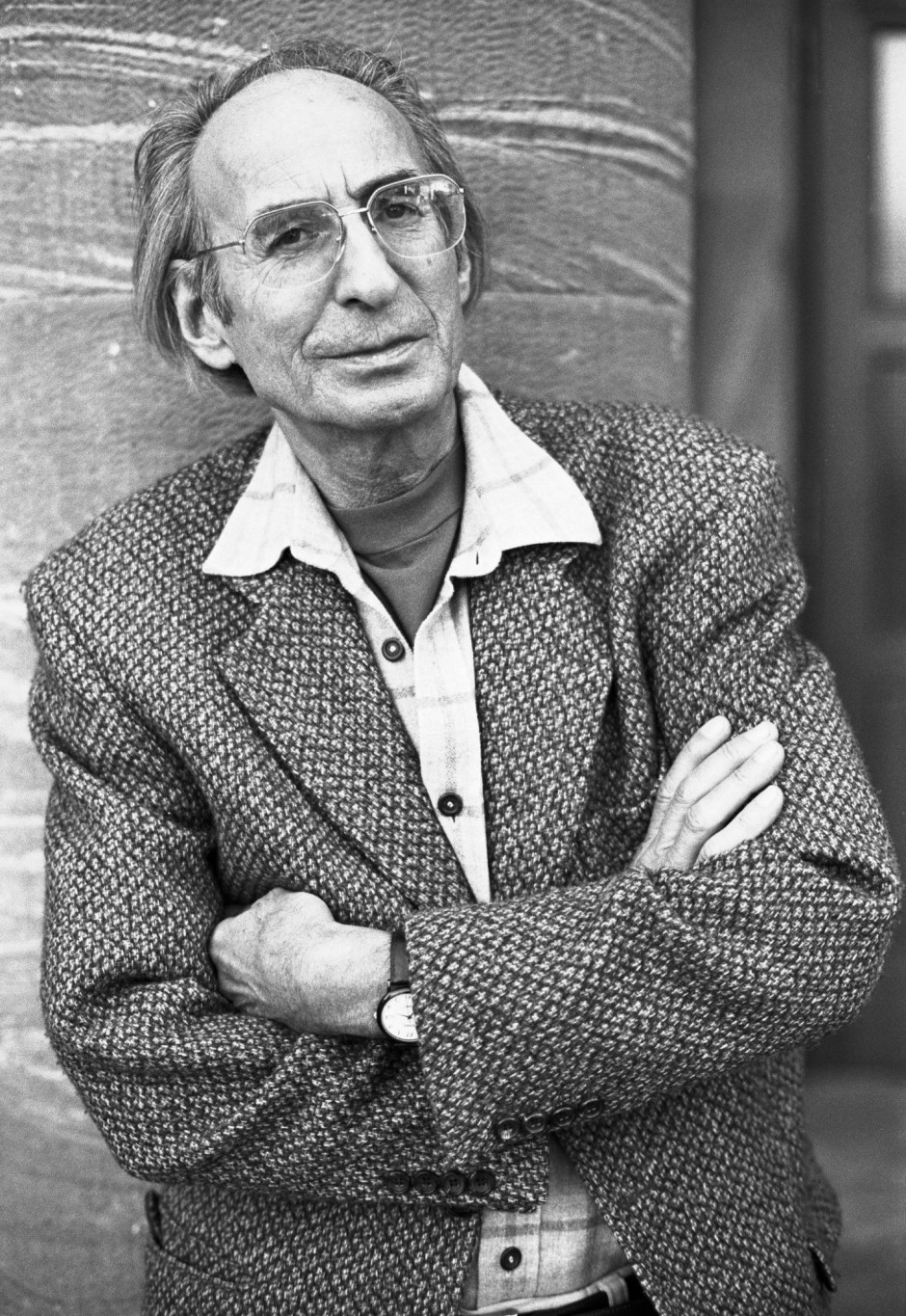
PR

Peter Rühmkorf (1929-2008) was among the most influential postwar writers of his native Germany, winning every major literary prize for his prolific output of essays, poetry, plays, and prose. Yet despite having given spoken performances on stage with pianist Michael Naura and vibraphonist Wolfgang Schlüter for over three decades, his only appearances on record in such a configuration were captured via two rare ECM “SP” albums from the late seventies. I was beyond fortunate to be offered these two albums off the shelves while visiting label headquarters for the first time in Munich, and the die-hard fan will want to seek them out. Going beyond mere sound structure or program music, Rühmkorf was rather looking for something harmonious between the spheres of language and sound production, and on these long-out-of-printers I think got rather close to that ideal.

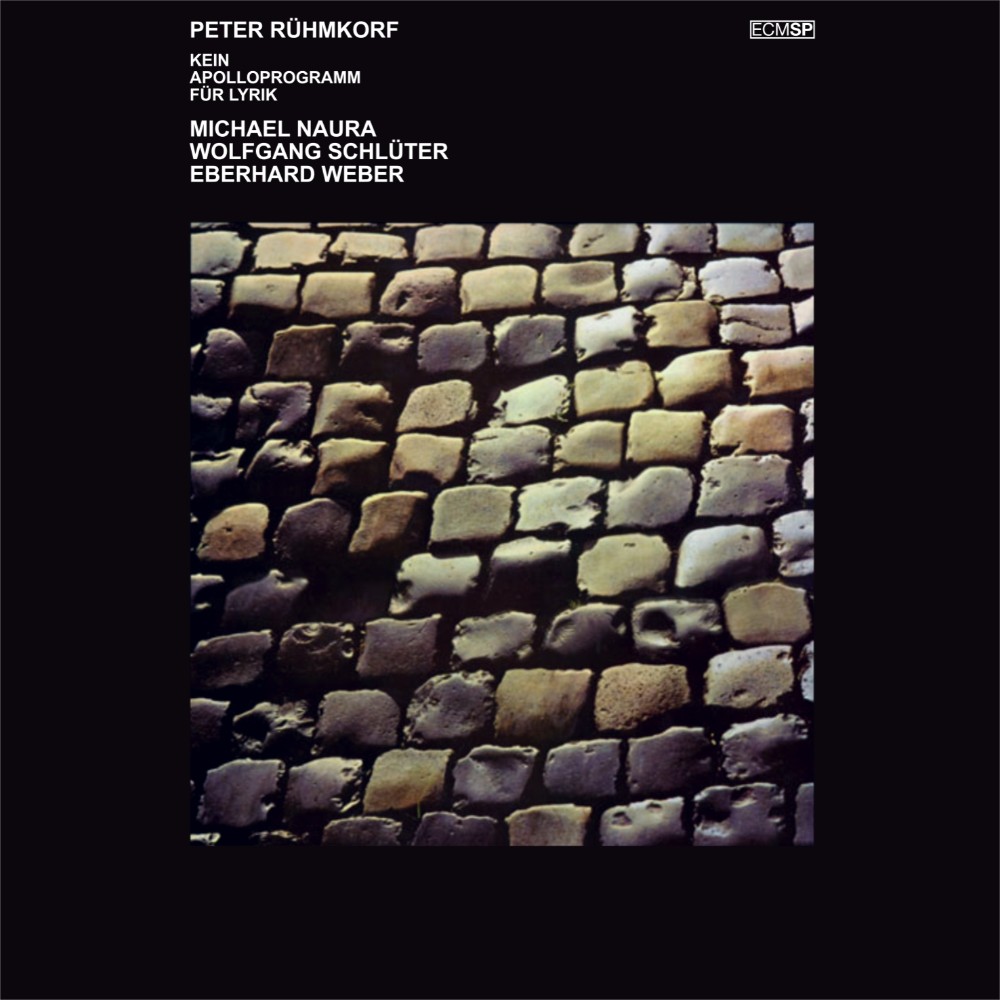
Apolloprogramm

Kein Apolloprogramm Für Lyrik (ECM 2305 801 SP)

Peter Rühmkorf voice
Michael Naura piano
Wolfgang Schlüter vibraphone, marimba
Eberhard Weber bass, cello
Recorded August 1976, Tonstudio Bauer, Ludwigsburg
Engineer: Martin Wieland
Produced by Manfred Eicher

The title of this first long out-of-print relic translates to “No Apollo Program for Poetry,” and indicates Rühmkorf’s interest in going beyond mere sound structure or program music. Rather, he was looking for something harmonious between the spheres of language and sound production, and here I think he was approaching that ideal. Rühmkorf further professes a downright biological need for poetry and skirts, in his darkly effervescent way, the line between emancipation and integration.

As with most of ECM’s speech acts, this one will be of little poetic use to those who don’t understand German. It should, however, be of immense value to the label’s fans for its musicianship. In addition to a rare early appearance by bassist Eberhard Weber (who also plays cello on one track), one is treated to some fine playing from Naura and Schlüter. Aside from two short tracks of Rühmkorf alone, the album is brimming with attractive makings of music. The trio activity of “Tagebuch” (Diary) establishes a grand, theatrical sort of precision with minimal means. Weber is robust and elastic as ever, sometimes climbing his way into the center and at others laying down club jazz atmospheres with Naura at the keys and playing us out on a bed of velvet.

For the most part, the playing is so illustrative that translations are hardly needed. “Hochseil” (Tightrope), for instance, balances Rühmkorf on a lone marimba that also carves helixes of reverberant post-production, while Weber’s percussiveness in “Zirkus” (Circus) builds like the tension of a trapeze act. And, whether steeped in the balladry of “Meine Stelle Am Himmel” (My Point In The Sky) or gilded by the flanged cello of “Elegie,” the poet rides an arpeggio of new horizons, only to culminate in the deeper finality of “Komm Raus!” (Come Out!).

Phönix

Phönix Voran (ECM 2305 802 SP)

Peter Rühmkorf voice
Michael Naura piano
Leszek Zadlo saxophone, flute
Wolfgang Schlüter vibraphone
Recorded March 1978, Tonstudio Bauer, Ludwigsburg
Engineer: Martin Wieland
Produced by Thomas Stöwsand

Whereas on the previous album Rühmkorf stressed the importance of pathos with an air of resigned unrest, on Phönix Voran (Phoenix Preview) he chews the fat of inner strength in closer quarters. Adding to that claustrophobia—even as he installs a window view—is Polish musician Leszek Zadlo, who replaces Weber’s bass with saxophones and flute throughout, and to astonishingly cinematic effect.

Rühmkorf’s ever-practical enunciation cracks open the piano and vibes like an egg, thereby releasing the soft yolk of Zadlo’s flute in a cradle of light and shadow. This combination, a sparkling one, works again on the freely improvised “Selbstportrait” (Self-portrait), which inhabits its own unsettled text with an increasingly kaleidoscopic gravidity. The flute lastly appears as Rühmkorf’s only partner in the aesthetically beat poetry-inflected “Allein Ist Nicht Genug” (Alone Is Not Enough).

Elsewhere, the saxophone takes precedence of sound and space. The opening reed tones of “Auf Einen Alten Klang” (An Old Sound), pure and singing, find natural traction in the Naura/Schlüter nexus, then dance freely as Rühmkorf works his narrative labor into a material image. Zadlo and Naura share one duet in “Paradise Regained” for a vivid portrait of night. Yet the fullness of the project’s vision is best realized by the entire band. Highlights in this regard include the deliciously titled “Ich Butter Meinen Toast Von Beiden Seiten” (I Butter My Toast On Both Sides), a lovely track with the wherewithal to hold its prose like nourishment in the belly, and the sweeter onomatopoeia of “Impromptu.” And as finality lands again in the bustling farewell of “Tagelied,” we begin to realize that perhaps it is the voice that accompanies the music, not the other way around.

While it might not always seem so in the thick of things, in hindsight the connections between speech and instruments are to be found not in meanings but in shapes. Naura’s music, which comprises the backbone of both sets, already has such a solid narrative arc that Rühmkorf is an intuitive fit to manifest its dips and climbs. Gems, these are.

Friedrich Hölderlin: Turmgedichte (ECM New Series 2285)

2285 X

Friedrich Hölderlin
Turmgedichte

Read by Christian Reiner
Recorded January 2012, Garnison 7, Wien
Recording engineer: Martin Siewert
Mastering at MSM Studio, Munich
Engineer: Christoph Stickel
Produced by Manfred Eicher and Wolf Wondratschek
An ECM and Joint Galactical Company Production
Release date: November 9, 2012

Vienna-based artist Christian Reiner reads from the so-called Turmgedichte, or “Tower Poems,” of Friedrich Hölderlin. The German poet has, of course, long been lodged in ECM’s consciousness (see, for example, Scardanelli), though nowhere nearly as long as he was himself lodged in the selfsame tower, later known as the Hölderlinturm, in which he would spend the last 36 years of his life, until he fell like the pen from his hand in 1843. In his liner notes to this spoken word album, Peter Sloterdijk speaks of the tower as “an ur-scene of German culture,” and its looming presence and stonework are accordingly felt in every syllable crafted at Reiner’s lips.

Reiner, whose work encompasses radio plays, theater productions, and other forms of experimental speech art, possesses a genuinely penetrating voice, but in the context of Hölderlin’s poems it is the voice that possesses him. The first word he speaks is followed by a pause so pregnant that we are drawn into the moment as eternity. Reiner thus allows us to inhabit the spaces of the words as if they were as architecturally significant as Hölderlin’s tower. We can feel the night pulsing through sentences, the poet’s mind closing in. The voice, then, becomes another soul, spun filament by filament until it speaks of its own accord.

CR
(Photo credit: Tibor Andreas Kiss)

Aside from the signposts of the seasons, the word Mensch(en) is a major semantic touchstone of these texts. Its very sound looks beyond any flesh-bound meaning toward a dialectical non-being. It is not the man but the construction of the man, of the body as an instrument of love and lore, a book of pages bound by the circumscription of years and autobiographical anomalies. Before long, we feel that Hölderlin’s cosmology has become fraught with the weight of its own invention, and that every word is an attempt to burrow through its infrastructure in hopes that it will be hollow enough to float away at the puff of just…one…more…word. We also have the signoff of Hölderlin’s alter ego, Scardanelli, as well as the dates preceding their signature, to lead the way beyond landscapes of flesh contracting from the chill. And if we listen closely enough, we might hear the distant cries of cities whose populations tread the streets like spiders, their match-heads filled with mortal fear of friction. But even they cannot help but bump into each other, unleashing fires that wipe out entire boroughs, so that all we are left with in the end are friendship and love wandering like wild animals in a forest.

Although I can’t imagine that Turmgedichte will be of appeal to anyone who doesn’t speak German, one may nonetheless link it to the readings of Heinz Holliger’s Scardanelli-Zyklus—only now we are exposed to the music of the language itself. In light of this, I would correct myself by distinguishing it from spoken word albums as instead an album of words that are spoken, for it is the act of their articulation that here matters most. The letters, of course, have organs, characteristics, and genetic idiosyncrasies, but in their sounding they are able to touch something grossly internal in all of us.

Maria Pia De Vito, et al.: Il Pergolese (ECM 2340)

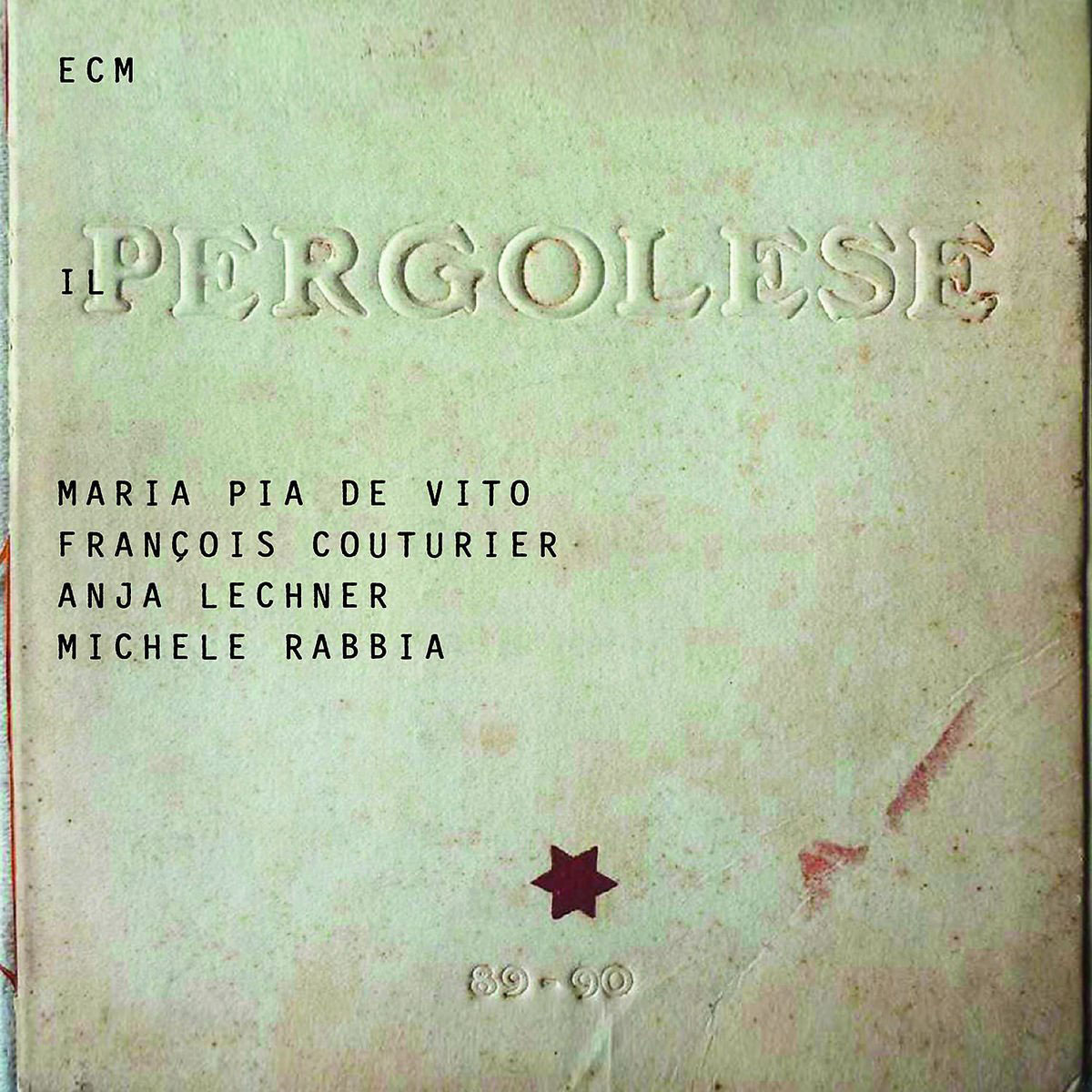
Il Pergolese

Il Pergolese

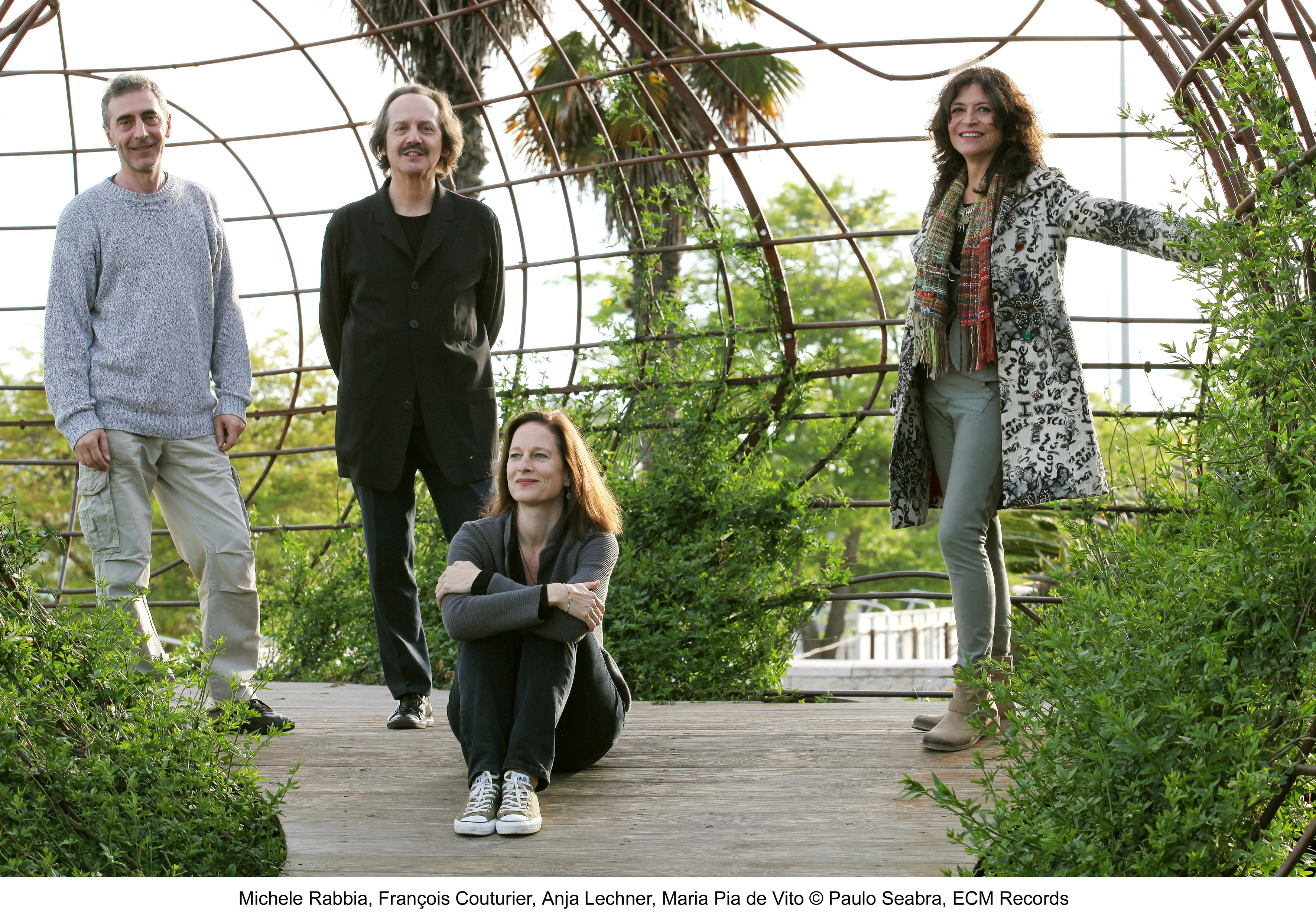
Maria Pia De Vito voice
François Couturier piano
Anja Lechner violoncello
Michele Rabbia percussion, electronics
Recorded December 2012, Auditorio Radiotelevisione svizzera, Lugano
Engineer: Stefano Amerio
Produced by Manfred Eicher

The life of Giovani Battista Pergolesi (1710-1736), cut tragically short at age 26 by tuberculosis, nevertheless made an immeasurable impact on the world of Baroque music and, as evidenced here, beyond. Already a successful opera composer by his mid-20s, Pergolesi would leave behind his final work, the Stabat Mater of 1736, on his deathbed. As Il Pergolese, singer Maria Pia De Vito, pianist François Couturier, cellist Anja Lechner, and percussionist Michele Rabbia have responded to the Italian composer by modernizing him at a crossroads of jazz, folk, and improvisation, De Vito going so far as to translate texts from the Stabat Mater into Neapolitan. The latter move yields pieces by Couturier inspired by that same masterpiece. His “Amen,” like the album as a whole, treats the development process as a precious use of time: only after Rabbia’s airbrushed percussion and additional electronics take hold do the darkly rolling piano and forlorn nightingale of cello share a canvas. The affirmation itself fluoresces under De Vito’s care before carrying over into Couturier’s jazzily inflected chords, by which he sets up Pergolesi’s processional “Fac Ut Portem.” De Vito rides the ocean waves of its drama, craving sunlight but drinking only storm. She then dips back into the Marian text with “Dolente.” Resonant percussion and birdlike vocals give Couturier the space to lull us into the song proper for a lachrymose yet, by virtue of the Neapolitan language’s delectable syllabic flavor, somehow blissful repose.

IP

From Pergolesi’s first comic opera Lo frate ’nnamorato (The Brother in Love) come two arias. The achingly lyrical “Ogne pena cchiù spietata” rests on a bed of piano and cello. Into this gorgeous scene steps De Vito like another Maria—Farantouri, that is—but with a little more maple mixed into her oak. Even after she fades, traces linger on as Lechner and Couturier are joined by Rabbia’s tapped hand drums. “Chi disse ca la femmena,” on the other hand, is a more straightforward melody that turns into folkdance and best explores the band’s rhythmic possibilities. A similar carpet of development unrolls itself down the corridor the “Sinfonia for violoncello,” which holds its own in a landscape of shifting tectonics. With archaeological care and glass tools, Rabbia chips away at Lechner’s caged pizzicati as if they were relics in need of recognition. That they most certainly get in the return of Couturier, who with an empathic analysis tells the backstory of their unearthing. And as Lechner’s bow sings its arco song, it resuscitates a Baroque heart to a calm yet glorious rhythm. “Tre giorni son che Nina,” a wildly popular song of the Italian Baroque attributed to Pergolesi, is another thing of beauty. It opens in raindrops before Lechner puts bow to string and follows a river breached from a dam of mortality.

Some freely improvised tracks round out the program. “Fremente” winds itself around De Vito, whose bubbling lines run wild in the realm of possibility, while “In compagnia d’amore I” and its sequel evoke Luciano Berio’s Visage and a voiceless chasm, respectively. Whatever their guise, the musicians of Il Pergolese pose their emotional statuary in accordance with the moment at hand, turning everything they touch into intimate theater, with De Vito as the heart, and the trio as the soul.

(To hear samples of Il Pergolese, you may watch the EPK above or click here.)

Dans les arbres: Canopée (ECM 2278)

Canopée

Dans les arbres
Canopée

Xavier Charles clarinet, harmonica
Ivar Grydeland electric guitar, banjo, sruti box
Christian Wallumrød prepared piano, harmonium
Ingar Zach gran cassa, percussion
Recorded June 2010 at Biermannsgården and April 2011 at Cafeteatret, Oslo
Engineer: Thomas Hukkelberg
Produced by Dans les arbres

If you were to look only at the musicians and their instruments on paper, the music of Dans les arbres would not likely ooze into your mind as it does once you hear it. Xavier Charles’s clarinet indicates classical foundations, while the harmonica next to his name might imply a more itinerant spirit. Ivar Grydeland’s electric guitar and (prepared) banjo reveal a natural born picker, but the sruti box (an Indian drone instrument bellowed like the harmonium) reaches farther afield. Christian Wallumrød will be the most familiar name to ECM listeners. Anyone in possession of his albums will have a leg up on what to expect and find nothing out of the ordinary to see a harmonium also at his fingertips. Finally, percussionist Ingar Zach stands out for listing the gran cassa (orchestral bass drum) as his primary instrument. And indeed, its cavernous thrum is a foundational voice throughout the quartet’s second ECM spelunk.

In my review of the first, self-titled Dans les arbres album, I compared their sound to that of the short-lived Japanese outfit Nijiumu, whose elusive Era of Sad Wings remains the pinnacle of such freely improvised work. This album approaches that ideal even more closely.

With such kindred track titles as “La Fumée” (Smoke), “L’Émanation” (The Emanation), and “L’Immatériel” (The Immaterial), it would seem to make little sense attempting to parse that which cannot be parsed. In this resonant gong-space, we are surrounded by creaking toy chests. Their keyholes burn with shadow and are wonders to behold in the attic light. Downstairs pacing betrays the parents of children who have hidden themselves so long that they have become part of the house. Bells and bowls and other glowing things float like tones of the inner ear made manifest in the form of dust particles and the wings of dead moths. Deep drones and breathy harmonics share only what they embrace, while the in-betweens reach from their wombs, only to withdraw just before making contact with the outside world. Their lungs open as would any book, of which each brachial page swims with adverbs. Hints of machinery linger, but their pathogens are quickly neutralized by the system.

All that said, some of the most intangible cognates (e.g., “La Vapeur” and “L’Éther) name the album’s most tactile creations. In these we discover a heavier mortality at work, as if by means of an intimate machine, of which gears serve as bones and time the marrow that sponges them. Whether by the clarinet’s guttural awakenings or the bass drum’s deepest moon phase, the aqueducts of ancient cities are somehow resurrected only so that they might speak once more before dying, leaving only the metallic drip of virtue to show for their channeling. Like the spaces of “La Transparence” (Transparency), they are pregnant with afterthoughts in such a way that all internal things become external and vice versa, starving the illusion that there was ever a distinction in the first place.

(To hear samples of Canopée, click here.)

Benedicte Maurseth/Åsne Valland Nordli: Over Tones (ECM 2315)

Over Tones

Over Tones

Benedicte Maurseth Hardanger fiddle, voice
Åsne Valland Nordli voice
Recorded May 2011 at Strype Studio, Oslo
Engineer: Audun Strype
Production coordination: Guido Gorna
An ECM Production

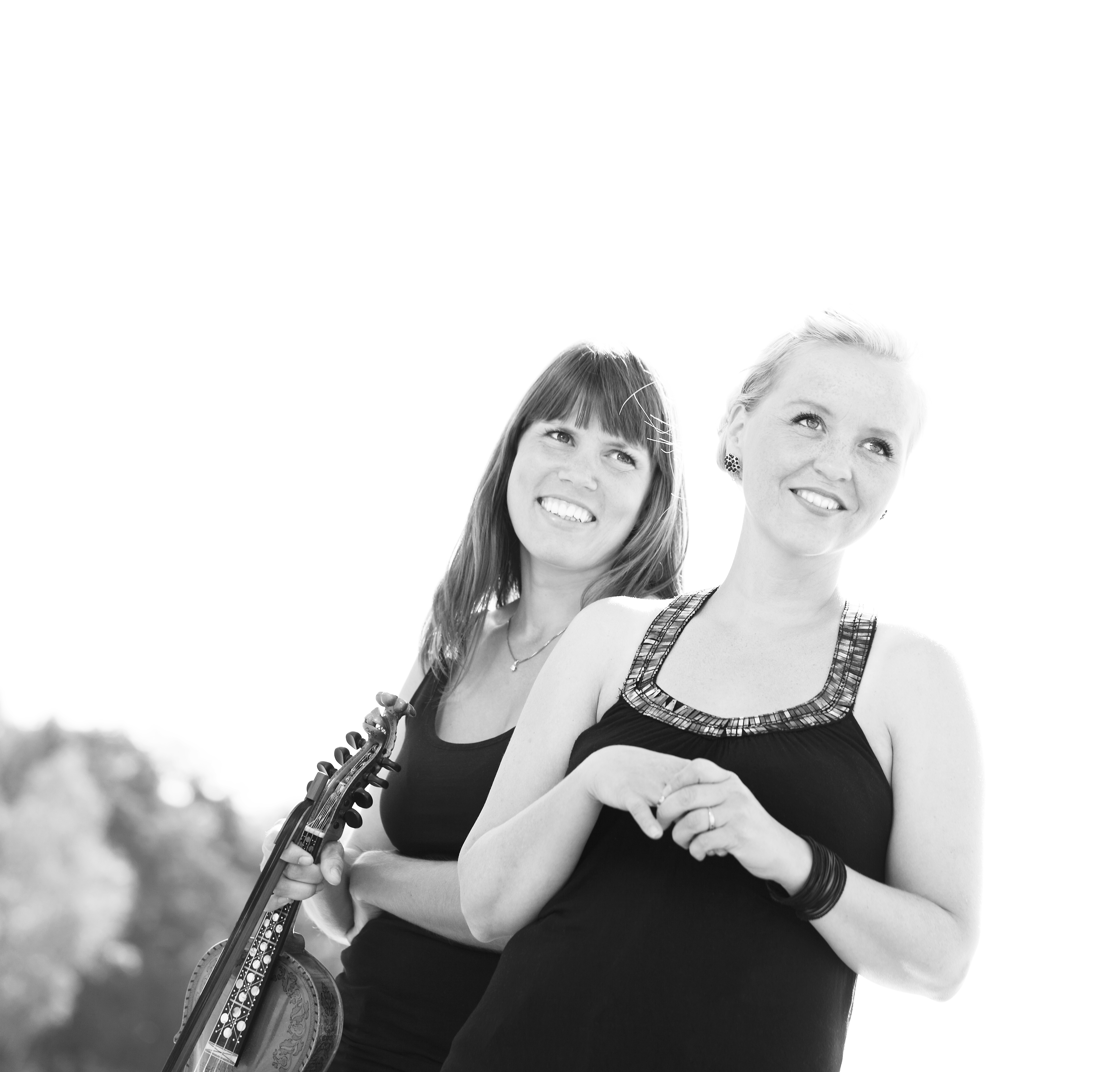
Over Tones is among a recent crop of ECM recordings featuring young duos playing some of the most absorbing music from the label in years. Unlike the unexpected microscopy of Vilde&Inga or the cavernous implosions of Kappeler/Zumthor, however, the interests of Benedicte Maurseth and Åsne Valland Nordli gravitate toward the traditional folk music of their native Norway. Both hail, in fact, from Hardanger, after which the fiddle at Maurseth’s fingertips was named. The instrument has had its finest advocacy on the label so far from Nils Økland, but Maurseth and Nordli are special for adding their own singing to its sympathetic strings. That they once worked regularly with Berit Opheim (now a fulltime member of the Trio Mediaeval) should come as no surprise once you hear the clarity of their voices. So effective was their overlap that they paired forces in this seamless program of old and new music, and it makes a welcome addition to ECM’s new directions.

Over Portrait
(Photo credit: Ingvil Skeie Ljones)

While this album will speak most directly to fans of Økland’s premodern sets, and despite the fact that Hardanger fiddling is very much its own entity, those familiar with the alpine visions of Swiss violinist Paul Giger (see, for example, Alpstein, to which I have also compared Økland’s Lysøen) will find much to admire in the duo’s free improvisations. “Overtone” in particular expands on likeminded impulses of dance and drone with the fleshiness of human voices. “Ales” is another silhouette of externalized thought in which history appears as a glowing exchange between the self and its double. In this sense, Nordli’s purely vocal presence is an integral part of the music’s solution and dissolution, for its power may carry us out softly on a woven raft even as it readies the next one.

Norwegian folk singing, known as kveding, encompasses a range of styles and encourages the performer’s spontaneous detailing, but in the context of Over Tones its core religious aspects are lovingly foregrounded. Despite appearing in lyric form on only two songs culled from the villages of Luster, in western Norway, the overtly redemptive themes of “Jesus gjør meg stille” and “Kilden” turn also on the instrumental axes of the duo’s original tunes. The origins of Maurseth’s opening “Adle,” for one, are unquestionably divine in origin. The patience with which its harmonic-only melody turns the fiddle into a choir of glass is like seeing the moonlight through a forest canopy, but knowing it speaks in a dialect of sun. And Nordli’s own “Veverskens tid” matches the fiddle’s keening heart with a leaping vocal act that pulls relics from the past in the manner of a bird catching worms.

Any secular inclinations are to be found in two traditional dances from the southern valley of Setesdal. The combination of human-possessed and human-made instruments lends three-dimensionality to every step and shows that each, like the musicians themselves, has a little of one in the other.

(To hear samples of Over Tones, click here.)

Kappeler/Zumthor: Babylon-Suite (ECM 2363)

Babylon-Suite

Kappeler/Zumthor
Babylon-Suite

Vera Kappeler piano, harmonium, toy piano, voice
Peter Conradin Zumthor drums, toy piano, voice
Recorded June 2013, Auditorio Radiotelevisione svizzera, Lugano
Engineer: Stefano Amerio
Produced by Manfred Eicher

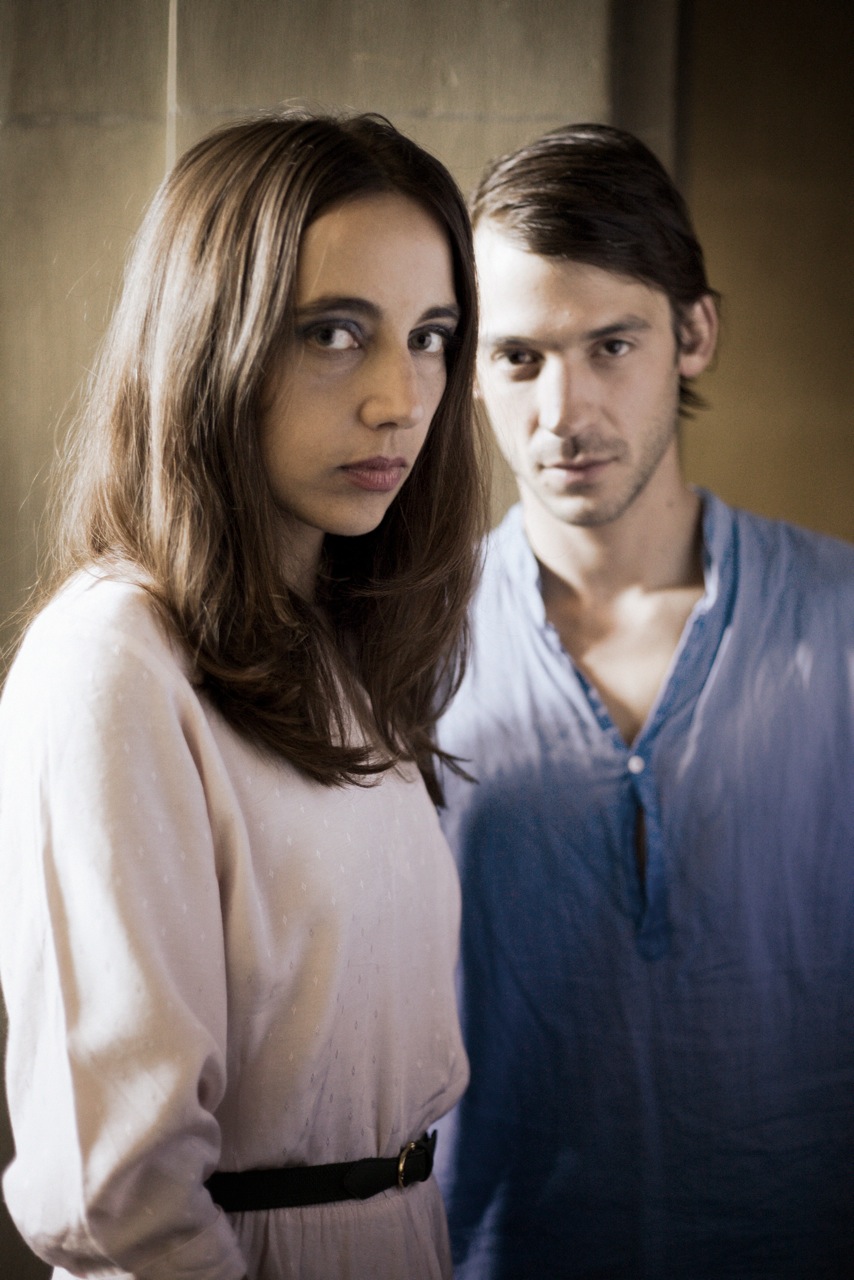
How appropriate that the music of Babylon-Suite, which introduces Vera Kappeler and Peter Conradin Zumthor to a wider world of deserving listeners, should have been premiered in a Swiss hydroelectric power plant: it’s subterranean to the core. Although in the fullest sense recreated here for the studio, it retains every atom, at once surrounded by and transcending the stone enclosure of its origins. And while the backstory of this album’s inception is telling enough, drawing inspiration as it did from the Book of Daniel, Peter Rüedi’s liner note rightly warns us against taking this music descriptively. It was never meant as a Biblical illustration, but a reconfiguration of text into texture. And in an accompanying statement by Giovanni Netzer, who commissioned the piece, we find the suite described as one in a “long tradition of lamentations.”

Babylon Portrait

Although Kappeler is nominally the pianist and Zumthor the drummer of the duo, both switch roles as often as they abide by them, employing bodily voices, too, as moments strike them. This modus operandi is proven in “Das erste Tier,” which opens the suite with a quasi-ritualistic bass drum and barest breath in the piano’s lowest register. But nothing is what it seems in the Kappeler/Zumthor space, for what might elsewhere be a jolt of awakening is now the jolt of slumber: that moment when you realize you’re caught in a dream built on a graveyard of unintelligible syllables. Pianistic strands come forward as lit candles, at once stoic and trembling, reminding us that the cessation is an illusion fed on five-sense realities.

To speak of extended techniques is one thing. To hear those techniques speak for themselves is quite another, and it is in this vein that Kappeler and Zumthor’s instruments—whether novel as a music box or antique as a harmonium—inhabit every transformation of this Babylon. The caged wing beats of “Traumgesicht,” for instance, break down the fourth wall, only to reveal a fifth, so that ultimately desperation seems to be a precondition for all life. Like the two variations of “Bontempi,” they turn on axes of double meanings, lending them where they should exist but don’t. And so, if light means the absence of dark and a lack of substance, dark now means both the absence of light and the abundance of substance.

The album’s divination bones come in the form of four pieces marked “Tor.” Each is a Russian doll of gear systems, its skin tender as balsa, wherein cogs lock teeth in assurance of the future. Clock springs assume the shapes of prayer bowls, while a toy piano manifests the inner thoughts of outer automata. Only in the presence of explicit foundations do such mechanisms melt away, as they do in “Annalisa” and “November.” These respective compositions by Zumthor and Kappeler write themselves into codes of ethereal hieroglyphs and childhood memories. Even the Ukranian traditional “Ne Pidu Ja Do Lesa” punctuates its drunken dance by means of erasure, leaving nothing but the blank ear waiting for fresh inscription.

(To hear samples of Babylon-Suite, click here.)