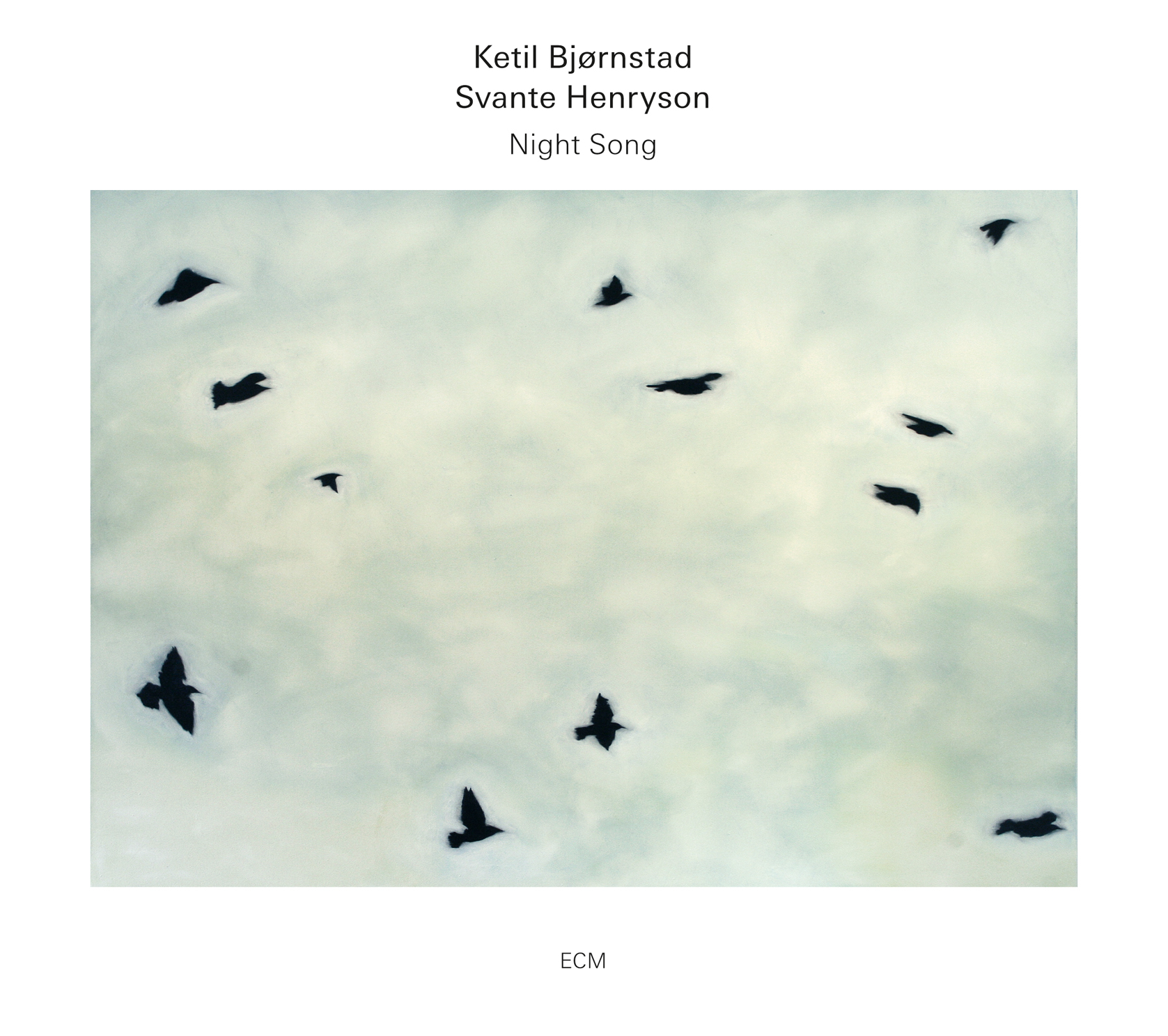
Ketil Bjørnstad/Svante Henryson: Night Song (ECM 2108)

Night Song

Night Song

Ketil Bjørnstad piano
Svante Henryson violoncello
Recorded January 2009 at Rainbow Studio, Oslo
Engineer: Jan Erik Kongshaug
Produced by Manfred Eicher

Pianist, composer, and author Ketil Bjørnstad has been long obsessed with Schubert, going so far as to sneak into his school gymnasium as a teenager to play him. “Schubert’s almost naïve openness, his existential sense of wonder and his emotional passion make him at the same time both concrete and mythical,” says Bjørnstad in his liner text. Hence Night Song, which pays tribute to, and engages in dialogue with, the Austrian great. For this project he is joined by Svante Henryson, a multi-instrumentalist and musical chameleon who plays cello alongside Bjørnstad. And by “alongside” I mean exactly that, for the two musicians recorded, at producer Manfred Eicher’s request, as closely as possible, so as to avoid the divisive tendencies of headphones and glass partitions. Bjørnstad: “It is always special for a musician when an ECM production evolves through a dialogue with Manfred Eicher from the very beginning. It can perhaps be compared to what an actor feels, when working with a film director.”
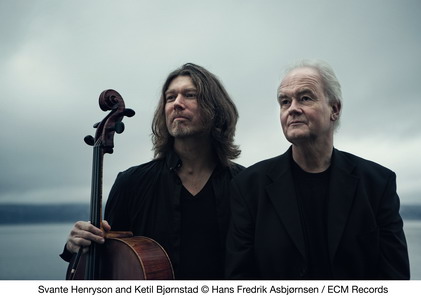
Ketil Svante

The nature of this piano-cello pairing is, however, rather distinct from Bjørnstad’s acclaimed collaborations with cellist David Darling, despite the identical instrumentation. Like Darling, Henryson is a gentle-minded musician, one who whispers more than he sings in the title track, which bookends the album with an “Evening Version” and “Morning Version.” There is, however, in his own music (Henryson pens four of the album’s 16 tracks), an altogether idiosyncratic grace. His arpeggios are of the same planar existence as our own, whereas Darling’s seem to float up from the very earth. Songs (for that is indeed what they are) like “Fall” and “Tar” inhale light and exhale pure, cinematic description—which is to say, by means of a music as visible as it is audible. Henryson’s pizzicati in “Reticence” and “Melting Ice” add further layers of breath, activated by a brooding play of shadows.

Due to the Schubert connection (crystallized in the thinner air of “Schubert Said”), one might think that Night Song would sound more romantic, but like much of Bjørnstad’s chamber music it emotes from a heart seemingly teleported from the late Renaissance. The transitions marked out by tracks like “Visitor” and “Share” from inward prayer to full-throated incantation tickle the senses. To better manifest these transitions, Bjørnstad substantially expands his coverage of the keyboard (note the low range of “Edge” and, by contrast, the glittering rays of “Sheen”). Wherever he may be on the spectrum, he always performs with forgiveness. Henryson, too, unravels coils of life force in the hopeful “Serene” and, in the album’s most songlike turn, “Chain.” His precision in the latter is astonishing for its balance of trepidation and peace.

Bjørnstad’s music begs image, movement, and reconsideration of time. In this sense, Night Song may just be his most intimate recording yet, a gem of expression clawed in silver and carefully polished until it is worthy of being slipped on the finger of a hidden muse.

(To hear samples of Night Song, click here.)

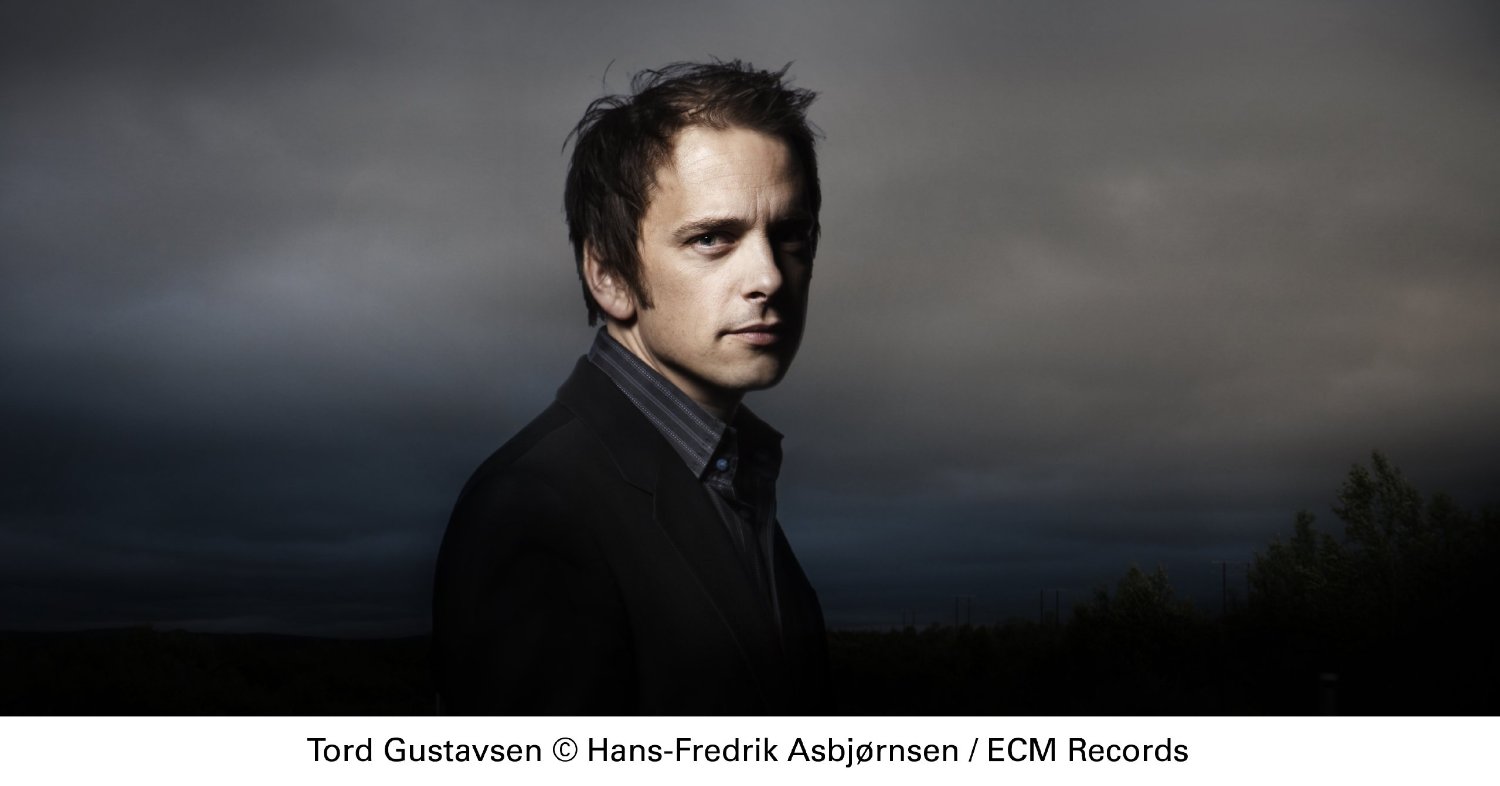
Tord Gustavsen Ensemble: Restored, Returned (ECM 2107)

Restored, Returned

Tord Gustavsen Ensemble
Restored, Returned

Tord Gustavsen piano
Tore Brunborg tenor and soprano saxophones
Kristin Asbjørnsen vocals
Mats Eilertsen double-bass
Jarle Vespestad drums
Recorded January 2009 at Rainbow Studio, Oslo
Engineer: Jan Erik Kongshaug
Produced by Manfred Eicher

Restored! Returned! The lost are borne
On seas of shipwreck home at last:
See! In a fire of praising burns
The dry dumb past, as we
Our life-day long shall part no more.
–W. H. Auden, “Warm are the Still and Lucky Miles”

Norwegian pianist Tord Gustavsen, who prior to Restored, Returned released three of ECM’s most beloved trio albums, now adds to that tapestry the lyrical threads of saxophonist Tore Brunborg and, in her first appearance on the label, vocalist Kristin Asbjørnsen. Gustavsen, who additionally switches out bassist Harald Johnsen for Mats Eilertsen and holds on to drummer Jarle Vespestad, styles the album as a “collection of cherished memories” rather than as a unified whole and consequently backgrounds himself a little in order to let his collaborators glow unobstructed.

Tord

Although a fascinating addition to the Gustavsen nexus, Asbjørnsen’s rendering of poetry by W. H. Auden may guide listeners down forking paths. Her tone is closest to Sweden’s Karin Dreijer Andersson (best known for her associations with Röyksopp): which is to say, an enchanting mixture of childlike vulnerability and strength beyond her years. With the very balance of clarity and mystery that Gustavsen attributes to Auden’s verses, Asbjørnsen engenders a chain of invitations to higher understandings of the same. Which is perhaps why the album more frequently concerns itself with wordless poetries in the form of intimate cradlesongs. Some, such as the three so-called “Left Over Lullabies,” are more obviously of this kind. In them, Asbjørnsen emerges gently, organically, gathering nebulous strands into themes, which Brunborg then unpacks in riverbed flow. In these instances, Asbjørnsen’s grammar is entrancing and works best when she adlibs with Gustavsen alone, crafting melody out of her own stardust rather than ink on the page. Other lullabies—namely, “The Child Within,” “Spiral Song,” and “The Gaze”—have reeds in mind. In all three, the piano spins a cocoon of introduction, letting Brunborg’s motives break wing of their own accord.

The surrounding songs dip forthrightly into the poetic font. Whether in the gospelly “Lay Your Sleeping Head, My Love,” the folkish diptych of “The Swirl / Wrapped In A Yielding Air,” or the fully developed “Your Crooked Heart,” Asbjørnsen’s throaty delivery feels grounded in love at every moment. She embraces daybreak through Auden’s words, touched by supporting musicianship that finds power not in strength but nuance of force, a force by which the expressive minutiae of experience drink sun without fear of cloud. The title track is likewise a stirring of photosynthetic impulses, growing by a season that abides by its own philosophy of recovery.

For those new to Gustavsen, start at Changing Places and work your way here. Like the fully improvised instrumental “Way In,” his art builds doorways of entry one cell at a time, so that by the time the full body is born, we are already a part of it. The songs may indeed be isolated, but they also yearn for continuity with past and future voices, holding scriptures on the tongue for grace of unity. This journey is far from over.

(To hear samples of Restored, Returned, click here.)

Georg Friedrich Händel: Die Acht Grossen Suiten – Smirnova (ECM New Series 2213/14)

Die Acht Grossen Suiten

Georg Friedrich Händel
Die Acht Grossen Suiten

Lisa Smirnova piano
Recorded May 2007, May-June 2008, and Feburary 2009 at Schloss Goldegg, Austria
Engineer: Jens Jamin
An ECM Production

This is not the first time that music from Georg Friedrich Händel’s Suites de Pieces pour le Clavecin (a.k.a. the “Eight Great Suites”) of 1720 has appeared on ECM. Pianist Keith Jarrett recorded for the label’s New Series imprint a selection of suites by Bach’s near contemporary in 1993, and with it endorsed an affirmative reassessment of these exceptional works. Several complete recordings have since been issued, and many more predate it on vinyl, so the press release’s claim that these pieces are “too rarely brought together on disc” is, in fact, moot. Paul Nicholson’s cycle for Hyperion, recorded on harpsichord a year after Jarrett and distinguished by its highly embellished repeats, was a notable companion. Two further accounts have been issued this year (2014) alone. The first, by Richard Egarr for Harmonia Mundi, also opts for harpsichord, while the second, by Danny Driver for Hyperion, joins this 2012 release from Vienna-based Russian pianist Lisa Smirnova as a formidable contender for piano renditions. Smirnova would seem to marry the best of those recent followers, combining Egarr’s charm and Driver’s vibrancy with idiosyncratic success.

Smirnova

Although Händel humbly called these pieces “lessons,” their exact purpose is unclear. Their difficulty is, however, anything but and comprises an earthly counterpart to J. S. Bach’s heavenward considerations at the keyboard. For Smirnova, it is timeless music all the same, as attested by the five years of preparation and careful study she poured into it before a single studio microphone was switched on. Just as intriguing and well considered as her performance of the suites is the order in which she plays them, beginning as she does with the Suite No. 2 F Major HWV 427. A subtle yet bold choice of introduction, it lowers us into Händel’s pond so that we might see the ripples for what they are: as beautiful disturbances brought to life by a human touch. In the latter vein, the suite highlights Smirnova’s technical prowess: her syllogistic approach to the binary Adagios, balance of fluttering trills and steady pacing in the Allegros, and exquisite pedaling throughout.

The suites are full of idiomatic variety and avoid formal suite structure altogether. Consequently, Smirnova’s immediate jump to the Suite No. 8 F Minor HWV 433 makes as much sense as the composer’s elision of a Sarabande in the same (this peculiarity also marks the set’s most Baroque Suite No. 1 A Major HWV 426, which Smirnova places second to last). Thus foregrounded, this final suite elegantly flaunts its darker, more mature wardrobe. The extraordinarily lovely Allemande exemplifies both Händel’s sensitivity as a composer and Smirnova’s as a performer, legato phrasings and all. The concluding Gigue, too, shows us her grace and her ability to be fortuitous without tripping over prosody.

The Suite No. 4 E Minor HWV 429 and Suite No. 5 E Major HWV 430 are the only consecutive pairing. The echoing beginnings and sportive finish of the one sit comfortably alongside the dreamy core of the other. Next, the Suite No. 3 D Minor HWV 428 proceeds with gusto. The fantastic keyboard coverage of its Prelude recalls the grandeur of Bach’s organ works and opens a multivalent interface toward the gargantuan Courante. Simple in design yet expansive in effect, its octave voicings in the left hand and spurring trills in the right keep the final Presto in its sights, inspiring some of the set’s most virtuosic control of dynamics. By contrast, the Suite No. 6 F Sharp Minor HWV 431 portions itself more conservatively, keeping its inner fire audible but in constant check.

Händel mixes things up yet again in the Suite No. 7 G Minor HWV 432, for which he adapts the Overture of his cantata Clori, Tirsi e Fileno HWV 96. Here Smirnova puts on the air of a harpsichordist, her style brisé lending bite to every tantalizing swerve. This fullest of the suites is a veritable summation of the whole. From the salon-like Andante to the affirmative Passacaglia, it draws on many autobiographical roots until a new tree is born. Smirnova may be just one of many leaves on its ever-growing branches, but among them holds the sun in frame, her heart glowing green against cloudless sky.

(To hear samples of Die Acht Grossen Suiten, click here.)

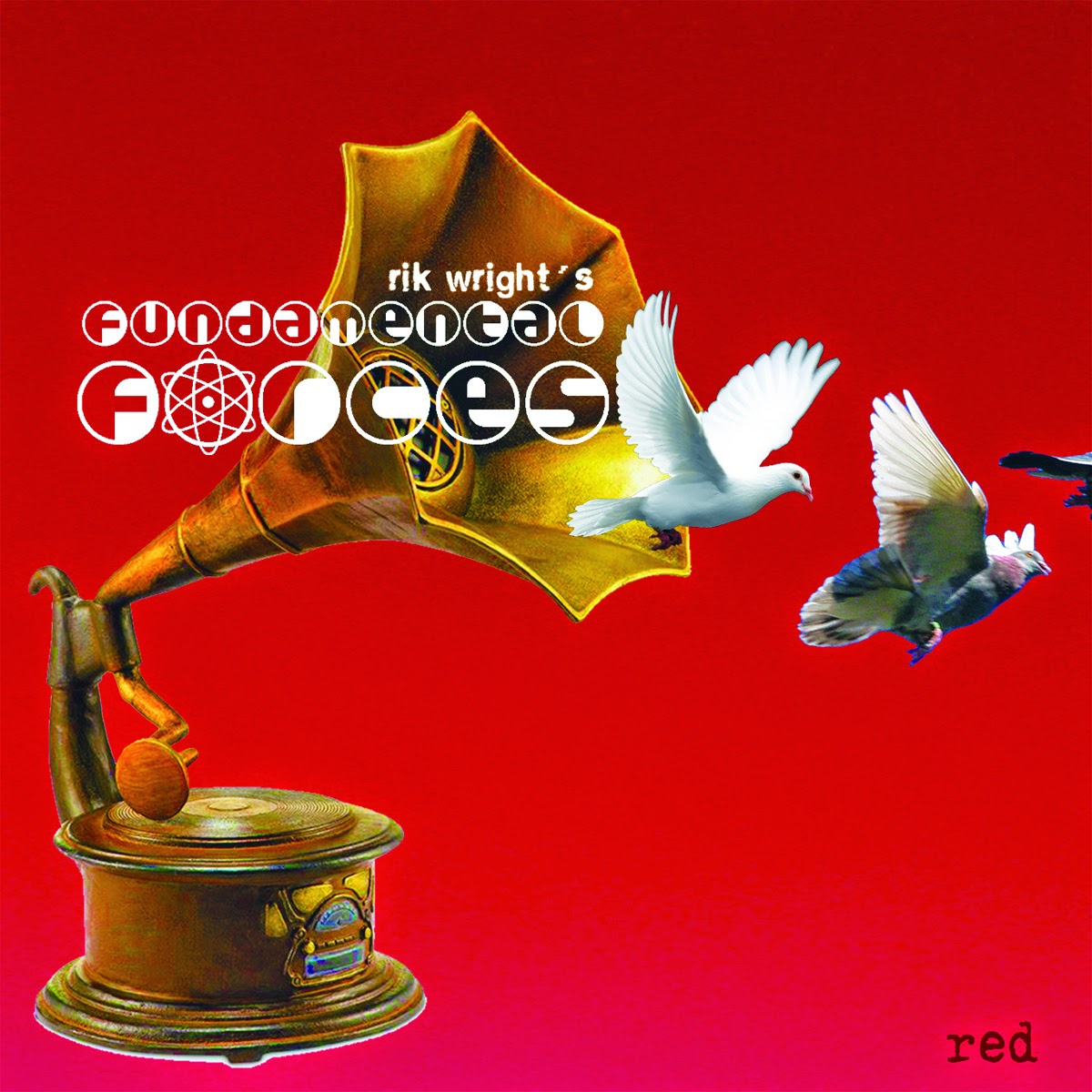
Rik Wright’s Fundamental Forces: Red

Red

“Passion is an unstable molecule. A universe of energy itching to be released.” So says the foldout sleeve of Red, the second disc in a trilogy of colors by poet and guitarist Rik Wright. It’s an apt description of the relationship he has for years now shared with multi-instrumentalist James DeJoie (reeds and flute), bassist Geoff Harper, and drummer-percussionist Greg Campbell. As Fundamental Forces, this fearless foursome excavates the circle first drawn in Blue (released 2013 on Hipsync Records) with even finer tools in hand. Whereas that predecessor looked into the crystal ball of the future, this sequel dips into the font of the past and emerges baptized in new directions.

There’s almost nothing about the guitar-bass ostinato that begins “(She’s so) Fragmented” to indicate the itching universe about to unravel. But once the rhythm section takes over and allows for alto and guitar to carve out their groove, the album’s first of five deep cuts shows us just how much letting can be accomplished in 46 minutes of Earth time. DeJoie unhinges himself from the theme, plotting challenging geometries in contrast to Wright’s angelic beauties. This is where the pieces of the guitarist’s versifying fall formatively into place, not only laying the corner pieces but also gnawing at them until they begin to fray. Campbell shakes things up a bit, too, all the while remaining true to the core pulse.

After this nine-minute juggernaut, the skeletal geode that is “Yearning” veritably sparkles. Wrapped in Campbell’s loose timekeeping and Wright’s webbed guitar, it charts a detour along beauteous sonic paths. Although it is, at just over four minutes, the shortest track of the album, it is also its snaking heart, the chamber through which the surrounding tunes’ blood flows, from which it exits, and to which it returns. Next is “Subtle Energy,” which at 13 minutes reverts to the band’s epic comforts. Wright’s John Abercrombie-like intro casts a long, downtempo shadow and, like the album’s opener, spins from complacent beginnings a cosmic web of intrigue. Wright and his bandmates are so attuned to every shift of texture, proving their ascent to a new level of descriptive awareness.

The penultimate “Single Angularity” is a prime vehicle for DeJoie’s baritone. What seems an oxymoron in the title becomes organic in the music: what fails in language proliferates in art. The band journeys deepest for this one, rising and falling in unscripted fervor. If there is a particular immediacy of transmission here, it is because this and “Yearning” were both taken from a radio performance. Yet that same live presence thread pulls through the studio tracks as well, and especially in the concluding “Synesthesia,” a yielding vessel that drags its oars in a cinematic, David Lynchean stream of consciousness toward dreamy conclusions.

If Blue was a kaleidoscope, requiring light and vision for its patterns to thrive, then Red is a laser, boring into the earth, in need of darkness in order to glow, incisive and true. More than ever, Fundamental Forces is working like a team of archaeologists, brushing away the clinging dirt until their inspiration reveals an ancient heart.

(To preview and purchase Red, click here.)

Kim Kashkashian and friends astound on tour

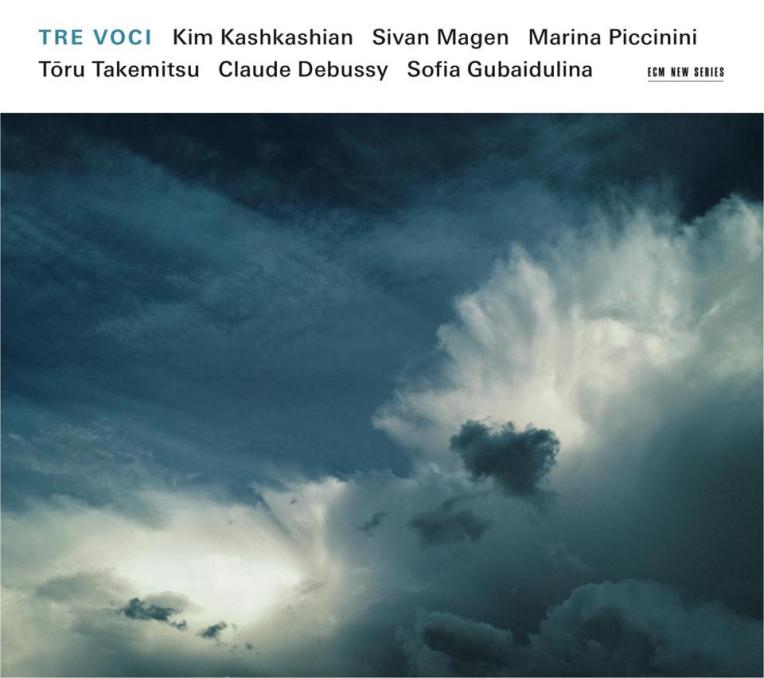
The peerless and ever-adventurous Kim Kashkashian has joined on tour this season Musicians from Marlboro. Among them are flutist Marina Piccinini and harpist Sivan Magen, the other two sides of Tre Voci, purveyors of a recent self-titled disc for ECM New Series. Click the cover below to read my exclusive Sequenza 21 report on their unforgettable performance in central New York.

Tre Voci

Hristo Vitchev & Liubomir Krastev: Rhodopa

Rhodopa

Bulgaria-born, Bay Area-based guitarist Hristo Vitchev, having firmly established himself as a gentle giant in the contemporary jazz scene, seems always willing and able to reinvent himself while holding true to the integrity of his artistry. For Rhodopa, one of a prolific string of new releases, he joins clarinetist Liubomir Krastev in a unique duo setting of original tunes and Eastern European folk songs. The result is unquestionably Vritchev’s finest project to date. Some of his most perennial compositions, including “Silent Prayer” and “Blues for Clever Peter,” encroach upon the album’s roots-oriented landscape like sprigs of autumn foliage ready to let go of their branches. The latter tune especially shows the potential of this duo to turn a skeleton into a fully-fleshed body, rendering as it does a fluttering guitar ostinato as launching pad for Krastev, whose clarinet darts, soars, and dives without a trace of inhibition. The dynamic contrasts of “Devoiko Mari Hubava” (Beautiful Young Lady) likewise delineate fundament and firmament with clarity of vision. Vitchev’s steel-stringed harmonics stretch a canvas for Krastev’s fluid brushstrokes, bringing the music to new levels with the addition of a second (classical) guitar.

[youtube+https://www.youtube.com/watch?v=092ZFKKCSrU]

This is the first of the album’s largely Bulgarian songbook, in which the upbeat virtuosity of “Polegnala e Todora” (Todora Took a Nap) fits snugly between the lyrical pages of “Lale Li Si, Zyumbiul Li Si” (Are You a Tulip, Are You a Hyacinth) and “Hubava Si Moia Goro” (You Are My Beautiful Forest), the last two brimming with heart and poise.

Track lengths on Rhodopa range from one to ten and a half minutes, shortest in the two “Improvisations” by which the musicians dig deepest to the layers of tradition that inform their souls. There is, then, something about this music that speaks heart to heart. It is ancient yet also blossoms with new interpretive subtleties, welcoming us to dance and reflect by turns, knowing that spring is never far away, regardless of the season outside your window.

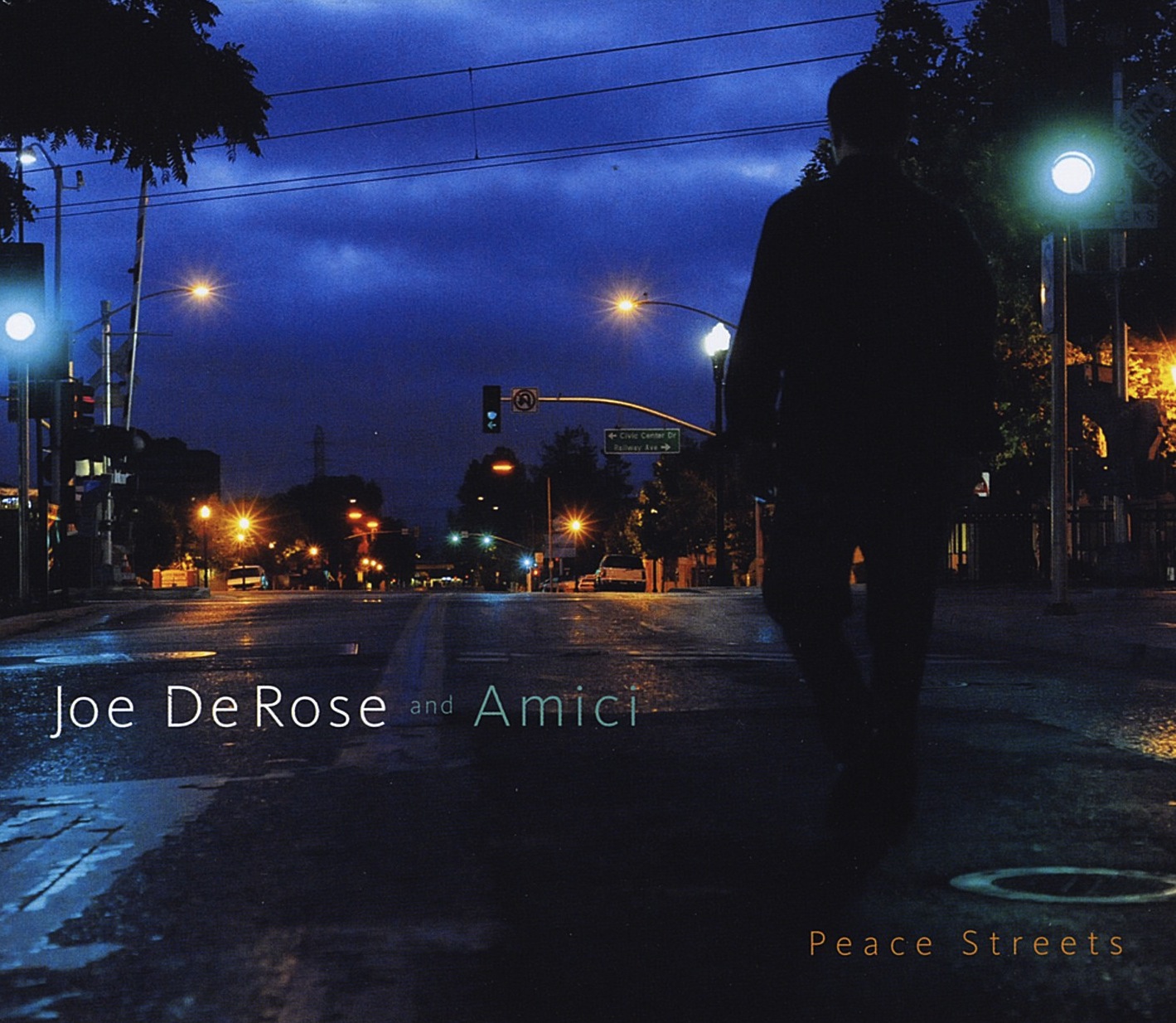
Joe DeRose and Amici: Peace Streets

Peace Streets

Following their 2010 debut, Sounds for the Soul, San Jose-based drummer Joe DeRose and his “amici” (friends) break out with their follow-up, Peace Streets. Fronted by guitarist Hristo Vitchev, saxophonist Dan Zinn, keyboardist Murray Low, and bassist Dan Robbins, DeRose presents an album of intelligence and nostalgia. Opener “New Frontiers,” in point of fact, establishes such an unmistakable Pat Metheny vibe that you may just want to start the car now so that you’re ready to hit the road once you press PLAY. Between Vitchev’s gentle voicings and Low’s synth textures, the music’s punctuations surround us with sunlight.

It’s a comfortable vantage point from which to survey the journey to come. With such memorable stops as the 70s-infused “Native Son” and the sweeping Latin groove of “The Spirit of the Room,” and from there the melodic stretches of highway laid by the funky “Smiles for Miles” and the gorgeously emphatic “In a Moment’s Time” (now entering the 80s), there’s much to admire along the way. Through all of it, DeRose’s bandmates make easy work of the changes. Vitchev emotes with virtuosic, snaking starlight, his constellations alive with an unwavering foreword gaze. Zinn commands with his remarkable tonal chops, knowing just when to lay back and when to turn up the heat. Low’s presence is as selective as it is integral. Like Vitchev, he is just as comfortable soloing as he is holding the front line. Robbins, for his part, digs deep, unearthing anchor after anchor. DeRose, too, continually switches places, flitting from side to side with finesse.

Zinn in particular proves himself a most chameleonic player. Whether donning his Lenny Pickett hat in the otherwise laid-back “So It Is!” or morphing into the Jan Garbarek-like register of “In a Single Breath,” he is careful to acclimate himself to the mood at hand. This full set of originals, all from DeRose and Vitchev, lends itself beautifully to this collective palette. Some of the most effective interactions, however, occur between Zinn and Vitchev, sparring playfully as they do in “Native Reprise.” Even the soft lighting of “After the Storm” does nothing to obscure their simpatico dialogues, which reach their most uninhibited levels on the concluding title track.

To be continued, I hope.

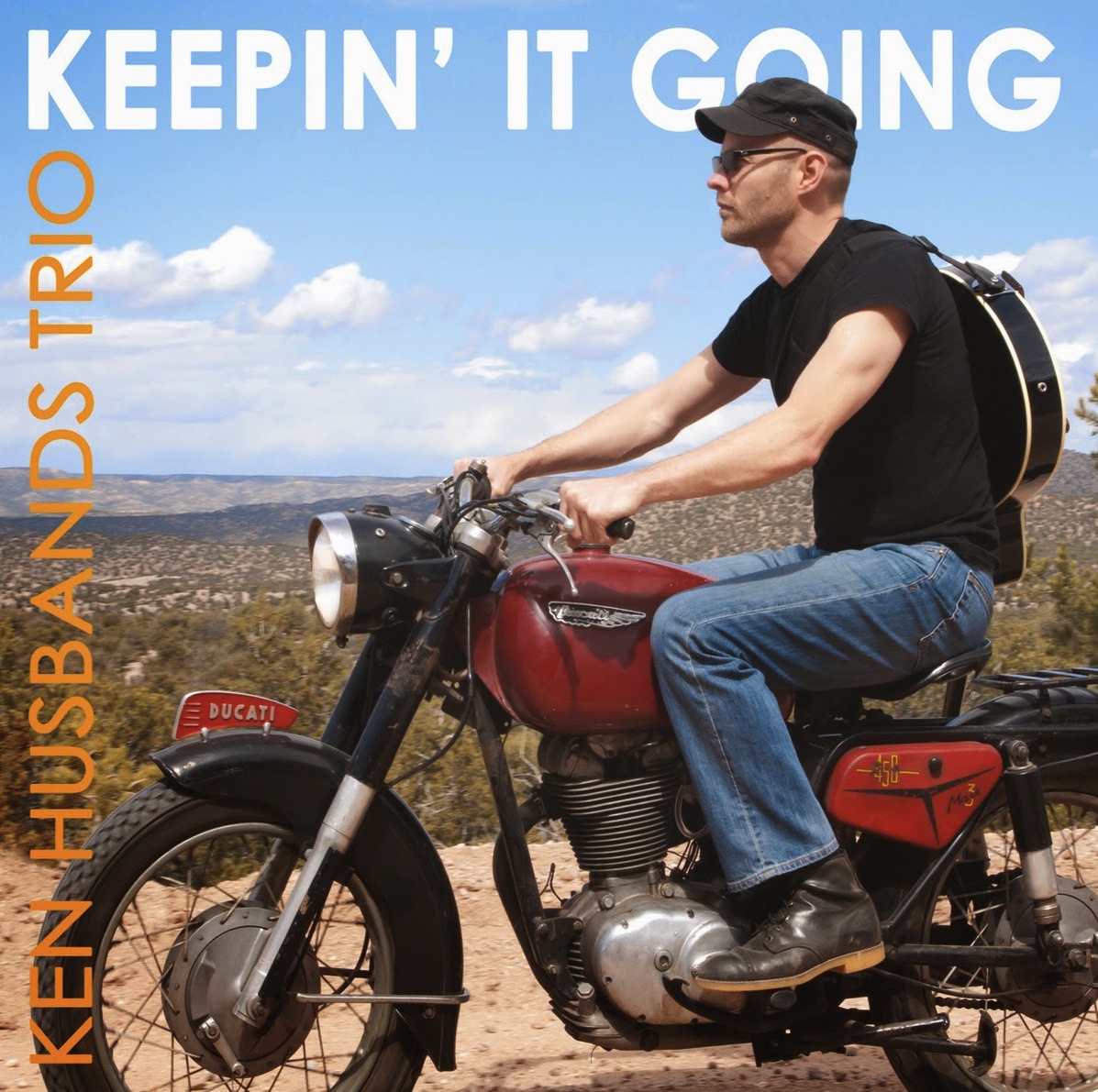
Ken Husbands Trio: Keepin’ It Going

Ken Husbands Trio

As a label mate of jazz guitarist Hristo Vitchev, Ken Husbands is in fine company. With bassist Aaron Germain and drummer Otto Huber, even finer. As the Ken Husbands Trio, they make sculptures of their music, smooth and chiseled to lifelike appearance. For its sophomore outing, the trio navigates a set of six originals, crisply recorded and played.

With a background in funk and a personal interest in fusion, Husbands harnesses many influences under one umbrella, but articulates them with an economy that is altogether refreshing. “East Coast Groupings” points to the guitarist’s Boston roots, dipping early into a pool of groove. There is here, as throughout the album, a feeling of the open road. Germain’s warped electric bass foils Huber’s pristine timekeeping with a hint of grunge. The drummer’s rhythmic slights of hand further dress the emerging groove of “Lucky Seven” in cathartic clothing. Here the trio works synergistically, Husbands working overtime to maintain a smooth exterior, stoking the flames by means of his stream-of-consciousness style. The title track proceeds along Huber’s skipping trail, while Germain switches to more direct amplification, augmented by a spacy echo effect. Husbands provides a circling backdrop for Germain’s initial forays before taking over the foreground with a non-invasive lyricism.

“Goodbye Eddie,” however, gives us the album’s biggest revelation in German’s less mitigated playing. The only non-Husbands original of the set (this one by way of the bassist’s pen), it evokes a slicker, more classic club vibe. Germain’s fast fingers give virtuosity a melodic sheen in this standout track. “Almost Eleven” returns us to the groove-oriented approach with which the album began and shows the trio at its tightest yet also its most liberated. Even amid all the hot action from the rhythm section here, Husbands manages to light a few fires of his own. Last is “But I Don’t,” another smooth and carefully interlocking ride. Husbands and Germain never cease to reinvent their own wheels along the way, Huber keeping toeing the line and throwing in a hard-edged solo for good measure.

At a mere 39 minutes, Keepin’ It Going might feel like a modest album were it not for the overt invitation of its playing. The band’s hallmark is a genuine desire to keep the listener engaged. This music is packed with ideas and expresses those ideas openly. This isn’t jazz that hits you over the head, but that takes you by the hand and shows you just how wide the world can be.

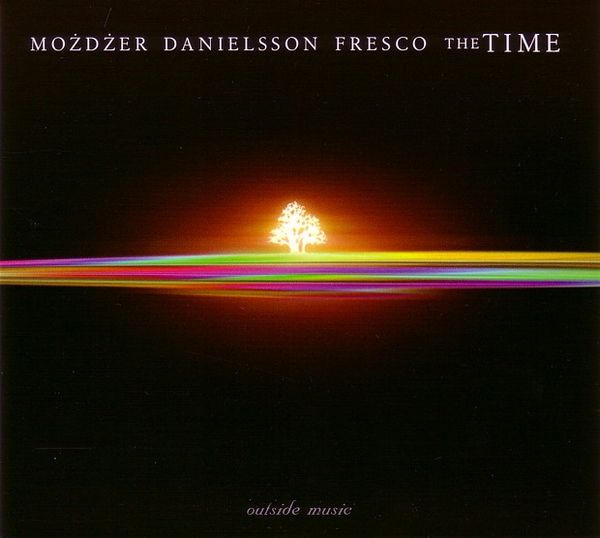
Możdżer/Danielsson/Fresco: The Time

The Time

Polish pianist and composer Leszek Możdżer, best known for his solo re-imaginings of Chopin (released 1994 on Polonia Records), has since 2005 carved into the soil of jazz a significant river in trio with bassist Lars Danielsson and percussionist Zohar Fresco. The Time represents the group’s first studio outing, and the results are nothing short of enchanting. With a blend of lyricism and space that should appeal to fans of ECM’s many European traversals, Możdżer and Company put their all into every tune.

Among those tunes, Danielsson’s provide the skeleton. “Asta” opens the disc in David Darling-like reverie, Fresco’s wordless vocals floating in the spirit of Per Jørgensen, a swath of pollen fanning into open air. With a rare stillness of heart and transcendent core, the trio emotes without any discernible force of thought. Distillations of “Asta” appear twice more throughout the album, each a fantastic reflection, a film caught in repeat. “Suffering” laces muted pianism with cello pizzicati from the composer in a web of teardrops. The disc ends with an outtake of this same track, the laughter of which betrays a light and free spirit behind the shadows.

“Incognitor” is the first track by Możdżer. Along with “Easy Money,” it is among his best-known compositions, and pushes the trio paradigm into the wonders of letting go. Możdżer further displays great faculty for eclecticism, as in the tessellation of “Tsunami,” which twists gentle arcs and Byzantine touches in a helix of calm. The title track, co-written with Fresco, runs with scissors in one hand and, in the other, a page torn from the book of Nik Bärtsch’s Ronin. A likeminded jam aesthetic imbues the trio’s take on “Svantetic.” This one, by the great Krzysztof Komeda, reveals the influence of Tomasz Stanko, with whom Możdżer has worked in the past. It is notable proof of Fresco’s touch as he sets his planets around a sun-spotted center. Both tunes are puzzles of insight.

Also insightful is the band’s rendition of the Nirvana classic “Smells Like Teen Spirit.” What with the sonorous inner secrets from Danielsson and Możdżer’s deft tracings, the angst of the original melts into a shadow of its former self, even as Fresco’s hand percussion skirts the edges of seizure. Like the wave of clarity that follows a period of suffering, it turns tragedy into a triumph of the spirit.