Majamisty TriO: Mistyland

Mistyland

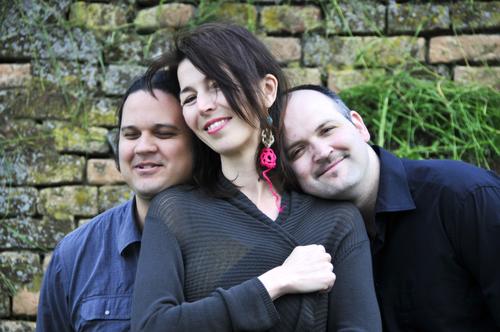
Pianist Maja Alvanovic, bassist Ervin Malina, and drummer Istvan Cik, known together as the Majamisty TriO, forge a path through the jazz landscape every bit as thoughtful as any of their European contemporaries. Alvanonic draws on her classical foundations—this debut was indeed reissued by Maple Grove Music Productions, a classical outfit out of the band’s native Serbia—for an intensely lyrical, at times somber, but ever-gorgeous sound.

All of the tunes on Mistyland owe origin to Alvanovic’s pen, except for the Brazilian-flavored “Happy Love Song” (by her father Blaza Alvanovic) and Errol Garner’s evergreen “Misty,” which at her fingertips becomes a piece of exponential crystal, with two beginnings for every ending. Crafting bright, optimistic melodies is Alvanovic’s strong suit, as is clear in “Landscape.” The album’s opener combines the gentle propulsions of her keyboarding with a wing-clipped rhythm section. Much of what follows is similarly evocative, throwing heads back in the revelry of clever rhythm changes and turns of phrase. Heartfelt ballads (“She Said…”) share breath with the minor-inflected curls of “The Tear” toward locomotive destinations (“Tuesday”), traversing airbrushed borders between waking and sleeping along the way. This emotional Rubik’s cube is at one moment sweeping and cinematic (“With You”), the next decidedly classical in scope, as in the Satie-esque “Waltz for Sofija.”

Majamisty
(Photo credit: Sinisa Ponjevic)

Alvanovic’s compositions, however, further allow the album’s only questionable inclusion: that of guest vocalist Aleksandra Drobac, who treats her voice like a fourth instrument, wordless and melodic, in tracks such as “Lullaby for Iva” and “Red Like.” As lovely as her voice is on its own, it adds little to the trio’s already-verdant sound, making it feel rather like an impressionist rendering every single leaf of a tree when only a few indicative strokes are needed. That said, after a few listens it becomes easier to feel Drobac’s colors blending into the rest, so that by then they begin to seem parts of the whole.

Improvisationally speaking, this is by no means a risky album, but in that respect provides vast comfort through its artful virtuosity. Alvanovic and her bandmates hold their own in an industry flooded with trios. Their vessel sails true with an attention to melodic detail known well by ECM listeners, for whom Mistyland might very well constitute a positive discovery.

(To preview the entire album, click on over to the band’s website here.)

Dario Castello/Giovanni Battista Fontana: Sonate concertate in stil moderno (ECM New Series 2106)

Sonate concertate in stil moderno

Dario Castello
Giovanni Battista Fontana
Sonate concertate in stil moderno

John Holloway violin
Lars Ulrik Mortensen harpsichord
Jane Gower dulcian
Recorded June 2008 at Propstei St. Gerold
Engineer: Stephan Schellmann
Executive producer: Manfred Eicher

John Holloway has charted a veritable history of the Baroque violin across the waters of ECM’s New Series, but perhaps none so tantalizing as the selections he has assembled for this benchmark recording. Holloway notes a special affinity for Dario Castello (1590-1658) and Giovanni Battista Fontana (1571-1630), composers whose works he played as interludes in vocal music concerts early on in his career. Now, nearly four decades later, he allows them the full force of center stage.

This program’s featured sonatas denote a time when the violin was coming into its own as a melodic lead (where before it was merely a consort instrument) and the portability and projection of the fagotto, an early incarnation of the bassoon known also as the dulcian, replaced the viola da gamba as the bass line in chamber ensembles. Historical bassoon specialist Jane Gower plays the dulcian alongside Holloway—with whom, as always, is harpsichordist Lars Ulrik Mortensen. It’s a formidable trio playing formidable music, but with a graciousness born of knowledge and experience.

Holloway Mortensen Gower

In her book Desire and Pleasure in Seventeenth-Century Music, musicologist Susan McClary brilliantly describes Dario Castello’s instrumental pieces as latching onto “a succession of impulses—some ordered with respect to goals, to be sure, but others producing extended passages of hovering.” Such a characterization might easily carry over into the concerto, to which this music represents a transitional link. Castello’s distinctly Venetian ornaments and flair for ecstatic denouements make of the listening—and, one can only imagine, the performing—a rewarding experience. The album is bookended by six sonatas from his two massive books of the same. All but two, the Sonata Prima à Sopran Solo and the Sonata Seconda à Sopran Solo, feature the dulcian. Those without boast a staggering variety of speeds, dynamics, and textures. Holloway and friends negotiate transitions between slow, reflective stretches of beauty and their cathartic outbursts with ease, and by those changes underscore a grand (but never grandiose) sense of development. Sonatas with the dulcian outweigh the potential complexities of the combination with awareness of line and form. Like masterful Celtic knotters, composer and musicians attend to every curve. Gower’s contributions (note especially the Sonata Ottava à due. Sopran e Fagotto) add depth of character to Mortensen’s sparkling frame, while Holloway enlivens the music’s cyclicity with meticulous intonation. The concluding Sonata Ottava à due. Sopran e Fagotto indeed brims with dramatic finality and, for its quick-witted arpeggios and filigreed structure, is the most virtuosic of them all.

It’s only natural that the music of Giovanni Battista Fontana, closest in style to Castello’s, should occupy the program’s center. Here we are treated to seven of his concerto sonatas, of which four do without the dulcian. To these Holloway brings a rustic energy by means of his bow, yielding and dancing in a veritable profusion of flora and fauna. Fontana, it might be said, was even more of an expository composer than Castello, as evidenced by tactile Sonata Terza Violino Solo and flowing tempi of the Sonata Sesta Violino Solo. Even more so with the dulcian in tow, as in the charged interactions of the Sonata Decima Fagotto e Violino. If these pieces seem more temperate, however, it’s only because the transitions between subdivisions are less explicit, marking as they do a time of great invention in the Italian sonata, so dutifully preserved for our own desire and pleasure for countless years to come.

Beating the Highs and Lows: Sō Percussion at Bailey

So Percussion

Sō Percussion
Bailey Hall, Cornell University
October 24, 2014
8:00pm

Percussion ensembles and their repertoires can be hard sells in the contemporary music market. On the one hand, their emphasis on rhythm over, or in tandem with, melody makes them accessible to a broader audience than their classical allegiances might have us believe. On the other, that very slipperiness renders them moving targets in a genre-driven industry. The members of Sō Percussion, one of the leading quartets of its kind, bring such an eclectic mix of backgrounds, tastes, and talents to the table that any reliance on category would seem long dead. That said, Friday evening’s concert at Bailey Hall charted a disorienting EKG graph of peaks and valleys that left behind more questions than answers.

The program’s frame consisted of two perennial classics by composer Steve Reich. His 1973 Music for Pieces of Wood—a composition for five woodblock players that required a helping hand from Sō’s Operations Manager, Yumi Tamashiro—was captivating and clean. Although not overtly about melody, its pitch-tuned surfaces nevertheless overlapped in melodic ways, blending waves of rhythm into a seamless whole. Clapping Music, composed the year before, was the concert’s encore. Consisting of nothing but clapping hands, it brought the art of percussion to an even more primal level, using only the body and its discipline to enliven the space.

Moving in from either end, however, brought us to the program’s longest pieces, both of which relied on gimmicks that outweighed their musical results. Intriguingly, the score of Todd Lerew’s Flagging Entrainment of Ultradian Rhythms and the Consequences Thereof was mapped out like a choose-your-own-adventure novel, guiding performers to change paths based on their interactions (or lack thereof) with one another. Conceptually robust, despite the title’s dubious use of the word “ultradian,” and not without its beauties (the recurrence of bowed vibraphones and glockenspiels was nothing short of haunting), by the end it was unclear as to what the exercise was meant to achieve. In stark contrast to John Zorn’s influential game and file-card pieces of the 1970s and 80s, this one established a vague mood at best, in service of which beauty for its own sake felt ultimately arbitrary.

Sitting somewhere between the Bowed Piano Ensemble pieces of Stephen Scott and the guitar symphonies of Glenn Branca, but approaching the depths of neither, was Bryce Dessner’s Music for Wood and Strings. An electric guitarist known for his work with The National, Dessner enriches a selective rank of rock musicians, such as Radiohead’s Jonny Greenwood, that have had successful careers as composers. Yet whereas in other projects—check out his brilliant, heartfelt Aheym, in collaboration with the Kronos Quarte—he shines, too many rough patches overwhelmed the light of this particular experiment. The conceit of Music for Wood and Strings is a quartet of instruments, each a chromatically arrayed guitar neck laid flat and played like a dulcimer. Built with the assistance of drummer Aron Sanchez, who has also designed instruments for the Blue Man Group, their properties were exhaustively explored by Dessner and the musicians in kind. Despite the composer’s professed attempt to align “triadic chord inversions…in complex rhythm patterns to create a kaleidoscopic effect of harmony,” the end effect was neither rhythmically complex nor kaleidoscopic. After about the fifth missed opportunity for an ending, I was left asking: Had this piece been played on standard instruments—pianos, for example, or even plain old dulcimers, for that matter—would it have sustained attention for 30 minutes?

All of which left us with the program’s two star turns. As part of their ongoing commitment to education, the members of Sō Percussion held brief residency at Cornell last spring, during which time they collaborated with student composers to yield new works premiered during Friday night’s performance. Tonia Ko and Corey Keating, both D.M.A. students at Cornell, presented their pieces via the ensemble’s meticulous, animated approach. Ko’s Real Voices and Imagined Clatter was a multifaceted exploration of that juggernaut of the symphony orchestra: the timpani drum. Although her piece also made ample use of gimmicks and extended techniques, none seemed extraneous but rather a means by which to bring out the inner voices of the liberated drums. The strength of her piece was in the details: in the small gong that added a hint of gamelan, in the large gong struck only occasionally, in the delicate triangle and woodblocks clattering throughout. The atmosphere was immediate, artful, and, for lack of a better word, mountainous.

Keating’s Audio Geometry (Pythagorean Triple) for Percussion and Electronics might also be convicted of pretentious titling if it did not practice what it preaches. Scored for marimbas and live electronics, the latter courtesy of the composer on stage, it mapped a resonant and unearthly soundscape. Distortions derived from rehearsals of the piece itself were recycled, warped, and fed through echo chambers in a sampling spiral. What separated his and Ko’s pieces from the program’s subcutaneous selections was their willingness to be closed circuits. Each said what it wanted to say and nothing more. They were also the most musical, moving with organic care by way of a thinking-out-loud approach far more akin to jazz than to merely pedantic composing.

Despite the concert’s low points, and as emphasized by its highs, it was refreshing to encounter unfamiliar music and unfamiliar instruments sandwiched between two evergreens in the field. If anything, the evening’s diversity proved the bravery and exploratory spirit of four souls whose love for the beat reigns supreme.

(See this article as it originally appeared in The Cornell Daily Sun here.)

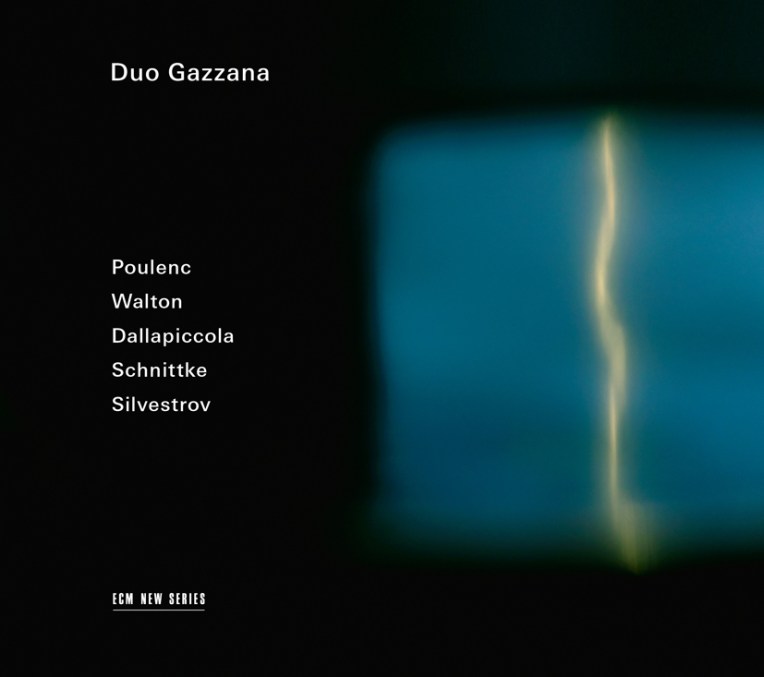
Duo Gazzana: Poulenc, etc. (ECM New Series 2356)

2356 X

Duo Gazzana
Poulenc / Walton / Dallapiccola / Schnittke / Silvestrov

Natascia Gazzana violin
Raffaella Gazzana piano
Recorded June 2013, Auditorio Radiotelevisione svizzera, Lugano
Engineer: Markus Heiland
Produced by Manfred Eicher

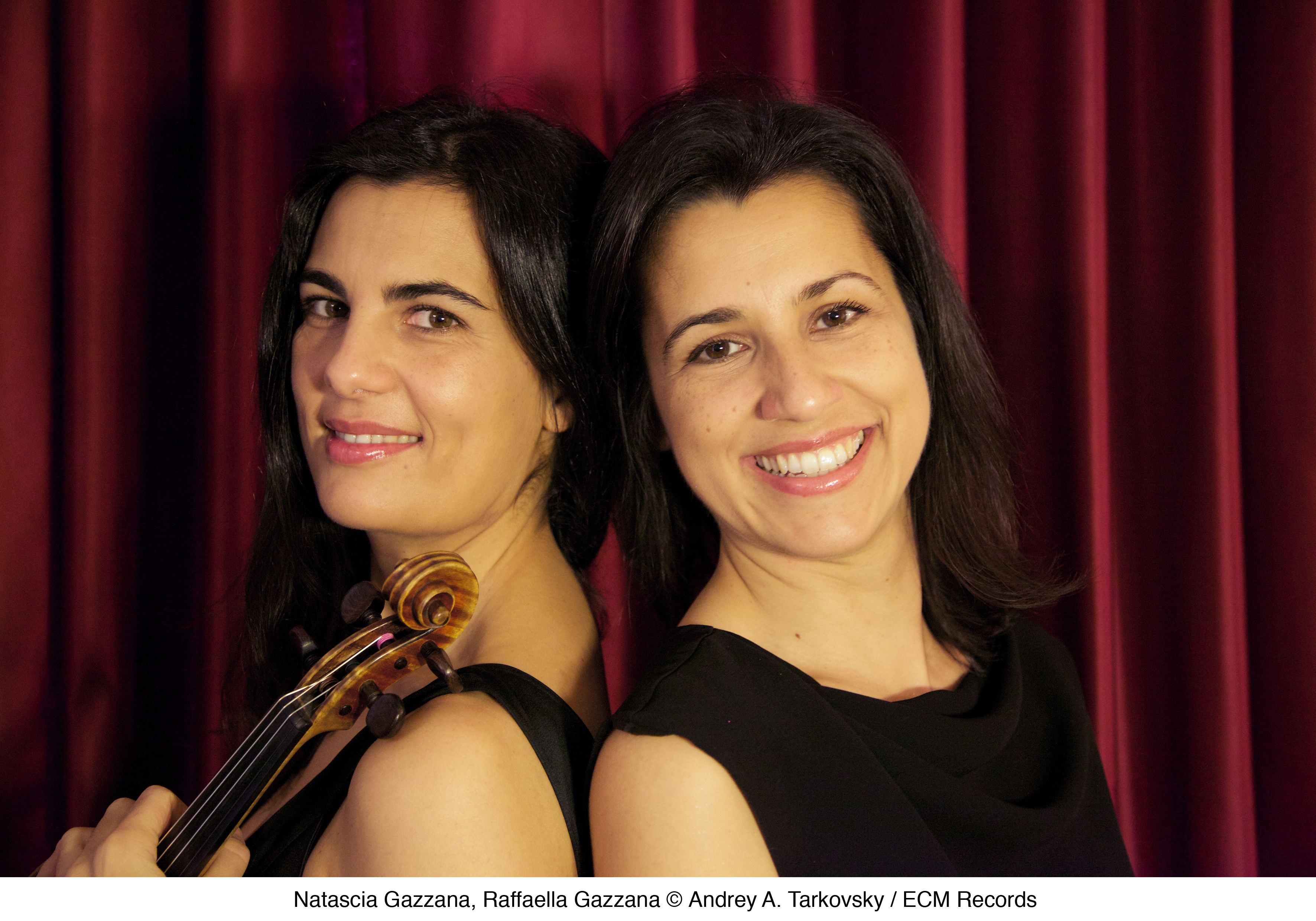
In 2011, pianist Raffaella Gazzana and violinist Natascia Gazzana, better known as Duo Gazzana, made a quiet, if colorful, splash with Five Pieces, their first record for ECM’s New Series imprint. Navigating a recital comprised of works by Takemitsu, Hindemith, Janáček, and Silvestrov, the Gazzana sisters, in close collaboration with producer Manfred Eicher, demonstrated an acute sense of programming, technique, and integrity. Despite the title of their debut (named for the Silvestrov composition of the same name), which contained only four pieces, Silvestrov’s Hommage à J.S.B. (2009) comprises the heart of this truly pentagonal sequel. The Ukrainian composer offers three short movements: two Andantinos and one Andante, each the band of a deeper and more nuanced spectrum. The end effect is one of suspension. Although originally written for Gidon Kremer, the Hommage is uniquely informed here by the Gazzanas’ attention to detail. “The music of Silvestrov is not difficult in terms of notes,” Raffaella tells me in a recent interview, “but it’s so particular. In a way, you have to isolate yourself from the noise of life. He’s a composer who belongs to another time, bringing these beautiful melodies, as if from the past.” Indeed, as Wolfgang Schreiber observes in his album notes, the Gazzanas share in the spirit of the music they have selected, which like them finds newness in the old. Their unwavering commitment to urtexts only serves to emphasize what is unwritten in them, thus coaxing out hidden messages and spirits.

Gazzana Portrait

Radiating outward from the Silvestrovian center are two richer, denser works: Poulenc’s Sonate pour violon et piano (1942/43, rev. 1949) and William Walton’s Toccata for violin and piano (1922/23). Dedicated to the memory of Federico García Lorca, the Poulenc sonata is, in Raffaella’s estimation, a product of its time, as is clear in the first in third movements, designated “Allegro con fuoco” and “Presto tragico,” respectively. These are extroverted, almost flailing. Stravinsky looms large in the final, especially, but there are also—unwitting, perhaps—nods to the late Romantics and Ravel as the piece nears its enigmatic coda. “After expressing the suffering of the war,” Raffaella observes, “Poulenc wanted to finish with this dreamy catharsis. This was his character, shy but also enjoying life. He was, I think, a very elegant man, and in this sonata you can hear that.” Poulenc purists take note: the Gazzanas’ interpretation corrects mistakes left in the original French edition prepared by Max Eschig, which elides key signatures in the last page. After careful study of the facsimile, they believe to have arrived at the definitive version.

Although more obscure, Walton’s Toccata was the subject of Raffaella’s dissertation and is no less possessed of elegance. Nataschia’s opening proclamation stirs the piano’s waters with relish and fortitude, giving way to a virtuosic and starkly exuberant foray, pocked by haunting, probing depressions. Although written in the composer’s 20s, it smacks of maturity and daring-do. Raffaella: “I am always impressed by the piece’s improvisational elements. At the time he was working on it, Walton was planning a jazz suite for two pianos and orchestra. Although it never panned out, you can hear this influence throughout the Toccata. The beginning contains no tempo or bar divisions. You just have to go with it.”

Two further works draw the album’s outer circle. First is Schnittke’s Suite in the Old Style. Originally composed for two 1965 films (Adventures of a Dentist and Sport, Sport, Sport) by director Elem Klimov, Schnittke arranged these five selections for violin and piano in 1972. Its moods are crisp and compelling. Especially moving are the Minuet and the spirited Fugue. Only the final movement, marked “Pantomime,” has the surreal touches one might expect of the composer. Still, it is playful and fragile, ending with a mystery.

Tartiniana seconda (1956), by the 20th-century Italian composer Luigi Dallapiccola, concludes. Referencing Tartini, this divertimento spreads a beautiful carpet across its four Baroque-inspired movements. “This piece enjoys great popularity in Europe,” Raffaella explains, “especially in Italy. It makes exclusive use of canons, pastorale, and variations: all forms that belong to the past.” At times ponderous and lyrical, at others swirling with ornament and invention, it culminates with a set of emphatic statements from both musicians. Of all the pieces on the album, it is the most architectural. This is no coincidence: “It helps to have the score in hand when listening, because it’s as much for the ears as it is for the eyes. In the opening Pastorale, for instance the piano plays the violin’s lines exactly, but staggered and in reverse, while in the second Variation, it plays the exact reverse, bar for bar.” The Tartiniana also gives contrast to the freer forms of Walton, lending finality and flourish to this exquisite sophomore program.

Coinciding with the release of this disc was the Duo Gazzana’s North American concert premiere when, on May 2, they performed as part of 2014’s Look & Listen Festival in New York City. For this performance, they chose the Silvestrov and Poulenc pieces from the new album, and enchanted the audience with their grace, sensitivity, and mutual resonance. Hearing this music live brought home a vital point in relation to the album’s core philosophy. Because the nature of past and future is immaterial, the only true reality of this music can be the here and now of performance and listening. On this point, Raffaella has the final word: “Chamber music has ever been one of the most beautiful expressions of liberation, one that tests the ability of performers to listen to one another in dialogue. These peculiarities attract us and in our interpretations we try to emphasize them. All the study we put into these pieces is just the grammar. But grammar must be spoken to come to life. Nowadays, it’s easy to speak without caring what other people think. Chamber music ensures we never fall into that trap. Sure, there are good performers, but it’s obvious when they’re performing only for themselves. Chamber music is, quite simply, enjoyable. It’s so beautiful to share it with such a caring musical partner, and with the listener in turn. When you do something out of love, you transmit this love to others. And people can hear this.”

(See this article as it originally appeared for Sequenza 21. To hear samples of this album, click here.)

David Virelles: Mbókò (ECM 2386)

Mbókò

David Virelles
Mbókò

David Virelles piano
Thomas Morgan double bass
Robert Hurst double bass
Marcus Gilmore drums
Román Díaz biankoméko, vocals
Recorded December 2013 at Avatar Studios, New York
Engineer: James A. Farber
Assistant: Akihiro Nishimura
Produced by Manfred Eicher

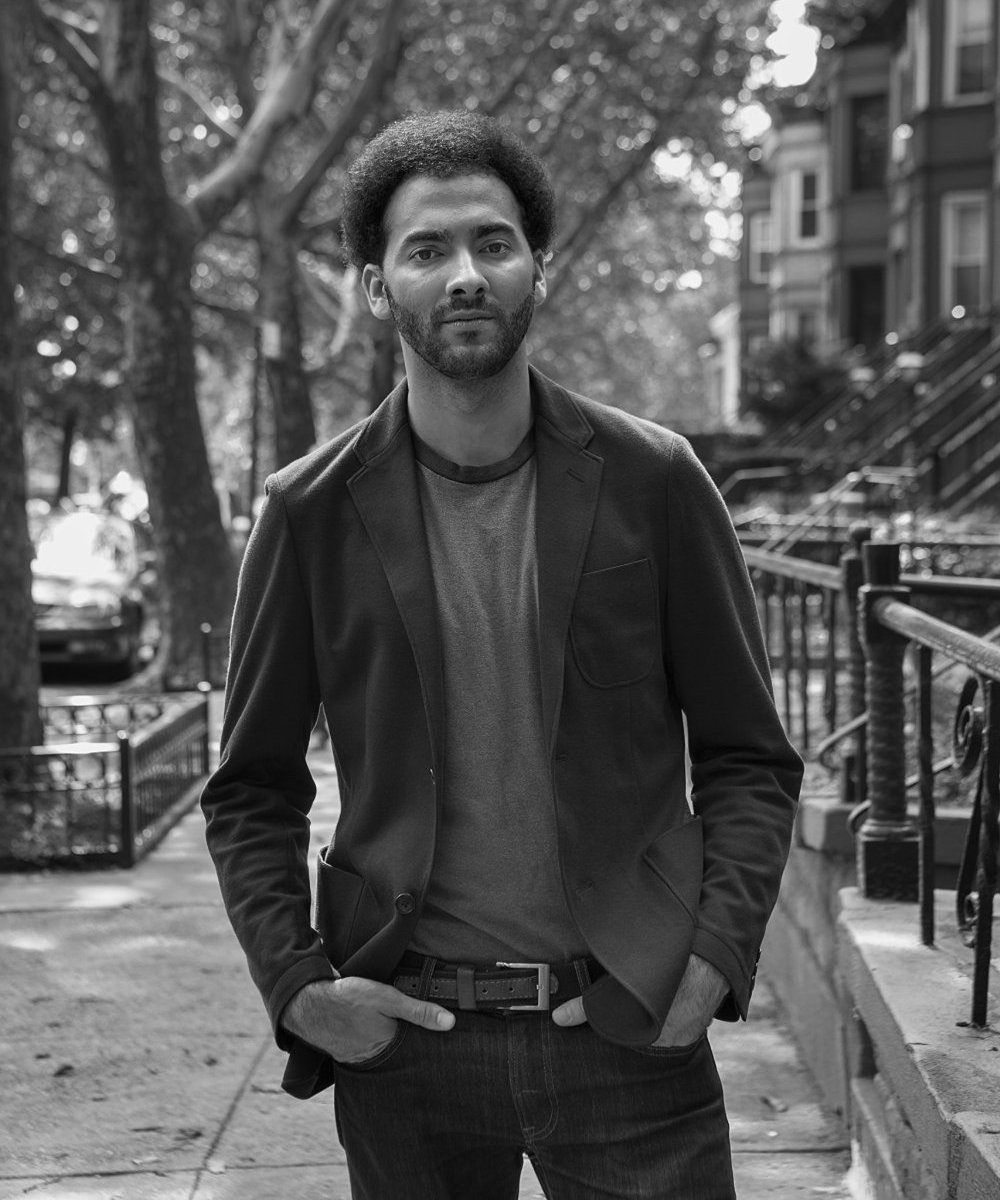
David Virelles first dipped his oar into ECM waters from the vessel of Chris Potter’s phenomenal The Sirens and, more apparently, on Tomasz Stanko’s Wisława. The 30-year-old pianist, born and raised in Santiago de Cuba but now headquartered in Brooklyn, cites a range of musical influences, from Afro-Cuban sounds to Bach to Thelonious Monk. On Mbókò, his first leader date for the label, he taps even deeper origins. The album’s subtitle—“Sacred Music for Piano, Two Basses, Drum Set and Biankoméko Abakuá”—points to those origins while also disclosing its unique instrumentation. The biankoméko is a four-drum ensemble (also including sticks, cowbell, and shakers) of the Abakuá, a fraternal secret society of Cuba with West African roots. Around this ritual core Virelles enlists the services of Thomas Morgan and Robert Hurst on basses (heard left and right of center, respectively), Marcus Gilmore on drums, and Román Díaz on the biankoméko. As an integral participant and circle-maker of the album, Díaz brings his especial knowledge of a talking drum known as the bonkó enchemiyá to spinal effect, around which the nerves of Virelles’s piano parts took organic paths during the music’s genesis. It is a language more ancient than speech, one that flowers through the ritual power of improvisation and makes itself known like a puppet lifted by its strings.

Virelles (Photo credit: Juan Hitters)

Because this album’s multivalent title is its sunrise and sunset, I use its three distinct meanings to divide this review as follows.

Fundament

The Abakuá faith derives from Carabalí beliefs, by way of southern Nigeria. Most Abakuá rituals are known only to initiates, and may involve purification and communion with the dead. According to Professor Alan West-Durán, the Abakuá accommodate two orders of drums—one more symbolic, the other the biankoméko heard here—in their religious practice. The latter are typically associated with dances of the Íremes, a reincarnated soul believed to be present during ceremonies or, in the case of occasional public rituals, with the demonic Ñáñigos. And yet, as William Luis elaborates in his book Culture and Customs of Cuba, the Abakuá Society, contrary to being discriminated as a supposed gang of thieves, is “a religious and mutual aid organization that works in the interest of its members.” Any secrecy surrounding the Abakuá is fundamentally a defense mechanism, a means of protecting their spiritual beliefs in a state of indefinite displacement. The Abakuá identity, in fact, goes as far back as 1836, although Carabalí presence in Havana dates further to the eighteenth century, when the Middle Passage uncoupled thousands of Nigerian slaves from their homeland and plugged them into the Cuban trade circuit.

Sugar cane

The music of the Abakuá—and, by extension, Virelles’s reimagining of it—wears masks. It does so not as a means of assumption or transposition, but to deepen the experience of self-expression. “Wind Rose (Antrogofoko mokoirén),” for instance, begins in the piano’s depths, a dream of the unconscious given voice through instrumental contact. It’s an awareness of enmeshment in all things, the knowledge that somewhere beyond any personal radius is another world, one step away. We may hear this in the percussion, which gives ground to the piano’s flotation. Only these two forces—ivory and skin—establish a perimeter of mood. Inside becomes outside. Like the sugar cane, the communication between Virelles and Díaz unites stalk and root. It is profound for having no interest in profundity. It steps from the shadows into candlelight in “The Scribe (Tratado de Mpegó),” where a fluttering beat gives rise to our first encounter with bass. There is an impactful solemnity to this triangle. It would seem to allude to an ancient past in which the mind was a force of nature—was, in fact, nature incarnate—and needed only blink to find its meal. Virelles brings an astonishing level of detail to the keyboard in this space. His smallest gestures move mountains. The split bassing of “Transmission” later in the set reveals even more such gestures, each the messenger of an underlying pulse. The splash of hard-won pianism that intros “Biankoméko,” too, lends gravity to the subtlest shadows. At the same time, it’s a sound that stirs the waters until ancestral currents are released, shaping rock and soil by the scraping of divine fingernails. The rhythmic waterfall of “Antillais (A Quintín Bandera)” allows Gilmore to unleash the most mindful color he has to offer, while “Aberiñán y Aberisún” clears a path for Díaz to sing. Although his voice recedes as quickly as it emerges from the surrounding forest, his ripple effect is such that all notions of unity are forever altered. This welcoming of spirit slips behind the unopened eye, leaving the sunrise bereft of reflective surface. In its place, the lush flora of “Seven, Through The Divination Horn” stretch their unbreakable vertebrae in the dawn, warm and acknowledged. “Stories Waiting To Be Told” gives us Virelles the Storyteller. The dream-walk of his inaugural solo lays a jagged, horizontal path, intersecting the vertical with sprawling rhythms and winding improvisations: the inhale to the others’ exhale. In light of this, giving praise to “The Highest One” paints not in upward but inward strokes. It is the opening of self to the selfless, or of the known to the unknown, as in the 40-second track, “Èfé (A María Teresa Vera),” that closes this ceremony as it began, our brothers of the keys and the drum pulling the already and the yet-to-be into the now.

The Voice

Abakuá initiates praise the Divine Voice. For them, sound is a sacred energy to be worshipped. Its highest leaders carry memory of the Voice within. Such responsibility is written in the energy of belonging. It bespeaks a love of private knowledge, an affirmation that just because one is relegated to the margin doesn’t mean one can’t also redefine that margin as its own territory. Mbókò is thus a record of the peacekeeper, of the knowledge-bringer, of the one who holds a mirror to the world as the surest way of preserving it.

(To hear samples of Mbókò, click here.)

Tarkovksy Quartet: s/t (ECM 2159)

Tarkovsky Quartet

Tarkovsky Quartet

François Couturier piano
Anja Lechner violoncello
Jean-Louis Matinier accordion
Jean-Marc Larché soprano saxophone
Recorded December 2009, Auditorio Radiotelevisione svizzera, Lugano
Engineer: Markus Heiland
Produced by Manfred Eicher

“What she thought about death was childish, but what could never have touched her in the past now filled her with poignant tenderness, as sometimes a familiar face we see suddenly with the eyes of love makes us aware that it has been dearer to us than life itself for longer than we have ever realized.”
–Georges Bernanos, Mouchette

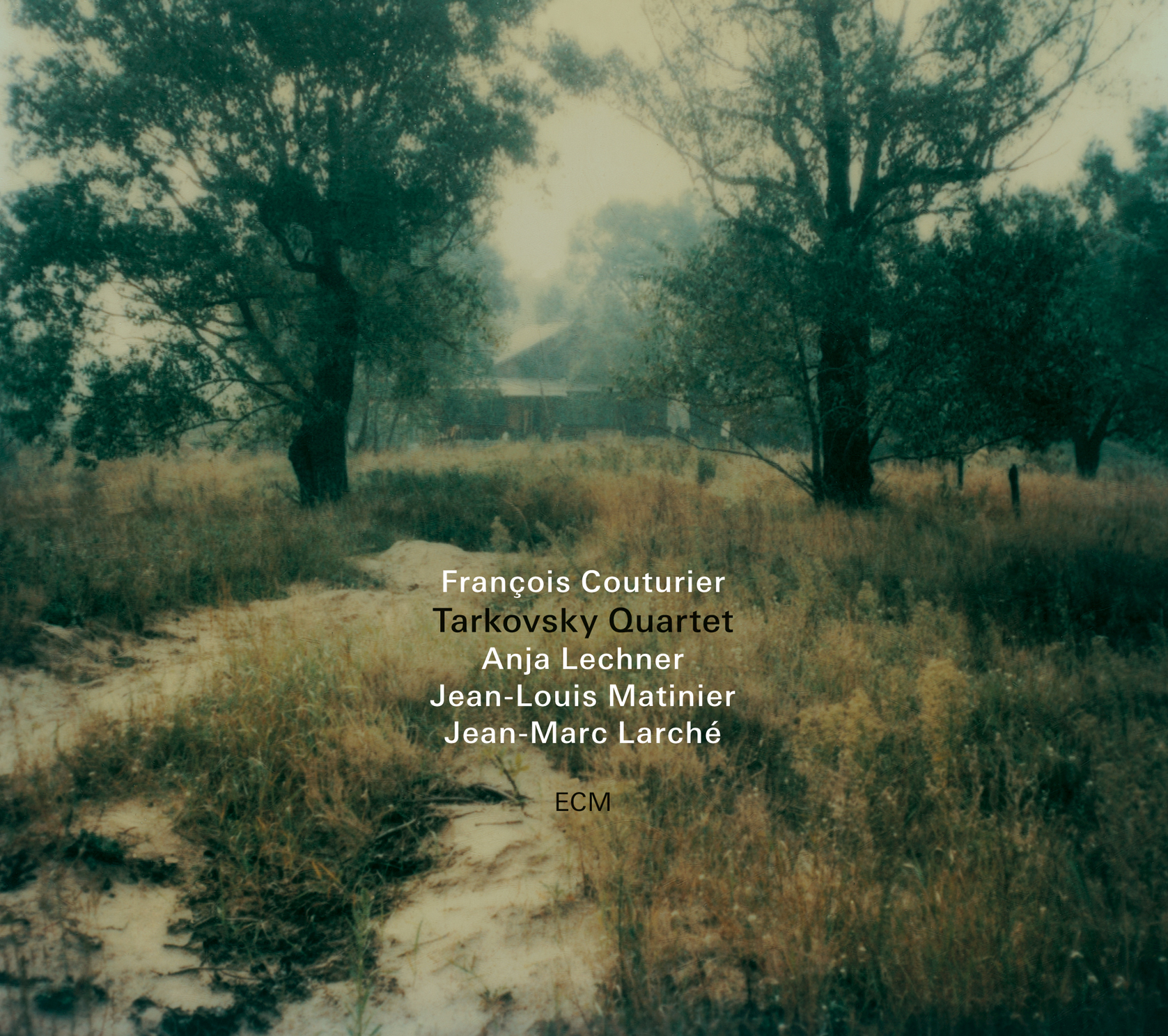
Forever striking about the cinema of Andrei Tarkovsky is its commitment to silence. Whether unfolded in the inner expanse of Solaris or cupped like the candle in Nostalghia, it breathes. For Tarkovsky, the latter sequence was indeed a representation of human existence: birth as inhale, and life as a flame trembling in protracted exhale. Likewise exhaling is this self-titled album from François Couturier’s Tarkovsky Quartet, which completes the pianist’s envisioned trilogy for ECM around the work of the master Russian filmmaker. More than a tribute, it is a tribune, quietly defending the right to sing without words as a way of opening the heart. Flipping through the aortal pages of its namesake, this album treats every concerted pump as a point along a line, from which dangles twelve tracks encased in solemnity.

TQ

The title of “A celui qui a vu l’ange” (A person who saw the angel), being carved on Tarkovsky’s tombstone, begins with the end. Couturier’s introduction discloses a ponderous reel of undeveloped film that unspools to the keystrokes of accordionist Jean-Louis Matinier and the threading of cellist Anja Lechner. Soprano saxophonist Jean-Marc Larché completes the image even as he unsettles it, startling the flow like a bird landing on a pond filled with broken bottles, scrap metal, and sharp stones. If such imaginings already feel cinematic, it is because they speak as much in a language of light as of sound—word and image made flesh through the divinity of direction.

That being said, the shape of this Tarkovsky Quartet is primarily rendered through the sculptor’s press of improvisation. Three pieces—“San Galgano” (which names the setting of Tarkovsky’s 1983 film Nostalghia), “Sardor” (a film for which he wrote the screenplay but never realized), and “La main et l’oiseau” (The hand and the bird), which points to The Mirror—are, in fact, entirely adlibbed, each a tangled web of signs stretching tundra for the feather brush. Like “Sardor,” a good portion of the album references people or places that never stood before his camera. “Mychkine” (named for the protagonist of Dostoyesvsky’s The Idiot, a subject Tarkovsky often spoke of cinematizing) is a remarkable dip into psychological pools. Matinier floats over surrounding fields of cello and piano, a lone blackbird lured by distant sparkle. Thomas Mann’s novel “Doktor Faustus” (which, again, Tarkovsky never filmed), on the other hand, remains grounded like a tree in this stark musical treatment. Tarkovsky’s favorite Bresson film, “Mouchette,” inspires an affectionate cordoning of the piano while the other instruments fragment the center. Even the ostinato backing of “La passion selon Andreï,” the original title of Andrei Rublev, would seem to articulate a parallel universe.

Two tracks snap living family photographs. “Tiapa” (a nickname for Tarkovsky’s youngest son) builds a lighthouse as Lechner underlies the waves before giving way to accordion and soprano, the second of which casts its own melodic torch so far that it becomes indistinguishable from the lighthouse beam, traveling far beyond the boats and never once looking down until the glow of a distant noon becomes visible. “Maroussia” (another nickname, this for Tarkovsky’s mother) splits the piano like a branch, connecting footprints toward a fiery clearing.

Throughout the program, musical nods to Bach, Pergolesi, and Shostakovich cut ghostly figures. Yet the deeper nods go to fundament and firmament. “L’Apocalypse,” for one, draws from the Book of Revelations, the cautions of which occupied Tarkovsky’s later films. This jagged yet somehow dancing music is a deconstructed cross. In the same spirit(uality), “De l’autre côté du miroir” opens with a tender solo from Lechner, whose interest in interstices makes for compelling listening. Couturier draws a slow-motion current, a tracking shot across centuries of growth in a single compression. The other instruments are echoes, ciphers lost on their way to salvation.

Here is a beacon for those who have only experience of the night.

(To hear samples of Tarkovsky Quartet, click here.)

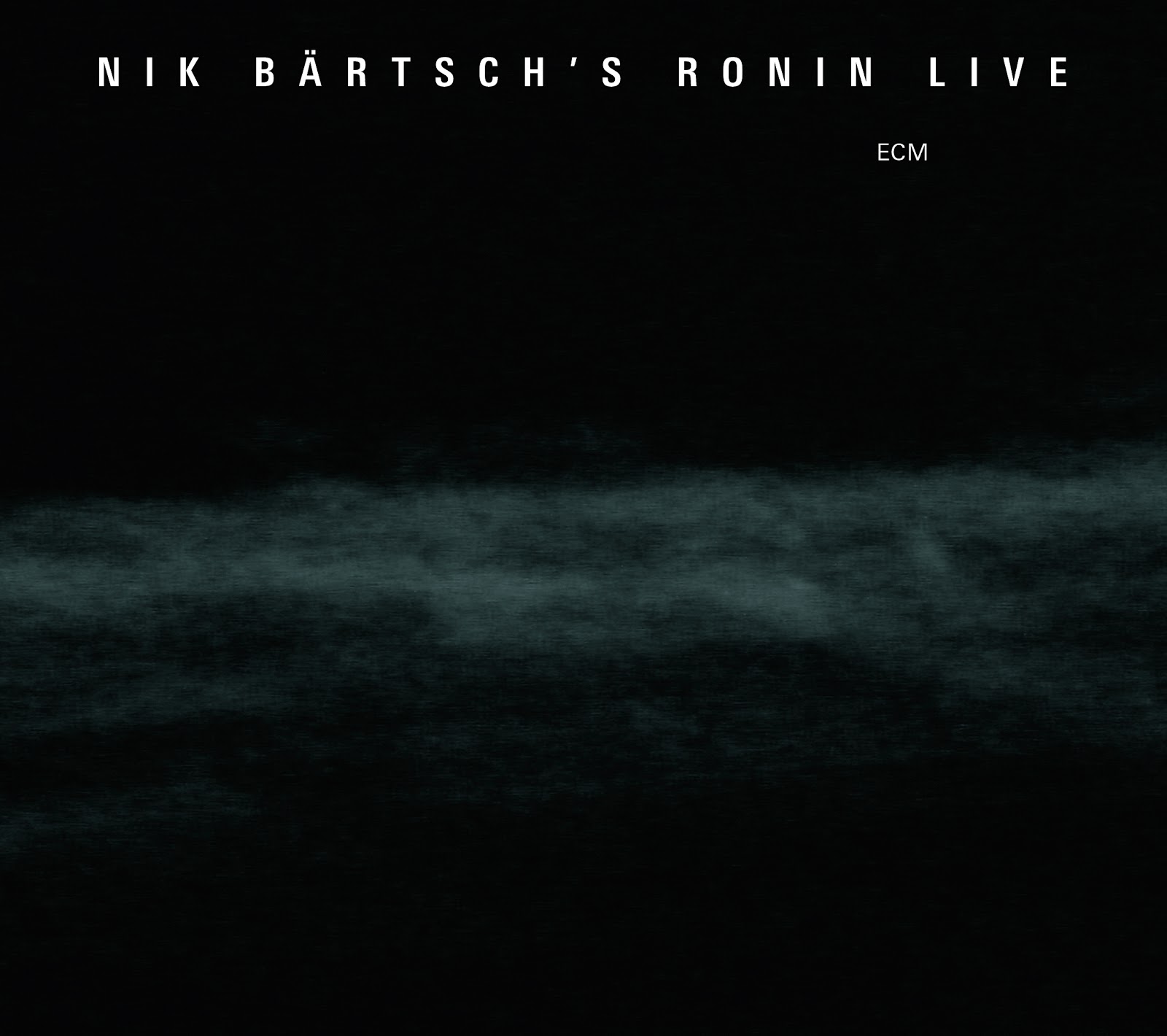
Nik Bärtsch’s Ronin: Live (ECM 2302/03)

Ronin Live

Nik Bärtsch´s Ronin
Live

Nik Bärtsch piano
Sha alto saxophone, bass clarinet
Björn Meyer bass
Thomy Jordi bass (on “Modul 55”)
Kaspar Rast drums
Andi Pupato percussion
Recorded live 2009-2011
Mixed at Studios La Buissonne, Pernes-les-Fontaines
Recording engineer: Andi Pupato
Mixed at Studios La Buissonne, Pernes-les-Fontaines by Gérard de Haro, Romain Castera, Manfred Eicher, and Nik Bärtsch
Mastered by Nicolas Baillard
Produced by Manfred Eicher

The rōnin, or masterless samurai, is an iconic character in both historical and fictional tales of feudal Japan. Many such tales rest on fulcrums of honor, whereby the loyalty of retainers is tested by ill circumstance or, in one infamous event, vendetta. Unique to the rōnin ethos, however, is the fact that, despite having gone rogue, he still possesses the tools of his training. Unlike contemporary figures of martial authority, whose badges or weapons are confiscated as a lawful consequence of their unlawful disallegiance, the historical rōnin wandered with identity markers intact, even if he was helpless to use them. Thus, he constantly skirted the edges of his own social—and sometimes physical—mortality. In Gerald Vizenor’s 2010 mash-up novel Hiroshima Bugi, for instance, protagonist Ronin is “a storier of death, and by the evocation of bushido, his many deaths are imagic, an eternal end and tricky resurrection by another name, in another character and presence.” That said, when I listen to the music of Nik Bärtsch’s Ronin, I feel as if the tools of his trade blossom anew: not as weapons but as instruments of survival. His music, in other words, builds fire in a cold world. It also finds honor in the resurrection of expectation. Often forgotten in popular representations of rōnin is that some actually became glorified in death, granted as they were by the shogunate the honor of ritual suicide—all of which complicates the rōnin figure as an agent purely of disavowal. He is, then, more rightly an enabler.

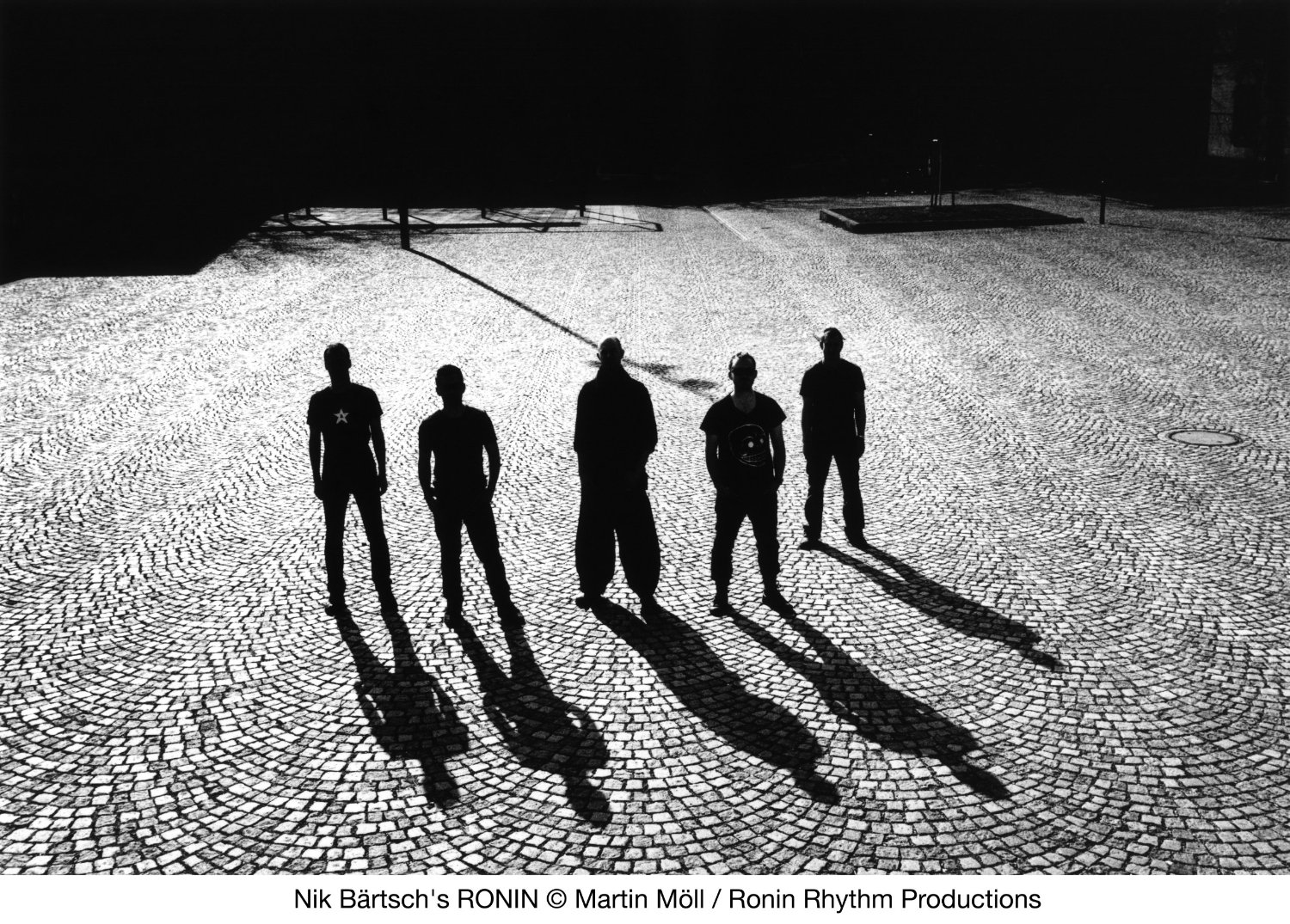
Ronin 1

In light of this, perhaps no word better describes the music of Nik Bärtsch’s Ronin than the Japanese term shibui, which connotes an aesthetic balancing of the minimal and the detailed. The overall effect of a shibui aesthetic is the constant disclosure of new perspectives and interconnections, each an enabler of the other in constant refresh. The muted intro of “Modul 41_17” (recorded in Lörrach, Germany) is thus a microcosm of all that is to follow. Bärtsch’s touch at the keyboard and bassist Björn Meyer’s geometric poetry harmonize, separate, and dance like mirror images in delay, while drummer Kaspar Rast’s undercurrent floats through the background as if it were the fore. Shimmering keys bid the groove welcome, punctuated by the bass clarinet of the mononymous Sha. And just when you think you’ve grasped their core sound, a stunning textural change occurs by way of Meyer’s looping as dampened pianism weaves through and around it. It is by far the most intimate portion of the album and becomes something of a philosophical turning point thereof. “Modul 35” (Leipzig) is a brighter and more harmonious machine of joyous shifts in density and light. An electric piano provides extra splashes of mercury.

In contrast, a sizable portion of the album is devoted to cloudy vistas, each more internal than the last, so that the fluid inflections of “Modul 42” (Vienna) and the arpeggiated chains of “Modul 48” (Gateshead) pave runways for melodies of great attraction, while the drone of “Modul 47” (Mannheim) yields a landbound trek of sand and moon. Through this low tide Bärtsch sends splashes of meticulous attention. Between the bass’s rocking and the piano’s rolling, there’s plenty to get the heart and mind moving in synchronicity with these exchanges, shedding its skin as might a talisman a fold of cloth.

Even a more propulsive construction like “Modul 17” (Tokyo) implies an afterlife through Rast’s locomotive brushes. More often, however, such slips into the void harbor a need for extroversion. “Modul 22” (Amsterdam) is among the subtler excursions in this regard. What begins as a delicate syncopation turns, at Bärtsch’s call, into a glass-blown groove. Pops from bass clarinet accentuate the off-kilter feel, mining the imperfection of every crystal until it resounds. “Modul 45” (Mannheim) reverses this formula, pouring grinding digs from the two bass instruments into its crucible until only a transcendent fountain of emptiness is left unfurling from a full-throated saxophone: the road to silence, paved in solar flare.

Sadly enough, Meyer would leave the band during the course of this assembly. He is replaced by Thomy Jordi on the concluding “Modul 55” (Salzau), a slice of nocturnal wayfaring that takes melodic precedence in a funk of ebb and flow. Wonderful.

Ronin’s Live proves that data streams have existed long before modern technology caught up and destroyed their souls. Theirs is clandestine clockwork that follows neither sun nor moon, but only the heartbeat of the listener. More than a summation of the band’s career thus far, it is a statement of new beginnings. It represents some of the most sustainable music on the planet. The recording is equally eco-conscious, sounding to the naked ear almost like a studio effort, clothed as it is in audiences’ quiet rapture, but feeling like a suit woven of leaves.

In the words of Makoto Ueda, Zen Buddhism “advocates liberty and all-inclusiveness of the soul.” Likewise, Bärtsch has developed a distinct language within the piano, a precise harmonic touch at the strings, a rattling of the cage. His skeletal awareness serves to emphasize the ephemeral nature of culture, which melts into an awareness of non-awareness, and dances until its feet leave the ground for good.

These rōnin have succeeded in making art of their weapons.

(To hear samples of Live, click here.)

Robert Schumann: Geistervariationen – Schiff (ECM New Series 2122/23)

Geistervariationen

Robert Schumann
Geistervariationen

András Schiff piano
Recorded June 2010, Historischer Reitstadel, Neumarkt
Engineer: Stephan Schellmann
Produced by Manfred Eicher

Pianist András Schiff, best known for his surveys of Bach and Beethoven, combines the former’s austerity and the latter’s dynamism in this, his second ECM reckoning with Robert Schumann. More so than the first, the present program tracks a composer stepping out from Beethoven’s shadow and into a light very much his own. As any Schumann interpreter perhaps must, Schiff brings awareness of attendant shadows as well. These he evokes through a balance of restraint and transparency.

To be sure, the Papillons (1829-31) one of Schumann’s earliest piano works (it is his Opus 2), benefits from just such a well-rounded approach. This collection of 12 innovative vignettes linked in brazen montage is as colorful as it is compact. Indeed, each section would feel like the beginning of a longer excursion were it not already so elaborate. The C-sharp Waltz and Waltz in D are notably filigreed in this manner, while the playful chromatism of the Polonaise in D leaves a tannin-rich aftertaste.

The first sonata, his Opus 11, follows. Written in 1835 and dedicated to his future wife, Clara, it is an effusive and utterly heartfelt work, one from which Clara would draw themes for her own compositions. From the introduction alone, it’s clear that Schiff has hit upon the right formula. The modest Aria that follows is, at just over three minutes, a lovely foil to its 13-minute predecessor, and all the more enchanting for it. Even in his propriety, Schiff teases out an epic flow from its underlying fortitude. The final two movements pulse with theatricality. The last is engaging from the first, not least for Schiff’s handling of its quieter passages, the sonata’s most delicate. Through both jagged stitching and smoother threadings of the needle, a brocade of melody and atmosphere emerges that works lyrically, but with a certain sense of muscle that is distinctly Schumann.

The Kinderszenen or “Scenes from Childhood” (1838) are his most widely performed pieces and represent another innovation: children’s music for adults. Among the first of their kind, they have inspired many imitations but none quite so charming and musically direct. Moments of quietude and solitude increase among those of play as they drift onto darker, more dreamlike avenues, culminating in the grimly apportioned “Der Dichter spricht” (The Poet Speaks). Whether opaque or translucent, all 13 are suffused with a spirit that in Schiff’s hands feels as fresh as the ink drying on the original score.

On the subject of original scores, the Fantasy in C of 1836 will be either the decisive or divisive hinge, depending on your taste. Schiff works vitally through the first two movements, his left hand working overtime in support of the flowering right. Furthermore, he brings out that special stream of consciousness that pervades even the softest moments of Schumann’s writing at its most mature. In a brief liner note, Schiff delights in his possession of a first-version manuscript of the third and final movement. In this iteration, Schumann revives the final theme of the first movement—a strategy later scrapped for its pedantry. For the tried-and-true, Schiff tacks on the final, published version at the album’s end, leaving those used to the latter searching for it there. Perhaps a more useful strategy would have been to switch the two, but this is one pianist’s vision, and to it we are invited to abide. Whatever your preference, an inherent boldness perseveres.

The Waldszenen (1848-49) or “Forest Scenes” are similar in title to the Kinderszenen, but reflect a starkly different spirit. Schiff seems to draw energy directly from nature and experiences of observation for a reading that is understated yet lyrical. He brings enough insight to inspire but not to overwhelm, allowing the solace of each to occupy its respective niche with plenty of room to slumber.

Last on the program proper is Geistervariationen, or “Ghost Variations.” These pieces of 1854 are rarely performed, much less with such veracity, and comprise Schumann’s final piano work. Brokering some urgency here and there, the main theme and its five variations bespeak a tender privacy that is self-assured and wise, despite being written in the wake of a failed suicide attempt and soon before admission into an asylum. And yet, here it stands, calm and collected, in need of a wider circle of interpreters to make its visions known.

On the whole, this has the makings of a benchmark record, although some listeners will want to pair it with other classics in the field. These Kinderszenen, for instance, may not replace Horowitz’s beloved traversal of the same for CBS, but are a close second and well worth as much consideration as Schiff has put into them. Neither will Richter’s take on the C-Major Fantasy likely forfeit its place at the top for some (or any) time to come. Nevertheless, what we have here is another example of a profound relationship between artist and label, triangulating with a composer whose piano music glistens anew, as if of its own desire to be heard.

(To hear samples of Geistervariationen, click here.)

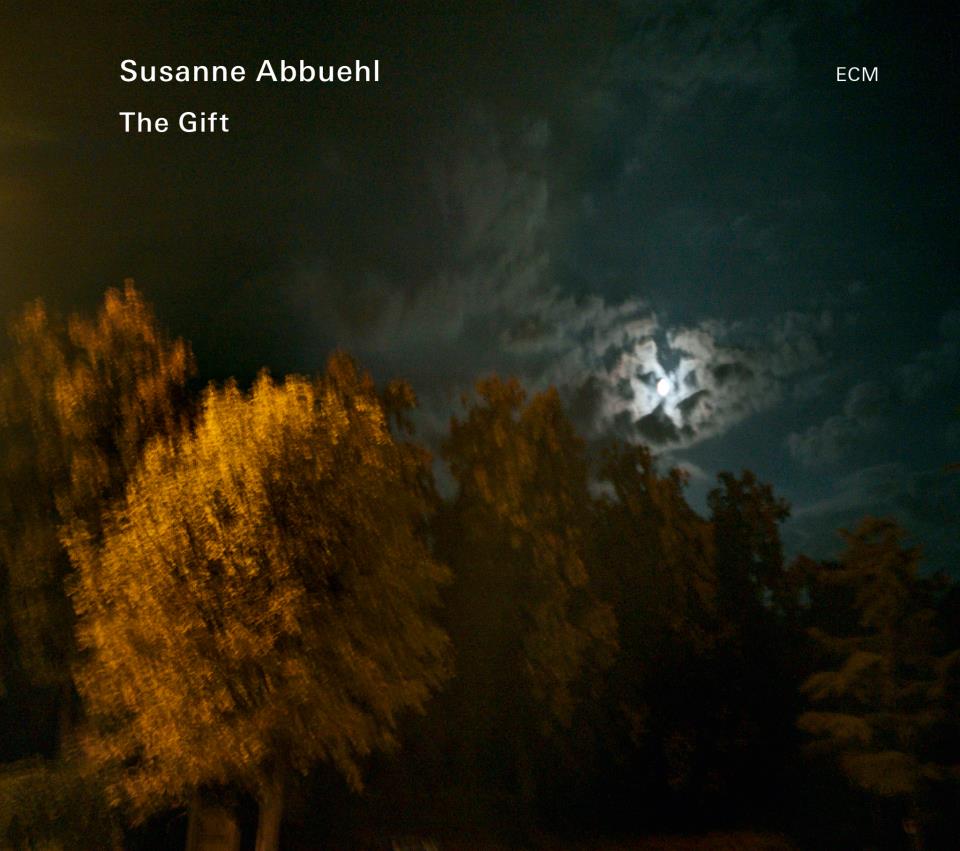
Susanne Abbuehl: The Gift (ECM 2322)

The Gift

Susanne Abbuehl
The Gift

Susanne Abbuehl voice
Matthieu Michel flugelhorn
Wolfert Brederode piano, Indian harmonium
Olavi Louhivuori drums, percussion
Recorded July 30-August 1, 2012, Studios La Buissonne, Pernes-les-Fontaines
Engineer: Gérard de Haro
Assistant engineers: Nicolas Baillard and Romain Castéra
Produced by Manfred Eicher

If April and Compass, the two previous ECM traversals from Swiss-Dutch singer Susanne Abbuehl, charted a journey, then The Gift is its destination. Important to understanding the experience of listening to any Abbuehl album, particularly this one, is welcoming her idiosyncratic approach to poetry. These songs overflow with words from Emily Dickinson, Sara Teasdale, Emily Brontë, and Wallace Stevens. Rather than simply add music to them as would a jeweler bend miniscule claws around a diamond, she lets the verses walk around inside her before their spirits leave her lips.

Susanne Abbuehl

This time she incorporates her unique delivery into an even more attuned matrix. Pianist Wolfert Brederode and drummer Olavi Louhivuori sprout rhythmic branches that are every bit as melodic as her roots. But the flugelhorn of Matthieu Michel is what really sets this session apart from its predecessors. It’s a defining presence on the album where the clarinets of Christof May were before. Its rounded tone is a voice unto itself, swooning through the corridors of Abbuehl’s sole lyric contribution in “Soon (Five Years Ago).” This song, appropriately enough about the displacement of earthly time, may appear late in the program, but it’s also its defining statement of it.

Fans of Norma Winstone will surely rejoice at the freedom of Abbuehl’s approach, exemplified to peak effect in “The Cloud,” which opens in reverie. Activated by a kalimba’s metallic fingertips, her voice carries word and song along the trumpet’s cirrus drift. It is a restless feeling we counter here, one that remains in all that follows, so that even the simple admission of Dickinson’s “This And My Heart” (and its variation, which ends the album) harbors a shadow or two. We might feel this also in the arrangement, which engages voice and flugelhorn in marriages, divorces, and flirtatious commentaries. All the while, a processional feeling soaks through. Where the first song was emblematic for its atmosphere, so is this for an attention to detail by means of which Abbuehl and her band embody a conception of self that, so like a book, opens and flutters with the dynamism of language. From the mountains to the catacombs, it’s all here.

In light of such intensities, “If Bees Are Few” makes for an airy interlude, suspended as if above prairies misty with dandelion fluff. It closes its eyes and enters the dream that is “My River Runs To You.” Across this canvas of love, magical by way of lyric and music alike, the ocean paints itself into a network of inlets, each a harbor waiting for that one boat to make permanent docking. The effect is such that “Ashore At Last” breathes like a mission statement to the fanfare of its free and melodious flugelhorn. “Forbidden Fruit,” then, seems to close the circle of a miniature trilogy of sorts, swaying with all the gentle relief of a silhouetted tree against the night.

Indeed, for all its leaping heartbeats, much of The Gift is cradled in nocturnal contours and through them are revealed Abbuehl’s purest tones. In “By Day, By Night,” her voice is flute-like and devoid of vibrato, its waters as crystalline as those of time are muddied. Even in those passages in which she doesn’t sing, her spirit animates every reflection. In this sense, Stevens echoes farthest: “In my room, the world is beyond my understanding.” Holding to this philosophy, the album’s brightest moments are revealed where one might nominally least expect them: in “Shadows On Shadows.” Brontë’s imagery unfolds a scintillating act of transparency. It is the album’s lighthouse, but might remain unlit were it not for the embers of Abbuehl’s wonderful musicians. “Fall, Leaves, Fall” is the epitome of their sensitive approach. This song of death, haunted by an Indian harmonium and drummed whispers, is a prayer of sisterly forces. “Sepal” emerges from a landscape’s worth of flora and uncommon graces as a single petal falling, a light footstep without a trace except in the utterances of she who observes and vocalizes them into memory, as memory.

Understated yet full as a rose in bloom, this is the emotional clarity of which Abbuehl’s craft is possessed apart. In her purview, the moon disappears not when it is new, but when it hides beyond that most ephemeral of horizons: the human heart. It is a shadow of its own truth, a truth given understanding by Teasdale after all:

 I throw my mantle over the moon
And I blind the sun on his throne at noon,
Nothing can tame me, nothing can bind,
I am a child of the heartless wind—
But oh the pines on the mountain’s crest
Whispering always, “Rest, rest.”

(To hear samples of The Gift, click here.)