Tempesta di Mare: A Live Review

Tempesta

Tempesta di Mare
Barnes Hall, Cornell University
March 6, 2014
8:00 pm

In the 1991 French film Tout les Matins du Monde, Gérard Depardieu plays an aged Marin Marais—in-house composer at the court of Versailles around the turn of the 18th century. Gussied up in all the accoutrements of his station, a corpulent Depardieu stares off camera, filled with envy at the ambitious young man he once was. The real Marais studied under Jean-Baptiste Lully, who by the patronage of King Louis XIV singlehandedly defined the French baroque style. Listeners at Barnes were treated to his “March of the Turks” Thursday as part of a lively program by Tempesta di Mare. Much in contrast to the self-scorn of Depardieu’s Marais, who indifferently conducts the same march early on in the film, Tempesta brought flair and steady passion to its evening performance. Under the title “Apollo at Play,” Philadelphia’s premier baroque chamber orchestra culled a thoughtful program of incidental music by Lully, British emulator Matthew Locke and 20th century iconoclast Igor Stravinsky before coming full circle to Lully protégé Johann Sigismund Kusser, whose Apollon Enjoüé, composed in 1700, ended the concert.

Because the entire program consisted of music written for the stage, individual movements were as rich as they were compact. With its stately undercurrents and detailed orchestration, Lully’s descriptively astute Le Bourgeois gentilhomme (1670) set the bar high. Even without the titles provided for our edification, we could feel the sway of tailored cloth in the “Dance Teacher” scene and imagine the revelry of “The Uninvited Guests,” of which the Spaniards led the way with castanets and vihuelas blazing. On that note, Lully’s colorful palette represented a fascinating transition period in the evolution of Western European classical music, when the aristocratic impulses of court-appointed composers shared staves with motifs borrowed from earlier Sephardic traditions, as evidenced by the bevy of percussion at Tempesta’s employ.

Consequently, Lully’s sound world was equal parts pomp and folk. Enhancing its spread were recorders, bassoon, harpsichord and theorbo, a sort of lute on steroids sporting an elongated neck fitted with sympathetic bass strings. The latter provided a visual element that was the subject of much pre- and post-concert conversation. Yet the theorbo, played by the ensemble’s co-director Richard Stone, was a subtle anchor for the dramatic goings on. So too, in Locke’s instrumentals for The Tempest (1674) was the canvas replete with vivid splashes of baroque charm. Shuffling weighty pauses into upbeat turns of phrase, lovelorn abandon into systematic denouements, Locke’s writing emerged swift and sweet.

The next portion of the concert, however, brought to the fore what proved to be the evening’s only flaw: Tempesta’s battle with tuning. Although tuning issues first arose in the wind section of the Lully, the off-key slips of which were quickly smoothed over, in the all-string intimacy of Stravinsky’s 1928 Apollon musagète two mismatched cellos grated on the ears. Such inconsistencies, however, come with the territory, especially when performing on period instruments (although it seemed most were modern copies—the harpsichord, for example, having been built in 2012), and the fine musicians of Tempesta handled these hiccups with grace and fortitude. There were also the uneven temperatures of the venue itself, which required musicians to flit between a cold backstage room and a warmer auditorium: further proof, perhaps, that this year’s winter has overstayed its welcome. Nevertheless, they muscled through with a perseverance that certainly did not go unnoticed.

All said, Tempesta gave us a treat with Stravinsky’s gorgeous paean to the French style. By turns mournful and frolicking, each movement was like a shard of glass in a slowly turning kaleidoscope. But the best came last with Kusser’s fabulous orchestral suite, from which the program borrows its name. Not only did the ensemble smooth out its tuning snags; it also presented us with the loveliest and most adventurous music of the night. Full of surprising twists and virtuosic performances all around, it left us all with something to smile about. In that respect, the joys won over the nitpicks. Challenges make us human, and finishing strong in spite of them is no small feat. In this respect, Tempesta di Mare reminded us of why we go to hear live music in the first place: to remind us that we are all human.

(See this article as it originally appeared in the Cornell Daily Sun.)

Philip Glass and Tim Fain: A Live Review

Philip Glass & Tim Fain Promotional Images at Emory University.

Philip Glass: An Evening of Chamber Music
with Tim Fain
State Theatre, Ithaca, New York
March 1, 2014
7:00pm

If you have ever said a word over and over until it sheds all meaning and becomes its own sound, raw and devoid of attachment, then you know what the sound world of Philip Glass feels like. His melodies evolve in just such a way, nurturing new aspects with every iteration until they blossom of their own accord. His music has been called many things, from hypnotic to interminably monotonous. Its repetitive arpeggios and insistent themes have polarized listeners for decades. His admirers—myself among them—take comfort in his recognizability. His many critics, on the other hand, are often guilty of the very monotony of which the iconoclastic composer stands unfairly accused. Either way, resistance to his minimalist (im)pulses is futile: There’s nothing minimal about them.

But this is only half the story. Many will have heard Glass the composer, whose soundtracks for such films as Koyaanisqatsi and The Illusionist have long tickled the ears of even those unfamiliar with his name. Saturday night’s intimate chamber concert at the State Theatre was a choice opportunity to experience Glass the musician. Poised mountainously at a rococo baby grand piano yet with the touch of a willow’s tendril on water, he took concertgoers on a journey through his varied career by way of its most essential colors. To that end, he opened with a spirited performance of “Mad Rush.” The song was written—he explained to the audience—in response to a commission for a piece of “indefinite length.” This comment brought a collective chuckle and showed Glass as one at ease with his critics. It was obvious that the piece was originally written for organ as its waves crashed over one another in a gorgeous tumble. He also performed three selections from his Metamorphosis series. Like a jump between dream levels in the film Inception, each movement proceeded from a deeper place. The crosshatching of their dynamic pianism recalled the “stagger” technique of Baroque harpsichordists, and served to make an already resonant instrument brim with overtones.

Although Glass has ever been his own best interpreter, he has found in Tim Fain a viable partner in time. The American violinist, also no stranger to cinematic crossovers (he can be heard in Black Swan and, most recently, 12 Years a Slave), has emerged as one of the most exciting and innovative violinists of our generation. It was in the spirit of affinity that he joined Glass on stage for a smattering of scenes from The Screens. This incidental music, written for a stage production of the play by Jean Genet, was by turns sprightly and mournful. So, too, the concluding Pendulum, condensed here from a trio to a duo.

Yet it was Fain alone who secured the performance’s most stirring memories in the form of a two-part “Chaconne.” Excerpted from the seven-movement Partita for Solo Violin, it ranks among the solo violin works of Eugène Ysaÿe as a true inheritor of Bach’s hallowed craft. The purity and surety of Fain’s tone was alive with purpose as he leapt through a near constant chain of double stops. Concertedly, his strings sang the most recent music on the program, bringing everything back to Glass the composer and reminding us of just how he has evolved. Here was his art, soaring, full-throated, and open to whatever may come.

(See this article as it originally appeared in the Cornell Daily Sun.)

John Surman/Howard Moody: Rain On The Window (ECM 1986)

Rain On The Window

Rain On The Window

John Surman baritone and soprano saxophones, bass clarinet
Howard Moody church organ
Recorded January 2006 at Ullern Kirke, Oslo
Engineer: Jan Erik Kongshaug
Produced by Manfred Eicher

Since their first collaboration on Proverbs and Songs, Ivan Moody (then as conductor, here as organist) and reedman John Surman have established an affinity that manifests itself vividly throughout this duo session under the evocative title Rain On The Window. Recorded in the Ullern church of Oslo, the program includes mostly originals and improvisations, the two exceptions being renditions of the English folk song “O Waly Waly” and the Negro spiritual “I’m Troubled In Mind.” The latter two bring earthiness and grit to the album’s textural palette. Both also feature Surman on baritone saxophone, as do a number of pieces, including “Stained Glass” and the brief yet memorable “Dancing In The Loft,” a free improvisation that showcases Surman’s eminently recognizable approach to the instrument. All of these and more are laid at the altar of “Pax Vobiscum,” a baritone prayer that ends the album. Like a phoenix from the ashes of Moody’s dense embers, Surman’s lyricism sings, reborn, in light of day.

Yet in spite of the recording’s sacred leanings, there is a refreshingly agnostic sheen to its musculature, as attested by Surman’s ingenious sopranism. Between the geometry of “Circum I” and the klezmer-like flourishes of “Step Lively!” there is plenty of gradation to be found. Some portions of the program (specifically, “The Old Dutch”) cast their nets back into childhood, when the calliopes of distant carnivals still mingled with the breeze. At times Surman’s tone matches Moody’s with its clarity and fortitude, while at others it looks through a glass darkly. Moody even goes solo in the inward spiral that is “Tierce.”

Like the title track, the record as a whole makes stars of raindrops and connects them in virtuosic constellations. The listener need be no astrologist to appreciate their interlocking stories, for each is told as if for the first—and the last—time.

Gianluigi Trovesi All’opera: Profumo di Violetta (ECM 2068)

Profumo

Gianluigi Trovesi All’opera
Profumo di Violetta

Gianluigi Trovesi piccolo and alto clarinets, alto saxophone
Marco Remondini violoncello, electronics
Stefano Bertoli drums, percussion
Filarmonica Mousiké Orchestra winds and percussion
Savino Acquaviva conductor
Recorded September 2006, Teatro Serassi, Villa d’Almè, Bergamo
Engineer: Stefano Amerio
Assistant: Giulio Gallo
Edited and mixed by Gianluigi Trovesi, Manfred Eicher, Savino Acquaviva, Stefano Amerio
Produced by Manfred Eicher

The mind of multi-reedist Gianluigi Trovesi is a storehouse of refraction, the lens of a human kaleidoscope in whose turning we can see many zeitgeists, each gushing with its own color. For Profumo di Violetta, Trovesi dives headlong into a sea of operatic favorites, treading waters at once romantic and troubled. With sources ranging from Monteverdi’s L’Orfeo to Puccini’s Tosca, his meta-commentary manages to draw fresh catch from an overfished pond. Buoyed by a wind and percussion orchestra in the grand “banda” tradition of his native Italy, Trovesi taps his memories as a boy growing up around these ad hoc configurations and from them coaxes shoots of ingenious contrast.

It’s easy to appreciate the boldness of this project, which spreads the melodramatic jam of tragedy across hunks of improvisatory bread. In the latter vein, Trovesi is very much the Mad Hatter, altering familiar motifs as might a furniture restorer strip a bench to expose long-neglected grain. In the process, however, one comes to realize that his penchant for humor is not without its serious edge. Take, for instance, his rendition of the famous “Largo al factotum,” which turns a tongue-tying chain of Figaros into a field of dots connected by the fuzz of a heavily distorted electric guitar. A far cry from the tuxedo-and-evening-gown aria, it nevertheless boils over with intuition. Such brilliant grandiosity is part and parcel of the album’s sweep.

Bookended by a Prologue and Epilogue, Profumo unfolds across wild stretches of the imagination. The program proper is broken into six sub-suites, of which “Il Mito” (The myth) drops us into the path of Orpheus. Here Trovesi binds a Toccata and Ritornello of Monteverdi with his own compositional veining, so that the sonority of the old touchstones and the whimsy of the new may interlock in flight. In this regard, the butterfly kisses of “Musa” massage away the fatigue of interpretation, allowing Trovesi’s taunting clarinet in “Euridice” to work its way like sugar through the nervous system. His height of range on the instrument is piercing, tickling the clouds until they loose jazzier droplets.

From the underworld to the overdressed, Trovesi and his cohorts escort us to “Il Ballo,” for a dance that is as grand as it is brief. This leads further into “Il Gioco Delle Seduzioni” (The game of seduction), a triptych of early Baroque and contemporary transparencies. From the convivial to the parodic, Trovesi navigates its burrows with eyes closed and whiskers extended, playing with feet aflame while maintaining control of his dance at every bend.

“L’innamoramento” houses the two-part title piece. Trovesi’s homage to Verdi’s doomed La Traviata heroine belies its love through melodic time travel. Here the emotional overload of opera is compressed to diamond clarity. “Il Saltellar Gioioso” features album highlight “Salterellando.” Anchored by snare and cymbal, and threaded by Trovesi’s grungy altoism, it sets off a ripple effect that lingers long into the spiraling “La Gelosia” (Jealousy).

The performance ends with “Così, Tosca,” which for all its eclecticism breathes with consistency. Trovesi’s soulful pitch-bending traces every contour of an underlying drone with care. A subtle harrumph in the brass only serves to brighten the felicitous interweaving of breath and sonority that is his reverie, diving headlong into an incendiary finish that grovels with profound favor. Indeed, the album might just as well be called “Profondità di Violetta,” for all its depth of thought, arrangement, and execution.

Bravissimo.

(To hear samples of Profumo di Violetta, click here.)

Saying No to the Flow: Alfredo Rodríguez

AR

Alfredo Rodríguez
February 7, 2014
Barnes Hall, Cornell University
8:00 pm

After hearing pianist-composer Alfredo Rodríguez in the close quarters of Barnes Hall last Friday night, one could only feign surprise to know that he began his musical education as a percussionist before switching to piano at age 10. Whether through clipped breathing, clicks of the tongue or stamping of the feet, his awareness of the beat was front and center. This was surely one of many aspects of his craft that caught the ear of producer Quincy Jones, with whom he collaborated on his recent sophomore album, The Invasion Parade. We might further reflect on his Cuban heritage, which is to his playing as the moon is to night. Yet, if these biographical details meant anything, they were only as valid as the intrigue of his performance, which was, in a word, dynamic.

Rodríguez left no doubts about his roots, starting the program as he did with an idiosyncratic take on “Venga la Esperanza” by Cuba’s left-wing darling, Silvio Rodríguez. As he wove from somber beginnings a tapestry of increasing complexity, it was clear that Keith Jarrett has had a huge impact on Rodríguez, who cites the pianist’s legendary The Köln Concert as a life-changing influence. The more he played, the deeper his contrasts and densities became. The effect was such that when the occasional snippet of recognizable melody broke surface, we were reminded that at the root of it all was something worldly. Rodríguez followed up with an original composition, “El Güije.” Balancing dark undercurrents in the left hand with the sparkle of his right, the piece’s borderline-aggressive textures gave way to windswept dreamscapes at the turn of a weather vane.

The staggered raindrops of “Quizás, Quizás, Quizás” introduced a triptych of classic tunes rounded out by “Veinte años” and Ernesto Lecuona’s rousing “Gitanerías.” In them, elements of Messiaen, Bartók, and folk songs showed the full range of Rodríguez’s palette. His highs, always translucent, shone with special care. That said, he never stayed pretty for too long, if only to better appreciate the occasional moment of beauty we were allotted.

As is often the case with younger jazz musicians, Rodríguez emoted with blatant passion and tended toward passages of controlled chaos before finding purchase in his themes. Departures felt more like interjections, if not outright explosions, than variations. His tongue-in-cheek take on “Guantanamera,” for example, was a tour de force in technique, invention, and surprise. He approached this deathless tune from within—literally—by hitting the strings inside the piano before migrating to the keyboard proper. The result was a mélange of interpretations, more sketchbook than painting—which is precisely where he deviated from Jarrett.

Although Jarrett’s adlibs come pouring out of him sounding like fully formed compositions, Rodríguez allowed himself the indulgence of thinking out loud with relatively little interest in transition, stacking cell upon cell of distortion. Something of a curse for many improvisers that smoothes itself out over decades into seamless art, one senses in Rodríguez a “say-no-to-the-flow” attitude that suits him just fine. The result is neither more nor less conducive to the concertgoer’s listening pleasure, but is a methodological difference that requires sharp attention from both sides of the front row. He is an honest player, through and through.

None of this is to imply that that the concert was devoid of lyricism. As if to prove this, Rodríguez encored with an aching rendition of Ernesto Duarte’s “Cómo Fué.” As tender as tender can be, its somber farewell closed the circle, opening another of fond memory in its place.

(See this article as it originally appeared in The Cornell Daily Sun.)

Anat Fort Trio: And If (ECM 2109)

And if

Anat Fort Trio
And If

Anat Fort piano
Gary Wang double-bass
Roland Schneider drums
Recorded February 2009 at Rainbow Studio, Oslo
Engineer: Jan Erik Kongshaug
Produced by Manfred Eicher

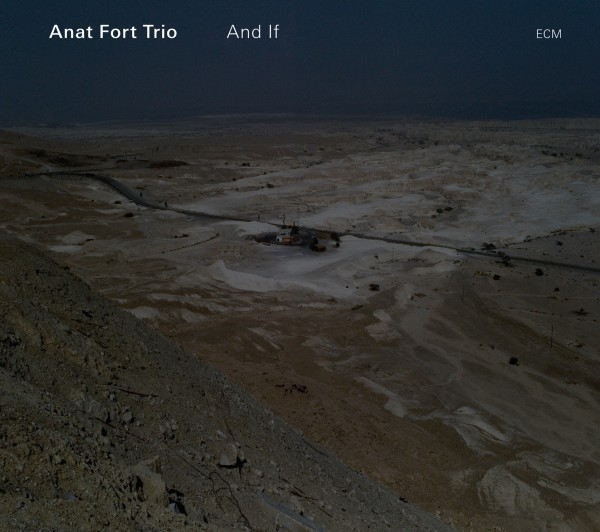
Anat Fort returns to ECM, now with the members of her working trio: bassist Gary Wang and drummer Roland Schneider. Together they put a decade of working experience into And If, which burrows deeper into the compositional soil tilled on A Long Story. With that album in mind the trio pays homage to Paul Motian—whose encouragement led to the first ECM collaboration—in two tracks dedicated to the master drummer. The first begins the disc with poetry metered by the heart, beating in response to life’s changing climates. Like the passing of one thought to another, it shuffles melodic impulses farther down the line. “Paul Motian (2)” closes the circle, taking inspiration from its namesake by never once succumbing to the pitfalls of predictability. Such tenderness justifies imagery like that of “Clouds Moving,” which proceeds with Vince Guaraldi-like ebullience in the ground line while luminous harmonies in the right hand draw rivers catching sun during flyby. Schneider’s feel for cymbals admirably fills Motian’s absence, as do his brushes beneath Fort’s arcs of flight in “Minnesota.”

Although the album is not without a clipped feather or two (the fleeting “If” and “Nu” balance tenderness and swing, respectively), for the most part it spreads its wings broadly. One cannot help but detect a classical tinge to the wind beneath. “En If” is but one example. Its mastery builds off primary colors, awaiting the light of day to mix variations between prose and poetry. The former we get from Fort’s storytelling fingers, while the latter flows effortlessly from the rhythm section.

“Something ’Bout Camels” revisits material from Fort’s label debut, given here a flowering treatment. The daybreak of Wang’s arco introduction canopies a desert sleeping soundly. A settlement stirs: eyebrows twitch, bodies stand upright, legs move, hands work, and the beats of earthen carriage guide wheels to turn. Schneider’s bassing droops, swishing away the flies with its tail and folding the wind into parchment, that it might calligraph Fort’s footfalls.

Yet nowhere does the trio come together so effortlessly as it does in “Lanesboro.” This ballad in a classic mode is the epitome of gorgeous. Like water over rocks, it conforms to the shapes of its progression with unforced, organic flow. The lyrical support completes Fort’s picture with understated bliss.

An anthem for the soul.

(To hear samples of And If, click here.)