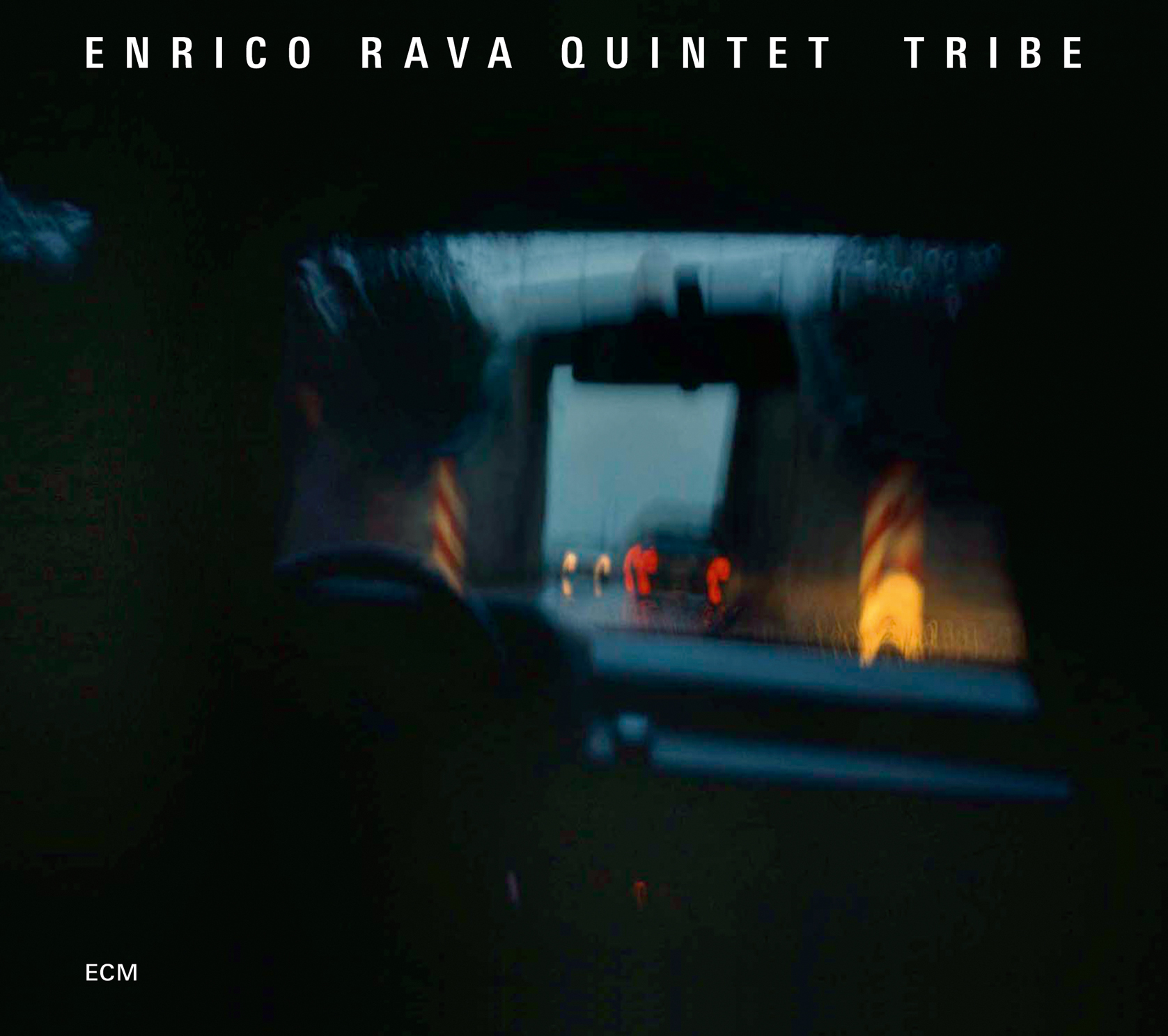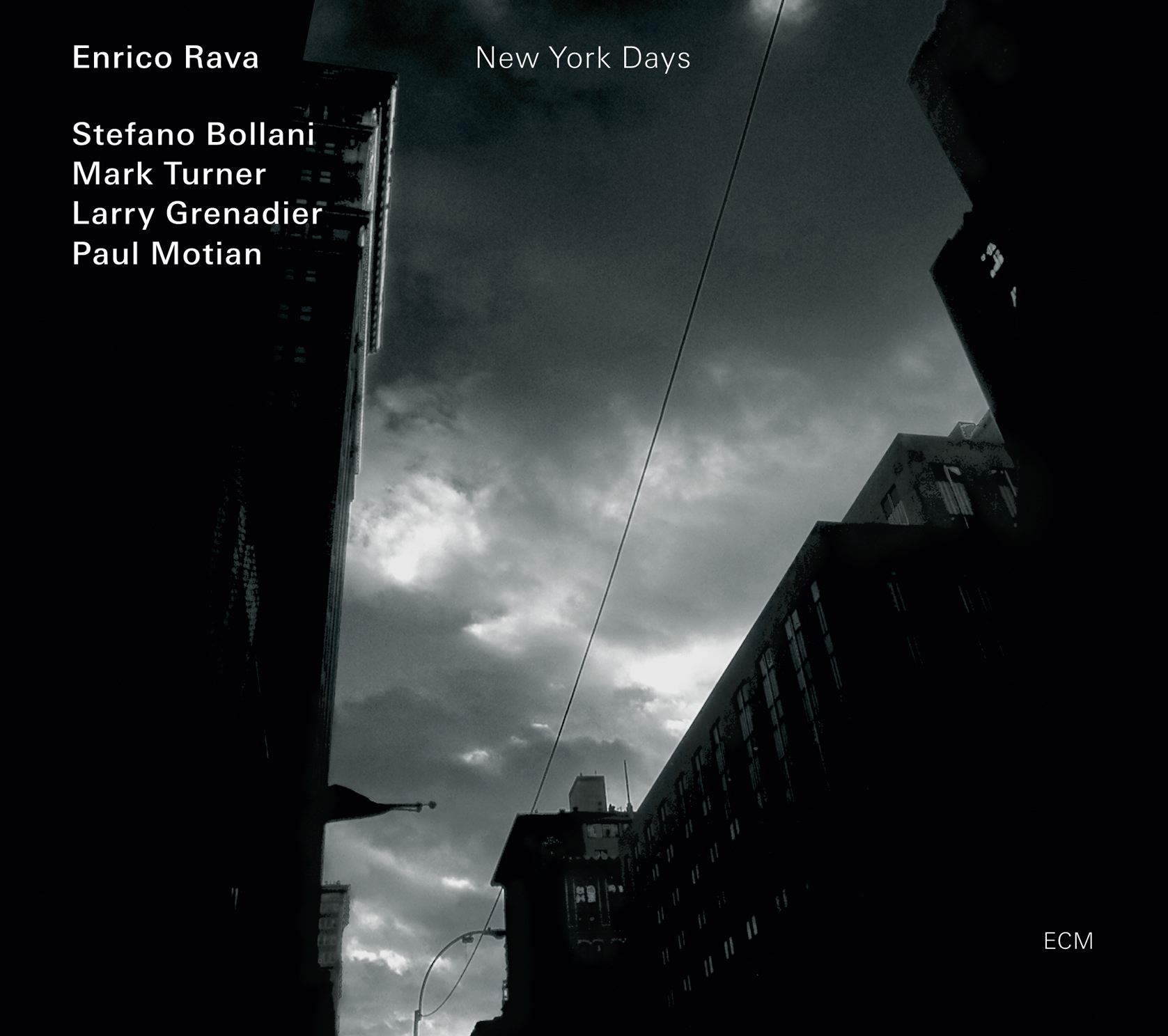
Enrico Rava: New York Days (ECM 2064)

New York Days

Enrico Rava
New York Days

Enrico Rava trumpet
Stefano Bollani piano
Mark Turner tenor saxophone
Larry Grenadier double-bass
Paul Motian drums
Recorded February 2008 at Avatar Studios, New York
Engineer: James A. Farber
Produced by Manfred Eicher

New York Days brings Enrico Rava full circle to its eponymous city, a major flashpoint in the Italian trumpeter’s long and geographically varied career. Joined by the other two sides of the TATI triangle—pianist Stefano Bollani and drummer Paul Motian—along with bassist Larry Grenadier and, in his first ECM appearance, tenorist Mark Turner, Rava fronts a set of nine originals and two group improvisations. The latter are, in a sense, the glue that holds the album together, representing as they do the precision of this ad hoc quintet’s molecular makeup. These freer spells glow gas-stove blue in the night, their hearts forever aimed at honesty.

The lion’s share of the set list is balladic in nature, starting things off smokily with “Lulù.” Bollani emerges in an early wave with unforced persuasion, lending context to Rava’s Poseidon lyricism. In this tune one feels the city after hours: the shine of rain-slicked asphalt, the whoosh of empty taxis, the flicker of untended streetlights. But then…a surprise from Turner, whose horn implies snatches of club life within earshot. By the intermingling of “Certi Angoli Segreti” (an album highpoint), it’s clear the reedman has his telescope pointed to a star we’ve never been able to see through all the dazzle before. His arpeggiations are the light of its fission, the mere presence of which inspire pointillist heights in Rava, and in the pianist an uncannily classical sparkle.

The contrast between the two horns is unusual. Rava and Turner hardly mesh throughout the album’s 77-minute duration. They are two strangers in the night whose soliloquies overlap in complementary ways. Their distinct tonal signatures require them to seek out instances of harmony. The resultant dialoguing further bears the stamp of Rava’s deep love for cinema. Quintessential in this regard is “Interiors,” which sounds like the theme song to a Woody Allen film never made. Its nameless tragicomic protagonist wanders alleyways in the wake of that which can never be requited. The mastery of Turner’s protraction here, the fog of his expressionism, makes monochrome of color. The listener is all the richer for being made privy to such naked depth-soundings.

Bollani also works the shadows throughout in ways that cannot be overestimated. Through the solemnity of “Count Dracula” and the heavy nostalgia of “Lady Orlando,” his gestures leave heavy traces. Furthermore, he blows bubbles through “Outsider” and “Thank You, Come Again,” exceptions to the album’s brooding sanctum. Whether anchored by a restless Grenadier in the former’s straight-laced fantasy or spurred along by Motian’s fine-grained timekeeping in the latter, he is the yeast in the brew.

Rava is, then, not so much the leader as the hub of this outfit. He speaks with a narrative voice as charcoal as Bollani’s is pastel, fragments the beat with the same fearlessness as Motian, extends his roots as thirstily as Grenadier, and exhales with as much fluidity as Turner. Such affinities embody what ECM is all about: bridging continents and creating new ones along the way. Like the classic “Blancasnow” (in its most sensitive treatment yet) that caps off this unforgettable experience, it fades into white, every footprint the start of a new path.

(To hear samples of New York Days, click here.)

Lloyd/Hussain/Harland: Sangam (ECM 1976)

Sangam

Sangam

Charles Lloyd tenor and alto saxophones, tárogató, bass and alto flutes, piano, percussion
Zakir Hussain tabla, voice, percussion
Eric Harland drums, percussion, piano
Recorded live May 23, 2004 at Lobero Theatre, Santa Barbara, California
Engineer: Dom Camardella (Sound Design Studio)
Produced by Dorothy Darr and Charles Lloyd

“When the spirit is blowing, I know I have to hoist my sails to catch the breeze,” says Charles Lloyd. Indeed, the Memphis-born saxophonist and spiritual walker has left footprints in many a patch of earth, each with its own song to sing. Yet nothing has leveled the playing field of his already vast history with such vitality as Sangam. The name of this fruitful side project, which Lloyd shares with tabla legend Zakir Hussain and prodigious jazz drummer Eric Harland, connotes “confluence, a meeting place, a gathering or coming-together, literally or metaphorically.” This recording—Lloyd’s first live outing for ECM—thus takes the post-Higgins era in a profound new rhythmic direction while also paying homage to the worldliness that Lloyd’s late ally brought to their journeying hearts.

This new trio rides the same wave, shares the same breath, and, as the title of “Dancing on One Foot” implies, moves through the same body. Hussain’s unmistakable groove and Harland’s brushwork set the scene, through which Lloyd wanders with his favored tárogató in hand, stitching the universe. Hussain attends to tuning as would a painter to color, matching tone and thickness to suit each canvas and subject in kind. This is especially apparent in “Tender Warriors,” an emblematic piece for the group that features Lloyd’s all-too-rarely employed alto, as well as in “Nataraj.” In “Guman,” the album’s only tune not written by Lloyd (it is by Hussain), its composer sings hand in hand with flute, weaving and veining the arid plains with the concert’s most intimate pathways.

Also remarkable are the ways in which Hussain and Harland communicate throughout. One might expect, in such a young configuration, that Harland would be feeling his way through the shadow of his fellow rhythmatist, when in fact he meets Hussain in creative brotherhood. Lloyd’s tenoring is, though, a force to be reckoned with, imbuing a range of mountains and valleys with snow and flora, respectively. “Tales of Rumi” is among the more epic statements in this regard, a portal to infinite others. Here the trio enacts a transfiguration, a triangle within a triangle within a triangle: the album’s title made manifest. Through it all, Lloyd fast-forwards through eons of cosmic history (were it not for Hussain’s playful quotation of Rossini’s William Tell overture, we might hardly associate the music with Earth). The title track, too, is a thematic tour de force, sandwiching Lloyd between the drummers with commonality and freedom. Even when Lloyd is invisible, the other senses tell us he is there. “Hymn to the Mother” and “Lady in the Harbor,” each a soulful dirge, handles emotions as if they were fragments of a broken window. Piece by piece, they reconstruct the prism, so that in “Little Peace” they can dance without fear. Theirs is a butterfly effect, whose catalysts are life, love, and laughter.

Three sages light up the night with the memory of a solar flare. Responsive as responsorial, they render jazz at a universal level. Sangam has the power to bleed the offshore accounts of our needless indulgences dry and redirect their provisions to those who need them most. It is an anthem, a tumbling of the social ladder to a horizontal plane.

Three as one. One as three.

Enrico Rava: TATI (ECM 1921)

TATI

Enrico Rava
TATI

Enrico Rava trumpet
Stefano Bollani piano
Paul Motian drums
Recorded November 2004 at Avatar Studios, New York
Engineer: James A. Farber
Produced by Manfred Eicher

In between The Third Man, trumpeter Enrico Rava’s duo project with pianist Stefano Bollani, and Easy Living, which nestled both musicians in a quintet of astonishing synergy, the duo welcomed late drummer Paul Motian into the studio for an album of flickering yet intense balladry. TATI continues Rava’s great journey on ECM, this time paying homage to legendary French actor and auteur Jacques Tati (1907-1982).

This set of 12 mixed tunes is a retrospective on at least two fronts. First, with classics like Gershwin’s “The Man I Love” and Rava’s own “Cornettology” burnishing the trio’s sound to a coppery sheen, one can’t help but note the cigarette smoke of old cinema in the air, moving from black and white to color and back again. Motian is mostly cymbals, with the barest touch of snare grazing the edge of the occasional footprint. Second, the album puts leader and sidemen on the same plane, so that each bears equal weight. Their glorious take on “E lucevan le stelle” from Puccini’s Tosca is a perfect example. What begins as a stunning display of Rava’s lyrical gifts, shooting through the night like an arrow, in the second half swivels in favor of Bollani and Motian, Rava ornamenting only as needed. That said, there’s hardly anything minimal about this music. It is, rather, dense with implication and stories yet to be told.

The wonder of this combination of musicians is especially obvious in tracks like “Golden Eyes,” Bollani’s “Casa di bambola” (Doll’s house), and “Fantasm.” The latter is one of three tunes by Motian and finds Rava shaking his horn like the brush of a drunk calligrapher. “Birdsong” and “Gang of 5” are the others, both pianistic reflections that speak of French impressionism. Although the connection between Rava and Bollani is so complete that the drums aren’t necessary on paper, Motian’s contributions are indivisible within the album’s holistic approach. The burnished quality of the recording matches every lilt and imbues this unprecedented meeting with further sanctity.

If not for its title, we might never associate TATI with the fumbling, if endearing, Mr. Hulot. It speaks, rather, to the child-like practicality of Tati’s heart, that comedic compass which swept its needle toward a shared community of laughter and social commentary. Flashes of his playfulness do come out now and then (e.g., on “Jessica Too”), but for the most part it remains hidden, implied. Either way, this release is as masterful as he was, to be savored as a bottle of wine that keeps refilling itself between listens.

Enrico Rava/Stefano Bollani: The Third Man (ECM 2020)

The Third Man

The Third Man

Enrico Rava trumpet
Stefano Bollani piano
Recorded November 2006, Auditorio Radio Svizzera, Lugano
Engineer: Stefano Amerio
Produced by Manfred Eicher

One cannot necessarily put too much stock in a cover photo as an accurate indication of the album with which it is associated. The Third Man is an exception. We see Rava leaned over a Steinway, at which sits longtime musical partner Stefano Bollani. The trumpeter regards his compatriot with seeming wonder. The pianist, in turn, regards Rava’s wonder with more of the same. We may read further into the image the presence of a producer, of an engineer—people who dedicate their lives to shaping a performance as it is shaped by those who so selflessly yet unmistakably bring it to fruition. All of this and more can be heard in “Estate.” Singer-songwriter Bruno Martino’s jazz standard finds renewal in the combination of instruments and opens an album of peerless shape, an album wherein tower the invisible pillars that hold up the sky and keep our dreams forever bouncing within the shaken snow globe of experience. After such an involved reverie, the freely improvised title track sprouts like a rose among the weeds of Bollani’s plucked strings. Dedicated to Orson Welles, who so wryly embodied the titular character of Carol Reed’s 1949 film, the music brims with film noir atmospherics.

One could almost pick out Rava’s originals by their titles alone. “Sun Bay” and “Sweet Light” speak equally to their composer’s optimism: lush, golden, and brimming with promises twice fulfilled. Both prove there is more to the soloist’s task than evoking a title or story, for such goals are as subjective as the means that inspire them. So while Rava’s clarion arpeggios taste of brine, they also harbor certain darkness, born of an observant soul. Here is a man who melodizes as he speaks: which is to say, from the heart. The tender “Birth Of A Butterfly” breaks chrysalis alongside the jagged architecture of “Cumpari.” Their juxtaposition enacts a coherence of balance through no small display of technical acuity. Although Bollani ties tighter knots as he progresses, and even contributes a tune of his own (the veiled “Santa Teresa”), Rava unravels each with the skill of a sailor, and ties a few in return throughout “In Search Of Titina.”

The duo’s shared interest in South America comes across in two pieces. Antonio Carlos Jobim’s “Retrato Em Branco Y Preto” (which, incidentally, draws inspiration from “Estate”) is almost supernatural in the way it sings, as if it were of another world. “Felipe” (by the late Brazilian composer Moacir Santos) stretches canvas for Bollani’s primer and the swish of Rava’s fan brush. The disc ends with variations on “Retrato Em Branco Y Preto” and “Birth Of A Butterfly,” each the complement of the other: echo, reflection, resolution.

The Third Man sounds like windblown grass, the scurrying of animals in underbrush, the sway of trees in autumn. It feels like the squish of wet sand between the toes, the weight of eyelids before sleep, warmth in the chest of one who remembers love. In such a context, neither is Rava a mere bringer of melody nor Bollani merely his accompanist. They are the music itself.

The profundity of this encounter therefore cannot be overstated. Not because Rava and Bollani ply the listener with any sort of abstract philosophy, but for the simple fact that their art requires that listener to survive. In Rava’s playing is the burn of exerted muscle and the trail of a tear in kind; in Bollani the flow of water and technology. The album is, then, also a portrait of the venue in which it was recorded. Says Bollani of the Auditorio Radio Svizzera, “It’s not like being in a studio…. This recording really has a character all its own.” These words ring truer than their utterance, for the unfolding documented here would never have taken place without the collaboration of spatial and temporal forces above and beyond our range of detection. Let it be your radar, a voice in the night without fear.

Enrico Rava Quintet: Tribe (ECM 2218)

Tribe

Enrico Rava Quintet
Tribe

Enrico Rava trumpet
Gianluca Petrella trombone
Giovanni Guidi piano
Gabriele Evangelista double-bass
Fabrizio Sferra drums
Giacomo Ancillotto guitar
Recorded October 2010, ArteSuono Studio, Udine
Engineer: Stefano Amerio
Produced by Manfred Eicher

Master trumpeter Enrico Rava deepened his ECM impression with the release of Tribe, a recording that places 12 original tunes on the shelf for the discerning listener’s perusal. The lineup is formidable, as Rava welcomes a reconfigured, all-Italian quintet of standby Gianluca Petrella on trombone, along with newcomers Giovanni Guidi on piano, Gabriele Evangelista on bass, and Fabrizio Sferra on drums.

“Amnesia” doesn’t so much kick as brush things off with rubato waves. It’s just the sort of easy living Rava perfected in his earlier record of the same name, a breadth of atmosphere and intention that breeds lyric after wordless lyric. Although often characterized as a “front line,” Rava and Petrella’s relationship is far more nuanced, overtaking one another as they do here like birds in practice flight. Neither needs a steady beat for guidance, and the band as a unit is content to let them float above the rhythm section’s fibrous thermals. In the title track, too, they retain a playful edge, as also in the closing “Improvisation.”

The sagacity of Tribe lies in the fact that no single theme holds its charge for too long, but instead bows to the whims of organic forces beyond even the musicians’ control. Classics like “Cornettology” provide bursts of focus within the album’s blurry terrain, but these are few and far between. Their shadows cycle through myriad rhythms, moods, and textures—each a testament to their creator’s unflagging spirit. Newer tunes are even more so inflected. Between the glorious, curry-flavored tangents of “Choctaw” and the billowing “Incognito,” Rava works the (mono)chromatic ways of his enigma with style. Guidi’s sparse pointillism is translator to the trumpeter’s code and smoothes things to the tenderest of finishes. Neither can we escape the photographic sensibilities of “Paris Baguette.” With a single click of his shutter, Rava evokes two lovers at an outdoor café, so intently locked into each other’s gaze that an oncoming storm poses no threat to their simpatico. “Planet Earth” emerges in likeminded spirit, a loving hymn to this place we call home, which despite its vagaries blossoms like this very music as a salve against the horrors we sometimes face. Here is also where Sferra shines with playing that is bubbling and spirited.

Guitarist Giacomo Ancillotto sits in with the band on four tunes, adding especial tactility to “F. Express” (reprised from its buried appearance on Opening Night) and “Tears For Neda.” With solemnity and grace, Ancillotto draws subtlest attention to himself. He compresses the power of travel into lyric balladry, drawing strings of light from earth to stars and playing the night air like the soundtrack to a dream. Two shorter pieces, “Garbage Can Blues” and “Song Tree,” round out the set with fresher feelings, burnished like cork and cherry blossom spray. The overall effect is such that any gestures of regularity glow like phosphorous in the session’s emotional mise-en-scène, leaving us with souvenirs unlike any we’ve heard before.

Rava Quintet

Charles Lloyd Quartet: Rabo de Nube (ECM 2053)

Rabo de Nube

Charles Lloyd Quartet
Rabo de Nube

Charles Lloyd tenor saxophone, alto flute, tárogató
Jason Moran piano
Reuben Rogers double-bass
Eric Harland drums
Recorded live April 24, 2007 at Theater Basel
Engineers: Adam and Dominic Camardella
Produced by Charles Lloyd and Dorothy Darr

Rabo de Nube marks the inauguration of a quartet that has come to define Charles Lloyd to the present day. Pianist Jason Moran (making here his ECM debut), bassist Reuben Rogers, and drummer Eric Harland join the tender tenorist for a set of seven recorded live before a rapt Swiss audience in 2007. Anyone who doubts that wisdom comes from experience need only drink in the meditations of “Prometheus” to know the truth of that maxim. Lloyd sparks the 15-minute opener by plucking a thread from the air and pulling the rhythm section’s explosive entrance into being. The ensuing uplift gives juice to his improvisational engine, which purrs all the more for its decades of breaking in.

The melding of playing styles in this quartet is obvious from the start. Moran flirts with rampage through Lloyd’s sunrays. Like a flock of loosed birds, the pianist’s notecraft scatters with purpose and genetic design. To this Rogers brings a fluid approach, redrawing the perimeter in anticipation of a grand return gilded by Harland’s signature delicacies. In keeping with this mood, Rogers intros “Migration of Spirit” humbly, thus priming the stage for Lloyd’s luscious thematizing. Moran is epic here, trailblazing rainbows into ragtime horizons. Those same nostalgic geometries permeate “La Colline de Monk,” which feels like a mission statement for Moran—a student paying homage to teacher. Complex yet never muddied, he holds a lens to the past, working in duet with Lloyd, as if to foreshadow Hagar’s Song. The story deepens.

Another backward glance brings the band to “Sweet Georgia Bright,” a classic that proceeds without fanfare, harking to Voice In The Night and further to the 1960s, when it was written. The rhythmatists are smoldering this time around, leaving Moran with a strong percussive challenge, duly met. This gives way to a drum solo of evolving sensitivity, working from droplets to drizzle to storm.

“Booker’s Garden” (written in memory of Booker Little, a childhood friend) and “Ramanujan” are the album’s only tenor-less departures. The former is a lilting vehicle for alto flute, while the latter fronts tárogató before a mélange of delicate bassing and transcendent pianism. In both is a gentle rendering that, like a skilled pumpkin carver, takes away just enough of the skin to let the candle shine through without puncture: luminescent to the core.

Although Rabo de Nube ends with its title (which translates as “Tail of a Cloud”), it’s a clear beginning: of an era, of a sound, of this quartet as it rides into the future. This tune is the only of the set not penned by Lloyd, coming instead from that of Silvio Rodríguez. It is the tenderest of them all and sustains Moran, who leads the way into terrain that finds abundance in sparseness.

Charles Lloyd’s music evolves like a fractal, from macro- to microscopic patterns. The album is accordingly structured so that little of it involves all band members at once. Each chapter is, rather, a catalyst for character development. The true accompaniment is something beyond even the musicians themselves, a sense of spirit that moves them to act. Through it all, Lloyd remains the familiar stranger. He wanders into town, leaving behind an ashen horizon, from which tendrils of smoke continue to rise, the only remainder of the civilization they once nourished—a civilization preserved in his horn. This album is a dream, ready to birth another.

Louis Sclavis: Dans la nuit (ECM 1805)

Dans la nuit

Louis Sclavis
Dans la nuit
Music for the Silent Movie by Charles Vanel

Louis Sclavis clarinets
Jean-Louis Matinier accordion
Louis Sclavis violin
Vincent Courtois cello
François Merville percussion, marimba
Recorded October 2000, Studios La Buissonne
Engineer: Gérard de Haro
Produced by Louis Sclavis

Louis Sclavis, who had by this point already left indelible footprints in the ECM trail with such memorable recordings as Acoustic Quartet and Les Violences de Rameau, surely surprised many with the release of Dans la nuit. The album foregrounds the French multi-reedist’s visionary composing via incidental music commissioned for a new print of Charles Vanel’s tragic 1929 silent film of the same name. One of France’s last silent pictures, Dans la nuit needed a soundtrack. Says Sclavis of the task, “I had to compose music that takes into account the period, the atmosphere of each sequence and their cinematic aesthetic. The music, at times, should have an angle on the action, an attitude, especially during the dramatic passages, should be almost as it were out of synch, giving it a distance that allows the tempo and the light to play their part. On the other hand there should also be a play of simple proximity to the characters and their feelings, realist or expressionist passages; all of this without too many sudden breaks.” In addition to his meticulously timed score, he included improvised passages in response to the images, thereby underscoring the Vanel’s spontaneous mise-en-scène.

The film itself is an almost forgotten gem of silent cinema, as attested by the intensity of its acting, the expressionism of its lighting, the creativity of its camera work, the brutality of its storyline, and the confrontational ploy of its denouement.[*] Its opening shots introduce us to an unnamed French mining village, a place rife with the very brand of contrast borne out by the protagonists. Scenes of industry clash with the gaiety of a rural wedding party.

IMG_0735 IMG_0737 IMG_0738

Friends and family drink and are merry, their revelry buoyed by the obvious happiness of the newlyweds in whose honor they have gathered.

IMG_0739
Meanwhile…

Recurring shots of an accordion player give Sclavis an easy clue into the album’s instrumental spread, from which Jean-Louis Matinier’s bellows stand out for their fluid narrative power.

IMG_0740
IMG_0742

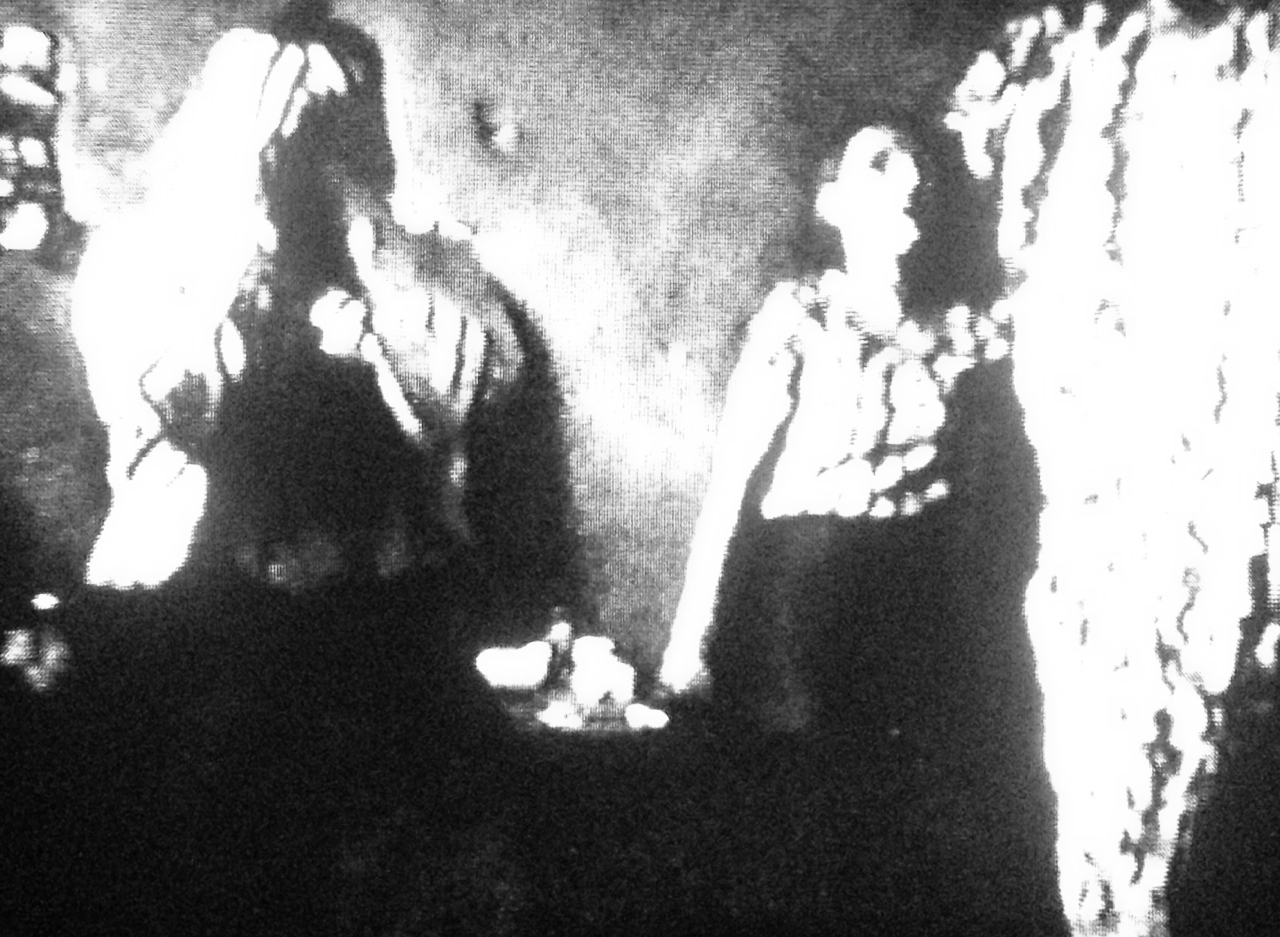
A dramatic cut sequence, however, upsets the certainty of the couple’s outlook as shots jump between a dolly pan of the wedding party and a crowd of miners headed for the local carnival. It is in the latter’s confines—the cacophony of which is palpable despite the lack of ambient noise—that these two worlds collide, and gives first indication that the husband is, in fact, a miner himself and is enjoying a rare reprieve from his toil. The happy couple rides into town by carriage, throwing bride (Sandra Milovanoff) and groom (played by the director) into a storm of activity. The ensuing whirlwind is expertly and descriptively captured by Vanel. Frantic overheads of swings and other amusements frame the bride in a blur of flesh and flowers, further unsettling her chances at happiness.

IMG_0744 IMG_0745 IMG_0749

Before the newlyweds consummate their marriage, their faces are singled out by the camera in a montage of longing gazes, each a placeholder for the twist of resolution to be dropped like a lemon peel into the film’s martini glass in the final act.

IMG_0754 IMG_0755

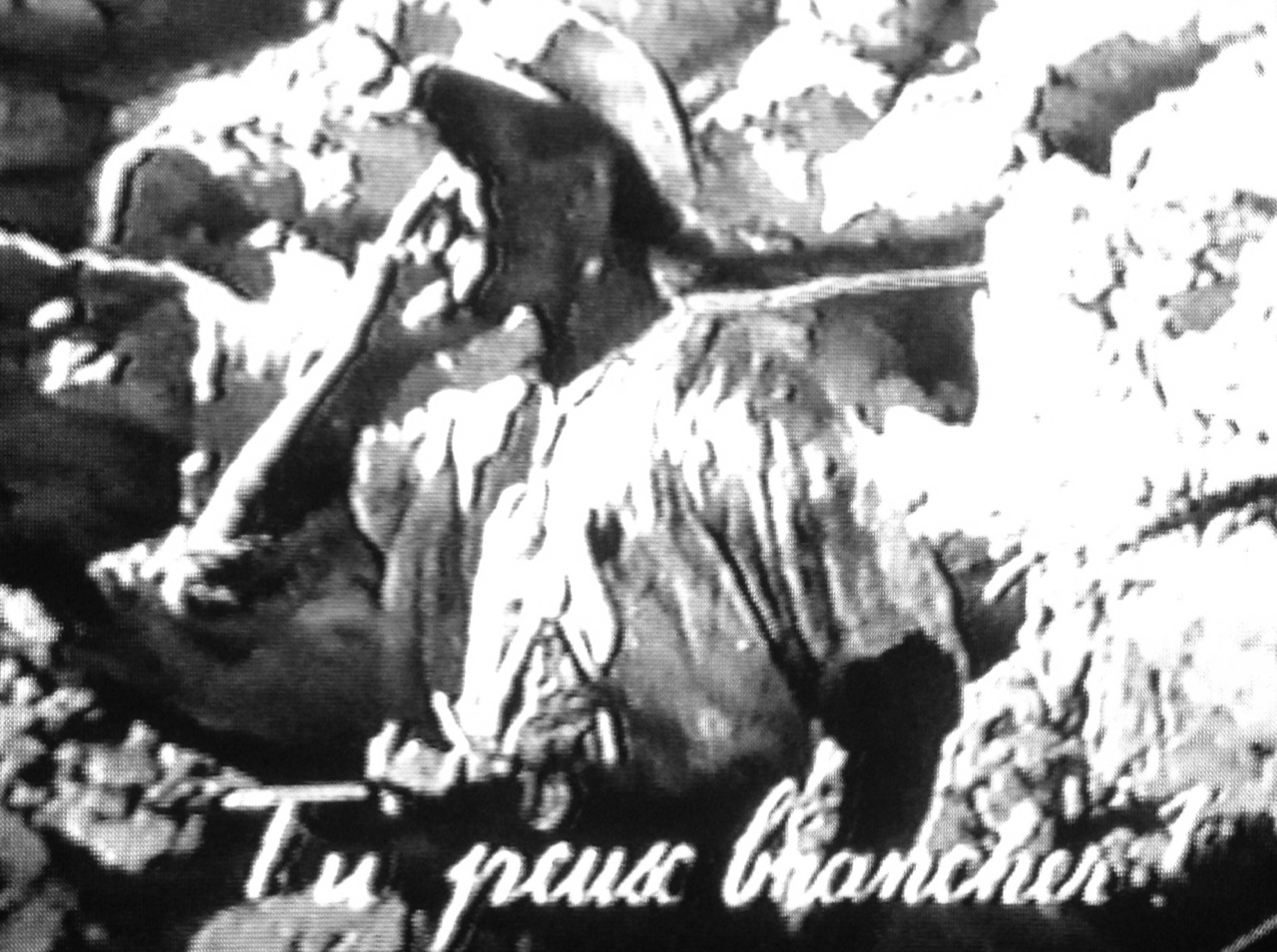
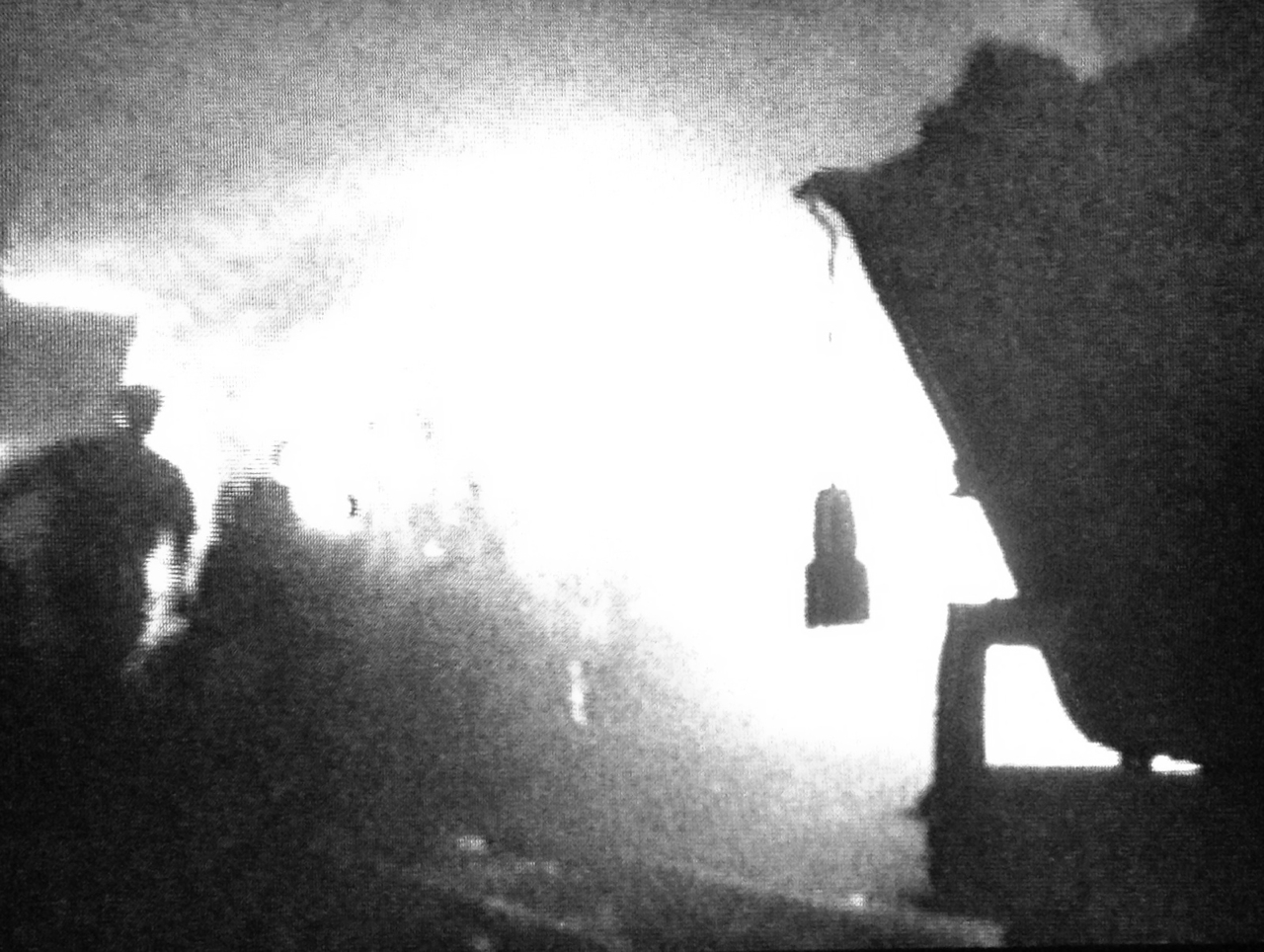
Time passes, and wedded bliss has pervaded the wife’s daily routine. Viscous liquid flows down a sheet of glass placed before the lens, reverting us to the mine, where workers are preparing to dynamite the rock.

IMG_0762
“Fire in the hole!”

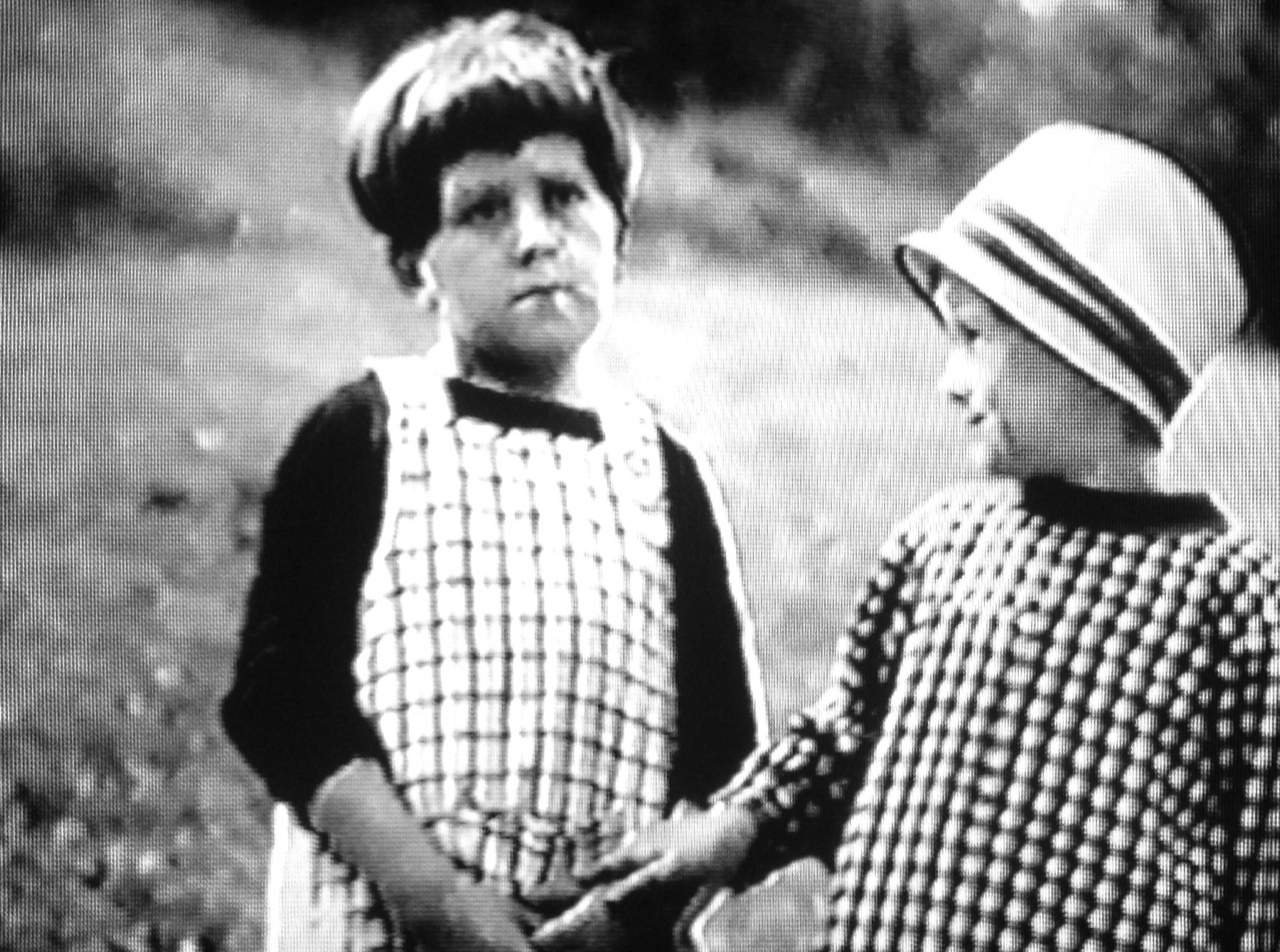
Children play in a nearby field, reinforcing Vanel’s penchant for contrast and painfully letting us in on the inevitable: the husband is buried by rocks dislodged from the blast.

IMG_0765 IMG_0768 IMG_0769

He returns home, a disfigured man.

IMG_0771 IMG_0772 IMG_0774

IMG_0775

He bids his wife to fetch a mask from his belongings, which he wears to give his appearance at least semblance of normalcy. Life wanders on, but so do the wife’s passions, landing her in the arms of an illicit lover. The latter finds another mask (presumably a spare) in her husband’s likeness and puts it on. When the husband comes home unexpectedly early, the two men tussle for her hand. Vanel’s choreography makes it seem as if the husband has been killed. The wife and who she believes to be her lover dump the body, but when they return home, the man reveals himself to be her husband.

IMG_0780
“Yes, it’s me!”

Even as she feels her entire world crumbling around her, she wakes up to find it was all a dream.

IMG_0781

One could hardly dream of a more fitting score for this melodrama. Sclavis has forged no mere accompaniment, but rather a living entity that balances the film’s morbid undertones with a harmonious sheen. Two recurring motifs, “Dia Dia” and the title theme, lend the album a narrative arc all its own. Together, the former’s pairing of bellow (Matinier) and cello (Vincent Courtois) and the latter’s Yann Tiersen-like breezes lend a feeling of symmetry.

The descriptiveness of each tune speaks in the language of cinema, so that François Merville’s light percussive appliqué in “Le travail” gives just a hint of the labor it names. (The stark textures here recall Philip Glass—and indeed, one may wish to explore the American composer’s own scoring for silent films for more in this vein.) “Fête foraine” (Fairgrounds) lays tightly wound strings over martial snare, shifting midway through to mallets before returning to the procession. Such changes beguile throughout. The full import of the wife’s “Mauvais rêve” (Bad dream), for example, finds perfect introduction in the clarinet and cello duet (“Retour de noce”) that precedes it. Fantasy (“Amour et beauté”) changes hands with reality (“Le miroir,” in which violinist Dominique Pifarély sounds like a ghost), excitement (“La fuite”) with comeuppance (“Les 2 visages”).

Two of the album’s finest moments occur in “La peur du noir” (Fear of the dark), which expresses itself through a nervous heart murmur of solo accordion, and in “L’accident,” a two-part fragmentation of the film’s underlying tensions that works its corkscrew into a bottle long emptied of its hope.

Meticulously composed, arranged, and performed, Dans la nuit stands tall in the Louis Sclavis lineup—not because it is relatively “accessible” (which it is), but because its storytelling is so enmeshed with its source. It’s brittle continuity maintains shape even in the emotional push and pull in which it finds itself caught. Like the nameless wife’s nightmare, the music carries in its breast a hint of its own anxieties, reliving them for as long as there are mirrors, smoke, and light…

IMG_0782


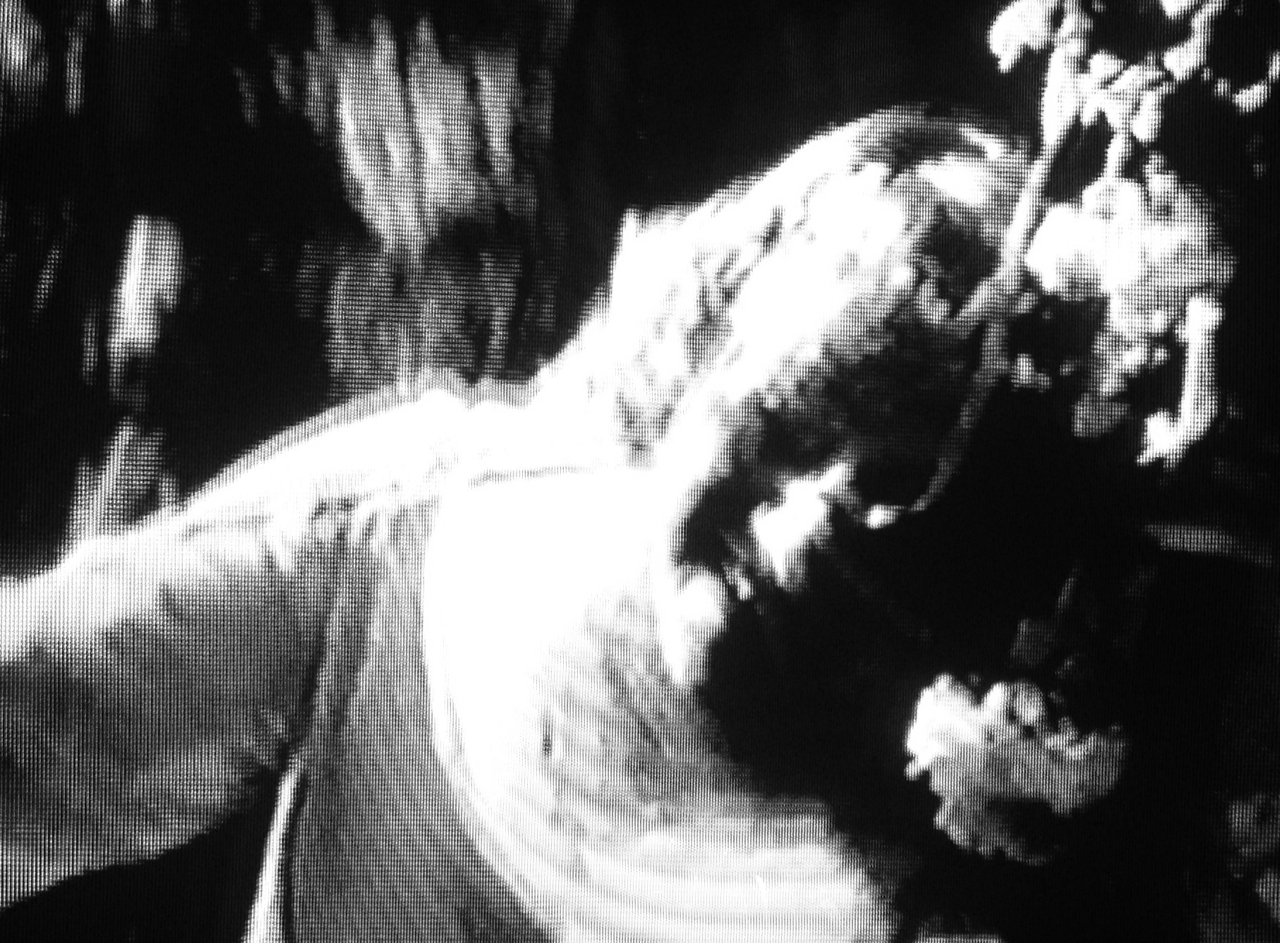
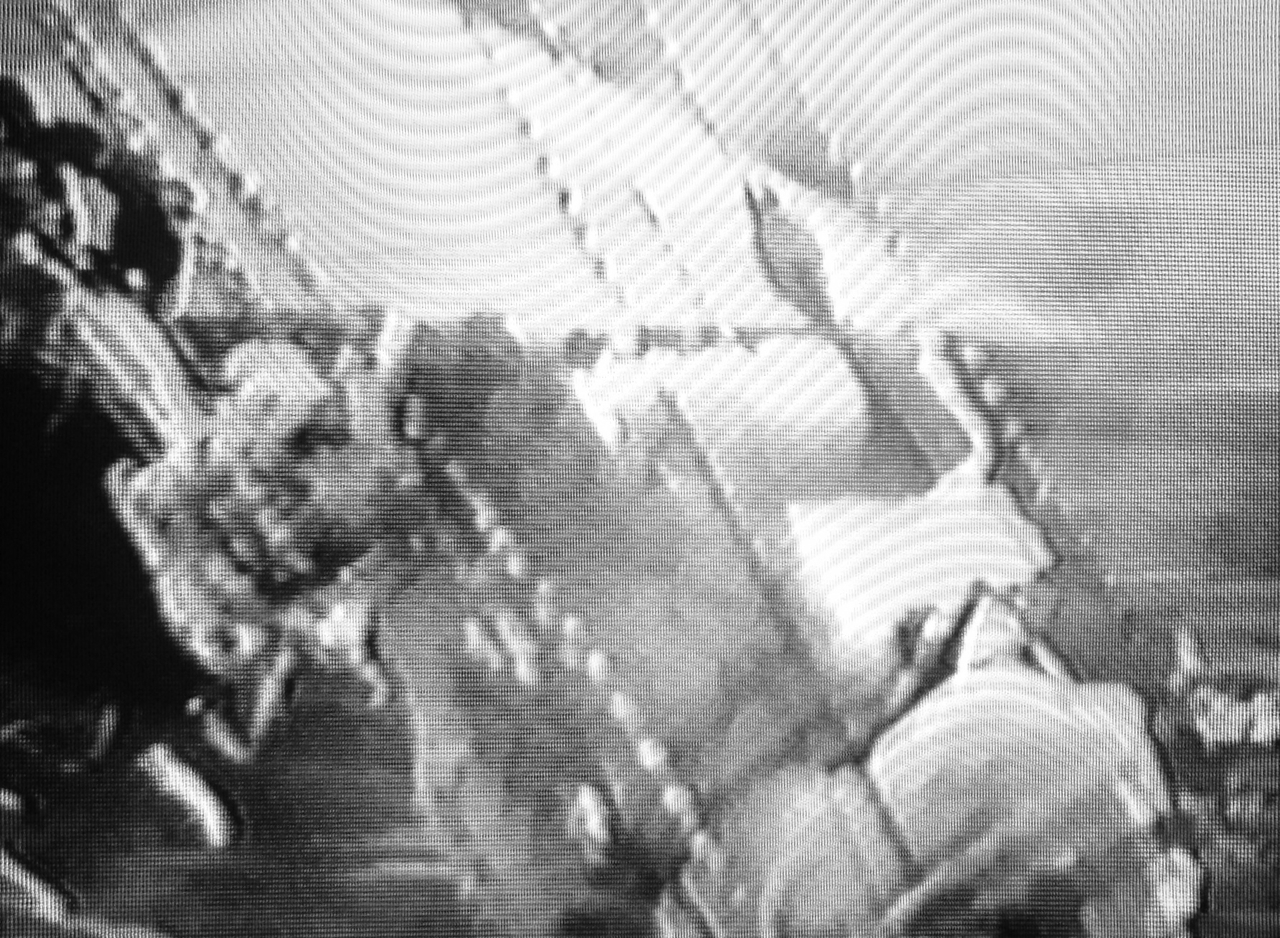
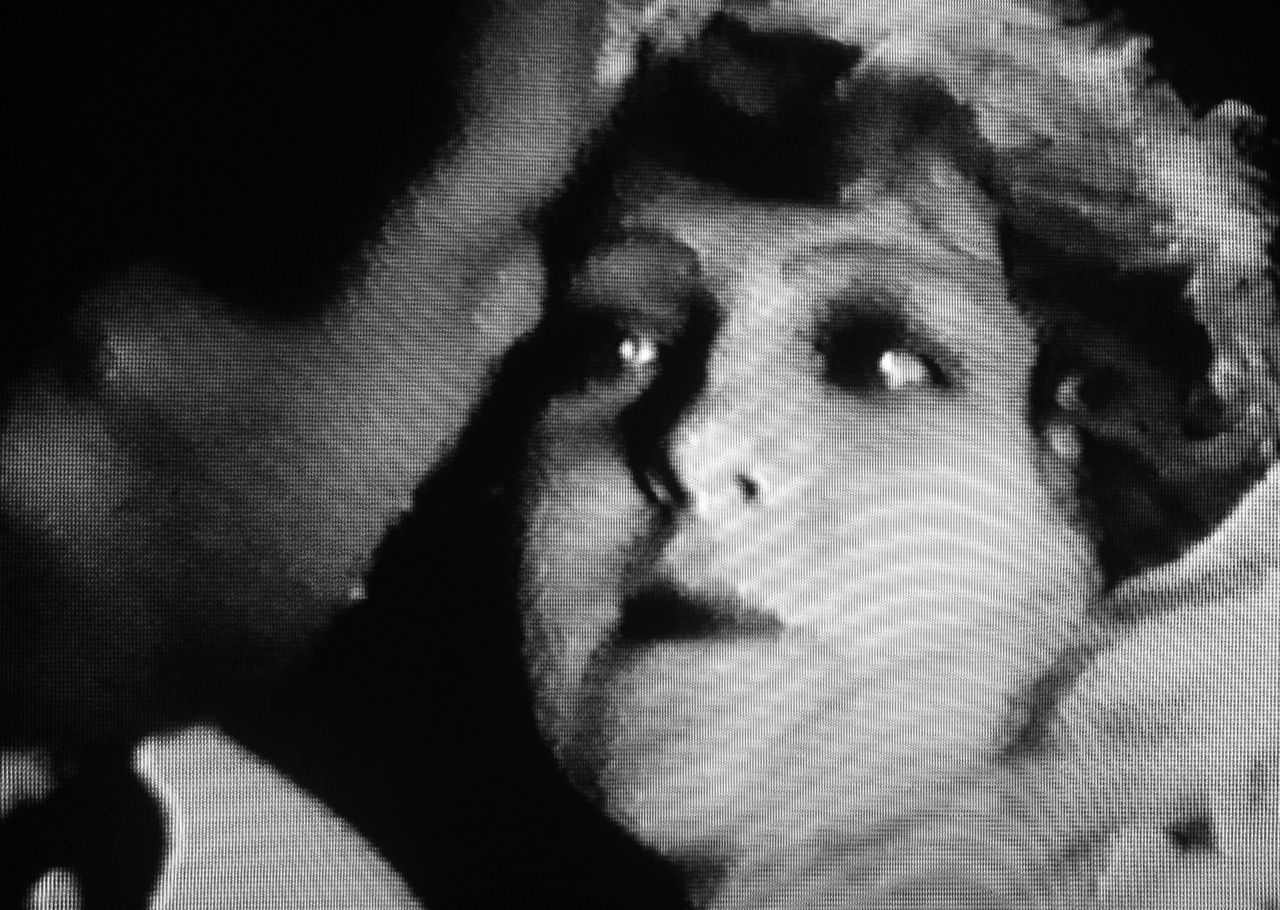
[*] I regret that I was only able to obtain an untranslated VHS library copy of the film, from which I could only extract stills by photographing the screen with my iPhone.