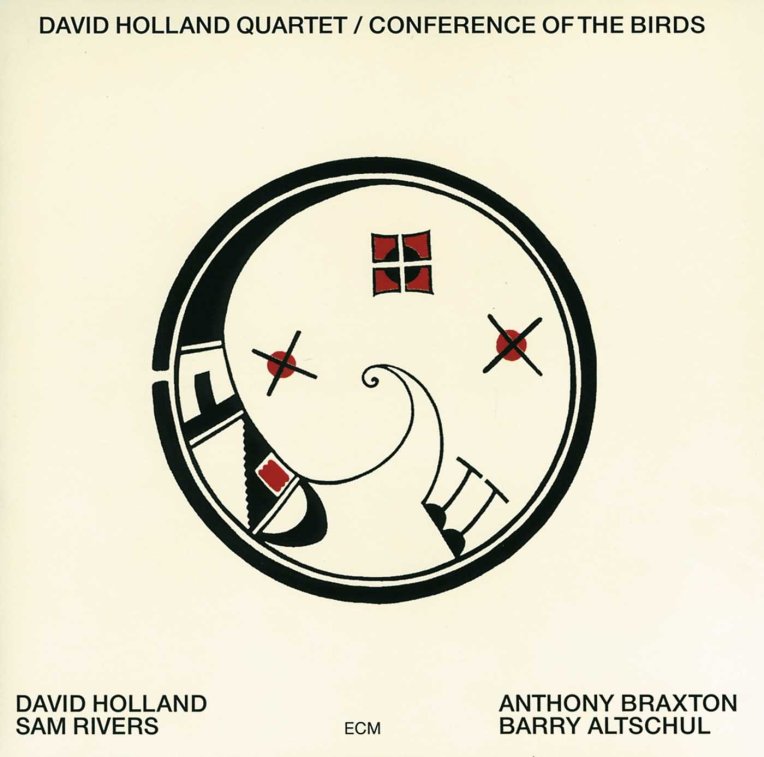
Dave Holland Quartet: Conference Of The Birds (ECM 1027)

1027

Dave Holland Quartet
Conference Of The Birds

Dave Holland bass
Sam Rivers reeds, flute
Anthony Braxton reeds, flute
Barry Altschul percussion, marimba
Recorded November 30, 1972 at Allegro Studio, New York City
Engineer: Tony May
Produced by Manfred Eicher

As someone who began with ECM New Series releases long before easing into the world of ECM proper, my initial explorations of the latter led me to decidedly contemporary avenues of jazz and to a particular fondness for the many Norwegian projects represented by the label. Only in recent years have I begun to pan for gold in the massive back catalog that was produced before I was born, and among the many fine nuggets to emerge from the sediment is this most splendid effort.

Phenomenal wind work from Braxton and Rivers makes this a decadent studio treat, grinding out equally captivating solos, whether over a tight rhythm section or in the throes of a looser backdrop. Though easily billed as a “free jazz” album, Conference Of The Birds remains a fine testament to a relatively accessible strand of the form. A child of the post-bop generation, Holland takes the back seat for the most part and lets his reedmen take center stage. Whimsical elements such as the unexpected coach’s whistle in “Q & A” comingle with the solid relay races of “Four Winds” and “See-Saw.” The title track provides the most delicate textures on the album with its effortless flourishes and gorgeous bass intro, acting as a fragrant palate-cleanser before launching us into the ecstatic free-for-all that is “Interception.” Each cut has its own distinct flavor, lending a vibrant anticipation to every break.

Conference Of The Birds is special to me for at least three reasons: (1) It evokes an important period of musical and political transition that I will never experience directly. Moods are wrought in iron and blown glass, so that no matter how many times the structure is destroyed, one can always melt the pieces down again into something new. This was a time in which the entire world was either on its knees or throwing off the shackles of normalcy in favor of unrestricted forms of expression. This duplicitous spirit of oppression and liberation is embodied perfectly in the sounds. (2) One can trace a dark and lasting thread from Holland’s early work to the present. This set in particular allows us to see his foundational strength, the whimsical order for which he has become so well known. (3) This album is, for me at least, one example of what makes jazz so uplifting: a spirit of shared knowledge, a hermetic seal ruptured for the sake of communal awareness, and the letting go of one’s own inhibitions amid an unforgiving social order.

Offer it your hand, and you may be surprised where it leads.

<< Stanley Cowell Trio: Illusion Suite (ECM 1026)
>> Paul Motian: Conception Vessel (ECM 1028)

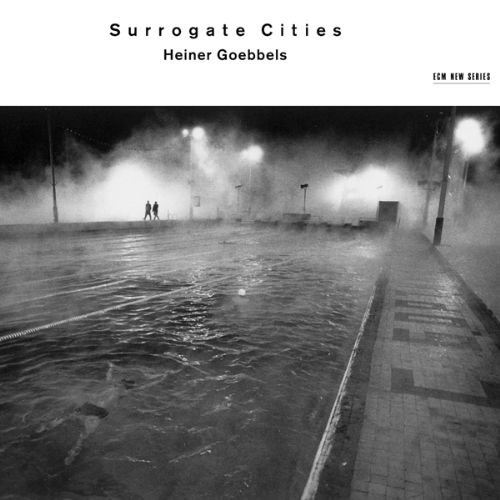
Heiner Goebbels: Surrogate Cities (ECM New Series 1688/89)


Heiner Goebbels
Surrogate Cities

Junge Deutsche Philharmonie
Peter Rundel conductor
Jocelyn B. Smith vocals
David Moss vocals
Recorded 1996, Bayerische Rundfunk, Munich / 1999, Frankfurt
Engineer: Peter Jütte
Produced by Heiner Goebbels & Manfred Eicher

As a longtime fan of David Moss, I needed only to learn of his involvement in Surrogate Cities before rushing out to buy the CD. Sadly, at the time I had no idea who Heiner Goebbels was. I couldn’t have asked for a more comprehensive introduction. The reader will forgive my penchant for abstract analogies when I say that Surrogate Cities is like pricking a piece of paper with a pin and shining a metropolitan nightscape through it so that one may connect those rays of light with brittle chalk. Practically speaking, the project is meant to be an ode to the city of Frankfurt in celebration of its 1200th year. As such, it is an amalgam of atmospheres, moods, and sensual provocations. This project unfolds like a massive suite with instruments drawn from architecture and flesh alike. Each section reads like a novella in the grander scheme of its binding.

Suite for Sampler and Orchestra
Preluded by snippets of cantorial singing, computer-controlled voices seek dominance over the imperialistic power of the orchestra in a kaleidoscopic and utterly focused vision of the urban sprawl. Rather than penetrating the city, Goebbels turns it inside out for our inspection. The samples are not so much quotations as they are memories shaken loose from long-neglected nooks and crannies. The digital flick of “Menuett/L’ingénieur” is haunting in its subtlety, appropriated like so much data flowing through the airwaves. The conclusion, “Air/Compression,” is a chamber piece for the overlooked sounds of our post-industrial comfort. Admirers of John Zorn’s Kristallnacht will find themselves on familiar ground here, as the archival instinct is similarly apparent.

The Horatian – Three Songs
Based on words by Heiner Müller, this song cycle relates a conflict between Rome and neighboring Alba. A lot is cast to determine who will fight as representative of each city. A Horatian is chosen for Rome, a Curiation for Alba. During the course of the ensuing battle, the Horatian strikes down the Curiation and does not spare his life. His sister, who is betrothed to the Curiation, weeps upon his return. He rewards her grief by slaying her. Thus is the victor’s valiant heart tainted with murder. According to Müller, Goebbels “proposes a new form of reading, a different, no longer touristic approach to the landscape of a text.” In this sense, The Horatian is far from the bombastic cantata it could have been. Rather, it heaves with the weight of its own moral conundrum. Joselyn B. Smith is superb as the voice of bipartisanship, weaving in and out of its allegiances with the acuity of a practiced raconteuse. She emotes with a confident Broadway twang that is gorgeously appealing against Goebbels’s orchestral backdrop.

D & C sounds like someone knocking at the outside of a building with no entrance; a book one has been dying to read, but which opens to reveal rain-soaked pages. It is a film noir standing on its head, loose change and candy wrappers falling out of its pockets. The music circles until it loses hope and collapses onto the wet asphalt.

Surrogate, with words by Hugo Hamilton, is the moment I was waiting for during my first listen. Over a lush carpet of piano, Moss runs into the night along with the nameless character of Hamilton’s text. His indulgent enunciation of “surrogate” is priceless, prelude to a tranquil, breathy fade.

In the Country of Last Things
The words here are by Paul Auster. Bleak and morose, they paint a fatalistic picture of urban living. Moss provides the narration here as Smith wails plaintively in the background: “A house is there one day, and the next day it is gone. A street you walked down yesterday is no longer there today…” The city has become the ephemeral soldier, running AWOL from the army of its own becoming. All convictions remain unrequited, leaving the barest puffs of cigarette smoke as the only indications that they ever breathed.

Smith and Moss are the clear winners here. Not to be outdone, however, is the superb orchestra. The presentation is sharp, the sound so crisp you want to teethe on it, and the arrangements fantastically varied. Probably not the best album to play in your greenhouse, but for our psychological biota it does the trick.

<< Veljo Tormis: Litany To Thunder (ECM 1687 NS)
>> Gudmundson/Möller/Willemark: Frifot (ECM 1690
)

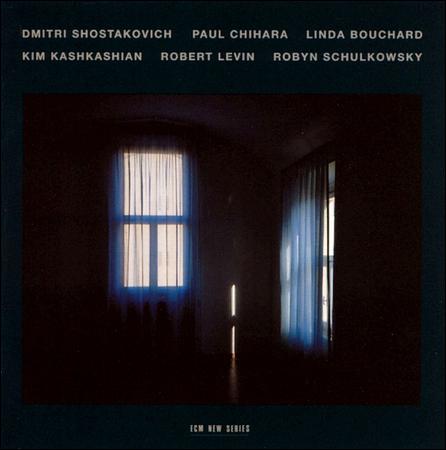
Shostakovich/Chihara/Bouchard (ECM New Series 1425)


Shostakovich/Chihara/Bouchard

Kim Kashkashian viola
Robyn Schulkowsky percussion
Robert Levin piano
Recorded June and October 1990
Engineer: Jan Erik Kongshaug
Produced by Manfred Eicher

Kim Kashkashian’s third disc for ECM is a curiously mixed bag. Although the liner notes give some delightful anecdotes and insider’s information, I am torn over how much said information enriches my experience of the whole. For example, Kashkashian points to the percussiveness of Shotakovich’s piano writing in his Sonata for Viola and Piano op. 147 as justification for the two companion pieces scored for “actual” percussion and viola. To be sure, this is a fascinating connection, though one that perhaps only the performers can intuit with such immediacy. Either way, the knowledge does guide my listening in new directions and pushes me to burrow into the music wholeheartedly.

We begin with Pourtinade by Linda Bouchard, consisting of nine sections that may be rearranged at will and which are otherwise meticulously notated. Each chapter breeds freshness in this indeterminate order and points to a hidden vitality behind the deceptively ineffectual surface. This is a piece that finds precision in its looseness. Deftly realized, Schulkowsky’s percussion work is porous and minutely detailed like a spiked pincushion through which Kashkashian threads her song.

Next we have Paul Seiko Chihara’s Redwood. Chihara, a film composer who has collaborated with such greats as Louis Malle, was inspired by Japanese ukiyo-e woodblock prints for this piece largely built around melodic phrases volleying between viola and tuned drums. I doubt that one would ever guess its source from the music alone, and I can’t say for sure whether this really informs the way I listen to it. Nonetheless, the programmatic music has its heart set on something beautiful.

Last but not least is Dmitri Shostakovich’s Sonata for Viola and Piano op. 147. This being his final work, it unfolds like the imminence of death and the timid promise of afterlife. The central Allegretto is filled with concentrated ardor, held back every time it threatens to transcend its cage, and the final 15-minute Adagio is as visceral a swan song as one could expect from such a towering figure in modern music. While this sonata does sound haggard, conserving its energy for selective crescendos, there is a glint of affirmation for every cloud of resignation, so that by the end there is only neutral space.

Even after repeated listenings, I am still not sure how successful this program is as a whole. While the Bouchard and Chihara pieces have their own merits, knowing that Shostakovich is waiting around the corner throws a much different shadow on already obfuscated atmospheres. It’s not that the conceptual approach of the percussion pieces is out of place with the op. 147, but simply that they feel like different languages in want of an intermediary (and, to Kashkashian’s credit, she tries her best to fulfill that role). They rather put me in mind of the stark stop-motion artistry of the Brothers Quay, and would perhaps be better suited to such imagery, crying as they are for visual accompaniment. Nevertheless, all three musicians’ rich talents scintillate at every moment, breathing vibrancy into still notes on a page with oracular fervor.

Knowing the context of a piece biases our interpretation of it. This can be a hindrance, or it can lead to an enlightened understanding. In this case, I find it to be both—hence my complicated reactions to this release. Sometimes the most memorable musical experiences are also the most unexpected. Albums such as this remind us that music is its own reward.

<< Gavin Bryars: After the Requiem (ECM 1424 NS)
>> Paul Giger: Alpstein (ECM 1426)

Elliott Carter/Paul Griffiths: What Next? (ECM New Series 1817)


Elliott Carter
What Next?

Valdine Anderson soprano
Dean Elzinga baritone
Sarah Leonard soprano
William Joyner tenor
Hilary Summers contralto
Emanuel Hoogeveen boy alto
Netherlands Radio Chamber Orchestra
Peter Eötvös conductor
Recorded September 9, 2000, Concertgebouw, Amsterdam (What Next?)
Recording Engineer: Ron Ford
September 2001, MCO Studio 5, Hilversum (Asko Concerto)
Recording Engineer: Frans Meyer
Co-production of ECM Records/VARA Radio

“Wherever we go, words have been there first.”

Imagine you are driving along a busy metropolitan street. On the passenger seat is your latest score. Having made some hasty but crucial changes just in time for the premier performance, you floor the gas pedal in a paroxysm of anticipation. Your hands itch for the baton. As fate would have it, however, your life compresses into a single dot of light. When you come to, you awaken to the reality of a near-fatal crash. Score pages rain around you, many burnt to mere fragments of their former selves. You scramble to gather them into something coherent, stitching them together with nothing but your own determination. Dash a little Sartre on this scene, stage it, then pull the existential rug out from under it, and you begin to approximate the feeling of What Next?, a one-act opera (Elliott Carter’s first and only after decades of false starts) inspired by the brilliant 1971 Jacques Tati film Trafic.

The proceedings ignite in a metallic whirlwind of sound: the traffic accident as afterthought, recreated in fragments of trauma’s own trauma. Voices enter as if hewn in shards of glass, dying in reverse to their original shape. “Starts are always an embarrassment to us / for we are creatures of eternity / and each new beginning is only a new illusion.” So says Zen, one of six survivors working their way through the wreckage. Rounding out the sextet are Mama, her son (indecisively named “Harry or Larry”), his wife-to-be Rose, and the mysterious swath of a character known as Kid. As Mama’s former husband, Zen knows a thing or two about life’s little tragedies and makes no qualms about showing it. His tongue-in-cheek self-awareness is taken up by Rose, the natural born performer, who begins her aria as if addressing the metaphysical orchestra: “Più andante, maestro.” And while the adults monopolize most of the fun working through to their ends, I find Kid to be more consistently intriguing. His language cuts through the haze of parental distanciation, holding fast to gut reactions in the face of studied response. Hearing him, I cannot help but think of the frog in Janáček’s The Cunning Little Vixen: direct and ever the voice of playful reason (it is perhaps no coincidence that Kid, too, has the final word). Mama tries to console him, shielding him from the painful reality that drapes their muddling philosophy like a wet blanket. “Think of this as a game,” she insists, for indeed their predicament is nothing but. The opera’s occasional lyrical moments—such as the ravaging solo “Stella cannot explain”—are all the more heightened for the jumble of their periphery. Conversely, certain moments are parodically hilarious, as when Rose and Harry or Larry claim to have heard something, to which Zen quips, “Unless the sound of one hand,” followed by a blatant percussive clap. Despite a penchant for self-indulgent rhetoric, Zen does break out now and then with solemn wisdom. “Whose eyes can we use to see what we are?” he interjects as the survivors grope for a plan of action. Ironic, to be sure, for action is one thing this opera clearly lacks. Toward the end, the potential wedded bliss of Rose and Harry or Larry crumbles before our very eyes, even as we question the soundness of its foundations; the significance of the accident dissolves as everyone retreats into their own anger; and personal foibles reign supreme over the threat of the almighty superstructure. Contrary to what the unfinished ending might imply, there is nothing elliptical about What Next?, having by now forgotten its own beginnings.

What Next? is nothing without its text, penned from the steady hand of Paul Griffiths, whose reprinted diary in the liner notes allows us a rare glimpse into the dramaturgy therein. Librettists are the drummers of the operatic world: their rhythm-keeping is taken for granted. Yet one can hardly ignore the words here, as they are the bones and the flesh of the opera, while the orchestra wafts like afterthoughts in response to each precious cell of exposition. Put simply: the words are affect, the music is effect. Griffiths works both in a linguistic see-saw of pathos and obscurity, placing us squarely at the fulcrum throughout.

Composed at the cusp of his ninetieth year, Carter’s opera explodes with the vitality of one in his ninth. The textures are akin to a family reunion, disjointed and confusing while also making a bizarre sort of sense through some hidden genetic continuity. Solo voices are often bolstered by wordless syllables from supporting characters in a scat-like dribble, so that no one is ever alone, bound by the cruel aftermath in which the cast finds (or loses?) itself.

The Asko Concerto provides a constellatory coda. This instrumental runaround of fiery spirit partners well with What Next? It doesn’t so much pick up where the latter left off as it picks us up where we have been dropped in the wake of Kid’s half-utterance. In a way, it feels like a programmatic speculation of the action that could have been, breathing like an asthmatic in recovery.

Carter’s music is tirelessly multi-dimensional and demands an open and patient ear. I cannot help but think that these two pieces were dashed out in a frenzy of creative impulses, even if both strive for practiced cohesion in the face of their own instability. Regardless of whether or not this disc can be called “enjoyable,” it never fails to fascinate, frustrate, and stimulate with its surprises and unflinching attitudes toward mortality.


Manu Katché: Neighbourhood (ECM 1896)

Manu Katché
Neighbourhood

Jan Garbarek saxophones
Tomasz Stanko trumpet
Marcin Wasilewski piano
Slawomir Kurkiewicz double-bass
Manu Katché drums, percussion
Recorded March and November 2004, Rainbow Studio, Oslo
Engineer: Jan Erik Kongshaug
Produced by Manfred Eicher

Neighbourhood is an astounding, if subdued, meeting of minds. Like other ECM projects of its ilk, this congregation feels as if it arose out of a fundamental and inescapable desire to create music for the sheer enjoyment of it. There is no showing off here. This is laid back, burnished, melt-in-your-mouth jazz perfect for a quiet evening or a rainy afternoon. That being said, this is a far cry from what might elsewhere derogatorily pass for “smooth.” In spite of its overall delicacy the album is not without solid grooves (how can we not bob our heads to the piano-driven ride that is “Number One” or to the swinging horns of “Take Off And Land”?), effectively concise solos (cf. Garbarek’s gorgeous outburst in “Good Influence” and titillating turns from Wasilewski and Stanko in “Lovely Walk”), and enough stellar moments overall to turn any depressing day into a blissful mental excursion. The ensemble plays us out beautifully with “Rose.”

As the brainchild of Manu Katché and producer Manfred Eicher, Neighbourhood is essentially a rhythmic enterprise. Katché’s percussion work provides the crowning motifs to which his compatriots are each a shining jewel. Multiple listenings reveal new nuances of texture and interaction every time. A very fine but impermeable thread connects these musicians and Katché never dominates, waiting in the wings as his motifs take shape of their own volition. The title of the sixth cut says it all: “No Rush.” Take your time with this one and it will reward you greatly. Just press PLAY and you’re there.

Tigran Mansurian: Ars Poetica (ECM New Series 1895)


Tigran Mansurian
Ars Poetica

Armenian Chamber Choir
Robert Mlkeyan conductor
Recorded June 6, 2003, Saghmosavank monastery, Armenia
Engineer: Garen Proyan
Produced by ECM

Ars Poetica is a choral “concerto” based on the poetry of Armenian writer Yegishe Charents (1897-1937). The language is rustic, bumpy, and delectable. The works of Charents, who suffered at the hands of the Stalinist regime and would die in a Yerevan prison for his politically “subversive” writings, were liberated with Stalin’s death in 1953. Likewise, his words seem to wrestle out of their national confines and onto the world stage through Tigran Mansurian’s faithful settings.

“Night” begins with breath; words are only implied, shaped by lips and lungs like rustling leaves. As the choir swells, a deeply affecting baritone solo intones: “But all was pale and dull around me, / No words were there, and there was no sun…” In this first of the Three Night Songs, we are ushered into a place where stillness is aflame. The Three Portraits of Women that follow turn our attention from the ethereal to the corporeal. Mansurian dresses these poems with darkness left over from the waning night. Lines such as “What Spirit was it that brushed / Your countenance in radiant strokes?” feel torn with pain, as if accepting the beauty of one’s love might lead to self-destruction in surrender. Archetypes of angels and maidens wander labyrinthine depths of their own making, impervious to the talons of words seeking purchase on their shoulders. Three Autumn Songs give us our first taste of sunlight trickling through the breaking clouds. Even so, melancholy is never far away, holding us in a lukewarm embrace as voices kneel before the awesome power of all that withers. And Silence Descends brings indefinite closure with a long untitled verse. Intermittent climaxes fall like sudden showers as a single soprano voice cuts through the din with a painful resignation. Language takes on yet another guise in the form of death, creeping along the streets and through back alleys, threatening to erase the text that is one’s existence from its sallow pages.

Mansurian’s compositional style is linguistically informed; not only because he is working with poetry that is already so very musical, but also because the Armenian language is such a vital part of Mansurian’s worldview and expressive deployment. Ars Poetica is a naked and vital work. It screams as its cries, whispering secrets and intimate thoughts as it careens through the cosmos with the quiet restraint of a meteor. Ultimately, it transcends language, bringing with it the promise of internal meanings through which orthography is wrung of its juices and fed to us drop by drop.

Collin Walcott: Grazing Dreams (ECM 1096)

ECM 1096

Collin Walcott
Grazing Dreams

Collin Walcott sitar, tabla
John Abercrombie electric and acoustic guitars, electric mandolin
Don Cherry trumpet, flute, doussn’gouni
Palle Danielsson bass
Dom Um Romão berimbau, chica, tambourine, percussion
Recorded February 1977 at Talent Studio, Oslo
Engineer: Jan Erik Kongshaug
Produced by Manfred Eicher

A plaintive, leisurely journey from Collin Walcott, North American pioneer in the art of the jazz sitar and ECM visionary whose life ended all too soon at the age 39. To anyone put off by this summary, I cannot stress enough the soulfulness of his playing. Walcott, who studied with the inimitable Ravi Shankar, does not treat his instrument as a mere substitute. Rather, he awakens the sitar to a whole new method of understanding, constructing a viable world around it rather than simply tossing it into the mix as a gimmick or afterthought.

Like the previously reviewed Survivors’ Suite from Keith Jarrett, Grazing Dreams is structured as long-form whole in which individual tracks blend into the overarching power that binds them. “Song Of The Morrow” starts things off right with flirtatious sitar riffs appearing and disappearing against a reverberant wash of guitar and trumpet while subtle and varied percussion sections sneak past in the background. “Jewel Ornament” is a personal favorite here, unfolding like a child’s raga. The hold and release of Cherry’s flute and Abercrombie’s insect-like guitar mesh beautifully with Walcott’s tabla stylings. By the time we get to the title track, which plays out like the folk tune of some undefined diaspora, we begin feel the weight of travel on our shoulders. And so, the final “Moon Lake” stretches out like a diffuse reflection across its titular surface, providing rest and replenishment beneath the sheltering sky of our nocturnal wanderings.

The engineering of this album is ahead of its time. Considering the way each track evolves, an attuned sensibility was clearly required to bring out the music’s full breadth. Case in point: the way the buzzing solitude that opens “Gold Sun” gradually develops into a honeyed elaboration of sitar and bass is nothing short of astonishing. Each tune is spun from the same cloth, dyed in real time with the languid syncopation of improvisers who feel what they hear. Gentility through strength is the backbone of Grazing Dreams, a poignant and timeless statement spun from the ether of dreams.

<< Ralph Towner’s Solstice: Sound And Shadows (ECM 1095)
>> Pat Metheny: Watercolors (ECM 1097)

The Hilliard Ensemble: Perotin (ECM New Series 1385)

Perotin

David James countertenor
John Potter tenor
Rogers Covey-Crump tenor
Mark Padmore tenor
Charles Daniels tenor
Gordon Jones baritone
Paul Hillier baritone, director
Recorded September 1988, Boxgrove Priory, Sussex, England
Engineer: Peter Laenger
Produced by Manfred Eicher

There is a moment in the opening Viderunt omnes when, to signal the final section, its voices modulate to a higher space. This shift from gravid baritone- to tenor-driven majesty is for me one of the most sublime moments in all of music. Such transformative moments are what make many of the Hilliard Ensemble’s endeavors so enduring. In medieval music in particular, the enigmatic Hilliards have found a groove of sorts from which they seem reluctant to part. As Paul Hillier notes, these sounds represent a major development in the polyphonous “organum” typical of the ars antiqua style, breaking from the staid (though certainly no less “organic”) Gregorian mode. This fine disc metes out a hefty dose of the works of Magister Perotinus (fl. c. 1200), along with some worthy anonymous pieces to thicken the brew. Listening to this music, I cannot help but try to imagine the time and place of its conception. I can almost taste the air, feel the cold stone of gothic architecture on my fingertips and the swept floor beneath my sandaled feet. The voices glitter like facets of the same dusty light that once pierced arched windows and landed softly on solid pews.

This is music we approach impressionistically, seeing it first as a worldly sound before distinguishing local colors. The interpretations are restrained yet full of overwhelming power. The Alleluia posui adiutorium is a stunning example of Perotin’s craft. On the surface transcendent, the piece is also laden with paratextual significance. The pedal tones here are airy yet substantial and the brief lapses into chant are like translucent beads on a deftly interwoven chain. Dum sigillum, sung here by tenors John Potter and Rogers Covey-Crump, sounds like four voices compressed into two. They flit and fall, taking one step back for every two taken forward. The Alleluia nativitas is, like its companion piece, a finely wrought macramé. David James’s glorious voice has its day in Beata viscera, a Communion prayer (and Perotin’s only extant monophonic work) rising like censer smoke in a solitary alcove. Sederunt principes closes the disc on a fittingly supplicatory note.

On April 23, 2004 I had the fortunate experience of seeing the Hilliard Ensemble live at Wesleyan University, where they opened with the Viderunt in an otherwise eclectic program. The experience was very much like putting on this disc: the audience had almost no time to prepare for the sudden immersion that ensued the moment they took the stage. This is precisely what the home listener can expect. As always the Hilliards offer an impeccable performance that speaks of a deep and heartfelt commitment to every project they undertake, and it is this same commitment that I feel obligated to bring to the table every time I sit down to partake of this finest of recordings.

<< Stephan Micus: The Music Of Stones (ECM 1384)
>> Paul Giger: Chartres (ECM 1386 NS)

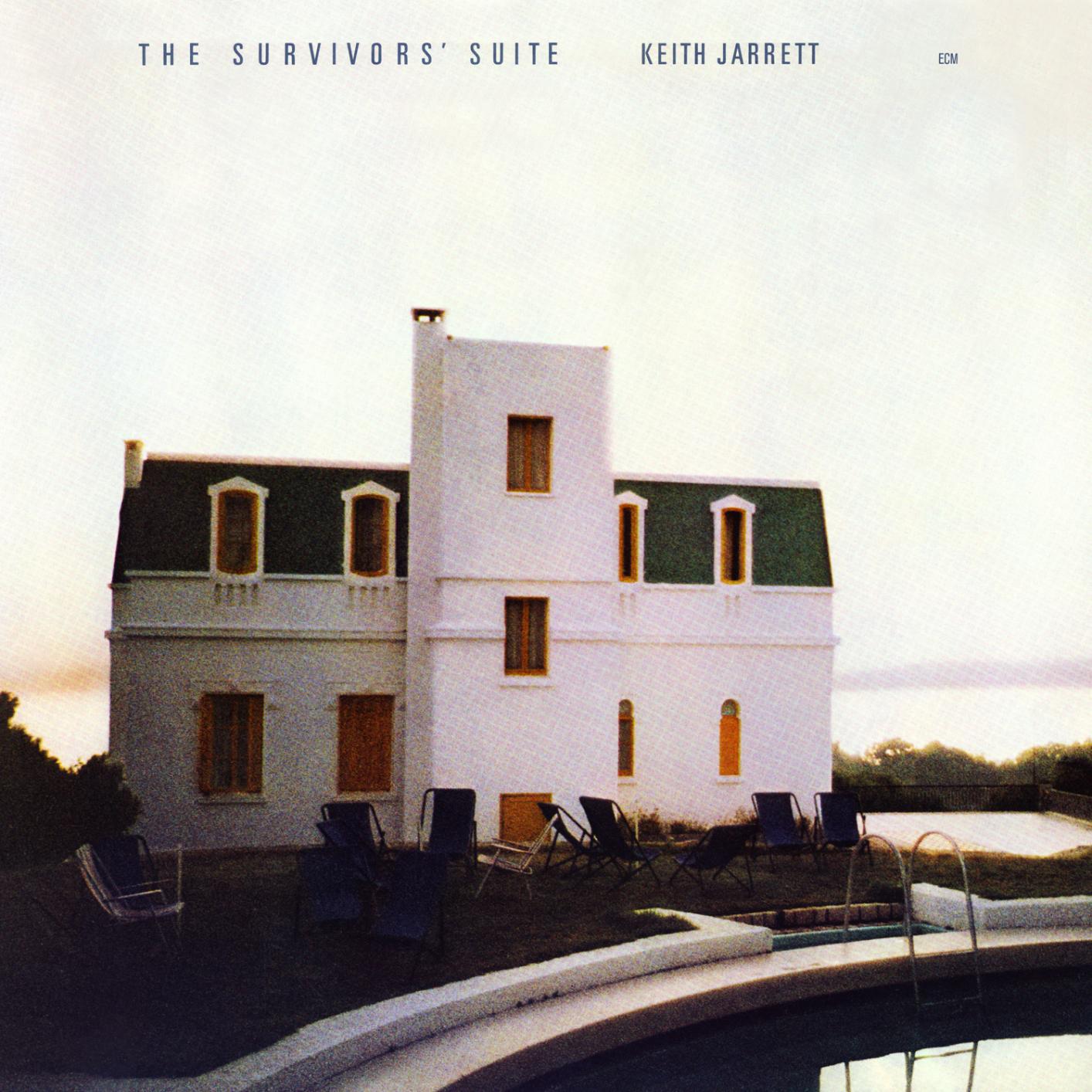
Keith Jarrett: The Survivors’ Suite (ECM 1085)

ECM 1085

Keith Jarrett
The Survivors’ Suite

Keith Jarrett piano, soprano saxophone, bass recorder, celeste, osi drums
Dewey Redman tenor saxophone, percussion
Charlie Haden bass
Paul Motian drums, percussion
Recorded April 1976 at Talent Studio, Oslo
Engineer: Martin Wieland
Produced by Manfred Eicher

A quick perusal of the personnel and mechanics of this album is practically all one needs to get an idea of the tonal colors and moods with which its imagery is composed. The Survivors’ Suite finds Jarrett in a multi-instrumental role along with the all-star cast that makes up his American Quartet. The sheer synergy of the playing truly makes this music shimmer. For this reason, I hesitate to single out particular solos and motifs. Suffice it to say each member has his moment of glory in the concisely knit fabric of the album’s 49-minute duration.

The music shifts dramatically from soulful dirges to upbeat thematic variations in a vibrant flow of ideas. A sense of control reigns. One never feels lost while listening (or is, in fact, lost but doesn’t care), for the surroundings are so resplendent with life. This is a supremely evocative experience and the similarity of associations it has inspired in so many listeners is striking to say the least (peruse a few other reviews, and you’ll see what I mean). The Survivors’ Suite reaches beyond jazz, even if firmly rooted in jazz’s soil. Its sound is vast yet intimate, breathing with the sheer life force of its music-makers. There is a marked difference between its two sections, simply titled “Beginning” and “Conclusion.” They are not polar opposites and are more than complementary. They walk the same trails, perhaps pointing out different sights along the way, all the while knowing they will soon meet again. Where the former is timid yet progressive, the latter is democratic and viscous.

This is, without a doubt, a high point among Jarrett’s many ECM outings. It is expertly recorded (as evidenced by its superb balance of warmth and coolness), fluidly played, and widely cherished, as I am sure it will continue to be for decades to come.

<< Eberhard Weber: The Following Morning (ECM 1084)
>> Keith Jarrett: Hymns/Spheres (ECM 1086/87)