ECM @ Winter Jazzfest 2017

For the second year in a row, ECM commanded the stage at the New School’s Tishman Auditorium for Winter Jazzfest in New York City. Whereas 2016’s showcase spanned two nights, this year’s was a one-night event, and featured sets by the Michael Formanek Quartet (with Tim Berne, Craig Taborn, and Gerald Cleaver), Jakob Bro’s trio with Thomas Morgan and Joey Baron, two duos (Ravi Coltrane/David Virelles and Bill Frisell/Thomas Morgan), and a concluding performance by Nik Bärtsch’s Mobile. Click the concert photo below to read my full report.

2017-01-07dicrocco_nik_bartsch-mobile1651
(Nik Bärtsch; photo by Glen DiCrocco)

David Virelles: Antenna (ECM 3901)

antenna

David Virelles
Antenna

Fred Hersch review for The NYC Jazz Record

the-ballad-of-fred-hersch

An intimate portrait of a pianist and composer at the height of his career, produced and directed by Charlotte Lagarde and Carrie Lozano, this documentary polishes facets of Hersch’s life that may be less obvious to casual fans. Viewers are introduced to Hersch as he descends the stairs of New York’s Jazz Standard to set up for a performance. From a web of starts, stops and stolen glances, the sound of a musician who now stands among the giants of jazz piano takes shape.

In the words of music critic David Hadju, one of a handful of advocates interviewed, “Fred’s music is borderless” and the film shows that characterization extending further to his personality. As one who embodies the art of improvisation outside the cage of performance, Hersch is invested in the outcomes of jazz beyond boundaries. It’s there in his organic mosaic of traditions and influences, in his willingness to work with a variety of musicians and in his activism as an HIV-positive gay man. The latter point, largely yet respectfully stressed throughout, is vital to understanding his music’s river-like qualities, which constitute nothing less than an ode-in-progress to life itself.

Nowhere is this so boldly expressed than in his My Coma Dreams, the preparations for and premiere of which dominate this documentary’s second half. Inspired by a series of vivid dreams Hersch experienced after an infection forced him into a coma in 2008, this multimedia work employs speech, video projection and live musicians to tell the story of his recovery. As pianist Jason Moran points out, however, more important than Hersch’s brush with death are the ways in which this magnum opus underscores his historical importance as a torchbearer of jazz’ reckoning with hardship. It’s a message underscored by his biography, which the filmmakers uncover through interviews with his mother Florette Hoffheimer and partner Scott Morgan, but also by his tireless mission to treat music as reality over fantasy. Hersch is keen on acknowledging the specificity of any given performance as an event and hopes that listeners may do the same in return.

((This article originally appeared in the January 2017 issue of The New York City Jazz Record, of which a full PDF is available here.)

Recognition of Mr. Turtle

As some of you may know, I am a professional translator of Japanese fiction into English (a new translation project has, in fact, kept me from reviewing as of late…but stay tuned). My latest translation is of Yusaku Kitano’s science-fiction masterwork, Mr. Turtle, which has gained recent recognition in a write-up from The Japan Times (read here) and a Best Translated Book Award (see here). The book is available on Amazon by clicking the cover below.

turtle-cover

Ove Johansson review for The NYC Jazz Record

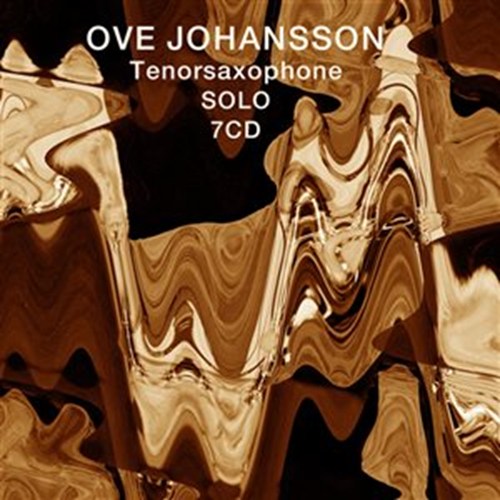
tenorsaxophone

On Christmas Eve, 2015, Swedish jazz lost an undisputed maverick in Ove Johansson. All the more fitting then that the tenor saxophonist’s swan song should span seven discs in as many hours. Although just as comfortable tying his laces on straight as he was yanking them off his shoes and throwing them in the listener’s face, over the years Johansson settled into a trademark solo style, marrying long-form improvisations with electronics. While on paper this may recall John Surman’s classic reed-and-synthesizer experiments of the 80s, in practice Johansson’s is a less cohesive art. Which is not to say it doesn’t bond in accordance with its own clandestine rules. For while the electronics—which range from drum machine beats to impressionistic waves—at first seem like a cheap application of retrospective blush, over time their dated quality reflects these danses macabre with clarity. Still, seven hours of such clarity will test your resolve, if only because Johansson’s playing is so engaging on its own that anything added to it feels secondary at best and, at worst, intrusive.

The first four discs, along with the last, consist of hour-long improvisational treks over amorphous landscapes. Each is named after a month, November and December being the synth-heaviest and most meandering of the bunch. Discs five and six, which together boast 45 tracks, are the most exciting, spotlighting Johansson as they do in live settings. The compactness of these pieces makes them visceral, so that one can almost smell the sweat of their kinesis. All of this feeds into the seventh disc, which reveals the album’s sharpest edges and rewards the journey with rawness.

Just as Johansson was a self-taught musician, so too does his music require self-taught listening. There’s no roadmap or manual: just a splattered terrain that begs the tread of an adventurous ear. Listening to this set is like breaking a hermetic seal, out of which come spilling years of pent-up energy, which in light of his death reads like messages from the other side.

(This article originally appeared in the December 2016 issue of The New York City Jazz Record, of which a full PDF is available here.)