András Schiff: Franz Schubert (ECM New Series 2425/26)

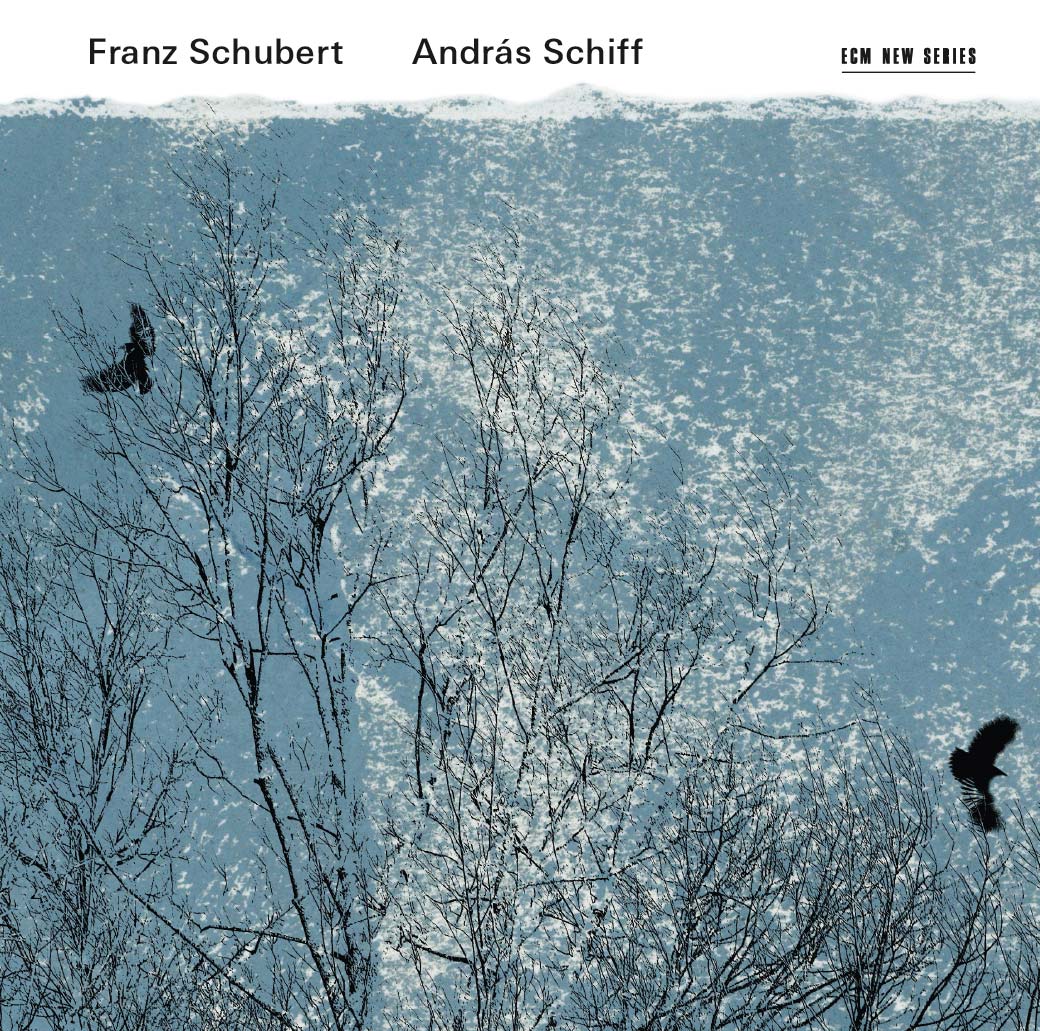
Franz Schubert

András Schiff
Franz Schubert

András Schiff piano
Recorded July 2014, Kammermusiksaal H. J. Abs, Beethoven-Haus, Bonn
Engineer: Stephan Schellmann
Production coordination: Guido Gorna
Tuning and technical assistance: Georg F. Senn
Executive producer: Manfred Eicher
U.S. release date: 2 June 2015

While András Schiff has reinforced the worthiness of Bach and Beethoven at the piano over a sprawl of recordings for ECM’s New Series, he has also carved out a hallowed space for the music of Franz Schubert, beginning in 2000 with a recording of the C-major Fantasies and now deepened with this composer-titled collection. In his liner text, “Confessions of a Convert,” Schiff discusses the transition to “authenticity” via historically minded performance, a movement that popularized use of period instruments and, ironically enough, the newness they brought to canonical repertoires. “There is an astonishing wealth of old keyboard instruments hidden in museums, foundations and private collections, many of them in prime condition,” he writes, speaking after his transformation from skepticism to advocacy. “Getting to know them is essential for the student, the scholar, the musician: it is a condition sine qua non. Playing on fortepianos—and on clavichords—should be compulsory for all pianists. Their diversity is amazing.” Even more amazing is the diversity of Schiff’s willingness and ability to adapt to these changing colors, to treat each as having equal value in the keyboard spectrum. For this recording he plays a fortepiano, built by Franz Brodmann in Vienna around 1820, which Schiff has owned since 2010. Attentive listeners will recognize it as the very one employed for the second version of the pianist’s Diabelli traversal, also for ECM. Once again, engineer Stephan Schellmann underscores the intimate life of this instrument.
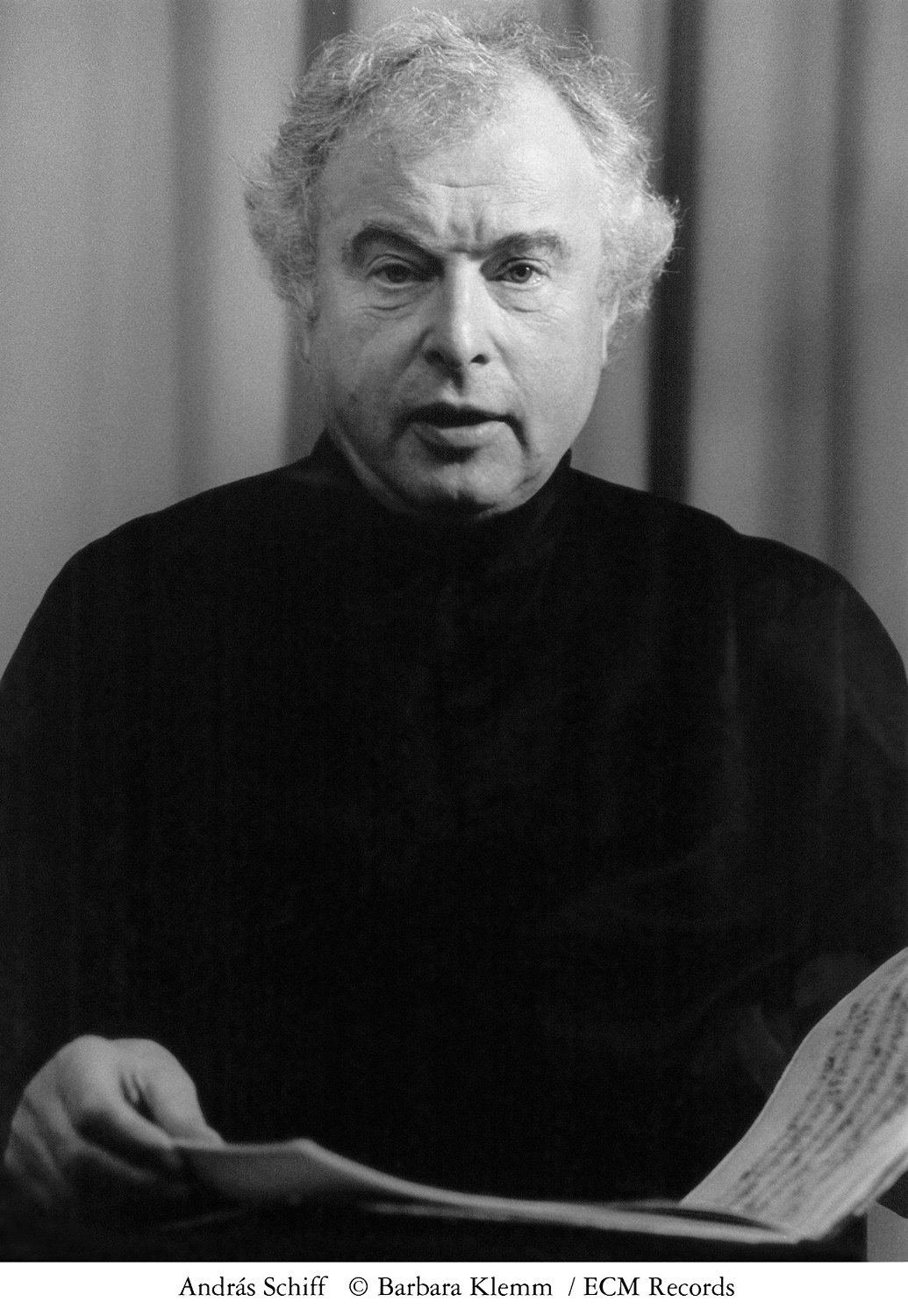
Schiff

The Sonata Nos. 18 in G major and 21 in B-flat major serve as centerpieces. An overall translucence pervades the first, and the opening movement, marked “Molto moderato e cantabile,” gains purchase by the fortepiano’s immediacy, which ensures that even the greatest leaps never forget where they came from. Schubert’s propensity for quietude is on full display, contrasting fragile highs with muddier lows. And while Schiff’s Brodmann might at first seem better suited to the Andante, it proves itself to be just as capable pulling off the half-tucked rolls of the Minuet. And the concluding Allegretto? Let’s just say that, if the sound, in combination with Schiff’s artful handling of it, hasn’t won you over by this point, then the album just might not be for you.

The Sonata in B-flat major, widely considered to be the pinnacle of Schubert’s writing for piano, feels not so much new as renewed, given access to muscles it might not otherwise exercise on a modern grand. If the G-major Sonata felt at best quasi-Beethovenian, then this one begs a more genuine comparison. From the low trills that interrupt with periodic hints of foreboding in the first movement to the flexion of the final Allegro, there’s more than enough for the comparatist to savor. Nowhere else, with the possible exception of the Four Impromptus (op. 142), is the fortepiano’s potential so evident. The seesawing between minor and major in the Andante and the spirited undercurrents of the Scherzo, and all the subtleties required to make those dynamics felt, come naturally to the instrument, which I daresay adds a boldness all its own by virtue of its focus.

Schiff’s reckoning of the op. 142 proves there’s still much to discover in these robust pieces. Each impromptu has its own charm, but the second, an Allegretto in A-flat major, proves the need for a tactful performer. Schiff balances its understated seeking with immediacy, all the while through his pacing lifting the music beyond an exercise in mere pathos. Some of the most dramatic moments of the album can be found here, barely eking out over the captivations of the Andante that follows it to round out the center.

Even in the shade of these gargantuan sonatas, the popular Moments musicaux hold their ground. In Schiff’s handling, they come across with spontaneity and breadth. Each has its own captivation, but the Andantino in A-flat major is a most remarkable vehicle for the fortepiano’s middle register. By the final movement, these beauties are swimming in fresh disclosures.

Not to be outdone, however, are two chosen miniatures. The Ungarische Melodie (Hungarian Melody) in b minor introduces the program with evocative subtlety, while the Allegretto in c minor, written for the departure of a friend, populates more spacious melodic tenements. Both contain a wealth of emotional pigments. Between the azure flash of a dramatic pause and the rusty ochre of hindsight, not a single piece piece of the puzzle feels out of place.

If this is your first time encountering Schubert’s piano works, it may just become a reference recording. If you come to it with familiarity, especially by way of Schiff’s nine-course feast on Decca, then you will want to keep it for comparison and discovery with all the rest. And to be sure, even putting aside questions of instrument, this recording is by nature historically informed, because it is itself history in the making.

(To hear samples of Franz Schubert, please click here.)

Robert Schumann: Geistervariationen – Schiff (ECM New Series 2122/23)

Geistervariationen

Robert Schumann
Geistervariationen

András Schiff piano
Recorded June 2010, Historischer Reitstadel, Neumarkt
Engineer: Stephan Schellmann
Produced by Manfred Eicher

Pianist András Schiff, best known for his surveys of Bach and Beethoven, combines the former’s austerity and the latter’s dynamism in this, his second ECM reckoning with Robert Schumann. More so than the first, the present program tracks a composer stepping out from Beethoven’s shadow and into a light very much his own. As any Schumann interpreter perhaps must, Schiff brings awareness of attendant shadows as well. These he evokes through a balance of restraint and transparency.

To be sure, the Papillons (1829-31) one of Schumann’s earliest piano works (it is his Opus 2), benefits from just such a well-rounded approach. This collection of 12 innovative vignettes linked in brazen montage is as colorful as it is compact. Indeed, each section would feel like the beginning of a longer excursion were it not already so elaborate. The C-sharp Waltz and Waltz in D are notably filigreed in this manner, while the playful chromatism of the Polonaise in D leaves a tannin-rich aftertaste.

The first sonata, his Opus 11, follows. Written in 1835 and dedicated to his future wife, Clara, it is an effusive and utterly heartfelt work, one from which Clara would draw themes for her own compositions. From the introduction alone, it’s clear that Schiff has hit upon the right formula. The modest Aria that follows is, at just over three minutes, a lovely foil to its 13-minute predecessor, and all the more enchanting for it. Even in his propriety, Schiff teases out an epic flow from its underlying fortitude. The final two movements pulse with theatricality. The last is engaging from the first, not least for Schiff’s handling of its quieter passages, the sonata’s most delicate. Through both jagged stitching and smoother threadings of the needle, a brocade of melody and atmosphere emerges that works lyrically, but with a certain sense of muscle that is distinctly Schumann.

The Kinderszenen or “Scenes from Childhood” (1838) are his most widely performed pieces and represent another innovation: children’s music for adults. Among the first of their kind, they have inspired many imitations but none quite so charming and musically direct. Moments of quietude and solitude increase among those of play as they drift onto darker, more dreamlike avenues, culminating in the grimly apportioned “Der Dichter spricht” (The Poet Speaks). Whether opaque or translucent, all 13 are suffused with a spirit that in Schiff’s hands feels as fresh as the ink drying on the original score.

On the subject of original scores, the Fantasy in C of 1836 will be either the decisive or divisive hinge, depending on your taste. Schiff works vitally through the first two movements, his left hand working overtime in support of the flowering right. Furthermore, he brings out that special stream of consciousness that pervades even the softest moments of Schumann’s writing at its most mature. In a brief liner note, Schiff delights in his possession of a first-version manuscript of the third and final movement. In this iteration, Schumann revives the final theme of the first movement—a strategy later scrapped for its pedantry. For the tried-and-true, Schiff tacks on the final, published version at the album’s end, leaving those used to the latter searching for it there. Perhaps a more useful strategy would have been to switch the two, but this is one pianist’s vision, and to it we are invited to abide. Whatever your preference, an inherent boldness perseveres.

The Waldszenen (1848-49) or “Forest Scenes” are similar in title to the Kinderszenen, but reflect a starkly different spirit. Schiff seems to draw energy directly from nature and experiences of observation for a reading that is understated yet lyrical. He brings enough insight to inspire but not to overwhelm, allowing the solace of each to occupy its respective niche with plenty of room to slumber.

Last on the program proper is Geistervariationen, or “Ghost Variations.” These pieces of 1854 are rarely performed, much less with such veracity, and comprise Schumann’s final piano work. Brokering some urgency here and there, the main theme and its five variations bespeak a tender privacy that is self-assured and wise, despite being written in the wake of a failed suicide attempt and soon before admission into an asylum. And yet, here it stands, calm and collected, in need of a wider circle of interpreters to make its visions known.

On the whole, this has the makings of a benchmark record, although some listeners will want to pair it with other classics in the field. These Kinderszenen, for instance, may not replace Horowitz’s beloved traversal of the same for CBS, but are a close second and well worth as much consideration as Schiff has put into them. Neither will Richter’s take on the C-Major Fantasy likely forfeit its place at the top for some (or any) time to come. Nevertheless, what we have here is another example of a profound relationship between artist and label, triangulating with a composer whose piano music glistens anew, as if of its own desire to be heard.

(To hear samples of Geistervariationen, click here.)

Bach: Das Wohltemperierte Clavier – Schiff (ECM New Series 2270-73)

2270-73 X

Johann Sebastian Bach
Das Wohltemperierte Clavier

András Schiff piano
Recorded August 2011, Auditorio Radiotelevisione svizzera, Lugano
Engineer: Stephan Schellmann
Produced by Manfred Eicher

Johann Sebastian Bach’s The Well-tempered Clavier is more than a magnum opus. It’s an origin story. Practically speaking, it houses a prelude-fugue couplet for each of the 24 major and minor keys, twice over. Dated 1722 and 1742 respectively, Books I and II are the subjects of two earlier ECM New Series recordings by Keith Jarrett, while pianist Till Fellner has lent his shadows to Book I. Jarrett made the bold decision to record Book I on piano and Book II on harpsichord, thereby giving discernible substance to the two decades that separate them. Fellner’s poignant rendition is only half completed, and it remains to be seen whether the rest will reach market. Until then, label devotees have another.

In his marvelous liner notes, Paul Griffiths characterizes the WTC as “one of the central thoroughfares of western music.” He goes on to speak of prelude and fugue as gate and path or, another way, “Things in The Well-Tempered Clavier always come in pairs, but pairs that, unlike butterfly wings, display an essential asymmetry, if an asymmetry that will sound inevitable, even natural.” Doubtless, this asymmetry is inevitable, for it is the pollen that keeps Bach’s fields fragrant. As a renowned veteran of the composer, András Schiff dusts decades of return into these flora. For him the question is not whether to approach them as studio recording or as performance, because for him the two are inseparable. “To me, Bach’s music is not black and white; it’s full of colors,” he asserts. As in the cover art by Jan Jedlička, the music crosses lines in a deepening network of variation.

Schiff concludes his portion of the booklet with a note on pedal use—or, in his case, total lack thereof. The music is all the freer for it, the affectation a potent expressive tool. Like a digital photographer reverting to manual, Schiff’s process gives vision to its subject with meticulous care. Whether or not this creates a “purer” sound is entirely subjective, though one can hardly fault the sincerity of his choice, for indeed the pedal is often fantasy’s servant. In its place is a tasteful reverb, lacquered at Lugano’s Auditorio Radiotelevisione svizzera under the watch of engineer Stephan Schellmann.

Eschewment of pedal shortens the distance between attack and delay, making it more akin to human speech. Already, in the C major Prelude of Book I, we feel a linguistic touch speaking through those famous arpeggios as Schiff makes of the piano a syllabic organ, no mere percussive machine. His ability to distinguish palatal colors becomes further apparent in the A-flat major Prelude. Schiff’s hands-only approach lends pop and shine to the faster movements, and to the slower adds emotional weight. It also makes the rhythmic complexities glow. Whether the playful grinds of the C minor and C-sharp minor Fugues or the balance of taste and virtuosity of the D major Prelude, the relationship between medium and message becomes, again, inevitable the more one listens.

Perhaps most illuminating in this regard is the equal partnership of the left and right hands. Listen, for instance, to Schiff’s handling of the C-sharp minor Fugue ground, which folds words into sentences and sentences into stories, or the coalescence achieved in his E minor Prelude. From epic carriage to dulcet tickling, such nuances sweep the landscape free of its weeds. Other moments, like the F-sharp major Prelude, are the espresso in a latte universe. Also noteworthy are the extended trills, which Schiff varies to suit the mood at hand. Twirling like maple propellers at one moment (G minor Prelude) and methodically slow the next (F-sharp minor Fugue), they hold us captive at any speed.

Brilliant execution of the C major Prelude and C-sharp minor Fugue stand out in Book II, sounding at least like three hands. The sheer volume of intimacy in the D-sharp minor Prelude draws a comparable spiral of creative focus, and the famous F minor Prelude enchants, ghostly but tangible. The F-sharp major Prelude is yet another notable. This Schiff manages beautifully, shifting with perfect pacing between the dotted eighth-sixteenth couplets and moving into strings of sixteenths in this 3/4 piece. Likewise, his downward chromatic steps in the A minor Prelude are intuitively realized. The final Prelude and Fugue in B minor scintillate with new beginnings and good tidings. Thus, Schiff has locked us into Bach’s prism (especially in the E minor Prelude of Book II) with the precision of a Spirograph wheel and has held us there until the design can no longer repeat itself.

Happiness theorists believe that we become habituated to surpluses of pleasure or positive stimulation, to the point where even the most meaningful activities lose the value they once held. Bach’s WTC noshes on time with the same measured reflection that the iconic shepherd chews on his wheat stalk. In that idle motion is a world of temperament whose secrets will never be fully disclosed. Listening to this music today, it is easy to imagine how different our world is from the time in which it was written. The beauty of Schiff’s performance and Bach’s insightful writing is that, despite the potential infinitude of performances the score invites, at its heart is a survival instinct that will never falter so long as life walks this earth.

(To hear samples of this album, click here.)

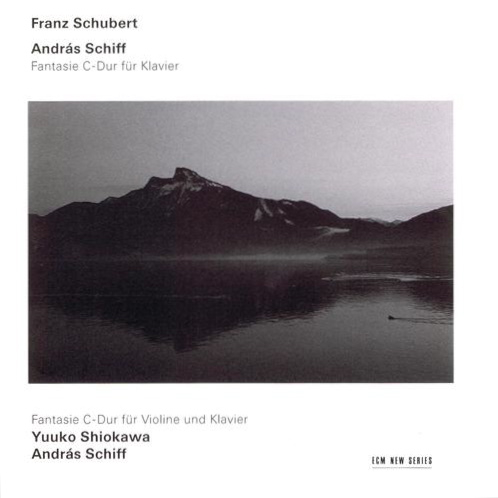
András Schiff: Schubert C-major Fantasies (ECM New Series 1699)

Schubert Fantasien

András Schiff
Franz Schubert C-major Fantasies

András Schiff piano
Yuuko Shiokawa violin
Recorded December 1998, Schloss Mondsee
Engineer: Stephan Schellmann
Produced by Manfred Eicher

It is tempting to say that the music of Franz Schubert (1797-1828) was ahead of its time. In the words of pianist András Schiff, “Schubert has such modernity—perhaps his time has only arrived now.” When encountering the 1822 “Wanderer” Fantasy for the first time, the characterization would seem to fit like a tailored suit. And yet, if we track its subsequent influence on composers as diverse as Liszt and Ligeti, it becomes clear that he was a composer of his moment, and it is this moment to which so many listeners have returned in their own wanderings. It might, then, be more accurate to say, “Modernity has such Schubert.”

In the first half of this recital disc for ECM, Schiff flows through the piece’s technical challenges like a river through a forest. As remarkable as this is, more intriguing are the ways in which he navigates its emotional mazes, for as a Schubert interpreter Schiff prefers poetry to drama. He gives requisite oomph to the magisterial introduction and from it elicits rounded gestures implying acres of pasture at a single touch of key. Yet his most commanding moments are the gentlest. Almost as still as mirrors, they reflect the leaf-patterned light that seeks them. Pulling away the vines, Schiff smells the moss, fecund with mystery. Knowledge of Schubert’s all-too-brief life inflects these passages darkly. From the spectral to the colloquial, the “Wanderer” spans the gamut of responses to landscape, though the Beethovenian desperation in the final fugue is undermined by an intermittent restraint that may sit oddly with fans of benchmark recordings like Richter’s or Pollini’s. Still, a resplendent sign-off gives the piece a total shape that is Schiff’s own.

His wife, violinist Yuuko Shiokawa, joins her partner for Schubert’s Fantasy D934, also in C major. Published posthumously in 1850, its proper score rested dormant beneath the recital stage until the 1930s. Emerging in a ghostly whisper, Shiokawa draws a spider’s thread through the piano’s microscopic tides. This is the dream to the former fantasy’s waking, made manifest through the strains of an inviting dance. Shiokawa brings appropriate balance of airiness and strident romanticism to what is arguably some of Schubert’s most beautiful writing. She partners well with the piano as a parallel voice—neither competing nor unified. Shiokawa also handles the technicalities with grace, particularly during a delightful passage that floats pizzicato in cascading undulations from Schiff’s fingers. Another flowery conclusion, if more succinct than the last, again closes the circle with confidence.

The recording here is noticeably soft in texture, heavy in the lower register. The combination sucks a bit of wind from Schubert’s sails in portions, especially in the finale of the “Wanderer.” Both Fantasies remain purest in their introductions and in their quieter turns. Such issues aside, with these two pieces Schubert shows that perhaps all music is fantasy.

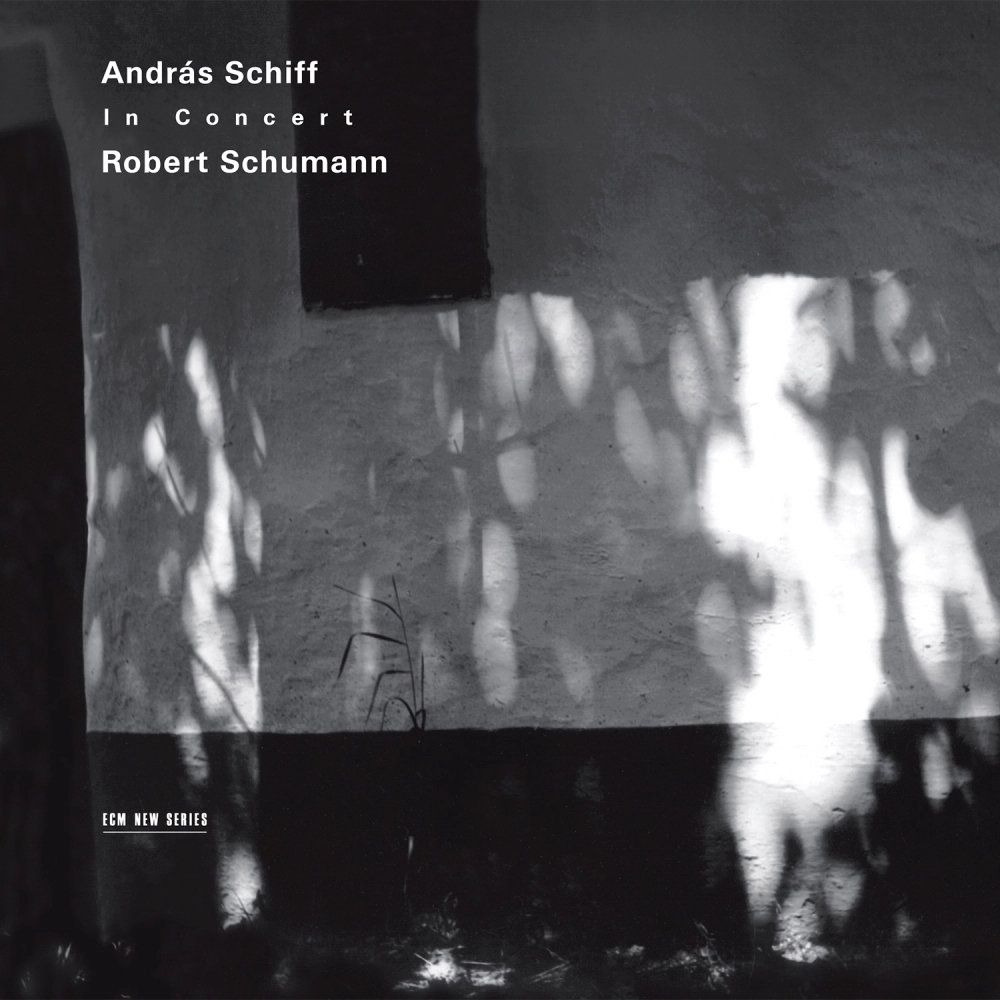
András Schiff: In Concert – Robert Schumann (ECM New Series 1806/07)

András Schiff
In Concert – Robert Schumann

András Schiff piano
Recorded at Tonhalle Zürich, May 30, 1999
Engineer: Stephan Schellmann
Produced by Manfred Eicher

András Schiff returns to ECM with a live all-Schumann recital. Capturing what he sees as the composer’s “burning inventiveness,” the Hungarian pianist allows himself no contrivance in letting the notes speak on their own terms. He jumps right into the deep end with the vibrant Humoreske op. 20 (1838). Written during a time of separation from his future wife, Clara Wieck, in it Schumann incorporates a hidden “inner voice,” which he imagined as Clara’s own. Throughout its invigorating 28 minutes, we are treated to a mosaic of inner passions. Schiff handles its fluid transitions, intermezzi, and stylish moves with requisite grace, allowing plenty of space in the slower passages for the music’s full effect to shine. This is followed by the Novelletten op. 21 of the same year, which comprise the composer’s most extensive piano work. Though distinguished by its exuberant approach, it too embraces Clara’s “voice from a distance” (Stimme aus der Ferne) as a key animating force. Throughout, Schiff captures Schumann’s dynamic range admirably well, teetering between the Apollonian and Dionysian at every virtuosic turn. Yet it is in the “Concerto without Orchestra” that is the Op. 14 Piano Sonata in F minor (1836, rev. 1853) that we encounter the recital’s most luxurious moments. The pianism shines here in a finessed first movement, while making the third (a set of variations on a theme by Clara) sing like love itself. The final Presto rolls off Schiff’s fingers like water. Schumann had originally intended to call an 1839 tribute to his dying brother by the title Leichenphantasie (Corpse-fantasy). Clara convinced him to change the title for publication, thus giving us the Nachtstücke (1839), of which No. 4 constitutes a consolatory, if bittersweet, encore.

This was the first recording of Schumann’s piano music I ever heard, and is one I will always return to for reference. Schiff proves he is just as comfortable with the Romantics as he is with the Baroque masters, and in Schumann has found a most rewarding synergy. The music is, despite its grandiose touches, undeniably intimate, casting one deep look inward for every outward glance. Prosaic though they may be, these performances are anything but analytical. Whatever your familiarity with Schumann, this is an album you will want to hear.

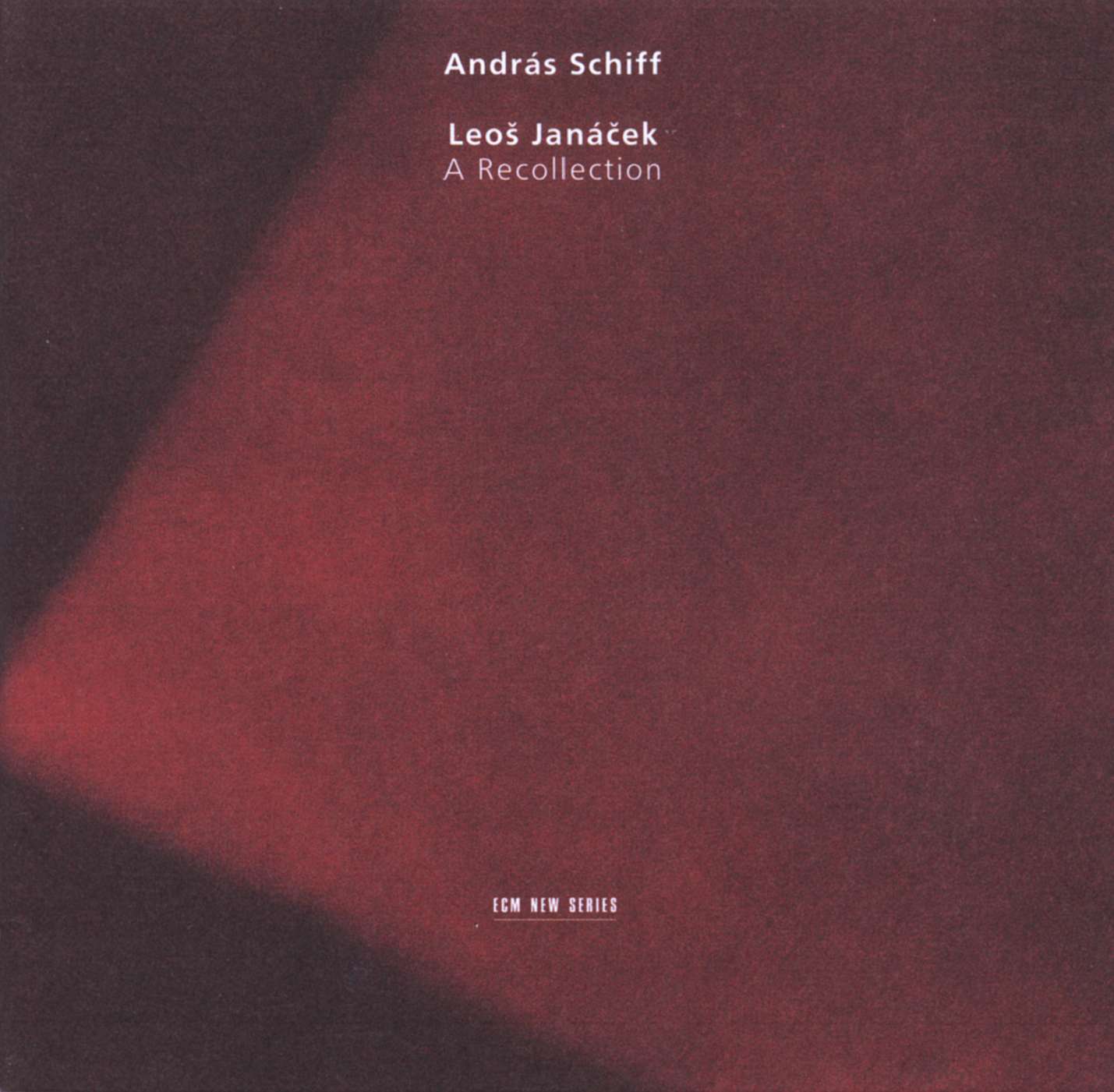
Leos Janáček: A Recollection (ECM New Series 1736)


Leoš Janáček
A Recollection

András Schiff piano
Recorded January 2000, Schloss Mondsee, Austria
Engineer: Stephan Schellmann
Produced by Manfred Eicher

“And it floated along on the water that day, like white swans.”
–Leoš Janáček, on tossing his score for the 1905 Sonata into the Vltava River

Intimacy and the piano make for an inseparable pair. At its best, the instrument paints an image of a composer in solitude, forging from its complex array of mallets, strings, and keys a music of one’s own. This is especially apparent in András Schiff’s peerless recital of Leoš Janáček (1854-1928), at last given the ECM makeover it deserves. Drawing from Moravian folk melodies and less discernible influences, Janáček’s pianism, by way of Schiff, is all about heart.

The Andante of In the Mists (V mlhách), composed in 1912, plays like a guitar, strings pressed rather than plucked, given renewed life in surroundings of waning visibility. One immediately notices the delicacy of the Schiff touch, and beneath it the supremely robust evocation of the melodic line that balances its way throughout the program’s remainder. He continues pulling at hidden energies in the Adagio that follows, working magic in small bursts. Each emotion falls with the insistence of late summer rain toward the transfixing Presto. One finds here the incredulity of the melodic gesture played out against itself in a roiling sea, where darkness lives only in our dreams.

The Sonata 1.X.1905 (From the street) is an incomplete work written, we are told, in memory of Frantisek Pavlik, a young Czech carpenter bayoneted during a Brno demonstration on 1 October 1905 in the name of higher learning. Dissatisfied with the result, Janáček burned the third movement, a funeral march, and cast the first two into the Vltava. It might have been lost forever had not Ludmila Tučková, who gave its premier in January of 1906, announced that she still had a copy in her possession. Each of its survivors is a mirror of the other, a long and soulful stream that leaves us lost and without company at their conclusion.

The miniatures of On an overgrown path (Po zarostlém chodníčku) form a pinnacle of the composer’s chamber output. Book I of 1908 is the more programmatic of the two. With such titles as “Our evenings” (Naše večery) and “A blown-away leaf” (Lístek odvanutý) at the outset, we are never in doubt as to what is being described. Yet even without these, we can feel our toes spreading in wild grasses, hear the music of autumn drifting across the dawn. The lovely reverberations of “The Madonna of Frydek” (Frýdecká panna Maria) and “Good night!” (Dobrou noc!) linger throughout later vignettes, such as “In tears” (V pláči) and in the call and response of “The barn owl has not flown away!” (Sýček neodletěl!). These last paint an emotional portrait of a composer bereaving the premature death of his daughter, Olga. Such diaristic approaches to musical experience are furthered in Book II (1911), where an Orphic, undulating Andante sits beside a bipolar Allegretto. The concluding three sections fall under the subtitle “Paralipomena” (or supplements), of which the Allegro leaves the most indelible mark.

A recollection (1928) plays us out with the grace of a sunflower bending to the wind.

Although the music of Schiff’s third ECM album evokes so much in the way of sight and sound, it rests firmly on silence insofar as it worships the internal impression, which is ultimately inarticulable. Try as they might, these lips produce nothing worth hearing in light of the music at hand, and so I type instead, hoping that my arbitrary dance of fingers on a keyboard of a rather different sort have done even a modicum of justice to what can more easily be known from buying this superb album and experiencing it for yourself.

András Schiff/Peter Serkin: Music for Two Pianos (ECM New Series 1676/77)


András Schiff
Peter Serkin
Music for Two Pianos

András Schiff piano
Peter Serkin piano
Recorded November 1997 at the American Academy of Arts and Letters, New York
Engineer: Tom Lazarus
Produced by Philip Traugott, Peter Serkin, and Manfred Eicher

In his liner notes, Klaus Schweizer describes a unique meeting of minds when pianists András Schiff and Peter Serkin appeared on stage together for a November 1997 concert held at New York’s Metropolitan Museum of Art. Rather than join forces, these two “protagonists” rubbed those forces together to see what kind of electricity could be produced, so that “the audience had the pleasure of enjoying a contest of temperaments…and may have come away with the impression that such ‘contrapuntal’ music-making can be more stimulating than the harmony of two kindred souls.” The spontaneity of said performance and all its glorious vices have made their way into this subsequent studio recording, for which we are treated to the same sounds that graced the eyes and ears of all who were there for this rare event. As Schweizer so keenly sees it, this is a program of fugal magnificence, each work drawing from Bach’s highest art its own vivid line of continuity.

Wolfgang Amadeus Mozart (1756-1791):
Fugue in C Minor for Two Pianos, K. 426
Mozart’s fugue may be without commission or context, but we can safely assume it was more than an honorary exercise. As its grinding voices quickly resolve themselves into harmonious contrapuntal weaves, we feel a transformation in every resolution. Through a delightful, if slightly cloudy, game of trills and trade-offs, the musicians pull off a garden-fresh take on this engaging opener.

Max Reger (1873-1916):
Variations and Fugue on a Theme of Beethoven for Two Pianos, op. 86
These variations on a Beethoven bagatelle (op. 119) are like a spindle from which is cast a veritable maypole of permutations. The opening Andante, quoted almost verbatim, brightens with every revolution. With moods ranging from rapture (Agitato) and majesty (Appassionato; Allegro pomposo) to exuberance (both Vivaces) and tearful remembrance (Sostenuto), these colorful miniatures feed like a rainbow into the glowing waterfall of the final Fugue.

Ferruccio Busoni (1866-1924):
Fantasia contrappuntistica for Two Pianos,Busoni-Verzeichnis 256b
What began as an ambitious attempt to complete the unfinished final movement of Bach’s almighty Die Kunst der Fuge turned into Busoni’s crowning achievement. Every gesture of this massive organism is rendered with the utmost artistry and given its full breadth in the exponential possibilities of a keyboard squared. The 10-minute introductory movement alone carries the weight of the whole. A series of fugues and variations “drops” like blocks in a Jacob’s ladder toy, of which the third Fugue and the Intermezzo stand out, the former for its overwhelming heights and the latter for its solemnity.

Mozart:
Sonata in D Major for Two Pianos, K. 448/375a
Far removed yet of the same passionate spirit is Mozart’s only sonata for two pianos, which receives here as lively a performance as one could ever hope for. Two no less than thrilling Allegros bookend a scintillating Andante, combining to form one of the composer’s most widely recognized pieces and closing this cohesive double album with a thick wax seal.

Since this release, Schiff has continued a longstanding relationship with ECM. Listen and find out where it all began.

Bach: Six Partitas – Schiff (ECM New Series 2001/02)


Johann Sebastian Bach
Six Partitas

András Schiff piano
Concert recording, September 21, 2007, Historischer Reitstadel, Neumarkt
Engineer: Stephan Schellmann
Produced by Manfred Eicher

After completing his highly praised Beethoven cycle, pianist András Schiff returns to Bach in this spot-on live recording of the Six Partitas. Though published as his Opus 1, the Partitas were Bach’s last compositions for keyboard. Both reasons make it a keystone in the mythical Bach pantheon. Although “partita” is essentially a euphemism for “suite,” in Bach’s hands the form was opened to a freer and more complex sense of infrastructure and performative demands.

The introductions show both composer and performer at their best. The Praeambulum of Partita V is a tour de force of rhythmic urgency and dynamic control. The Fantasia of Partita III is another astounding inauguration, its resplendence cluing us into the genesis of the music to follow. The meditative Praeludium of Partita I contrasts sublimely with the Sinfonia of Partita II, the latter a stately lead-in to the courtliest of the Partitas. The accompanying Allemandes overwhelm with their sparks, conflagrating our souls into rapt attention. The pacing throughout is nothing short of extraordinary. Schiff’s sprightly Correntes glisten like rain-drenched leaves, tempering their surrounding flames with a quiet power.

Schiff truly excels in his ornaments. Take, for example, the heart-stopping trills of the Partita III Tempo di Minuetta, his detailed graces in the Passepied of the same, and the half-step motions of his Partita I Gigue. The Partita II Gigue provides some especially enlivening moments in which the right hand goes high and left hand carries the rhythm downward. Such motions broaden the expanse of the music into epic territories, which is all the more amazing for music that is so closely confined to the arm span of a single performer. Not to be outdone by his own passionate spirit, Schiff finesses his way through the Sarabandes of Partitas I and IV with the gentle persuasion of an aristocrat stripped to the naked heart. Also of note are the flowing syncopations of the Partita II Rondeau, played here to perfection in one of the performance’s most glorious turns. The following Capriccio pirouettes its way through a deft and vivacious choreography.

Schiff’s ordering—V, III, I, II, IV, VI—is conscious, moving in ascending keys from G major to E minor. It also carries us into the most heartfelt pieces therein. Partita VI is the castle of these sprawling grounds. Its lofty spaces give ample breathing room for the loveliest Sarabande of the collection, not to mention a strikingly forward-looking melody. Moving with a delicate ease and supreme comfort, it primes us for the epic Fugue through which all comes to a rousing close.

I have no interest in staking a claim in the already bristling ground of musical criticism as to whether Schiff is the better interpreter. All this humble admirer knows is that, like the other superstars to which one might compare him, he is unafraid to show us how he “feels” Bach. It’s not as if he accesses some pure core of the music that others do not, for he plays it as if it were his own. Whether or not one agrees with his stylistic choices, his commitment to them is undeniable. And perhaps said commitment is a more profound measure of the performer. If we consider some of the greats in this regard—Glenn Gould, Rosalyn Tureck, Sviatoslav Richter, and Tatiana Nikolayeva—we find in each a style without regret, an allegiance to a particular historical moment (or possible transcendence thereof, in the case of Gould), and a total lack of interest in relativity. Each performance is not an ingot to be judged against the quality and density of others, but is a reflection of the musician’s own creative makeup that is beyond petty comparison. Rather than look at how and why interpretations differ, as listeners we can only find the differences they bring out in ourselves. And are we not also contributing to the uniqueness of the performance? For the same music can change with our moods and circumstances. And so, when we approach the Partitas, perhaps it benefits the music more to consider what we have to bring to the experience that no other listeners can bring, just as we might expect the same for the musician performing it. For me, the strength of Schiff’s playing is that it duly reminds us of our role on the other side of the piano, foregrounding our engagement, which is the music’s lifeblood. We see this in Schiff’s Beethoven cycle, his Schumann, and his Goldberg Variations. And now, with the Partitas we are given a greater responsibility to provide that “live” feeling ourselves in whatever private chambers we inhabit, or with whomever we might share it. This music is always there for us.

Like Bach’s other masterworks for solo instruments, the Partitas have a distinctive aura of completeness about them, which is to say they feel entirely self-satisfied. And it is this satisfaction Schiff brings to his playing: not a sign of arrogance, of professed authority, nor even of excellent musicianship, but rather the consummation that the music invites in the performing and in the listening. This is the genius of Bach: not the music itself, but in knowing our ability to hear in it forgotten pieces of ourselves. It may not be universal music, but so help me if it isn’t universally musical.

Bach: Goldberg Variations – Schiff (ECM New Series 1825)


Johann Sebastian Bach
Goldberg Variations

András Schiff piano
Concert recording, October 30, 2001 at the Stadtcasino, Basel
Engineer: Stephan Schellmann
Produced by Manfred Eicher

“This is one of those few journeys that can be repeated again and again.”
–András Schiff on the Goldberg Variations

Bach, says Schiff, “was a composer with encyclopedic ambitions.” As such, one might say that the Klavierübung—of which the Goldberg Variations are the crowning jewel—was as much an attempt to fill in a musical gap, if not to elevate a preexisting one, in a form so concise that no one could claim its place. In their profoundly moving dance between the Apollonian and Dionysian, the Variations fold and refold themselves like a constantly shifting origami figure reusing the same sheet of paper. Likewise, the collection begins and ends with an all-encompassing Aria, so that by the end one spreads that sheet out to reveal a tightly knit symmetrical pattern of inimitable proportions.

As with any pianistic interpretation of Bach, debates over medium abound. Whatever your instrumental preference, however, I put forward that Schiff’s clarity transcends any and all technical concerns. And let us not forget that the success of any recording lies as much in the hands of its engineers, instrument makers, and tuners. The clarity of this particular ECM recording, and its marriage with Schiff’s performance, is particularly refreshing, for it gives each variation such a firm position in the greater scheme of its placement that we cannot help but become utterly invested in its brief traversal. Schiff’s surgical precision lends itself particularly well to the faster variations—Nos. 1, 5, 8 (a personal favorite), and 21—as it gives them just enough added vigor to make them spring from their cages. For the slower variations—particularly Nos. 9 and 15—this approach means a validation of brevity, emboldening as it does the delicate lines they walk between speech and song. As for the more heavily syncopated numbers, such as 4, 7, 12, and 16, this feeling descends into one of rootedness. For me, Variation No. 14 is the prize and Schiff handles its demanding trills and hand-crossings with the utmost fluency, providing us with more than enough energy to work our way to the Aria’s reprise.

Listening to Schiff play Bach is always an uplifting experience, and nowhere more so than here. The palpable bond between him and the music speaks of a mutual love. The recording scintillates throughout, but is a live one, so everything from piano dampers to the occasional cough comes through. It is worth having in physical form for Schiff’s whimsical “guided tour” of the Variations included in the booklet. While this has the makings of a benchmark recording, I recommend that you also check out Keith Jarrett’s ECM recording of the same on harpsichord. The two make a lovely pair.