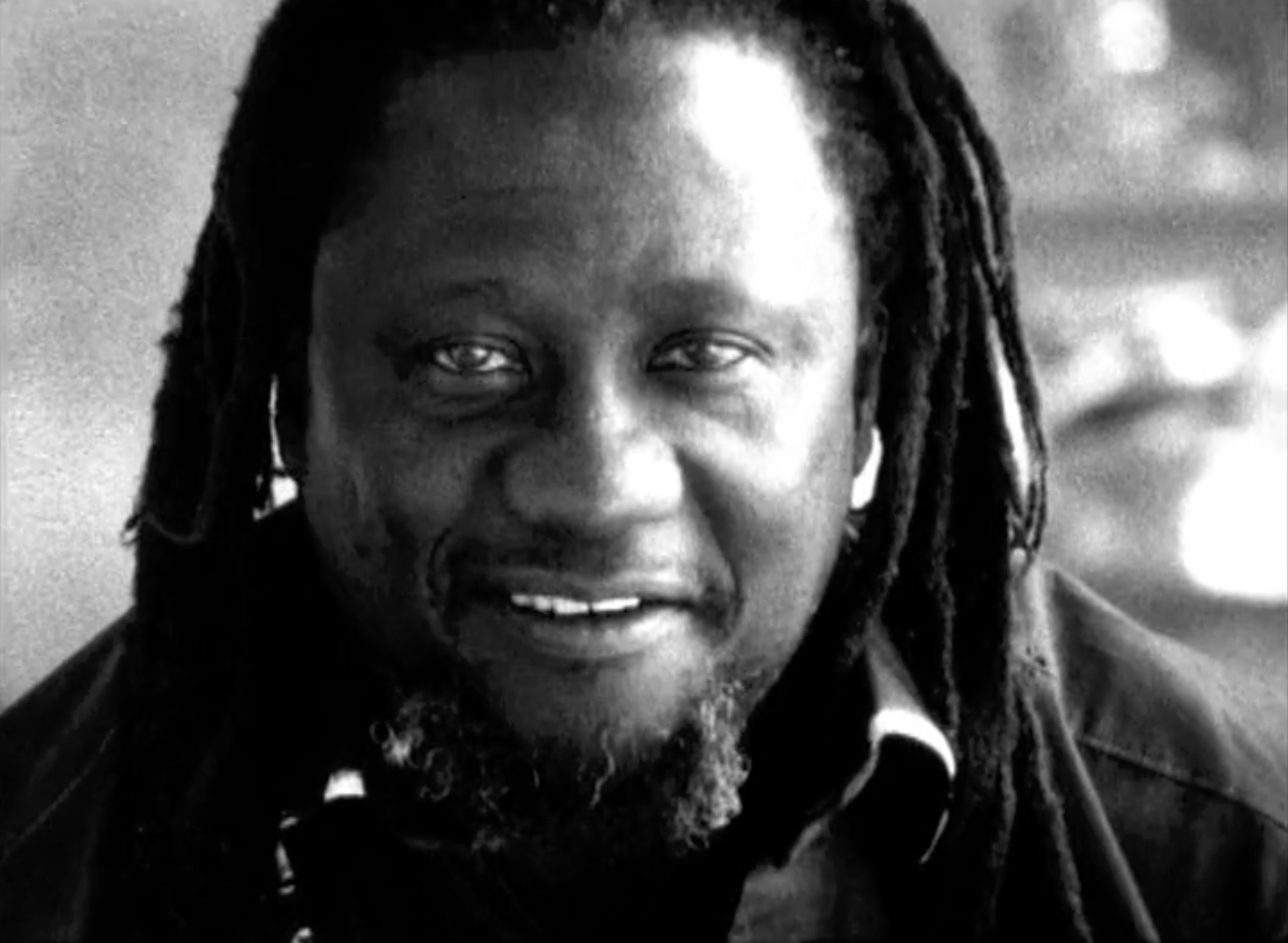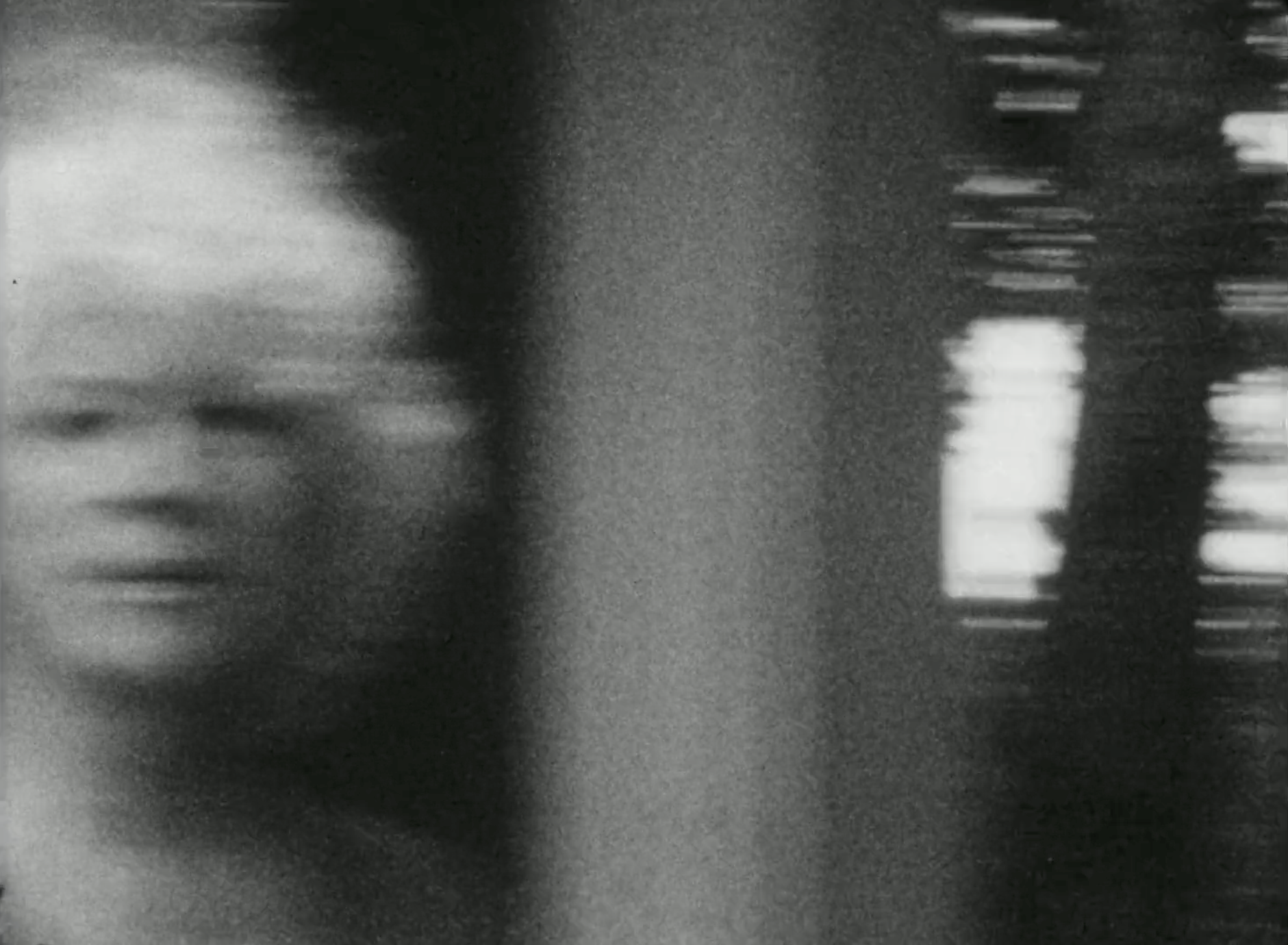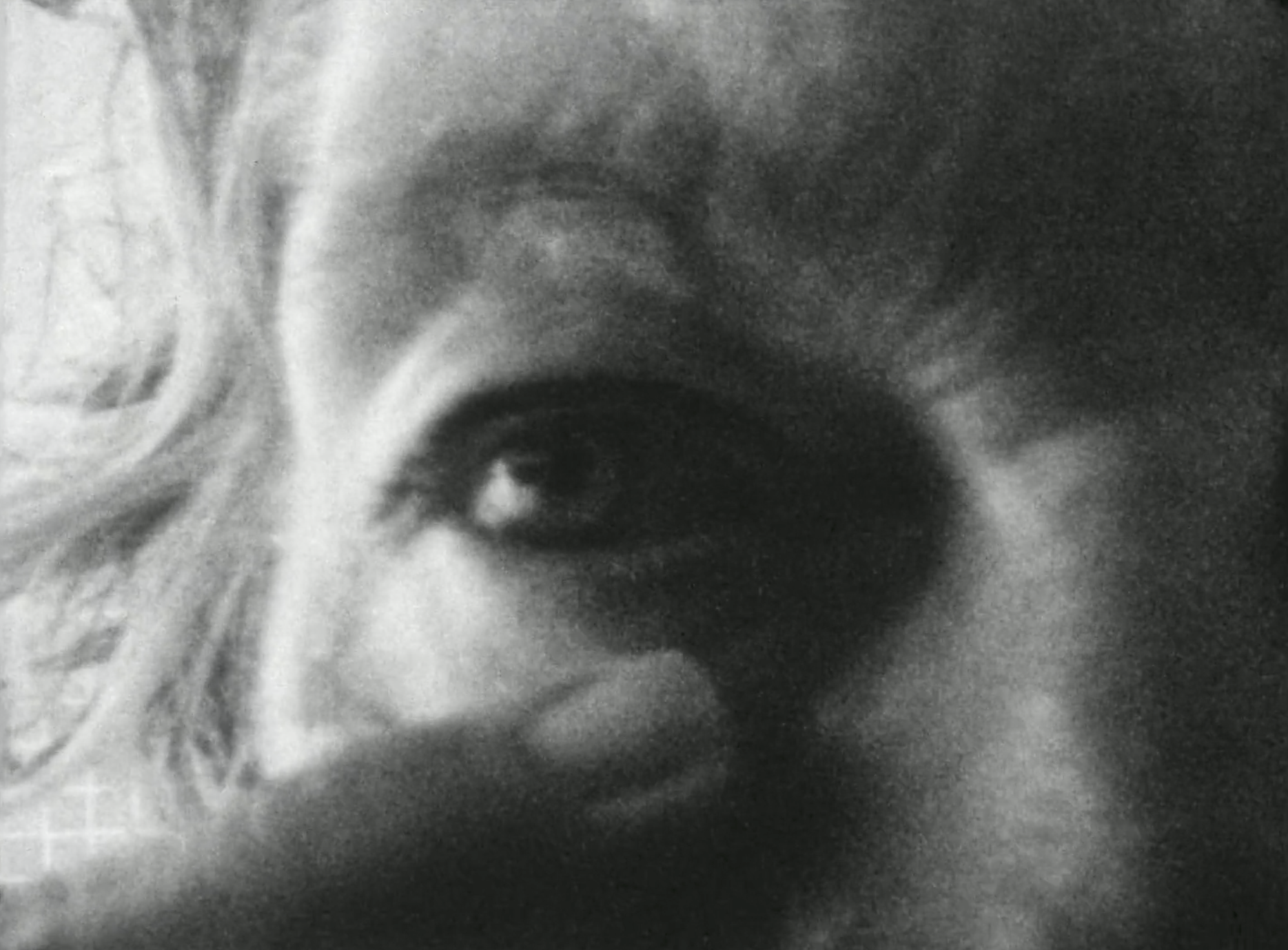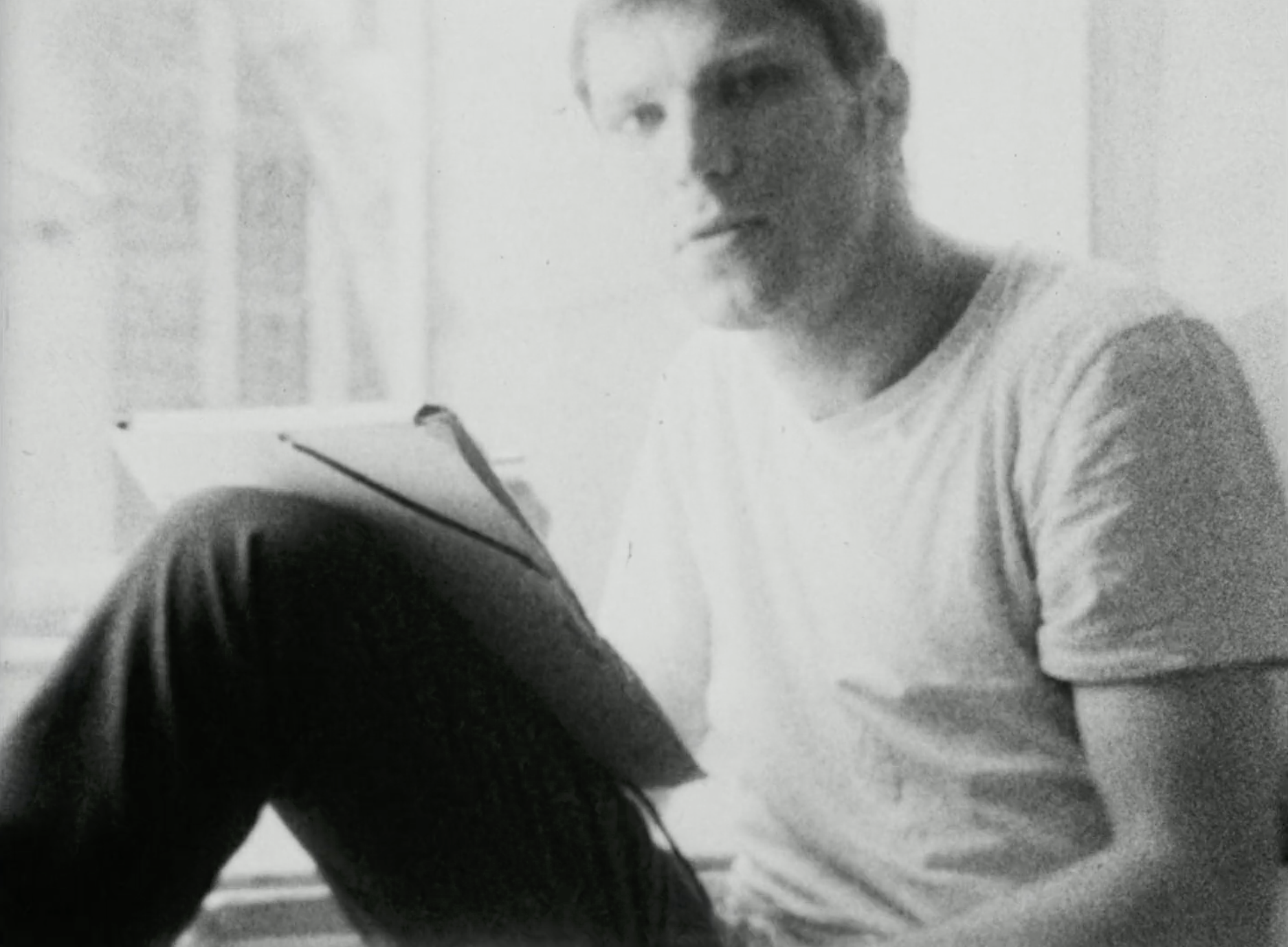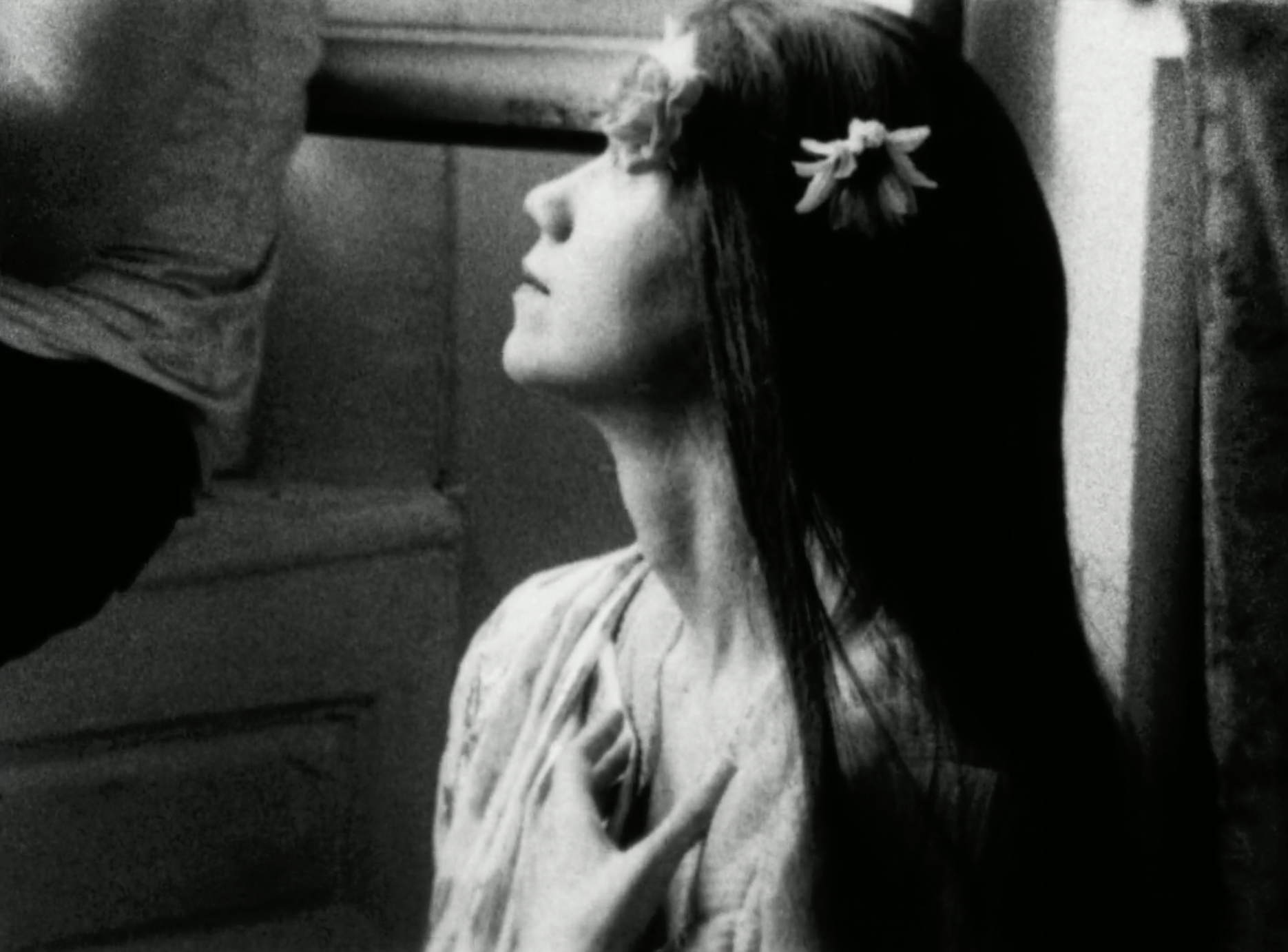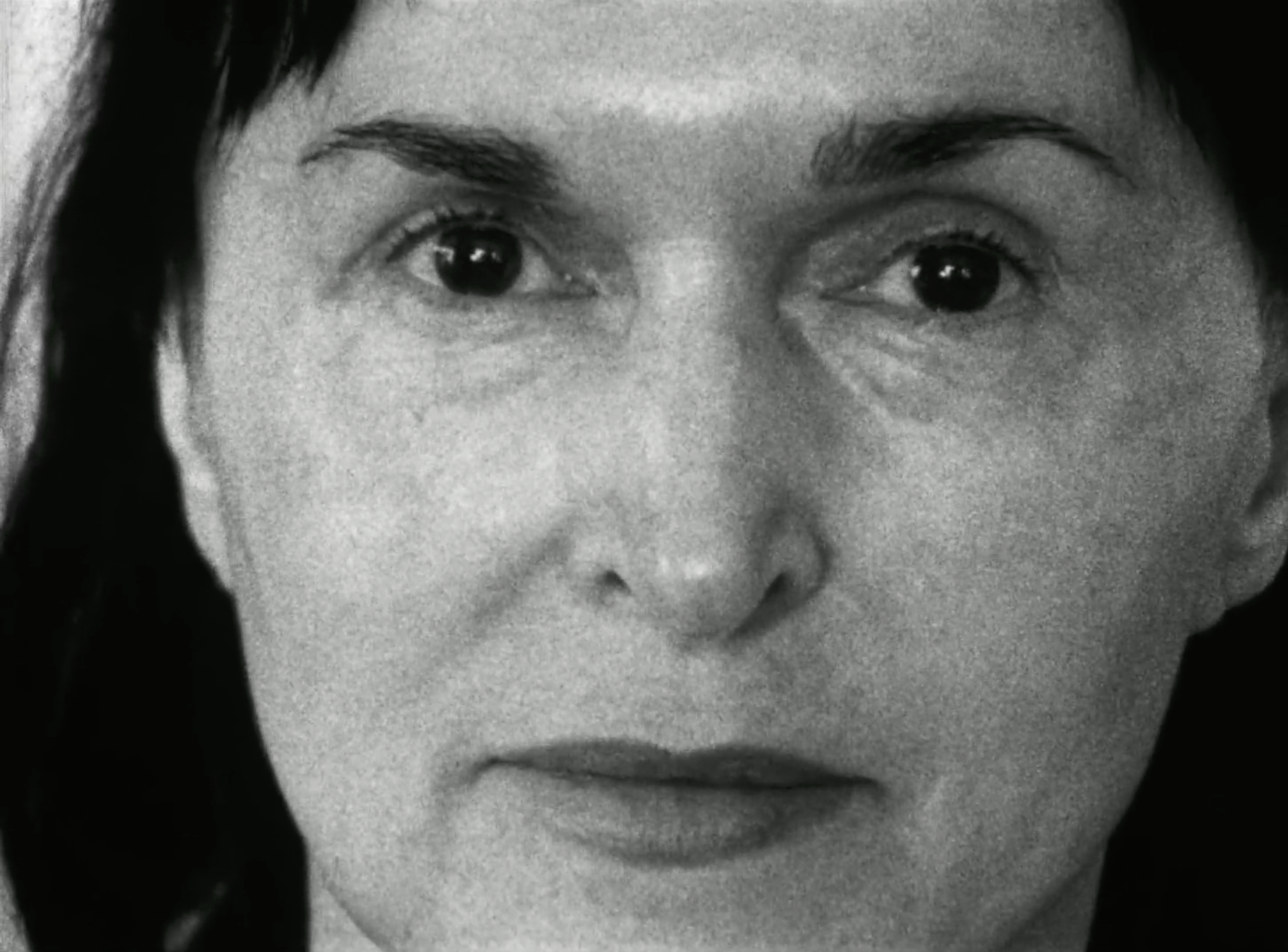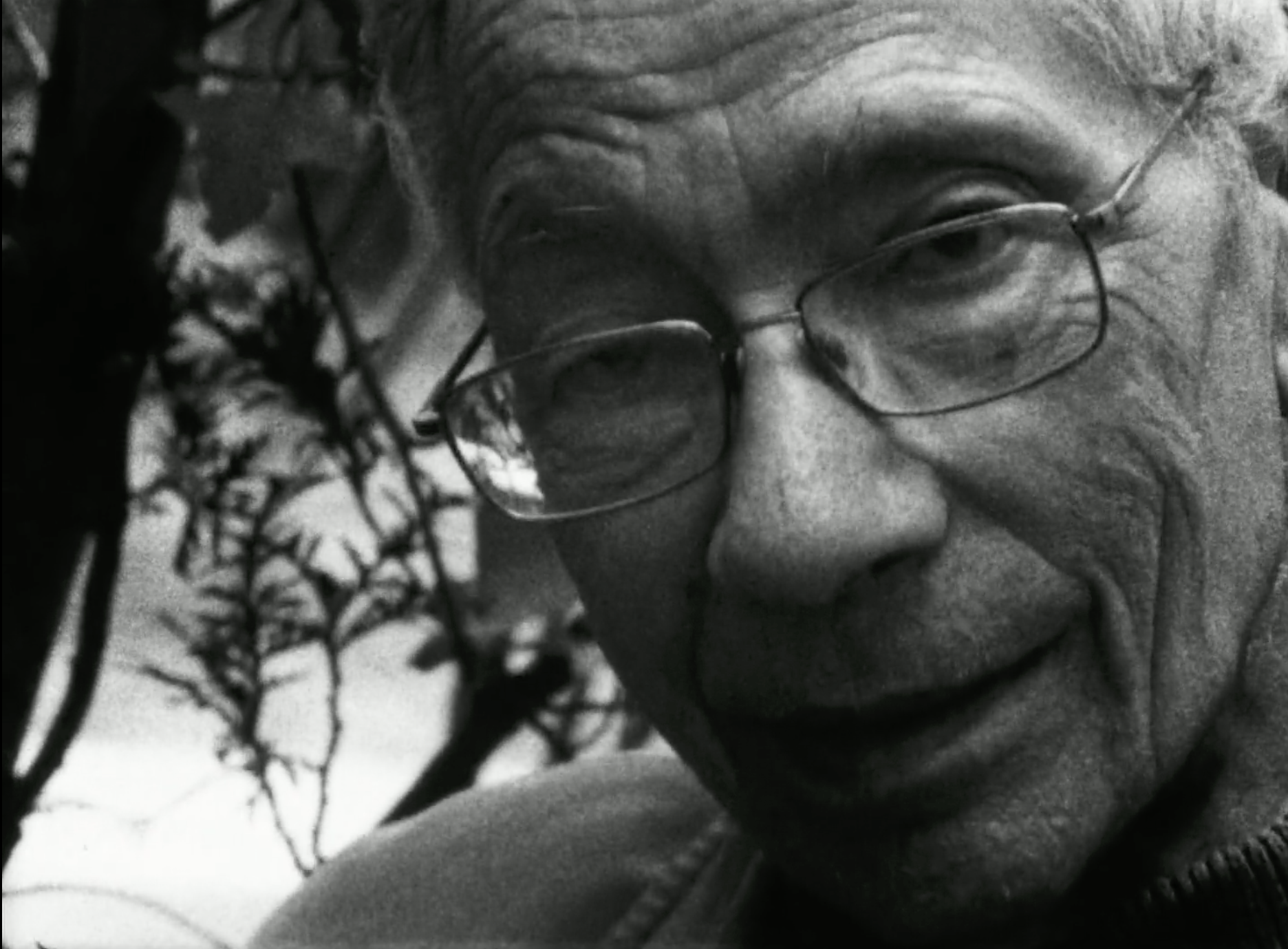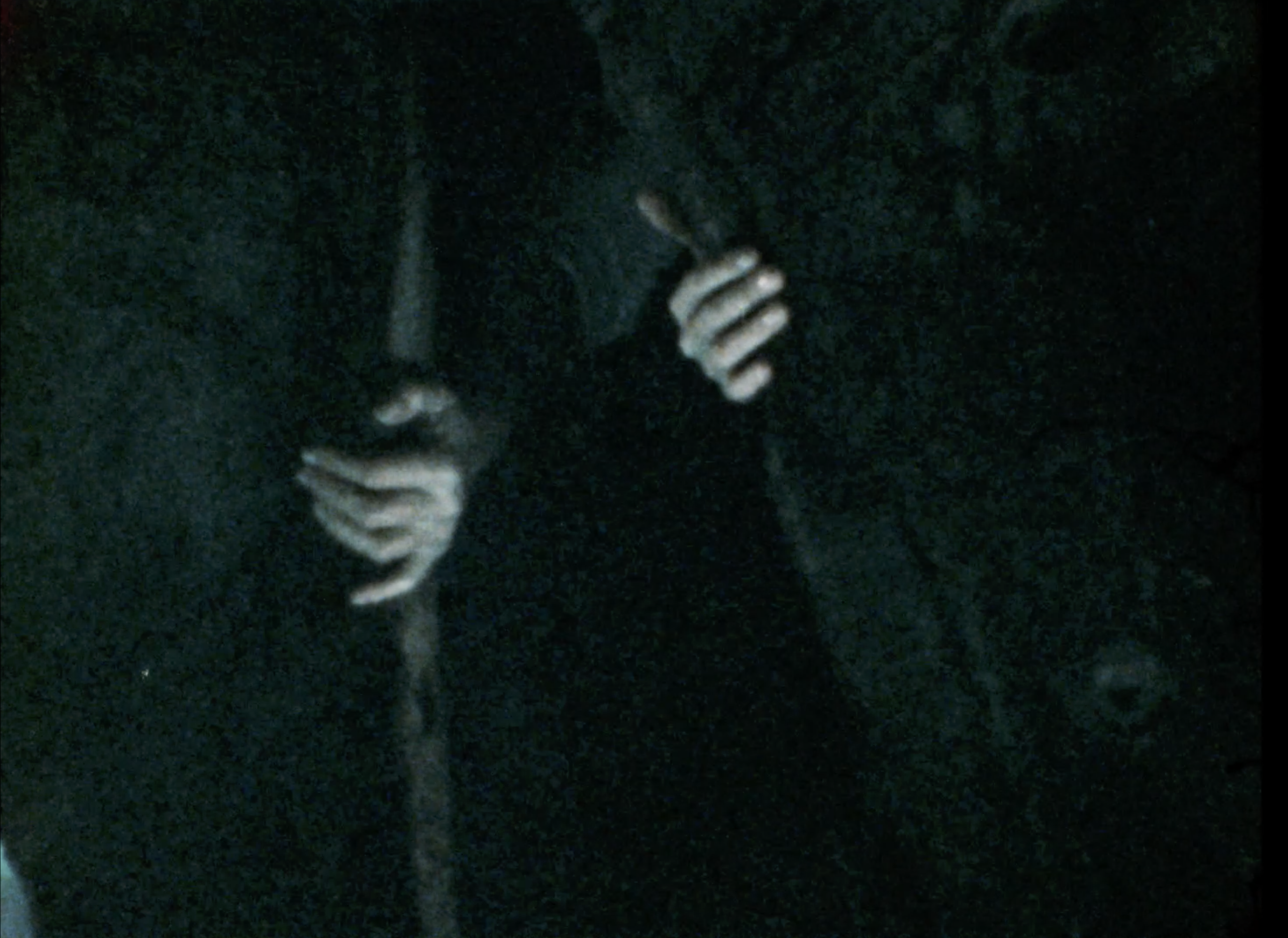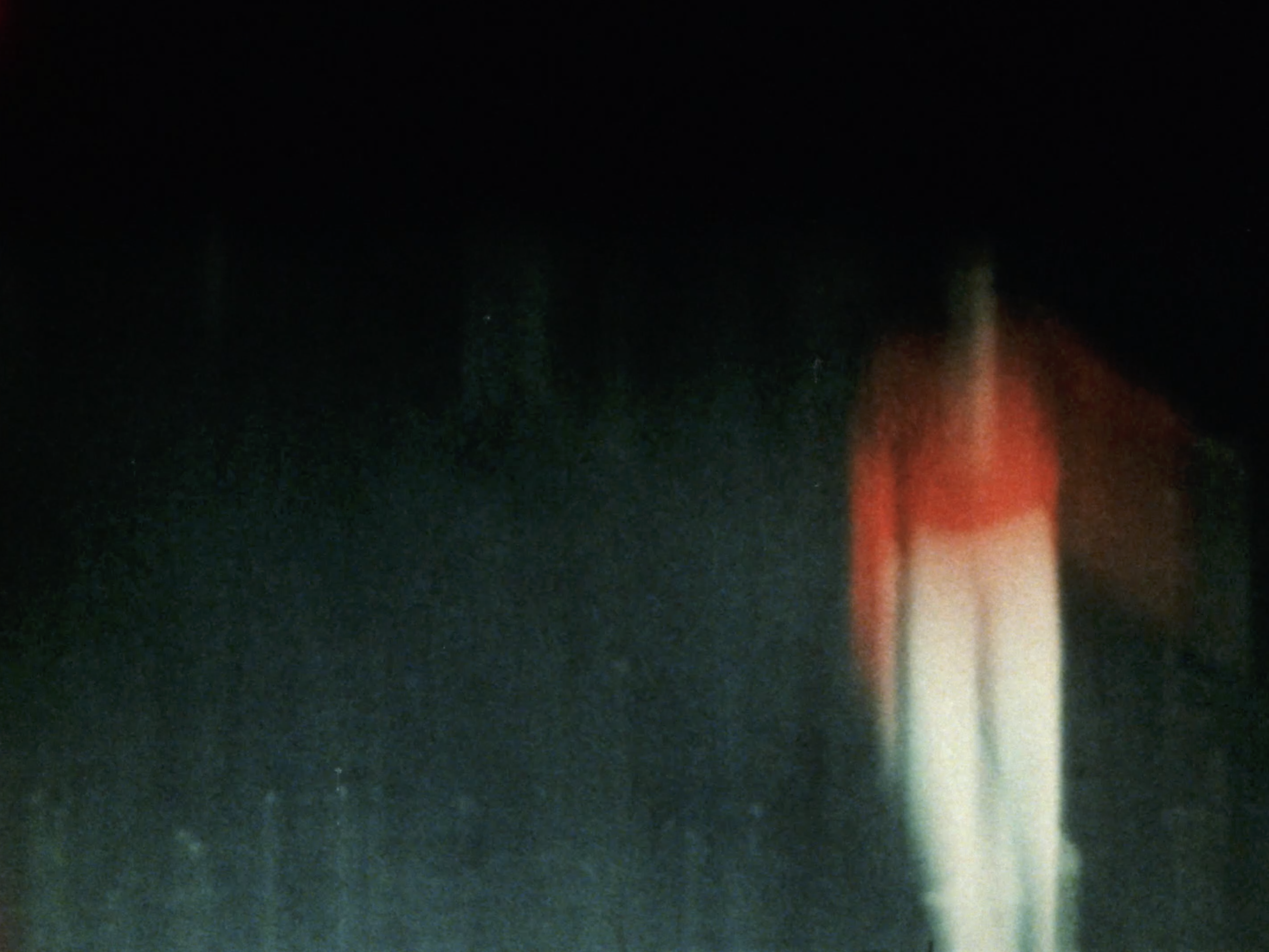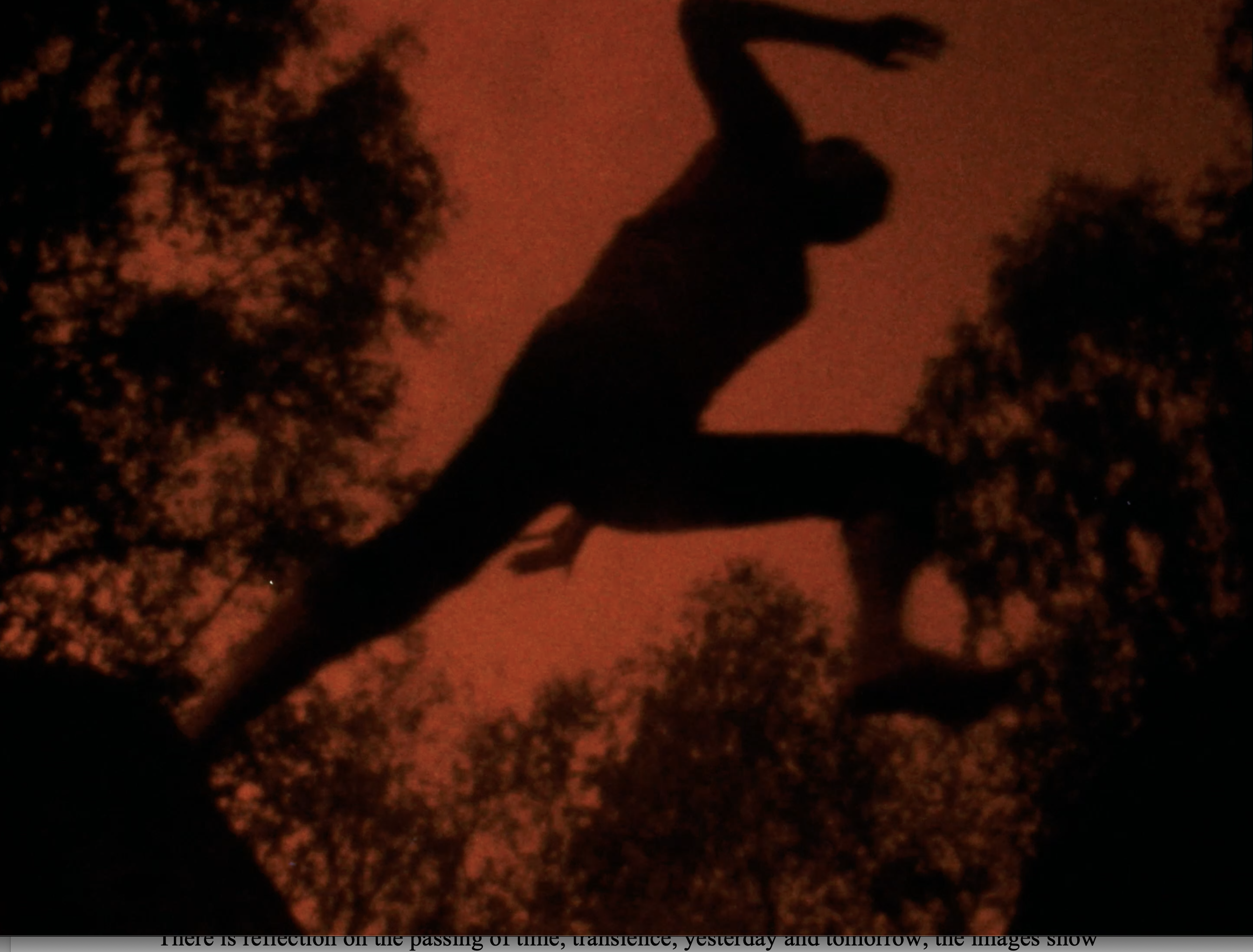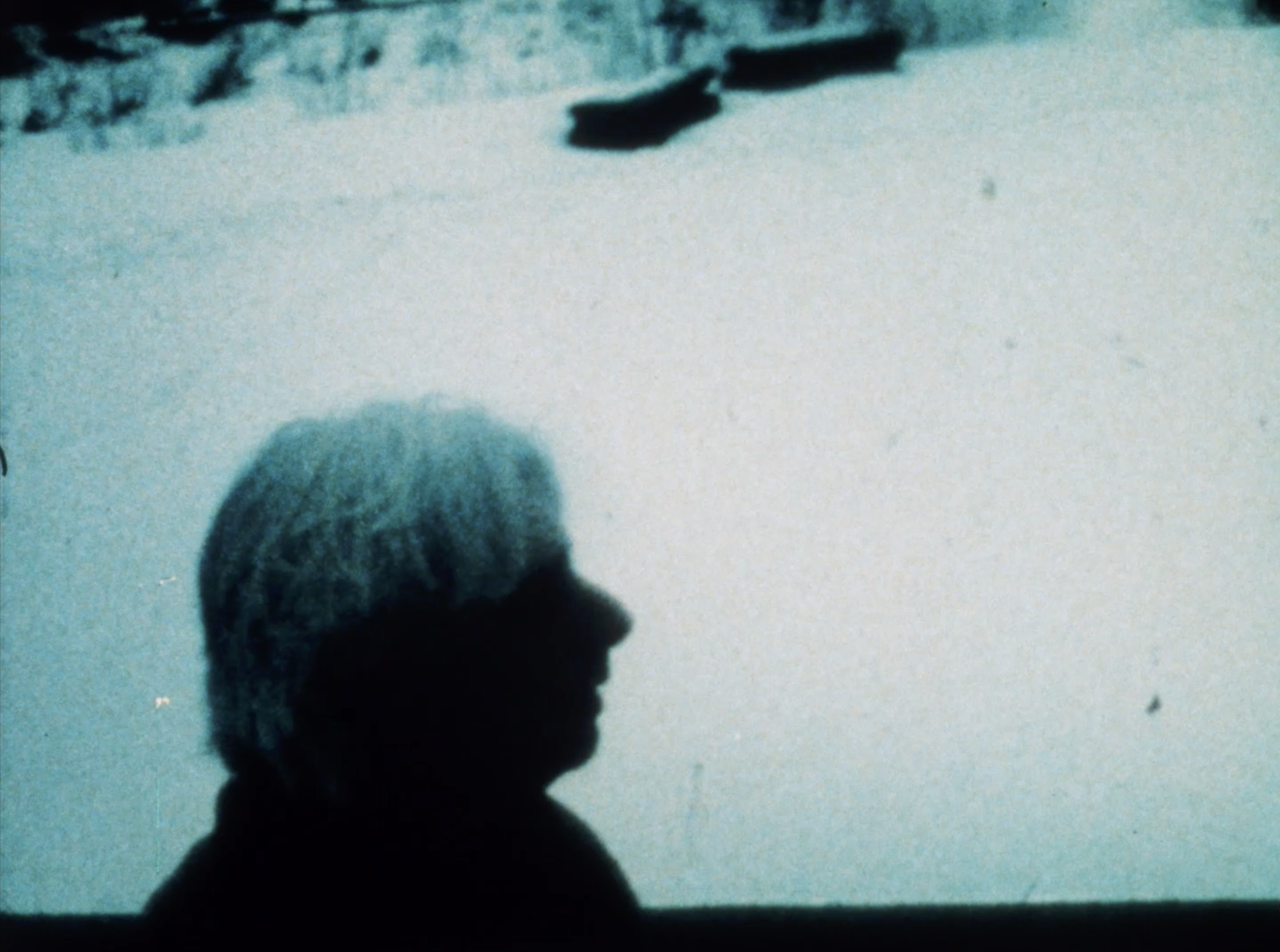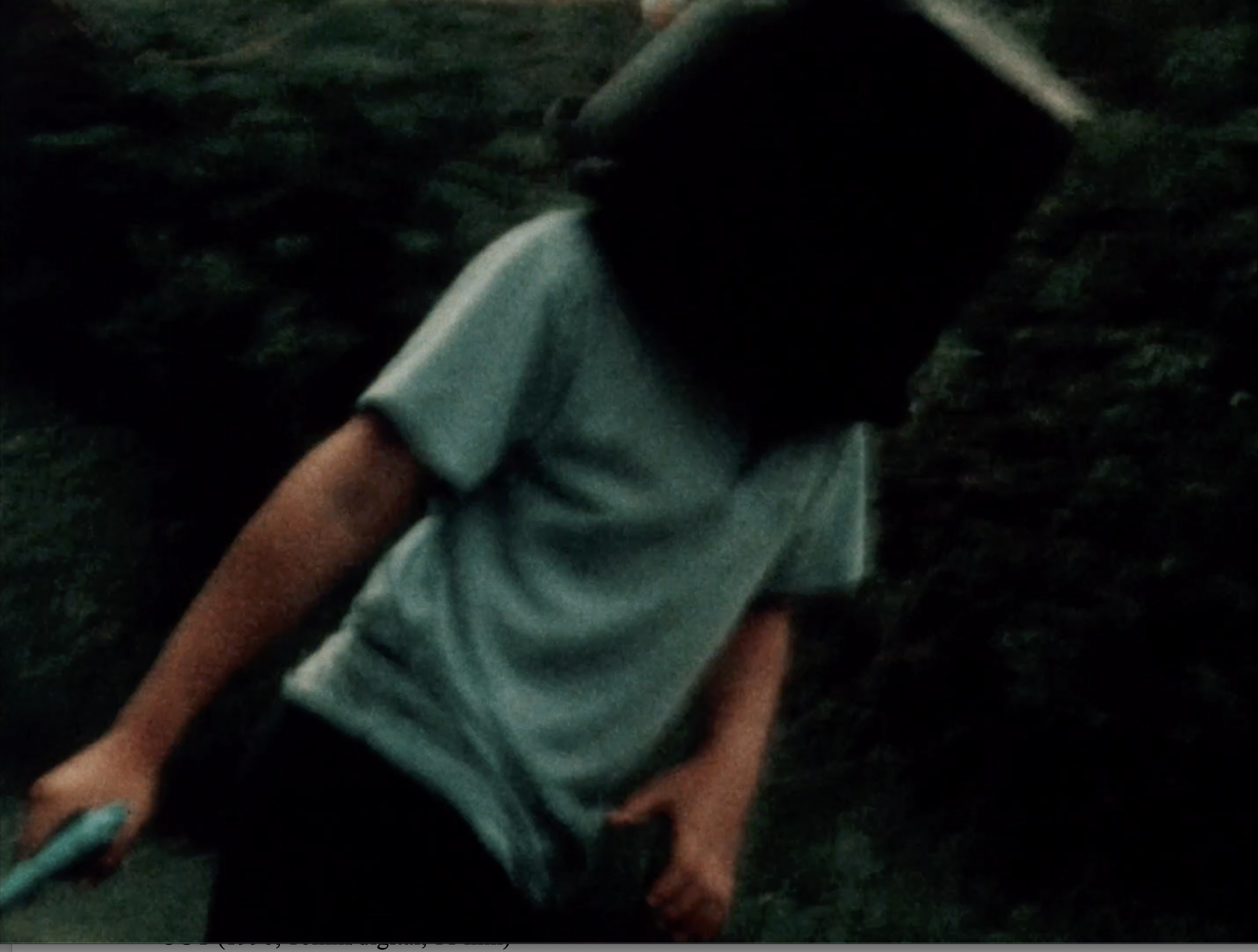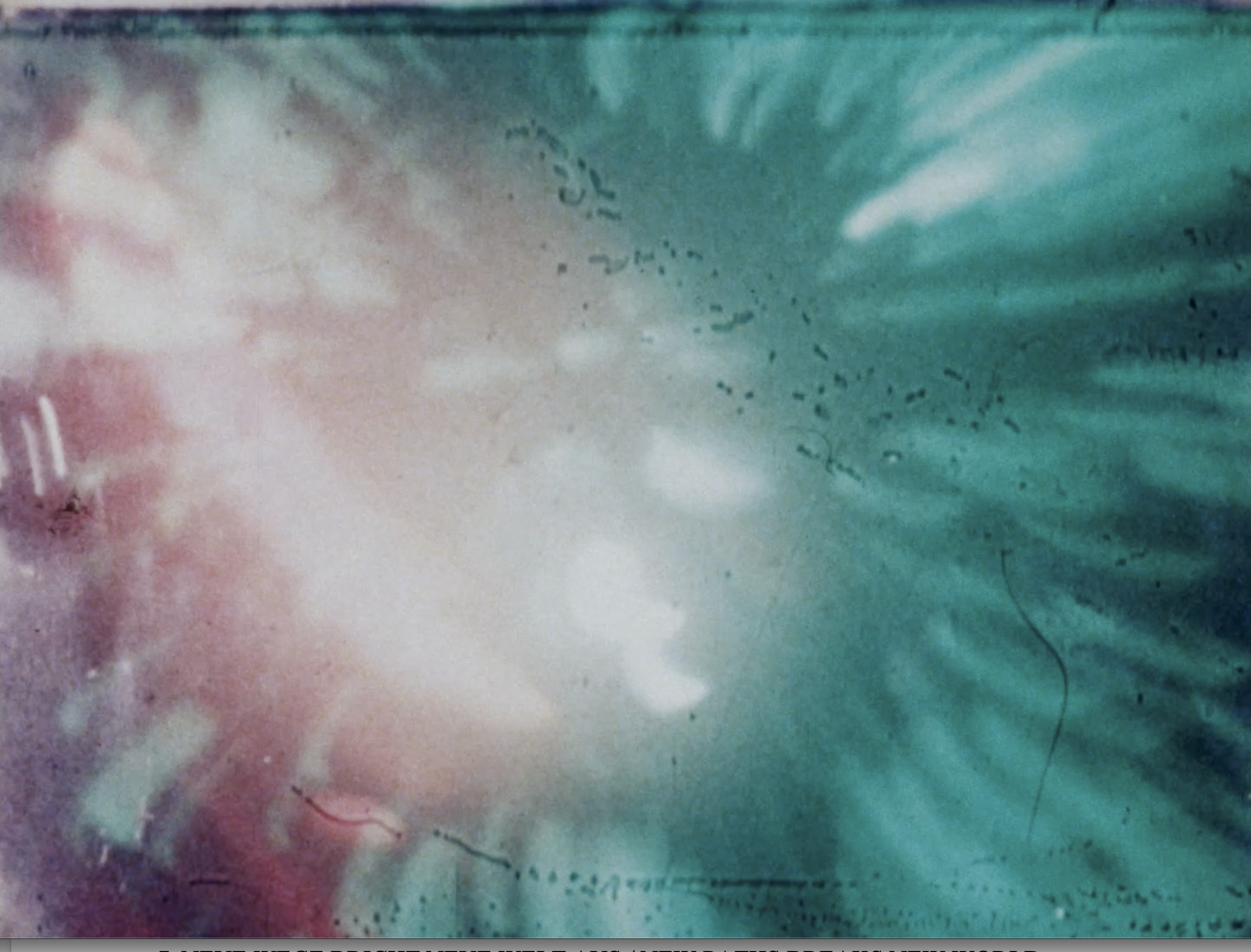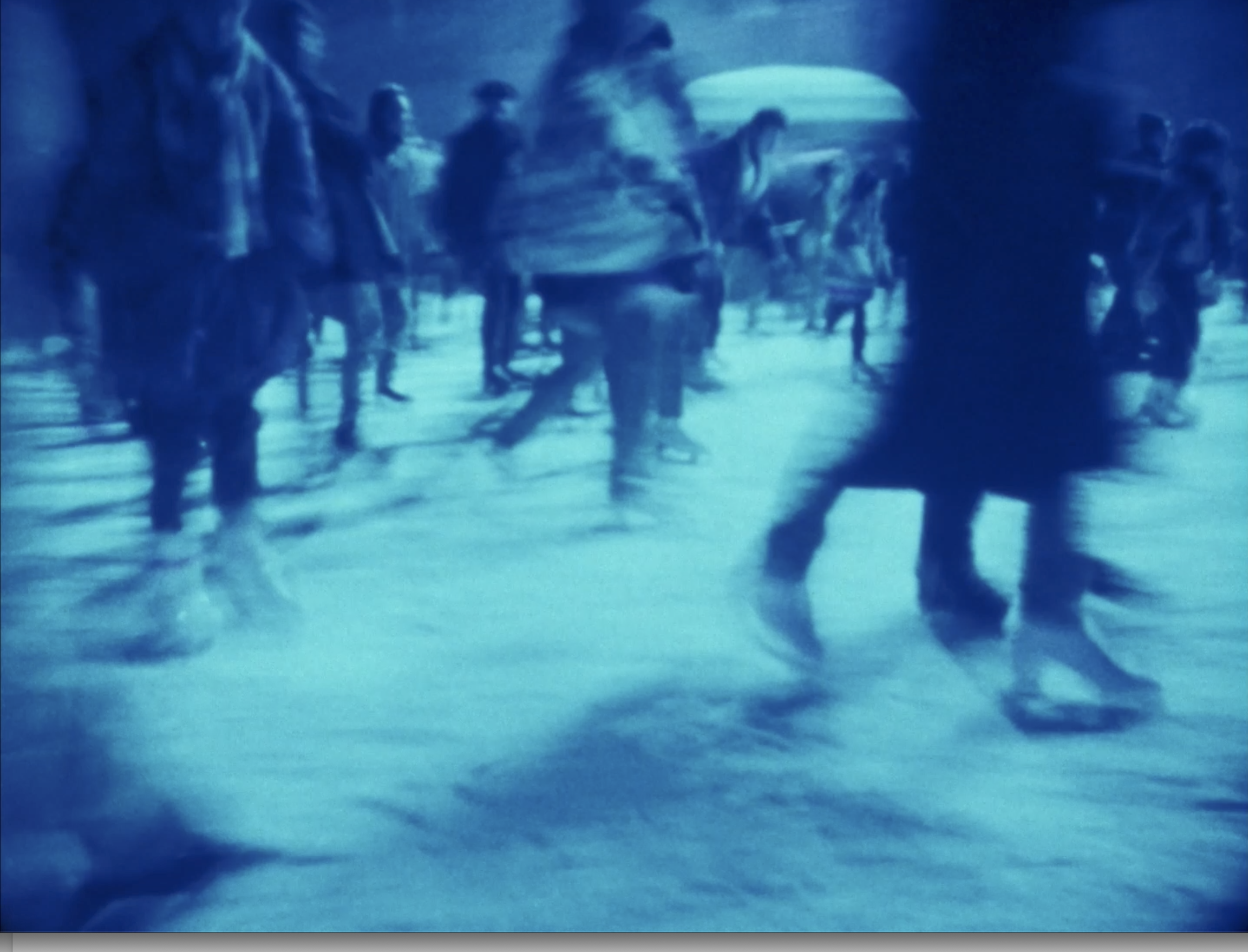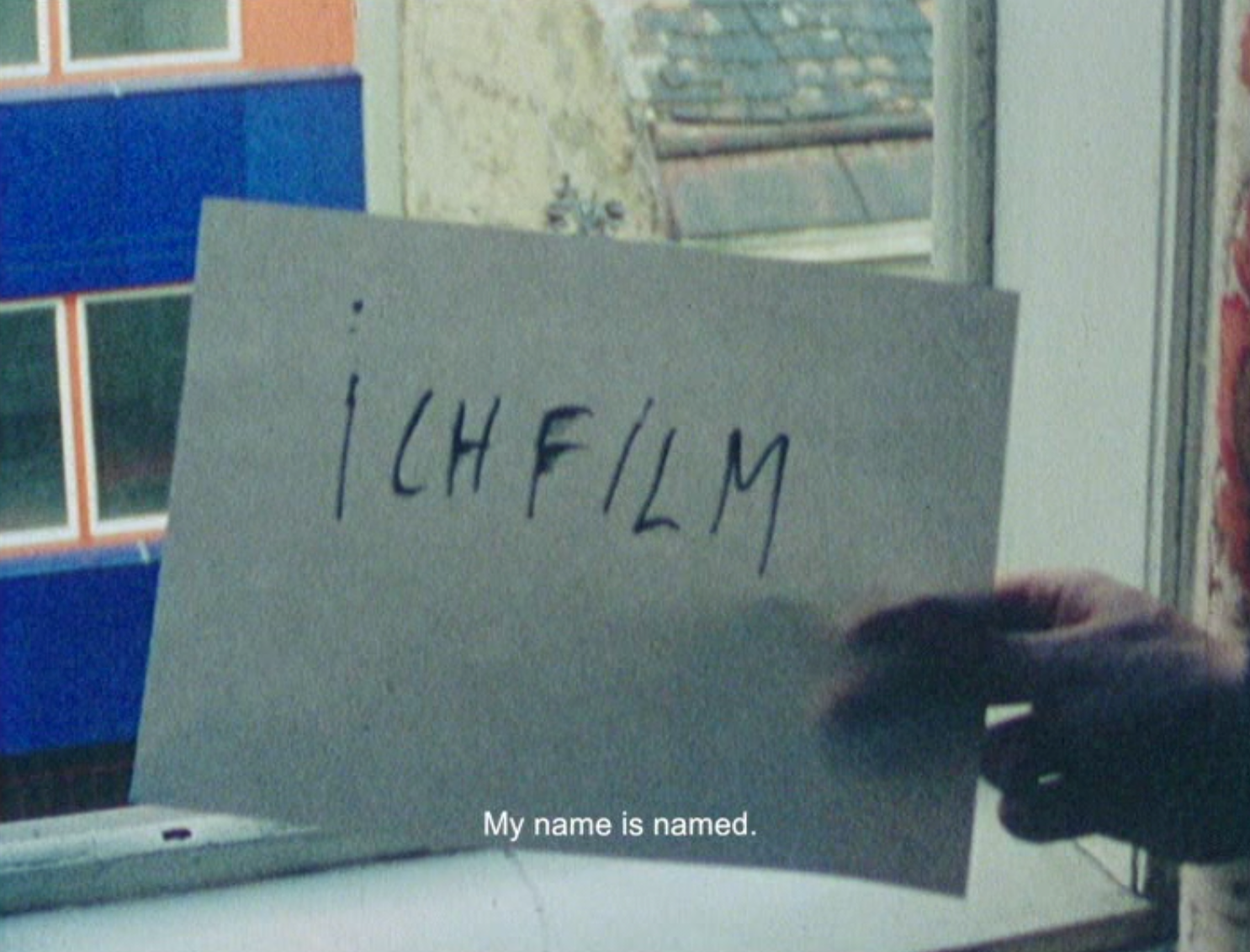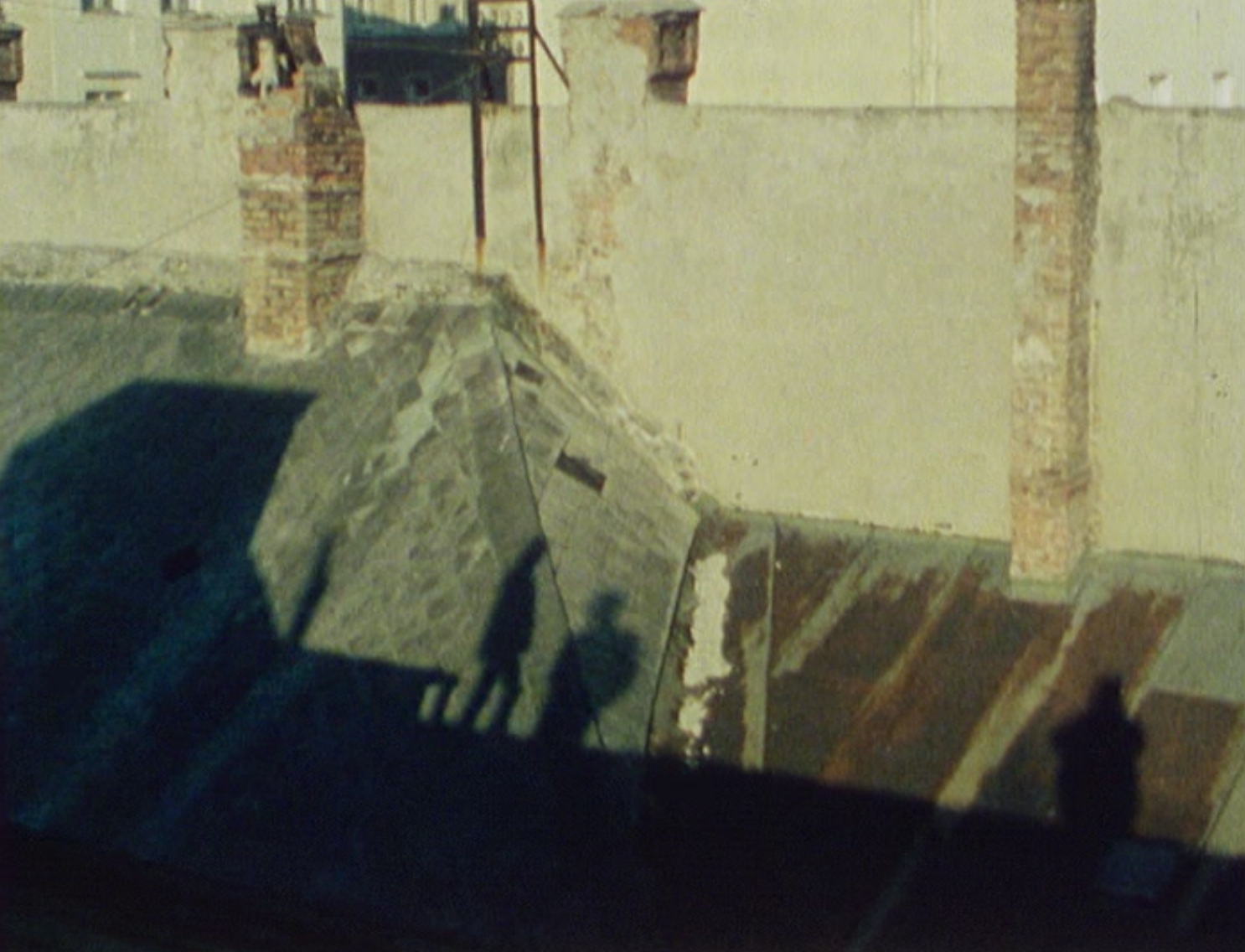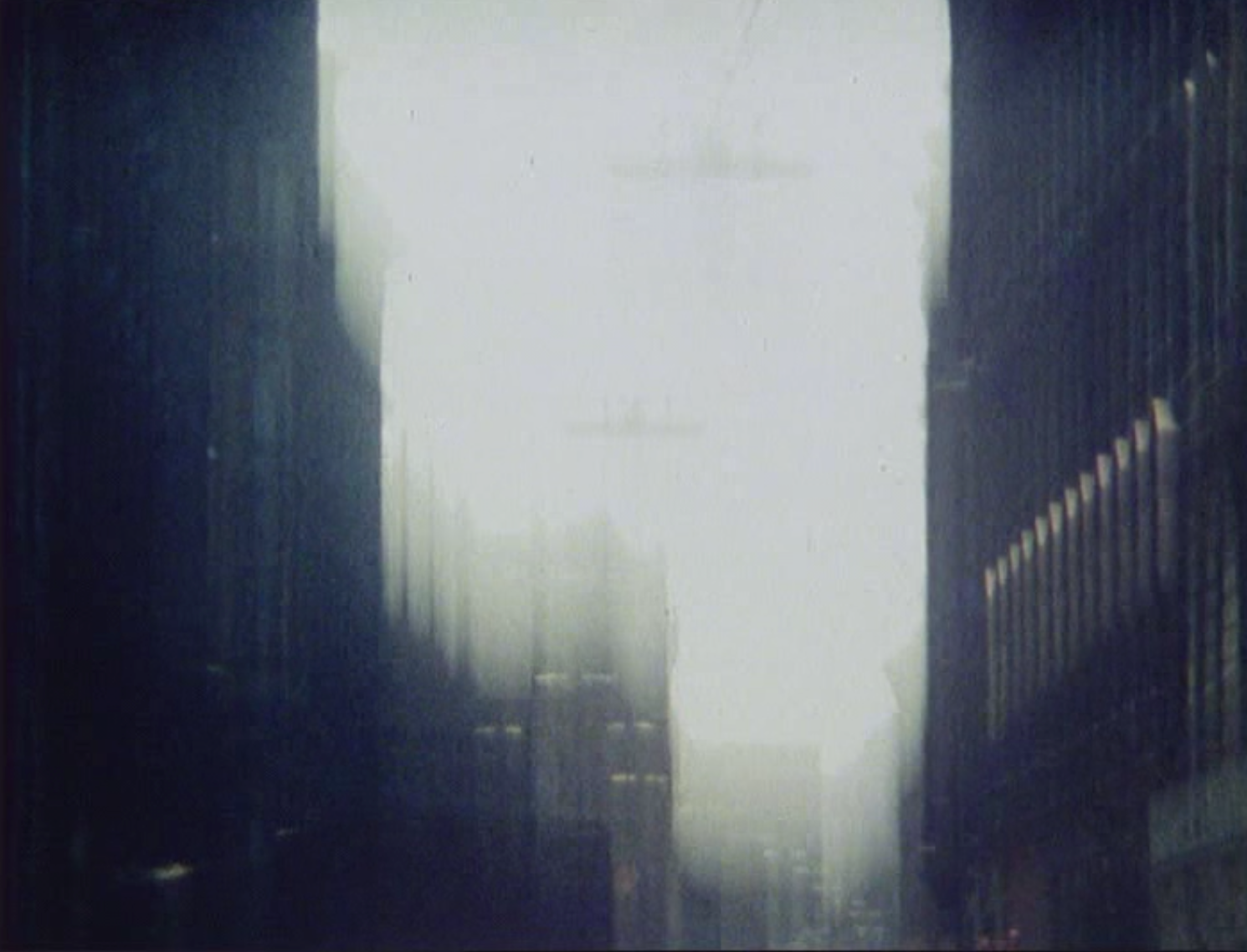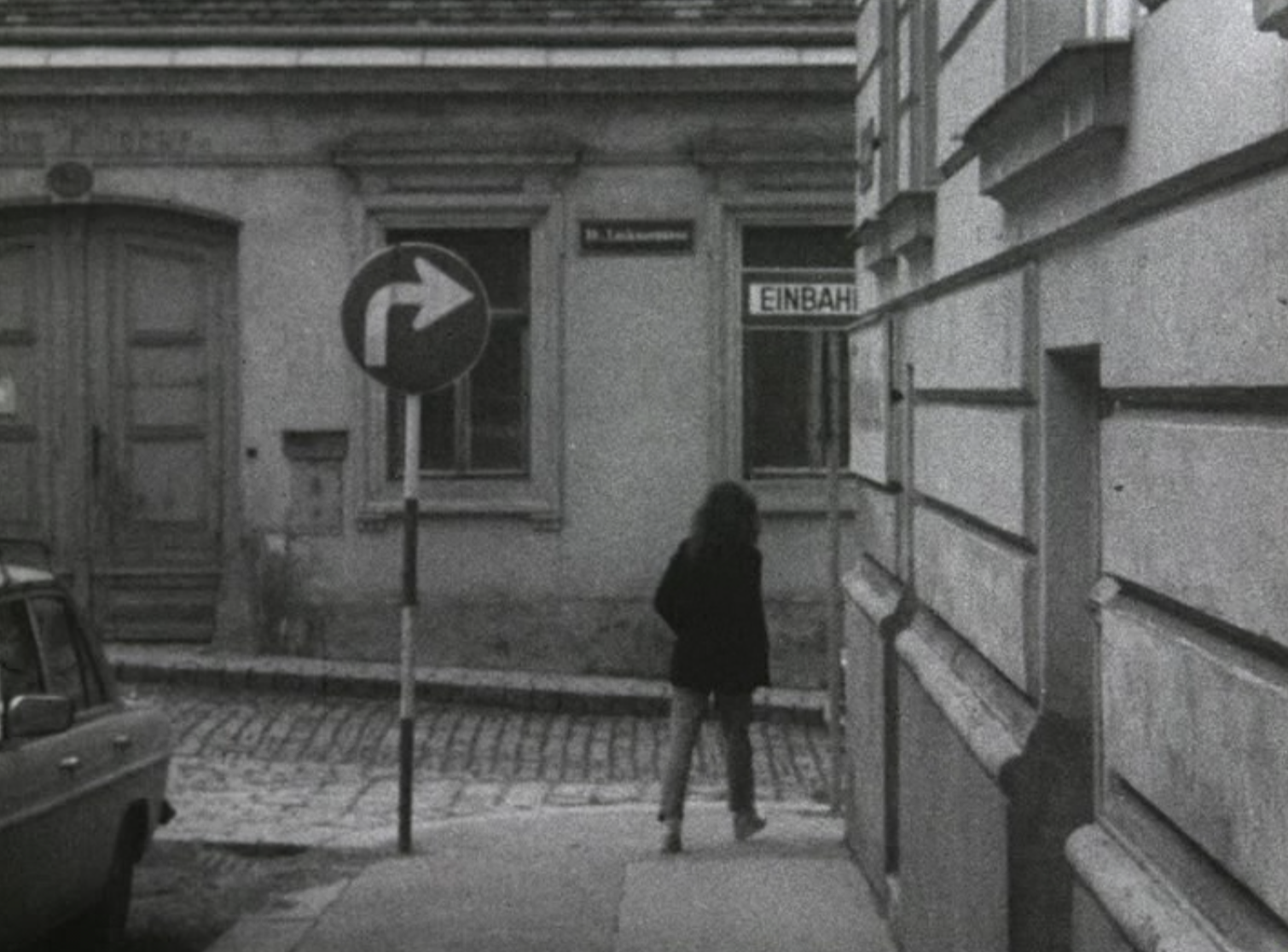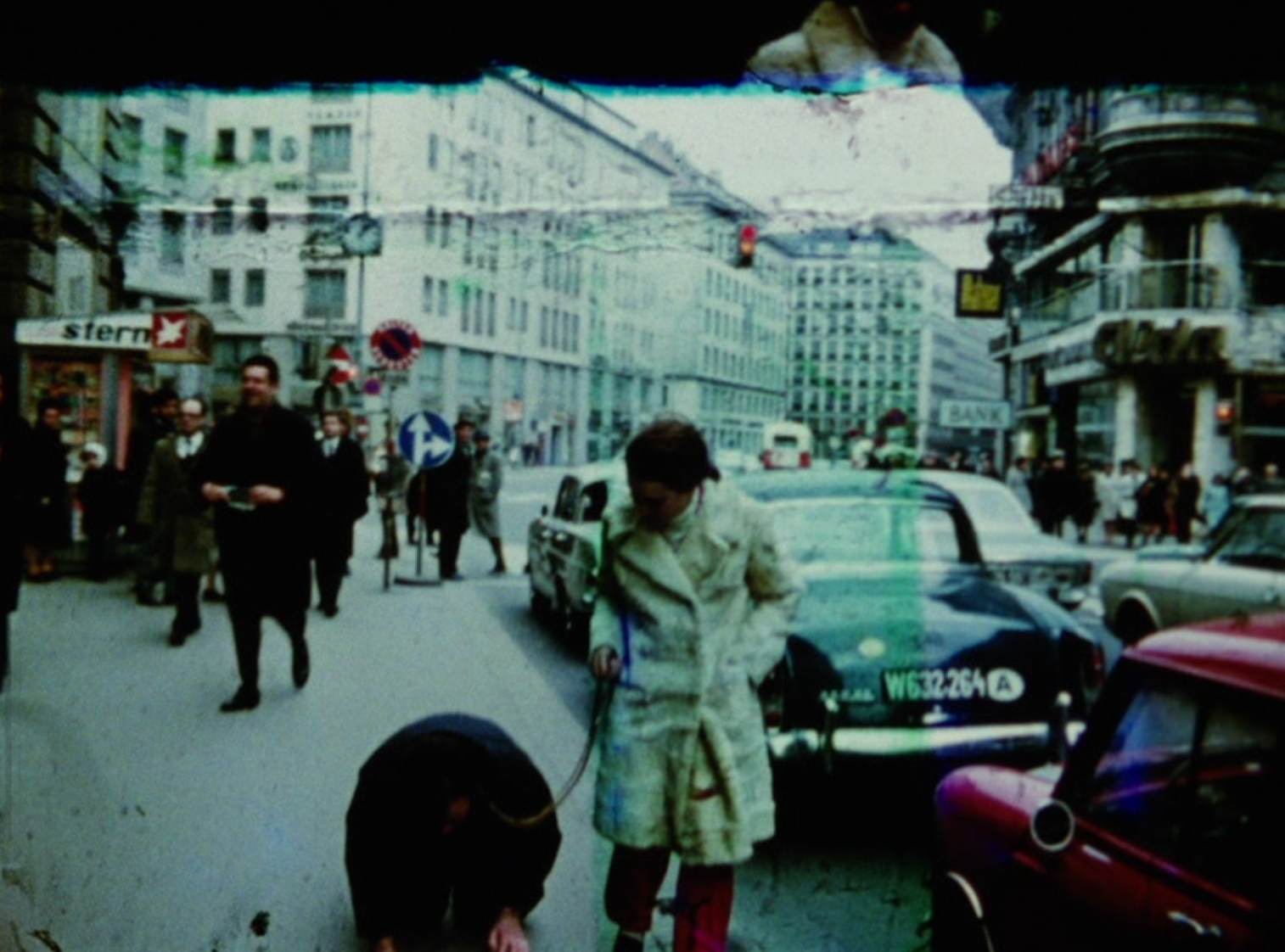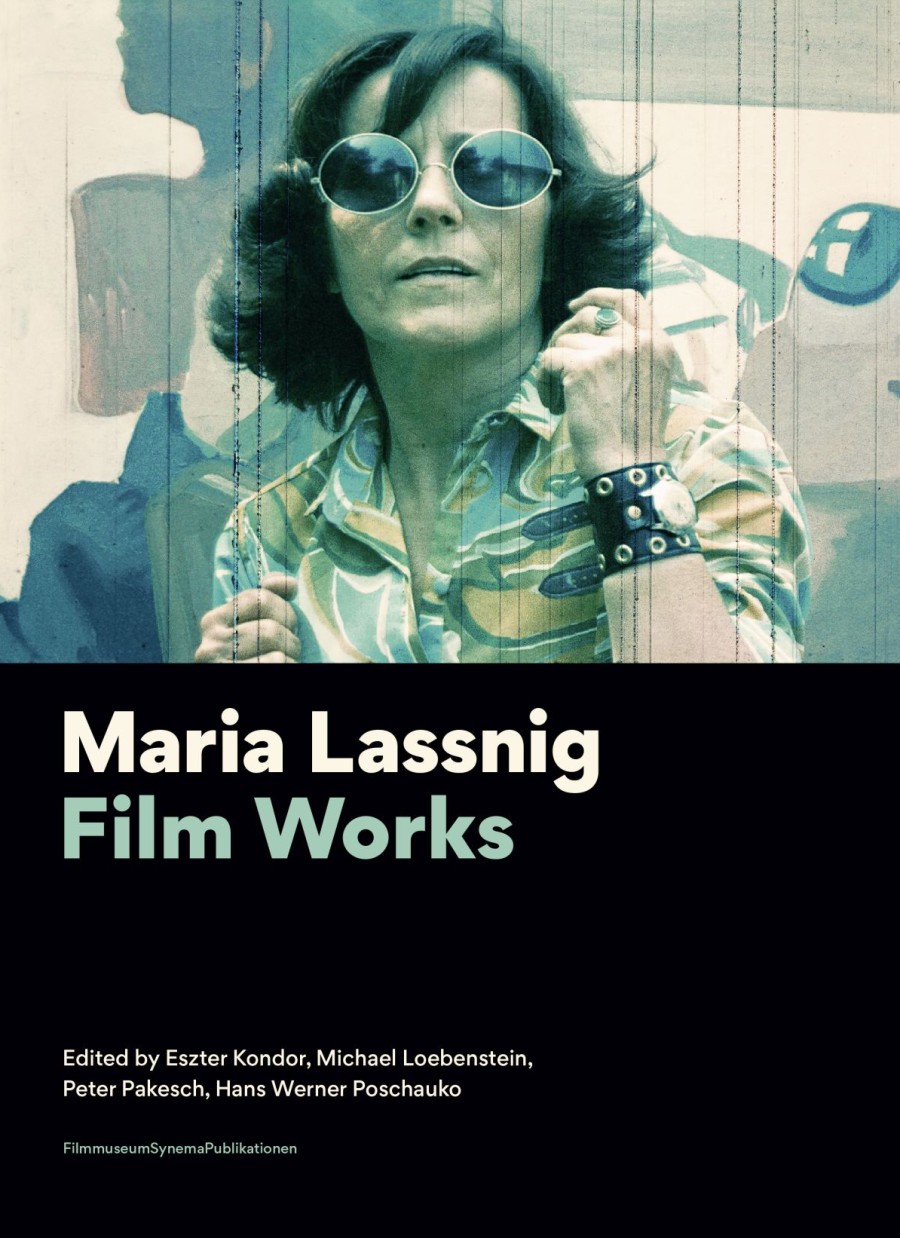
Maria Lassnig: Film Works (INDEX 051)

The films of Maria Lassnig are worth their weight in the sediment of their unearthing. Even in moments of deliberate construction, they carry the scars of something recovered beyond psychic awareness, arising from the muscular ache preceding perception. Throughout this timely volume, one senses an artist trying to place consciousness under physical pressure until it reveals its own anatomy. The result is not simply a supplementary chapter to her endeavors as a painter but an adjacent nervous system running alongside it, flickering with all the involuntary impulses that painting alone could not contain—or, more accurately, contained all along.

Lassnig (1919–2014) is now firmly established among the essential painters of the 20th and 21st centuries, particularly through her concept of Körpergefühl, or “body-awareness,” whereby sensation itself becomes the origin of image-making. Yet a good portion of the animate pieces she produced during her years in New York throughout the late 1960s and 1970s were half-finished gestures that seemed destined to remain suspended in private time. Even as some titles, including SelfportraitIris, and Couples, slowly entered the institutional bloodstream of museums and repertory programs, much of the work stayed dormant until Mara Mattuschka and Hans Werner Poschauko restored and completed the unfinished pieces in 2018, meticulously following Lassnig’s notes and instructions. The achievement documented in this remarkable release from INDEX lies not merely in preservation but in resurrection. One feels the incomparable intimacy of standing beside an artist who departed the world while leaving certain doors ajar.

The publication itself resembles an anatomical atlas. Essays, reflections, and conversations by James Boaden, Beatrice von Bormann, Jocelyn Miller, Stefanie Proksch-Weilguni, and Isabella Reicher intermingle with notebooks, sketches, diagrams, annotations, and unfinished ideas that expose the texture of Lassnig’s thinking with startling immediacy. The accompanying DVD containing selections from her “film in progress” extends this sensation further, allowing the reader to encounter new states of becoming through weathered lenses. Lassnig’s unfinishedness possesses a density uniquely her own. Her practice continues to move with the conviction that uncertainty is not without form.

What emerges most forcefully is Lassnig’s refusal to conceal the mechanisms of a multifaceted inquiry. Her metaphors announce themselves without embarrassment. Her allegories remain jagged and naked. Emotional states are never dissolved into palatable ambiguity. Yet beneath the bluntness of her symbols, there persists an immense stillness, a meditative calm that transforms exposure into something almost devotional. Trauma becomes a cloud’s shadow moving across meadows of consciousness, visible in every frame yet never granted total dominion.
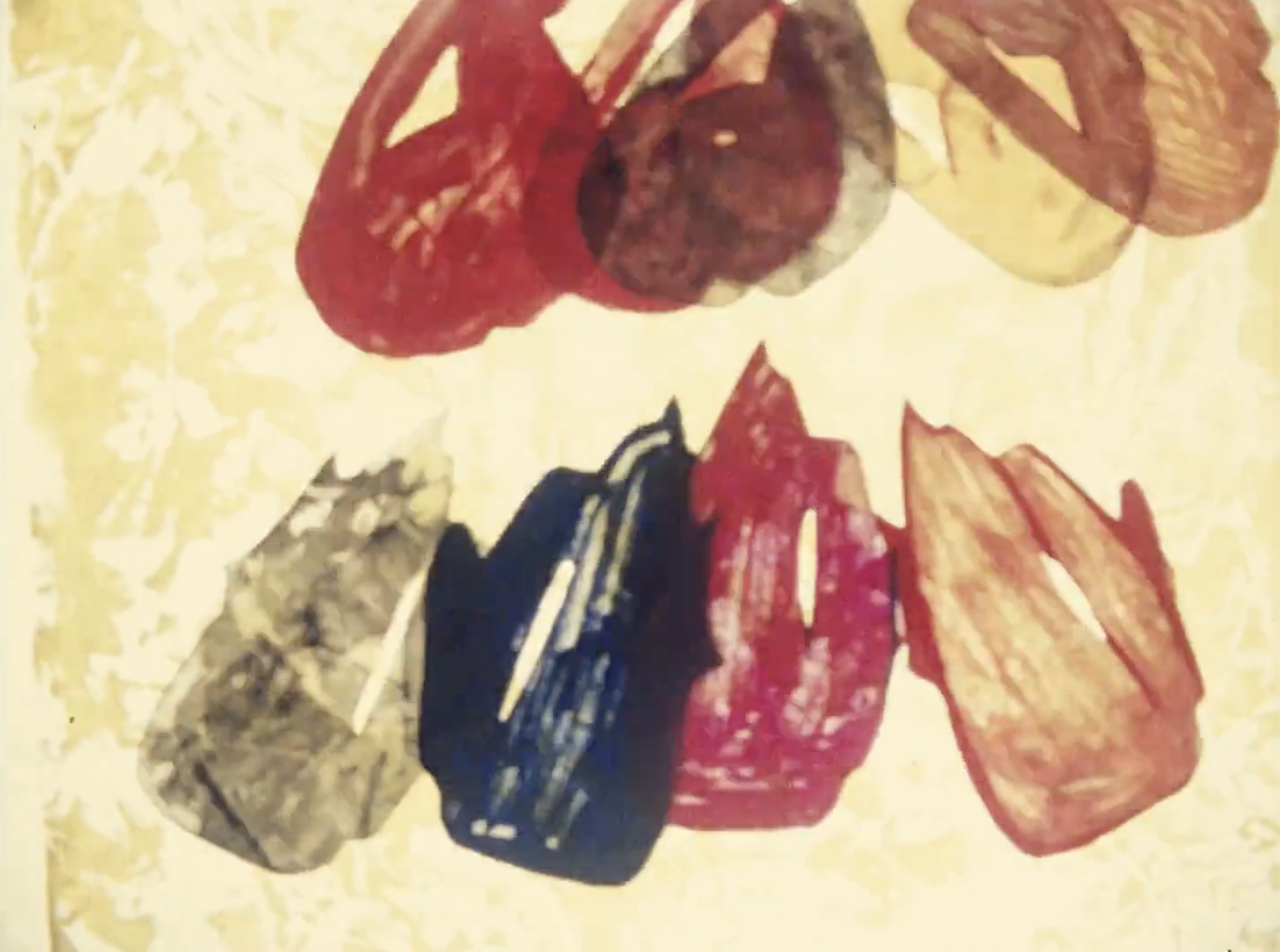
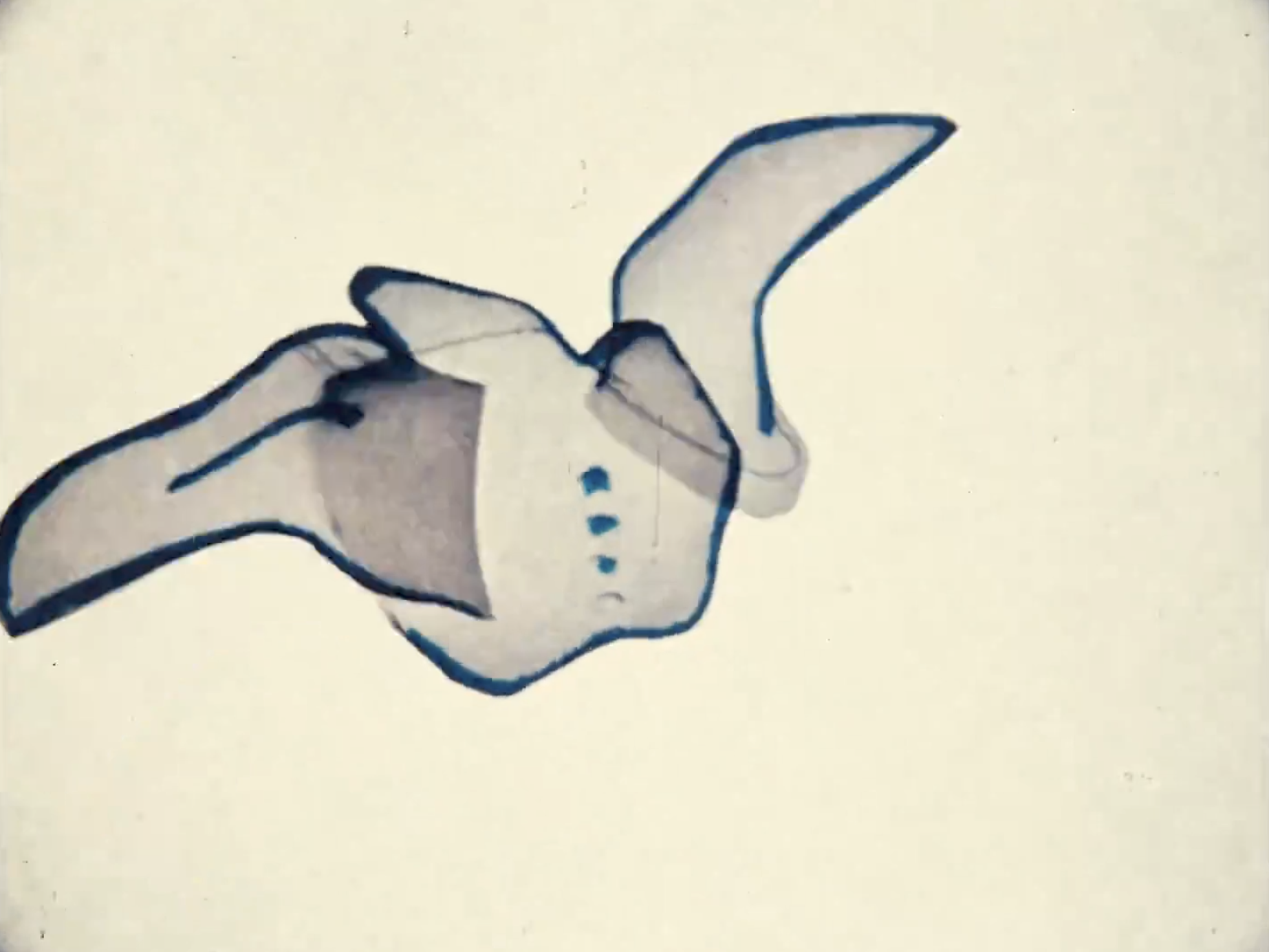
This quality appears immediately in Seasons (1970), her first cinematic foray, in which cutout animation tracks cyclical transformations through ecstatic bursts of movement accompanied by Jelly Roll Morton’s New Orleans Jazzmen. Here, the body already exists as mutation and instability. Her recurring spinal bird figure jerks across the frame with the vulnerability of a creature halfway between instruction and hallucination. The handmade tactility of the animation is crucial. Lassnig never treats movement as a seamless illusion. Motion arrives in increments, each shift retaining the memory of the hand that repositioned it. One feels the dexterity of fingers behind the image.
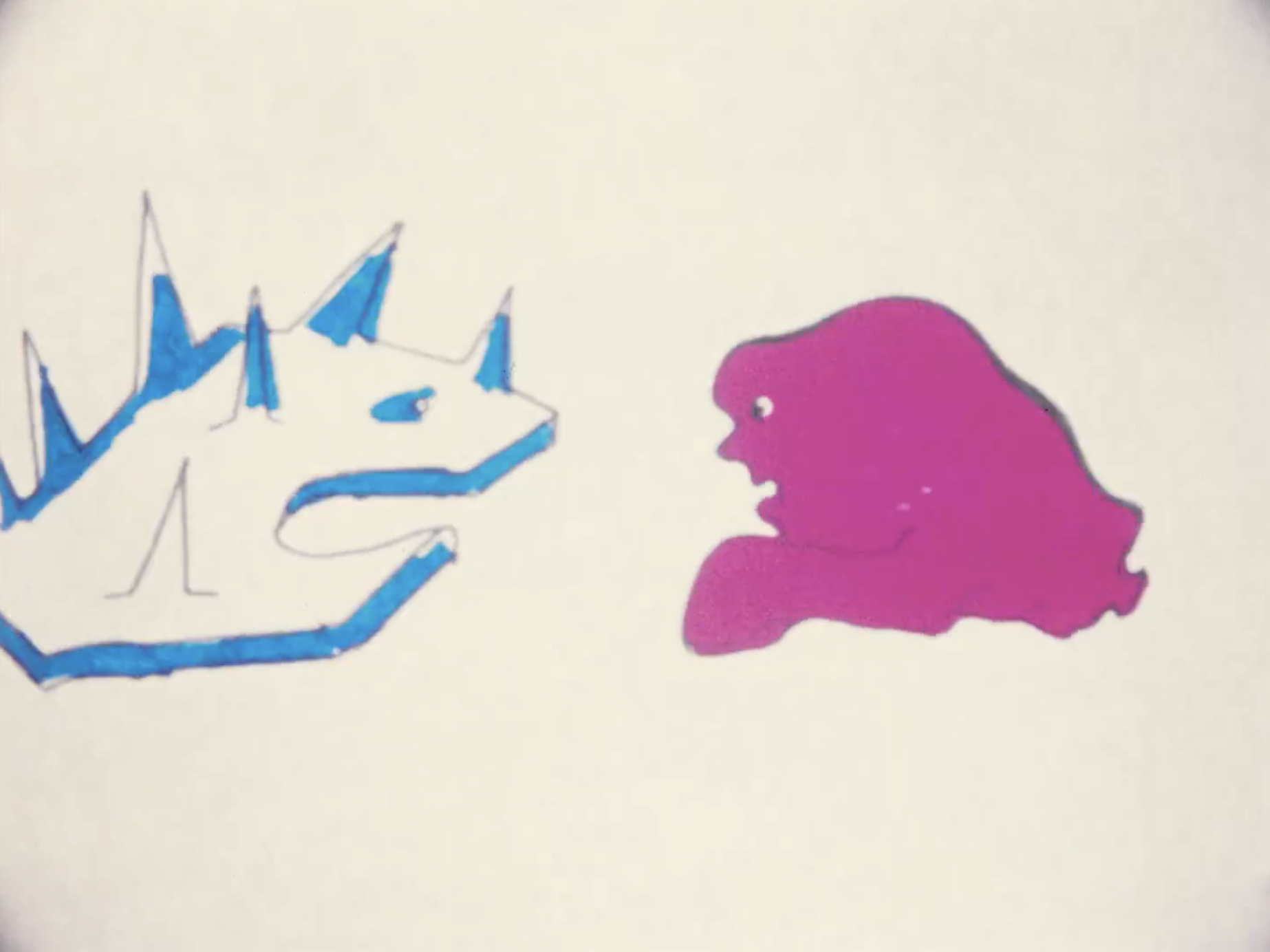
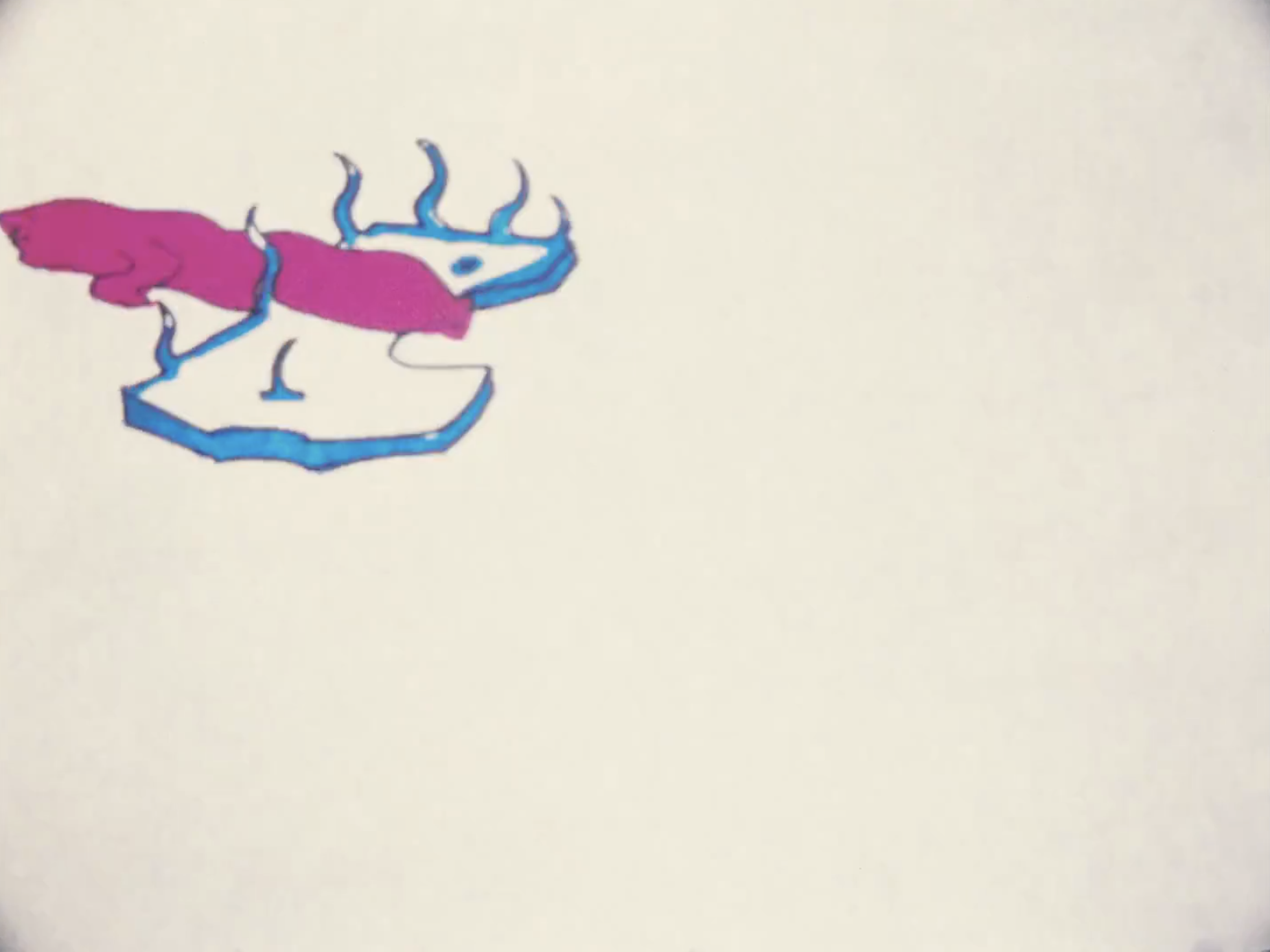
Tactile thinking deepens in Encounter (1970), her first traditional hand-drawn animation. Two abstract forms drift toward one another through a field of trembling pinks, one curious, the other defensive, their interaction oscillating between seduction and annihilation. Set to Morton Subotnick’s Touch (1969), the piece unfolds as an anatomy of intimacy stripped of social performance. Desire becomes texture rather than narrative. Affection emerges through abrasion. The figures merge and recoil with an almost cellular uncertainty, suggesting organisms learning the terror of coexistence in real time. Lassnig renders emotional encounter as a process of bodily negotiation in which tenderness and violence intertwine.
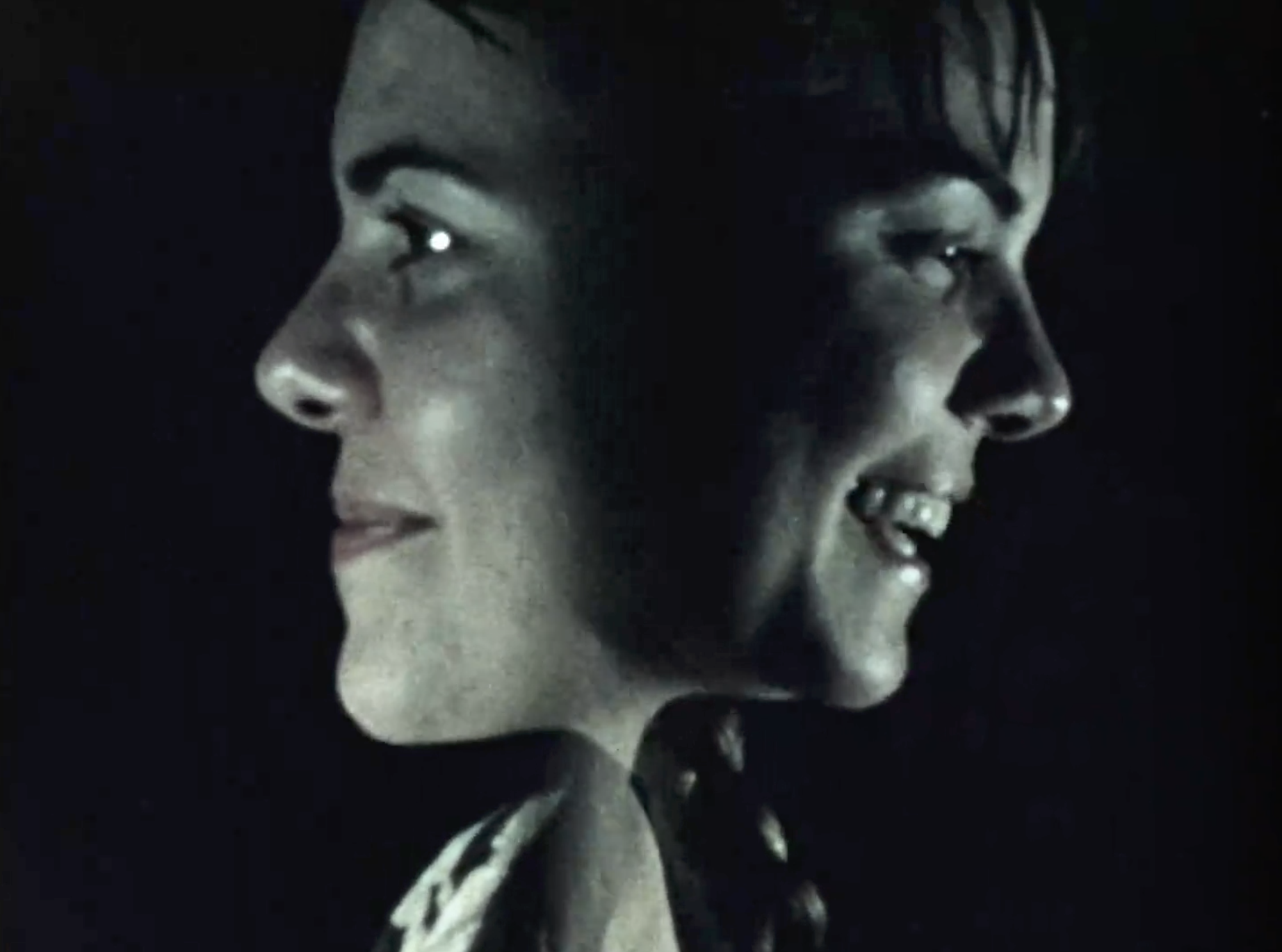
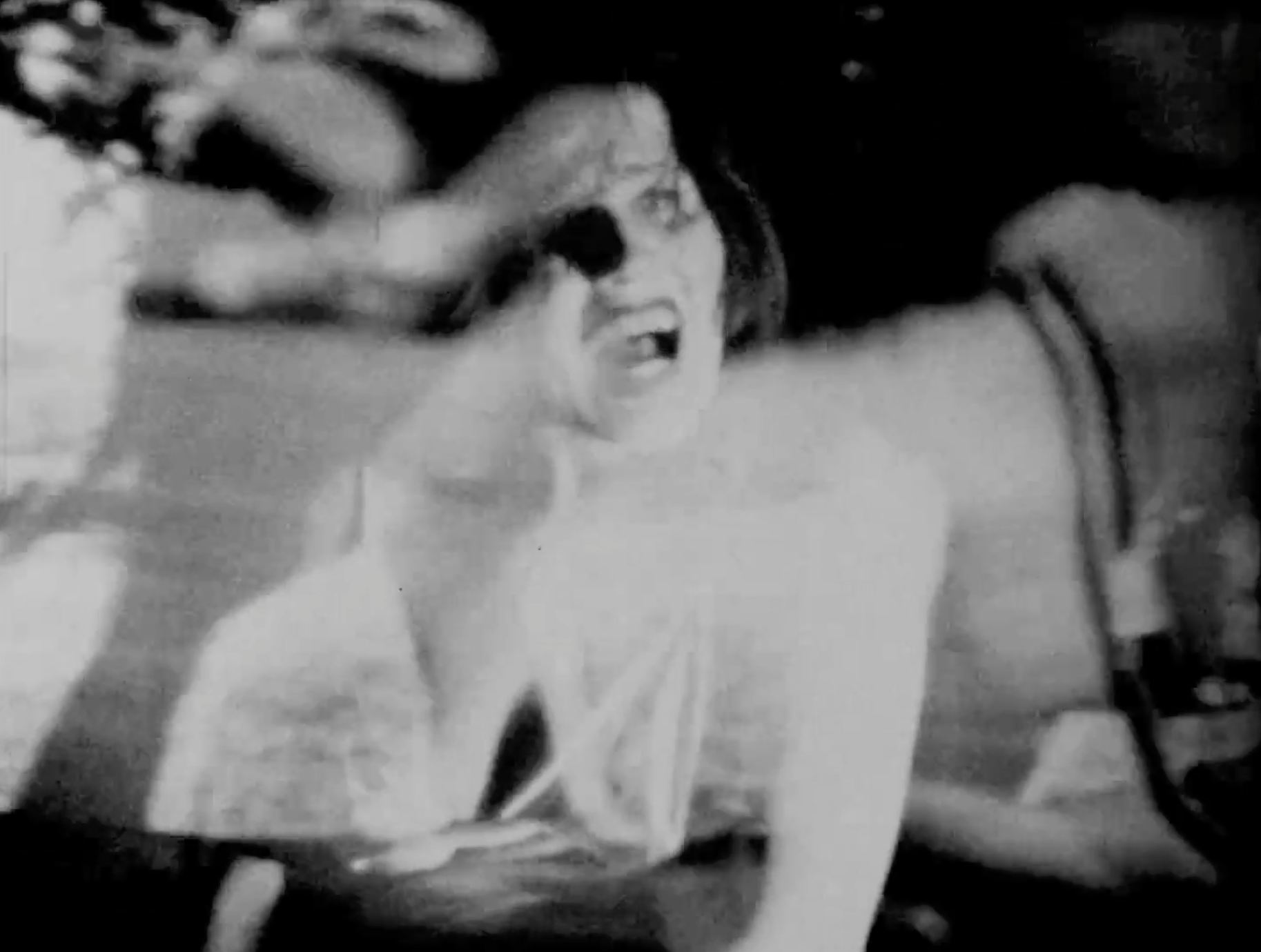
New York itself enters the proverbial frame as interference incarnate. In Moonlanding/Janus Head (1970), the city appears through fractured overlays of moon-landing footage, skaters, skyscrapers, film clips from Gone With the Wind(1939) and Spartacus (1960), and Janus-faced superimpositions that evoke thresholds of transition. Lassnig once described emigrating to New York in 1968 as feeling akin to landing on the moon, and the piece captures precisely that sensation of estrangement. The city becomes an extraterrestrial theater of surfaces. Familiar cultural symbols flicker with increasing unreality until the moving image itself appears as a species of collective hallucination.
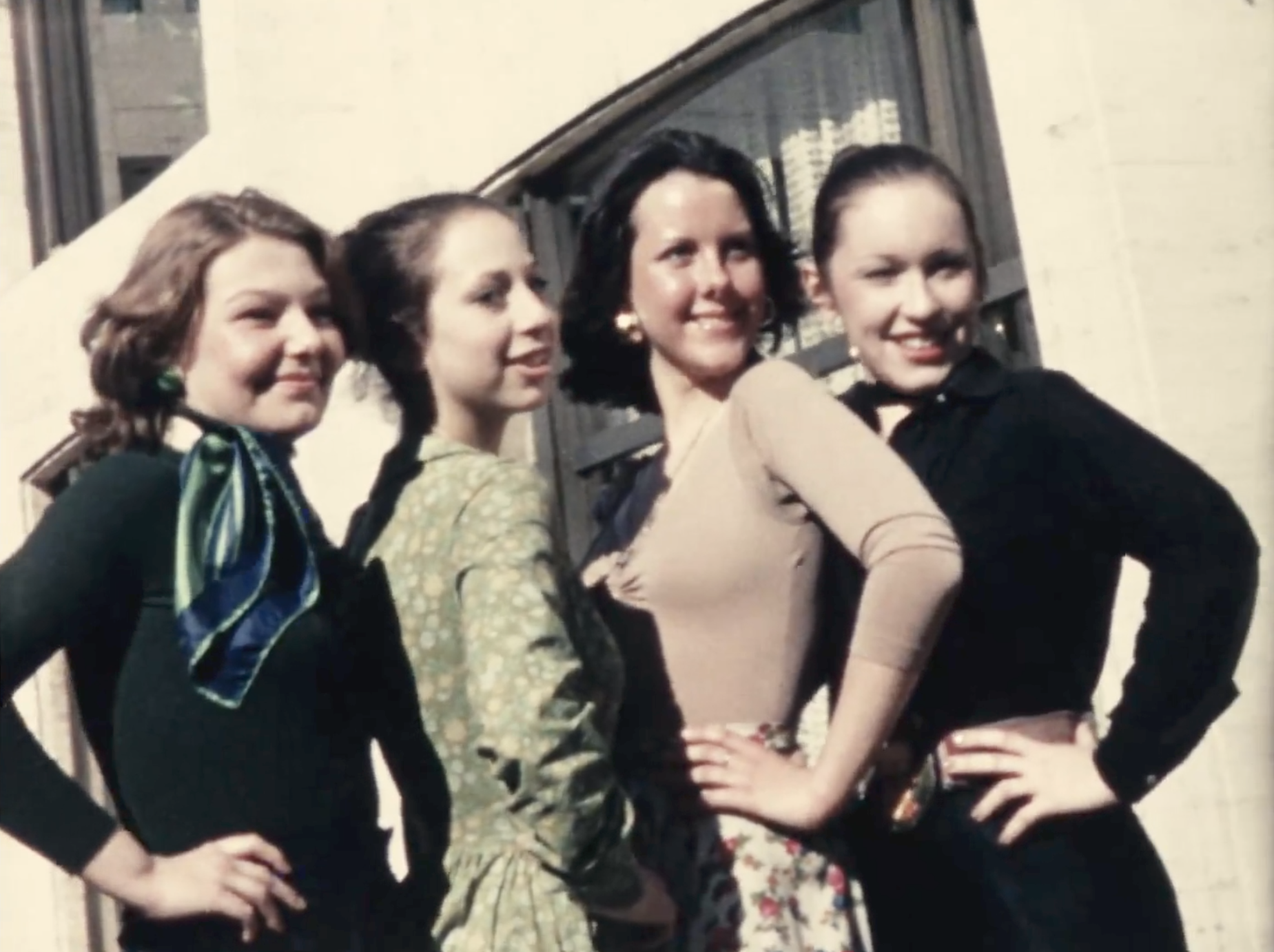
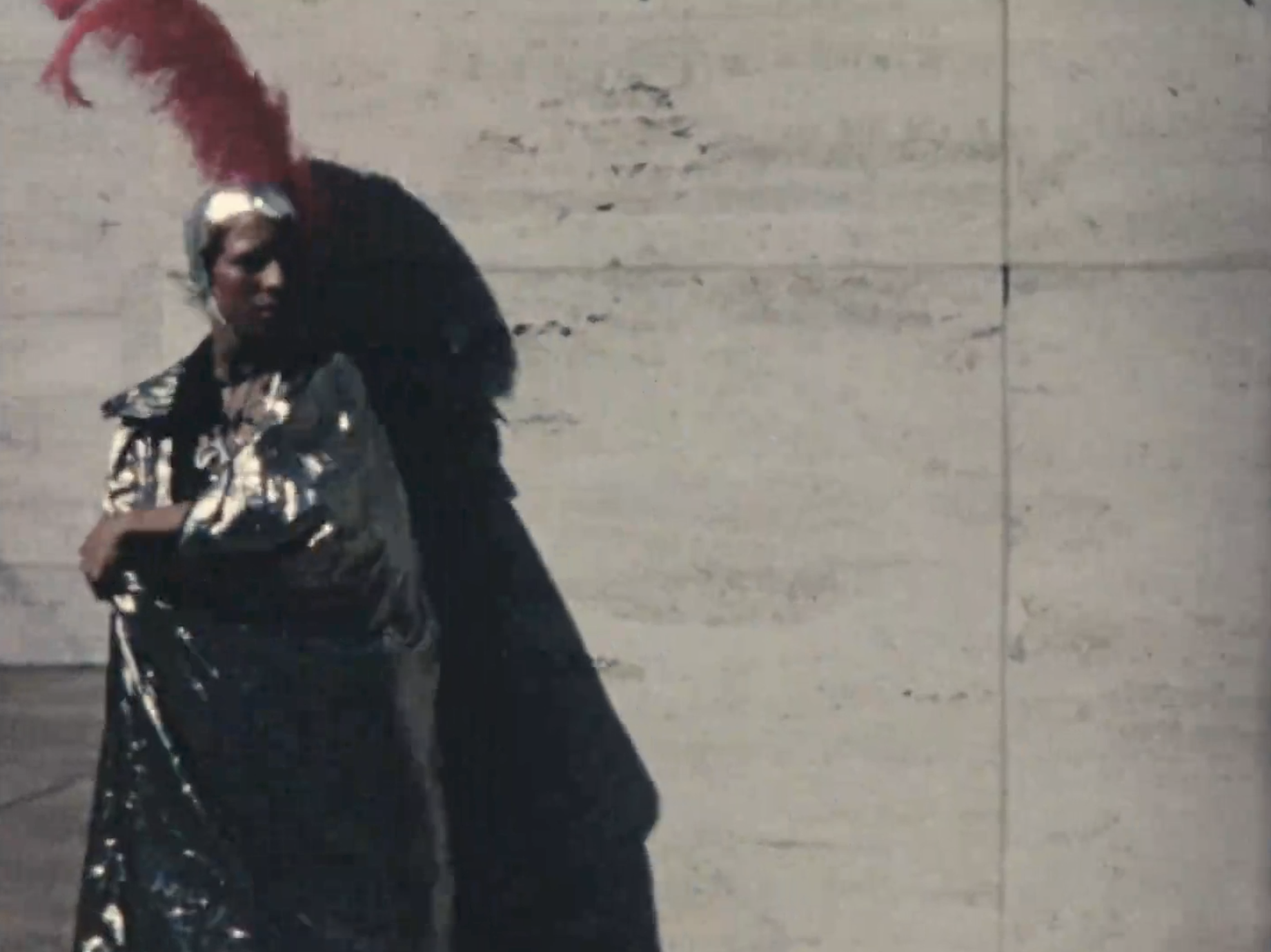
That sense of urban dislocation reaches another form in Broadway I (1970), where drag performers and street theater troupes inhabit a Manhattan overflowing with improvisatory self-invention. Lassnig’s camera never settles into anthropological distance. Sunlight through trees interrupts the parade. Bodies drift in and out of double exposure. Public spectacle melts into private reverie. One senses an artist discovering that identity in New York is permanently provisional, assembled from fragments of costume, posture, and exhaustion.
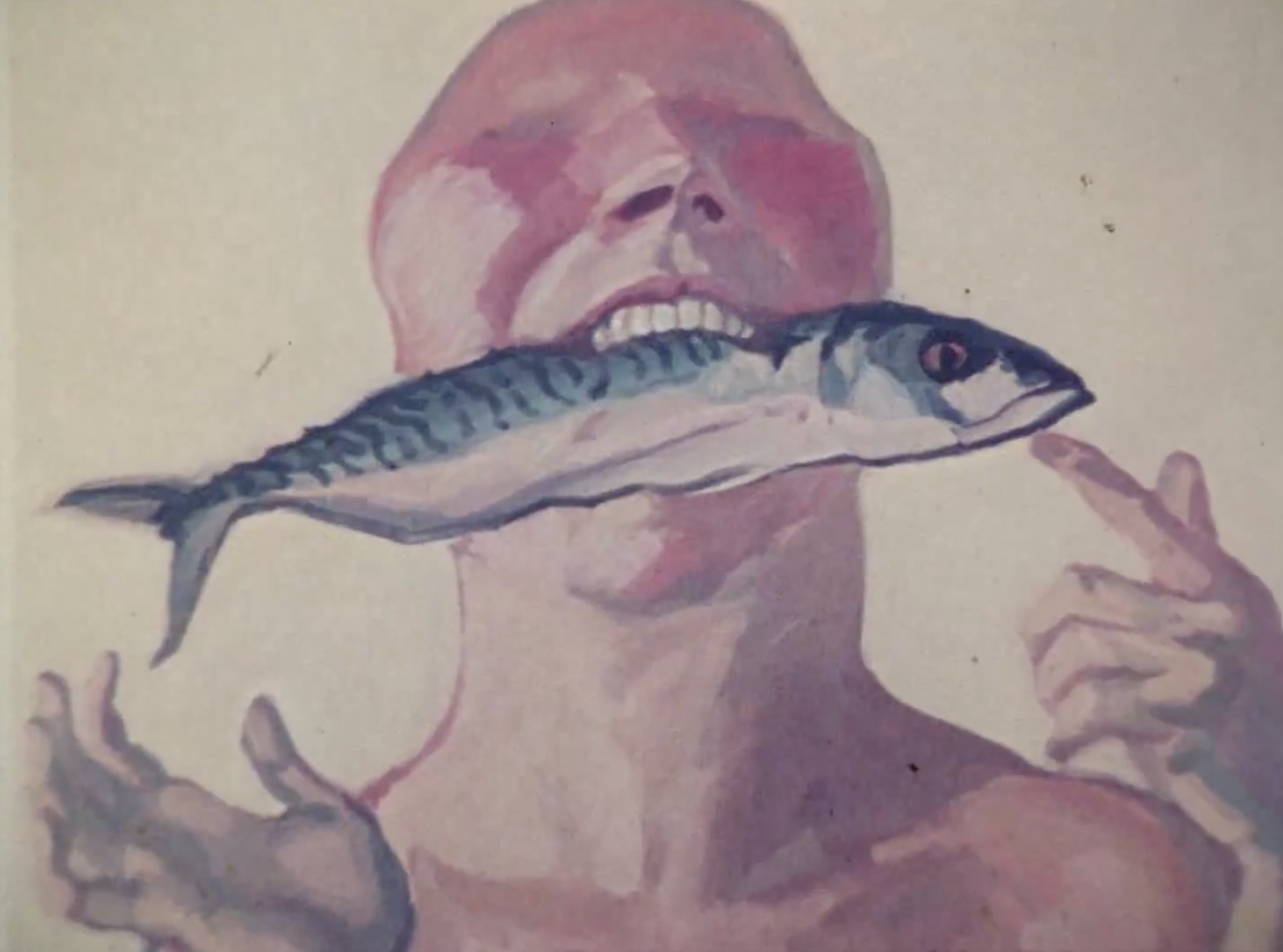
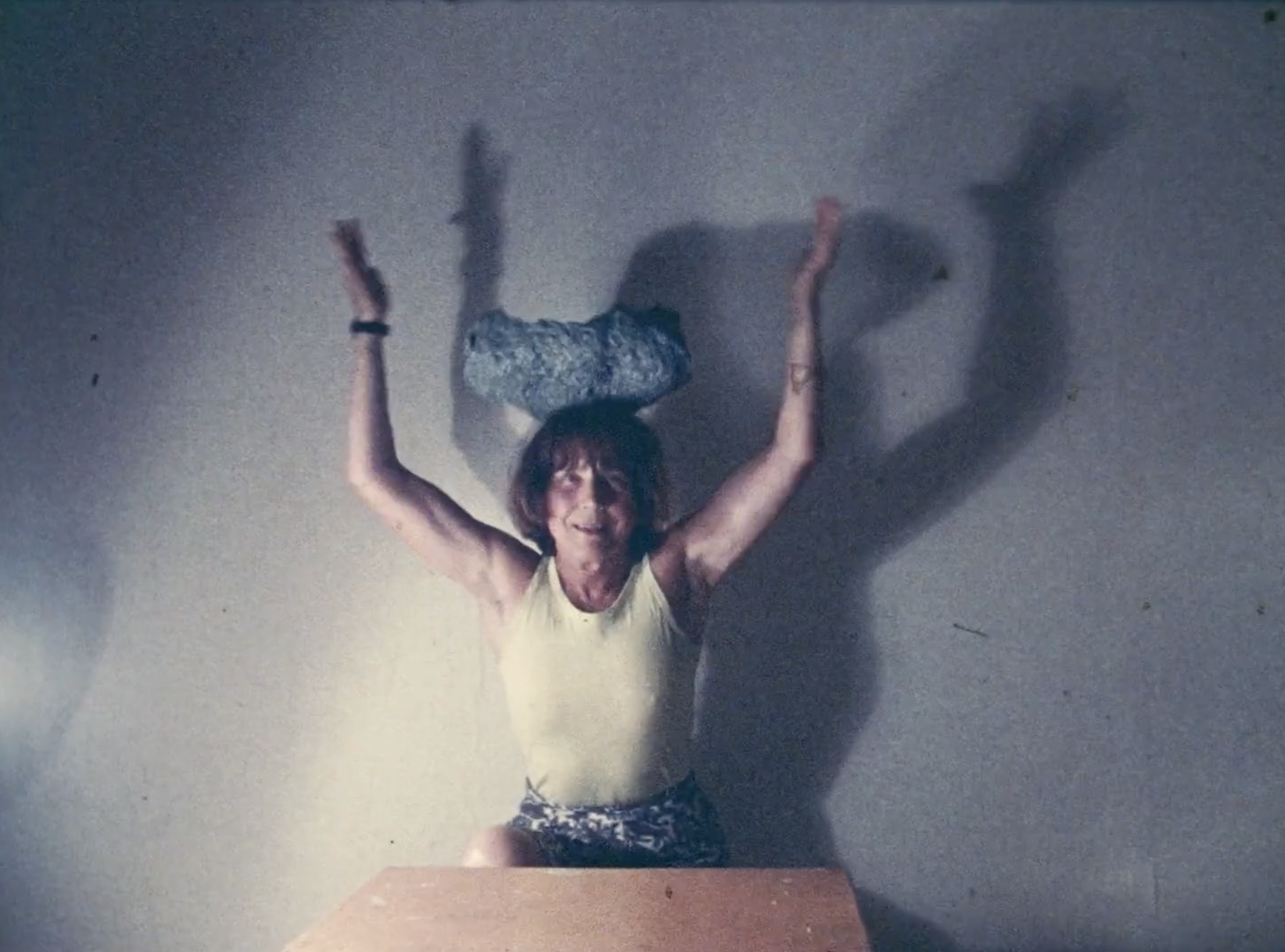
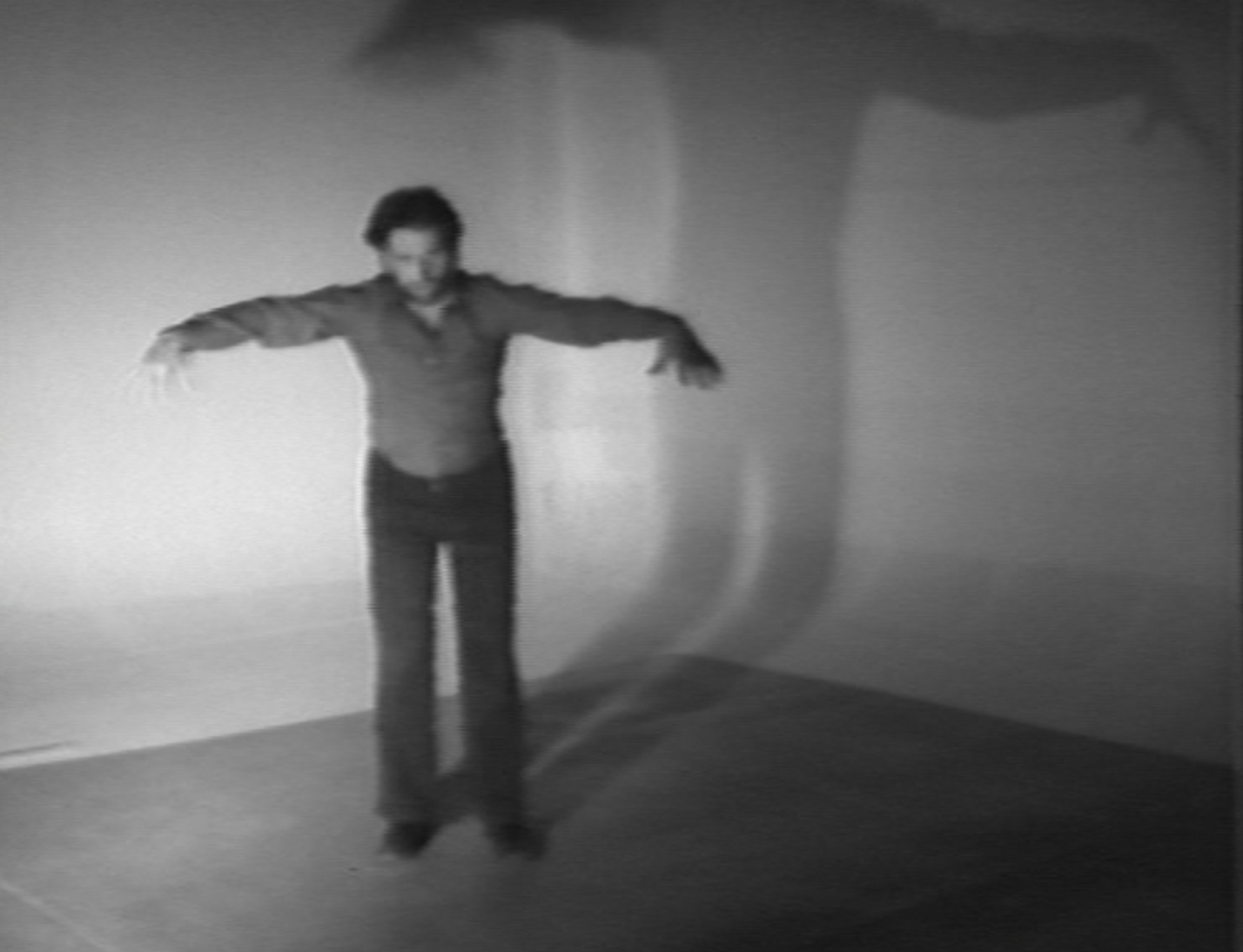
Her extraordinary Stone Lifting. A Self Portrait in Progress (1971–74) extends this inquiry inward with almost frightening candor. Paintings appear in various states of completion, bodies distort against glass and canvas, and gallery visitors circulate among images whose origins they cannot possibly perceive. Meanwhile, back in the studio, Lassnig drops a stone onto parts of her own body. However, the impact itself remains partially withheld from the viewer, creating an unbearable tension between anticipated pain and cinematic restraint. The self here exists as a site of perpetual excavation. Every image carries traces of prior selves buried beneath it.
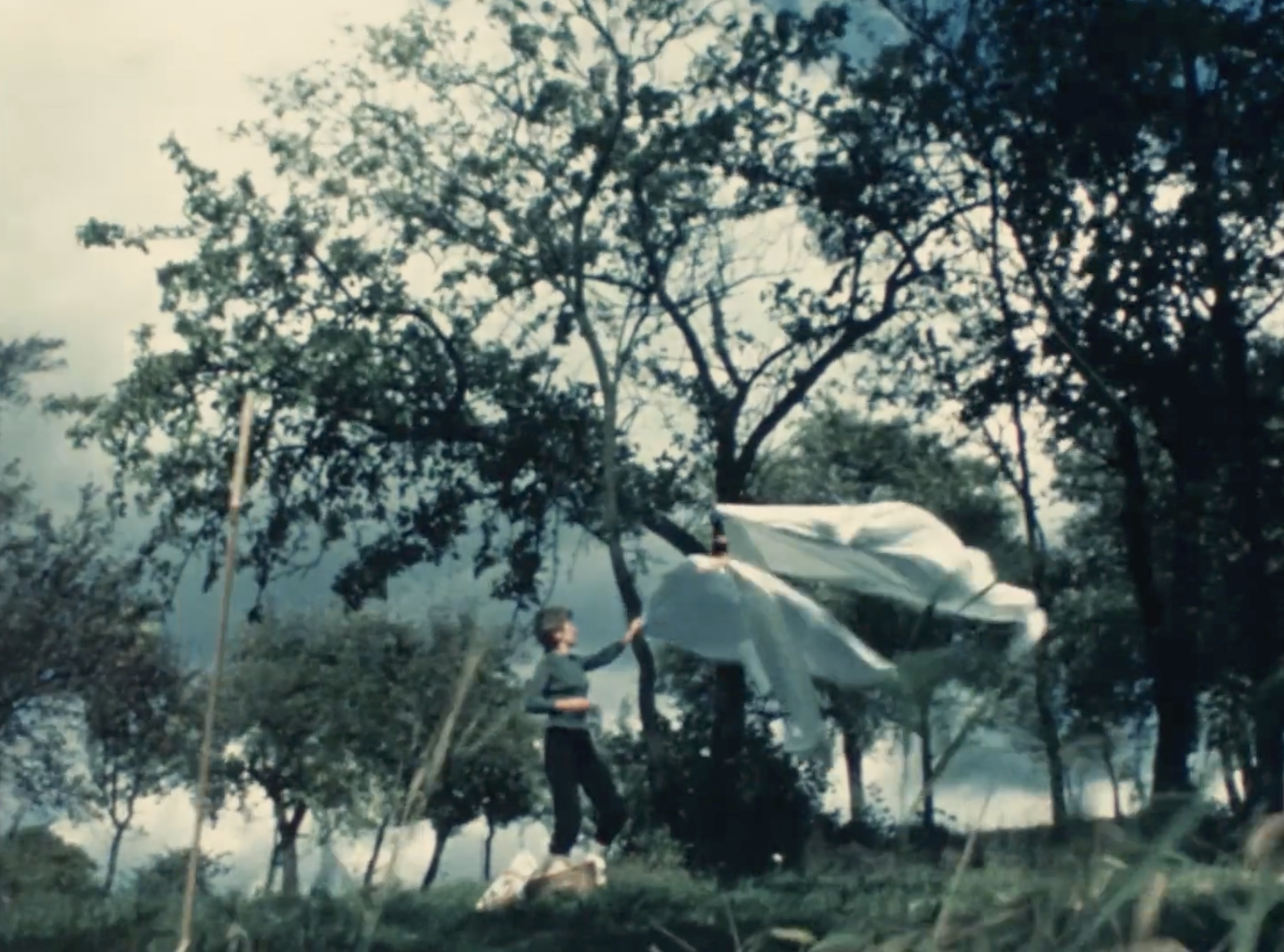
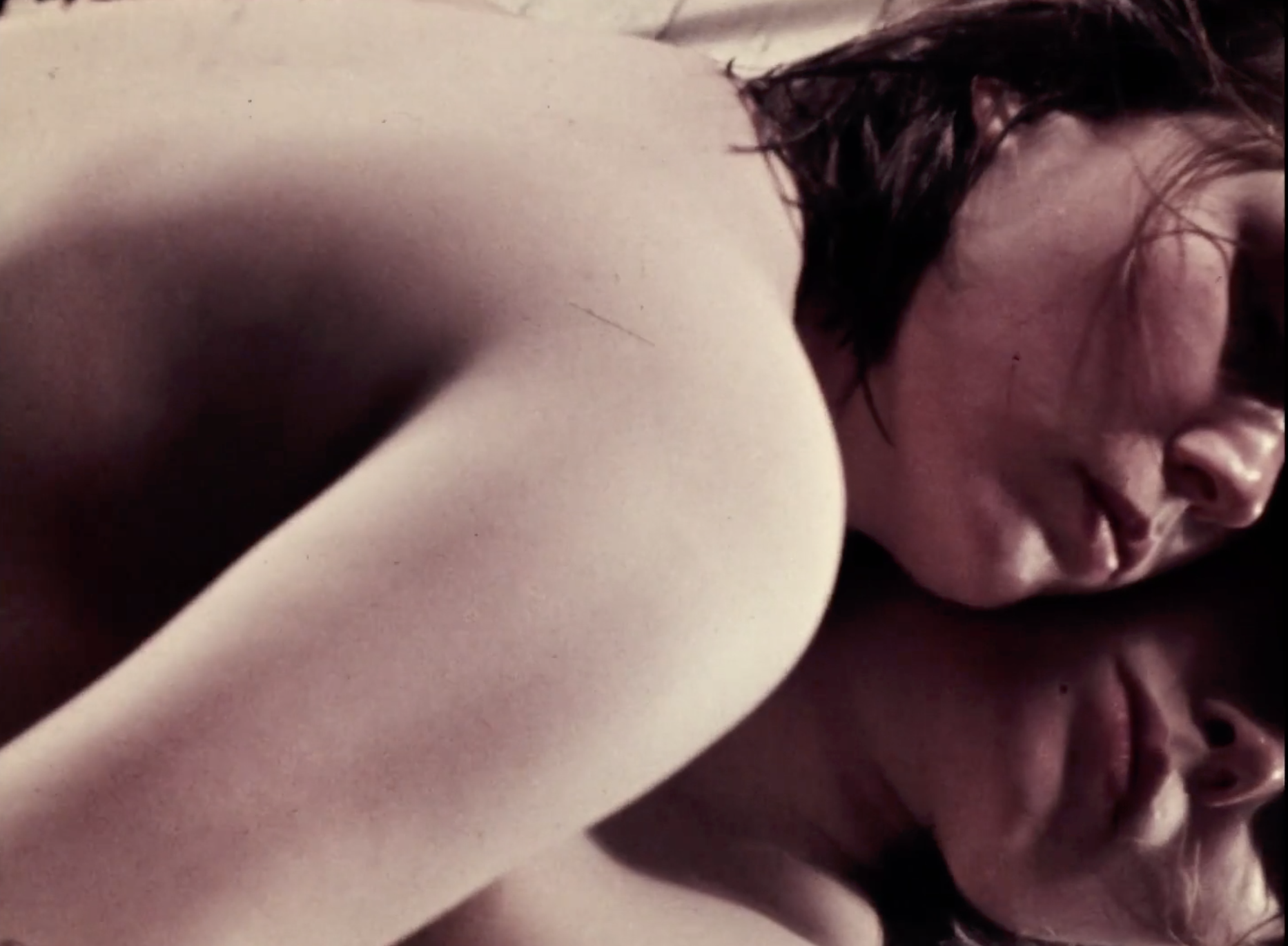
The attention devoted to friends and collaborators reveals another dimension of Lassnig’s gaze. In Soul Sisters Hilde (1972), the eponymous subject moves between weaving, sculpture, forests, and domestic quiet while Webern’s string quartet music hovers with spectral delicacy. Creativity here appears inseparable from solitude. Hilde’s loom becomes an extension of consciousness itself, a structure through which memory can be threaded into visible form. Meanwhile, Soul Sisters Alice (1974) transforms friendship into ritual theater. Blindfolded recollections of former lovers, wine sprayed onto flesh, Handel’s Music for the Royal Fireworks, and arcs of electricity crossing naked skin: such are the artifacts of its ceremonial intensity. “An absurd game,” Lassnig remarks, “just as life is!” Yet the absurdity never diminishes the vulnerability involved. The body remains both participant and witness to its own emotional exposure.
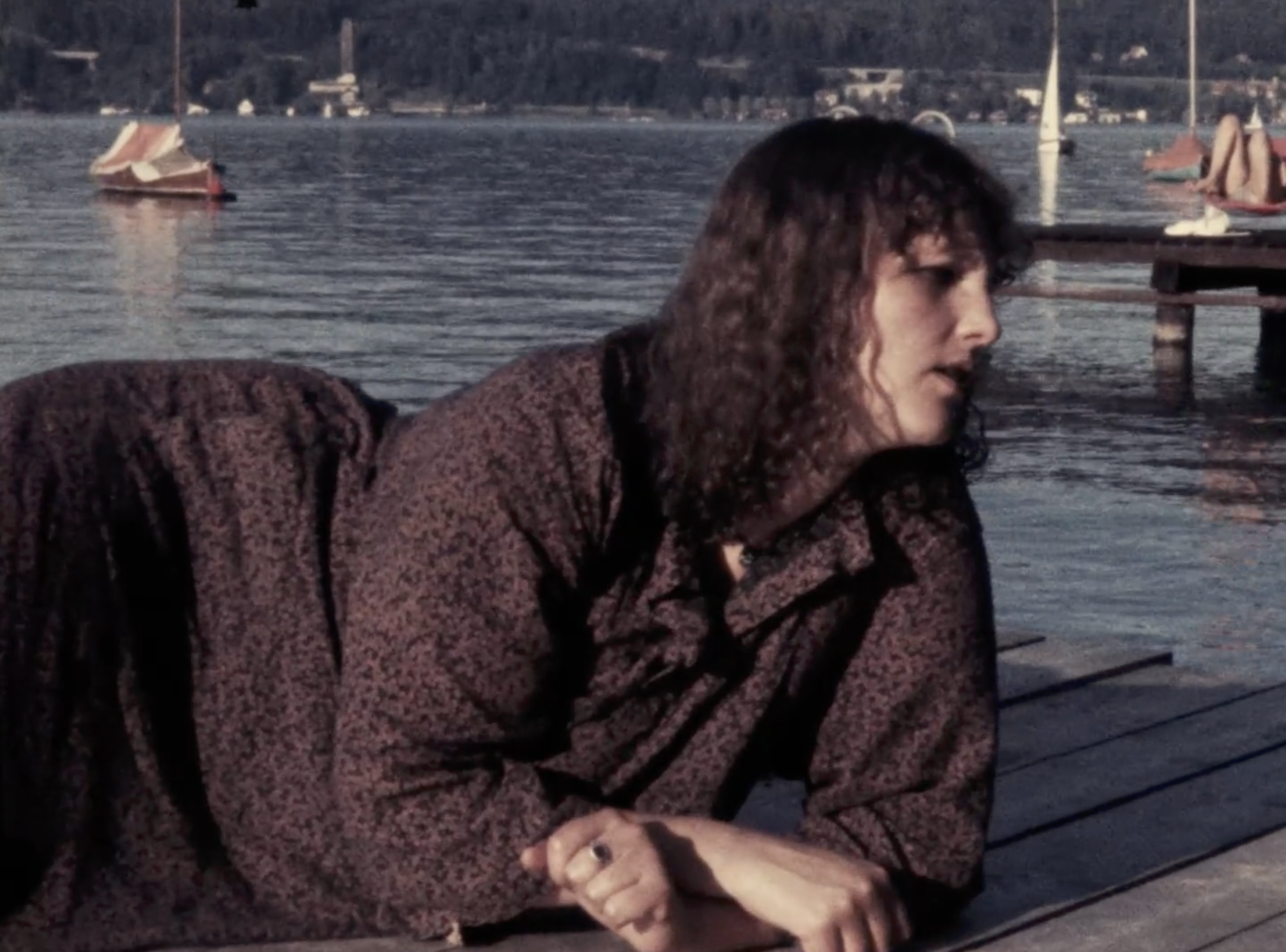

Soul Sisters Bärbl (1974) may be the most devastating of these portraits. Bärbl irons clothing, washes dishes, and drifts through depressive episodes while Lassnig speaks with startling lucidity about disappointment and endurance. The camera presses with painful intimacy, trembling slightly, refusing aesthetic comfort. Domestic life appears as a mechanism that slowly metabolizes ambition into fatigue. Yet Lassnig does not reduce Bärbl to victimhood. Her exhaustion contains philosophical force. “The world is good, even when it is bad,” she says, arriving at truth through attrition rather than transcendence.
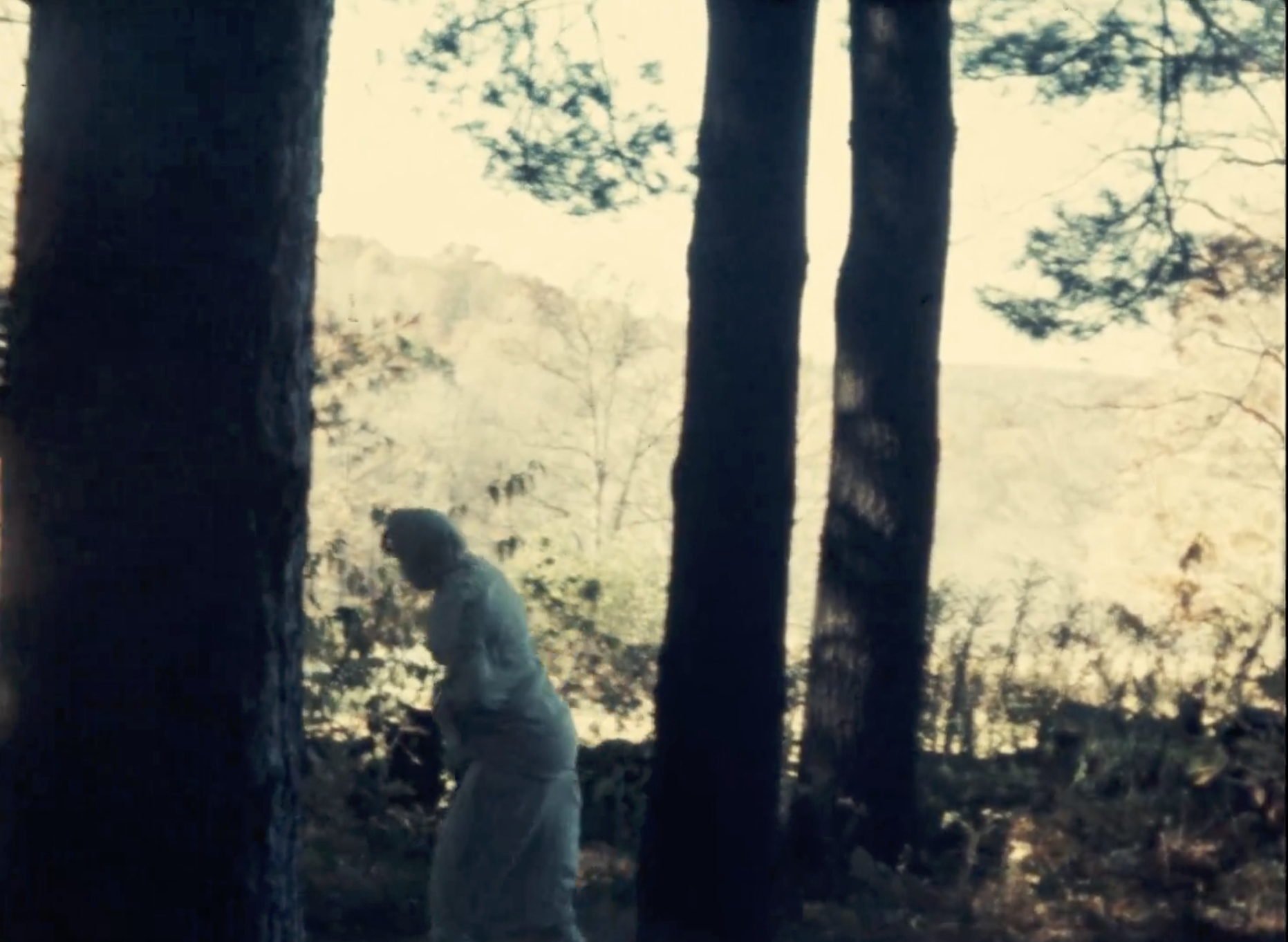
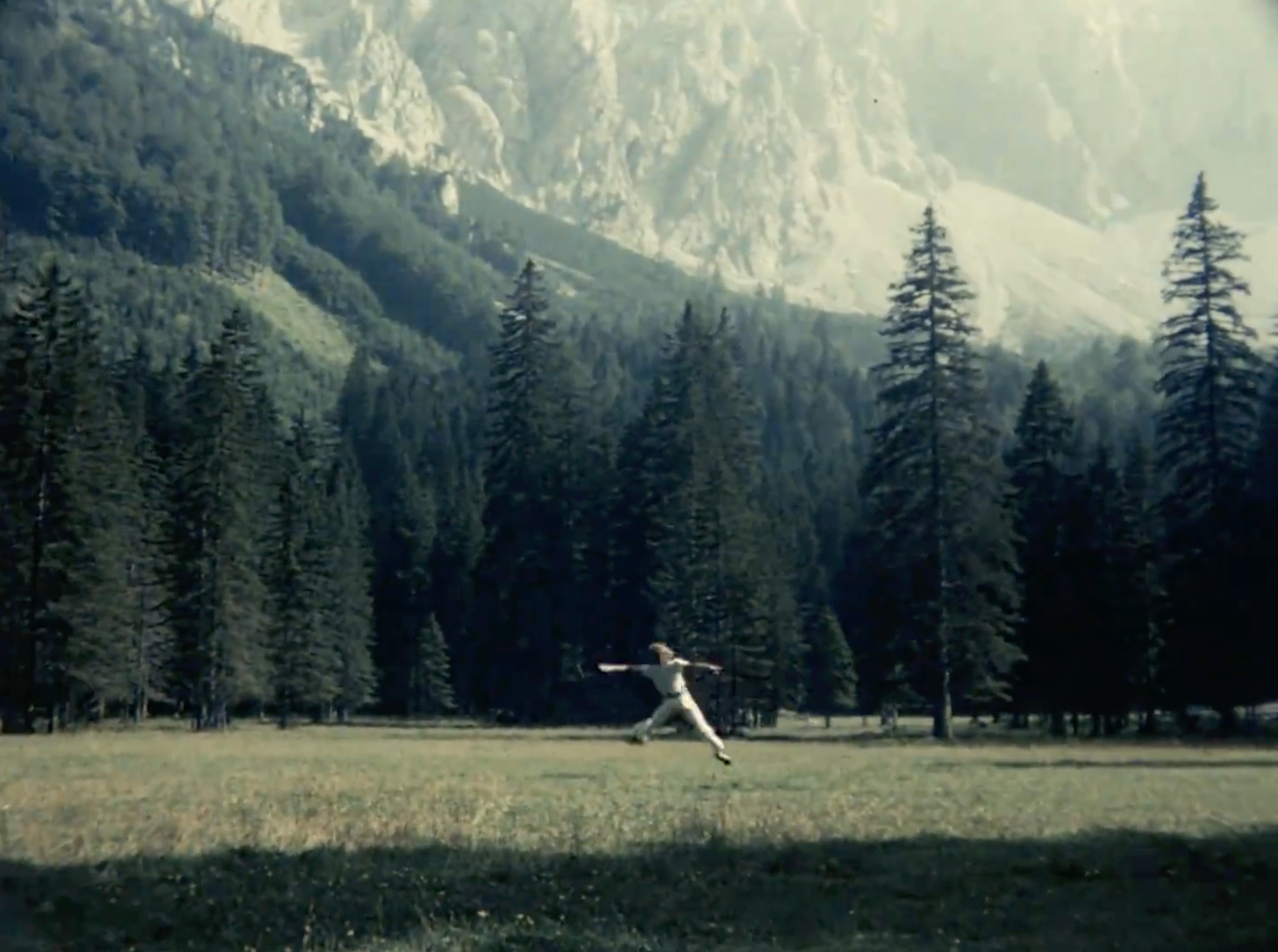
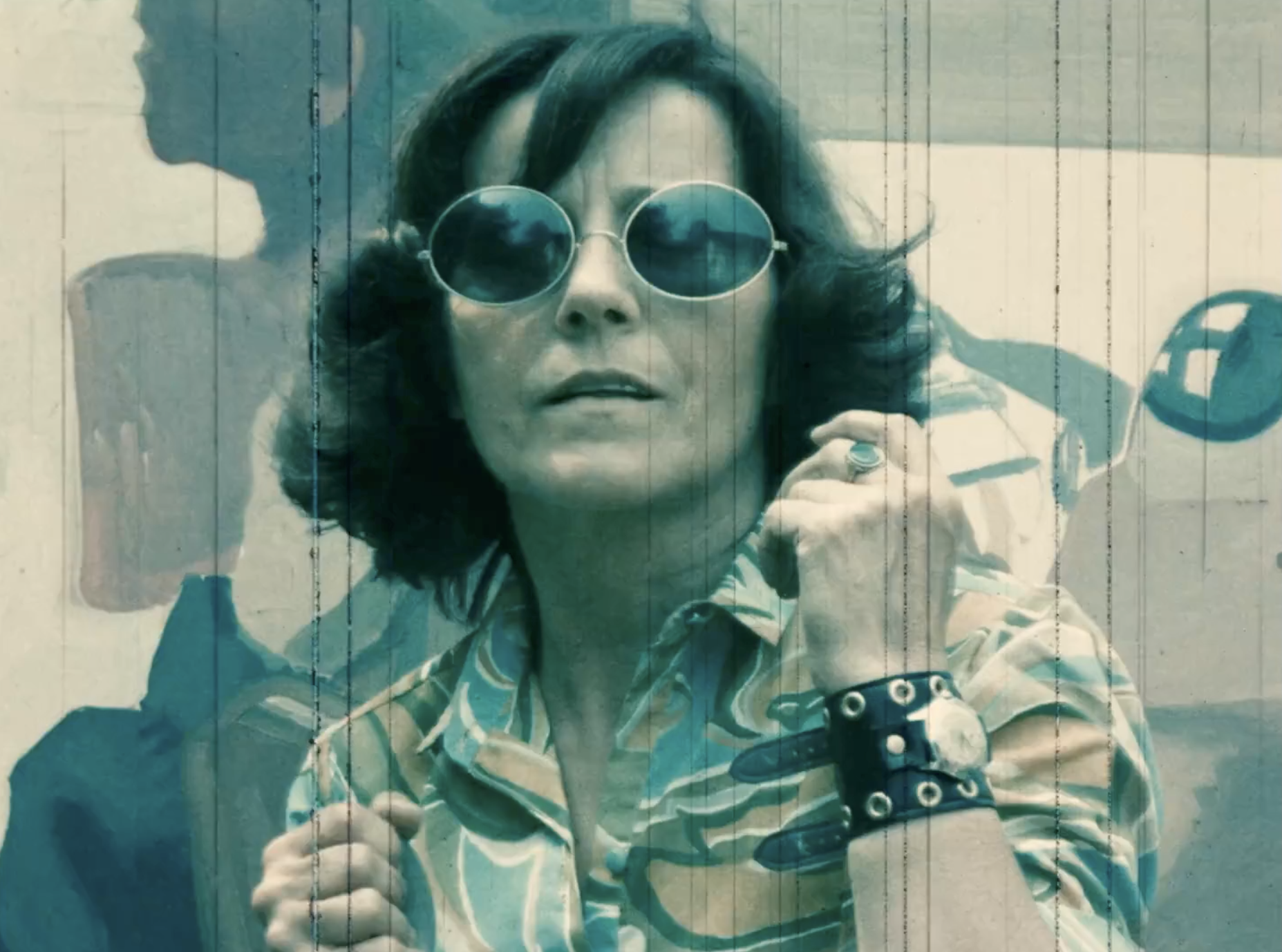
This attention to the contradictory realities of embodiment runs throughout Lassnig’s engagement with feminism. She joined the Women/Artist/Filmmakers, Inc. collective in New York in 1974, though she always maintained a certain distance from organized ideological frameworks. Her vocabulary is unquestionably shaped by feminist consciousness, particularly in their refusal to eroticize the female body according to patriarchal conventions. Yet Lassnig resisted being enclosed within any singular category of “female artist.” She sought confrontation with the male-dominated European art world on equal terms, believing competition itself could generate artistic vitality. This give and take imbues Autumn Thoughts (1975), where a straitjacketed older woman wanders through forests and water while a young ballet dancer moves with liberated athleticism nearby, with historical burdens.
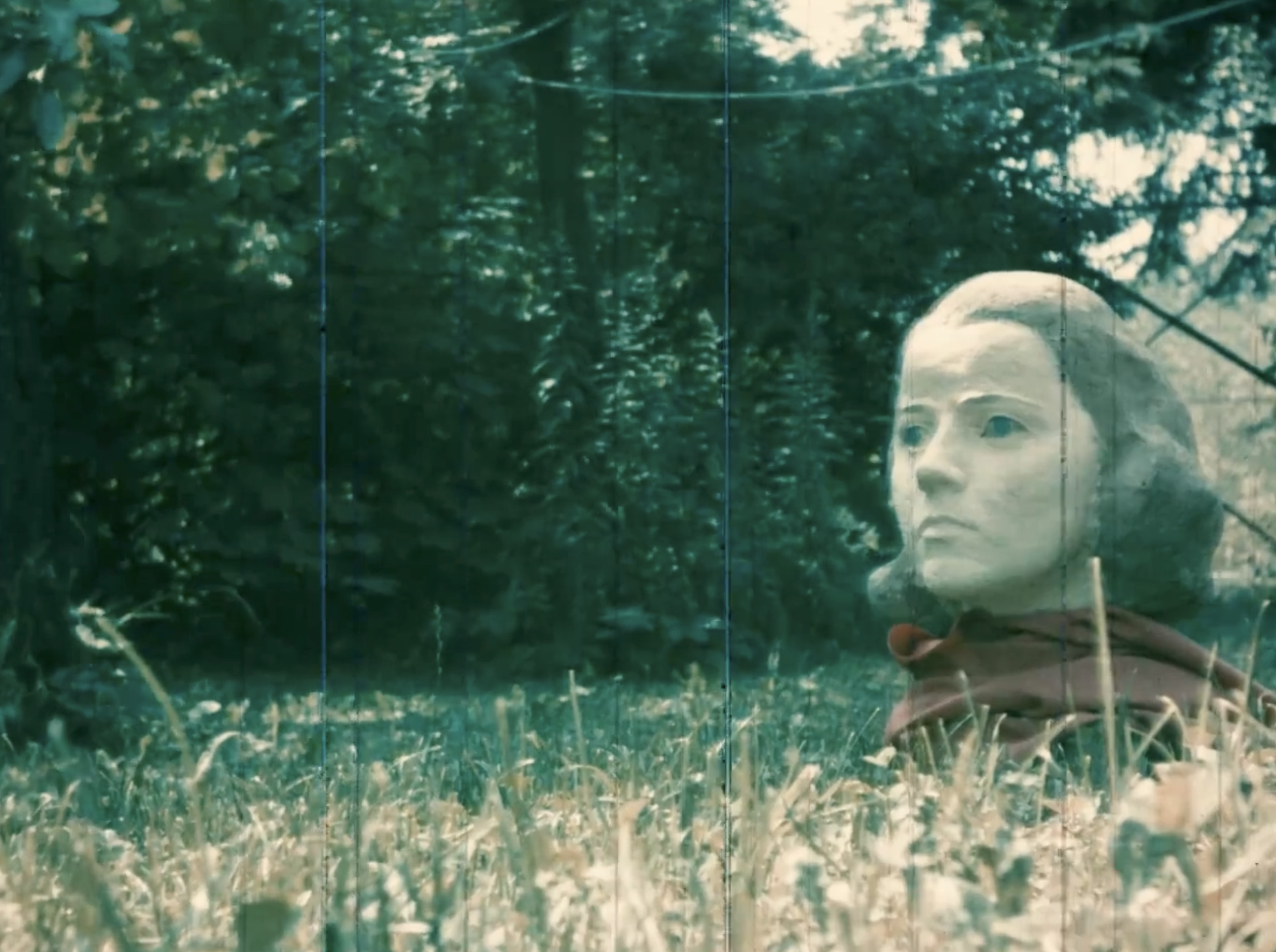
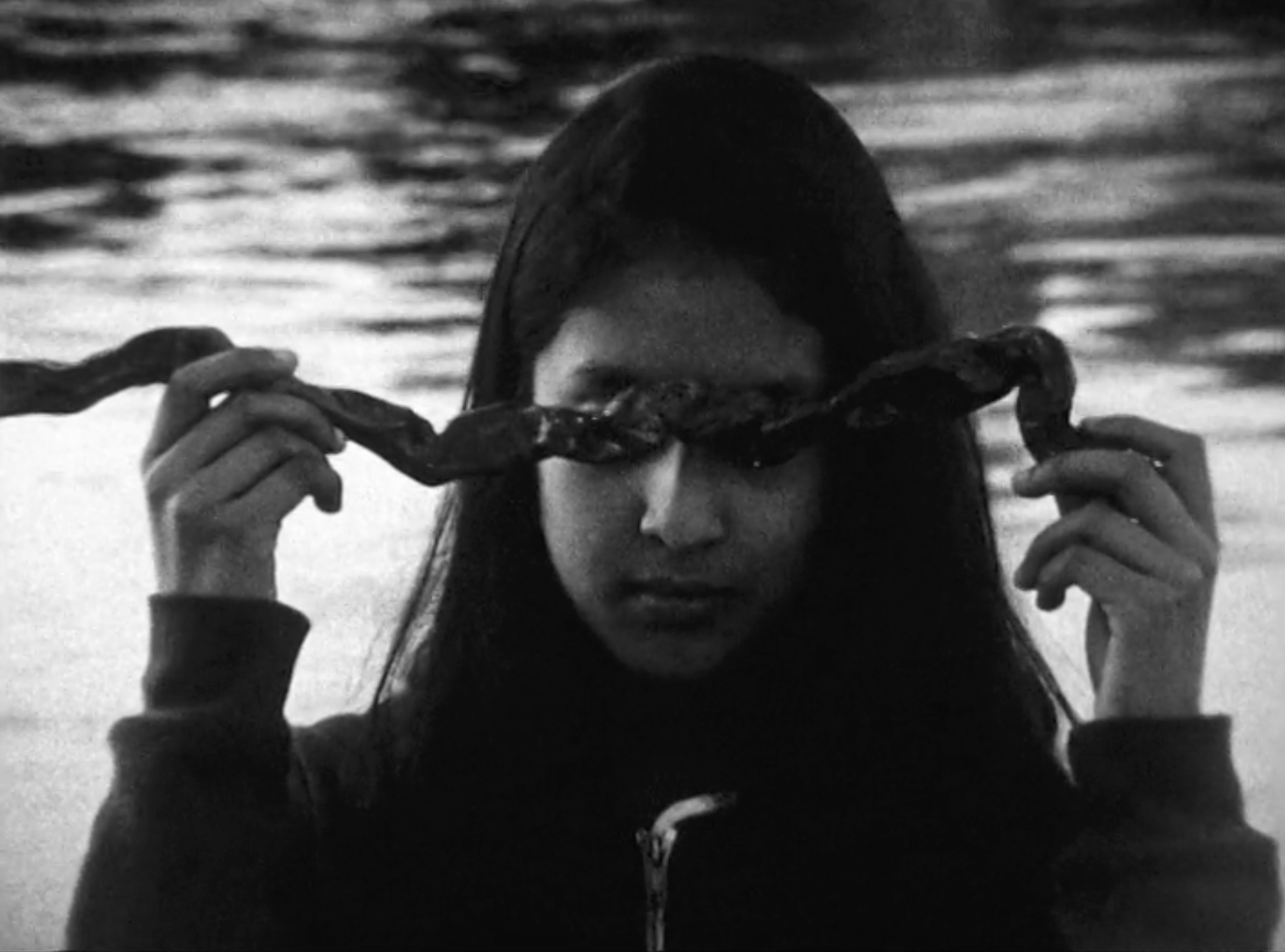
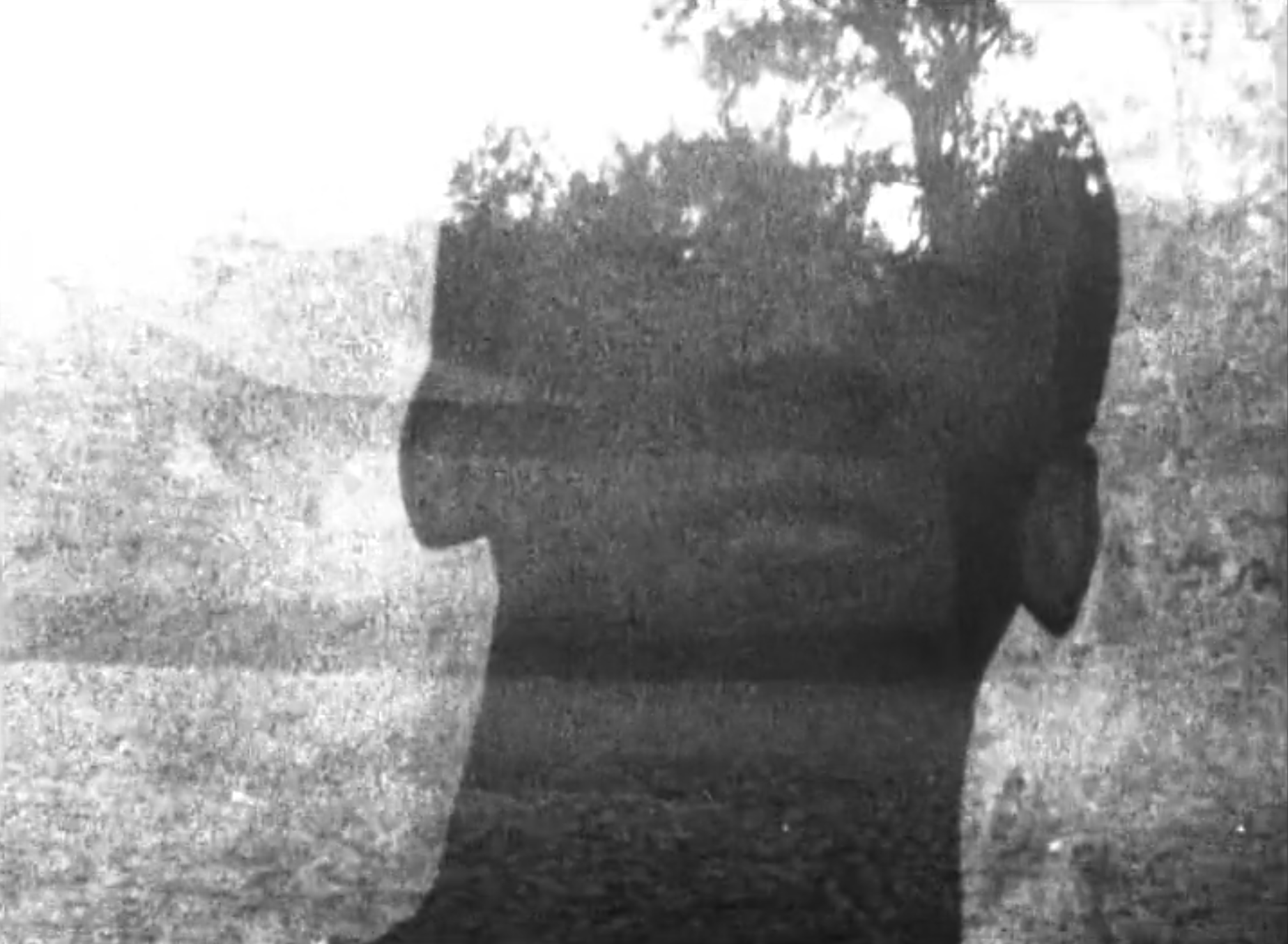
Other engagements with nature burrow into the subconscious. Kopf (Head, 1975) offers a fractured glimpse into inheritance and apparition. Lassnig places herself among paintings of her parents and earlier self-portraits, surrounding the present body with ancestral echoes that never fully release their hold. Faces drift between generations with uneasy permeability. A sculpted bust of the artist appears outdoors in stop-motion animation, rotating stiffly in the garden. Near the water’s edge, Lassnig wanders with the uncertainty of someone inhabiting several temporalities at once. The film’s stillness carries a peculiar dread, as if selfhood were always on the verge of dissolving back into the dust from which it emerged.
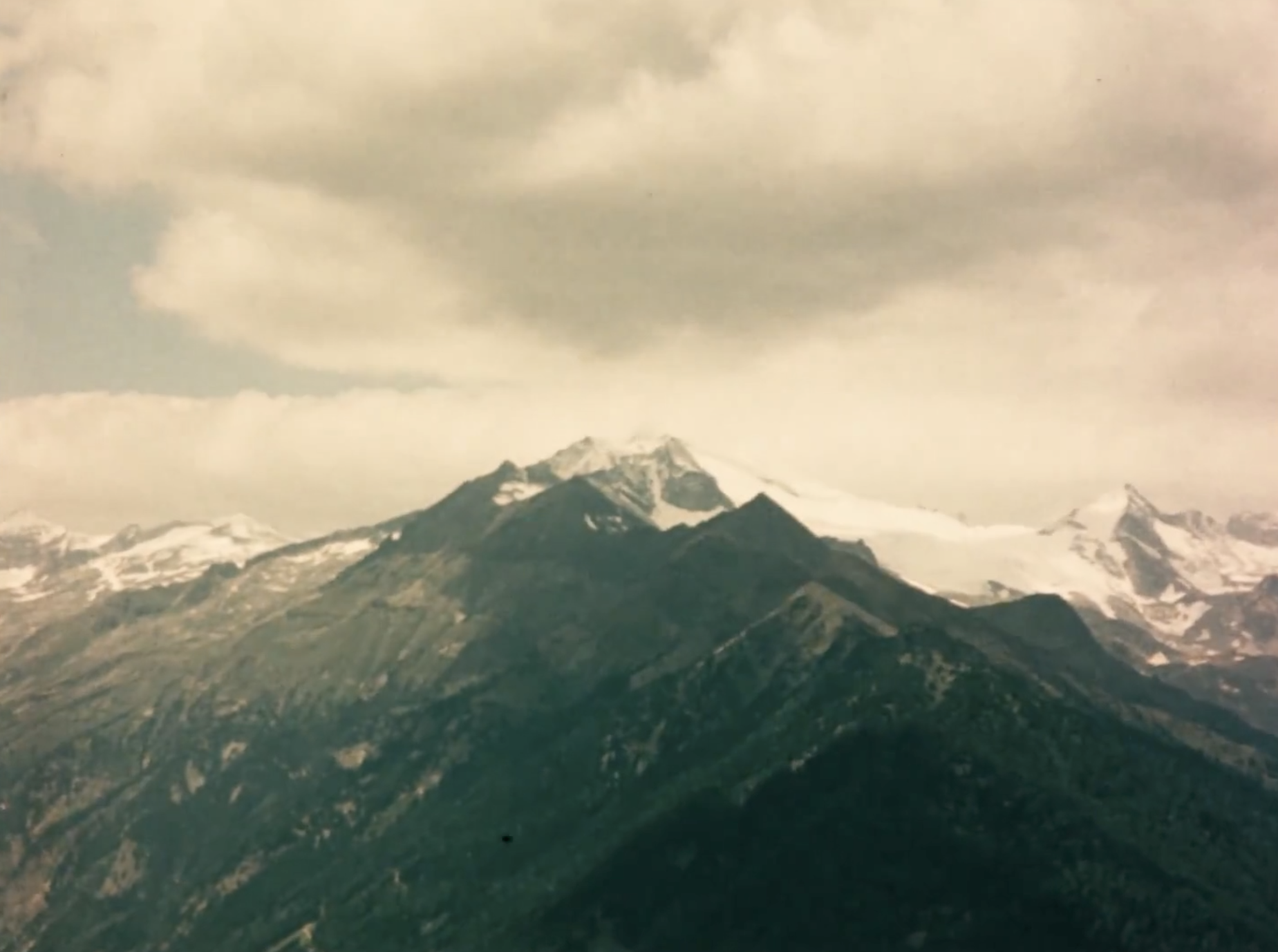

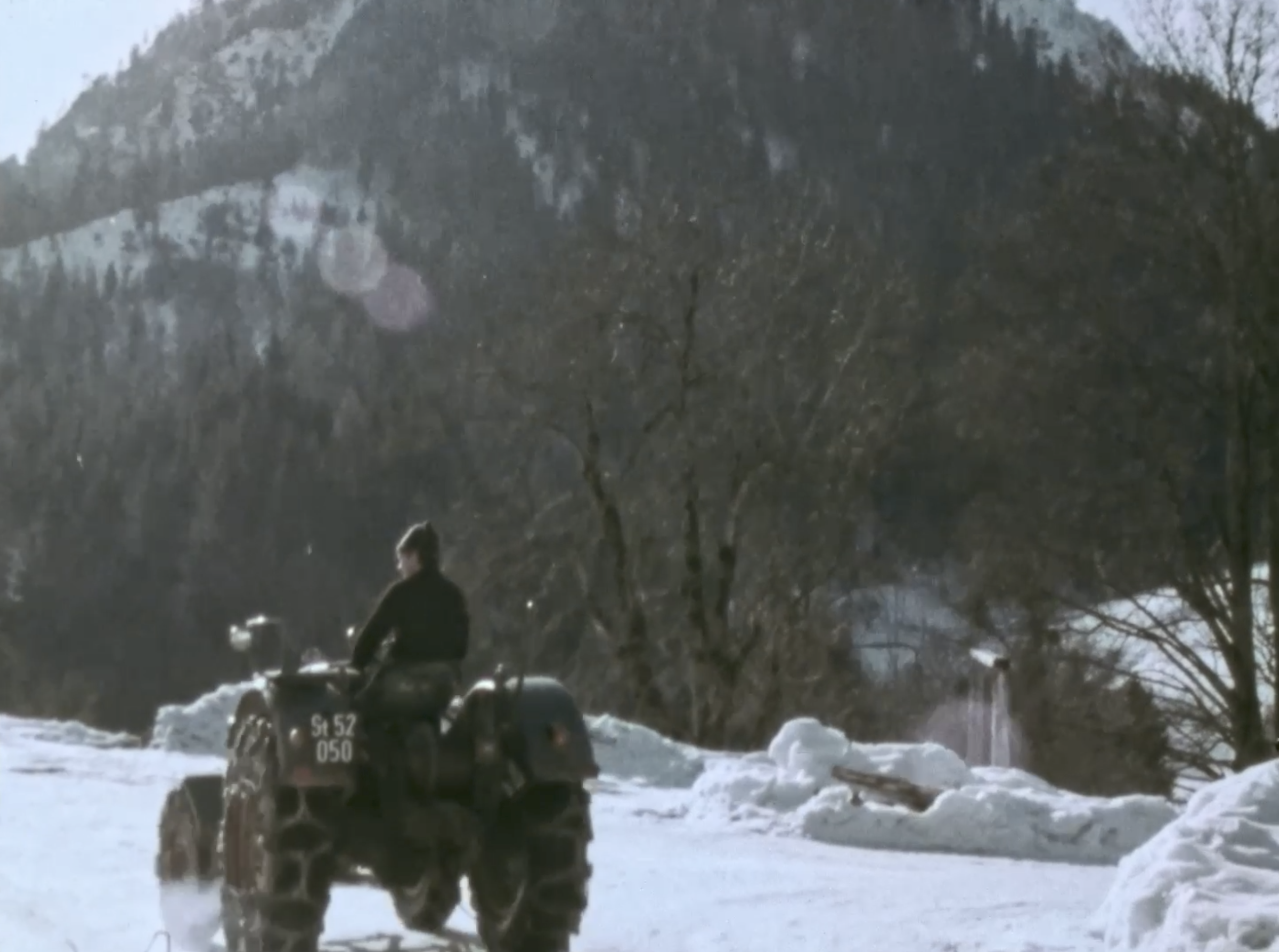
Mountain Woman is another outward examination. Filmed in Lassnig’s home province of Carinthia, in the mountainous village of Maltaberg, it observes the daily existence of a farmer moving through cycles of labor that appear both eternal and exhausting. Animals are fed, children are tended to, and tools are carried across unforgiving terrain. Yet the surrounding alpine beauty never softens the severity of survival, the mountains looming as ancient witnesses to repetition. As domestic life merges with geological time, the cyclical structure produces an uncanny distance, encouraging viewers to confront the comfort of spectatorship itself. Hardship persists whether or not it is being observed, drawing a line to other forgotten voices across space and time.
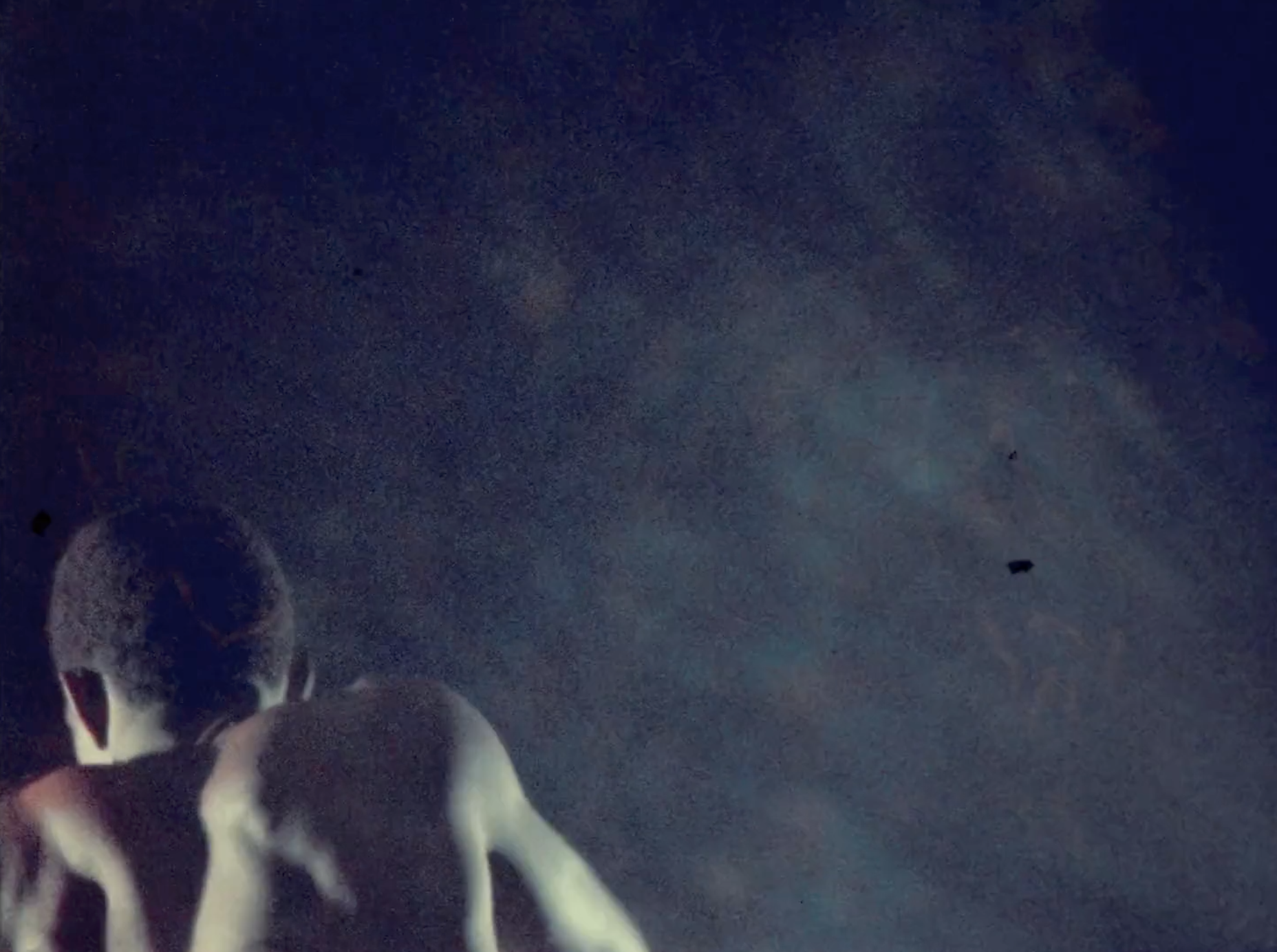

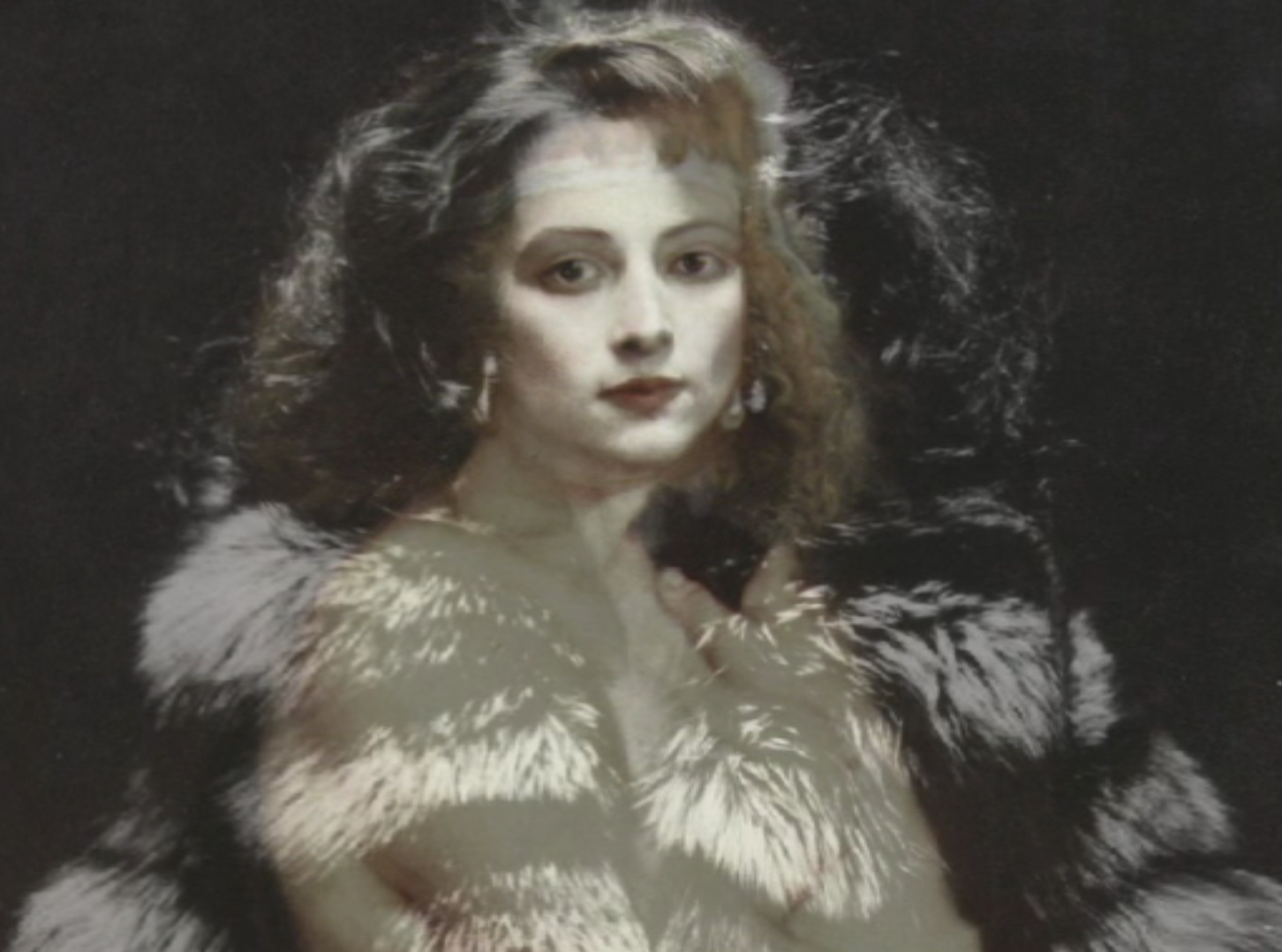
And yet, the issue was never whether Lassnig was a political artist. Rather, she operated by a relentless scrutiny of the unstable territory where sensation becomes character. Her practice understands that the body absorbs ideology before language ever articulates it. One sees this clearly in Black Dancer (1974), where Harry, a friend of Lassnig’s, moves with studied self-consciousness beneath (and outnumbered by) the hovering specters of a group of female ballet dancers layered through double exposure. The male body here becomes uneasy under scrutiny, transformed into an object whose visibility carries discomfort rather than mastery.
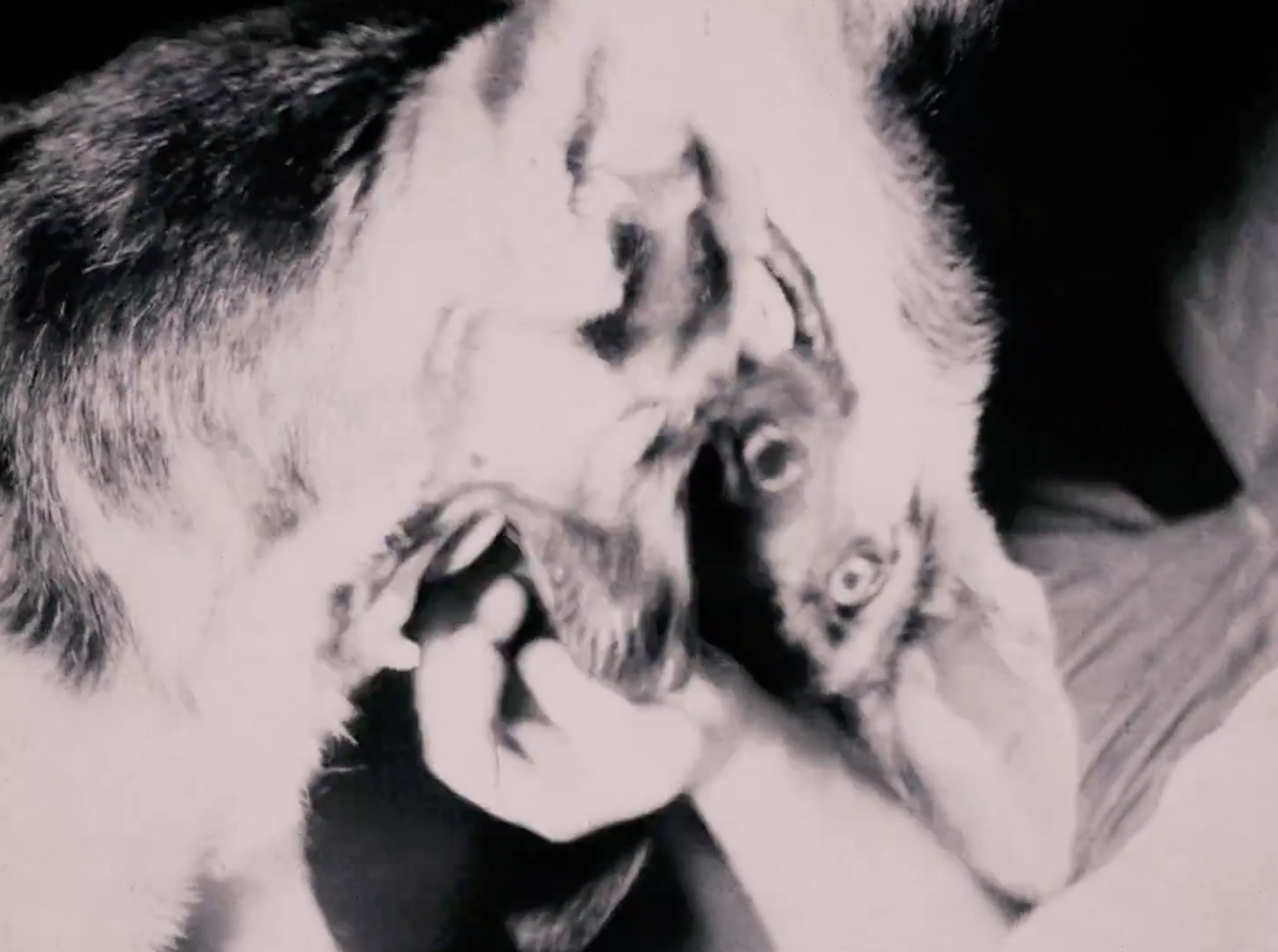

The same dissolution of fixed boundaries appears in Dog Film, one of her most unexpectedly tender creations. Dogs race through agility courses, lounge beside humans, lick faces, and intermingle through multiple exposures that gradually destabilize distinctions between species. At one point, a woman points to her own canine teeth while gazing into the camera, quietly acknowledging the animal architecture hidden within the human face itself. Lassnig treats instinct not as something primitive to overcome, but as a submerged continuity that binds living creatures together beneath civilization’s cosmetic surfaces.
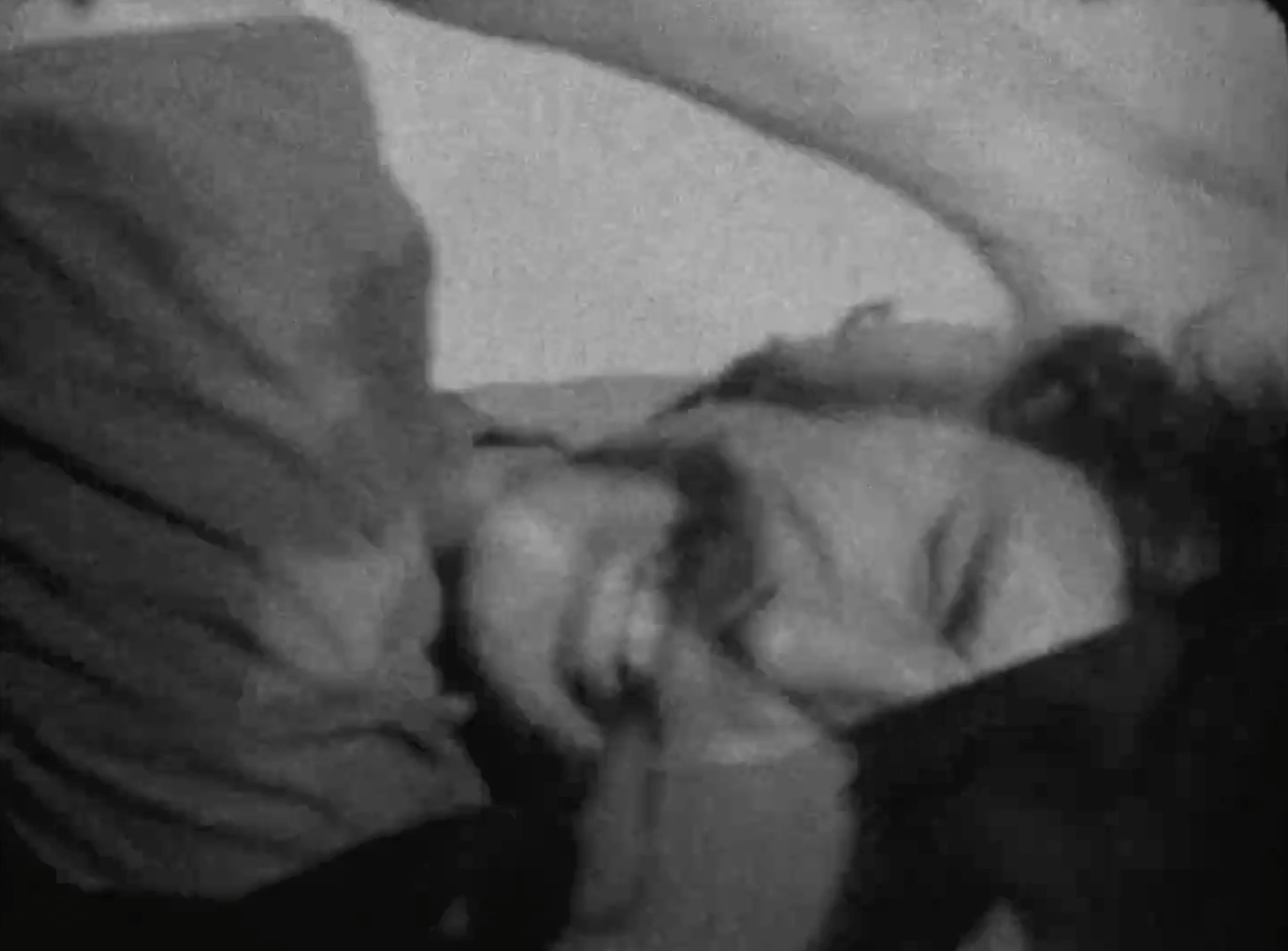
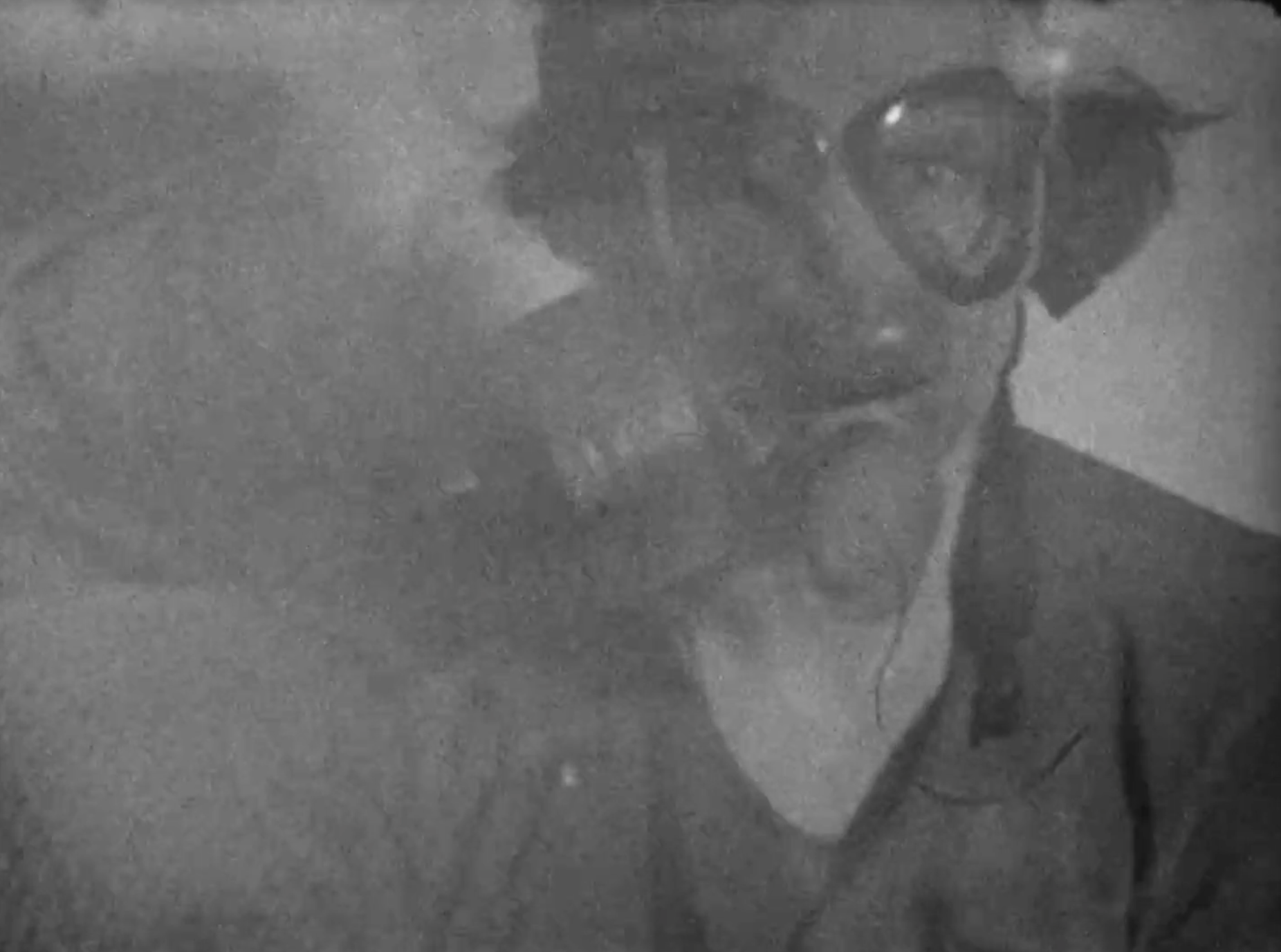
Even when documenting external events, Lassnig transforms them into reflections on corporeal vulnerability. Nitsch (1972), filmed during a performance by Viennese Actionist Hermann Nitsch at New York’s Mercer Arts Center, combines grotesque ritual imagery with footage of the Vietnam War and convulsions from her neighbor Roger wearing a gas mask. Flesh dominates every frame. Bodies rupture, twitch, perform, and decay. Yet the work avoids sensationalism through its deeply personal framing. Lassnig inserts herself into the montage, implicating her own body within the violence being observed. Catastrophe is never far away.
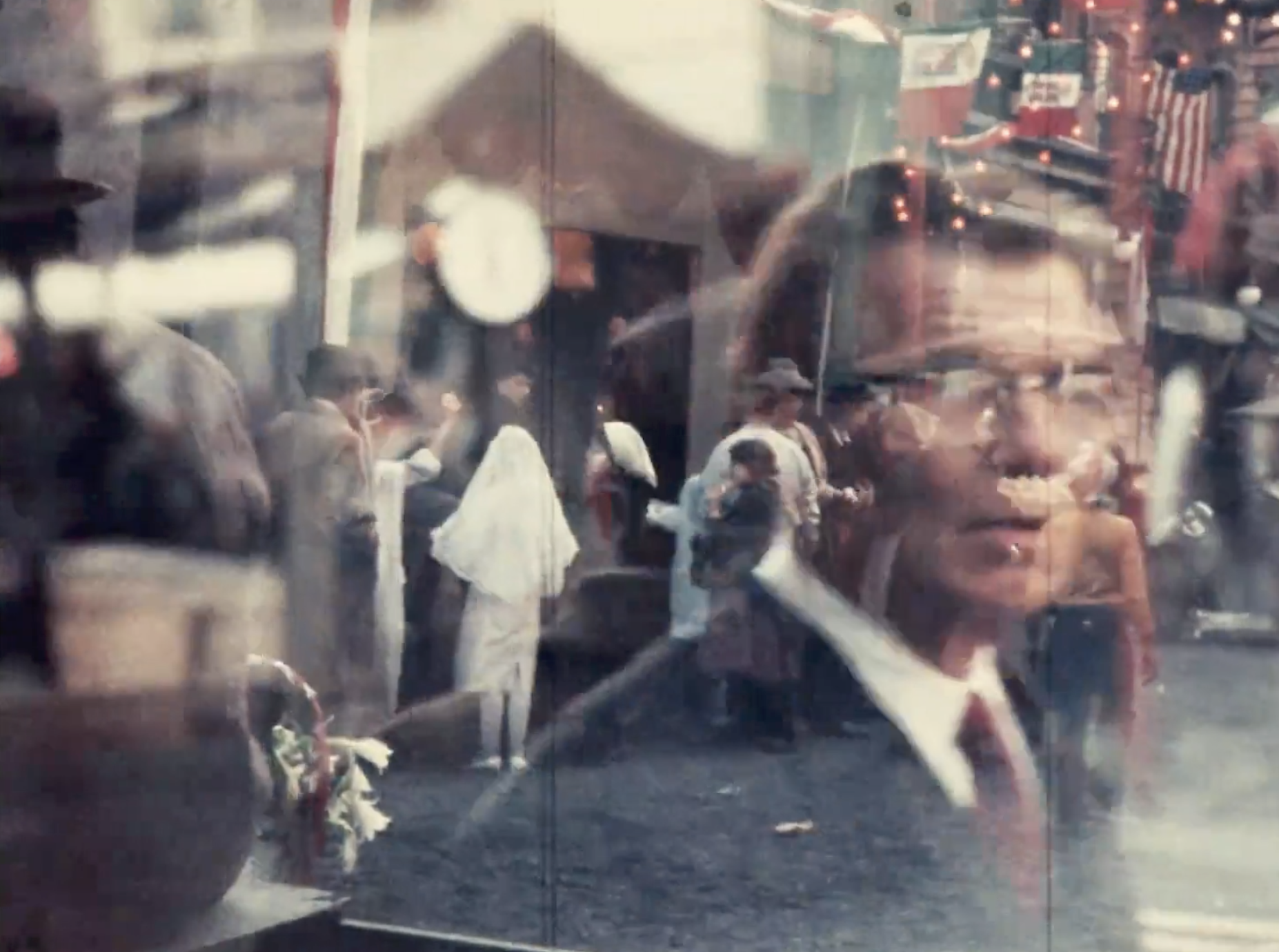
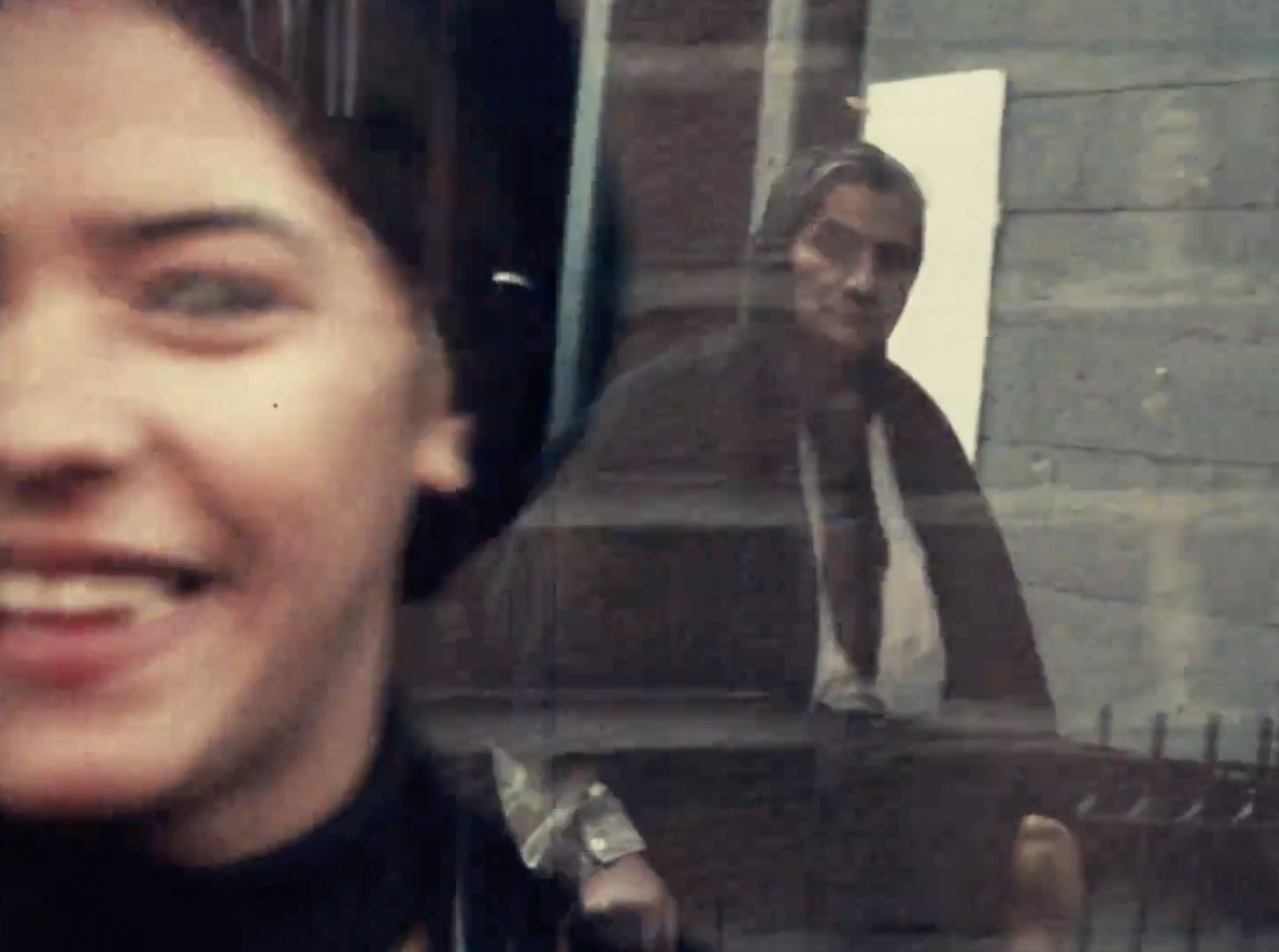
In Godfather I (1974), shot around Francis Ford Coppola’s The Godfather (1972), Lassnig wanders through transformed New York streets where period cars and storefronts create a sense of temporal disorientation. The mythology of masculine cinematic power surrounding Coppola’s production, which happened to take place right outside her apartment, dissolves beneath her gaze into something stranger and more unstable. Extras and bystanders become more fascinating than stars. Historical recreation folds into contemporary reality until the city itself feels uncertain of its own chronology.
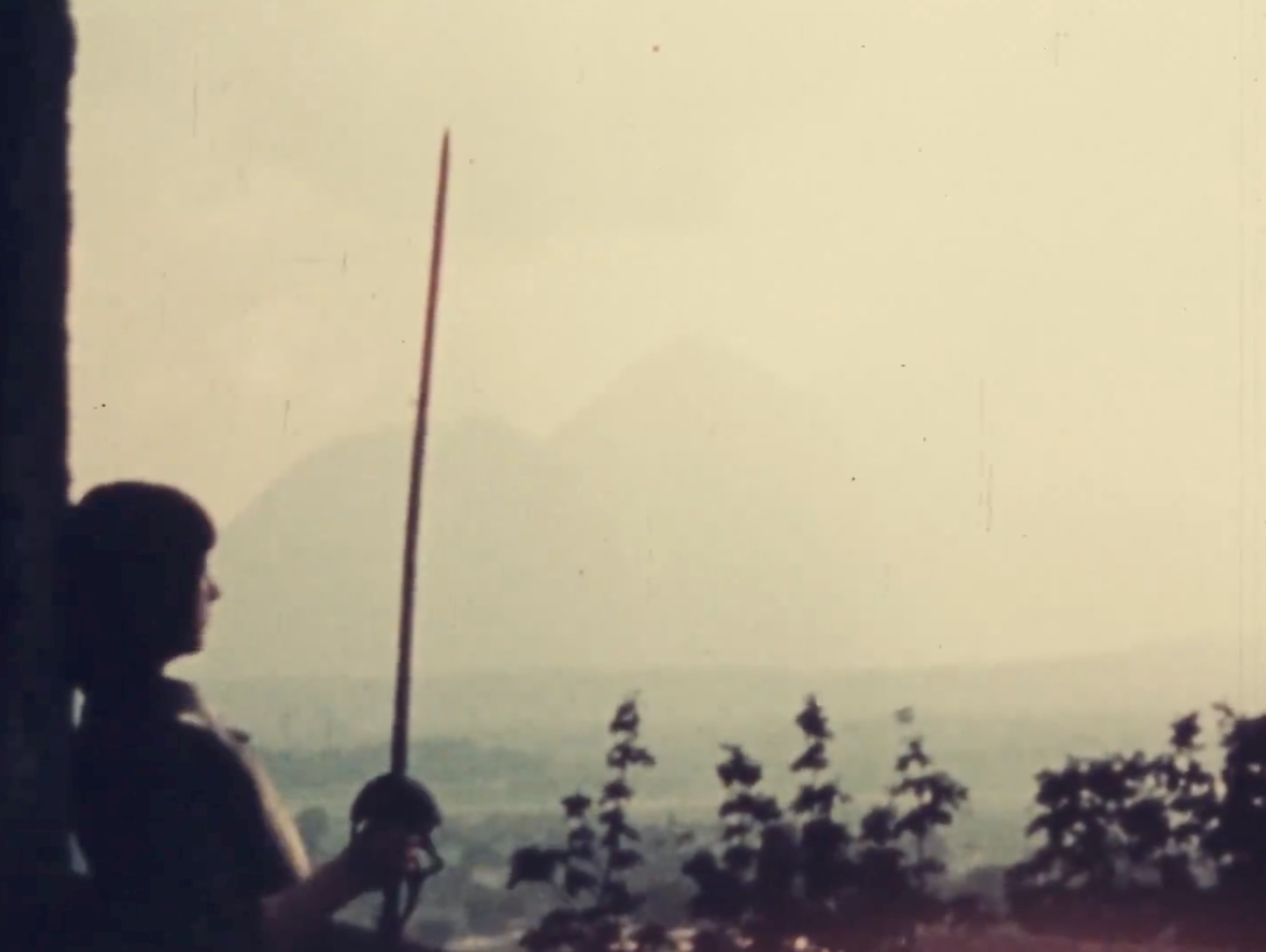
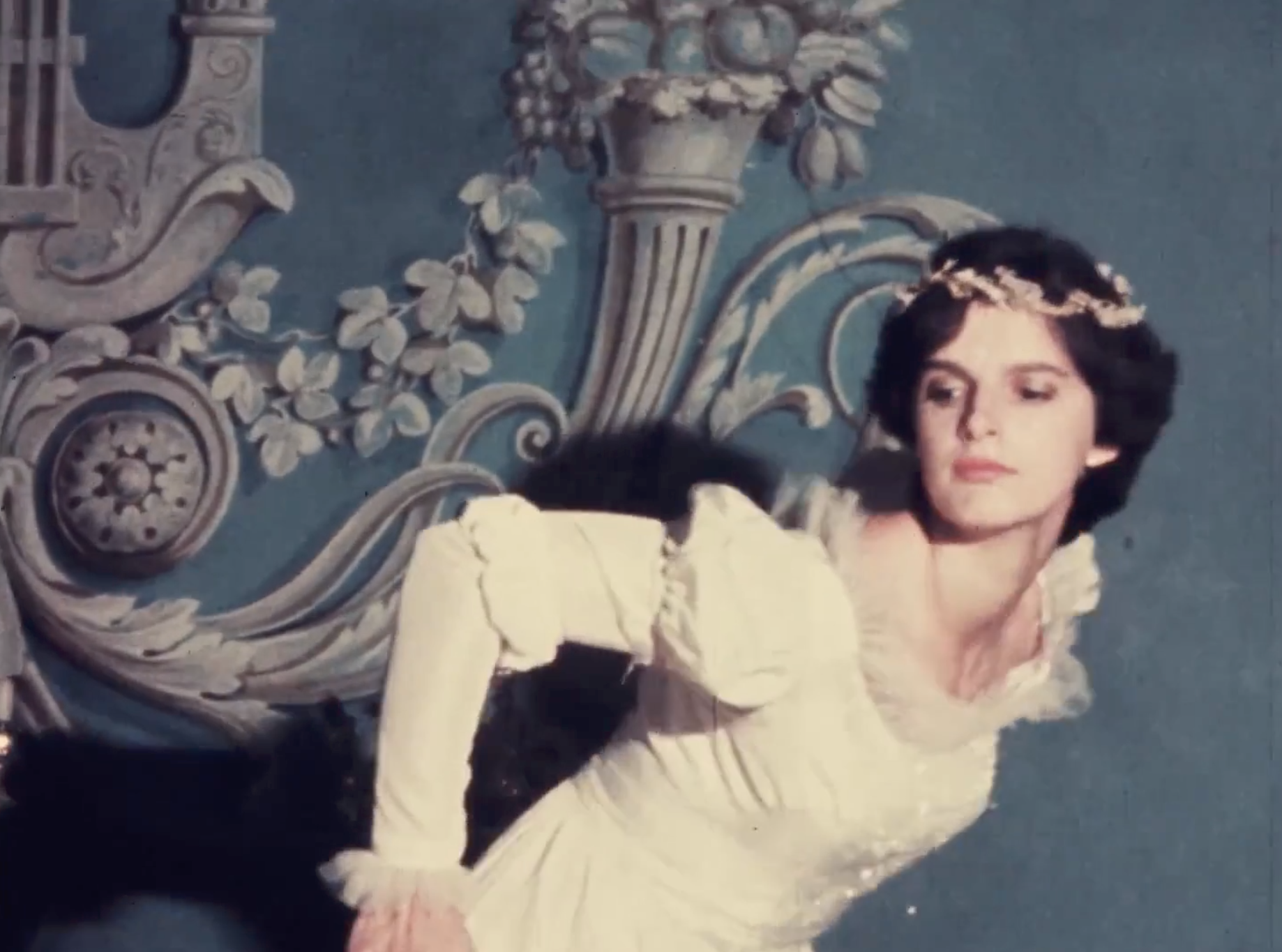
There are moments when Lassnig reaches toward something resembling narrative, though even these gestures remain haunted by skepticism. The Princess and the Shepherd. A Fairytale (1976) presents a lonely princess whose tears are collected in jars while suitors fail repeatedly to stir her from emotional paralysis. Eventually, she follows the sound of a shepherd’s flute into pastoral simplicity. Yet the piece radiates unease beneath its mythic structure. Lassnig pauses scenes at unexpected moments, introducing ruptures that prevent surrender. Happiness itself begins to feel theatrical, a script inherited rather than believed. The film watches romance with exhausted suspicion.

Perhaps this is why Jocelyn Miller’s observation in her essay “Optical Printer” feels so central to understanding Lassnig’s achievement: “Whether making images from paint or celluloid, her art came from thinking with the body, enhancing and radically trusting her own vision so it entered not just through her eyes, but through a multiplicity of organs, even prosthetic machine parts like her camera.” Lassnig understood the moving image not as escape from corporeality, but as an extension of it. The camera became another organ through which sensation could pass. Her notebooks reveal this repeatedly. To render was to touch. To animate was to restore pulse to matter. The mechanical apparatus of recording never diminished her tactile relationship to artmaking. It intensified it.

This becomes especially moving when considered alongside her eventual estrangement from New York. Upon returning to Austria, Lassnig severed ties with much of her American life, including the unfinished films documented in this collection. Their rediscovery carries emotional complexity because they preserve states of becoming that Lassnig herself chose not to revisit publicly for decades. And yet, fulfillment in Lassnig’s universe never whispers finality. Nearness itself becomes the condition. Art preserves thirst even as it promises relief.

Such tensions become profoundly illuminating when placed beside the words of Deborah King, who writes: “The phrase, ‘the personal is political’ not only reflects a phenomenological approach to women’s liberation—that is, of women defining and constructing their own reality—but it has come to describe the politics of imposing and privileging a few women’s personal lives over all women’s lives by assuming that these few could be prototypical.” This sentiment reverberates through Lassnig’s output with unusual precision. Lassnig persistently resisted becoming symbolic. She distrusted the flattening effect of ideological legibility. Her body in never claims universality. It mutates with radical specificity.

This may ultimately be the charge of her uncompromising spirit. Lassnig understood that authenticity can itself become tyrannical when it is transformed into a representative expectation. The danger within identity discourse lies partly in the seduction of exemplary narratives, in the desire to convert singular experience into a collective template. Lassnig refuses this conversion at every turn. Her body-awareness is too unstable, too contradictory, too private to function comfortably as emblematic. She documents female experience without pretending to encompass womanhood itself.

That refusal grants her work extraordinary ethical openness. She does not instruct viewers how to interpret embodiment. She exposes embodiment as fundamentally unresolvable. Pain coexists with absurdity. Solitude drifts beside erotic uncertainty. Aging appears grotesque and luminous simultaneously. Domestic life suffocates while generating unexpected wisdom. Lassnig leaves all these tensions alive within the frame, resisting the cultural impulse to organize experience into moral clarity.

In this sense, she arrives at something stranger than autobiography. One watches her and begins to suspect that consciousness itself may simply be the scar tissue left by experience. Her images linger because they never stabilize into any definitive message. They remain vulnerable to reinterpretation, vulnerable even to themselves.

Perhaps that is why these works feel so startlingly contemporary. They understand, long before the language became fashionable, that visibility can become another form of confinement. To be seen too clearly is to risk becoming reducible. Lassnig protects herself from reduction through fragmentation, humor, grotesquerie, abstraction, and interruption.

And so, the lasting miracle of her oeuvre is not that it survived but that it survived without surrendering its instability. Her films still pulse with incompletion. They still behave as living organisms rather than inanimate artifacts. Watching them, one has the uncanny sensation that they are studying us in return, measuring our own thresholds, asking whether we, too, possess bodies we have never fully entered. Somewhere beneath all the overlays, all the fractured anatomies and unfinished gestures, Lassnig seems to suggest that a human being is not a fixed entity moving through time but a temporary congregation of sensations waiting briefly inside flesh before dispersing again into the dark.
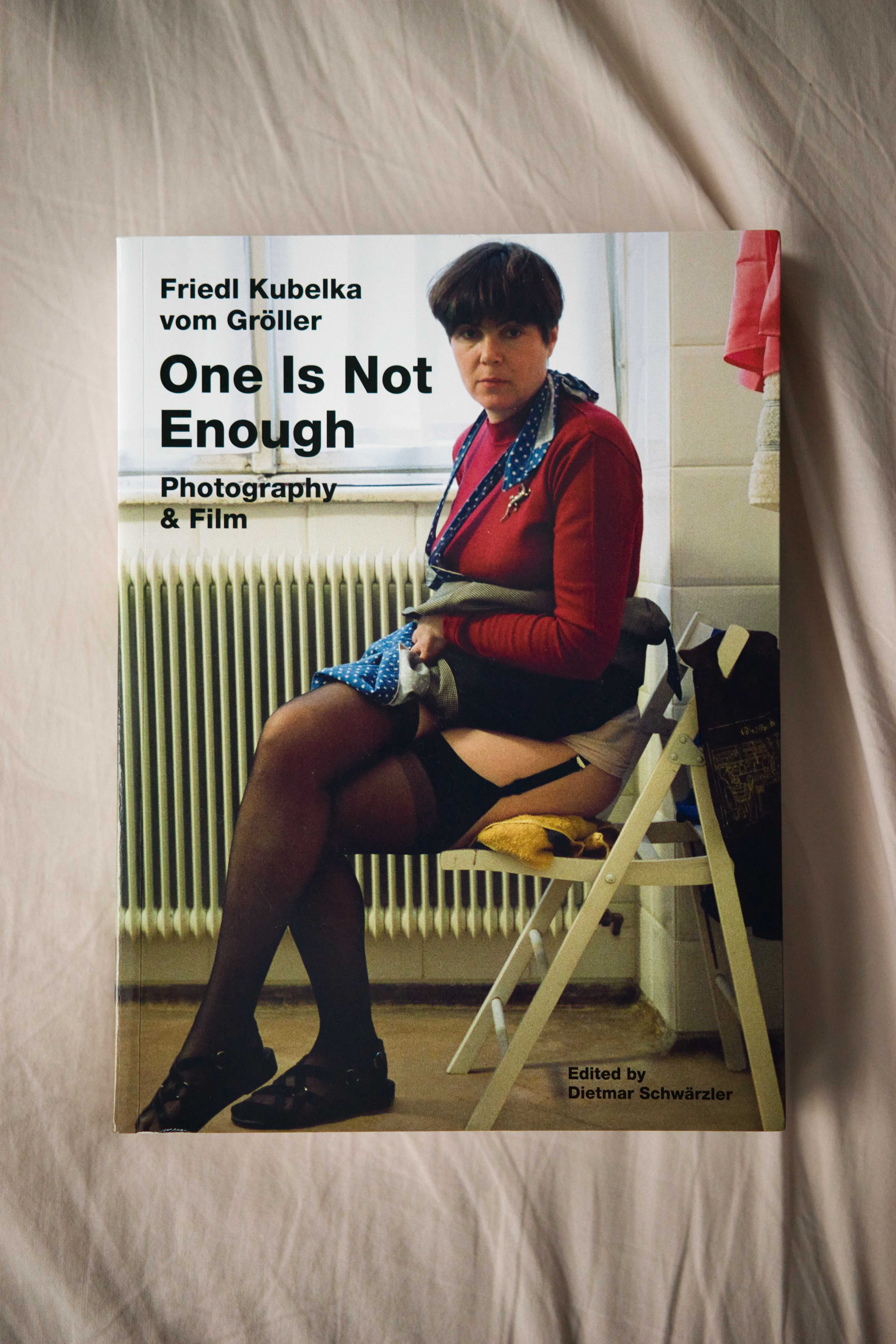
Friedl Kubelka: One Is Not Enough. Photography & Film (INDEX 049)

At the moon´s gloaming I like to look
At the grey metropolis, crumbling ruins
Which serve as a measure of its greatness
On which humans learn to measure themselves.
–Christian Friedrich Hebbel

There are artists who continually reinvent themselves in pursuit of freedom. Friedl Kubelka, who in moving pictures assumes the name Friedl vom Gröller, has instead devoted her life to the opposite challenge: remaining within the same existential setting long enough for its hidden cracks to show. Across more than five decades, she has returned obsessively to faces, apartments, lovers, strangers, aging skin, mirrors, city corners, and windows clouded by rain or breath. Her work unfolds through a deepening sort of recurrence. The same mysteries persist from decade to decade, altered only by time’s pressure upon flesh and memory. Looking through One Is Not Enough becomes less an encounter with an oeuvre than an immersion into a trembling human continuum where identity never settles into certainty. Every face seems temporarily assembled from other versions of itself. Every gesture feels inherited from forgotten rituals. Her art understands personality as something permanently unfinished, a surface endlessly rewritten by experience, desire, fatigue, and solitude.

Editor-curator Dietmar Schwärzler’s introductory essay, “Aging – An Ideal Condition,” frames Kubelka above all as a portraitist, though portraiture here undergoes a strange dissolution. Traditionally, the portrait seeks definition, some concentrated revelation of character. Kubelka, on the other hand, is a believer in accumulation. The title One Is Not Enough therefore names both a method and a philosophy. A single exposure cannot contain a life. One expression collapses beneath the weight of all the others pressing invisibly behind it. Her sequences unfold with the nervous rhythm of consciousness itself, every slight alteration in posture or gaze destabilizing what came before. Looking at her serial works feels uncannily close to remembering someone rather than observing them.

This sensibility reaches its most monumental articulation in Yearly Portraits, the lifelong self-documenting project she began in 1972, taking one picture of herself every day for a year and repeating the process every five years thereafter. Seen together, these constellations become devastating meditations on time’s physicality. Lovers appear in bed beside her. Friends crowd into cramped interiors. Cigarettes burn down. Hairstyles vanish into different eras. The body thickens, loosens, hardens, softens. Her face slowly acquires the density of hard-won wisdom. Yet the real force of the series lies in its refusal of vanity. Kubelka never offers herself as icon, nor as confession. She studies herself with the same merciless curiosity she directs toward everyone else. Some poses carry vulgarity, exhaustion, and erotic indifference. Others radiate fleeting joy before collapsing back into ambiguity. In one sense, the work documents aging. In another, it documents the terrifying instability of the self, how one drifts through countless versions of personhood without ever fully becoming any of them.

Elsewhere in the book, one encounters entire worlds compressed into sequences that refuse closure. The Thought series possesses a particularly startling intimacy. Kubelka records the micro fluctuations of consciousness itself while subjects respond internally to unseen stimuli. Her mother, Lore Bondy, listens to a 1945 Austrian National Council debate, her face moving through skepticism, sorrow, distraction, historical exhaustion. Her daughter drifts into daydreams so completely that nothing else seems to exist around her. These are not reactions in the ordinary sense. They feel closer to thought becoming visible before language can imprison it. One begins to understand how little of another person we ever truly perceive.

Even works that initially appear playful are scathing critiques of proof. Broadway, San Francisco (1974) arranges peep show signs into a rigid 9×9 grid pulsing with urban lust and commercial seduction, only for the lower left corner to quietly disclose Kubelka and her husband embracing in bed. The tenderness arrives almost accidentally, tucked beneath the machinery of desire capitalism projects across the city. Suddenly, the surrounding promises above appear hollowed out by genuine intimacy below. In another series, Sigmund Freud’s Waiting Room, Berggasse 19, psychoanalytic history lingers ghostlike through the furniture and walls. Kubelka photographs the room not as sacred site but as residue chamber, a place where traumas still seem suspended in the air long after the voices articulating them vanished.

Her portraits from Dakar and the Atelier d’Expression sequences achieve extraordinary emotional density through their attention to material surroundings. One artist appears swallowed by a tangle of brushes and artistic debris, his body half dissolving into the very process of creation. The clutter around him acquires psychic force, as though thought itself had externalized into objects. Other artists sit beside walls crowded with unfinished canvases, masks, scattered tools, traces of previous gestures. Kubelka understands studios as extensions of consciousness, environments where private mythologies gather physical form.

Throughout the book, geography operates as psychic signature. Rome, New York, Paris, Dakar, St. Louis, Piedmont: these emerge through fragments of walls, gestures, windows, and bodies caught in transitional states. Kubelka moves through these places as though searching for fleeting temperatures rather than permanent landmarks. One begins to recognize her visual language immediately. The frontal regard. The grain of black and white. The sense that every room has absorbed years of invisible conversations. Her portraits from Senegal resonate especially deeply because they reveal how instinctively she responds to artistic communities formed under historical pressure. The supplemental magazine dedicated to muralist Pape Mamadou Samb, known as Papisto Boy, extends this dimension beautifully. Papisto Boy transformed Dakar’s walls into public memory, covering them with revolutionary figures, laborers, anticolonial resisters, and saints of survival. His works possess both immediacy and erosion, forever exposed to neglect. Kubelka understands him not simply as a painter of walls but as someone wrestling history back into visibility. In the Bel-Air industrial zone, his depictions of Lat Dior resisting colonial rail expansion or Amílcar Cabral dreaming liberation from Portuguese domination become inseparable from the physical decay surrounding them. The paint may crack, but histories persist.

This tension between endurance and disappearance permeates the Dakar period of her filmmaking. 27.12.2013 St. Louis Senegal overlays faces and landscape in luminous double exposure so that fields seem to bloom from human interiors. Scars of European domination seep through sunlight. In Adama Diouf, the eponymous philosopher and teacher ambulates with extraordinary warmth, greeted by townspeople who clearly adore him. Kubelka follows him through markets crowded with fish, through streets layered in color and exhaustion, before drifting toward Papisto Boy’s murals and a worn Sartre paperback with a cracked spine adjusted carefully by hand. Madeleine Bernstorff describes Kubelka’s portraiture as balancing relations “with a touch behind the camera,” and nowhere is this clearer than here. Diouf’s gaze possesses immense vulnerability. He seems simultaneously present and already receding into memory.

What strikes one immediately upon entering Kubelka’s spaces is their multiplicity. Her sequences do not narrow possibilities toward a definitive representation, as fashion contact sheets do. They proliferate uncertainty. A soul emerges through contradiction, through accumulation, through micro-expressions that undermine one another. Whether she turns toward towering creative figures such as Eric Rohmer, Kenneth Anger, or Shigeko Kubota, or toward anonymous strangers, everyone receives the same trembling attention. Her black-and-white studies carry an almost tactile grain, the faces emerging from darkness with the force of remembered dreams. Even singular works feel accompanied by invisible doubles, echoes reverberating behind the visible surface.

Eva, Bigi, Louise (1984) channels an earthy sensuality that recalls the physical candor of Sally Mann, while the Allegory montages from 2014 summon the spectral theatricality of Julia Margaret Cameron. Women draped in cloth and shadow drift through tableaux poised between myth and domesticity. Kubelka moves fluidly between registers without sacrificing coherence. She possesses a profoundly adaptive eye, capable of becoming severe, erotic, mournful, and mischievous within the span of a few pages.

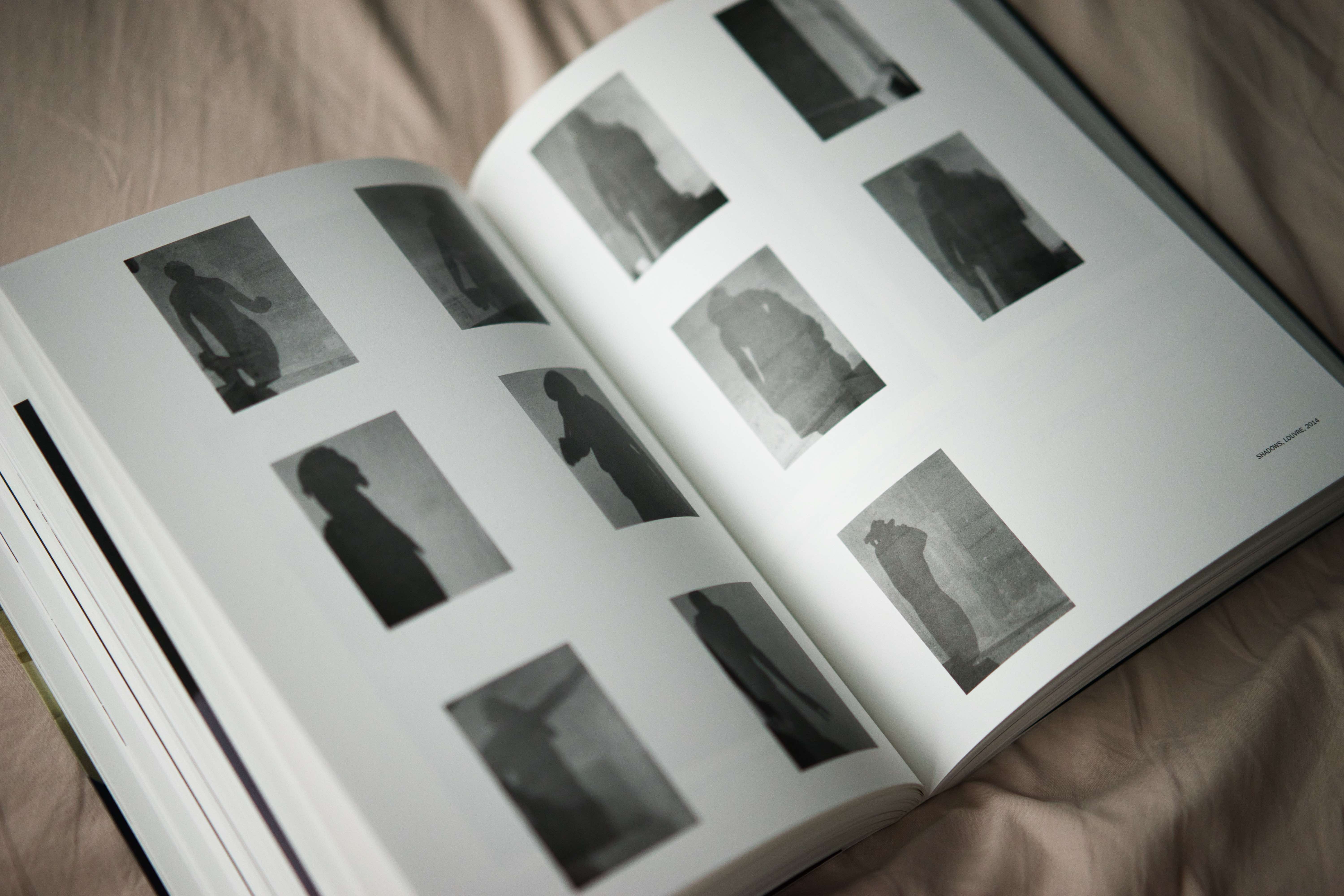
Shadows, Louvre from 2014 may be among her most distilled achievements. Rather than recording the sculptures themselves, she focuses entirely upon their shadows cast across museum walls by artificial light. Civilization survives as intangible residue. Form becomes absence. Presence flickers through disappearance. The world leaves behind silhouettes of itself.

The moving works included in this INDEX edition deepen these obsessions while complicating them through duration and motion. Kubelka’s camera lingers where most directors would cut away. She gravitates toward moments usually discarded as transitional or awkward. In Ma peau précieuse (My Precious Skin), grainy black and white textures smear across the frame while two older women converse outside. Soon the lens presses brutally close to bathroom cosmetics and wrinkled flesh. Dian Turnheim massages products into her face with ritualistic concentration. The closer Kubelka moves toward the skin, the more absurd beauty culture becomes. After swimming in the ocean, the woman returns to her yard and silently mouths “Stop!” toward the camera, as though addressing both the act of filming and the erosion of time.

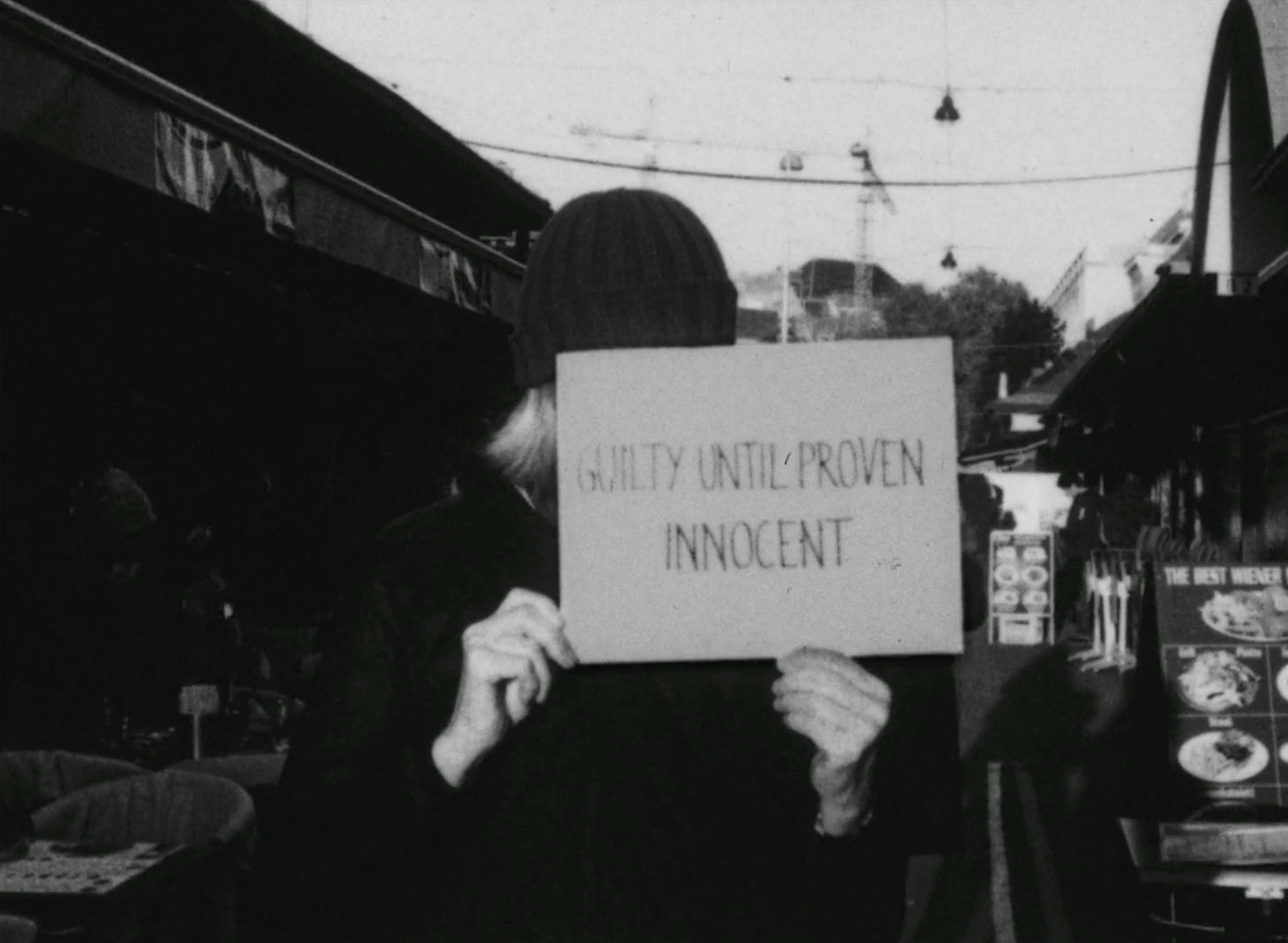
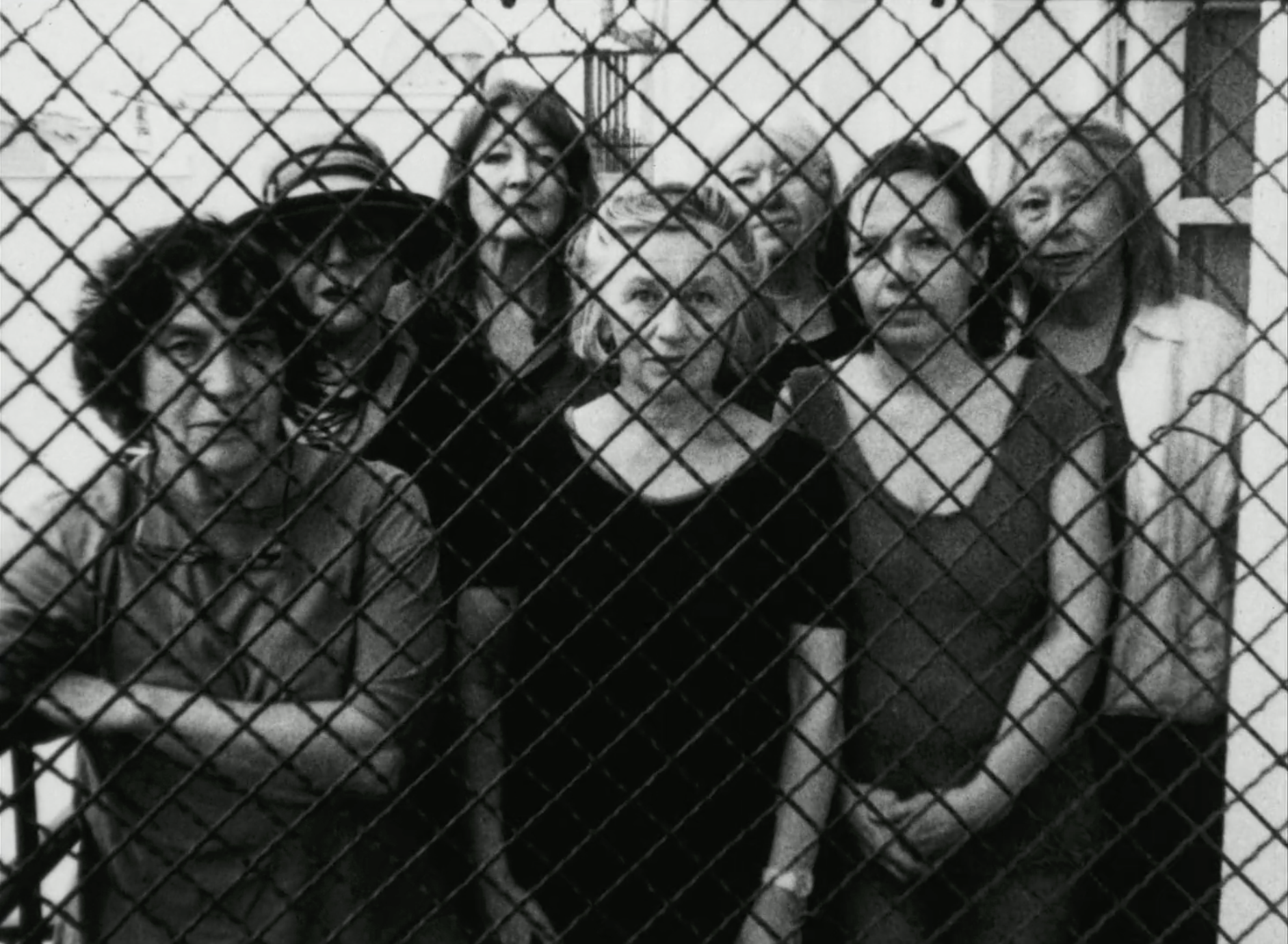
Guilty Until Proven Innocent transforms seven older women behind a chain link fence into an almost mythic collective presence. Their expressions remain unreadable, suspended somewhere between accusation and exhaustion. When Kubelka inserts herself among them and turns toward the others, the gesture feels startlingly intimate, a breach of invisible codes. The close-ups that follow allow the viewer to image lifetimes of sorrow, companionship, betrayal, and endurance. The absence of context enlarges the psychic field rather than diminishing it.

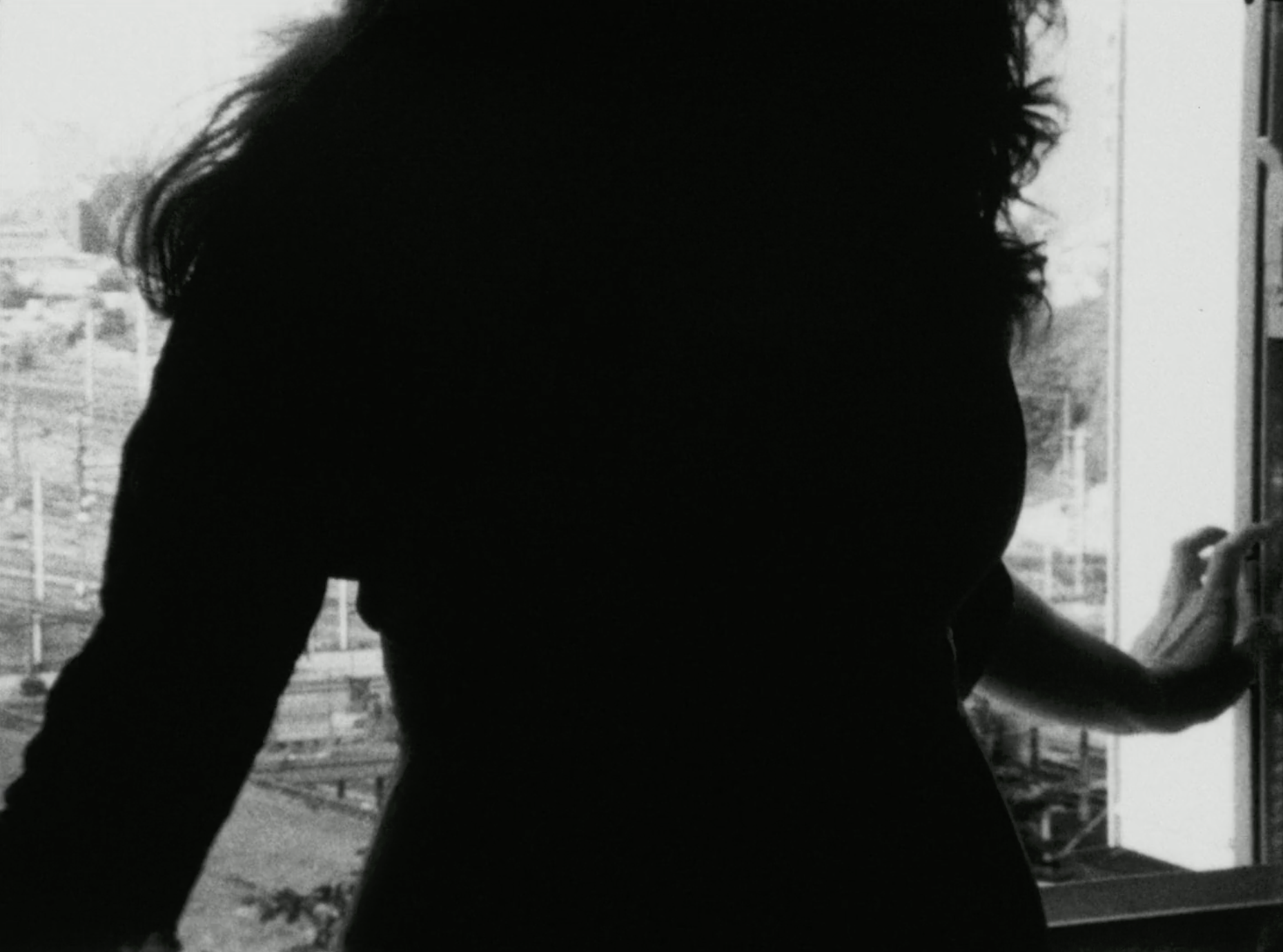
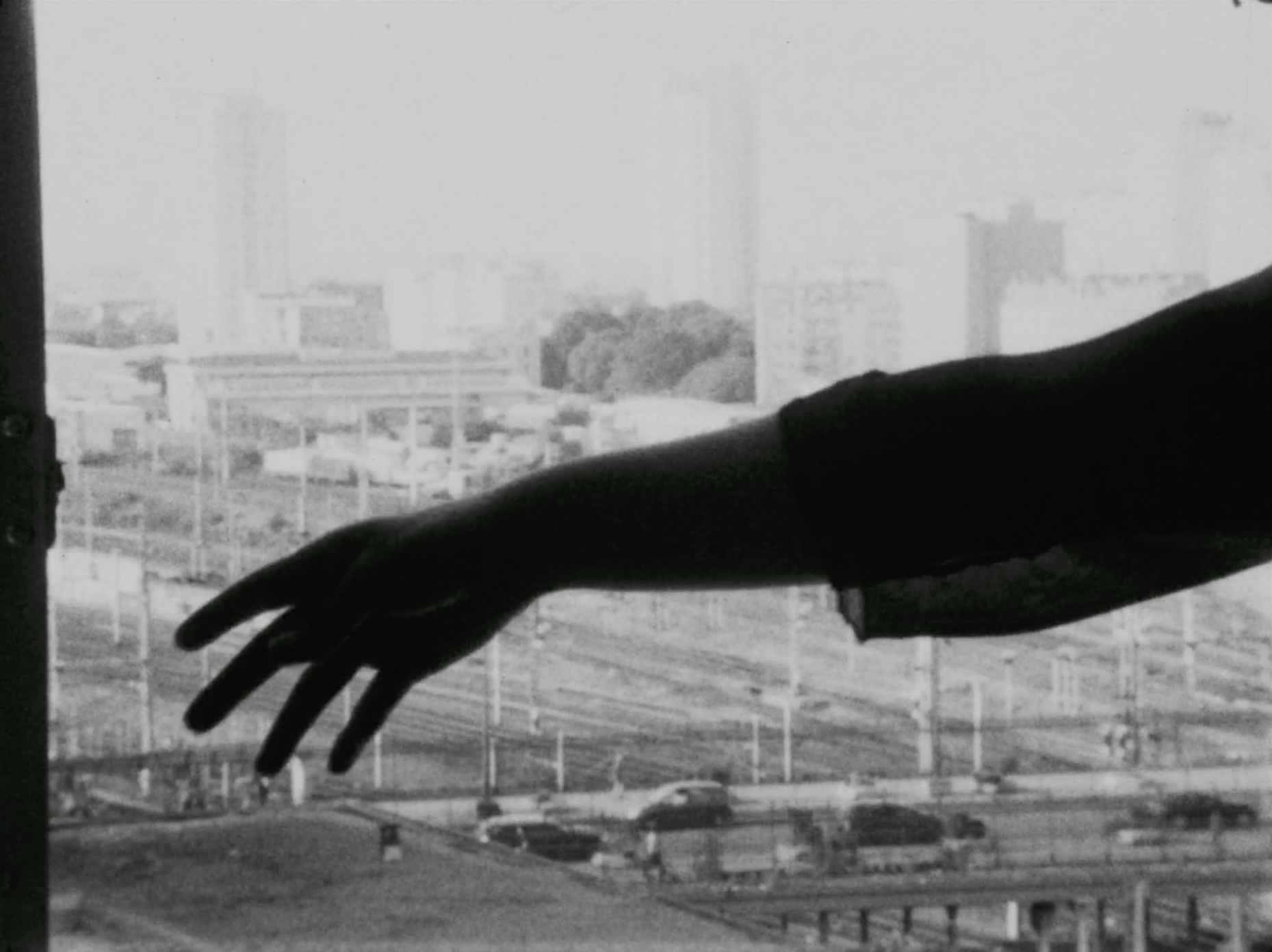
In 66, rue Stephenson, a young woman dances before an open window overlooking the noise of Paris below. Cars, trains, pedestrians pulse beneath her private joy. Exterior chaos gives way to interior refuge as Kubelka later explores the woman’s modest kitchen. The apartment becomes a temporary sanctuary against the world’s relentless machinery.

Poetry for Sale offers one of the collection’s sharpest meditations on artistic survival. Poet Mark Tapley writes beside an open window while attempts at seduction from his embodied muse irritate rather than entice him. Later, his rapid voice floods the Paris Métro as he hawks poems to indifferent passengers. The sudden eruption of sound after extended silence feels almost violent. Tapley’s desperation radiates through every gesture. Then comes a fleeting embrace from a young punk, and suddenly the entire emotional atmosphere shifts. Kubelka understands how fragile artistic affirmation can be, how entire lives hinge upon brief moments of recognition.

This melancholy deepens in THE PARIS POETRY CIRCLE, where poets gather to read aloud while Kubelka studies their faces with hypnotic patience. Voices emerge from bodies that appear isolated even in company. Rather than treating the face as psychological map, she transforms it into a conduit through which solitude passes between people.

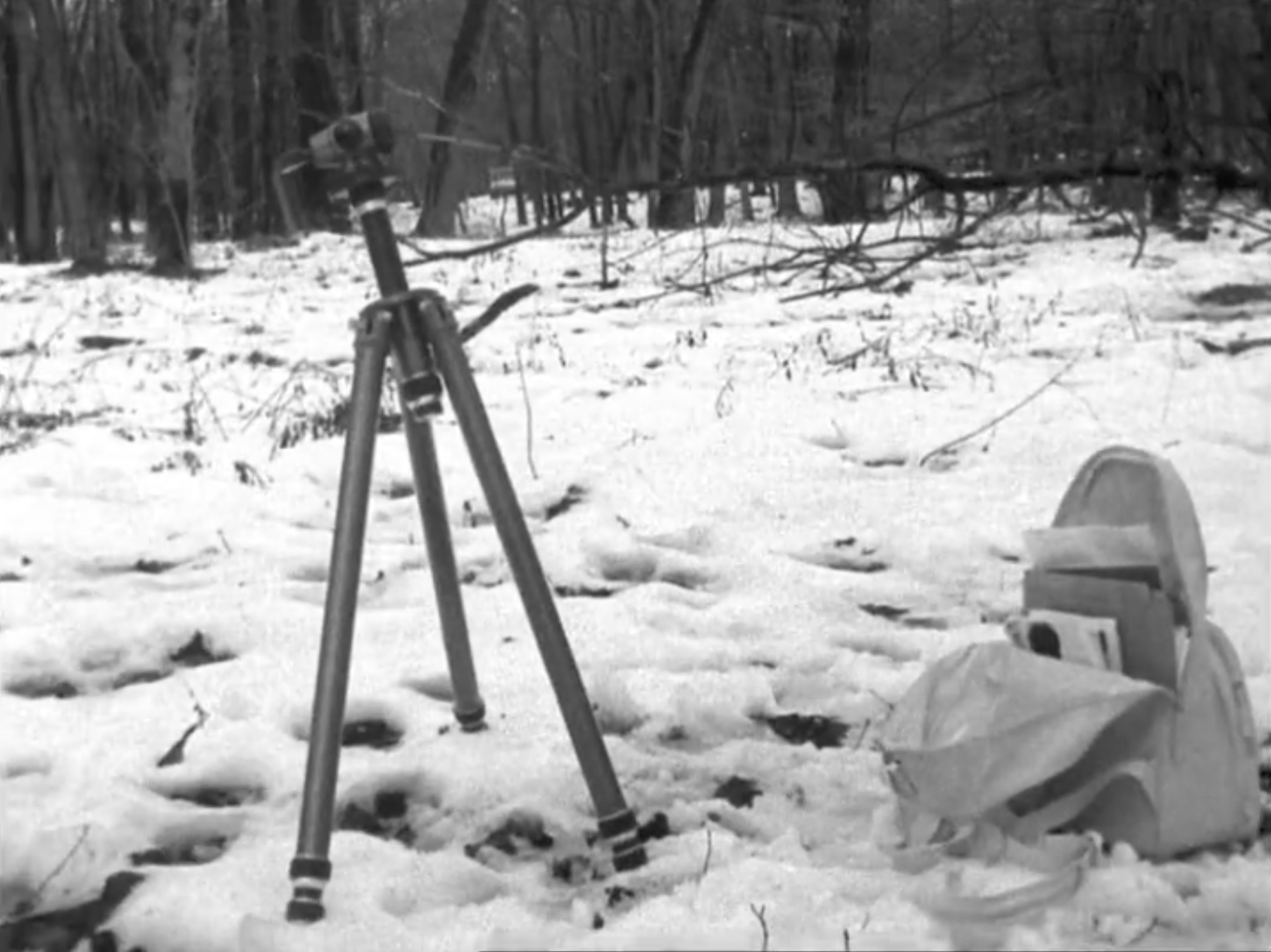
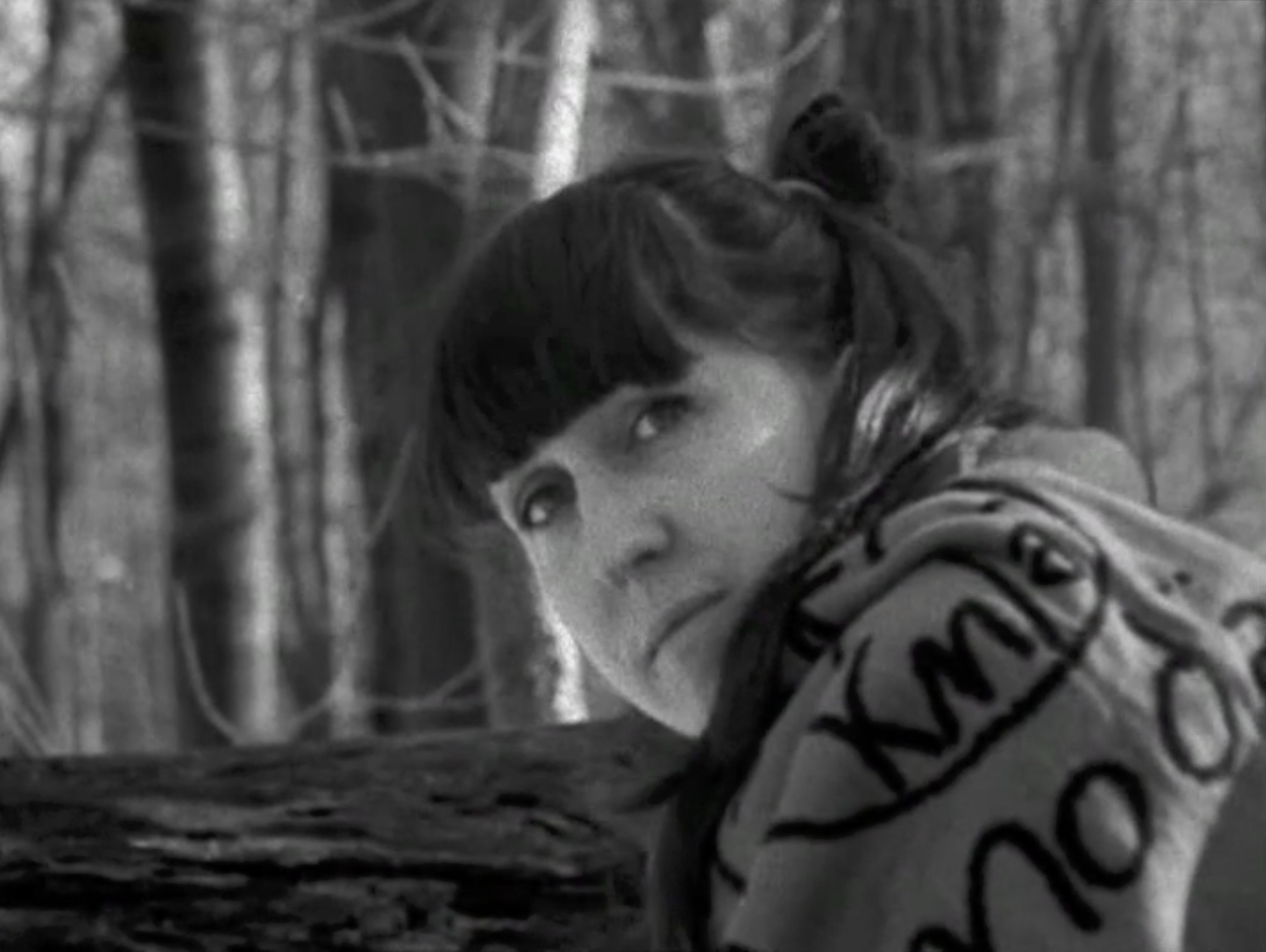
Several works confront voyeurism directly. Im Wiener Prater initially appears observational, following the artist Martina L. through snowy woods with restless anticipation. A tripod and backpack in the snow expose the apparatus behind image making itself. The camera’s desire becomes unmistakable, even predatory. When Martina urinates directly toward the lens, vision collapses into humiliation. The viewer’s voyeurism receives its answer materially. Kubelka contaminates the gaze with a byproduct of the very body it sought to master.

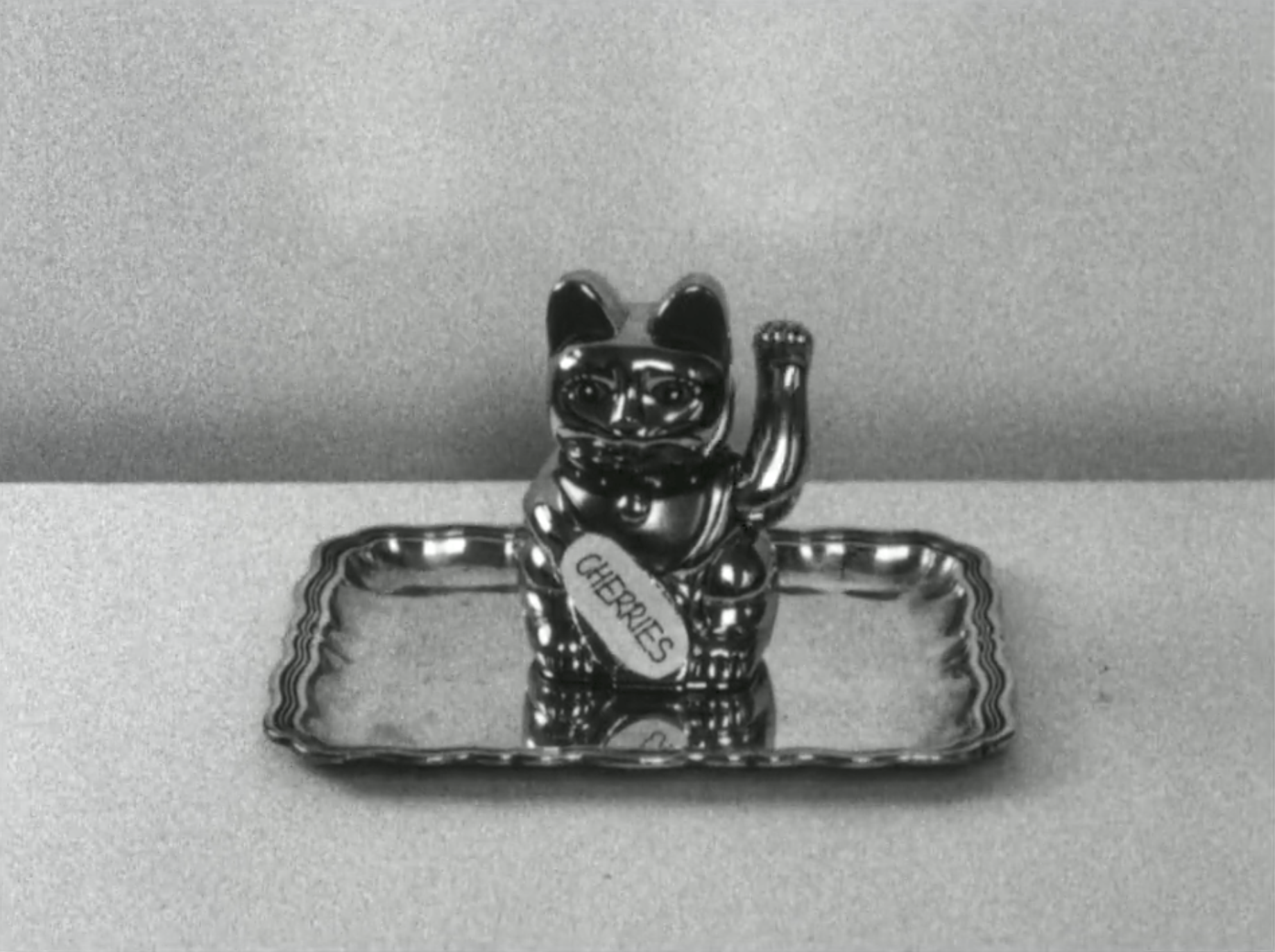
Kirschenzeit (Cherries) stages erotic intimacy with remarkable tonal complexity. A chambermaid watches a couple dressing in corsets and latex before serving them cherries during lovemaking. The atmosphere oscillates between tenderness, theatricality, absurd ritual. The bodies exist within a liminal state, no longer young yet not fully old, suspended at the threshold where eroticism acquires melancholy depth.

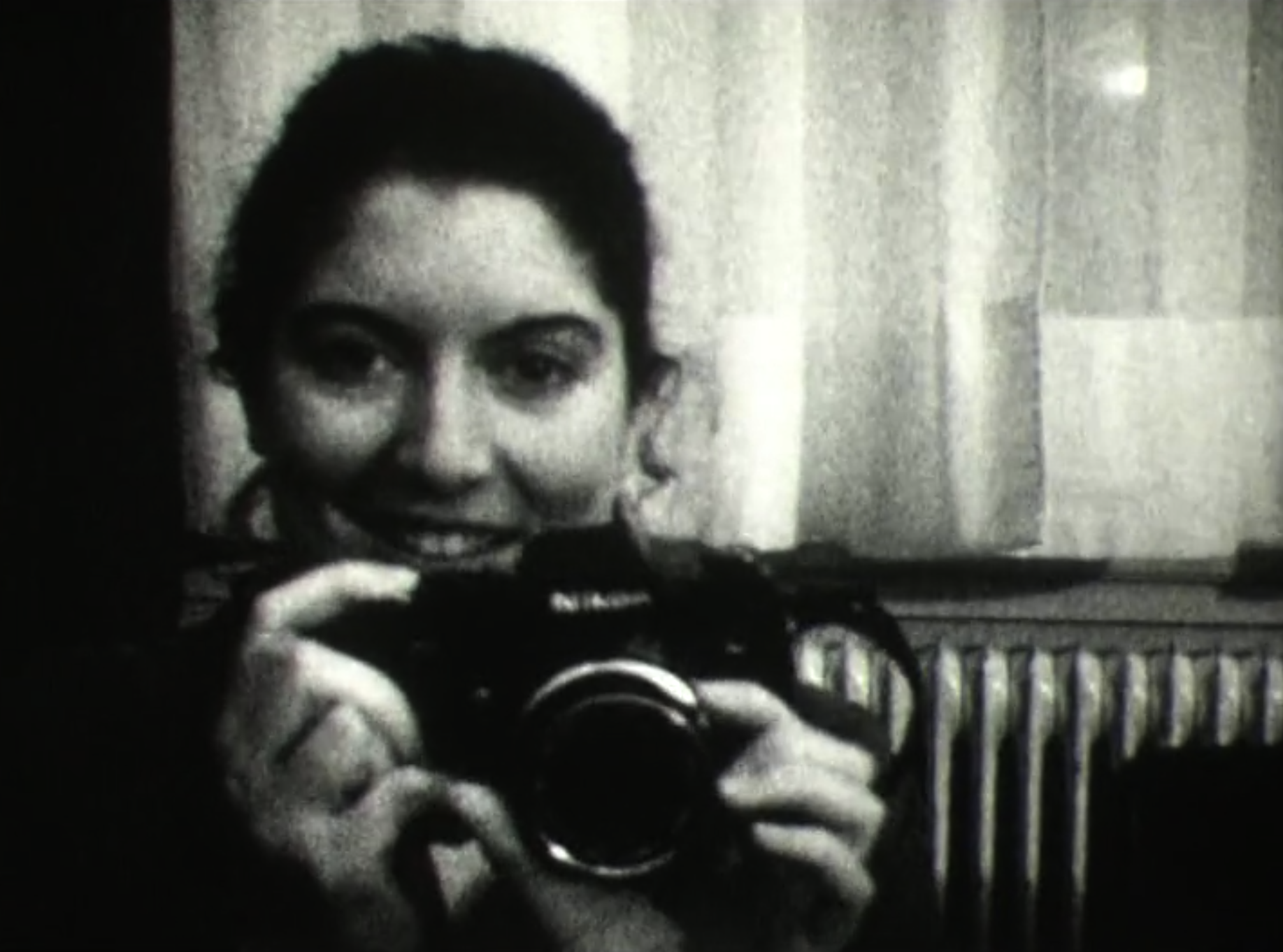
In Das neue Kostüm (The New Suit), Kubelka prepares for the Austrian State Prize for Photography while being fitted for clothing inside her psychoanalytic office. Family members drift through the space. Her daughter begins taking stills after the 16mm camera breaks. The accidental transition fragments time into isolated moments of charged domesticity. Nothing overtly dramatic occurs, yet the atmosphere feels profoundly intimate, almost forbidden in its ordinariness. Kubelka waving her hands to stop recording as light floods the frame becomes strangely moving, a reminder that privacy survives even within acts of sharing.

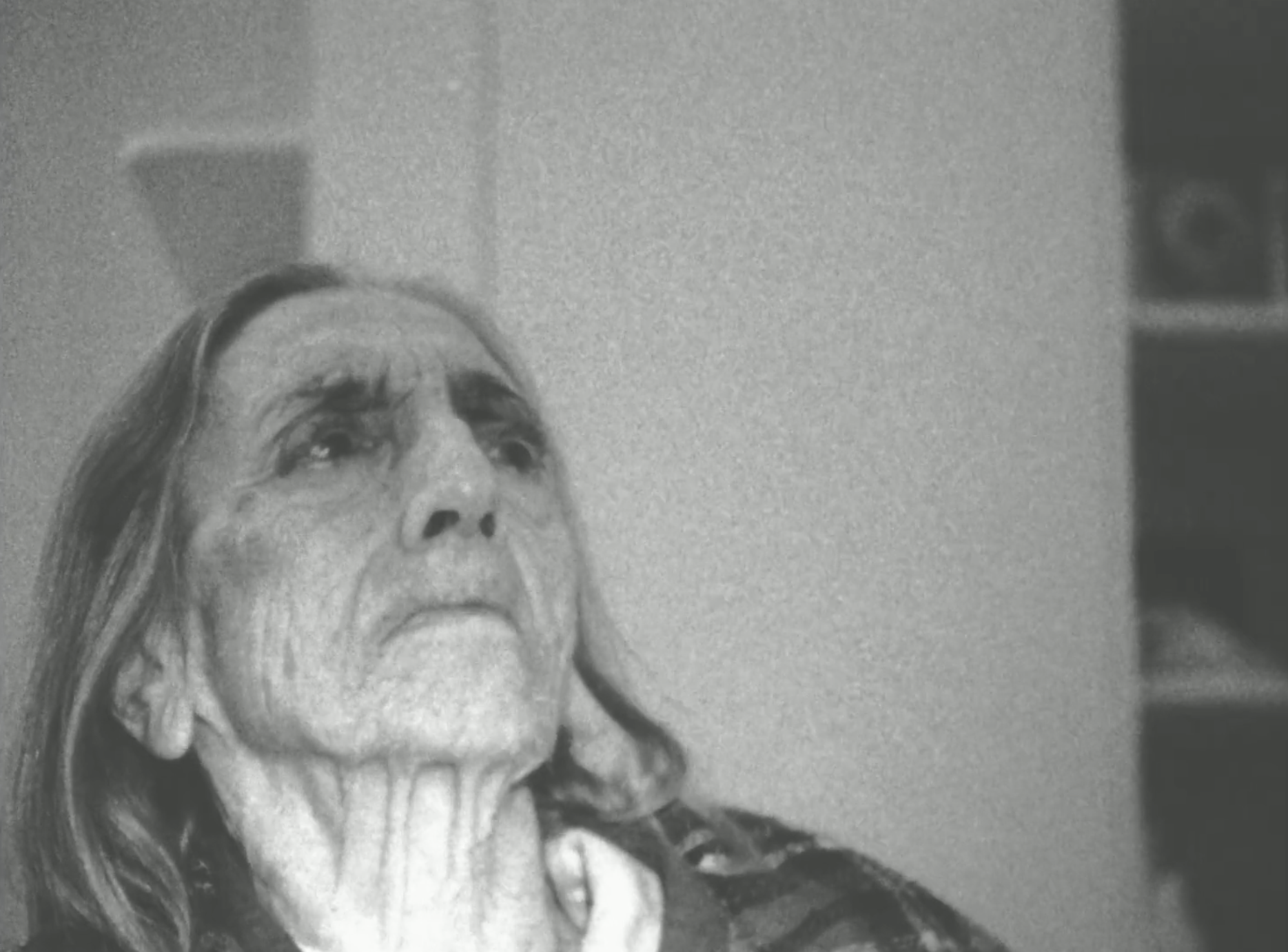
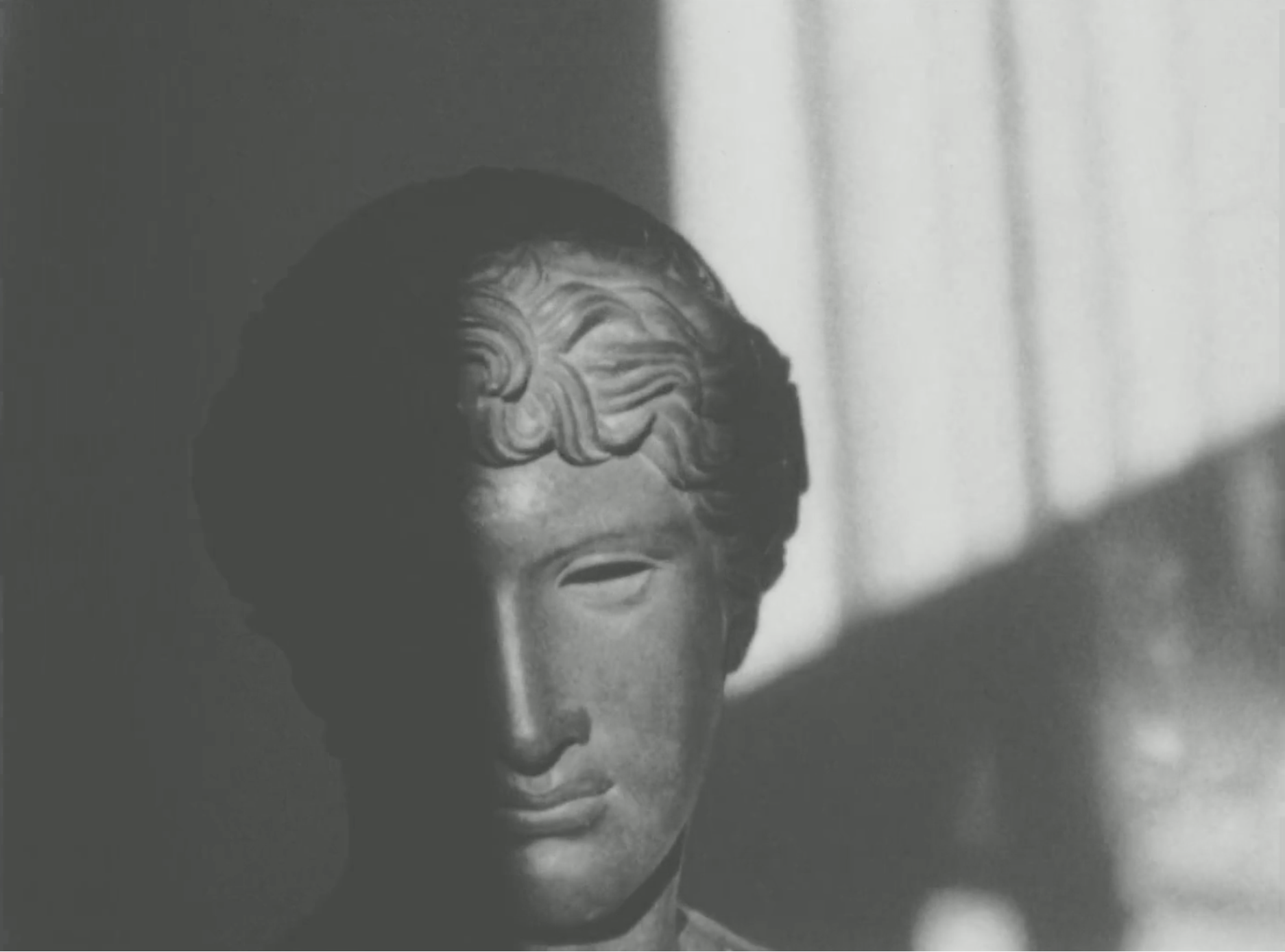
Aging and familial continuity reach devastating emotional force in NEC SPE, NEC METU. Kubelka revisits her mother in a nursing home where flashes of recognition emerge briefly through blankness. Distortions of light break across the frame unpredictably. A baby’s arm reaches toward the elderly woman’s face. The work closes on the head of a Greek statue, linking antiquity, bodily decline, memory, and inheritance, all of the coexisting inside one trembling continuum.

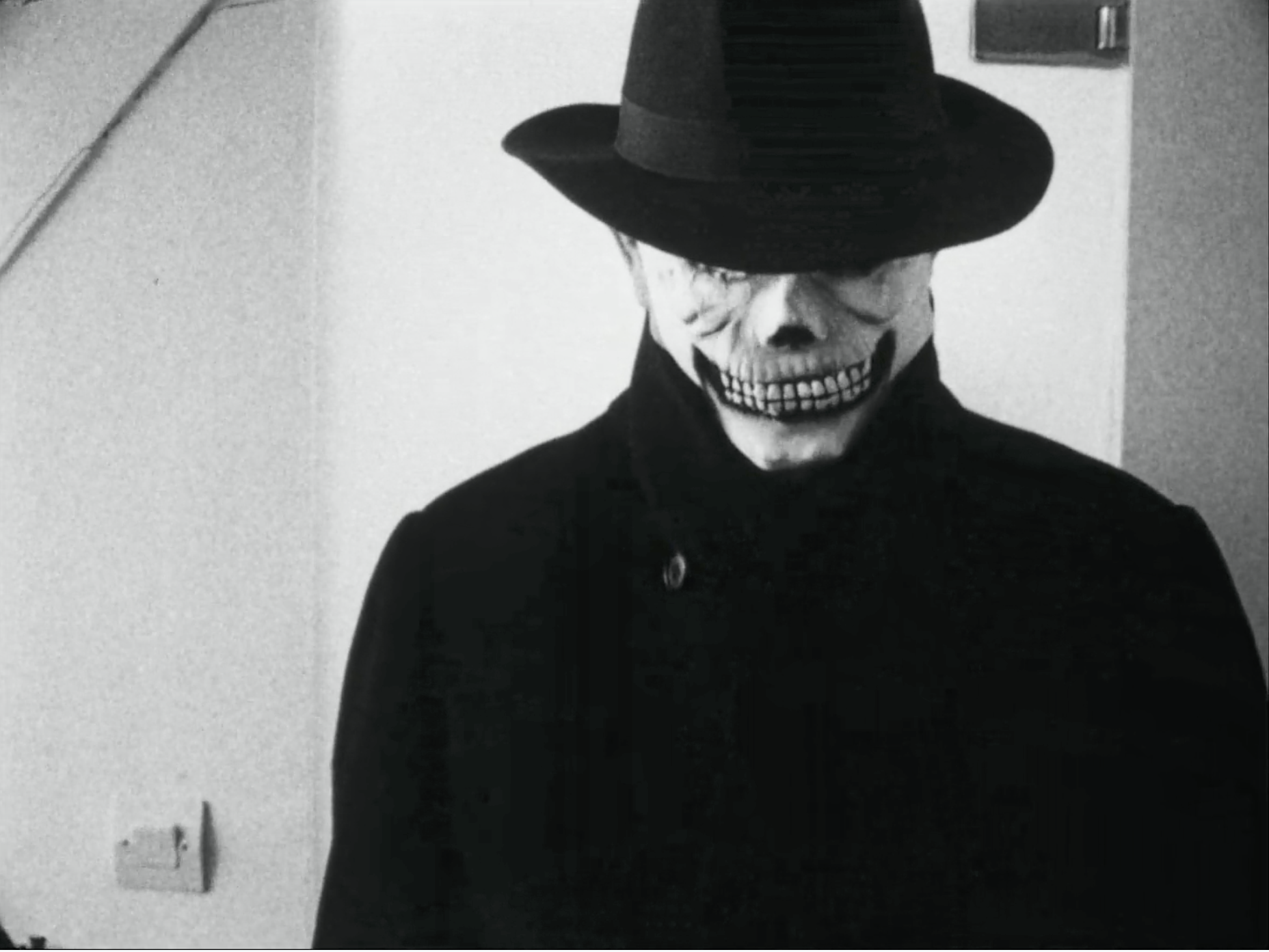
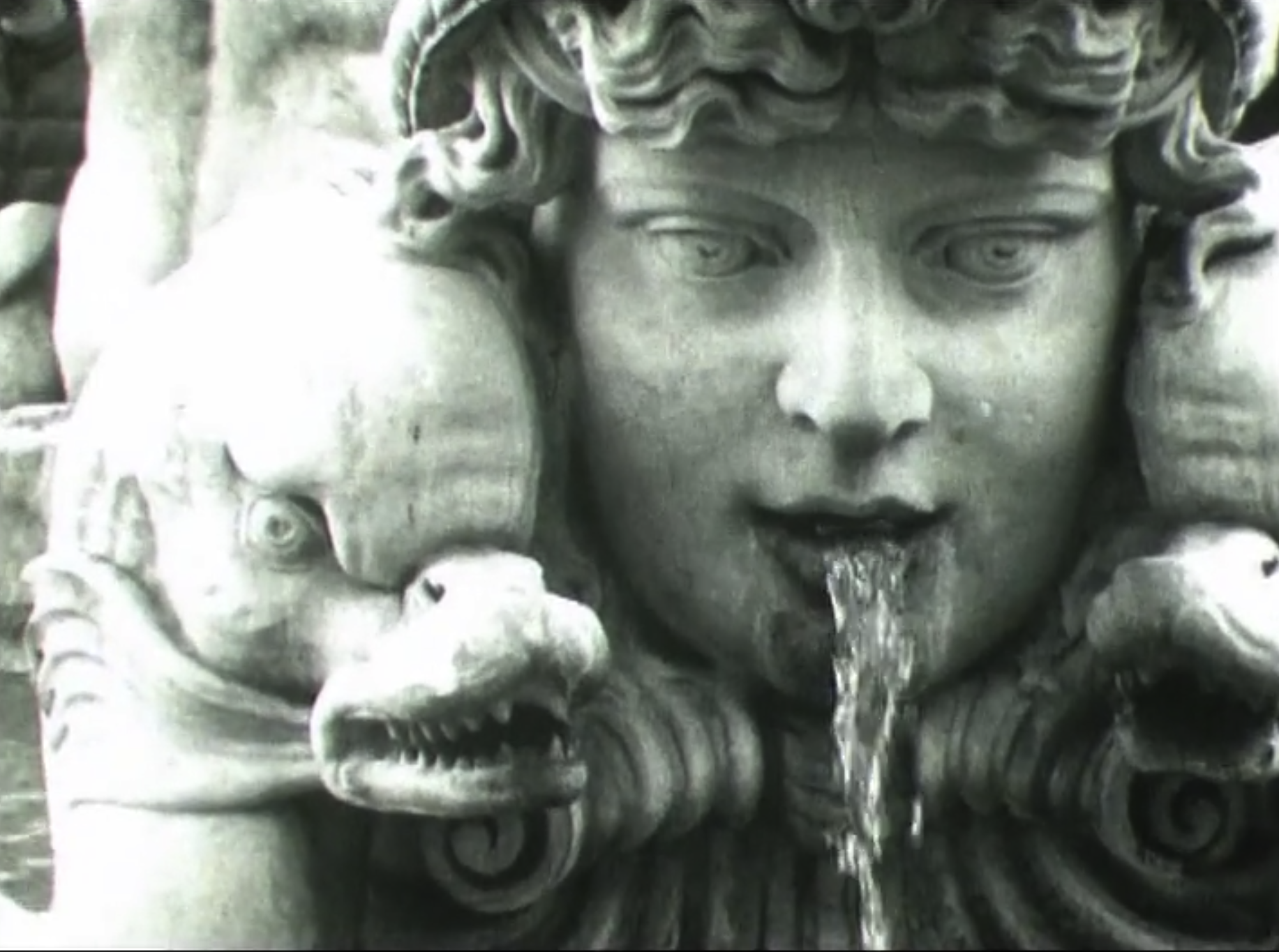
Elsewhere, Kubelka pursues entirely emotional registers without losing coherence. Ruhe auf der Leinwand (Silence on the Screen) studies a painted portrait by Otto Riedel until the act of looking becomes reciprocal. Empört Euch! (Time for Outrage!) traps a boa constrictor within mirrored enclosures, transforming capitalism into a suffocating serpent consuming both prey and spectator. Maschile. Roma moves across men’s faces from varying social classes before ending on a Roman fountain vomiting water endlessly into distortion. In Rome peers through the shooting slits of Castel Sant’Angelo at passing pedestrians, juxtaposing architecture with fragments of her husband’s aging body until the city itself feels voyeuristic. Ticino follows river worn driftwood gathered by children, turning nature into unconscious sculptor. Winter in Paris transforms scaffolding outside a window into fractured abstraction before revealing the muscular presence of a worker whose body becomes an object of fascination. Later, Kubelka embraces a figure wearing a hat and a grotesque mask, death and tenderness momentarily fused.

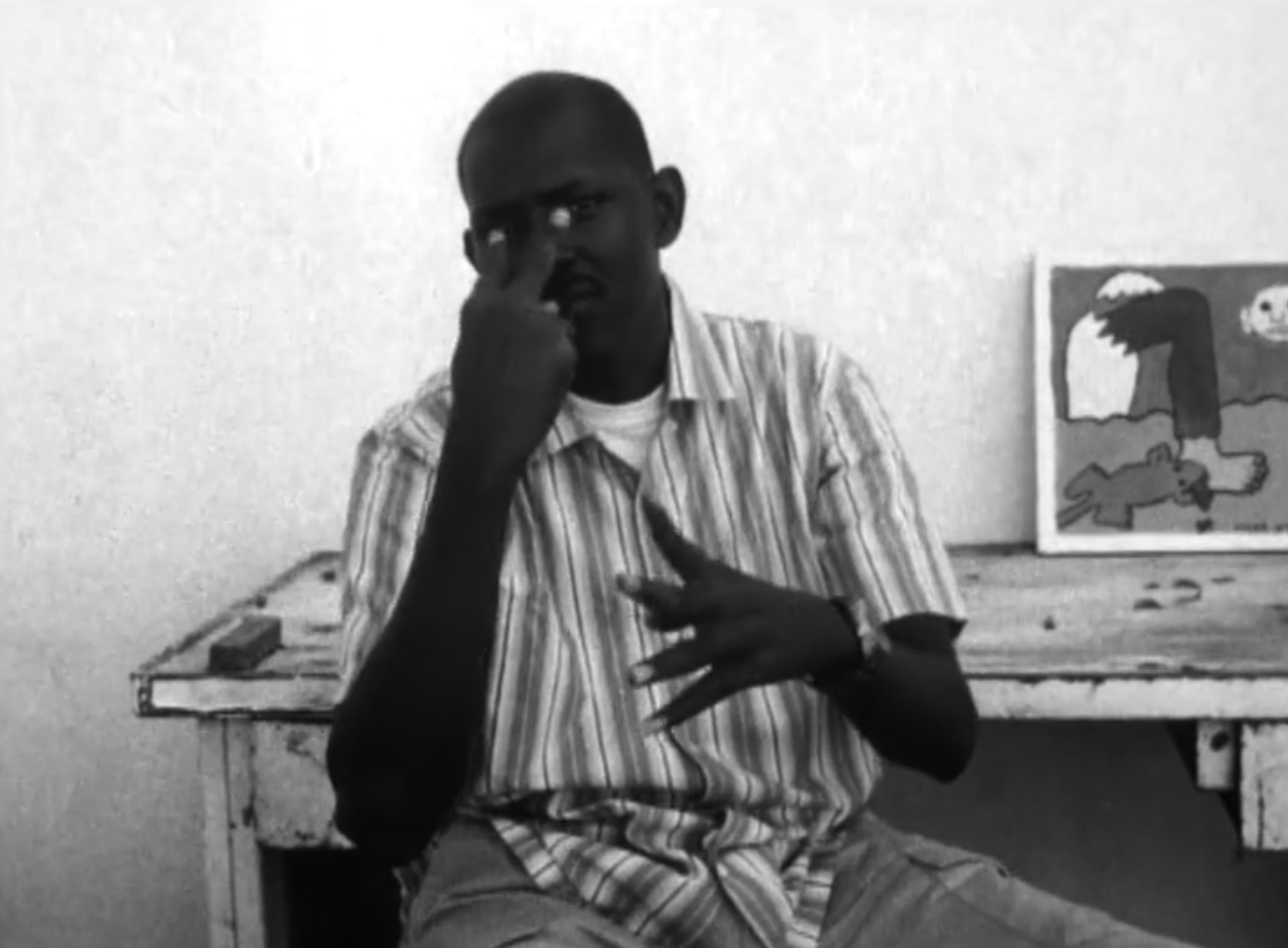
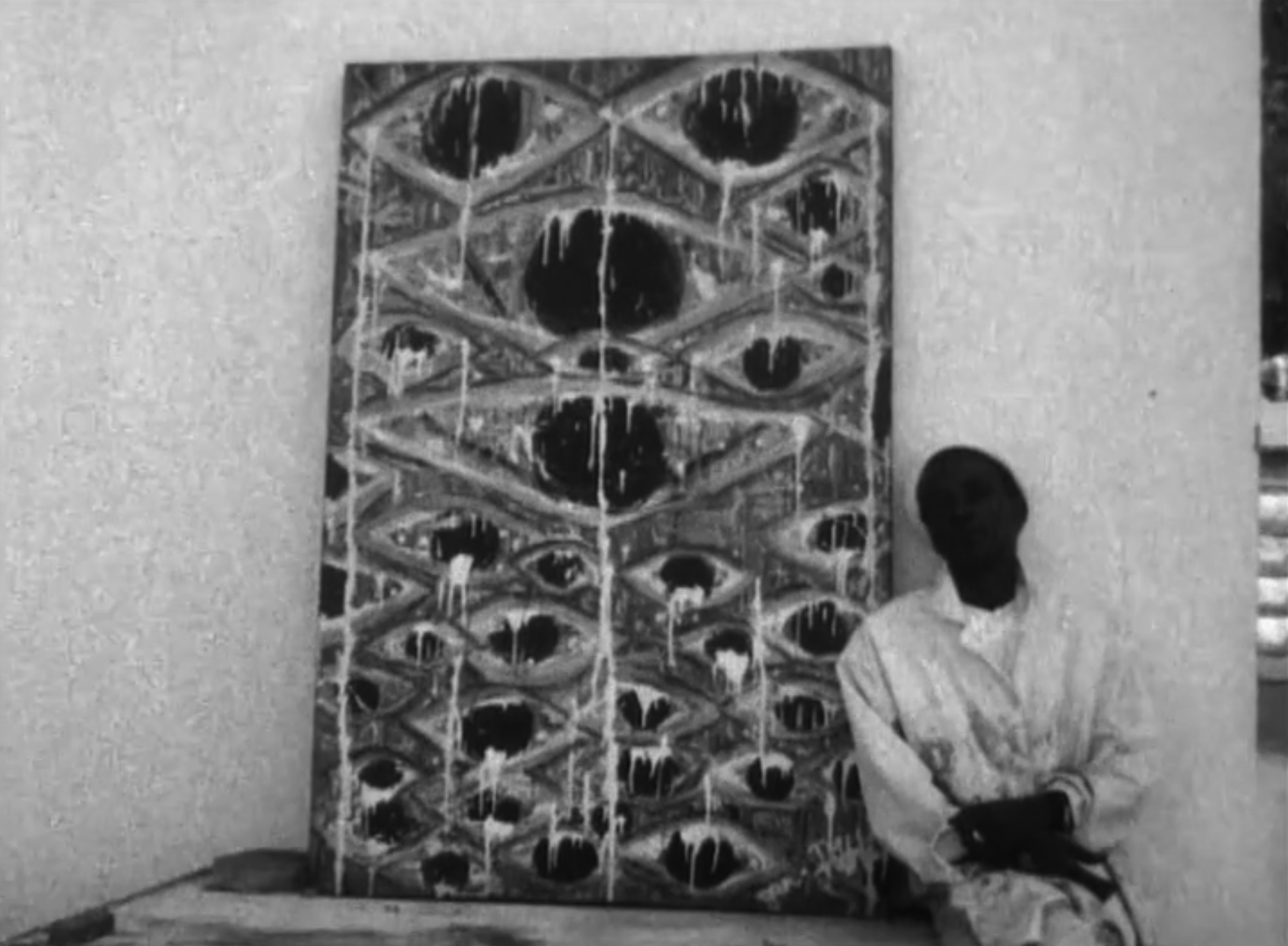
The longest piece here, Atelier d’Expression, may also be the collection’s emotional center. Set in a Dakar psychiatric workshop, it portrays seven artists alongside their creations with extraordinary patience and dignity. Omar N’Diaye, deaf and intensely expressive, explains one of his paintings in sign language: a bitten foot emerging from a cracked egg beneath a moon-faced witness. Other canvases teem with eyes, fragmented anatomy, dislocated times and places. Kubelka cuts between artworks, faces, and beach wrestlers tracing marks into sand, inner turmoil migrating outward into material form.

What ultimately distinguishes Kubelka is the ethical force of sustained attention. She keeps looking after most people would stop looking. Her work resists acceleration and the contemporary demand that visual culture deliver immediate legibility, resembling not an archive but an alternative system of timekeeping measured through intervals of attention. The central theme is clear: memory does not preserve us because preservation was never possible. We thrive instead through continual reappearance inside other people’s perceptions, becoming echoes carried unknowingly forward. Somewhere beyond every frame, after the shutter closes and the projector falls dark, the unfinished self continues wandering through the eyes of strangers.

Alfred Kaiser: Decomposing Nazi Phraseology (INDEX 050)

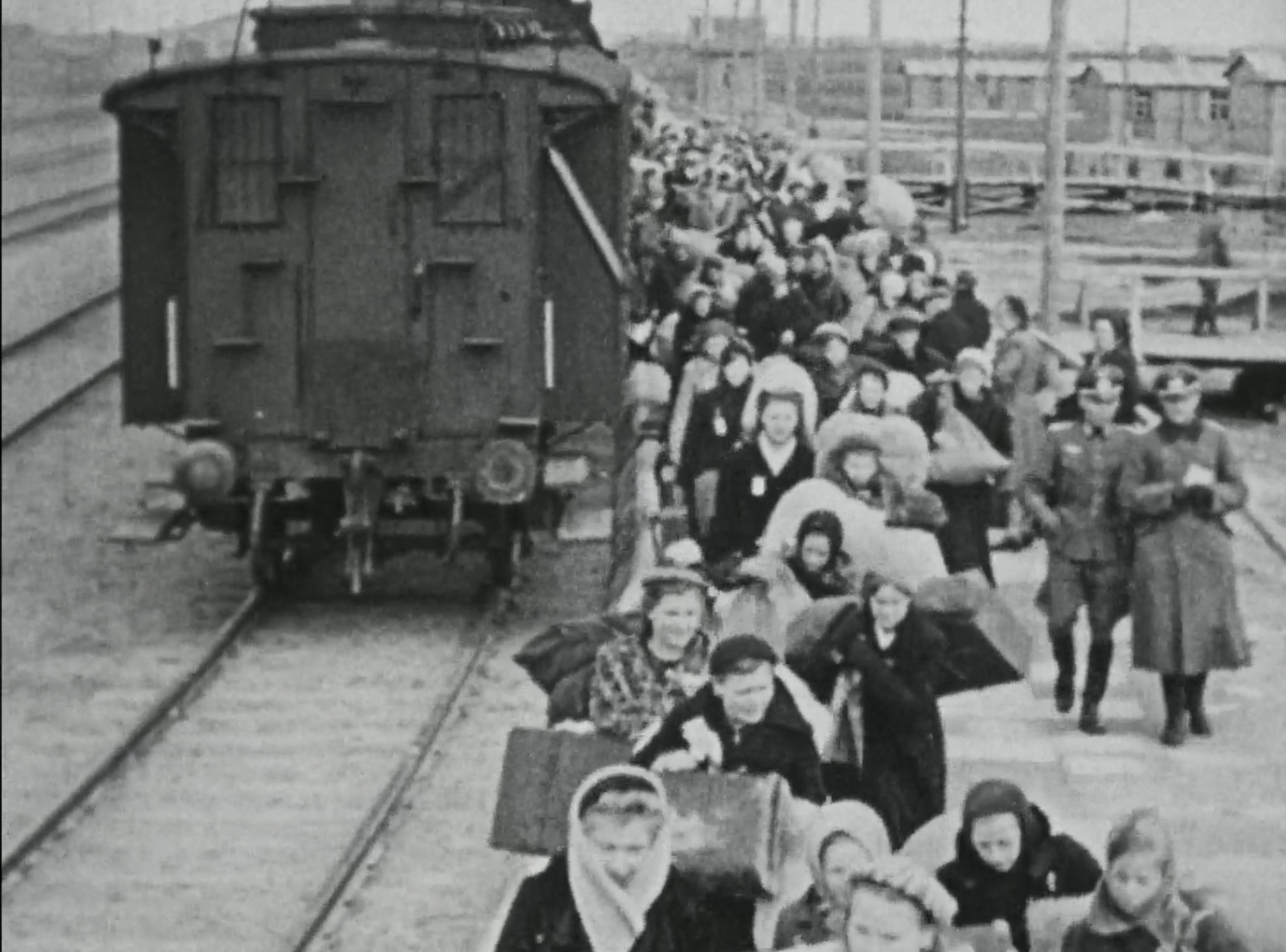
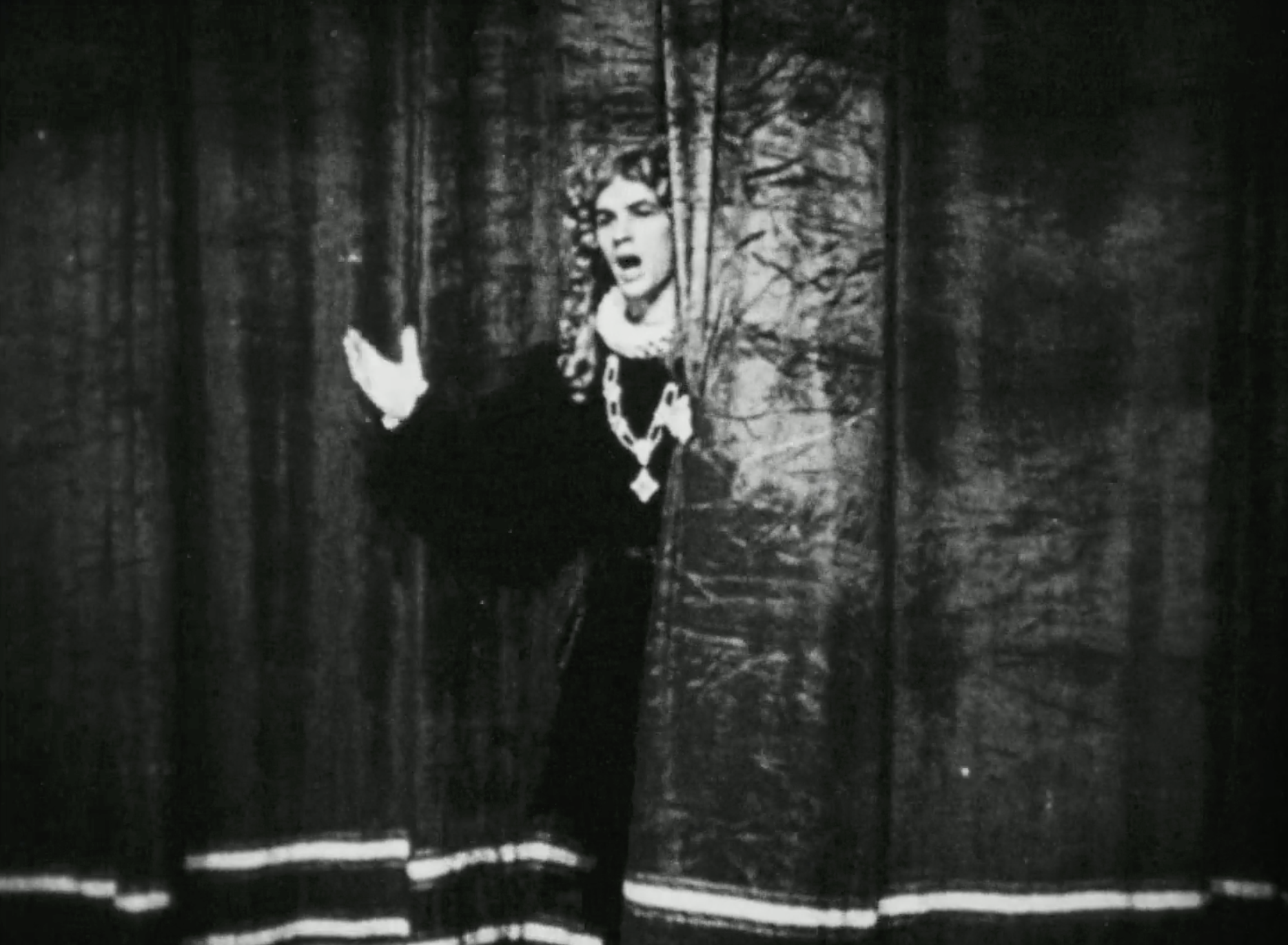
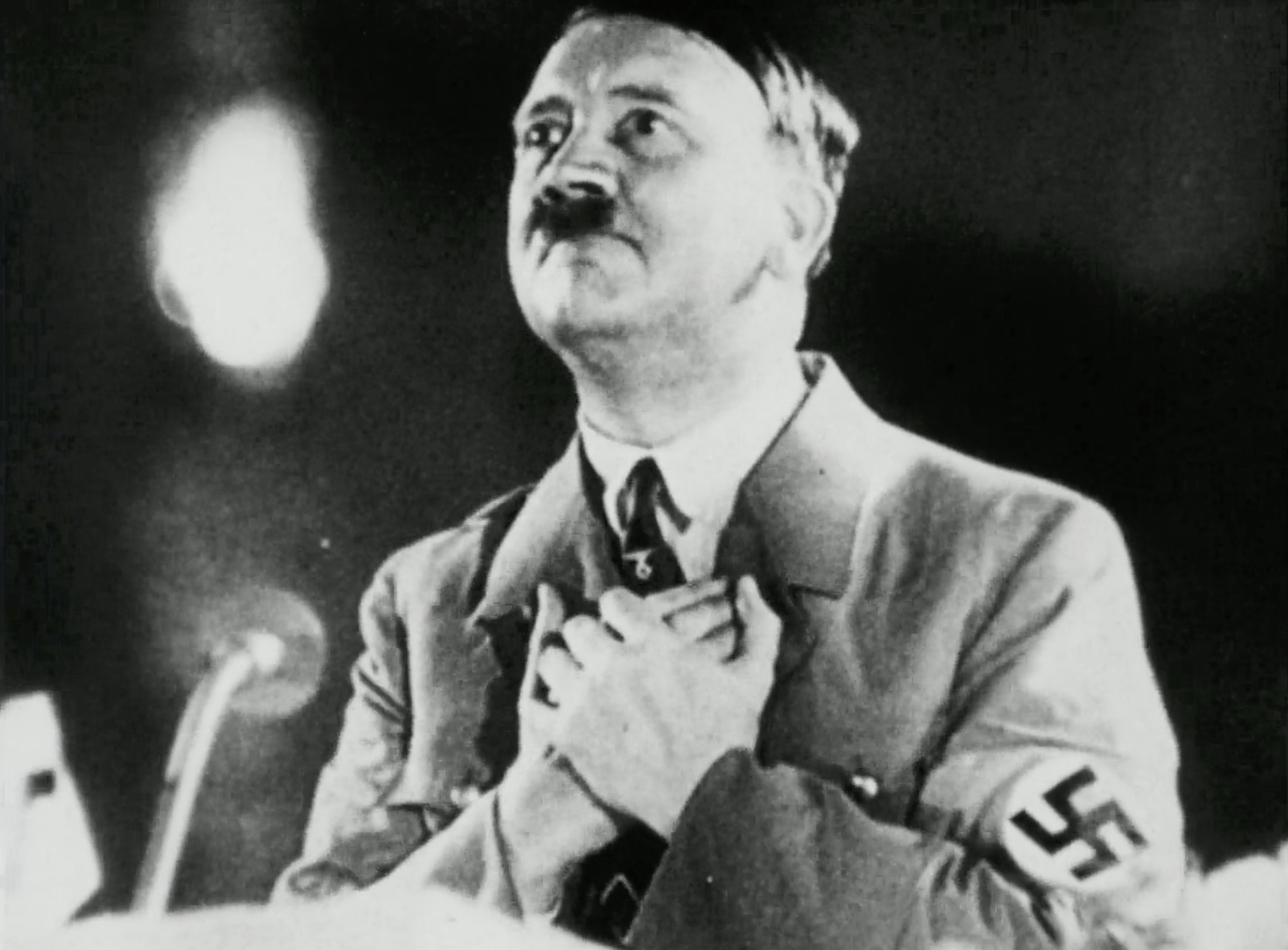
When Alfred Kaiser first unveiled Ein drittes Reich (A Third Reich, 1975) and Ein drittes Reich aus seinem Abfall (A Third Reich from Its Refuse, 1977) near the close of the 1970s, his name carried none of the institutional weight that often cushions difficult art. Yet these films announced themselves with startling authority, assembling from the wreckage of Nazi image culture a pair of works so rigorous, so corrosively lucid, that they seemed less edited than excavated. Kaiser worked exclusively with material produced during the Third Reich itself, fashioning a cinema of diseased memory from propaganda reels, industrial films, amateur footage, educational shorts, and features. The achievement recalls the dialectical brilliance of Jean-Luc Godard at his most severe, especially in its use of sound and its archaeological chill. Every splice is a brush uncovering bone. Each cut reveals another layer of ideological sediment hardened into spectacle.

What emerges across both films is a study of seduction. Kaiser does not merely expose propaganda as deception. He understands that fascism first enters the bloodstream as longing. The camera under National Socialism adored surfaces with devotional intensity. Flesh, architecture, wheat, steel, children, rivers, flags, and clouds: all of these projection surfaces glow with the fatal glamour of belonging. Kaiser takes them seriously enough to let them betray themselves. He grants them space to speak in their own poisoned tongue until their ecstasies curdle into confession, séances conducted in the language of seduction itself.

Born in Vienna in 1940, Kaiser came of age among artists determined to confront the psychic debris left scattered across postwar Europe. He moved within a circle that included Hermann Nitsch and Peter Kubelka, the latter becoming both mentor and catalyst. Kubelka’s influence stretched beyond aesthetics into the very material conditions of Kaiser’s practice. Under the auspices of the Austrian Film Museum, which Kubelka co-founded, Kaiser gained extraordinary access to archival holdings from the Nazi era. Constantin Wulff’s illuminating liner notes for this INDEX edition recount how the museum organized its landmark retrospective “Propaganda and Counterpropaganda in Film from 1933 to 1945,” a program juxtaposing works from Nazi Germany with Allied propaganda films. The series dissolved comforting moral distances between victor and vanquished, insisting instead on a universal machinery of persuasion. One senses Kaiser absorbing this revelation as a grammar lurking within modernity itself. 

At the museum, Kaiser studied these archives frame by frame at the editing table, touching history at its cellular level. The process must have resembled an encounter with a haunted alphabet. He had already wrestled with Nazi aesthetics through painting and writing, most notably in his extraordinary Hitler watercolor series produced between 1974 and 1975 (included here as a DVD extra), where the dictator’s likeness was filtered through the vocabularies of art history, from classical portraiture to pop art vulgarity. Yet cinema gave Kaiser something painting could not: the tremor between image and sound where ideology often hides its deepest impulses.

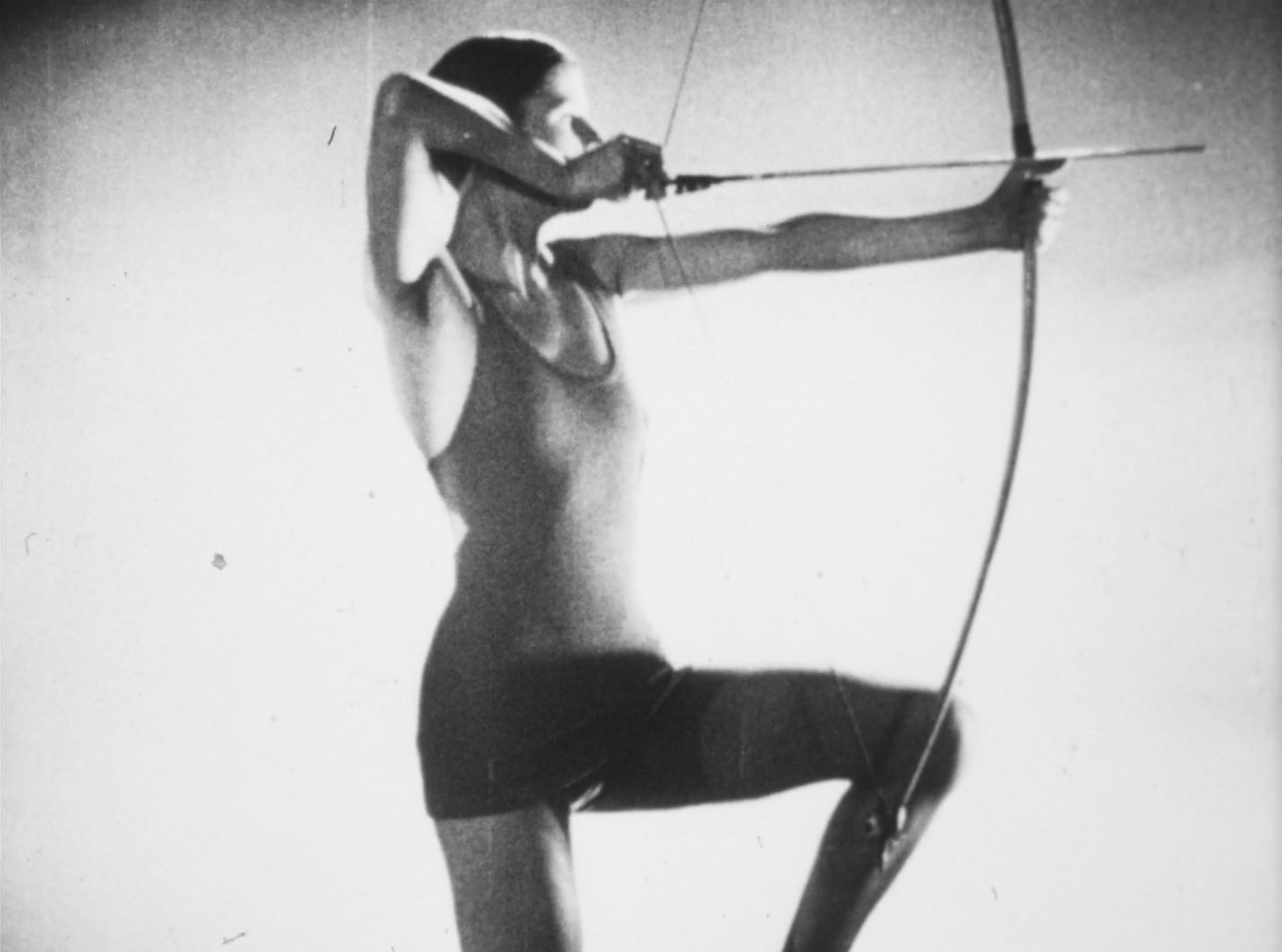
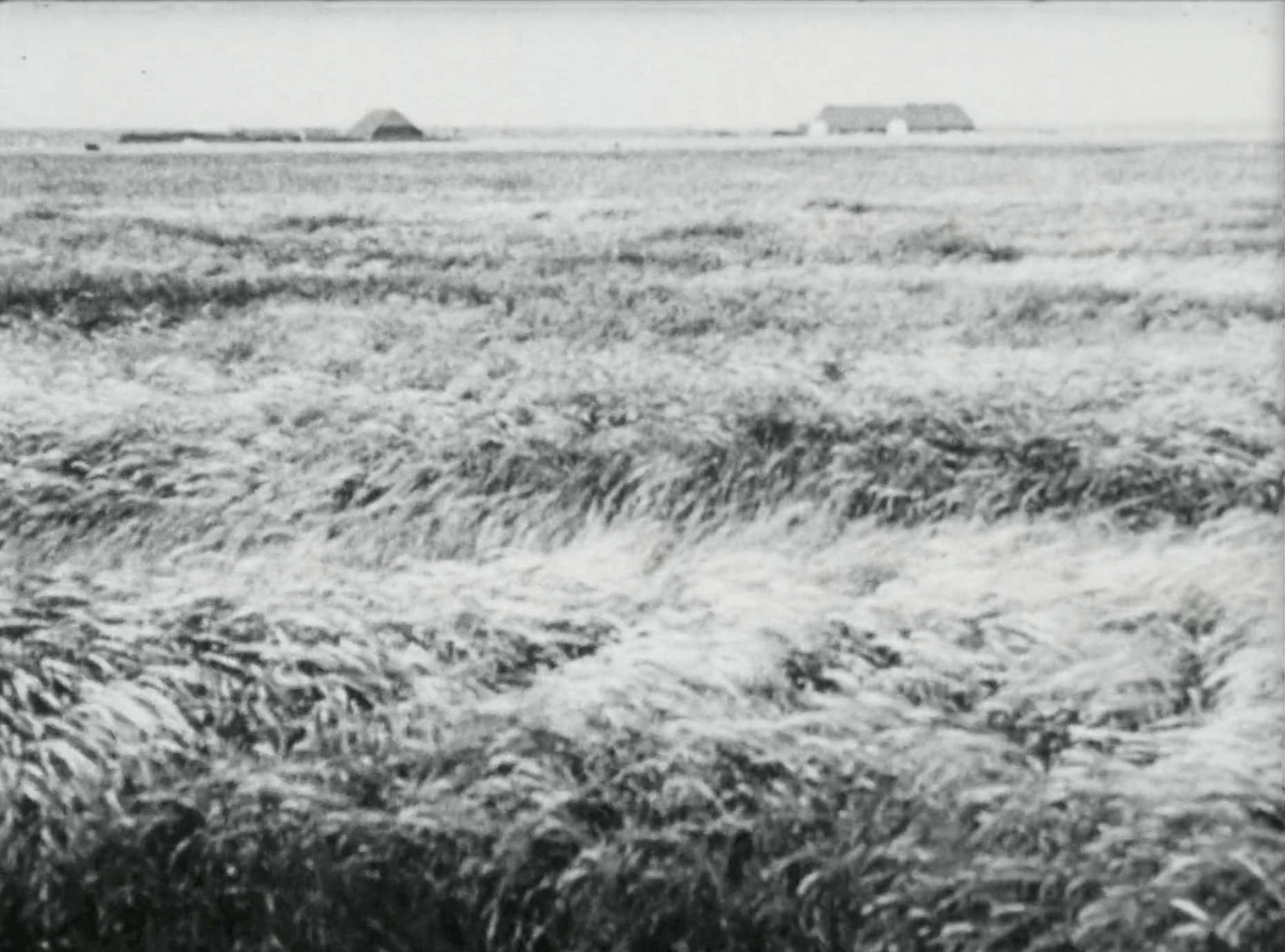
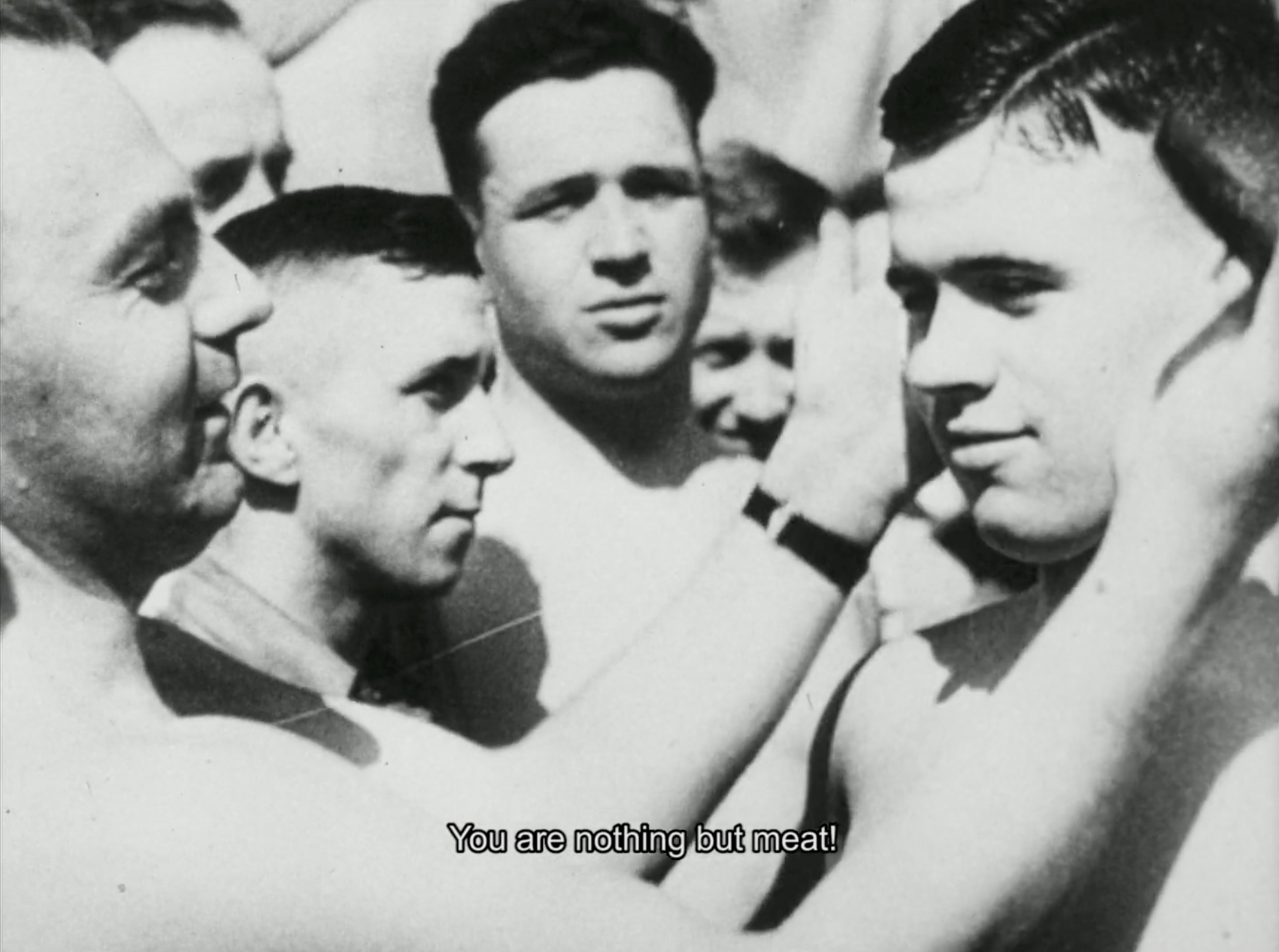
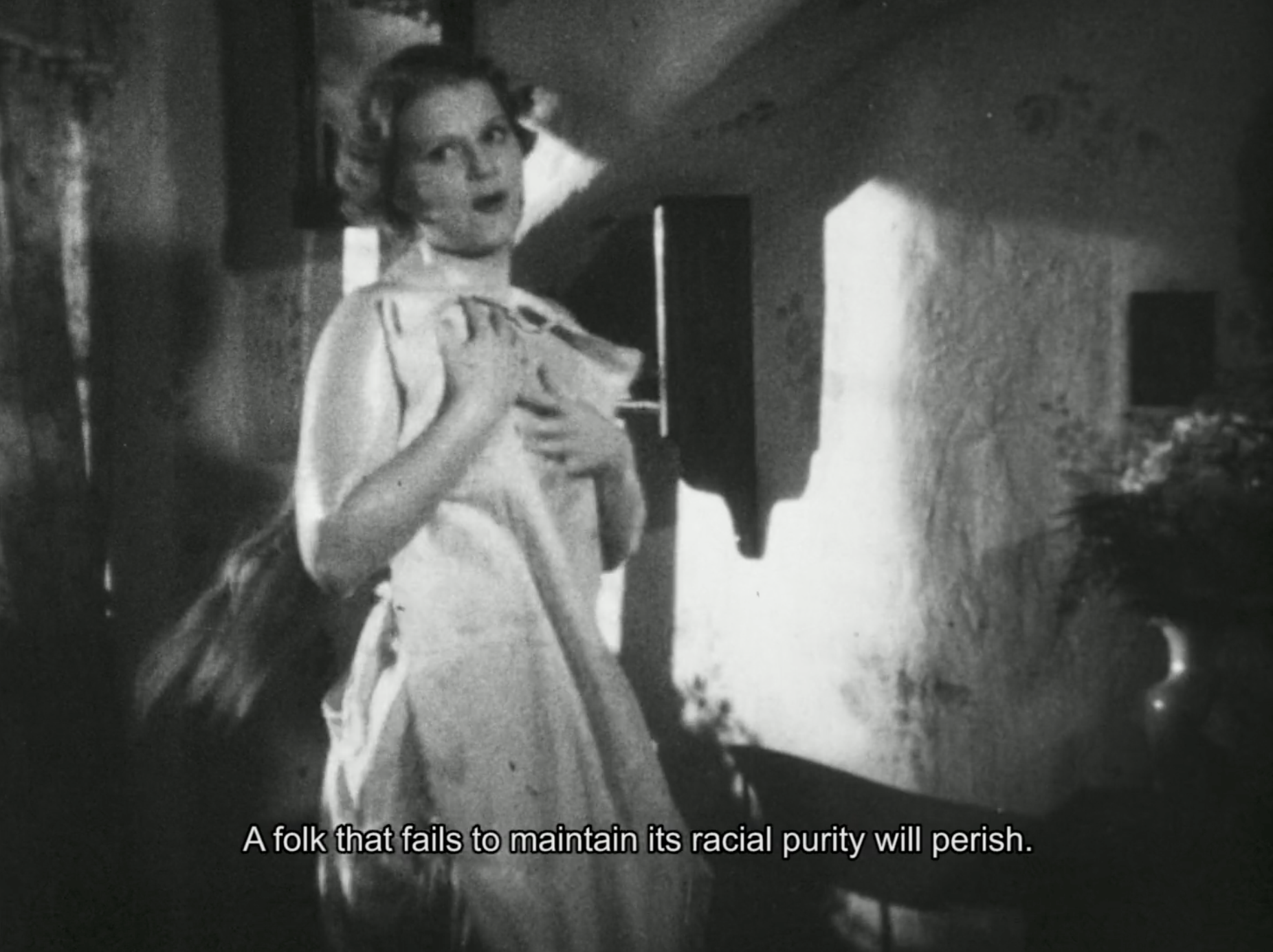
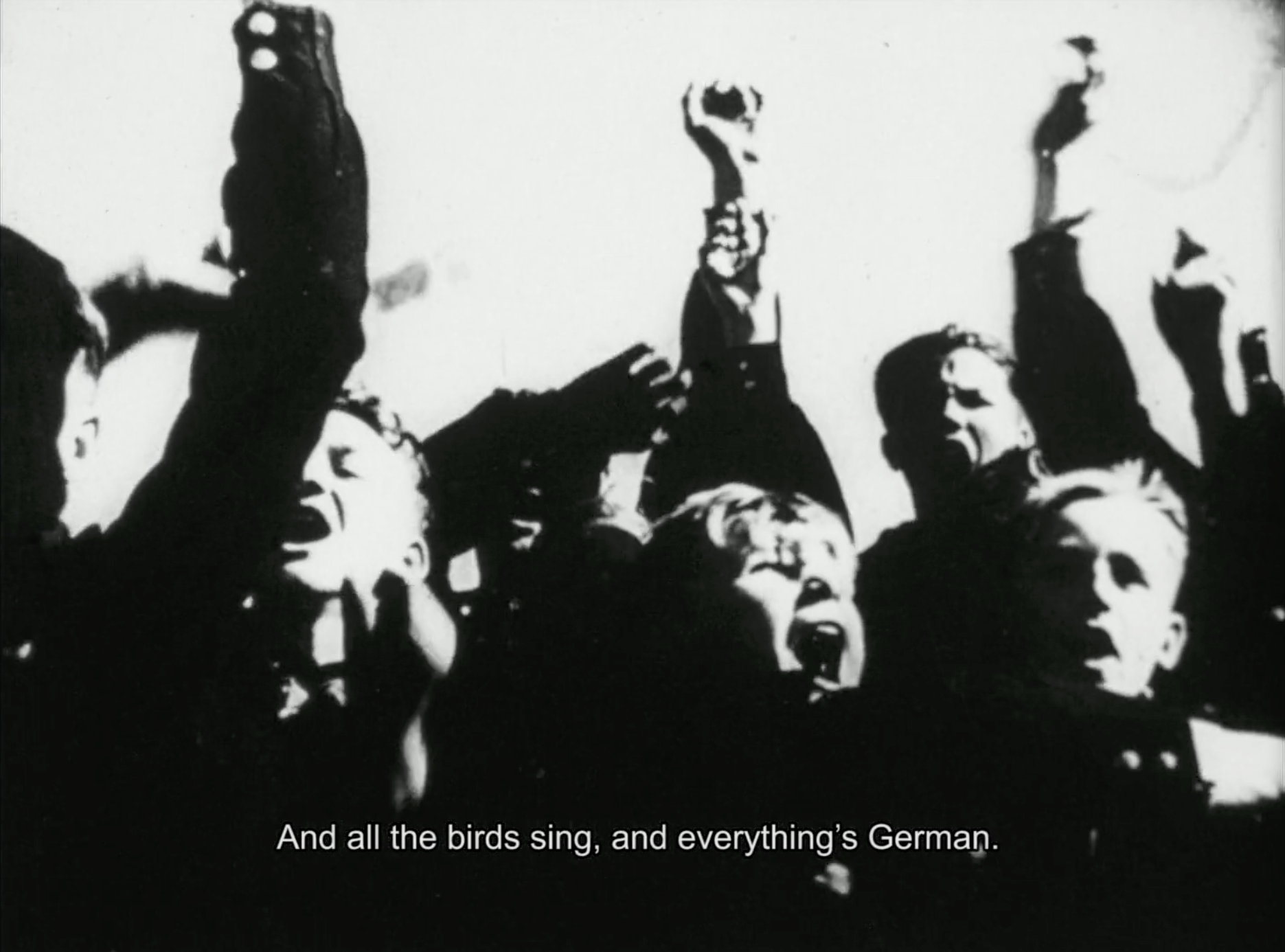
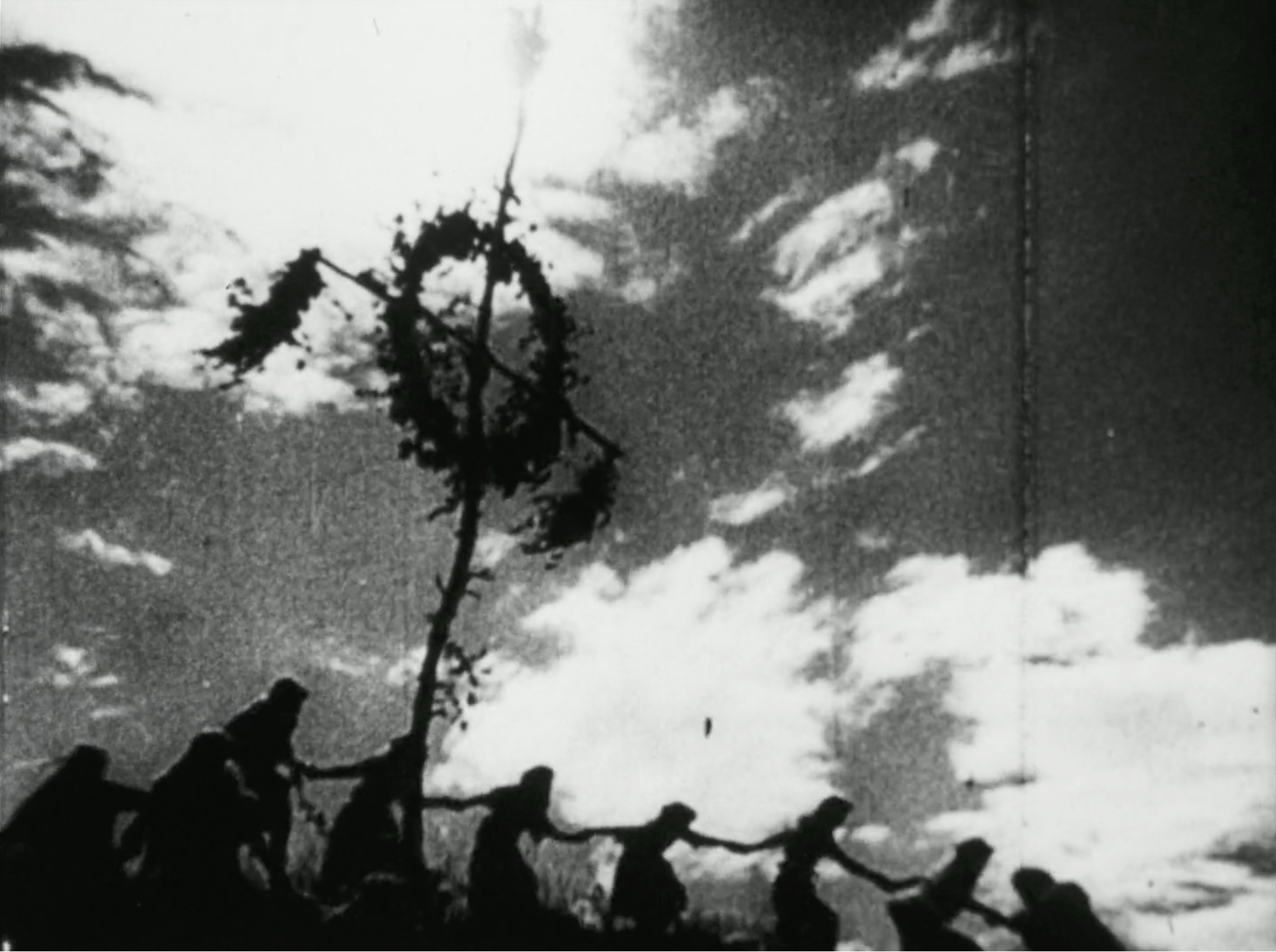
A Third Reich unfolds like a hallucination narrated by the regime itself. An arrow plunges into the sea. Wheat fields writhe beneath invisible winds. Bodies appear less human than agricultural, cultivated toward some impossible purity. Kaiser arranges these elements with terrifying precision, allowing associations to bloom and decay within the viewer’s mind. The Reich’s obsession with fertility and physical perfection acquires a mythic texture, as though fascism dreamed of transforming society into one endless reproductive ritual. Men become engines. Women become vessels. Childhood stretches toward militarization with dreadful inevitability, every stage of life absorbed into the geometry of obedience.

The brilliance of Kaiser’s montage lies in its refusal of explanatory comfort. Meaning accumulates through pressure rather than argument. Trees crash violently to the ground while voices extol unity and destiny. Soldiers grin with frightening innocence as war approaches. Factories pulse with infernal vitality. Steel glimmers as sacrament. At one moment, the interior of a cathedral appears while gunfire echoes across the soundtrack, the holy collapsing seamlessly into mechanized death. Elsewhere, calf slaughter collides with laughter, flesh reduced to material amid communal joy. The regime’s rhetoric of life, truth, freedom, and labor becomes nothing more than a vain repetition. Words lose semantic stability and become rhythmic instruments designed to anesthetize thought itself. By the time cries of “Heil!” erupt into darkness, our endurance is tested.

Kaiser understood that fascism aestheticizes continuity above all else. It promises a seamless world where contradiction dissolves into collective purpose. Masculinity flows from boyhood into soldierhood without rupture. Industry merges with nationalism. Sexuality merges with reproduction. Nature merges with conquest. Even death becomes assimilated into a narrative of purification. The horror resides partly in the elegance of the construction. National Socialism dreamed of eliminating ambiguity from existence. Kaiser restores ambiguity to every frame as a necessary contagion.

A Third Reich from Its Refuse pushes these ideas into stranger and more intimate territory. If the earlier project resembles an autopsy, the latter behaves like a fever dream assembled from cultural leftovers. Spoken slogans recede. Definitive montage structures collapse. Pop songs drift across sequences of fascist pomp with unnerving tenderness, producing emotional dissonances that feel almost unbearable. Kaiser reportedly wished the film screened only within a “private circle,” an instruction that lends an atmosphere of forbidden correspondence passed secretly between survivors of some psychic catastrophe. 

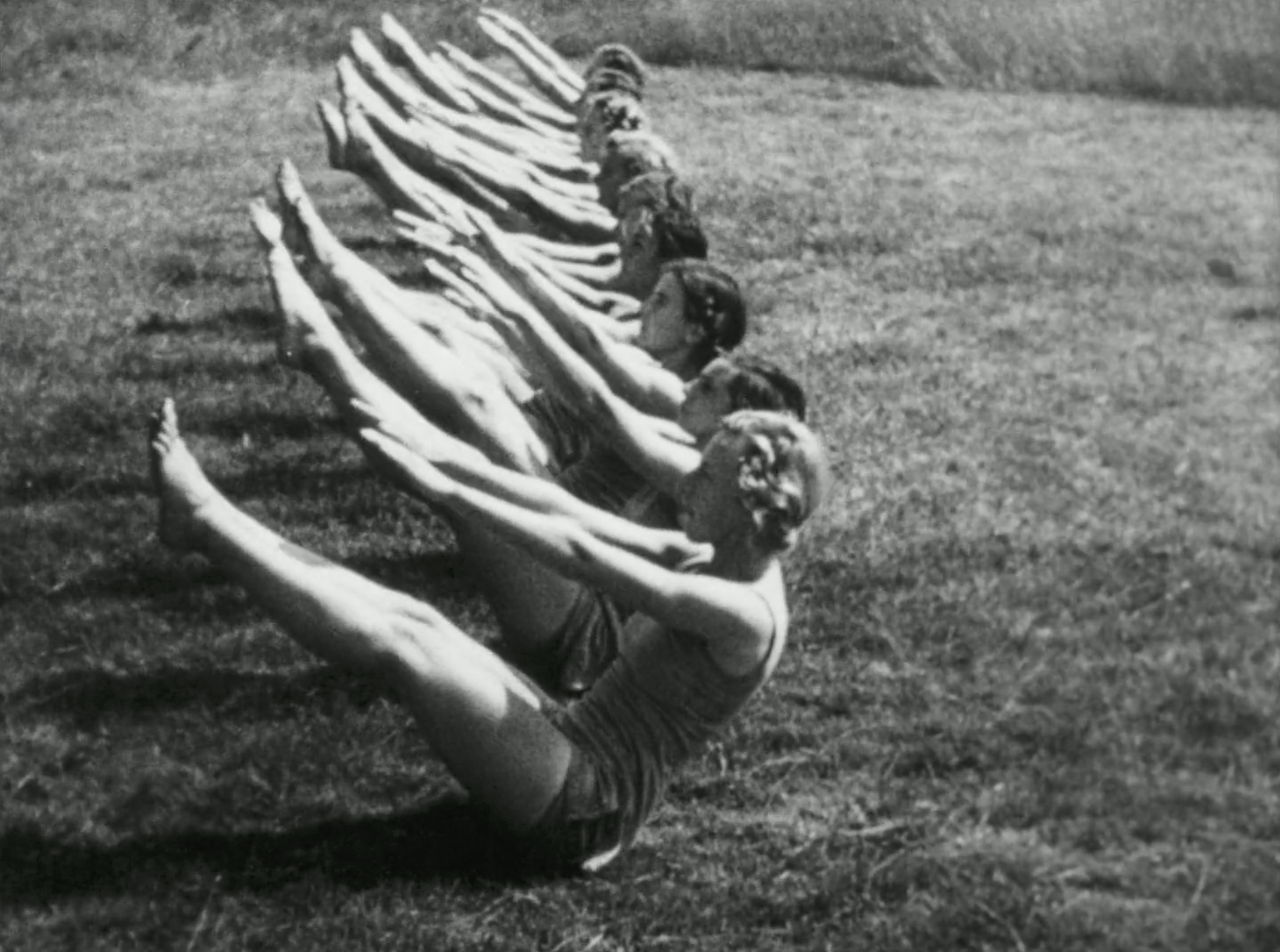
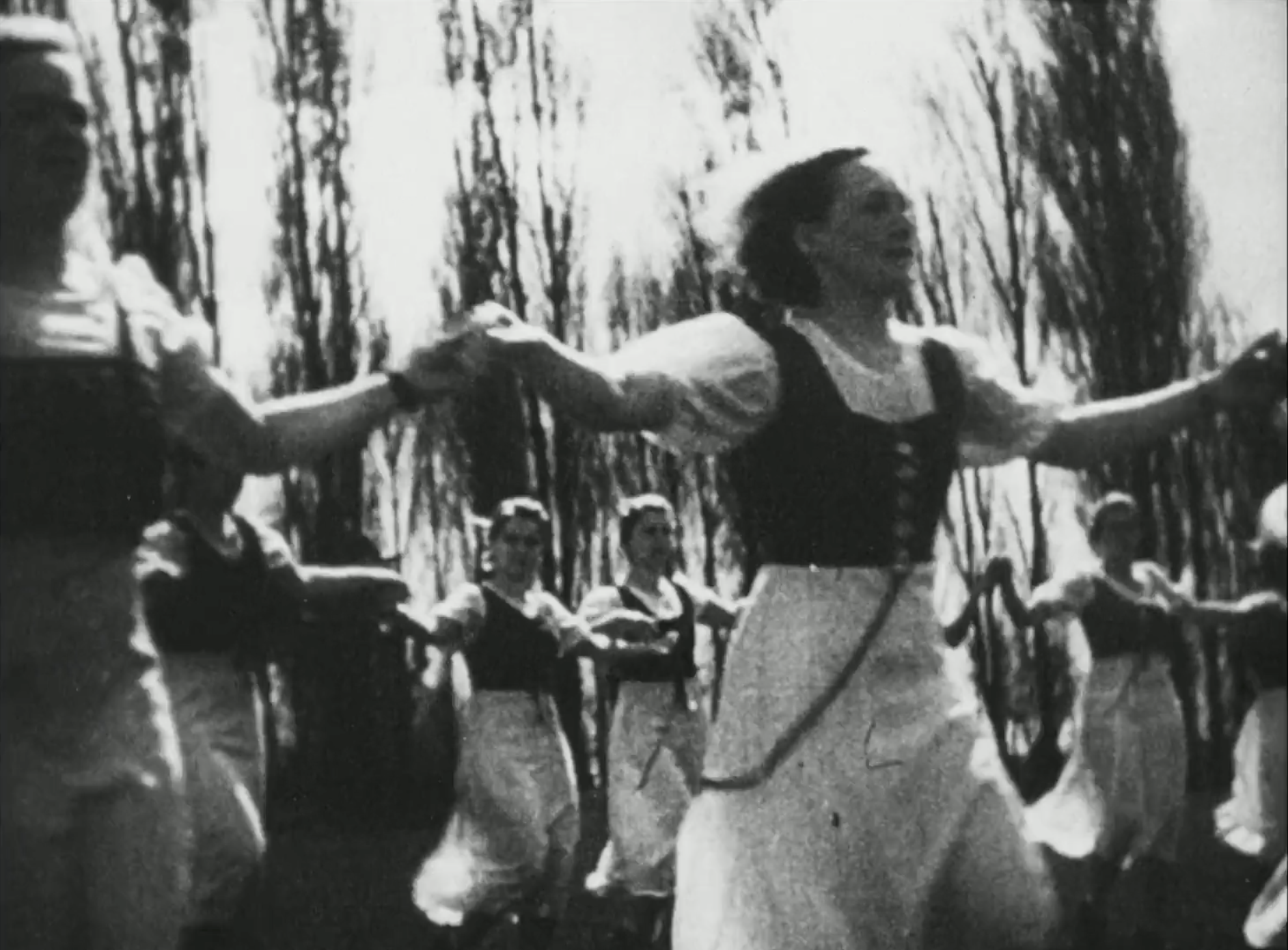
The camera circles beauty obsessively. Women exercise gracefully beneath skies emptied of consequence. Hitler appears smiling, delighted by his own reflection mirrored in adoring crowds. Consumption becomes ritualized, whether of food, entertainment, labor, or bodies. Everything shimmers with the narcotic glow of satisfaction. Yet beneath this choreography of pleasure lies an abyss. Kaiser reveals how fascism feeds upon the human desire to escape uncertainty. The regime offers paradise through simplification and meaning through surrender.

What makes the proceedings so unsettling is their musicality. Historical horrors return with altered emotional coloration, as though the unconscious were remixing memory itself. The effect resembles wandering through a ballroom erected atop a mass grave while old love songs continue to play from another room. Kaiser understands that ideology rarely survives through terror alone. It survives because it learns how to dance.

INDEX’s timely release restores these monumental works with extraordinary care, allowing contemporary viewers to encounter something startlingly singular within the history of essay cinema and found footage experimentation. Kaiser’s achievement extends beyond political critique into something far more difficult to articulate. He reveals a battleground between revelation and hypnosis. The moving image can illuminate consciousness or dissolve it. Projection becomes a moral event.

Perhaps the most haunting aspect of Kaiser’s films lies in their refusal to reassure. They offer no triumphant distance from the past, no comforting implication that modern viewers stand safely outside these mechanisms of enchantment. The Reich appears here not as a historical anomaly but as concentrated dream logic, one expression of humanity’s endless appetite for coherence, purity, and transcendence. Kaiser peers directly into that appetite without blinking.

In the end, we are left with the peculiar silence that follows after language has exhausted its disguises. One begins to sense history not as chronology but as atmosphere, something breathed unconsciously across generations. Kaiser reminds us that civilizations often perish long before their buildings collapse. They decay first in metaphor, in tempo, in the stories they tell themselves while marching toward catastrophe with radiant smiles upon their faces. And when the masks fall away, the skeletons left behind look no different than those of their victims.

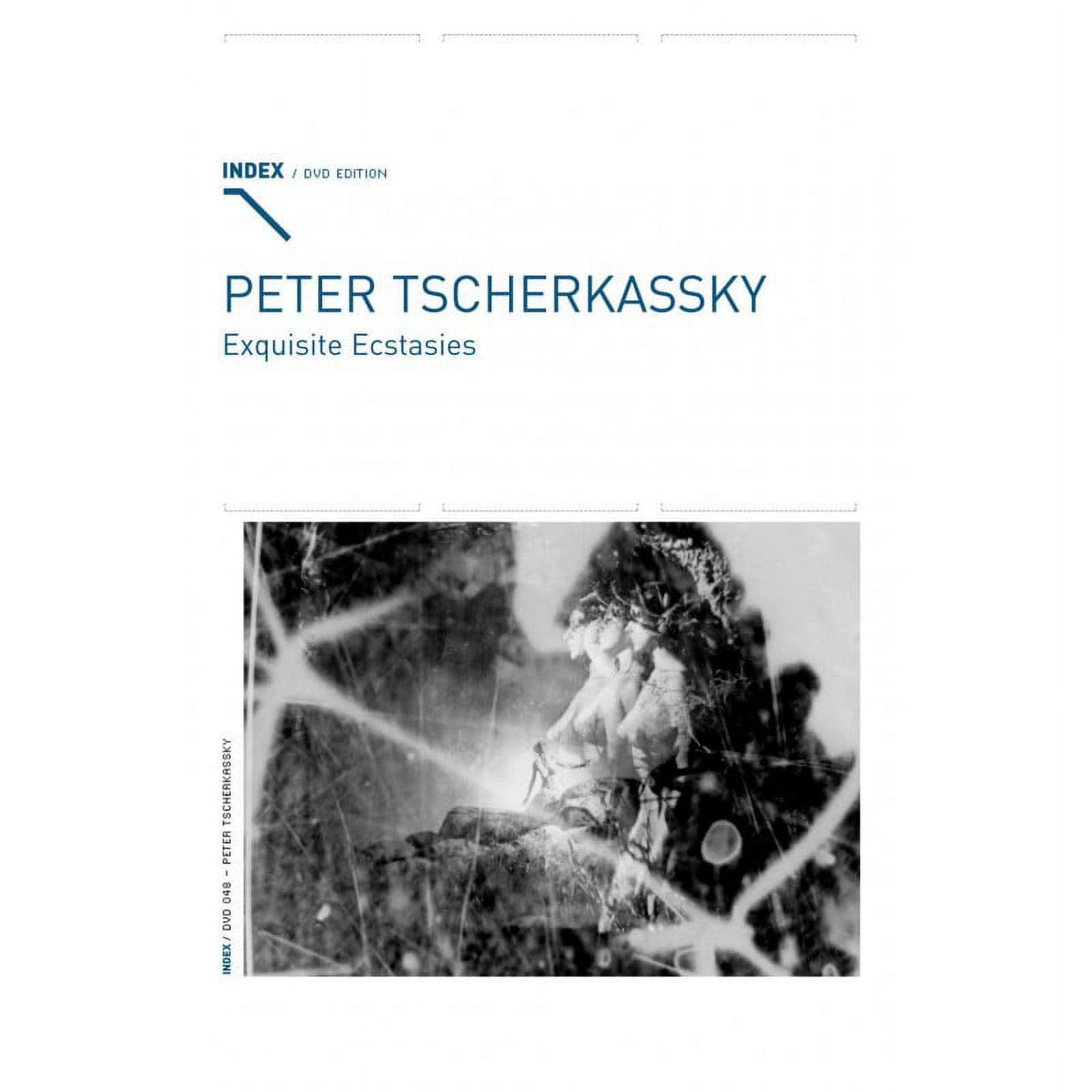
Peter Tscherkassky: Exquisite Ecstasies (INDEX 048)

Images often arrive clothed in certainty. They glide across the eye with a quiet authority, suggesting that what is seen is whole and already understood. The world appears to organize itself within the frame, its contradictions softened, its fractures sealed beneath a luminous surface. Yet this coherence is a delicate fiction. Beneath it, something restless persists, a tremor that resists being made smooth. Peter Tscherkassky’s cinema lives in that tremor. His creations expose the fragility of suspended disbelief, allowing the image to stutter in recognizance.

Emerging from the lineage of the Austrian avant-garde, Tscherkassky has always treated film as both medium and wound. His practice, grounded in the physical manipulation of celluloid, fevers his gaze. He dissects footage with a tactile intensity, pushing it toward states of convulsion and rupture.

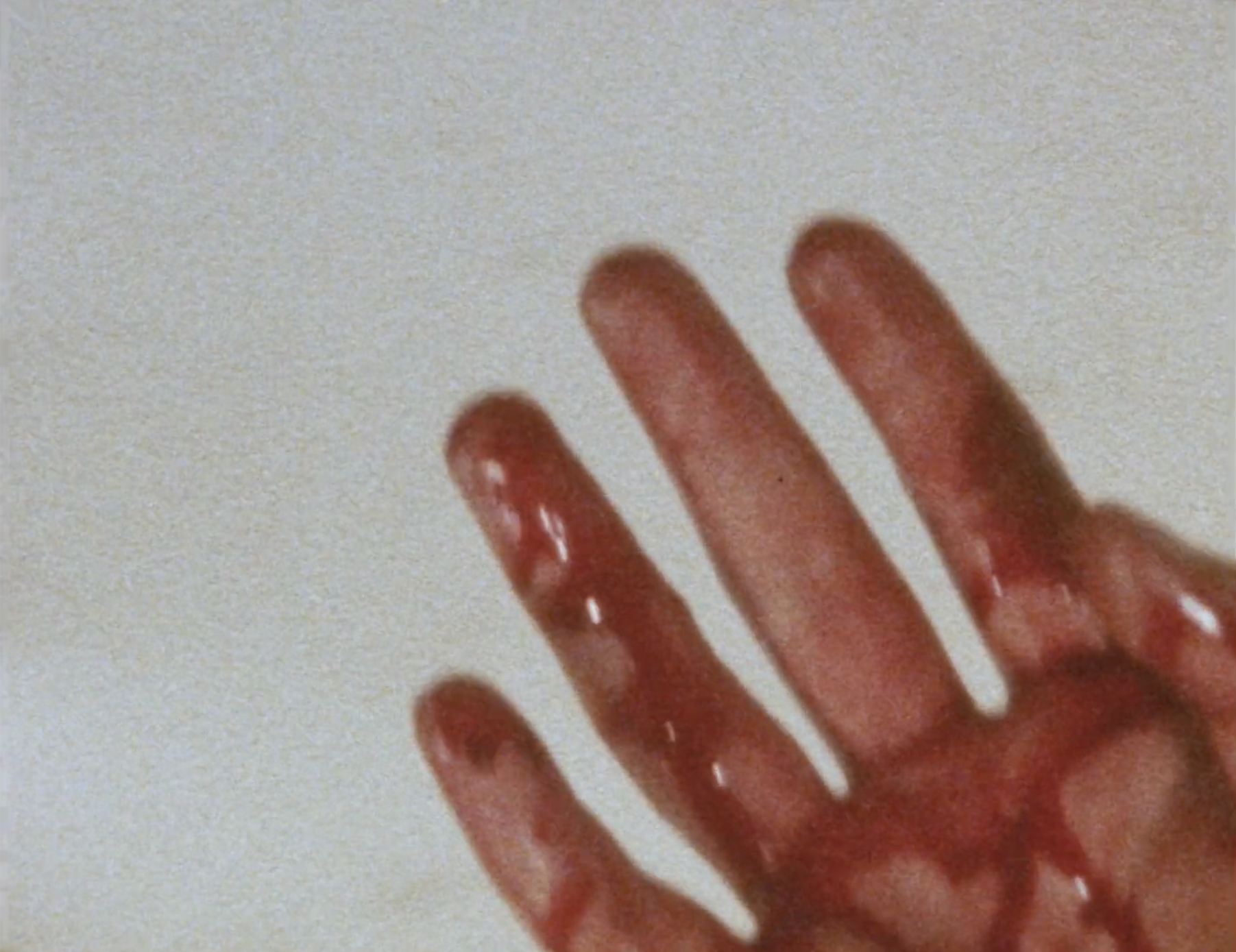
In Aderlaß (Blood-Letting, 1981), the screen opens into a darkness that feels less like absence than anticipation. Sound arrives first, jagged and insistent, as if the apparatus itself were clearing its throat. The question “What language do you speak?” reverberates not as inquiry but as accusation. Communication falters, dissolving into laughter that feels almost violent. Here, the moving image becomes an act of self-interrogation, a ritual of undoing. The invocation of “murder as the only real artwork” lingers not as provocation alone but as a symptom of artistic despair. Blood seeps into the frame, not metaphor but material. One begins to wonder whether movement produces film or whether film produces movement. What remains in this interrogation is a flicker that feels terminal, witness to its own extinction.

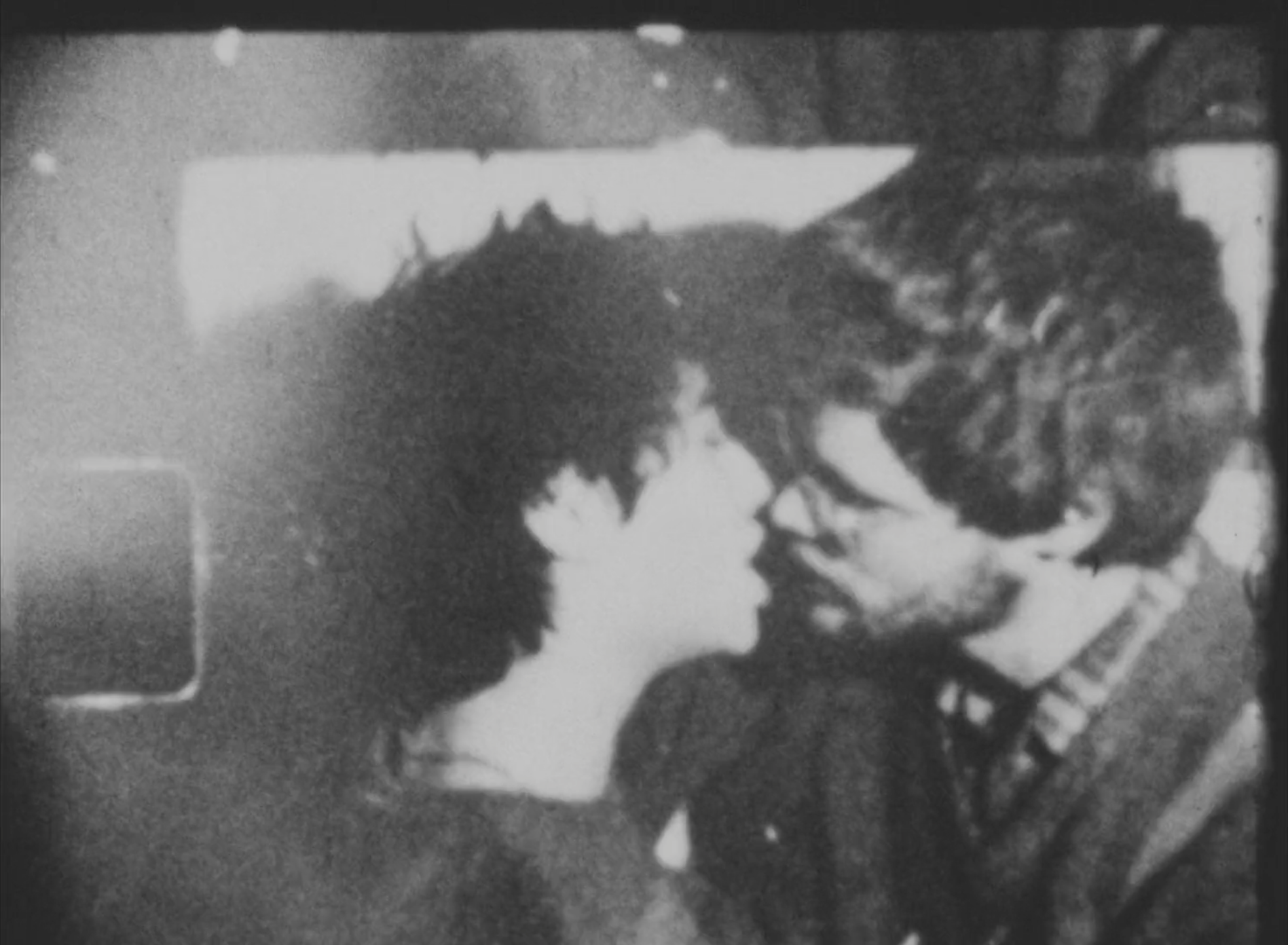
With Liebesfilm (Film of Love, 1982), Tscherkassky turns to intimacy, albeit stripped of fulfillment. A kiss approaches endlessly, rehearsed 522 times without consummation. Desire becomes mechanical, an algorithm of longing caught in a loop. Each repetition erodes meaning yet intensifies sensation. Love reveals itself as a structure of hesitation, a choreography of almosts. The bodies lean toward each other, again and again, yet never arrive. What should be a culmination becomes a suspension. The male gaze lingers in that gap, feeding on deferral. Lips remain unlocked, not out of restraint but because closure would end the system that sustains them.

Urlaubsfilm (Holiday Film, 1983) complicates the act of looking more directly. A woman moves through a field, undressing with a gesture that might initially invite voyeuristic comfort. But then, her gaze meets the camera, and with it, the viewer. The illusion fractures. To look is suddenly to be seen looking. The image begins to mutate and open portals within itself. A second frame emerges like an eyelid lifting from the surface. Gradually, visibility recedes. Flesh dissolves into abstraction. What remains is not the body but its residue, held precariously in memory. The gaze loses its object and confronts its own voraciousness.

By the time we reach tabula rasa (1989), the gaze has become predatory. Cowboys lurk in the brush, archetypes of surveillance and control, their attention sharpened to a point. Yet what they see refuses coherence. The image slips and folds into textures that evade recognition. Skin becomes landscape. Cloth becomes terrain. The female body, when it appears, resists fixation. She is neither subject nor object but a shifting locus of desire that cannot be pinned down. The camera reveals itself as complicit, even parasitic, driven by a hunger that consumes its own vision.

This trajectory finds a kind of culmination in The Exquisite Corpus (2015), a work that gathers decades of experimentation into a dense, almost tidal structure. Drawing from found footage, including a 1960s nudist film, Tscherkassky constructs a landscape where bodies and film stock merge into a single unstable organism. A couple sails toward an island, though their arrival feels illusory. A thunderclap fractures the image before frames multiply, invert, and overlay themselves in a choreography of excess. Flesh becomes pattern. Movement becomes echo. Erotic gestures lose their charge, not through repression but through saturation. The more the body is shown, the less it can be possessed.

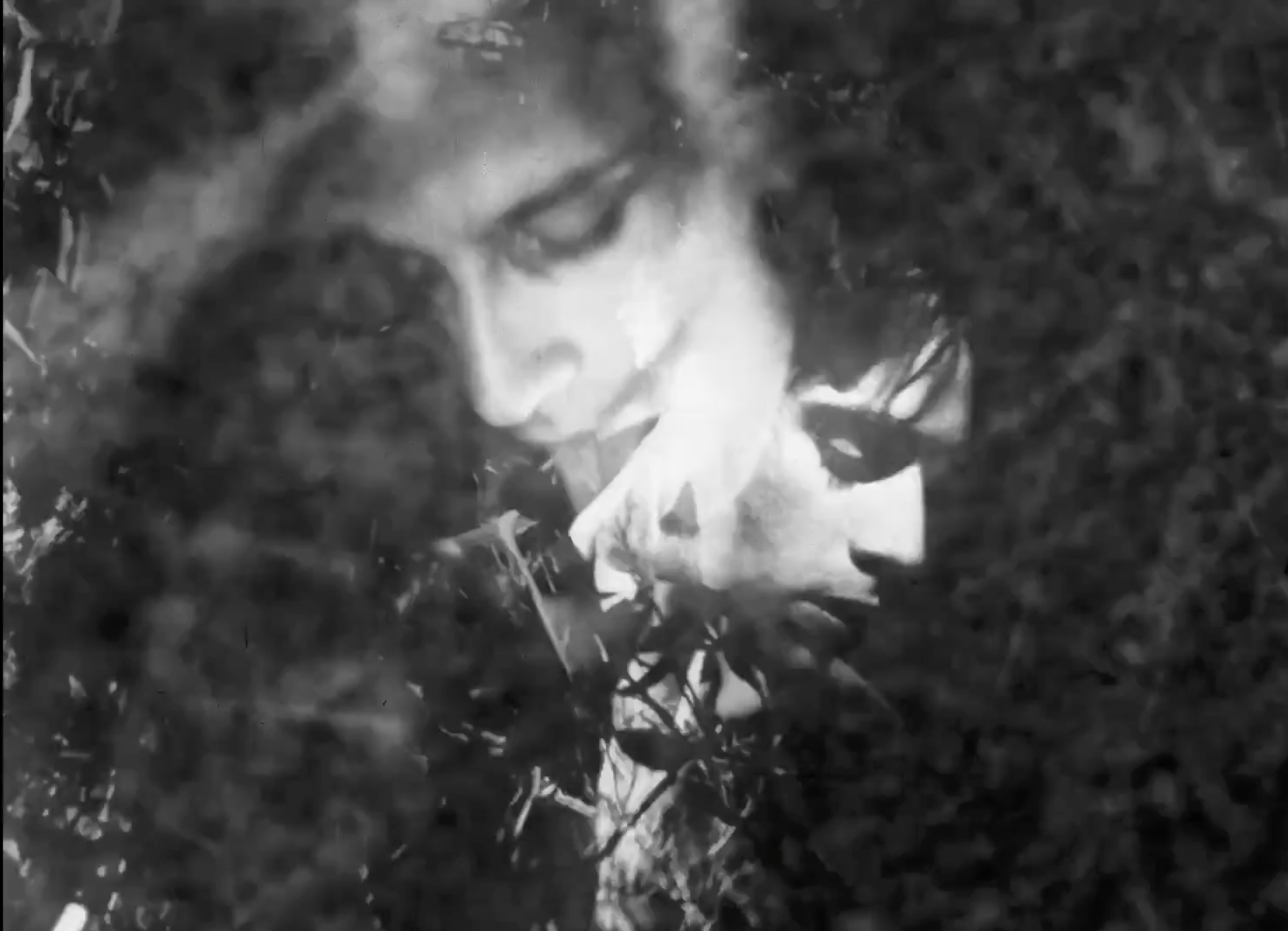
Natural elements intrude. Leaves, flowers, woven textures. These are not mere decorations but reminders that cinema, too, is subject to decay and transformation, even as it pulses like a living thing. Tscherkassky’s frame-by-frame method becomes a form of devotion, an insistence on tactile reality. In an era of digital smoothness, he retains the scars of the past, resisting the flattening of experience into seamless flow.

Across these works, the POV is never stable. It shifts from voyeur to participant, from observer to accomplice. It reveals itself as constructed, fractured, and, above all, unreliable. Tscherkassky implicates the viewer in the act of looking, exposing the desires and violences embedded within it. What emerges is not simply a critique of representation but a reconfiguration of perception itself. The films suggest that seeing is always entangled with absence, that every image carries within it the trace of what cannot be shown.

And perhaps this is where Tscherkassky’s work ultimately leads beyond myth and beyond even the body. The gaze, stripped of its certainties, becomes something quieter and more elusive. Not a tool of mastery, nor a site of pleasure, but a fragile relation to the unknown. To look is to risk losing the ground beneath perception. To see is to encounter the limits of seeing. In that encounter, something almost philosophical stirs. Not an answer, not a conclusion, but a question that lingers like an afterimage, asking what it means to inhabit a world that cannot be fully brought into view.

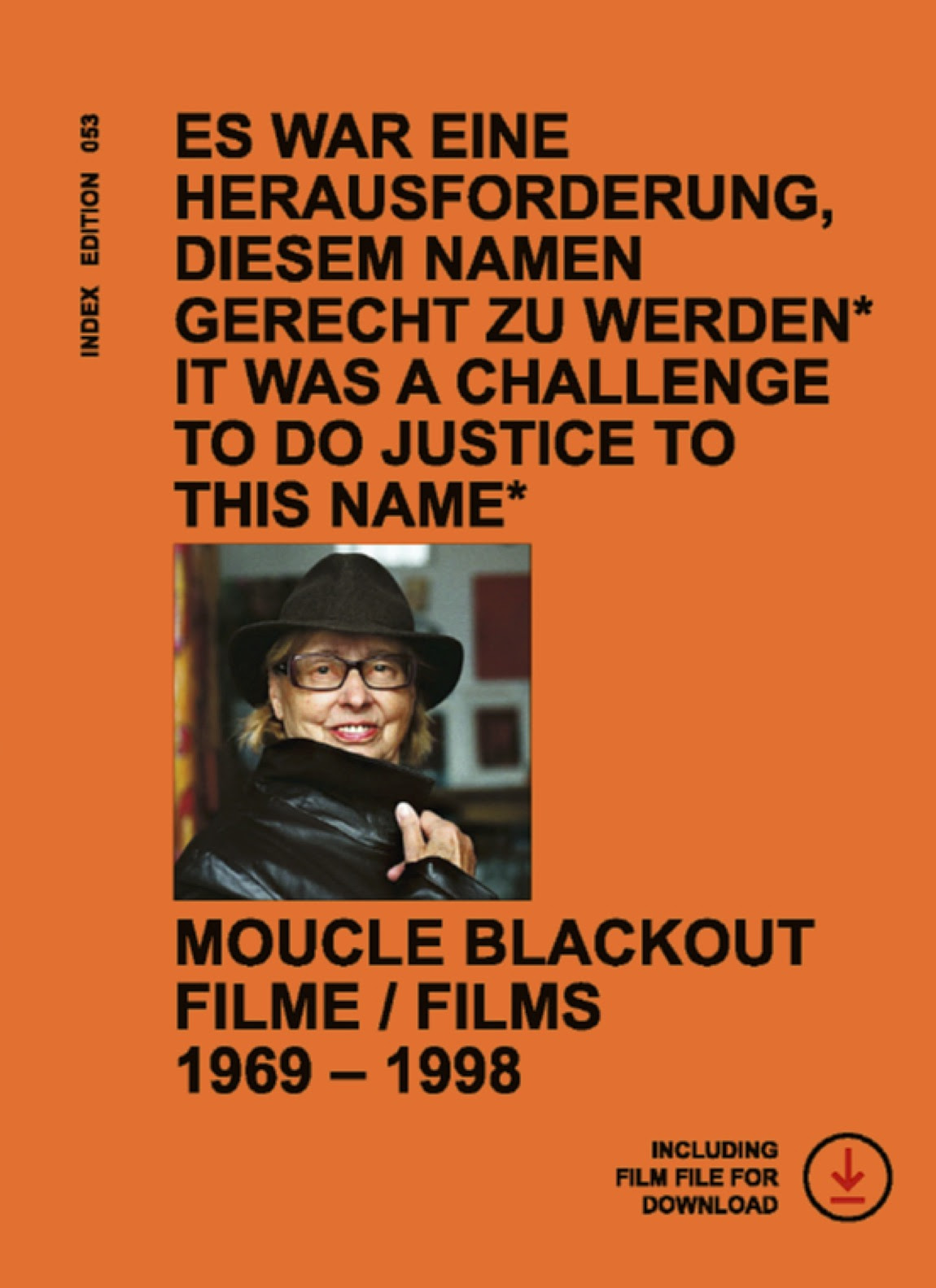
Es war eine Herausforderung, diesem Namen gerecht zu werden / It was a challenge to do justice to this name: Moucle Blackout – Films 1969 – 1998 (INDEX 053)

Constellations in Shadow

Across the canvas of Austrian avant-garde cinema, where names such as Kubelka and Kren have long been rendered in sharp, declarative strokes, the work of Moucle Blackout flickers with a quieter, though no less vibrant radiance. Her work breathes in a mirrored room, only to be released again in altered form. To encounter her oeuvre is to step into a field of delicate resistances, where form unsettles authority and vision unfolds through a patient, almost subterranean insistence.

Born Christiane Engländer in 1935, she embarked on her creative self-examinations through sculpture and design. As Brigitta Burger-Utzer observes, she moved within the orbit of the Vienna Group during its formative years, witnessing a burgeoning experimental culture that, despite its radical aspirations, remained curiously closed to women. While the men gathered, wrote, filmed, and declared, she watched, listened, and absorbed.

That threshold, neither inside nor entirely outside, became fertile ground. Instead of echoing the gestures of her contemporaries, she cultivated another trajectory, one that slips between categories. Her studies at the IDHEC in Paris between 1957 and 1958 opened a corridor of possibility, while her chance encounter with Marc Adrian (whom she later married) introduced her to the tactile processes of making films by placing a camera in her hands, an act that now carries a faint mythic glow. From that moment, experimentation became atmosphere, and together they explored development, color manipulation, and the mutable chemistry of the image. As she later remarked in conversation with Michaela Grill and Isabella Reicher: “I enjoy filmmaking, and this pleasure becomes visible.”

The name Moucle Blackout itself embodies that same playful opacity. “Muckl,” a childhood nickname, was combined with the enigmatic “Blackout” at Adrian’s suggestion into a conceptual eclipse. The moniker suggests a break in the flow of light. It also invites a loss of consciousness, as if meaning might shift under prolonged attention.

Thresholds, Absences, Openings

Her earliest independent films have been lost, a disappearance that feels less accidental than symptomatic. The marginalization of women within international avant-garde histories leaves behind many such absences that echo louder than presence. What remains begins, officially, with Walk in from 1969.

Blackout has long resisted the notion of meaning as a finished object. “I wanted the films to remain open to interpretation, but not too easy to decipher,” she explains. “It is not about serving the audience things ready made.” The viewer dwells at risk of uncertain, entering a building under construction where the floor may shift beneath each step.

Her filmography, though concise, unfolds across a spectrum of forms. Structural rigor dissolves into moments of chromatic delirium. Color pulses with interior life. Elsewhere, fragments of bourgeois ritual appear as rehearsed performances, their naturalness gently undone. Her palette is one of perceptual instruments, recalibrating not only what is seen but the conditions under which seeing becomes possible.

Arindam Sen suggests that Blackout’s work invites a rethinking of history itself, less as a sequence of monumental gestures than as an accumulation of small, deliberate acts. Each project becomes a step, quiet yet exacting, within a trajectory that often remains obscured. Recognition arrived late. Only in 2014, at the age of 79, did she receive a retrospective in Villach, a gathering of decades that had persisted without spectacle.

To place Moucle Blackout alongside figures such as VALIE EXPORT opens a dialogue between distinct strategies. Whereas EXPORT confronts with immediacy, Blackout allows the image to tremble until its surface betrays its instability.

Her work resides in intervals. Between frames. Between disciplines. Between recognition and obscurity. Photography, collage, object-making, dance: all is fair game. Each medium becomes a site where perception is tested.

Filmic Apertures

1. Walk in (1969, 16mm/digital, 5 min)

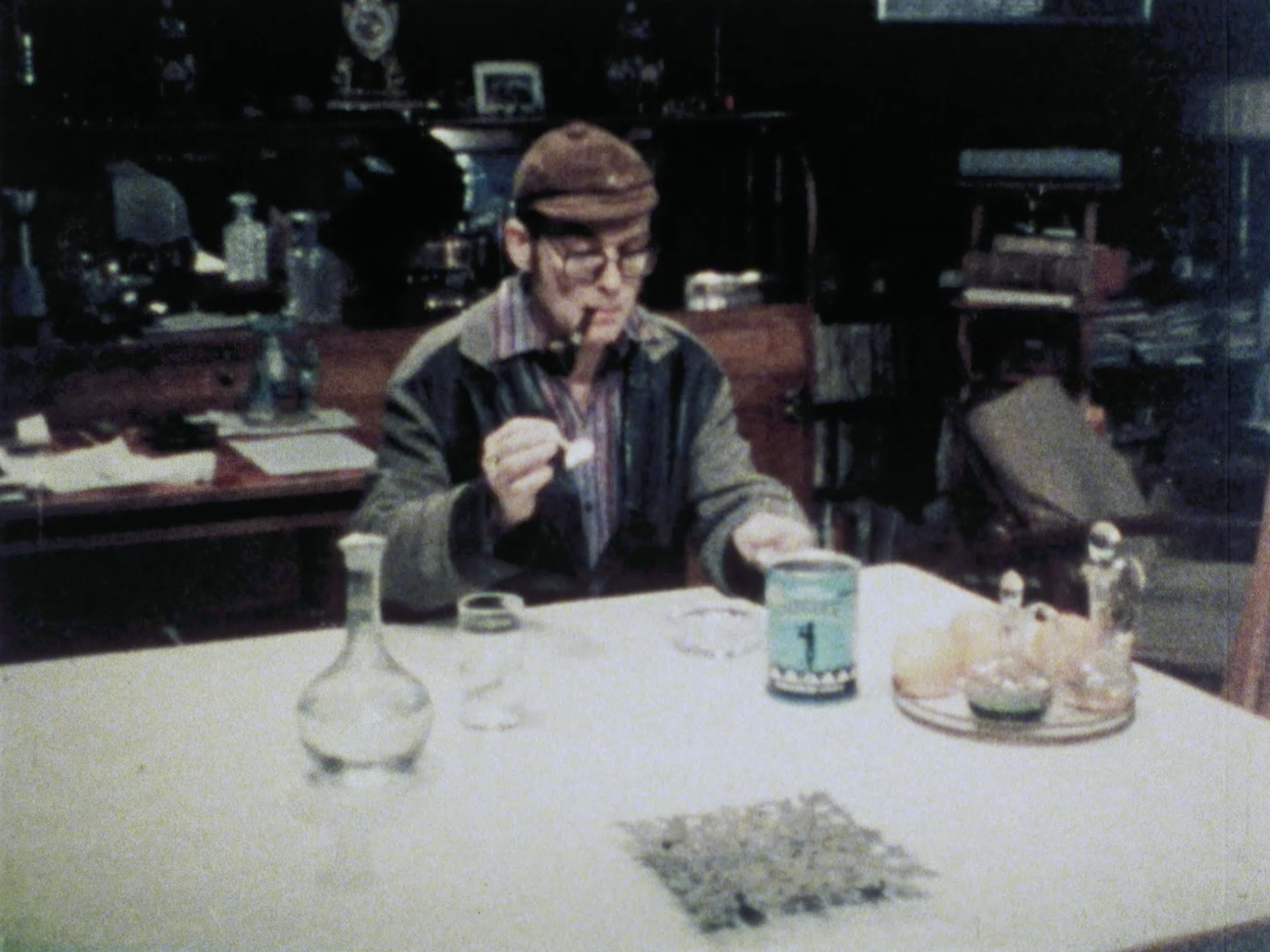
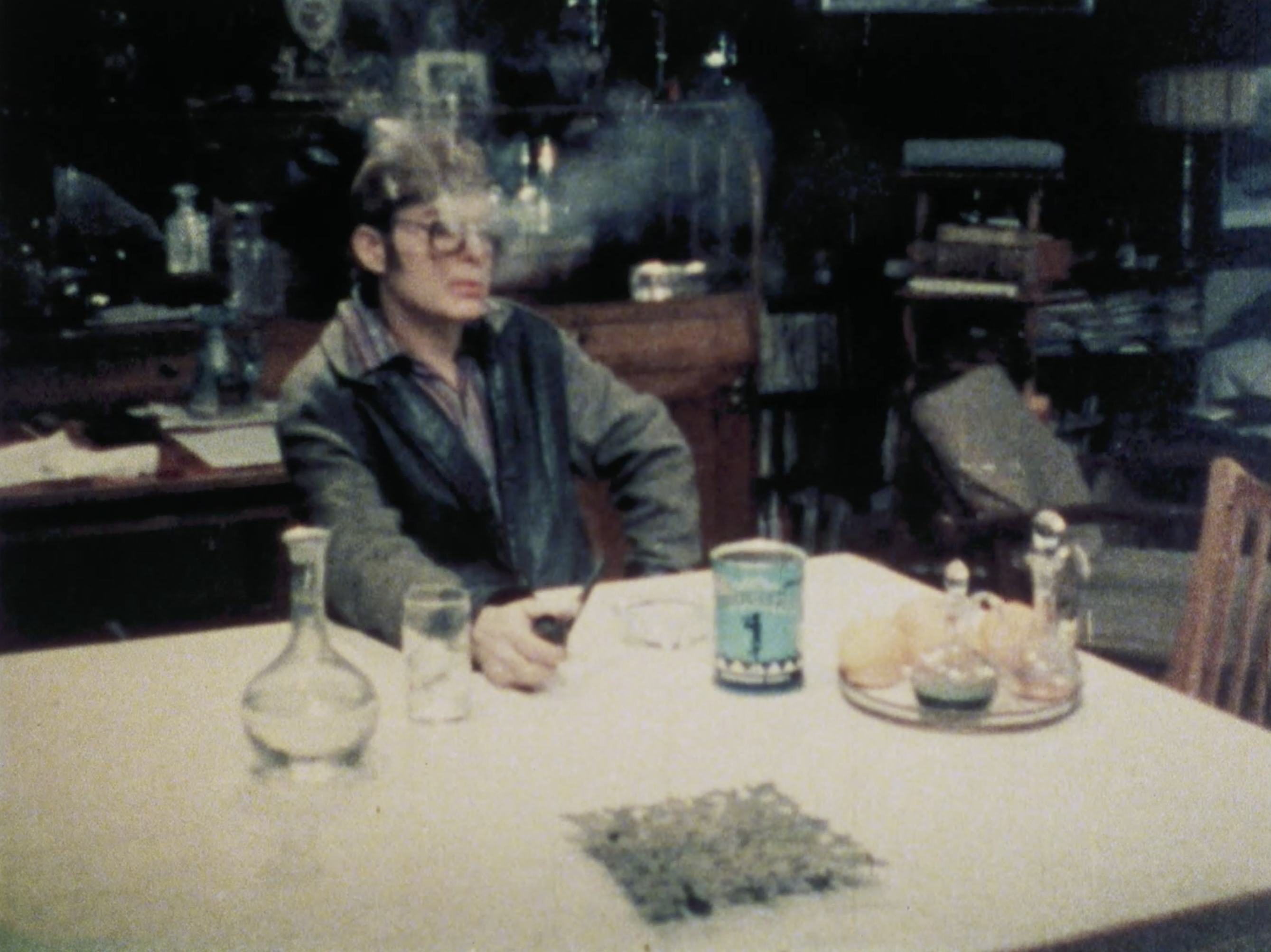
Although this is a structural film, it also functions as Blackout’s critical response to structural film, a gesture that flirts with imitation yet resolves into something more internally corrosive. The canonical language of repetition is taken up only to be bent inward, its apparent neutrality revealed as a mechanism capable of entrapment. From Marc Adrian’s entrance into their shared apartment to his measured sitting, the careful filling of a pipe, and the slow ignition of smoke, each action arrives with the promise of ordinary continuity. That promise dissolves almost immediately. The gesture fractures, breaks apart, and multiplies itself into rhythmic segments that refuse to align into forward motion. Seven hundred twenty frames are shuffled into a temporal labyrinth, where progression loses its footing and begins to circle itself.

The duplication process leaves visible scars across the filmstrip. Scratches cling like residue from a failed attempt at preservation, as though the act of repetition itself had worn down the material. Adrian appears caught between intention and interruption, his small domestic ritual transformed into a loop that cannot conclude. What might have been an act of unwinding instead becomes a tightening coil, a choreography of deferred release. Blackout’s notion of “the impression of manic behavior” lingers, though it feels less like mania than a quiet suffocation. The accompanying music hovers delicately, never resolving into comfort, its presence amplifying the unease.

2. Die Geburt der Venus / The Birth of Venus (1970-72, 35mm/digital, 5 min)

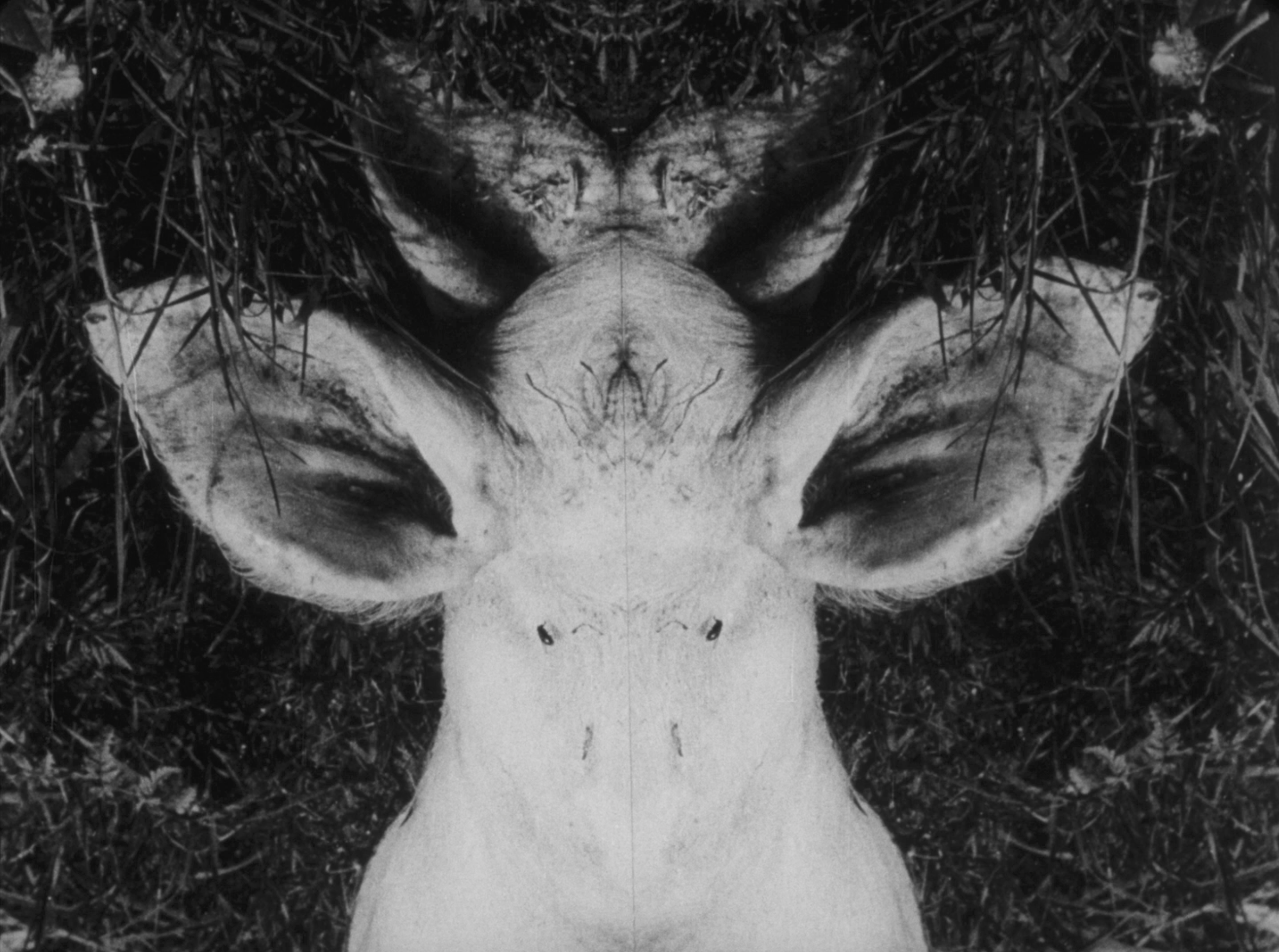
Here, the titular birth opens onto a charged terrain where pleasure and violence occupy the same visual field without settling into hierarchy. Photographs of exuberant sexuality among friends are interwoven with the stark presence of a pig carcass discovered on a roadside, a juxtaposition that resists easy symbolic closure. Flesh appears in multiple registers, one animated by desire and agency, the other reduced to inert matter, abandoned and exposed. Through motion montage, the images slide symmetrically across a central axis, mirroring themselves into shifting patterns that hover between abstraction and recognition. The repetition produces a visual grammar that both unifies and destabilizes, suggesting correspondences that remain perpetually unsettled.

The pig emerges as a mutable figure, at times evoking victimhood, at times broadcasting pure form, while the human bodies retain a sense of volition that resists reduction. Songs by The Beatles weave throughout, their presence feeling less like accompaniment than revelation. “Tell Me What You See,” “Happiness Is a Warm Gun,” “Why Don’t We Do It in the Road?” circulate throughout, each track inflecting the visual play with shifting tonalities in a field where liberation and vulnerability remain entangled.

3. Stoned Vienna (1976-79, 16mm/digital, 20 min)

Stoned Vienna unfolds as a portrait of a city caught between preservation and disintegration, its surfaces layered with histories that refuse to settle into coherence. Emerging alongside Ernst Schmidt jr.’s Wienfilm 1896-1976 (see INDEX 044), it echoes another cinematic project while maintaining its own distinct pulse, as though two parallel observations had briefly intersected without fully merging. Vienna appears at once monumental and fragile, its historical architecture standing beside modern interventions that already seem fatigued, their promise of progress tinged with obsolescence.

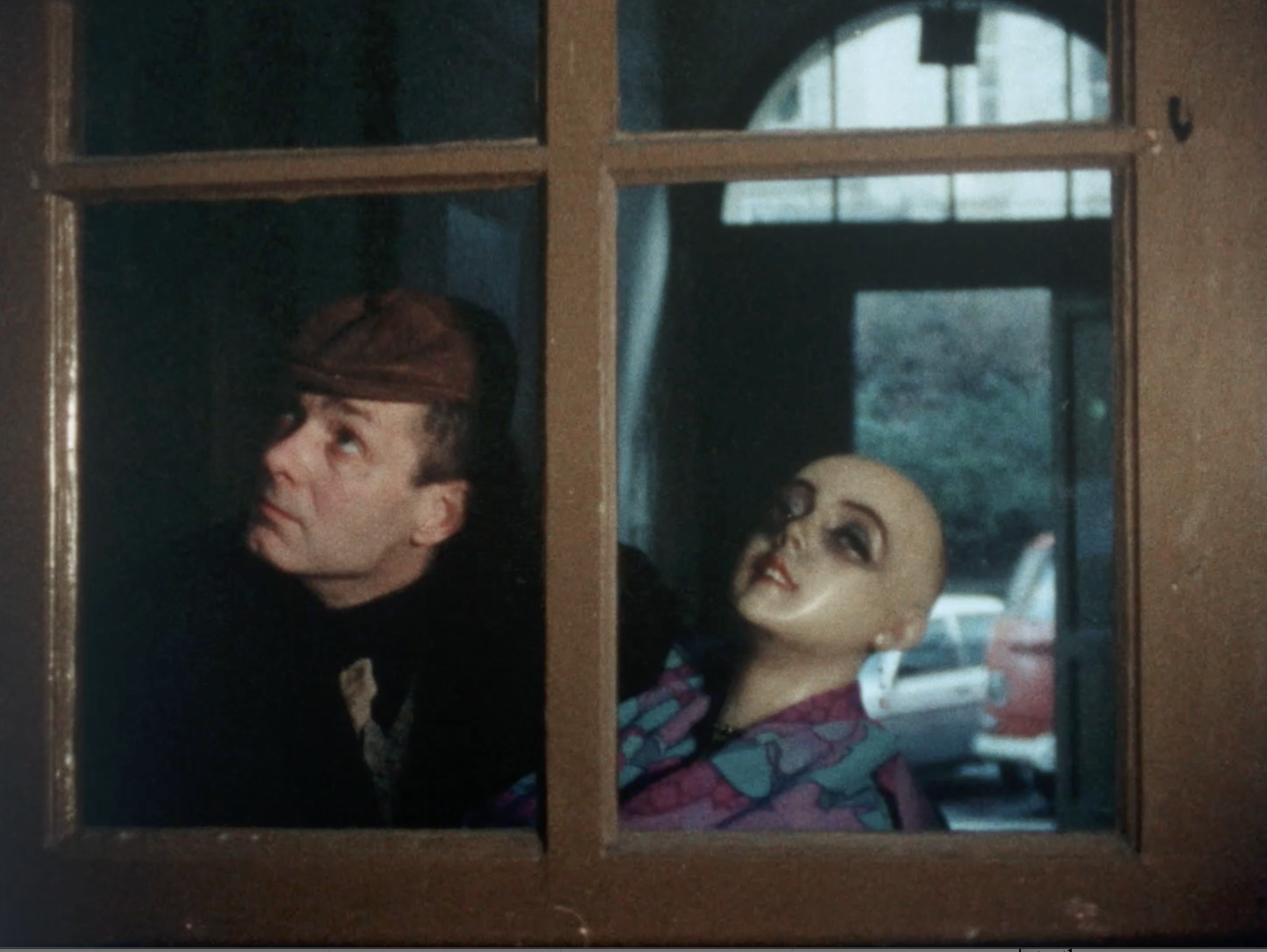
A wax doll named Dolly occupies this landscape, a figure that condenses the city’s condition into a single uncanny presence. She is handled, displayed, and displaced as a surrogate for a Vienna that is both preserved and manipulated. Double exposures have their say, negative and positive collapsing into one another until the city itself becomes a shifting surface. Male comportment hovers between care and absurdity. Apartment blocks scroll past in relentless succession, their repetition suggesting a form of urban anonymity that absorbs individuality into pattern.

The burial of Dolly within the debris of demolished buildings introduces a subdued violence. The soundtrack invokes anxious rhythms, shaker and organ weaving a sonic texture that offsets things further. Then the color palette shifts abruptly, erupting into garish, almost radioactive tones. The editing accelerates, its resulting friction vibrating with a special agitation. When the man kisses Dolly, the gesture lands with a hollow resonance, an attempt at connection that collapses into artifice. Vienna remains suspended between beauty and decay, its identity perpetually rewritten by forces that cannot fully erase what came before.

4. o.k. (1987, 16mm/digital, 5 min)
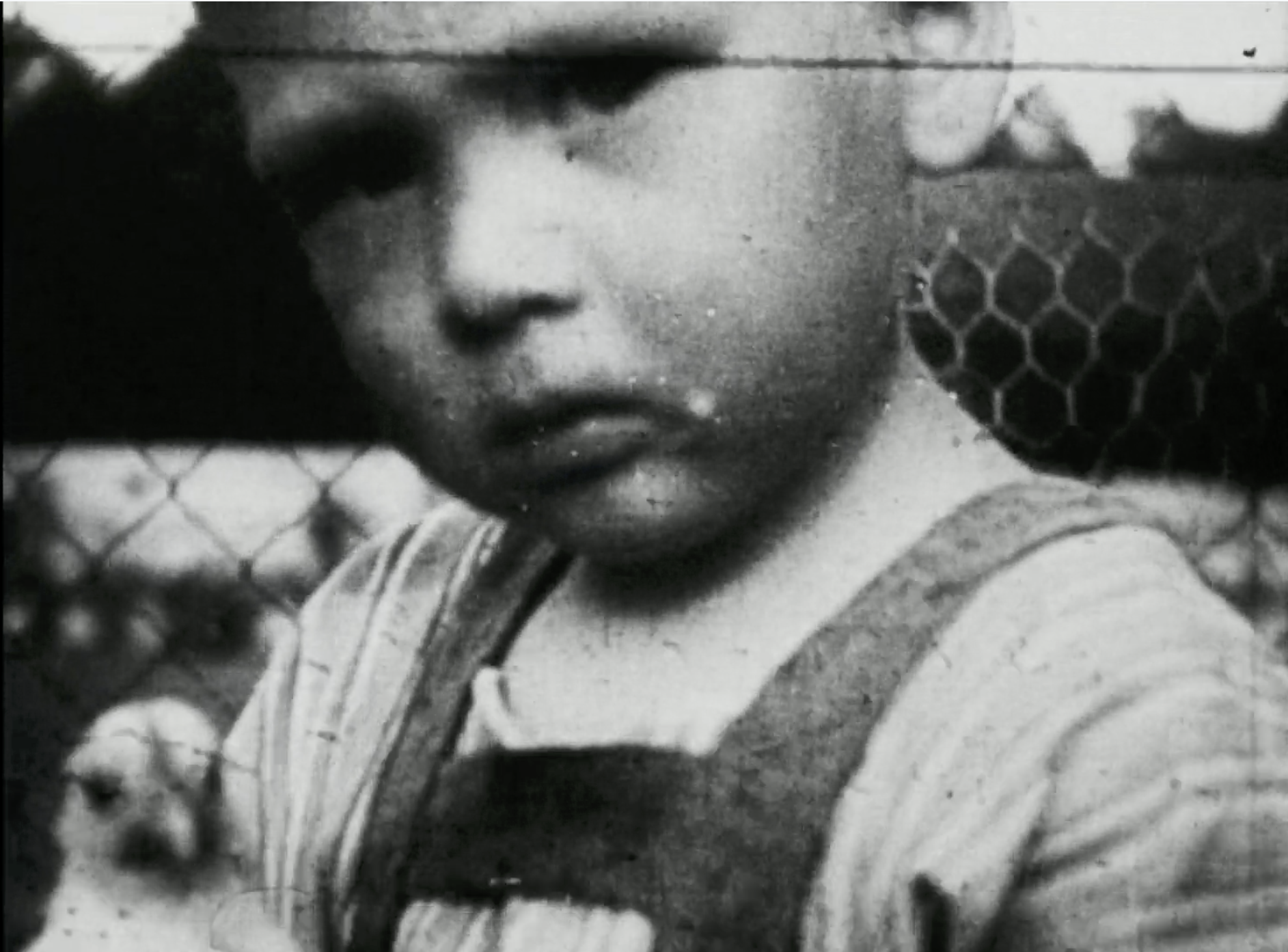
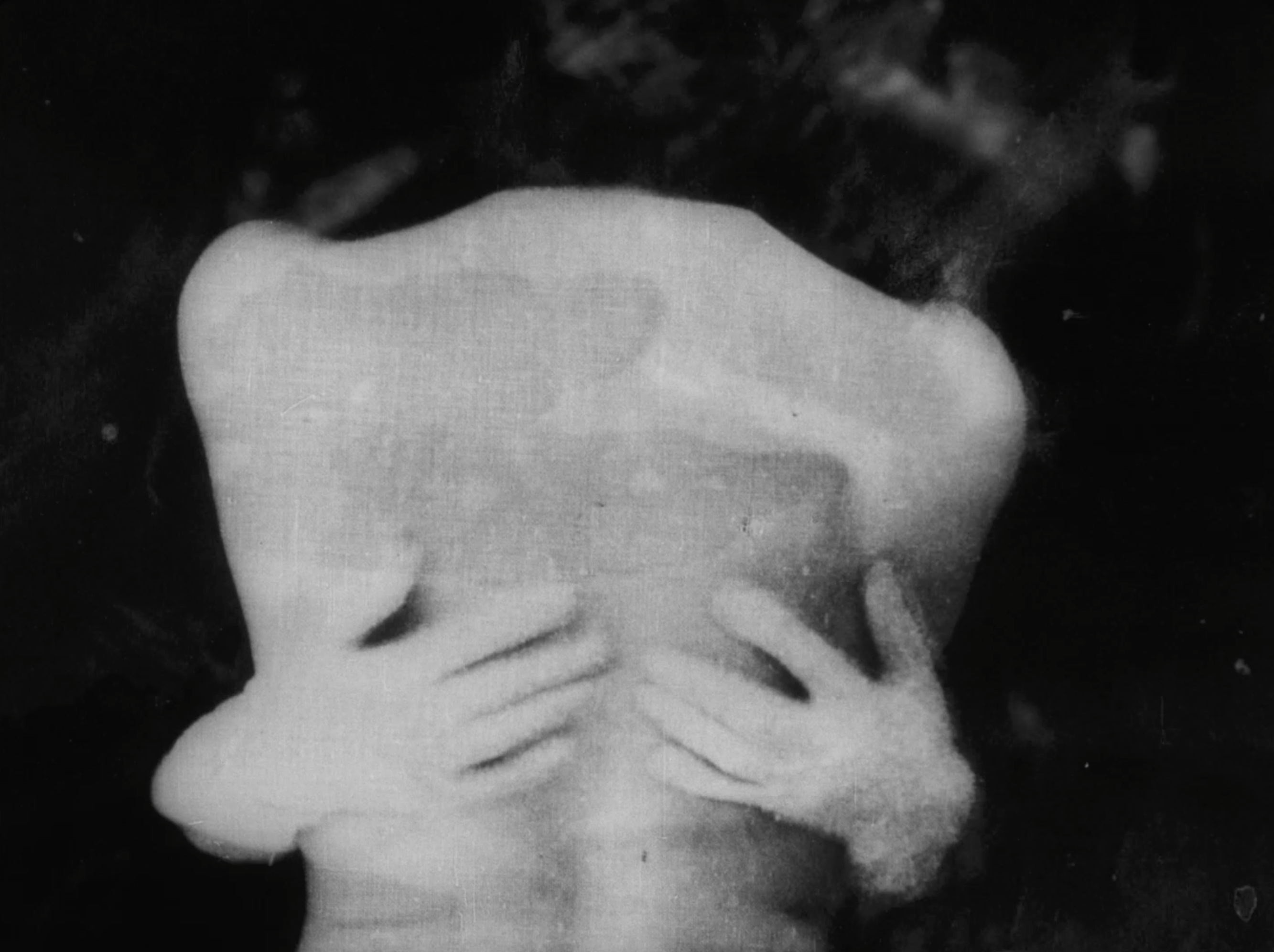
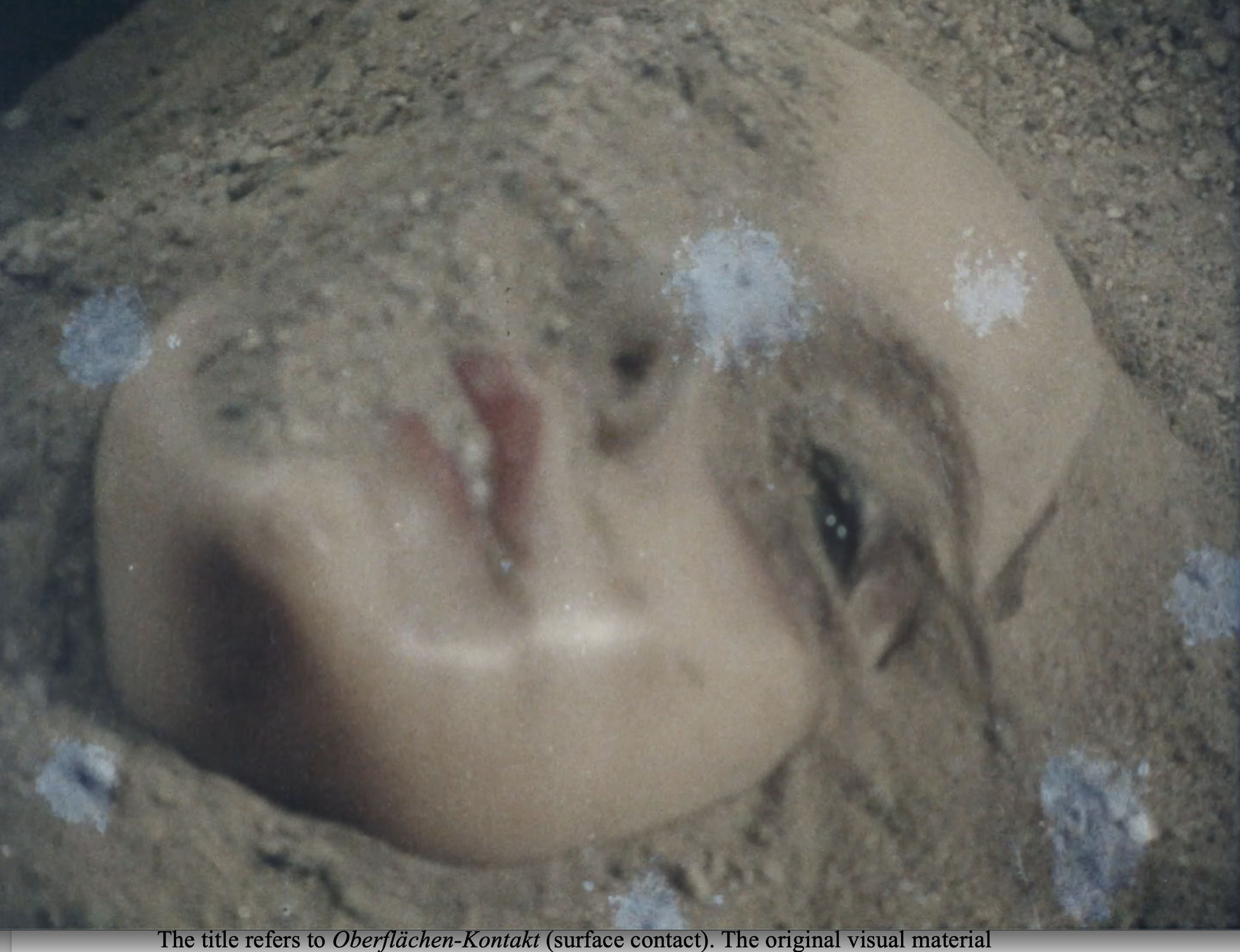
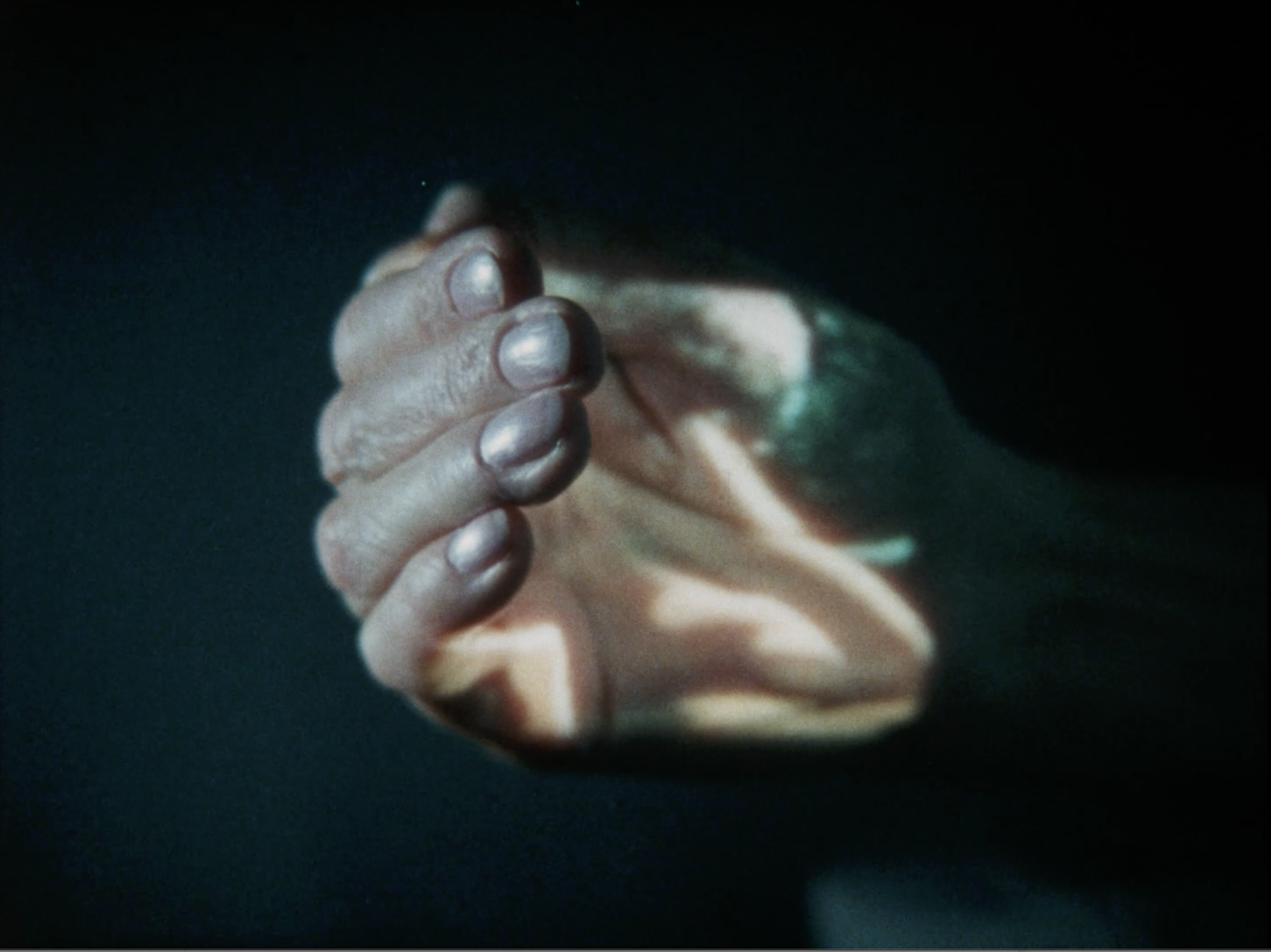
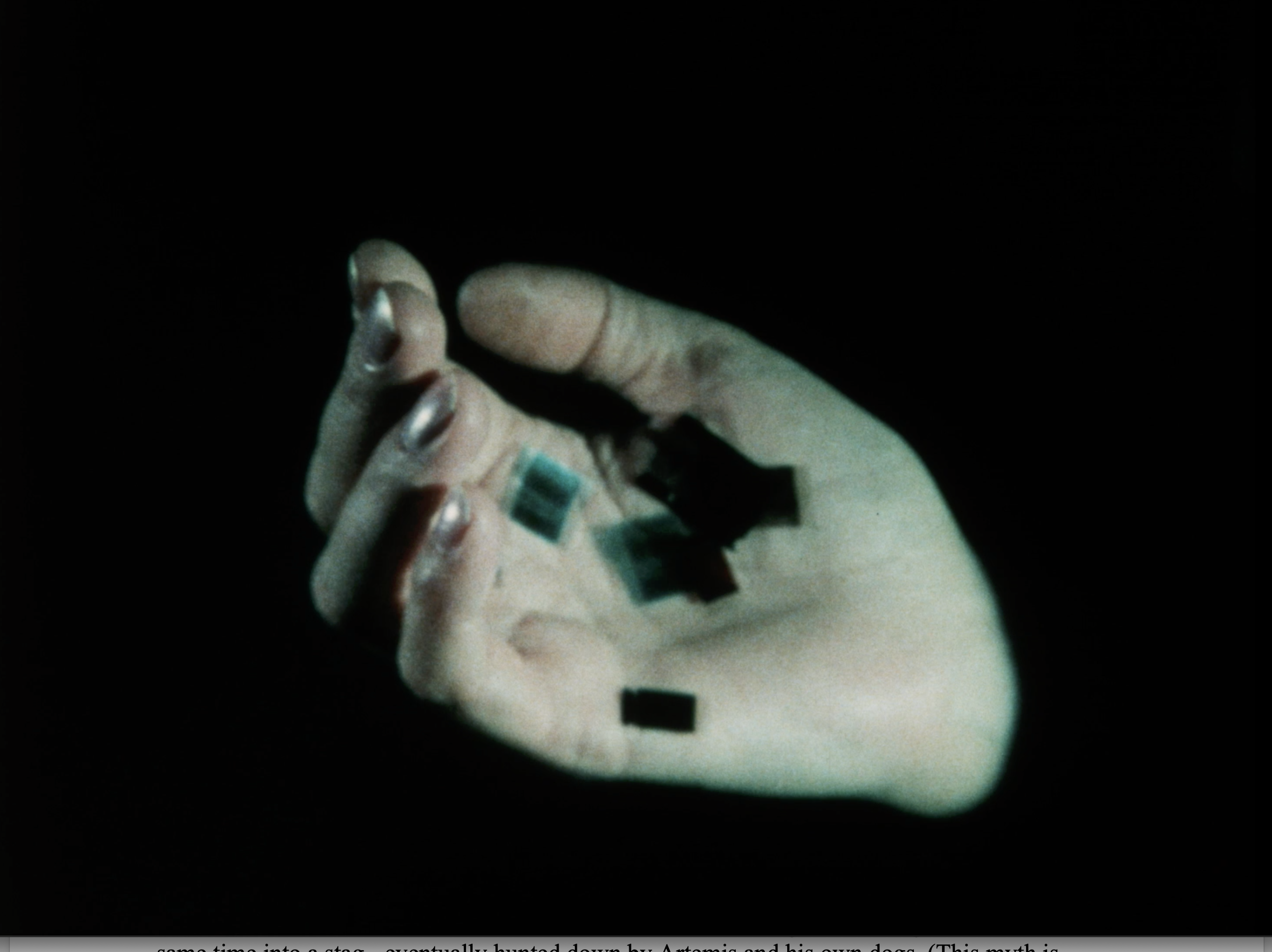
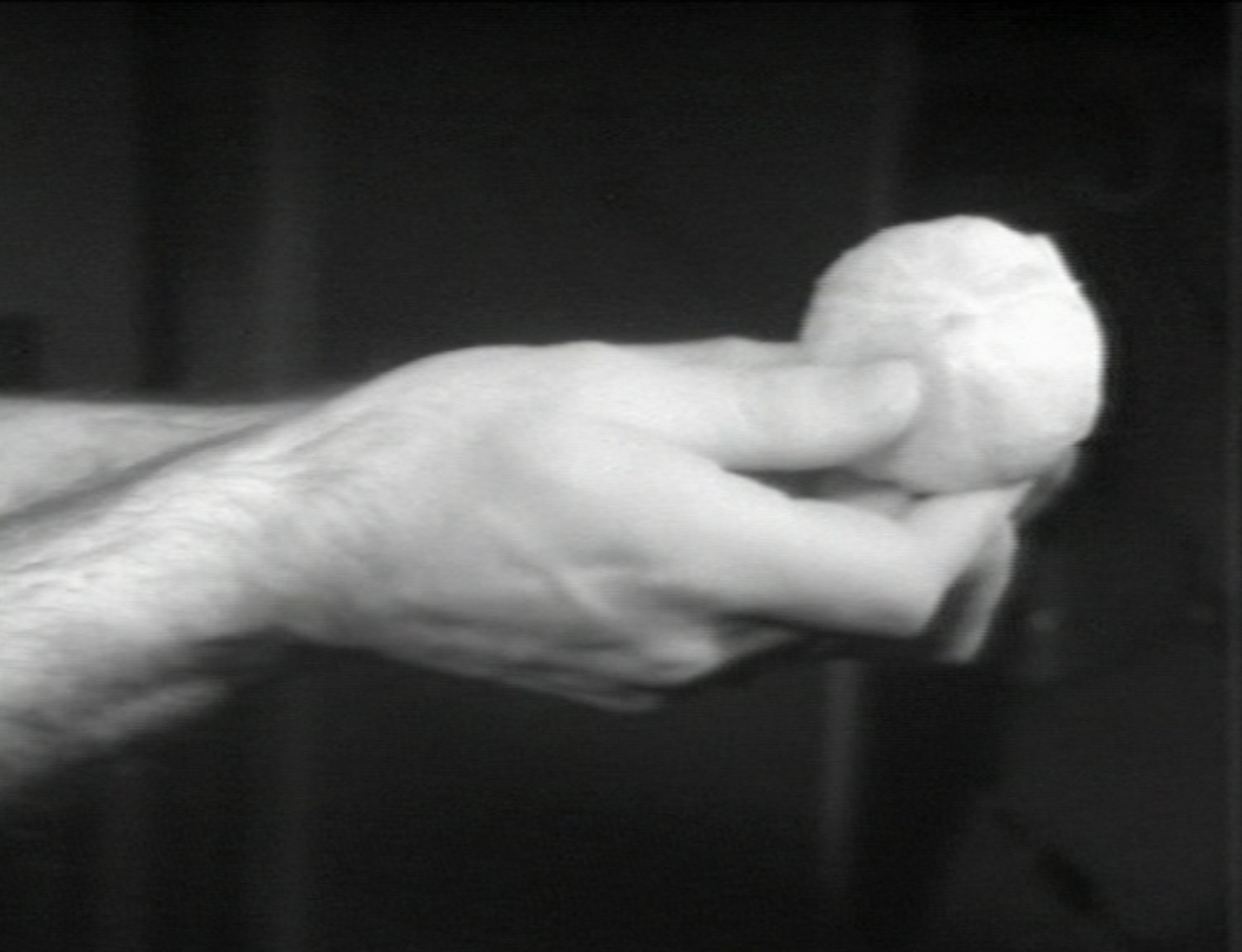
In o.k., perception is folded back onto its own conditions of existence, drawing attention to the fragile interface between projection and surface. The title’s reference to Oberflächen-Kontakt (Surface Contact) anchors the work in a palpable reality, even as it destabilizes any simple notion of contact. Footage originally captured on Super-8 is re-projected onto Blackout’s hand, then re-filmed in 16mm, creating a layered structure in which each iteration transforms what came before. The hand becomes both support and participant, its contours shaping the image even as the image redefines the hand.
This recursive process generates a sense of temporal slippage, as though remembering itself in real time while simultaneously forgetting its origin. Water moving over stones, a man eating, the sudden appearance of a bee: these fragments circulate without coalescing into narrative, their repetition producing a kind of haunted continuity. Bruckner’s symphonism erupts subcutaneously, lending the sequence a gravity that feels disproportionate to its ephemerality.

As the hand closes and opens again, revealing physical fragments of film, the illusion of permanence proves itself to be dependent on surfaces that can never fully stabilize it. What remains is an awareness of cinema as an act of holding and releasing, a temporary convergence of light, matter, and perception that resists any claim to lasting solidity.

5. Der Galaktische Nordpol liegt im Haar der Berenice / The Galactic North Pole Lies in the Hair of Berenice (1992, 16mm/digital, 14 min)

This work unfolds like a myth refracted through unstable time, where narrative threads intertwine without resolving into a single trajectory. The story of Berenice II of Egypt, who sacrifices her hair to ensure her husband’s safe return, drifts alongside the fate of Actaeon, whose desire leads to his transformation into prey. These figures move as volatile chemicals, their actions filtered through layers of dissolves and double exposures.

Acts of survival—eating, drinking, sex, and violence—accumulate into a sequence that oscillates between preservation and destruction. The body emerges as both agent and site of vulnerability, caught within cycles that cannot be easily disentangled. A star map flickers intermittently, suggesting a cosmic dimension that reframes the narrative as something both intimate and vast. The transformation of Berenice’s hair into a constellation lingers as a gesture suspended between offering and relic, a trace that resists disappearance even as it becomes abstract.

Images of decay, a rotting meal, blood, and moments of penetration interrupt the flow, grounding the myth in a fiercely material reality that refuses transcendence. A red beast appears, then recedes, its presence marking a threshold between recognizable form and something more elusive. Everyday fragments surface unexpectedly, seeking to exceed the frame’s containments in disorientation, where the underworld awaits its fleshly meal.

6. Loss (1998, 16mm/digital, 12 min)

Loss gathers its materials from disparate geographies, weaving together home movies from the Canadian wilderness with documents from Australia and Europe into a meditation on mourning that unfolds without overt declaration. Landscapes stretch outward, even as they are shaped by the weight of memory that presses inward from all sides.

The suggestion of a mother losing her child emerges not as a singular event but as a continuous undercurrent. The footage acquires a strange inflection of agency, as if it were the viewer who had been summoned rather than the other way around. Recurrent motifs, including a stone wall and fragments of play, return with subtle variations, their circularity nevertheless buckling against closure.

Peter Mudie’s voice introduces language into the visual field, describing it as “silence interrupted by language.” The montage begins to move in reverse, time folding back upon itself in an attempt to retrace what has been lost. This reversal does not restore what is gone. Instead, it reveals the persistence of absence.

7. Neue Wege bricht neue Welt aus / New Paths Breaks New World Out (1996, 16mm/digital, 11 min)

This collaboration with Karin Schöffauer unfolds as a dialogue that never fully aligns, each element maintaining a degree of autonomy. Its opening situates the viewer within a space of exhaustion and self-doubt, a final push into an undefined void undertaken with a sense of misalignment, as though the timing itself were already off.

Flashes of physical exertion, of bodies engaged in sport, refinement, and displays of vitality, circulate alongside a textual voice that distances itself from corporeal pleasure, describing a terrain that feels hopeless and illuminating. The body becomes a site of contradiction, celebrated and estranged simultaneously.

“With fade-ins, darling, I am at the cinema, wallpapering the breaks,” the text declares, introducing a notion of cinema as both construction and concealment. The appearance of an empty sanatorium intensifies this atmosphere, its vacancy suggesting a waiting that may never be fulfilled.

Afterimage, Residue, Name

To watch these films in one go is to encounter the living questions they continue to nurse. What does it mean to look without mastery? How does repetition alter power? Where does pleasure reside in the act of making? Such questions are afterimages in and of themselves.

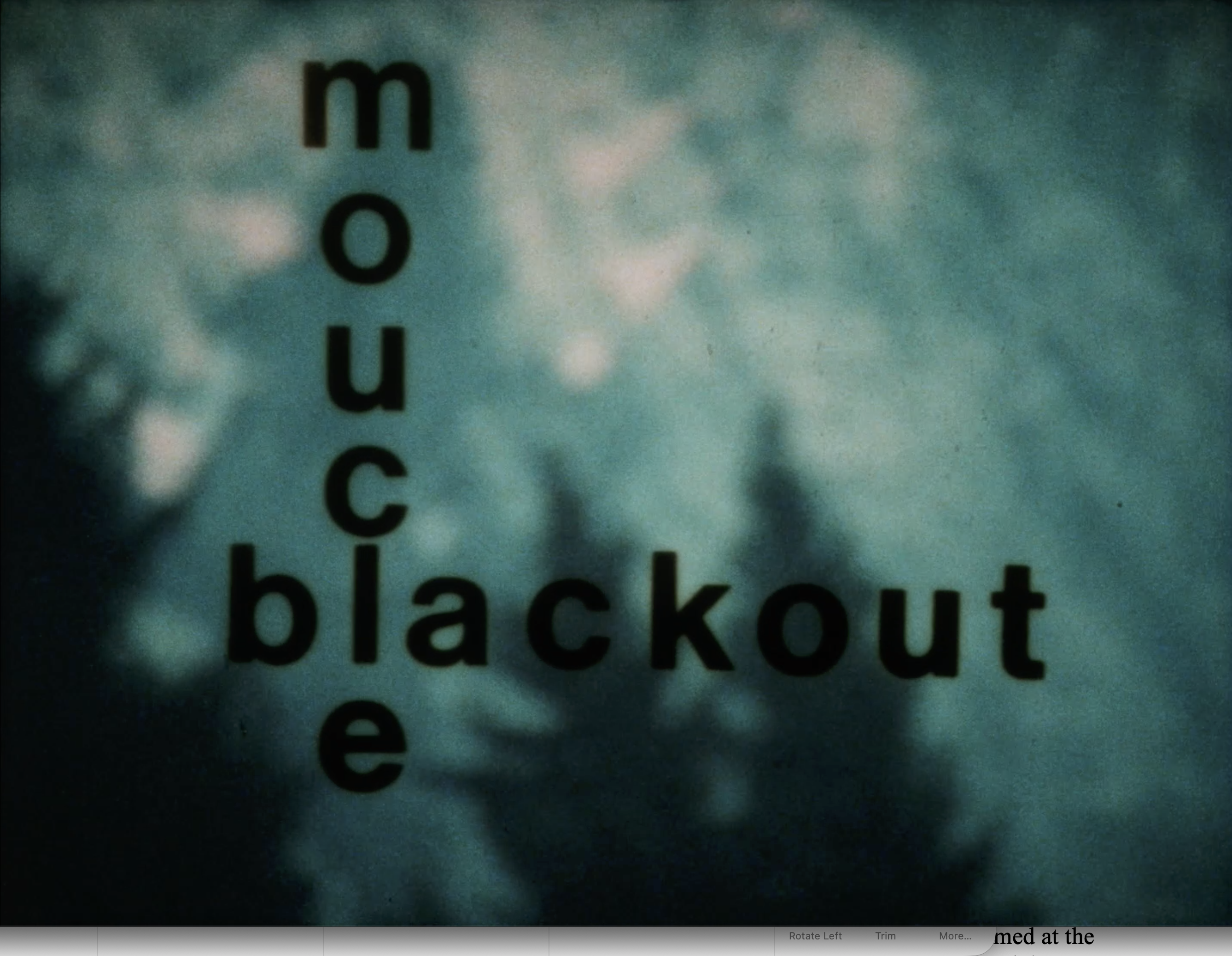
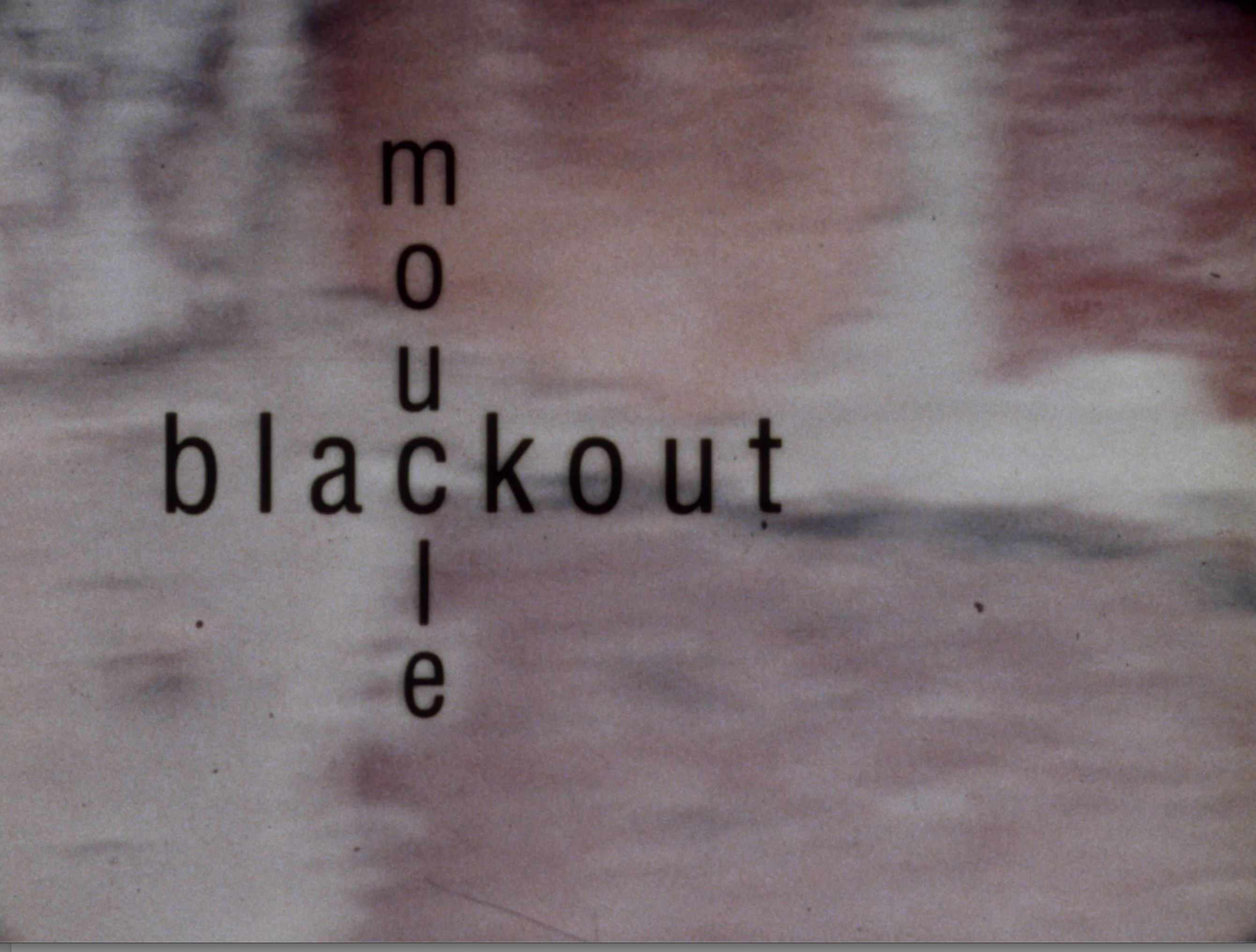
And then there is the name.

Moucle.

Blackout.

Letters recur.

The “l” overlaps.

The “c” overlaps.

Small intersections suggest identity folding into itself, as though the name were a loop akin to her cinematic imagination. Not one name, in fact, but two. Not one form, but an overlap. A self intersecting with itself in the space between light and its disappearance.

A blackout that reveals rather than obscures, exposing the fragile architecture through which vision becomes inescapable.

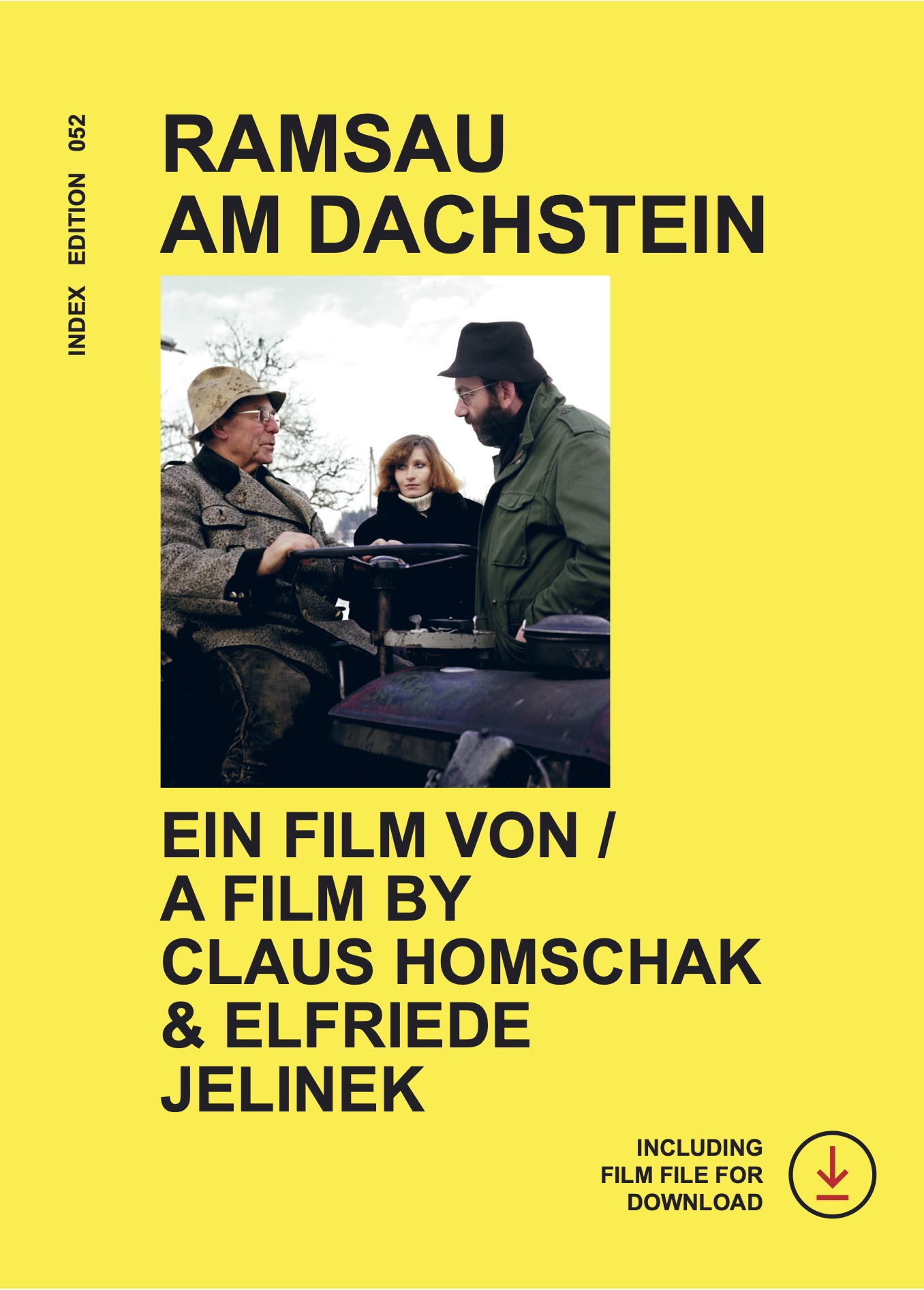
Ramsau am Dachstein: A Film by Claus Homschak & Elfriede Jelinek (INDEX 052)

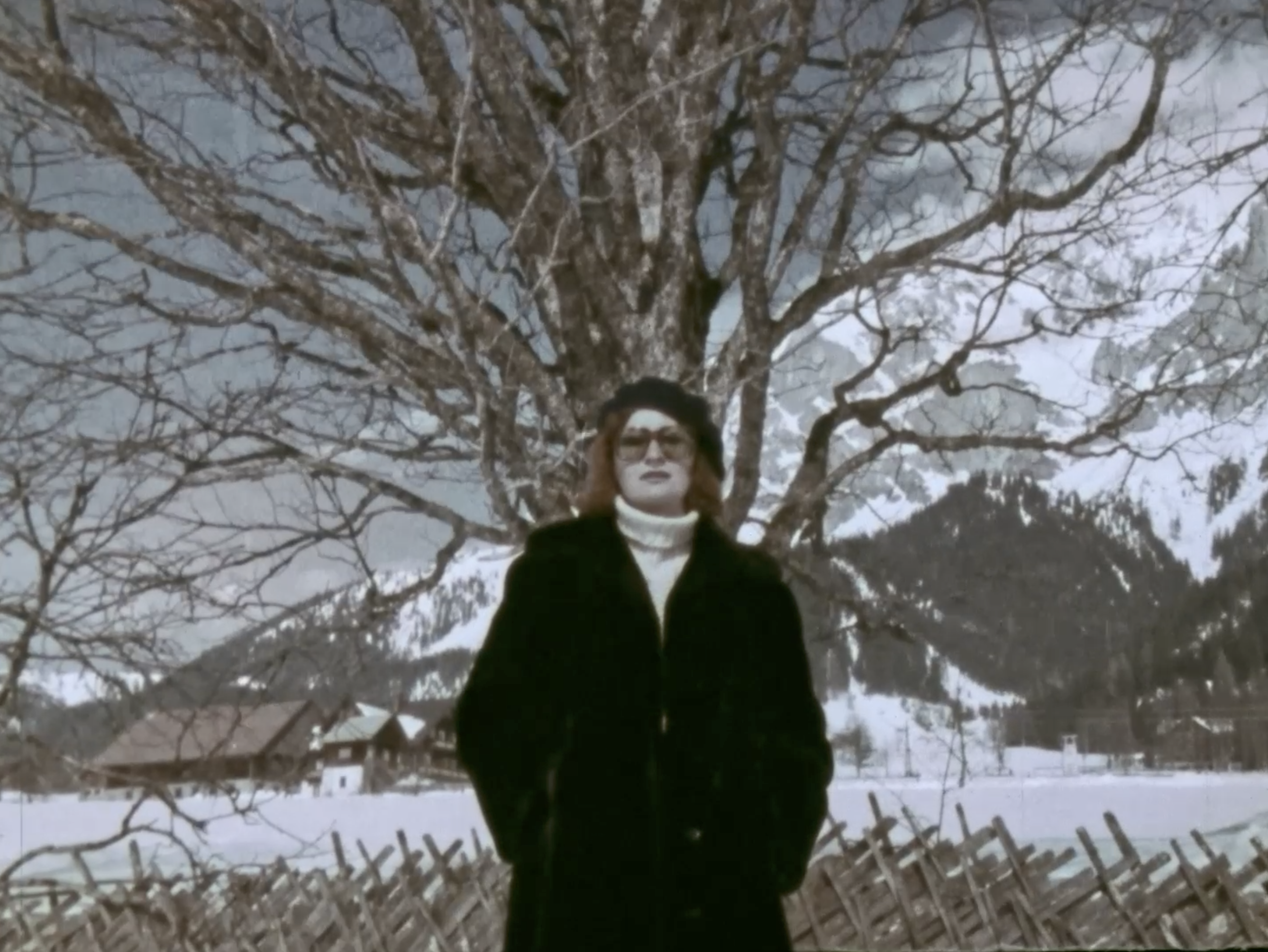
Elfriede Jelinek’s name is synonymous with language. As Austria’s first Nobel laureate, she was so crowned “for her musical flow of voices and counter-voices in novels and plays that with extraordinary linguistic zeal reveal the absurdity of society’s clichés and their subjugating power.” And in Ramsau am Dachstein, which made its television debut on May 21, 1976, via the Austrian Broadcasting Corporation (ORF), she does not abandon this density. Instead, she reveals how landscapes articulate what the mouth alone cannot hold.

Though often overlooked in discussions of her work, Jelinek’s sole cinematic statement carries the same restless energy that animates her novels and plays. In a rich essay for this timely INDEX edition, film and TV historian Sylvia Szely frames it as a document entangled with the conditions of its own making. Commissioned for the Vielgeliebtes Österreich series between 1975 and 1977, it became part of a larger project seeking to produce a “critical land survey” of Austria through the eyes of those bound to its regions by memory or affiliation. Jelinek’s own connection to Ramsau am Dachstein was as intimate as it was peripheral, braided through childhood visits to her grandmother in the Styrian Mürztal. Yet intimacy here does not produce nostalgia. It sharpens perception and unsettles inheritance.

The broader context of Austrian broadcasting reform in 1974 unfurls a crucial backdrop. ORF, newly tasked with promoting national culture and values, found itself in a paradox. It invited artists who could interrogate identity while also expecting a reaffirmation of cultural coherence. Among them were Franz Novotny, Karin Brandauer, and Michael Guttenbrunner, who were already shaping or would go on to shape the world of Austrian cinema in various ways. Jelinek’s participation appears inevitable and improbable at once, as she faced great hardship as a result of it, not least of all because of the involvement of Claus Homschak.
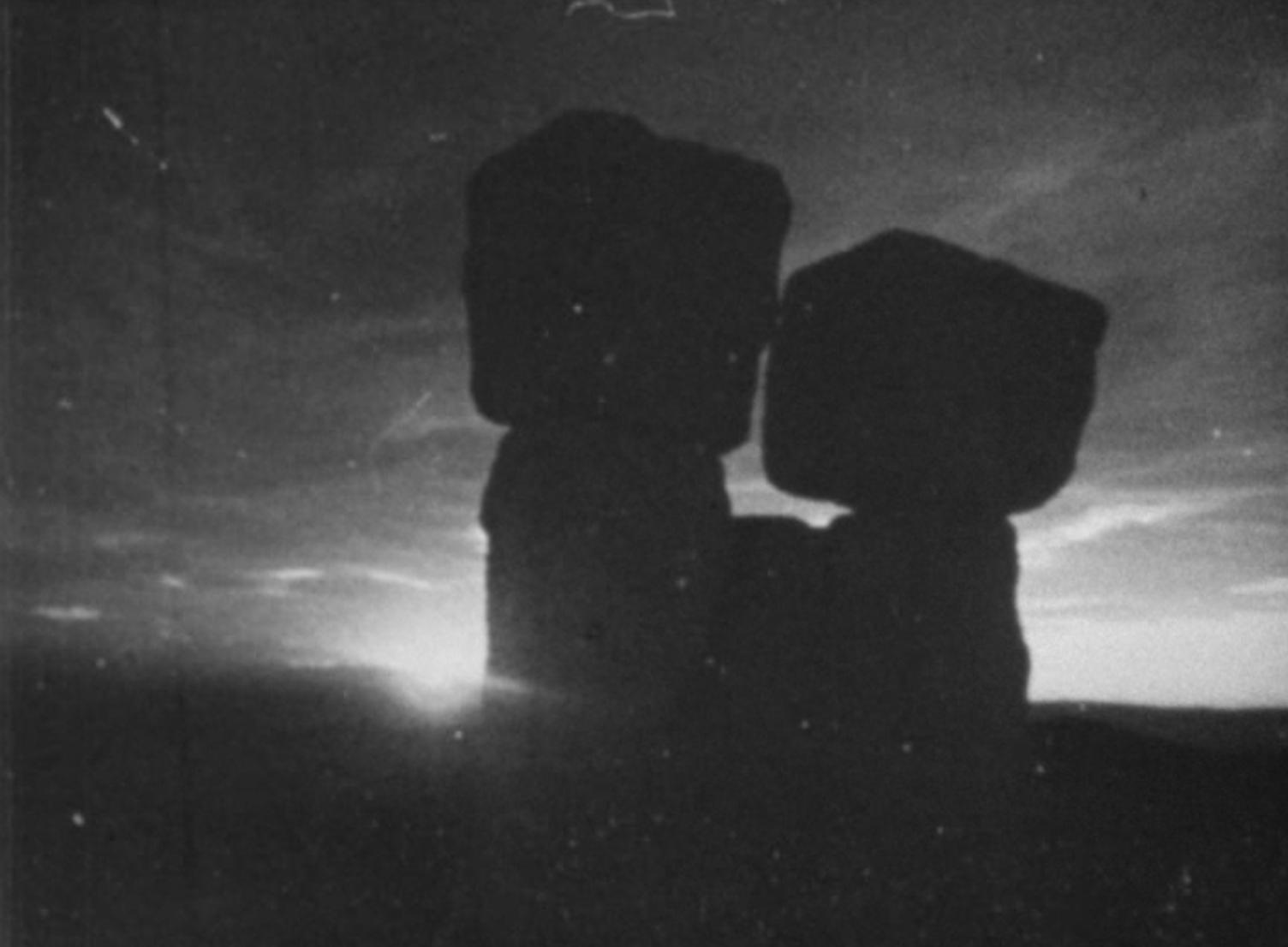
Homschak’s editorial intervention, at the behest of ORF, alters the trajectory of the film in decisive ways. His insistence on incorporating picturesque footage introduces a layer of visual appeasement, an attempt to soften the film’s more abrasive elements. The result does not erase Jelinek’s vision so much as distort it. The piece becomes a site of struggle between competing aesthetics. One seeks legibility, comfort, a surface that can be consumed without resistance. The other insists on rupture, on a refusal of coherence, on a mode of expression that unsettles rather than reassures. What emerges is tension preserved within the structure of the film itself.
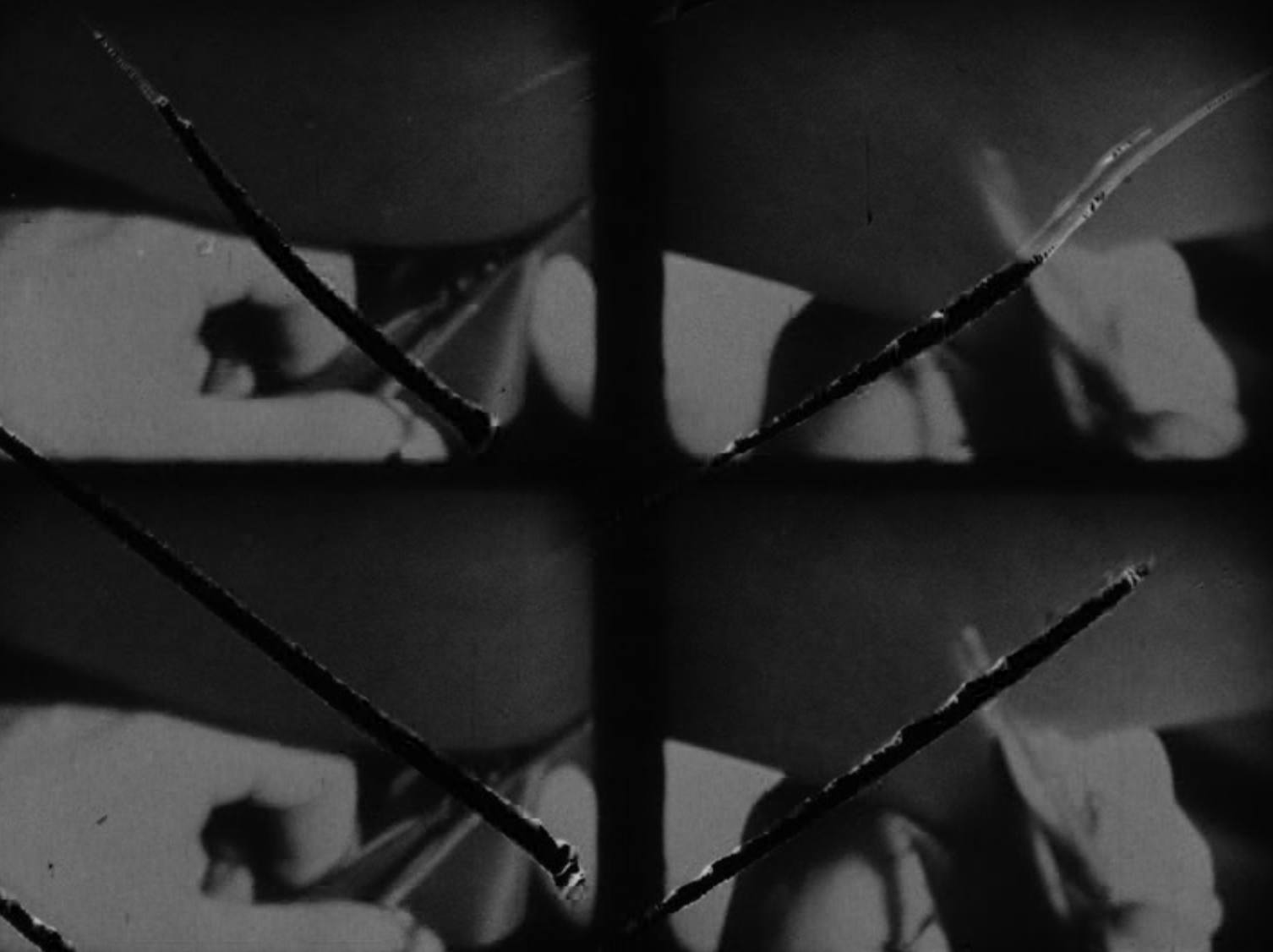
This tension finds its thematic core in the question of tourism and its socioeconomic reverberations. Ramsau appears prosperous, its snowy expanses and pastoral scenes inviting admiration. Yet beneath this surface lies a stratification that the film exposes with quiet persistence. Farmhands and laborers, those who sustain the land without owning it, recede from visibility within the dominant narrative of progress. Jelinek reintroduces them through a method that resists conventional documentary logic. As contradictions accumulate, she renders a visual essay in which meaning emerges through dissonance rather than synthesis.

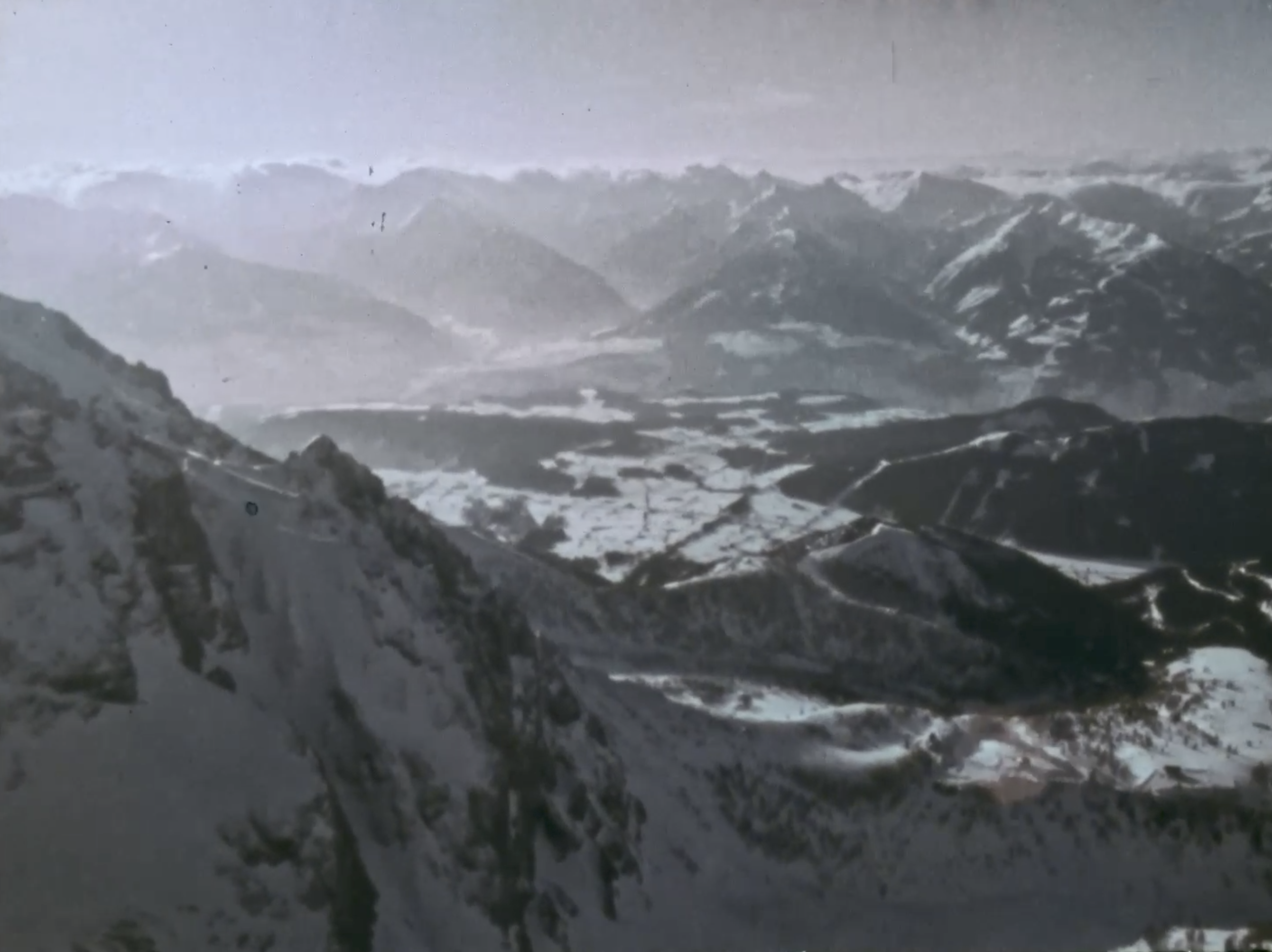
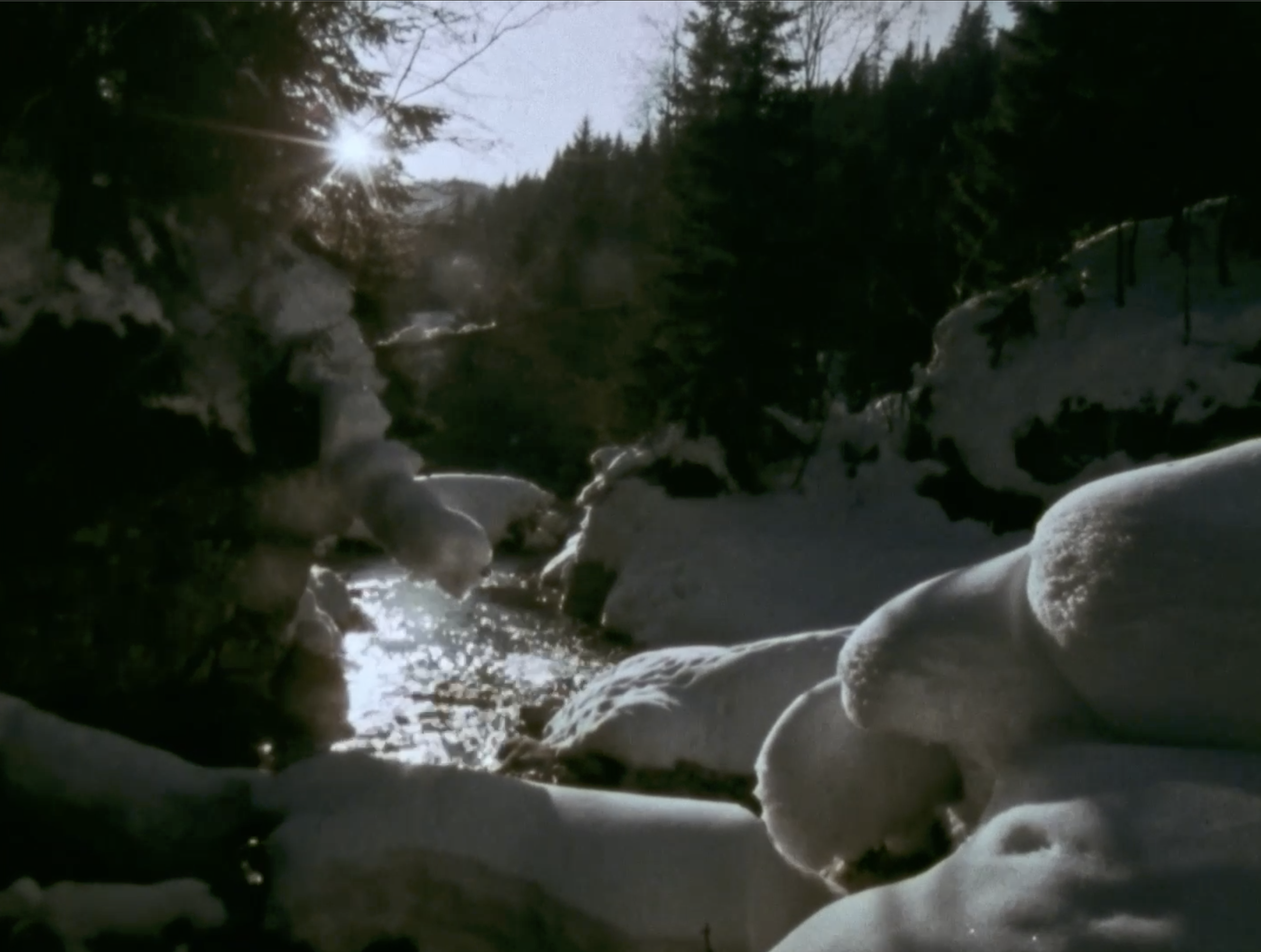
The opening sequence establishes this approach with disarming clarity. A folk song drifts across a snowy mountainscape with a strange duality. It enchants, yet something within it feels unsettled, as though the landscape existed outside both time and frame. The voiceover announces its intent to demythologize the notion of “simple, original and genuine farm life.” The phrase “to give things back their history” resonates as both promise and provocation.

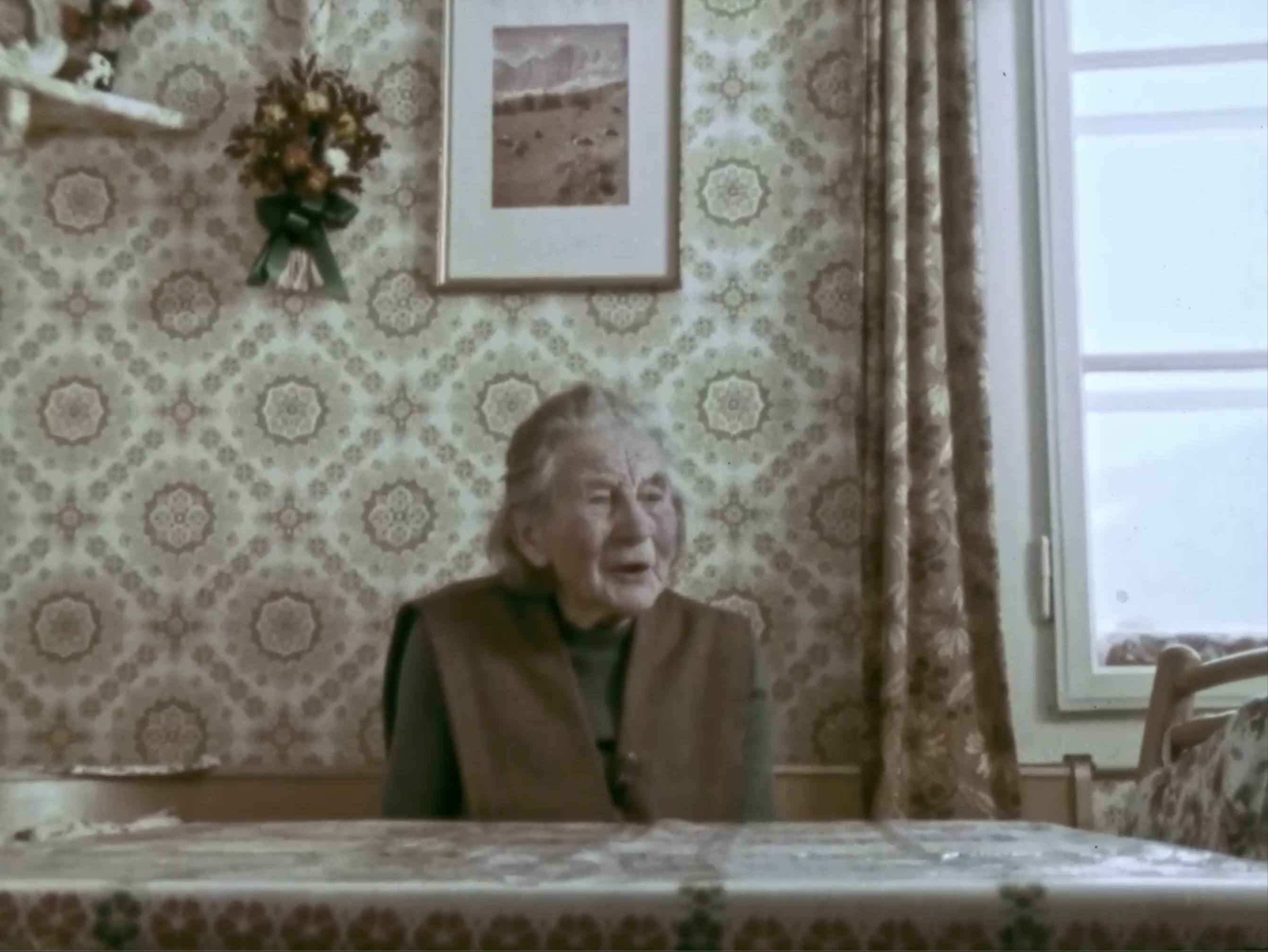
Central to this excavation is Josefa, whose presence anchors the film’s emotional and conceptual gravity. She smiles and laughs while recounting a childhood marked by deprivation, by relentless labor, by abuse inflicted within the very structures that claim to sustain rural life. Her recollections unfold in fragments, each piece carrying a weight that the tranquil surroundings cannot absorb. As she places kindling into her stove, the gesture gathers symbolic force. Memory becomes fuel, consumed for warmth, yet never fully extinguished. The act suggests both survival and loss, a quiet economy of endurance.

Her trajectory continues through a series of displacements. After leaving school at 14, she works as a dairymaid in the mountains, a period she recalls with a certain tenderness. The mountain pastures offer a temporary reprieve, a space where the weight of her earlier years recedes, though never entirely: “I forgot my childhood, so to speak. But I couldn’t forget entirely.” The statement holds its own contradiction, a reminder that forgetting remains partial, always haunted by what persists within.

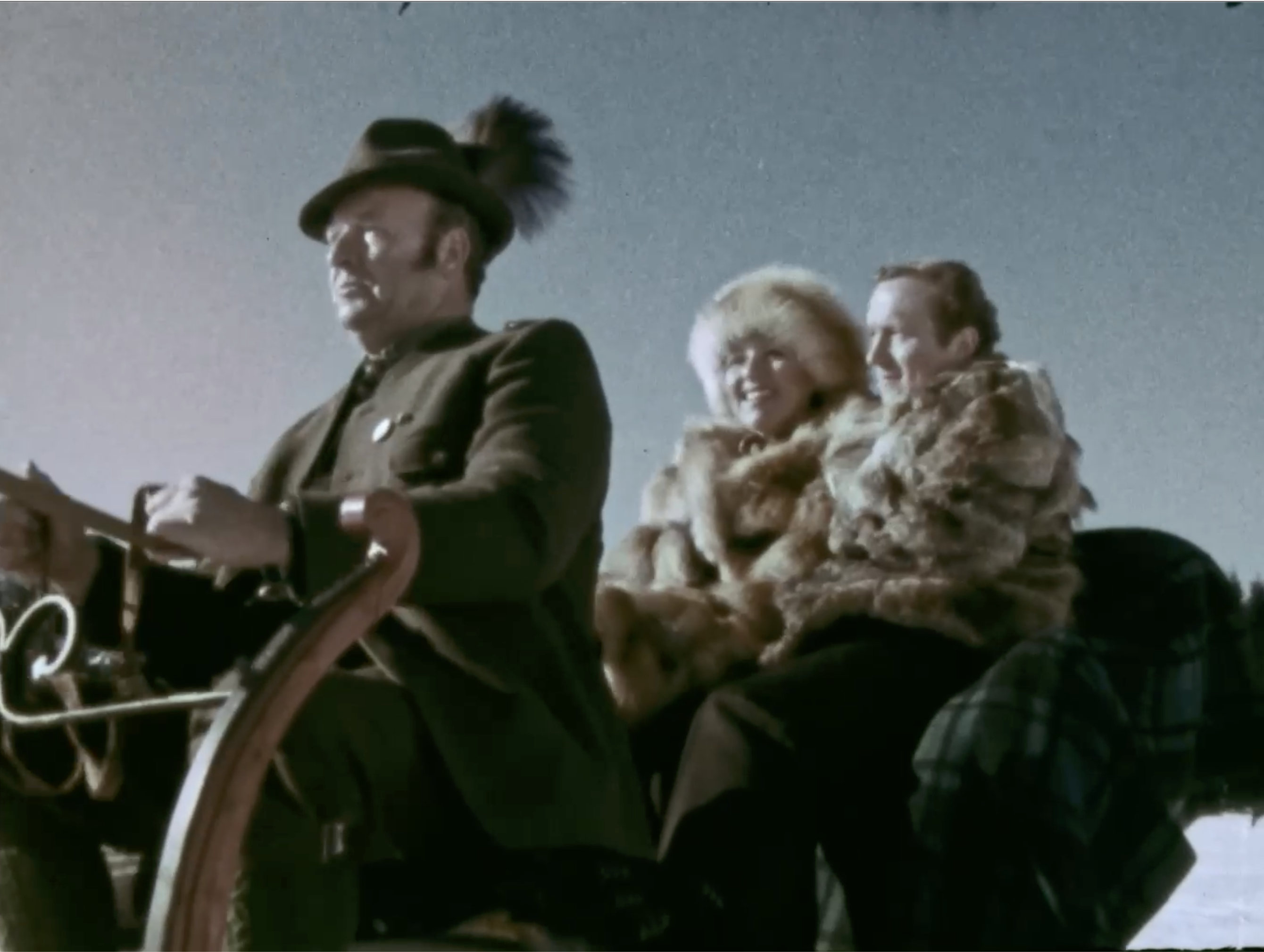
The film places her story alongside flashes of tourists who traverse the same landscape with ease and delight. Horse-drawn sleighs glide through the snow, their occupants smiling, insulated from the histories embedded in the terrain they admire. For them, the farms become postcards in motion, fragments of an aesthetic experience detached from its conditions of production. The voiceover traces the economic structures that underpin this transformation. Landlords accrue profit through taxes, tithes, and the consolidation of property. Tourism emerges as both a continuation and an intensification of these dynamics. The history of Ramsau reveals itself as a layering of exploitation and accumulation.

The refrain “This is a beautiful landscape” reverberates throughout the film, each repetition hollowing out its initial meaning. What begins as affirmation becomes incantation, then critique, then something approaching accusation. Beauty itself becomes suspect, implicated in systems that convert aesthetic pleasure into economic value. A beautiful place yields greater profit. The phrase lingers, stripped of innocence.

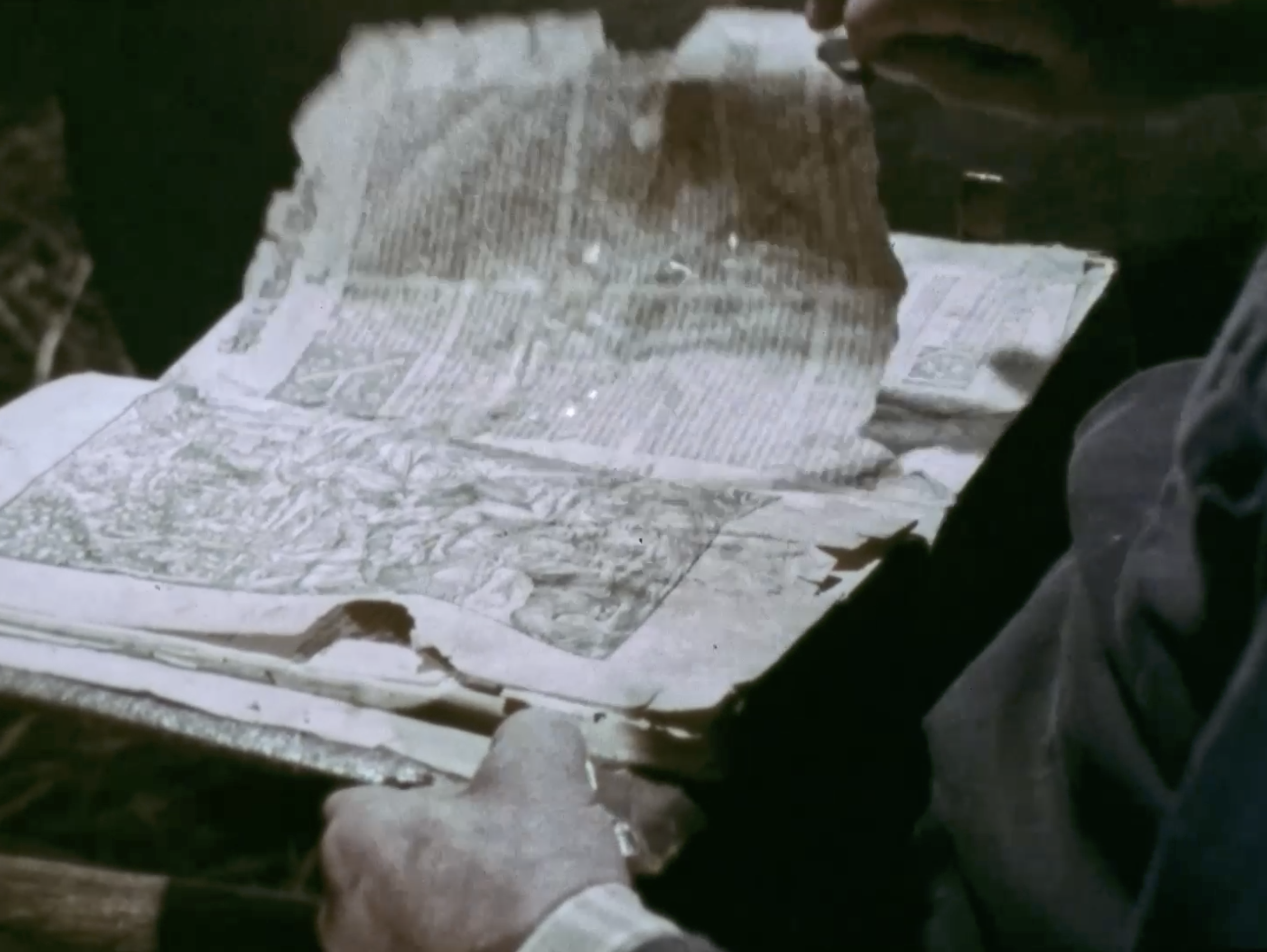
Religious history enters the film with similar complexity. Ramsau, a rare stronghold of Protestantism in Austria, carries within it a legacy of resistance and suppression. During the Counter-Reformation, Evangelical faith was outlawed, forcing believers into secrecy under threat of torture. The presence of a worn Lutheran Bible from 1557, preserved across generations, embodies this history. It appears fragile, yet endures. Its taped pages carry the imprint of survival, a material trace of belief maintained against erasure.

The economic realities of the region further complicate its pastoral veneer. Farms produce only enough to sustain themselves, leaving little room for surplus. The arrival of tourism introduces new forms of capital, yet these gains remain unevenly distributed. The labor that once sustained subsistence becomes subsumed within a broader economy oriented toward external consumption. Authenticity recedes, replaced by a curated version of rural life designed to meet the expectations of visitors.

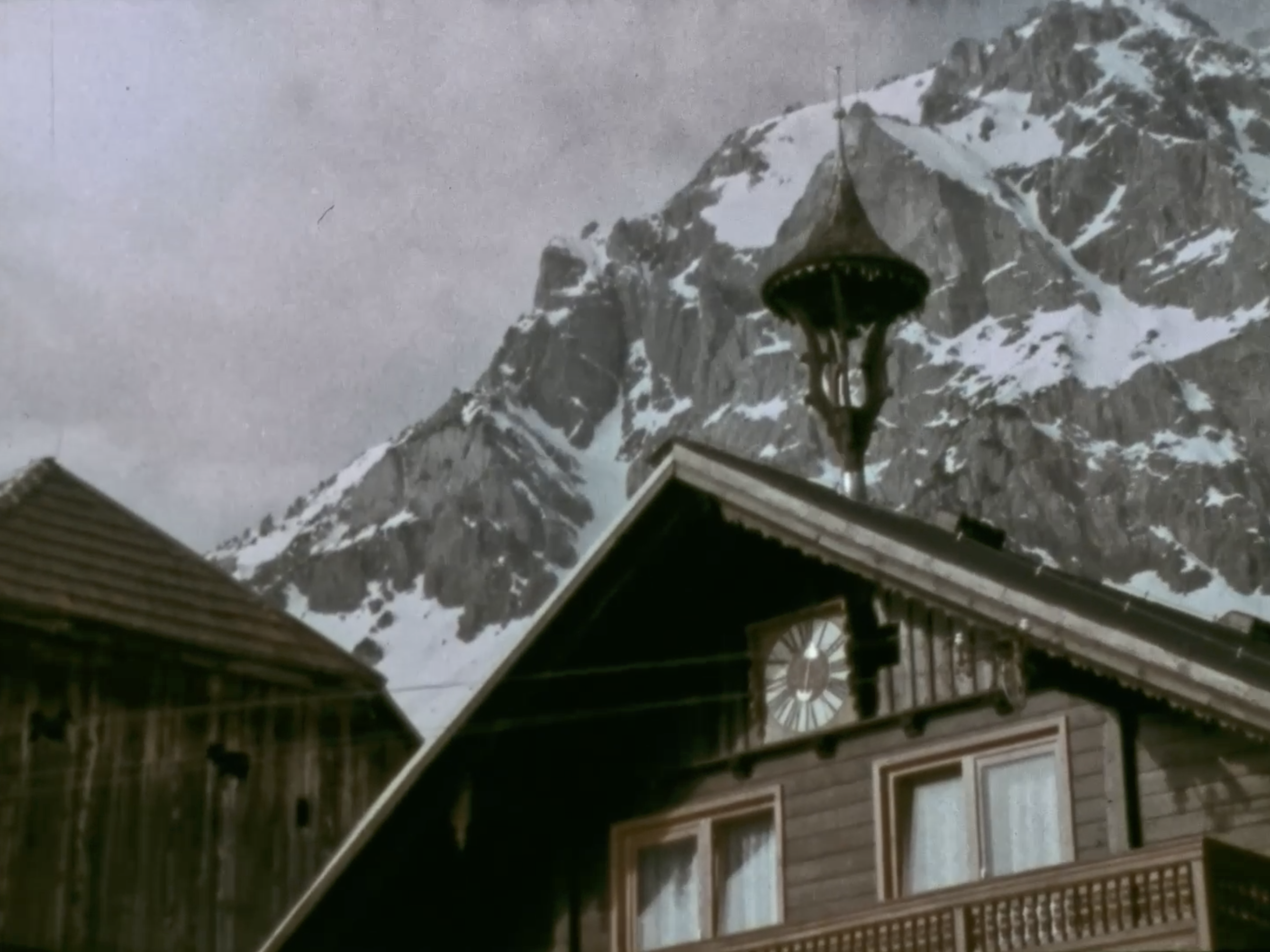
A striking anecdote from a local woodworker, who also serves as church choir director, encapsulates this transformation. Farmhouses once featured small towers with bells that summoned workers to their daily tasks. These bells marked time through labor, structuring the rhythms of communal life. Now they remain as decorative elements, silenced to accommodate transient visitors who prefer uninterrupted rest. Function gives way to ornament. History becomes aesthetic.

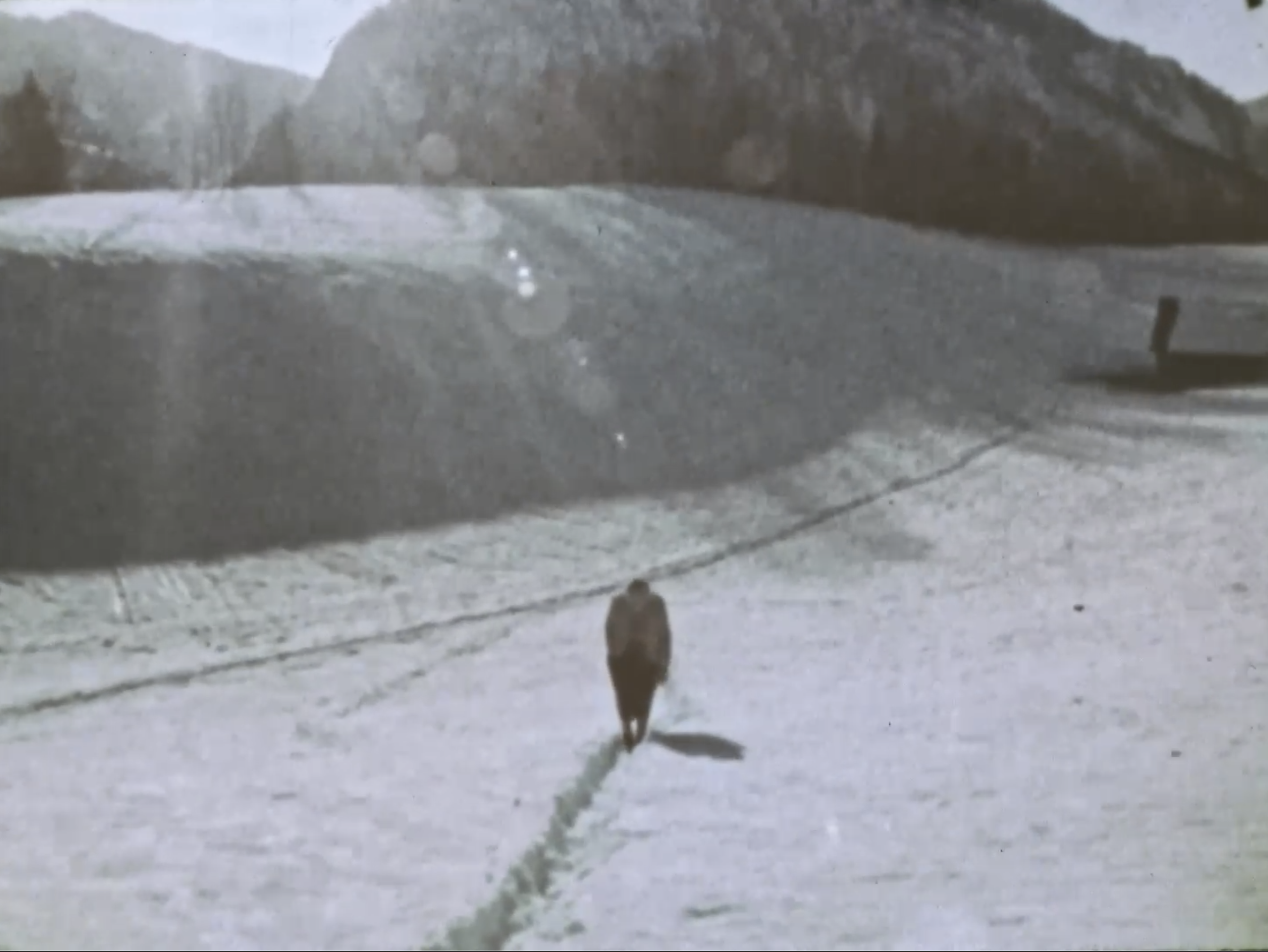
The film’s visual language reinforces these themes through moments of quiet disjunction. Skiers glide across the snow with effortless grace, their movements suggesting an unburdened relation to the landscape. Pan to Josefa, standing within the same expanse, her presence grounded, immobile, bearing the weight of histories that the skiers traverse without awareness. The juxtaposition resists overt commentary. It allows the tension to persist, unresolved, demanding recognition.

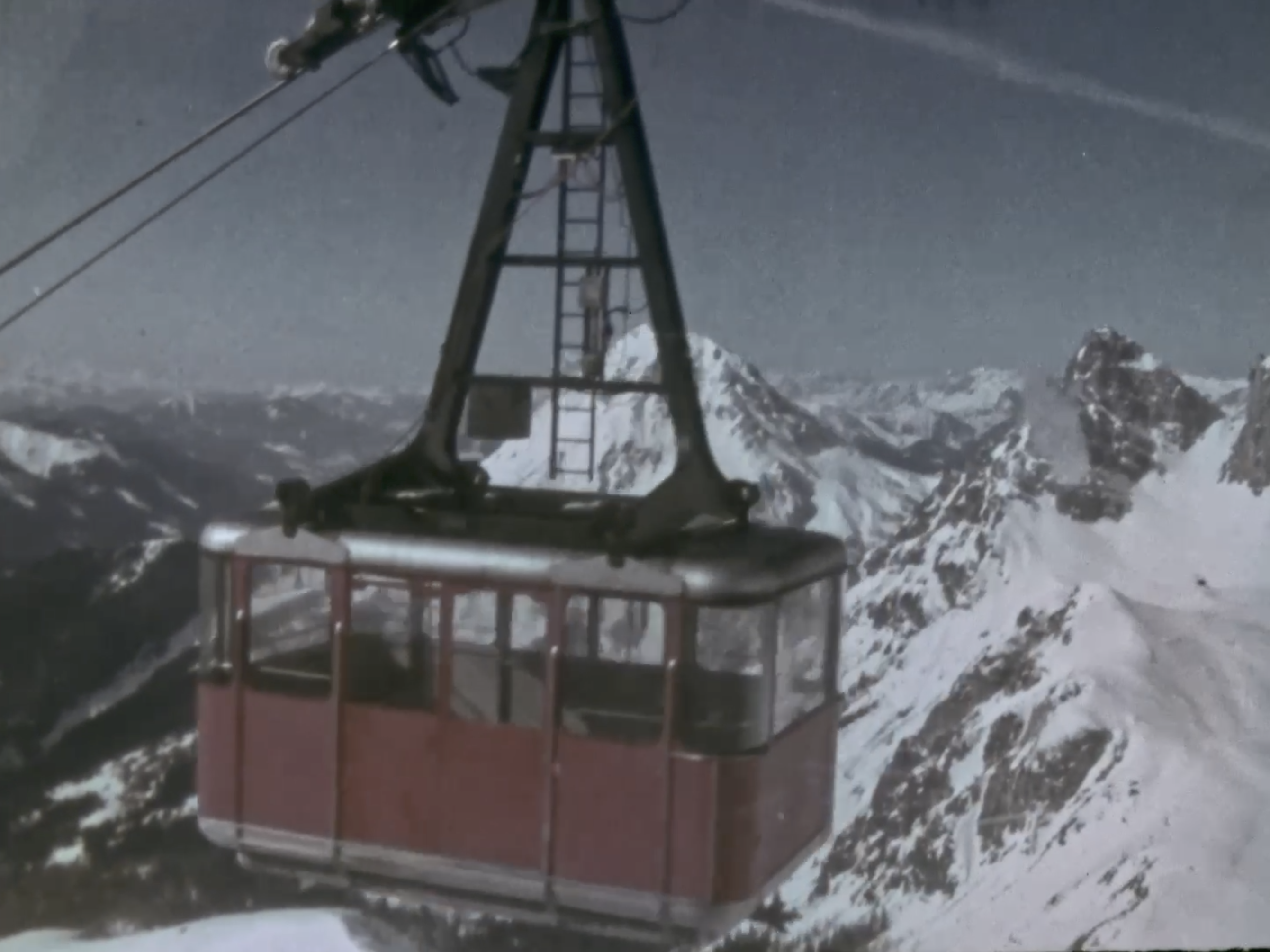
A shot of an empty gondola lingers with particular force. Suspended in motion, it carries no passengers, no visible purpose. It moves through space as if propelled by an absent logic, a system continuing its operation despite the absence of those it ostensibly serves. The voiceover deepens this critique through its articulation of tourism’s theatrical dimension, saying, “One visits the old farms like theater plays.” The landscape becomes a stage, its inhabitants cast into roles that must conform to external expectations. The tourist, positioned as the audience, demands a performance of authenticity that conceals the conditions under which it is produced. The voice continues, suggesting that the tourist must perceive the landscape and its customs as existing solely for their benefit, perfected for their gaze. The world becomes an open-air performance, sustained through repetition, maintained through illusion.

The reception of the film reveals the volatility of this exposure. Editor and documentary filmmaker Silvia Heimader details the hundreds of phone calls that flooded ORF following the broadcast, expressions of anger from viewers and stakeholders who felt misrepresented, even betrayed. The film disrupted the image Ramsau sought to project. It challenged the alignment between self-perception and external representation. The resulting backlash extended beyond critique into hostility.

Jelinek’s return to Ramsau for a public discussion only worsened these sentiments. Surrounded by local officials, members of the Austrian People’s Party (ÖVP), and community members, she encountered an atmosphere charged with resentment. The gathering carried an undercurrent of threat, a collective anger directed not only at the film but at the artist herself. Within this charged space, Josefa’s presence becomes particularly poignant. She attends, only to leave in tears as the hostility directed at the film redirects itself toward her. Her life, her suffering, has become an unwanted mirror held up to the community.

This moment crystallizes the ethical stakes of representation. To give voice to marginalized experiences carries the risk of exposing those individuals to further harm. Jelinek’s attempt to draw attention to the plight of women such as Josefa encounters resistance that reveals the limits of empathy. The film does not resolve this tension. It leaves it exposed, unresolved, an open wound within its own reception. Despite these challenges, the film’s engagement with language remains its most enduring contribution. Jelinek approaches cinema with a vocative sensibility that reshapes the medium from within. Speech and text become structural elements, organizing the flow of images while simultaneously destabilizing their apparent coherence.

The result of Jelinek’s first foray into television was that it was also to be her last, and she still bears the emotional scars of the mob mentality that sought to have its way with her like a political ragdoll for various factions’ own amusement. What’s so painfully ironic about the whole ordeal is that ORF was likely seeking this kind of counter-cultural narrative in the first place, given that Jelinek was a member of the Communist Party of Austria and already well known for her radical approach to narrative. Otherwise, there would have been no reason to ask her to participate in this project. But it was Homschak who overtook the editing, during which Jelinek was not present, thus sanitizing (if not altogether cutting out) much of her experimental leanings toward alienation.

Jelinek’s later reflection on the film, articulated in her 2022 essay “Shipwreck on the Mountain,” frames the work through the lens of failure: “What I captured was not supposed to be captured.” And so, the act of capturing becomes both transgression and necessity. The film records what resists representation, what eludes the frameworks designed to contain it. In doing so, it exposes the frayed edges of those frameworks. Her characterization of the project as a shipwreck suggests collapse, yet also preservation. A shipwreck disperses fragments across a landscape, each piece retaining traces of the whole while existing independently. The film functions likewise. It resists closure and remains open to reinterpretation, continuing to generate meaning through its unresolved tensions.

In recent years, reception of the film has shifted. Contemporary viewers, including residents of Ramsau, have approached it with a renewed openness, recognizing its insights into the transformations that have reshaped the region. Time alters perspective. What once provoked anger now invites reflection. Yet the film’s history remains inseparable from its meaning. Its scars persist, informing its continued resonance.

This dynamic extends beyond the film itself, gesturing toward broader questions about representation, perception, and the construction of reality. If landscapes can be rewritten, if histories can be obscured or revealed through shifts in perspective, then the stability of meaning becomes uncertain. What appears solid dissolves under scrutiny. What seems transparent reveals layers of mediation.

At the edge of such uncertainty lies a more elusive inquiry. Perhaps reality itself exists as a surface continually inscribed by competing narratives, each seeking to assert its version of truth. Beneath this surface, no fixed essence awaits discovery. Instead, there is an ongoing process of articulation, erasure, and rearticulation. The film gestures toward this process without attempting to resolve it.

In this sense, Ramsau am Dachstein extends beyond its immediate context, offering a meditation on the conditions of seeing and speaking. It invites a reconsideration of how eyes and ears shape our understanding of the world, how they collaborate and conflict, and how they produce meaning through their interplay. And perhaps this is where its deepest significance resides. Not in what it reveals about a particular place or moment, but in how it unsettles the mechanisms through which revelation occurs. Yet behind this continuity, something shifts. A recognition that meaning does not reside within the image or the word alone, but within the unstable space that connects them, a space that resists closure, that invites perpetual reconsideration, that holds within it the quiet possibility of seeing otherwise.

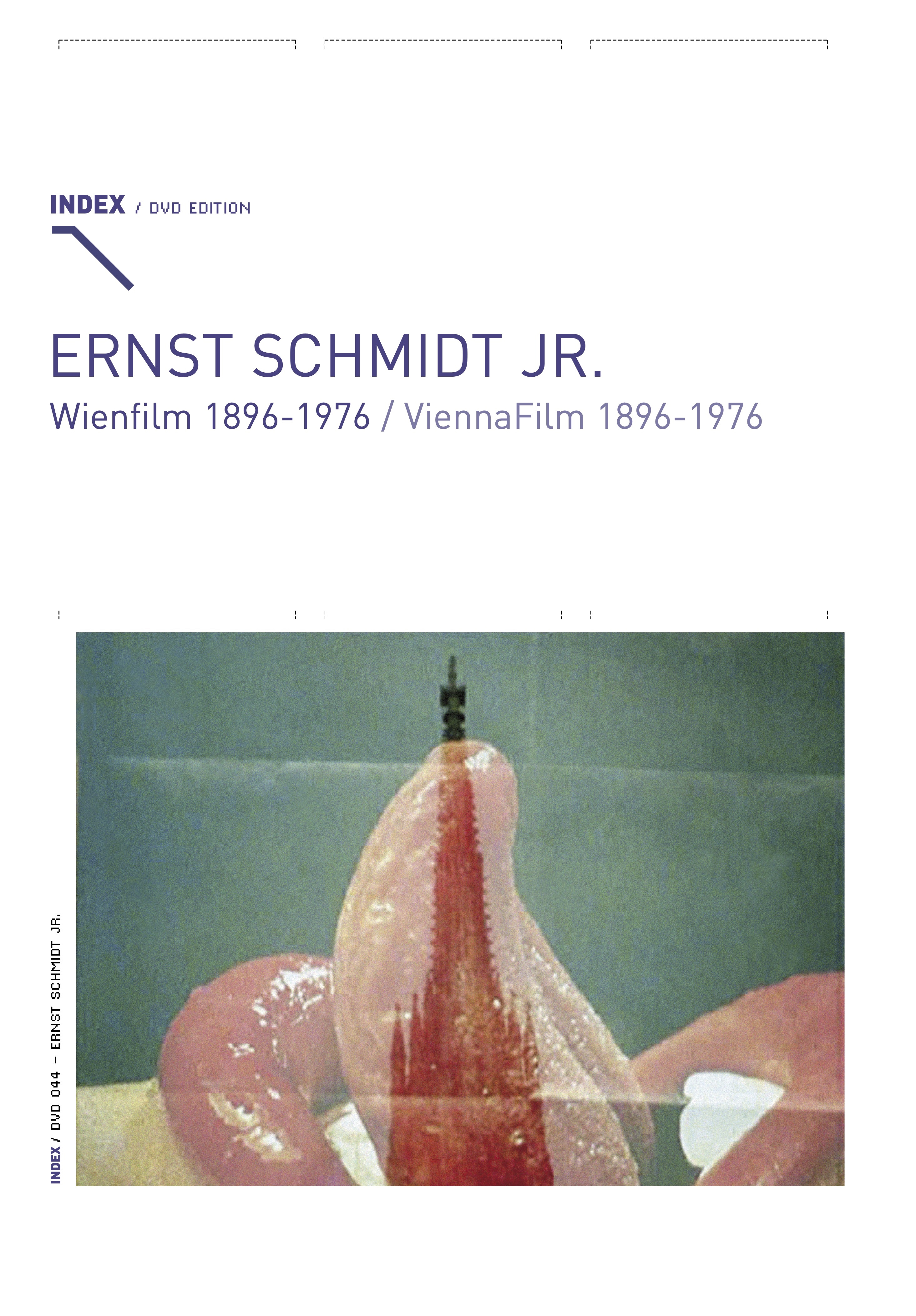
Ernst Schmidt Jr.: Wienfilm 1896-1976 (ViennaFilm 1896-1976) (INDEX 044)

Ernst Schmidt Jr.’s Wienfilm 1896-1976 opens its subject the way a cadaver is splayed on a coroner’s table. It does not search for a beating heart but for the conditions that make Vienna both itself and something estranged from itself. Montage is now a diagnostic tool, less a method of assembling meaning than of measuring how it buckles under the weight of mortality. The filmmaker himself calls it “a collage of diverse materials aimed at conveying a distanced image of Vienna,” and this distance is the guiding principle: no seduction, no civic hagiography, only a long, unsettling look at a city that contradicts its own self-image at every turn. The result is almost two hours of historical consciousness unfurling at the pace of a slow-motion sea change.

The project begins innocently enough. Two little girls draw and talk about photography, as if the film were briefly pausing to consider the act of looking before descending into its century-long excavation. Soon, Schmidt Jr. sends his camera wandering into the streets to locate the letters of his name. Thus, identity is something to be scavenged rather than inherited, pulled from signage, storefronts, and neglected typography. The artist reconstructs himself through urban residue, establishing an implicit kinship between detritus and personal (re)formation. Lumière footage from 1896 reminds us that Vienna’s filmed life began in the same mood of wonder that swept Europe. Yet here the vintage images register as a faint alarm, the first entries in an archive that will come to record both innocence and catastrophe, albeit in disproportionate amounts.

A montage of women walking follows, accompanied by a syrupy song about femininity. The sequence drifts uneasily between admiration and objectification, as if the soundtrack were trying to smooth over the very wounds it denies. And that’s when a Nazi parade cuts into frame, 1938 charging forth without commentary or warning. The simple adjacency of images does the work of showing how the bootmarks of the past can never be lifted from the present’s pavement. Peter Weibel appears interviewing passersby about who “owns” Vienna, a question that exposes civic pride as well as civic vacancy. Abandoned buildings and shuttered shops stand as ruins. Joe Berger’s remark, “You can be Viennese all over the world…just not in Vienna,” functions as a darkly comic proposition about belonging, exile, and the contradictory nature of borders.

When Chaplin arrives, mass adoration floods the screen. The crowds reveal a collective fervor that cinema alone seems able to provoke. Ecstatic public unity collides with the kitschy cheer of Wienerlieder, whose supposed affection grows sinister when paired with footage of marching columns, rubble, or muted political assemblies. Such sentimentality takes on a narcotic charge, a way of drowning out the psychic noise of its unresolved history. Freud drifts through as a spectral reference, less a person than a reminder that Vienna’s self-knowledge has always been bound to its neuroses. Dogmatic speeches rise and fall, promising clarity yet delivering only the musical rest of rhetoric. Actionists erupt briefly, warping from within. Ordinary people cross streets, ride trams, and enter buildings, each carrying a share of a saga that exceeds them.

As Wienfilm 1896-1976 nears its end, it no longer behaves like a documentary. It becomes a séance of stone. Schmidt Jr. summons imperial afterimages, post-war silences, and self-mythologizing refrains, letting their intercourse give way to an apparition built from incompatible truths. What remains is a portrait assembled from fragments that resist composition, vibrating with the discomfort of witnessing too much yet understanding too little. A city is not something to be summarized but confronted, piece by tactile piece, in all of its charm and violence, until a composite sketch is revealed that no one can fully bear to recognize as their own.

Peter Weibel: Körperaktionen Bodyworks 1967-2003 (INDEX 043)

Peter Weibel’s Körperaktionen (Bodyworks) reveal him as the Actionist who refused the Actionists’ mythology. While others pushed inward toward abjection and self-wounding, Weibel turned outward toward media, politics, semiotics, and the body as a site where power writes its own grammar. His gestures are never self-contained eruptions. They are conceptual irritants that question whether an “action” is an event, an inscription, a perceptual trap, or an estrangement from social order. The body becomes the primary medium not because it grants access to primal truth but because it is the site where systems fray at the seams.

Lüstern

This appetite for estrangement is already present in Fingerprint (1968), which uses the film strip to produce sound, image, and a forensic poetics of identity. A print is an index of presence, a bureaucratic marker, a residue of control, and, finally, a reminder that the flesh leaves traces, whether we like it or not. Nüstern (Nostrils) and Lüstern (Lascivious) (both from 1969) push the close-up toward distortion until isolated members appear as media property rather than human attributes. A magnified nose, an eroticized massage revealed as nothing more than an orange, both dismantle the consumer industry’s habit of slicing us into marketable zones of sensation.

Das Recht mit Füßen treten

The Text films from 1974—AugentexteMundtextStirntext—literalize the notion that the body speaks. Yet the speech is stuttering, mechanical, self-consuming. The eye blinks words, the mouth utters “SCHEISSE” before swallowing it, the forehead writes until it throbs. Language contaminates skin and vice versa. In Das Recht mit Füßen treten (Trampling on Rights, 1967/68), museum visitors step on the word “recht” scattered across the floor in an unwitting political gait. Here, the act belongs to the public, hinting at what is perhaps Weibel’s most radical proposition: spectators are never neutral. Lösung der Phantasie (Solution of Fantasy, 1972) examines hair as a philosophical emblem, elegant when attached to the head and repulsive when shed, offering a small but potent meditation on beauty and decay sharing the same root.

Fluidum und Eigentum: Körperverhältnisse als Eigentumsmaße

Weibel often condenses his motifs of interest into crystalline forms. Wie hat sich aus den Fischen die Mathematik entwickelt? (How Did Mathematics Evolve From the Fish?, 1971) is a self-styled visual haiku centered on a typewritten iteration of “hand,” zooming until the word mutates into a pure visual pattern. Fluidum und Eigentum: Körperverhältnisse als Eigentumsmaße (Fluidum and Property: Body Relations as Measure of Property, 1971/72) examines the idea of property by asking at what scale ownership collapses: bread, chair, room, shadow. Each item passes through the body’s orbit of affordance and discards the illusion that possession is stable.

Kokain(e)

Such explorations of symbolic order continue in Grüß Gott (1967/72), where Weibel and Susanne Widl casually eat pretzel letters forming the titular greeting, turning Austrian piety into edible farce. Kokain(e) (1972) reveals a pornographic image hidden beneath a can of fish printed with St. Stephen’s Cathedral, suggesting that sacred and obscene imagery differ only by their packaging. His reconstruction of Duchamp’s Stoppages-étalon (1970/71) reenacts the dropping of a thread to show that randomness, not symmetry, is the geometry of modernity. Vulkanologie der Emotionen (Vulcanology of the Emotions, 1971/73) arranges bodily poses as geological layers of feeling, while whale-like moans push the human voice toward prelinguistic depths.

Venus im Pelz

Weibel’s inquiry into the politics of looking continues in Aktbesprechung oder Inverses Selbstporträt (Discussion of the Nude or Inverse Self-Portrait, 1975/76), which reverses the male gaze by showing male nudes through women’s descriptions. The men become mirrors without agency, their vulnerability revealed through shifting reactions. Switcher Sex (1972) overlays body parts into unstable configurations, turning gender into an assemblage that resists coherence. Venus im Pelz (Venus in Furs, 2003) uses morphing technology to blend centuries of painted Venuses into a single monstrous continuum, exposing the canon as an endlessly repeated, idealized submission. Vers und Vernunft (Rhyme and Reason, 1978) stages Weibel and Widl in a cage of television screens, grunting and breathing themselves into exhaustion until reason gives way to an animal rhythm. Zeitblut – Blutglocke (Timeblood – Bloodbell, 1972/79/83) completes this arc by spilling his own blood on national television. Through this action, every Austrian home was simultaneously filled with his life essence, as if the media had become a circulatory system carrying his interiority into the public domain.

Kunst und Revolution: Brandrede

Three films by Ernst Schmidt Jr., previously seen on INDEX 042, are also included among the selections curated on this DVD. Kunst und Revolution: Brandrede (Art and Revolution: Incendiary Speech, 1968) documents Weibel’s speech from his infamous June 7, 1968, performance at the University of Vienna. With one hand aflame, he quotes Lenin and Chernyshevsky in a powerful deconstruction of rhetoric. “The goal of the speech action,” he recalls, “was to inflame consciousness, to pass the flame of revolution and freedom to its listeners, and it was realized in the form of a body action.” Denkakt (1967) captures Weibel thinking aloud until the medium truncates his thought, proving that technological limits mediate cognition itself: “[F]ilmmaking meaning nothing other than the production, derivation of figures, events according to the possibilities of the formation film, for example with celluloid or the movie auditorium, screen, spectators.” The notorious Aus der Mappe der Hundigkeit (From the Portfolio of Doggedness, 1968/69), in which VALIE EXPORT walks Weibel as one would a dog, literalizes power inversion and makes the male body the site of disciplinary display. The title is a play on Aus der Mappe der Menschlichkeit (From the Portfolio of Humanity), a leaflet once distributed weekly by the Red Cross.

Across these projects, Weibel does not use the self to enact mysticism or sacrifice. He treats it as a contested field where authority, machinery, desire, and perception collide, and where every decision reveals the infrastructures attempting to constrict it. His Actions expose that the body, even in the absence of a camera, is already mediated by the lens of the human eye and that the screen is not a recording device but a palimpsest for sociopolitical fictions. Over decades, Weibel has pursued nothing less than a decolonization of the sensorium. He invites us to notice what we have been trained to ignore, to feel what we anesthetize, and to recognize how deeply the rules of visibility are written into these bags of bones we imagine as our own.

Ernst Schmidt Jr.: Stones & 20 Action and Destruction Films (INDEX 042)

Ernst Schmidt Jr. belongs to the incendiary second wave of the Austrian avant-garde that Peter Tscherkassky, in his liner notes, associates with transgression. By the same token, the force of Schmidt Jr.’s creations does not stem from crossing limits so much as eroding that very stubborn notion. His images resist symbolism at every turn. Rocks, scraps of emulsion, a curtain’s twitch, faces caught between expressions, even the jitter of spliced frames: all insist on their own existence before they signify anything at all. They become the raw elements of a practice that stitches itself together and tears itself apart in the same motion, revealing a paradox that has been the lifeblood of cinema since its inception. We try to liken filmmaking to cutting or pasting, to analogize its ruptures and assemblages to familiar actions, yet nothing quite matches the peculiar self-becoming of the strip itself. Celluloid behaves as if it possesses impulses of its own, and Schmidt Jr. is one of the few who ever allowed it to behave accordingly.

Steine

This sensibility is clear in Steine (Stones, 1964/65), ostensibly a documentary on sculptors in St. Margarethen but more accurately a study of the negotiation between labor and matter. The jazz score by Dieter Glawischnig and Ewald Oberleitner syncs with the staccato rhythms of chisels, while texts by Gunter Falk and Harald Seuter counterbalance the bemused commentary of passersby. A visitor admits that anyone capable of making something from stone “can’t be normal,” seemingly unaware that shaping stone is not domination over but a surrender to a material whose history predates the sculptor. Schmidt Jr.’s camera lunges, drifts, and waits until the quarry becomes a primordial studio where sculpture resembles an act of listening. Superimpositions remind us that stone contains layers and sediments, ghosts of earlier states in a syncopated duet between imagination and the ancestral depth of matter.

Schnippschnapp

This principle expands in the 20 Aktions- und Destruktionsfilme 1965-1979 (20 Action and Destruction Films, 1965–1979), which treat attention, dismantling, and impulse as structural devices. Ja/Nein (Yes/No, 1968) positions a theater curtain as protagonist, converting a transitional object into an enigmatic presence that behaves independently of spectatorship. Weiß (White, 1968) reduces cinema to flickering circles that hang in midair as portals leading nowhere. Prost (Cheers, 1968) invites participation by challenging viewers to shout “Cheers!” when a line touches the frame, only to reveal how futile synchronized response becomes when the apparatus refuses cooperation. In Rotweißrot (Red-white-red, 1967), the Austrian flag is rendered as pure abstraction, perhaps the most honest way to depict an emblem too often leveraged for false unity. Schnippschnapp (Snip, 1968), made with Peter Weibel, uses scissors to slice the reel until the strip begins consuming itself, culminating in the absurd reduction of paper to its smallest fragment.

Eine Subgeschichte des Films

Reduction continues in Filmisches Alphabet (Film Alphabet, 1971), which compresses the entire medium into twenty-six frames, each a letter that becomes a cipher of visual genesis. Burgtheater (Imperial Theatre, 1970) drains sketches from a commemorative book of their theatrical grandeur, leaving them to hover between documentation and exorcism. Gesammelt von Wendy (Collected by Wendy, 1978/79) quietly records the debris of a party—photographs, stray video fragments, traces of interaction—until social life appears as an archaeology of residual presence. Yet Eine Subgeschichte des Films (A Subhistory of Film, 1974) may be Schmidt Jr.’s most spectral construction. Drawing images from the 1300-page encyclopedia of the same name by Schmidt Jr. and Hans Scheugl, it arranges them as an apparition. Moving through its catalogue feels like wandering a museum where history refuses to settle.

Gertrude Stein…

His portrait works sustain this sense of volatility. Denkakt (The Act of Thinking, 1968) captures Peter Weibel thinking aloud, treating thought itself as an unstable field. Mein Bergräbnis ein Erlebnis (My Funeral an Experience, 1977) and 12 Uhr Mittags (High Noon, 1977) modulate tempo and expression until faces mutate into shifting topographies. The Merry Widow (1977) converts expression into something uncanny and grotesque. Sara Suranyi’s features flutter into new registers, showing how emotion never coalesces into a fixed state. Gertrude Stein hätte Chaplin gerne in einem Film gesehn, in dem dieser nichts anderes zu tun hätte, als eine Straße entlang und dann um eine Ecke zu gehen, darauf die nächste Ecke zu umwandern und so weiter von Ecke zu Ecke (Gertrude Stein would have liked to have seen Chaplin in a film where he would have nothing other to do than walk on the street and then go around a corner, and then around the next corner, etc. from corner to corner, 1979) literalizes Stein’s fascination with repetitive motion as a woman walks corner to corner until a staircase interrupts her circuit.

Einszweidrei

Schmidt Jr.’s more extreme explorations, including N (1978), which documents Hermann Nitsch’s actions, and Kunst & Revolution (Art & Revolution, 1968), plunge into spaces where ritual, violence, and provocation collide. The latter film features a group Action by Otto Mühl, Günter Brus, Peter Weibel, and Oswald Wiener, plus a disguised stranger for good measure. Their taboo interactions, performed on an Austrian national flag on June 7, 1968, at the University of Vienna, would lead to three arrests and the ousting of the Viennese Actions from the city. Bodybuilding (1965/66) and Einszweidrei (Onetwothree, 1965-68) inhabit the Actionist milieu with both fascination and critique, letting the body become instrument and message while Dixieland music and dissonant voices form a carnival of collapse. (VALIE EXPORT walking Weibel like a dog is an especially memorable highlight.) These are not documents but exposures, the camera registering cultural nerve endings without mediation.

Filmreste

In Filmreste (Film Scraps, 1966), his philosophy condenses into a single gesture: scraps arranged into a mosaic where smears, gospel phrases, bumper cars, lovers, city fragments, and bursts of color create a vitality that feels mischievous and irreducible. With this film, says Tscherkassky, “Schmidt Jr. reduces the base and emulsion of film to its status as material, film as a physical object.” Farbfilm (Color Film, 1967) names colors over blinking fields of hue yet never finds “blue,” as if the spectrum itself were resisting resolution.

Across these works, Schmidt Jr. remains focused on matter, vibration, interruption, and impulse. Representation defers to sheer presence. Accidents, ruptures, and material insistence generate the energy that drives the images. In treating the medium at its most elemental, he confirms a deep avant-garde intuition: that cinema is not a window onto the world but a substance within it and that its vitality is inseparable from the matter of which it is composed.